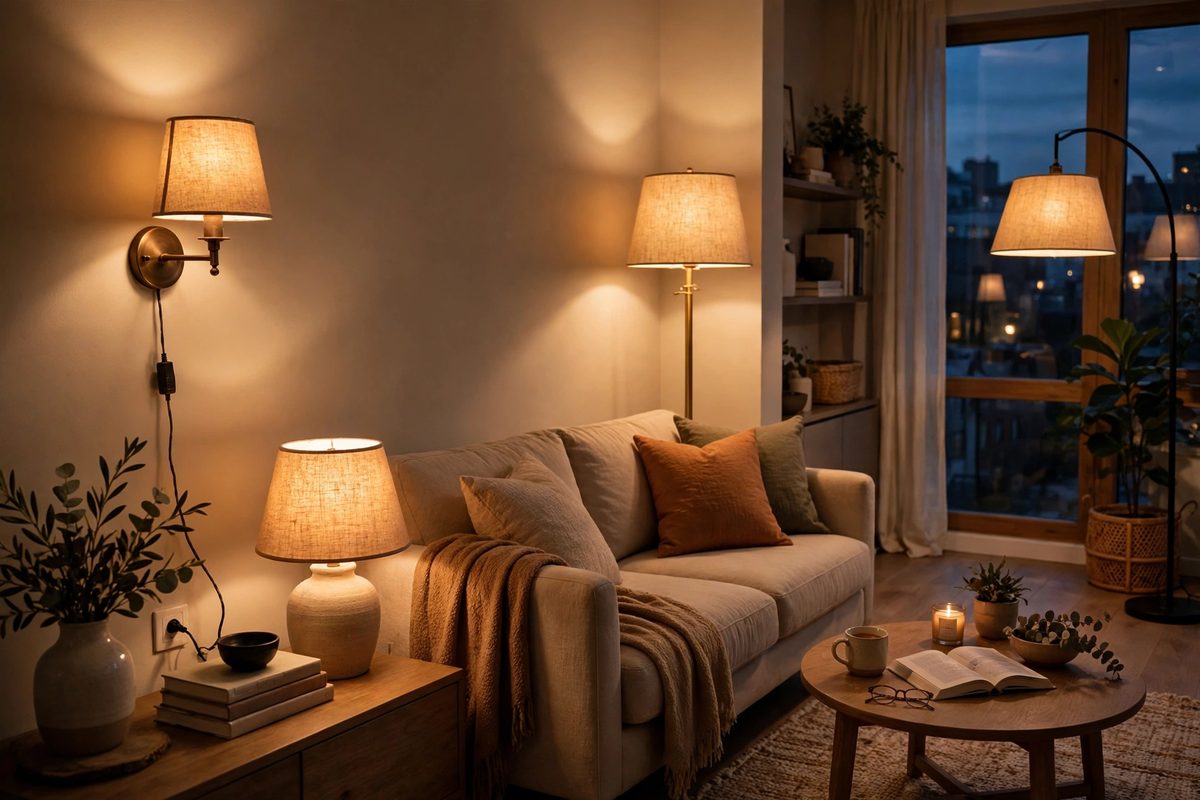
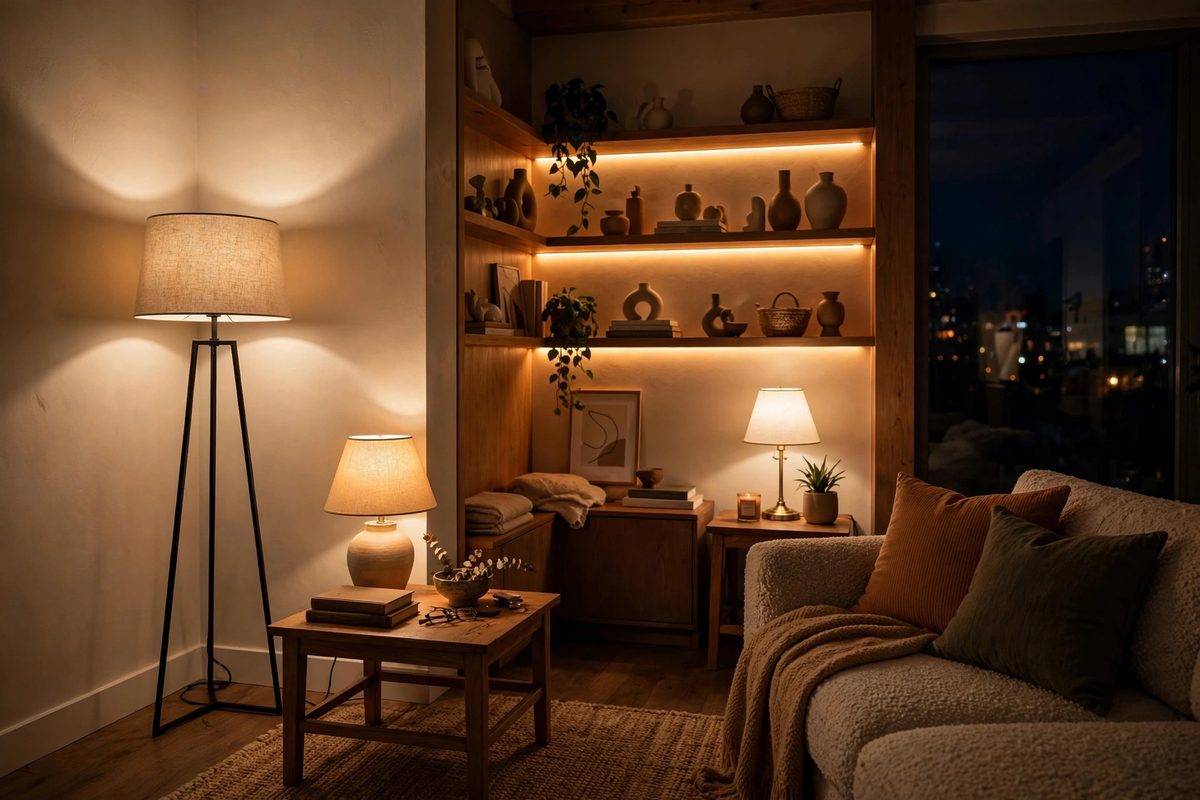
10 Renter-Friendly Lighting Ideas for Dark Apartments
10 renter-friendly lighting ideas for dark apartments, with the best lamps for dark rooms, apartment lighting tricks for windowless and north-facing rooms, color temperatures, mirrors, and light layering.
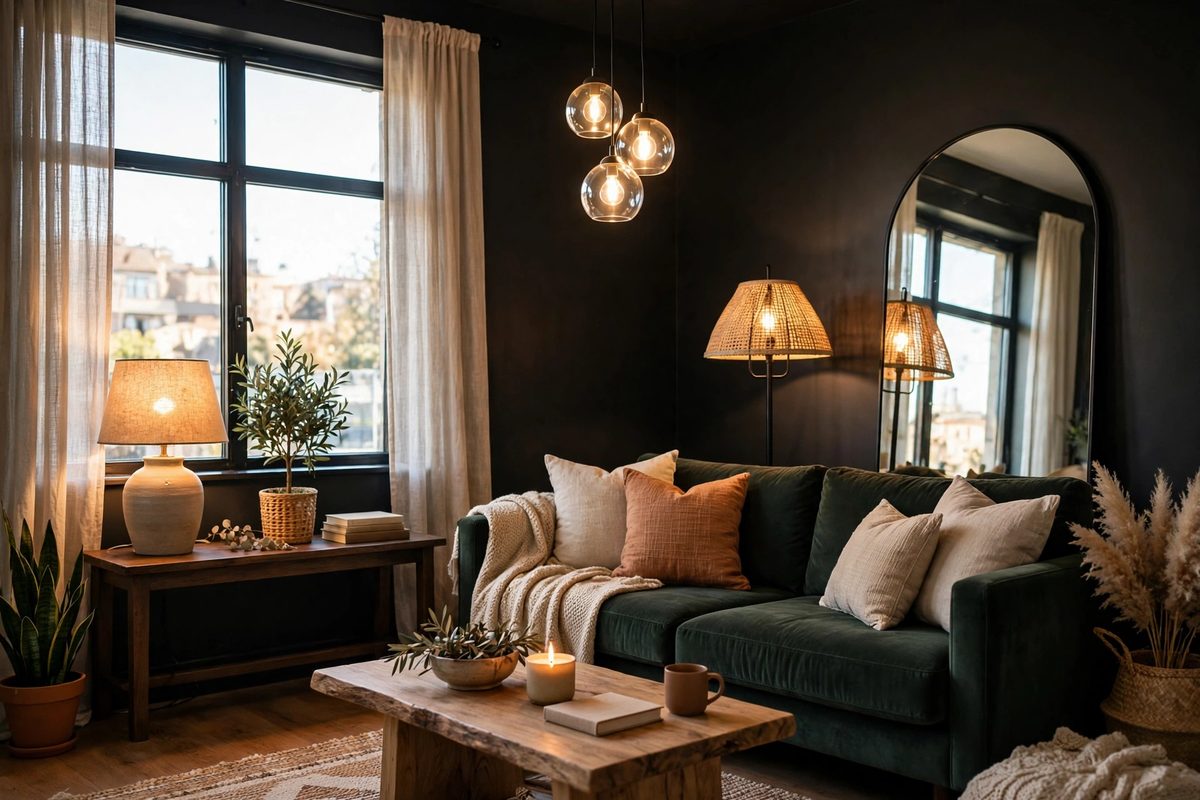
Dark apartment living room brightened with layered lamps, a large mirror, and warm daylight bulbs
In This Guide
A dark apartment is not a decorating failure, it is a lighting problem with specific causes: a north-facing window, a window that faces a brick wall or an air shaft, a basement level, or a room with no window at all. General renter lighting advice assumes you have decent daylight to build on. Dark-apartment lighting starts from zero, and it needs a different plan.
This post is only about dark rooms. It does not repeat general renter lighting, which our existing guide already covers in renter-friendly lighting ideas. Here you get the best lamps for dark rooms, the color temperatures that fight gloom instead of adding to it, mirror placement that multiplies what light you have, and a layering plan built for rooms where the sun barely shows up. If your apartment also lacks ceiling lights entirely, read how to light an apartment without ceiling lights alongside this one.
1. Diagnose the Darkness Before You Buy Anything
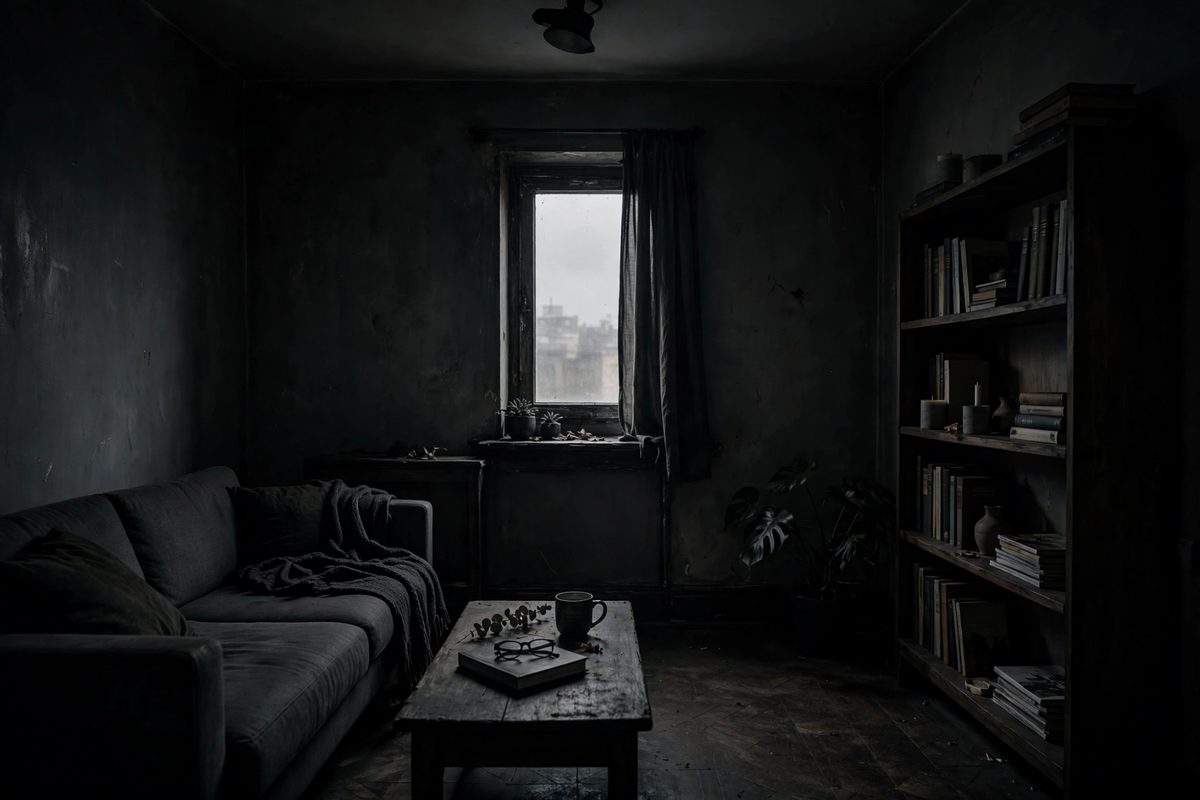
Every dark room has a dominant cause, and the fix depends on which one you have. A north-facing room gets steady but cool, weak light all day. A windowless room gets none. A ground-floor room facing another building gets a narrow band of light for an hour or two. A room with one small window gets a single bright patch and dark corners everywhere else.
Spend one day watching the room. Note when, if ever, direct sun enters, which walls stay dark at noon, and whether the darkness is worse in the morning or the afternoon. That single day of observation tells you whether you need daylight simulation, corner washing, or mirror work, and it stops you buying a lamp for a problem a mirror would have solved. Most renters overbuy lamps and underuse placement.
How to make it work
Stand in each corner at noon and at 6 p.m. and photograph the room from the doorway. The photos show dark zones your eyes adjust to and miss. Mark the three darkest spots on a rough sketch; those are your lamp positions, not the spots that look nice on a floor plan. If the whole room is dark even at noon, skip to the daylight simulation section below before buying decorative lamps.
2. Daylight Bulbs: The 5000K Fix for Gloomy Rooms
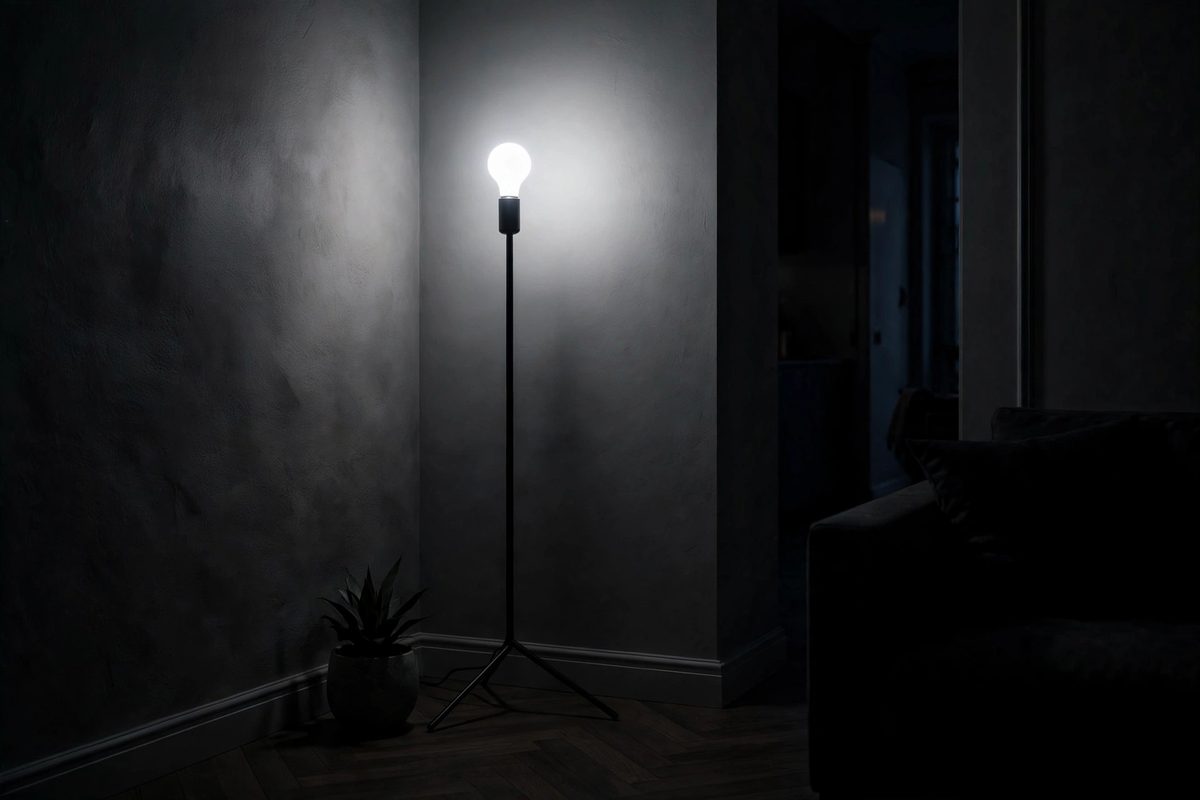
The single biggest mistake in dark apartments is using warm 2700K bulbs everywhere. Warm light feels cozy in a bright room, but in a dark room it reads as yellow gloom and makes white walls look dingy. Daylight bulbs at 4000K to 5000K mimic noon sun, sharpen colors, and make a dark room feel like it has a window it does not have.
Use daylight bulbs in your main ambient lamps: the floor lamp in the darkest corner and the table lamp you use most during the day. Keep warm 2700K bulbs for evening-only lamps, the bedside lamp and the reading lamp, so the room shifts from daylight simulation by day to cozy warmth at night. A 4-pack of daylight LED bulbs costs 10 to 15 dollars, and it changes a dark room more than a 100 dollar lamp with the wrong bulb in it.
How to make it work
Swap one lamp at a time and live with it for an evening before swapping the rest. Some people find 5000K too clinical in a bedroom; 4000K is the safer middle ground there. Never mix 2700K and 5000K bulbs in the same lamp cluster, since the eye reads the contrast as dirty light. Label your bulb boxes by room so the next swap keeps the scheme intact.
3. The Mirror Opposite the Light Source
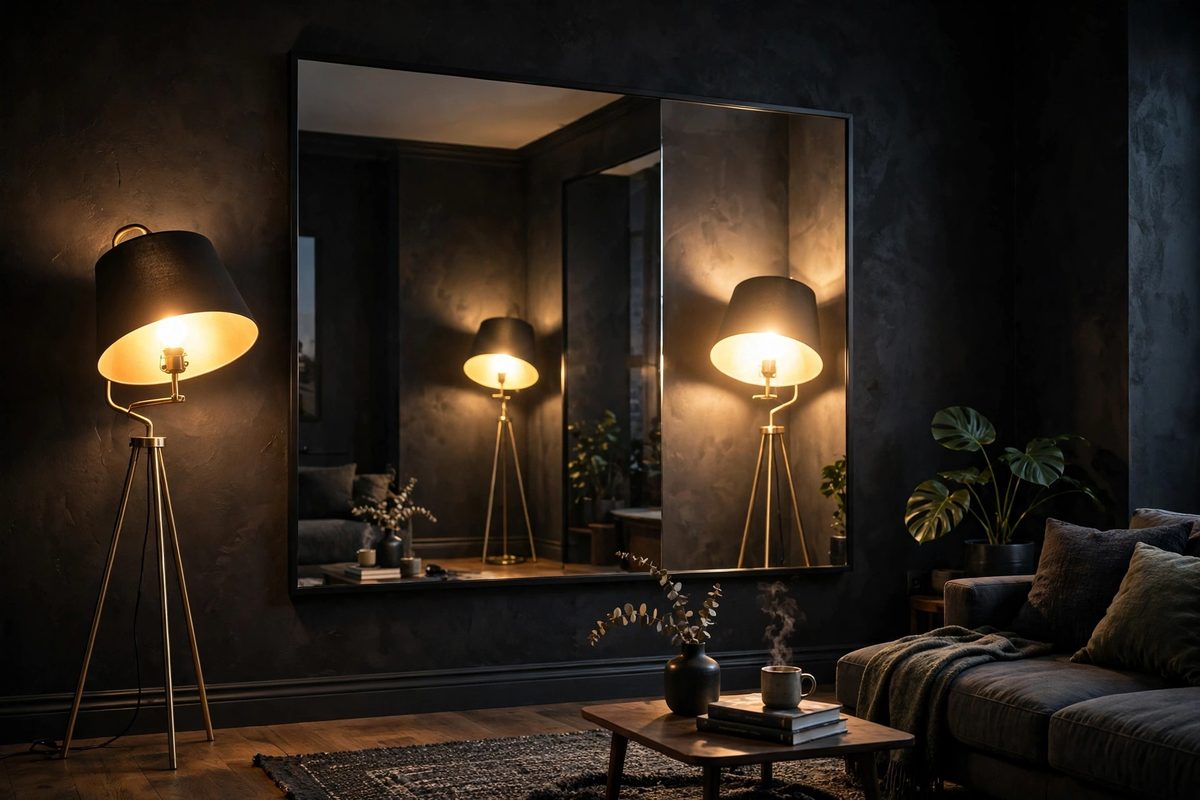
A mirror is the only free light in a dark apartment. Placed opposite a lamp or a window, it bounces that light back into the room and effectively doubles one light source. Placed on the same wall as the lamp, it does almost nothing. Placement is everything, and it costs nothing to get right.
The best spot is directly across from your brightest lamp or your only window, tilted very slightly downward so it reflects light into the room rather than up at the ceiling. A large mirror, 24 by 36 inches or bigger, moves noticeably more light than a cluster of small decorative mirrors. Lean a full-length mirror against the wall if your lease forbids hanging, and use a furniture strap at the top for stability. For mirror styles that suit small rooms, see narrow hallway mirror ideas and small bedroom mirror ideas.
How to make it work
Hold the mirror in position at night with the lamp on and watch where the reflected light lands. You want it on a dark wall or a seating area, not back at the lamp. If the reflection glares into your eyes from the sofa, shift the mirror 6 inches sideways until the glare clears. Clean the mirror weekly; a dusty mirror in a dark room scatters light instead of bouncing it.
4. The Corner Wash: One Tall Floor Lamp, Aimed at the Wall
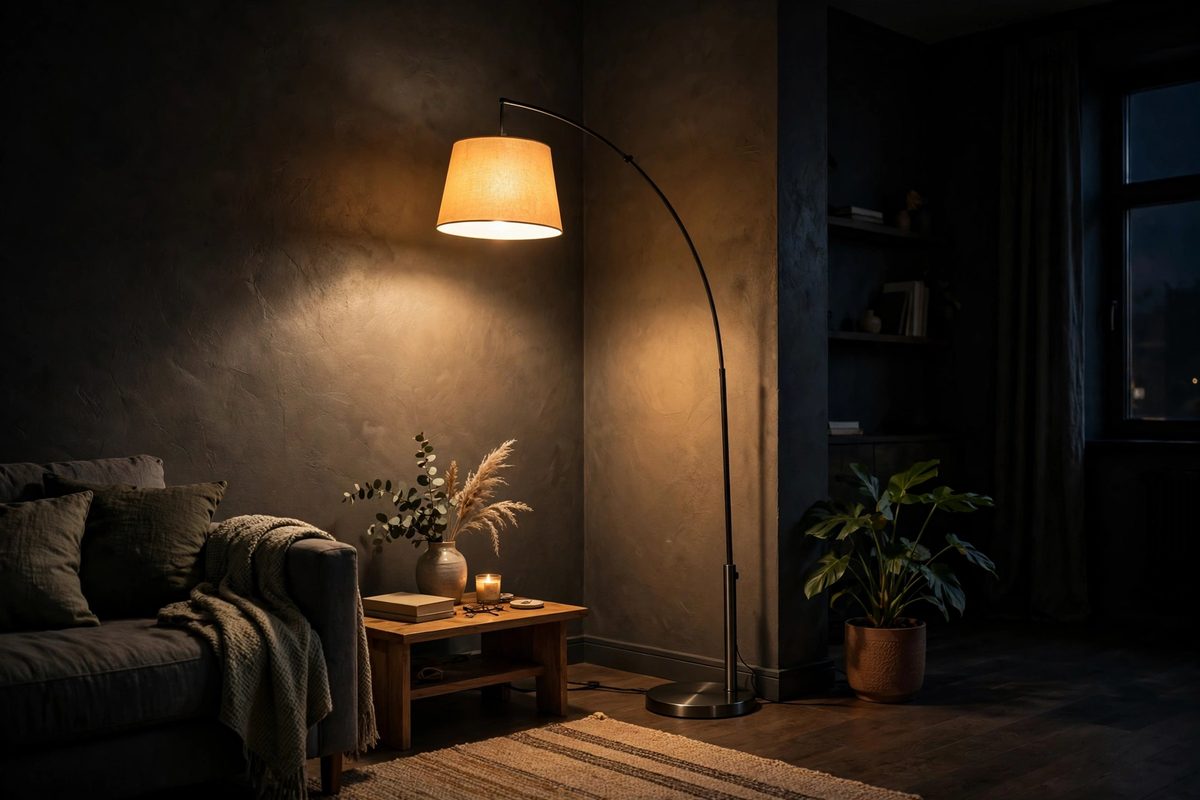
Dark rooms are dark in the corners first, and a corner wash fixes that without a ceiling light. A tall floor lamp placed 12 to 18 inches from a corner, aimed up and slightly toward the wall, turns the wall itself into a reflector. The light spreads softly instead of pooling in one bright circle, and the corner stops swallowing the room.
An arc lamp works best here because its head reaches over and toward the wall, but a simple torchiere, 60 to 100 dollars, does the same job if it has a dimmer. Use a 1000 to 1600 lumen daylight bulb for the wash during the day, dimmed to warm in the evening if the lamp allows two bulbs or a dimmable daylight bulb. For floor lamp styles, see small living room floor lamp ideas.
How to make it work
Keep the lamp out of the direct walking path, since a torchiere in a doorway gets knocked over. If the corner holds a plant, the wash light doubles as grow light for low-light plants like pothos, which is a genuine bonus in a windowless room. Check the lamp base weight; a base under 10 pounds tips easily on thick rugs, so choose a heavier base or a lamp with a wide foot.
5. Light Colors That Bounce Instead of Absorbing
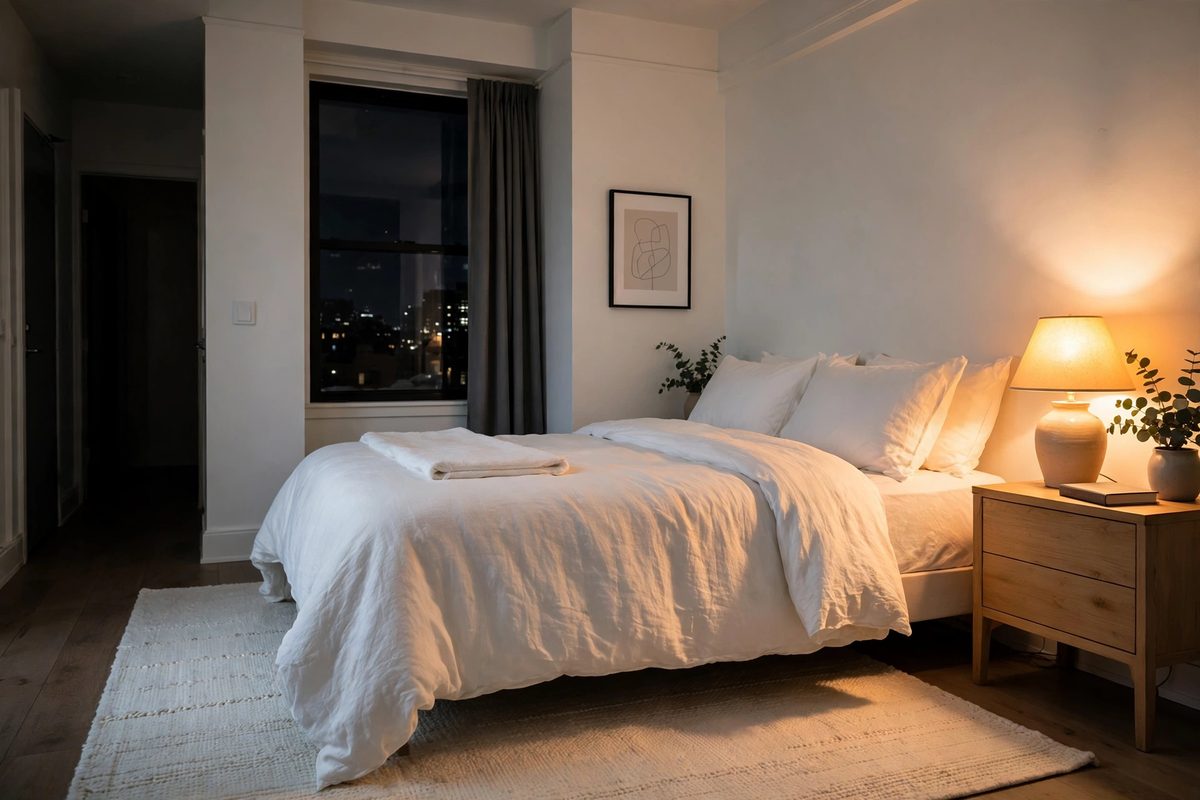
Dark furniture and dark walls absorb the little light a dark room has. You cannot repaint a rental, but you can add light surfaces exactly where light lands: a pale rug under the seating area, white or cream bedding, light cushion covers, and a light-colored throw over a dark sofa. Each one bounces a little light back, and together they lift the whole room by a visible step.
This is not about redecorating in white. One pale rug, 5 by 7 feet for 60 to 120 dollars, under the main seating area does more than a dozen small white accessories scattered around. A light shower curtain, light kitchen towels, and a pale table runner do the same work in rooms where a rug makes no sense. For the cozy side of this balance, see cozy apartment decor ideas.
How to make it work
Place the lightest surface directly under or opposite your brightest lamp, not in a corner the lamp never reaches. Test it at night: if the rug glows softly under lamplight, it is working; if it sits in shadow, move the lamp, not the rug. Avoid glossy white surfaces that glare; matte pale finishes bounce light without hot spots.
6. Layering for Rooms With No Daylight to Layer On
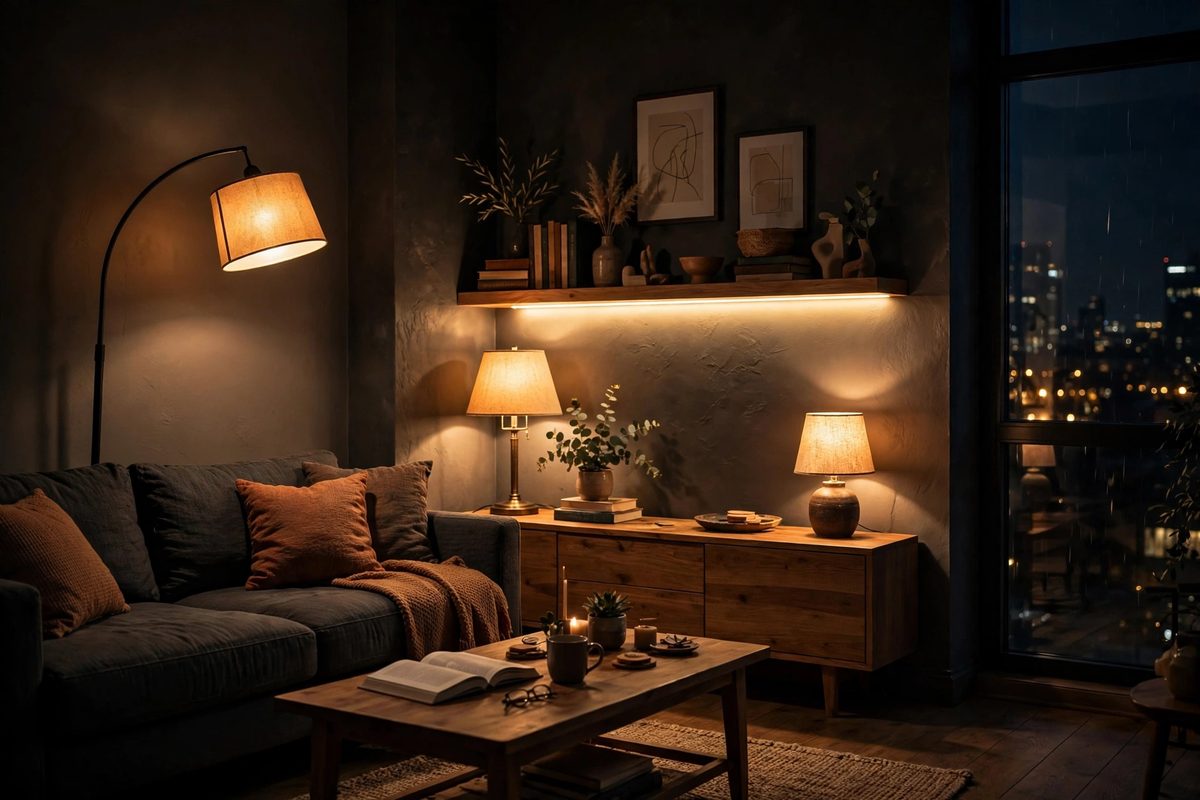
Layering in a dark room means something different than layering in a bright one. There is no daylight base layer, so you build one artificially: one ambient wash for general brightness, one task light for reading or work, and one accent light for warmth. Three lamps minimum in a dark living room, not one bright lamp doing everything.
The ambient wash is the corner floor lamp from section 4. The task light is a table lamp or swing-arm lamp at the reading chair or desk, 400 to 800 lumens, warm in the evening. The accent light is a small lamp on a shelf or a strip light under a shelf, 200 to 400 lumens, which stops the room feeling flat. Total cost for a decent three-lamp setup runs 120 to 250 dollars if you buy lamps over a few weeks rather than all at once. The living-room version of this plan is layered lighting for small living rooms.
How to make it work
Switch the layers on in order: ambient first, then task, then accent. If the room still feels dark with all three on, the problem is bulb brightness or color temperature, not lamp count; go up 200 lumens on the ambient lamp before buying a fourth lamp. Put the three lamps on one power strip with individual switches so the evening routine is one walk, not three hunts for switches.
7. Sheer Curtains and the Window You Do Have
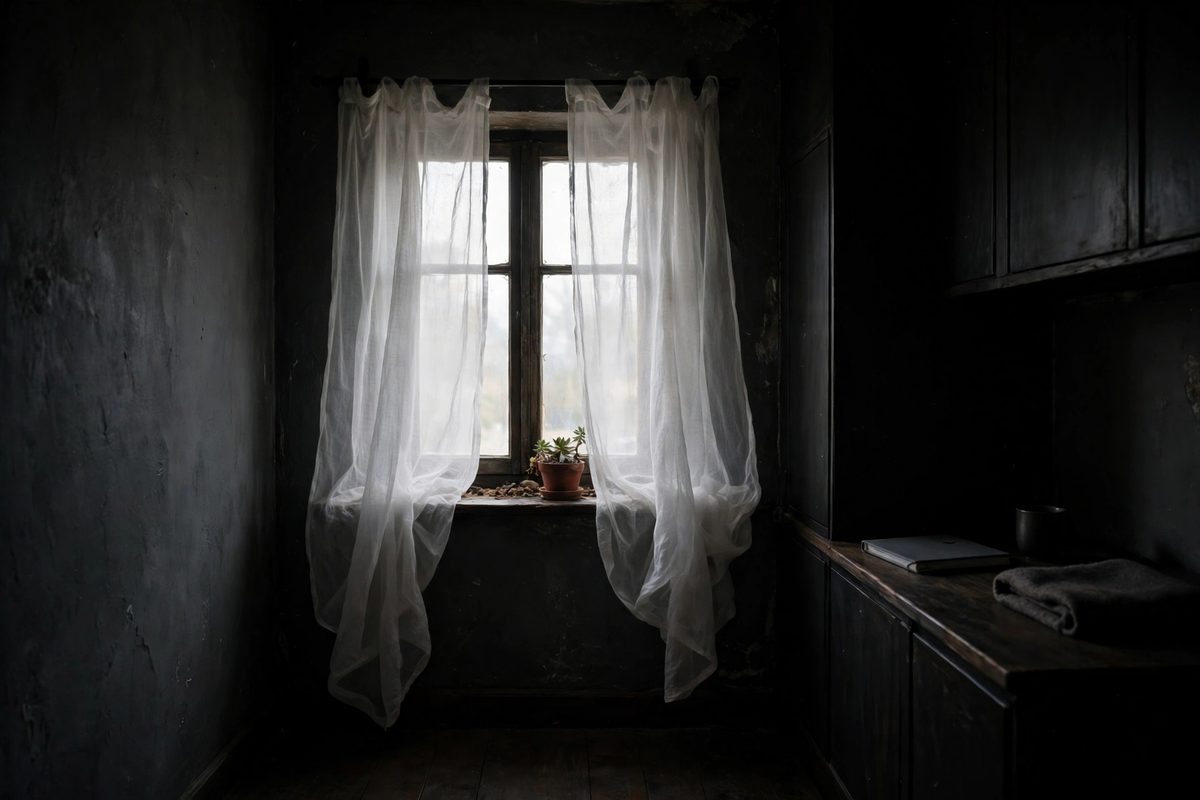
If your dark room has even one small window, heavy curtains are stealing light you cannot afford to lose. Swap them for sheer white curtains, 15 to 30 dollars a panel, which diffuse the light you get without blocking it, and keep the window glass and sill clean, since grime on a small window cuts a surprising amount of light.
Keep the window area clear for 3 feet inside: no tall bookcase, no drying rack, no plant stand blocking the lower half of the glass. If the window faces a wall or an air shaft, a sheer curtain still helps by softening the gray light into something that reads as daylight rather than gloom. For no-drill curtain mounting, see no-drill curtain ideas for rental apartments.
How to make it work
Hang sheers on a tension rod inside the window frame if your lease forbids drilling, and extend the rod 4 inches past the frame on each side so the curtain does not cover glass when open. Wash sheers every two months; dusty sheers yellow the light. If privacy is the issue, use a bottom-up sheer or a frosted window film on the lower half only, leaving the top half clear for light.
8. Under-Shelf and Under-Cabinet Strips for Dead Zones
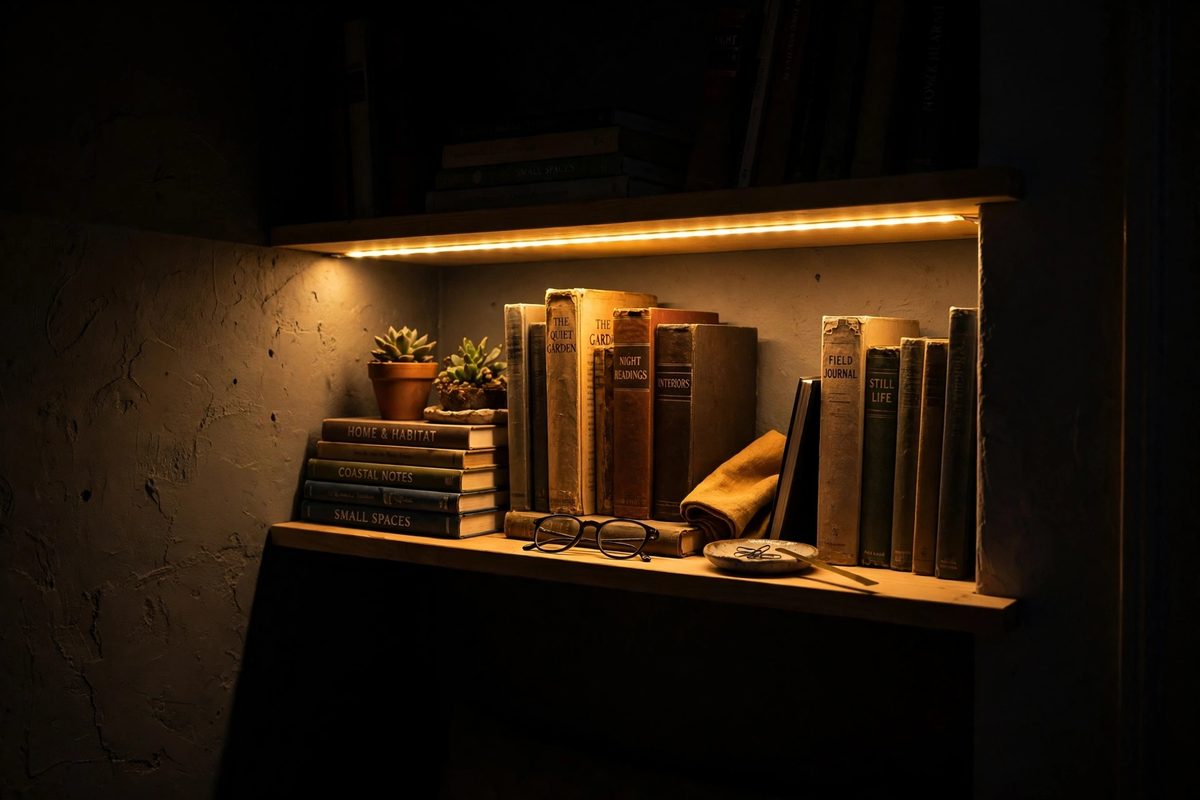
Dark rooms always have dead zones: the kitchen counter under wall cabinets, the desk under a shelf, the entry nook with no outlet nearby. Battery or USB LED strips, 15 to 30 dollars, fix dead zones without wiring and without a lamp footprint. They are the cheapest way to add a light exactly where darkness pools.
Use warm 2700K to 3000K strips for kitchen counters and shelves, since food and wood look better warm, and daylight strips for desks and work zones. A strip with a remote or a motion sensor earns its price in a dark entry or closet, where you want light the moment you walk in. The bedroom strip guide, with mounting and removal details, is LED strip ideas for bedrooms.
How to make it work
Measure the shelf or cabinet length and buy a strip 2 inches shorter, so the ends do not overhang and glare. Stick the strip to the underside front edge, not the back, so light falls forward onto the work surface rather than onto the wall. If the strip is battery powered, buy rechargeable batteries; a strip used daily eats alkaline batteries in two weeks.
9. The Evening Shift: From Daylight Simulation to Warm
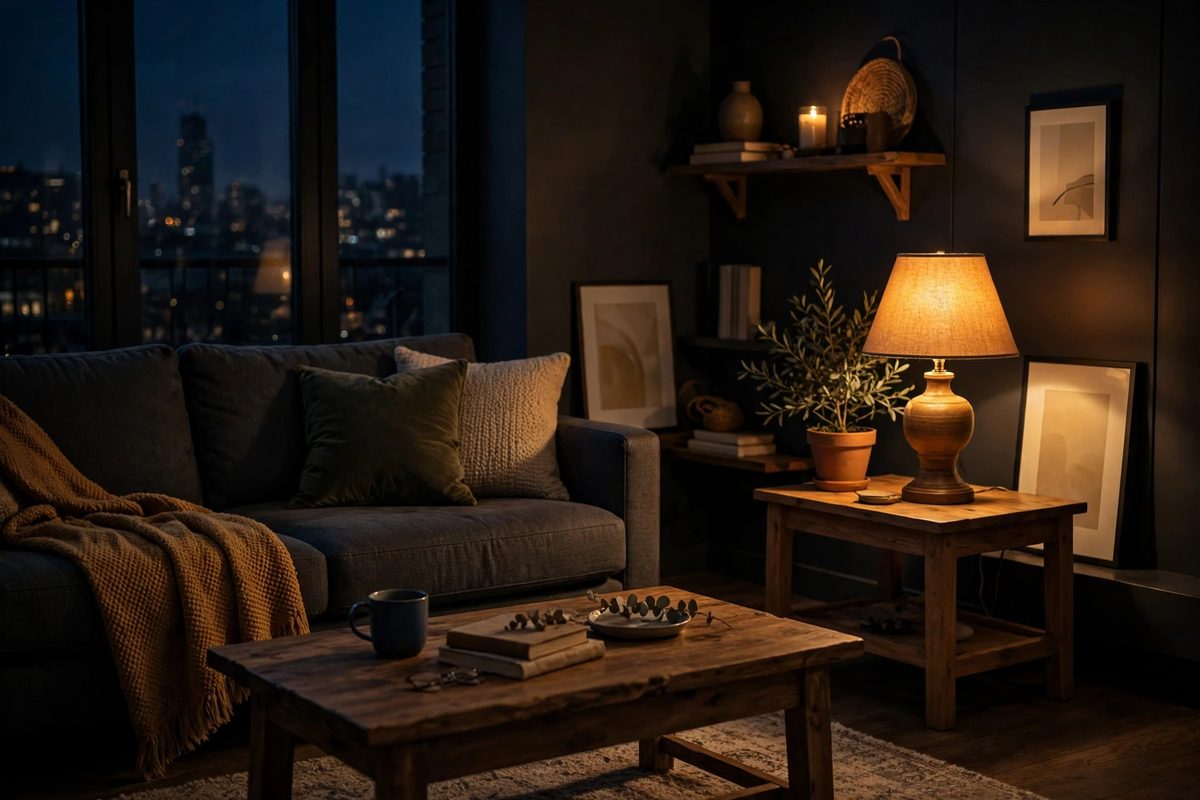
A dark apartment lit with daylight bulbs all evening feels like an office, not a home. The fix is a deliberate evening shift: at sunset, or whenever you stop working, dim the daylight ambient lamp or switch it off, and bring up warm task and accent lamps at 2700K. The room goes from bright and functional to warm and relaxing, and the shift itself signals the end of the workday.
Smart bulbs make this automatic: set a schedule that shifts color temperature from 5000K at noon to 2700K at 8 p.m. in the main lamps. A pair of smart bulbs costs 20 to 30 dollars and replaces the bulbs you already own. If smart bulbs are not your thing, a plug-in dimmer on the ambient lamp and a separate warm table lamp achieve the same shift manually.
How to make it work
Pick one trigger for the shift, sunset, dinner, or the end of work, and stick to it for a week. Consistency is what makes the shift feel like a routine rather than a chore. Keep the bedroom on warm light only after 8 p.m.; daylight bulbs late at night make falling asleep harder, and a dark apartment bedroom should feel restful, not lit like a studio.
10. The Dark Apartment Starter Kit and Budget
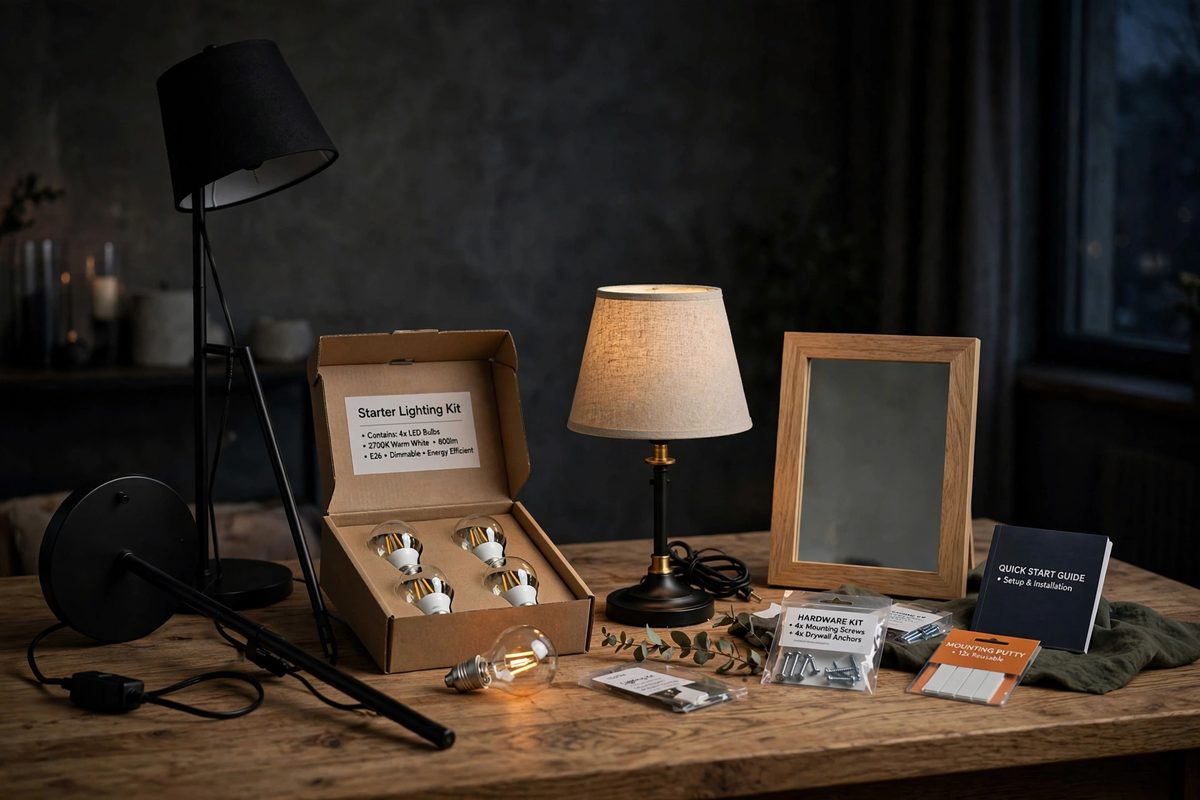
If you are starting from zero in a dark apartment, buy in this order and stop when the room feels right. First, daylight bulbs for the lamps you already own, 10 to 15 dollars. Second, one tall corner floor lamp with a dimmer, 60 to 100 dollars. Third, one large mirror opposite the lamp or window, 40 to 80 dollars. Fourth, one warm table lamp for the reading spot, 30 to 60 dollars. Fifth, one strip light for the worst dead zone, 15 to 30 dollars.
Total starter kit: 155 to 285 dollars, spread over a month or two. That is less than most renters spend on a single statement lamp that lights one corner and leaves the rest dark. If the room still feels gloomy after the kit, check the two most common culprits before buying more: a daylight bulb that is actually 2700K because the box was misread, and a mirror placed on the wrong wall. For the warmth and personality layer that sits on top of good lighting, see how to make a rental feel like home.
Dark apartments respond to systems, not single lamps. Fix the bulb temperature, bounce what light you have with a mirror, wash the darkest corner, and layer task and accent light on top. Do those four things and the room stops feeling like a cave, even on a gray February afternoon.