9 Narrow Hallway Mirror Ideas That Make the Passage Feel Wider
Nine narrow hallway mirror ideas that make the passage feel wider, from full length leaning mirrors to mirrored panels and arched designs.
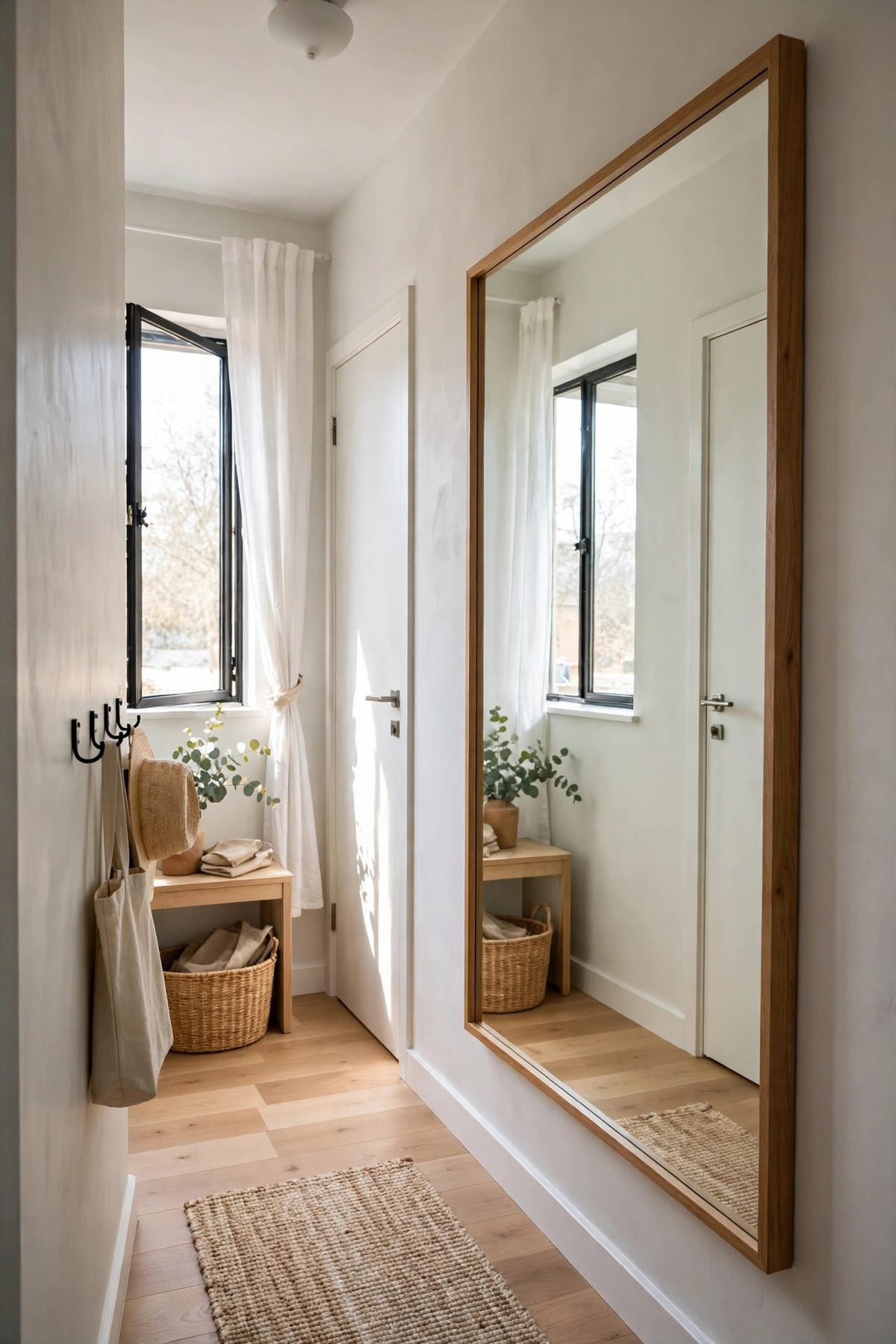
Narrow apartment hallway with a large mirror on the wall making the passage feel wider and brighter
In This Guide
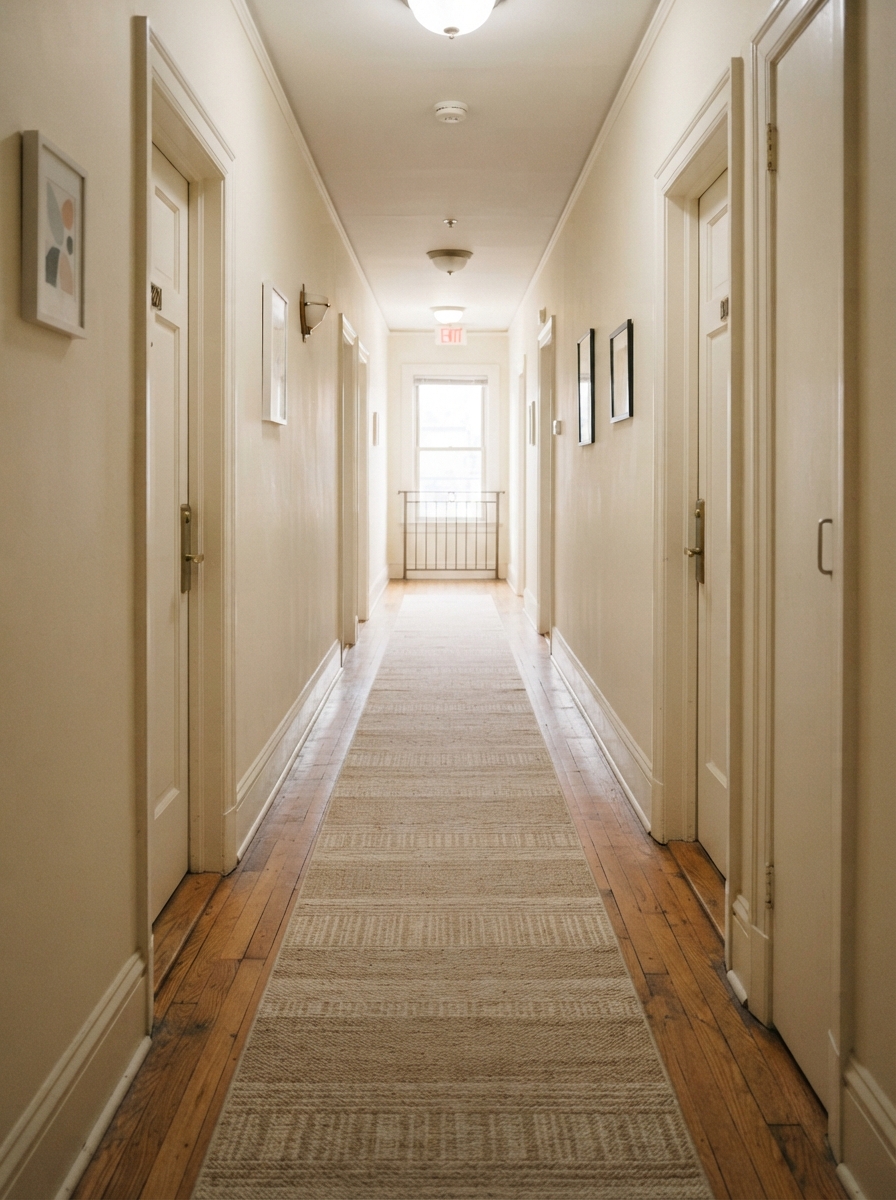
A narrow hallway is one of the hardest spaces in a small apartment. It is usually 36 to 42 inches wide, with doors on both sides, little natural light, and no room for furniture. It can feel like a tunnel, especially if the walls are dark or the ceiling is low.
Mirrors are the classic fix, and they work, but only when they are sized and placed well. A tiny mirror in a narrow hallway does almost nothing. A large mirror that reflects a blank wall or a cluttered room can make the hallway feel worse. The goal is to reflect light, a view, or an open room, so the passage feels wider and brighter.
Measure your hallway before buying: the width, the wall length available, and the height to the ceiling. A mirror should never reduce the walkway below 30 inches, since that is the minimum comfortable passage width. For related small space ideas, see small kitchen food container storage ideas and small living room ideas without a coffee table, plus narrow hallway ideas for small apartments for the full hallway plan.
These 9 ideas show how to use mirrors to widen a narrow hallway without crowding it.
1. A Full Length Leaning Mirror
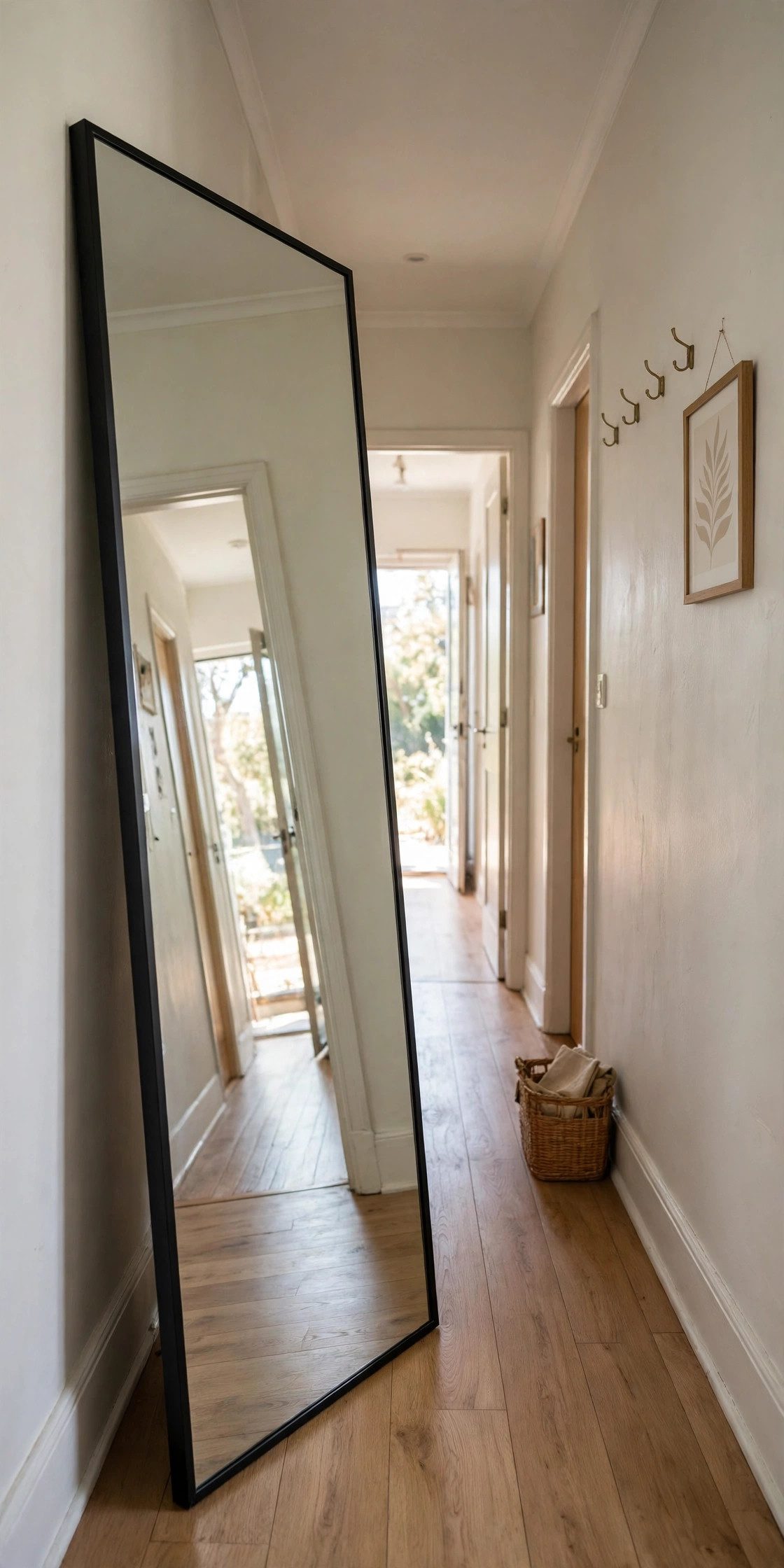
A full length leaning mirror, about 60 to 70 inches tall and 20 to 24 inches wide, is the simplest hallway mirror. Leaned against the wall at a slight angle, it reflects the full length of the hallway and makes the space feel taller as well as wider.
Leaning mirrors cost 60 to 150 dollars. The slight angle is key: a mirror leaned at about 5 degrees reflects more of the room and less of the floor, which is what creates the widening effect. Secure the top to the wall with a small anchor or adhesive pad, especially in homes with kids or pets, so it cannot tip.
How to make it work
Place the leaning mirror on the longer wall, not at the end of the hallway, so it reflects the passage itself. Leave at least 30 inches of walkway beside it, so the mirror does not become an obstacle. If the hallway is under 36 inches wide, choose a narrower mirror, 18 inches wide, to keep the passage comfortable.
2. A Round Mirror Above a Console
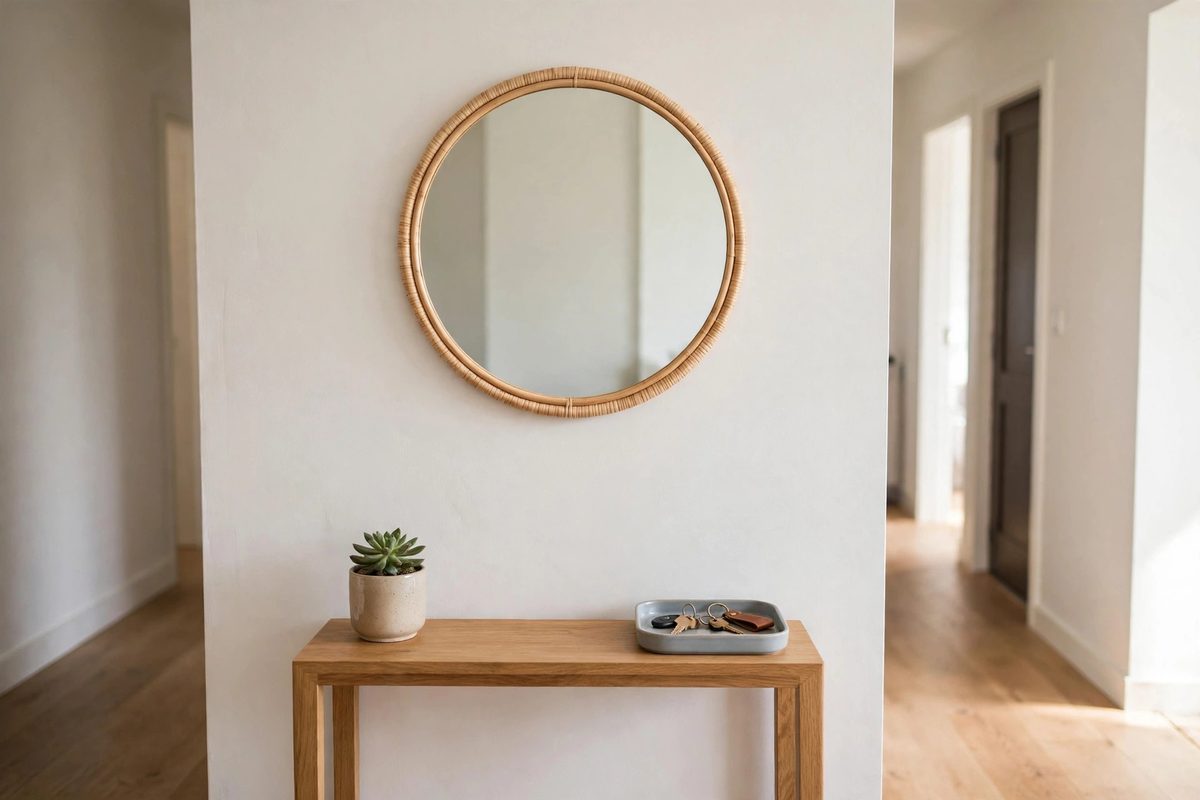
A round mirror above a narrow console table softens a hallway that is all straight lines. A 24 to 30 inch round mirror, hung 6 to 8 inches above a console that is no deeper than 10 inches, creates a focal point without taking floor space.
Console tables for narrow hallways cost 80 to 200 dollars, and mirrors in this size cost 40 to 100 dollars. The console gives you a place for keys, mail, and a small plant, while the mirror above it doubles the light in the entry zone.
How to make it work
Center the mirror on the console, not on the wall, so the pairing reads as one arrangement. Keep the console surface mostly clear: a small tray and one plant are enough. If the hallway has no room for a console, a round mirror alone on the wall still softens the space, especially if it reflects a window or a light colored room.
3. Mirrored Panels in a Grid
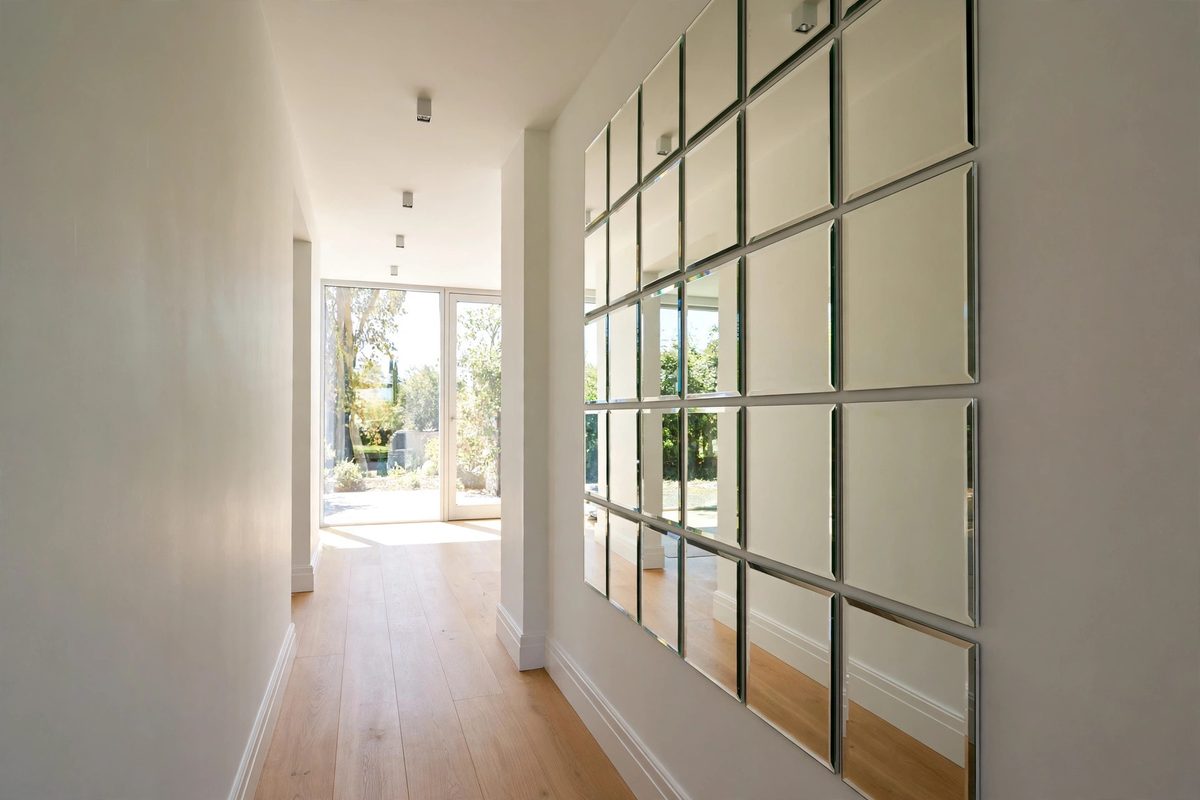
A grid of mirrored panels, four to six square mirrors arranged together, covers more wall than a single mirror and creates a window-like effect. Each panel can be 12 to 16 inches square, so the whole grid is about 36 by 48 inches, large enough to reflect a real view.
Mirror panel sets cost 30 to 80 dollars, and many come with adhesive backing for renter friendly installation. The grid reads as intentional decor, not just a mirror, which suits hallways that need visual interest as well as width.
How to make it work
Space panels 2 to 3 inches apart, with consistent gaps, so the grid looks precise. Hang the grid at eye level, with the center about 57 to 60 inches from the floor, which is standard gallery height. Avoid placing a grid opposite a cluttered room, since it will multiply that clutter in reflection.
4. An Arched Mirror for Softness
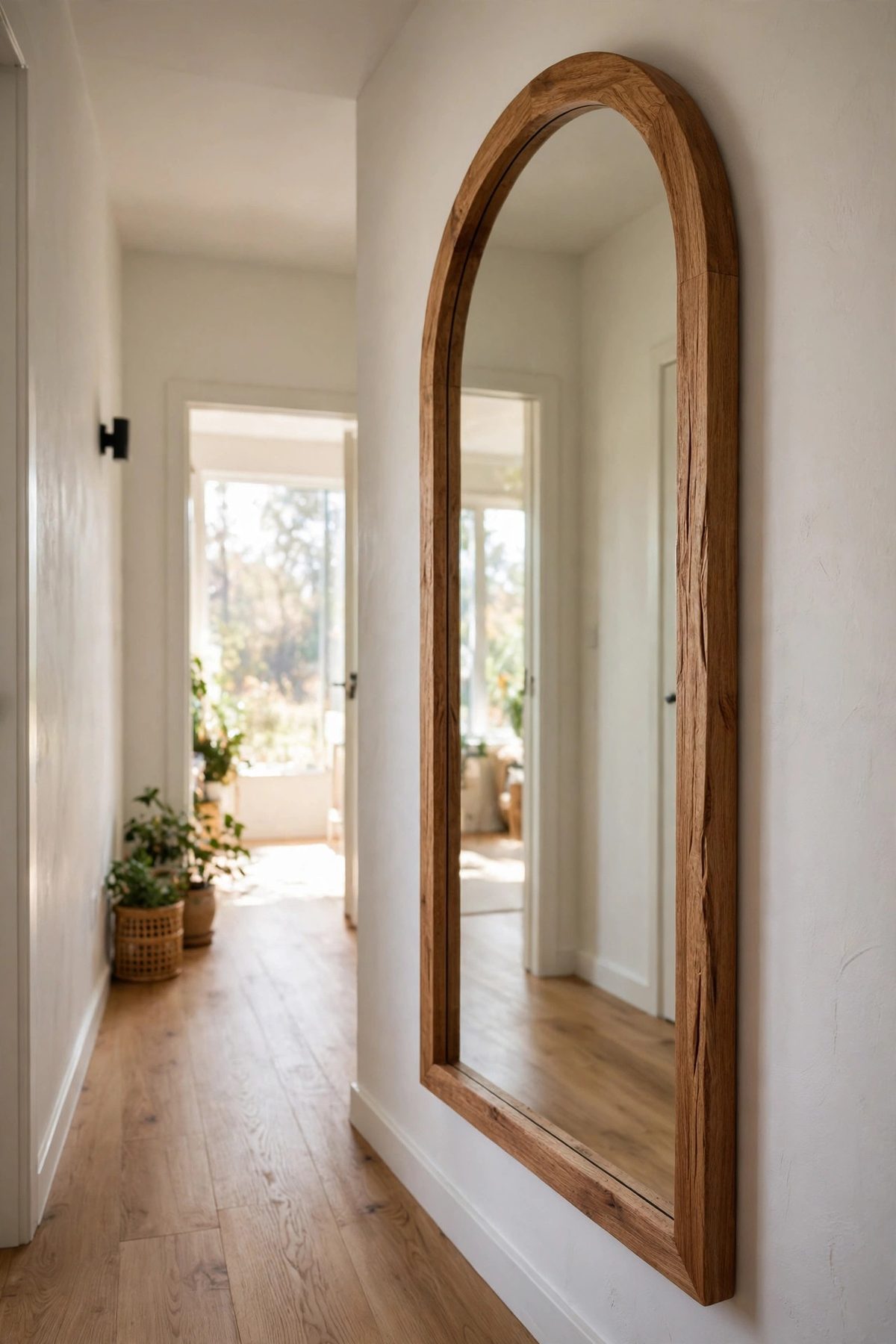
An arched mirror, with a rounded top, softens a hallway full of door frames and right angles. A 20 by 60 inch arched mirror works well in a narrow hallway, since the arch draws the eye up and makes the ceiling feel higher.
Arched mirrors cost 80 to 200 dollars depending on frame material. Wood and brass frames add warmth, while a frameless arched mirror looks more modern and takes up less visual space.
How to make it work
Hang the arched mirror so its center is at eye level, about 57 inches from the floor, not so high that you see only the ceiling in it. Pair it with a small wall light or a sconce beside it, so the mirror reflects light as well as space. If the hallway is very narrow, choose a mirror no wider than 24 inches, so it does not dominate the wall.
5. A Mirror Opposite a Window or Light
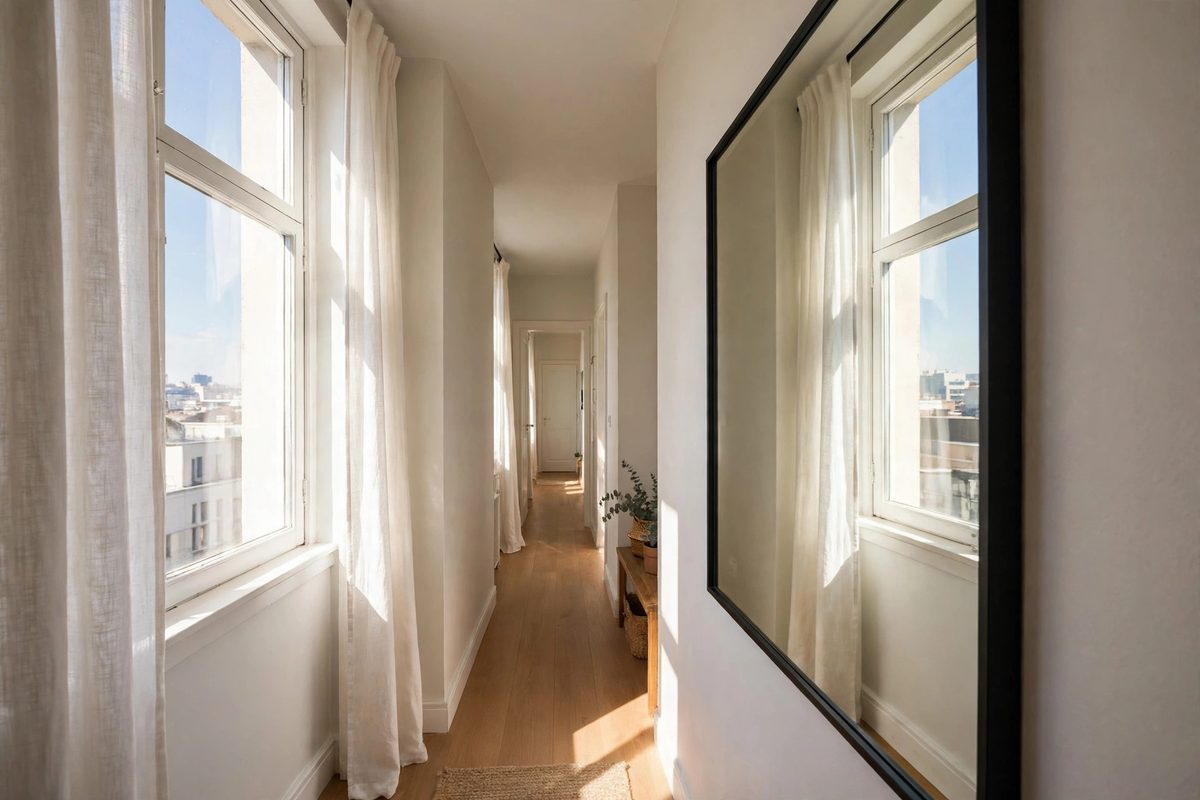
Placement matters more than mirror style. A mirror opposite a window, a glass door, or a bright room reflects light deep into a dark hallway, which is what actually makes it feel wider. A mirror on a wall with no light source nearby reflects only the opposite wall, which does little.
This idea costs nothing if you already own a mirror: move it to the wall opposite the brightest opening. If the hallway has no window, place the mirror opposite the doorway to the brightest room, like the living room, so it borrows that light.
How to make it work
Stand in the hallway and look into the mirror from the main walking path: you should see light or an open room, not a blank wall or a closet door. Angle the mirror slightly if needed, by adding a small spacer behind one side, to catch the light source. Keep the light source clean and uncluttered, since the mirror will double whatever it reflects.
6. A Mirrored Console Pairing
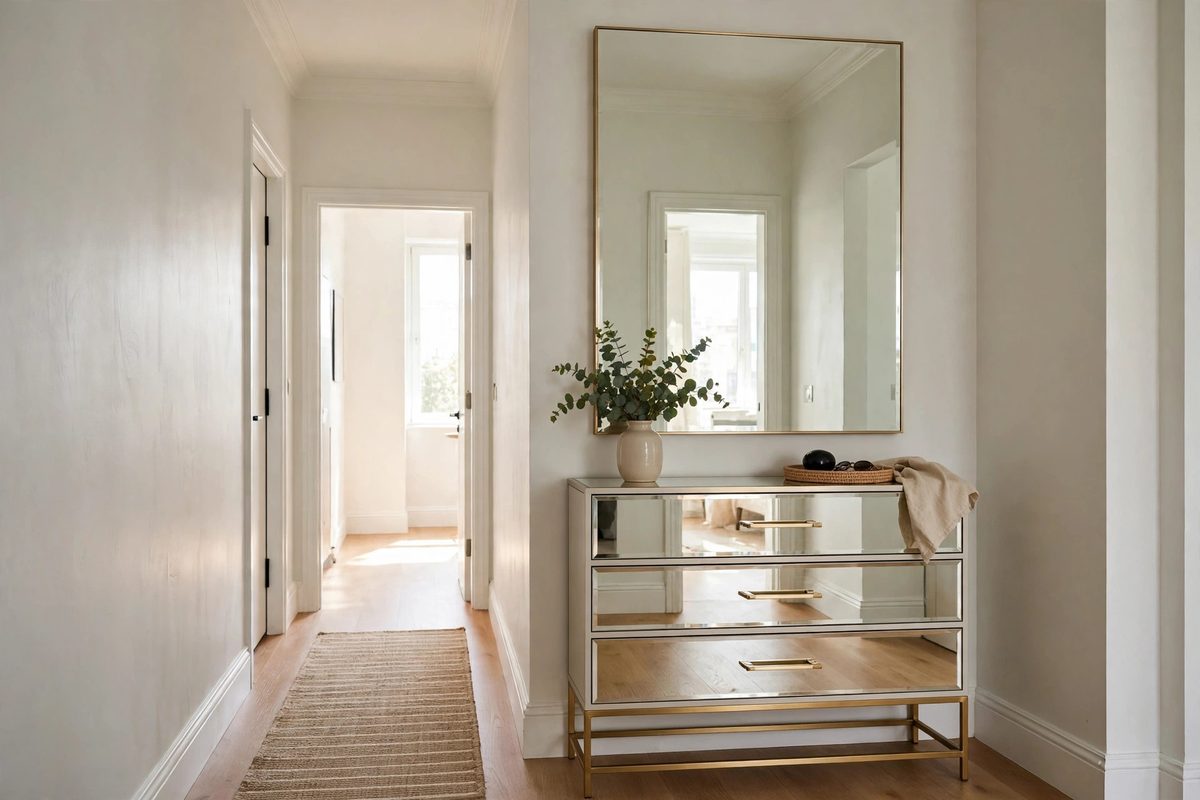
A console table with a mirrored front, paired with a mirror above it, doubles the reflective effect. The mirrored furniture reflects the floor and the opposite wall, while the wall mirror reflects the room, so the hallway gains depth in two directions.
Mirrored consoles cost 150 to 350 dollars, so this is a larger investment than a mirror alone. It suits entry hallways where you want a polished look and have a wall at least 36 inches long for the console.
How to make it work
Keep the mirrored console surface clear, since a cluttered mirrored surface reflects clutter twice. Use the console for a tray, a candle, and keys only. If a full mirrored console is too much, a console with mirrored drawer fronts gives a similar effect at a lower cost and with less glare.
7. A Gallery of Small Mirrors
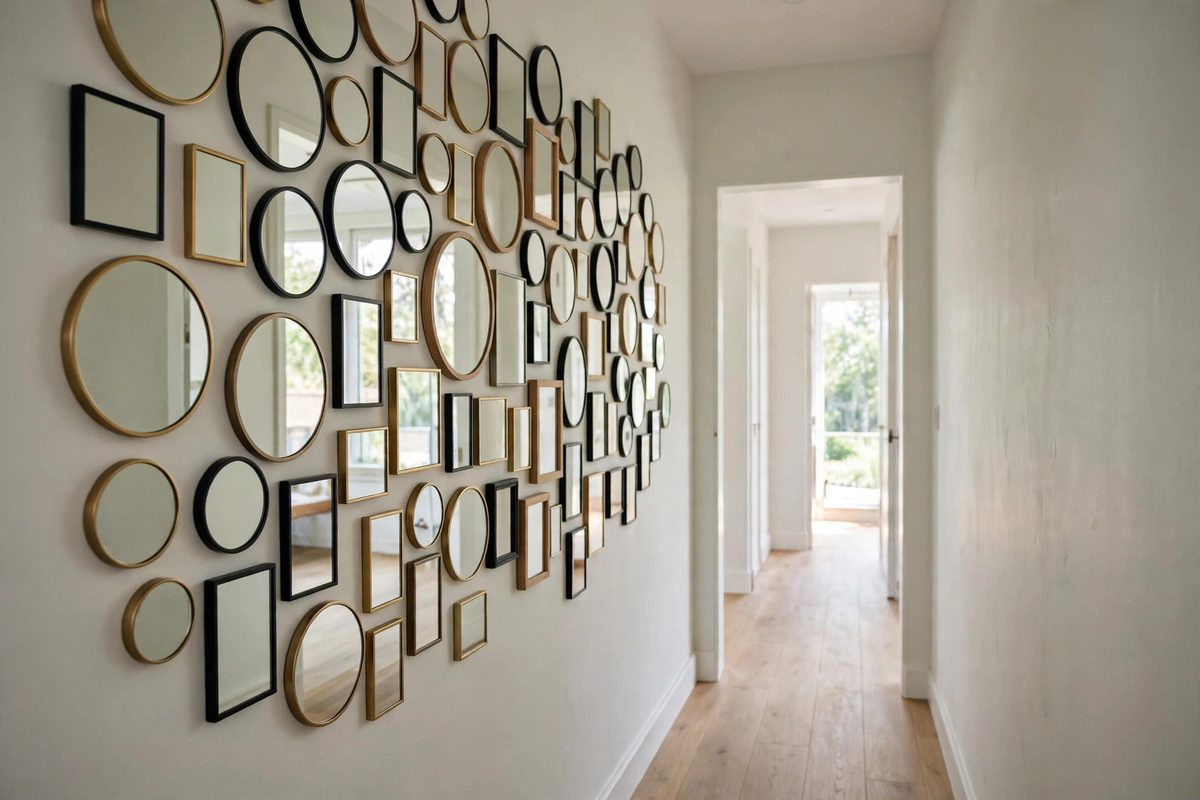
A gallery of small mirrors, in varied shapes and sizes, adds personality to a hallway while still widening it. Five to seven mirrors, ranging from 8 to 16 inches, arranged in a loose cluster, reflect light from multiple angles and create visual interest on a long blank wall.
Small mirrors cost 10 to 30 dollars each, so a gallery can be built gradually. This suits renters, since small mirrors can hang on adhesive hooks rated for their weight, with no drilling.
How to make it work
Plan the arrangement on the floor first, then transfer it to the wall, keeping 3 to 4 inches between mirrors. Mix shapes, round, rectangular, and arched, but keep frames in one material or color family so the gallery looks cohesive. Hang the gallery on the longer wall, not at the end of the hallway, so it is seen while walking through, not just when arriving.
8. A Mirror With a Shelf
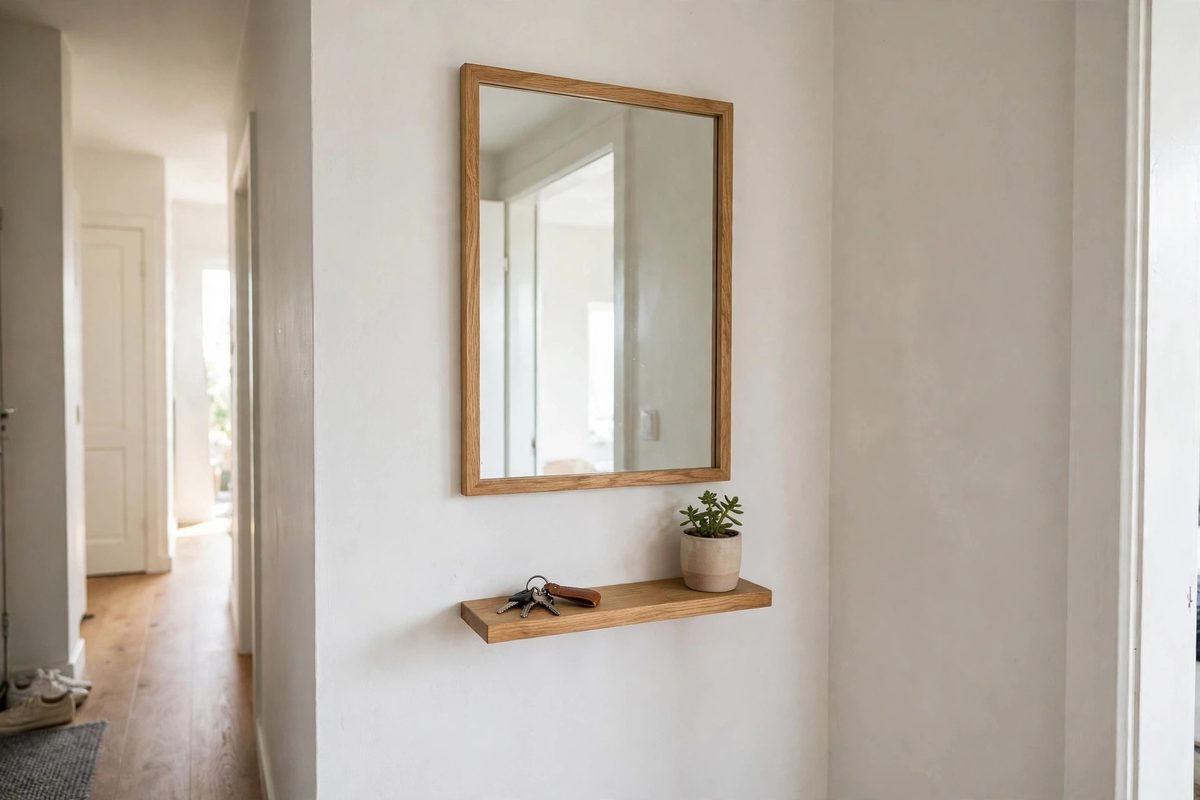
A mirror with a built in shelf underneath combines reflection with function. The shelf, usually 4 to 6 inches deep, holds keys, a small plant, or a candle, so the hallway gains storage without a separate piece of furniture.
Mirror shelf combos cost 50 to 120 dollars. They work best in entry hallways where you need a landing spot for daily items, and where a full console table would block the passage.
How to make it work
Mount the mirror shelf at a height where the shelf is easy to reach, about 48 to 54 inches from the floor for the shelf itself. Keep only two or three items on the shelf, since a crowded shelf in front of a mirror looks doubly cluttered in reflection. If the shelf is near a door, make sure the door does not hit it when it swings open.
9. A Smoked or Bronze Mirror for Warmth
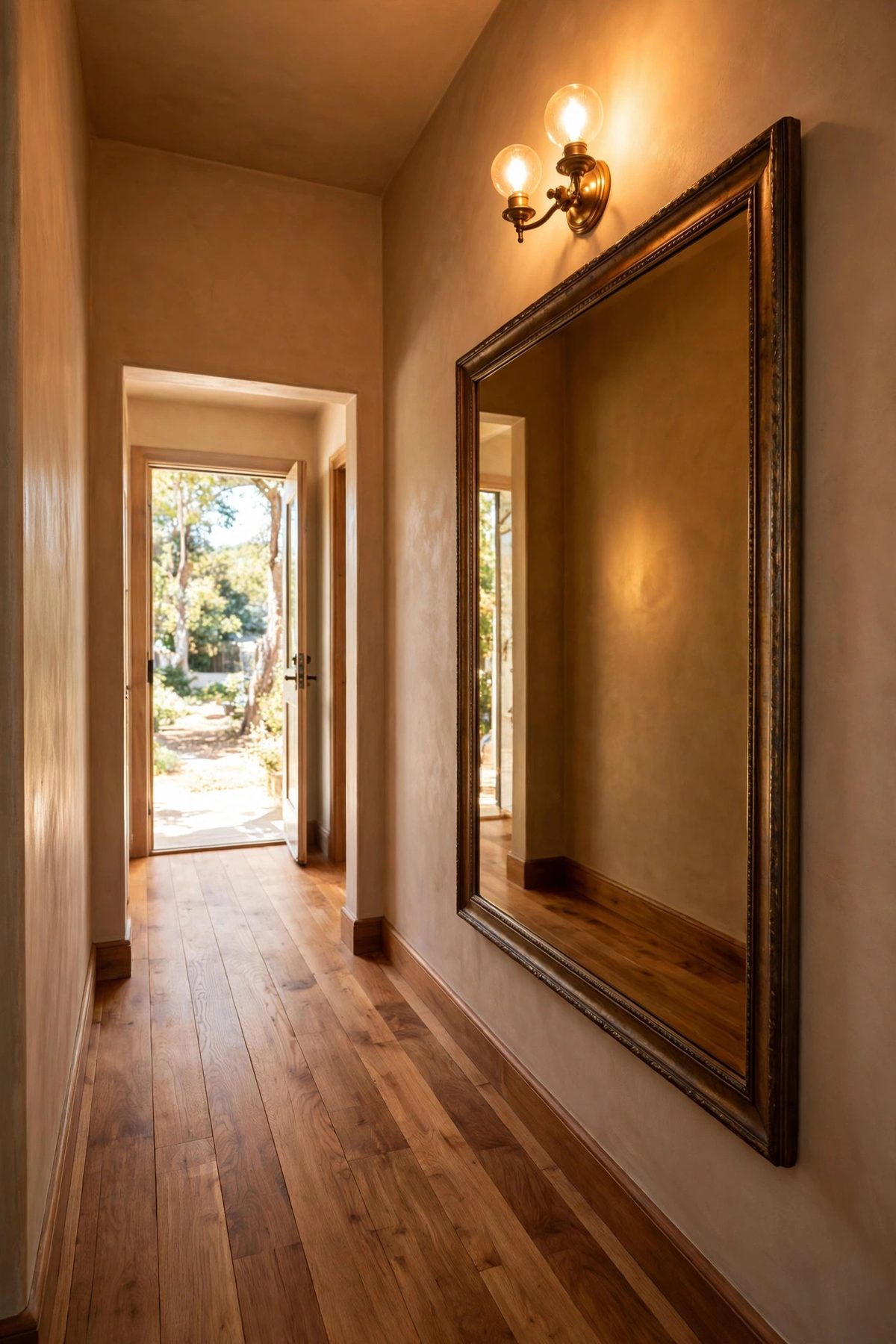
Clear mirrors can feel cold in a hallway with warm wood floors or warm wall colors. A smoked or bronze tinted mirror reflects light more softly, adds warmth, and still widens the space, while looking more like decor than a plain mirror.
Tinted mirrors cost 20 to 40 percent more than clear mirrors in the same size, roughly 100 to 250 dollars for a hallway size. The tint reduces reflection slightly, so this choice suits hallways that already have good light, where you do not need maximum brightness.
How to make it work
Pair a bronze mirror with warm wood, brass, or cream walls, so the tint feels connected to the room. Avoid tinted mirrors in very dark hallways, since the tint will make the reflection dimmer. If you are unsure, buy one small tinted mirror first and live with it for a week before committing to a large one.
A narrow hallway does not need to feel like a tunnel. One well placed, well sized mirror, reflecting light and an open view, can make the same passage feel wider, brighter, and far more welcoming.