11 Afrohemian Decor Ideas for Small Apartments That Feel Warm, Collected, and Uncluttered
Discover 11 Afrohemian decor ideas for small apartments featuring warm neutrals, Adire textiles, handwoven baskets, sculptural wood, and meaningful art without clutter.
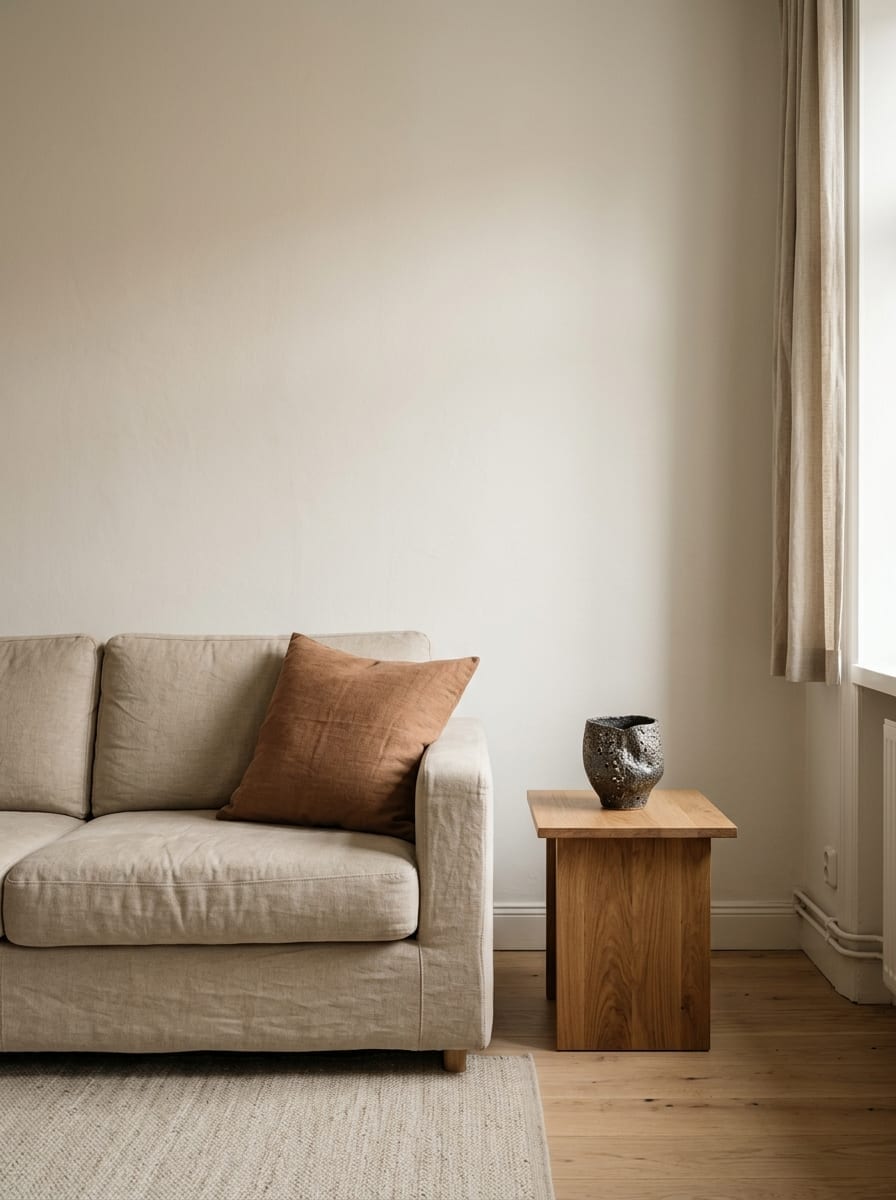
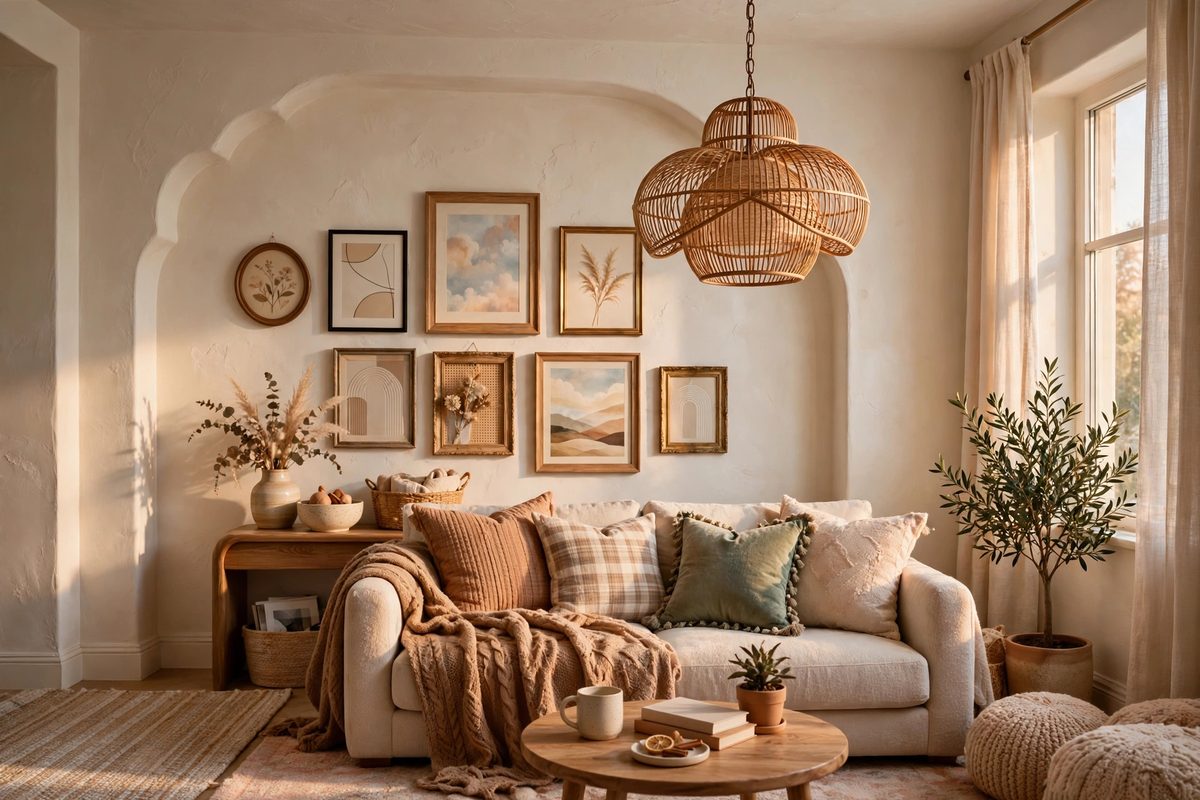
Warm neutral small apartment living room with natural wood furniture, indigo textile accents, and handcrafted ceramics
In This Guide
Afrohemian decor brings together expressive art, textiles, natural materials, handcrafted objects, and relaxed layering to create a home that feels personal rather than overly coordinated. In a small apartment, this approach can be especially appealing because a few meaningful pieces can add warmth, texture, and character without requiring more furniture.
The challenge is knowing where to stop. Too many competing patterns, decorative objects, and strong colors can make a compact room feel crowded. And when every item is chosen simply because it looks “Afrohemian,” the result can feel themed rather than personal.
The better approach is to start with a calm foundation, choose a few pieces you genuinely connect with, and give each one enough space to stand out.
Afrohemian is a contemporary decor label, not one unified African tradition. African countries, communities, and diasporas have distinct artistic and design histories. When incorporating specific textiles, artworks, or handcrafted pieces, learn about their origins and credit the makers whenever possible.
These 11 Afrohemian decor ideas show how to create a warm, collected look while keeping a small apartment functional and visually balanced.
1. The Warm Neutral Foundation
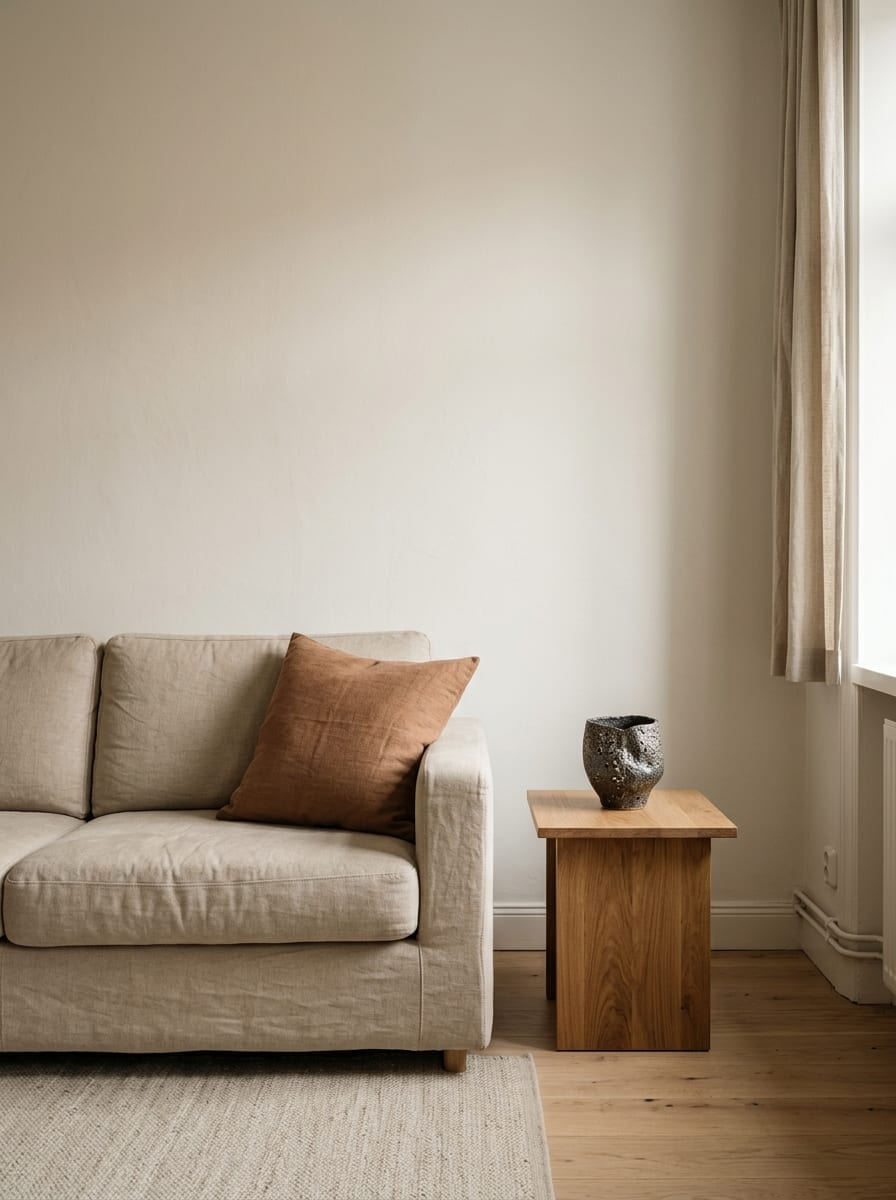
A warm neutral foundation gives more expressive pieces room to shine. Instead of filling every wall with color or covering every surface with pattern, begin with a few understated colors that work well together.
Think warm white, sand, soft beige, natural wood, or a muted clay tone. These shades create a comfortable backdrop for indigo textiles, sculptural wood, colorful artwork, and handcrafted ceramics.
How to make it work
Choose one main background color and one or two supporting tones. If your apartment already has white walls and light flooring, you may not need to repaint anything. Use textiles, cushions, and smaller furniture pieces to introduce warmth.
Natural wood can help connect the palette, especially when the room contains several different textures. A wooden side table, a woven basket, and a linen cushion can feel cohesive even when their materials are not identical.
Keep the largest surfaces relatively calm. A neutral sofa or simple bedding gives a patterned textile or distinctive piece of art a place to stand out.
What to avoid
Do not assume every surface needs to be beige, brown, or terracotta. A neutral foundation should support contrast, not eliminate it. A small amount of deep indigo, charcoal, green, or another considered accent can give the room more definition.
Best for: Apartments with plain walls, neutral furniture, or a room that needs warmth without additional visual clutter.
2. The Adire Textile Focal Point
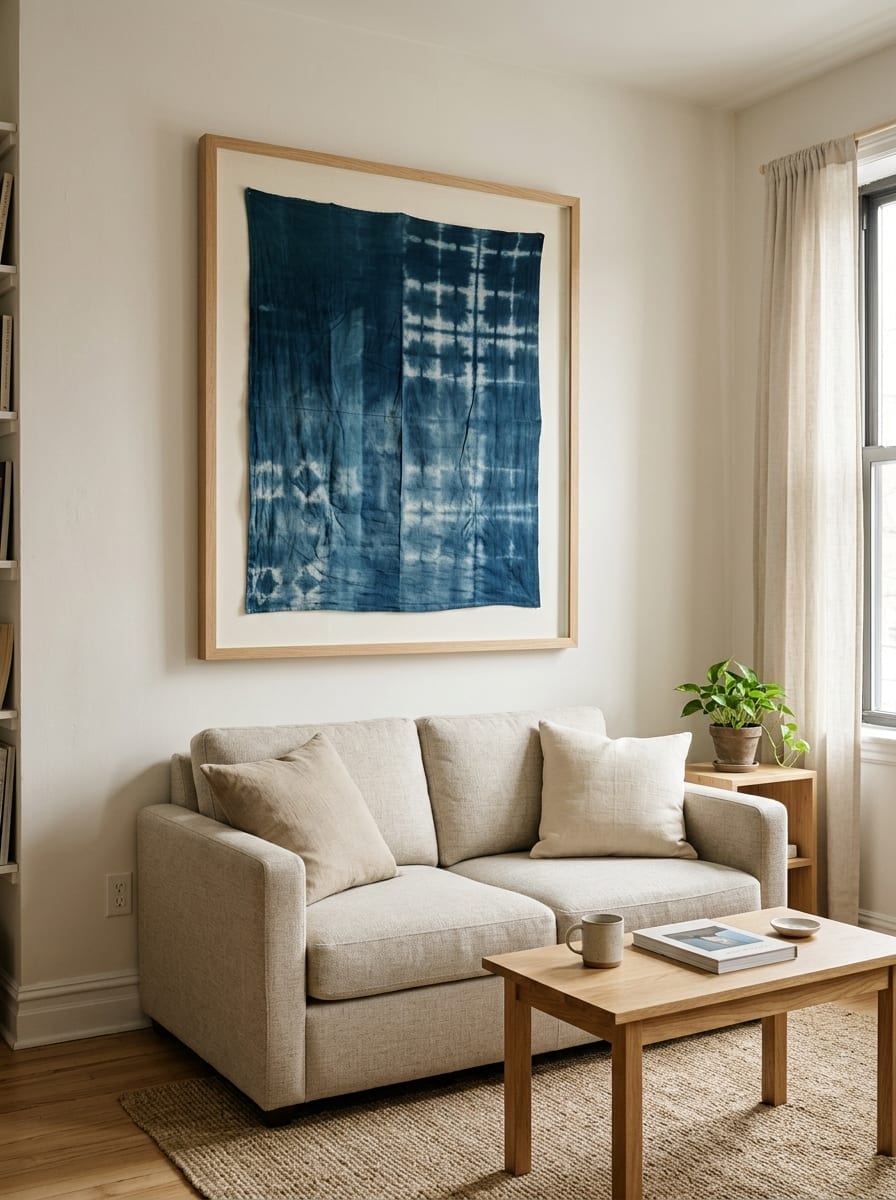
A distinctive textile can introduce color, pattern, and cultural context without requiring a major change to the room.
Adire is a specific Yoruba resist-dye textile tradition associated with indigo-dyed cloth. It should not be used as a generic label for any blue patterned fabric. If you choose an authentic Adire textile or a contemporary work inspired by the tradition, look into the maker and the work’s origins.
How to make it work
Let one textile take the lead. You might display a piece as wall art, use a textile cushion on a neutral sofa, or fold a patterned throw over the end of a bed.
If the textile has a strong indigo pattern, keep the nearby furnishings relatively simple. A natural-wood table, warm-white wall, or solid-color cushion can provide enough contrast without competing with it.
For a renter-friendly display, consider a removable hanging method appropriate for the textile’s weight and the wall surface. A framed piece is another option if you prefer a more finished appearance.
What to avoid
Avoid combining several unrelated patterned fabrics simply because they share a broad aesthetic label. Also avoid describing a mass-produced geometric print as Adire unless its design and origin genuinely support that description.
Best for: Neutral living rooms, small bedrooms, and apartments that need one memorable textile detail.
3. The Handwoven Basket Display
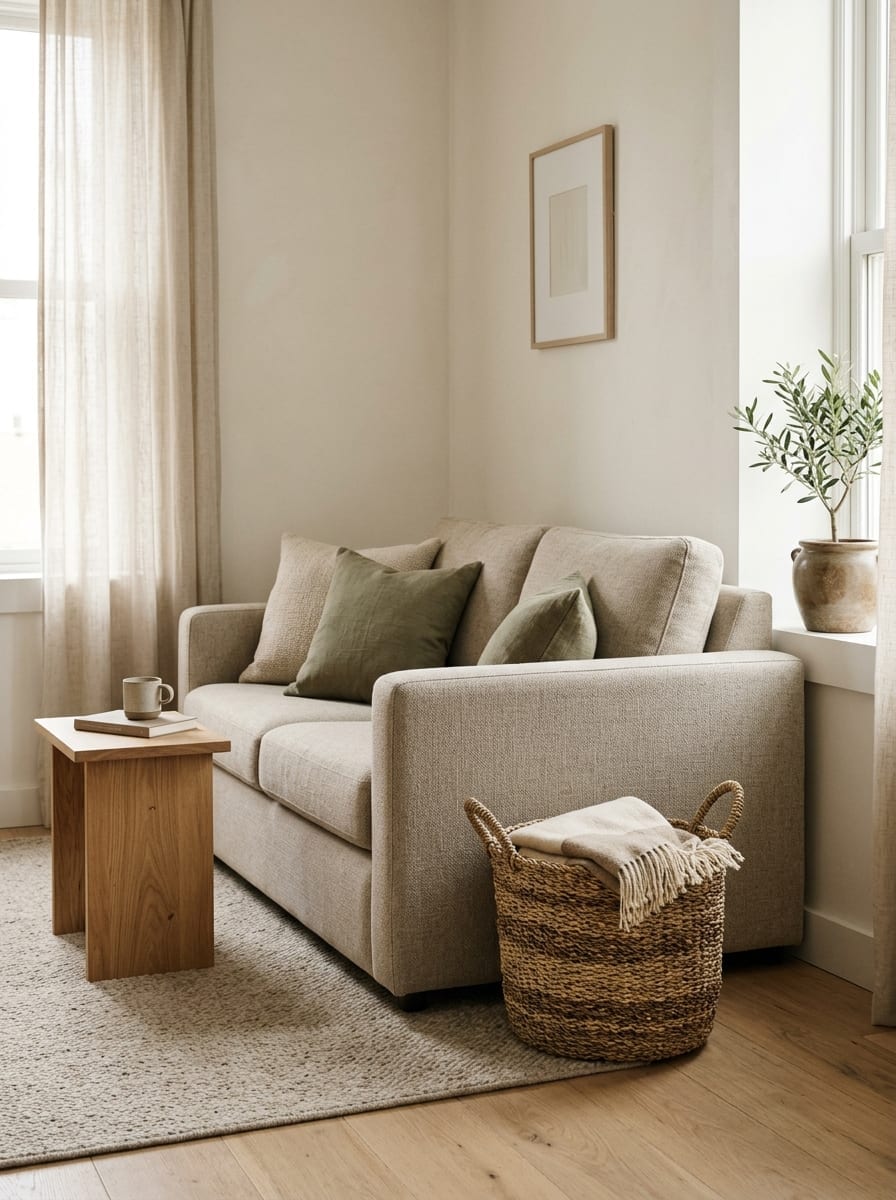
A handwoven basket can add texture while serving a practical purpose. In a small apartment, this combination is useful because decor does not have to be separate from everyday storage.
Woven objects vary widely in their materials, methods, and regional origins. If the basket’s maker or origin is known, preserve that information rather than treating every woven object as interchangeable.
How to make it work
Choose one basket that fits an existing need. It might hold a folded throw beside the sofa, contain a few frequently used items, or provide a simple decorative accent on a shelf.
A wall-mounted basket display can also work if you have suitable wall space and secure mounting. For a compact apartment, one larger piece or a small, carefully arranged grouping often looks more intentional than filling an entire wall.
Consider the basket’s proportions relative to the furniture around it. A wide basket can look heavy on a narrow shelf, while a small basket may disappear beside a large sofa.
What to avoid
Do not add baskets to every corner, shelf, and floor area. Their texture can become visually repetitive when there are too many of them. If a basket has no useful role and does not add something distinctive to the room, you may not need it.
Best for: Living rooms, bedrooms, and entryways that need both natural texture and practical storage.
4. The Sculptural Wood Accent
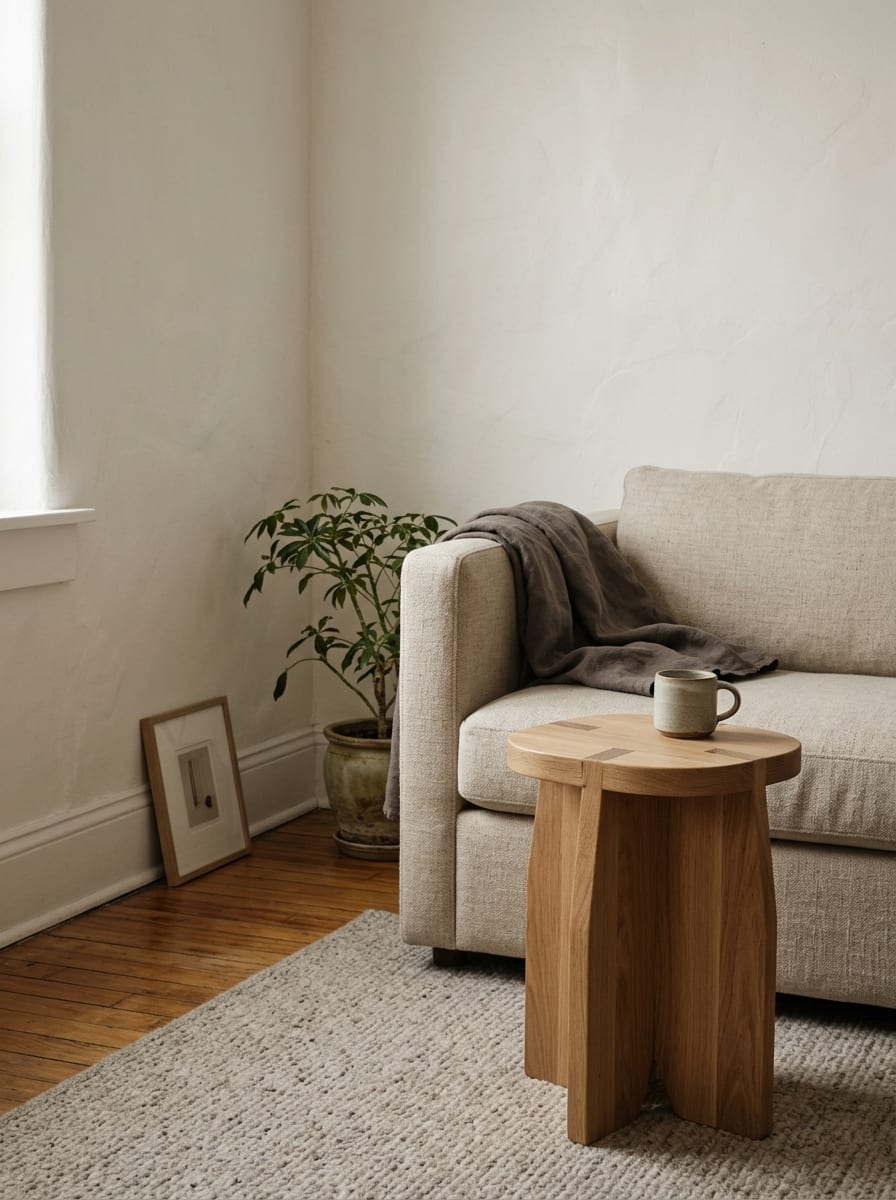
A sculptural wood piece introduces shape and material contrast without relying on a busy pattern. It might be a carved side table, a small wooden stool, a distinctive bowl, or another functional object made by a skilled craftsperson.
The aim is not to collect objects that vaguely suggest a particular culture. Choose pieces for their design, craftsmanship, usefulness, and known provenance.
How to make it work
In a small apartment, a functional piece is often the best choice. A well-proportioned wooden stool can serve as occasional seating, a side table, or a temporary surface when needed.
If you prefer a purely decorative object, place it on a console or open shelf where its silhouette can be seen clearly. Leave some space around it instead of surrounding it with several similarly sized accessories.
Look for a finish that works with your existing furniture. It does not need to match every wood tone exactly, but the room should have some visual connection between its larger materials.
What to avoid
Avoid placing a large sculptural object on a tiny surface simply to create a statement. Also avoid using ceremonial or sacred objects as generic decorations without understanding their significance and the context in which they are appropriate.
Best for: Apartments that need one distinctive material or shape to balance softer textiles.
5. The Natural-Fiber Curtain Detail
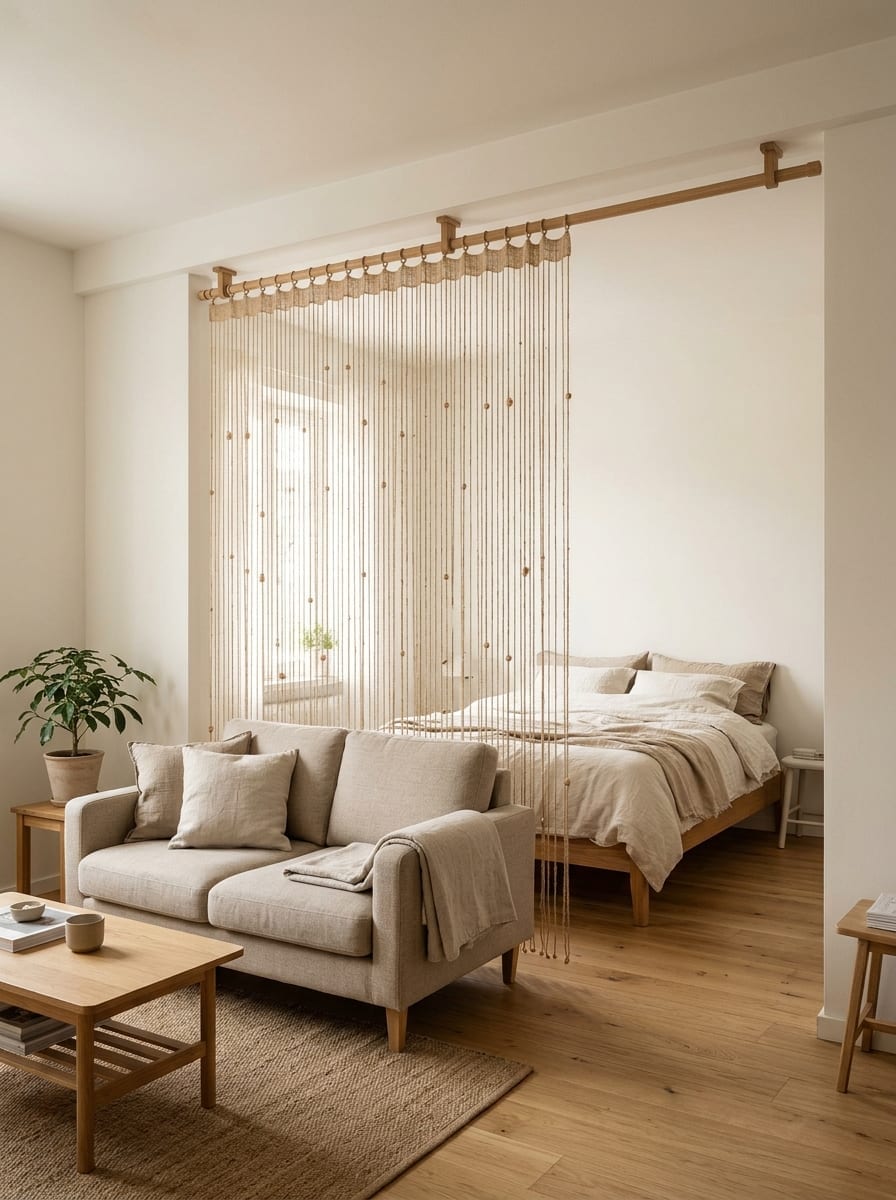
A natural-fiber curtain or beaded treatment can introduce texture and create a subtle visual transition between two areas. It may be useful in a studio apartment where the sleeping area and living area share one room.
The key is to treat the curtain as a design choice that suits your space, rather than assuming a particular material belongs to one broad cultural aesthetic.
How to make it work
Consider a light, natural-fiber treatment at a doorway, closet opening, or suitable transition between zones. A beaded curtain can add movement and visual texture, while a simple woven panel can soften a plain opening.
Before installing anything, check the available width, ceiling height, mounting options, and your lease requirements. The treatment should not obstruct a door, narrow a necessary route, or become a hazard where people pass frequently.
In a very small apartment, a curtain that preserves sightlines can sometimes feel lighter than a bulky divider. If privacy is the main need, however, choose a material that actually provides the level of coverage you require.
What to avoid
Do not install a textured curtain simply to fill an empty doorway. Consider how it moves, whether it is easy to clean, and whether it serves a purpose. A narrow opening may look better left open.
Best for: Studio apartments and small rooms where a soft visual transition is useful.
6. The Art-With-a-Story Gallery
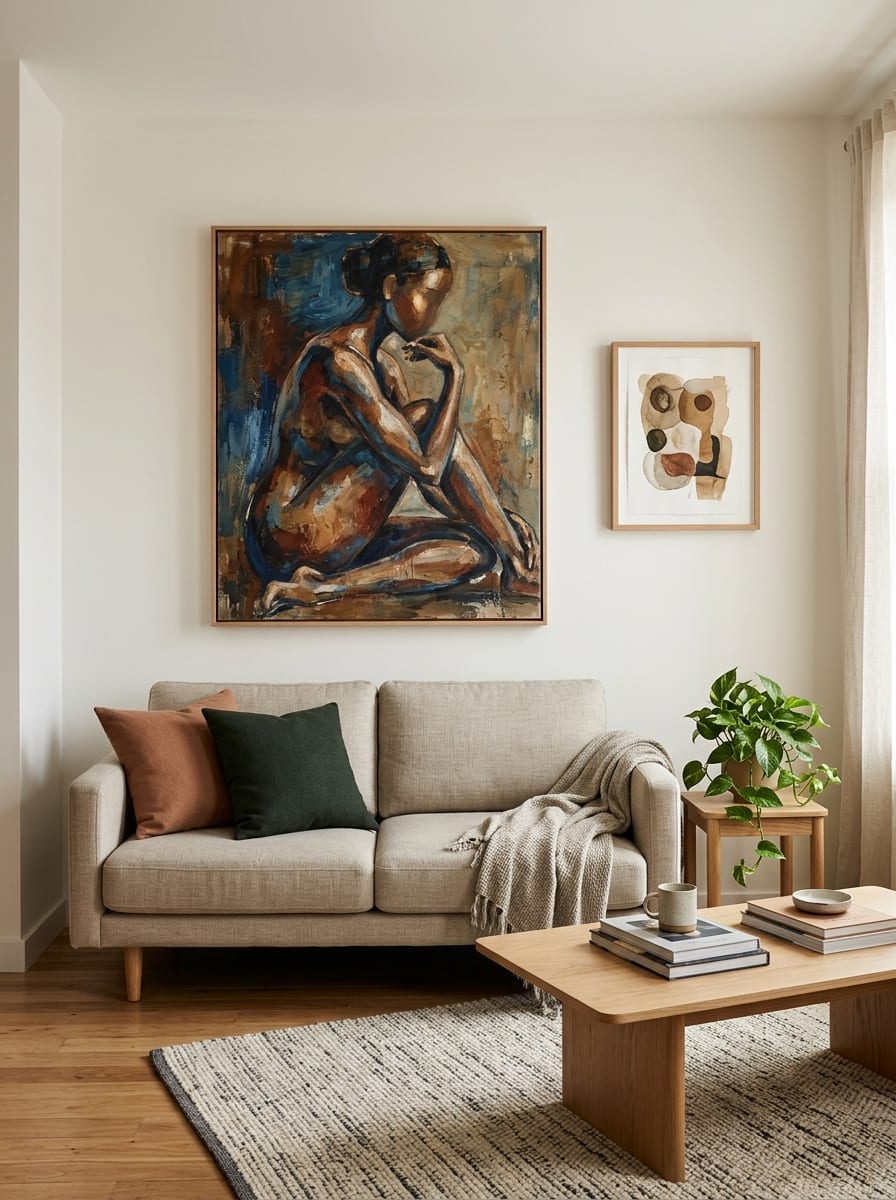
Artwork can give an apartment a strong point of view without adding furniture or using up floor space. Contemporary African and diasporic artists offer many different perspectives, styles, subjects, and mediums, so you do not need to rely on generic motifs to create an Afrohemian-inspired room.
Choose artwork because you connect with the work itself, not simply because it fits a decor trend.
How to make it work
Start with one piece that has enough presence to anchor a small wall. It might be a painting, a print, photography, or a textile-based work.
If you want a gallery arrangement, begin with two or three pieces that share a visual connection, such as color, scale, subject, or framing. They do not need to be identical. A consistent spacing pattern can help different works feel connected.
For a renter-friendly display, use a suitable removable hanging system if the artwork’s weight and your wall surface allow it. Otherwise, leaning a properly supported frame on an existing shelf can be a practical alternative.
When you know the artist’s name and the work’s background, keep that information with your collection. It adds meaning beyond the way the art looks in the room.
What to avoid
Avoid covering every available wall with small prints. A crowded gallery can overwhelm a compact space, especially when the room already contains patterned textiles. Give the artwork enough breathing room to be appreciated.
Best for: Apartments with plain walls and residents who want the room to feel more personal without buying more furniture.
7. The Earth-Tone Color Echo
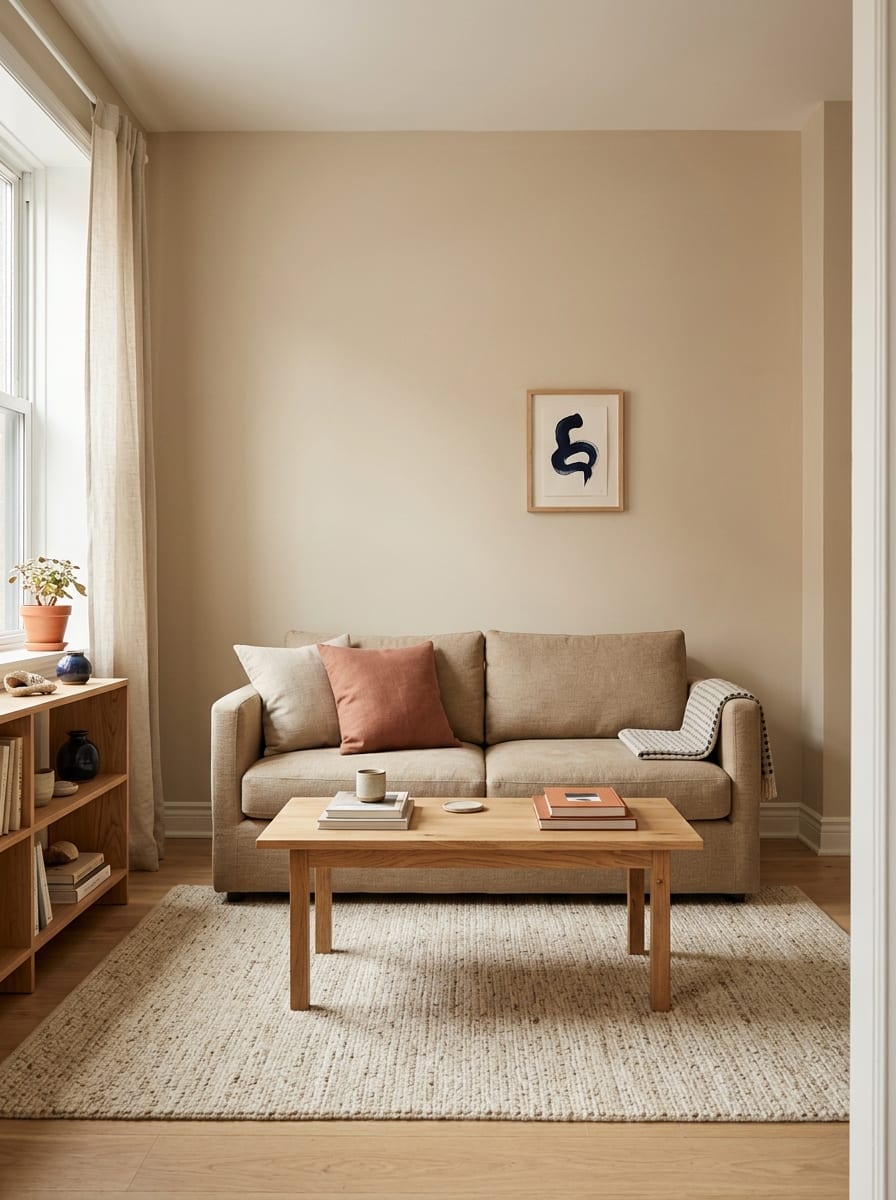
Earthy colors can connect natural materials and patterned textiles, but they work best when repeated deliberately. Rather than adding a new color every time you buy an accessory, choose a small palette and let it travel through the room.
How to make it work
Start with two or three colors that already appear in your furniture or artwork. For example, warm beige, muted terracotta, and deep indigo can create contrast without making every surface colorful.
Repeat one accent in two or three places. If a cushion contains indigo, you might echo that color in a small artwork detail or a ceramic object. The repetition creates a visual link without requiring everything to match.
You can also use green, ochre, rust, or charcoal where they suit the existing room. These are options, not mandatory colors for an Afrohemian interior.
What to avoid
Avoid introducing every possible earthy shade at once. Too many similar but unrelated tones can make a small room feel muddled rather than layered.
Also avoid repeating a strong accent on every cushion, wall, rug, and accessory. A little contrast and negative space make the color more noticeable.
Best for: Apartments where the furniture and main finishes are already in place but the decor feels disconnected.
8. The One-Rug Anchor
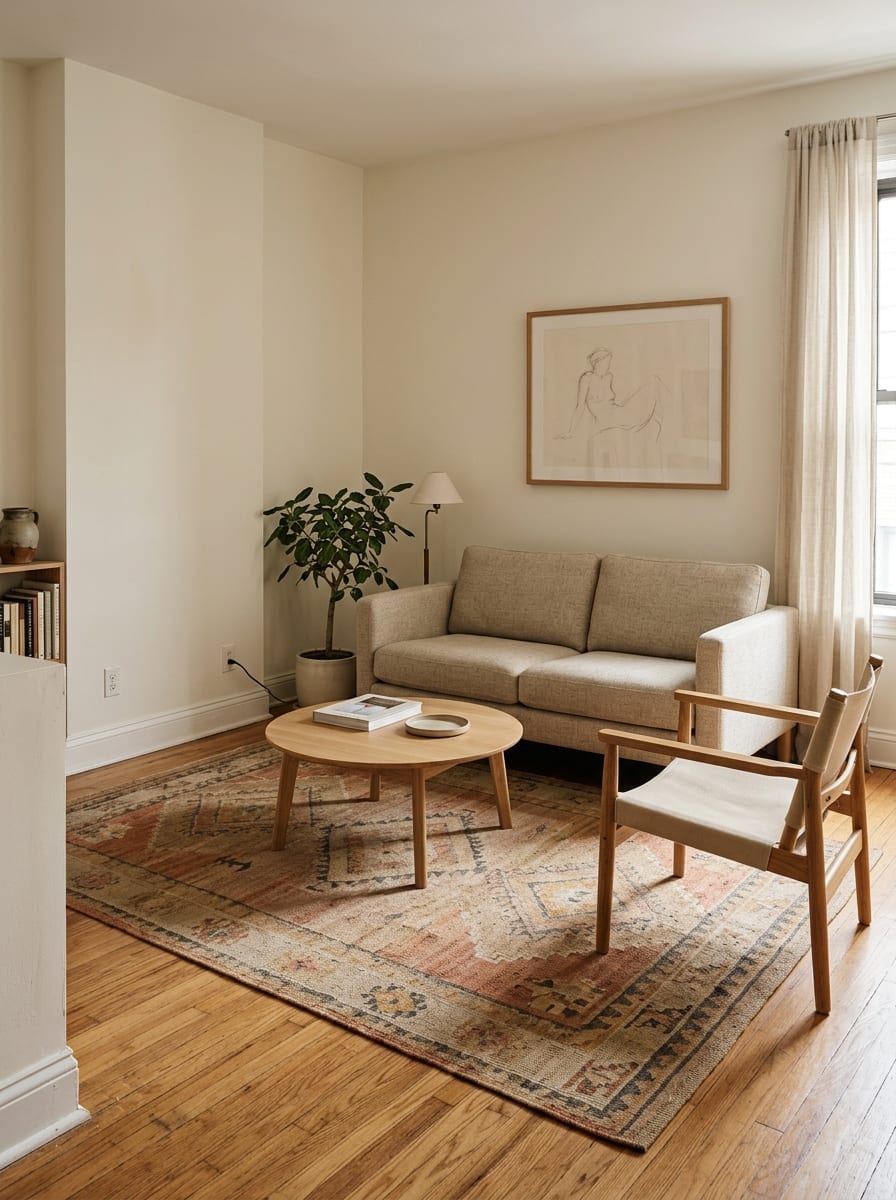
A rug can bring together a sofa, coffee table, and accent chair, giving a small living area a clearer visual boundary. A patterned or textured rug can also introduce the layered quality associated with Afrohemian-inspired interiors.
The important decision is the rug’s scale, not the number of rugs you can fit into the room.
How to make it work
Measure the seating area before buying. Choose a rug that relates to the furniture group and allows doors, walkways, and movable chairs to function comfortably.
If the rug has a strong pattern, keep the largest nearby textiles relatively simple. If your artwork and cushions already contain several colors, a quieter rug may create a better balance.
For a compact living room, a single well-chosen rug often works better than multiple small rugs scattered around the floor. It gives the eye one clear anchor and can make the seating area feel more intentional.
Use a suitable rug pad when needed to help prevent slipping, particularly on smooth flooring.
What to avoid
Do not choose a tiny rug that floats awkwardly in front of the sofa without connecting to the seating arrangement. Avoid layering several competing patterns if the room already has a bold textile or gallery wall.
Best for: Small living rooms where furniture needs to feel visually connected.
9. The Handcrafted Ceramic Moment
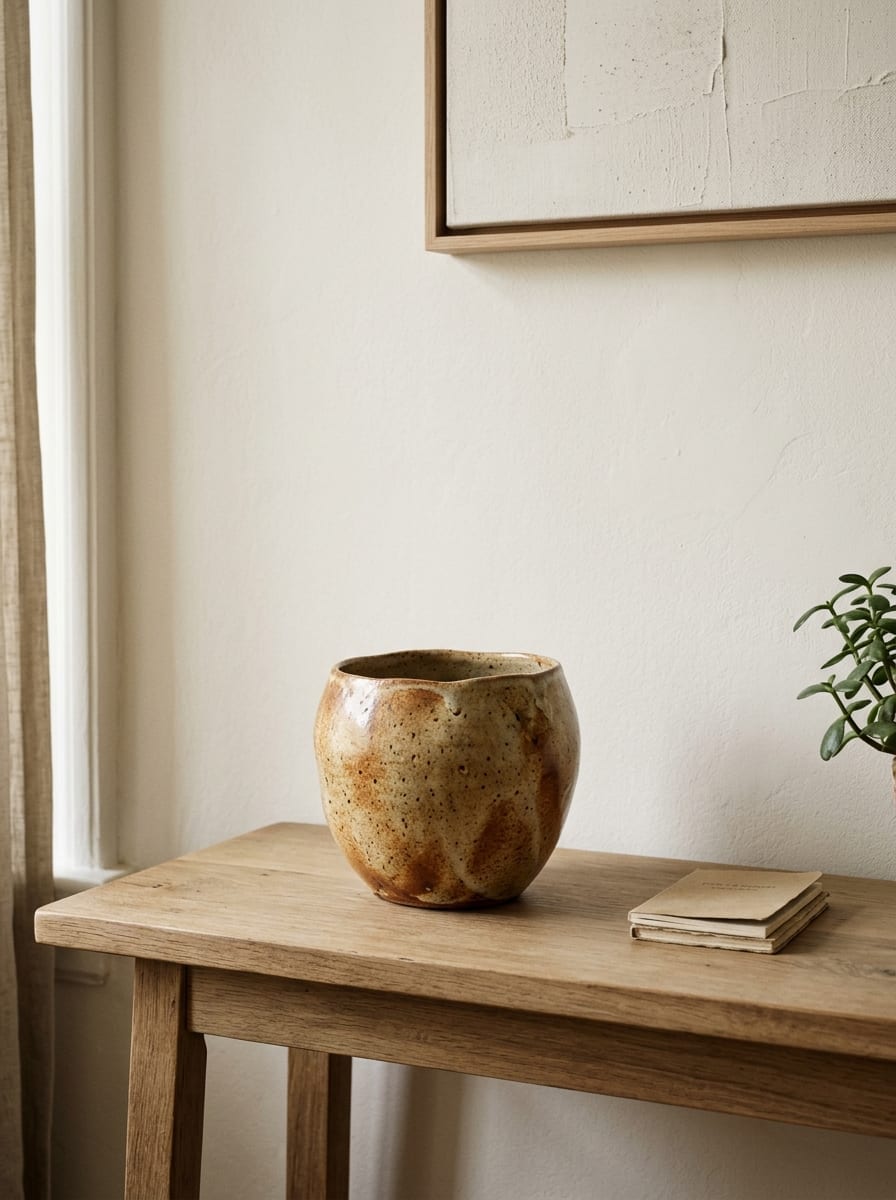
A handcrafted ceramic bowl, vase, or vessel adds a tactile element to a room. Its surface, shape, and finish can introduce a more personal detail without taking up much space.
This is a useful approach when you want the apartment to feel collected but do not want to fill every shelf with accessories.
How to make it work
Choose one ceramic piece with a shape or finish you genuinely like. Place it on an existing side table, console, or open shelf where it can be appreciated.
If you are styling a larger surface, a small group of objects can work together, but vary their heights and leave space between them. A ceramic vessel, a short stack of books, and one smaller object may be enough.
Look for work by makers whose practice and materials interest you. If you know the artist or origin, retain that information rather than describing the object with a broad cultural label.
What to avoid
Avoid arranging many small vessels across every available surface. In a compact room, repeated small objects can create more visual noise than one larger, distinctive piece.
Do not use a decorative ceramic vessel as a planter or food container unless its finish and construction are suitable for that purpose.
Best for: Coffee tables, shelves, consoles, and bedside surfaces that need one considered detail.
10. The Greenery-and-Fiber Balance
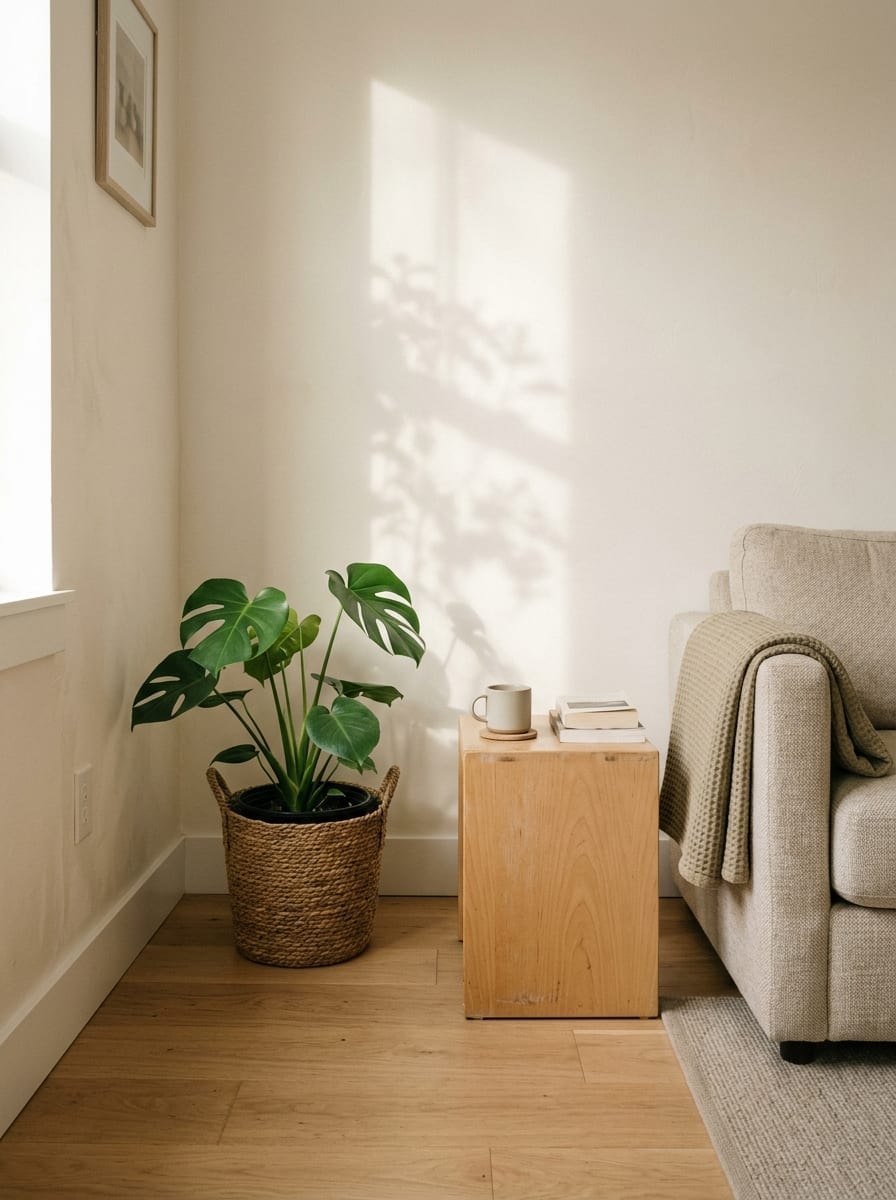
Plants can soften the harder lines of furniture, while natural-fiber accessories introduce texture. Together, they can make a room feel relaxed without requiring a large collection of decor.
How to make it work
Start with one plant that suits the natural light and care you can provide. Place it where it will not obstruct a walkway, crowd a window, or interfere with furniture use.
A woven basket can be used as an outer cover for a suitable nursery pot, provided the arrangement allows you to manage drainage and moisture properly. A natural-fiber cushion or small textured throw can repeat the material quality elsewhere in the room.
Think about visual balance. A plant with broad leaves may work well beside a simple sofa, while a smaller plant can fit on a shelf or side table. You do not need a large indoor jungle to achieve a layered look.
What to avoid
Do not buy several plants at once without checking their light requirements and the space they will occupy as they grow. Avoid leaving water trapped in a decorative basket or placing a plant where it could damage flooring or furniture.
Best for: Apartments that feel hard-edged or visually flat and have suitable light for indoor plants.
11. The Curated Afrohemian Corner
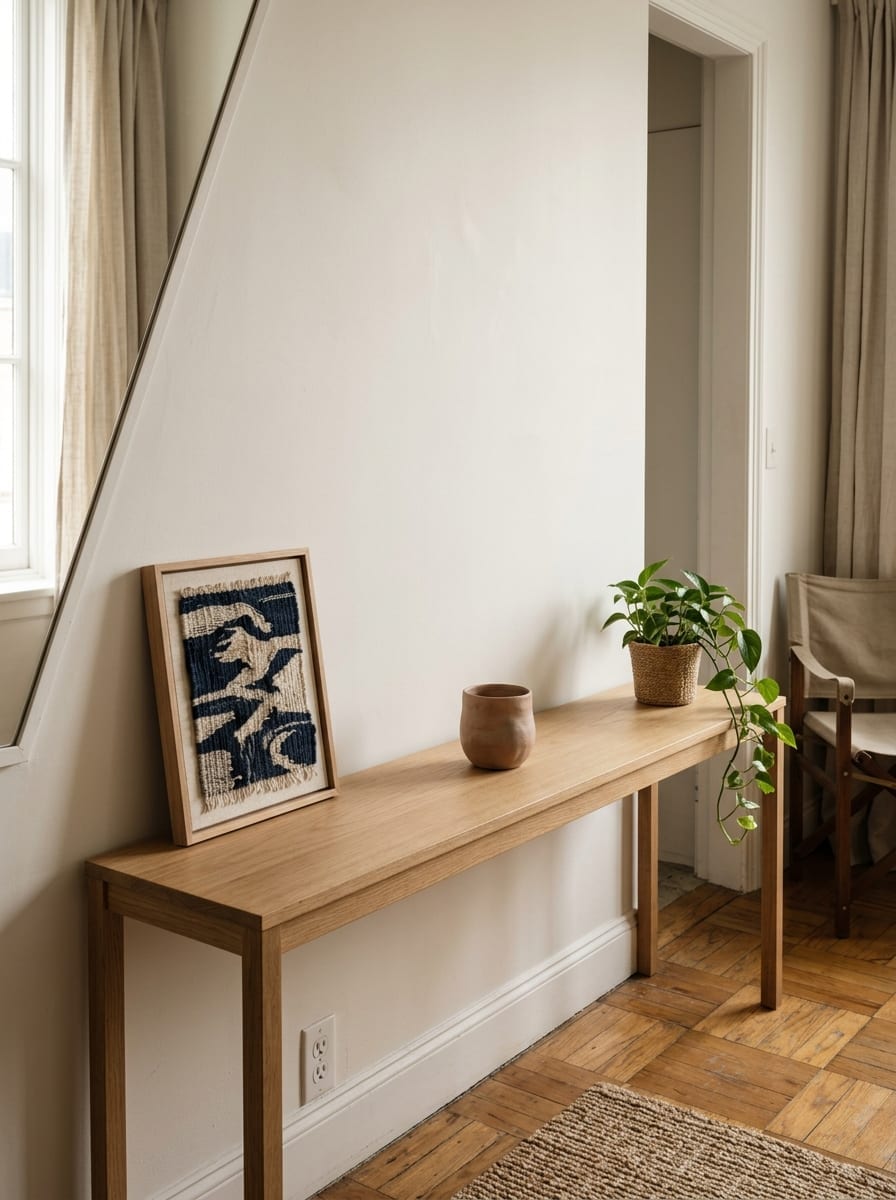
If you want to experiment with Afrohemian decor without changing the whole apartment, begin with one carefully edited corner. This makes it easier to see how the materials, colors, and objects work together before expanding the look.
How to make it work
Choose an existing surface or small area, such as a console, bookcase section, or side table. Build the arrangement around three different roles:
- One expressive element: a textile, artwork, or distinctive crafted object.
- One grounding element: natural wood, a ceramic vessel, or a simple neutral object.
- One softer element: a plant, a woven texture, or a restrained textile accent.
These are roles rather than a shopping list. If you already own a suitable piece, use it instead of buying another.
Keep the arrangement connected through color or material, but do not make every object identical. A little difference in shape and texture helps the corner feel collected over time.
Leave some of the surface empty. The open space is part of the composition, especially in a small apartment where every table and shelf may also have a practical job.
What to avoid
Do not combine every idea in this article into a single display. A strong textile, a meaningful artwork, a crafted object, and one natural element may be enough.
Best for: Anyone who wants to try the aesthetic gradually without committing to a full-room makeover.
How to Make Afrohemian Decor Feel Collected, Not Themed
A thoughtful Afrohemian-inspired apartment should reflect your own taste and the specific pieces you choose. The goal is not to make the room look as though everything came from one collection.
Keep these principles in mind:
- Choose pieces with a reason to be there: A textile may connect to a place, artist, technique, or memory. A wooden stool may be useful as well as beautiful. A ceramic piece may be something you appreciate for its shape and craftsmanship.
- Mix materials, not every pattern: Natural wood, woven fibers, ceramic surfaces, linen, and a single expressive textile can create variety without competing for attention.
- Allow modern and traditional influences to coexist thoughtfully: A contemporary sofa can sit comfortably beside a handcrafted object. The room does not need to recreate a historical interior or imitate a particular cultural setting.
- Learn the story behind specific pieces: When a textile, artwork, or object comes from a named tradition or maker, use accurate descriptions and preserve that context. Avoid assuming that objects from different African regions share the same meanings or origins.
- Edit before buying: Move existing objects around first. You may find that changing the position of a rug, removing a few accessories, or giving a piece of art more space is enough to transform the room.
Three Color Combinations to Try
Use these as starting points, not rules.
Warm and grounded
Warm white, natural oak, muted terracotta, and a small charcoal accent. This works well if you want the room to feel calm with a little contrast.
Indigo and natural materials
Soft beige, natural wood, indigo textile accents, and warm white. Keep the textile as the strongest patterned element and let the other materials support it.
Earthy and botanical
Warm cream, muted olive, clay, and dark wood. Add one contrasting artwork or handcrafted object to prevent the palette from becoming too uniform.
Before buying anything, compare your proposed colors with the furniture, flooring, and textiles you already own. A palette should connect the room, not force you to replace everything.
Afrohemian Decor Mistakes to Avoid in Small Apartments
- Treating all African design as one style: Specific cultures, techniques, artists, and objects have different histories. Be accurate about the pieces you use.
- Using too many bold patterns at once: Give one expressive textile or artwork a clear role.
- Filling every surface: Open space helps meaningful objects stand out.
- Buying decor without considering scale: Measure shelves, tabletops, and wall areas before choosing large objects.
- Using a broad aesthetic label instead of learning about a piece: When an item’s origin is known, preserve that information.
- Sacrificing function for appearance: Keep storage accessible, doors usable, and walkways clear.
- Buying a complete matching collection: A personal room usually benefits from variation in shape, material, and history.
A Simple Formula for a Small Afrohemian-Inspired Room
If you are unsure where to begin, use this sequence:
- Keep the largest surfaces relatively calm.
- Choose one expressive textile or artwork.
- Add one crafted or sculptural object with a clear purpose.
- Repeat one color or material elsewhere in the room.
- Introduce a plant or natural texture only if the space benefits from it.
- Remove anything that crowds the surface or blocks everyday use.
You can adapt this formula to a living room, bedroom, or studio apartment. The details will change, but the principle remains the same: choose a few distinctive elements and give them room to work together.
Final Thoughts
Afrohemian decor can make a small apartment feel warmer, more expressive, and more personal without requiring a room full of new furniture. The most successful approach is selective: begin with a calm foundation, choose pieces that have meaning or genuine design appeal, and let a few materials and colors connect the room.
Be thoughtful about the origins of the art and craft you bring home, and do not feel that you need to reproduce an entire aesthetic to appreciate it. A single textile, a carefully chosen artwork, or a functional handcrafted object may be all the room needs.
The best small-space styling leaves room for both the objects you value and the life you live around them.