9 Renter-Friendly Lighting Ideas That Make an Apartment Feel Warmer Without Rewiring
Discover 9 renter-friendly lighting ideas using floor lamps, plug-in sconces, warm bulbs and counter lighting to make an apartment feel cozier without rewiring.
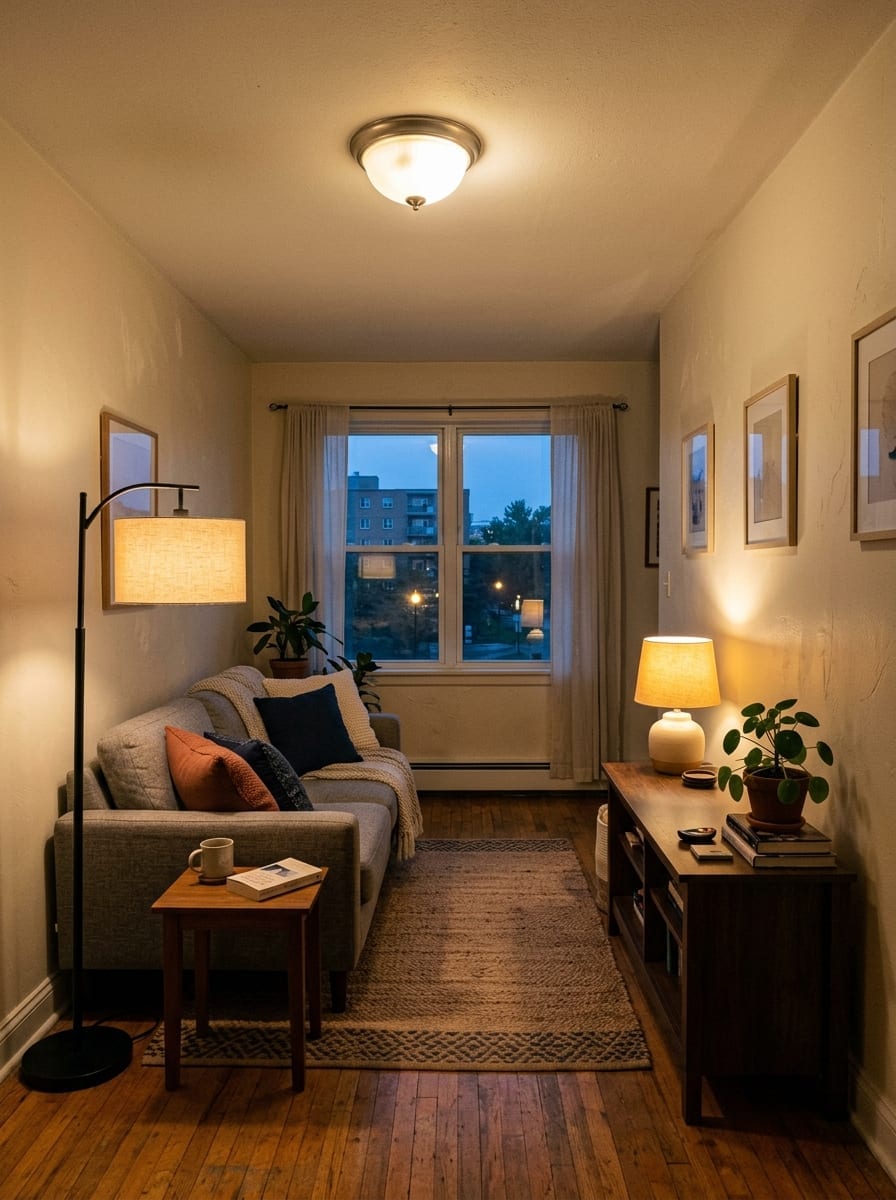
Layered warm lighting in a cozy rental living room with floor lamp, console lamp and ambient glow
In This Guide
Rental apartments often come with one lighting problem:
You have enough light to see.
But not enough good light to make the apartment feel comfortable.
A single ceiling fixture may technically illuminate the room, yet still leave it feeling:
flat harsh shadowy unfinished strangely cold at night
And when you rent, replacing fixtures or adding electrical boxes may not be an option.
Fortunately, most apartments do not need more hardwired lighting.
They need better layers of light at different heights.
A floor lamp in a dark corner can change the shape of a room.
A pair of plug-in sconces can make a bedroom feel more finished.
A small counter light can make a basic rental kitchen feel dramatically warmer after sunset.
The goal is not to fill the apartment with lamps.
It is to place a few light sources where the existing ceiling fixture fails.
Here are nine renter-friendly approaches that can make an apartment feel warmer without rewiring.
1. The Three-Layer Lighting Plan
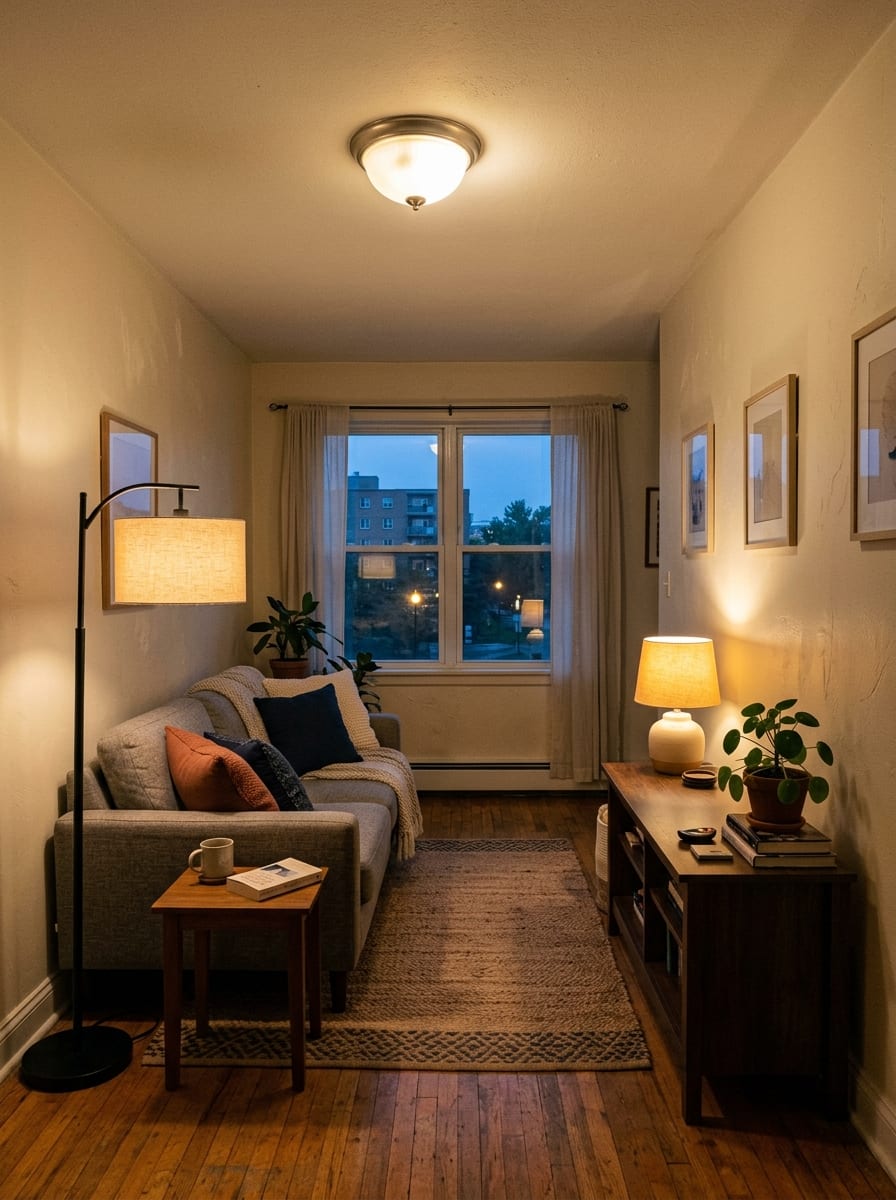
Before buying another lamp, look at the lighting you already have.
Most comfortable rooms use three kinds of light.
Layer 1: Ambient light
This provides general illumination.
Examples:
ceiling fixture large floor lamp
uplight
Layer 2: Task light
This helps you do something specific.
Examples:
reading lamp desk lamp bedside lamp kitchen counter light
Layer 3: Accent light
This creates atmosphere.
Examples:
small table lamp shelf light picture light soft cabinet lighting
The mistake is relying on only one layer.
A bright ceiling light has to do everything, so it usually ends up feeling too strong.
A simple living-room setup
You might use:
existing ceiling light when maximum brightness is needed floor lamp beside sofa for normal evenings small lamp on console for atmosphere
At night, the last two may be enough.
Why different heights matter
Light coming entirely from the ceiling creates a very different room from light coming from:
eye level table height floor-lamp height
Multiple heights give the room more depth.
2. The Plug-In Wall Sconce Pair
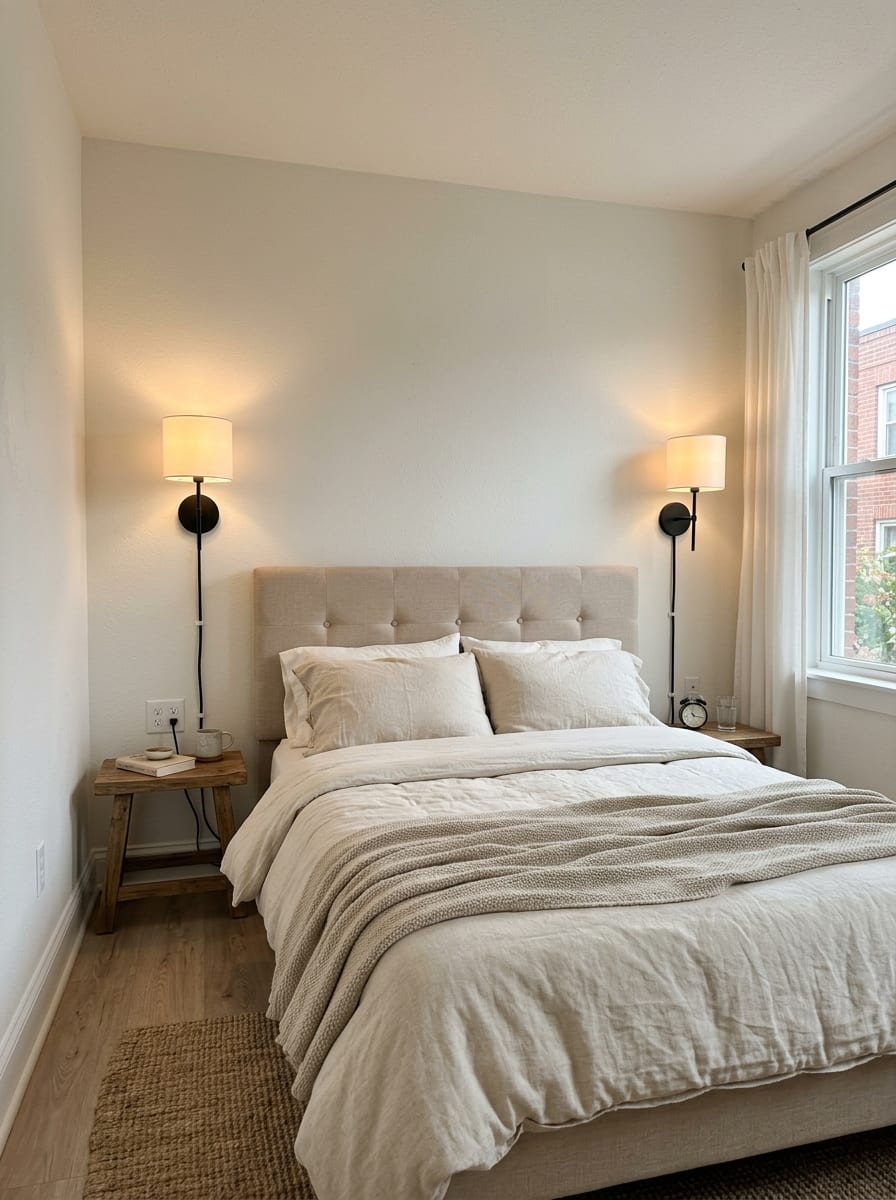
Wall sconces make a room look intentional because the light feels integrated with the architecture.
Renters can sometimes create a similar effect with plug-in sconces.
These connect to a normal outlet rather than requiring electrical wiring inside the wall.
Where they work well
Try them:
beside a bed above a reading chair on either side of a console beside a small sofa
Why they are useful in small apartments
They can free up surfaces that would otherwise hold table lamps.
For example, two small bedside tables can remain available for:
phone water book
instead of being almost entirely occupied by lamps.
Hide the cord deliberately
Plug-in sconces still have cords.
Rather than pretending they do not exist, route them neatly.
Depending on the wall and rental rules, you might use an appropriate removable cord-management system.
Do not pinch or tightly bend electrical cords.
Mounting still matters
A plug-in fixture does not automatically mean damage-free installation.
Some require screws or anchors.
Others have different mounting systems.
Follow the fixture instructions and your lease requirements rather than improvising an unsafe mounting method.
3. The Dark-Corner Floor Lamp
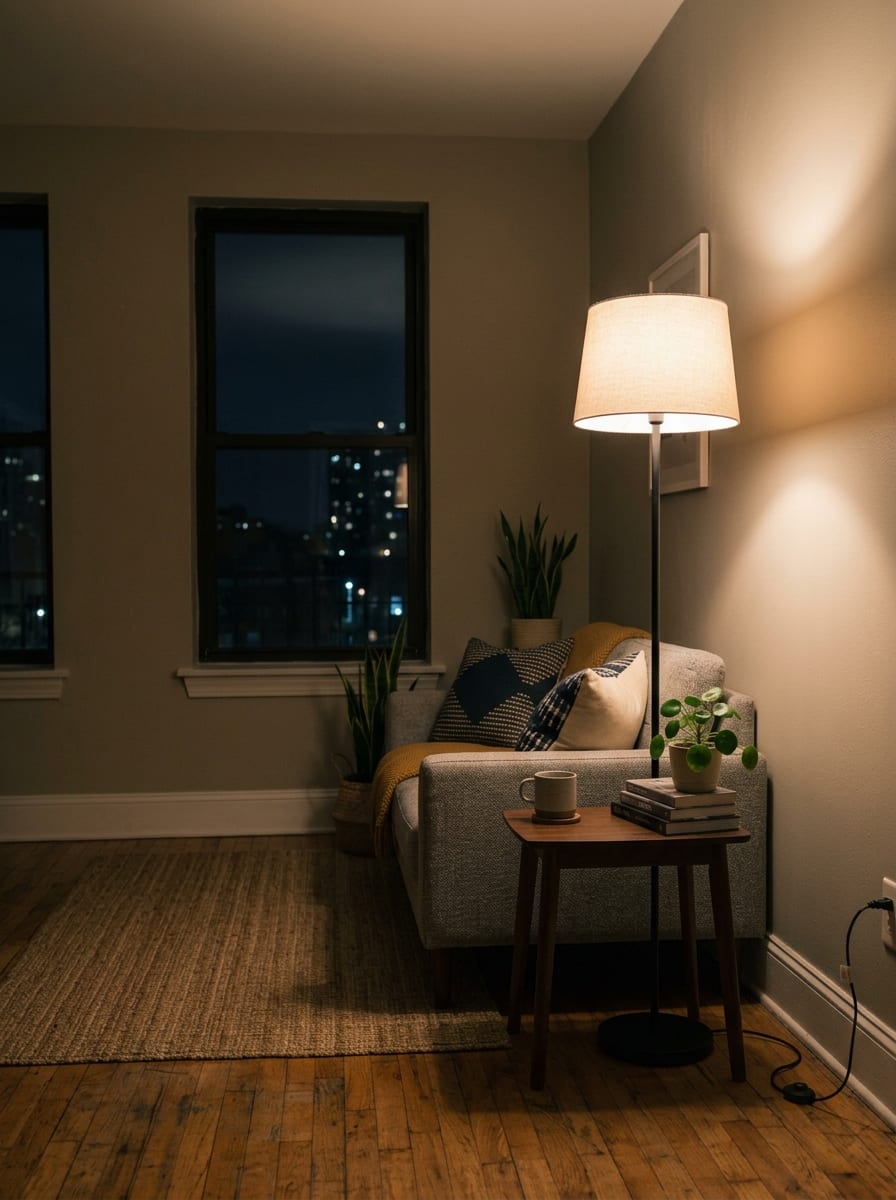
One unlit corner can make an entire apartment feel smaller at night.
This happens because the room visually ends where the darkness begins.
A floor lamp can bring that corner back into the room.
Find the darkest corner
At night, turn off the ceiling light and look for areas that disappear.
Common examples:
corner beside sofa gap near balcony door unused wall beside media console corner behind reading chair
Choose the lamp based on the problem
Shade-directed lamp
Better for reading or focused light.
Globe or diffused lamp
Better for soft general glow.
Uplight
Can bounce light toward the ceiling and make a dark corner feel more open.
Keep the lamp footprint small
For compact apartments, look for:
narrow bases tripod legs only when there is enough floor space slim vertical profiles
A beautiful lamp that blocks the walkway is not helping.
Watch the cord path
Do not stretch an electrical cord across:
doorway walkway high-traffic floor area
The nearest safe outlet should influence where the lamp goes.
4. The Bedside Pendant Alternative
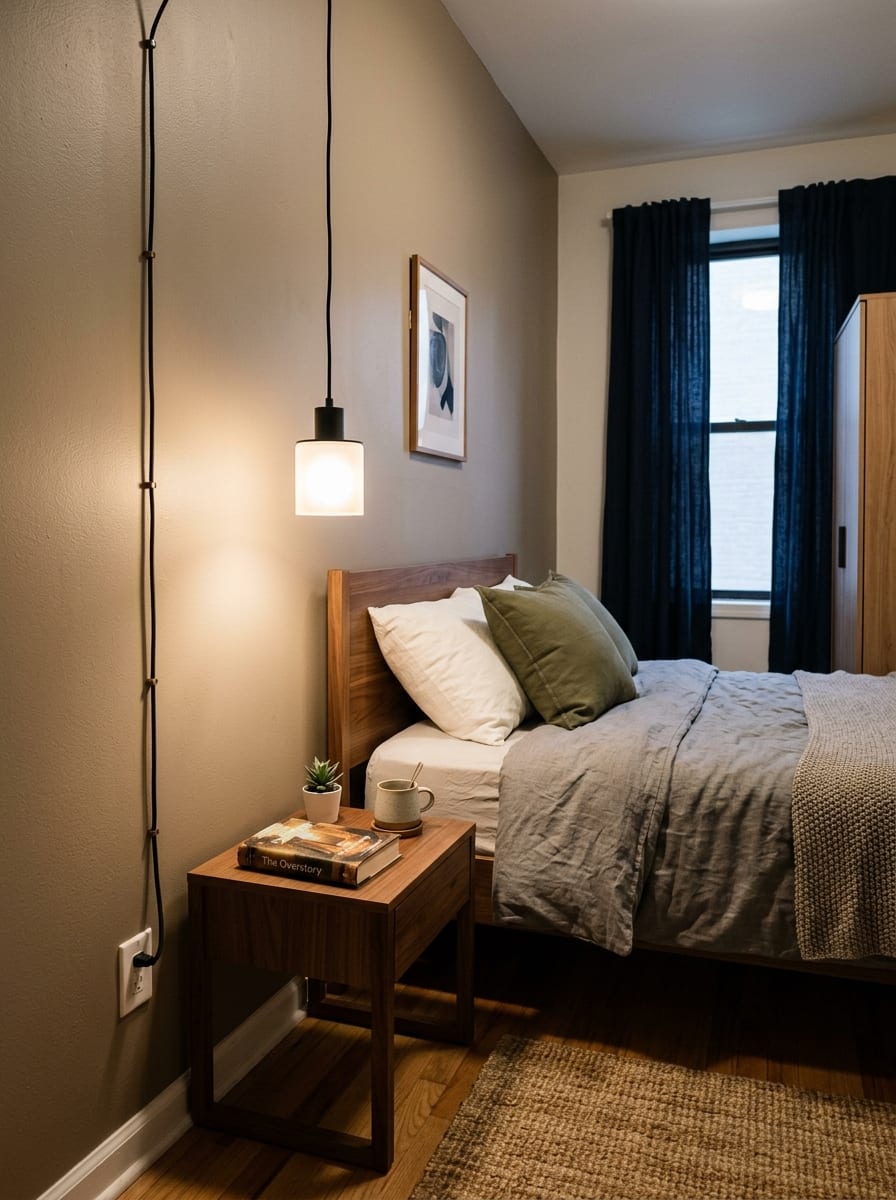
Pendant lights beside a bed look beautiful, but hardwired pendants are not practical for many rentals.
You can get a similar vertical effect using a plug-in hanging light where appropriate.
Why it works
A hanging bedside light:
frees nightstand space draws the eye upward adds visual height gives the sleeping area a more intentional focal point
Keep the scale modest
A small bedroom does not need a giant decorative shade.
Choose something proportionate to the bed and nightstand.
Hang it where it will not become an obstacle
Consider:
sitting height reaching for the nightstand getting into bed head clearance
The fixture should feel integrated, not like something you constantly avoid.
Cord placement matters even more here
Follow the product’s installation guidance carefully.
Do not suspend a standard lamp cord in a way the product was not designed for.
Use a fixture specifically intended for plug-in hanging use.
5. The Warm-Bulb Reset
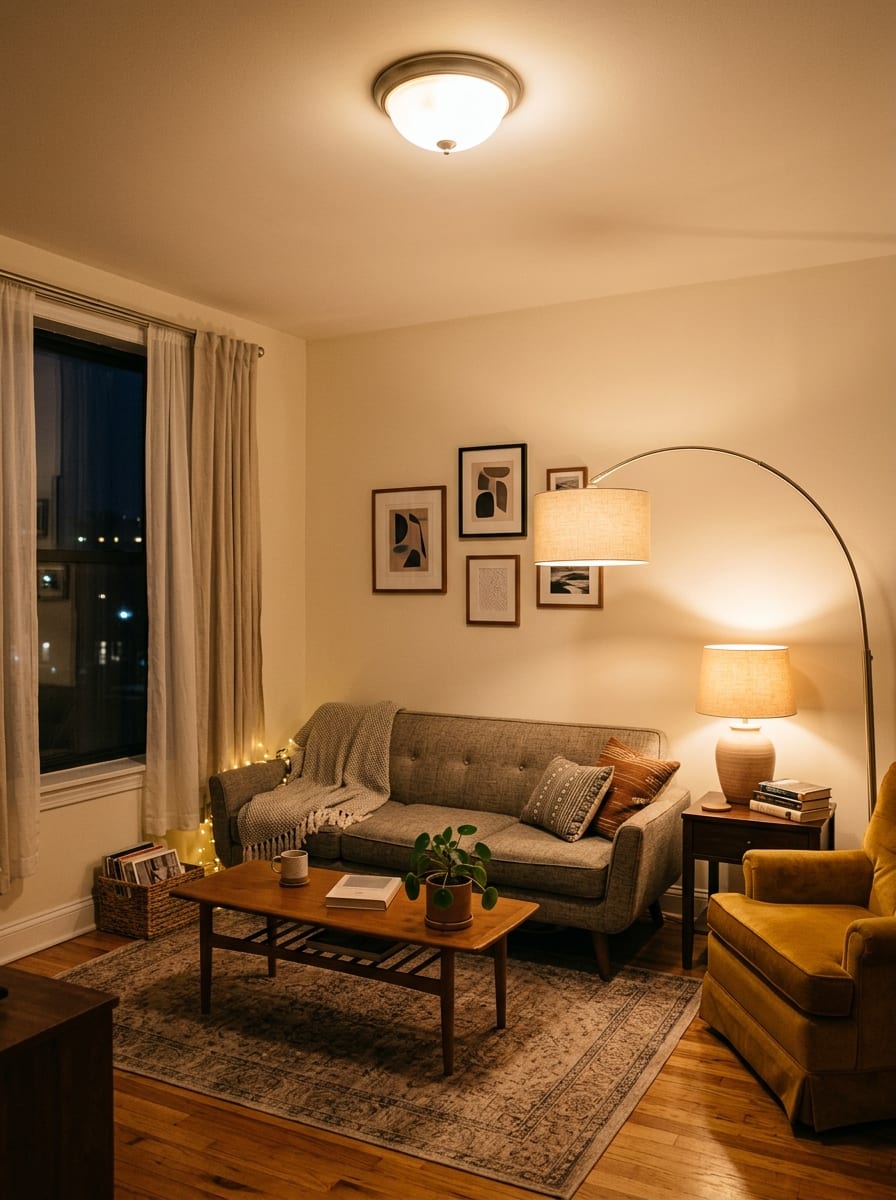
Sometimes the fixture is not the main problem.
The bulb is.
Two apartments with identical lamps can feel completely different because of light color.
Understanding color temperature
Bulbs are commonly described using Kelvin.
Lower numbers generally appear warmer.
Higher numbers generally appear cooler or more daylight-like.
For relaxing living areas and bedrooms, many people prefer something in the neighborhood of:
2700K to 3000K
because it produces a warmer appearance.
For task-focused areas, you may prefer somewhat cooler light depending on the room and your preference.
Do not mix wildly different temperatures
A room with:
one very warm lamp one blue-white ceiling bulb one cool desk lamp
can feel visually disconnected.
Try to keep the main evening lighting reasonably consistent.
Check fixture limits
Before changing any bulb, confirm:
fitting/base type fixture compatibility maximum wattage or equivalent guidance whether the fixture is dimmable if using a dimmable bulb
Follow the fixture and bulb instructions.
Brightness matters too
Warm lighting does not mean dim lighting.
A room can be:
warm bright enough comfortable
at the same time.
The goal is not darkness.
It is softer distribution.
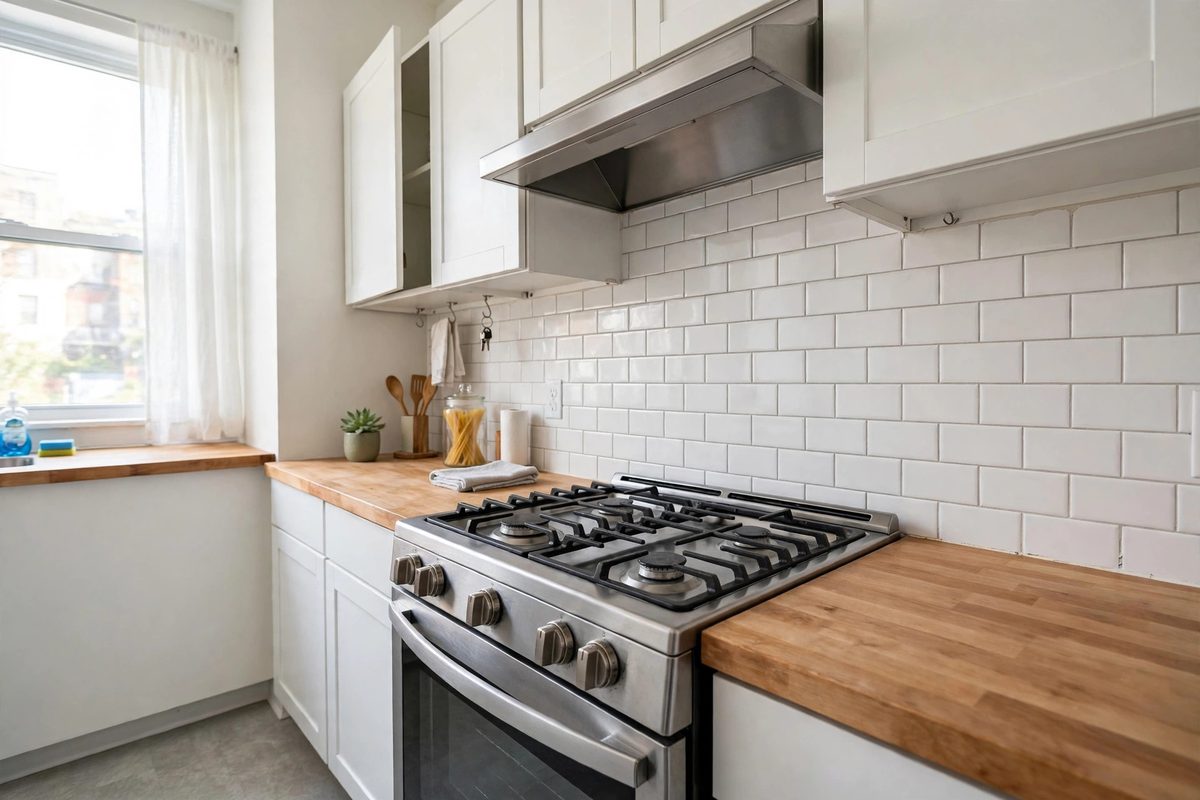
6. The Kitchen Counter Glow
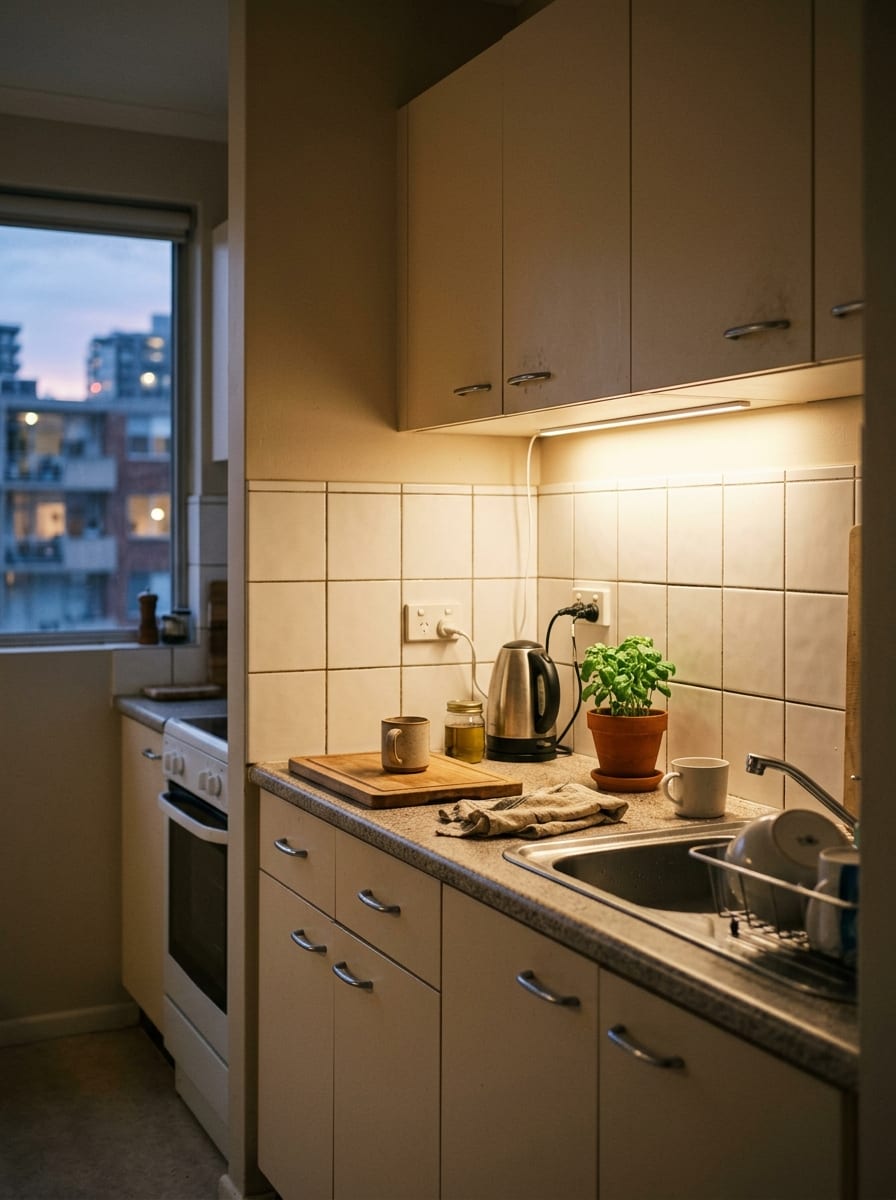
Rental kitchens often have one bright ceiling fixture and very little light directly over the counters.
That creates shadows exactly where you prepare food.
A renter-friendly counter light can improve both:
function atmosphere
Useful locations
Consider lighting under:
upper cabinets open shelf narrow wall cabinet
so the light reaches the work surface.
Plug-in is often preferable
If there is an appropriately located outlet, a purpose-designed plug-in under-cabinet light may be straightforward.
Battery-powered options also exist, though battery maintenance and brightness vary.
Keep food-prep areas practical
Choose lighting designed for the environment and follow installation instructions.
Avoid improvising with decorative lights not intended for kitchen use.
Hide the source when possible
The best effect often comes when you see:
the illuminated countertop
more than the fixture itself.
Why it transforms a rental kitchen
At night, the kitchen can shift from:
one bright ceiling box
to:
soft, useful pools of light
That makes even basic cabinetry feel more considered.
7. The Shelf and Cabinet Accent Light
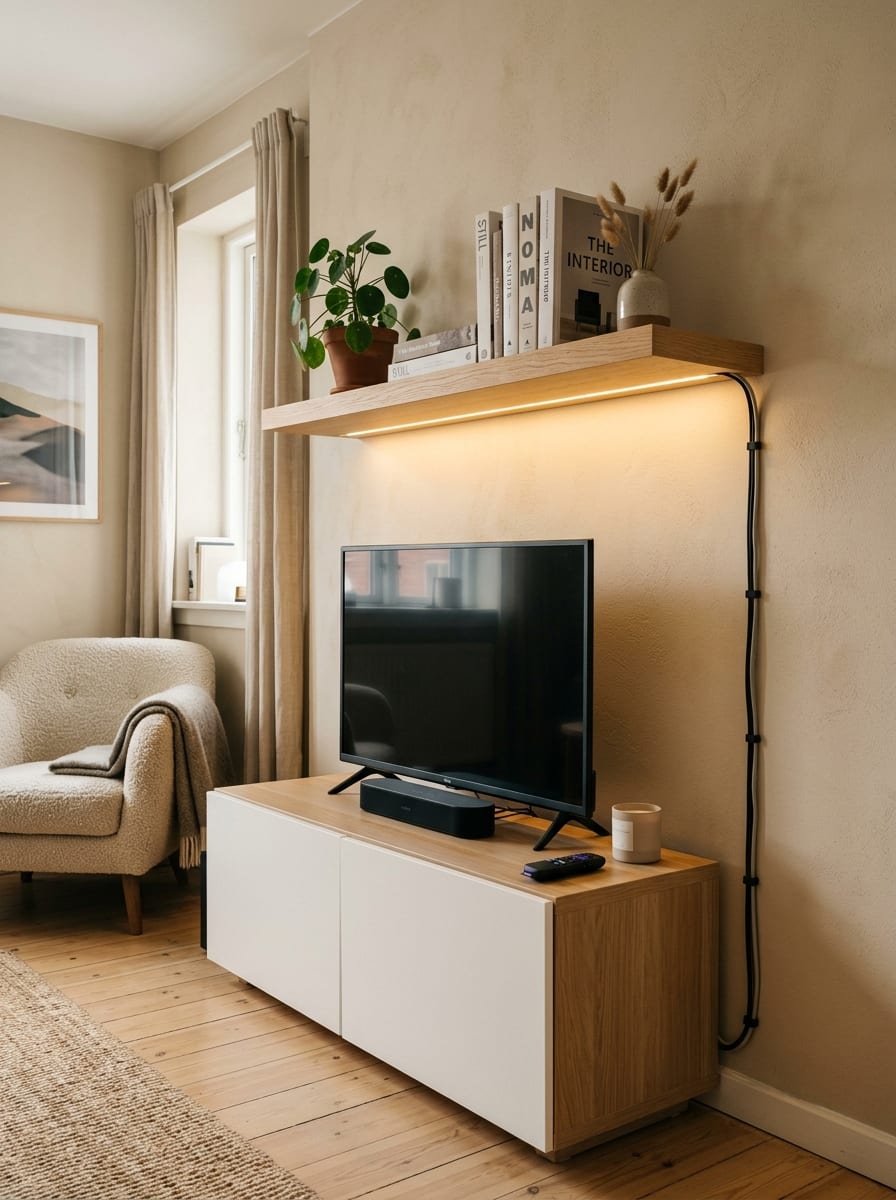
Small accent lights are useful when you want atmosphere without lighting the entire room.
They work especially well around:
bookcase media console display cabinet small shelf
Use them selectively
You do not need light under every shelf.
Pick one zone you want to emphasize.
A media unit is a good candidate
A very bright television in a completely dark room can feel harsh.
Soft ambient light elsewhere in the media zone can make the room feel more balanced.
Keep the installation subtle
Avoid a web of:
cables adapters glowing strips
that becomes more visually distracting than the original problem.
Warm diffused light generally looks calmer
Visible individual light points can feel more decorative or technical.
A diffused source often gives a more finished effect.
Do not cover ventilation
If adding lighting near electronics or inside furniture, keep required ventilation and manufacturer clearances unobstructed.
8. The Mirror-Side Lighting Trick
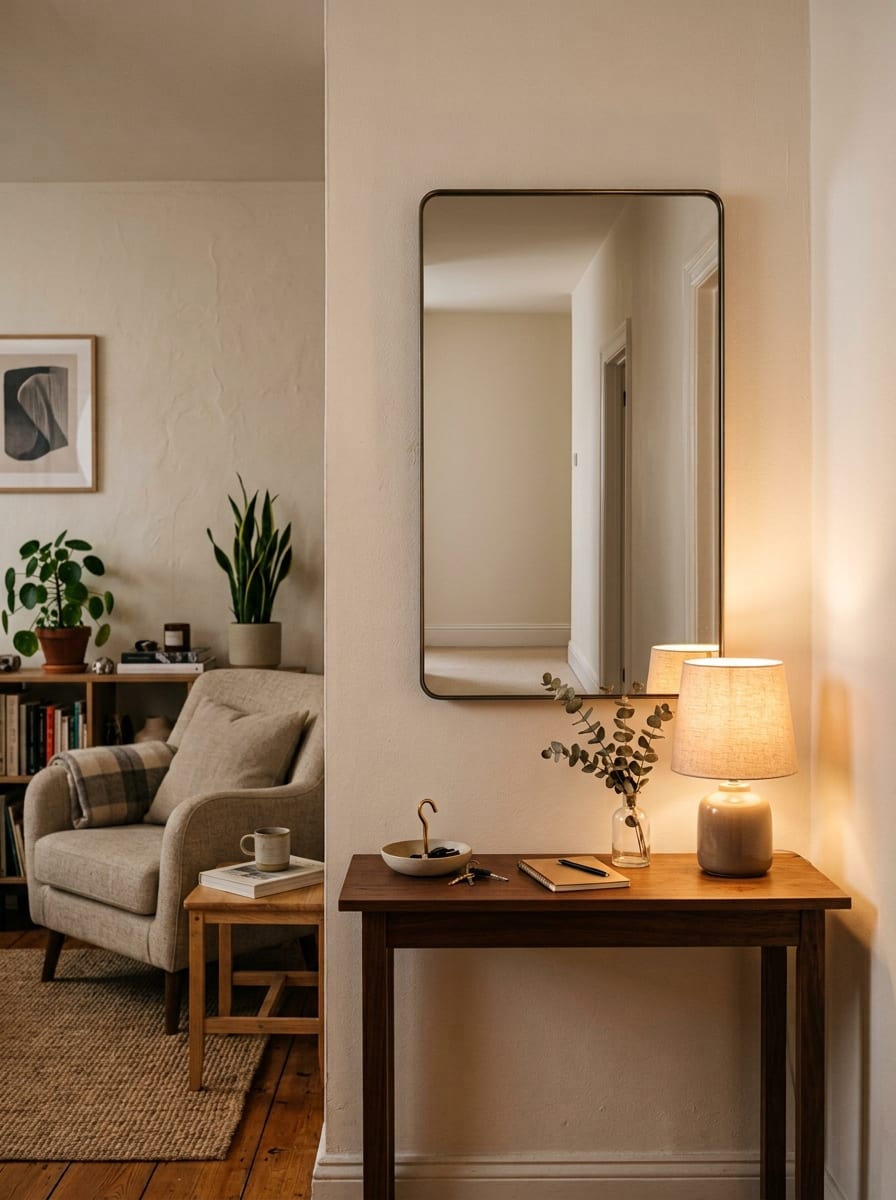
Mirrors can bounce existing light, but their placement matters.
A mirror positioned near a lamp can help distribute a soft glow farther into a small apartment.
Place the light beside rather than directly in front
Try:
small lamp on console beside mirror floor lamp near standing mirror bedside lamp adjacent to wall mirror
The reflection can visually duplicate the light source and increase the sense of depth.
Do not rely on the mirror for actual task lighting
A reflected lamp may improve atmosphere.
It does not automatically provide enough light for:
makeup shaving detailed work
Use dedicated task lighting where needed.
Watch glare
If the bulb is visible directly in the mirror, the reflection can become unpleasant.
A shade or diffused globe helps.
Best places
This trick works well in:
entryway small living room bedroom corner
where you already want a mirror.
9. The One-Switch Evening Scene
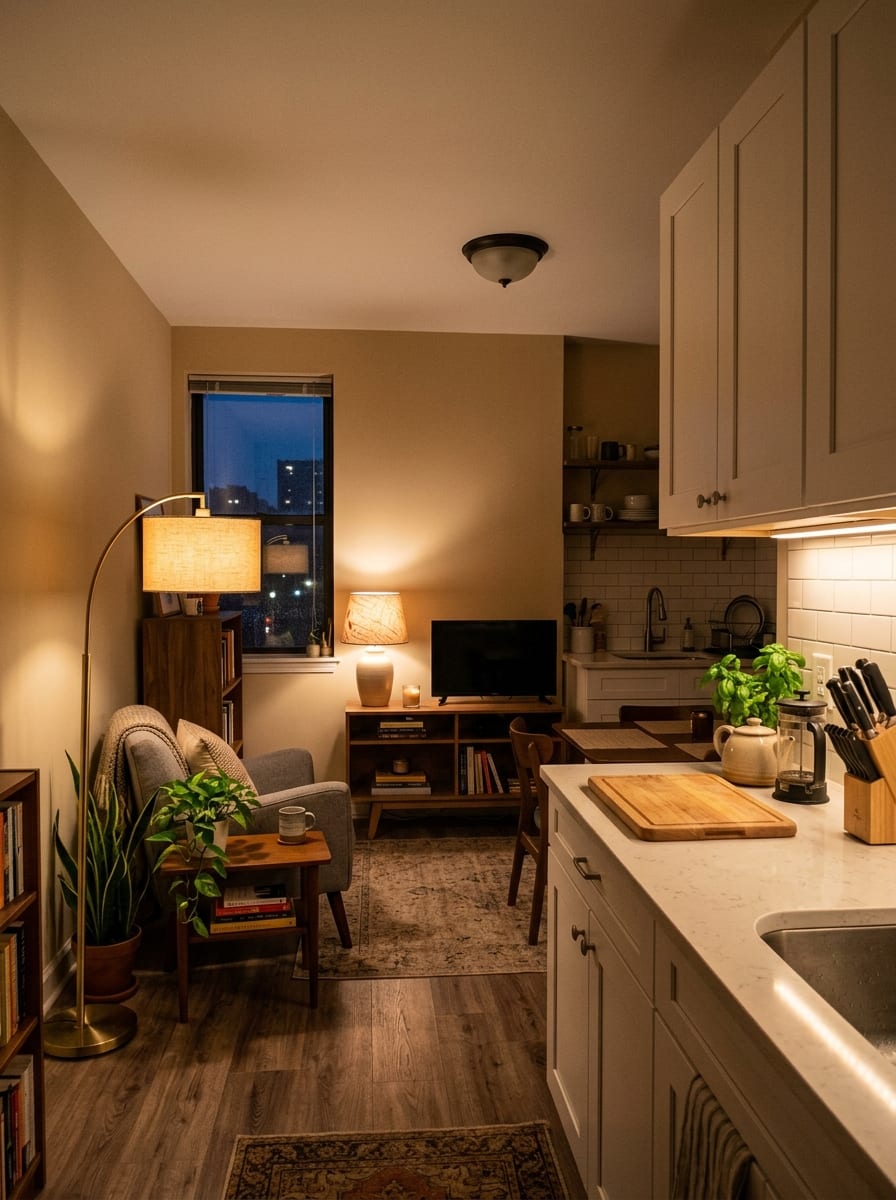
The final improvement is not another fixture.
It is making the lighting easy enough that you actually use it.
If turning on your evening setup requires walking around the apartment switching on six lamps individually, you may eventually return to the ceiling light.
Create one repeatable evening scene
For example:
Living room
Floor lamp + console lamp.
Kitchen
Counter light.
Bedroom
Bedside light.
That might be all you need.
Smart plugs can simplify the routine
Compatible smart plugs or switches can let appropriate lamps turn on together.
Follow:
device compatibility electrical rating manufacturer instructions
Not every appliance or light should be controlled through an arbitrary smart plug.
Timers can also help
A lamp that turns on around sunset can make the apartment feel welcoming before you reach for the harsh ceiling light.
Keep manual control available
Automation should make the home simpler, not confusing.
Everyone in the household should still be able to operate the lights easily.
Why Ceiling Lights Often Feel Harsh
A ceiling fixture typically sends light from one high point.
That can produce:
strong shadows flat-looking walls bright center of room darker corners
It may be practical when:
cleaning packing finding something
but less pleasant for a normal evening.
Lower lamps distribute light differently.
That difference is often what makes a room feel warmer.
Start With One Room
Do not buy lighting for the whole apartment at once.
Choose the room you use most at night.
Usually:
living room bedroom
Then identify the weakest area.
Ask:
Is one corner too dark? Is reading uncomfortable? Is the ceiling light too harsh? Is the room bright but still flat?
Solve that specific problem first.
A Simple Living-Room Lighting Formula
For a small living room:
Main layer
One floor lamp.
Task layer
Reading lamp beside sofa or chair.
Accent layer
Small console lamp.
You may not need all three on simultaneously.
A Simple Bedroom Formula
Try:
Two bedside lights
or one bedside light if only one side needs it.
One small secondary source
Such as:
floor lamp dresser lamp
Keep the overhead fixture for times when maximum brightness is useful.
A Simple Studio-Apartment Formula
Studios need lighting to help define zones.
Try:
Sleeping zone
Warm bedside light.
Living zone
Floor lamp.
Kitchen zone
Counter light.
Work zone
Desk lamp.
These different pools of light can make one open room feel more structured after sunset.
How Many Lamps Does a Small Apartment Need?
There is no ideal number.
Think in terms of lighting jobs, not quantity.
A room may need:
general light reading light atmosphere
Sometimes one well-placed floor lamp can handle two of those jobs.
Avoid adding lamps purely to fill surfaces.
Floor Lamp or Table Lamp?
Choose a floor lamp if:
table space is limited you need light higher in the room a dark corner needs filling
Choose a table lamp if: you already have a console you want softer lower light you need bedside illumination
A small apartment often benefits from using both at different heights.
What Color Temperature Feels Cozy?
For many bedrooms and living rooms, warm-white bulbs around 2700K to 3000K create a comfortable evening appearance.
That does not mean every light in the apartment must use exactly the same specification.
But large differences within one room can make the lighting look inconsistent.
Should Every Lamp Use the Same Bulb Brightness?
No.
Different lights serve different purposes.
For example:
Reading lamp
May need more useful brightness.
Console lamp
Can be softer.
Accent light
Can be much lower.
Layering works because each source has a job.
How to Make a Dark Apartment Feel Brighter
Do not automatically choose the brightest bulb available.
Try improving distribution first.
Add light to:
dark corner work surface wall lower part of room
A room with several moderately bright sources can feel more evenly illuminated than one extremely bright ceiling fixture.
Use Walls to Bounce Light
Light-colored walls can reflect some light back into the room.
A floor lamp pointing partly toward:
wall ceiling
can create a softer result than a bare bulb aimed directly at eye level.
This can be especially useful in narrow apartments.
Watch Lamp Placement Near the TV
Avoid placing a very bright lamp where it produces:
screen reflection direct glare strong light in your eyes
A lamp slightly behind or beside the viewing position may work better.
Test the placement at night before deciding.
Lighting a Small Dining Area
If you cannot install a pendant over the table, consider:
floor lamp nearby plug-in wall light small lamp on adjacent console
The goal is to create a pool of light around the dining zone without occupying valuable table surface.
Lighting a Rental Entryway
Entryways often need very little.
A small console lamp can create a welcoming effect if there is safe access to an outlet.
If the entry has no furniture, focus on improving the nearby living-room lighting instead of forcing a lamp into a narrow passage.
Lighting an Apartment With Few Outlets
Avoid creating unsafe extension-cord networks.
Instead:
prioritize the most useful lamp positions choose lighting near existing outlets follow electrical product guidance avoid cords through walkways
A perfect lamp location is not worth creating a trip or electrical hazard.
Do Not Hide Electrical Cords Under Rugs
Running ordinary power cords underneath rugs can create:
heat wear damage tripping or electrical risks
Route cords according to the product’s safety guidance instead.
Good lighting must still be safe lighting.
Renter-Friendly Does Not Always Mean Damage-Free
This is important.
Terms like:
removable adhesive renter-friendly
do not guarantee that every wall finish will remain unchanged.
Paint age, surface type, product weight and removal technique all matter.
Test products appropriately and follow both:
manufacturer instructions rental agreement requirements
Common Rental Lighting Mistakes
Using only the ceiling light
The room has no visual depth.
Buying lamps before identifying dark zones
You end up with light where you do not need it.
Mixing extremely different bulb colors
The room can feel disconnected.
Putting every lamp at the same height
Lighting becomes flat again.
Choosing oversized floor lamps
They consume valuable space.
Ignoring cords
A great lighting plan can create a bad walkway.
Installing inappropriate adhesive fixtures
Weight and wall finish still matter.
Making the apartment too dark
Cozy does not mean unusable.
Adding decorative lighting everywhere
One or two accent zones usually have more impact.
A $0 Lighting Reset
Before buying anything:
Move an existing lamp into the darkest corner. Swap lamps between rooms. Turn off the overhead light at night. Test different furniture positions. Remove anything blocking existing light.
You may already own the light source you need.
A Minimal Lighting Upgrade
If you want the smallest intervention:
Living room
One warm floor lamp.
Bedroom
One good bedside light.
Kitchen
One useful counter light.
Those three changes can affect almost every evening you spend in the apartment.
A More Layered Apartment Setup
For a fuller plan:
Living room
Floor lamp + console lamp.
Bedroom
Plug-in sconces or bedside lamps.
Kitchen
Counter lighting.
Entryway
Small lamp if there is space.
Workspace
Dedicated task lamp.
Each source has a clear job.
Which Lighting Idea Fits Your Apartment?
Choose the Three-Layer Plan if:
The room is bright but still feels flat.
Choose Plug-In Sconces if:
You want wall lighting without traditional hardwiring.
Choose a Floor Lamp if:
One corner disappears at night.
Choose a Plug-In Hanging Light if:
Your nightstand is tiny.
Change the Bulbs if:
Existing lighting feels too cool or inconsistent.
Add Counter Lighting if:
Your kitchen worktop is shadowy.
Add Shelf Accent Light if:
You want atmosphere without another floor lamp.
Use a Mirror if:
You already need one and want to spread soft light.
Create an Evening Scene if:
You own several lamps but rarely bother turning them all on.
Final Thoughts
You do not need to rewire a rental apartment to make the lighting feel dramatically better.
Start by changing where the light comes from.
Think:
ceiling → eye level → table height → task surface
Then find the parts of the apartment that disappear after sunset.
Usually, the biggest improvements come from just a few decisions:
one floor lamp in the right corner warmer evening bulbs better bedside lighting a little useful kitchen light
Instead of trying to make one fixture illuminate the entire apartment, let several smaller sources handle different jobs.
That is what creates the warmer, more layered feeling most rental apartments are missing.