How to Light an Apartment Without Ceiling Lights
How to light an apartment without ceiling lights, with the best tips for lighting small spaces: floor lamps, table lamps, plug-in sconces, LED strips, and task lighting, all without overhead wiring.
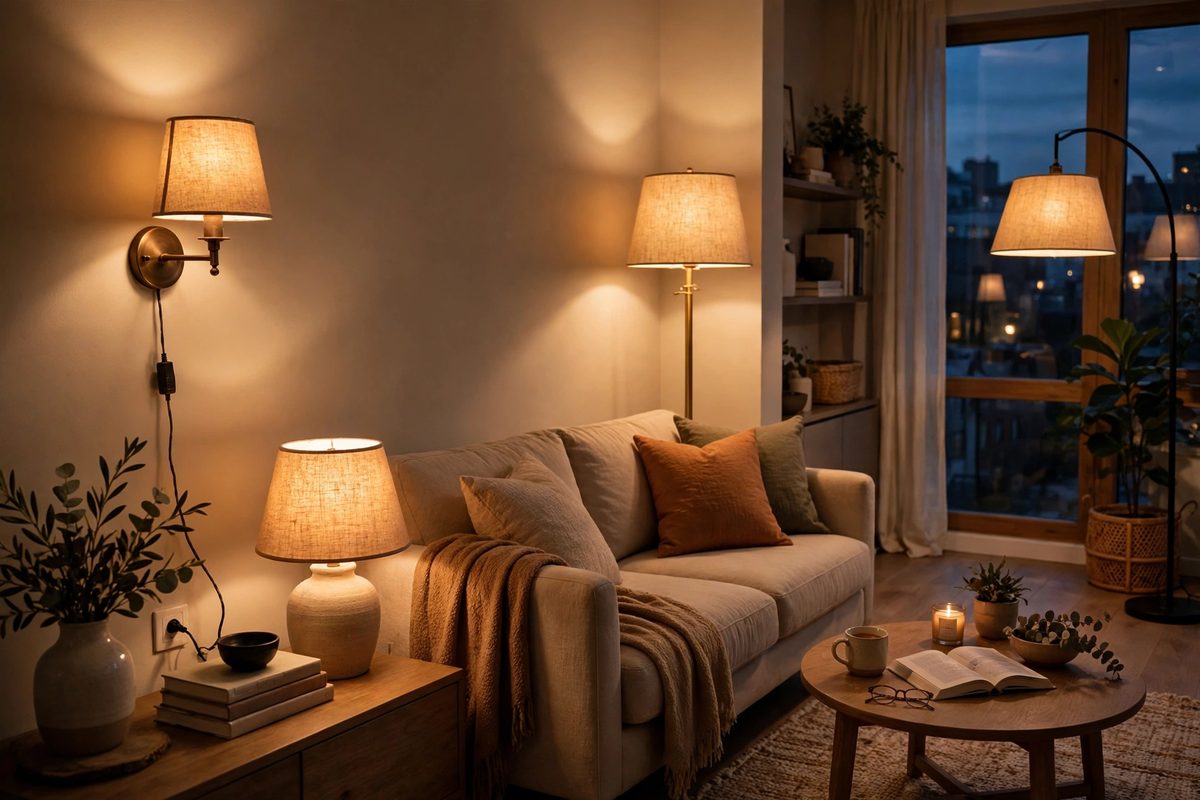
Apartment living room lit entirely by floor lamps, table lamps, and a plug-in sconce with no ceiling light switched on
In This Guide
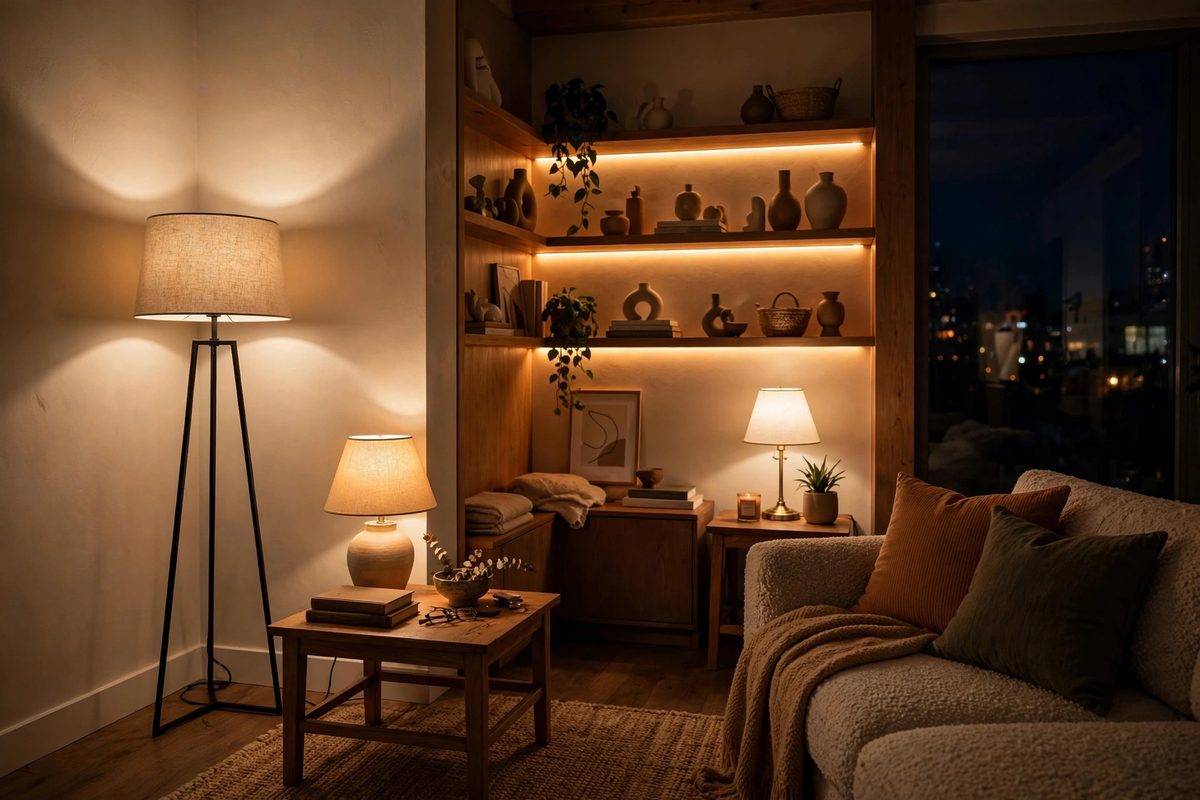
Plenty of older apartments, studios, and basement units have no ceiling lights at all, just a switched outlet or two and a lot of dark ceiling. The good news is that ceiling lights are often the worst light in a room anyway: a single harsh source in the middle that flattens everything. Lighting an apartment without them, done right, looks better than the overhead light you do not have.
This is a method guide, not an idea list. It covers the lamp types that replace overhead lighting, where each one goes, how many you actually need per room, and the outlet and cord safety that keeps a multi-lamp setup safe. If your apartment is also dark during the day, start with renter-friendly lighting for dark apartments for the daylight side of the problem, and use this guide for the evening plan.
1. Start With the Floor Plan, Not the Lamp Store
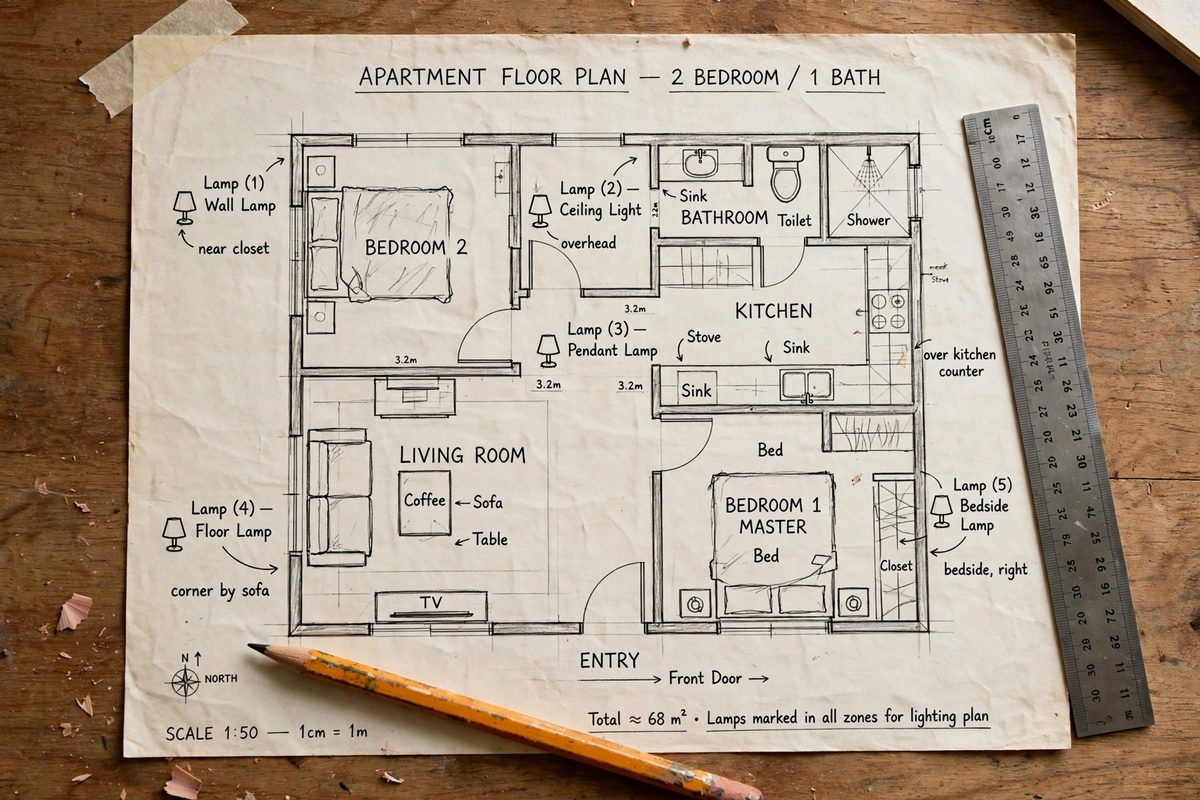
Before you buy a single lamp, sketch each room and mark three things: every outlet, every seating or work spot, and every dark corner. The outlets decide what is possible; the seating spots decide where light must land; the dark corners decide where ambient washes go. A lamp bought without this sketch usually ends up in the wrong corner.
Count lamps by zone, not by room. A studio needs a living zone, a sleep zone, and a work zone, each with its own light, even though it is one room. A one-bedroom needs living, bedroom, and kitchen or entry light. The sketch takes 15 minutes and saves the classic mistake: three lamps clustered near the sofa and a bedroom you still cannot read in.
How to make it work
Walk the apartment at night with a single portable lamp, a clip light or a battery lantern, and set it in each candidate spot for a minute. You will see immediately which spots light a seating area and which spots light an empty wall. Mark the winners on the sketch, note the nearest outlet for each, and only then go shopping with a list of lamp types and positions.
2. The Corner Floor Lamp as Your Overhead Replacement
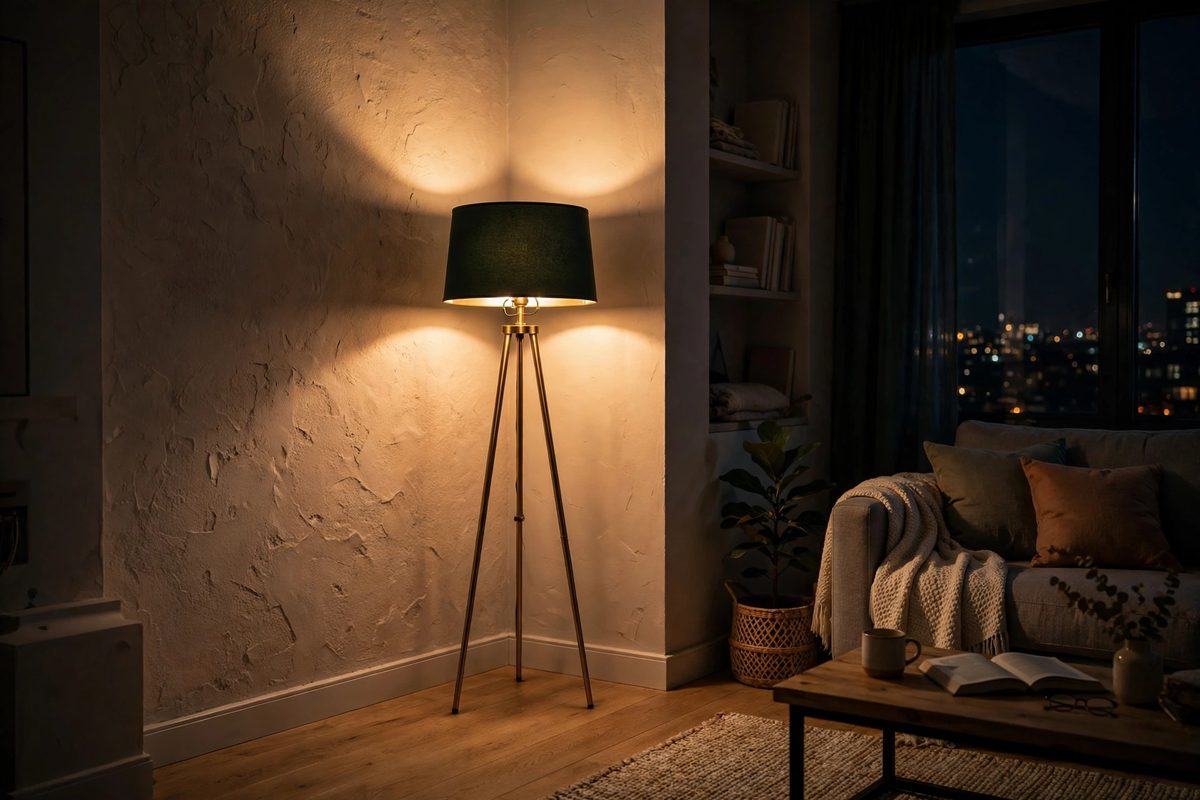
One tall floor lamp in a corner replaces a ceiling light better than any other single fixture. A torchiere or arc lamp aimed up washes the ceiling and walls with reflected light, which is exactly what a ceiling fixture does, minus the harsh direct glare. The room gets general brightness, and the lamp itself takes only about 12 inches of floor.
Choose a torchiere for small rooms and tight budgets, 50 to 90 dollars, or an arc lamp, 80 to 150 dollars, if you want the light to reach over a sofa. Use a 1600 lumen bulb, roughly a 100 watt equivalent, for a living room corner wash, and a dimmable bulb so the same lamp works for bright hosting and low evening light. For floor lamp styles in detail, see small living room floor lamp ideas.
How to make it work
Place the lamp 12 to 18 inches from the corner, not jammed into it, so light escapes on both sides. Keep the lamp base on hard floor or a low-pile rug; thick shag rugs make tall lamps wobble. If the lamp has a separate reading light, use it as your task layer and let the upward wash stay ambient, so one fixture does two jobs.
3. Table Lamps at Both Ends of the Seating Area
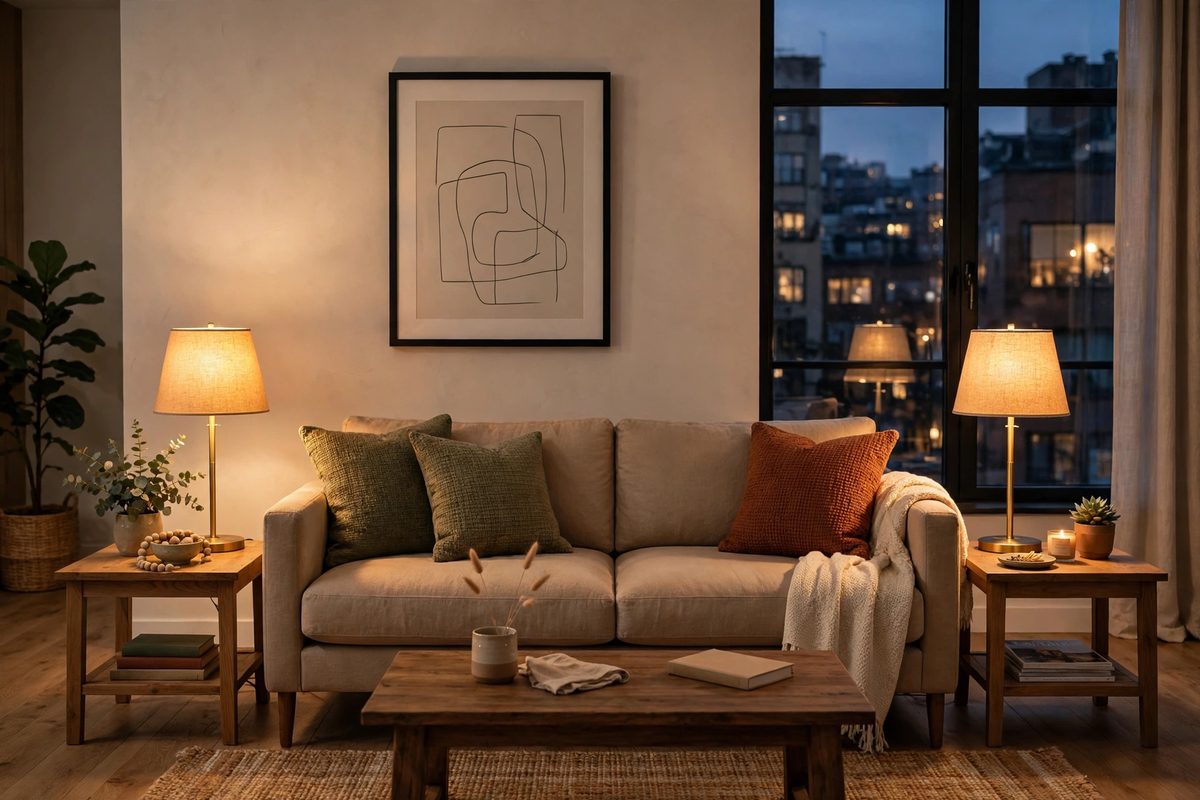
Table lamps are the workhorses of a no-ceiling-light apartment. One on each side of the sofa gives balanced light for reading, conversation, and TV time, and stops the room feeling lopsided, which is what happens with a single lamp on one side. Two smaller lamps beat one big lamp every time in a room without overhead light.
Table lamp height matters: the bottom of the shade should sit at about eye level when you are seated, roughly 58 to 64 inches from the floor on a standard side table. That height lights a book without shining in your eyes across the sofa. Budget 30 to 60 dollars per lamp, and use 2700K to 3000K bulbs, 400 to 800 lumens each, for evening comfort.
How to make it work
If you only have one side table, put the second table lamp on a bookshelf, a console, or a stack of sturdy books at the same height. Symmetry of height matters more than symmetry of lamp style; two different lamps at the same shade height look intentional, while two matching lamps at different heights look accidental. Pair table lamps with the seating plan in small living room seating ideas.
4. Plug-In Sconces for Walls the Lamps Cannot Reach
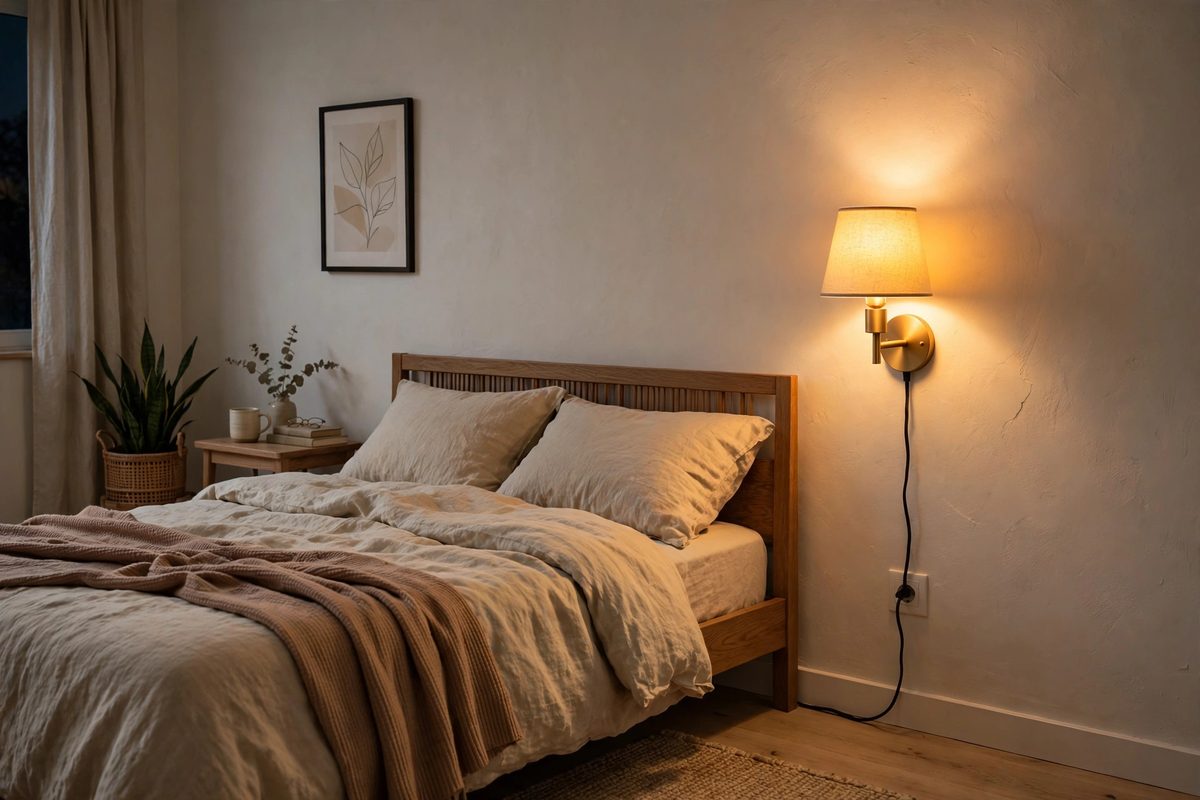
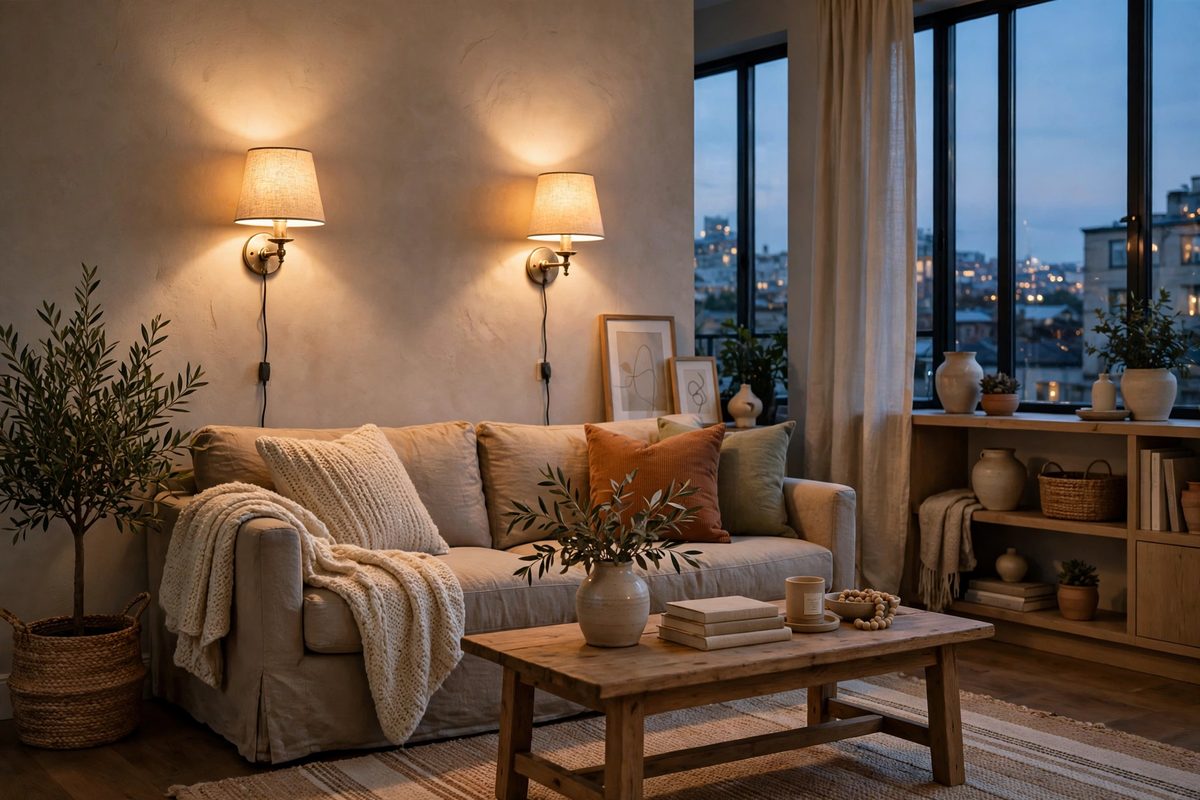
Floor and table lamps need floor and table space, and small apartments run out of both. Plug-in sconces solve the spots lamps cannot: beside the bed, in a narrow hallway, over a desk against a wall. They mount without wiring, plug into a nearby outlet, and free up every flat surface in the room.
Bedside sconces sit 18 to 24 inches above the mattress; hallway sconces sit 60 to 66 inches from the floor. A pair beside the bed costs 40 to 90 dollars and replaces two table lamps outright, which is a real win in a bedroom with no nightstand space. The full sconce guide, with shades, dimmers, and cord covers, is plug-in wall sconce ideas for apartments.
How to make it work
Run sconce cords inside paintable cord covers, about 12 dollars for 6 feet, so the wall looks finished rather than wired. If the nearest outlet is across the room, choose a sconce with a 10 to 12 foot cord and run it along the baseboard, never across a walkway or under a rug. Check the mount weight rating against the sconce plus shade weight in pounds before you buy.
5. LED Strips for Shelves, TVs, and Dead Corners
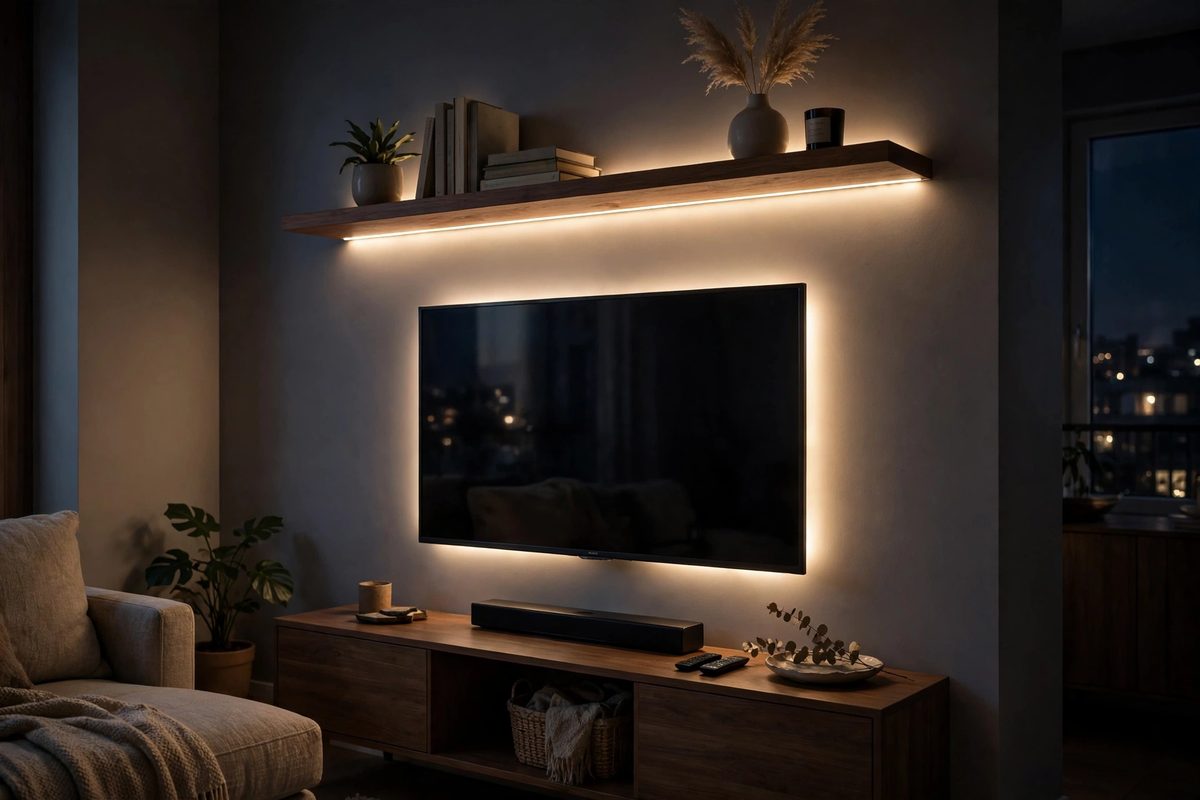
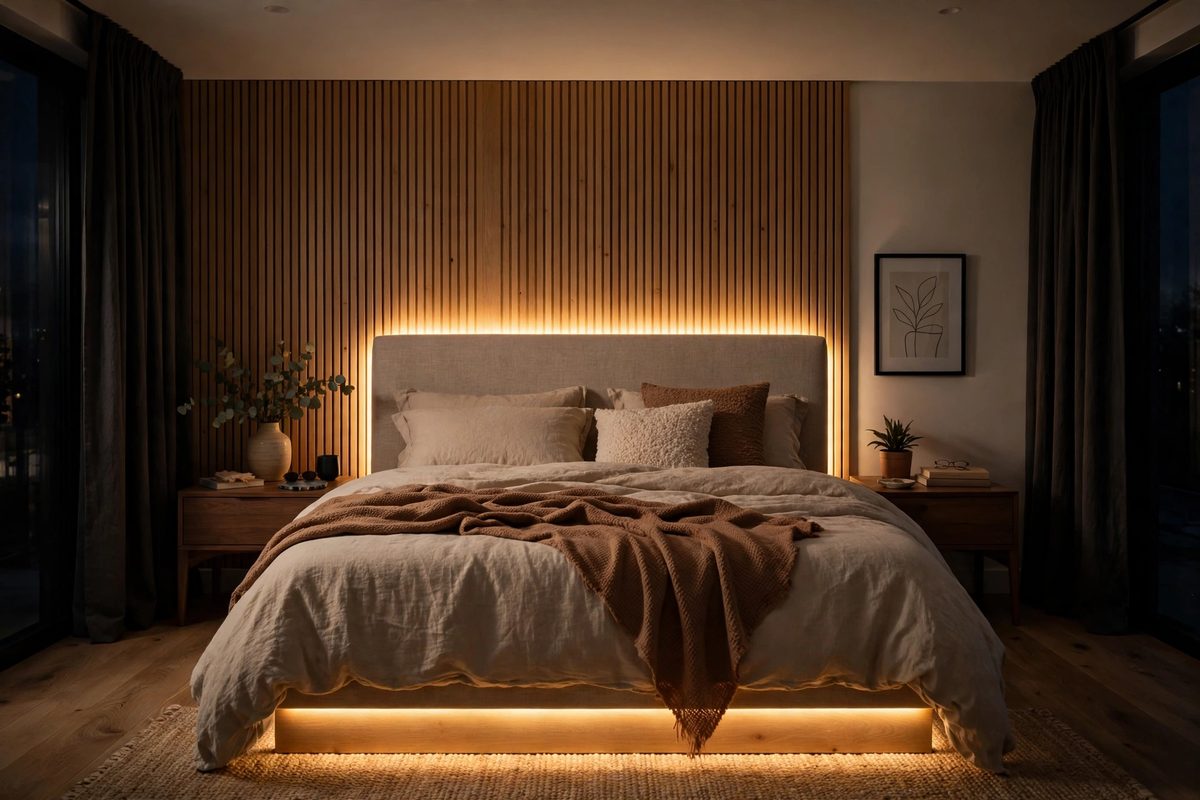
LED strips are the secret weapon of no-ceiling-light apartments because they light places lamps physically cannot: behind a TV, under a shelf, along the top of a bookcase, inside a closet. They add ambient glow without a footprint, and they make a room feel layered rather than lamp-lit.
A TV bias strip, 15 to 25 dollars, stuck to the back of the television reduces eye strain and makes the TV wall glow softly instead of glaring in a dark room. An under-shelf strip, 15 to 30 dollars, lights a desk or a reading shelf. Use warm 2700K strips for living areas and daylight strips for work zones. The bedroom strip placement guide is LED strip ideas for bedrooms.
How to make it work
Buy strips 2 inches shorter than the surface so the ends do not overhang and glare. Stick them to the front underside edge of a shelf, not the back, so light falls forward onto what you use. If the strip is USB powered, plug it into the TV USB port or a phone charger brick, and use the remote to dim it to about 60 percent; full brightness strips look like a shop display, not a home.
6. Task Lighting for Desks, Kitchens, and Reading Chairs

Ambient lamps light a room; task lamps light a job. In an apartment without ceiling lights, the kitchen counter, the desk, and the reading chair each need their own focused light, or you end up cooking, working, and reading in the dim spill from a floor lamp across the room.
A desk lamp with an adjustable arm, 30 to 70 dollars, should give 400 to 800 lumens at the work surface in a 4000K bulb for daytime work. A kitchen counter needs an under-cabinet strip or a battery puck light, 15 to 25 dollars, since a floor lamp cannot reach over a counter. A reading chair needs a swing-arm sconce or an adjustable floor lamp with a focused head, not just the room’s ambient wash.
How to make it work
Test task light at the actual task: read a page, chop nothing but hold a knife safely under the light, type a paragraph. If you squint or lean toward the light, it is too dim or too far away; move it 6 inches closer before buying a brighter bulb. Keep task lights on separate switches from ambient lamps so you can work late without lighting the whole apartment.
7. Battery and Puck Lights for Spots With No Outlet
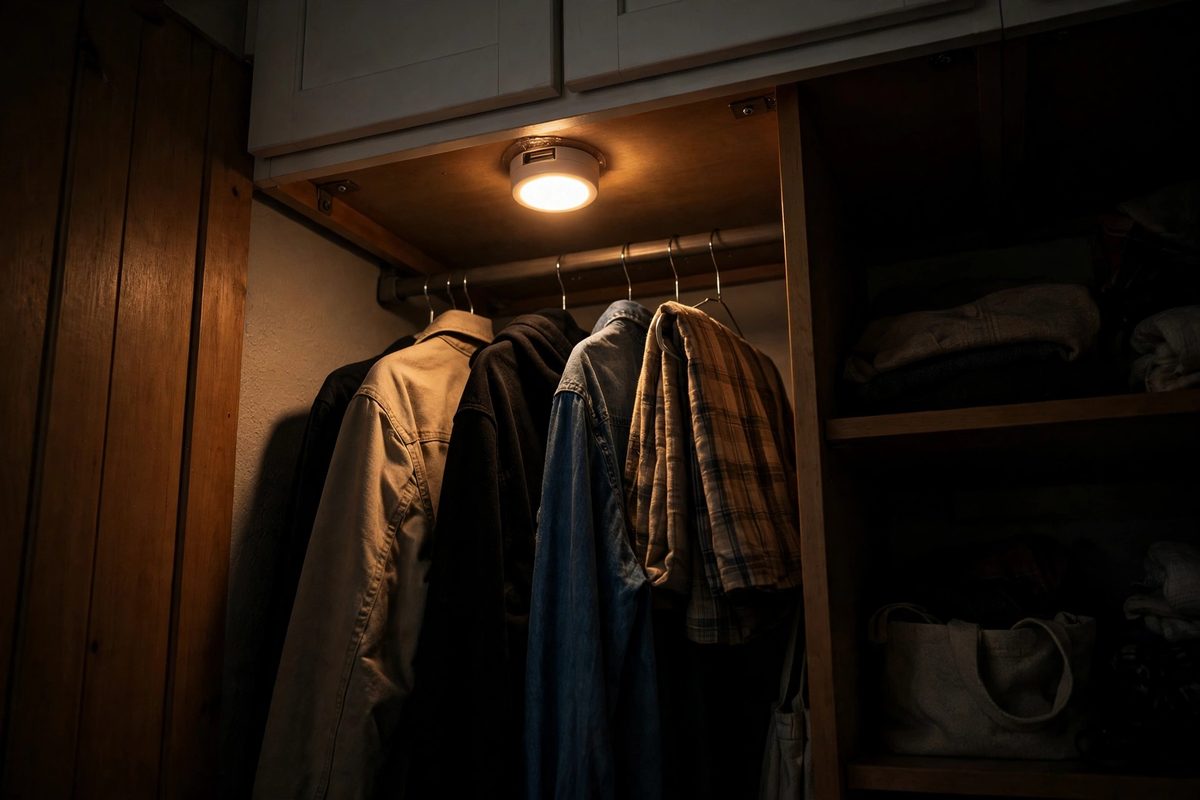
Every no-ceiling-light apartment has a spot with no outlet nearby: inside a closet, under a kitchen cabinet far from the counter outlet, in a windowless bathroom nook. Battery puck lights, 10 to 20 dollars for a 3-pack, stick on with adhesive or a magnet and switch on with a tap or a remote.
Pucks give 100 to 300 lumens each, which is enough for a closet, a cabinet interior, or a hallway nook, but not enough for a whole room, so do not try to light a living room with them. Rechargeable pucks with USB charging save money fast if you use them daily; a puck used nightly eats alkaline batteries in about three weeks. Motion-sensor pucks are worth the small premium in closets and entries.
How to make it work
Stick pucks to the underside of a shelf or the top inside of a closet, not the back wall, so light falls down onto clothes or dishes. Keep one spare charged puck in a drawer so a dead battery never leaves a closet dark for a week. At move-out, peel pucks slowly and wipe the adhesive spot; most leave no mark on smooth surfaces.
8. The Paper Lantern and Diffused Glow Trick
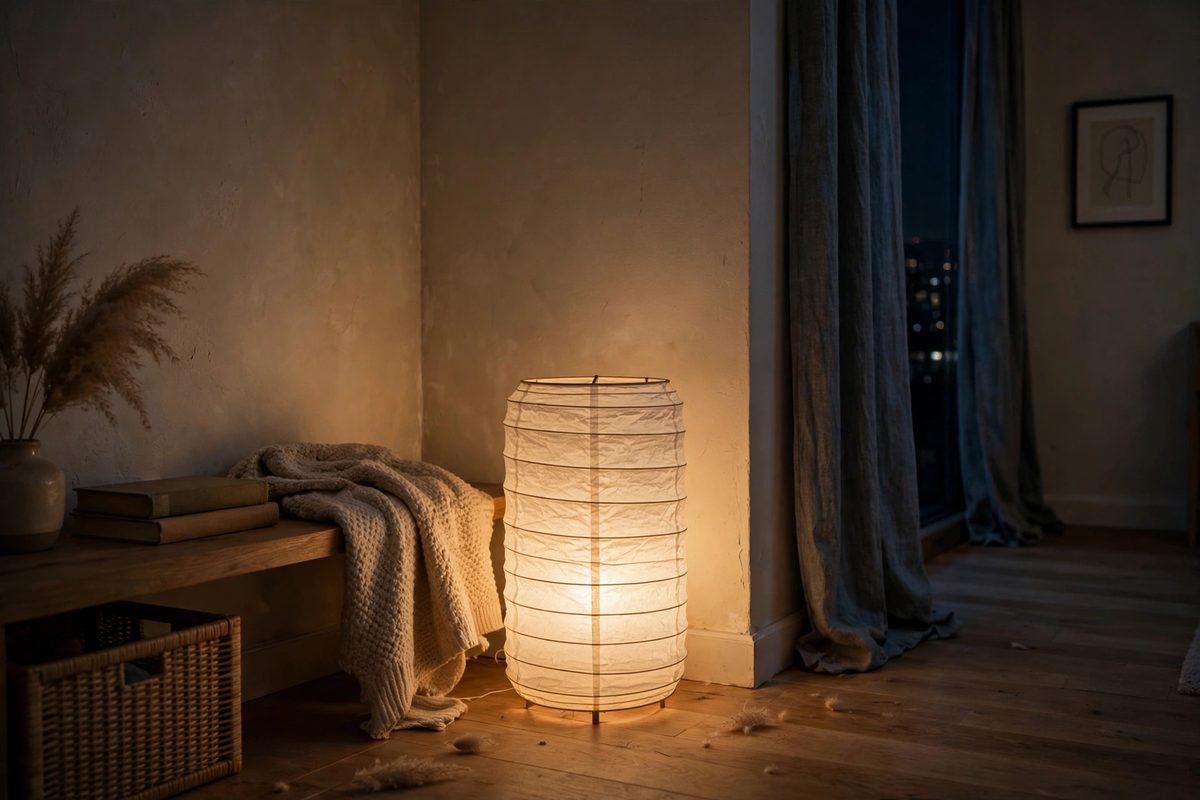
A paper floor lantern or a large diffused globe lamp, 25 to 50 dollars, gives the softest ambient light of any portable fixture. The paper or frosted globe spreads light in every direction with no hard shadows, which flatters a small room and hides the fact that there is no ceiling fixture at all. It reads as a design choice, not a workaround.
Place a paper lantern in a corner or beside a low bookcase, never in a walkway, since paper tears and the lamp inside is exposed if it tips. Use LED bulbs only, never incandescent, in any paper shade, and keep the lantern at least 12 inches from curtains and bedding. A lantern with a dimmer gives you a full range from bright room glow to night-light softness.
How to make it work
Pair one paper lantern with one directional lamp in the same room. The lantern supplies the soft ambient base, the directional lamp supplies the reading and task light, and together they mimic what a ceiling light plus a table lamp would do in a wired apartment. Replace a torn paper shade rather than patching it; a patched lantern looks tired and the patch creates a bright spot.
9. Dimmers, Smart Plugs, and the One-Switch Evening
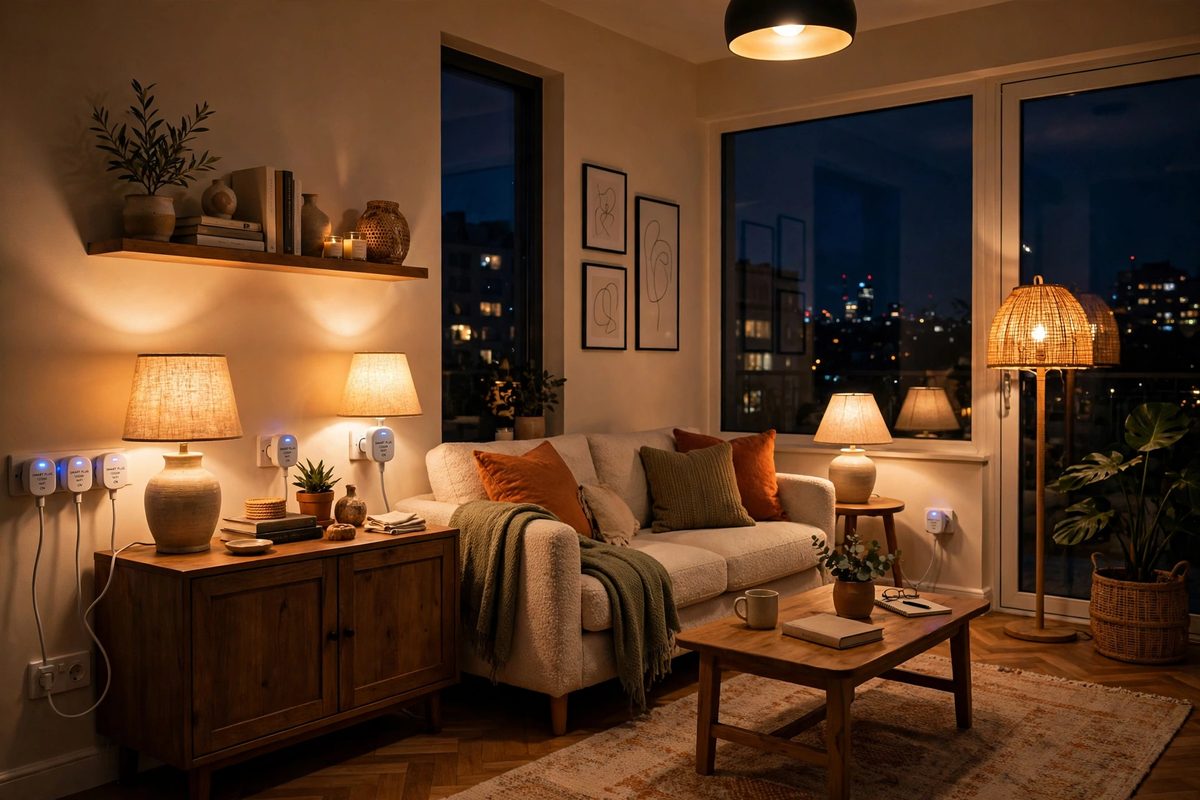
The real annoyance of a no-ceiling-light apartment is not darkness, it is switch hunting: five lamps, five switches, five walks around the room every night. Plug-in dimmers, about 15 dollars each, and smart plugs, 12 to 20 dollars each, fix that by giving you one-switch control from your phone, a voice assistant, or a single remote.
Group lamps by scene, not by lamp type. An evening scene might be the corner wash at 40 percent, both table lamps on, and the TV strip on. A work scene might be the desk lamp at full brightness and everything else off. Smart plugs with schedules can switch the evening scene on at dusk automatically, so you never walk into a dark apartment.
How to make it work
Start with smart plugs on the two lamps you use most, not all five at once, and add more only if the routine sticks. Label each plug in the app by room and position, “living room corner” and “bedside left”, not “plug 1” and “plug 2”, since unlabeled plugs become a guessing game within a month. Keep one lamp on a manual switch as a backup for Wi-Fi outages.
10. Outlet Math and Cord Safety for Multi-Lamp Rooms
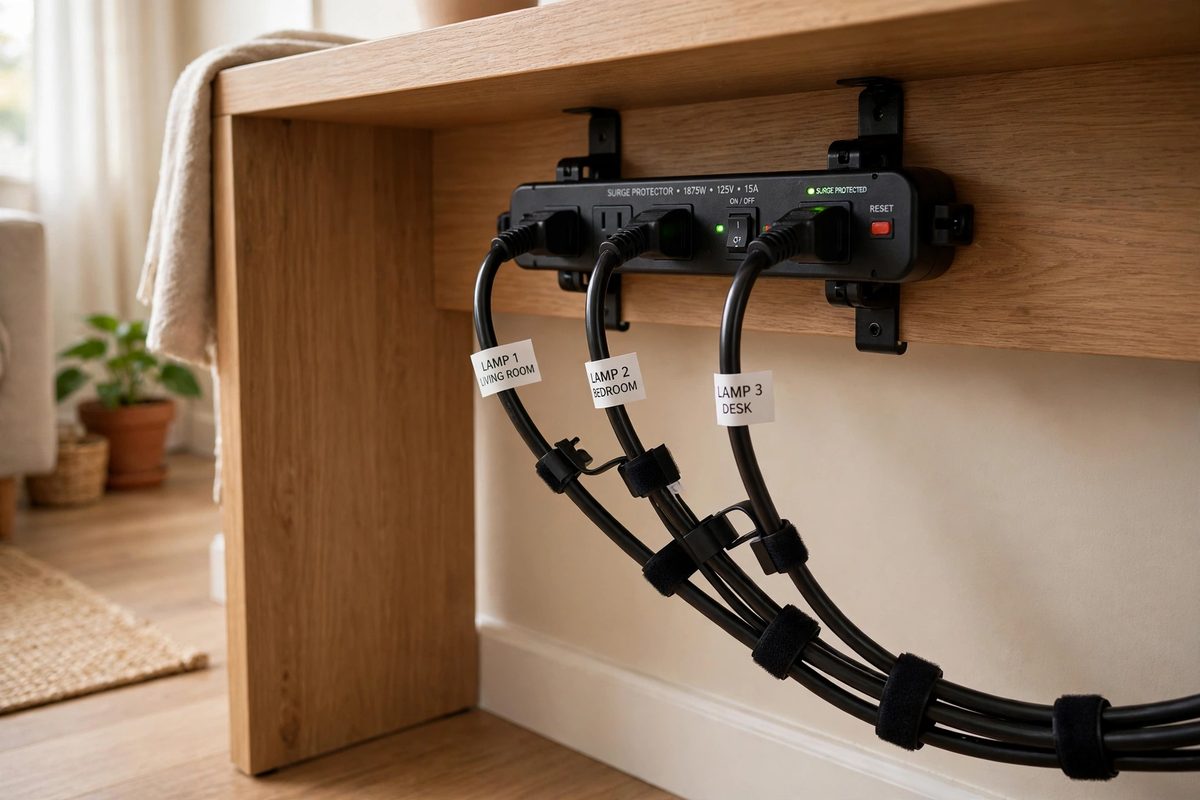
A room with five lamps needs an outlet plan, not just more power strips. Count total wattage first: five LED lamps at 10 to 15 watts each draw 50 to 75 watts total, which is trivial for one standard 15 amp circuit. The risk is not overload from LEDs, it is daisy-chained strips, cords under rugs, and strips buried behind furniture where heat builds up.
Use one good surge-protected power strip per lamp cluster, plug it directly into the wall outlet, and never plug a strip into another strip. Run cords along baseboards inside cord covers, never under rugs or across doorways, and leave the strip itself accessible and ventilated, not jammed behind a sofa cushion. If your apartment has two-prong outlets with no ground, use a strip rated for that setup or ask your landlord about an outlet upgrade rather than forcing a three-prong plug.
How to make it work
Label each cord at the strip with masking tape: corner lamp, table left, TV strip. Future you will thank present you at the first bulb change. Check cords every six months for fraying where they bend around furniture legs, and replace any cord that feels stiff or cracked. For ceiling-adjacent ideas that still need no wiring, see small apartment ceiling ideas.
Lighting an apartment without ceiling lights is a system: a corner wash for ambient light, table lamps for balance, sconces for tight spots, strips for dead zones, task lights for work, and one-switch control to run it all. Build it zone by zone, test each lamp in its real spot at night, and the missing ceiling light stops mattering.