Apartment Closet Organization: 12 Ways to Fit More Without Overstuffing the Closet
Make a small apartment closet work harder with double hanging, vertical shoe storage, shelf dividers, smarter bins and simple systems that add space without overstuffing it.
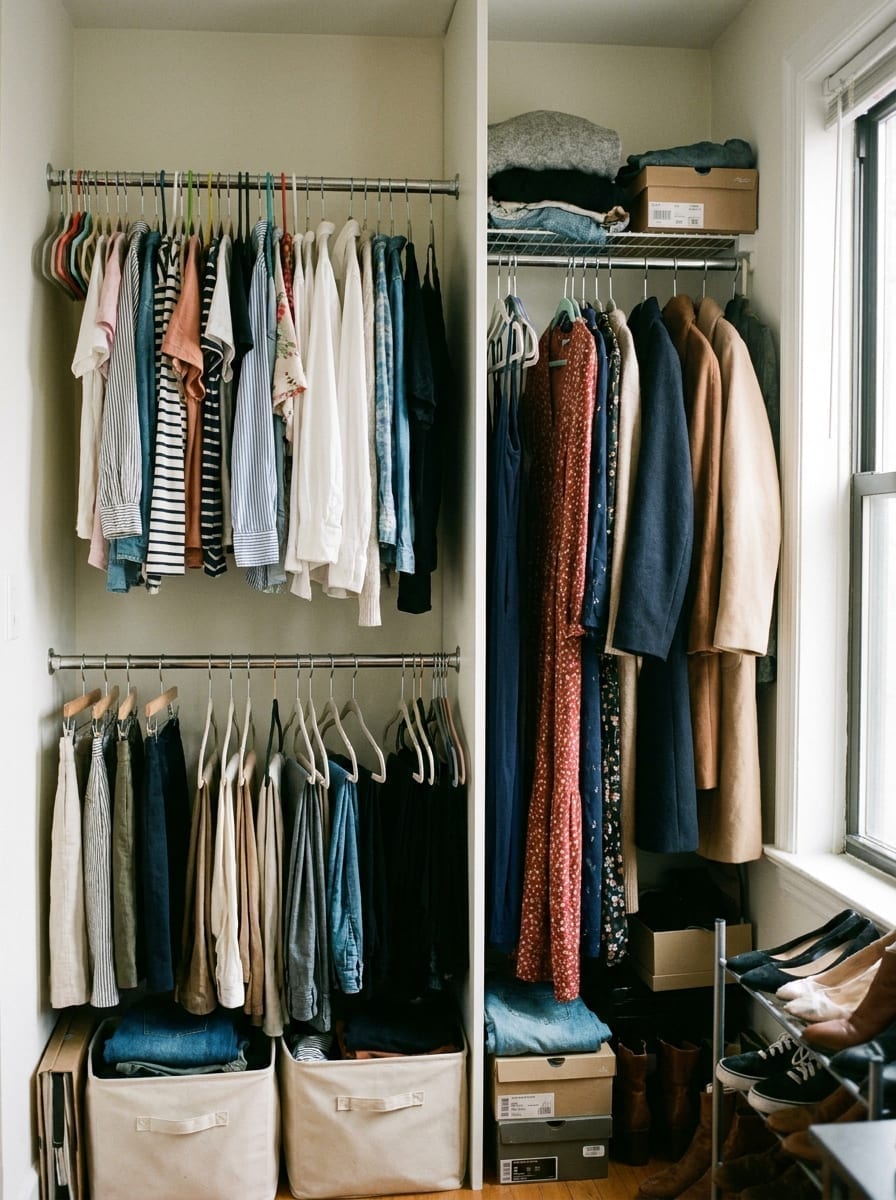
Organized small apartment closet with double hang rail system and neatly stacked shelf dividers
In This Guide
A small apartment closet can feel full long before it is actually using its space well.
The problem is often not that you own too much.
It is that the closet has:
one long hanging rail one high shelf a pile of shoes at the bottom awkward empty vertical space storage boxes you cannot reach clothes packed so tightly that nothing is easy to see
That creates the worst kind of storage problem.
The closet looks full, but it still does not work.
The goal is not to squeeze absolutely everything into it.
A good small closet should let you:
see what you own reach everyday pieces quickly use the full height keep categories together leave enough breathing room that things go back easily
These 12 changes are designed for ordinary apartment closets, not custom walk-ins.
Before You Buy Organizers, Measure the Closet
Do this first.
Measure:
interior width closet depth rail height distance between rail and floor upper-shelf depth door clearance width of any awkward side walls
Then photograph the empty or partially emptied closet.
You will immediately start noticing unused zones.
Maybe there is 30 inches of empty space below shirts.
Maybe the top shelf is only half used.
Maybe the shoes are consuming the entire floor because nothing is vertical.
Buying organizers before understanding those dimensions often creates more clutter instead of solving it.
1. The One-Rail Edit
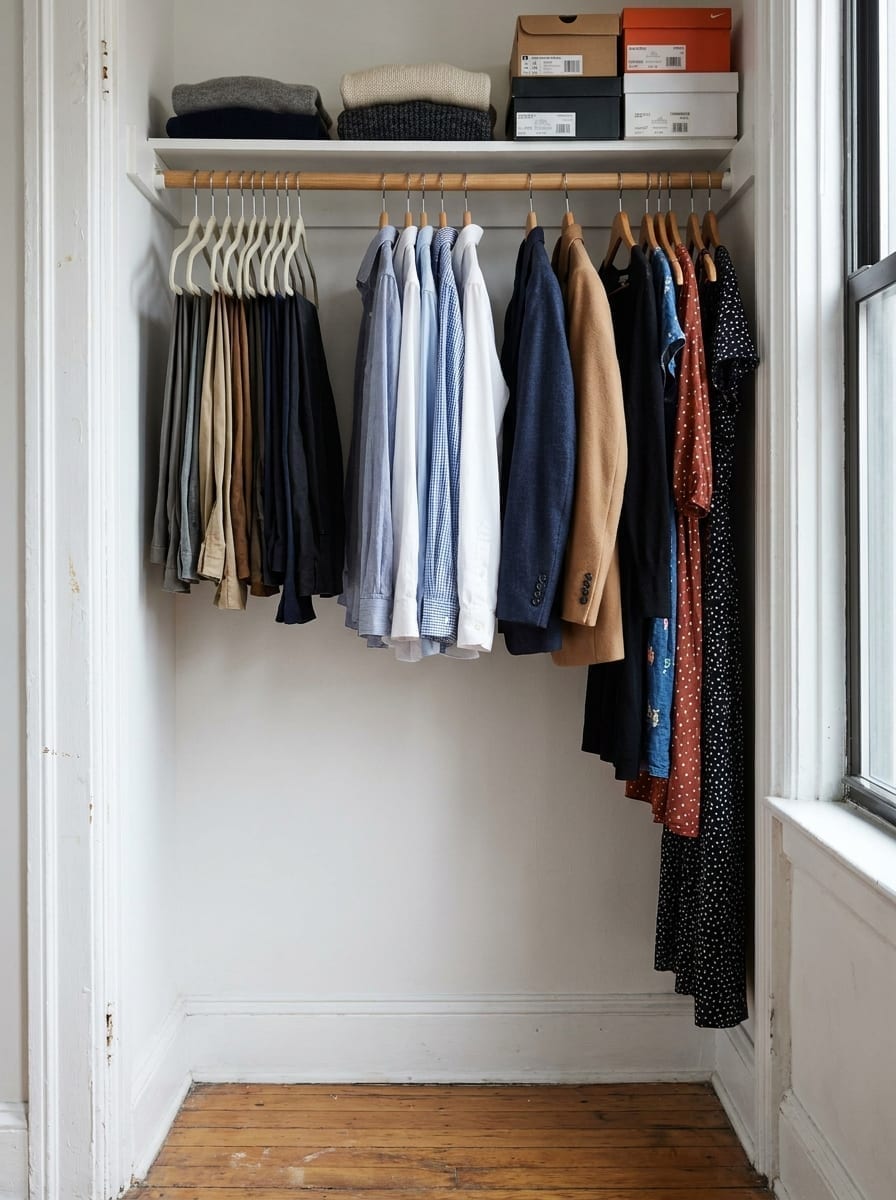
The standard apartment closet often comes with one rail running from wall to wall.
That does not mean every inch needs to be packed with hanging clothes.
Start by separating what genuinely benefits from hanging.
Usually that includes:
dresses jackets structured shirts trousers that crease easily delicate pieces
T-shirts, knitwear, workout clothes and many casual items often store more efficiently folded.
When everything hangs, you waste valuable vertical space beneath short garments.
Make the rail easier to use
Group clothes by type.
For example:
shirts → trousers → jackets → dresses
Then keep a small amount of space between categories.
That tiny visual break makes the closet easier to scan.
2. The Double-Hang Zone
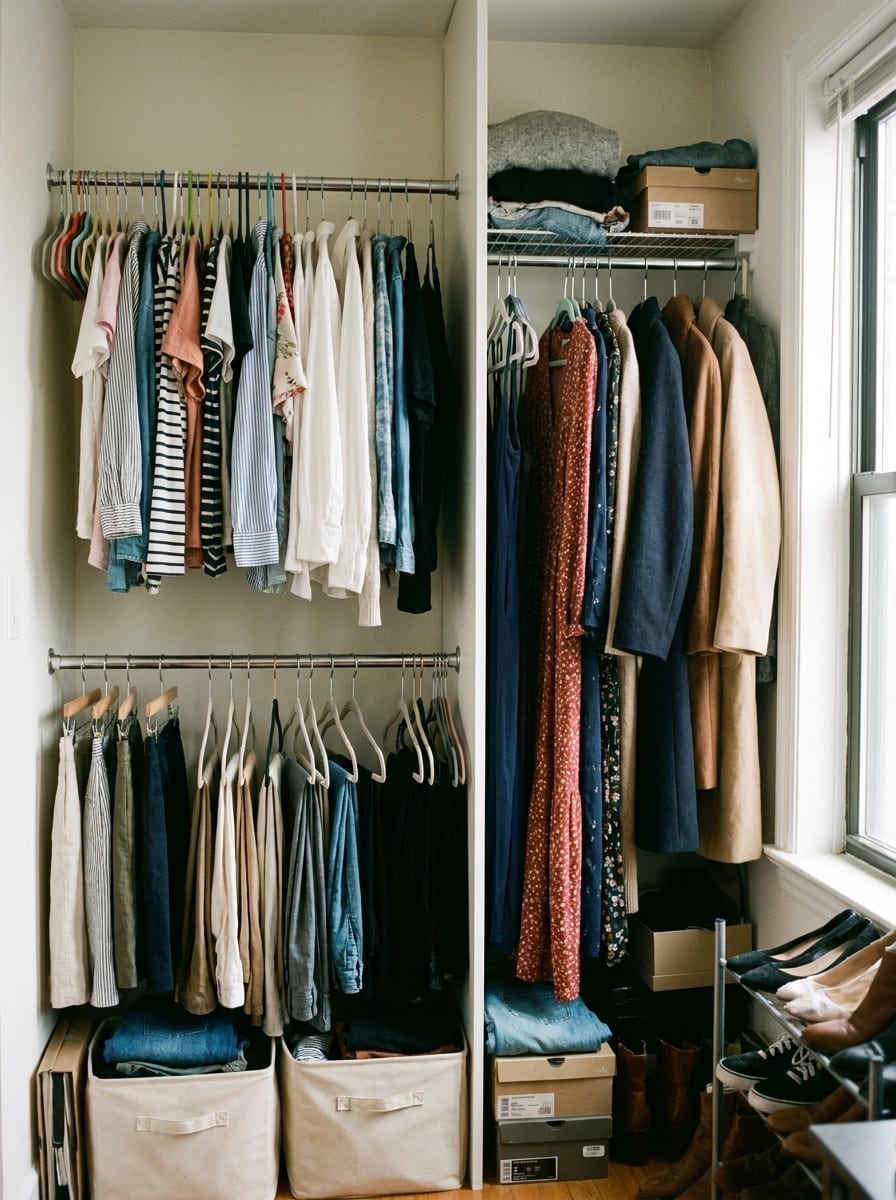
If most of your wardrobe is made up of shorter pieces, one of the biggest storage gains can come from adding a second hanging level.
You do not necessarily need to double the entire closet.
Create one double-hang section for:
shirts blouses shorter jackets folded trousers on hangers skirts
Keep the full-height section for dresses and longer coats.
This lets the same width of closet hold much more without cramming clothes together.
When it does not work
Do not add a lower rail if it creates a frustratingly low gap or if most of your wardrobe is long.
The system should match what you own.
3. The High-Shelf Seasonal Storage
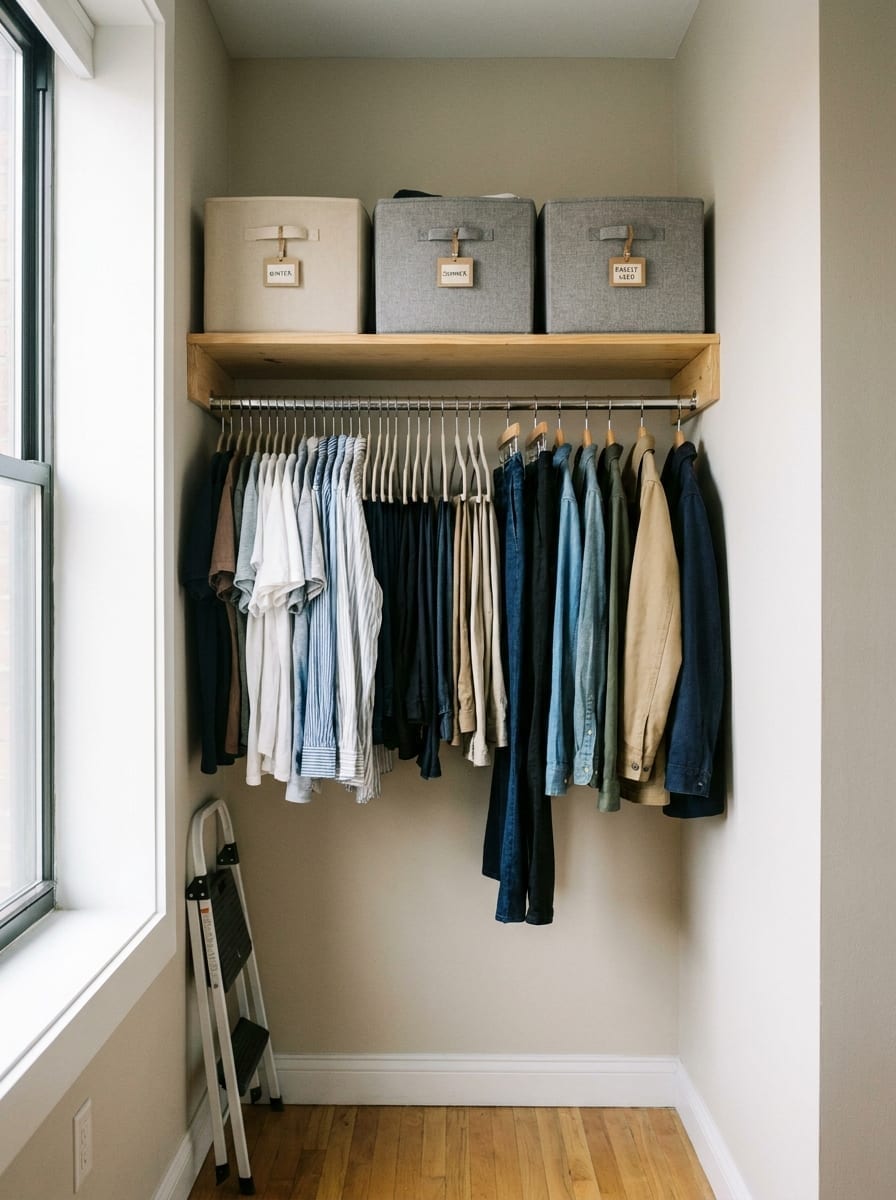
The highest closet shelf should not hold things you need every morning.
Use it for low-frequency items.
Good candidates include:
off-season sweaters spare bedding formal shoes travel accessories handbags used occasionally winter accessories
Store them in clearly defined containers rather than one giant mixed bin.
The goal is to know what is up there without pulling everything down.
Keep it visually simple
Two or three larger containers often work better than eight tiny boxes.
If you cannot see through the containers, label the front discreetly.
4. The Matching Slim-Hanger Reset
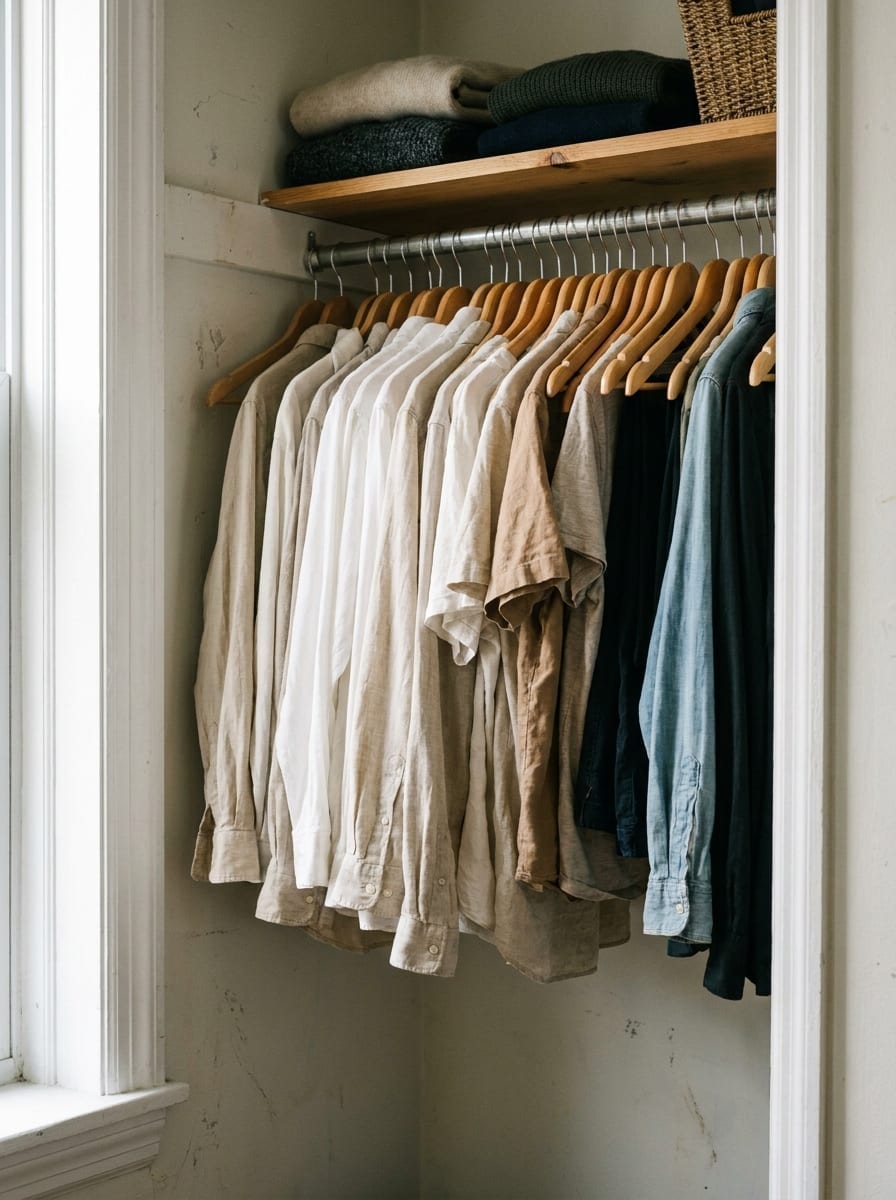
This is one of those changes that sounds cosmetic but can genuinely improve usable space.
Bulky wooden or thick plastic hangers consume surprising amounts of rail width.
Slim hangers can create more consistent spacing and reduce visual chaos.
The biggest benefit is not fitting twenty extra shirts into the closet.
It is making the existing wardrobe easier to move through.
You should still be able to slide clothes apart with one hand.
If the rail is packed so tightly that garments cannot move, the closet is over capacity regardless of hanger type.
5. The Vertical Shoe Column
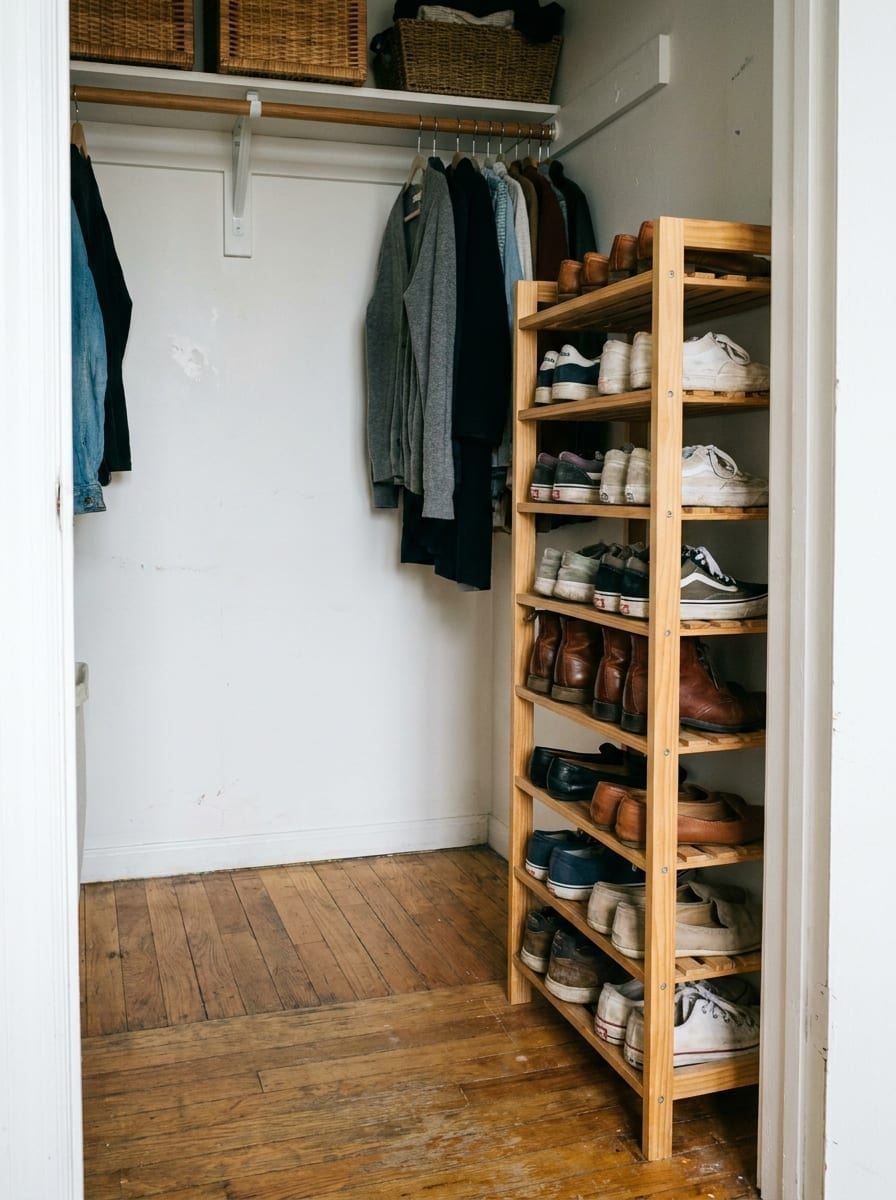
Shoes are one of the fastest ways to lose the closet floor.
Ten pairs lined across the bottom can consume almost the entire width.
Instead, build upward.
A narrow vertical shoe rack or stackable shoe shelf can keep pairs together without using the entire floor.
Place everyday shoes at the easiest height.
Put:
seasonal shoes formal pairs occasional boots
higher or lower depending on frequency.
Don’t force every shoe into the closet
If you regularly wear only four pairs, those deserve the easiest access.
Rarely used shoes can live elsewhere if another storage location makes more sense.
6. The Shelf-Divider Stack
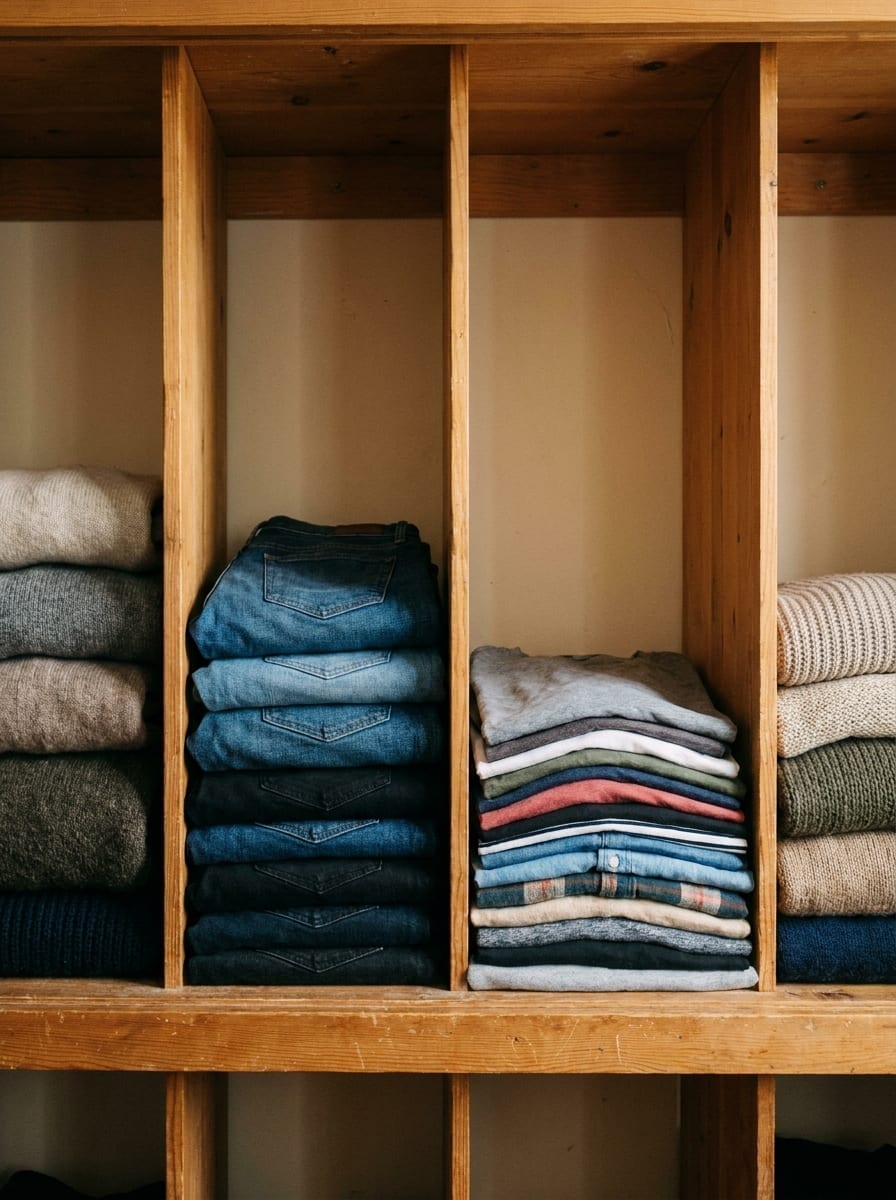
Closet shelves tend to become unstable towers.
Sweaters get stacked too high.
Jeans slide into T-shirts.
One item pulled from the bottom collapses everything.
Shelf dividers solve this by creating smaller vertical sections.
Instead of one long shelf, think in columns:
Column 1: sweaters Column 2: jeans Column 3: workout clothes Column 4: bags
Keep each stack low enough that you can remove something without rebuilding the entire shelf.
7. The Door-Back Access Zone
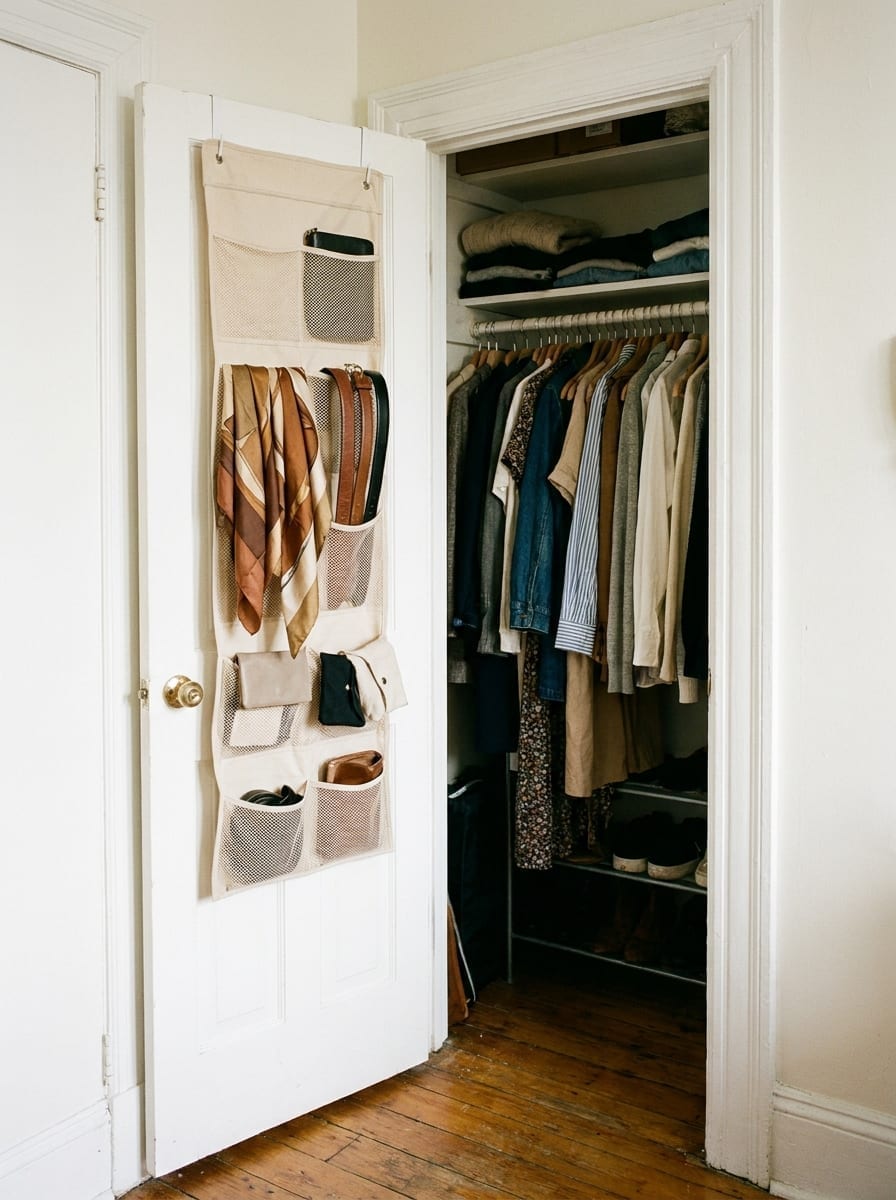
The inside of a closet door is useful because it is vertical space you already own.
Use it for lightweight, frequently accessed items.
Depending on your door style, that might include:
scarves belts small handbags hats accessories lint roller small laundry items
The key is keeping the door light.
Do not turn it into another overflowing storage wall.
If the organizer causes the door to feel heavy, prevents it from closing properly or interferes with shelving, it is solving the wrong problem.
If you rent, use mounting methods appropriate for the door and follow the organizer manufacturer’s instructions.
8. The Drawer-Style Bin System
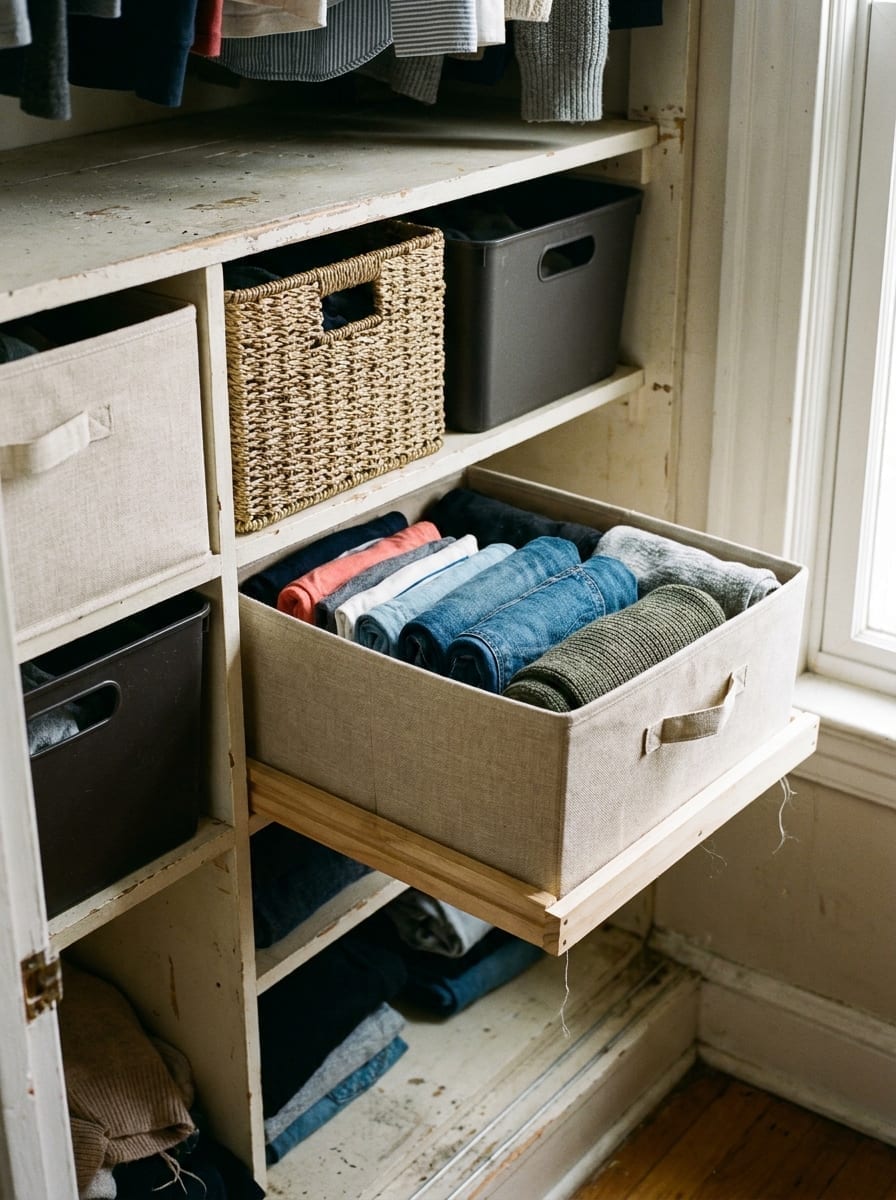
Deep closet shelves are awkward because items disappear behind one another.
Instead of stacking loose items front to back, treat a few bins like removable drawers.
Pull out the container, access everything inside, then return it.
This works particularly well for:
workout clothes pajamas accessories swimwear small bags seasonal pieces
Use bins that are shallow enough to lift comfortably.
A huge container packed to the top is just a drawer you cannot open.
9. The Outfit-Ready Open Section
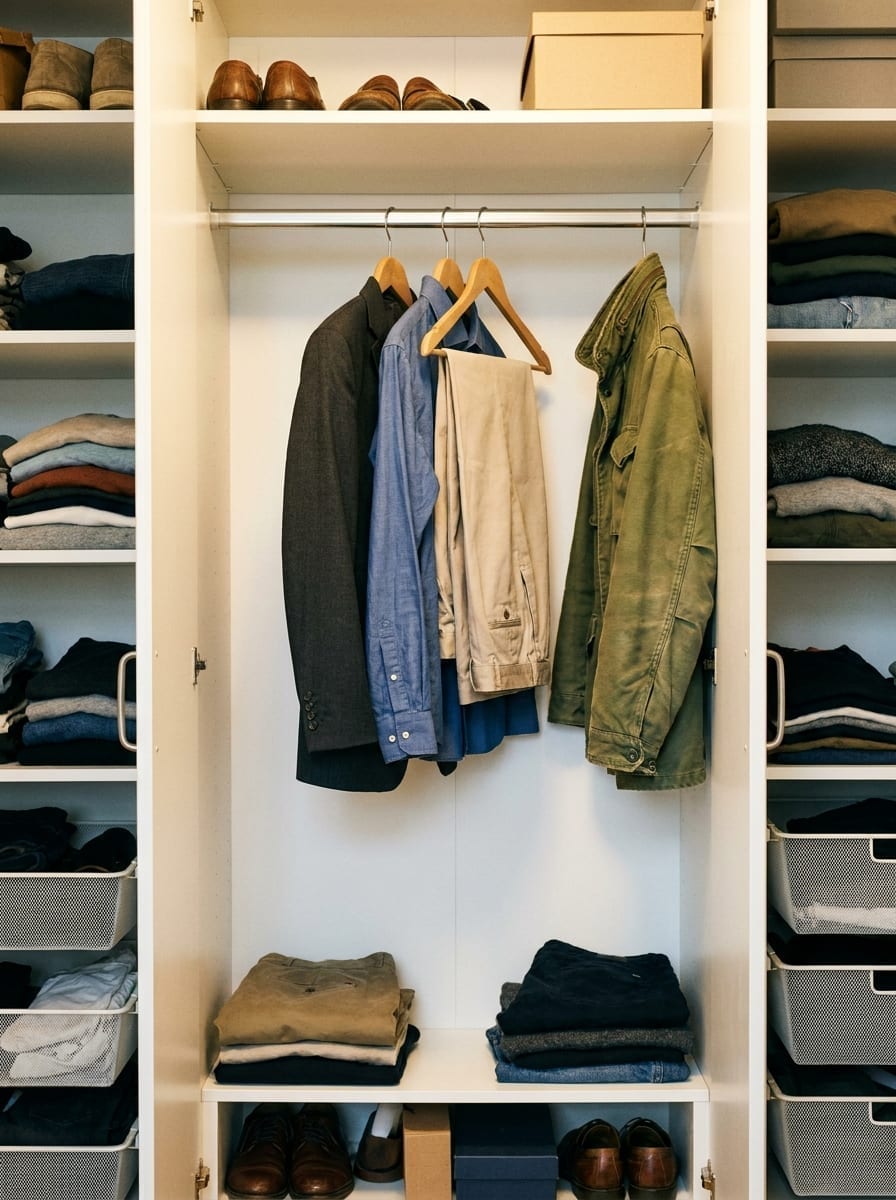
Not every inch of closet space needs permanent storage.
Leaving a small open section can actually make the closet work better.
Use it for:
tomorrow’s outfit recently ironed clothes something you plan to wear again a jacket you use several times a week
This prevents temporary clothes from ending up:
on a chair over the bed hanging from a door handle
It is a tiny transition zone.
And transition zones are often what keep organization systems working in real life.
10. The Dead-Corner Fix
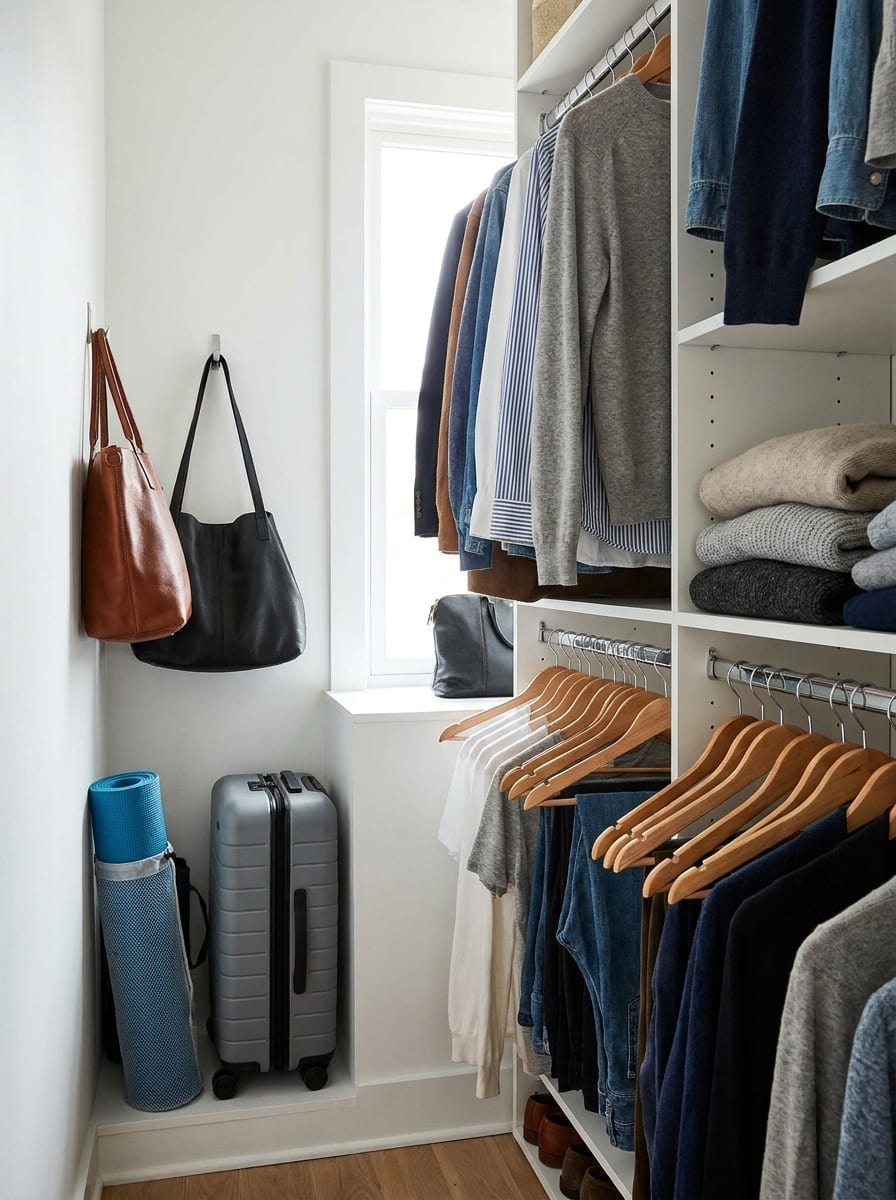
Small closets often contain awkward side spaces that become black holes.
You know the area.
It is too narrow for normal hanging clothes but too deep to ignore.
Use those spaces for vertically stored items such as:
handbags folded tote bags rolled yoga mat small suitcase narrow laundry hamper infrequently used accessories
The important part is accessibility.
If you have to remove six objects to reach the thing at the back, the corner is not organized.
It is hidden.
11. The One-In-One-Out Buffer
This rule is not about minimalism.
It is about capacity.
Once your closet is comfortably full, adding more without removing anything eventually destroys every organization system.
Instead, create a simple threshold.
When a new:
coat pair of jeans handbag pair of shoes
enters the closet, ask whether something in the same category has stopped earning its space.
You do not have to remove an item every single time you shop.
But if the rail suddenly stops moving or the shelves start overflowing, the closet has crossed its capacity limit.
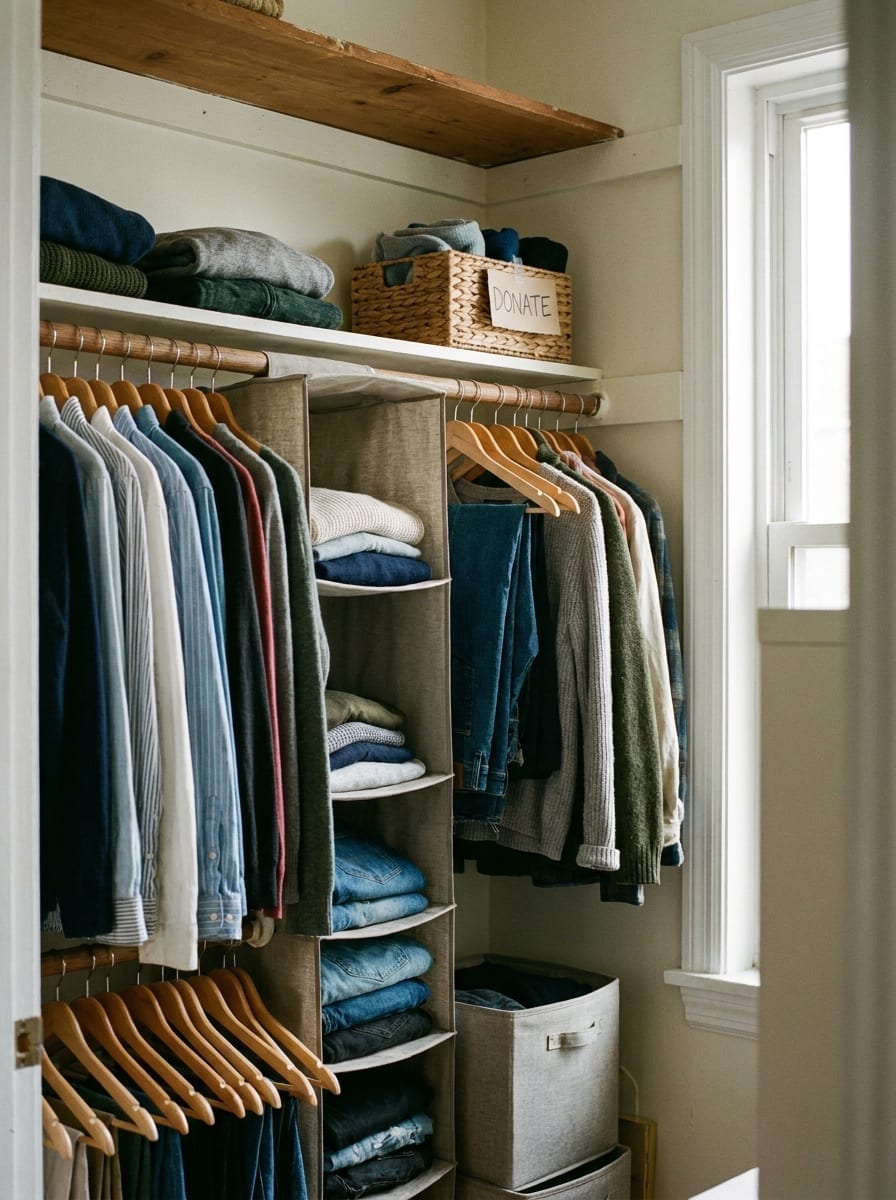
Keep a small donation bag nearby
A simple bag on a high shelf or in another storage area makes it easier to remove items gradually rather than doing huge decluttering sessions.
12. The Empty-Space Rule
This may be the most important idea in the entire closet.
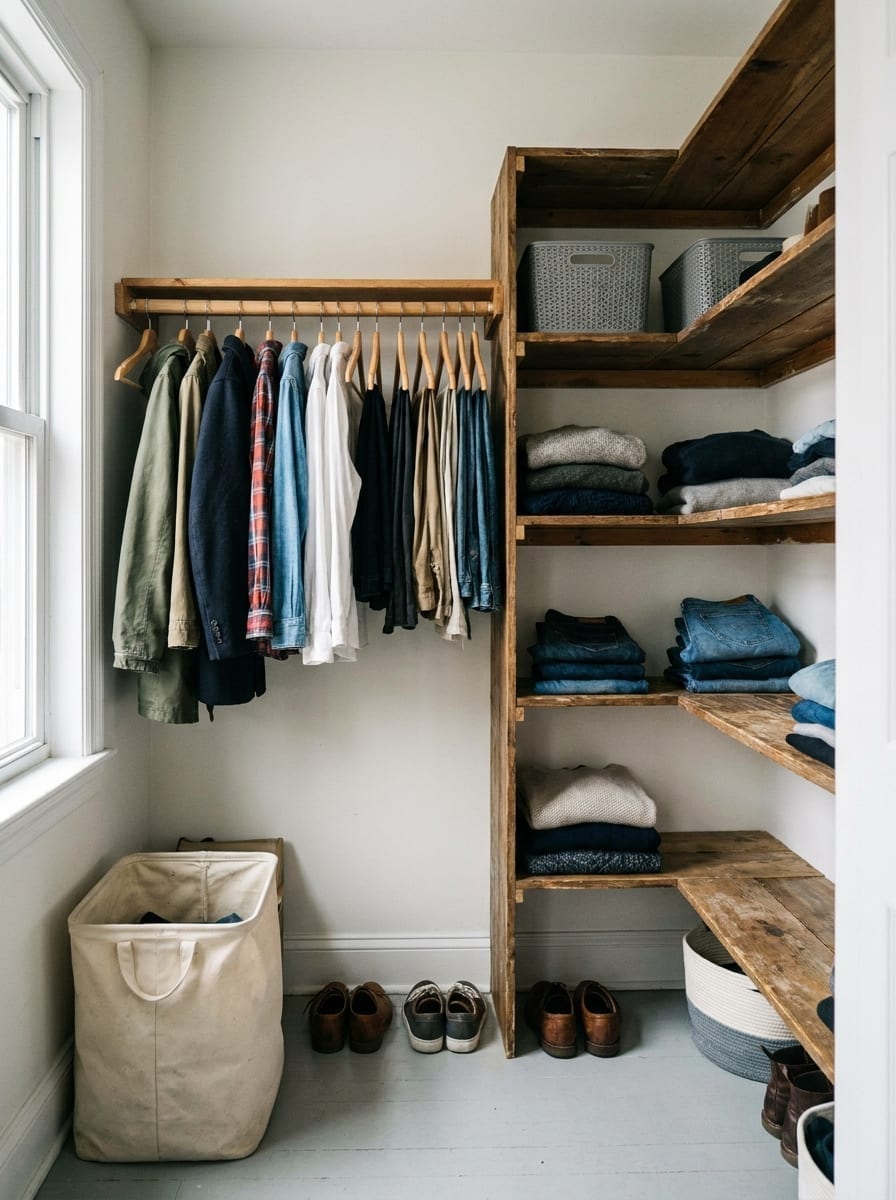
Do not use 100% of the available space.
Leave some room.
That might mean:
10% of the rail remains open one shelf section is not packed the closet floor has visible gaps containers are not filled to their lids
Why?
Because storage systems need working space.
Clothes need room to move.
Bins need room to come out.
New laundry needs somewhere to go.
If every inch is permanently occupied, maintaining the closet becomes much harder.
Empty space is not wasted storage.
It is what makes the storage usable.
A Better Closet Layout for Most Small Apartments
If you are working with a basic reach-in closet, a practical arrangement could look like this:
Top shelf
Seasonal and rarely used items
Left side
Full-height hanging clothes
Center
Double-hang section
Right side
Shelves or vertical shoes
Floor
Minimal storage only
Door
Lightweight accessories
The exact arrangement will depend on your closet dimensions and wardrobe, but the principle is the same:
Put the things you use most in the easiest places to reach.
Do not give prime storage space to items you touch twice a year.
Organize by Frequency, Not Just Category
Most organizing advice tells you to put like with like.
That helps.
But frequency matters just as much.
For example, you might own:
eight handbags three used weekly five used occasionally
Those three deserve better access.
Likewise, the winter coat you wear every day should not be behind a formal dress you wear twice a year.
Think in two dimensions:
What is it? and How often do I use it?
That small change makes a closet much easier to live with.
What Should Stay Outside the Closet?
A closet does not need to store everything you own.
Depending on your apartment, some items may work better elsewhere.
For example:
Entryway
Everyday shoes and coats
Dresser
T-shirts, underwear and pajamas
Under-bed storage
Off-season clothing
Suitcase
Rarely used travel items stored inside the suitcase itself
Bathroom
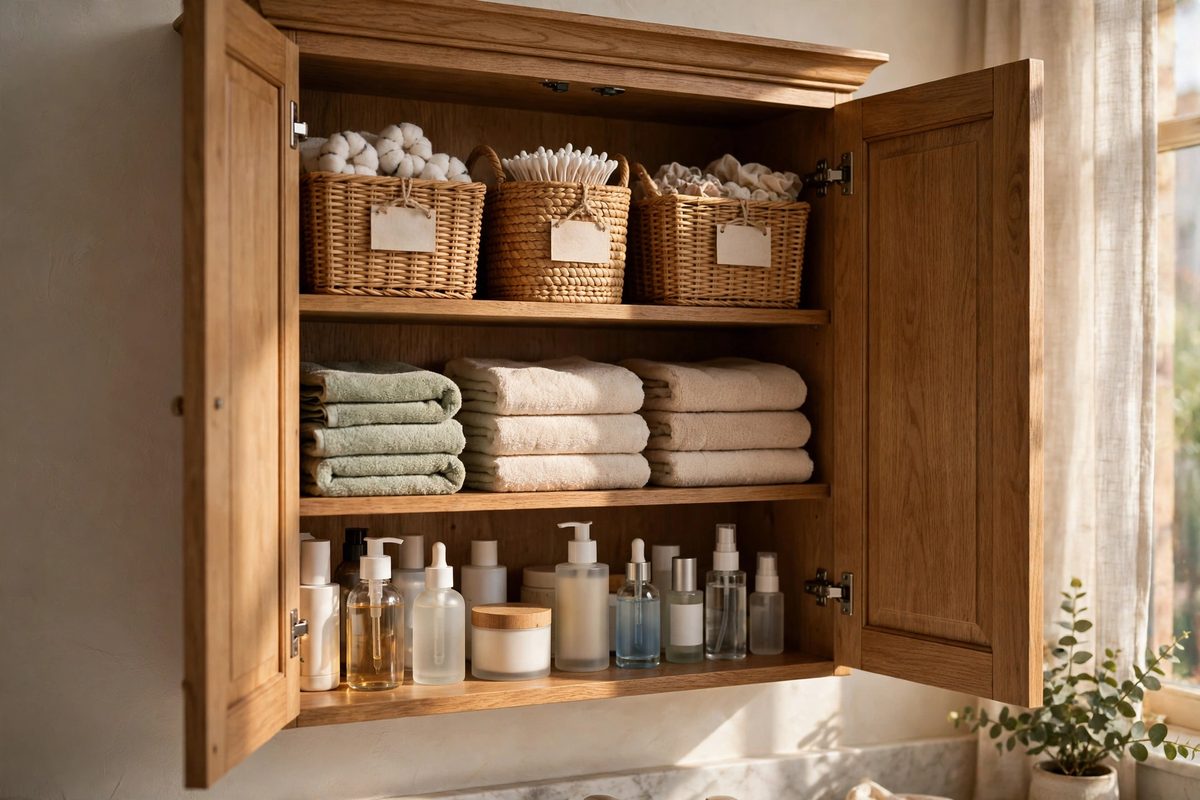
Bathroom-related linens and products
If moving something elsewhere makes both spaces function better, that is not organizational failure.
It is good space planning.
What Makes a Small Closet Look Messy Even When It Is Organized?
Usually one of four things:
Too many visible categories
Lots of tiny piles create visual noise.
Containers that do not fit the shelf
Wasted gaps appear everywhere.
Overfilled hanging rails
The closet immediately looks crowded.
Floor clutter
Shoes, bags and boxes across the floor make the whole closet feel chaotic.
Fixing those four issues often makes a bigger difference than buying decorative organizers.
What I Would Buy First
If starting from a basic apartment closet, I would prioritize practical pieces in this order:
Consistent slim hangers A second hanging rail if your wardrobe suits one Vertical shoe storage Shelf dividers Two or three properly sized bins Door storage only if you still need it
Do not buy a matching set of twenty organizers before testing whether the first few actually improve the space.
What I Would Skip Tiny decorative boxes
They often create more categories than you need.
Huge vacuum bags for everyday clothes
They are better suited to genuinely seasonal items.
Organizers that block the closet opening
If accessing storage becomes annoying, you will stop using it.
Too many open baskets
Loose categories quickly blend together.
Packing every shelf to the ceiling
You need room to lift items out.
A complete closet makeover before decluttering
Storage products cannot compensate for a closet that is already beyond capacity.
The 15-Minute Closet Reset
You should not need an entire Saturday to restore the closet every time it gets messy.
Try this sequence:
Minutes 1–3: Return obvious clothing to its category.
Minutes 4–6: Pair and return shoes.
Minutes 7–9: Refold unstable shelf stacks.
Minutes 10–12: Remove empty hangers and anything that does not belong.
Minutes 13–15: Choose one item you no longer use and move it to the donation bag.
A storage system that survives ordinary life is much more valuable than one that photographs beautifully for a day.
The Goal Is Not Maximum Capacity
It is tempting to judge a closet makeover by how much more stuff fits afterward.
That is not the best measurement.
A successful small apartment closet is one where:
you can see your clothes you can reach the shoes the rail moves shelves stay stable everyday items return easily the door closes normally
If you achieve that and still have a little empty space left, you have not wasted the closet.
You have made it usable.