10 No-Drill Curtain Ideas for Rental Apartments
10 no-drill curtain ideas for rental apartments: tension rods, adhesive brackets, magnetic rods, clip rings, blackout layers, and measuring tips.

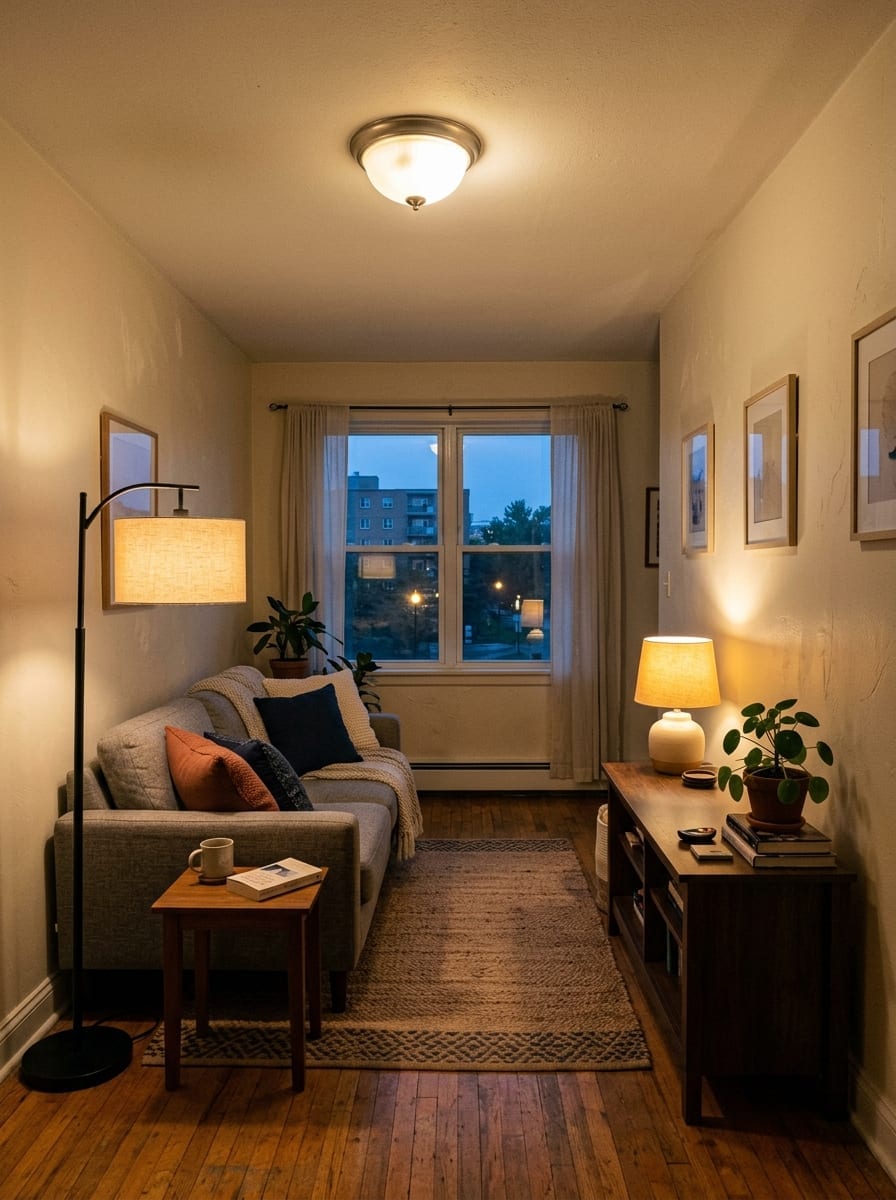
Rental apartment living room window with floor-length linen curtains hung on a tension rod, soft daylight coming through
In This Guide
Curtains change a rental more than almost any other single item. They soften hard window frames, add color and privacy, control light, and make a room feel finished. Drilling for curtain rods, though, can cost a deposit, especially in concrete walls or strict rentals.
No-drill curtain options have improved a lot. Tension rods, adhesive brackets, magnetic rods, and clip systems now hold real, full-length curtains, not just sheers, if you measure correctly and match the hardware to the curtain weight.
These ideas cover every window type renters commonly face, and they pair with other no-damage upgrades like renter-friendly temporary flooring ideas and renter-friendly peel-and-stick backsplash ideas. For curtain styling in living spaces, see small living room curtain ideas. Plus, the ring wraps here: see the fresh start in small apartment trinket shelf ideas and small apartment January reset ideas.
1. Tension Rods Inside the Frame
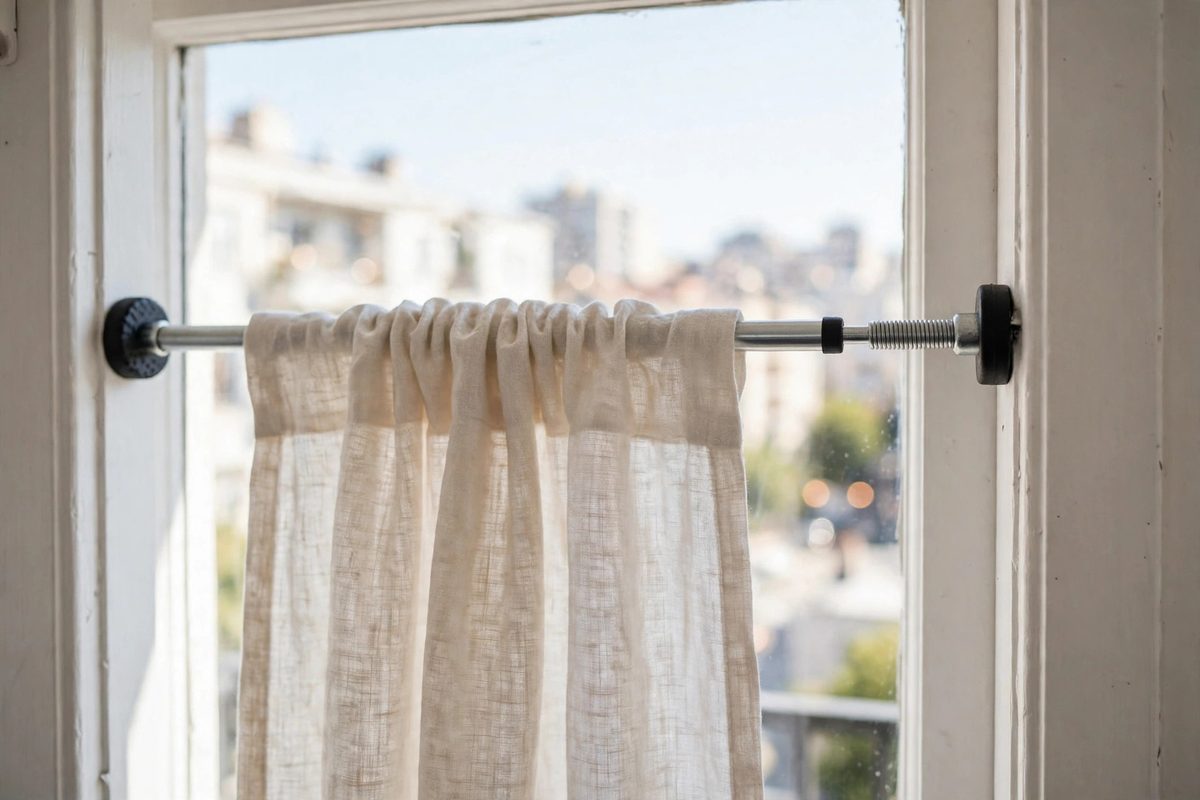
A tension rod, a spring-loaded rod that presses against the inside of a window frame, is the classic no-drill solution, and it works best for light to medium curtains: sheers, linen panels, and cafe curtains. A good tension rod costs 8 to 20 dollars and installs in under a minute.
Tension rods hold best in frames with flat, parallel sides and a depth of at least 2 inches. They struggle on angled, rounded, or very wide frames, where the spring cannot grip evenly.
How to make it work
Measure the inside frame width at the top, middle, and bottom, and buy a rod whose range covers your smallest measurement with room to spare. Twist to extend until snug, then test by tugging gently downward before hanging curtains. For wider windows, over 48 inches, choose a rod with a thicker diameter, at least 1 inch, to prevent sagging.
2. Command-Style Adhesive Brackets
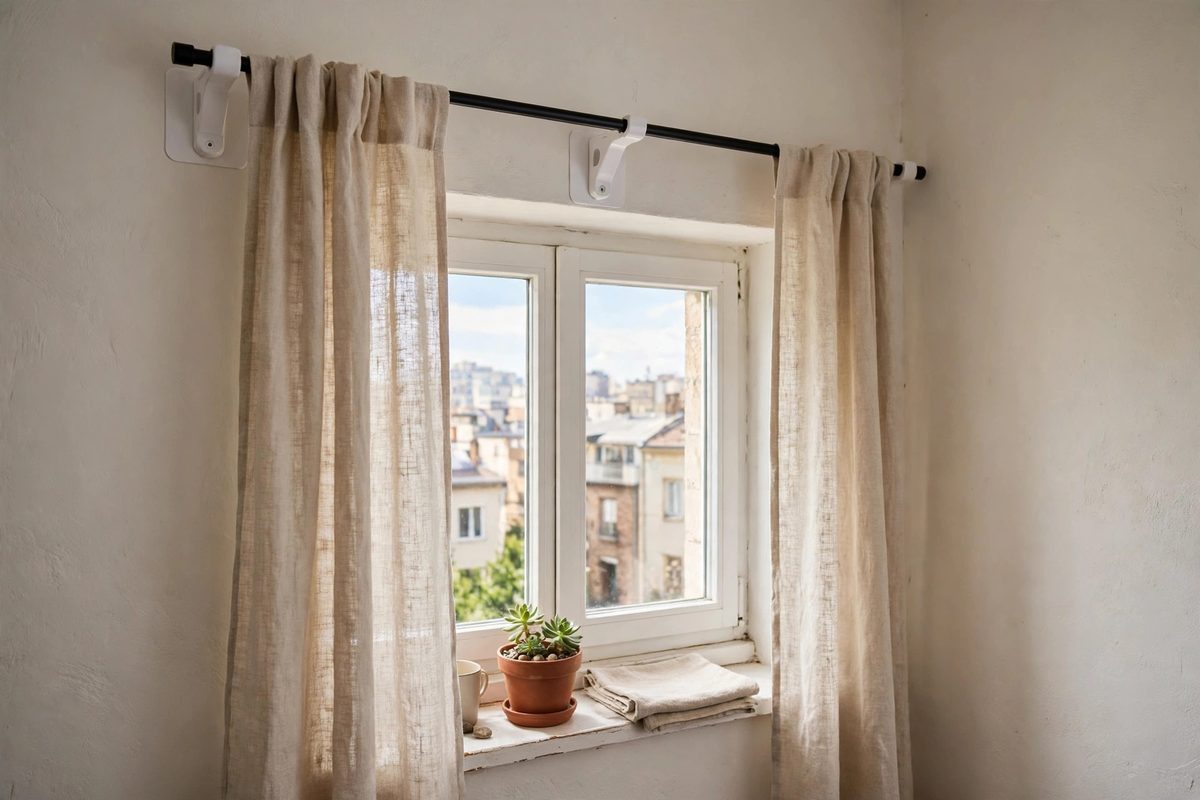
Adhesive brackets stick to the wall or window frame and hold a standard curtain rod, which means you can hang heavier curtains, including blackout panels, without drilling. Most adhesive bracket sets hold 5 to 10 pounds per pair and cost 10 to 20 dollars.
Adhesion depends on the surface. Smooth painted drywall, glass, tile, and metal hold best. Textured plaster, brick, and wallpaper usually do not hold adhesive brackets reliably, and the brackets may pull paint on removal if left for years.
How to make it work
Clean the surface with rubbing alcohol and let it dry completely before sticking brackets. Press firmly for 30 seconds, then wait the full cure time on the package, usually 1 hour, before hanging the rod. Hang curtains gradually, one panel at a time, and check brackets after the first day; if one side slips, reposition it before it fails fully.
3. Magnetic Rods for Metal Frames
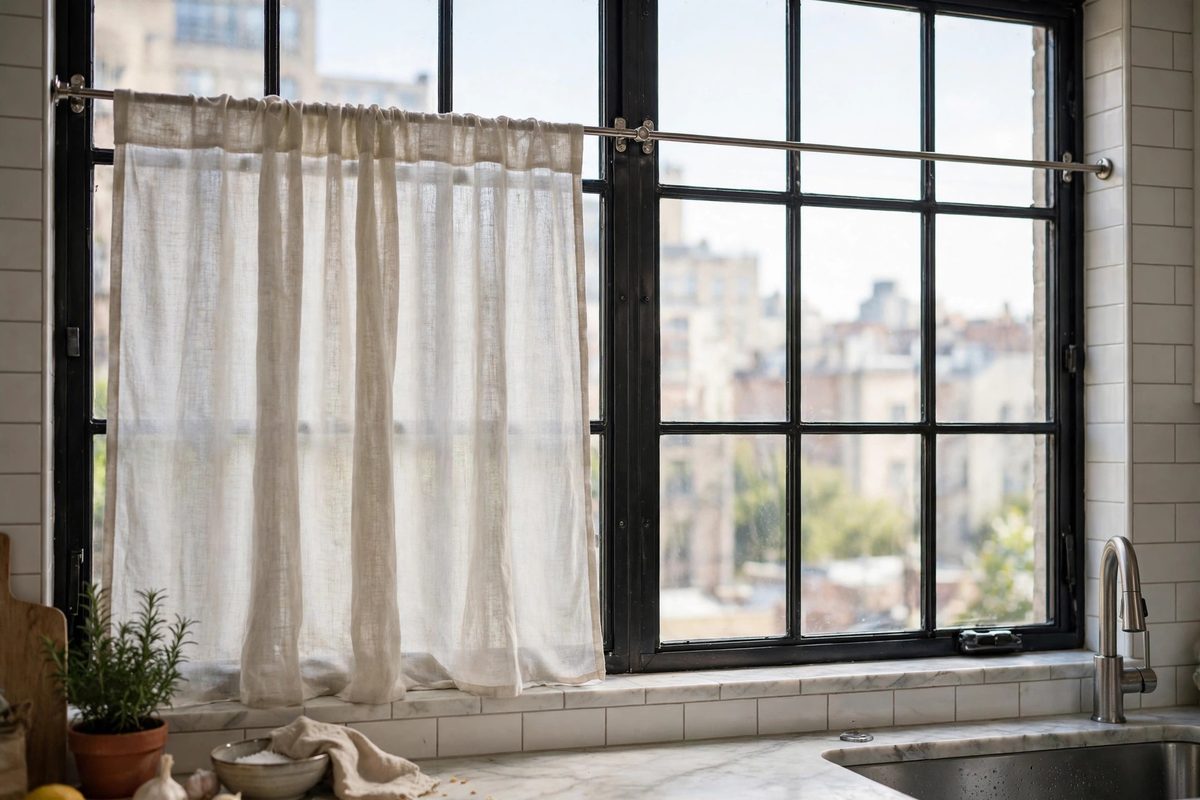
Many rental apartments have metal window frames, especially in older buildings, and magnetic curtain rods grip those frames directly with no adhesive and no damage. Magnetic rods suit light curtains and cafe curtains, and they reposition instantly for cleaning or light control.
Test your frame with a fridge magnet first. Aluminum and vinyl frames are not magnetic, so this option only works where a magnet actually sticks firmly along the full frame edge.
How to make it work
Choose magnetic rods rated for your curtain weight, and use two rods, top and bottom, for cafe curtains so the lower edge stays put. Wipe the frame clean before attaching magnets, since dust reduces grip. If a rod slides on a vertical frame, add a second magnet pair at the midpoint for extra hold.
4. Adhesive Ceiling Tracks for Room Dividers
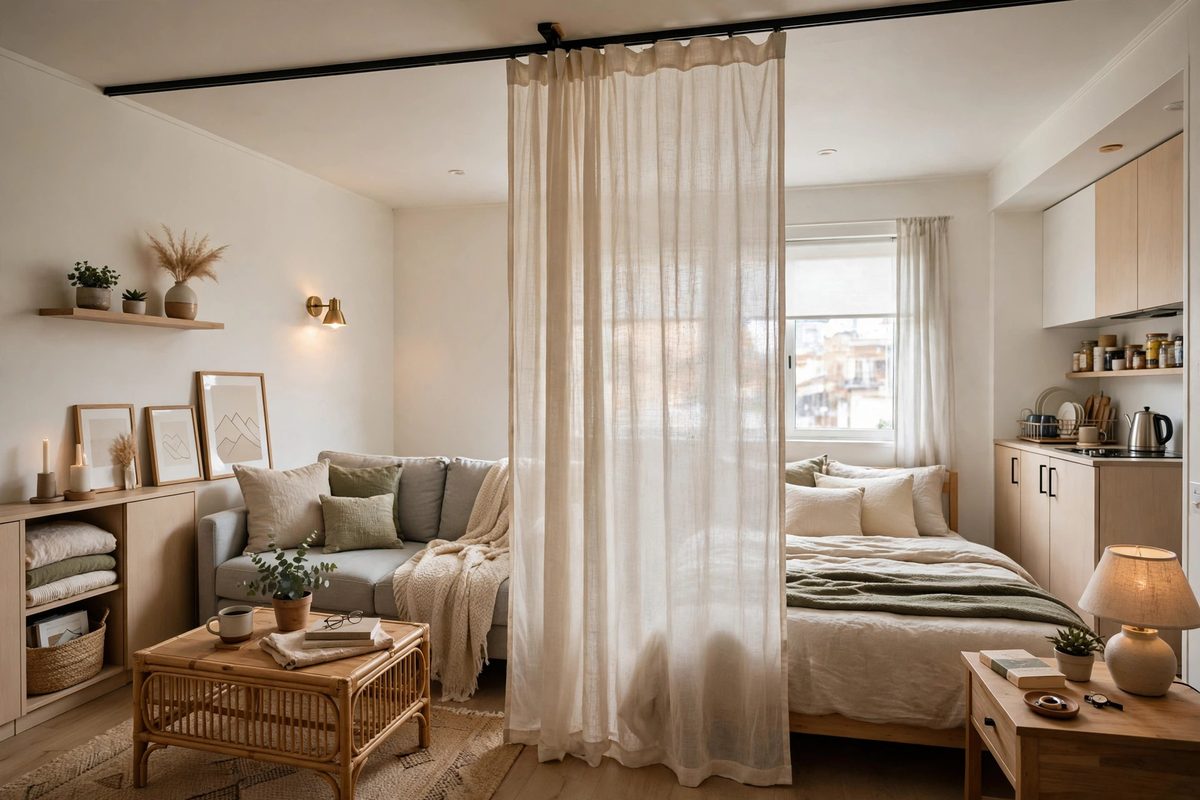
In studios and open-plan rentals, curtains do more than cover windows: they divide rooms. Adhesive ceiling tracks, flexible tracks that stick to a smooth ceiling, let you hang a curtain divider between a sleeping area and a living area without drilling into the ceiling.
Ceiling tracks suit light to medium curtain panels. Heavy blackout curtains on a long adhesive track can pull away from the ceiling, so keep divider curtains light and the track run under 8 feet where possible.
How to make it work
Clean the ceiling surface and mark the track line with painter’s tape before sticking anything. Press the track in sections, holding each for 30 seconds, and wait the full cure time before hanging curtains. Use curtain gliders that slide smoothly; stiff rings on a ceiling track catch and tug the adhesive loose.
5. Clip Rings on Existing Trim
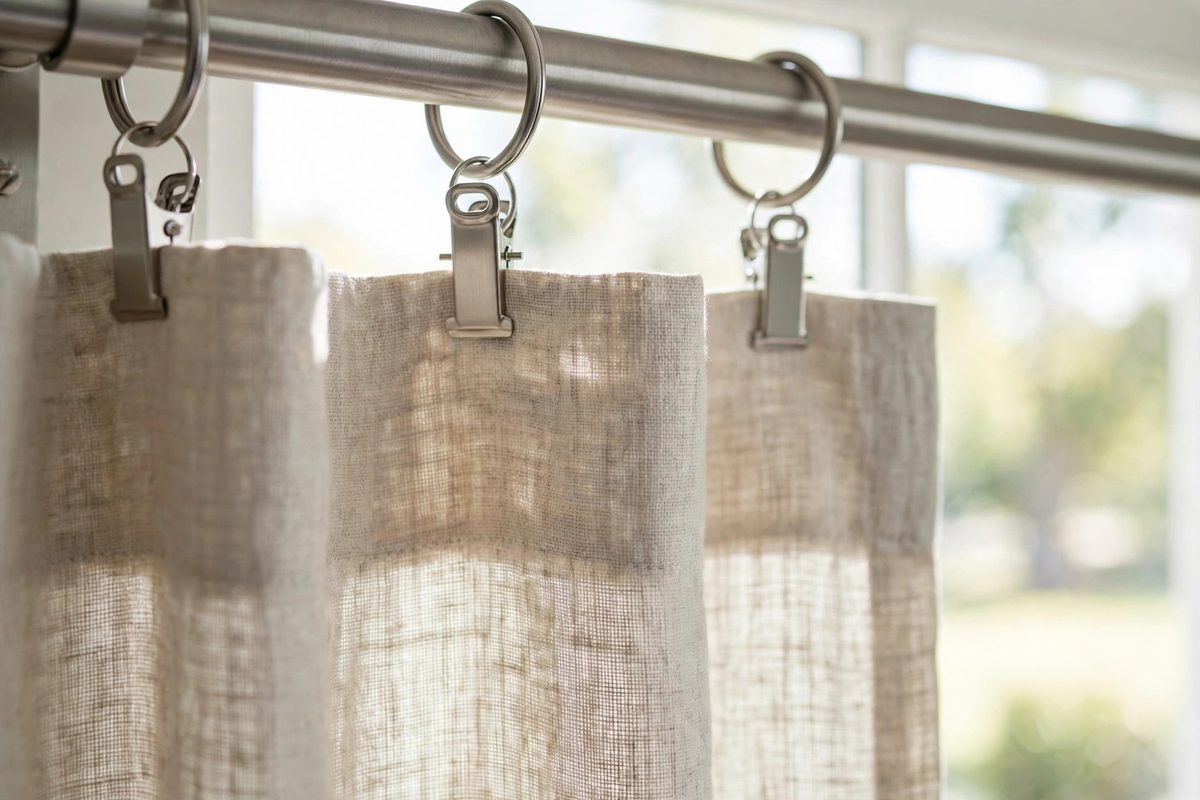
If your rental already has a picture rail, a high trim ledge, or an existing rod you cannot remove, clip rings let you hang curtains from what is already there. Clip rings grip fabric directly, so you can hang flat panels, tea towels as cafe curtains, or even a tapestry without sewing a rod pocket.
Clip rings cost about 8 to 15 dollars for a pack of 20 to 40 and work with any existing rod or rail that fits the ring diameter.
How to make it work
Space clips evenly, about 4 to 6 inches apart, so the curtain hangs without sagging between clips. Clip at the very top edge of the fabric for a clean drape, and double up clips at the outer edges where curtains get pulled most. If clips leave marks on delicate fabric, add a small piece of felt between clip and fabric.
6. Cafe Curtains on Tension Rods

Cafe curtains, which cover only the lower half or two-thirds of a window, are ideal for rentals. They give privacy at eye level while letting daylight in above, and they hang easily on a tension rod inside the frame. They also cost less fabric than full-length panels, typically 20 to 50 dollars per window.
Cafe curtains suit kitchens, bathrooms, and street-facing living room windows where privacy matters more than full light blocking.
How to make it work
Mount the tension rod at the midpoint of the window or just below eye level from outside, usually 36 to 42 inches from the sill in a standard window. Choose a light, washable fabric, since kitchen and bathroom curtains need frequent washing. Hem cafe curtains so they end just below the sill or at the rod line, not dragging on the counter.
7. Floor-Length Drama Without Holes
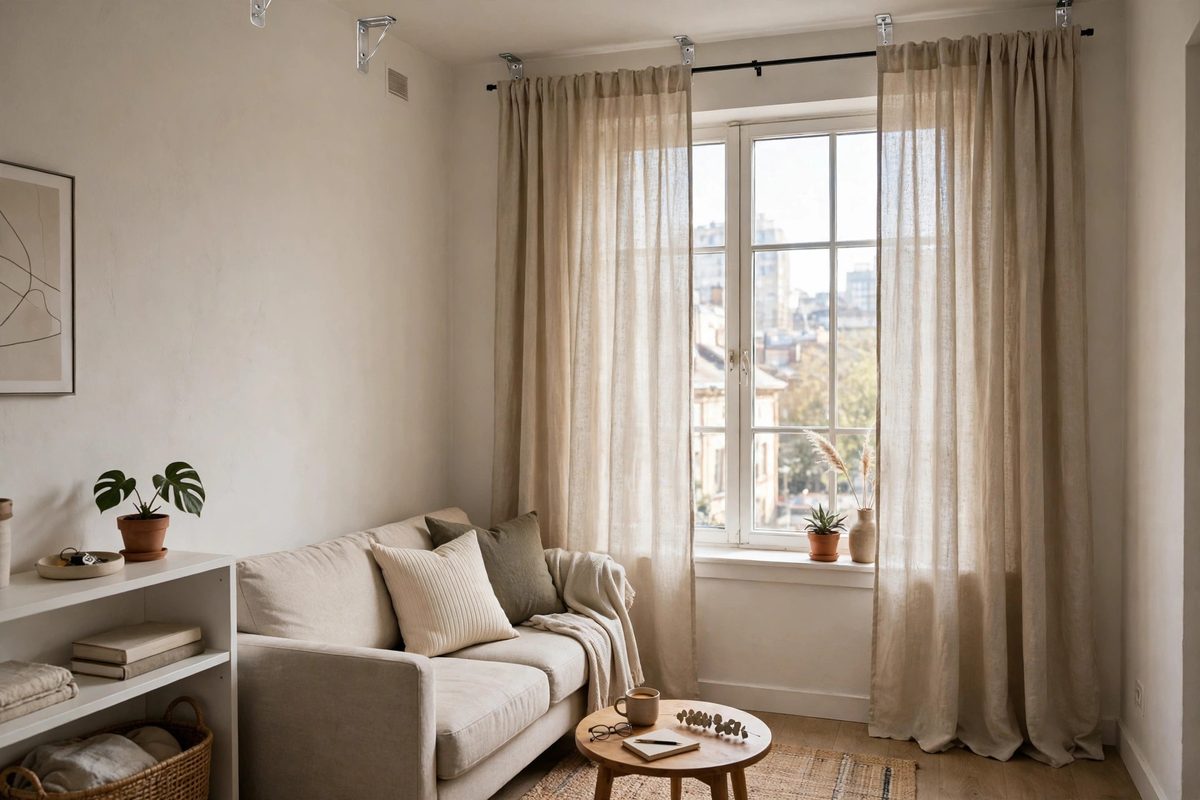
Floor-length curtains make a small room feel taller, and renters can get that look without drilling by using adhesive brackets mounted high on the wall, near the ceiling, with a lightweight rod and linen or cotton panels. The height, not the hardware, creates the drama.
Keep floor-length panels light. Heavy velvet on adhesive brackets risks failure, while linen, cotton, and polyester blends hang beautifully and move easily.
How to make it work
Mount brackets 4 to 6 inches below the ceiling and 3 to 6 inches wider than the window frame on each side, so curtains stack off the glass. Measure panel length from bracket height to the floor, then subtract half an inch so panels hover just above the floor rather than pooling, which collects dust and trips feet. Use a rod no longer than 72 inches per bracket pair to avoid sagging.
8. Blackout Liners That Hang Without Drilling

Blackout liners, separate panels that clip or hook behind your main curtains, give renters real darkness for sleep without replacing existing curtains or drilling blackout hardware. Clip-on liners attach to the back of curtain panels with small hooks or rings and cost 15 to 30 dollars per window.
Liners also add insulation, reducing drafts in winter and heat gain in summer, which matters in older rental buildings with single-pane windows.
How to make it work
Match liner width to your curtain width, not the window width, so liners hang evenly behind panels. Attach liners with curtain clips spaced 6 inches apart, and check that the combined weight stays within your rod or bracket rating. Wash liners separately according to their label; many are machine washable on gentle.
9. Layering Sheers Over Blackouts
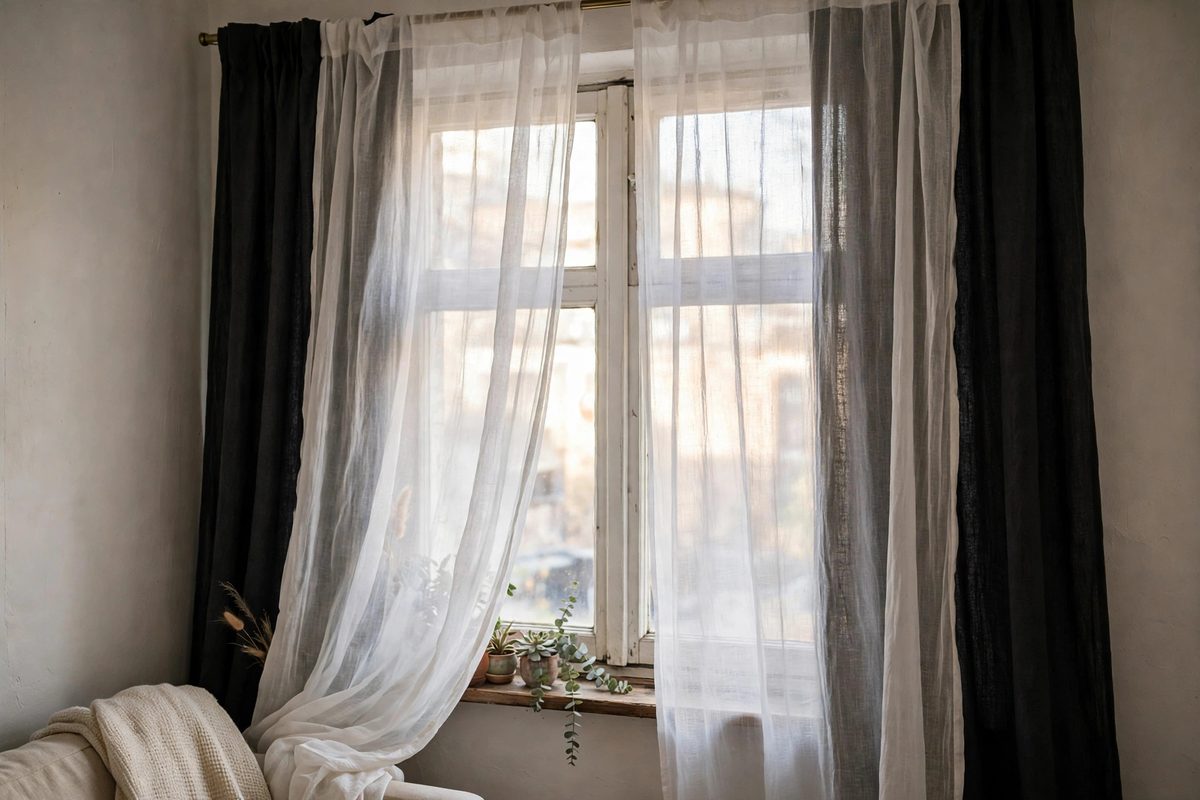
Layering, sheers in front for daytime privacy and blackouts behind for night, is the most flexible window treatment, and renters can achieve it with two tension rods: one near the outer frame edge for sheers, one deeper inside for blackouts, or with a double adhesive bracket set.
Two rods need a frame deep enough to hold both, at least 3 to 4 inches of depth, or a wall-mounted double bracket. If your frame is shallow, use one rod with a combined sheer-plus-blackout panel, which many brands now sell as a single curtain.
How to make it work
Hang the blackout layer closest to the glass and the sheer layer facing the room. During the day, close sheers for privacy while light still filters through. At night, close blackouts for darkness. Keep both layers light to medium weight so the combined load stays within no-drill hardware limits.
10. Measuring So No-Drill Actually Holds

Most no-drill curtain failures are measuring failures, not product failures. A rod bought for the wrong width sags, a bracket placed on textured paint peels, and a curtain weighed wrong pulls hardware down. Measuring takes ten minutes and prevents all three.
Weigh your curtains on a bathroom scale before buying hardware, measure frame width at three points, and note your wall and frame materials. That information lets you choose hardware rated for your actual load, not a guess.
How to make it work
Weigh each panel, add both panels together, and buy hardware rated for at least 1.5 times that total weight for a safety margin. Measure rod length as frame width plus bracket clearance, and measure drop from hardware height to your desired curtain endpoint. Write all three numbers, width, drop, weight, on your phone before shopping, and check them against the product package in the store.
No-drill curtains work when hardware matches the window, the weight, and the surface. Measure first, choose the right system for each window, and your rental can have finished, layered, light-controlling curtains with zero holes to fill at move-out.