12 Cozy Bedroom Ideas for Small Apartments
12 cozy bedroom ideas for small apartments: layered bedding, warm bedside light, soft textures, and a scent layer for a retreat feel.
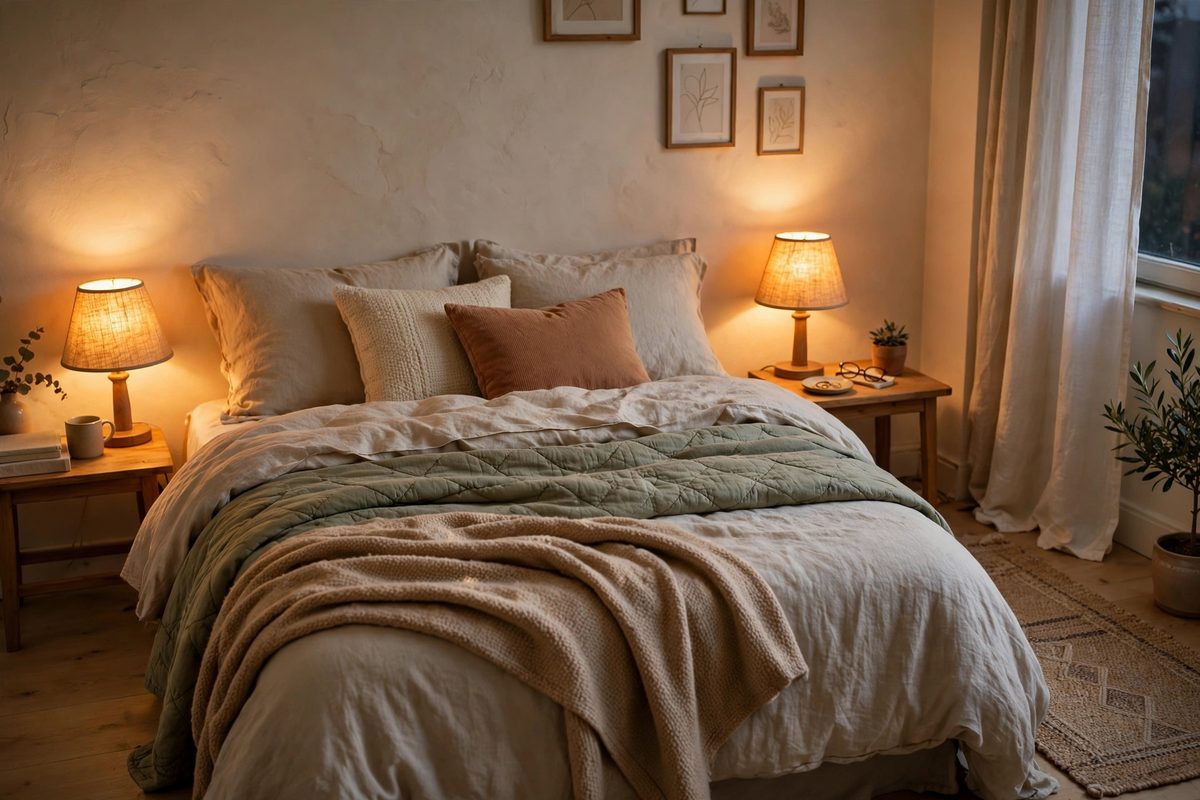
Small apartment bedroom with layered bedding, warm bedside lamps, a soft throw at the foot of the bed, and a rug beside the bed
In This Guide
A cozy bedroom is not a big bedroom. It is a bedroom where everything you touch is soft, everything you see is warm, and nothing is in the way of sleep. A small bedroom can do this better than a big one, because the bed is close to the lamp, the lamp is close to the wall, and the whole room wraps around you like a blanket.
These 12 cozy bedroom ideas for small apartments are built for bedrooms under 150 square feet. Each one works with a bed, a nightstand, and a closet, which is all most small bedrooms have. Each one is renter friendly, and each one costs less than 100 dollars unless it says otherwise. For the whole apartment version, see the cozy apartment decor ideas, and for the living room version, the cozy living room ideas use the same layered approach. For the full cottage version of this, the cozy cottage decor ideas use the same soft layers across the whole apartment.
1. The Layered Bedding Stack
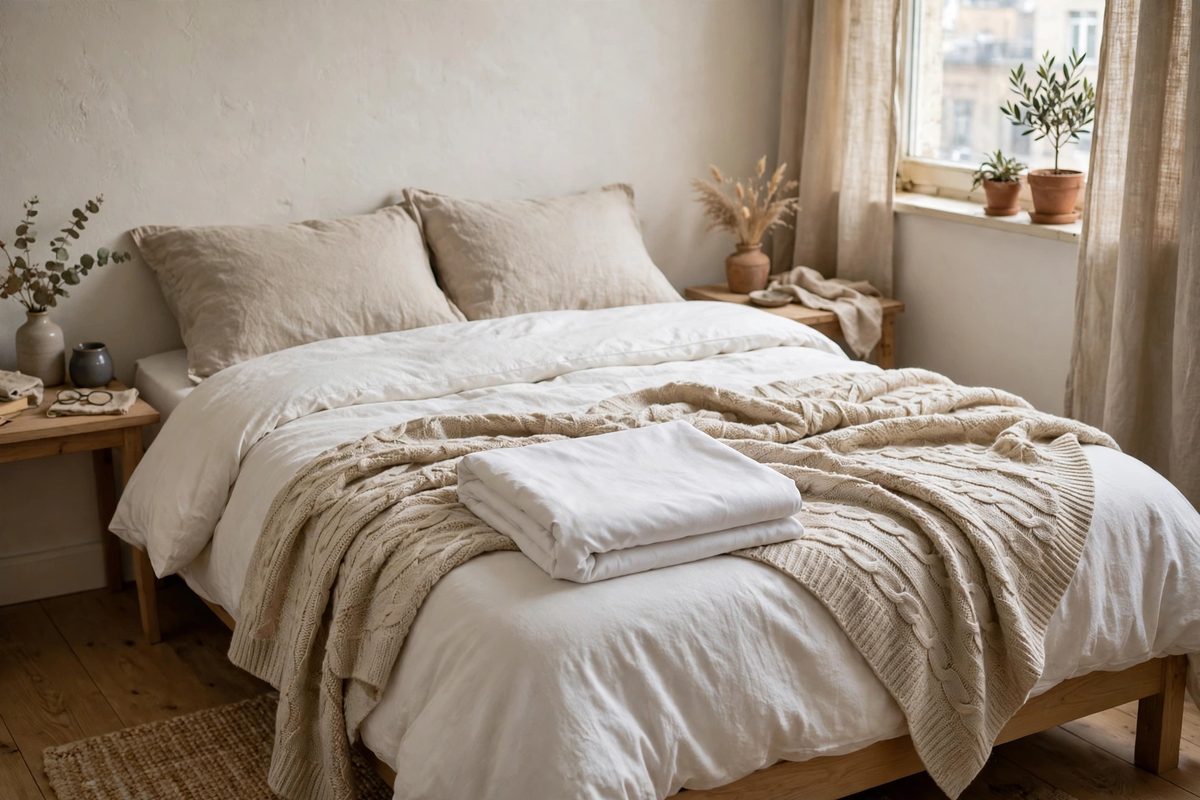
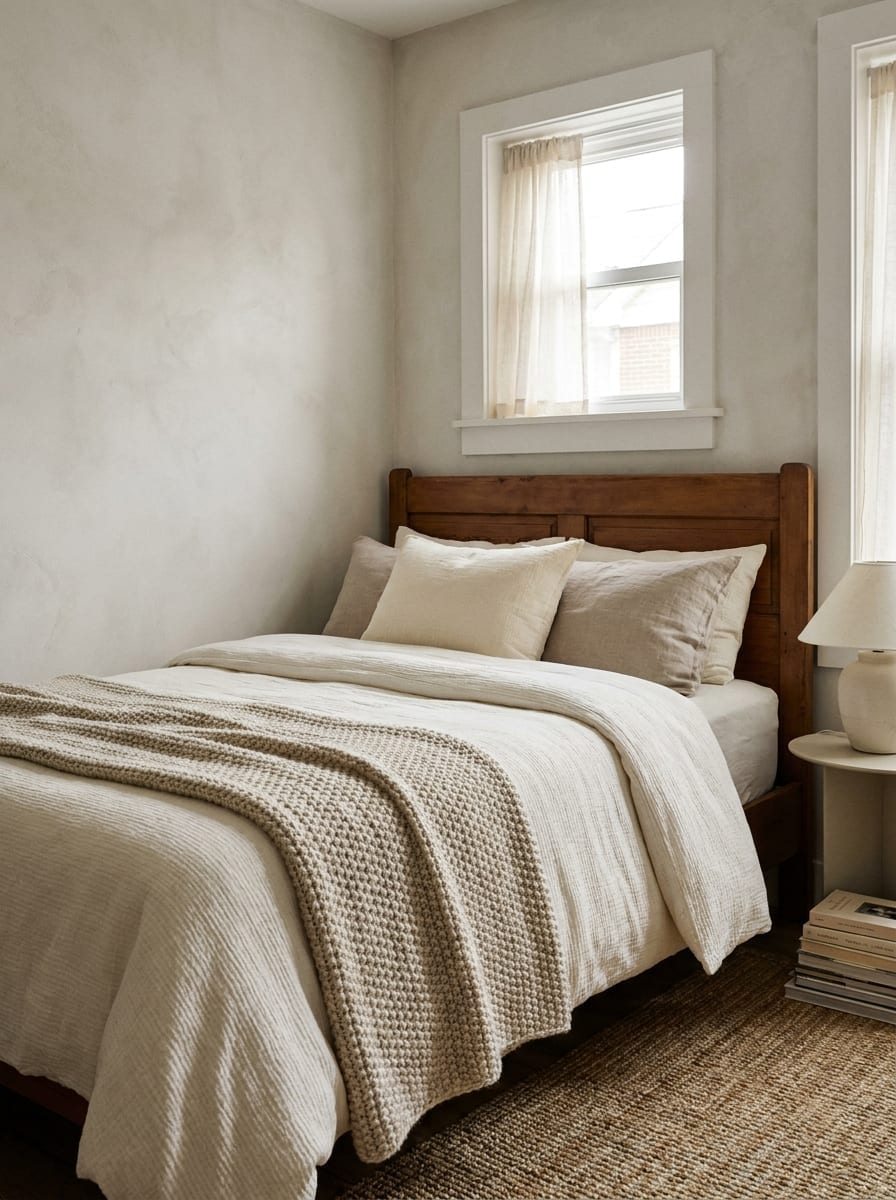
One flat sheet and one thin blanket make a bed look unfinished. A layered bedding stack makes it look like a hotel bed: a fitted sheet, a flat sheet folded back 12 inches, a duvet or comforter, and a throw folded across the foot. The layers create depth, the fold creates a line, and the bed becomes the warmest looking object in the room.
A cotton duvet set costs 40 to 70 dollars, and a knit or fleece throw costs 15 to 25 dollars. Choose the duvet in a solid warm white or soft gray, and the throw in a texture that contrasts, like a chunky knit over smooth cotton. The layers should look slept in, not stiff, so shake the duvet out each morning instead of smoothing it flat. The same layering logic works in the cozy living room ideas, where a throw basket adds the same softness to the sofa.
How to make it work
Fold the flat sheet back 12 inches at the top, so the fold is visible and the bed looks made. Drape the throw across the bottom third of the bed, not the middle, so it frames the bed instead of covering it. Wash the duvet cover every two weeks, since a fresh cover is half of what makes a layered bed feel clean.
2. The Warm Bedside Lamp Pair
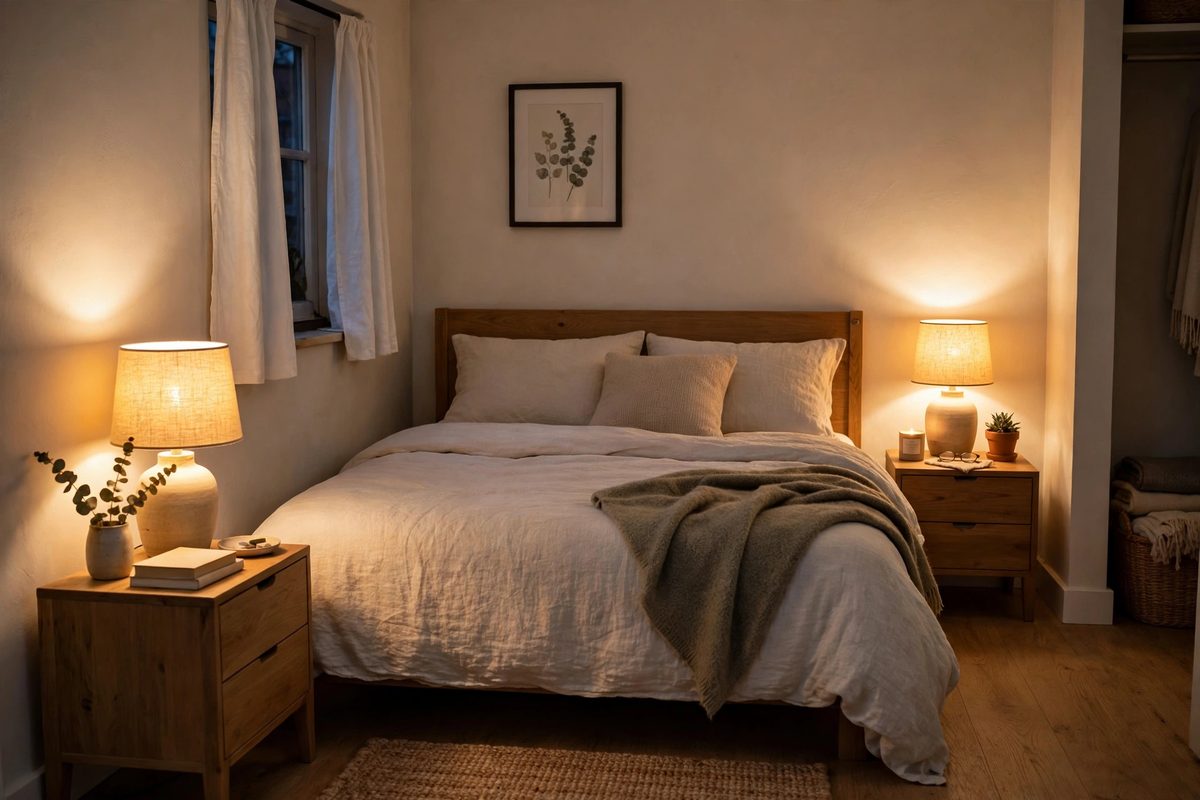
Two matching bedside lamps do more for a small bedroom than any single overhead light, because they put warm light at pillow height on both sides of the bed. The room glows from the bed outward, the ceiling stays dark, and the whole bedroom feels lower, softer, and ready for sleep. One lamp is practical. Two lamps are cozy.
Two matching table lamps cost 30 to 60 dollars for the pair, and two warm white bulbs rated 2700K cost 5 to 10 dollars. Choose lamps 16 to 20 inches tall, which is the right height for a nightstand beside a standard bed. Put both lamps on the same switch, or use a small remote plug that costs 10 to 15 dollars, so both lamps turn on and off together. For more bedroom lighting combinations, the small bedroom lighting ideas show how layered light works in a tight room.
How to make it work
Put the lamps at the back corners of the nightstands, not the front edge, so they do not get knocked over when you reach for a glass of water. Use linen or fabric shades, not bare bulbs, since a shade softens the light and hides the bulb. Keep both lamps on the same warm bulb, since one warm lamp and one cool lamp makes the room look mismatched.
3. The Soft Headboard
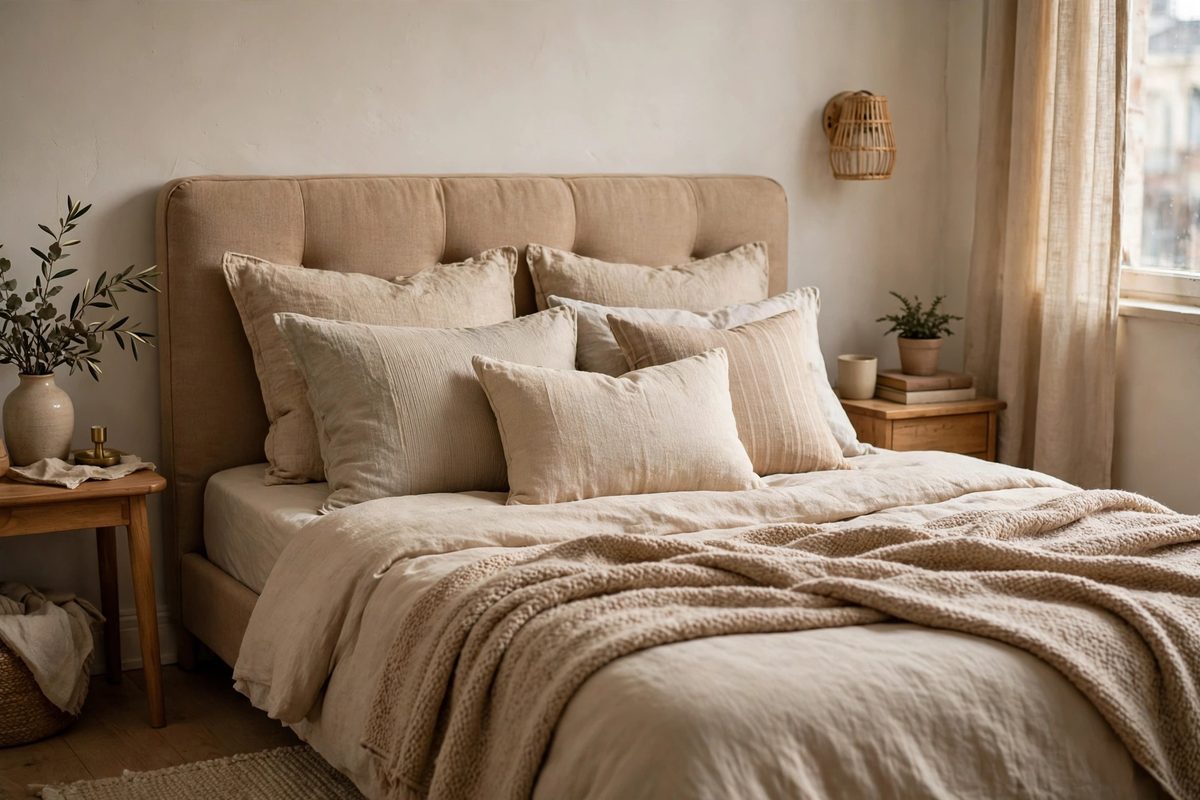
A hard wall behind the bed feels cold, and a soft headboard fixes it in one piece. An upholstered headboard in a warm beige, soft gray, or dusty rose fabric gives your back something soft to lean on and gives the bed a finished shape. The room instantly looks like a bedroom instead of a bed in a box.
A fabric headboard costs 60 to 120 dollars, and a padded headboard cushion that hangs on the wall costs 30 to 50 dollars. If the budget is tight, two large Euro pillows propped against the wall cost 20 to 30 dollars and do half the job. Choose a headboard 48 to 54 inches wide for a full bed and 56 to 62 inches wide for a queen, so it is 2 to 4 inches wider than the mattress on each side. The small bedroom layout ideas show how a headboard anchors the bed wall in a tight room.
How to make it work
Mount a wall hung headboard with two screws into studs, or use heavy duty removable strips rated for 10 pounds each if the lease forbids holes. Keep the headboard height 24 to 30 inches above the mattress, so it is visible above the pillows but does not dominate the wall. Vacuum the fabric once a month, since a fabric headboard collects dust where your head rests.
4. The Throw at the Foot of the Bed
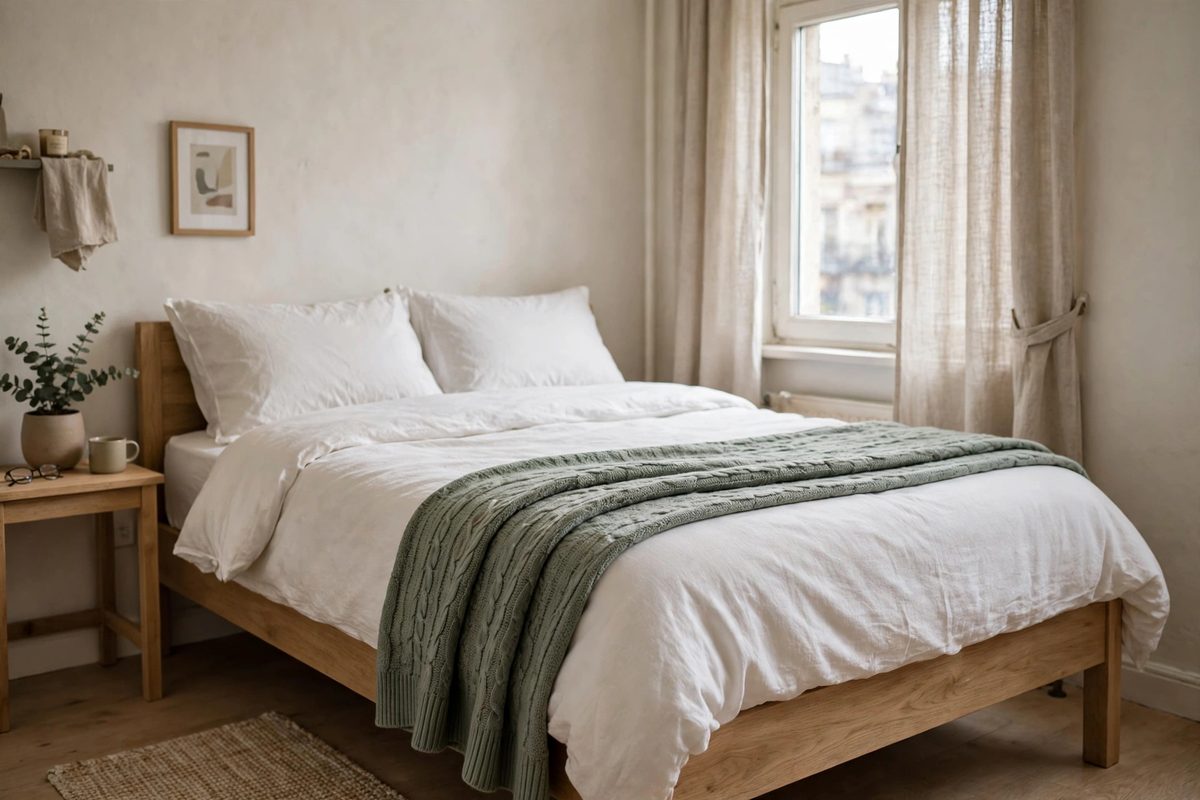
A throw at the foot of the bed is the smallest cozy upgrade in this post, and it works because it adds color and texture exactly where the eye lands when you walk in. Fold a knit or fleece throw into a long rectangle and drape it across the bottom third of the bed. The bed looks dressed, the room looks warm, and the throw is right there when your feet get cold at 3 am.
A knit throw costs 15 to 25 dollars, and a fleece throw costs 10 to 20 dollars. Choose a throw in a color that contrasts with the duvet, like a rust throw on a white duvet or a forest throw on a gray duvet. Fold the throw to 12 inches wide, so it reads as a runner instead of a blanket that slid down. This is the bedroom version of the throw basket in the cozy living room ideas, where a throw is always within reach.
How to make it work
Fold the throw fresh each morning when you make the bed, so it stays a runner instead of a pile. Keep the throw to one third of the bed length, so it does not cover the pillows or the middle of the bed. Wash the throw once a month, since a foot of the bed throw collects more dust than the rest of the bedding.
5. The Rug Beside the Bed
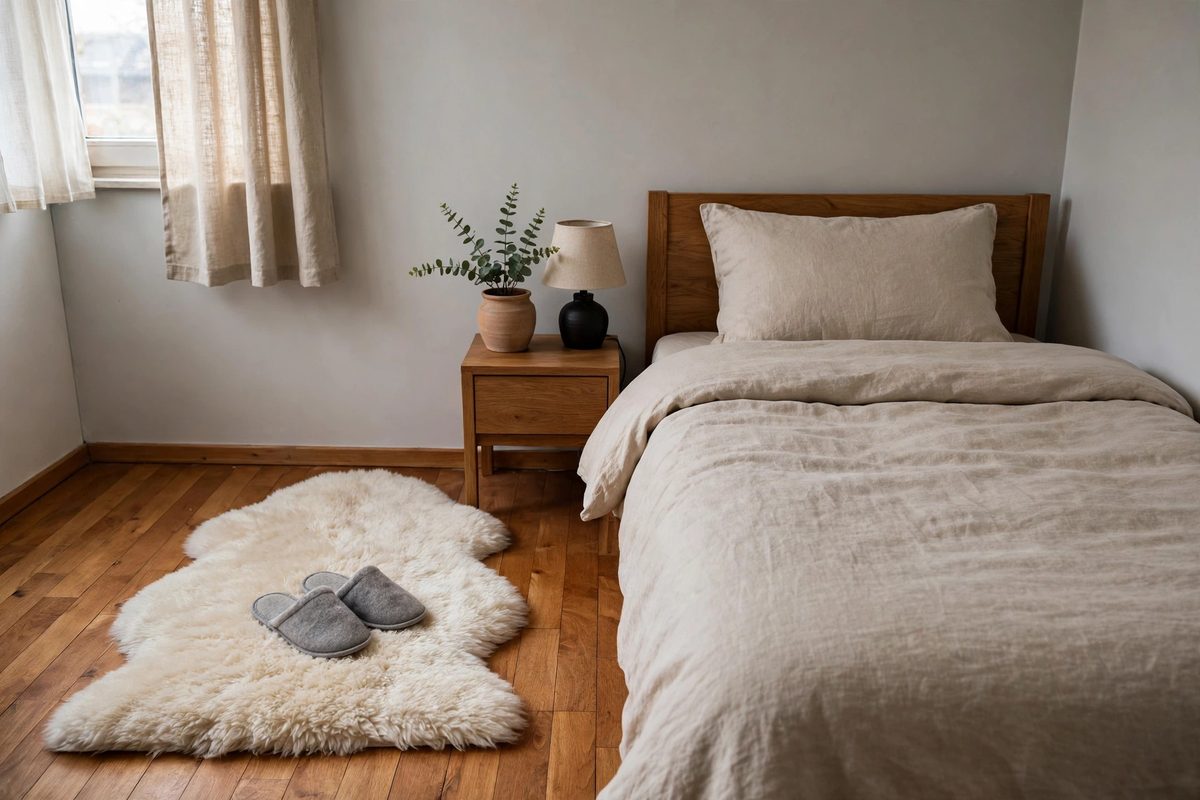
The first thing your feet touch in the morning sets the tone for the day, and a cold wood floor sets the wrong one. A soft rug beside the bed fixes it: a 2 by 3 foot plush rug on each side of the bed, or one 3 by 5 foot rug that spans both sides. The rug warms the floor, softens the sound of the room, and makes getting up feel less abrupt.
A 2 by 3 foot plush rug costs 15 to 25 dollars, and a 3 by 5 foot rug costs 25 to 40 dollars. Choose a high pile rug, at least half an inch thick, since a flat rug does not feel warm under bare feet. Keep the rug color in the same warm family as the bedding, like cream, warm gray, or soft blush. For more underfoot ideas, the small bedroom storage ideas show how a rug can also hide what lives under the bed.
How to make it work
Put the rug so it starts 6 inches from the bed frame and extends 24 inches out, so your feet land on rug, not floor, when you stand up. Use a rug pad underneath, since a small rug on wood slides every time you step on it. Shake the rug outside once a week, since a bedroom rug collects hair and dust faster than a living room rug.
6. The Blackout Curtain Warmth
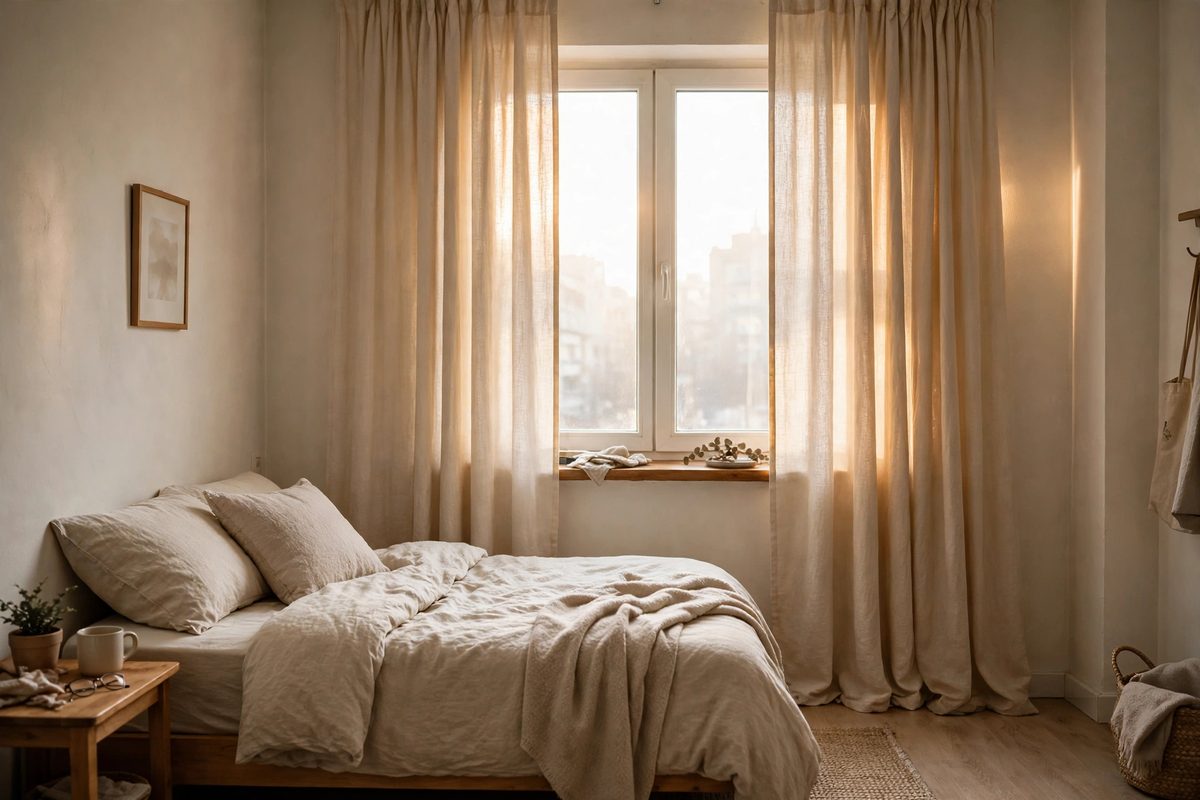
Blackout curtains are sold as a sleep aid, but they are also a cozy upgrade, because they make the bedroom feel like a cocoon. Floor length blackout curtains in a warm cream or soft taupe block the streetlight, soften the window, and add a heavy fabric layer that makes the room feel insulated. The room gets darker at night and warmer in the morning.
A pair of 84 inch blackout curtains costs 25 to 50 dollars, and a curtain rod costs 15 to 25 dollars. Hang the rod 4 to 6 inches above the window frame and 4 to 6 inches wider than the frame on each side, so the curtains cover the whole window when closed. Choose a fabric with a thermal lining, which adds insulation and cuts the draft from an old window. The same curtain logic appears in the cozy apartment decor ideas, where curtains add softness without weight.
How to make it work
Close the curtains fully at night, so no streetlight leaks in around the edges. Open them fully in the morning, so the room gets light and the curtains do not stay bunched in the middle. Wash the curtains twice a year, since blackout fabric collects dust on the lining side.
7. The Nightstand Candle Zone
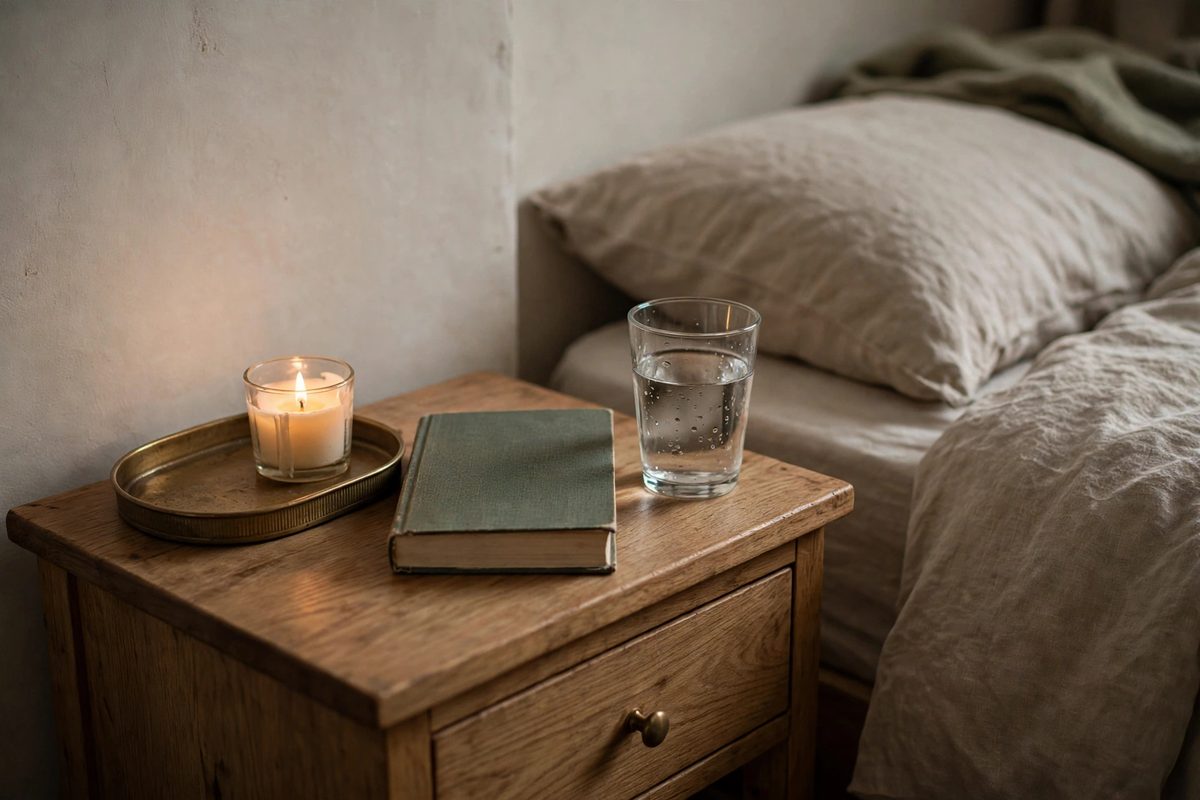
A nightstand with a candle zone feels like a hotel nightstand, and it costs almost nothing. Put a small tray on the nightstand, set one candle and a book inside it, and leave the rest of the surface clear. The tray keeps the candle from tipping, the book gives the tray a purpose, and the clear space means there is still room for a glass of water and a phone.
A small tray costs 8 to 15 dollars, and a candle costs 5 to 12 dollars. A battery candle costs 8 to 15 dollars and is the safer choice for a bedroom, since a real candle beside a bed is a risk if you fall asleep with it lit. Keep the tray to half the nightstand width, so the nightstand still works as a nightstand. The small bedroom nightstand ideas show more ways to keep a small nightstand working hard.
How to make it work
Light the candle for 30 minutes before bed, then blow it out, so the scent lingers without the flame burning all night. Keep the candle away from the curtain edge, at least 12 inches, since curtains and open flame do not mix. Use a tray with a raised edge, so the candle cannot slide off if the nightstand gets bumped.
8. The Pillow Mix
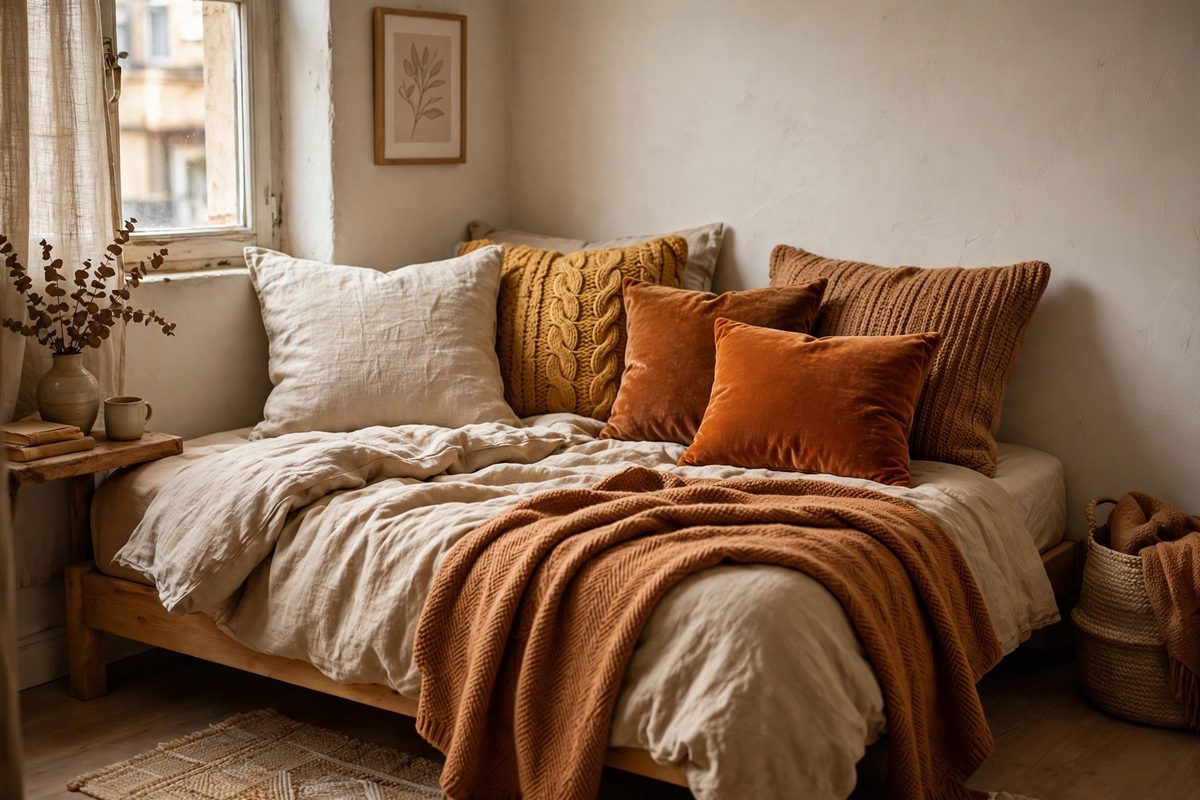
A bed with one pillow per person looks like a dorm room. A bed with a pillow mix looks like a retreat. The mix is four pillows: two sleeping pillows in white cases, one Euro pillow in linen, and one lumbar pillow in velvet or knit. The sizes create a shape, the textures create warmth, and the bed looks layered instead of flat.
Two Euro pillow inserts cost 10 to 20 dollars, two Euro covers cost 12 to 20 dollars, and one lumbar pillow costs 12 to 20 dollars. Keep the pillow colors in the same warm family as the duvet, like cream, beige, and rust, or white, sage, and cream. A pillow mix is cheaper than new bedding, and swapping the lumbar cover twice a year changes the whole bed. This is the bedroom version of the pillow reset in the cozy living room ideas, where three pillows beat six.
How to make it work
Stack the sleeping pillows flat, stand the Euro pillows upright behind them, and lay the lumbar pillow in front, so the bed has three visible layers. Fluff the pillows every morning, since a flat pillow reads as tired no matter how good the cover is. Store the out of season covers in a basket under the bed.
9. The Warm Wall Color Accent
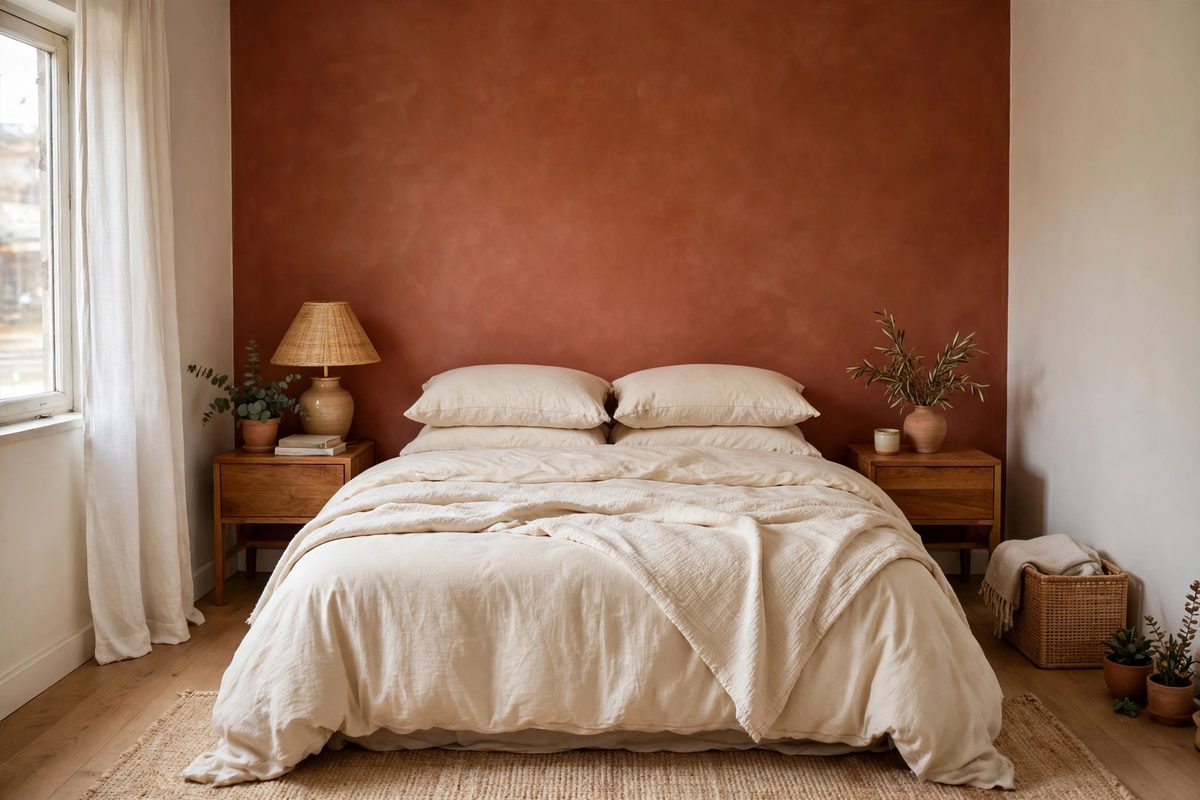
One warm wall behind the bed changes the whole bedroom, and it costs less than a new lamp. Paint the bed wall in a warm terracotta, a soft clay, or a dusty rose, and leave the other three walls white. The warm wall becomes a backdrop for the bed, the bed looks bigger, and the room feels warmer even with the lights off.
A quart of paint costs 15 to 25 dollars, and a roller and tray cost 10 to 15 dollars, so one accent wall costs under 40 dollars total. If the lease forbids paint, peel and stick wallpaper in a warm tone costs 30 to 50 dollars for one wall and comes off clean. Choose a warm tone with a brown base, not a pink base, since brown based warm colors read as cozy and pink based ones read as sweet. For renters, the renter-friendly bedroom upgrades show more no paint ways to warm a wall.
How to make it work
Paint only the bed wall, not the side walls, so the warm color frames the bed instead of closing in the room. Test the color on a 12 by 12 inch square first, since paint looks darker on a full wall than on a swatch. Keep the bedding lighter than the wall, so the bed stands out against it instead of blending in.
10. The Cozy Reading Spot
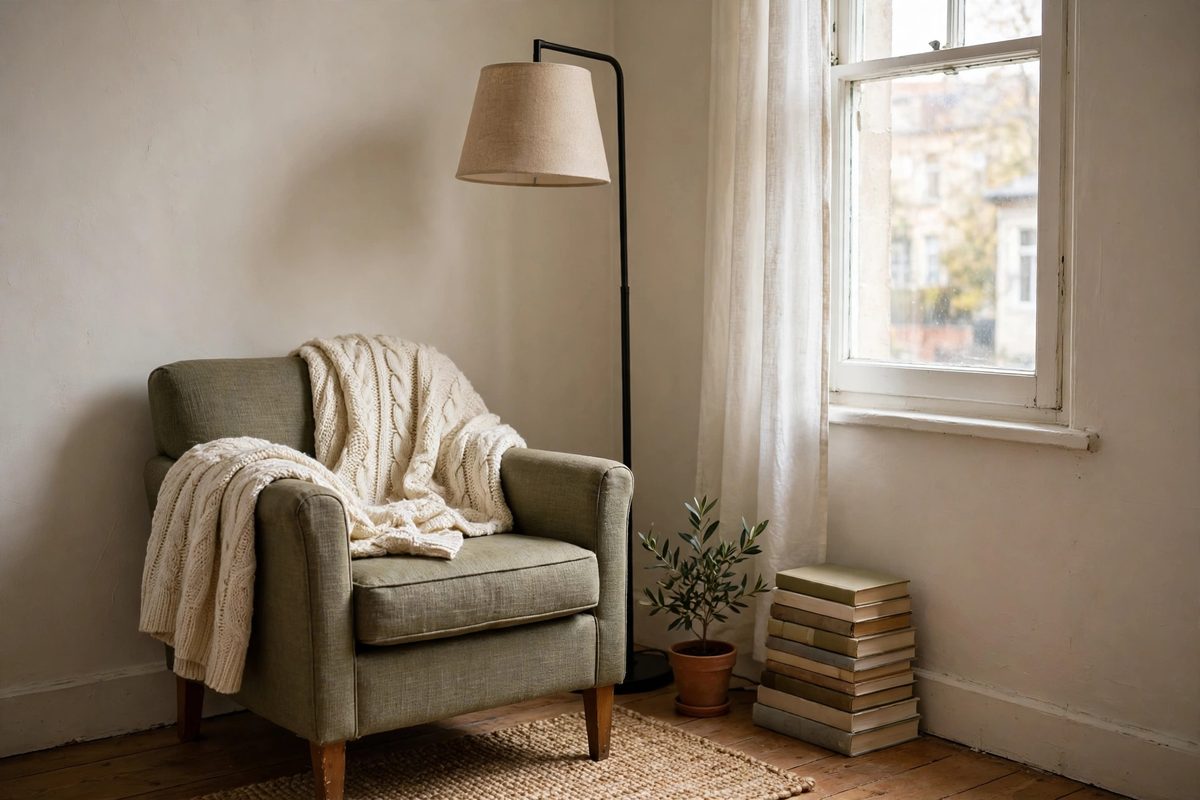
A bedroom with a reading spot feels like a retreat instead of a room you only sleep in. Put a small armchair or a large floor cushion in the brightest corner, add a floor lamp and a throw, and stack two or three books beside it. The corner becomes a place to read before bed, and the bedroom becomes a room you want to spend time in, not just a room you pass through.
A small accent chair costs 80 to 150 dollars secondhand, and a large floor cushion costs 15 to 30 dollars. A floor lamp costs 25 to 50 dollars, and a throw costs 15 to 25 dollars. The chair does not need to match the bed. A different fabric in a different color is what makes the corner feel like a corner. For the living room version of this idea, the cozy living room ideas build a reading corner chair the same way.
How to make it work
Put the chair near the window, not in the darkest corner, so the reading spot gets natural light during the day. Keep the chair at least 24 inches from the bed, so the corner reads as its own zone instead of an extension of the bed. Put a small rug under the chair, even a 2 by 3 foot one, so the corner feels defined.
11. The Under-Bed Basket Storage
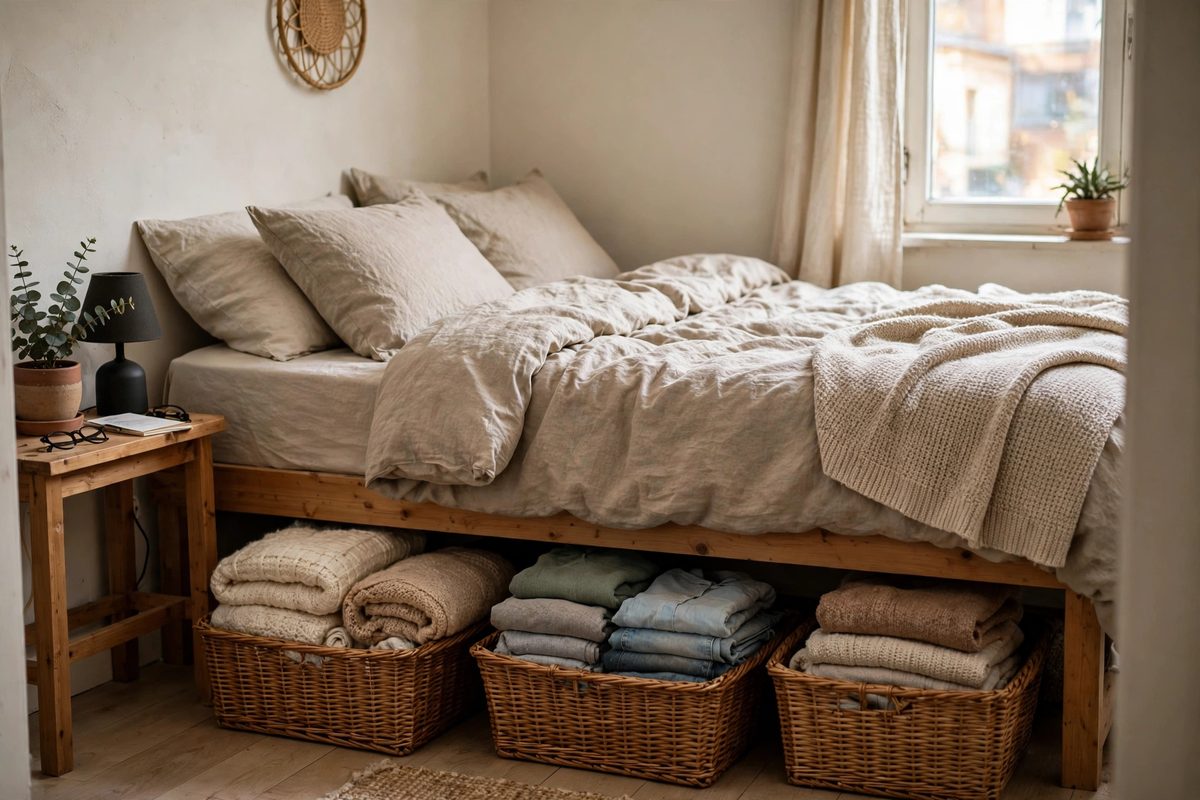
A cozy bedroom is a tidy bedroom, and the space under the bed is the best tidy storage a small bedroom has. Slide two or three low woven baskets under the bed, and fill them with extra blankets, out of season clothes, and the spare sheets. The clutter disappears, the floor stays clear, and the room feels calm instead of crowded.
Three low woven baskets cost 30 to 50 dollars total. Choose baskets 6 to 8 inches tall, so they slide under a standard bed frame without lifting the mattress. Label the baskets on the outside with a small tag, so you know which one holds blankets and which one holds clothes. The small bedroom storage ideas show more ways to hide storage in a small bedroom without making it feel packed.
How to make it work
Measure the space under the bed before buying baskets, since bed frames vary from 4 inches to 12 inches of clearance. Keep the baskets on the side of the bed you do not sleep on, so they do not slide out when you get up. Pull the baskets out once a month and wipe them down, since under bed storage collects dust faster than any other spot in the room.
12. The Scent Layer
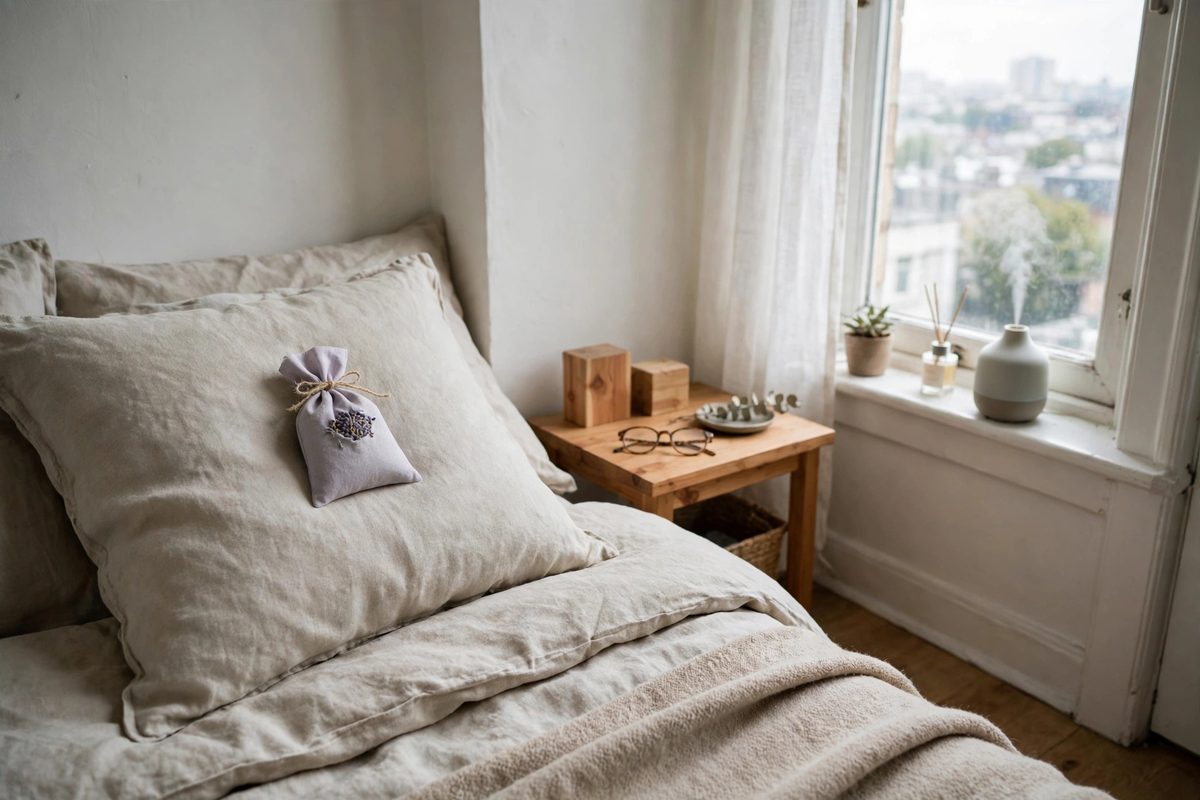
Cozy is not only what you see and touch, it is what you smell when you walk in. The scent layer is one scent, not three: a lavender sachet on the pillow, a cedar block in the closet, or a small diffuser on the nightstand. One consistent scent makes the bedroom feel like a place, and your brain starts to associate that scent with sleep.
A lavender sachet costs 3 to 6 dollars, a cedar block costs 5 to 8 dollars, and a small reed diffuser costs 10 to 18 dollars. Choose one scent and stick with it for a month, since a changing scent reads as a candle collection instead of a room. Lavender is the safest choice for sleep, and cedar is the best choice if lavender feels too floral. The cozy bathroom ideas use the same one scent rule, with a scent that survives steam.
How to make it work
Put the scent source near the bed, not near the door, so you smell it when you lie down instead of when you walk in. Replace a sachet every two months, since the scent fades even when the sachet looks fine. Never use a plug-in air freshener in a small bedroom, since the scent is too strong for a room under 150 square feet.