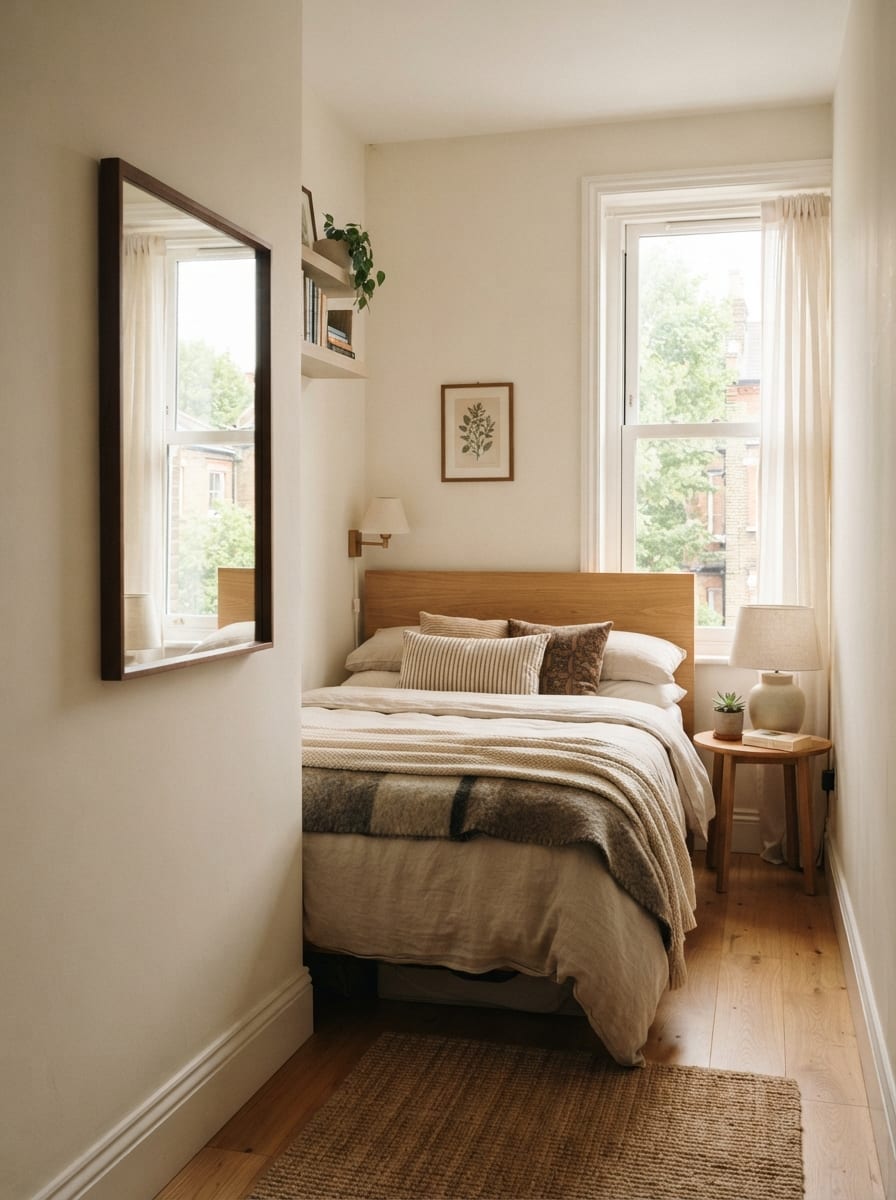
9 Small Bedroom Nightstand Ideas for Tight Spaces That Still Give You a Bedside Surface
Discover 9 small bedroom nightstand ideas for tight spaces, including floating shelves, narrow tables, bedside ledges and compact alternatives that preserve walking room.
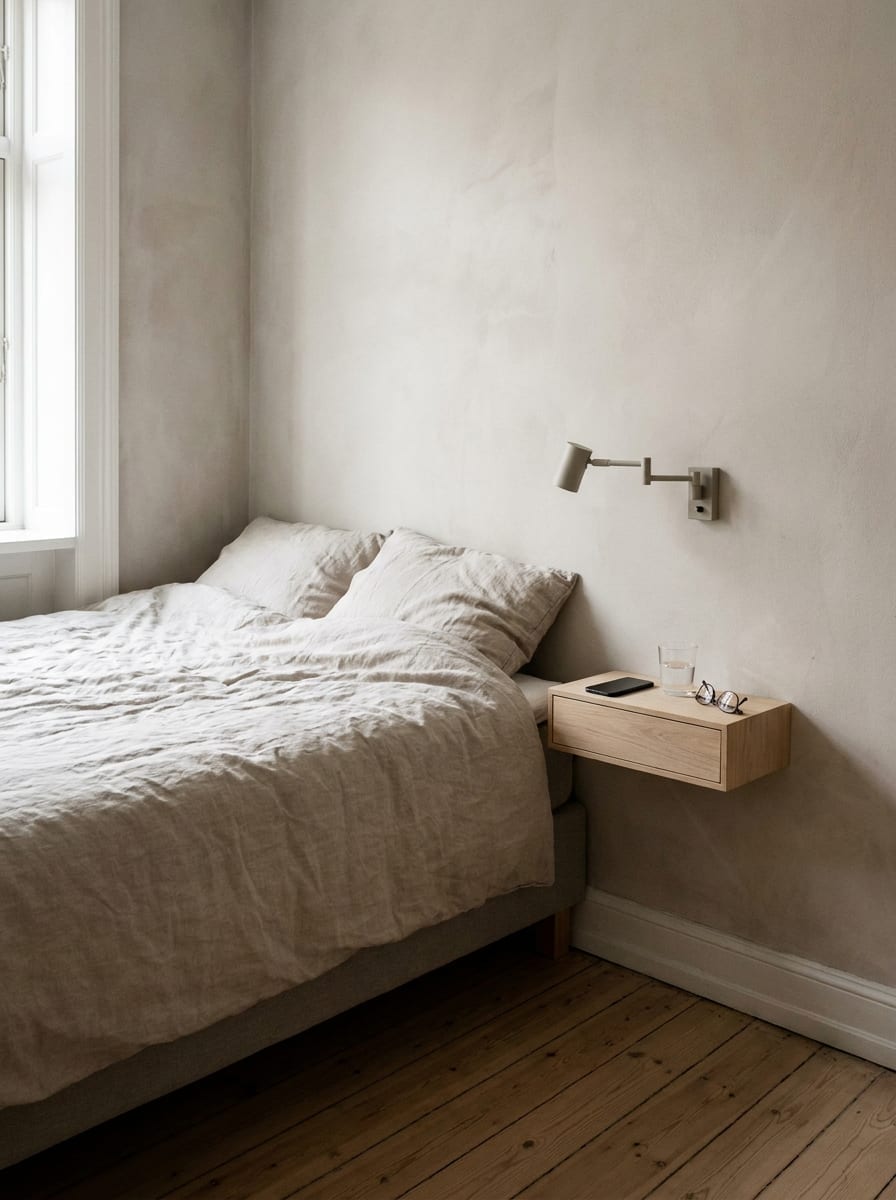
Compact small bedroom with a floating pale wood bedside shelf holding a phone and water glass above clear floor space
In This Guide
A small bedroom can fit the bed and still have almost no room left beside it. That creates an annoying everyday problem. You still need somewhere for things like:
- phone
- water
- glasses
- book
- lamp
- alarm clock But a conventional nightstand may:
- block the walkway
- interfere with a closet
- crowd the bed
- make the room feel packed with furniture The answer is not necessarily to give up the bedside surface. It is to shrink or change the type of surface. Here are nine ways to create a functional bedside setup when a standard nightstand feels too large.
1. The Floating Bedside Shelf
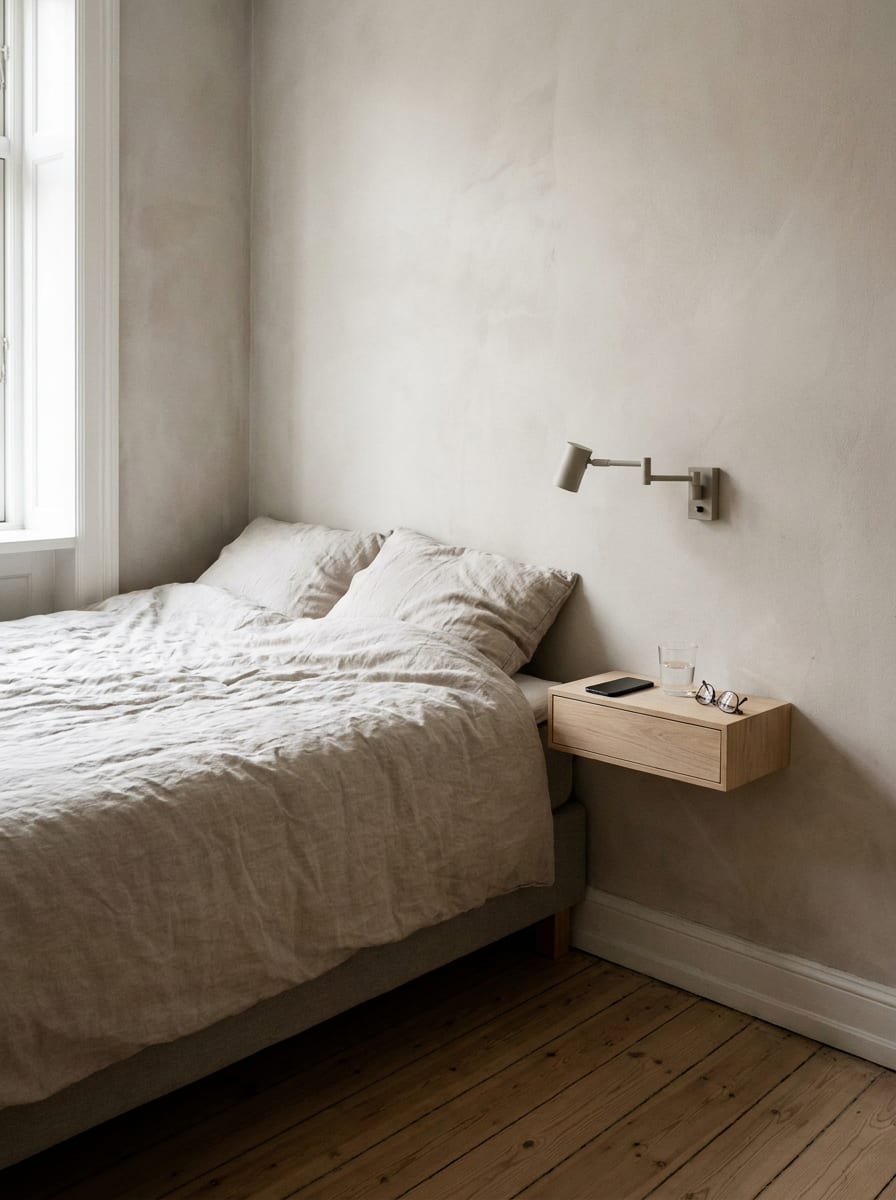
When floor width is extremely limited, move the bedside surface onto the wall. A floating shelf can provide enough room for basic nighttime essentials while leaving the floor completely open.
Why it works
A conventional nightstand requires:
- floor width
- furniture legs or cabinet body
- clearance around the piece A wall shelf only occupies the depth of the shelf itself.
Keep the shelf small
You usually do not need a long floating shelf. It may only need enough room for:
- phone
- water
- glasses
Choose the right height
The surface should be comfortable to reach from bed. Do not place it high simply because it looks good on the wall.
Keep the floor underneath open
Avoid turning the empty area below into another storage zone filled with:
- baskets
- boxes
- laundry The open floor is part of the benefit.
Pair it with wall lighting
If the shelf is very small, moving the lamp off the surface can make it much more usable. A wall-mounted or appropriately installed plug-in light can free the entire shelf for essentials.
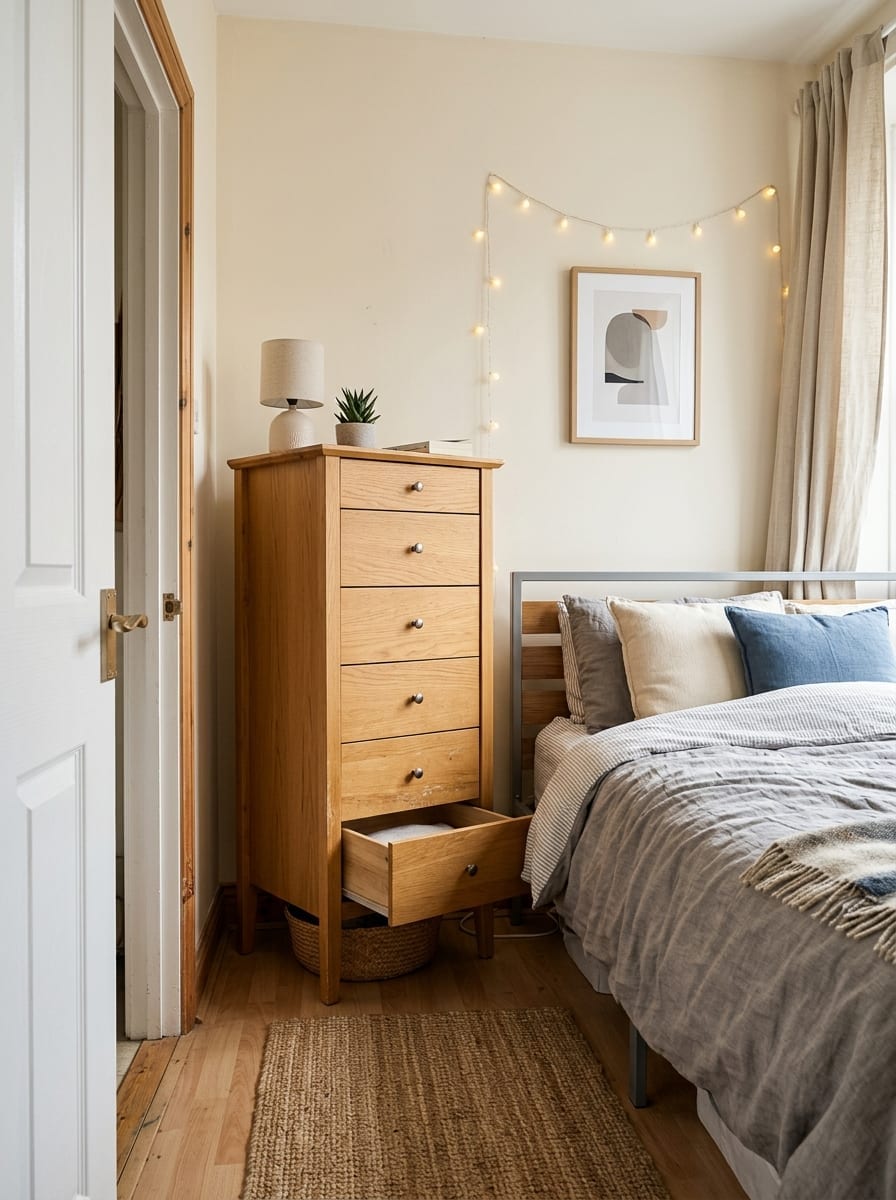
2. The Ultra-Narrow Drawer Nightstand
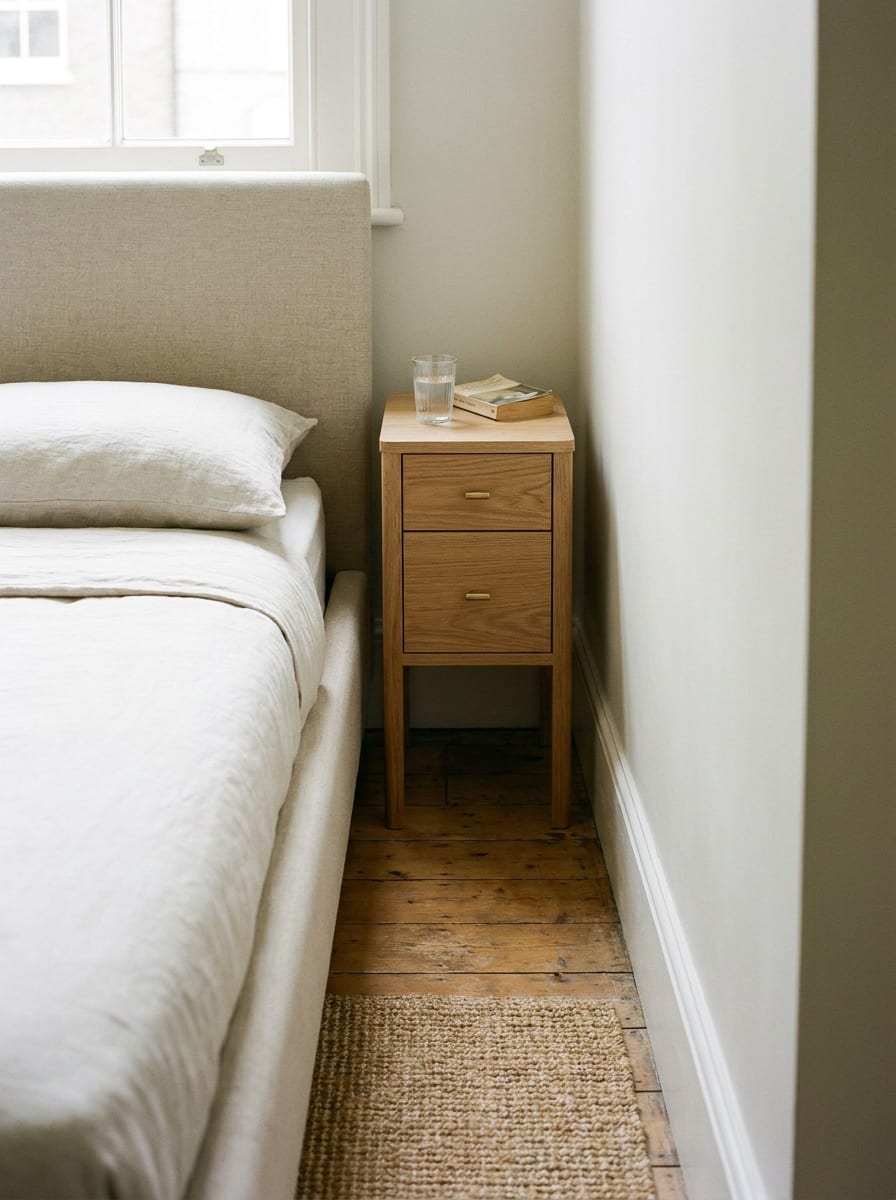
If you still want concealed storage, look for height rather than width. A narrow bedside unit can provide:
- one or two drawers
- a proper top surface without consuming as much floor width as a conventional nightstand.
Think narrow and slightly taller
The usual instinct is to find a shorter version of a standard bedside cabinet. Instead, consider one with:
- reduced width
- modest depth
- useful vertical storage
Use the drawer for bedside clutter
Good candidates include:
- chargers
- medication
- sleep mask
- hand cream
- notebook That keeps the small top surface from becoming overloaded.
Avoid an oversized top
If the cabinet is narrow but very deep, it can still interfere with circulation. Check both dimensions.
Keep the style visually simple
A narrow nightstand with:
- heavy moldings
- oversized handles
- bulky legs may feel larger than it physically is. Simple fronts help.
3. The C-Table Bedside Setup
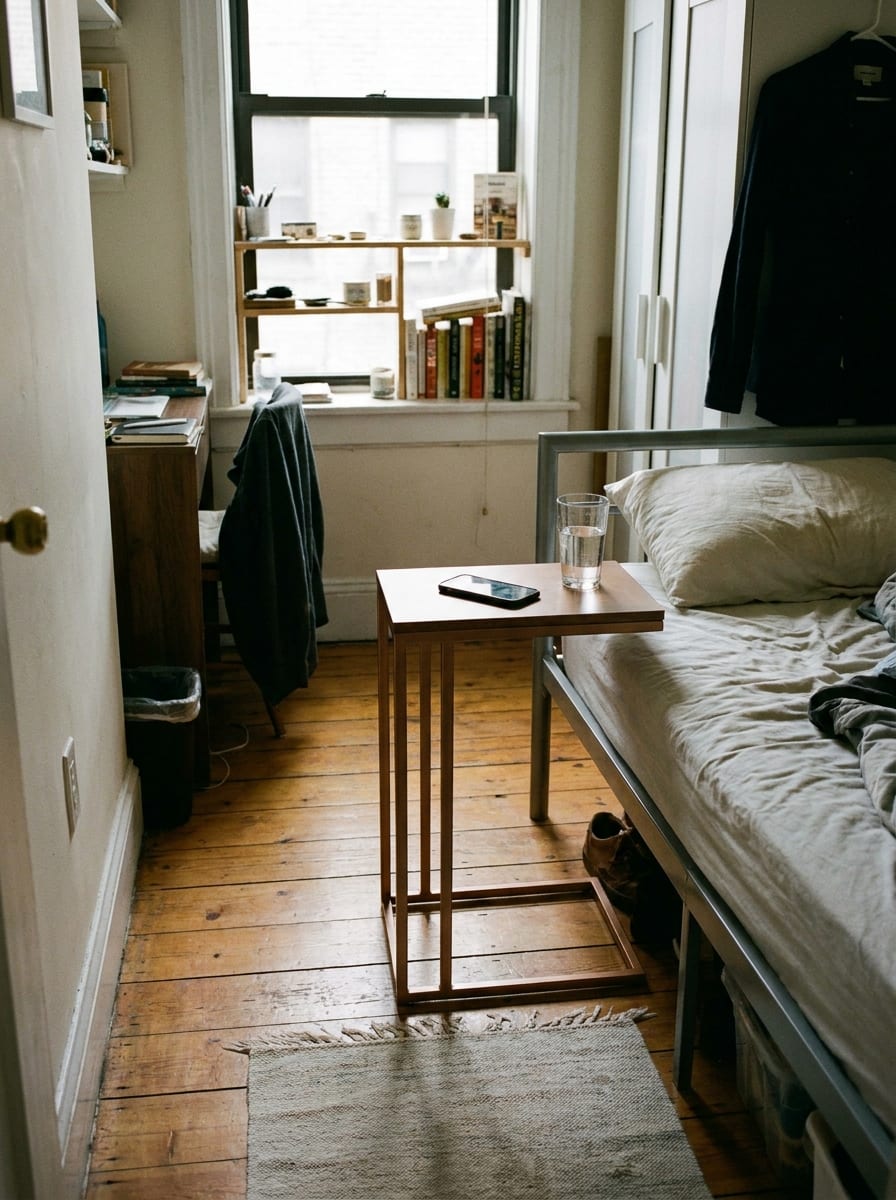
A C-shaped table can sometimes work where a traditional nightstand cannot. Its base can slide partially underneath the bed while the surface extends over the edge.
Why this saves floor width
Instead of sitting entirely beside the bed, part of the table occupies space that is already claimed by the bed.
Best for minimal bedside needs
Use it for:
- phone
- water
- book
- tablet rather than expecting it to store a full collection of bedside items.
Check the bed frame
The base needs enough clearance to slide underneath. This will not work equally well with:
- platform beds
- beds with very low frames
- beds with storage drawers
Choose stability over extreme thinness
A tiny surface is not useful if it feels unstable whenever you reach for your water.
4. The Wall-Mounted Bedside Box
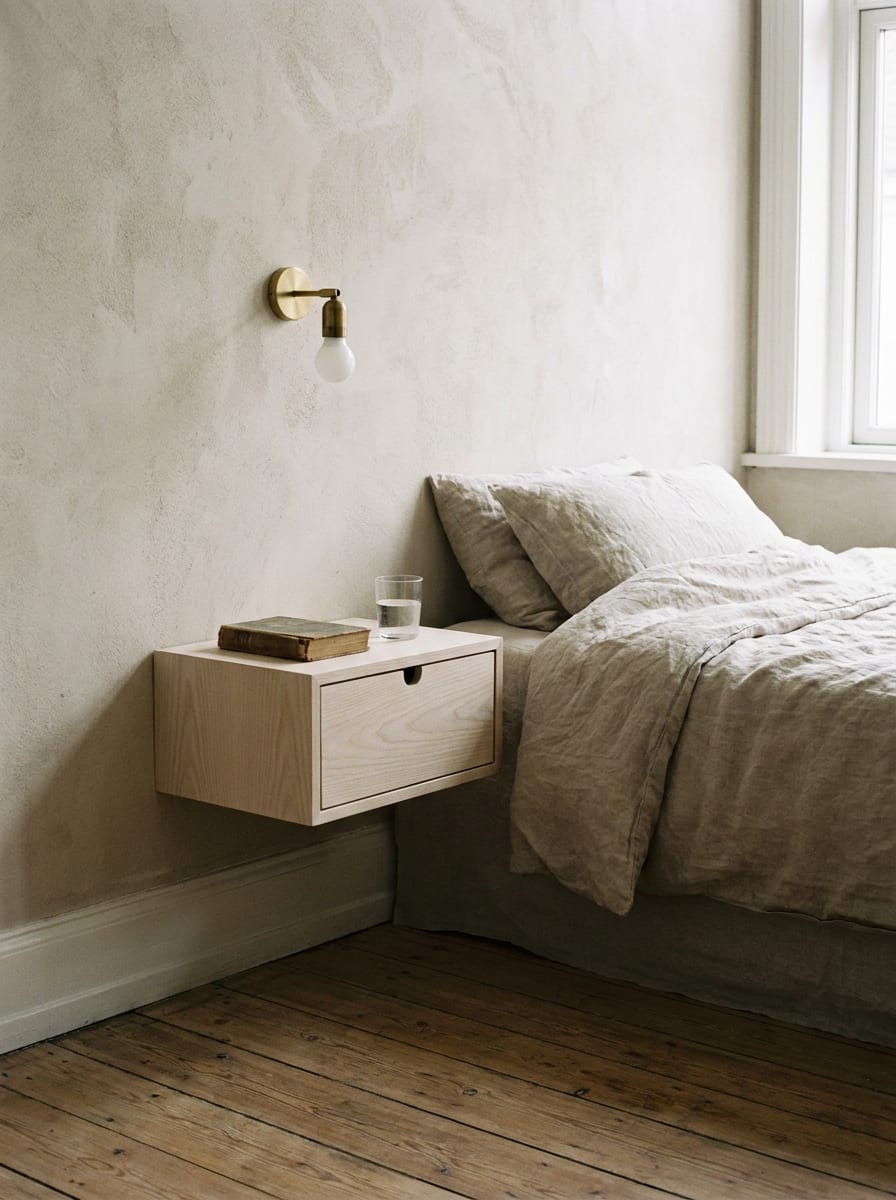
A floating bedside box gives you some of the storage benefits of a nightstand without a full floor-standing cabinet. Think of it as: floating shelf + small drawer
Why it works
You gain:
- landing surface
- hidden storage
- open floor beneath without adding a bulky cabinet.
Use the drawer strategically
Keep only small bedside items inside. For example:
- charging cable
- glasses case
- sleep mask
- lip balm
Keep it shallow
The box should not project so far that it becomes a wall-mounted obstacle.
Align it with the bed
A clean relationship between:
- mattress
- floating box
- light makes the setup feel intentional rather than improvised.
Installation matters
Wall-mounted furniture must be installed using appropriate hardware for:
- wall construction
- expected load
- manufacturer’s instructions
5. The Small Stool Nightstand
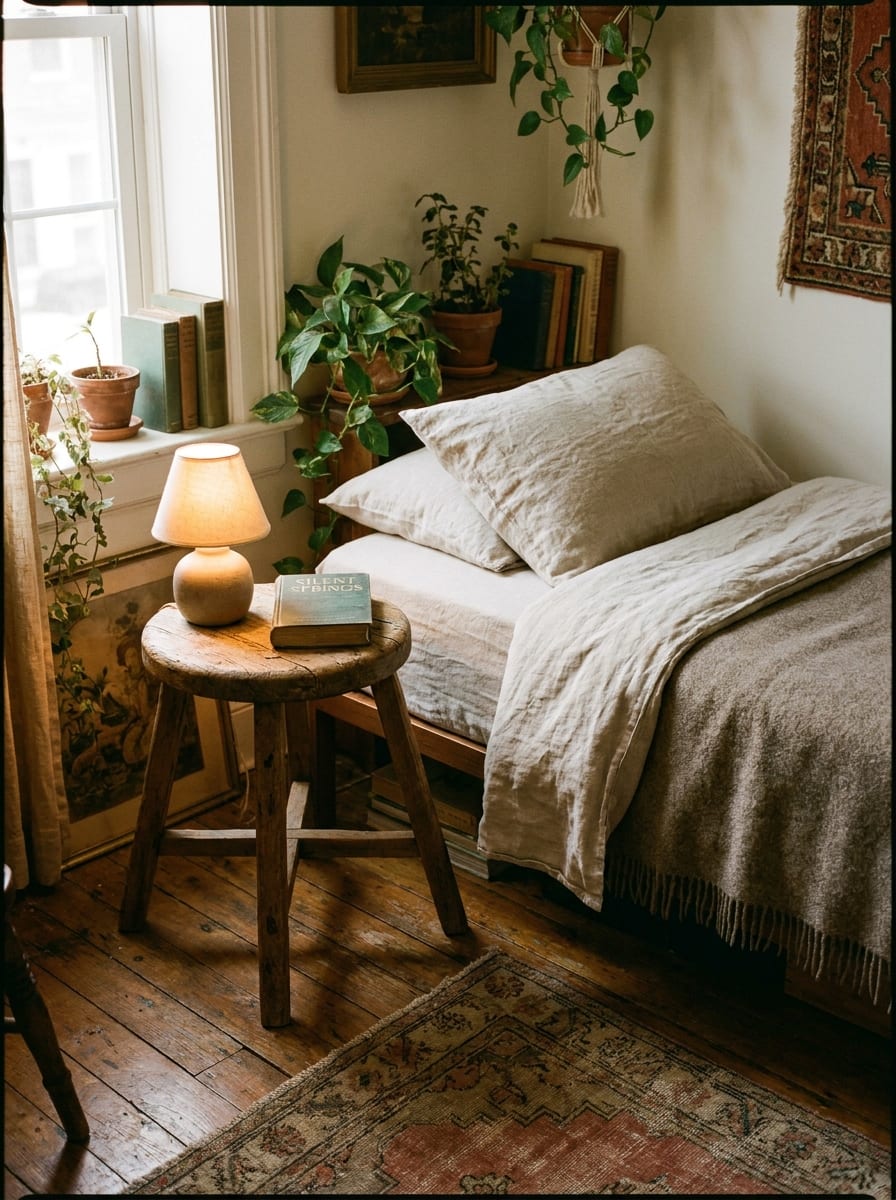
A stool can be one of the simplest bedside solutions. It is:
- compact
- lightweight
- easy to move
Why stools work well
They generally have less visual mass than a cabinet. You see:
- floor
- wall
- open space through or around the legs.
Keep the surface controlled
A stool is best when you need only:
- lamp
- book
- water
Choose a flat top
Some decorative stools have:
- curved
- textured
- uneven surfaces. For bedside use, a stable flat top is more practical.
Avoid using it as accidental clothing storage
A stool beside the bed can quickly become the place where every:
- shirt
- bag
- blanket gets dropped. Keep its purpose clear.
6. The Headboard Ledge Setup
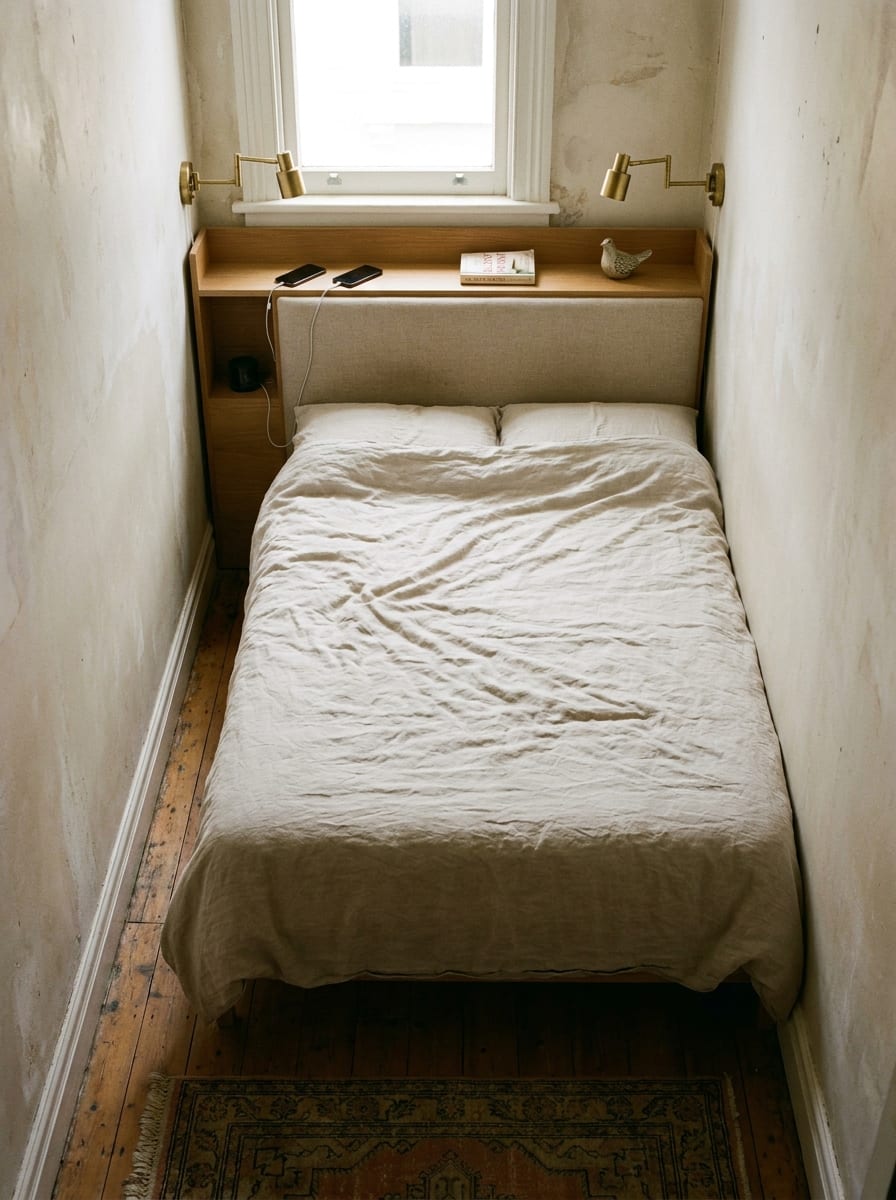
Sometimes the best nightstand is no nightstand at all. A shallow ledge integrated behind or above the headboard can provide a shared bedside surface.
Why it works
The storage uses the wall directly behind the bed rather than taking width beside it. This can be especially useful when:
- bed nearly touches both side walls
- bedroom is narrow
- two nightstands simply cannot fit
Keep the ledge shallow
It may hold:
- phone
- glasses
- small book
- lightweight decor It does not need to become a full shelf.
Keep items secure
Avoid placing unstable or heavy objects where they could fall onto the bed.
Lighting can move upward too
Wall-mounted reading lights can pair well with the ledge and eliminate the need for table lamps.
Keep the headboard comfortable
The ledge should not project into the sleeping or sitting area in an awkward way.
7. The Tiny Pedestal Table
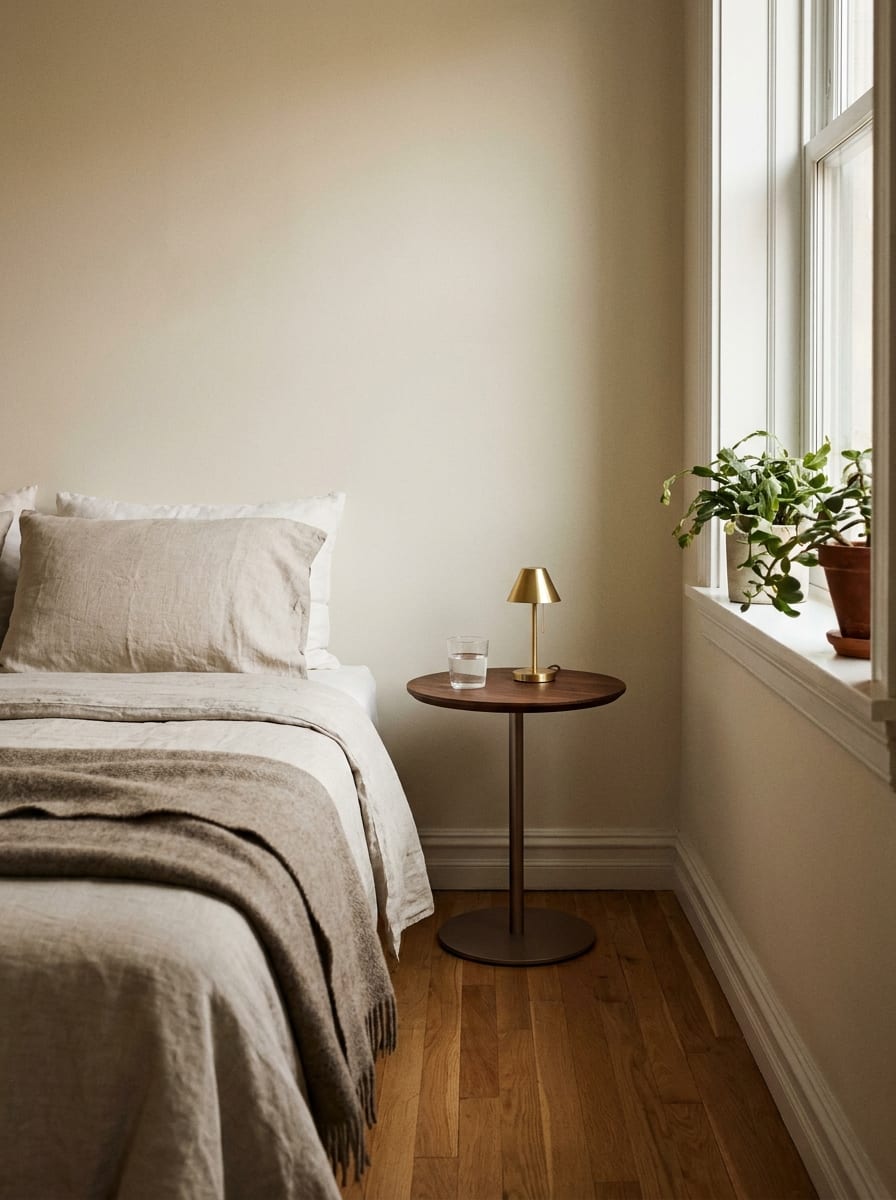
A small pedestal table can give you a surprisingly useful surface with almost no visual weight. Instead of four legs or a cabinet, the table uses:
- one narrow central support
- compact round top
Why it feels lighter
Your eye can see around the base.
Good for very basic bedside needs
Use it for:
- water
- phone
- small lamp
Round shapes can help in tight circulation
A round table removes sharp corners near the walkway.
Do not oversize the lamp
A large table lamp can consume the entire surface. If needed, use:
- tiny lamp
- wall light instead.
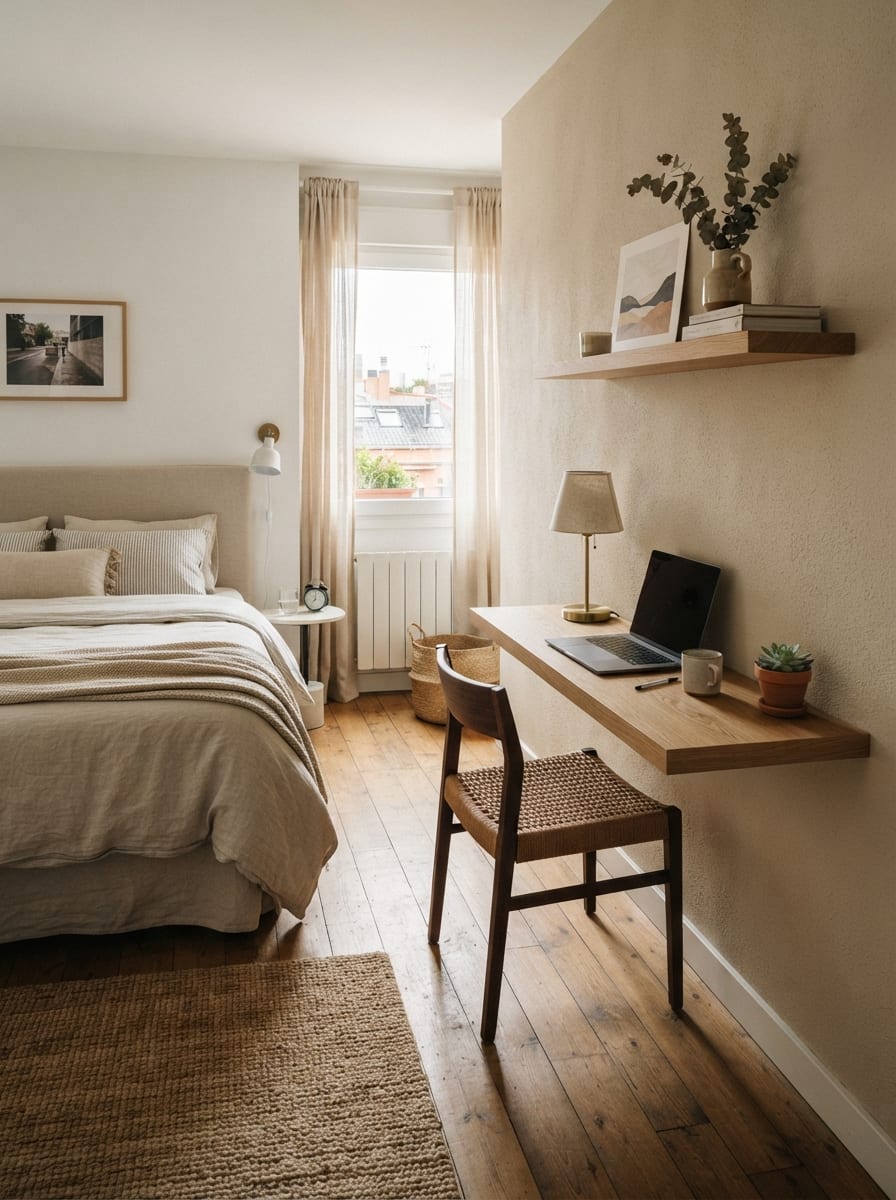
8. The Desk-and-Nightstand Crossover
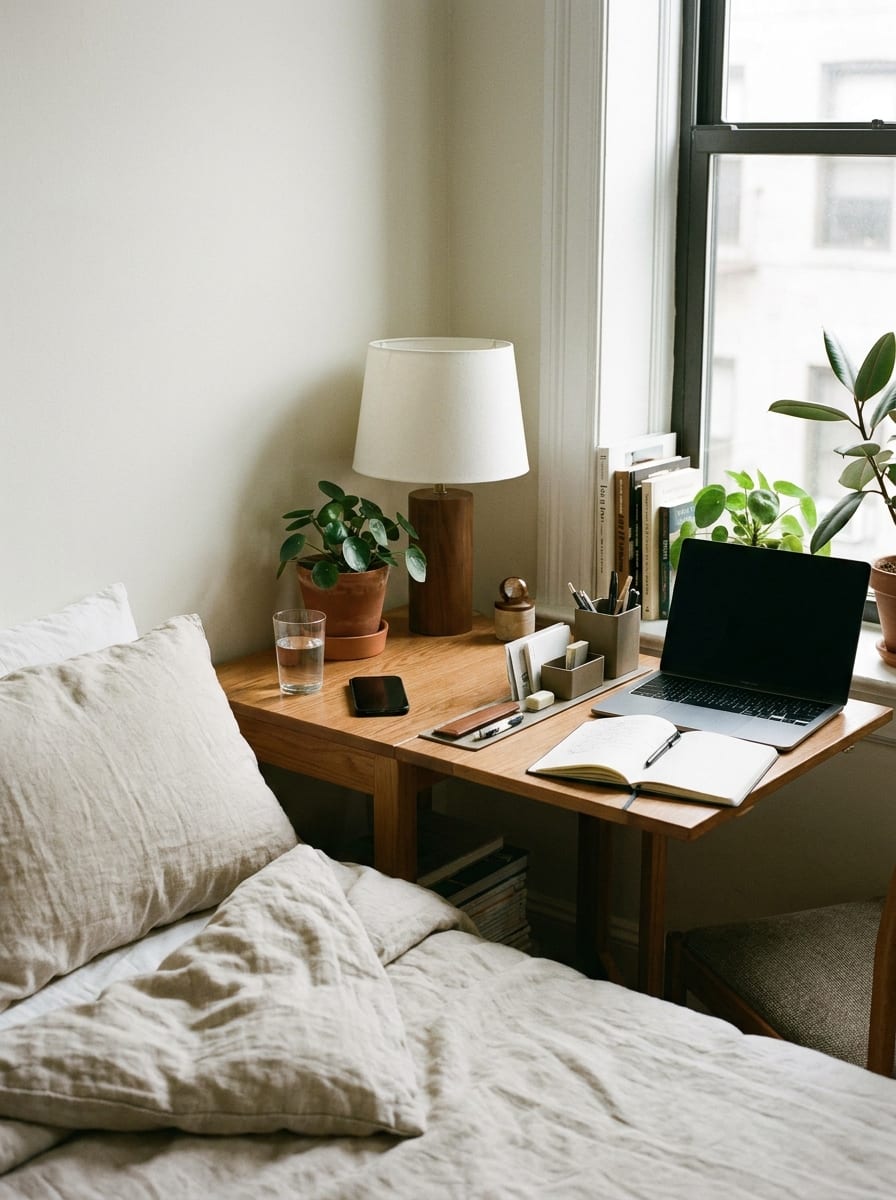
If a desk already sits beside the bed, it may be unnecessary to add a separate nightstand. One corner of the desk can become the bedside surface.
Why this works
Small bedrooms benefit when one piece of furniture performs two compatible functions. The desk already provides:
- surface
- perhaps drawers
- power access
Divide the desk into zones
For example: Bedside edge:
- phone
- water
- reading lamp Work area:
- laptop
- notebook
Keep work clutter away from the bed edge
If cables, paperwork and office supplies spread across the whole desk, the sleeping area may feel less calm.
Keep the crossover intentional
This works best when the desk genuinely sits within reach of the bed.
9. The One-Nightstand Bedroom Formula
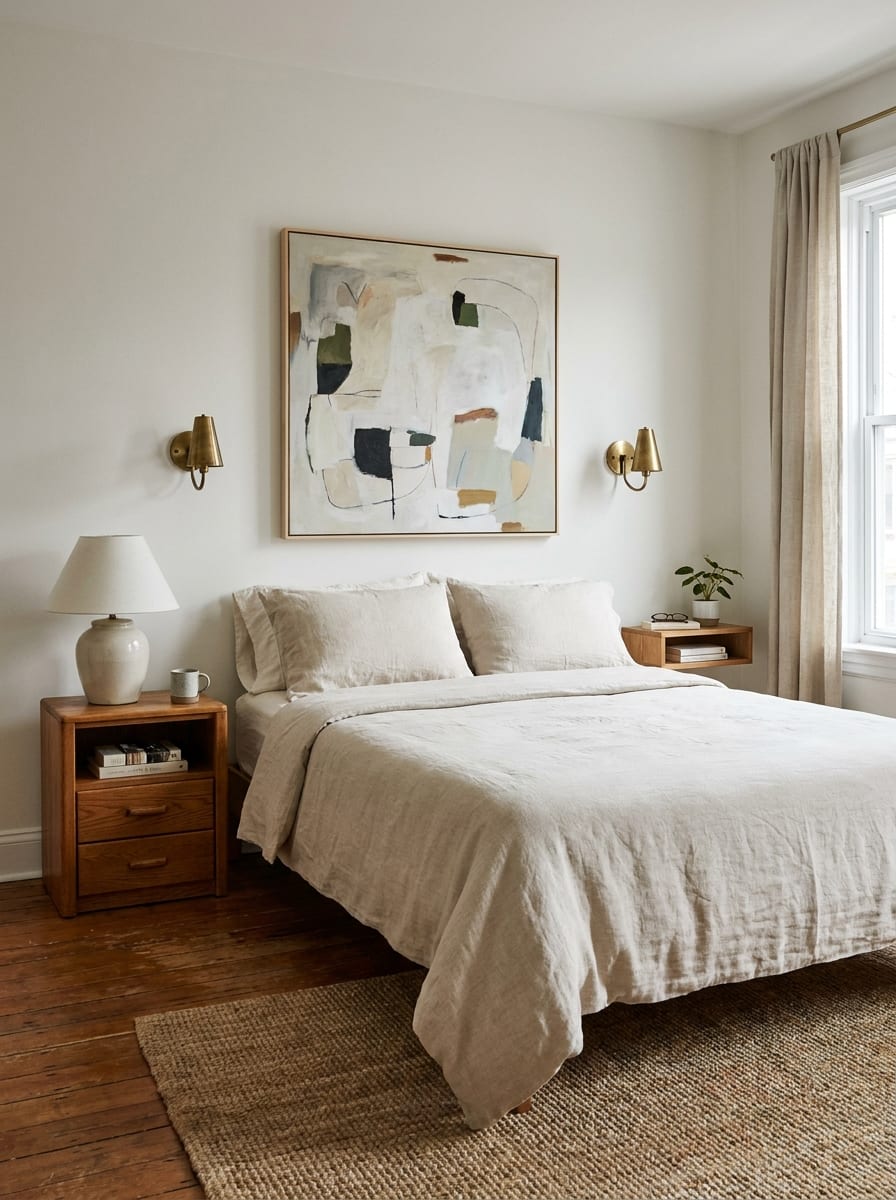
A small bedroom does not automatically need matching nightstands on both sides of the bed. Sometimes one is enough.
Why symmetry is not mandatory
Two nightstands can consume a surprising amount of floor width. If one person mainly sleeps there, or one side is used less often, consider: one full bedside surface + one minimal alternative
Possible combinations
Try: Side 1: Small drawer nightstand. Side 2: Floating shelf. Or: Side 1: Nightstand. Side 2: Nothing. Or: Side 1: Desk. Side 2: Tiny pedestal.
Keep the bed visually balanced another way
Balance can come from:
- centered artwork
- symmetrical pillows
- wall lighting rather than identical furniture.
Build around actual use
A bedroom should reflect:
- who sleeps there
- what they need not a showroom formula.
Surface Area vs Storage
These are not the same requirement. If you only need a surface: choose floating shelf, stool, pedestal or C-table. If you need storage too: choose narrow drawer unit, floating box or desk crossover.
Move the Lamp Off the Nightstand
A lamp can consume most of a small bedside surface. Moving lighting to the wall can free room for:
- phone
- water
- book
Use the Wall Above Carefully
The wall above a narrow nightstand can help with:
- lighting
- tiny shelf
- artwork But do not create a tower of shelf, hooks, cabinet and lamp around the bed.
Keep the Nightstand Near Mattress Height
A bedside surface generally feels easiest to use when it is reasonably aligned with the mattress.
Do Not Choose by Width Alone
A narrow nightstand can still be annoying if it is very deep. Consider width + depth + height together.
Watch Closet Doors
If the nightstand sits close to a closet, open the closet completely before committing.
Watch Bedroom Door Swing
The same applies near the bedroom entrance. Open the door fully before committing to furniture placement.
Storage Beds Change the Calculation
If your bed has drawers along the side, keep the bedside floor especially clear. Better options may include:
- floating shelf
- headboard ledge
- C-table where compatible
Platform Beds Can Limit C-Tables
A C-table depends on the base being able to slide under the bed. Measure clearance under the bed before choosing one.
A Floating Nightstand Is Not Automatically Better
Floating pieces are excellent for visual openness, but they require appropriate installation.
What If There Are Only a Few Inches Beside the Bed?
Try:
- headboard ledge
- floating shelf
- wall pocket
What If Only One Side Has Space?
Use one nightstand.
What If the Bed Is Against the Wall?
The exposed side can use one nightstand or desk crossover while the wall side relies on headboard ledge or wall shelf.
What If the Bedroom Also Needs a Desk?
If the desk is already next to the bed, make one corner of it the bedside zone.
What If the Nightstand Needs to Hold a CPAP or Other Essential Device?
Function should take priority over visual minimalism.
Should You Use a Nightstand With Drawers?
Choose drawers if the bedside area regularly collects small items.
Should You Use Open Shelves?
Open shelves can keep the piece visually lighter but also expose cables and random objects.
What About a Basket Nightstand?
A basket with a lid works better for occasional storage than daily bedside access.
What About a Chair as a Nightstand?
A chair can work temporarily but usually occupies more floor width than actual nightstand alternatives.
What About a Stack of Books?
It can look interesting in styling photos but the surface may be unstable.
What About a Ladder Shelf?
Use one only when it solves multiple storage needs, not simply as a nightstand replacement.
Can a Window Sill Be the Nightstand?
Sometimes, if it sits beside the bed and is easy to reach. But do not block window operation.
Use Cable Control Early
Route cables neatly so they do not consume the limited surface.
Keep the Surface Mostly Empty
A small nightstand works best when it is not expected to display too many items at once. A Bedroom With 8-12 Inches Beside the Bed Look first at floating shelf, very narrow drawer unit or tiny pedestal.
A Bedroom With Almost No Side Clearance
Try headboard ledge, wall-mounted box or one-sided nightstand layout.
A Bedroom Shared by Two People
Give each side what it actually needs rather than identical nightstands.
A Studio Bedroom Zone
Use furniture that can do more than one job: desk and nightstand or C-table that also serves the sofa.
A Renter-Friendly Bedside Setup
Prioritize narrow freestanding cabinet, stool, pedestal table, C-table or desk crossover. Small Bedroom Nightstand Mistakes Buying matching nightstands automatically: two may not fit comfortably. Choosing a cabinet because you think you need storage: you may only need a surface. Ignoring depth: a narrow but deep unit can still block circulation. Filling the entire bedside gap: some of that gap may be needed for walking. Using an oversized lamp: the lamp consumes the small surface. Blocking bed drawers: check storage-bed operation. Blocking the closet: open doors before deciding. Overdecorating the nightstand: the surface loses its actual purpose. A Quick Bedside Test Before You Buy Use a cardboard box or painter’s tape to approximate the proposed nightstand footprint. Then:
1. Walk beside the bed.
2. Open the closet.
3. Open the bedroom door.
4. Sit on the bed.
5. Reach toward the proposed surface.
6. Make the bed normally.
If the setup interferes with those actions, reconsider the size or format. Which Nightstand Idea Fits Your Bedroom? Choose the Floating Bedside Shelf if: there is almost no floor space. Choose the Ultra-Narrow Drawer Nightstand if: you need hidden storage. Consider the C-Table if: the gap beside the bed is extremely tight. Choose the Wall-Mounted Bedside Box if: you want drawers but also visible floor. Choose the Small Stool if: you barely need anything beside the bed. Choose the Headboard Ledge if: there is no room on either side. Choose the Tiny Pedestal Table if: you want the smallest freestanding surface possible. Use the Desk-and-Nightstand Crossover if: your desk is already beside the bed. Use the One-Nightstand Bedroom Formula if: only one side of the bed has real space. Final Thoughts A small bedroom does not need standard nightstands on both sides of the bed to function well. Start with the real question: What do I actually need within reach at night? Then choose the smallest solution that provides that function. Protect the walkway. Keep closet access open. Move lighting off the surface when it helps. The best small-bedroom nightstand is the one that gives you the surface you need without making the room harder to use.