12 Cozy Living Room Ideas for Small Apartments
12 cozy living room ideas for small apartments: layered rugs, warm lighting, soft throws, and a reading corner that make a small living room feel warm.
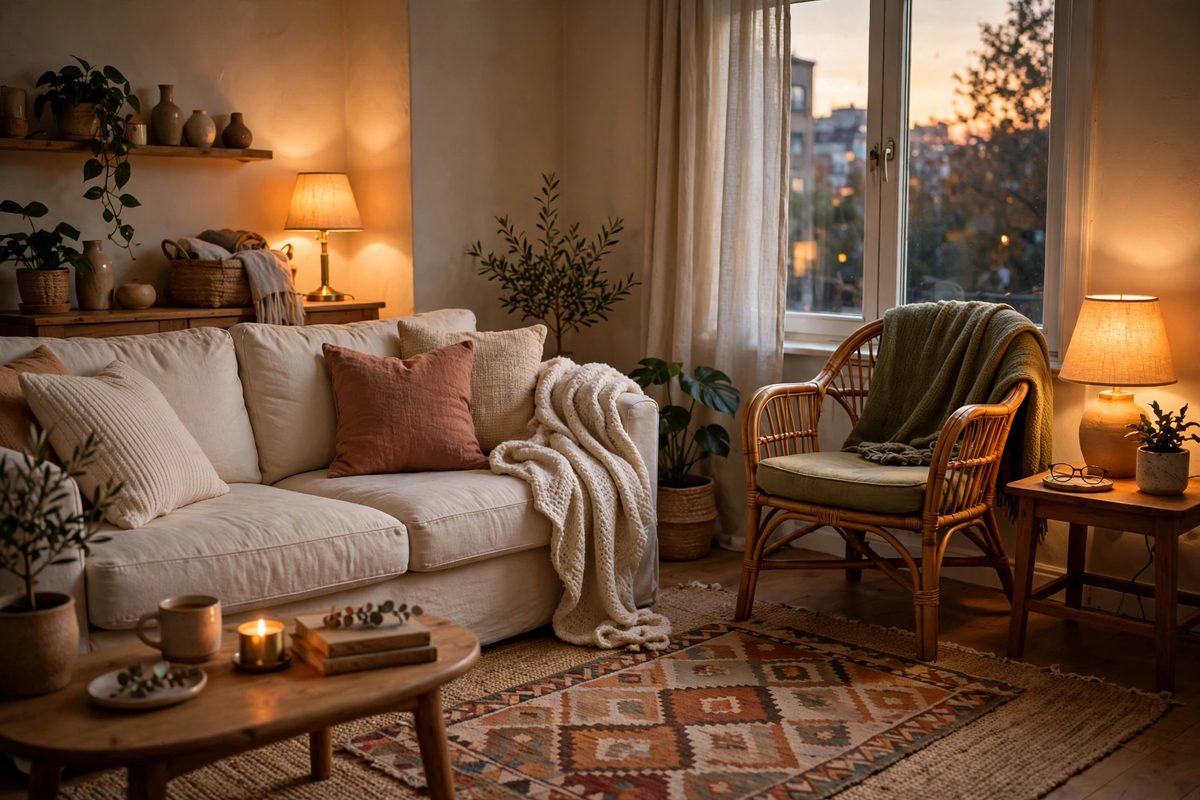
Small apartment living room with a layered rug, warm lamps, a soft throw blanket, and a reading chair by the window
In This Guide
A small living room does not need more stuff to feel cozy. It needs the right layers in the right places: something soft underfoot, warm light at more than one height, and one spot that is built for sitting still. Get those three things right and a 200 square foot living room feels like a retreat instead of a waiting room.
These 12 cozy living room ideas for small apartments are built for real small rooms, not showrooms. Each one works in a living room under 250 square feet, each one is renter friendly, and each one costs less than 100 dollars unless it says otherwise. For the whole apartment version of this, see the cozy apartment decor ideas, and for the holiday version, the Christmas living room ideas use the same layered approach. And if you want the whole apartment in one style, the cozy cottage decor ideas pull these same layers into a cottage look.
1. The Layered Rug Stack
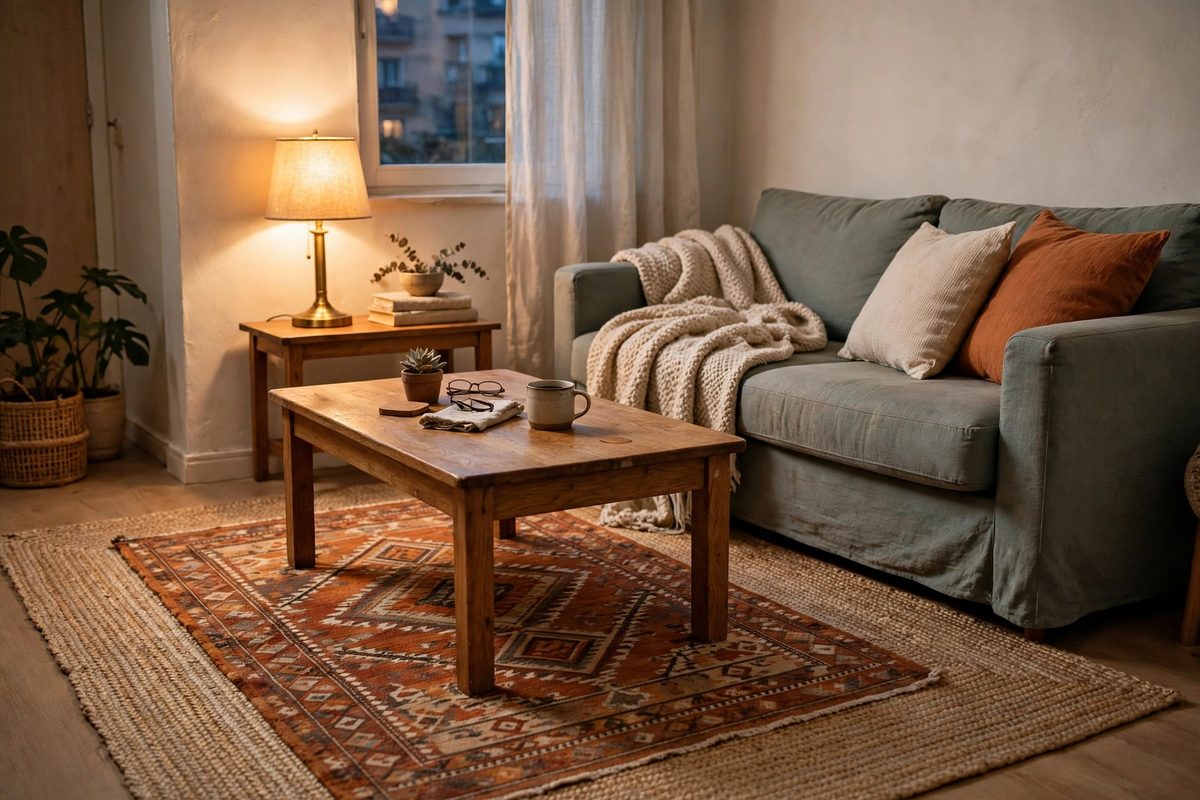
One rug is flat. Two rugs are cozy. Start with a large low pile rug that covers most of the seating area, then layer a smaller textured rug on top at an angle, under the coffee table or in front of the sofa. The overlap creates a border that makes the seating area feel defined, and the second rug adds a texture your feet notice every time you sit down.
A 5 by 7 foot rug costs 40 to 80 dollars, and a 3 by 5 foot accent rug costs 20 to 40 dollars. Choose the top rug in a different texture from the bottom one, like a shaggy rug over a flat weave, or a woven jute rug over a soft cotton one. Keep both rugs in the same color family so the stack looks intentional instead of accidental. The same layering idea works on the small living room rug ideas, with more size combinations for tight rooms.
How to make it work
Leave at least 6 inches of the bottom rug visible on all sides of the top rug, so the layer reads as a layer. Use a rug pad under the bottom rug, not between the two rugs, so the stack does not slide. If the room is under 150 square feet, use a 4 by 6 foot bottom rug so the floor still shows at the edges.
2. The Throw Blanket Basket
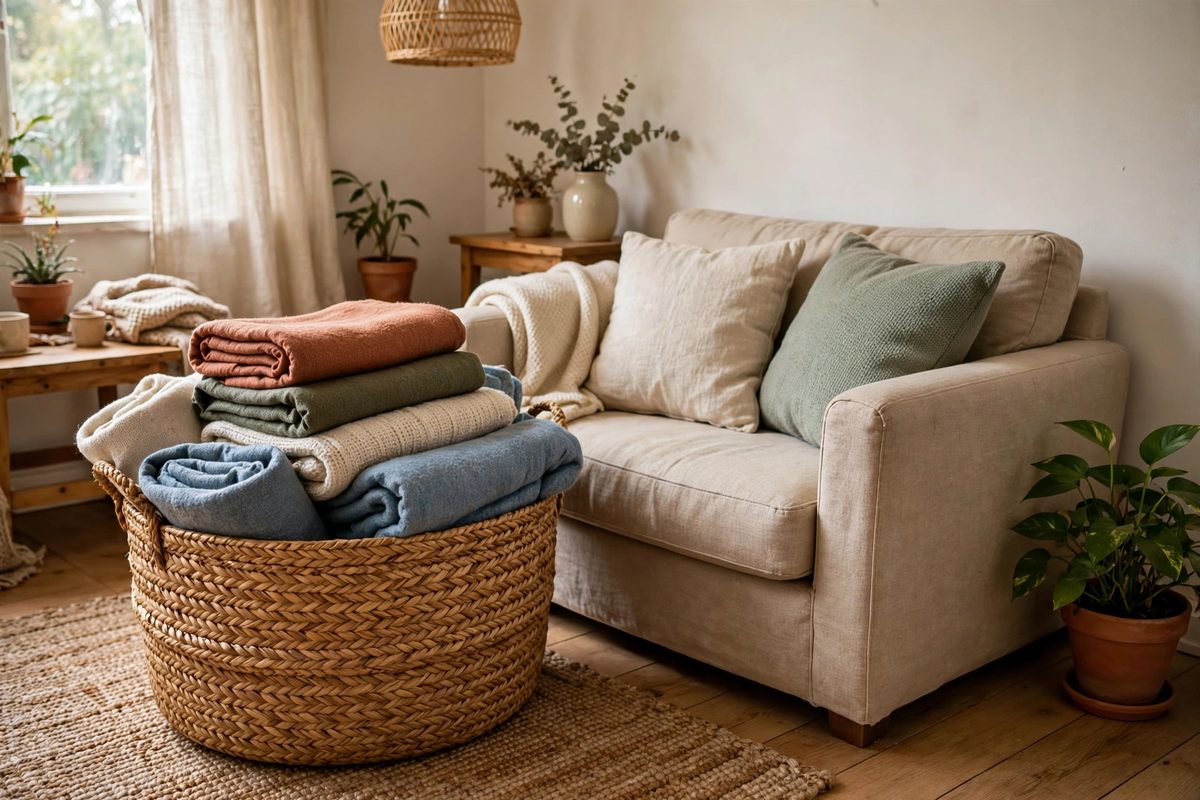
A basket of throw blankets is the fastest cozy upgrade in this post, because it adds color, texture, and an invitation to sit down, all in one object. Put a woven basket beside the sofa, fold two or three throws inside it, and let one drape over the edge. The basket says the room is meant to be used, and the throws are right there when the evening gets cold.
A woven seagrass basket costs 20 to 35 dollars, and a soft fleece or knit throw costs 15 to 25 dollars each. Three throws in one basket is the right number for a small living room: one for the sofa, one for the chair, and one spare. Pick throws in different textures, like one knit, one fleece, and one woven cotton, so the basket looks collected instead of matched. This is the living room version of the cozy apartment decor ideas, where woven storage hides the visual mess.
How to make it work
Put the basket within arm’s reach of the sofa, not across the room, so nobody has to get up to grab a throw. Fold the throws instead of stuffing them, so the basket looks full but tidy. Wash the throws once a month, since a basket of blankets collects dust faster than a bare shelf.
3. Warm Light in Three Spots
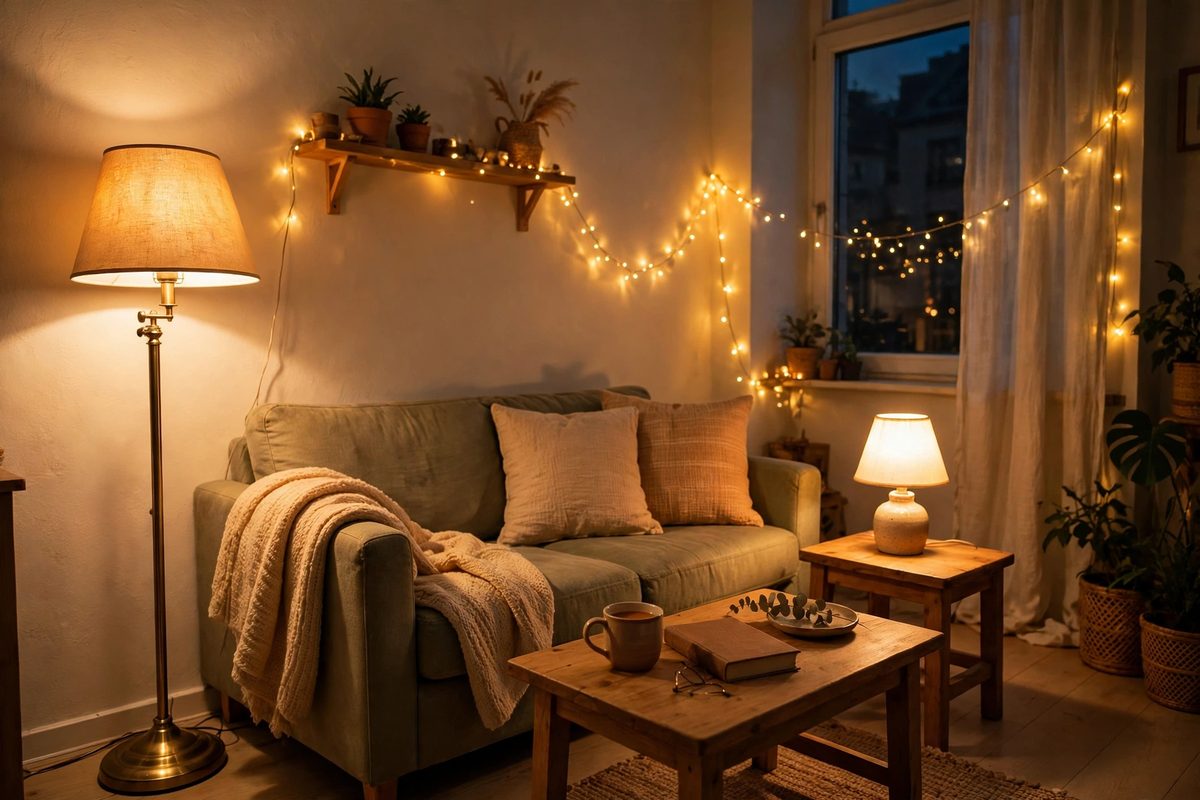
One ceiling light makes a small living room feel like an office. Three warm lights at different heights make it feel like a living room. Put a floor lamp in one corner, a table lamp on the side table, and a short string of warm fairy lights along a shelf or a curtain rod. Each light is dim on its own, and together they fill the room with a glow that flatters everything in it.
A floor lamp costs 25 to 50 dollars, a table lamp costs 15 to 30 dollars, and a 10 foot string of warm white fairy lights costs 5 to 8 dollars. Use bulbs rated 2700K, which is the warm yellow end of the scale, not the blue white 5000K bulbs that belong in a kitchen. Put all three lights on separate switches, or use plug-in dimmers that cost 8 to 12 dollars each, so you can turn the room down in stages as the evening goes on.
How to make it work
Keep the brightest light at the lowest height, like the table lamp, and the dimmest light at the highest height, like the fairy lights, so the room glows from the bottom up. Never point a bare bulb at the seating area, since a visible bulb reads as harsh no matter how warm it is. If the room has only one outlet free, use a small power strip hidden behind the sofa.
4. The Reading Corner Chair
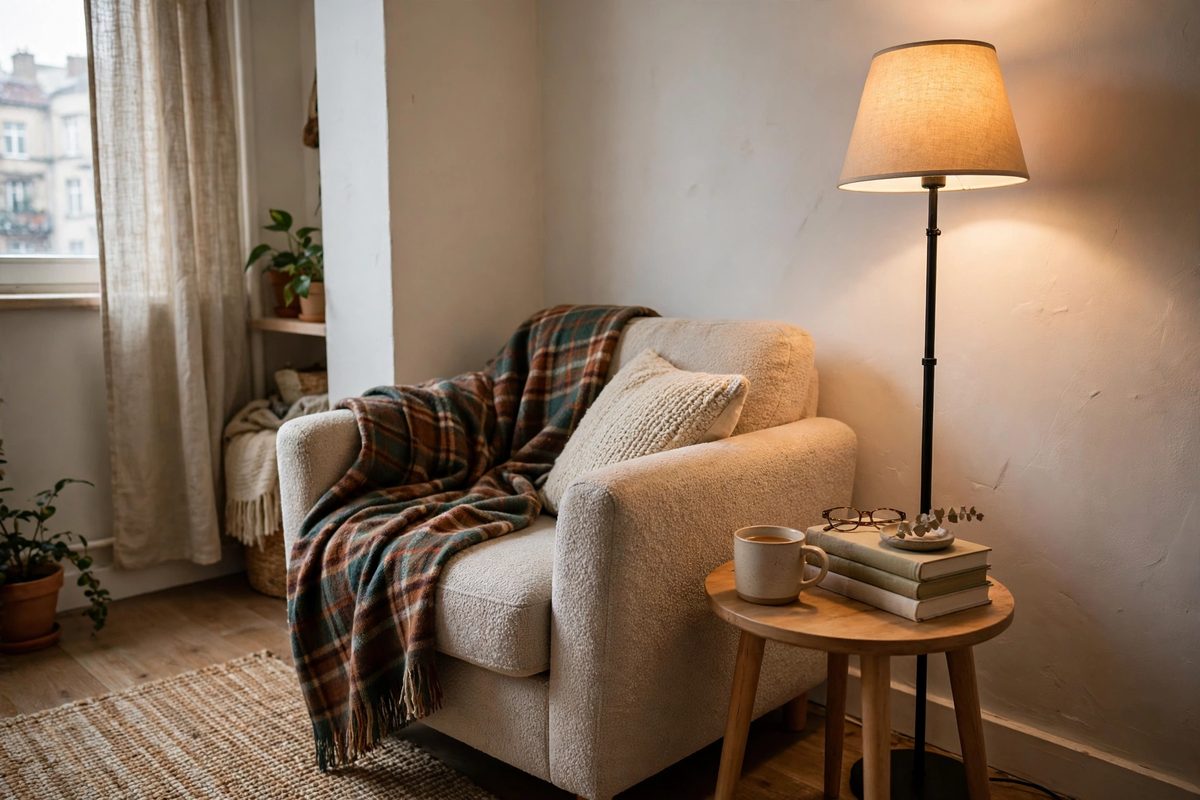
A living room with a reading corner feels cozy even when nobody is reading, because the corner proves the room is for lingering. Put one armchair at an angle in the quietest corner, drape a throw over the arm, and set a small side table beside it with a lamp and a book. The corner becomes a destination inside a room that is otherwise built for the television.
An accent chair costs 80 to 150 dollars secondhand or 150 to 250 dollars new, and a small side table costs 20 to 40 dollars. A plaid or knit throw costs 15 to 25 dollars. The chair does not need to match the sofa. A different chair in a different fabric is what makes the corner feel like a corner instead of a second sofa. For the console version of this idea, the small living room console table ideas show how a narrow table anchors a small wall.
How to make it work
Angle the chair at 45 degrees to the wall, not flat against it, so the corner feels open instead of boxed in. Keep the chair at least 18 inches from the side table, so there is room for legs and a mug. Put a small rug under the chair and the table, even a 2 by 3 foot one, so the corner reads as its own zone.
5. The Sofa Pillow Reset
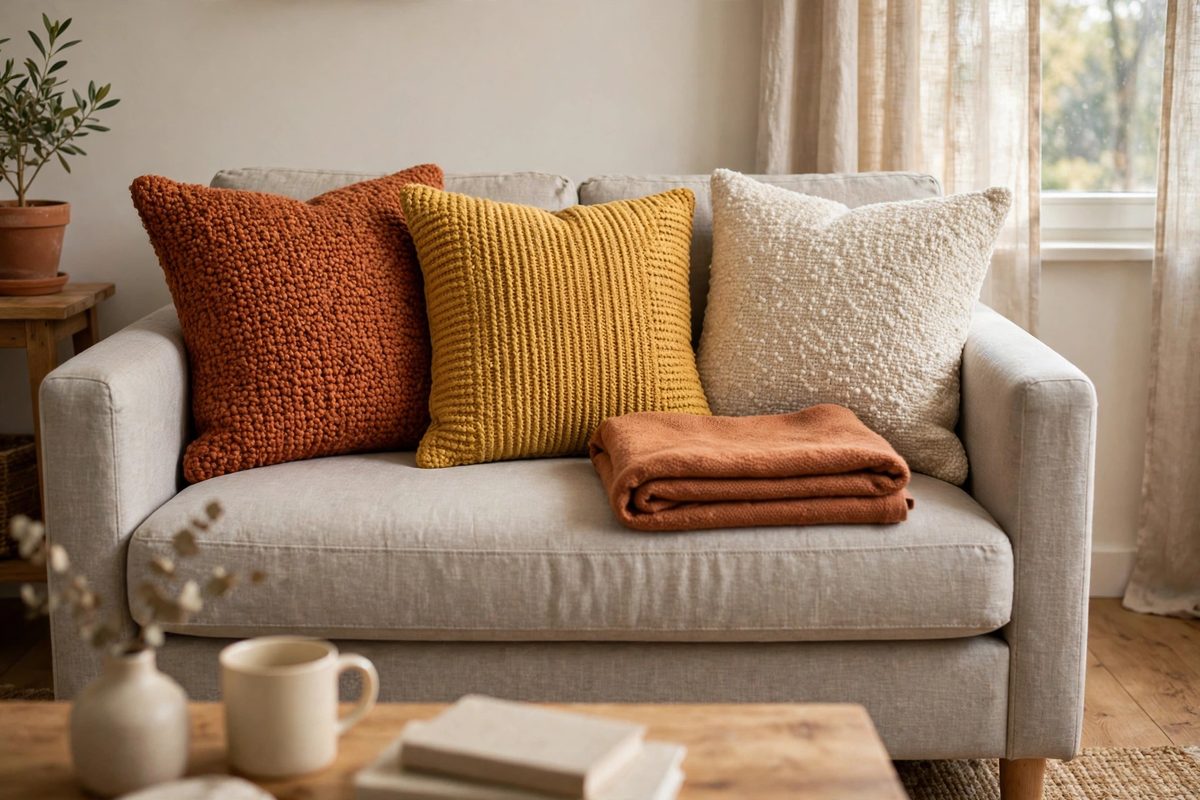
Most small sofas are buried under too many pillows, and too many pillows make a small living room feel smaller. The reset is three pillows, not six: one large square pillow in a solid warm color, one lumbar pillow in a texture like knit or velvet, and one small pillow in a pattern. Three pillows look styled, and there is still room to sit.
Pillow covers cost 8 to 15 dollars each, and inserts cost 5 to 10 dollars each, so a three pillow reset costs 40 to 75 dollars total. Keep the pillow colors in the same warm family as the rug, like rust, mustard, and cream, or forest, sage, and cream. A pillow cover is cheaper than a new pillow, and swapping covers twice a year is the cheapest way to change the room. This is the same edit-before-you-buy thinking behind the cozy apartment decor ideas, where fewer, better pieces win.
How to make it work
Put the largest pillow in the corner of the sofa, the lumbar pillow in the middle, and the small pillow at the other end, so the arrangement has a shape. Fluff the pillows every morning, since a flat pillow reads as tired no matter how good the cover is. Store the out of season covers in a basket under the coffee table.
6. The Coffee Table Candle Zone
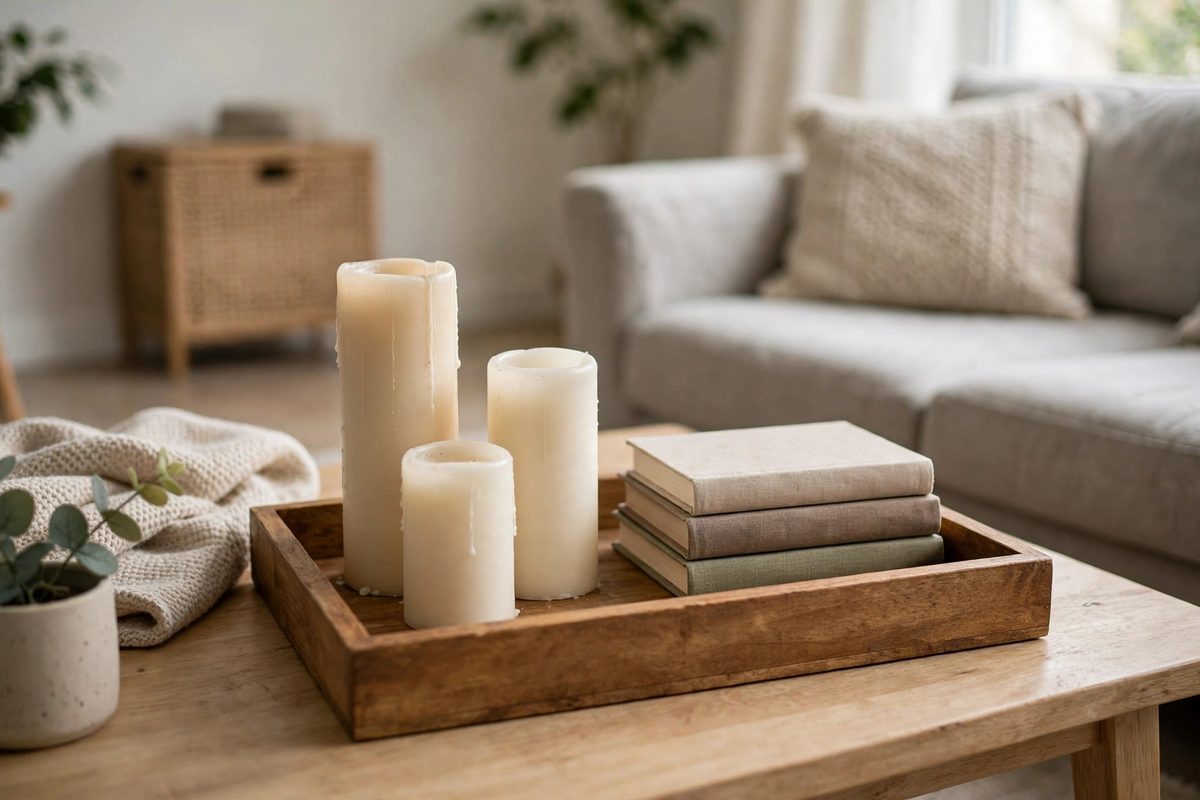
A coffee table with one candle zone looks cozy. A coffee table covered in candles looks like a fire hazard. Put a tray in the center of the table, set three candles at different heights inside it, and leave the rest of the table clear. The tray keeps the candles together, the heights create a shape, and the clear space around the tray means there is still room for a mug.
A wooden or metal tray costs 12 to 25 dollars, and three pillar candles cost 10 to 20 dollars total. Battery candles cost a little more, 15 to 25 dollars for a set of three, and they are the safer choice if the table is low or the household has kids or pets. Put one book under the shortest candle to vary the height, or use candle holders of three different heights. The tray idea also works on the small living room console table ideas, where a tray keeps a narrow surface tidy.
How to make it work
Keep the tray to one third of the table length, so the table still works as a table. Light only one candle at a time on a normal evening, and all three when guests come over, so the zone feels special instead of routine. Trim wicks to a quarter inch before lighting, since a long wick smokes and soots the wall behind the sofa.
7. The Curtain Warm-Up
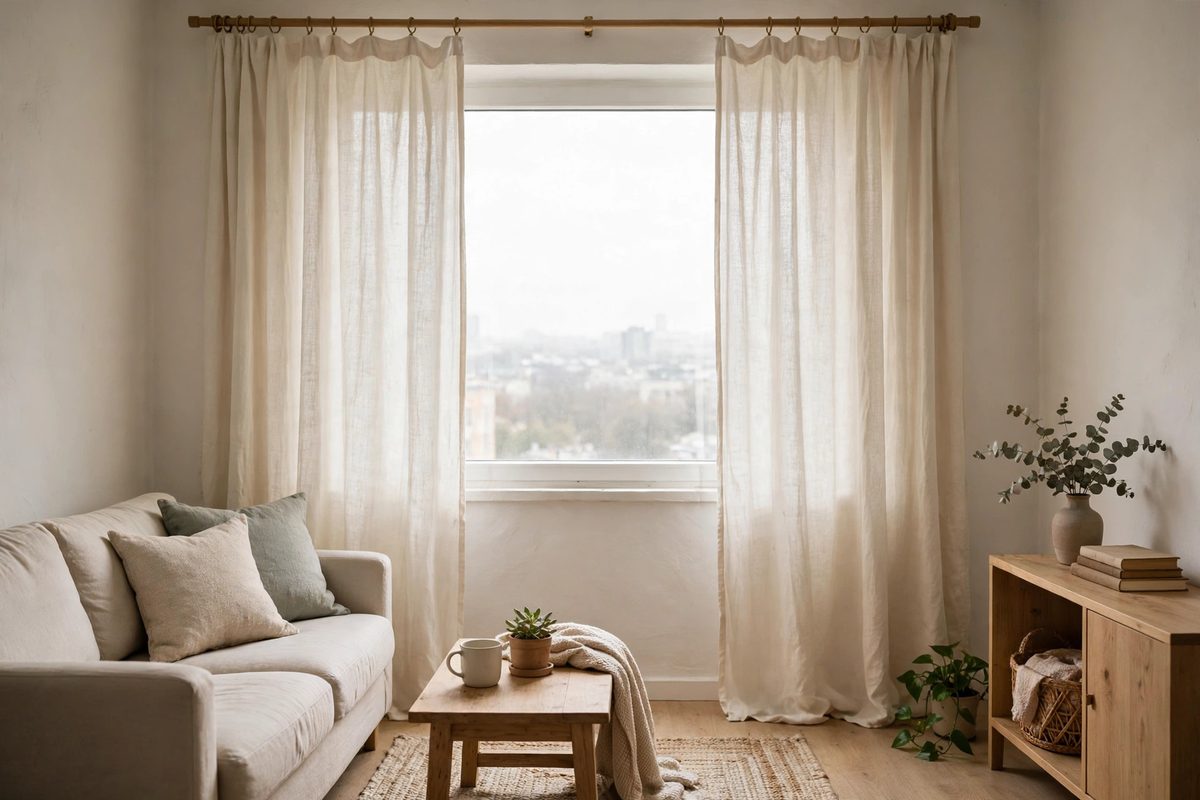
Bare windows make a small living room feel cold, even in summer, because glass is a hard surface and the eye reads it as a gap. Floor length curtains in a warm fabric fix that in one step. Hang linen or cotton curtains in cream, warm white, or a soft rust, and let them pool 1 inch on the floor. The fabric softens the window, the color warms the wall, and the room feels finished.
A pair of 84 inch linen look curtains costs 30 to 60 dollars, and a curtain rod costs 15 to 25 dollars. Hang the rod 4 to 6 inches above the window frame and 4 to 6 inches wider than the frame on each side, so the curtains frame the window instead of covering it. Linen look polyester is the practical choice for a rental, since real linen wrinkles and costs twice as much. The same curtain logic appears in the cozy apartment decor ideas, where curtains add softness without weight.
How to make it work
Iron or steam the curtains before hanging, since creases from the package read as careless for the first month. Keep the curtains open during the day and closed at night, so the room gets light when it is available and warmth when it is not. If the window is shorter than 48 inches wide, use one curtain panel instead of two, so the window does not look crowded.
8. The Wood Tone Anchor
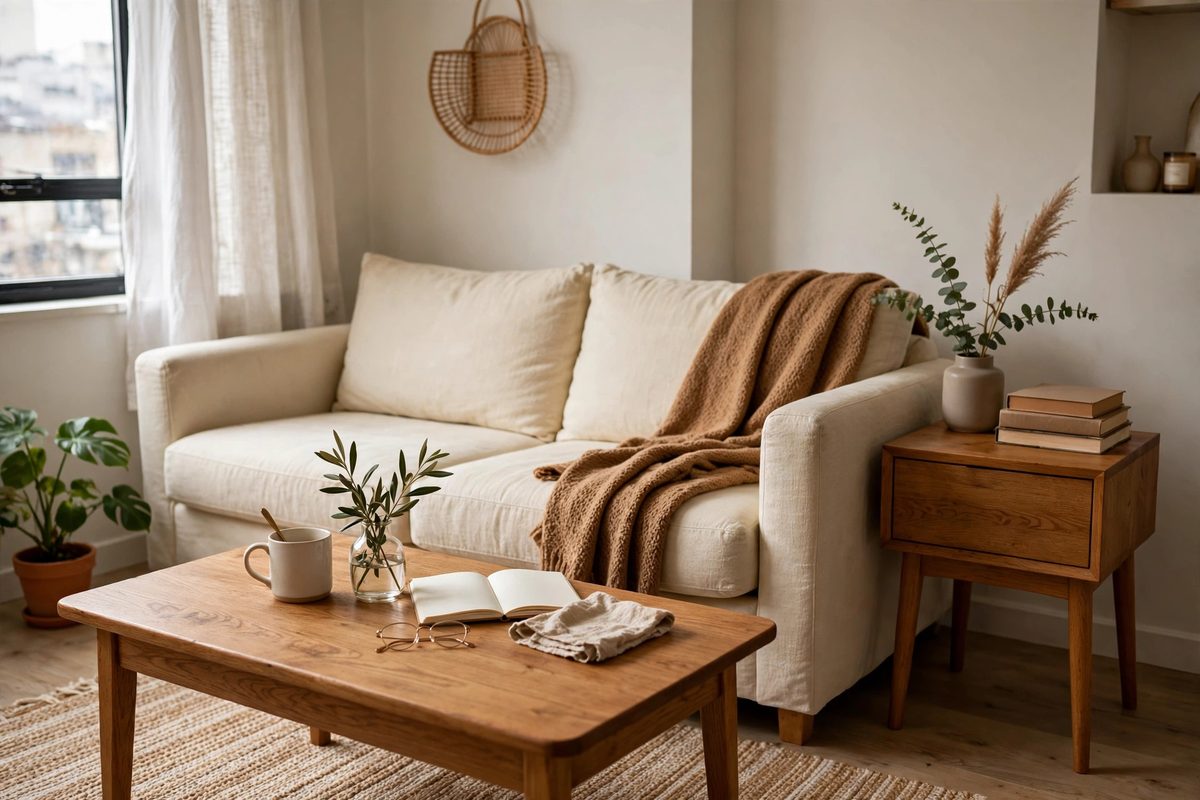
A small living room full of white and gray furniture feels cold, no matter how many pillows you add. One wood tone anchor fixes it: a wooden coffee table, a wooden side table, or a wooden media console in a warm medium tone like oak or walnut. Wood is the only material that reads as warm on its own, and one piece is enough to change the temperature of the whole room.
A solid wood coffee table costs 80 to 150 dollars secondhand or 150 to 300 dollars new, and a wooden side table costs 30 to 60 dollars. If the budget is tight, one wooden tray on a white coffee table costs 12 to 25 dollars and does half the job. Keep the wood tone consistent across the room, so the coffee table and the side table look like they belong together, even if they came from different stores. The small living room console table ideas show how a single wood piece anchors a narrow wall.
How to make it work
Choose one wood tone for the room and repeat it at least twice, like the coffee table and a picture frame, so it reads as a choice instead of an accident. Oil the wood twice a year with a 10 dollar bottle of furniture oil, since dry wood looks gray and tired. Keep the wood away from the radiator, since direct heat dries it out and cracks the finish.
9. The Fireplace-Free Glow
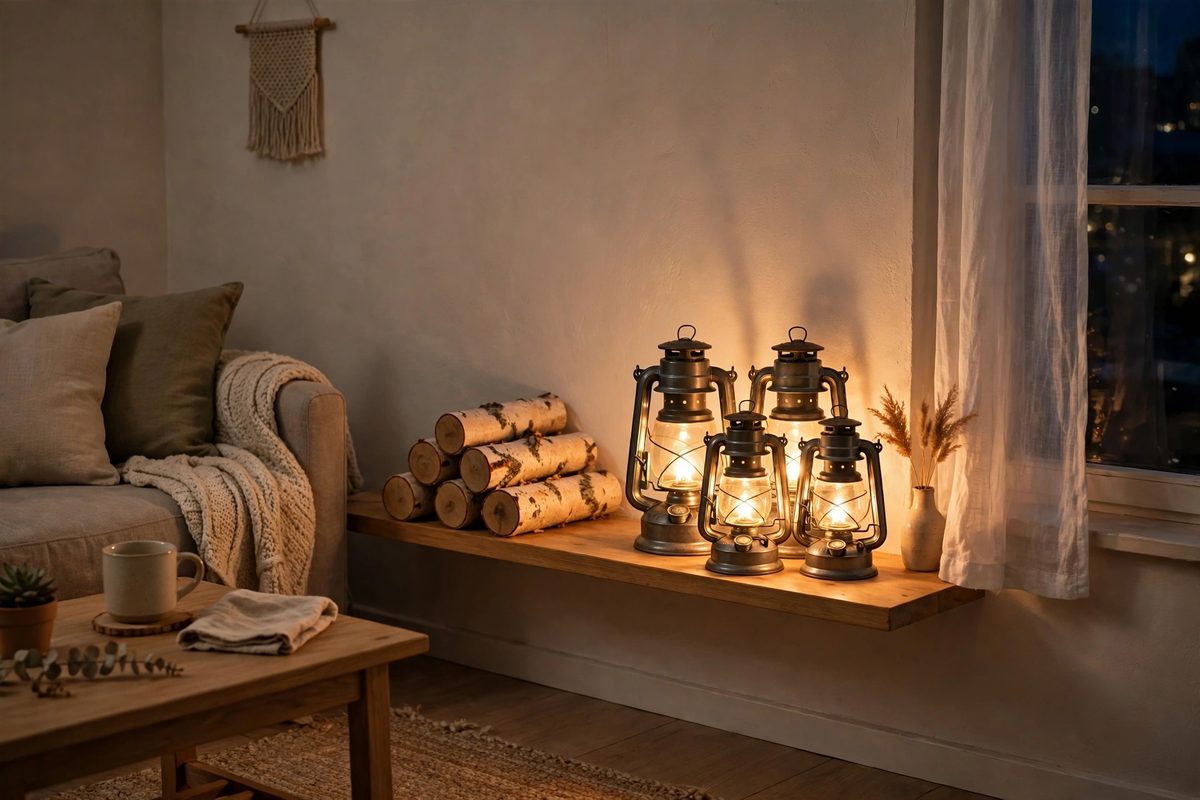
Most small apartments have no fireplace, and the room still needs a glow. Build a fireplace free glow zone: three battery lanterns of different heights on a low shelf or a hearth style console, with a small stack of decorative birch logs beside them. The lanterns give the warm flicker of a fire, the logs give the shape of one, and nothing in the room gets hot.
Three battery lanterns cost 20 to 40 dollars total, and a bundle of decorative birch logs costs 10 to 15 dollars. Battery lanterns with a timer cost a few dollars more and are worth it, since they turn themselves off after 6 hours. Put the lanterns on a low shelf 12 to 18 inches off the floor, so the glow sits at sitting eye level. This is the living room version of the Christmas living room ideas, where a glow zone replaces a real fireplace.
How to make it work
Use warm white battery candles inside the lanterns, not cool white, since cool white reads as a flashlight. Set the lantern timer for 6 hours so the glow is on for the evening and off by midnight. Keep the birch logs at least 6 inches from any real heat source, since they are decorative, not firewood.
10. The Bookshelf Warmth
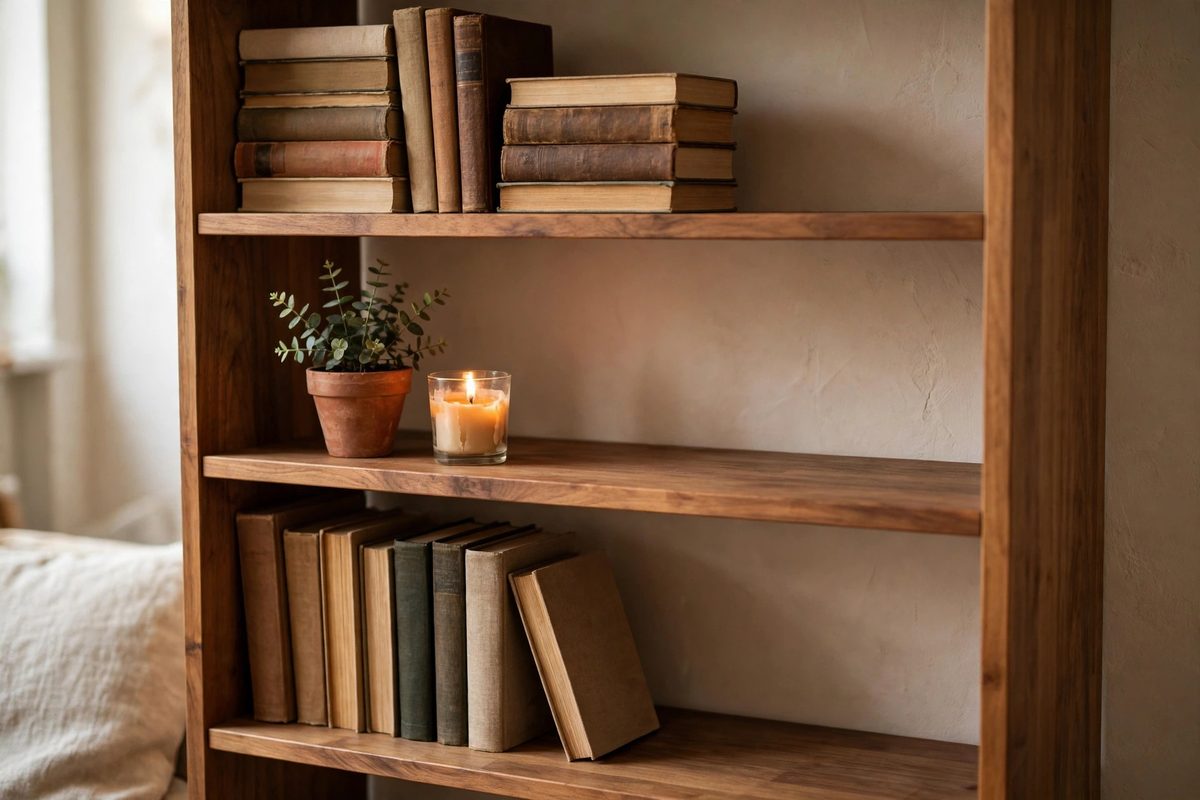
A bookshelf packed edge to edge with books reads as storage, not decor. A bookshelf with books, one plant, one candle, and empty space reads as cozy. The rule is two thirds full: fill two thirds of each shelf, and leave one third empty. The empty space lets the eye rest, and the books that are there look chosen instead of crammed.
A small bookshelf costs 40 to 80 dollars, and styling it costs nothing if you already own books. Stack books horizontally in groups of three or four, and stand the rest vertically, so the shelf has two shapes instead of one. Add one small plant, like a pothos in a 6 inch pot, and one candle, and stop there. The cozy apartment decor ideas use the same rule, with open shelves that leave empty space on purpose.
How to make it work
Put the heaviest books on the bottom shelf, so the shelf looks stable and cannot tip. Keep the candle on a middle shelf, never the top shelf, so it is easy to reach and light. Dust the shelves once a week, since a dusty bookshelf reads as neglected no matter how well it is styled.
11. The Floor Cushion Nook
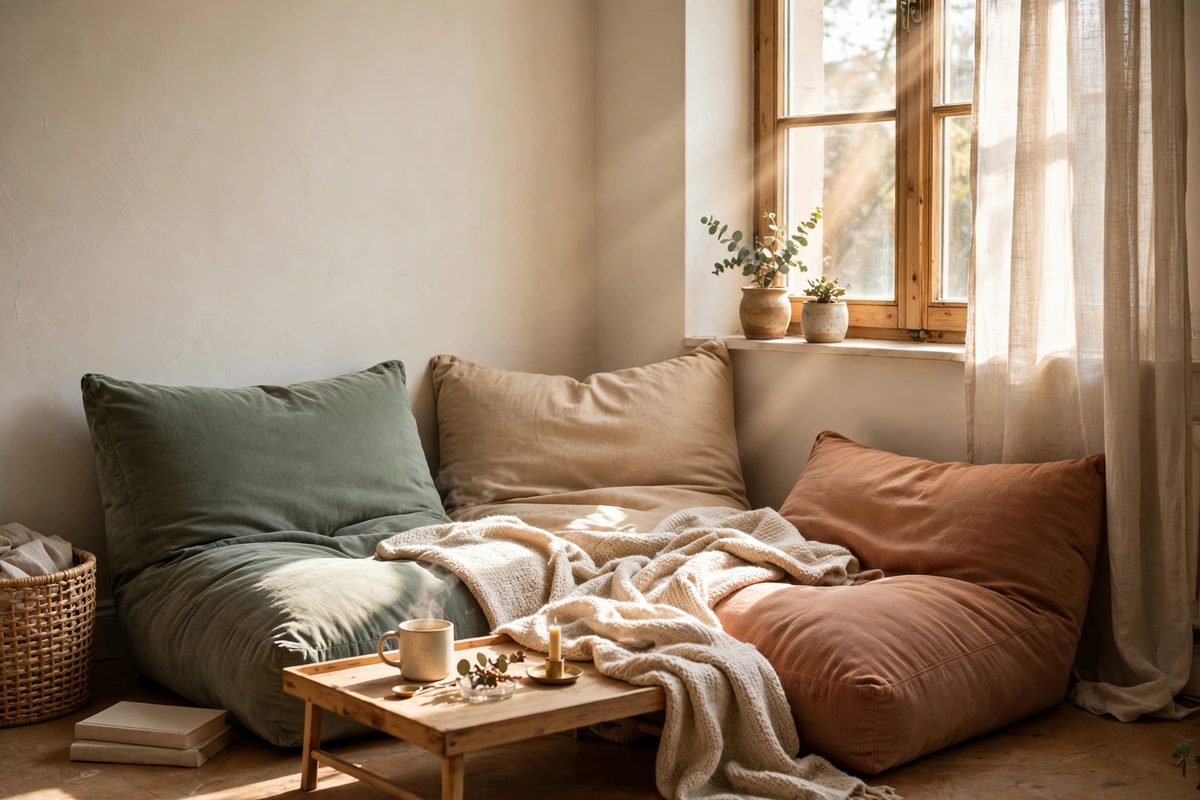
A small living room runs out of seats before it runs out of guests, and floor cushions fix that without buying another chair. Put two large floor cushions in a sunny corner, add a low tray table between them, and drape a throw over one cushion. The nook becomes a second seating area for reading, for kids, and for the friend who prefers the floor to the sofa.
Two large floor cushions cost 30 to 60 dollars total, and a low tray table costs 15 to 30 dollars. Choose cushions 24 by 24 inches, which is big enough to sit on and small enough to stack in a closet. A cushion with a removable cover is worth the extra 10 dollars, since floor cushions get dirty faster than sofa cushions. This nook is the living room answer to the small living room seating ideas problem, with seating that disappears when it is not needed.
How to make it work
Stack the cushions against the wall when they are not in use, so the corner stays open. Put a small rug under the nook, even a 3 by 5 foot one, so sitting on the floor feels intentional instead of improvised. Keep the tray table low, under 12 inches tall, so it works as a table from the floor.
12. The Evening Dim-Down Routine
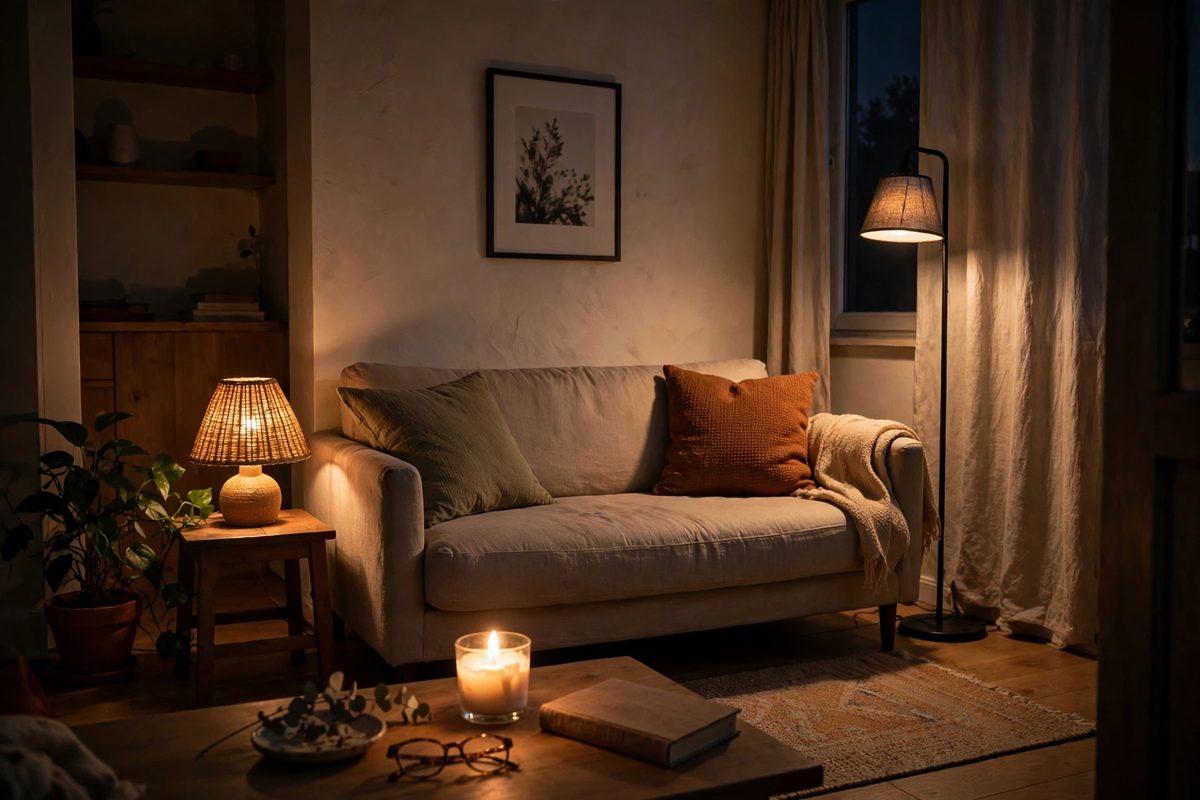
Cozy is not only what you buy, it is what you do at 7 pm. The dim down routine is a three step habit: turn off the ceiling light, turn on the two lamps, and light one candle. It takes 30 seconds, it costs nothing, and it changes the room from daytime bright to evening warm every single night. A room that dims down every evening feels cozy on a Tuesday, not only on a holiday.
The routine costs nothing if the lamps and the candle already exist. A plug-in dimmer costs 8 to 12 dollars if the lamps have no dimmer, and a smart plug costs 10 to 15 dollars if you want the lamps on a schedule. Set the smart plug for 7 pm, so the lamps come on by themselves and the routine happens even when you forget. The cozy bathroom ideas use the same logic, with a dim evening light that makes a small room feel like a retreat.
How to make it work
Do the routine at the same time every evening, so it becomes a habit instead of a decision. Keep the candle in the same spot every night, so lighting it is one motion instead of a search. If the room has a television, turn the brightness down one notch in the evening, since a bright screen undoes the dim light in the rest of the room.