11 Small Bedroom Storage Ideas That Hide More Without Making the Room Feel Packed
Discover 11 small bedroom storage ideas using under-bed drawers, narrow furniture, vertical storage and hidden zones to fit more without making a compact bedroom feel packed.
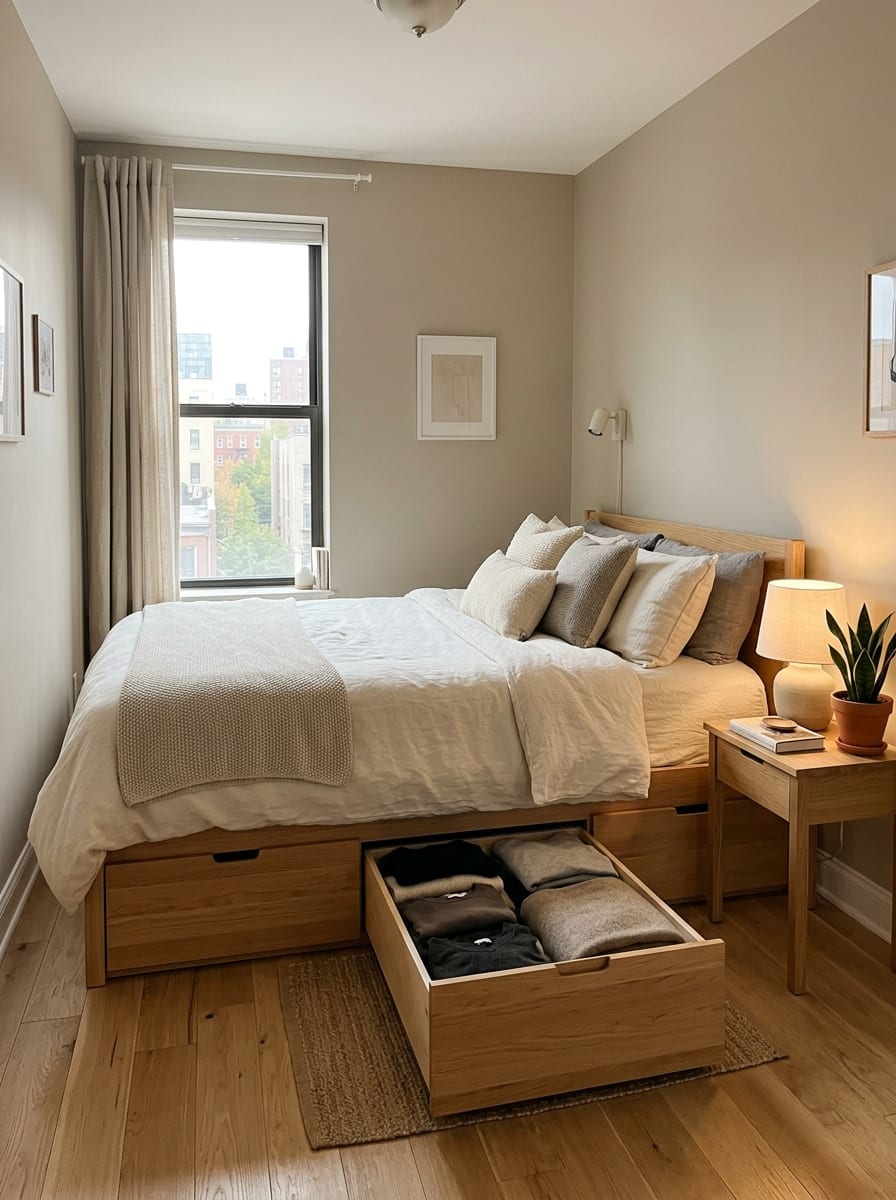
Under-bed storage drawers in a small apartment bedroom with neatly organized bedding and clothes
In This Guide
A small bedroom usually reaches the same frustrating point.
You need somewhere for:
clothes bedding shoes bags chargers books laundry things you only use occasionally
So another cabinet gets added.
Then another basket.
Then something goes beside the bed.
And suddenly the room technically has more storage but less space to actually live in.
That is the mistake worth avoiding.
The best small-bedroom storage does not simply add containers. It moves storage into places the room is already underusing:
beneath the bed vertically beside furniture behind the door higher on the wall inside furniture you already need
You should still be able to:
walk comfortably around the bed open drawers properly reach the closet see some uninterrupted floor enter the bedroom without immediately seeing piles of storage
These 11 ideas are designed around that balance.
1. The Full-Width Under-Bed Drawer Zone
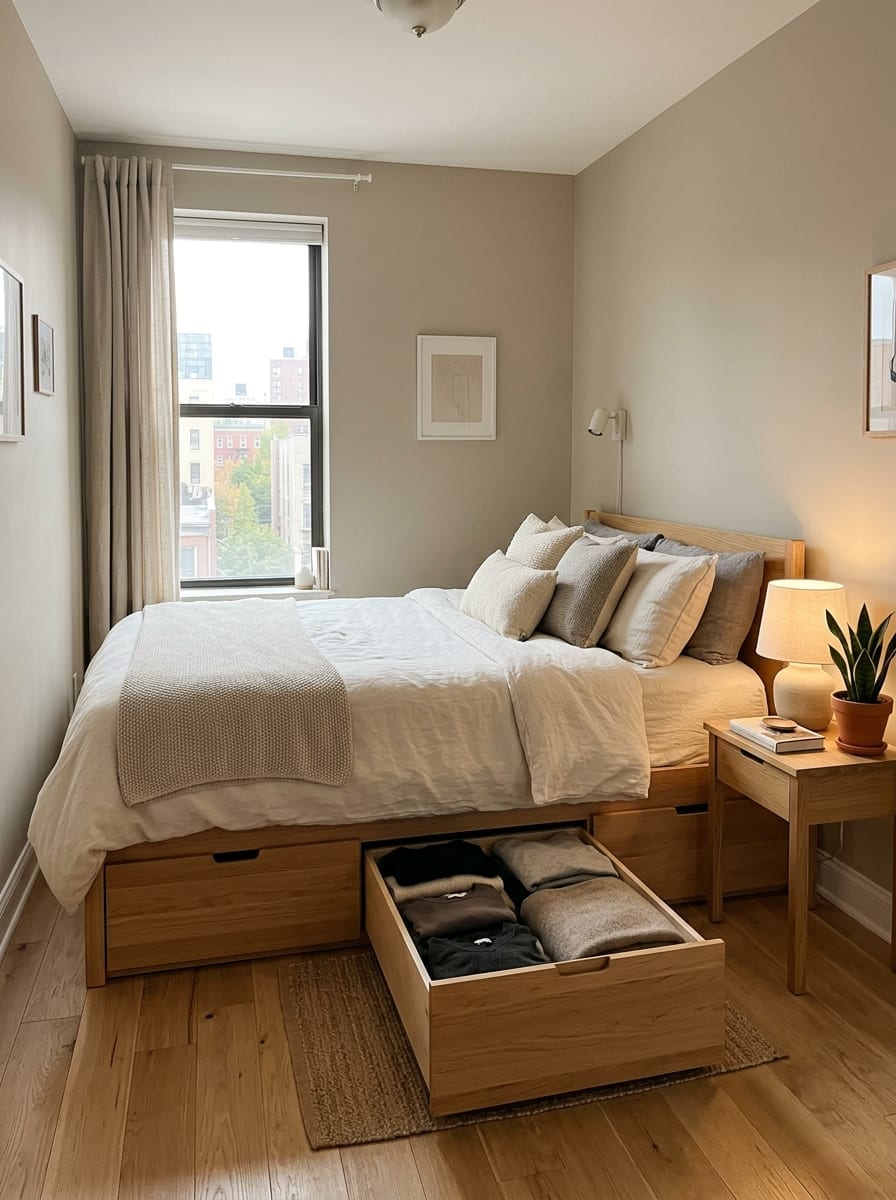
The space beneath the bed is often the largest unused storage area in a small bedroom.
The problem is that loose boxes pushed underneath quickly become difficult to access.
A better setup is to treat the whole area like one organized storage zone.
Use:
proper under-bed drawers
low rolling bins
a bed frame with built-in drawers matching shallow containers
depending on the bed height.
What belongs here
Under-bed storage works particularly well for:
off-season clothes extra bedding shoes you do not wear every day spare towels travel bags that fold flat
Avoid turning it into the home for random everyday clutter.
If you need something every morning, storing it underneath the mattress is probably going to become annoying.
Why it works
You gain substantial storage without adding another visible furniture footprint.
One thing to watch
Measure the actual clearance under the frame.
Do not buy bins based only on the advertised bed height because center supports and rails may reduce usable space.
2. The Narrow Bedside Storage Tower
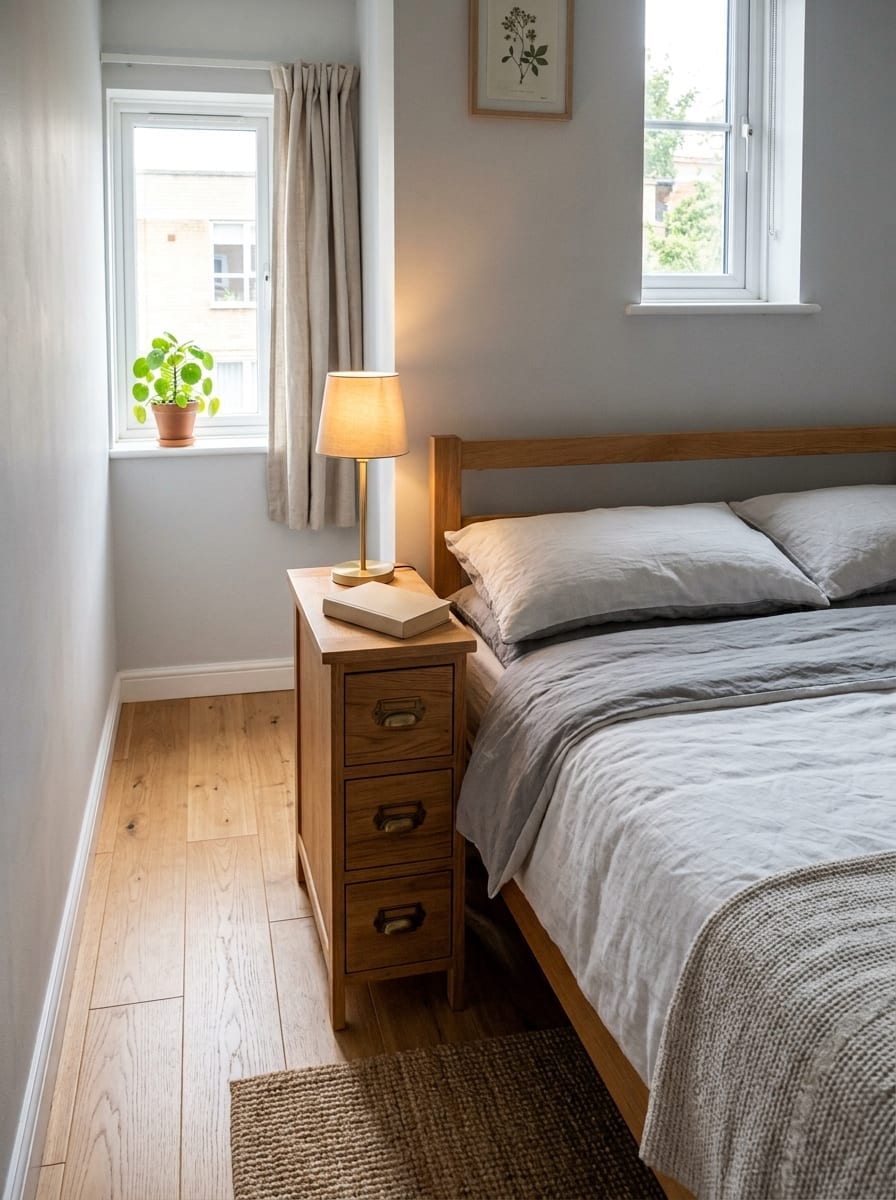
Tiny nightstands often fail in two ways.
They are too small to store anything useful, yet they still occupy valuable floor space.
If you need more bedside storage, consider going slightly taller instead of significantly wider.
A narrow bedside cabinet with:
two or three drawers one small shelf compact footprint
can hold much more while using nearly the same amount of floor.
Good things to store here
chargers medication books glasses sleep accessories small electronics
Keep the top restrained
The cabinet already provides function.
You probably only need:
lamp phone water
on top.
Best for
Bedrooms where there is some vertical wall space beside the bed but very little horizontal clearance.
3. The Foot-of-Bed Hidden Bench
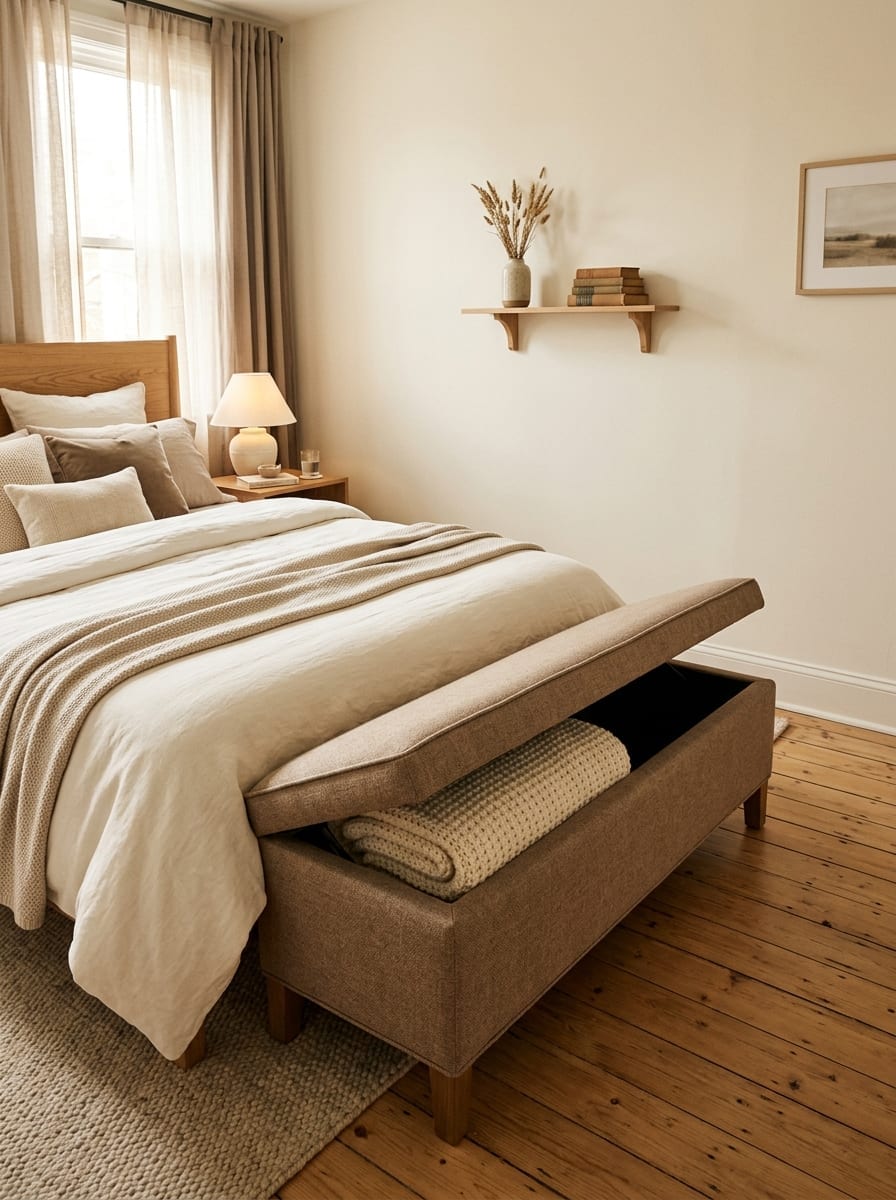
A bench at the end of the bed can provide useful storage, but only if the room has enough clearance.
Choose a storage bench when you need somewhere for:
extra blanket spare pillows handbags seasonal textiles
A hinged or drawer-style bench keeps those items completely hidden.
Why this can work better than another dresser
The bench occupies a zone that may already be visually connected to the bed.
It can also double as somewhere to:
sit while dressing place a bag temporarily fold a blanket
When to skip it
If the bench leaves a narrow squeeze between the bed and opposite wall, remove it.
Storage should never make the main path through the room irritating.
4. The One-Wall Wardrobe Strategy
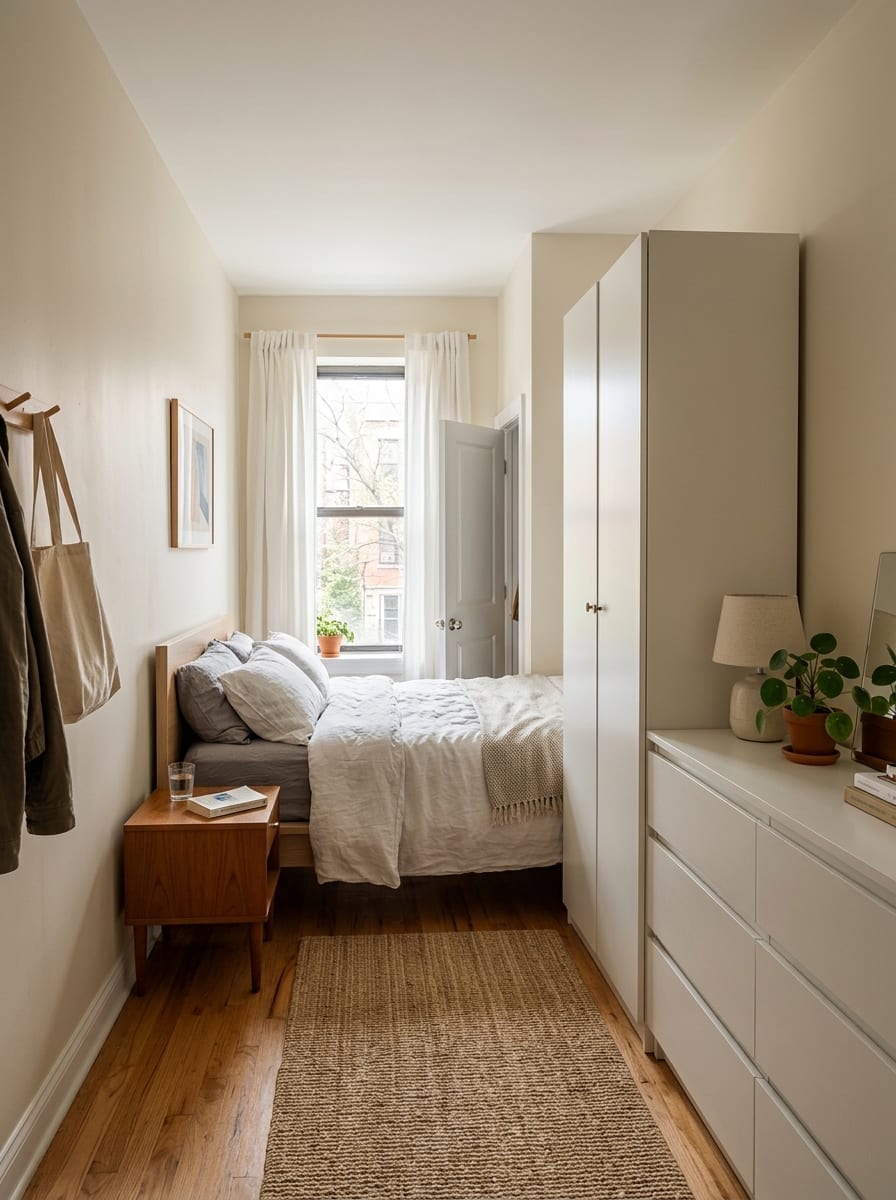
Storage spread across every wall can make a small bedroom feel surrounded.
Instead, concentrate the bulk of your clothing storage on one wall when the layout allows.
That could mean:
freestanding wardrobes closet system dresser + wardrobe combination tall closed cabinets grouped together
Then keep the other walls visually lighter.
Why this helps
A room often feels calmer with:
one strong storage zone
rather than:
several medium storage pieces everywhere.
It also gives you clearer decisions about furniture placement.
Keep it visually cohesive
If you are combining several pieces, similar:
colors
heights
door styles
help them read as one unit instead of a furniture collection.
5. The Floating Bedside Shelf
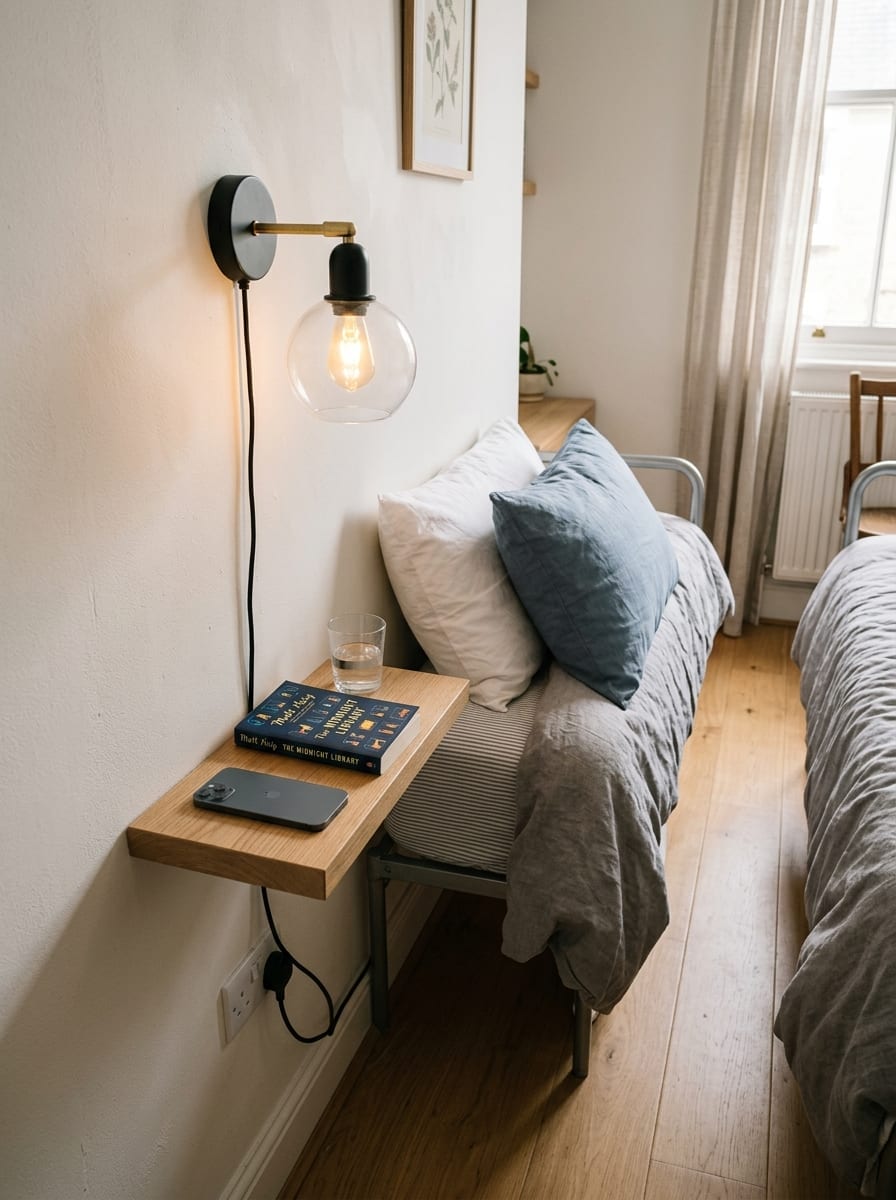
Sometimes even a narrow bedside cabinet is too much.
If all you actually need is somewhere for:
phone glasses water book
a small floating shelf may be enough.
This keeps the floor completely open beneath it.
Why it is useful in tight bedrooms
You remove one furniture leg zone beside the bed, which makes:
vacuuming easier the floor look more continuous a narrow side passage feel less crowded
Add light without using the shelf
Pair it with:
wall-mounted reading light plug-in sconce compact pendant where suitable
instead of placing a lamp on the shelf.
For renters, check lease requirements and use appropriate mounting methods.
6. The Behind-the-Door Storage Strip
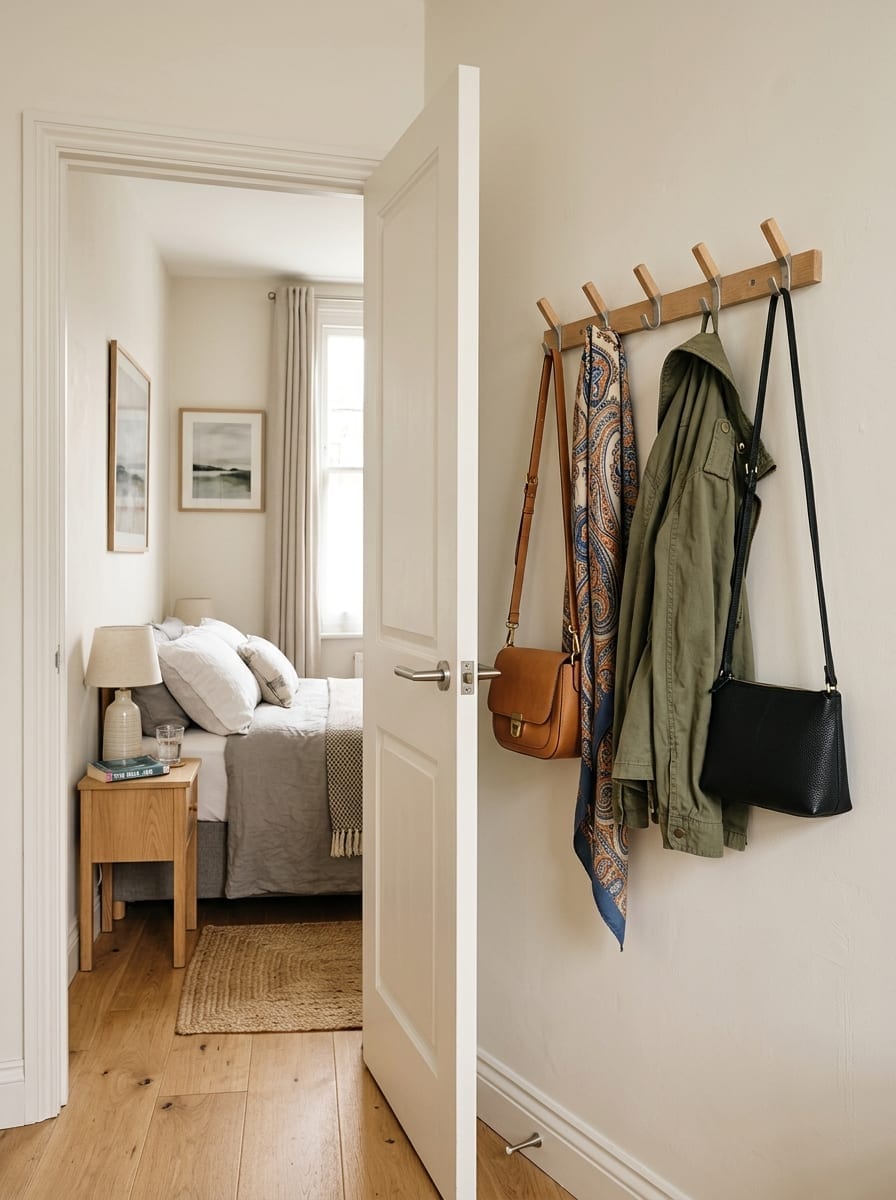
The area behind the bedroom door is easy to ignore because it disappears whenever the door is open.
But depending on the layout, it can handle lightweight storage.
Consider:
slim hooks hanging organizer accessory rail shallow wall rack
Use it for things such as:
scarves belts tote bags lightweight jackets handbags
Keep the door functional
Nothing should stop it from:
opening fully closing properly clearing nearby furniture
Avoid turning the door into another overloaded closet.
Best approach
Pick one category.
For example, handbags.
Do not ask the same small door to hold shoes, jackets, bags, hats and laundry simultaneously.
7. The High-Shelf Seasonal Zone
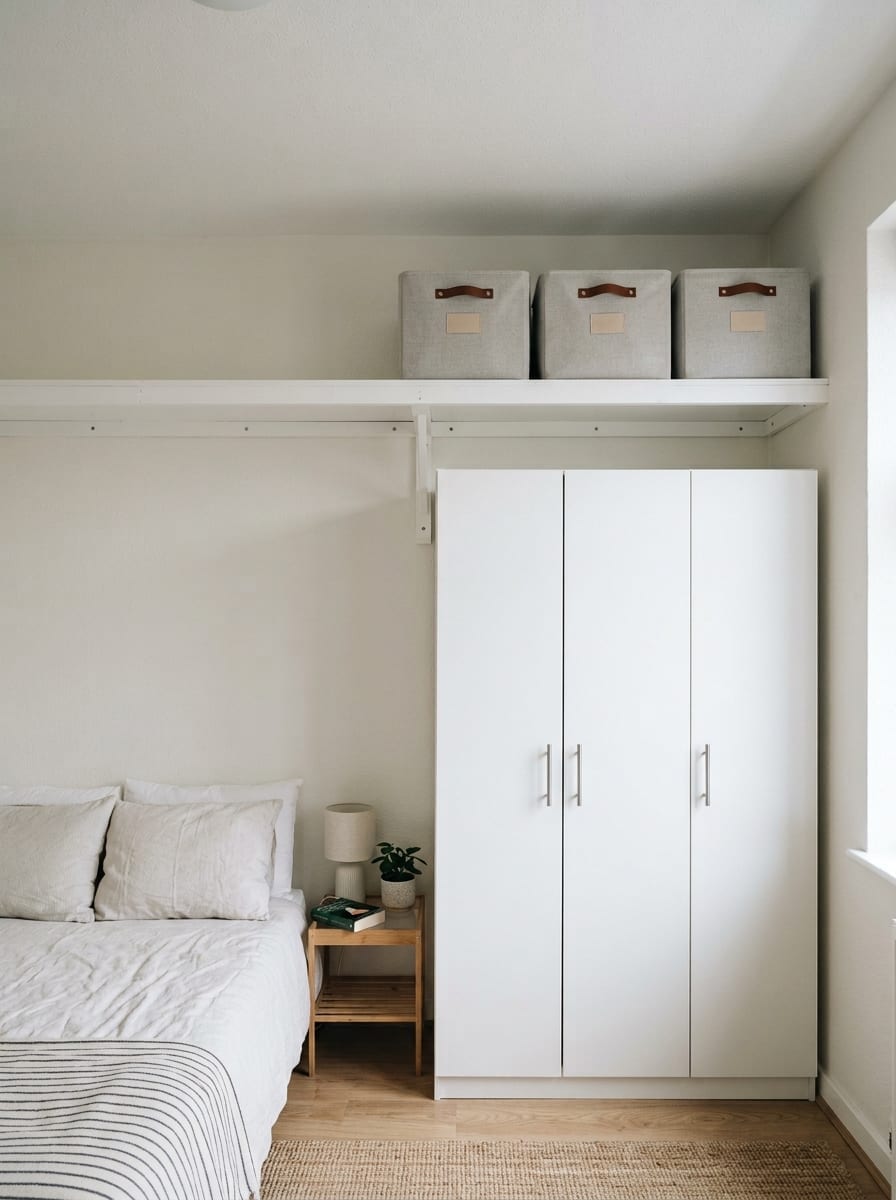
Storage close to the ceiling is useful for things you do not need every day.
A single high shelf can hold:
seasonal bedding travel bags winter accessories memory boxes rarely used handbags
Place the shelf above:
wardrobe dresser door another existing storage zone
rather than randomly across the room.
Keep containers consistent
Two or three larger boxes usually look calmer than six small mismatched containers.
And label anything you cannot see inside.
Don’t store heavy items overhead
Use appropriate hardware and keep shelf loads within manufacturer recommendations.
8. The Headboard Storage Wall
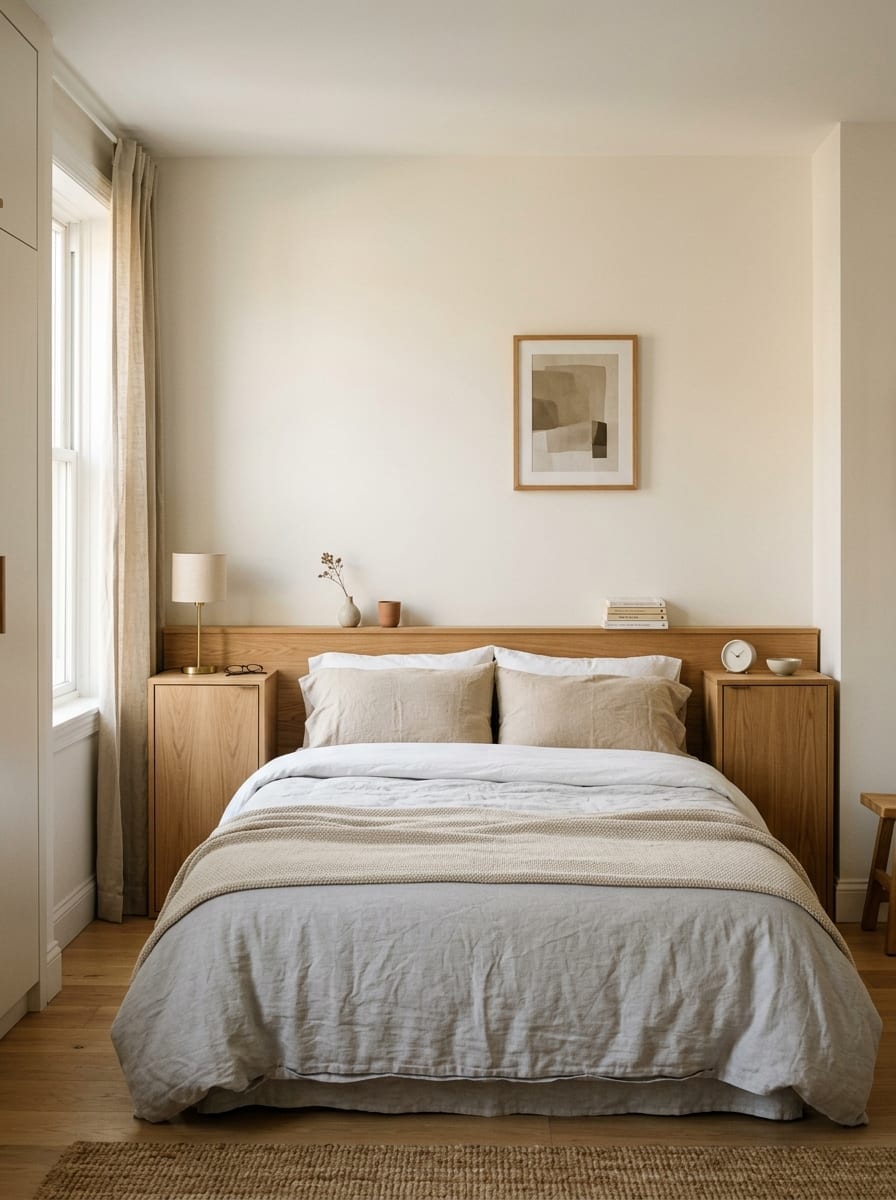
The wall behind the bed can sometimes carry useful storage without adding another floor-based cabinet.
The trick is keeping it shallow.
Options include:
narrow headboard ledge built-in-look freestanding headboard shelf small closed cabinets flanking the bed shelf above the headboard placed at an appropriate height
Avoid creating a wall of clutter
The bed already has strong visual presence.
Do not surround it with:
books everywhere open cubes baskets decor plants frames
all at once.
Use the area primarily for things that need storage.
Best for
Rooms where there is little bedside width but enough wall area behind the bed.
9. The Tall Narrow Dresser Swap
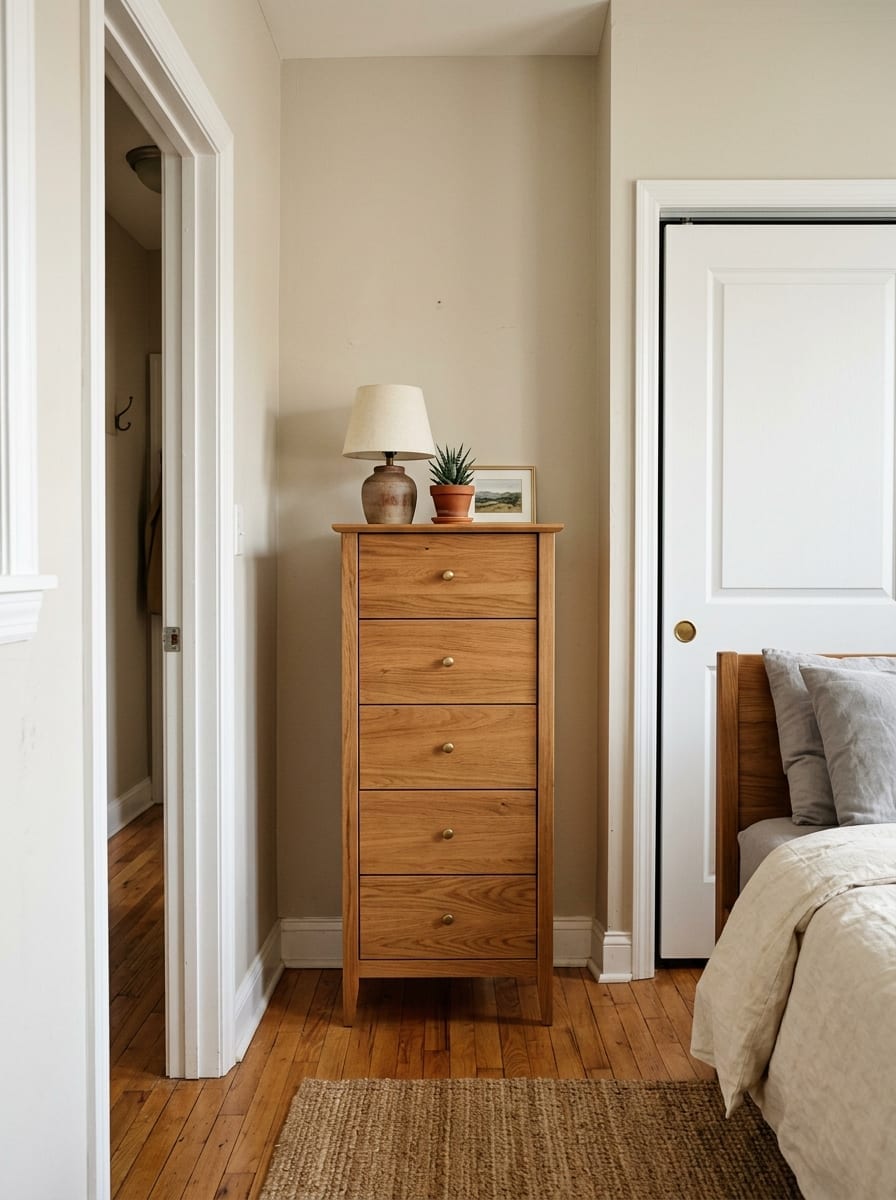
A wide dresser can dominate a compact room.
If you mostly need folded clothing storage, a taller narrow dresser may fit the room better.
It uses vertical space for:
underwear T-shirts sleepwear workout clothes accessories
while reducing the amount of wall width consumed.
This works especially well when
You have:
narrow wall section awkward corner space between door and closet limited room beside a wardrobe
Do not go unnecessarily tall
The dresser should still feel proportionate to the room and be safely secured where appropriate.
The goal is efficient storage, not building a tower.
10. The Closed-Basket Overflow Shelf
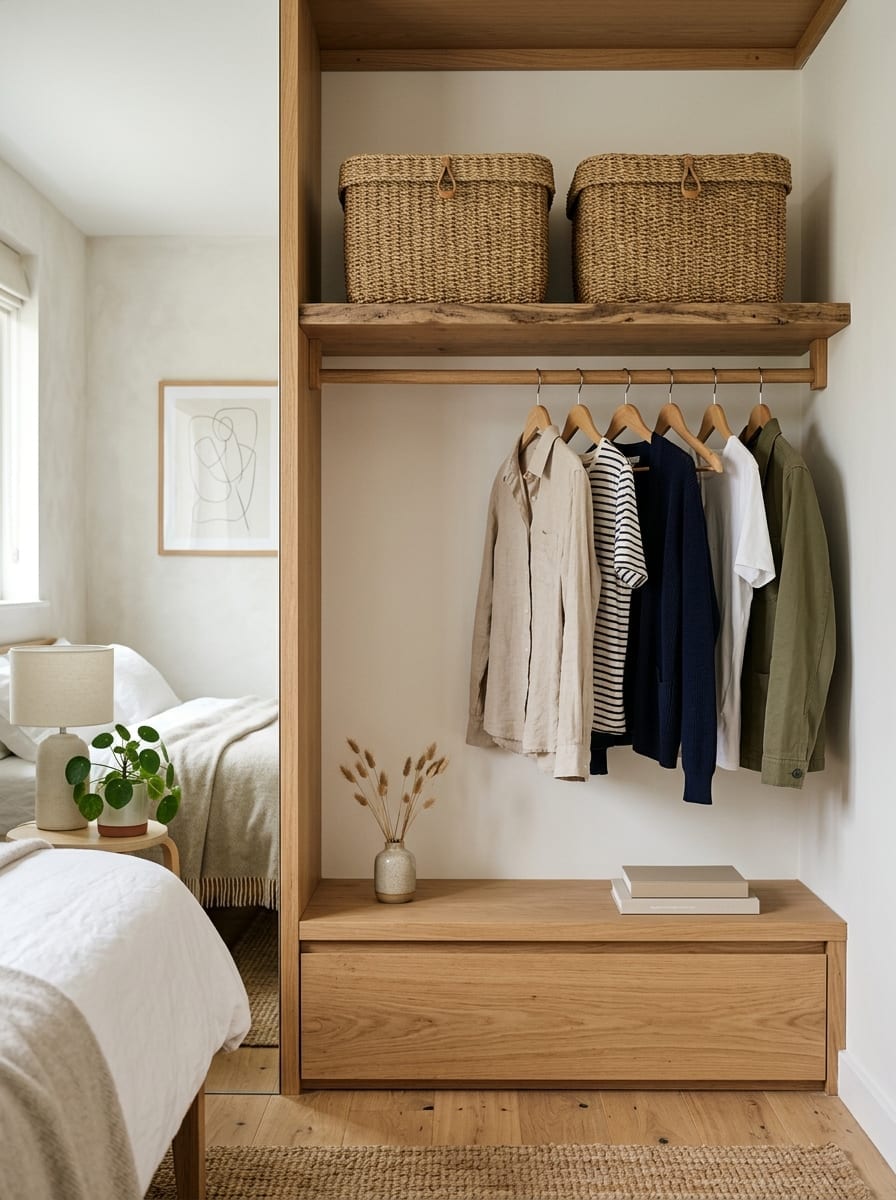
Every bedroom has a few categories that do not deserve prime drawer space but still need a home.
Examples:
extra cables small bags hats travel accessories occasional workout gear
Instead of scattering these into several small containers, give them one controlled overflow zone.
Use:
one shelf two matching baskets clearly defined categories
Why closed baskets help
You get easy access without creating a wall full of tiny visible objects.
But avoid turning baskets into permanent mystery boxes.
Know what each one contains.
11. The Bedroom Breathing-Room Rule
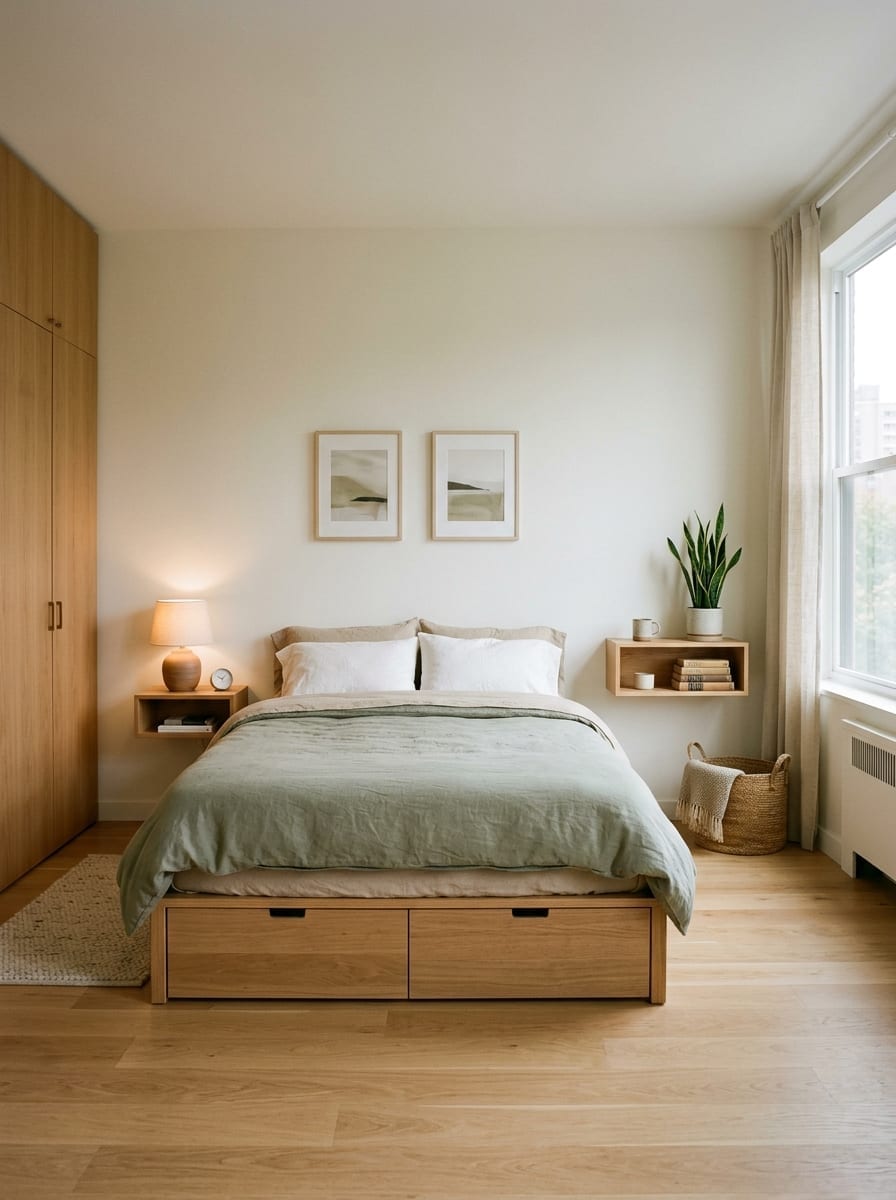
The last storage idea is actually about not adding storage.
Leave some empty space.
Do not use:
every inch under the bed every wall every corner every shelf every door surface
simultaneously.
A bedroom needs visual and physical breathing room.
A useful test
Stand at the doorway and look into the room.
Can you see:
some uninterrupted floor? at least one mostly clear wall area? a nightstand or surface that is not packed? an easy path to the bed?
If not, more storage products probably are not the answer.
You may need to:
move a category elsewhere remove unused things consolidate furniture reduce duplicate storage containers
Which Storage Should Be Closest to the Bed?
Use frequency.
The things you use nightly deserve the easiest access.
Keep nearby:
charging cable glasses current book medication water sleep accessories
Do not waste bedside storage on items you touch twice a year.
That is what high shelves and under-bed storage are for.
Storage Zones That Work Well Together
You do not need all 11 ideas.
A realistic small-bedroom system could be:
Daily-use zone
Bedside drawer or floating shelf.
Clothing zone
Closet + one dresser.
Hidden bulk zone
Under-bed drawers.
Seasonal zone
High shelf.
Overflow zone
One or two closed baskets.
That is already enough storage structure for many bedrooms.
What Should You Store Under the Bed?
Good options:
seasonal clothing spare bedding occasion shoes folded travel bags infrequently used textiles
Less ideal:
everyday clothes daily shoes random loose objects paperwork you regularly need
The less frequently you use something, the better suited it is to under-bed storage.
Should a Small Bedroom Use Open Shelving?
A little.
Open shelving is useful for things you want easy access to, but too much of it can make a bedroom visually restless.
If the room already contains:
wardrobe dresser bed textiles artwork
then another wall of exposed objects may be unnecessary.
Use closed storage for the bulk of your possessions and open shelves selectively.
What Makes Bedroom Storage Look Crowded?
Usually not the amount of storage alone.
It is the number of separate storage pieces.
For example:
dresser bookshelf storage bench cart two baskets bedside cabinets extra rack
can visually break the room into many small pieces.
Consolidating storage into:
one wardrobe wall under-bed zone one dresser
often feels calmer even if the total capacity remains similar.
Measure These Before Buying Storage Furniture
For a small bedroom, measure more than just the empty wall.
Check:
Furniture depth
Will it reduce your walking route?
Drawer clearance
Can the drawer open fully?
Door clearance
Does it interfere with the bedroom or closet door?
Bed clearance
Can you comfortably make the bed and move around it?
Height
Will the new furniture visually overpower the bed or window?
A cabinet that technically fits is not necessarily a cabinet that works.
A Simple Bedroom Storage Reset
Before buying anything new:
First: empty one problem area.
Maybe:
under bed dresser closet floor
Second: group what was there.
Ask what actually belongs in the bedroom.
Third: identify unused vertical or hidden space.
Fourth: choose one storage solution for that specific problem.
Do not redesign the entire room because one drawer is overflowing.
Final Takeaway
A small bedroom does not need storage on every available surface.
It needs a few storage zones that each have a clear job.
Start with the large hidden opportunities:
under the bed → inside the closet → one concentrated wall
Then solve the smaller gaps.
When the room still has visible floor, an easy walking path and a few calm surfaces, the storage is doing its job rather than becoming the room itself.