9 Renter-Friendly Bedroom Upgrades That Make a Basic Rental Feel More Finished
Discover 9 renter-friendly bedroom upgrades using curtains, plug-in lighting, bedding, rugs and temporary wall decor to make a basic rental bedroom feel more finished without renovating.
In This Guide
Rental bedrooms often feel unfinished for reasons that are difficult to identify at first. You may already have:
- a decent bed
- a dresser
- curtains
- bedside tables
- some wall decor and still feel like the room looks temporary. Usually, the problem is not that the bedroom needs more stuff. It is that the main visual elements are not working together. Curtains stop too high. Lighting comes from one harsh ceiling fixture. The bed has no visual anchor. The rug is too small. Artwork floats randomly on the wall. Furniture finishes do not relate to one another. The good news is that most of those problems can be improved without renovating anything. You do not necessarily need to change:
- flooring
- electrical wiring
- built-in storage
- wall structure Instead, focus on a few large visual decisions that make the bedroom feel more intentional. Here are nine renter-friendly upgrades that can make a basic apartment bedroom feel much more finished.
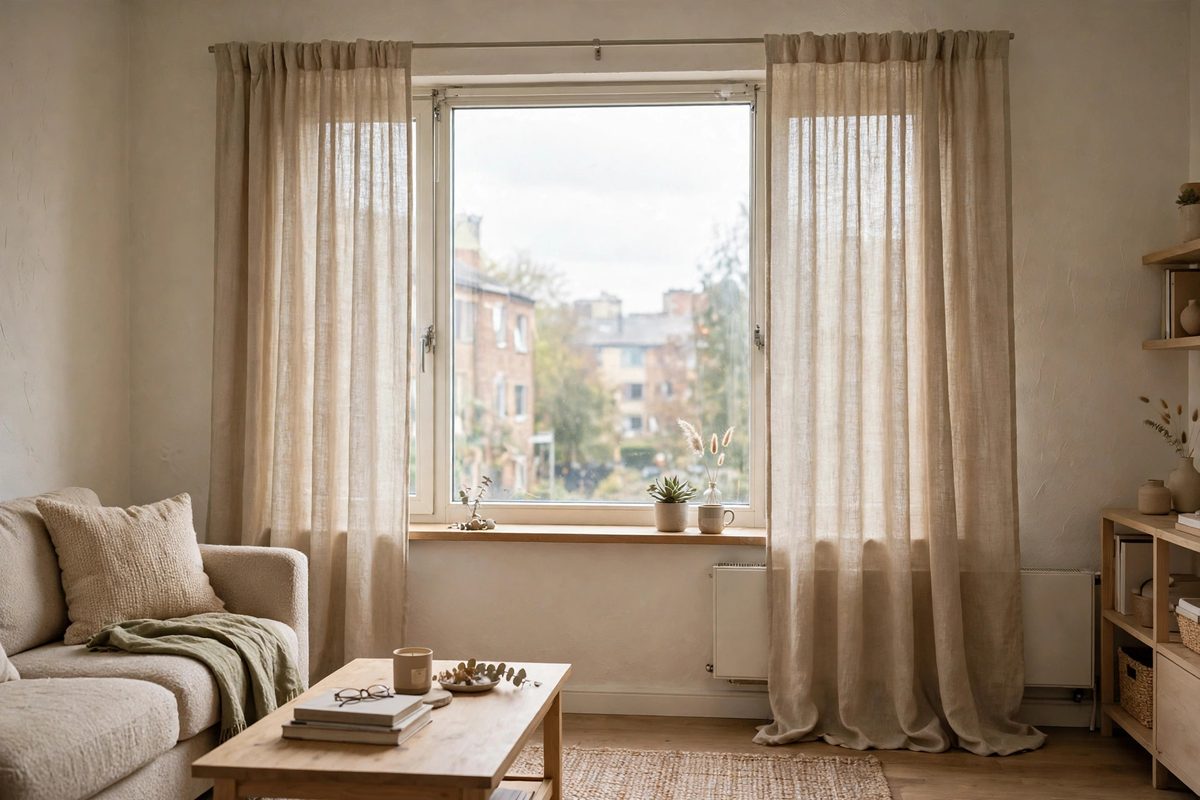
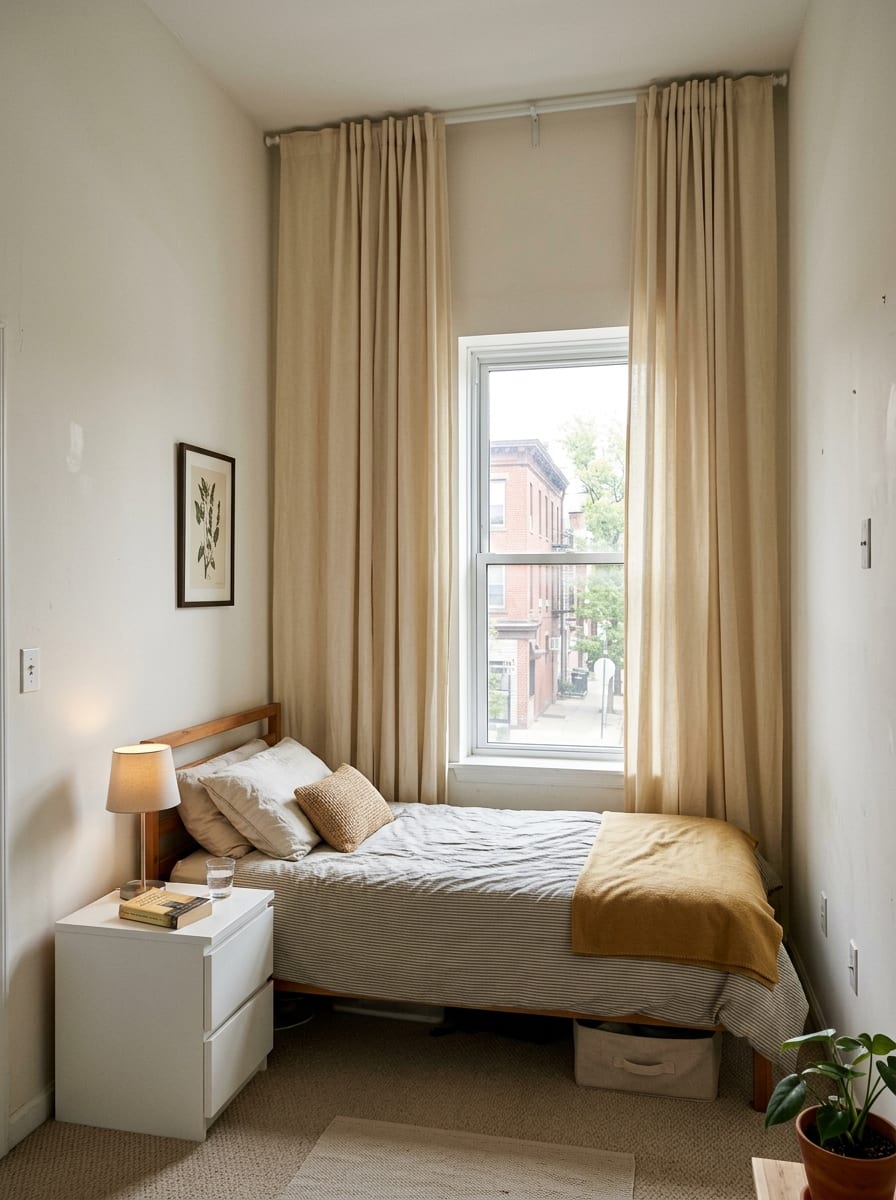
1. The Full-Height Curtain Upgrade
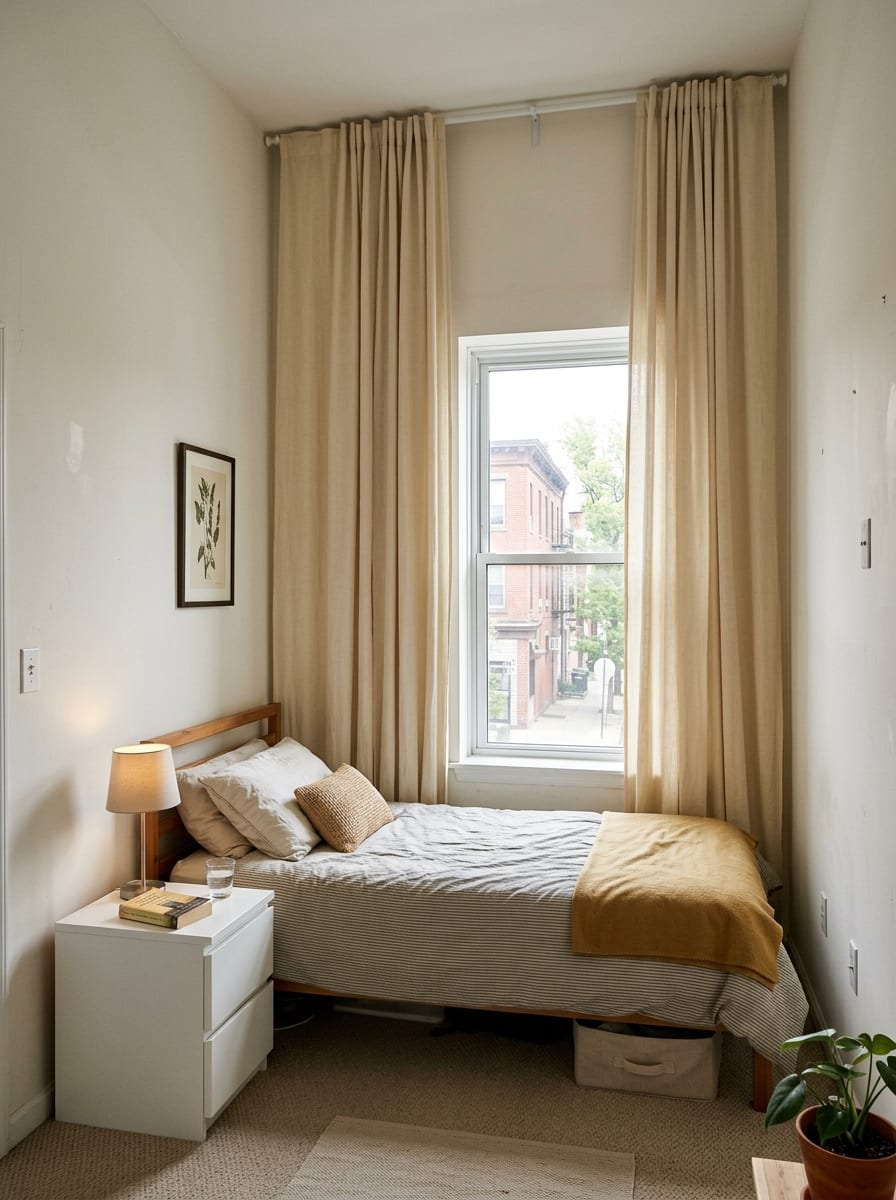
Curtains can change the proportions of a bedroom more than almost any small decor purchase. The common rental setup is:
- short curtain rod
- rod mounted just above the window
- curtains ending around the sill That can make the room feel visually compressed.
Take the curtain line higher
Where appropriate, place the rod higher above the window. The goal is to draw the eye upward. You do not need to mount it directly against the ceiling, but increasing the vertical span can make the room feel taller.
Let the curtains reach the floor
Full-length panels usually feel more intentional than curtains that stop awkwardly above the floor. Aim for:
- just touching
- slightly hovering rather than a large puddle of fabric in a small bedroom.
Use enough fabric width
Curtains should still have some fullness when closed. A panel stretched almost flat across the window can make the setup look temporary.
Keep the color simple
For a rental bedroom, good choices include:
- warm white
- oatmeal
- soft taupe
- muted olive
- dusty beige depending on the room.
Renter considerations
Curtain rods still need proper support. If drilling is not permitted, use a suitable non-permanent system only where the product is specifically designed for that application. Do not hang heavy curtains from an attachment method that cannot safely support them.
2. The Plug-In Bedside Lighting Layer
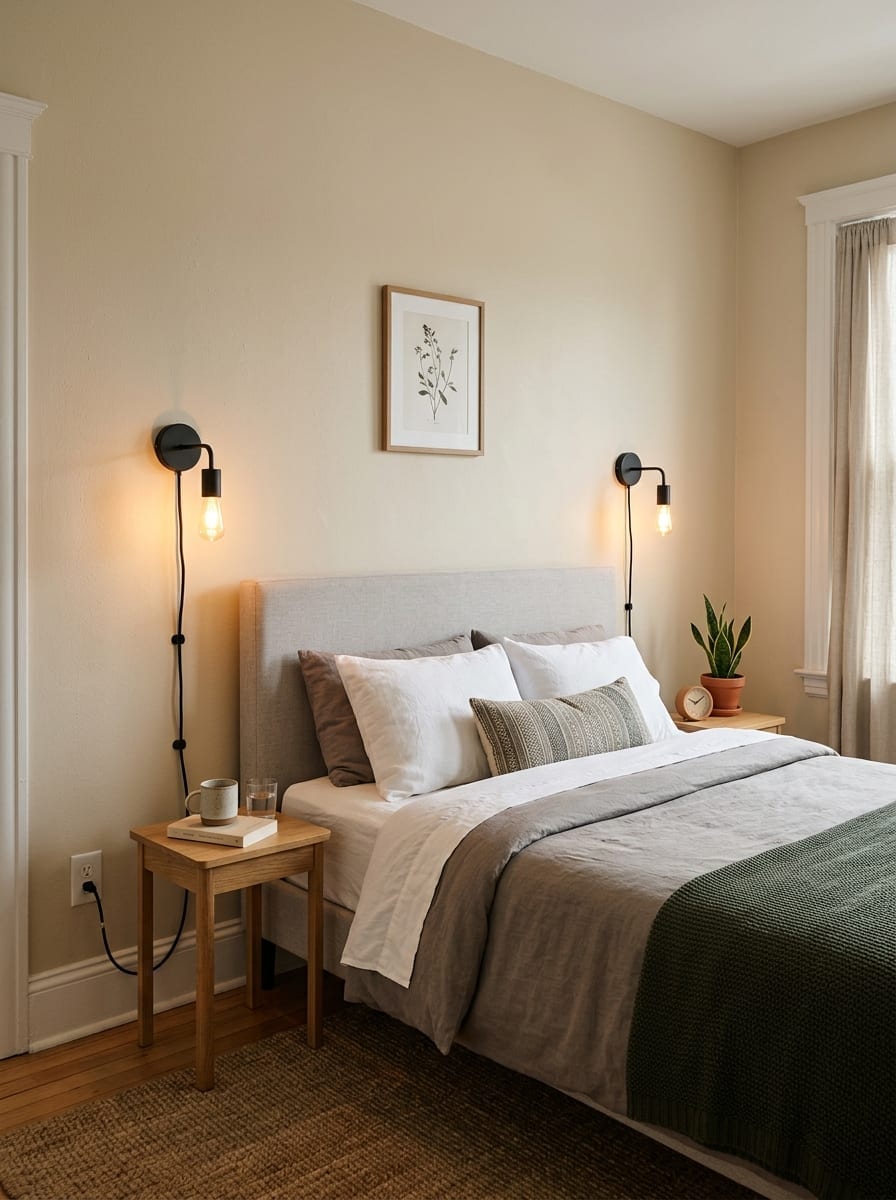
One ceiling fixture rarely makes a bedroom feel finished. Bedside lighting adds a much softer layer.
Why bedside lighting matters
It creates:
- symmetry or balance around the bed
- lower-level evening light
- a stronger visual focus
- a more comfortable atmosphere
You do not need hardwired sconces
Renter-friendly options include:
- bedside lamps
- plug-in wall sconces
- purpose-designed plug-in hanging lights
When wall lighting works well
Plug-in sconces are useful when:
- nightstands are tiny
- bedside surfaces are already crowded
- you want to draw the eye upward
Keep cord management neat
Visible cords do not automatically ruin the look. They just need to be:
- safely routed
- intentional
- away from circulation Use an appropriate cord-management system where suitable.
Match light temperature
If the two bedside lights are very different in color, the room can feel visually inconsistent. Warm evening light often works well in bedrooms.
3. The Temporary Headboard Wall
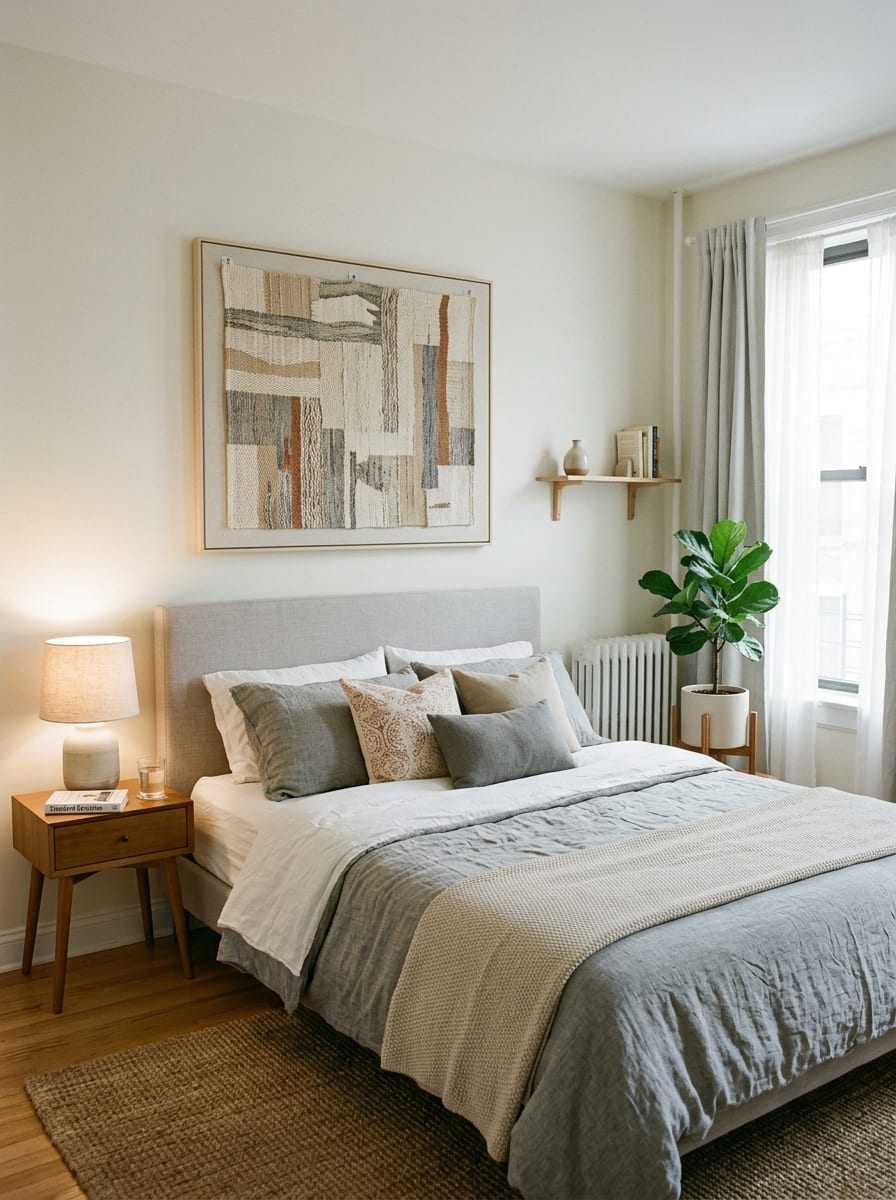
A bed without a strong visual anchor can make the entire room feel unfinished. You do not necessarily need a large expensive headboard. You need something that tells the eye: this is the focal point.
Option 1: Upholstered headboard
A simple freestanding or bed-mounted upholstered headboard can add:
- texture
- height
- softness without changing the wall.
Option 2: Large removable wall treatment
Where suitable, a removable wall treatment behind the bed can create the appearance of a headboard zone. Examples might include:
- temporary wallpaper
- peel-and-stick treatment
- fabric panel Always test products according to manufacturer guidance.
Option 3: Oversized artwork
One large piece centered above the bed can create enough visual weight.
Keep it wider than a tiny accent
A small picture floating above a large bed often feels disconnected. The focal point should relate to the width of the bed.
Do not build a complicated gallery just to fill space
One strong visual anchor usually works better in a small bedroom.
4. The Oversized Bedding Reset
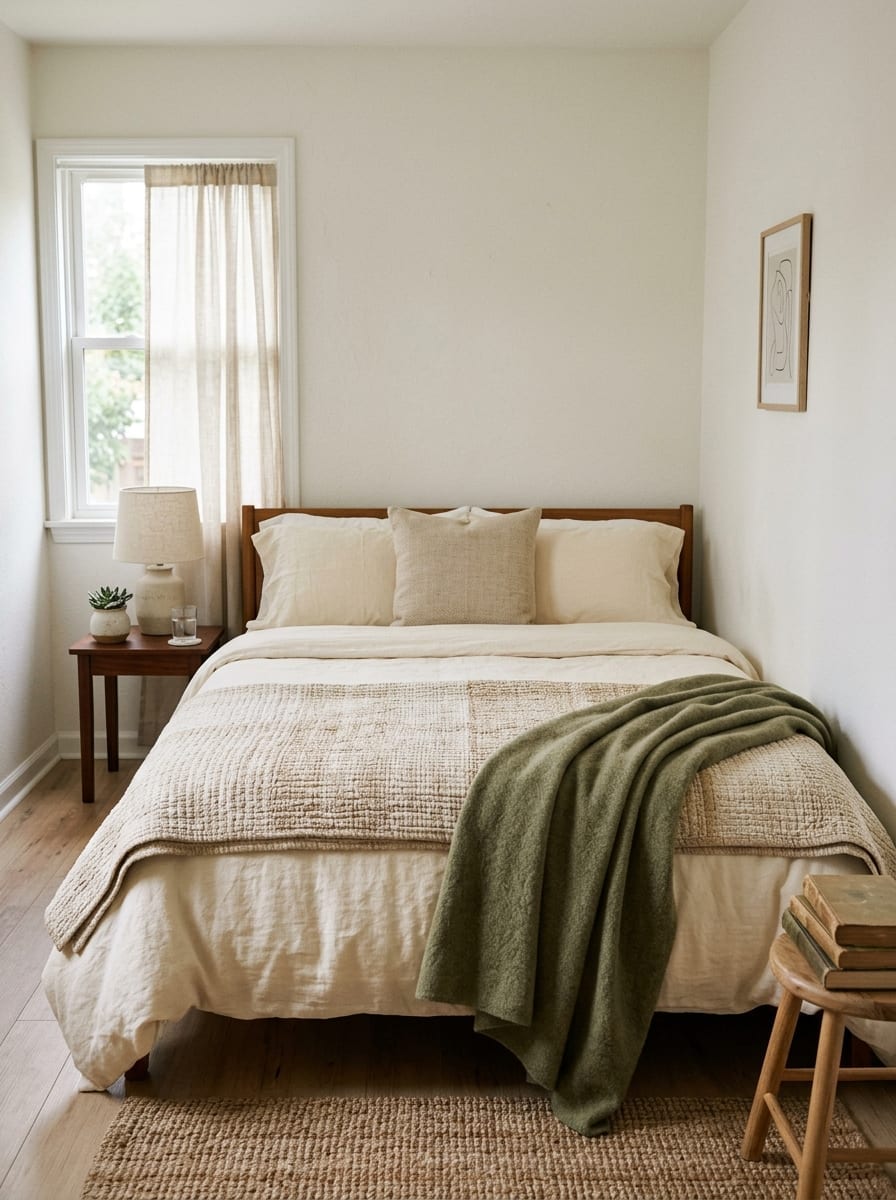
The bed is the largest surface in most bedrooms. That means bedding has more visual impact than several small decorative purchases combined.
Start with the duvet or coverlet
Choose one calm base:
- warm white
- cream
- soft beige
- muted green
- dusty blue Then layer from there.
Add texture instead of many patterns
Use:
- quilt
- knit throw
- linen-look fabric
- subtle stitched texture rather than several competing prints.
Use fewer decorative pillows
A finished bed does not need ten pillows. A simple setup might be:
- sleeping pillows
- two larger decorative pillows
- one smaller accent pillow
Let the bedding visually cover the bed frame appropriately
Bedding that is too short or poorly proportioned can make the bed look unfinished. The exact look depends on the frame, but the overall composition should feel balanced.
Keep the final layer slightly casual
A perfectly flat hotel bed can feel formal. A loosely folded throw near the foot can make the room feel softer and more lived in.
5. The One-Rug Bedroom Anchor
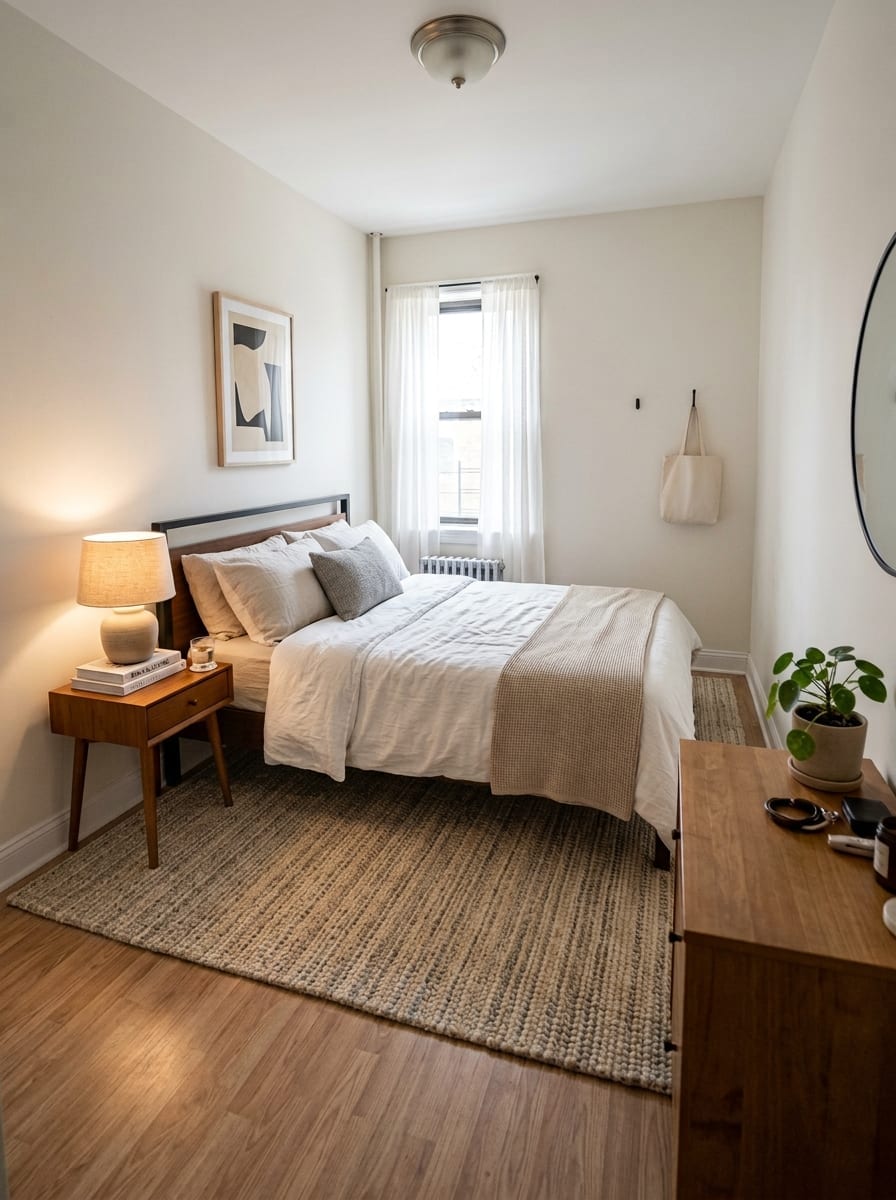
A rug can make disconnected furniture feel like one bedroom rather than several separate pieces.
The key is scale
One of the most common mistakes is using a rug that only sits under the coffee-table-sized area at the foot of the bed. That can make the room feel fragmented.
Better placement
Depending on the room, position the rug so it extends under:
- lower portion of bed
- both sides
- foot of bed enough to visually anchor the furniture.
In a very small room
You may not need the rug to sit underneath the entire bed. The goal is to make it relate to the bed rather than float independently.
Choose a quieter pattern
If the room already has:
- patterned bedding
- strong artwork
- colored curtains use a simpler rug.
Rug safety
Use an appropriate rug pad where needed to reduce slipping and bunching.
6. The Renter-Friendly Art Wall
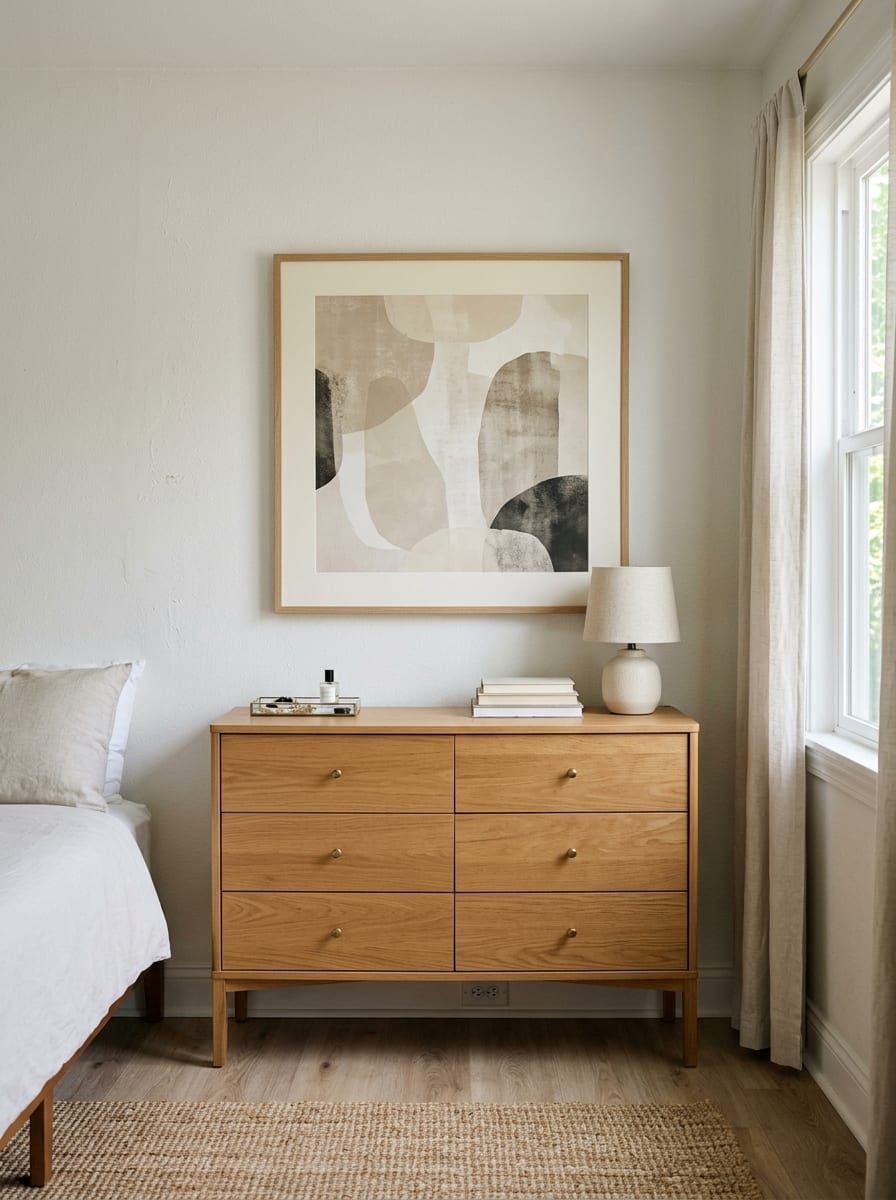
Blank rental walls can make a bedroom feel unfinished. But filling every wall with small random frames often creates the opposite problem.
Choose one main art zone
Good places include:
- above dresser
- above bed
- one empty side wall
Use either one large piece or a controlled group
One large piece Simple and strong. Small gallery Works if the frames are intentionally related.
Keep spacing consistent
Randomly spaced frames can make the wall look accidental.
Use removable solutions carefully
If using adhesive strips or hooks:
- check weight limits
- test wall finish
- follow removal instructions Do not assume every painted wall reacts the same way.
Art should relate to the furniture below it
A tiny print above a wide dresser often looks undersized. Choose scale based on the furniture, not the wall alone.
7. The Nightstand Styling Edit
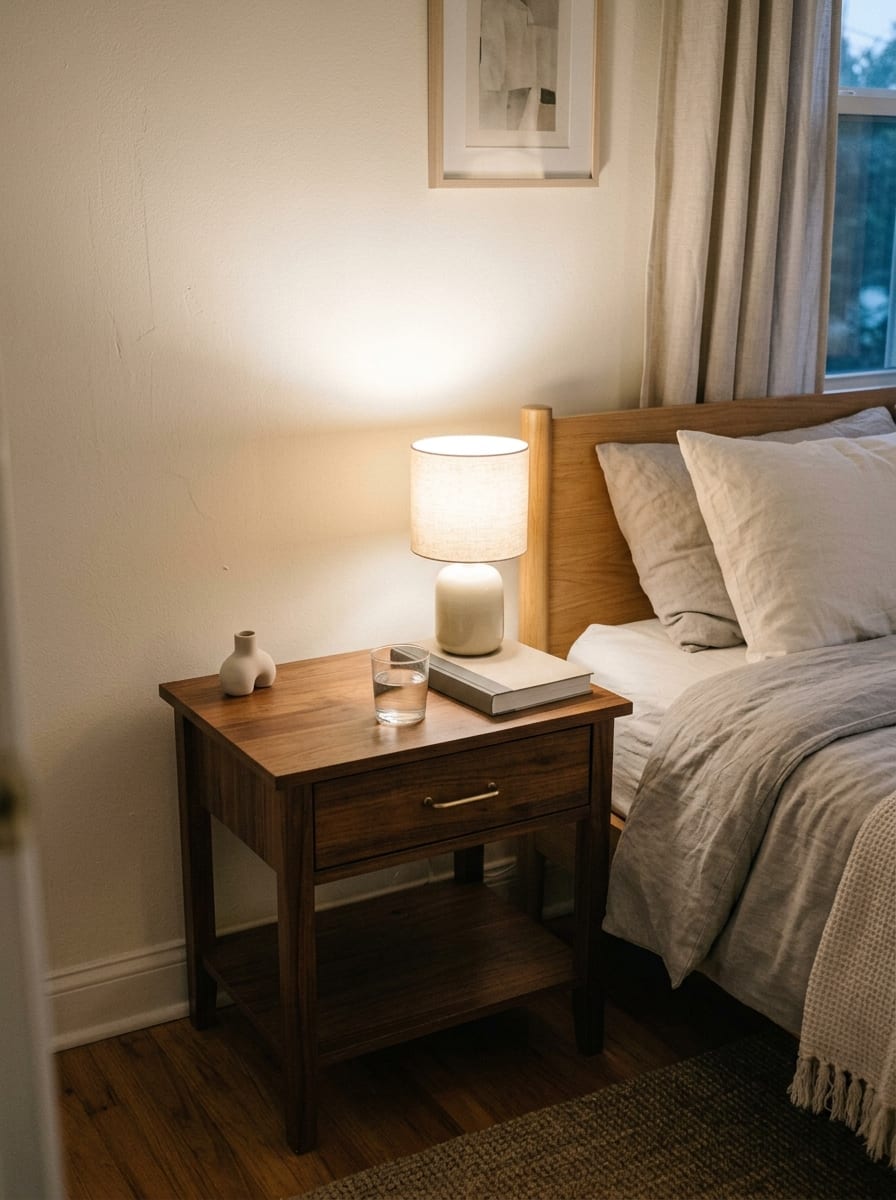
Nightstands often reveal whether a bedroom feels finished or chaotic. The solution is usually not more styling. It is editing.
Keep the functional items first
Your nightstand may need:
- lamp
- phone
- water
- book
- glasses Those should remain easy to reach.
Add one decorative layer
Choose one:
- small vase
- tray
- candle
- ceramic object not all of them.
Hide small clutter
Use:
- drawer
- lidded box
- small tray for:
- charging cable
- earbuds
- medicine
- jewelry where appropriate.
Avoid mismatched scale
A huge lamp on a tiny nightstand can look awkward. The lamp, table and bed should feel proportionate.
Matching nightstands are optional
You can use two different bedside tables if they relate through:
- color
- height
- material The room does not need perfect symmetry.
8. The Closet-Front Cleanup
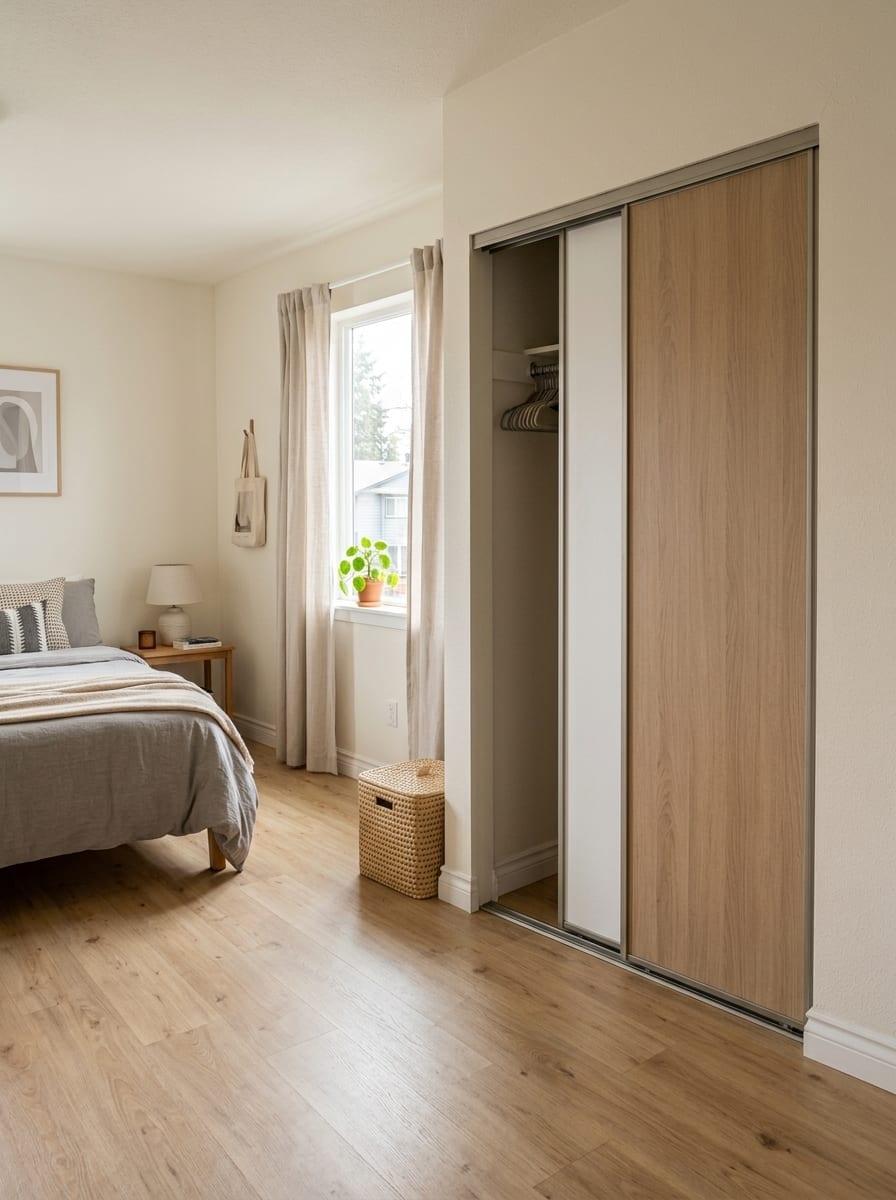
A bedroom can look unfinished because the closet area is visually messy. This is especially common in rentals with:
- basic sliding doors
- exposed clothing rails
- open wardrobe systems You do not always need to replace the closet. You may just need to simplify what surrounds it.
Keep the floor in front clear
Avoid:
- laundry pile
- shoe overflow
- baskets
- bags directly in front of the closet.
Keep the door area visually calm
If the closet doors are plain, let them stay plain. Do not automatically add:
- decals
- hanging organizers
- hooks
- decor to every surface.
For open wardrobes
Use a limited visual palette. For example:
- matching hangers
- one or two storage bins
- consistent shelf organization
Hide the least attractive categories
Items like:
- cleaning supplies
- miscellaneous bags
- loose accessories work better in closed containers.
Treat the closet as part of the room
If you see it from the bed, the closet contributes to the overall look.
9. The Three-Finish Bedroom Formula
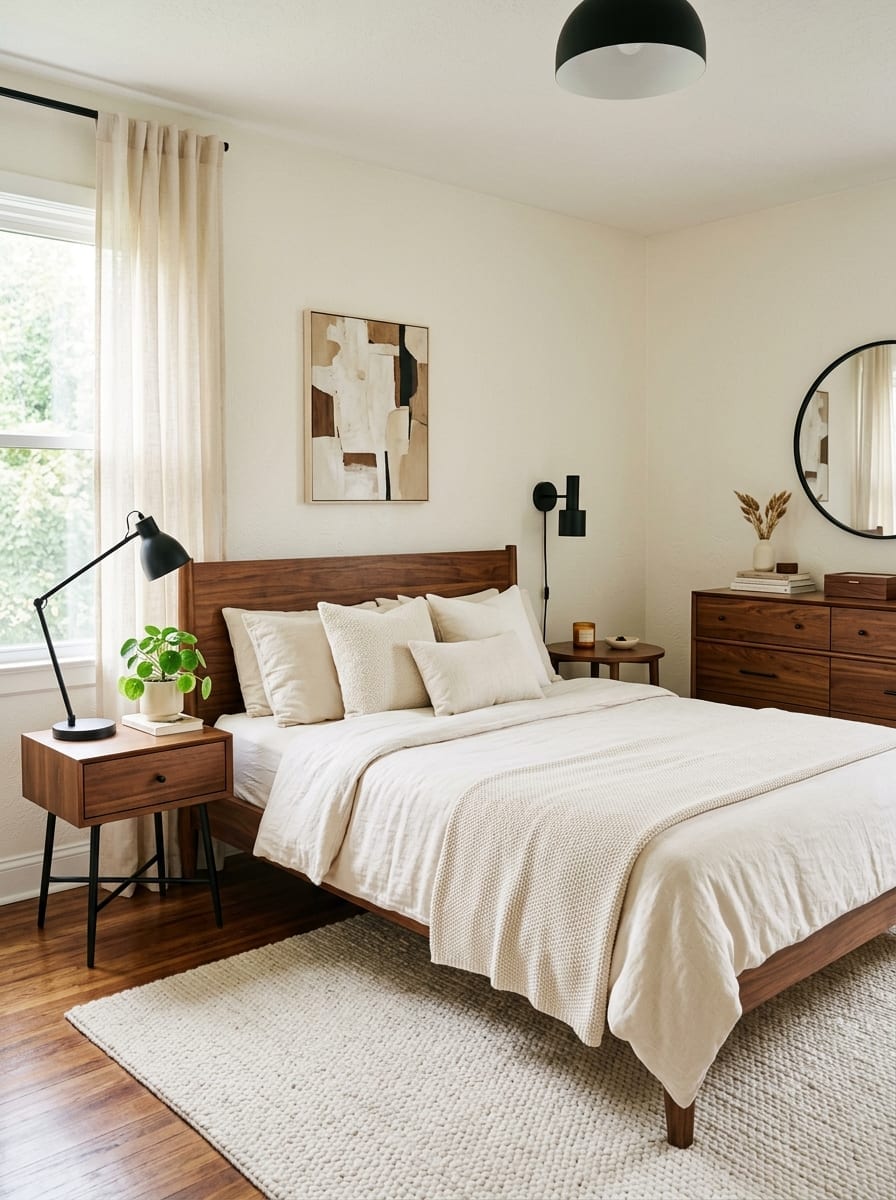
A rental bedroom can feel visually random when every piece uses a different finish. You may have:
- black metal bed
- orange wood dresser
- white nightstand
- gray desk
- brass lamp None of those pieces is necessarily wrong. But together, they may feel disconnected.
Choose three dominant finishes
For example: Finish 1 Warm wood. Finish 2 Cream or warm white. Finish 3 Black or dark bronze. Then repeat them.
Example
You could have:
- walnut dresser
- walnut picture frame
- cream bedding
- cream curtains
- black lamps
- black hardware The room begins to feel intentional. You do not need to replace everything Use smaller items to connect what you already own. For example: If the dresser is wood but the nightstand is white, repeat:
- wood frame
- white lamp elsewhere.
Why repetition matters
Your eye starts reading the room as a system rather than a collection of unrelated furniture.
Do not make it too rigid
Three finishes are a guideline, not a law. The goal is visual connection, not perfect matching.
Start With the Largest Visual Surfaces
Before buying decor, look at:
- bed
- curtains
- rug
- walls Those elements occupy most of what you see. A new tray or candle will not fix:
- badly scaled curtains
- weak bedding
- undersized rug Start large. Then work smaller.
Upgrade the Bedroom in the Right Order
A useful order is:
1. Bed
Fix bedding and headboard.
2. Window
Improve curtains.
3. Lighting
Add bedside and evening layers.
4. Floor
Add or resize rug if needed.
5. Walls
Choose art.
6. Surfaces
Edit nightstands and dresser. This prevents buying small decor before the room has a clear structure.
Do You Need to Paint?
Not necessarily. Rental walls can still work well if you improve:
- textiles
- lighting
- furniture placement
- artwork Paint is only one design tool. A bedroom can feel finished with the original wall color if the rest of the room is coordinated.
What About Peel-and-Stick Wallpaper?
Temporary wallpaper can create a strong focal wall when the product and surface are compatible. But do not assume all peel-and-stick products are safe for every rental wall. Consider:
- paint age
- wall texture
- humidity
- adhesive strength Test according to the product’s instructions. If uncertain, use a headboard, curtain, or large artwork instead.
Can You Change Rental Light Fixtures?
That depends on:
- lease
- fixture
- landlord permission
- electrical work requirements Do not alter electrical systems without appropriate permission and qualified installation where required. Fortunately, a bedroom can improve dramatically with:
- plug-in sconces
- floor lamps
- bedside lamps without changing the existing ceiling fixture.
How to Make a Rental Bedroom Look More Expensive
Focus on proportion rather than decorative quantity. Examples include:
- curtains hung higher
- properly scaled rug
- larger artwork
- restrained bedding
- consistent finishes These often look more polished than adding several small decor items.
How to Make a Rental Bedroom Feel Cozy
Use layers that affect both texture and lighting. Try:
- warm bedside lighting
- textured bedding
- rug
- full curtains
- one throw You do not need to cover every surface.
How to Make a Rental Bedroom Feel Bigger
Prioritize:
- clear floor
- good curtain height
- fewer small furniture pieces
- one strong focal wall
- consistent palette Avoid filling every corner simply because something fits.
Choose a Bedroom Color Palette
A simple palette keeps the room from looking random. For example: Warm neutral Cream + oatmeal + walnut + black. Soft green Warm white + muted olive + wood. Calm blue Ivory + dusty blue + warm oak. Moody neutral Taupe + charcoal + walnut. Use one main neutral, one supporting tone and one darker anchor.
Bedding Should Set the Palette
Because the bed is so large, it is often easiest to choose bedding first. Then coordinate:
- curtains
- rug
- art
- pillows around it. Trying to make the bed fit an already complicated color palette can be harder.
Should Nightstands Match?
No. But they should have some visual relationship. That might be:
- similar height
- same color
- same material family
- matching lamps above them The bed should still feel balanced.
How High Should Bedside Lamps Feel?
There is no universal height because:
- bed heights vary
- lamp proportions vary
- sitting height varies The useful goal is for the light to be comfortable when sitting or reading in bed without shining directly into your eyes. Test the actual position.
What if the Bedroom Has Ugly Flooring?
A properly scaled rug can help visually reduce the amount of flooring you see. Do not try to hide every inch. Anchor the bed and let the remaining floor become background.
What if the Bedroom Has Vertical Blinds?
You may still be able to use curtain panels outside them where appropriate. The blinds continue to provide:
- privacy
- light control while the curtains soften the overall appearance. Make sure the window treatment remains functional.
What if the Rental Has Mirrored Closet Doors?
Mirrored doors can visually increase light and depth. Instead of trying to disguise them, simplify the rest of the closet wall. Avoid adding several competing decorative elements around the mirror.
Keep the Dresser Top Under Control
Use the dresser for a small number of categories. A simple arrangement could be:
- lamp
- tray
- artwork or mirror Then keep daily clutter inside drawers. A dresser covered with:
- skincare
- perfume
- hair products
- jewelry
- chargers
- paperwork can make the whole bedroom look unfinished.
Hide Cables Where Practical
Visible charging cables are normal. But several loose cables around the nightstand can create visual clutter. Use safe cord-management products where appropriate. Never route electrical cords in a way that creates:
- heat risk
- damage
- trip hazard
Use One Larger Plant Instead of Several Tiny Ones
If the bedroom has suitable light, one medium plant can have more visual impact than many small pots. Do not sacrifice a nightstand or dresser surface just to display multiple plants.
You Probably Do Not Need a Bedroom Bench
A bench at the foot of the bed can look polished in a large bedroom. In a small rental, it often:
- blocks circulation
- collects clothes
- consumes floor area Only add one if the room genuinely has enough depth.
You Probably Do Not Need a Reading Chair Either
Same principle. If nobody actually sits there, the chair becomes:
- clothing storage
- bag storage Use the floor space for easier movement instead.
A Simple Rental Bedroom Upgrade Plan
If you want to change only a few things:
1. Full-length curtains
Improve room proportions.
2. Better bedding
Make the bed the focal point.
3. Bedside lighting
Improve evening atmosphere.
4. Properly sized rug
Anchor the room. That may be enough.
A More Complete Bedroom Upgrade Plan
For a stronger transformation: Bed Headboard + coordinated bedding. Window Full-height curtains. Lighting Two bedside lights. Floor One appropriately sized rug. Wall One art zone. Surfaces Edited nightstands. Finishes Repeat three materials throughout. The room still does not need renovation.
Common Renter-Friendly Bedroom Upgrade Mistakes
Buying lots of small decor first Fix the big visual elements. Using tiny curtains They make the window feel smaller. Relying on only the ceiling light Add lower lighting. Using an undersized rug It can make the furniture look disconnected. Creating too many wall moments Pick one focal area. Covering every surface Negative space makes styling look intentional. Matching every furniture piece exactly Coordination matters more than a full matching set. Ignoring cords Lighting upgrades still need to look deliberate and remain safe. Assuming removable products cannot damage walls Always test and follow product instructions.
Which Upgrade Should You Start With?
Choose Curtains if:
The room feels visually short or unfinished around the window.
Choose Bedside Lighting if:
The ceiling light feels harsh.
Choose a Headboard Wall if:
The bed looks visually disconnected from the room.
Upgrade Bedding if:
The bed feels flat or mismatched.
Add a Rug if:
The furniture feels like separate pieces.
Create an Art Wall if:
The room feels empty despite having furniture.
Edit the Nightstands if:
The bedroom always looks cluttered.
Clean Up the Closet Front if:
Storage visually dominates the room.
Use the Three-Finish Formula if:
Nothing in the room seems to relate to anything else.
Final Thoughts
A rental bedroom does not need permanent architectural changes to feel finished. Focus first on the elements with the biggest visual impact: bed → curtains → lighting → rug → walls Then edit the smaller details. You do not need:
- more decorative objects
- matching furniture set
- expensive renovation You need better proportion, stronger visual anchors and a few repeated materials. When the bed feels intentional, the curtains relate to the room, the lighting is layered and the surfaces stay edited, even a very basic rental bedroom can feel complete.