Kitchenette Ideas for Small Apartments
Kitchenette ideas for small apartments: smart layouts, mini appliances, storage, and renter-friendly upgrades for tiny kitchens that actually work.
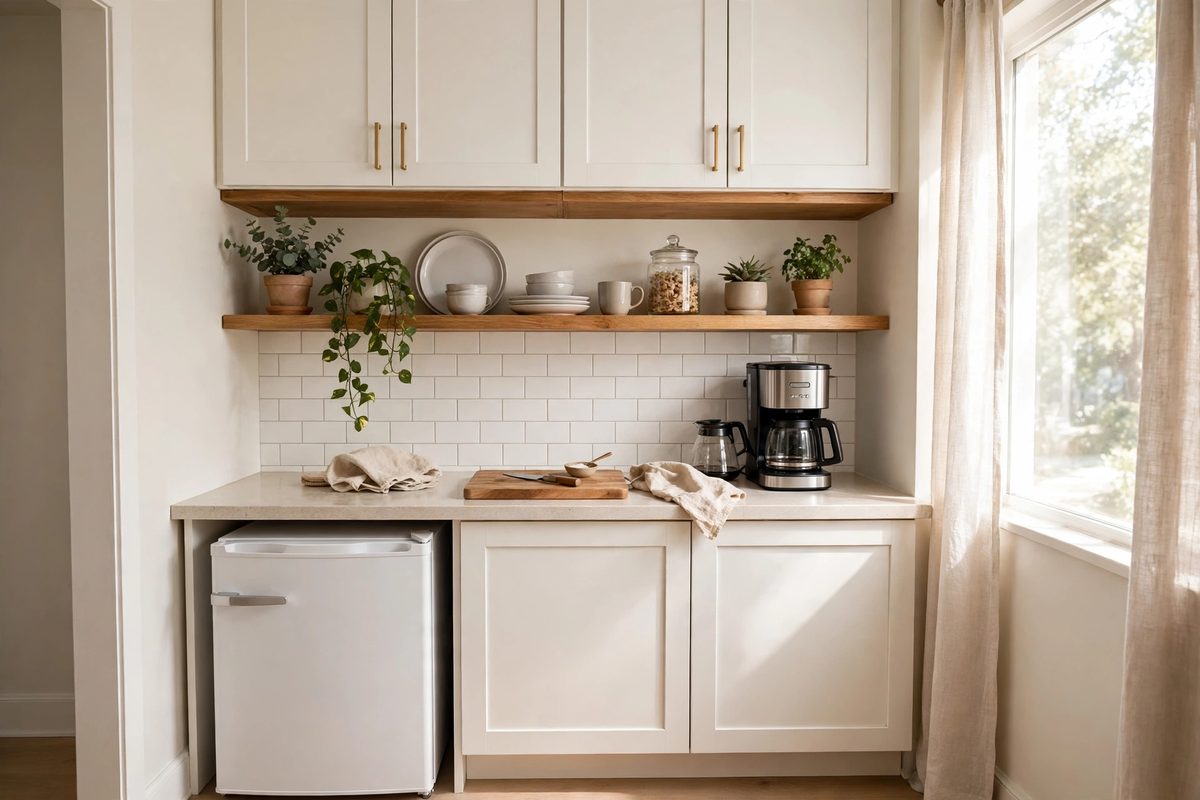
Small apartment kitchenette with white cabinets, open shelving, a mini fridge, and a compact countertop with a coffee maker
In This Guide
A kitchenette is a kitchen stripped to the essentials: a mini fridge, a two-burner cooktop, a small sink, and a stretch of counter that has to do everything. Most apartment kitchenettes are under 50 square feet, and the challenge is making that tiny footprint work for real cooking, not just reheating takeout. These 12 kitchenette ideas cover layouts, mini appliances, storage, and renter-friendly upgrades that turn a cramped kitchenette into a space you actually enjoy using.
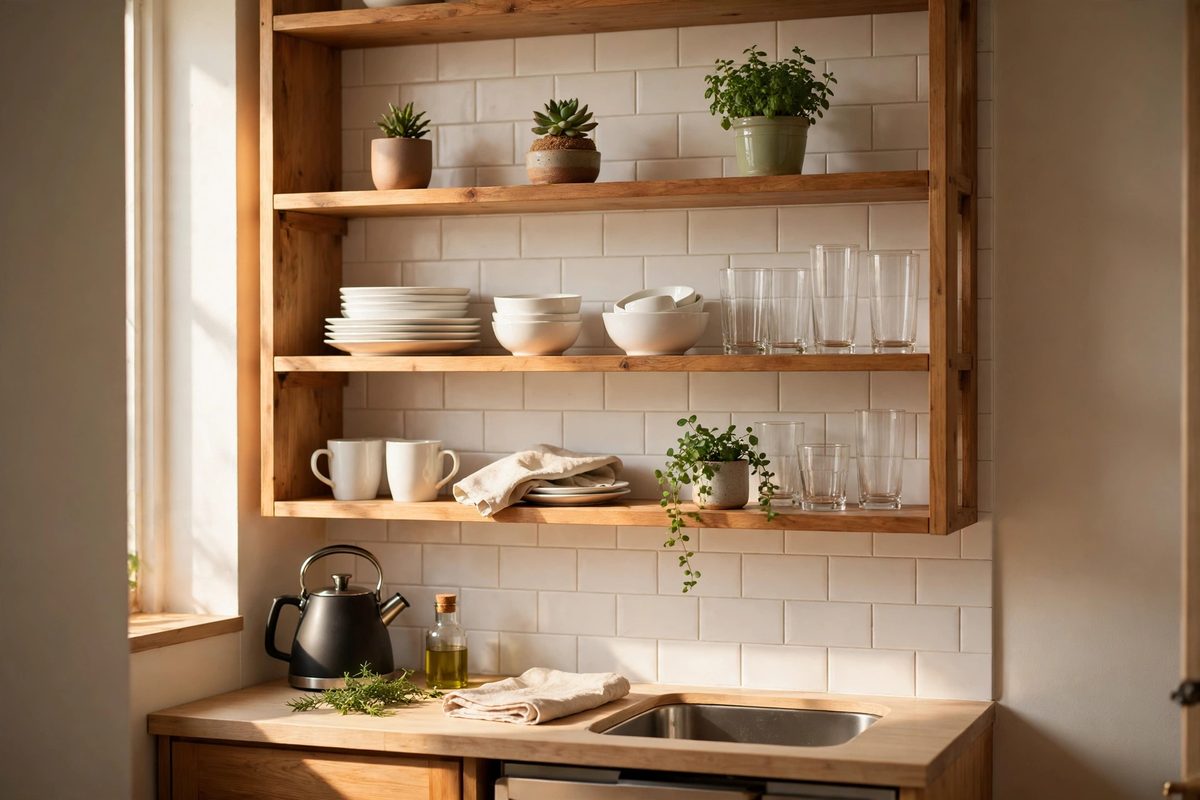
1. Open shelving instead of upper cabinets
Replace upper cabinets with two or three open shelves to make a tiny kitchenette feel larger and brighter. Open shelves remove the visual weight of cabinet boxes and let you reach dishes without opening doors in a tight space. Use shelves 10 to 12 inches deep, mounted 18 inches above the counter, and keep only the dishes and glasses you use daily on them so they stay tidy. Solid wood shelves cost 30 to 60 dollars each, and brackets run 10 to 15 dollars a pair. Keep heavier items like cast iron on lower shelves or in a base cabinet, since open shelves are not built for heavy loads. For more kitchen storage ideas, see our small kitchen storage ideas.
2. A mini fridge and compact appliances
Choose a mini fridge between 3 and 5 cubic feet, which fits under a counter or in a corner and holds enough for one or two people for several days. Pair it with a two-burner induction cooktop, which sits on the counter and stores in a cabinet when not in use, and a compact microwave or a toaster oven instead of a full-size range. Induction cooktops cost 40 to 80 dollars and heat faster than a hot plate. Measure your counter height and depth before buying, because a mini fridge under a counter needs at least 1 inch of clearance on the sides for ventilation.
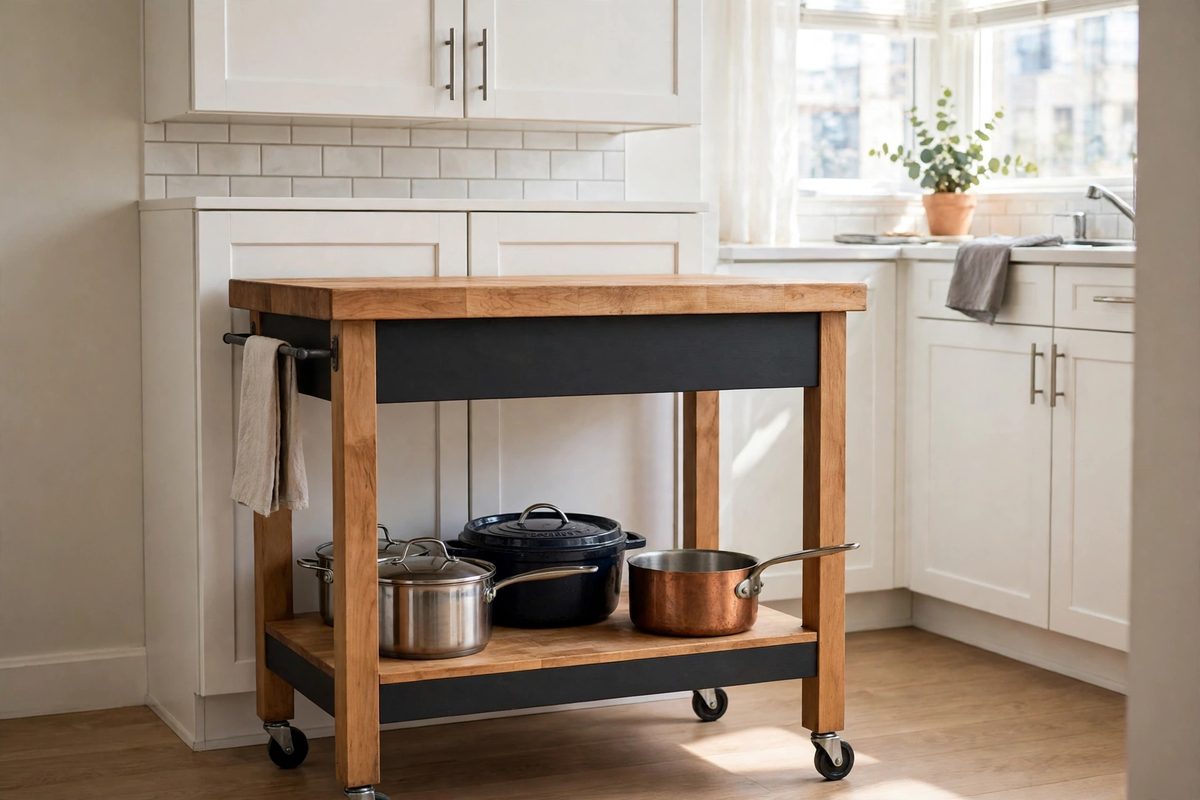
3. A rolling cart as extra counter space
Add a rolling kitchen cart with a butcher block top to gain 2 to 3 square feet of counter space that moves where you need it. Use the cart as a prep station while cooking, then roll it against the wall as a coffee bar or a side table. Carts with a lower shelf hold pots, mixing bowls, or a small appliance, and a cart with locking wheels stays put while you chop. IKEA’s FORHOJA and similar carts cost 60 to 100 dollars and fit in a gap as narrow as 20 inches wide. Keep the cart top clear when not in use so it reads as furniture, not clutter.
4. A magnetic knife strip and wall storage
Mount a magnetic knife strip on the wall above the counter to free up counter space and keep knives visible and within reach. A 16-inch strip holds 5 to 7 knives and costs 20 to 35 dollars. Add two small wall-mounted rails with hooks for measuring cups, scissors, and utensils, which keeps the counter clear and puts tools at arm’s length. This works well in a kitchenette because every inch of counter matters, and wall storage uses space that would otherwise sit empty. Mount the strip at least 18 inches above the counter so knife handles do not bump into anything below.
5. An over-sink cutting board and dish rack
Use a cutting board that fits over the sink to add prep space when the sink is not in use. Over-sink boards cost 20 to 40 dollars and come in bamboo or plastic, sized to standard sink widths. Pair it with a roll-up dish rack that sits over the sink for drying dishes, which frees the counter next to the sink. Both items store flat in a cabinet or lean against the wall when not needed. This is one of the cheapest ways to gain usable counter in a kitchenette, because the sink area is dead space whenever you are not washing dishes.
6. A pull-out pantry in a narrow gap
Slide a narrow pull-out pantry unit into the gap between the fridge and the wall, or between two cabinets. These units are 6 to 8 inches wide and 24 inches deep, with two or three shelves for spices, oils, cans, and jars. A pull-out pantry costs 40 to 80 dollars and turns a wasted gap into real storage. Measure the gap first: you need at least 6 inches of clear width, and the unit should slide out without hitting the fridge door or a cabinet handle. This is the best use of the awkward 6-inch gap that exists in almost every kitchenette.
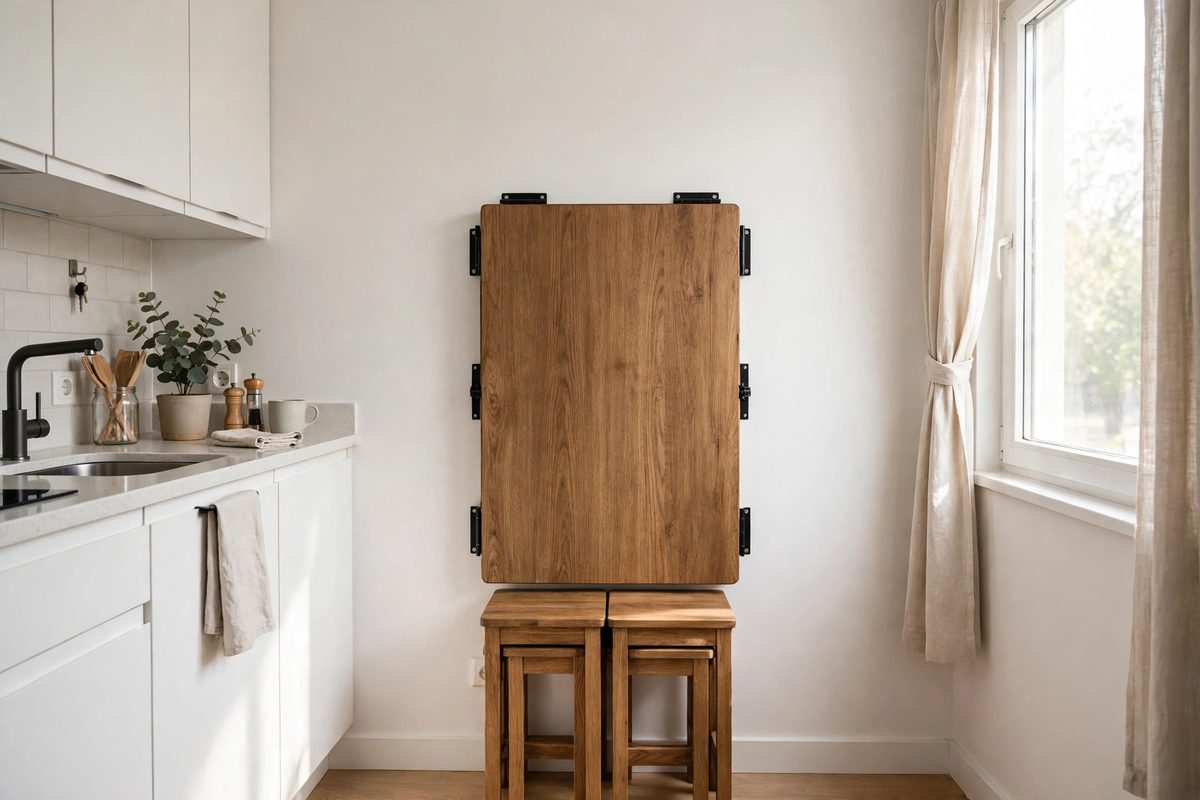
7. A fold-down table or wall-mounted drop leaf
Mount a fold-down table or a drop-leaf shelf on the kitchenette wall to create a dining spot or extra prep space that folds flat when not in use. A wall-mounted drop leaf 24 by 36 inches gives you a table for two and folds down to 3 inches deep against the wall. Brackets cost 15 to 25 dollars, and a simple wood top runs 30 to 50 dollars. This works well in a studio where the kitchenette opens onto the living area, because the table serves as both a dining table and a work surface. Make sure the folded table does not block a cabinet door or a walkway when it is down.
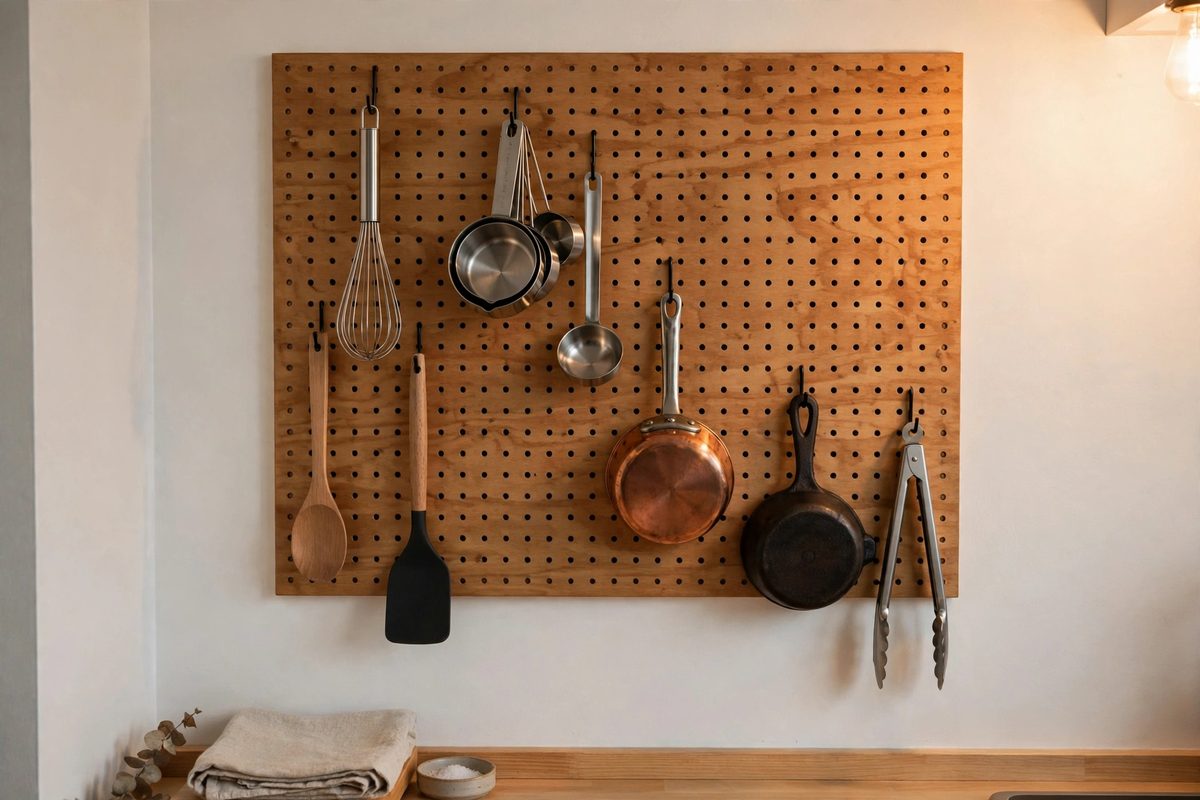
8. A pegboard for tools and utensils
Hang a pegboard on the kitchenette wall and use hooks and small baskets to store utensils, pots, measuring cups, and spices. A pegboard 24 by 36 inches costs 20 to 40 dollars plus hooks, and it holds more than a rail because you can use the full surface. Paint the pegboard the same color as the wall so it blends in, or use a wood pegboard for a warmer look. Keep the most-used items at eye level and the rarely used ones higher up. A pegboard is renter-friendly if you mount it with two screws into studs, which most leases allow, and the holes are easy to fill when you move out.
9. Under-cabinet lighting
Stick battery-powered LED light strips under the upper cabinets or shelves to brighten the counter and make the kitchenette feel larger. LED strips cost 15 to 30 dollars for a 6-foot length, and battery-powered ones need no wiring, which makes them renter-friendly. Warm white light at 2700K makes food look better and the kitchen feel cozier than cool white. Stick the strip to the underside of the shelf, about 1 inch back from the front edge, so the light washes down the backsplash without glaring into your eyes. Replace batteries every few months, or use rechargeable strips with a USB cable.
10. Stackable storage and clear containers
Use stackable clear containers for dry goods, and stackable bins for the fridge, to make the most of every shelf. Clear containers let you see what you have at a glance, which matters in a kitchenette where you cannot afford to buy duplicates because you forgot what was in the back. A set of 5 stackable containers costs 15 to 25 dollars, and they nest when empty. Label the front of each container with a small sticker so you can find flour, rice, or pasta without pulling everything out. Keep the tallest containers on the bottom shelf and the shortest on top so nothing tips over.
11. A countertop dishwasher
Add a countertop dishwasher if your kitchenette has no built-in one. Countertop dishwashers are about 17 inches wide, 17 inches deep, and 18 inches tall, hold 6 place settings, and connect to the faucet with a quick-connect adapter. They cost 250 to 350 dollars from brands like Farberware or Danby. This is a big upgrade for a kitchenette because hand-washing every dish eats counter space with a drying rack. Measure your counter before buying: you need a clear stretch at least 18 inches wide and 18 inches deep, plus a faucet with a standard thread for the adapter. If your lease forbids connecting to the faucet, skip this one.
12. A renter-friendly peel-and-stick backsplash
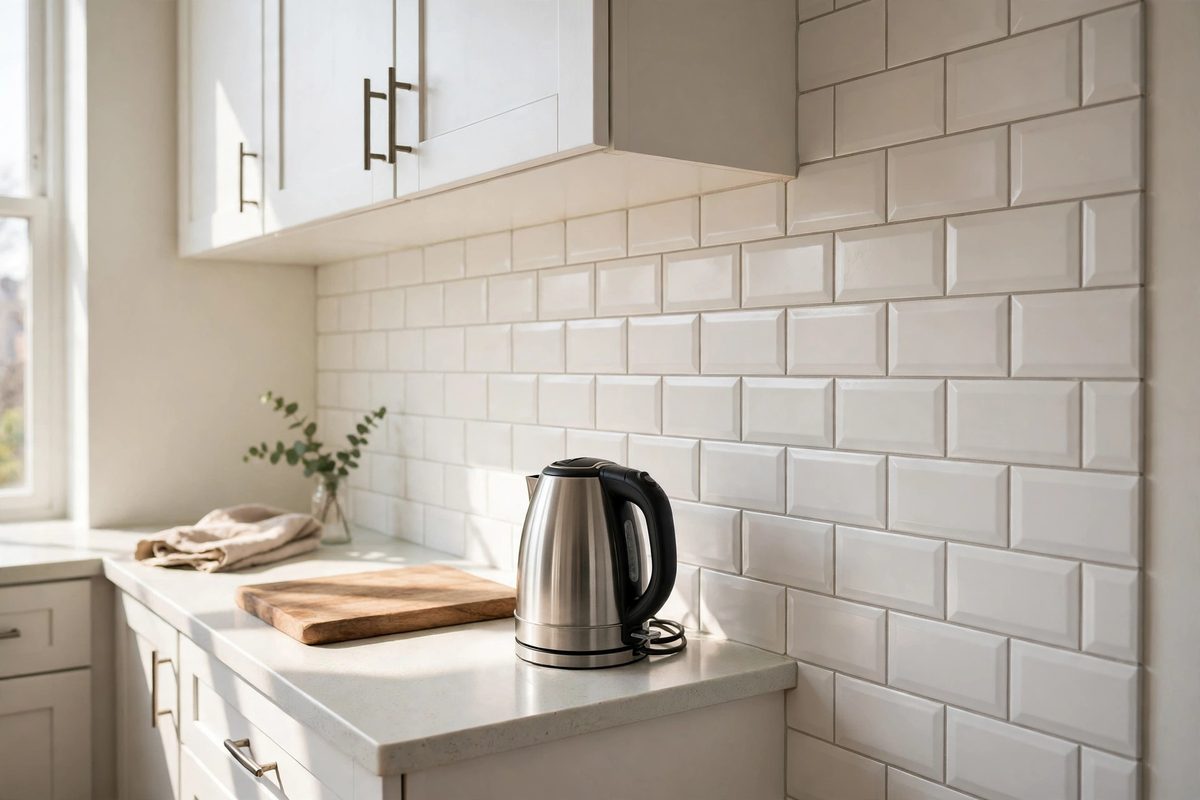
Apply peel-and-stick backsplash tiles to the wall behind the counter to add color and pattern without damaging the wall. Peel-and-stick tiles cost 15 to 30 dollars for a pack that covers about 10 square feet, which is enough for most kitchenettes. Choose subway tile, mosaic, or a simple geometric pattern in a light color to keep the small space bright. Clean the wall with rubbing alcohol first, press the tiles on firmly, and use a utility knife to trim around outlets. The tiles peel off cleanly when you move out. For more renter-friendly kitchen upgrades, see our renter-friendly kitchen upgrades.
Styling tips
Pick one color for the kitchenette and repeat it in three places: the backsplash, a small appliance, and a dish towel or a plant pot. That single repetition makes a tiny kitchen feel intentional rather than thrown together. Keep the counter at least half clear at all times, because a clear counter is what makes a kitchenette feel usable. If the counter is full, the kitchen feels full, no matter how well organized the cabinets are. For more small kitchen ideas, see our small apartment kitchen ideas and our tiny kitchen ideas.
What to avoid
- Buying full-size appliances for a kitchenette: a standard fridge or range eats the whole room, so stick to compact and countertop models sized for the space.
- Open shelving with too much on it: shelves packed edge to edge look cluttered and make the kitchen feel smaller, so keep only daily dishes on open shelves and store the rest behind closed doors.
- Ignoring ventilation: a kitchenette without a range hood traps cooking smells in a small apartment, so use a small fan or open a window while cooking, and clean the cooktop after each use.
- Blocking the walkway with a cart or a table: a kitchenette needs at least 36 inches of clear floor in front of the counter, so measure before adding a cart, a table, or a dishwasher.
Frequently asked questions
What is a kitchenette in an apartment? A kitchenette is a compact kitchen area, usually under 50 square feet, with a mini fridge, a small cooktop, a sink, and limited counter space. It is common in studios and small one-bedroom apartments where a full kitchen would take up too much room.
How do you organize a tiny kitchenette? Start by using the walls: open shelves, a magnetic knife strip, and a pegboard move storage off the counter. Then add a rolling cart for extra counter space and use stackable clear containers inside cabinets so you can see everything. Keep only daily items on the counter and store the rest.
What are the best kitchenette ideas for renters? Peel-and-stick backsplash tiles, battery-powered under-cabinet lights, a rolling cart, and adhesive hooks are the best renter-friendly kitchenette upgrades because they need no permanent changes. A countertop dishwasher and a fold-down table also work if your lease allows a faucet adapter and two small wall screws.
Can a kitchenette have a dishwasher? Yes, a countertop dishwasher fits on the counter and connects to the faucet with a quick-connect adapter. It holds about 6 place settings and costs 250 to 350 dollars. Measure your counter first, because you need a clear stretch at least 18 inches wide and 18 inches deep.