10 Plug-In Wall Sconce Ideas for Apartments Without Wiring
10 plug in wall sconce ideas for apartments, from contemporary wall sconces to swing-arm reading lights, with plug in sconce placement heights, shades, dimmers, and damage-free removal.
In This Guide
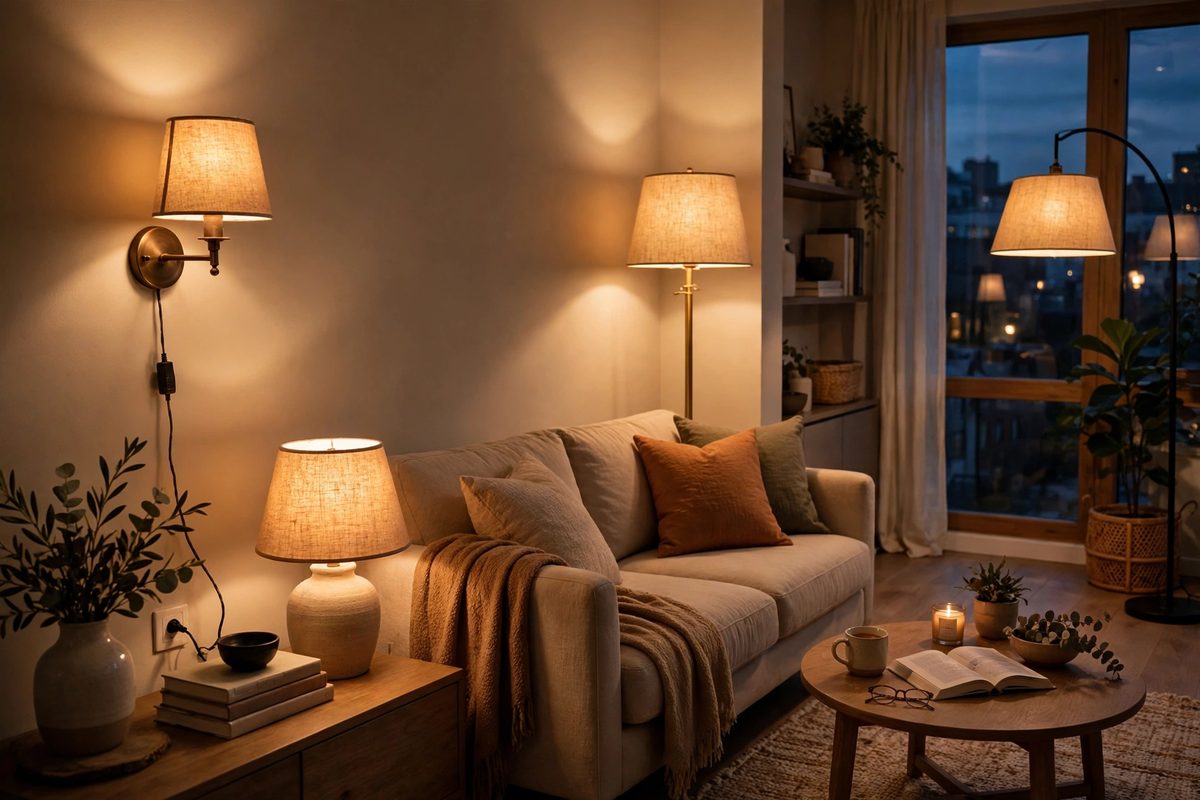
A plug in wall sconce is the closest thing renters get to hardwired lighting without an electrician, a lease violation, or a hole in the wall. It mounts with a couple of small screws or adhesive hardware, plugs into a nearby outlet, and gives you real wall light exactly where a ceiling fixture cannot reach: beside the bed, over a reading chair, or flanking a sofa.
That matters because most rental living rooms and bedrooms have one harsh overhead light and nothing else. A plug in sconce fixes the dark corners, frees up nightstand and floor space, and looks intentional in a way a clip-on lamp never does. This roundup covers contemporary wall sconces and classic styles, plug in sconce placement heights, shade choices, dimmers, and how removal actually goes at move-out. For the wider renter lighting picture, see renter-friendly lighting ideas, and if your whole apartment lacks overhead lights, pair this guide with how to light an apartment without ceiling lights.
1. The Classic Sconce Pair Flanking the Bed
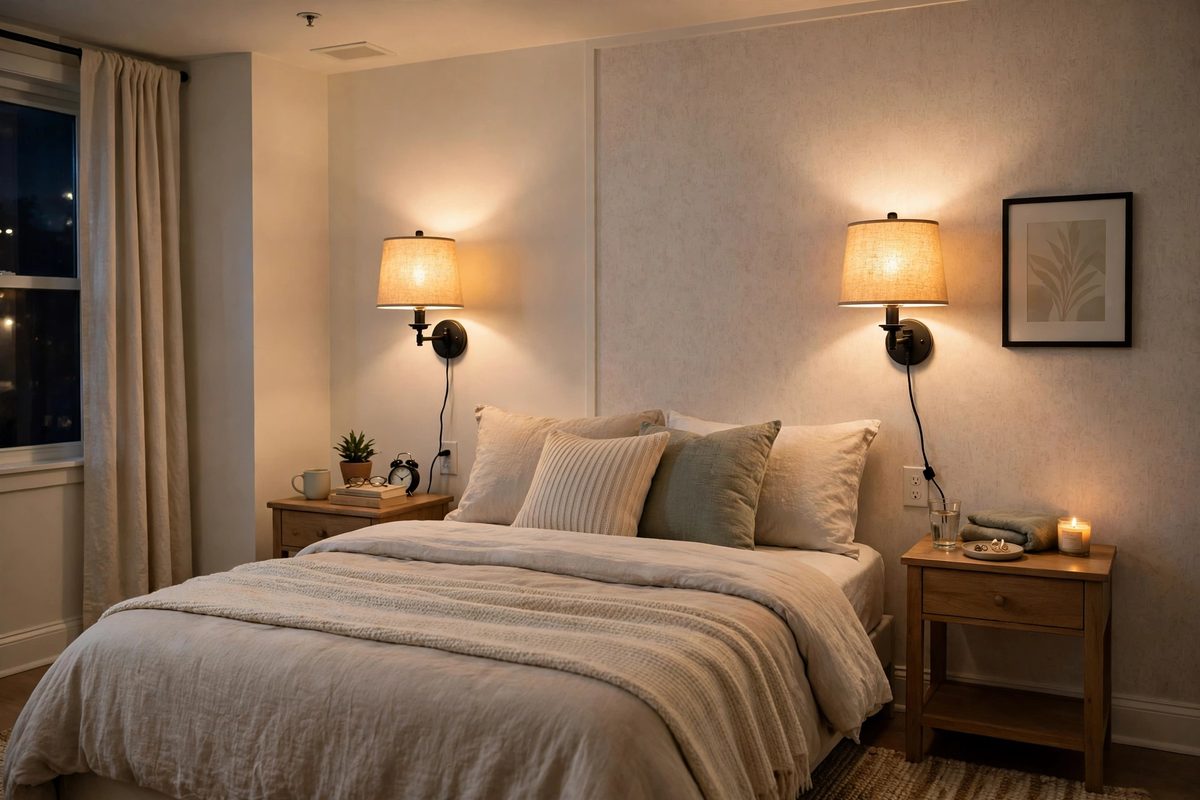
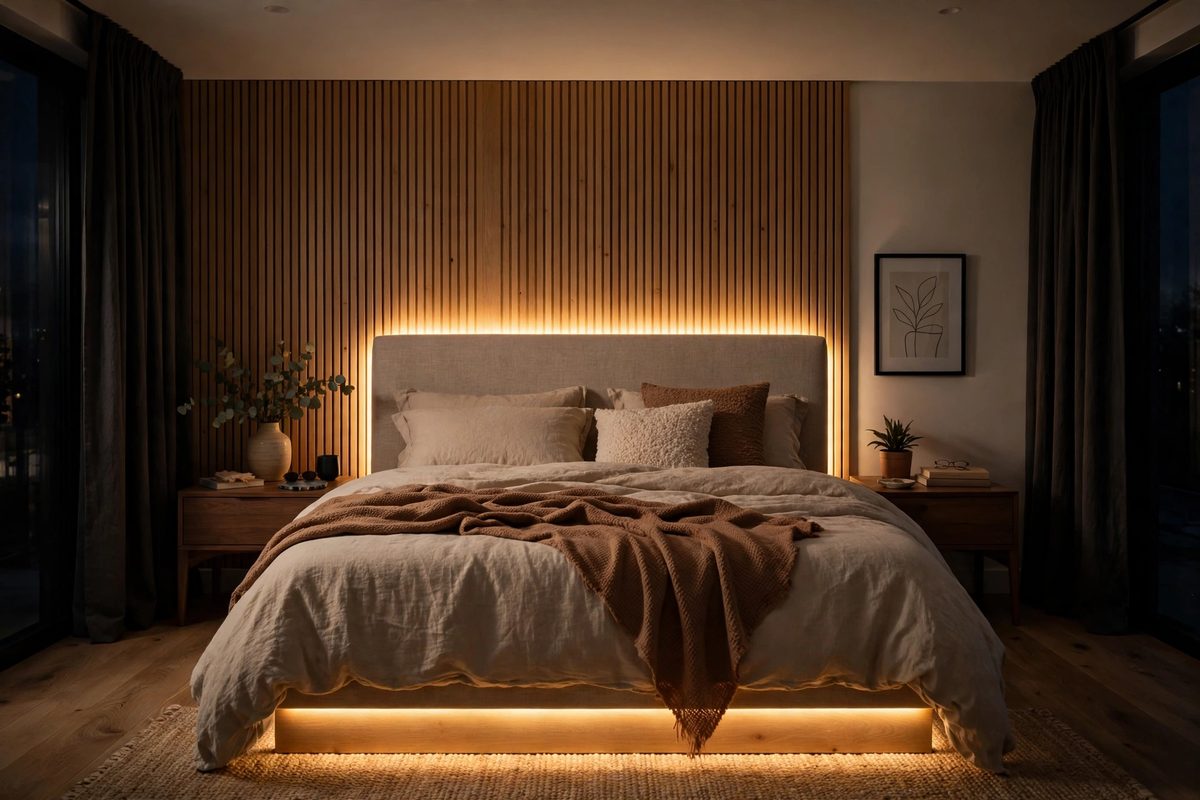
A matching pair of plug-in sconces above the bed is the single highest-impact use of this fixture. It replaces two table lamps, frees both nightstands, and gives each sleeper their own reading light. Fabric shades in linen or cotton diffuse the bulb into a soft pool of light, which is far kinder at 11 p.m. than a bare bulb.
Mount each sconce 18 to 24 inches above the top of the mattress, and 6 to 10 inches out from the edge of the pillow on each side. That height puts the light over a book, not in your eyes, and keeps the shade clear of the headboard. Most plug-in pairs cost 40 to 90 dollars for the set, and a pair of warm 2700K LED bulbs adds about 10 dollars.
How to make it work
Plug both sconces into a single power strip with a switch behind the bed, so one switch controls the pair. Run the cords straight down behind the nightstands and cover them with paintable cord covers, about 12 dollars for a 6 foot length. If your bed has no headboard, a sconce pair still works, but mount them a touch higher, 24 inches above the mattress, so the light clears your shoulders when you sit up.
2. The Swing-Arm Plug-In Sconce for Reading Nooks
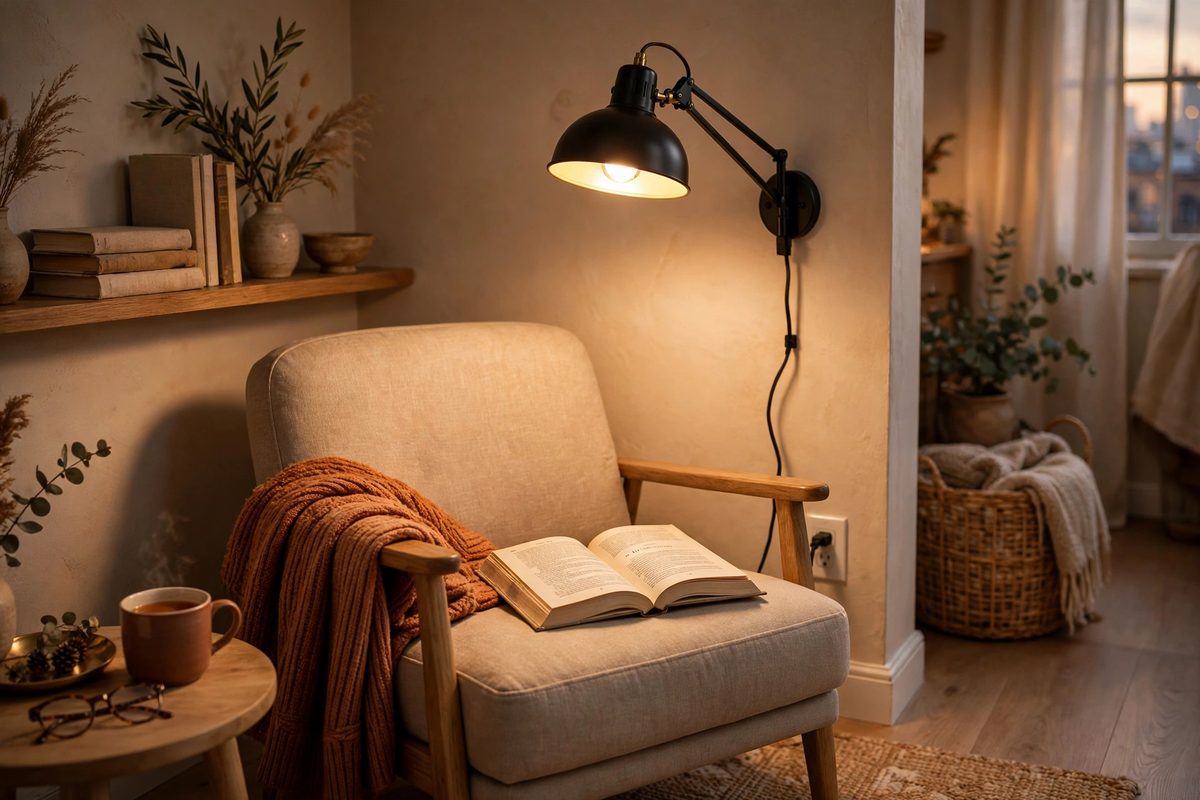
A swing-arm plug-in sconce is the reading light for renters who do not want a floor lamp eating floor space. The arm extends 12 to 18 inches from the wall and folds flat when not in use, so a small armchair corner gets focused task light without a lamp base crowding the chair legs.
Choose an arm with a metal shade and a 400 to 800 lumen bulb for reading. A 2700K to 3000K bulb keeps the corner warm, while a 4000K bulb is better if you read fine print or do detailed work. Swing-arm sconces typically cost 35 to 70 dollars each, and the best ones have a switch right on the shade or the cord so you never reach behind the chair.
How to make it work
Mount the sconce 48 to 52 inches from the floor beside the chair, on the side of your non-dominant hand, so the arm swings over your shoulder rather than across your body. Test the full swing before you fix the mount: the shade should clear the chair back by at least 2 inches at every position. Pair the nook with a small side table from small living room side table ideas if the chair sits in the living room rather than a bedroom corner.
3. The Fabric Shade Sconce for Soft Living Room Light
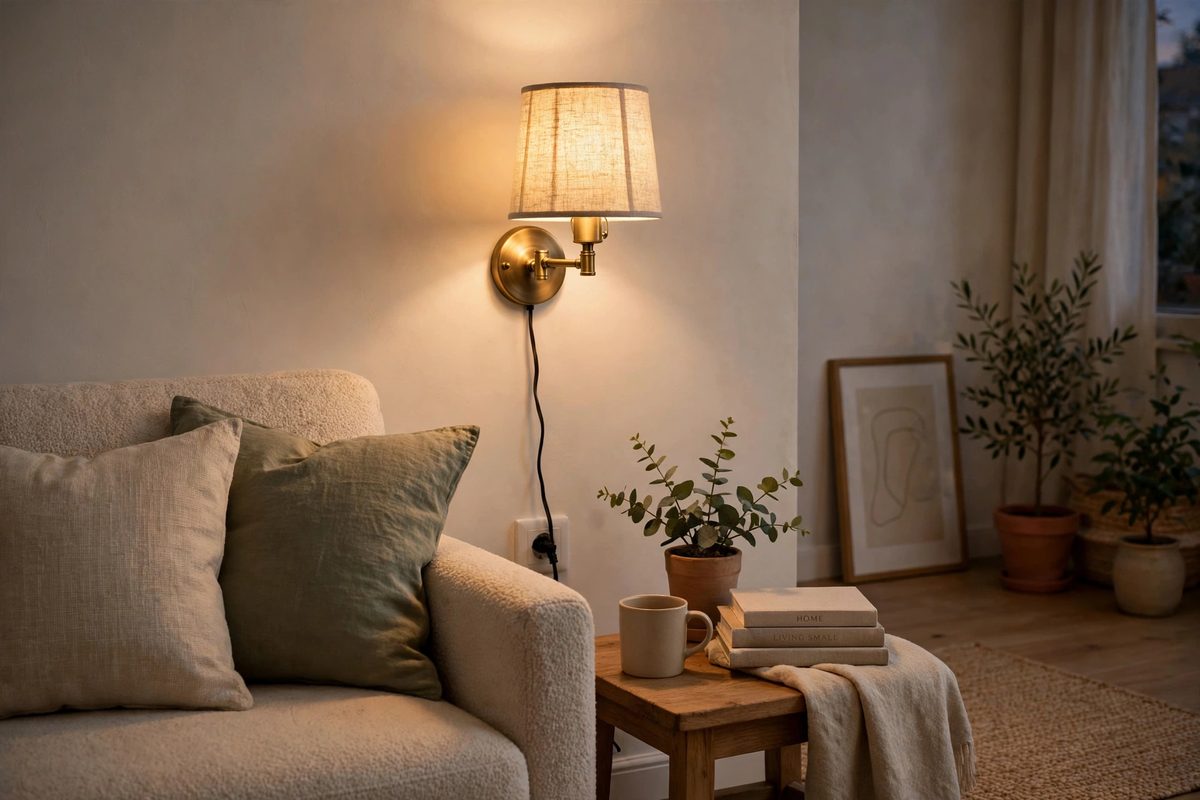
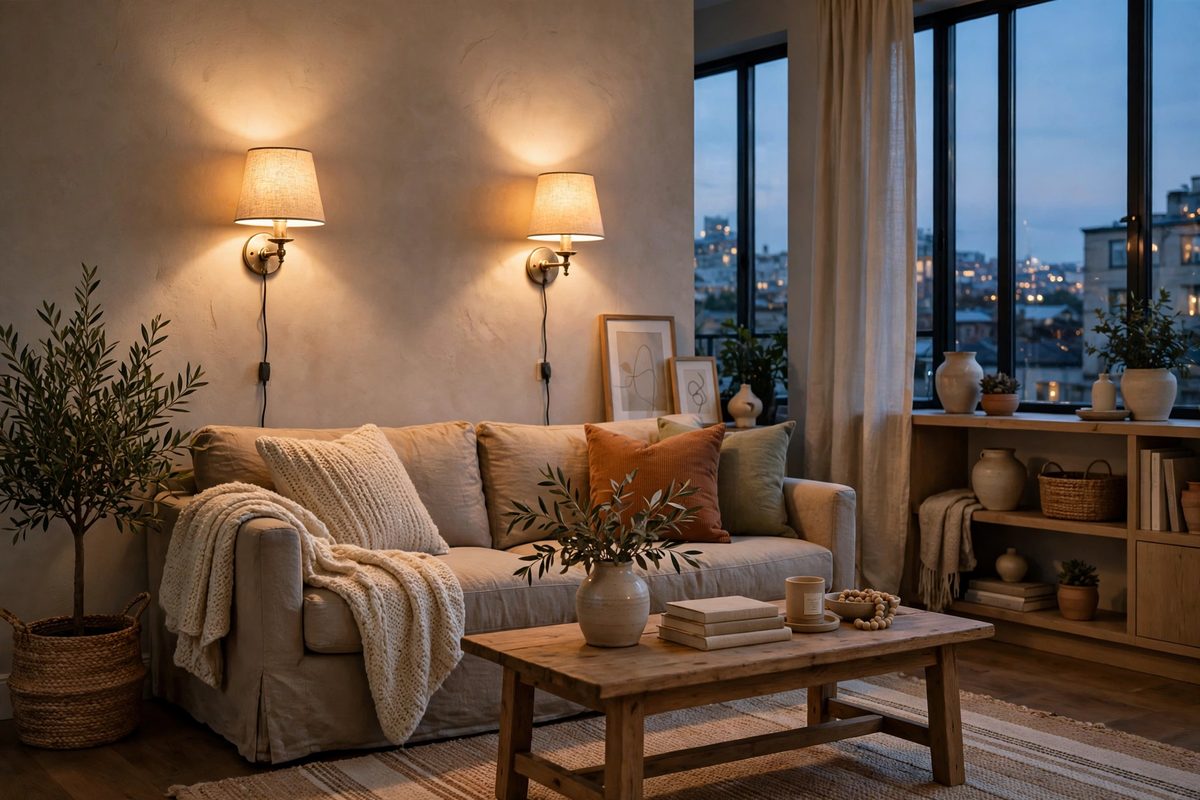
Bare metal sconces look sharp, but a fabric shade is what makes a plug in sconce feel like living room lighting instead of task lighting. Linen, cotton, and burlap shades spread light in every direction, soften shadows on the wall, and hide the bulb so the fixture glows rather than glares.
This is the right pick for flanking a sofa or a console table, where the sconce is ambient light, not a reading light. A drum shade 8 to 10 inches wide suits a small living room; anything wider overwhelms a narrow wall. Expect 30 to 60 dollars per sconce, and check that the shade is rated for LED bulbs, which run cool enough for fabric.
How to make it work
Use a dimmable 2700K LED bulb and a plug-in dimmer, about 15 dollars, so the same sconce works for evening TV time and for brighter hosting. Keep fabric shades at least 12 inches from curtains, since even LEDs warm the shade slightly over hours of use. Dust the shade monthly with a lint roller, because fabric near a wall collects dust fast in a small room.
4. The Cord-Cover Trick That Makes Plug-Ins Look Hardwired
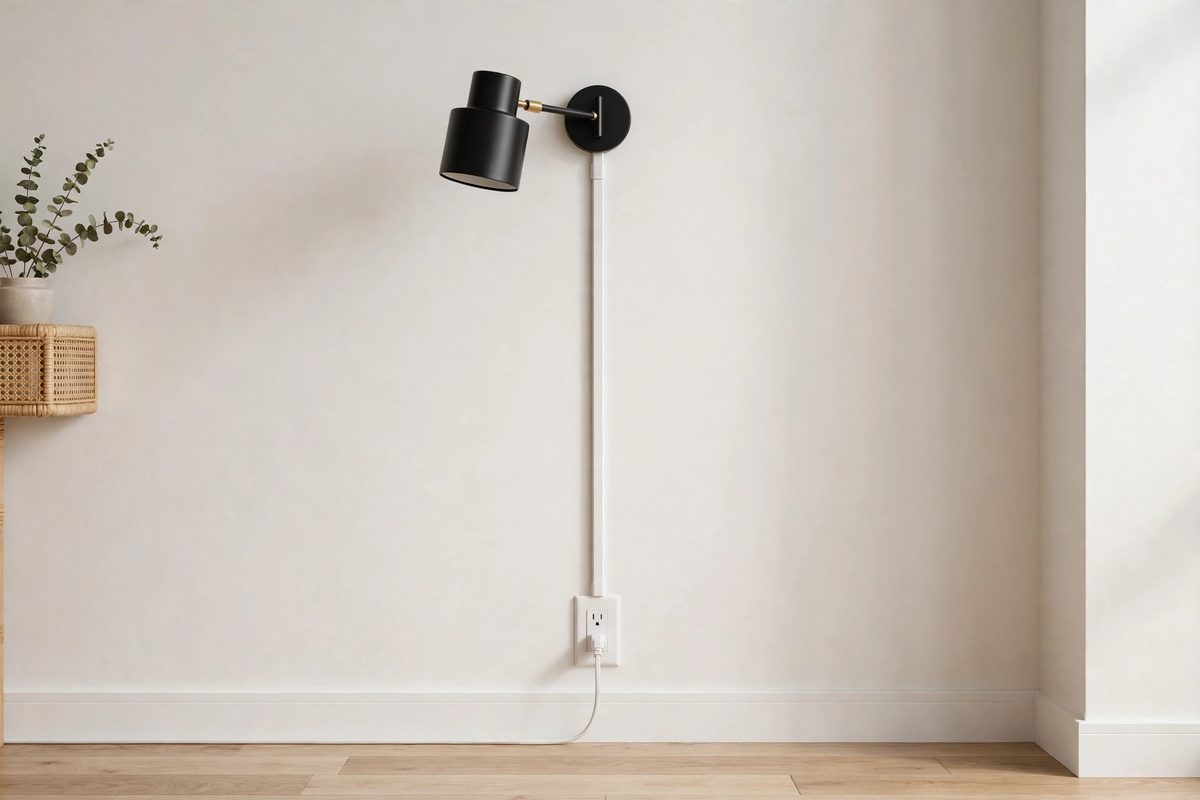
The cord is the one thing that gives a plug in sconce away. Left dangling, it looks temporary; run through a slim cord cover painted to match the wall, it reads as hardwired from across the room. This is the cheapest upgrade in the whole roundup and the one most renters skip.
Cord covers come in 4 foot and 6 foot lengths for 10 to 18 dollars, and most stick on with adhesive backing, so no drilling at all. Paintable versions take a coat of your wall color, and flat profiles sit nearly flush. Measure from the sconce base to the outlet before you buy, and add 12 inches for the gentle curve at the bottom, since a cover pulled taut looks worse than a slightly long one.
How to make it work
Stick the cover to the wall first, then snap the cord inside, working top to bottom. If the outlet sits behind furniture, run the cover behind the furniture leg rather than across open wall, since the eye follows the shortest visible line. At move-out, peel the adhesive cover slowly and wipe the wall with a damp cloth; most leave no mark on smooth painted drywall. For more damage-free mounting ideas, see no-drill shelves for renters.
5. The Contemporary Black Metal Sconce
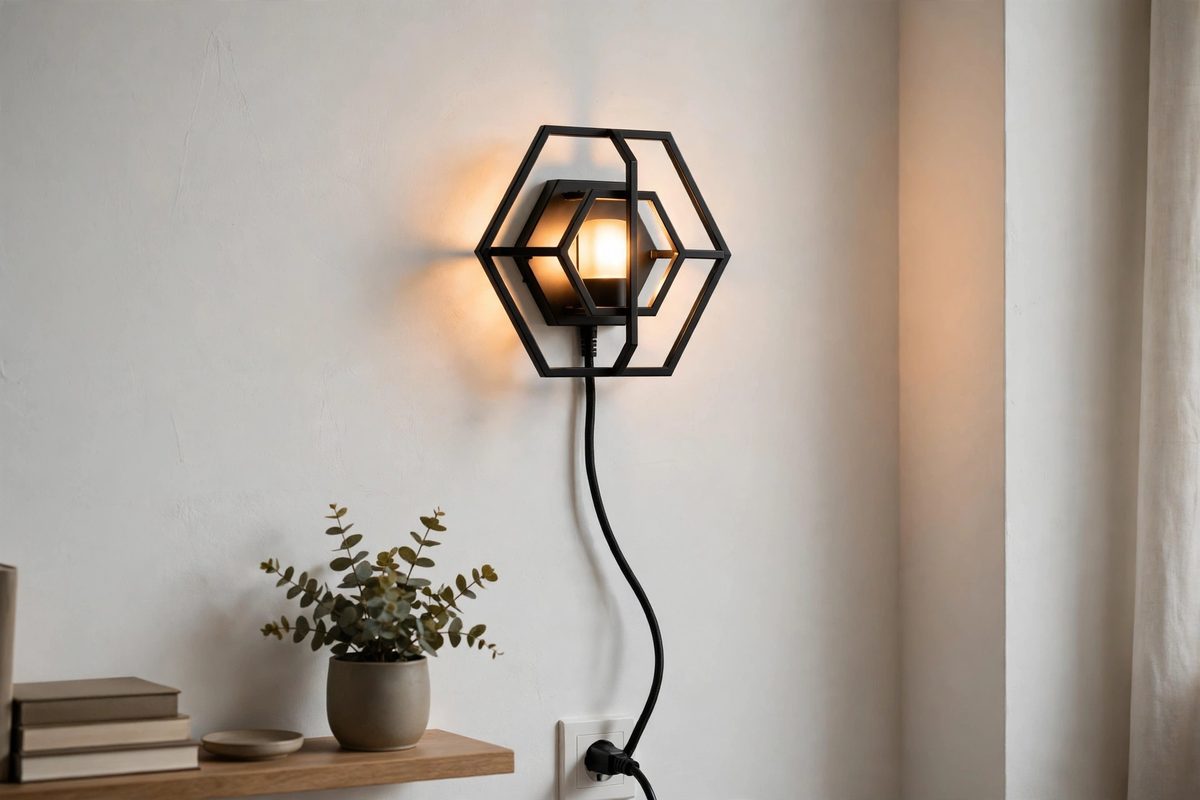
Contemporary wall sconces in matte black metal are the most searched style in this category for a reason: they suit almost any apartment, from a plain white rental box to a room with wood furniture and black hardware. The simple geometry reads modern without demanding a modern room around it.
A single contemporary sconce works as an accent beside a mirror or a piece of art, while a pair anchors a sofa wall. Black metal shows dust less than white, but it absorbs light, so pair it with a brighter bulb, 600 to 800 lumens, than you would use with a white or brass fixture. Prices run 25 to 60 dollars each, and many include the bulb.
How to make it work
Match the sconce finish to one other black element in the room, a frame, a curtain rod, or a lamp base, so it looks chosen rather than random. Keep the wall behind a black sconce light colored if you can, since a dark fixture on a dark wall disappears. If your walls are a deep color already, switch to brass or white for the same contemporary shape.
6. The Brass Sconce for Hallways and Entries
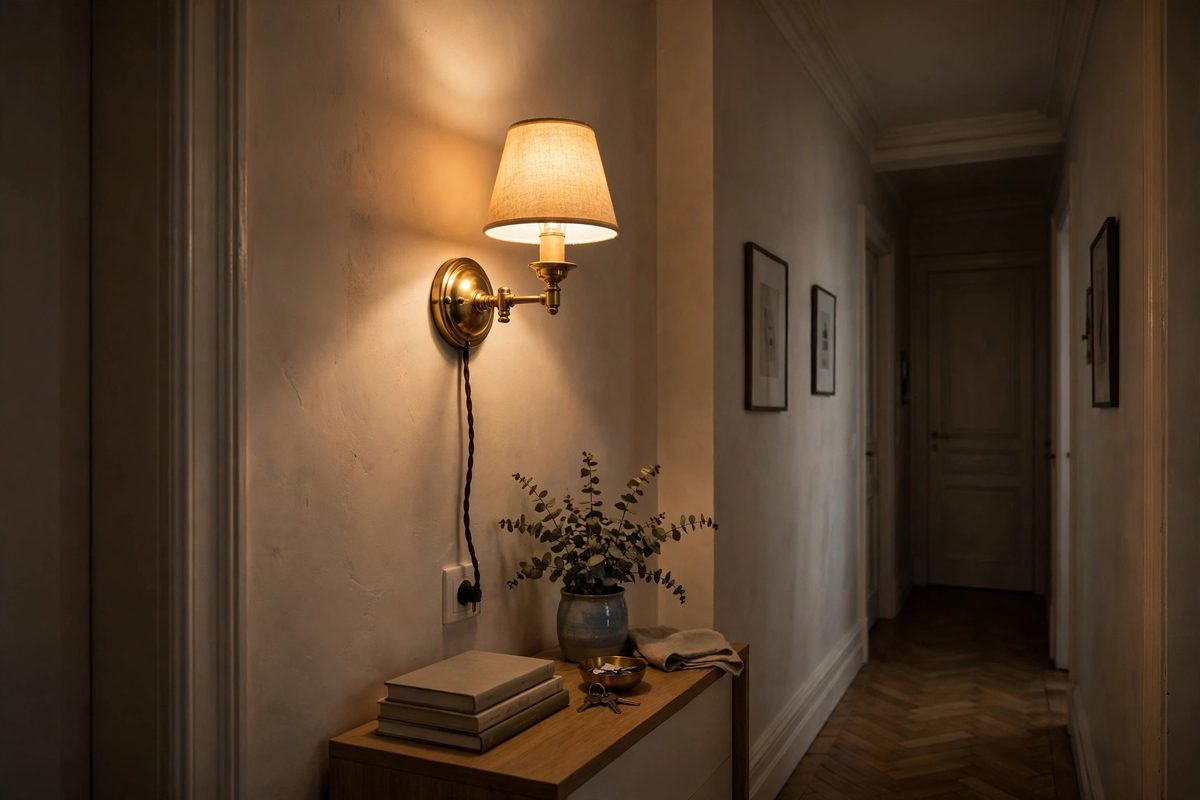
Hallways are the most underlit space in rentals, and a brass plug-in sconce is the fix that also makes an entry feel finished. Brass warms up a narrow space, reflects a little light back into the hall, and pairs naturally with wood console tables and framed prints.
Hallway sconces should sit 60 to 66 inches from the floor, slightly higher than bedside sconces, so the light clears head height in a tight passage and does not glare into your eyes as you walk past. One sconce every 8 to 10 feet is enough in a typical apartment hall; two sconces in a 12 foot hall will feel like a hotel corridor. For more narrow-hall ideas, see narrow hallway lighting ideas.
How to make it work
If the hall has no nearby outlet, use a sconce with a 10 to 12 foot cord and run it along the baseboard inside a cord cover to the nearest room outlet. Never run a cord across a doorway or under a rug in a hallway, since that is a trip hazard and a fire risk. A small plug-in timer, about 12 dollars, can switch the hall sconce on at dusk automatically.
7. Getting the Height Right, Room by Room
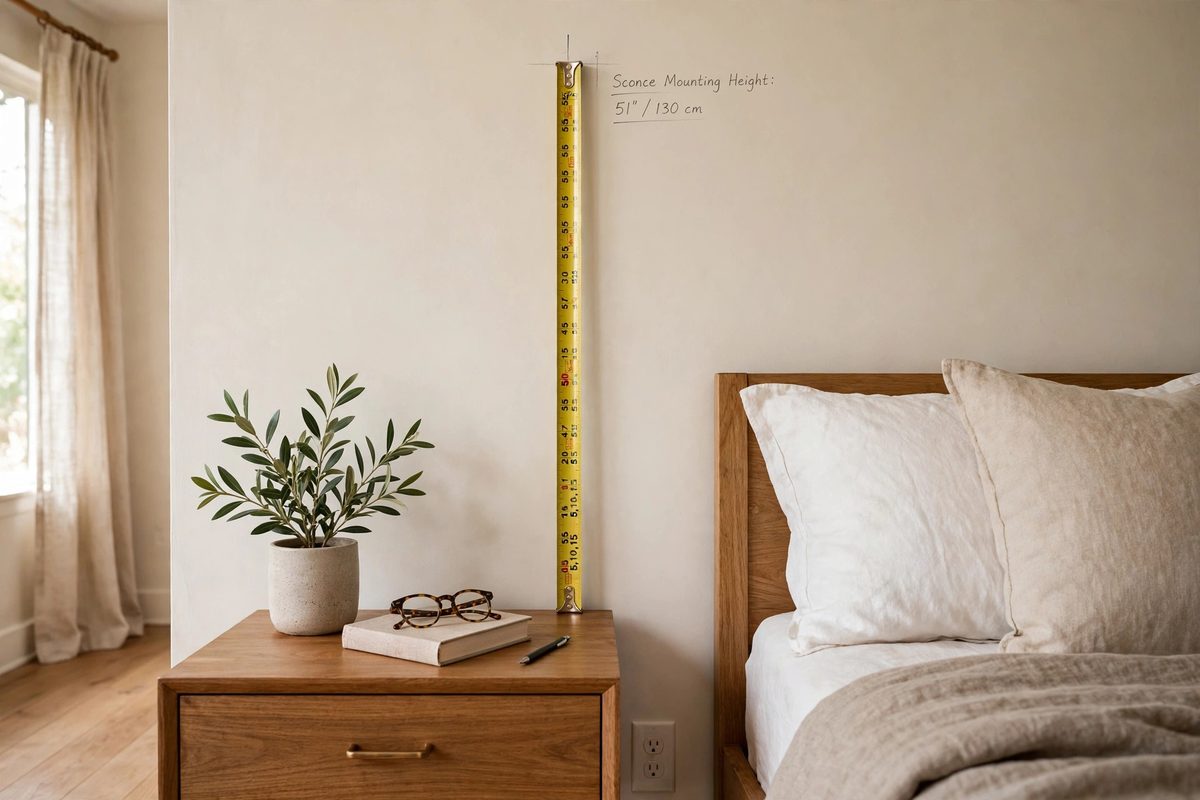
Height is where plug-in sconces most often go wrong. Too high and the light washes the ceiling while your book sits in shadow; too low and the shade blocks your view across the room. The rule changes by room, and it is worth measuring rather than guessing.
Bedside: 18 to 24 inches above the mattress. Sofa wall: 60 to 66 inches from the floor, or about 12 inches above the sofa back if the sofa is tall. Reading chair: 48 to 52 inches from the floor. Hallway: 60 to 66 inches from the floor. Dining nook: 30 to 36 inches above the table surface if the sconce flanks a small table. Mark the spot with painter’s tape and sit in the chair or lie on the bed before you mount anything.
How to make it work
Use a cardboard template cut to the sconce size and tape it to the wall for a full evening before mounting. Live with it, sit under it, walk past it. This one step prevents the most common regret, a sconce that looked right on the box and feels wrong at eye level. If two people share the bed, set the height for the taller reader and let the shorter one use a slightly brighter bulb.
8. Dimmers, Smart Plugs, and the Evening Scene
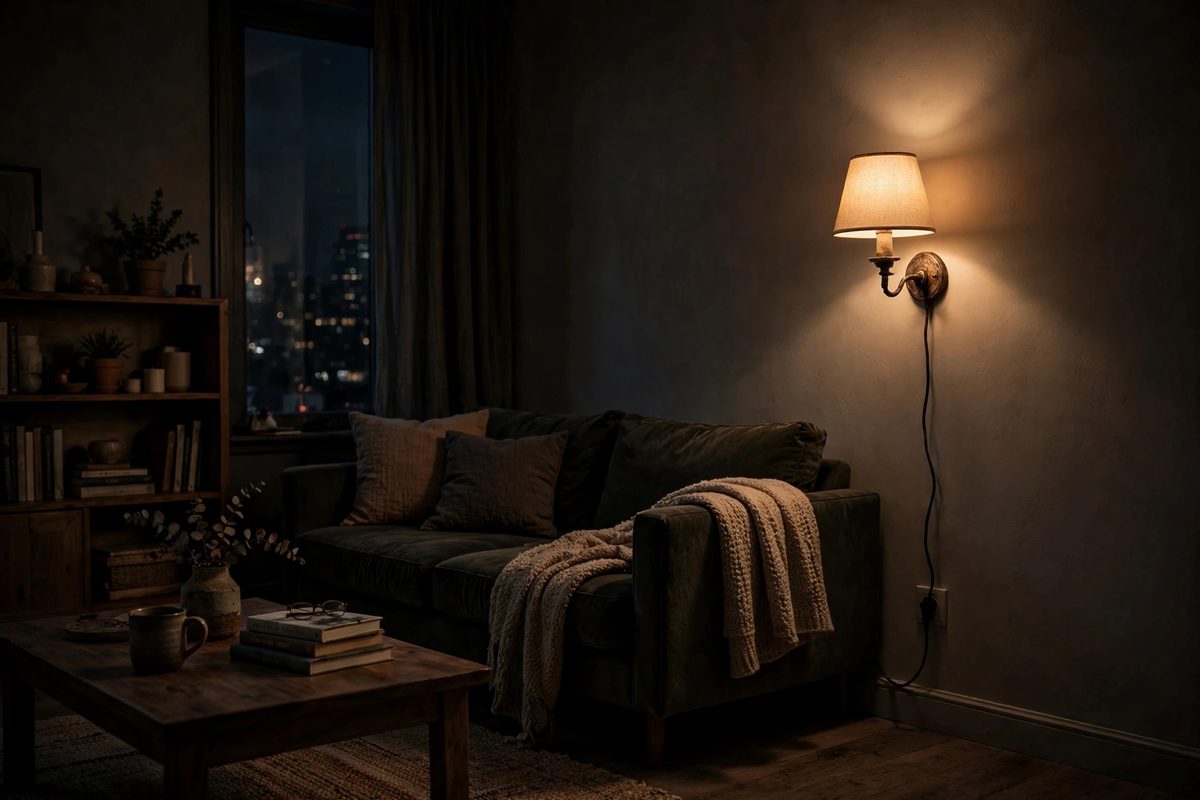
A plug-in dimmer is the 15 dollar upgrade that turns a sconce from a light into a mood. Plug the sconce into the dimmer, the dimmer into the wall, and you get smooth brightness control with no wiring and no electrician. Smart plugs add app and voice control for 12 to 20 dollars each, and they let you schedule sconces to switch on before you get home.
The catch is bulb compatibility. Only dimmable LED bulbs dim cleanly; a non-dimmable LED will flicker or buzz on a dimmer. Check the bulb box for the word dimmable before you buy, and test the full dimming range the first night, since some bulbs drop out below 20 percent brightness. If you want the full layered evening plan, see layered lighting ideas for small living rooms.
How to make it work
Put bedside sconces on a dimmer and living room sconces on a smart plug with a dusk schedule. That split gives you manual control where you read and automatic light where you arrive home to a dark room. Keep one sconce undimmed in a reading nook, since a dimmer set low by someone else is the classic cause of eye strain complaints.
9. Choosing Shades: Linen, Glass, Metal, and Open Cages
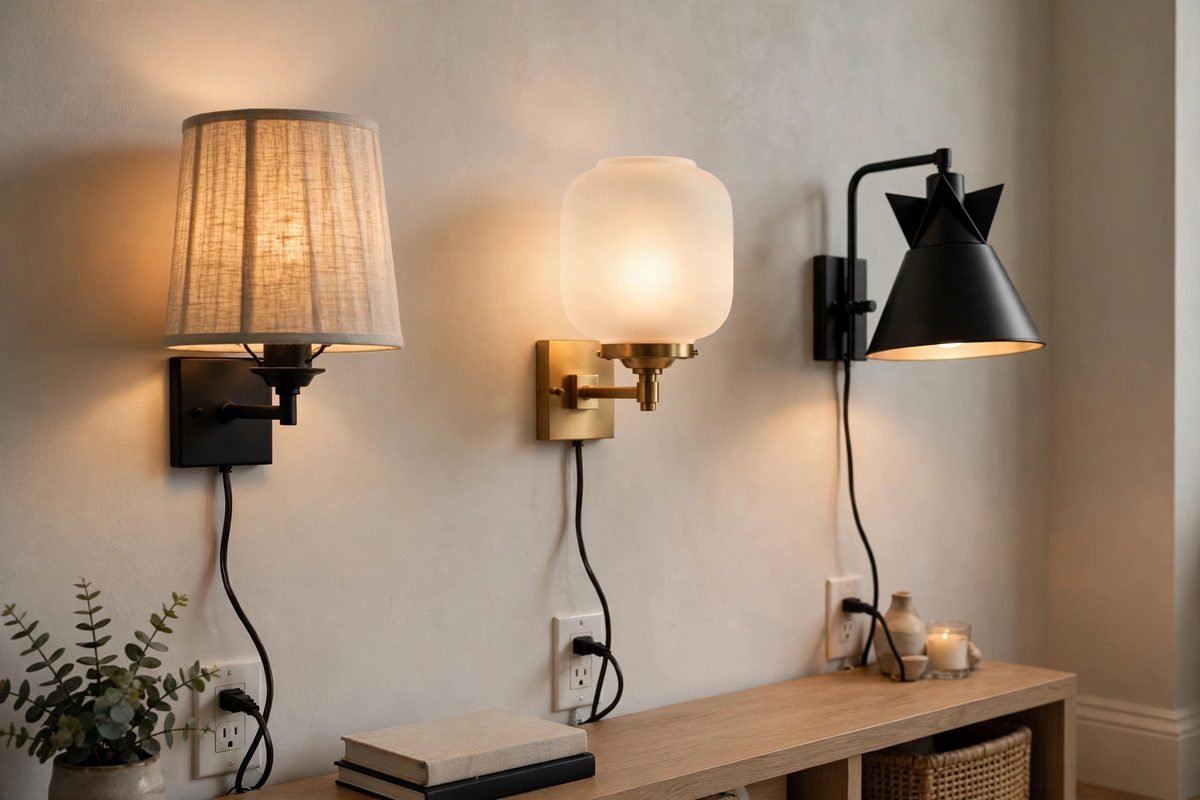
Shade material decides how the light behaves, not just how the sconce looks. Linen and cotton diffuse light in all directions and suit bedrooms and living rooms. Frosted glass directs light up and down and suits hallways and bathrooms, where you want a clean wash without glare. Solid metal shades focus light downward and suit reading spots and desks. Open cage shades look industrial and throw patterned shadows, which is charming in a living room and distracting beside a bed.
Weight matters too. A heavy glass shade on an adhesive mount is a risk; use a screw mount or a mount rated for the full fixture weight, shade included, and check the product weight in pounds before you buy. Most plug-in sconces weigh 2 to 5 pounds with the shade, which any decent mount handles, but large glass shades can reach 7 pounds.
How to make it work
Match the shade to the job, not just the room style: diffuse for relaxing, directional for reading, focused for tasks. If you rent and move often, linen shades travel best, since glass breaks in moving boxes and metal dents. Buy one spare shade in the same style if you love it, because sconce lines change yearly and a broken shade can orphan an otherwise fine fixture.
10. Removal Day: Taking Plug-In Sconces Down Clean
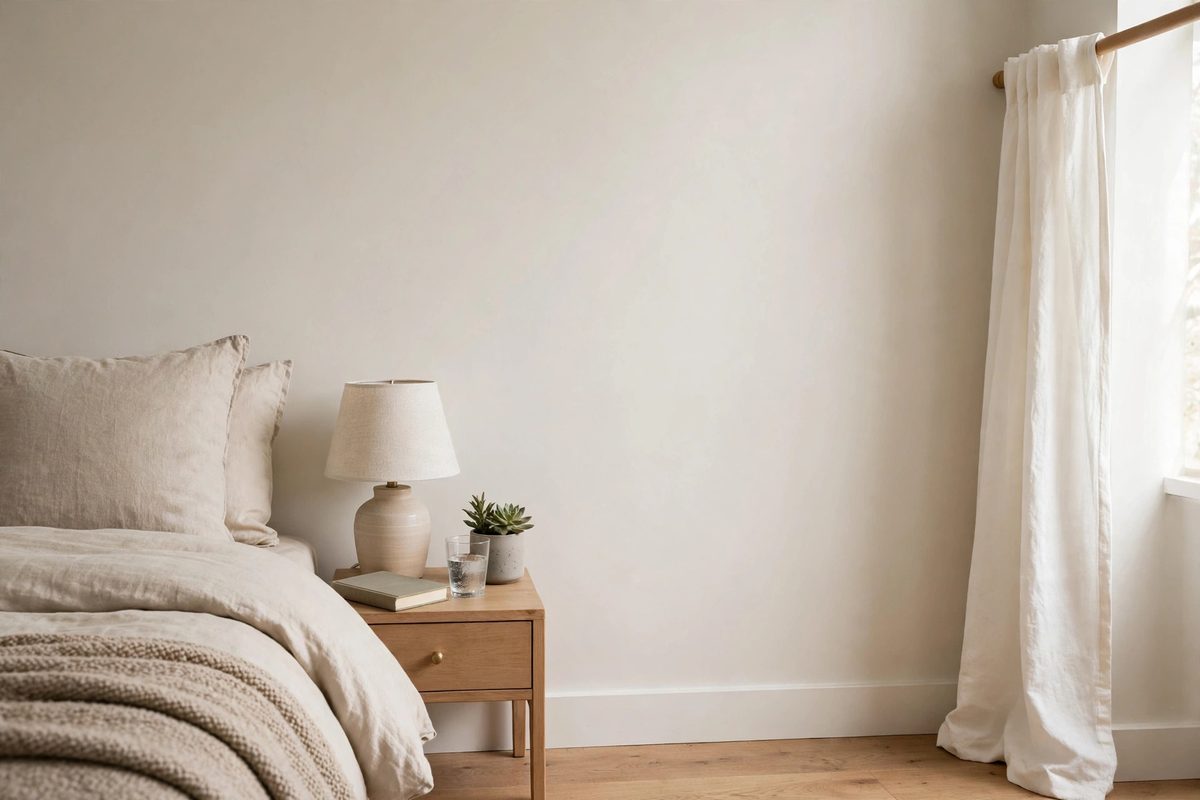
Removal is the part renters worry about most, and it is simpler than it looks. Unplug the sconce, remove the mounting screws or peel the adhesive mount, and deal with the holes or marks left behind. Small screw holes from a sconce mount take a dab of white toothpaste or spackle, about 5 dollars a tube, smoothed with a finger and left to dry.
Adhesive mounts need a slow peel straight down the wall, never outward, which is what pulls paint. Cord covers peel off the same way, and any residue wipes away with warm water and dish soap. Photograph each wall before you mount anything, so you can prove pre-existing marks at move-out. Keep the original box for the sconce if you plan to take it to the next apartment, since sconces are one of the few fixtures renters genuinely reuse.
How to make it work
Remove sconces a week before move-out, not on the last day, so spackle has time to dry and you can spot any paint touch-up needed in daylight. If your walls are a custom color, ask your landlord for the paint name early; a mismatched touch-up looks worse than a tiny hole. For the bedroom version of this setup, see small bedroom lighting ideas.
Plug-in sconces work because they solve a real rental constraint with a real fixture, not a workaround that looks like one. Start with one pair beside the bed, get the height and the cord cover right, and only then add sconces to the living room and hall.