10 Small Living Room Seating Ideas That Add Seats Without Blocking the Room
Discover 10 small living room seating ideas that add comfortable seats without blocking walkways, including compact chairs, benches, ottomans and flexible guest seating.
In This Guide
10 Small Living Room Seating Ideas That Add Seats Without Blocking the Room A small living room often has two competing goals. You want enough seating for:
- yourself
- family
- a friend or two
- occasional guests but you also need enough open floor space to:
- walk through the room
- reach the sofa
- get to the TV
- move toward the kitchen
- open nearby doors That is where many small living rooms go wrong. The problem is not always that the room has too little space. Sometimes it simply has too many permanent seats. A sofa, two bulky armchairs, a bench, two poufs and a large coffee table may technically fit. But once all of those pieces are in the room, circulation becomes awkward. A better approach is to separate seating into two groups: everyday seating and flexible guest seating. Your everyday seats should be comfortable and permanently placed. Guest seats should be:
- lighter
- movable
- tucked away
- multifunctional when they are not needed. Here are ten ways to add useful seating without turning a small living room into an obstacle course.
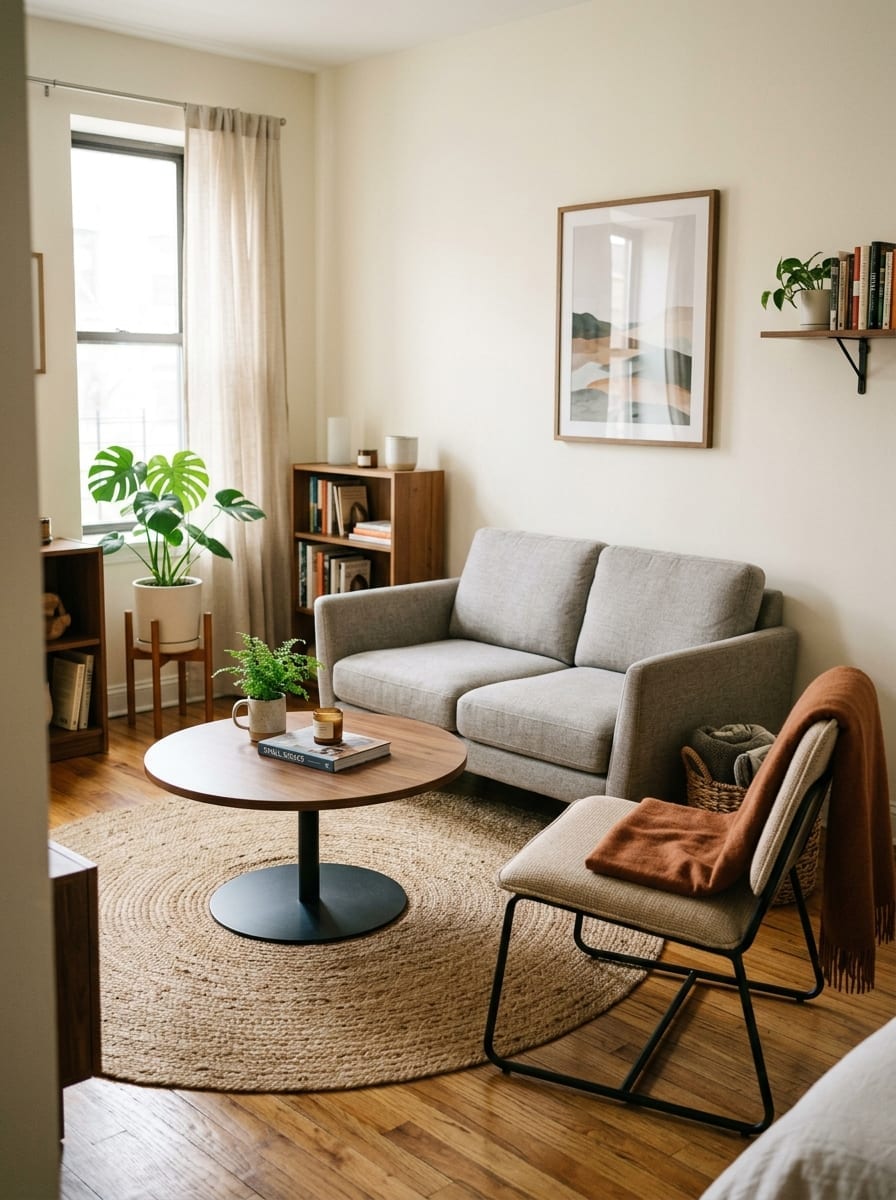
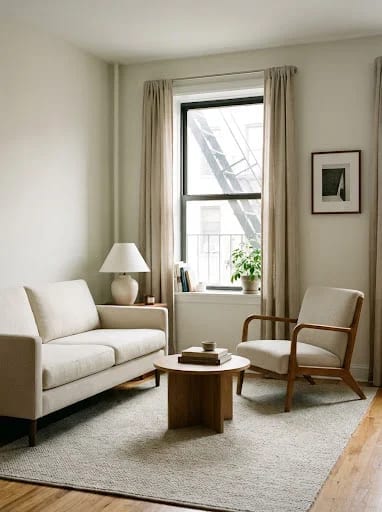
1. The Slim Sofa + Light Chair Pairing
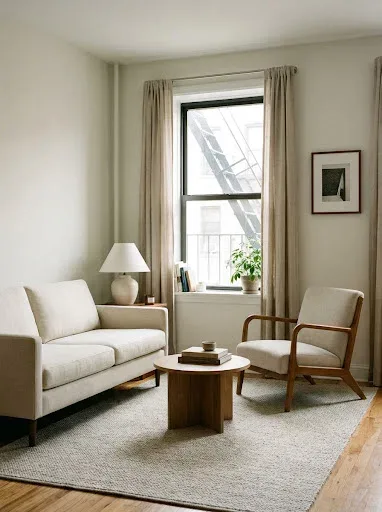
This is one of the most reliable small-living-room combinations. Use:
- one compact sofa
- one visually light accent chair instead of trying to fit several matching lounge chairs.
Why it works
The sofa handles most everyday seating. The chair adds one extra proper seat without creating another large furniture block.
Pay attention to the chair arms
A chair with thick rolled arms can use a surprising amount of width. In a small room, look for:
- slim arms
- open wooden arms
- compact upholstered arms
Keep the chair mobile enough
You should be able to angle or shift it slightly when needed. That gives you flexibility around:
- coffee table
- doorway
- TV viewing
Watch chair depth
A chair can look narrow from the front but still project deeply into the room. Measure the full footprint before buying.
Best placement
Try the chair:
- diagonally beside the sofa
- near a window
- at the edge of the rug rather than directly opposite the sofa if that blocks circulation.
2. The Apartment Loveseat + Pull-Up Chair
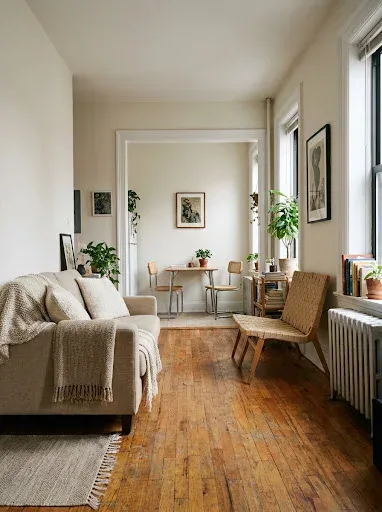
If two people use the room most of the time, a loveseat may make more sense than a larger sofa. Then add one lightweight chair for occasional seating.
Why this can work better
A loveseat leaves more floor space around:
- entry
- dining area
- desk
- side table than a larger three-seat sofa.
The extra chair does not need to match
A small pull-up chair can come from:
- living room
- bedroom
- dining area when needed.
Keep it lightweight
The key is movement. You want a chair that is easy to:
- pull forward
- rotate
- return to another spot
Do not overfill the saved space
If you choose a smaller loveseat, resist immediately adding:
- large plant stand
- extra side table
- storage basket into the space you just freed.
Best for
This works especially well in:
- one-bedroom apartments
- studios
- small homes with open living-dining areas
3. The Two-Armless-Chair Setup
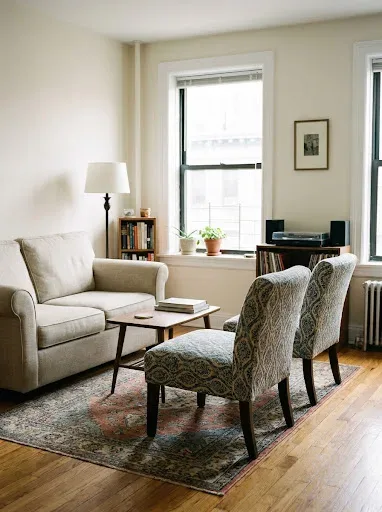
Two smaller armless chairs can sometimes fit more comfortably than one oversized armchair. This is especially useful when the room needs flexible conversation seating.
Why armless chairs help
Without large arms, the chair uses more of its total width for actual seating. The open sides also make the chair feel visually lighter.
Place them together
Instead of putting one chair in every corner, create one secondary seating zone. Try:
- two chairs side by side
- two chairs angled toward sofa
Keep the scale modest
Look for:
- compact seat width
- medium seat depth
- slim legs
Watch comfort
Armless chairs work well for:
- occasional seating
- shorter visits but some people prefer arm support for long periods. If that matters, choose very slim arms instead.
Use the same rug zone
Keeping all seating connected to one rug helps the room read as one conversation area.
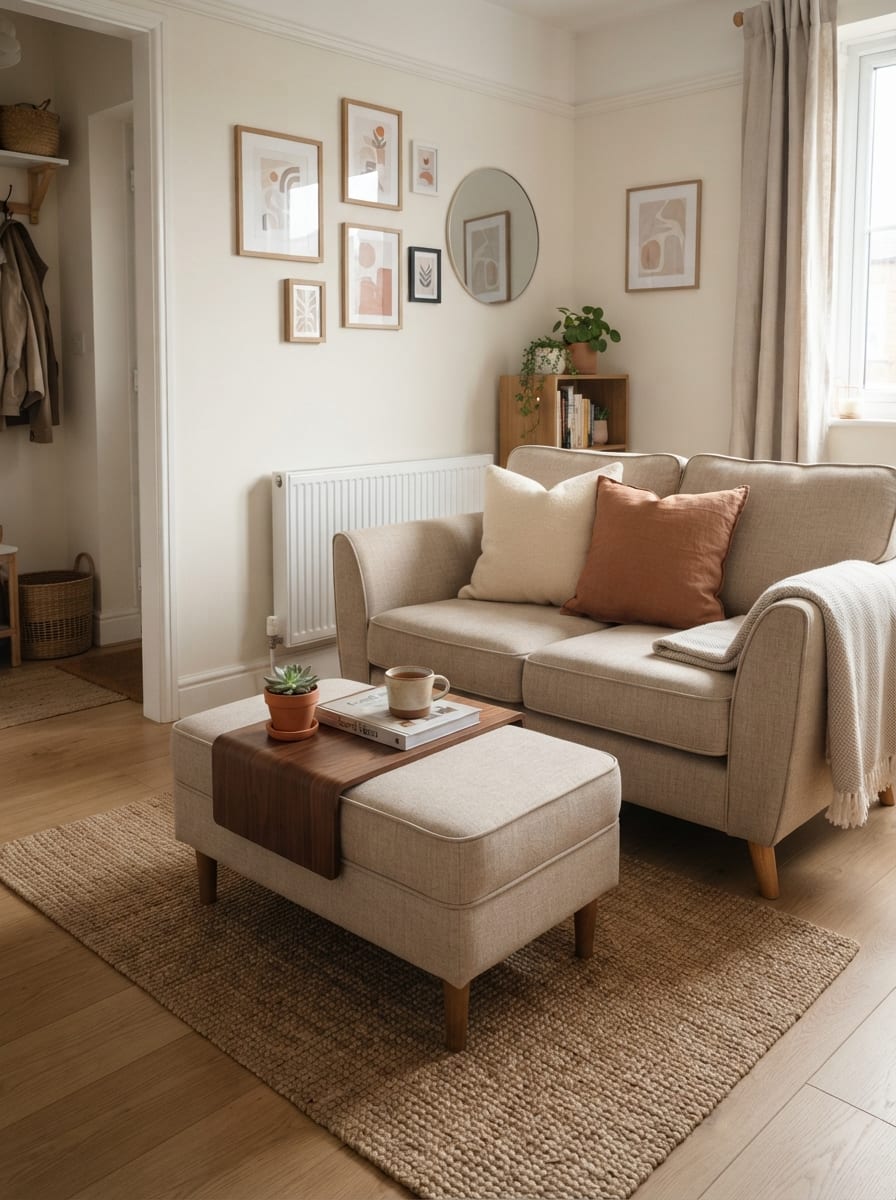
4. The Storage Ottoman Extra Seat
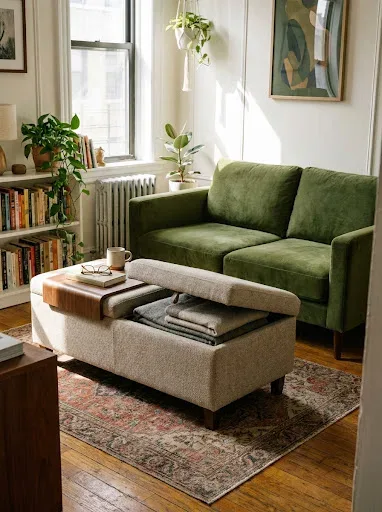
An ottoman can provide more than one function. Depending on the design, it can be:
- footrest
- hidden storage
- occasional seat
- coffee-table substitute
Why this works
You gain extra guest seating without keeping another full chair in the room.
Choose firm enough upholstery
If you want people to sit on it, the ottoman should feel stable and supportive.
Use a tray when needed
A flat tray can turn the ottoman into a temporary surface for:
- drinks
- books
- remotes
Store soft items inside
Good categories include:
- blankets
- games
- small toys
Keep the size controlled
An enormous rectangular ottoman can block the room just as much as a large coffee table. Choose one that leaves enough room to walk around it.
5. The Nesting Stool Strategy
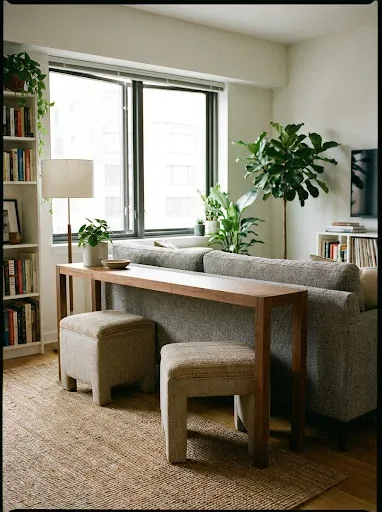
Small stools are one of the easiest ways to add guest seating without dedicating permanent floor space to chairs.
Choose stools that tuck away
Good locations include:
- under console
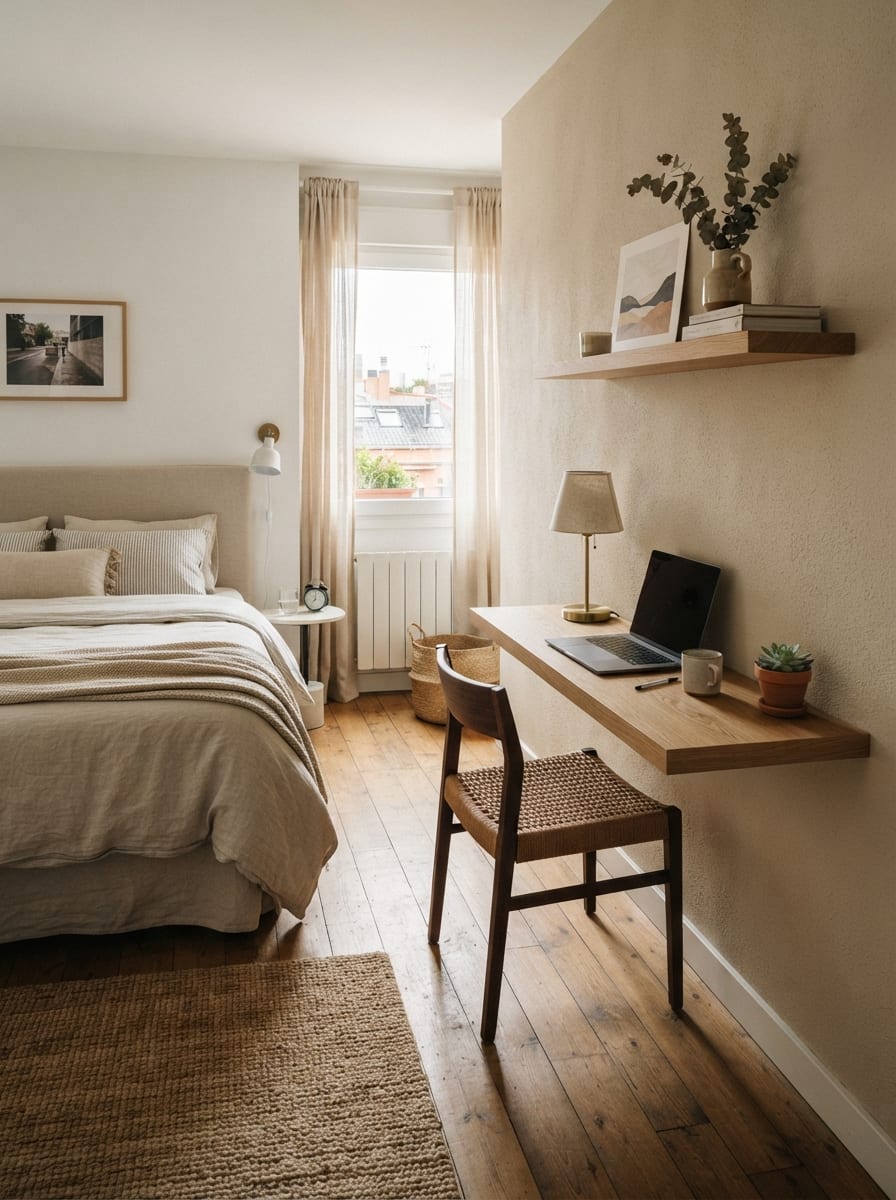
- beneath wall-mounted desk
- under open side table
- beside media unit
Use them only when needed
Most of the time, the stools stay out of the main seating area. When guests arrive, pull them toward:
- coffee table
- sofa
- conversation zone
Look for stable shapes
Choose designs intended to support a seated person. Avoid decorative side tables that are not rated for seating.
Keep them visually related
Two matching or coordinating stools usually feel calmer than several unrelated small seats.
Do not scatter them around the room
The point is flexible seating, not more furniture clutter.
6. The Wall-Side Bench Seat
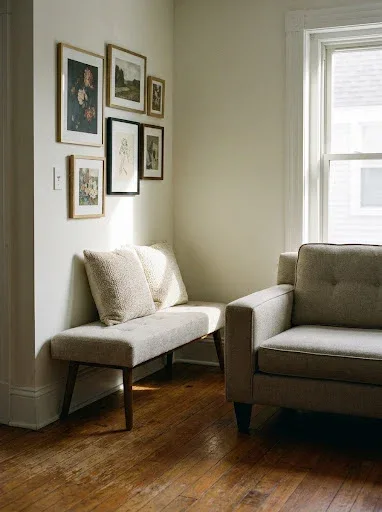
A narrow bench can provide seating without the depth of a full armchair. It works especially well when it sits against a wall.
Good locations
Try:
- beneath window
- along short wall
- beside entry edge of living room
- near dining transition
Why benches save space
A bench stays close to the wall. You do not need to pull it backward to sit.
Keep the depth comfortable but compact
Too shallow becomes uncomfortable. Too deep turns into another bulky furniture piece.
Add only limited cushions
One or two cushions are enough. A bench covered in pillows becomes less useful.
Storage can be a bonus
A storage bench may hold:
- blankets
- board games but only if the lid or drawers remain easy to access.
7. The Window-Corner Reading Chair
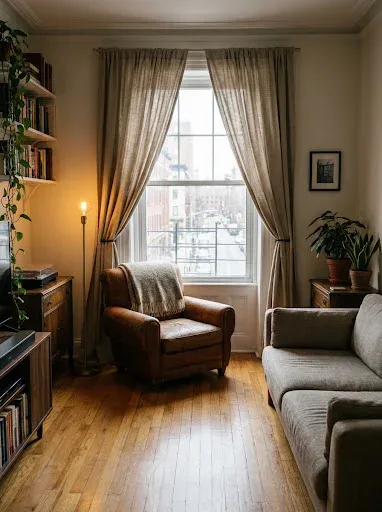
An unused window corner can sometimes hold one proper seat without interfering with the main route through the room.
Why this works
Corners often fall outside the primary walking path. That makes them useful for a compact chair.
Keep window access usable
The chair should not block:
- curtains
- blinds
- window opening where applicable
Add one task light if needed
A slim floor lamp or wall light can turn the corner into a genuine reading spot.
Avoid adding too much furniture
You may not need:
- chair
- side table
- plant stand
- basket all in the same corner. One chair plus one light may be enough.
Choose a chair that fits the corner
Measure:
- chair width
- chair depth
- curtain clearance before buying.
8. The Dining-Chair Crossover Seat
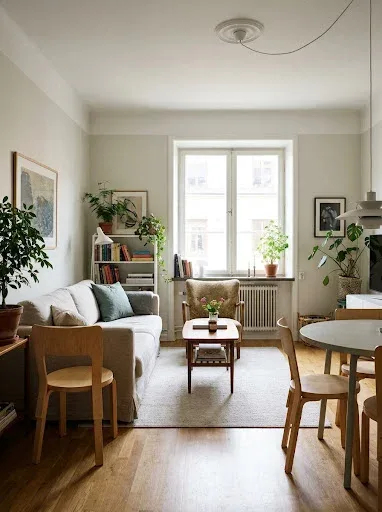
You do not always need living-room furniture to provide every guest seat. If the dining area is nearby, dining chairs can become temporary conversation seating.
Why this is useful
Dining chairs already occupy floor space elsewhere. Using them for guests means you do not need to permanently keep:
- extra armchair
- extra stool
- extra bench in the living room.
Choose chairs that move easily
Lighter chairs are easier to reposition.
Upholstered seats can help
If you frequently use dining chairs for conversation seating, a slightly padded seat may be more comfortable.
Return them afterward
Once guests leave, move them back to the dining area. The living room returns to its everyday layout.
Best for open-plan apartments
This works especially well when the dining area sits immediately behind or beside the living room.
9. The One-Swivel-Chair Layout
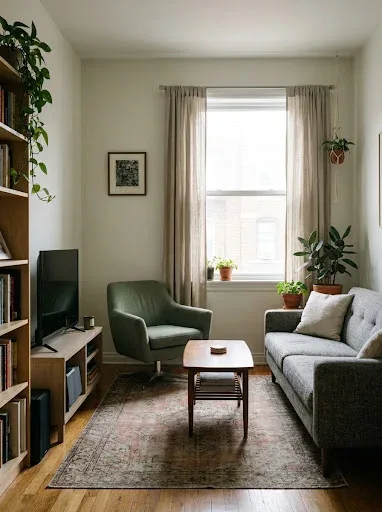
A swivel chair can solve a very specific small-space problem. It allows one seat to serve more than one direction.
Why this helps
The chair can turn toward:
- sofa
- TV
- window
- nearby dining area without physically moving the whole chair.
Best for rooms with multiple focal points
For example:
- TV on one wall
- sofa on another
- window on the side A swivel chair can adapt.
Keep the base compact
Some swivel chairs are very wide. Look for a true apartment-scale version.
Leave rotation clearance
The chair needs enough room around it to turn without hitting:
- coffee table
- wall
- sofa
Keep side furniture minimal
A swivel chair is most useful when it can actually rotate freely.
10. The Everyday-Seats + Guest-Seats Formula
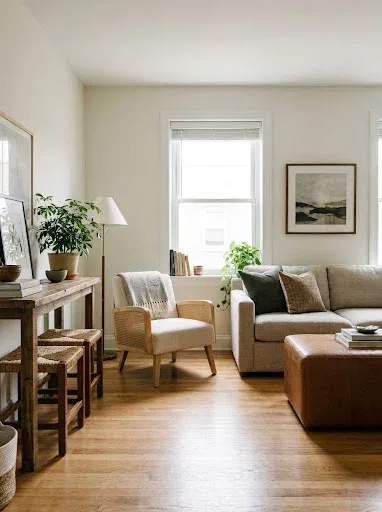
The final idea is more of a planning rule than a furniture type. Do not furnish the living room for the maximum number of people who might visit. Furnish it for the number of people who use it most days. Then add flexible guest seating.
Step 1: Count everyday users
If two people live there, you may only need:
- sofa
- one chair as permanent lounge seating.
Step 2: Decide guest capacity
Maybe you occasionally need two more seats. Those could come from:
- stools
- ottoman
- dining chairs
Step 3: Keep guest seating out of circulation
When not needed, it should:
- tuck under furniture
- return to dining area
- serve another function
Why this works
You avoid sacrificing everyday floor space for occasional situations.
Example
Daily: sofa + chair Guests arrive: sofa + chair + ottoman + two stools Guests leave: The room goes back to its open layout. (If your visitors are staying overnight instead of just dropping by, see our guide to small apartment guest bed solutions for sleeper chairs, daybeds, and folding guest setups that preserve living space).
Start With the Main Walking Route
Before adding another chair, identify the path people actually use. This may run from:
- entry to kitchen
- living room to hallway
- sofa to balcony
- living room to dining area That route should remain obvious. A chair that technically fits but interrupts the route is not a good seat.
Measure the Seat in Use, Not Just Its Width
A chair needs more than its listed dimensions. Consider:
- room to approach it
- room for legs
- room to rotate if applicable
- room to walk around it A swivel chair especially needs a little clearance beyond its static footprint.
Do Not Block the Sofa
A common mistake is placing guest seating too close to the sofa. You should still be able to:
- sit down comfortably
- stand up
- move between seats without turning sideways every time.
Protect the Coffee-Table Zone
The coffee table already occupies the center of the seating area. If chairs are added too close around it, the room starts feeling congested. As a practical starting point, roughly 14 to 18 inches between the sofa and coffee table often provides usable reach while still leaving room for legs, although furniture scale and mobility needs can change that.
Protect the Main Passage
When the floor plan allows, around 30 to 36 inches is a useful target for an important walking path. Small apartments may have less. The important point is that the route should still feel natural when people are sitting down.
Do You Need a Second Armchair?
Maybe not. Ask:
- Is it used every day?
- Is there already guest seating elsewhere?
- Does it block a walkway? If the answer is mostly no, flexible seating may be better.
Sofa + Two Chairs vs Sofa + One Chair
Sofa + Two Chairs Works when:
- the room is wide enough
- conversation seating is important
- chairs do not block circulation Sofa + One Chair Better when:
- room is narrow
- living room connects to other spaces
- you want more open floor The smaller setup is often easier to live with.
Loveseat + Two Chairs
This can work surprisingly well in a short, wide room. The loveseat creates a smaller central anchor, leaving room for two lighter chairs. But make sure the total number of furniture pieces does not make the room visually busy.
Sofa + Poufs
Poufs can work as:
- footrests
- occasional seats but they should have a storage position. Good options:
- beneath console
- beside sofa
- under open table A pouf permanently sitting in the walkway is not space-saving.
What About Floor Cushions?
They can provide extremely flexible guest seating. They work best for households where that style is actually comfortable and appropriate. Store them when not in use so they do not become permanent floor clutter.
What About Folding Chairs?
Folding chairs can be useful when:
- you host more people occasionally
- storage space exists elsewhere But they usually do not need to be part of the visible everyday living-room setup.
What About a Sectional?
A sectional can provide a lot of seating with fewer individual furniture pieces. That can be efficient. But it only works when:
- chaise direction matches the room
- the sectional does not block the main route
- depth is appropriate Do not assume a sectional automatically saves space.
What About a Corner Sofa?
A corner sofa can concentrate seating into one zone, but the corner and chaise portions can create a very large fixed footprint. Measure:
- total width
- chaise depth
- clearance at both ends before assuming it is the best way to add seats. (See our guide to compact corner sofa layouts for dimension benchmarks and low-back configurations that fit tight rooms).
Bench vs Accent Chair
Bench Better when:
- it can sit against wall
- you need occasional seating
- you want storage too Chair Better when:
- comfort matters
- seat is used daily
- someone needs back support Use the furniture according to how often people actually sit there.
Stool vs Pouf
Stool Usually:
- smaller
- firmer
- easier to tuck away Pouf Usually:
- softer
- more casual
- better as footrest too Either can work if it has a clear storage position.
Use the Room Edges Before the Center
Guest seating works best around the perimeter. Try:
- wall-side bench
- window chair
- stool under console before placing more furniture in the center. The central floor is valuable for movement.
Avoid Furniture Islands Everywhere
A small living room feels crowded when every seat has its own:
- side table
- lamp
- basket
- plant Not every chair needs a full supporting furniture setup. Sometimes the chair alone is enough.
Share Side Tables Where Possible
One table can serve:
- sofa
- chair if positioned between them. This reduces the total number of furniture pieces.
Use the Coffee Table as a Shared Surface
If the coffee table is reachable from several seats, you may not need side tables beside every chair. Again, fewer pieces can mean better circulation.
Make Sure Every Permanent Seat Gets Used
Observe the room for a week. Which seats do people actually choose? If one chair is almost never used but occupies a prime section of floor, reconsider it.
Do Not Furnish for Imaginary Guests
This is one of the biggest small-space traps. If six people visit twice a year, you do not necessarily need six lounge seats available every day. Use temporary seating for those occasions.
Plan the Room for Normal Life First
A good priority is:
1. everyday comfort
2. circulation
3. storage
4. guest seating
Not:
1. maximum seating capacity
A Two-Person Small Living Room Formula
Try: Permanent
- compact sofa
- one accent chair Flexible
- one ottoman
- two nesting stools This can provide several guest seats without keeping four chairs in the room every day.
A Three-Person Household Formula
Try: Permanent
- compact three-seat sofa
- one small chair Flexible
- one stool or dining chair That may be enough.
An Open-Plan Apartment Formula
Try: Living area
- loveseat
- one swivel chair Dining area
- lightweight dining chairs Use dining chairs when extra seating is needed.
A Very Narrow Living Room Formula
Try: One wall Slim sofa. Corner One light chair. Center Small round coffee table or no coffee table. Guest seating Stools tucked elsewhere. Do not line both long walls with large seats.
A Living Room With No Space for Another Chair
That is fine. Use:
- storage ottoman
- stool
- dining chair as temporary seating. You do not have to make every extra seat a lounge chair.
Common Small Living Room Seating Mistakes
Buying too many permanent seats Plan for everyday life first. Choosing chairs with oversized arms Useful seat width gets wasted. Ignoring depth A narrow chair can still project far into the room. Putting seating in the main walkway A seat is not useful if everyone has to walk around it. Giving every chair a side table Furniture multiplies quickly. Using poufs with nowhere to store them Flexible seating needs a home. Buying a giant coffee table between many seats The center becomes blocked. Matching everything A sofa and chairs do not need to be from the same set. Prioritizing symmetry over circulation Small rooms often need asymmetrical layouts. Furnishing for the largest possible gathering Occasional needs should not determine the everyday floor plan.
A Quick Seating Test Before Buying Anything
Mark the proposed chair footprint with painter’s tape. Then test whether you can still:
- enter the room
- reach the sofa
- walk toward the kitchen
- use the coffee table
- open nearby doors Do this with the room in normal use, not just when all furniture is perfectly tucked in.
Which Seating Idea Fits Your Living Room?
Choose the Slim Sofa + Light Chair Pairing if:
You want one additional comfortable everyday seat.
Choose the Loveseat + Pull-Up Chair if:
Only one or two people use the room most days.
Choose Two Armless Chairs if:
You want a flexible conversation area.
Choose a Storage Ottoman if:
You need storage and occasional seating.
Choose Nesting Stools if:
Guest seating is needed only occasionally.
Choose a Wall-Side Bench if:
You have unused wall length but limited room depth.
Choose a Window Chair if:
There is an unused corner outside the main walkway.
Use Dining Chairs if:
The dining area sits close to the living room.
Choose a Swivel Chair if:
The room has several focal directions.
Use the Everyday + Guest Formula if:
The room feels crowded because it is permanently furnished for too many people.
Final Thoughts
A small living room does not need as many permanent seats as you can physically fit. It needs enough comfortable seating for everyday life, plus a few flexible options for guests. Start with: sofa → primary chair → circulation Then ask whether you genuinely need another permanent seat. If you do not, use:
- ottomans
- stools
- benches
- dining chairs for occasional capacity. The goal is not maximum seating. It is enough seating without losing the floor space that makes the room comfortable to live in.