8 Small Apartment Ceiling Ideas That Add Character Without Using Floor Space
Explore 8 small apartment ceiling ideas, from painted borders and tonal finishes to statement lighting and dining-nook designs that add character without using floor space.
In This Guide
When decorating a small apartment, it is easy to focus on the furniture, walls, and storage. The ceiling often remains plain, even when the rest of the room has been carefully styled. Yet this overlooked surface can introduce color, pattern, architectural interest, and lighting without requiring another piece of furniture on the floor.
The trick is choosing a ceiling treatment that suits the room’s height, natural light, and existing finishes. A painted border can make a room feel more finished, a restrained pattern can define a dining nook, and a well-chosen ceiling light can become a focal point without adding visual clutter at floor level.
Not every ceiling treatment works in every apartment. Dark colors and busy patterns can feel overwhelming in some low-ceilinged rooms, while oversized fixtures can interrupt sightlines or make a compact space feel crowded. The best approach is to treat the ceiling as part of the entire room rather than decorating it in isolation.
These eight small apartment ceiling ideas explore ways to add character overhead, from simple paint treatments to more architectural features. Some are suitable for renters with permission or reversible alternatives; others are better planned as part of a renovation.
1. The Painted Ceiling Border
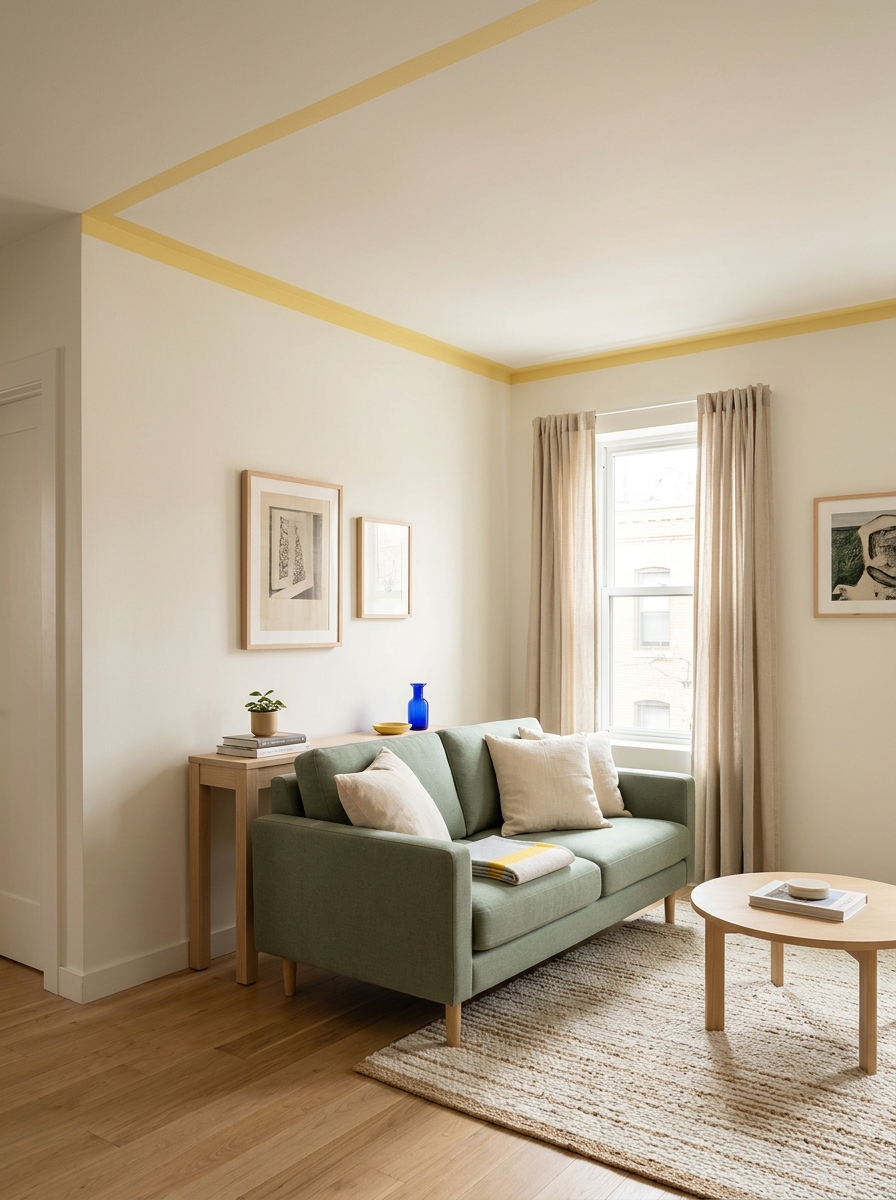
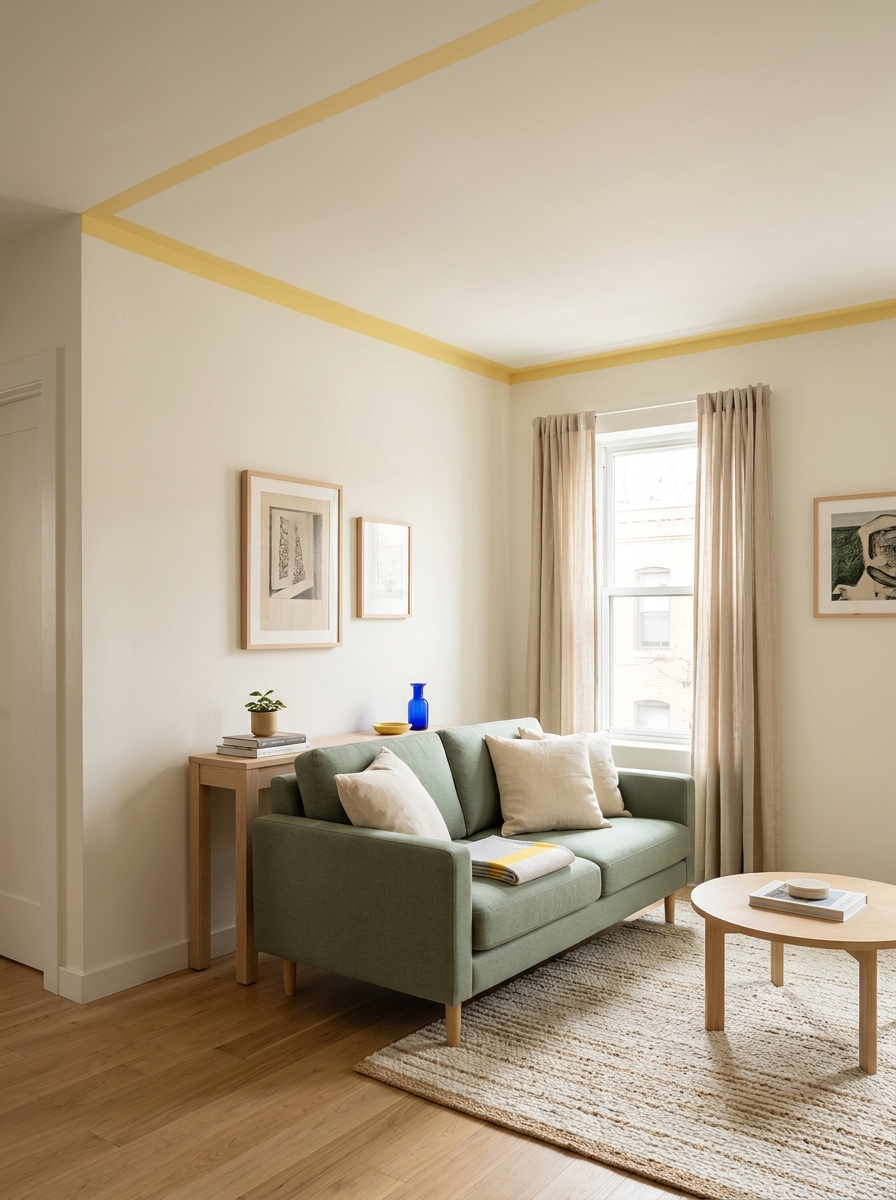
A painted ceiling border introduces color around the perimeter of the ceiling without requiring you to paint the entire surface. It creates a framed effect that can make a simple room feel more deliberate, especially when the border relates to the wall color, trim, or furnishings.
Unlike a strong accent wall, this treatment draws attention upward and creates a visual transition between the walls and ceiling. It can be subtle or expressive depending on the width of the border and the contrast between colors.
How to make it work
- Choose a color that already appears somewhere in the room, such as a muted sage from the upholstery or a soft blue from the artwork.
- Keep the border proportionate to the room and ceiling height.
- Test the color in daylight and under evening lighting before painting.
- Use painter’s tape and a carefully measured layout to create clean edges.
A warm-white room with a narrow butter-yellow ceiling border can feel sunny without becoming overly colorful. In a more dramatic interior, a deep olive border against a soft ivory ceiling can create a stronger architectural effect.
For a compact room with a low ceiling, a narrow, restrained border is usually a safer starting point than a thick band of dark paint. A high-contrast border can visually emphasize the ceiling’s perimeter, which may not be the desired effect in every room.
Renter-friendly alternative: If painting is not permitted, repeat a ceiling color through artwork, textiles, or removable decor at eye level. Avoid assuming that adhesive products are suitable for overhead use; anything mounted above a living area must be appropriate for that application and securely installed.
2. The Color-Blocked Ceiling Panel
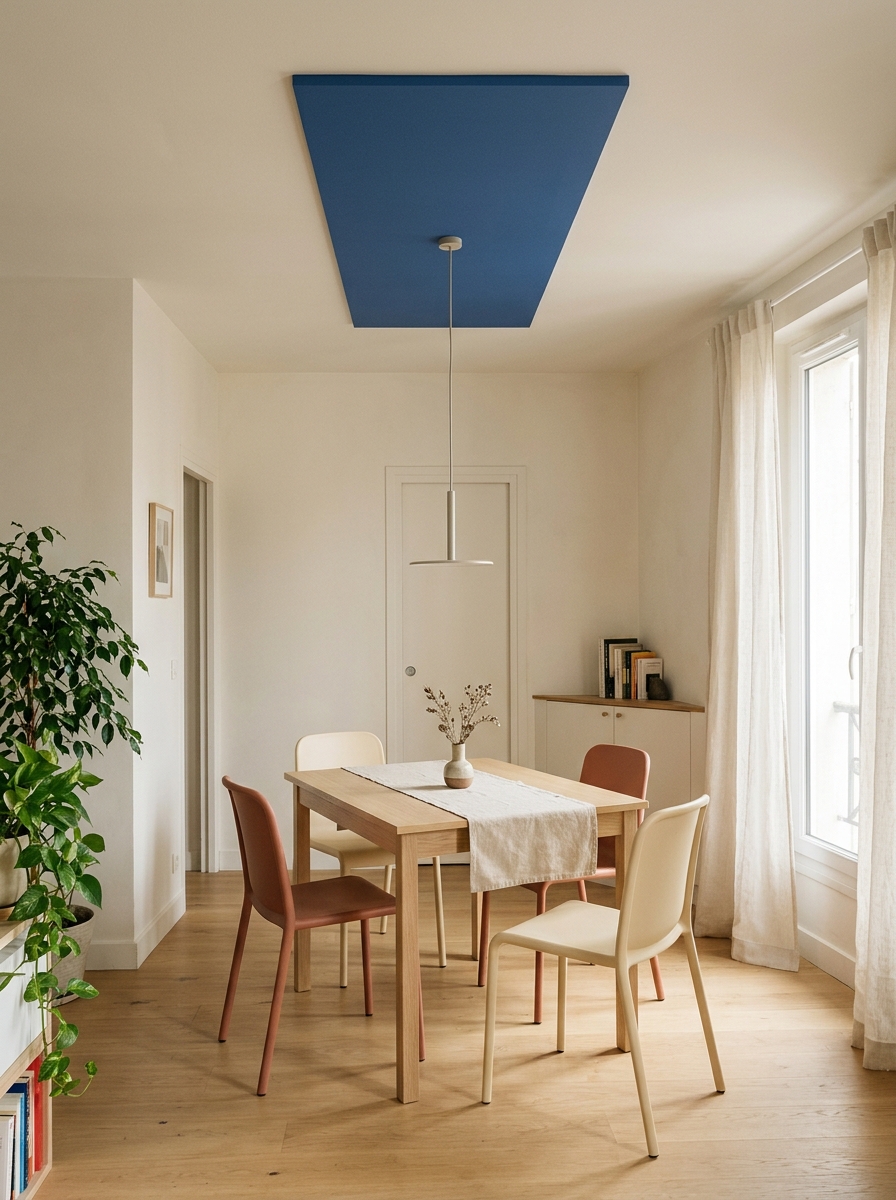
A color-blocked ceiling panel creates a defined area of color above a particular part of the room. Instead of treating the entire ceiling as one uninterrupted surface, you can visually mark a reading corner, work area, or dining zone.
The effect is especially useful in open-plan apartments, where different activities share one room. A carefully positioned ceiling panel can reinforce a zone without adding a divider or taking up floor space.
How to make it work
- Identify the zone you want to define before choosing the panel’s shape.
- Align the painted area with the furniture or architectural boundaries below it.
- Use a color that complements the room’s existing palette.
- Keep the shape simple enough to read clearly from the main entrance.
For example, a muted cobalt rectangle above a compact dining table can create a distinctive visual anchor against warm-white walls. A softer terracotta panel over a reading chair can make the corner feel intentional without requiring a separate room.
Avoid placing the panel randomly in the middle of the ceiling. It should relate to something below it, such as the dining table, desk, or seating arrangement.
Small-space tip: Use the panel to identify one area rather than painting several disconnected shapes overhead. Too many blocks can make an already busy room feel fragmented.
Renter note: This is generally a paint-based treatment, so confirm permission before applying it. If you cannot paint, use furniture placement, a rug, and a coordinated lamp to establish the same zone at floor level.
3. The Wallpapered Ceiling Nook
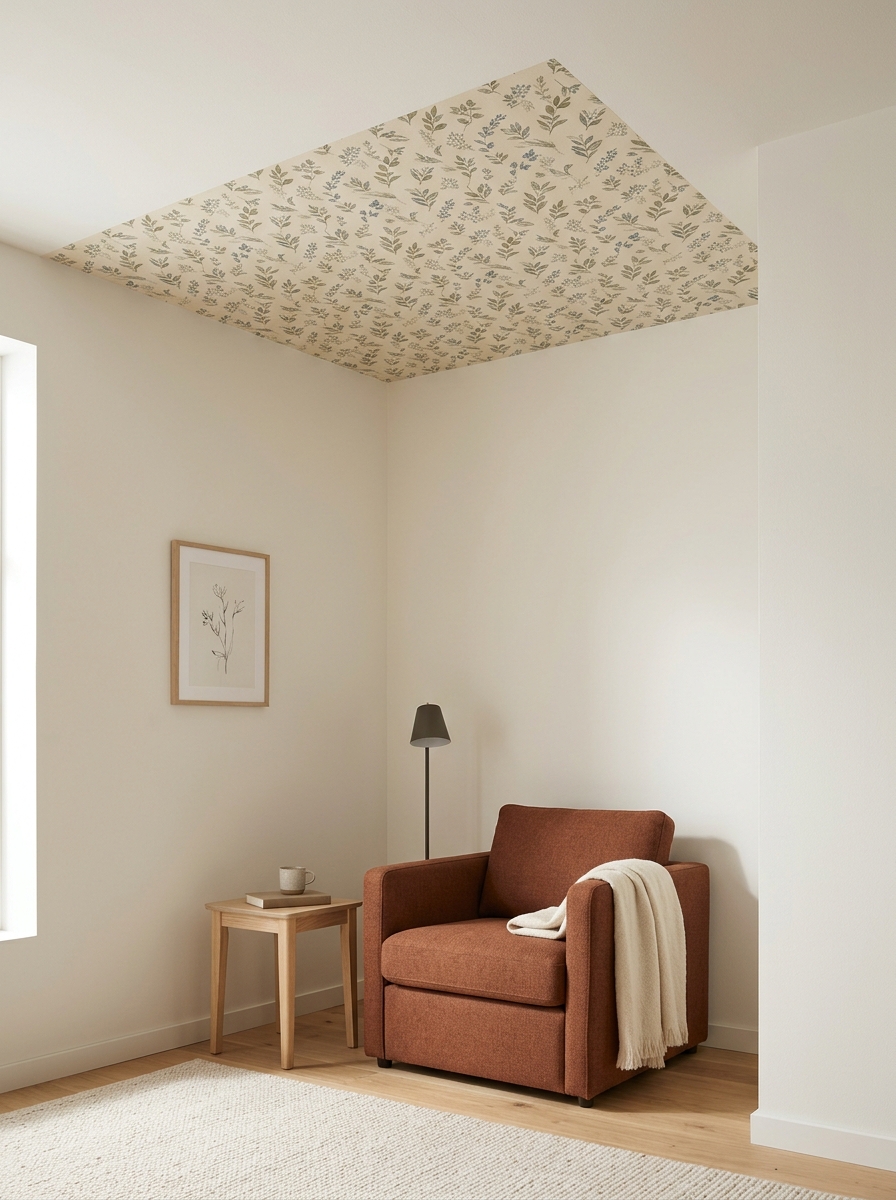
Wallpaper can turn a small ceiling area into a distinctive design feature. Used selectively, it creates interest above a reading nook, dining area, or compact workspace without introducing another pattern across every wall.
The key is limiting the patterned surface and choosing a design that relates to the room below. A small-scale botanical print, an understated geometric pattern, or a soft tonal motif can provide character without competing with the furniture.
How to make it work
- Choose a clearly defined area rather than covering every available ceiling surface by default.
- Coordinate the pattern with the room’s main colors and the scale of nearby furnishings.
- Sample the design under the room’s actual lighting conditions.
- Confirm that the wallpaper and adhesive are suitable for the ceiling substrate and intended conditions.
A small dining nook could use a warm-cream ceiling with a muted olive botanical pattern, while a compact reading corner might suit a geometric design in dusty blue and pale ochre.
Ceiling wallpaper requires more care than wallpaper on a vertical wall. Gravity, surface preparation, substrate condition, and adhesive compatibility all matter. Use a suitable installation method and professional help where needed. Do not use ordinary peel-and-stick wallpaper overhead unless the product is explicitly designed for that application and can be installed securely.
Renter-friendly alternative: If the ceiling cannot be altered, bring the pattern into the nook through removable artwork, cushions, or a rug. This keeps the visual idea without risking a ceiling finish or creating a falling-material hazard.
4. The Slim Ceiling-Mounted Light
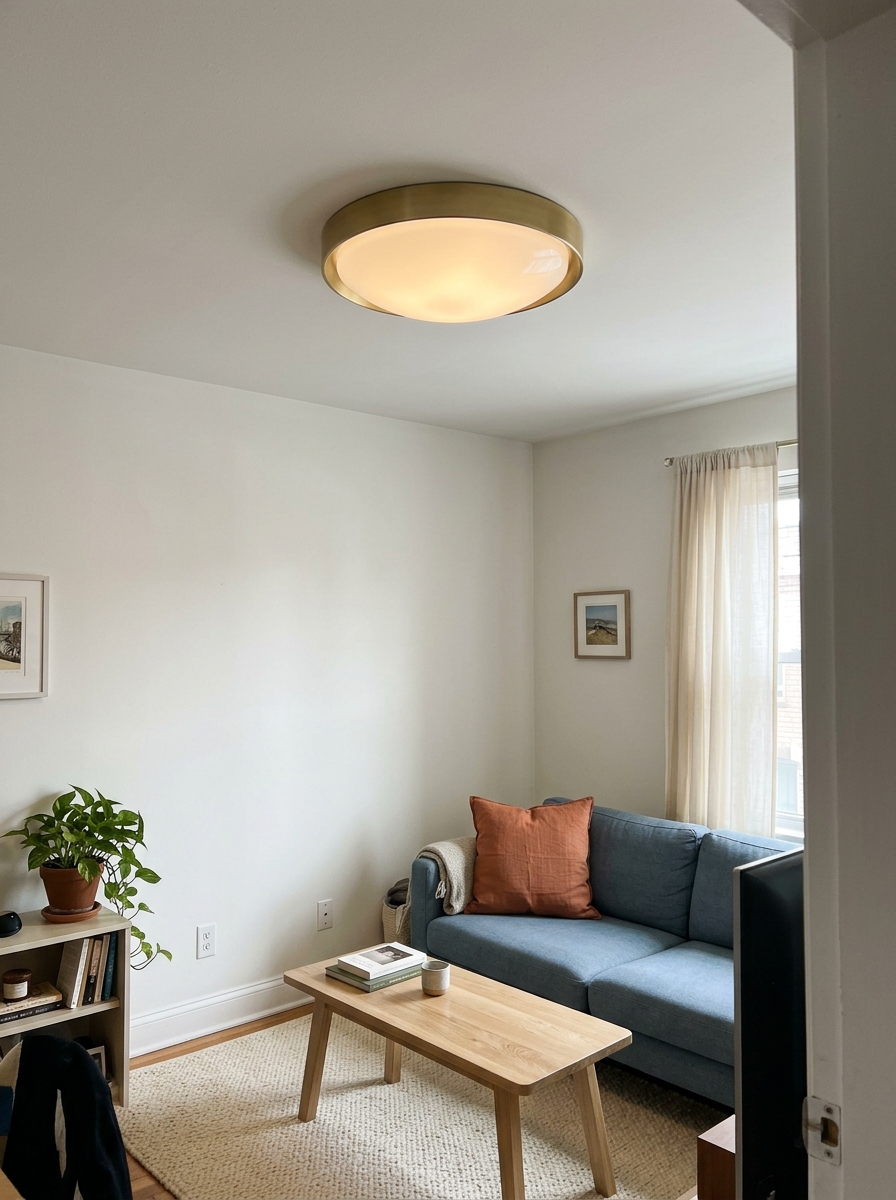
A ceiling light can serve as both a practical fixture and a design feature. In a compact apartment, a slim flush-mount or low-profile semi-flush light can add a distinctive silhouette without hanging far into the room.
This is particularly useful when the ceiling is relatively low or when a pendant would interfere with sightlines. The right fixture can reinforce the interior style while keeping the room visually open.
How to make it work
- Select a fixture whose size and projection suit the room’s dimensions.
- Consider how the light will spread across the room rather than judging it by appearance alone.
- Coordinate its finish with nearby hardware, furniture, or other visible metal details.
- Choose suitable brightness and color temperature for the room’s purpose.
A compact living room might use a sculptural opal-glass flush mount with a brushed-brass detail. A small kitchen or dining area could suit a slim geometric fixture with a matte charcoal finish.
Do not assume that every decorative fixture provides enough light for everyday tasks. Consider the room’s overall lighting plan, including existing ceiling lights, task lighting, and ambient light.
Electrical installation should follow applicable local requirements. If the fixture needs new wiring, a different mounting point, or changes to the electrical box, use a qualified professional where required. Always follow the fixture manufacturer’s instructions.
Renter-friendly alternative: If replacing the existing fixture is not allowed, improve the room with compatible plug-in lamps or other permitted lighting options rather than modifying the wiring.
5. The Subtle Ceiling Medallion
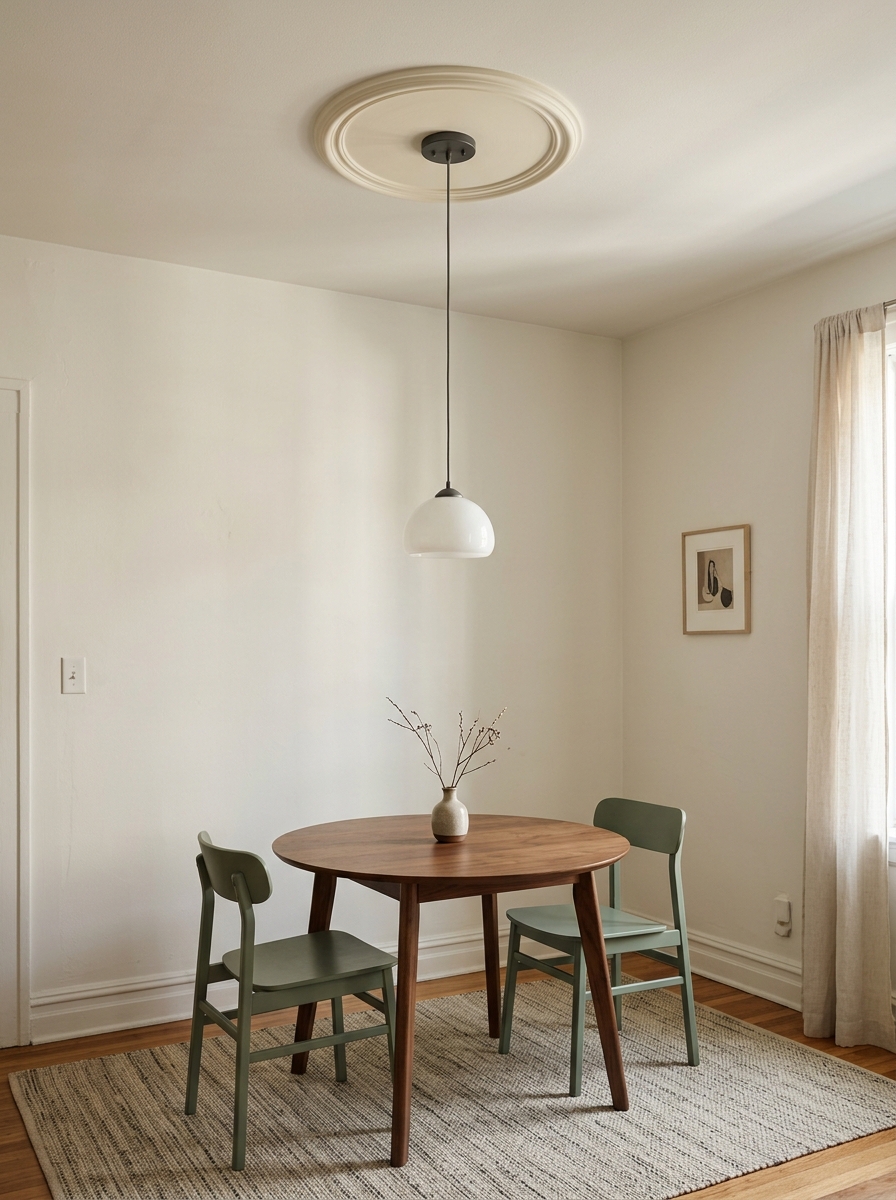
A ceiling medallion creates a decorative frame around a central light fixture. It can introduce a little architectural detail into an otherwise plain ceiling, particularly in older apartments or rooms with a simple, traditional character.
A medallion does not need to be ornate to look effective. A clean, shallow profile can provide enough definition around a pendant or flush-mount light without overwhelming a compact room.
How to make it work
- Match the medallion’s scale to the fixture and the room.
- Choose a simple profile if the surrounding architecture is modern.
- Coordinate its finish with the ceiling or use a restrained contrast.
- Confirm that the medallion is compatible with the fixture, ceiling surface, and installation method.
For example, a shallow ivory medallion around a small opal-glass light can create a quiet focal point. A more traditional apartment might suit a slightly more detailed profile paired with a simple fixture.
The medallion should complement the light, not compete with it. An oversized decorative piece can make a small ceiling feel crowded, while a tiny medallion beneath a large fixture may look disproportionate.
Safety note: A decorative medallion is not a structural support. The light fixture must be supported by an appropriate electrical box or mounting system. Use suitable materials and installation methods, and do not attach heavy decorative pieces to an unsuitable ceiling surface.
Renter note: If permanent installation is not allowed, achieve a similar sense of emphasis with a distinctive but appropriately sized replacement shade or a coordinated fixture where permitted.
6. The Tonal Ceiling-and-Wall Pair
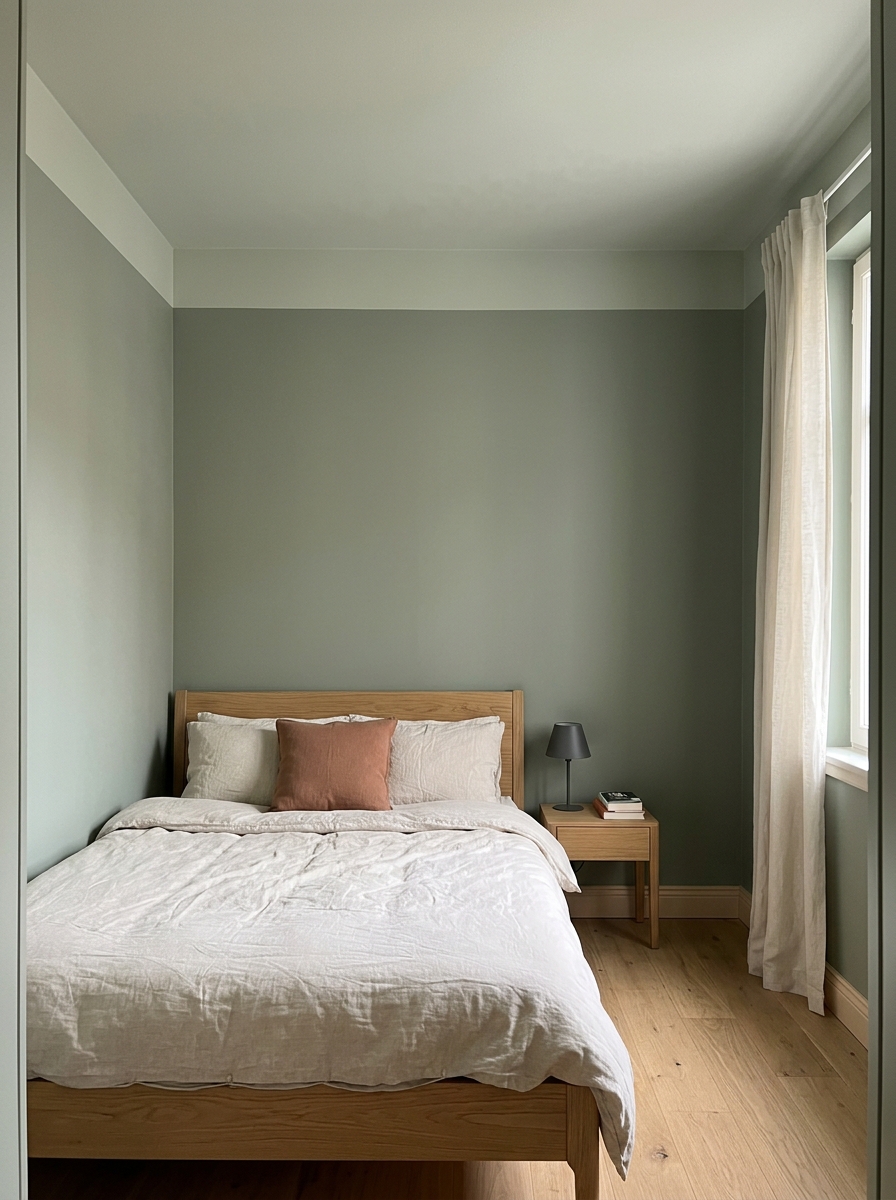
Painting the ceiling and walls in related tones creates a more continuous visual envelope. Rather than drawing a sharp contrast at the top of the room, this approach softens the transition between surfaces and can make the design feel cohesive.
The colors do not have to match exactly. A ceiling that is a lighter version of the wall color can preserve brightness, while closely related mid-tones can create a more enveloping effect.
How to make it work
- Start with the room’s existing light conditions and permanent finishes.
- Choose a wall color and a related ceiling tone that work together under both daylight and artificial lighting.
- Test large samples rather than relying only on small paint chips.
- Keep furniture and accessories relatively restrained if the walls and ceiling already carry strong color.
A muted sage wall with a pale sage ceiling can feel soft and connected. A dusty-blue wall paired with a lighter blue ceiling can create a calm, contemporary room. For a bolder effect, a warm terracotta wall and a compatible pale peach ceiling can bring warmth without requiring patterned surfaces.
Dark or saturated colors can look beautiful, but they are not automatically suitable for every compact apartment. Consider the ceiling height, amount of daylight, and how the room will be used before committing to a full color wrap.
Small-space tip: If you are unsure, begin with a lighter ceiling tone that relates to the wall color. It provides continuity while retaining a clearer visual separation between the surfaces.
Renter-friendly alternative: Use the same tonal relationship through removable furnishings and textiles. Check permission before painting the ceiling or walls.
7. The Ceiling-Height Curtain Effect
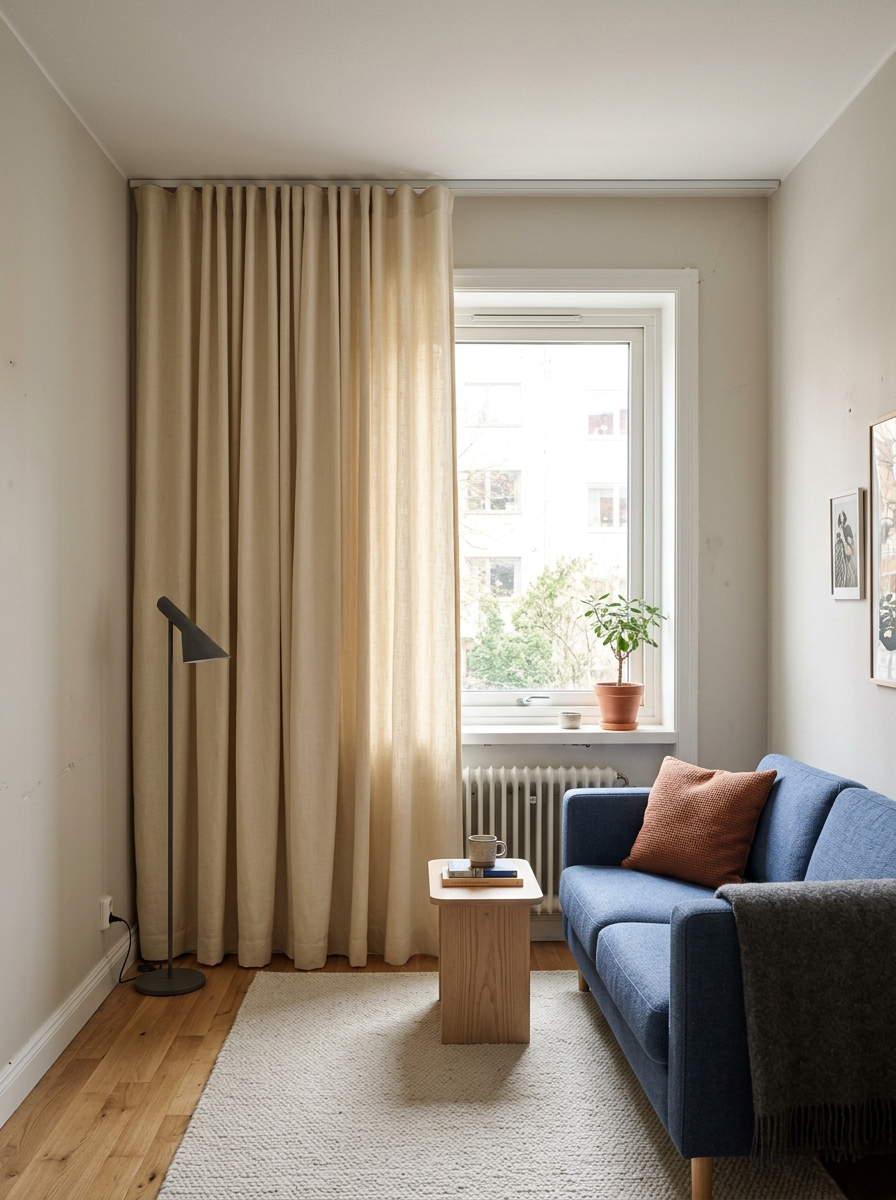
Curtains can influence how the ceiling is perceived even though they hang vertically. Mounting a suitable curtain track or rod high on the wall, close to the ceiling, creates a longer uninterrupted fabric line and can make a window wall feel taller.
This is a useful design technique in small apartments because it changes the visual proportions without adding furniture. It can also make the window treatment feel more integrated with the architecture.
How to make it work
- Position the track or rod as high as the window layout and installation constraints allow.
- Choose a curtain length that reaches the intended endpoint without dragging unnecessarily.
- Use a fabric weight appropriate for the window, room, and desired amount of light.
- Keep the color connected to the walls or other textiles to avoid visually fragmenting the space.
Soft ivory curtains can create a continuous line against warm-white walls. A muted blue or olive curtain can add more color while still drawing the eye upward.
Do not assume that a ceiling-mounted track is suitable for every ceiling. Fixings must match the substrate, and heavy curtains need appropriate support. If drilling is not permitted, consider a suitable existing rod or another approved installation method.
Small-space tip: Avoid adding a bulky pelmet or an oversized curtain arrangement that consumes visual space unnecessarily. A simple, well-proportioned treatment is often enough.
8. The Graphic Ceiling in a Dining Nook
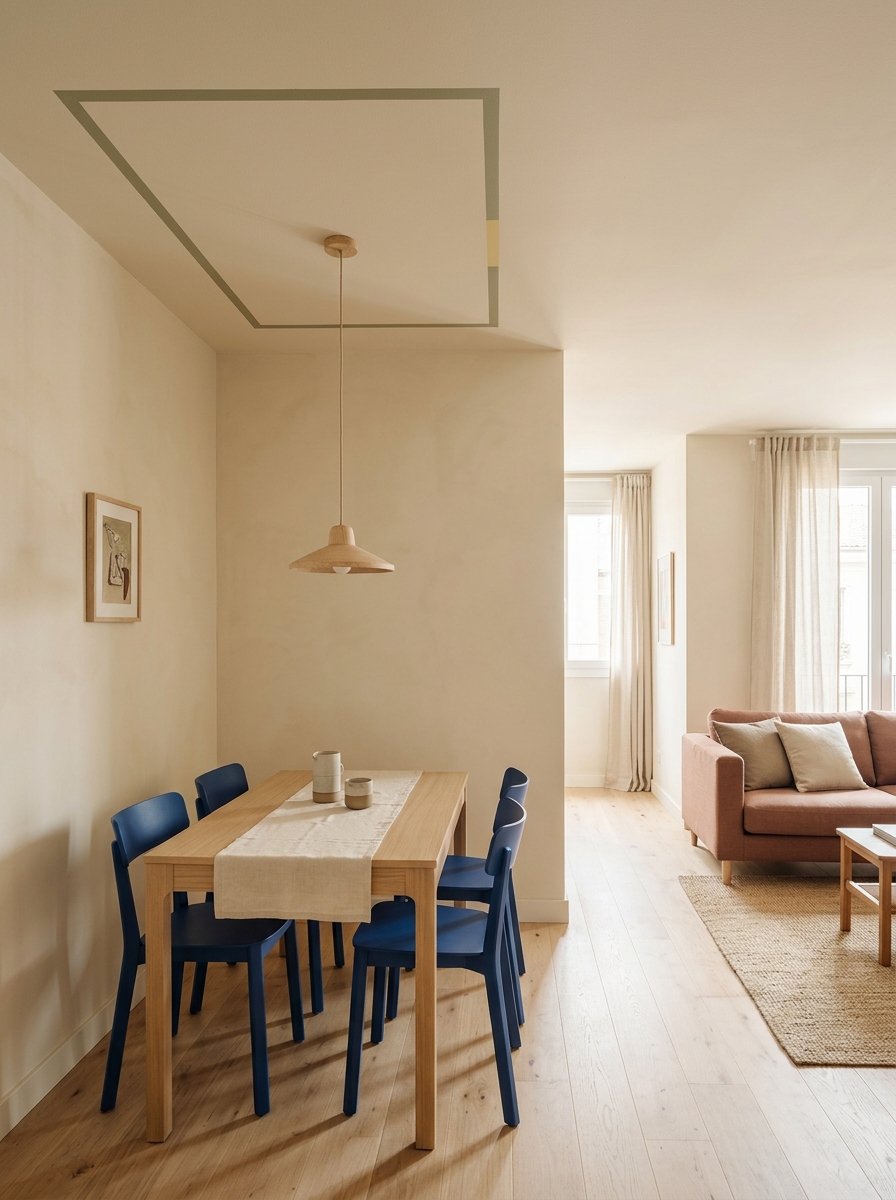
A small dining nook can feel like a distinct part of an open-plan apartment without needing a room divider. A simple graphic ceiling treatment above the table gives the area a visual identity while leaving the floor open.
This can be achieved with a restrained painted shape, a tonal border, or a small-scale pattern that follows the footprint of the dining table. The design should relate to the furniture rather than appearing as an isolated decoration.
How to make it work
- Use the dining table’s footprint as a starting point for the ceiling treatment.
- Align the shape with the table and seating arrangement.
- Choose a palette that complements the chairs, tabletop, and nearby living area.
- Keep the design simple enough to distinguish the dining zone without making the ceiling visually busy.
For a compact apartment, imagine a pale-oak table with cobalt-blue chairs beneath a warm-cream ceiling panel edged in butter yellow. The color connection gives the nook personality while the rest of the room remains calm.
A more restrained version could use a thin olive border above a small round table, with the same green repeated in a plant or cushion.
Small-space tip: Use one clear ceiling feature to distinguish the dining zone. If the room already has patterned flooring, colorful chairs, and a statement light, keep the overhead treatment quieter.
How to Choose the Right Ceiling Treatment for Your Apartment
The best option depends on ceiling height, natural light, the room’s function, and whether you can make permanent changes.
- For a low ceiling: Consider a subtle painted border, a light tonal treatment, or a low-profile fixture rather than a bulky hanging feature.
- For a dark room: Test lighter ceiling tones and finishes that work with the available light. Do not assume that white alone will solve a lack of natural light.
- For an open-plan apartment: A color-blocked panel or graphic ceiling above one activity zone can help define the area without a divider.
- For a renter: Focus on permitted changes, existing fixtures, textiles, and visual coordination. Confirm approval before painting, drilling, or installing overhead decor.
- For a room with strong wall patterns: Choose a simpler ceiling treatment so the room does not feel visually overloaded.
- For a room that needs better lighting: Prioritize suitable light distribution and safe installation before choosing a decorative fixture.
Before making a change, view the ceiling from the doorway and from the room’s main seating position. A treatment that looks appealing from directly underneath may feel different when seen across the entire room.
Ceiling Design Mistakes to Avoid in Small Apartments
- Choosing a treatment without considering height: A large medallion, bulky light, or heavy visual border can feel disproportionate in a low-ceilinged room.
- Using too many patterns overhead: Patterned wallpaper, a graphic painted panel, and a statement light may compete. Choose one primary feature and let the others support it.
- Ignoring the room’s existing palette: The ceiling should relate to the walls, floor, furnishings, and lighting rather than introducing an unrelated color.
- Assuming every overhead material is safe: Adhesives, wallpaper, decorative panels, and fixtures must be appropriate for their installation surfaces and conditions.
- Forgetting electrical and mounting requirements: Ceiling fixtures and decorative elements need suitable supports. Use professional installation where necessary.
- Making a change before testing the color: Ceiling colors can appear different from wall colors because of light direction and viewing angle. Test samples in the room before committing.
- Decorating the ceiling just because it is empty: A plain ceiling can be the right choice when the room already has plenty of visual detail. The goal is a more considered interior, not decoration on every surface.
Conclusion
The ceiling can become one of the most useful design opportunities in a small apartment because it offers room for color, pattern, and architectural interest without taking up valuable floor space.
A painted border may be enough to finish a simple room, while a color-blocked panel can define a dining nook. A low-profile ceiling light can combine function and style, and a tonal ceiling-and-wall treatment can create a more connected interior.
Start with the room’s proportions, existing finishes, and the changes you are allowed to make. Choose one treatment that solves a real design need, test it in context, and let the rest of the room support it.
A thoughtful ceiling does not have to be dramatic. It simply has to feel like it belongs.