Living Room Paint Colors for Small Apartments: 10 Shades That Work in Rentals
Small living room paint ideas for apartments: 10 living room paint colors for small apartments with shade names, finishes, and renter tips for repainting without losing your deposit.
In This Guide
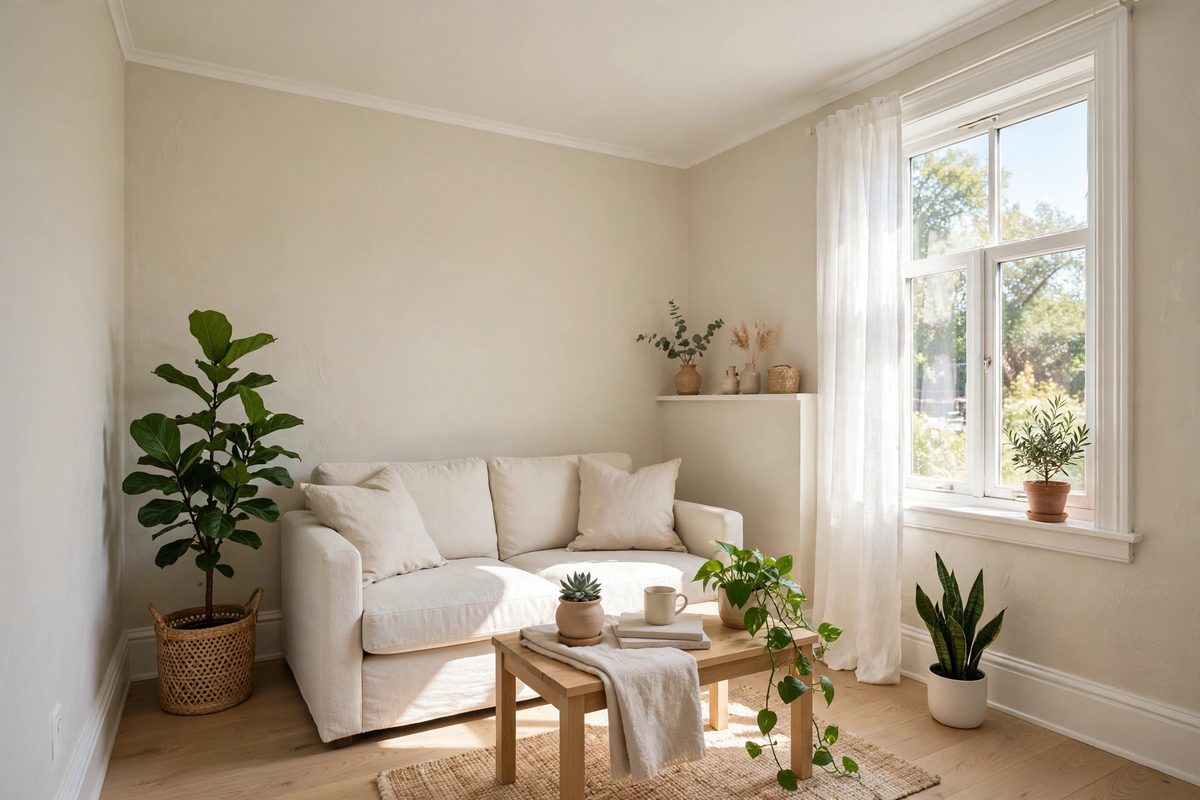
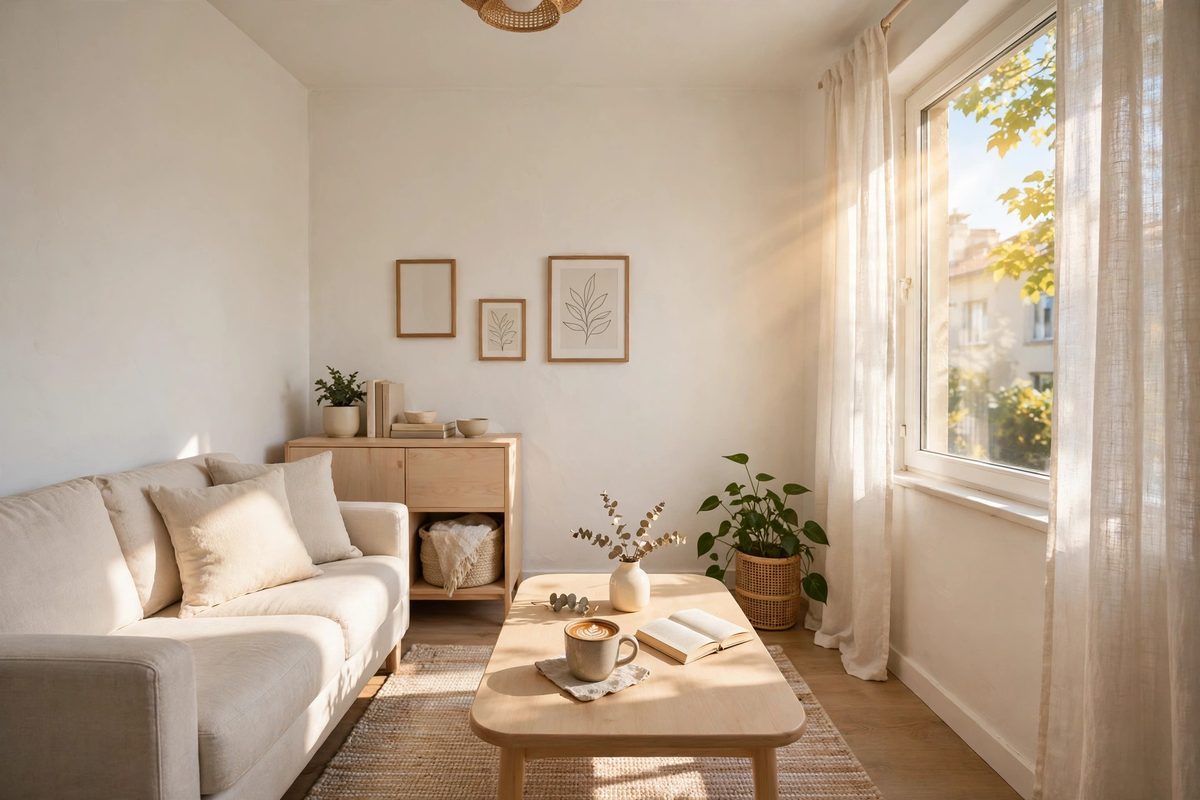
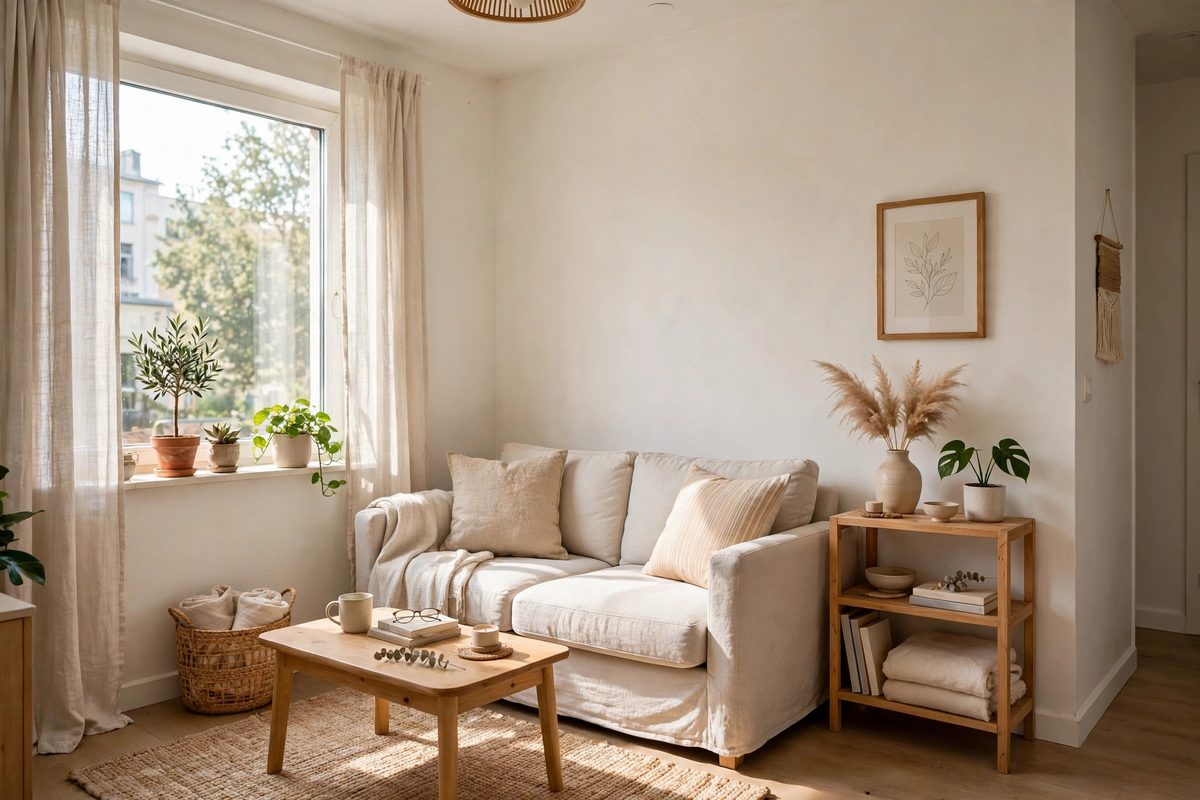
A small apartment living room is the hardest room to paint well. It is the room guests see, the room your sofa already dominates, and, for renters, the room your landlord cares about most. Small living room paint ideas therefore need three things at once: a shade light enough to keep the room open, a color that works with furniture you already own, and a repainting plan that protects your deposit.
This post is paint colors specifically: shades, finishes, and renter considerations for apartment living rooms. It is not a general color-scheme post. For palettes that include furniture, rugs, and decor beyond paint, see small living room color scheme ideas, which covers schemes as a whole. For the placement techniques behind these picks, see how to make a room look bigger with paint, and for light shades across all rooms, see light paint colors for small rooms.
1. Warm White: Sherwin Williams Alabaster
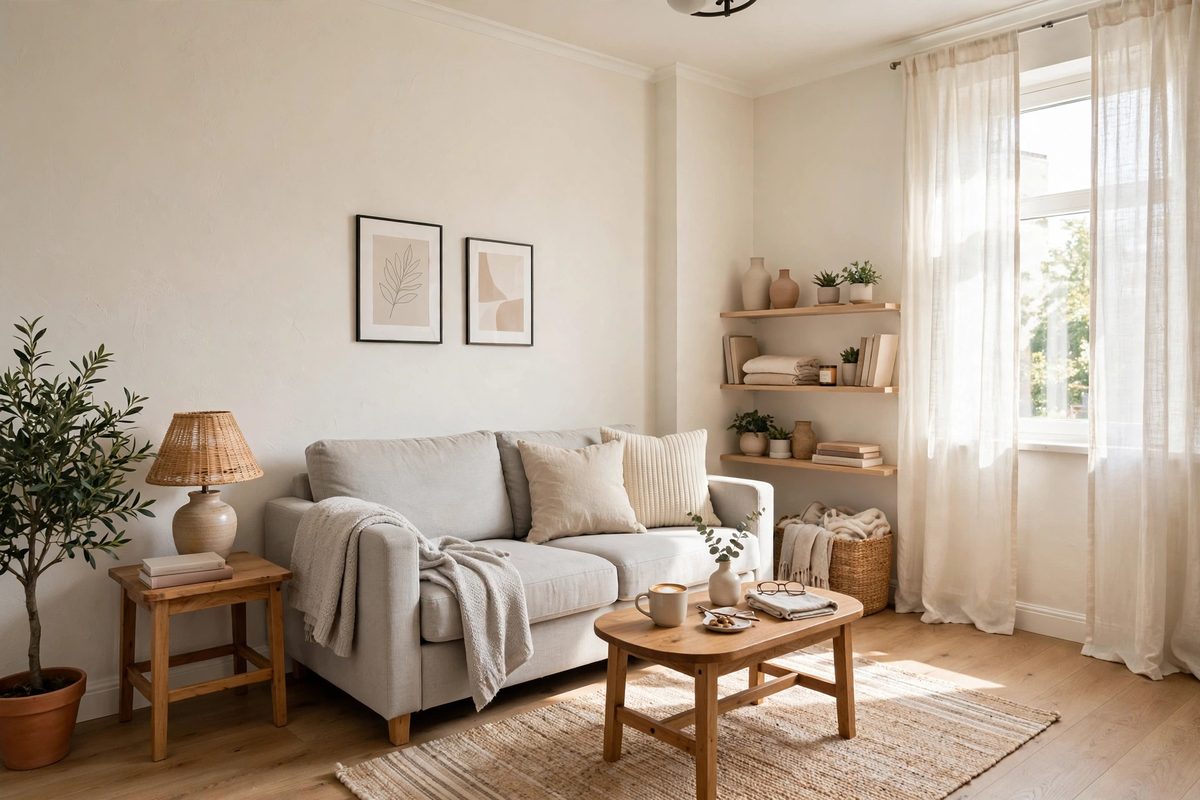
Alabaster (SW 7008) is the default small-apartment living room paint for a reason: warm off-white, LRV around 82, works with gray, beige, blue, and green sofas alike, and rarely surprises once dry. In a living room where the sofa is the biggest object and you cannot replace it to match the walls, a forgiving warm white is the safe foundation.
Paint walls in eggshell and trim in semi-gloss in the same color for a continuous look that stretches the room. Alabaster also photographs well, which matters if you ever list the apartment or share it online. Two coats over primer cover most existing colors.
How to make it work
If your sofa is warm-toned (beige, camel, brown leather), Alabaster is the right white. If your sofa is cool gray, a cooler white like Snowbound may suit it better, so hold fabric swatches against both before deciding.
2. Soft Greige: Sherwin Williams Accessible Beige
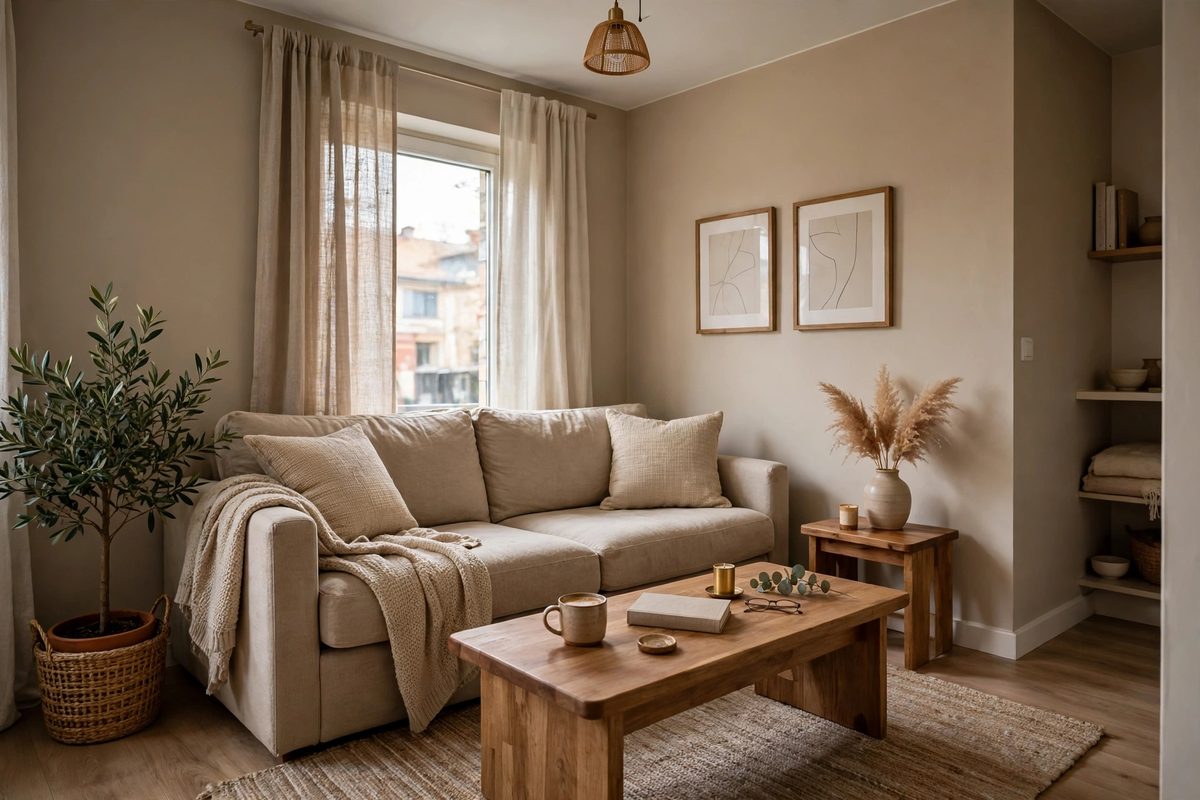
Accessible Beige (SW 7036) is a warm greige that adds visible color to a living room without darkening it. Its LRV sits around 58, so it needs decent light, but in a living room with a window and light furniture it reads as warm and intentional rather than blank. It pairs with wood coffee tables, beige sofas, and natural fiber rugs.
Accessible Beige is also forgiving about scuffs and marks, which helps in a living room that gets daily use. Use eggshell for wipeability, and keep the ceiling white or one shade lighter so the mid-tone walls do not press down. For sofa styling that works with greige walls, see small living room sofa ideas.
How to make it work
Accessible Beige goes yellow under very warm lamps, so test it at night with your actual living room lighting. If it yellows, step to Agreeable Gray, which is cooler and more neutral.
3. Pale Sage: Sherwin Williams Evergreen Fog
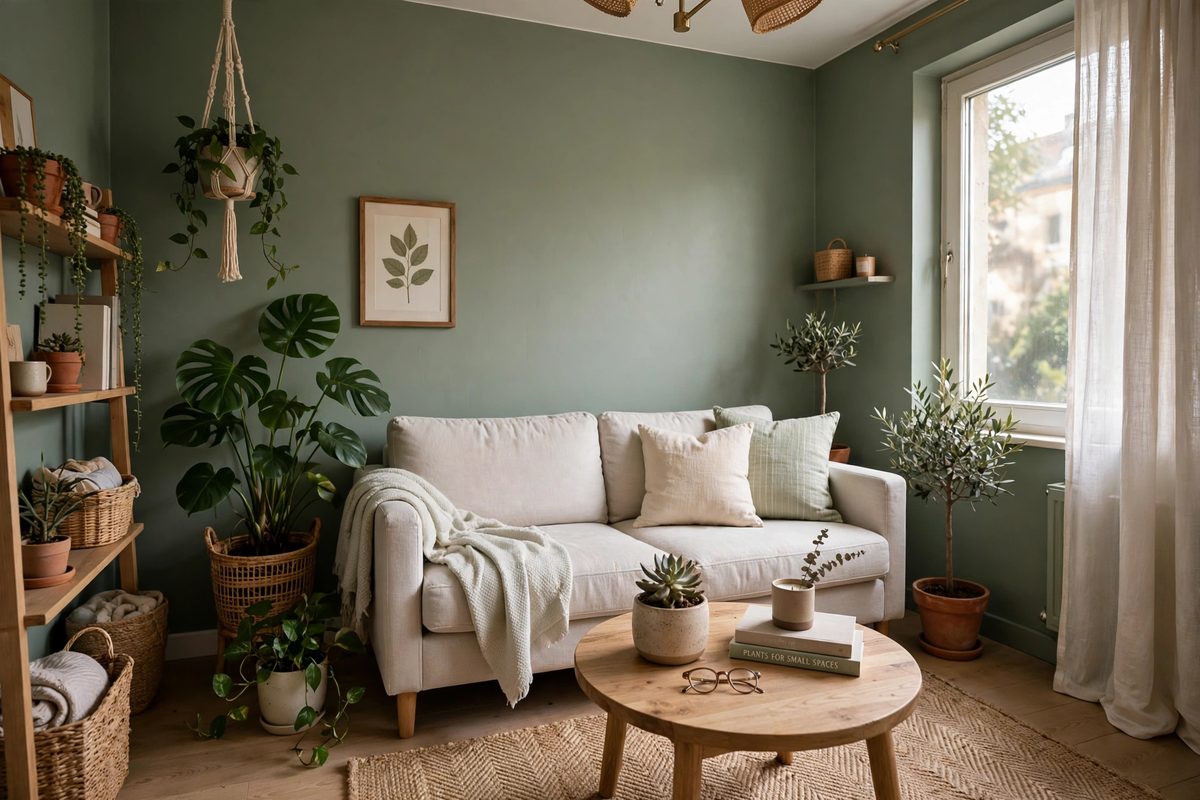
Evergreen Fog (SW 9130) is a muted sage green that brings a living room to life without closing it in. It suits apartments with plants, light wood, and natural textures, and it pairs with cream, beige, and light gray sofas. In a small living room, sage reads as a color choice, not a neutral fallback, which helps the room feel designed rather than default.
Sage needs light to stay sage. In a dim living room it can turn gray-green, so reserve Evergreen Fog for rooms with a window and reasonable daylight. Pair it with white trim and a light rug to keep the overall value high.
How to make it work
Paint the wall behind the sofa in sage and the remaining walls in a matching warm white if a full sage room feels too strong. That single-wall approach also halves your repainting work at move-out.
4. Light Blue-Gray: Benjamin Moore Boothbay Gray
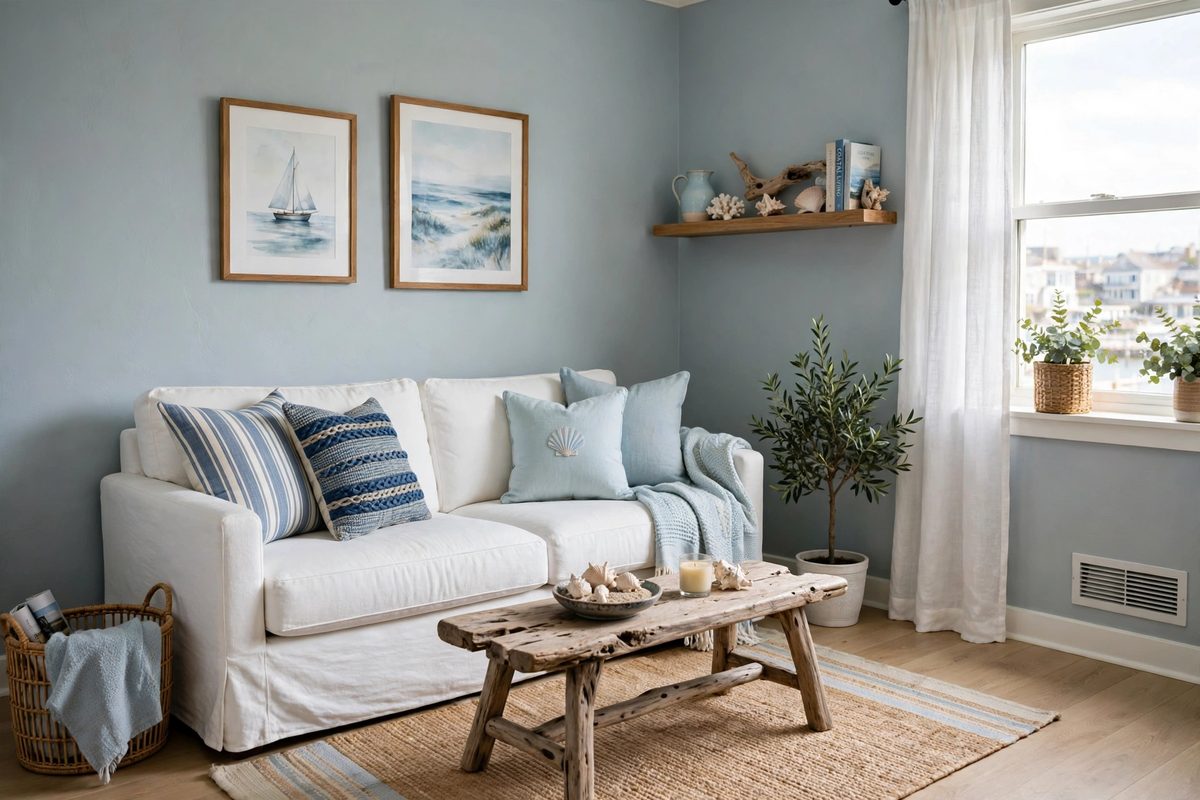
Boothbay Gray (HC-165) is a light blue-gray that suits coastal, modern, and Scandinavian-leaning apartments. It reads as a soft color, not a gray wall, and it pairs with white sofas, light wood, and blue or green accents. In a south-facing living room, its cool undertone balances warm sunlight.
Blue-gray walls can feel cold in a north-facing room, so in that case pair Boothbay Gray with warm lamps, a warm rug, and wood tones. Curtain color interacts strongly with blue-gray walls, so check small living room curtain ideas before choosing fabric.
How to make it work
Test Boothbay Gray beside your sofa fabric, not just on a bare wall. Blue-gray walls shift noticeably against gray versus beige upholstery, and the sofa is the color you cannot change cheaply.
5. Warm Cream: Benjamin Moore White Dove
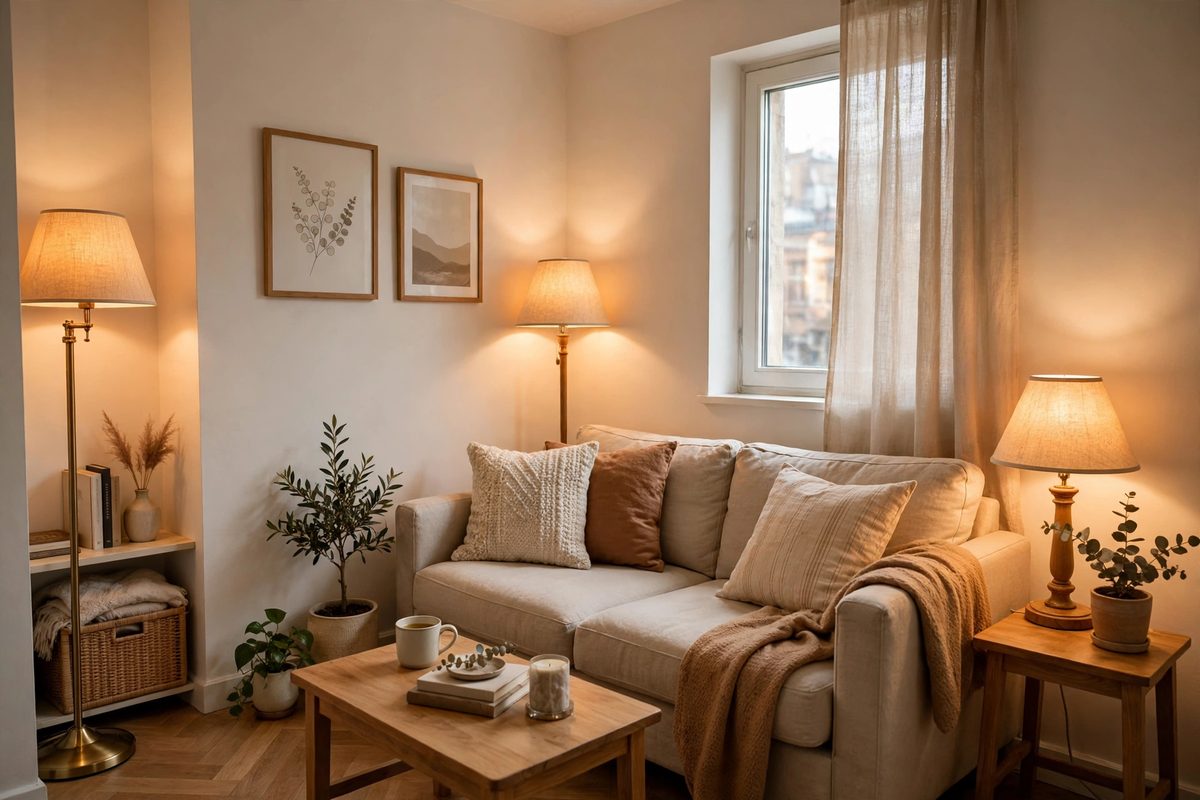
White Dove (OC-17) is a warm white that suits living rooms with warm artificial light and wood furniture. Where a stark white would feel cold, White Dove feels soft and lived-in, and it makes a small living room feel welcoming rather than staged. It works with almost any sofa color, which is why it shows up in so many apartment palettes.
Use White Dove on walls in eggshell, trim in semi-gloss, and ceiling in the same color for a continuous effect. It is also one of the easiest shades to touch up, since warm whites hide small patches better than cool whites.
How to make it work
White Dove and Alabaster are close cousins. If Alabaster reads too creamy in your room, White Dove is slightly cooler and cleaner. Test both on the same wall before choosing.
6. Soft Terracotta Accent: Behr Canyon Clay on One Wall
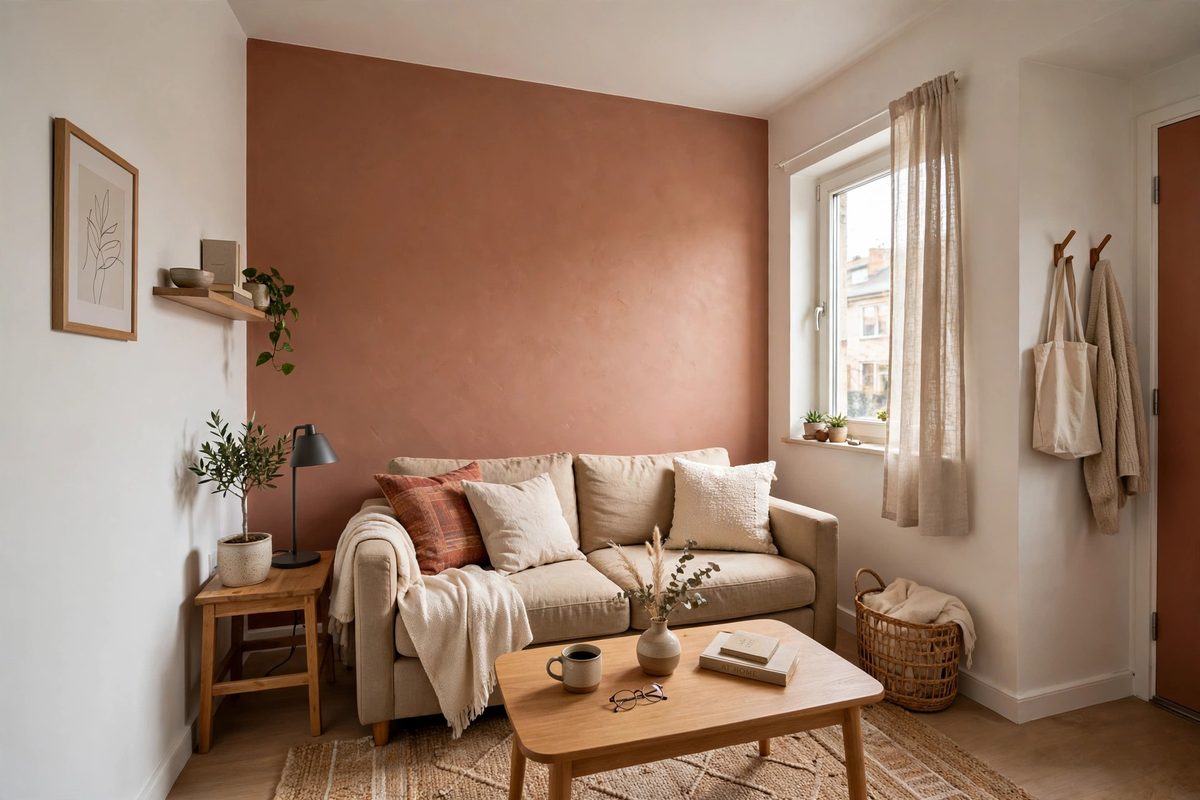
A soft terracotta on one wall, behind the sofa, adds warmth and personality to a small living room without repainting the whole room. Terracotta pairs with beige and cream sofas, wood furniture, and plants, and it creates a focal point that makes the room feel designed. Keep the other three walls in a warm white so the terracotta reads as an accent, not a cave.
This is the best accent-wall approach for renters: one wall to repaint at move-out, one gallon of paint, and a single afternoon of work. Use a muted terracotta, not a bright orange, and paint two coats over a tinted primer for even coverage.
How to make it work
Choose the wall behind the sofa, not a side wall. A terracotta side wall in a narrow living room closes in the width, while a terracotta end wall draws the eye forward and lengthens the room.
7. Pale Blush Neutral: Benjamin Moore Rosewater
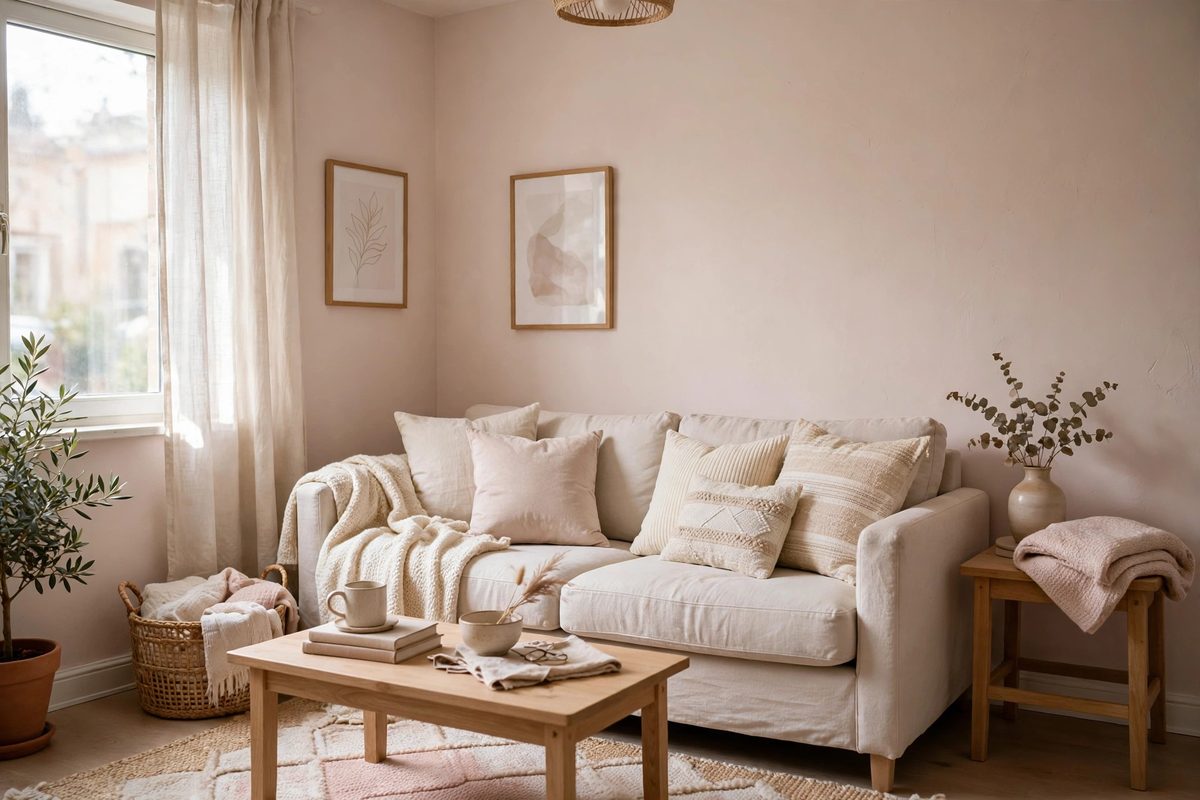
Rosewater is a very pale blush that reads as a warm neutral on living room walls. It suits apartments with a soft, warm style, and it pairs with cream sofas, light wood, and brass accents. In a small living room, blush adds warmth that white cannot, without the visual weight of a saturated color.
Keep blush pale and pair it with neutral upholstery, not pink furniture, or the room tips sugary. A light rug helps ground a blush room, so see small living room rug ideas for rug colors that work with warm walls.
How to make it work
Blush deepens as it dries, so judge your test patch after 48 hours, not on day one. If it reads too pink after drying, step down to a warm white with a blush undertone instead.
8. Light Warm Gray: Benjamin Moore Revere Pewter
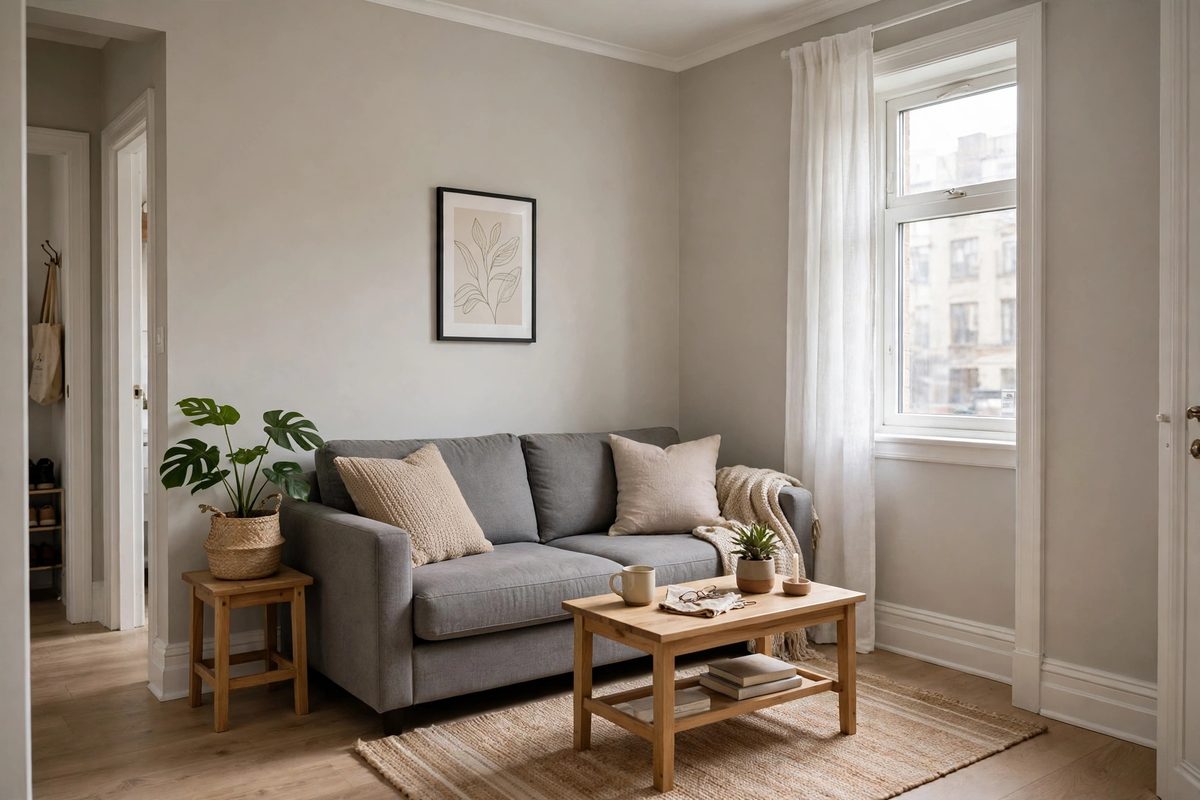
Revere Pewter (HC-172) is a light warm gray that works with gray sofas, which are the most common apartment sofa color. It reads as a soft gray, not a beige, and it pairs with white trim, black accents, and wood furniture. Its LRV sits around 55, so it needs good light and light-colored furniture to keep a small living room open.
In a dim living room, Revere Pewter can darken, so pair it with a white ceiling, light rug, and mirrors. In a bright living room it is one of the most reliable gray choices, since its warm undertone stops it from turning blue-gray in cool light.
How to make it work
Revere Pewter shifts with lighting more than most grays, so test it on the wall opposite the window and under your lamps. If it reads beige at night and gray by day, that shift is normal for this shade, and it usually settles into a pleasant middle.
9. Soft Green-Gray: Sherwin Williams Sea Salt
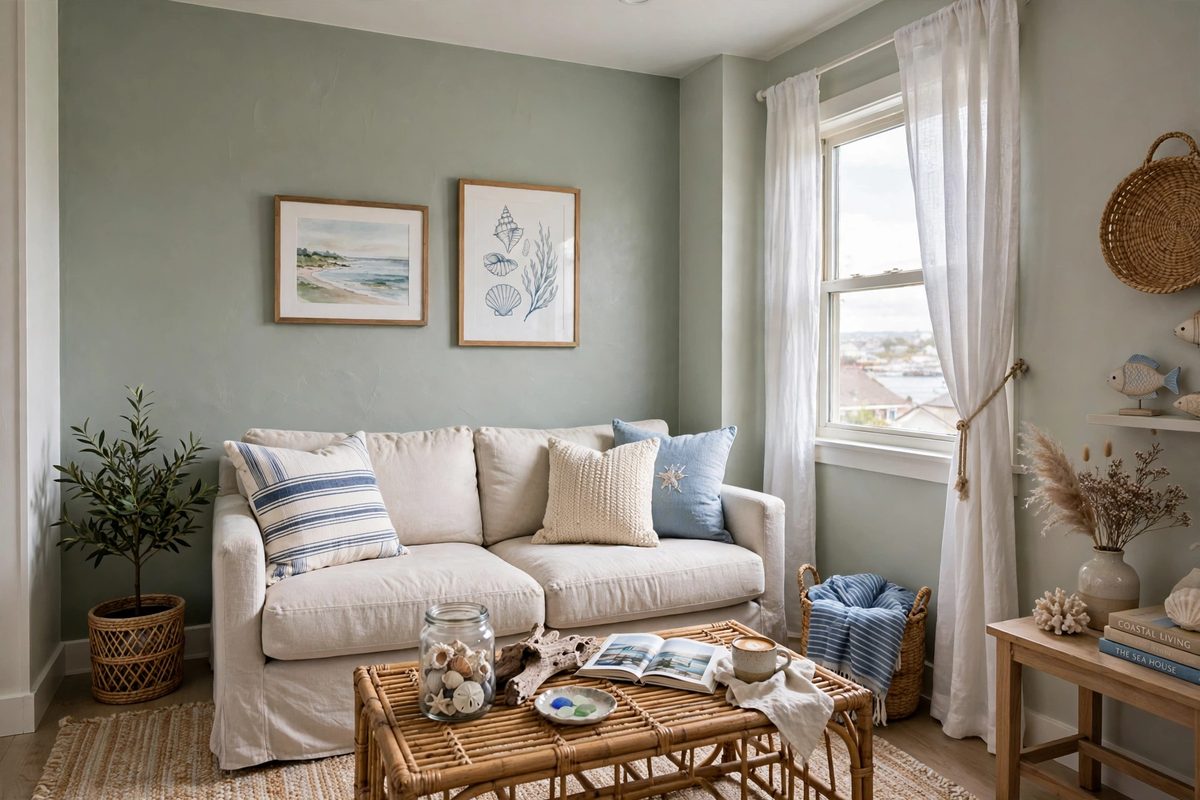
Sea Salt (SW 6204) is a soft green-gray that suits light, airy living rooms with a coastal or relaxed style. It reads as a pale green in warm light and a pale gray in cool light, which makes it versatile across apartments with different exposures. It pairs with white sofas, light wood, and natural fiber rugs.
Sea Salt is light enough for a full living room, not just an accent wall, provided the room gets reasonable light. Use eggshell finish, white trim, and a light ceiling to keep the overall value high. For the broader living-room decor view beyond paint, see small living room decor ideas.
How to make it work
Sea Salt looks different in every room, so a full-wall test patch is essential. If it reads too green in your room, a cooler gray-green like Rainwashed may suit the space better.
10. Renter-Safe Repainting: What to Do Before You Open a Can
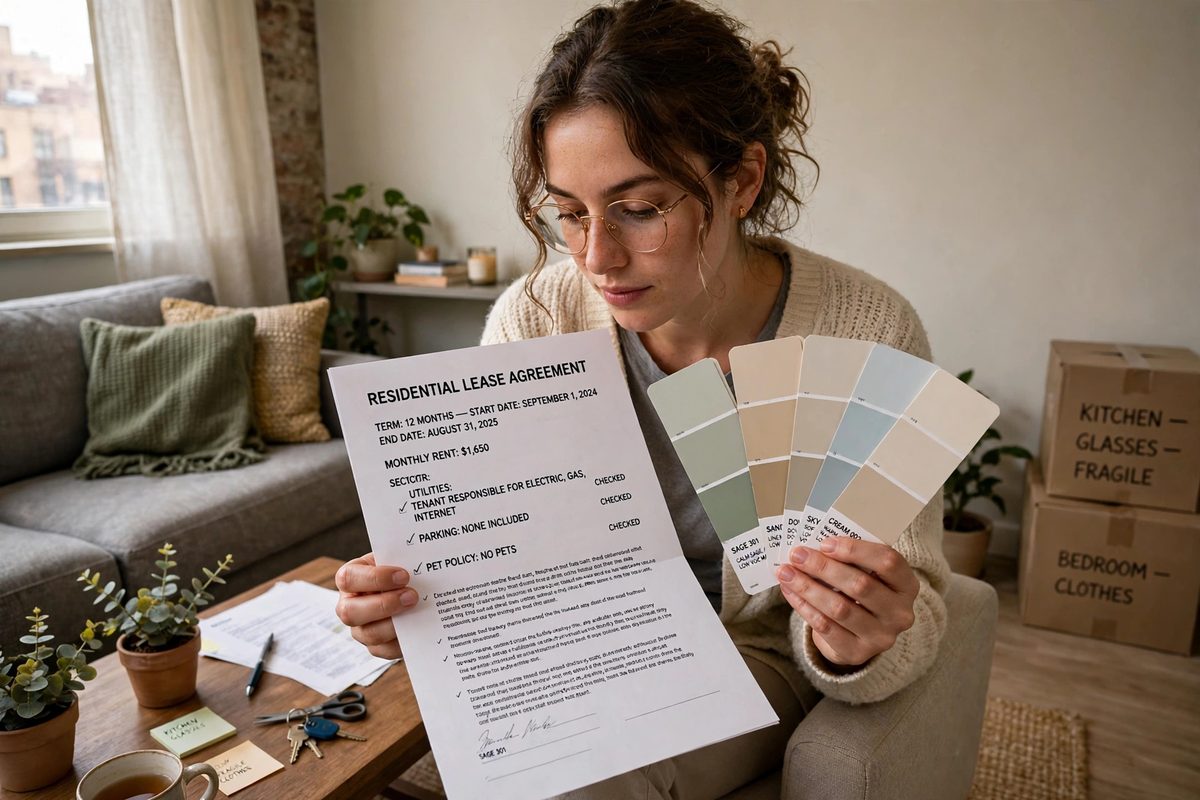
The shade matters less than the repainting plan if you rent. Check your lease for a painting clause first: many leases allow painting with written permission, some require repainting to the original color at move-out, and a few forbid it outright. Get permission in writing, note the original paint color and finish if the landlord shares it, and photograph every wall before you start.
Keep your paint codes and a leftover quart of each color for touch-ups and move-out repainting. Budget one gallon per 350 to 400 square feet for two coats, plus primer if you are covering a dark color or painting a deep accent. A gallon of quality interior paint runs roughly 35 to 70 dollars, so a small living room repaint typically costs 70 to 150 dollars in paint plus supplies. When you move out, repainting one accent wall takes an afternoon; repainting a whole room takes a weekend, so weigh that cost before choosing a full-room color change.
How to make it work
If your lease is strict, use the accent-wall approach from idea 6, or peel-and-stick options for color without paint. If your lease allows full repainting, keep the original color code on file from day one, since matching it later without a code is guesswork.
Start with your sofa color, then your light direction, then your lease. A warm white that suits your sofa and your landlord beats a trendy shade that fights both. Test big, check at night, and keep the paint code somewhere you will find it at move-out.