10 Small Living Room Color Scheme Ideas That Make the Room Feel Bigger
Color can open up a small living room or close it in. These 10 color schemes use light, contrast, and repetition to make the room feel larger.
In This Guide
Color is the cheapest way to change how big a small living room feels. Light, continuous color makes walls recede and the eye travel further. Dark, broken-up color stops the eye at every boundary and makes the room feel boxed in. The schemes below all work from the same principle: keep the largest surfaces light and connected, then add depth in small, deliberate doses.
You do not need to repaint to use most of these ideas. Cushions, throws, a rug, and one piece of art can carry a whole scheme in a rental. What matters is the ratio: roughly 60 percent light base, 30 percent mid-tone support, and 10 percent accent. Keep that balance and the room will feel larger no matter which palette you pick.
Before you commit, test paint swatches on two walls and look at them in morning and evening light. A shade that looks airy at noon can turn gray or yellow under lamps at night.
1. Warm White Base
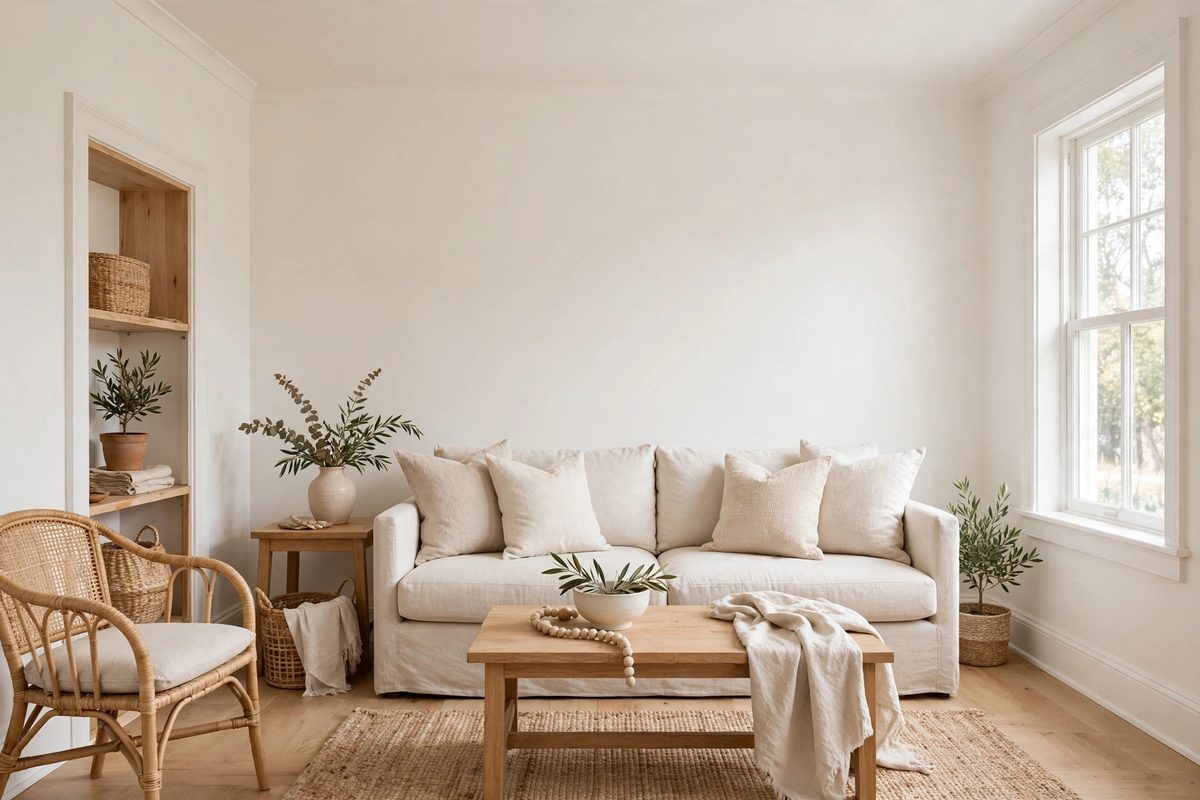
A warm white base is the most reliable way to make a small living room feel bigger. Shades like Benjamin Moore White Dove or Sherwin Williams Alabaster have a hint of warmth that keeps the room from feeling clinical, while still reflecting the maximum amount of light. Paint walls, trim, and ceiling in the same shade and the boundaries between them soften, which makes the ceiling feel higher.
Warm white works as a backdrop for any furniture you already own, from a gray sofa to a wood coffee table. It is also the easiest scheme to adjust seasonally: swap cushion colors and the room reads completely differently.
How to make it work
Use one warm white throughout rather than mixing whites, which can look patchy in a small room. Add texture through linen cushions, a woven rug, and wood accents so the room feels layered instead of flat. If the room faces north, choose a white with a slightly warmer undertone to counteract cool light.
2. Soft Sage and Cream
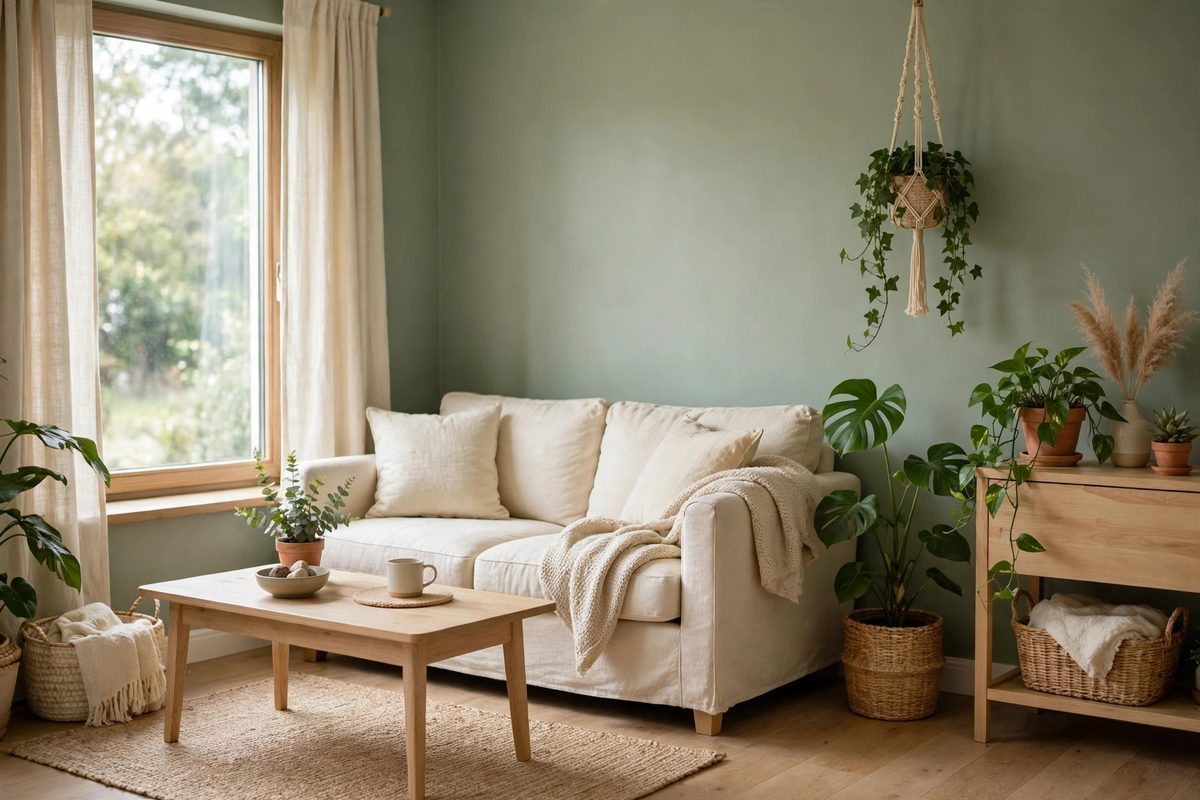
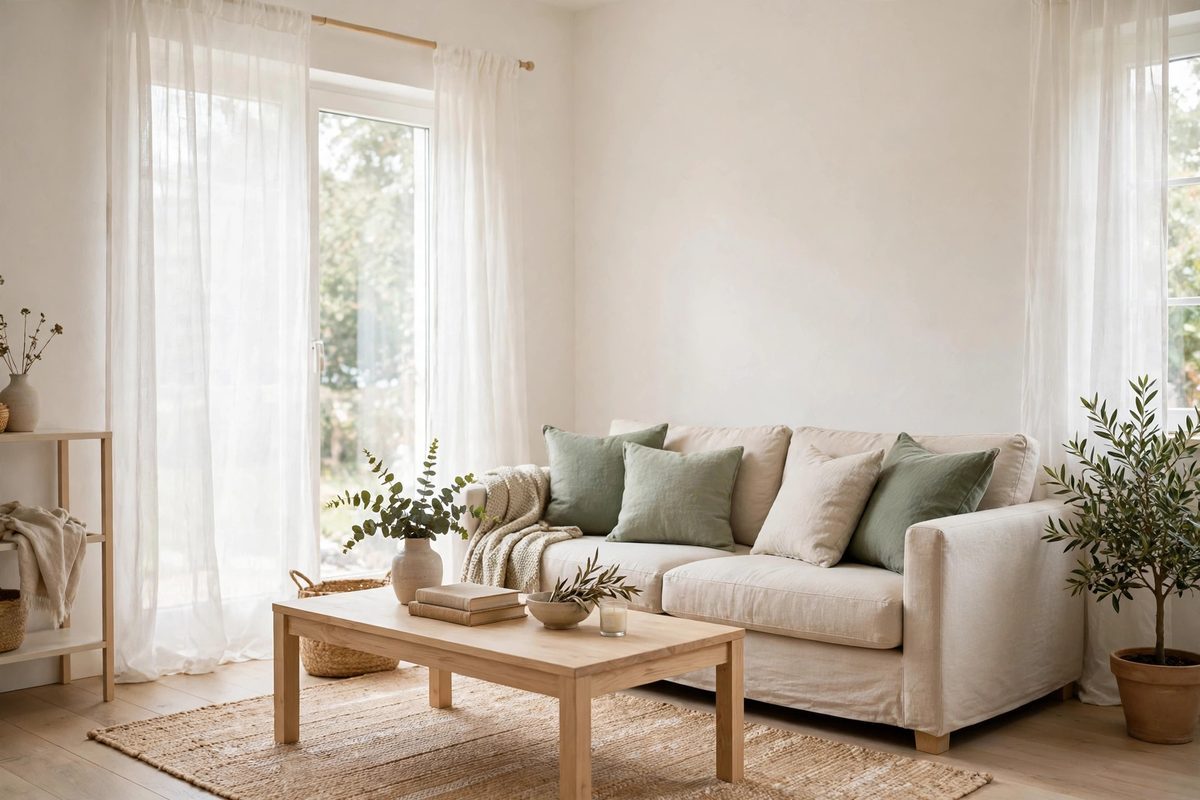
Soft sage green with cream is calming without being cold, and it brings a hint of nature indoors. Sage sits in the middle of the light spectrum, so it adds color interest while still reflecting plenty of light. Pair sage walls or a sage sofa with cream curtains, a cream rug, and light wood for a room that feels fresh and open.
This scheme suits apartments with plants, since the green in the palette echoes foliage and makes the whole room feel more cohesive. It also photographs well, which matters if you ever list the apartment.
How to make it work
Keep sage to one or two large elements, like the sofa or an accent wall, and let cream carry the rest. Add one darker green plant or cushion for depth, but avoid piling on multiple greens, which can muddy the palette. For a matching storage update, see small kitchen corner cabinet ideas.
3. Pale Blue and White
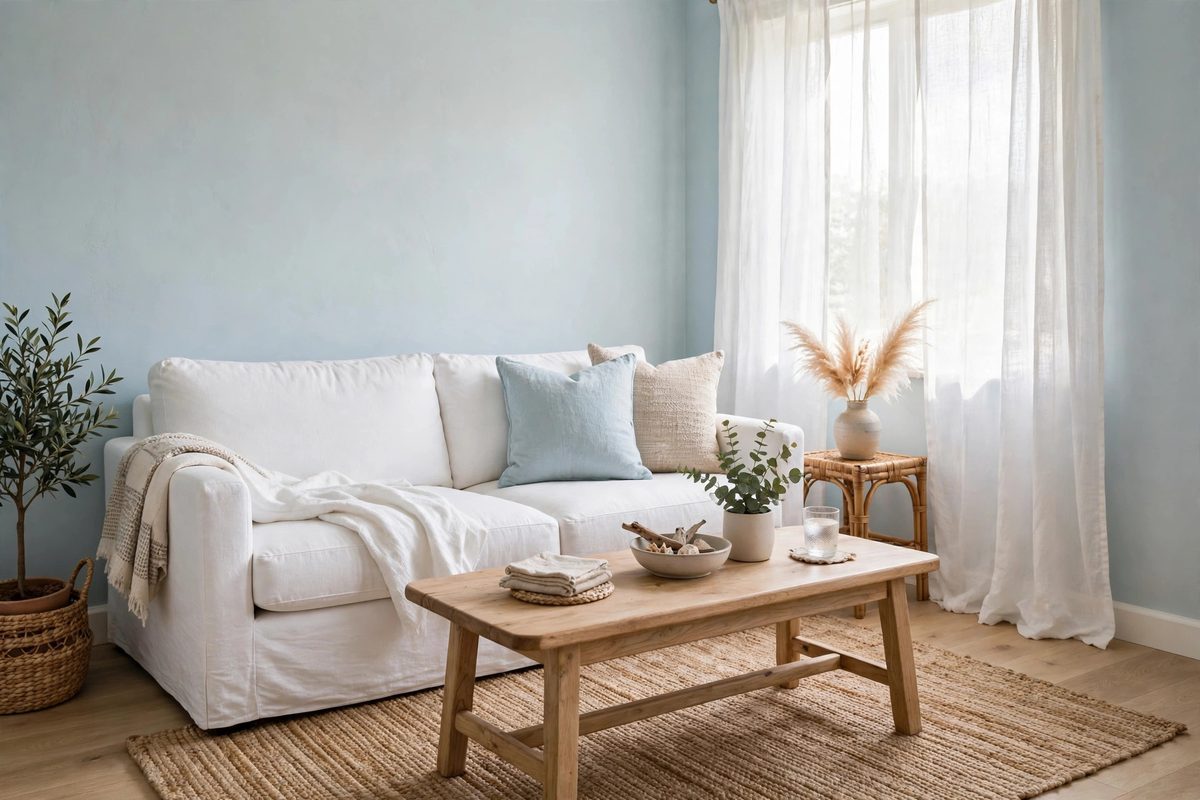
Pale blue and white is a classic small-room combination because blue recedes visually, making walls feel further away. A soft powder blue on the walls with white trim, white curtains, and a light sofa creates an airy, coastal feeling even in a city apartment. It works especially well in rooms with good natural light.
The risk with pale blue is a cold, washed-out feeling in north-facing rooms. Warm it up with natural wood, a jute rug, or brass accents so the room stays inviting.
How to make it work
Choose a blue with a gray or green undertone rather than a pure baby blue, which can read as a nursery color. Keep the ceiling white and the floor light to maximize the effect. If painting is not allowed, get the same look from blue cushions, a blue throw, and white curtains.
4. Greige Monochrome
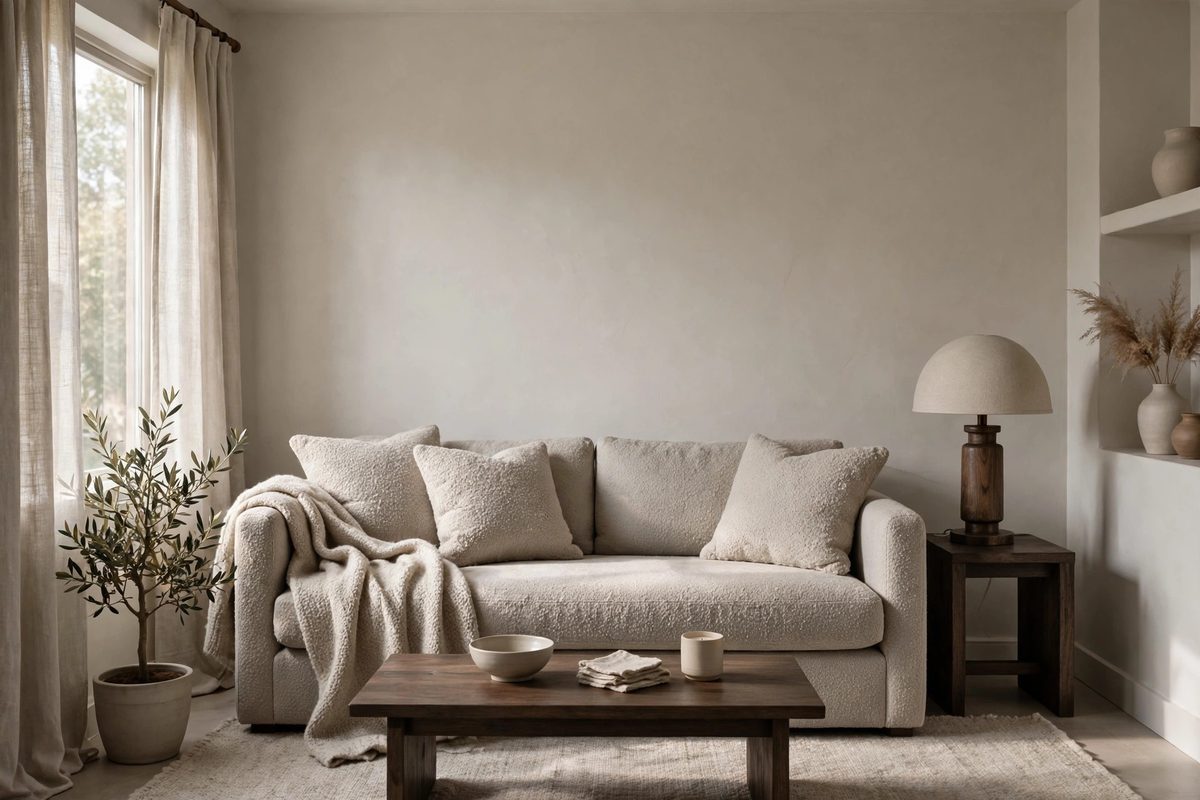
Greige, the blend of gray and beige, is the workhorse of small living rooms. A monochrome greige scheme uses several shades of the same family: light greige walls, mid-greige sofa, darker greige cushions. Because nothing contrasts sharply, the eye moves smoothly across the room and the space feels continuous and larger.
Monochrome does not mean monotonous. Vary textures: a boucle cushion, a linen sofa, a wool throw, and a smooth ceramic vase all in greige tones create depth without breaking the color flow.
How to make it work
Pick a greige with a warm undertone if your room gets little sun, and a cooler greige if it gets strong afternoon light. Add one black or dark wood accent, like a picture frame or lamp base, to anchor the scheme and stop it from looking washed out.
5. Blush and Taupe
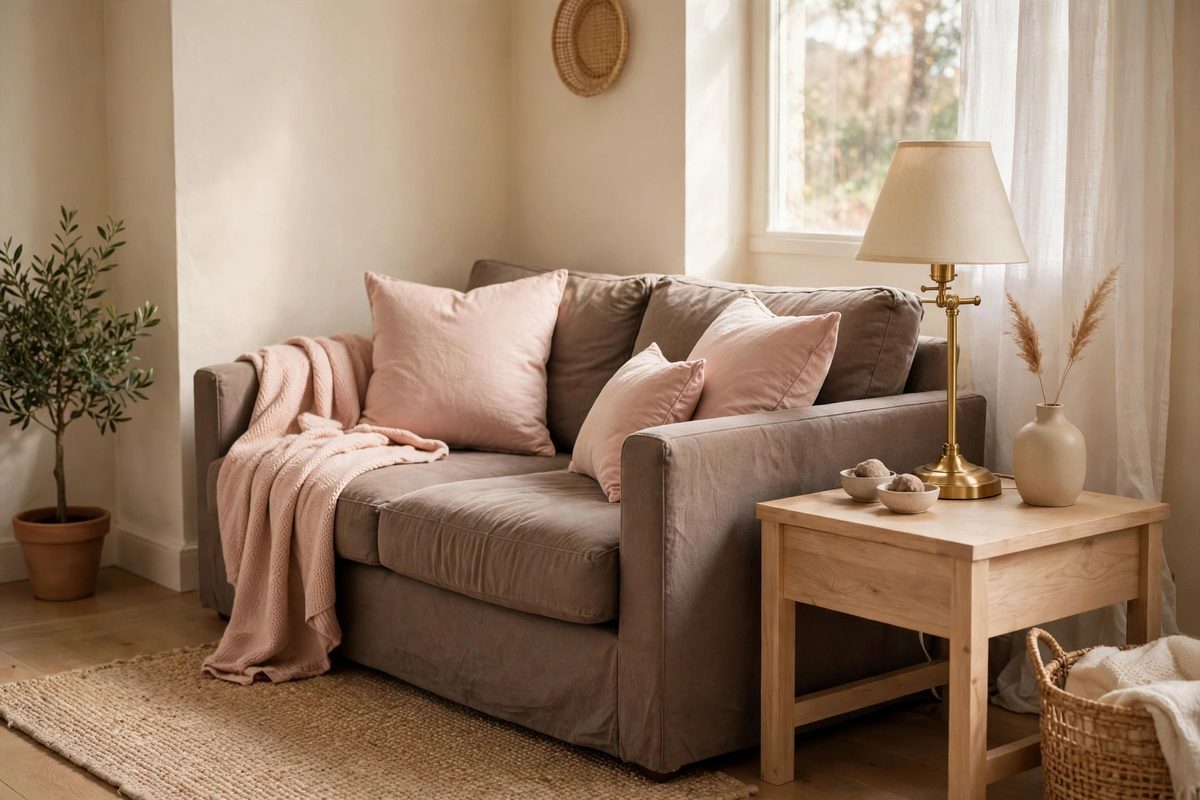
Blush pink with taupe is soft, warm, and surprisingly grown-up when the blush stays muted. Think dusty rose cushions, a taupe sofa, cream walls, and brass or light wood accents. The pink adds warmth without the visual weight of red or terracotta, so the room still feels light.
This scheme works well in apartments that feel stark or cold, since blush warms the room without darkening it. It pairs naturally with curved furniture and soft textures, which also help a small room feel less boxy.
How to make it work
Keep blush to accents: cushions, a throw, one piece of art. Let taupe and cream carry the large surfaces. If blush feels too sweet, add a charcoal cushion or a dark wood side table to ground it. See small bedroom lighting ideas for lighting that flatters warm palettes like this one.
6. Light Gray and Mustard Accent
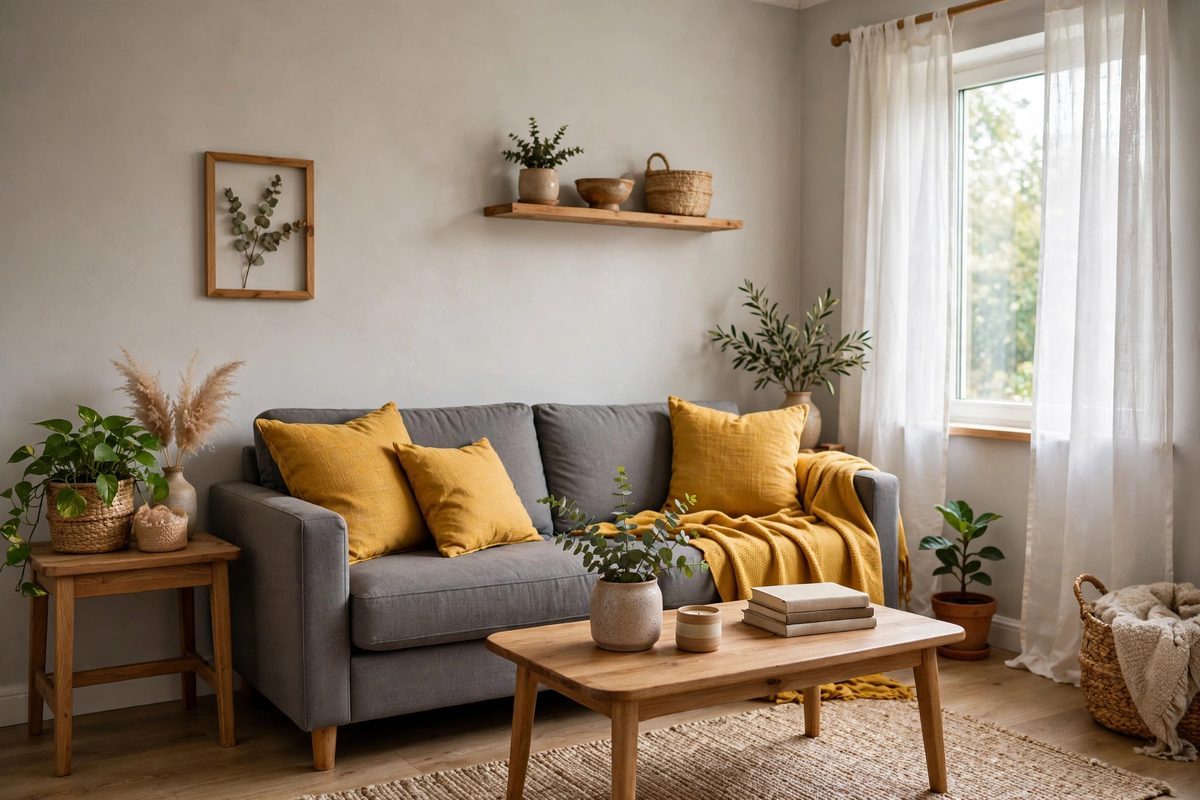
Light gray walls with mustard yellow accents give a small living room energy without shrinking it. Gray is a neutral that recedes, and mustard is a warm accent that draws the eye to specific points, like a cushion, a throw, or a piece of art. Used sparingly, mustard makes the room feel lively and intentional.
The ratio matters here more than in softer schemes. Keep mustard to about 10 percent of the room: two cushions, a throw, and maybe a vase. Any more and the accent becomes a second dominant color, which breaks up the space.
How to make it work
Choose a light, warm gray for the walls rather than a dark charcoal, which would close the room in. Pair mustard with natural wood and white to keep the palette balanced. If you tire of mustard, swapping two cushions changes the whole scheme for under $40.
7. Coastal Sand and Sea Glass
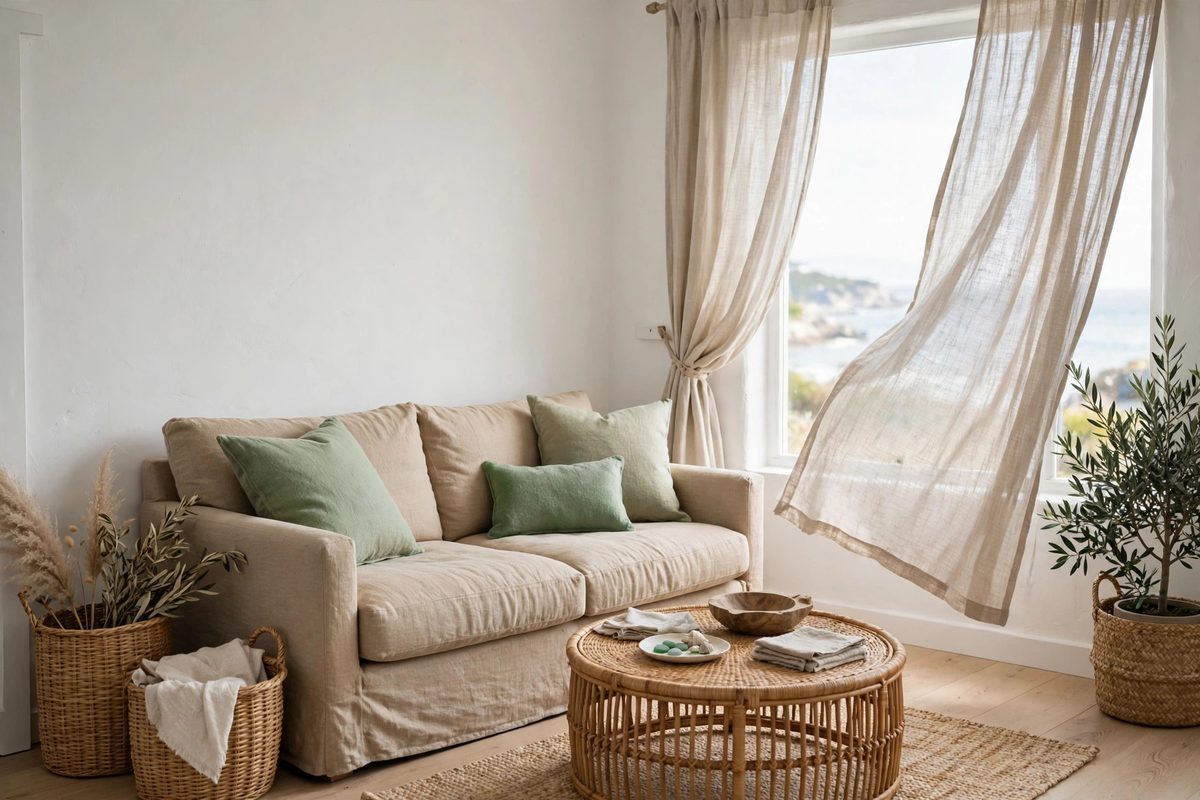
Coastal sand and sea glass combines warm beige, soft aqua, and white for a breezy, open feeling. Sand tones on the sofa and rug ground the room, sea glass green or aqua appears in cushions and art, and white walls and curtains keep everything light. The palette feels relaxed and works well in apartments with light wood floors.
This scheme is forgiving: the colors are all mid-light tones, so small mismatches between shades do not stand out. It also hides everyday wear better than an all-white room.
How to make it work
Use sand for the largest pieces, white for walls and curtains, and sea glass for accents only. Add texture with linen, rattan, and woven baskets to reinforce the coastal feeling without adding themed decor. Keep window treatments sheer so daylight does most of the work.
8. Cream and Charcoal Contrast
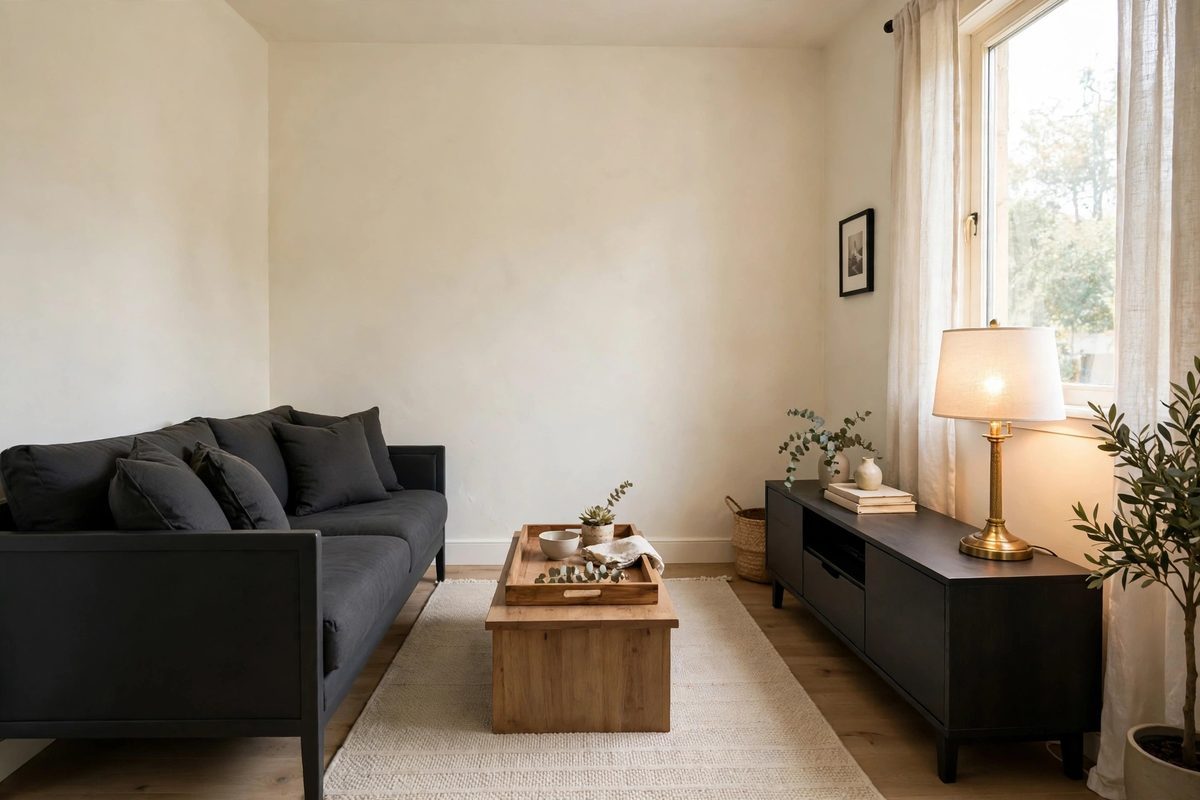
Cream walls with charcoal accents use contrast to create depth, which paradoxically makes a small room feel larger. The cream keeps the room bright, while charcoal on a sofa frame, a media console, or window frames gives the eye a sense of distance and structure. Without any dark tones, a small all-light room can feel flat and undefined.
The key is placement: put charcoal on low, horizontal elements like furniture, not on large wall areas. A charcoal accent wall in a small room will close it in, but a charcoal sofa against cream walls adds definition.
How to make it work
Limit charcoal to two or three pieces of furniture or decor. Keep the rug light so the floor still reflects light. Add one warm accent, like a wood tray or brass lamp, to stop the palette from feeling too stark.
9. Butter Yellow Glow
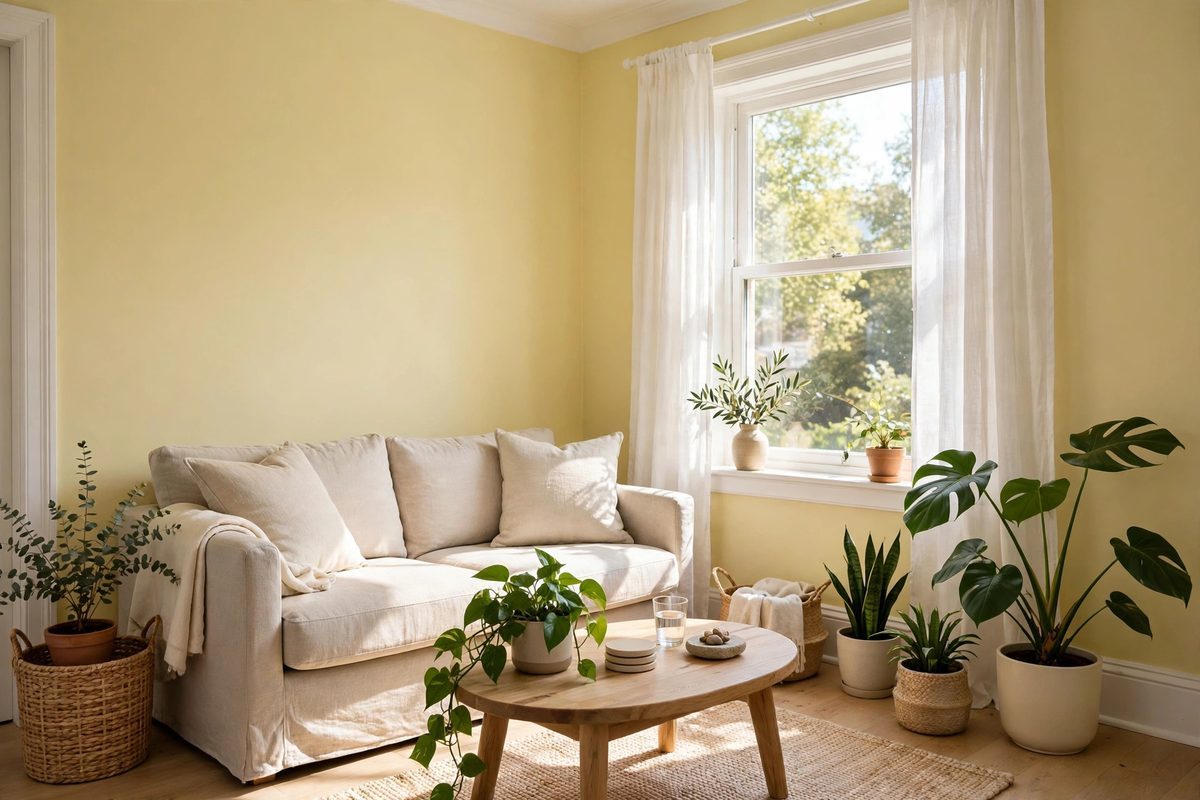
Butter yellow is the best choice for a small living room with limited natural light. It reflects warm light back into the room, making it feel sunnier even on gray days. A pale butter yellow on the walls with white trim and light furniture feels cheerful without the intensity of a bright yellow.
Butter yellow pairs well with white, light wood, and soft green plants. It is a good option for north-facing rooms or ground-floor apartments where daylight is scarce.
How to make it work
Choose a muted butter shade, not a saturated yellow, and test it under your actual lighting. Keep the ceiling white to preserve height. If painting is not an option, butter yellow cushions, a throw, and art can warm a white room noticeably.
10. One Bold Accent Wall
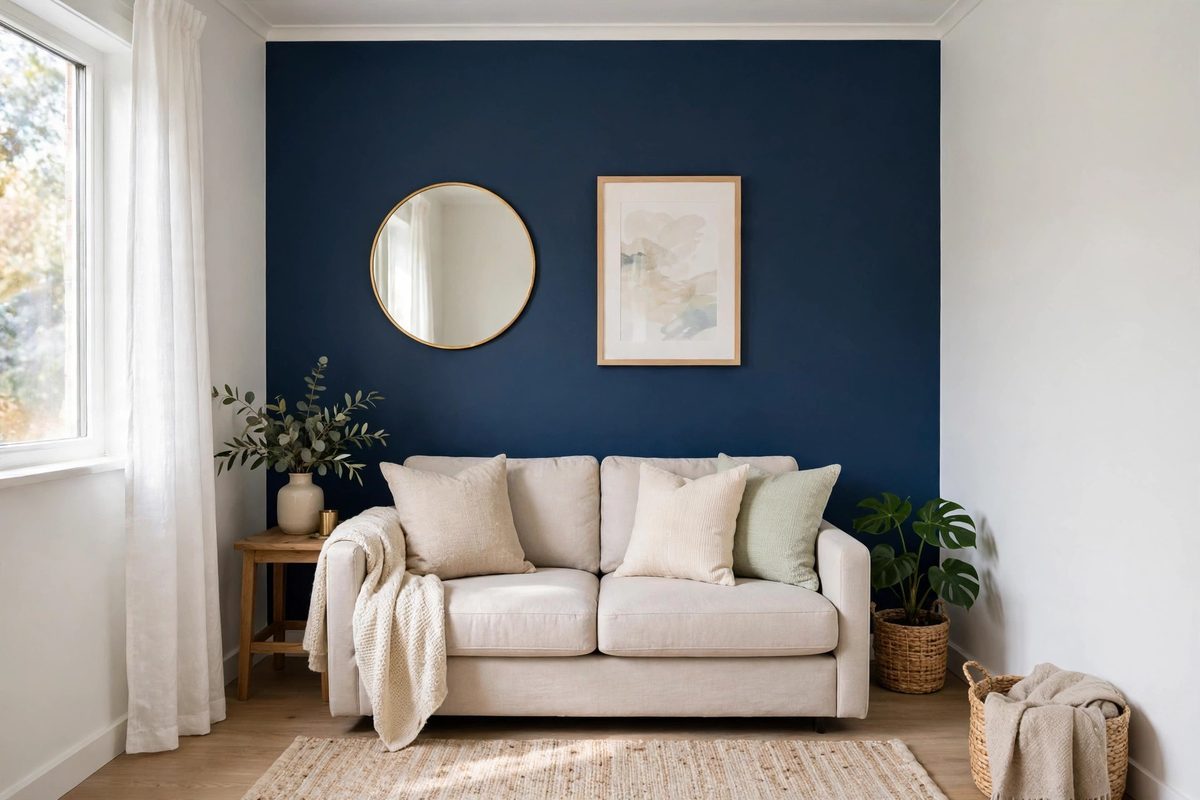
One bold accent wall can make a small living room feel larger if you choose the right wall and the right color. Paint the wall behind the sofa or the farthest wall from the entrance in a deep shade like navy, forest green, or charcoal, and keep the other three walls light. The dark wall recedes visually, which can make the room feel deeper.
This only works with one wall. Two dark walls, or a dark wall plus dark furniture, will shrink the room. The accent wall should also be mostly unbroken: a wall with a large window or a fireplace is a poor candidate because the dark color gets chopped up.
How to make it work
Pick the wall you see when you enter the room, since depth in that sightline matters most. Keep furniture against the accent wall light or mid-toned so it does not disappear into the dark color. Add a mirror or light art on the accent wall to bounce light back into the room.
Color will not add square footage, but it changes how your eye measures the room you have. Start with a light, continuous base, add depth in small doses, and test every shade in your actual light before committing. The scheme that makes your living room feel bigger is the one that keeps the large surfaces calm and lets a few well-chosen accents do the talking. Once the palette is set, arrange the furniture to match with small living room furniture layouts.