11 Small Living Room Rug Ideas That Make the Space Feel Bigger and More Pulled Together
Discover 11 small living room rug ideas with practical placement, size and layout tips for sofas, chairs, sectionals and open-plan apartments.
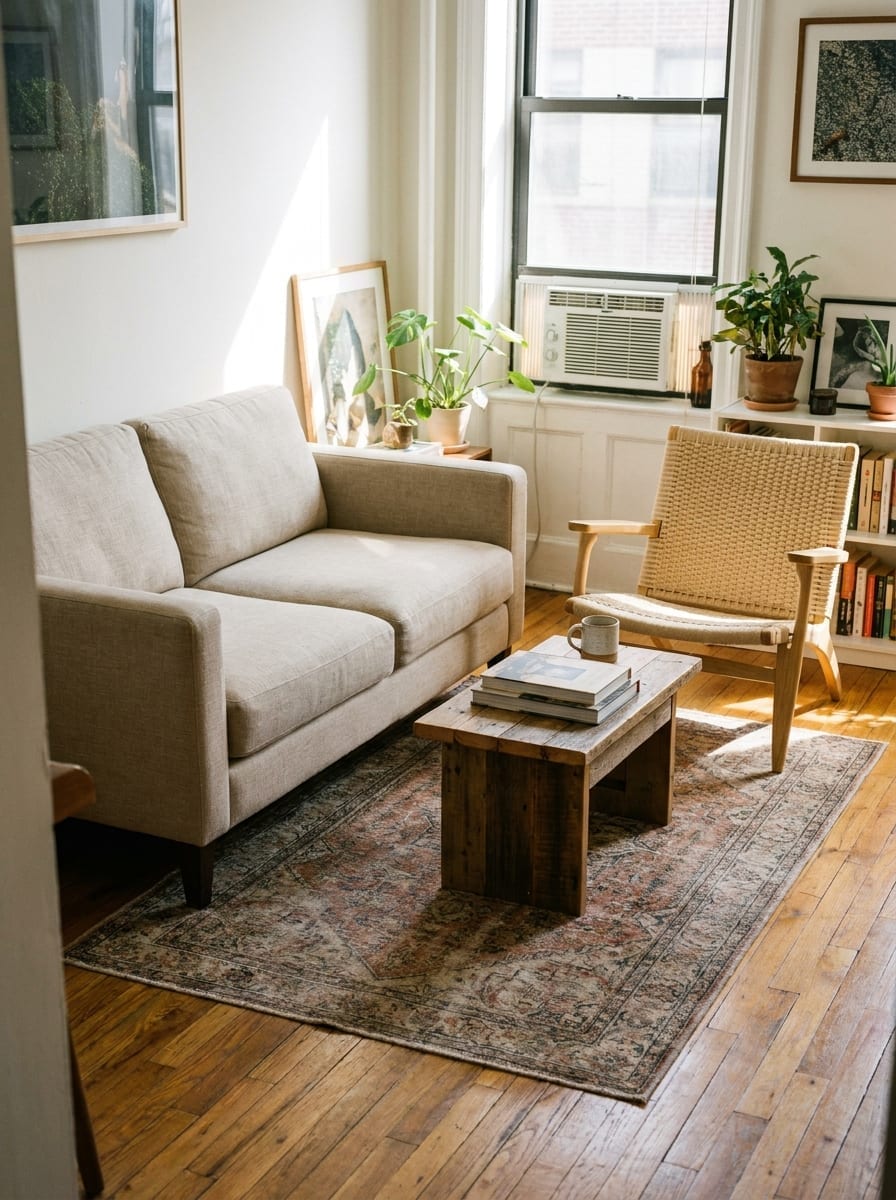
Small living room with front legs of sofa and accent chair resting on a neutral rectangular area rug
In This Guide
A rug is one of the easiest things to get wrong in a small living room. Not because choosing a beautiful rug is difficult. The difficult part is choosing one that makes the furniture feel connected without making the room look like a small island floating inside an even smaller floor. A rug that is too small can leave furniture disconnected. A rug that is too large can crowd walls or interfere with doors. The right rug should help answer three questions: Where does the living area begin? Which furniture belongs together? How much visible floor should remain around it? Here are eleven ways to use a rug in a compact living room without making the space feel chopped up.
1. The Front-Legs-On Rug Layout
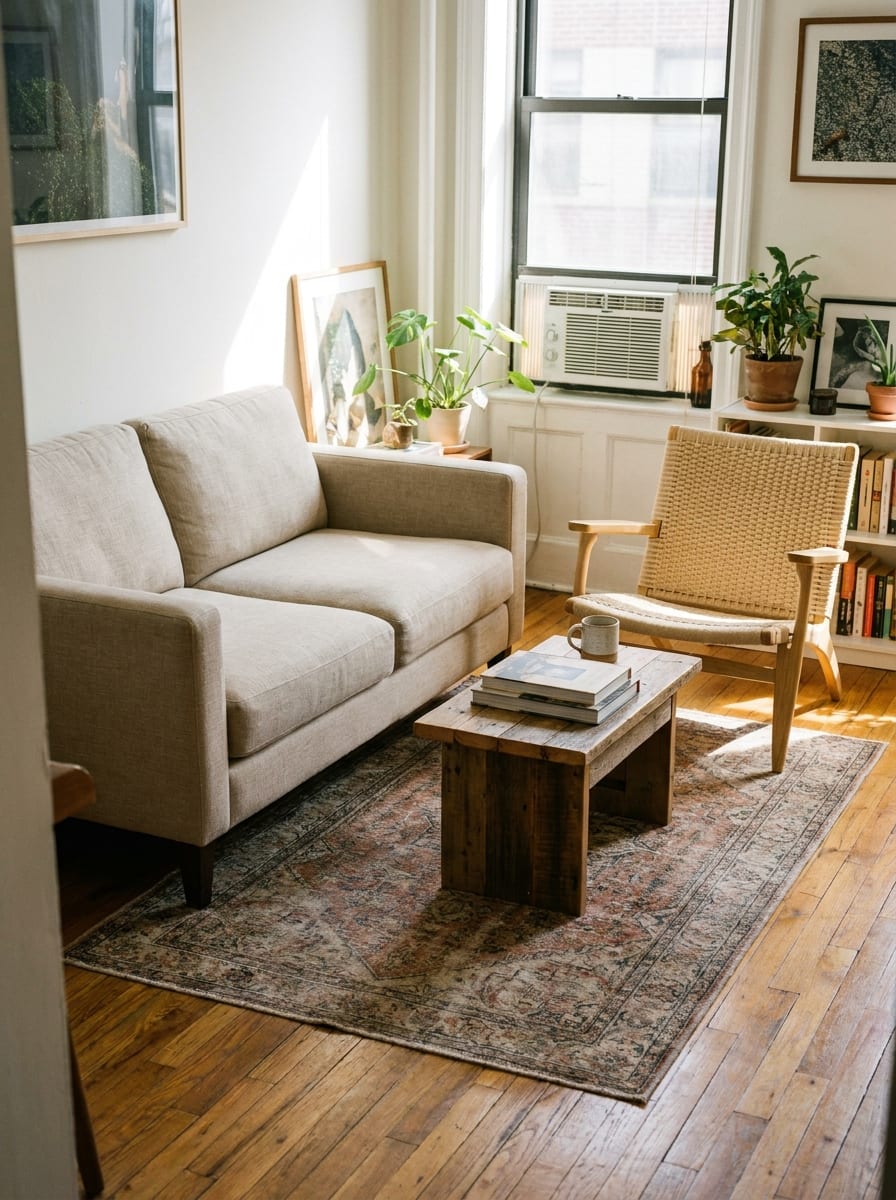
This is one of the most useful layouts for a small living room because it connects the major furniture pieces without requiring the rug to sit completely beneath everything. The basic idea Place the rug so the front legs of the main seating sit on it. That may include:
- sofa
- accent chair
- loveseat while the rear legs remain on the floor.
Why it works
The rug visually connects the seating arrangement. Without that connection, a room can look like sofa on one side, chair on another and coffee table in the middle rather than one conversation area. Keep the rug wider than the coffee table A rug only slightly larger than the coffee table often looks undersized. Use consistent contact Try to connect the major seating pieces where possible.
2. The Almost-Wall-to-Wall Rug
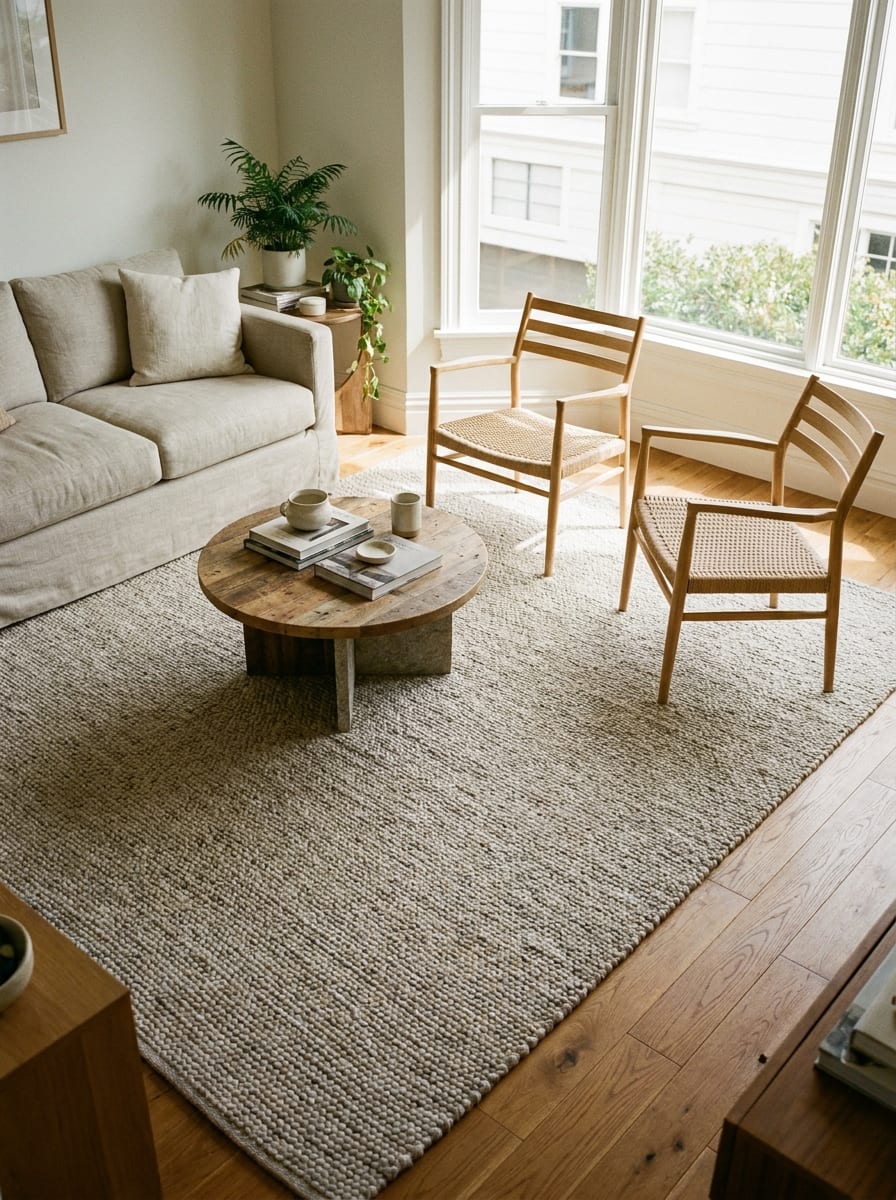
Sometimes a larger rug makes a small living room feel calmer than a small one.
Why larger can work
A small rug creates several boundaries. A larger rug reduces some of those transitions.
Leave a visible floor border
A visible perimeter helps the rug feel like an area rug rather than fitted flooring.
Do not choose purely by room dimensions
Check door swing, heating vents and furniture placement before increasing rug size.
Best for
This works well in a nearly square living room where the seating group occupies most of the room anyway.
3. The Long-Room Rug Alignment
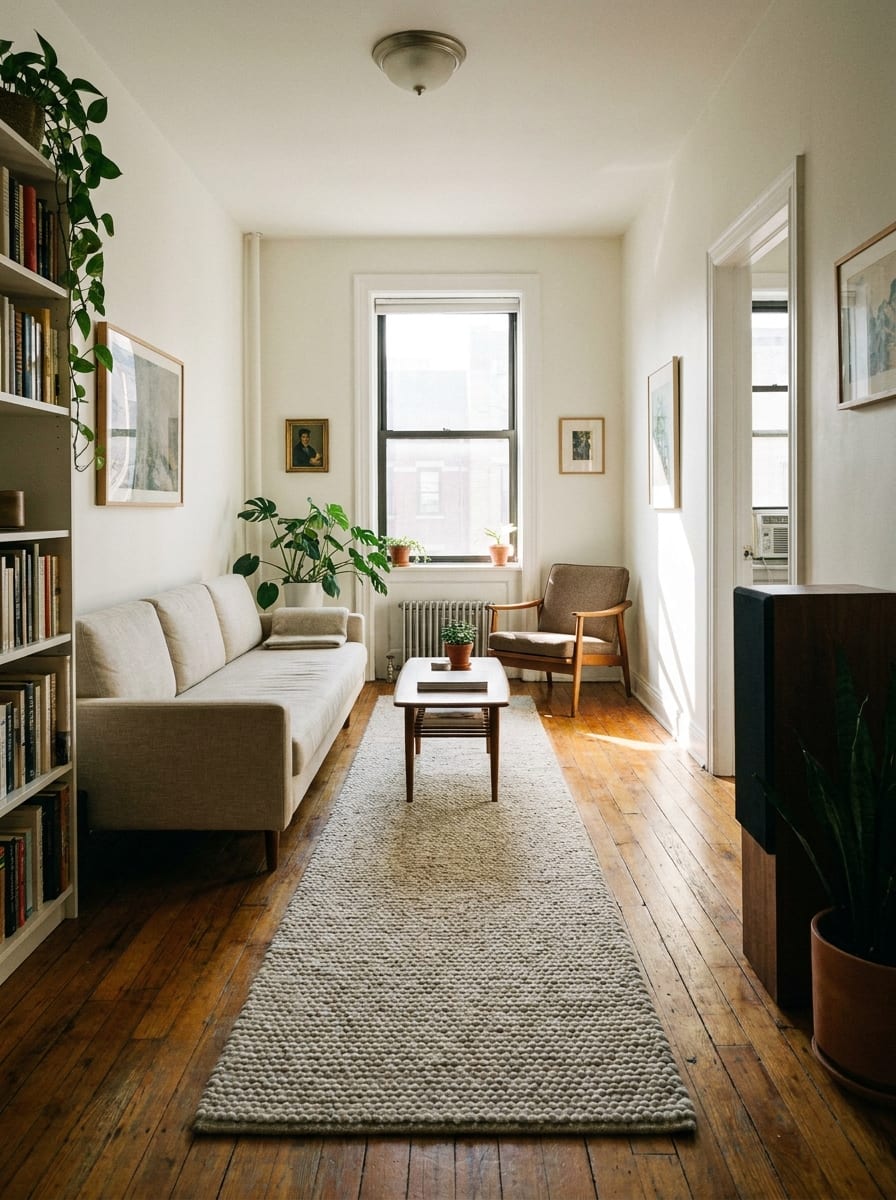
In a narrow living room, rug orientation matters.
Follow the dominant length
If the room is long and narrow, align the rug’s long dimension with the room’s long axis.
Connect the main furniture line
For example: sofa along one wall, coffee table and chair near the far end. The rug should support that direction.
Avoid tiny centered rugs
A small rectangle floating in the middle can emphasize how narrow the room is.
Keep the walkway outside the rug when useful
If one side is the primary circulation route, you may not need the rug to extend into it.
4. The Round Rug Conversation Zone
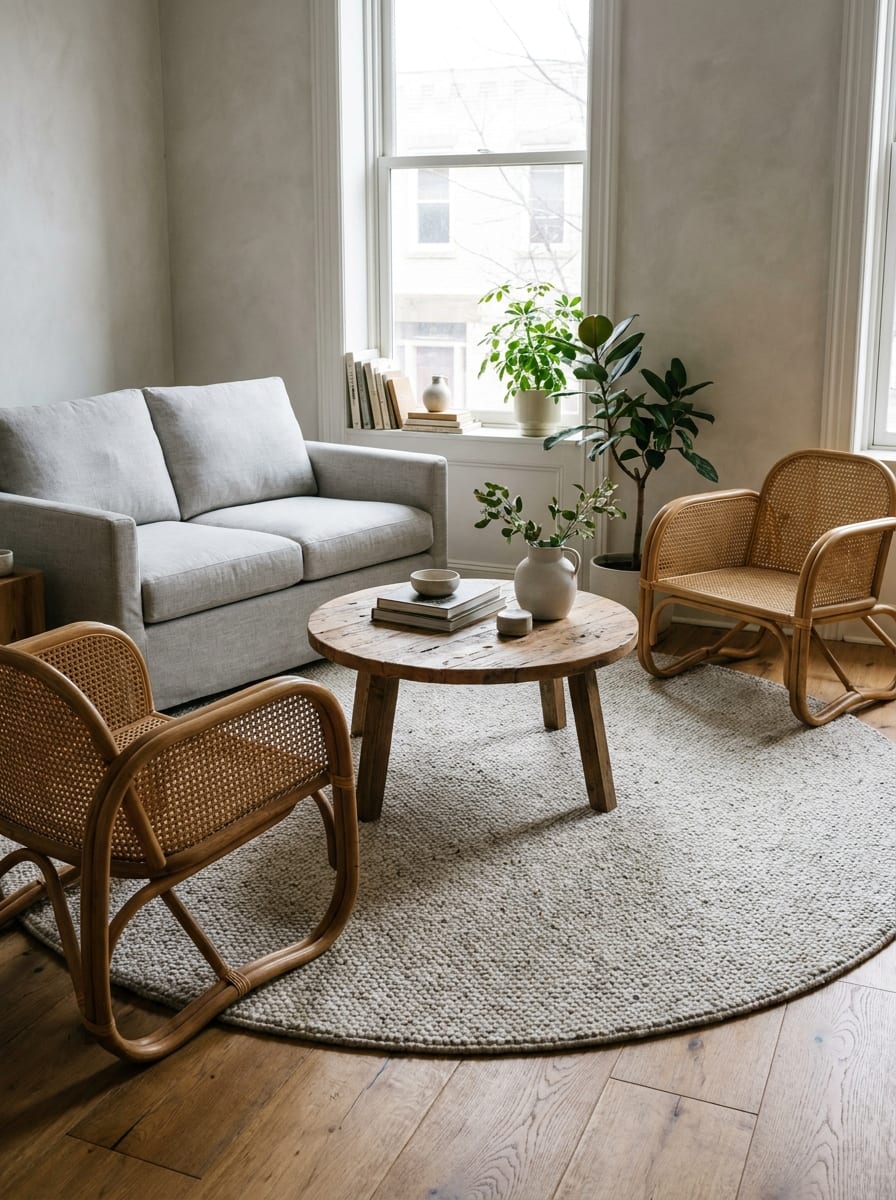
A round rug can work well when the furniture arrangement itself is more circular than linear.
Good situations
Consider a round rug when the room has:
- small curved sofa
- two chairs facing each other
- round coffee table
- awkward square corner
Why it can help
Curved edges create a softer boundary than a rectangular rug.
Do not choose it only because the room is small
The furniture arrangement still needs to relate to the shape.
Let the round rug feel intentional
Center it beneath the conversation zone rather than under one isolated piece.
5. The Sofa-and-Chair Anchor Rug
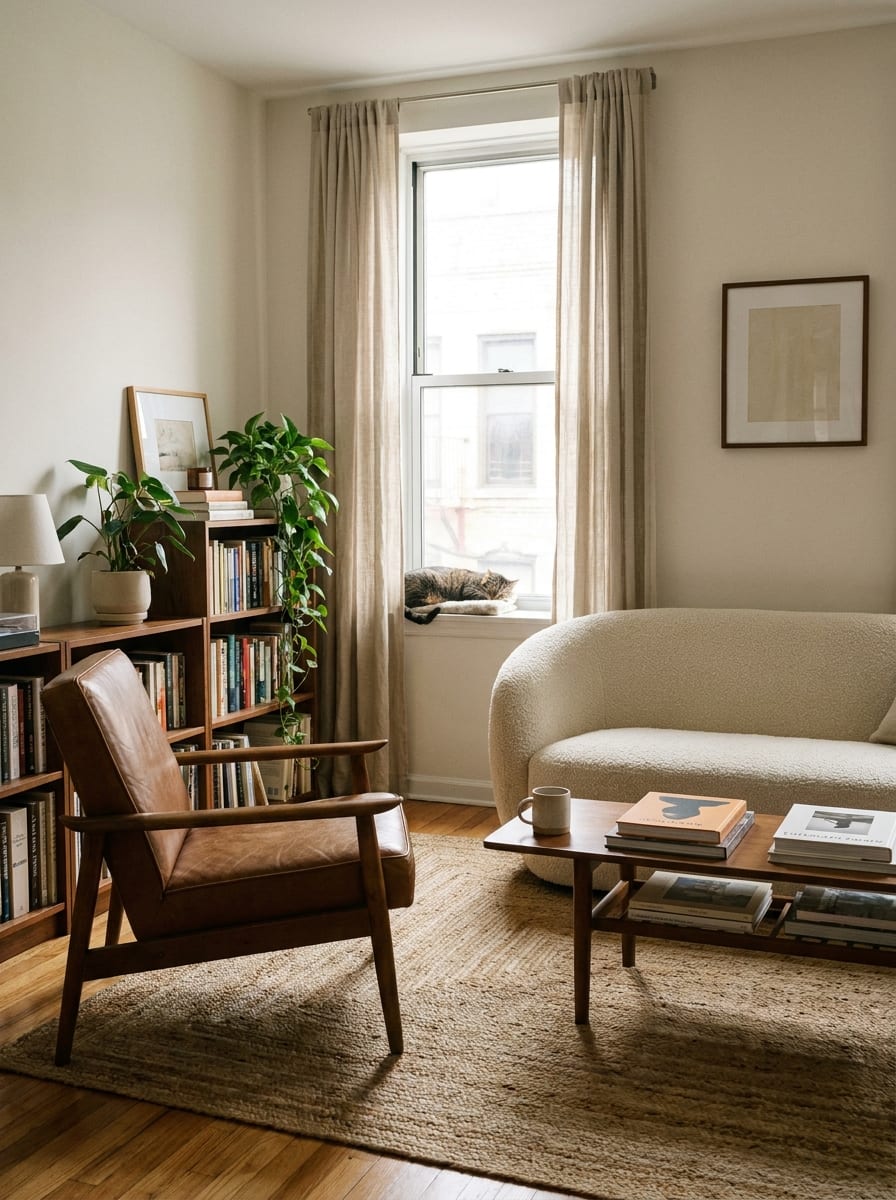
A small living room often has one sofa and one accent chair.
Use the rug to bridge the gap
Position it so both pieces visually connect. That usually means:
- sofa front legs on rug
- chair front legs on rug
- coffee table centered between them
Why this matters
The rug defines the conversation area, not just the sofa area.
Keep the chair close enough
If the chair is so far away that only one corner touches the rug, the room may still feel fragmented.
Use the rug to help furniture placement
Sometimes the rug reveals that a chair should move closer rather than that the rug should become larger.
6. The Light-Tonal Rug Setup
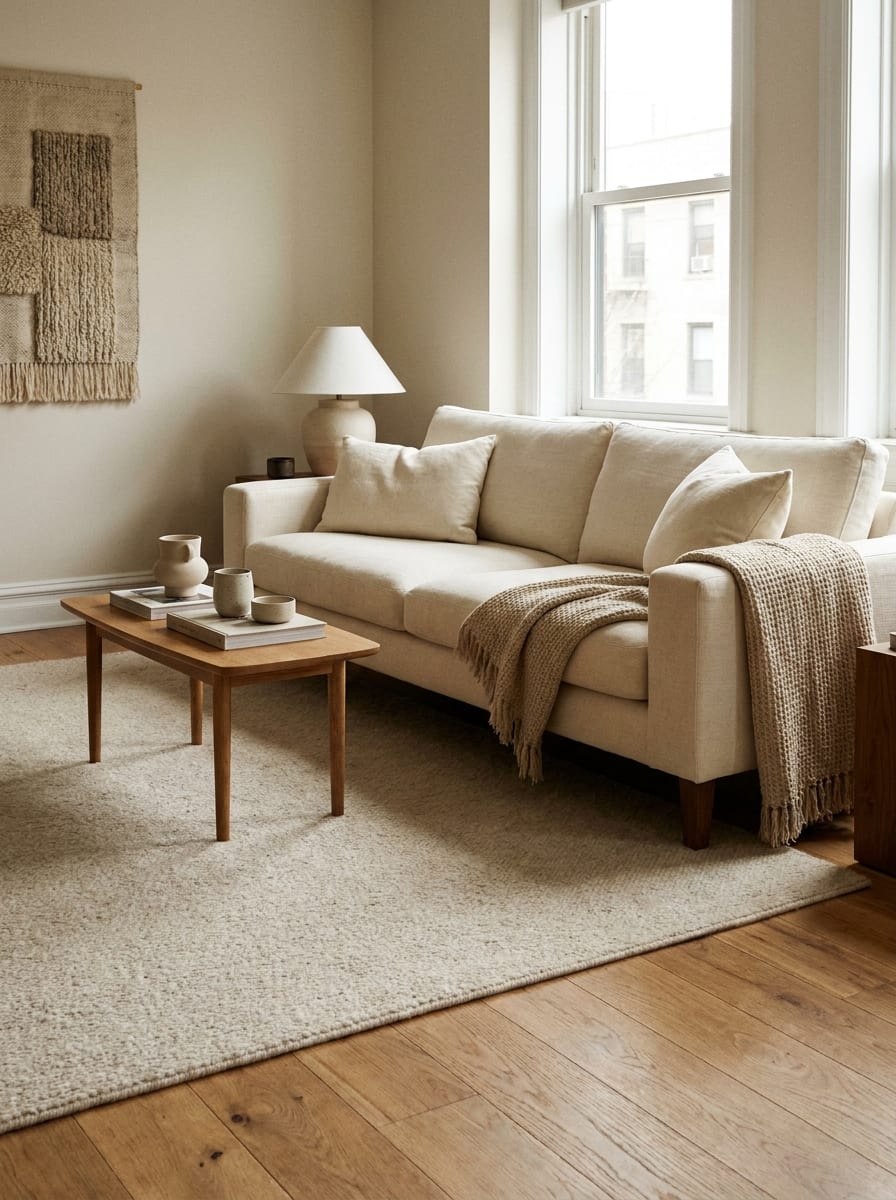
A light rug can help a compact living room feel visually quieter.
Think tonal rather than plain white
Good options may include:
- oatmeal
- warm beige
- soft greige
- light taupe
- faded stone
Why tonal continuity helps
A dramatic rug can become another strong visual boundary. A softer tonal rug allows the furniture to remain the focus.
Match the room’s temperature
Warm wood floors often work naturally with cream, sand or warm gray.
Practicality matters
Do not choose an extremely light rug if it will make you anxious about pets, children or high traffic.
7. The Low-Contrast Pattern Rug
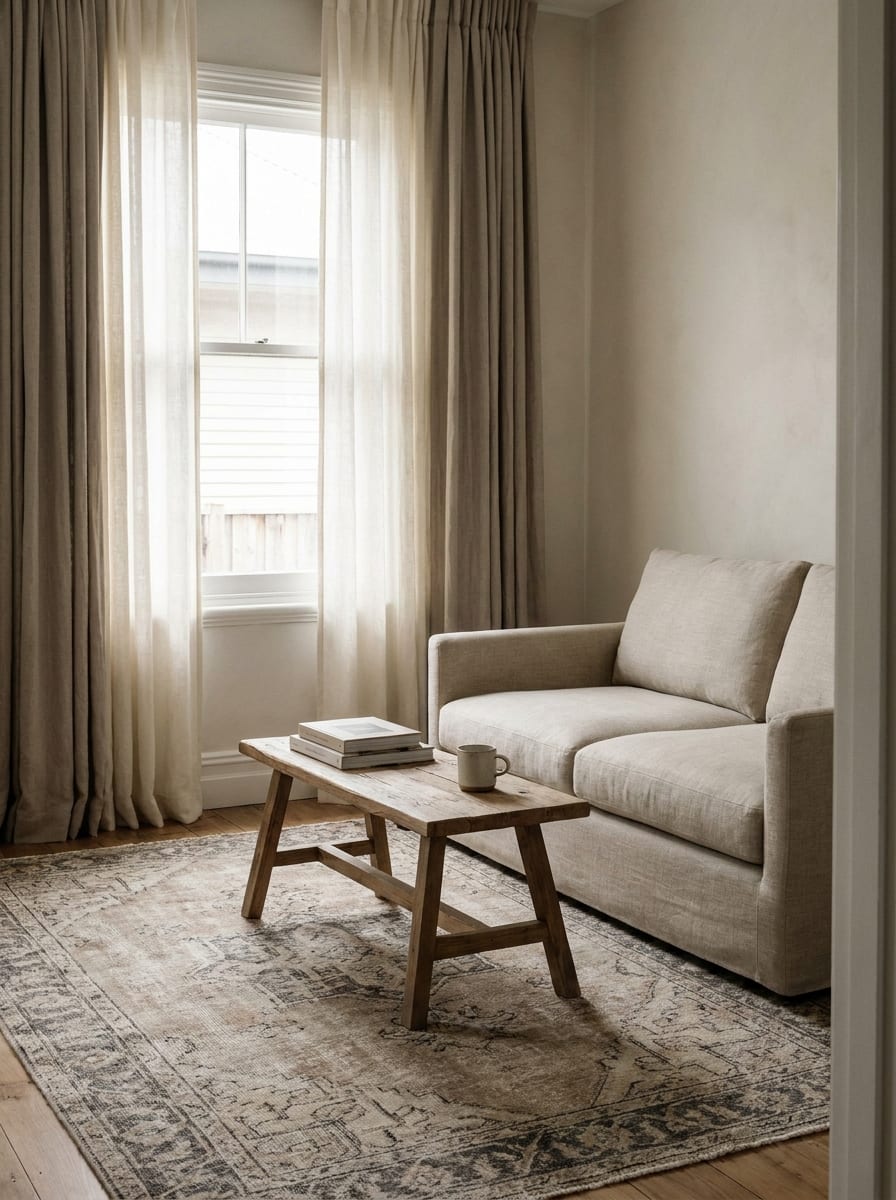
Pattern is not automatically too busy for a small living room.
Choose a quieter pattern
Good directions include:
- faded geometric
- subtle stripe
- washed traditional motif
- tonal abstract
Why low contrast works
You still get texture and personality without making the rug dominate the floor.
Repeat one rug color elsewhere
Pick one subtle tone from the rug and echo it in a cushion, throw or artwork.
Avoid making every surface patterned
If the rug is patterned, keep some nearby elements calmer.
8. The Open-Plan Living-Zone Rug
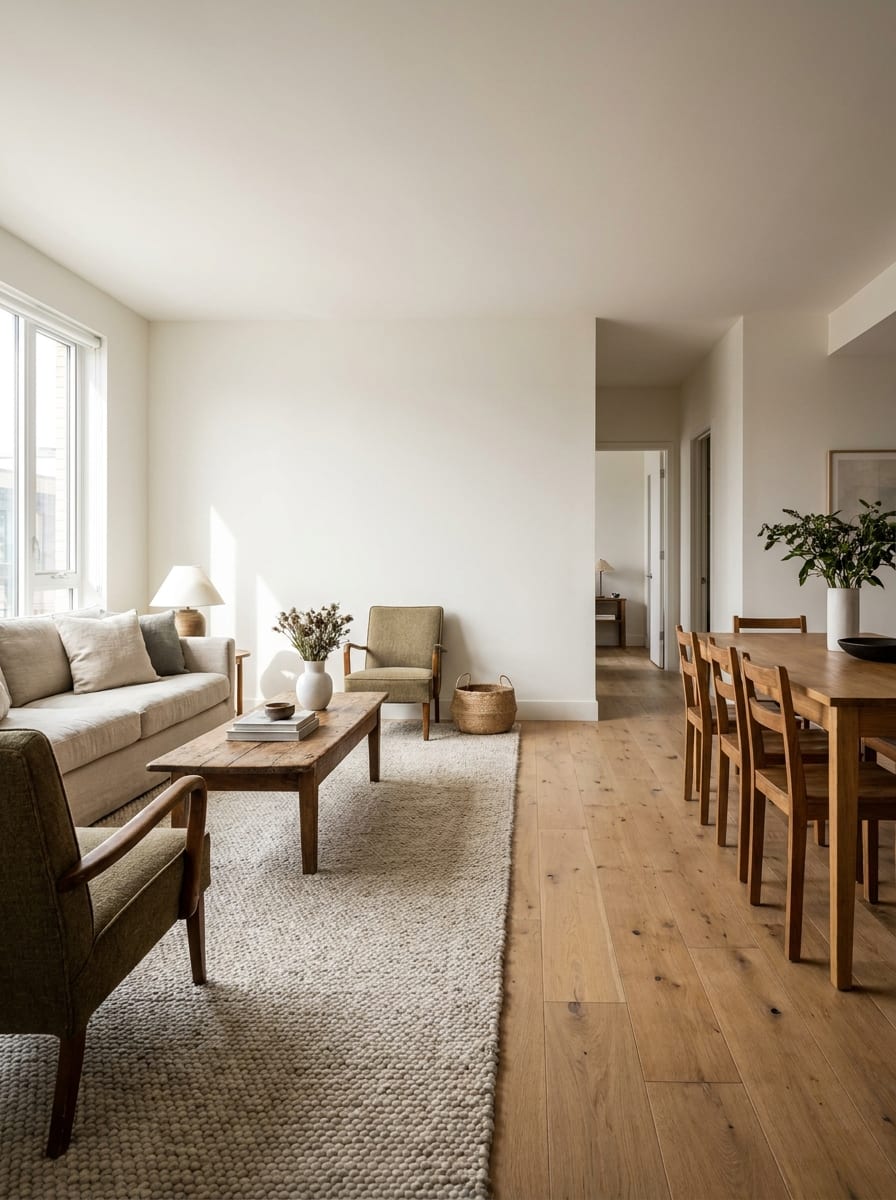
In a studio or open-plan apartment, the rug can act as a soft boundary between functions.
Let the rug define only the living area
Do not make the rug so large that it spills into the dining area without purpose.
Use furniture to reinforce the boundary
The sofa edge and rug edge can work together to define where the living zone ends.
Keep the circulation lane clear
A rug does not have to cover the path between entry, kitchen and bedroom.
Avoid using a different rug for every tiny zone
Too many rugs in a studio can visually divide the floor into fragments.
9. The Sectional-Friendly Rug Layout
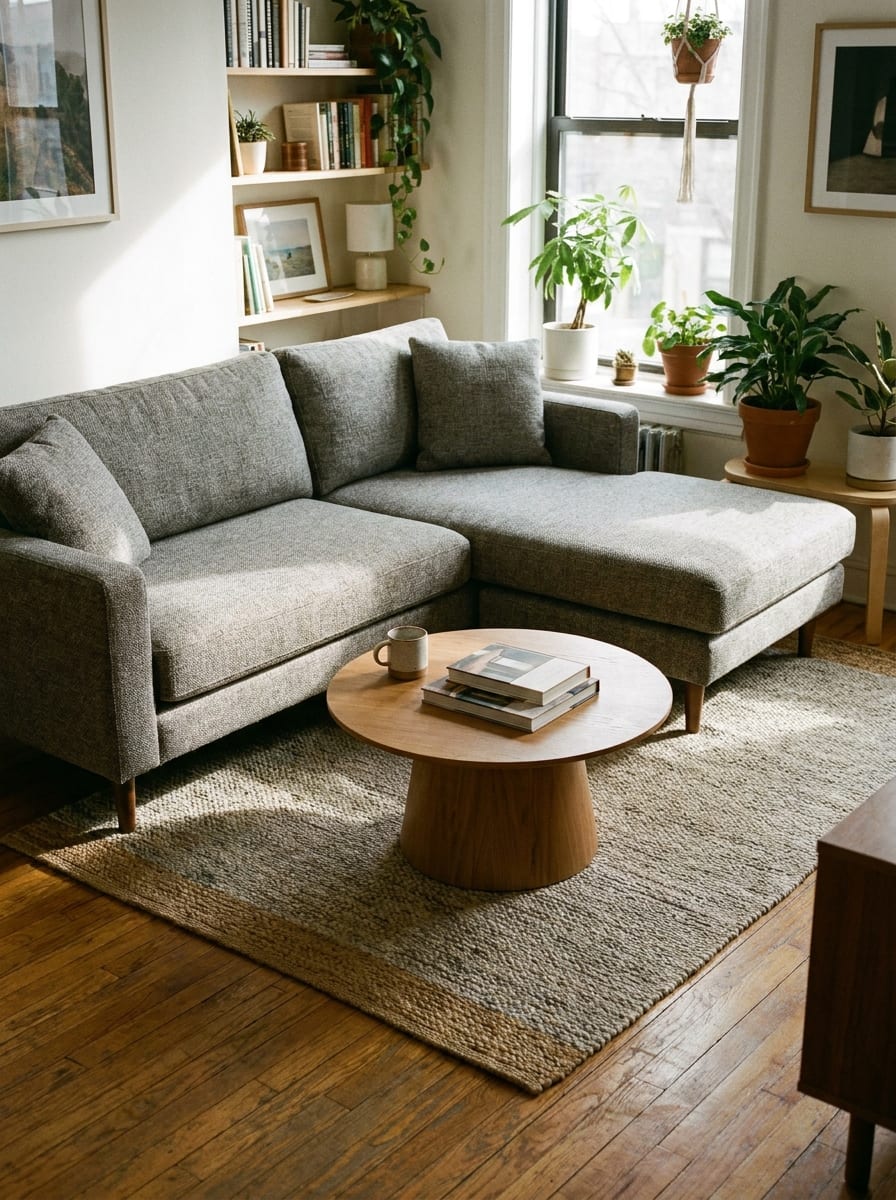
A small sectional can work well in an apartment, but the rug needs to relate to the entire footprint.
Avoid a rug trapped inside the L-shape
If the rug only sits beneath the coffee table between the sectional sides, it may look undersized.
Extend beyond the inner opening
A better setup usually allows the rug to reach beneath at least some of the sectional’s front legs.
Align with the main sofa section
The long rug edge can follow the longer part of the sectional.
Keep the chaise proportion in mind
The rug should not stop in an awkward place halfway beneath the chaise unless the placement looks intentional.
10. The Rug-Free Breathing-Room Option
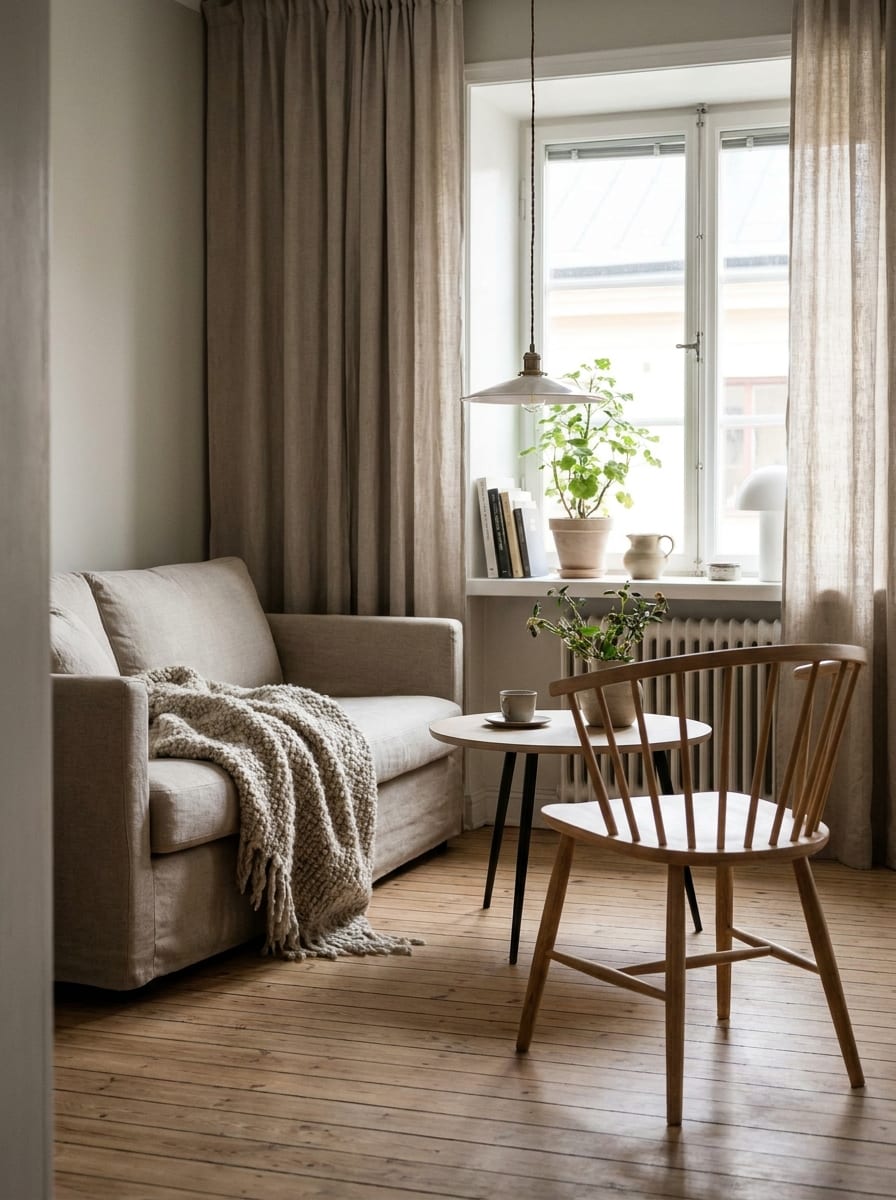
Sometimes the best rug idea is not using one.
Skip it when the floor already works
You may not need a rug if:
- flooring is attractive
- room is extremely narrow
- furniture already defines the space
- rug interferes with doors
Why skipping the rug can help
Removing it reduces one more boundary, color, texture and object from the room.
Make the seating arrangement intentional instead
Without a rug, pay extra attention to sofa and chair relationship, coffee table placement and lighting.
Add softness elsewhere
You can bring texture through curtains, cushions, upholstery and throws instead.
11. The Furniture-First Rug Formula
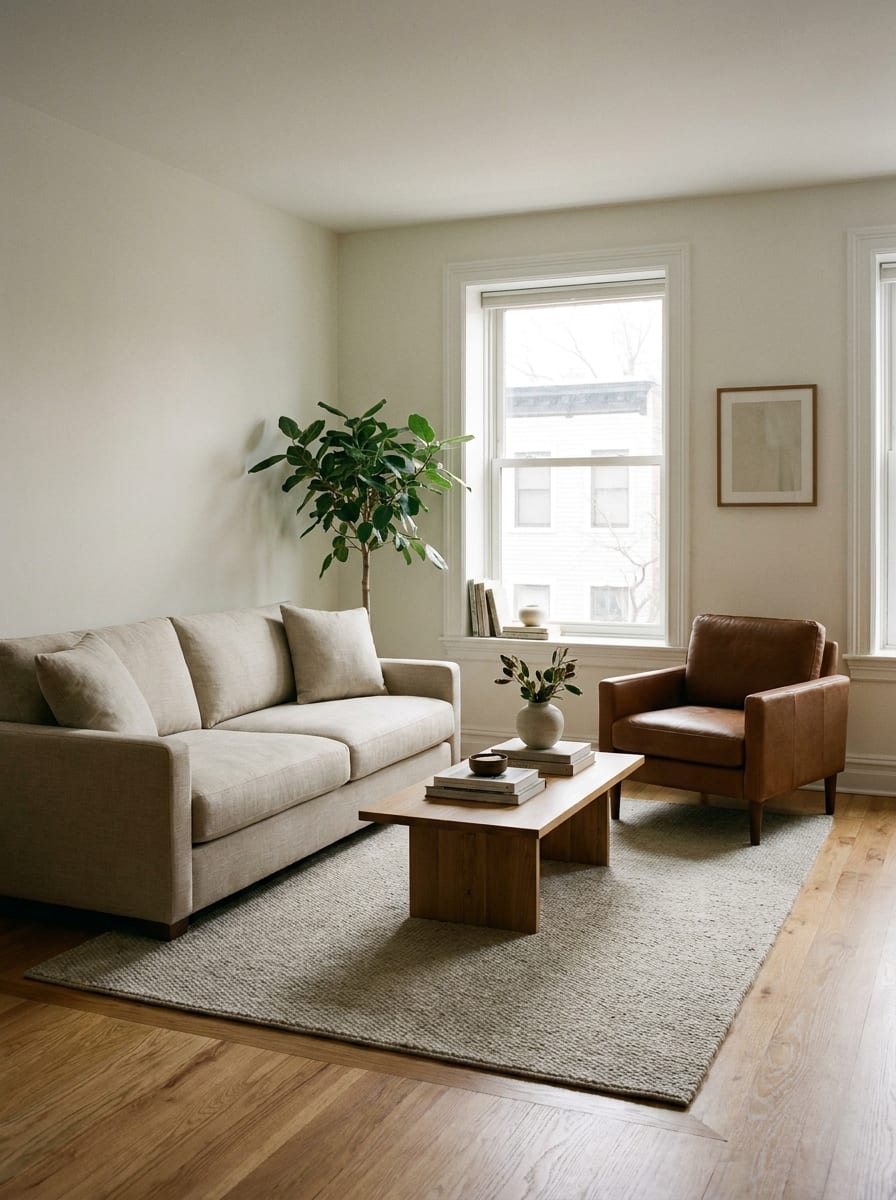
If you are unsure what rug size or placement to choose, do not begin with the rug. Begin with the furniture. Use this order: sofa, then chair, then table, then walkway, then rug.
Step 1: Place the sofa
Find its most functional location.
Step 2: Add chairs
Create a comfortable conversation distance.
Step 3: Protect circulation
Make sure people can move through the room.
Step 4: Position the coffee table
Center it according to the seating rather than the room itself.
Step 5: Size the rug
Choose the rug that connects the furniture without covering unnecessary floor. (Tip: Use our interactive Rug Size Calculator to test standard 5x8, 8x10, and custom dimensions against your specific room and seating measurements).
How Much of the Sofa Should Sit on the Rug?
There is no single rule for every room. Useful layouts include front legs on, most of sofa on, or entire sofa on, depending on the room, rug size and furniture. For small apartments, front legs on is often a practical starting point.
Should All Furniture Sit Completely on the Rug?
Not necessarily. The goal is visual connection, not forcing every furniture leg onto the textile.
Avoid the Floating Rug Effect
A floating rug is one surrounded by furniture without actually connecting to much of it.
Larger Rugs Can Look Better Than Smaller Rugs
People often assume small room equals tiny rug. But a slightly larger rug can sometimes make the arrangement feel more unified.
But Bigger Is Not Always Better
Watch for door interference, awkward folding and rug edges jammed against walls.
Keep the Main Walkway Practical
A rug should improve the room, not complicate circulation.
Watch the Front Door
Check door clearance, rug thickness and door sweep.
Watch Balcony Doors
Avoid placing a thick rug where it interferes with sliding or balcony doors.
Think About Rug Thickness
A thick high-pile rug can catch chair legs and make doors difficult in a tiny living room. Low or medium pile can be easier in high-traffic small apartments.
Consider Furniture Movement
Ottomans move. Coffee tables may slide. Choose a rug surface that works with how the room actually functions.
Should the Rug Match the Sofa?
Not exactly. A better approach is often to coordinate rather than match.
If the Sofa Is Dark
A lighter rug can create separation between the sofa and floor.
If the Sofa Is Light
You can continue the tonal palette or introduce a slightly deeper rug.
If the Floor Is Dark
A lighter rug can break up a large dark surface.
If the Floor Is Light
A rug with slightly deeper color may define the seating area more clearly.
Stripe Direction Matters Visually
A subtle striped rug can reinforce a room’s dominant direction.
What About Bold Rugs?
Bold can work. But let the rug become the main visual statement.
What About Vintage-Style Rugs?
They work particularly well in small rooms because faded patterns add depth without looking overly crisp.
What About Jute?
Natural-fiber rugs add useful texture but consider texture underfoot, shedding and maintenance.
What About Washable Rugs?
Practical in rentals and homes with pets. But still evaluate thickness, edge curling and actual rug size.
Can You Layer Rugs in a Small Living Room?
Yes, but carefully. In a very small room, one rug is usually simpler.
Can a Rug Define a Studio Apartment?
Absolutely. A rug can define the living area without adding a divider or partition.
What If the Sofa Touches the Wall?
The rug still needs to relate to the seating, not the wall.
What If the Living Room Is Extremely Narrow?
Consider a long rectangular rug aligned lengthwise, front-legs-on layout, or no rug at all.
What If the Living Room Is Almost Square?
A larger rectangular or square-ish rug can work well to unite the seating group.
What If the Living Room Has a Sectional?
Choose the rug based on the sectional’s full footprint, not just the coffee-table opening inside the L-shape.
What If the Living Room Also Contains Dining?
Keep the living rug within the living zone. Avoid overlapping zones.
What If the Coffee Table Is Round?
A round table can sit comfortably on a rectangular, square or round rug. Choose based on the seating arrangement.
What If You Have No Coffee Table?
The rug can still define the seating arrangement using the relationship between sofa, chairs and ottoman.
Rug Placement With a Sofa + One Chair
Front legs of both on the rug, coffee table centered between them.
Rug Placement With a Sofa + Two Chairs
Try to connect all three seating pieces while keeping circulation clear.
Rug Placement With a Sectional
Let the rug extend beneath the front of both sectional sections where practical.
Rug Placement in a Studio
Use the rug to contain sofa, coffee table and chair while letting surrounding exposed floor distinguish other zones.
How Far Should a Rug Be From the Wall?
There is no universal measurement. The goal is for the rug to feel intentional rather than squeezed into the architecture.
Use Painter’s Tape Before Ordering
Mark the proposed rug edges on the floor. Then look from doorway, sofa, kitchen and hallway.
You Can Also Use Bedsheets to Test Scale
Place a sheet approximately matching the rug dimensions on the floor temporarily. Common Small Living Room Rug Mistakes Choosing a rug only slightly larger than the coffee table usually looks disconnected. Buying small because the room is small ignores the furniture arrangement. Ignoring the accent chair leaves the rug disconnected from the conversation area. Choosing too many strong colors makes small rooms visually busy. Blocking doors is always a problem. Using too many rugs in one open space fragments the floor. A Simple Rug Decision Formula Use: room shape, then furniture layout, then circulation, then rug size, then color and pattern. Not: pretty rug first, then try to make it fit. Which Rug Idea Fits Your Living Room? Choose the Front-Legs-On Layout if: you want the most versatile solution. Choose an Almost-Wall-to-Wall Rug if: the seating fills most of a compact square room. Use Long-Room Alignment if: your living room is narrow and rectangular. Choose a Round Rug if: your seating arrangement is compact and circular. Use the Sofa-and-Chair Anchor if: your furniture feels disconnected. Choose a Light-Tonal Rug if: the room already contains strong contrast. Choose a Low-Contrast Pattern if: you want personality without visual clutter. Use an Open-Plan Zone Rug if: the living area flows into another function. Use the Sectional Layout if: you have an L-shaped sofa. Skip the Rug if: the room genuinely works better without one. Use the Furniture-First Formula if: you are starting from scratch. Final Thoughts A small living room does not automatically need a small rug. It needs a rug that makes the furniture feel like one arrangement. Start with the seating. Protect the walkway. Then choose a rug that connects sofa, chairs and coffee table without creating unnecessary floor boundaries. In many compact rooms, a slightly larger, calmer rug will look more intentional than a tiny rug sitting beneath the coffee table. The goal is not to fill the floor. It is to make the living room feel connected, comfortable and proportionate.