How to Make a Room Look Bigger With Paint: 10 Placement Tricks That Actually Work
How to make a room look bigger with paint comes down to placement, not just color. Learn ceiling, trim, and one-wall techniques, plus finishes and light tips that open up small rooms.
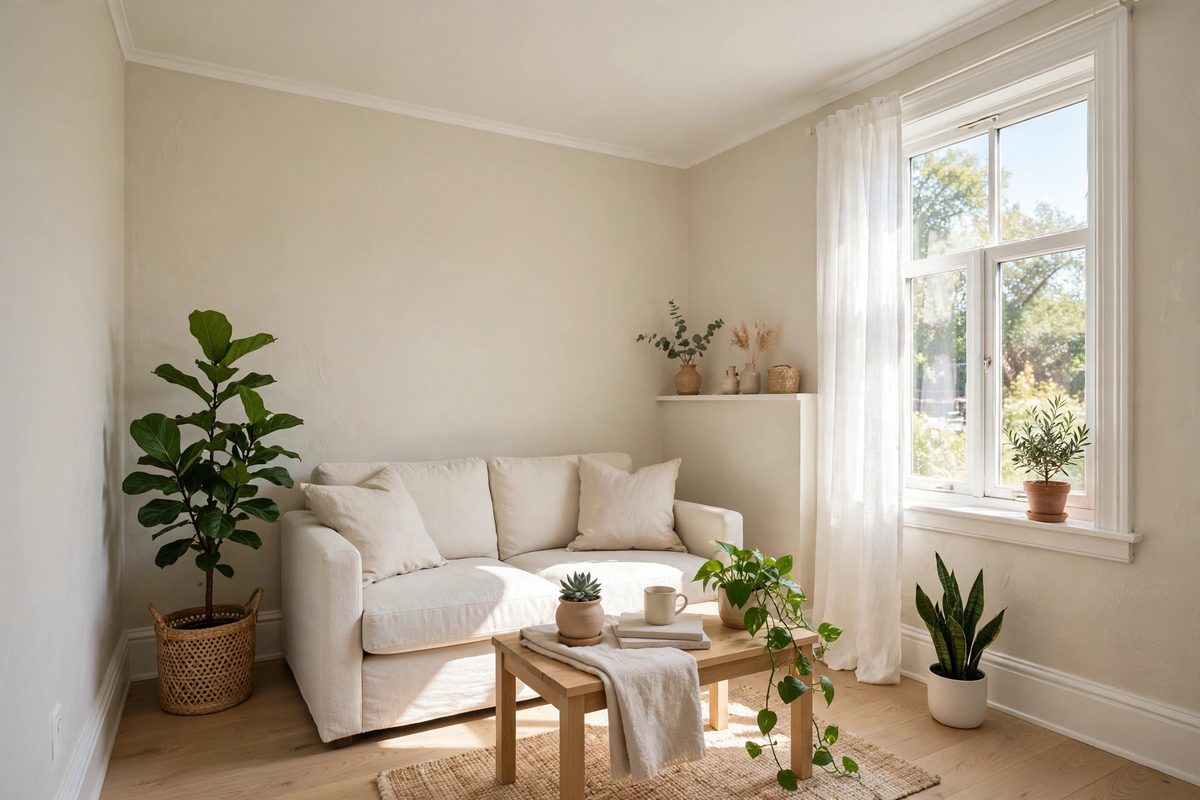
Small living room painted in one continuous light color with white trim and a light ceiling, looking open and bright
In This Guide
Paint is the cheapest way to change how big a room feels, but the shade on the swatch is only half the story. How to make a room look bigger with paint depends just as much on where you put color, where you stop it, and which finish you choose. Two rooms painted the same pale color can feel completely different once the ceiling, trim, and one accent wall enter the picture.
This guide covers technique, not a shade list. You will learn how continuous color stretches a room, when a single dark wall helps instead of hurting, how ceiling color changes perceived height, and which finishes bounce light without showing every flaw. For specific shade picks to pair with these techniques, see light paint colors for small rooms and paint colors for small bedrooms. The room-wide color logic also pairs with the palette ideas in small living room color scheme ideas.
1. Paint Walls, Trim, and Doors One Continuous Color
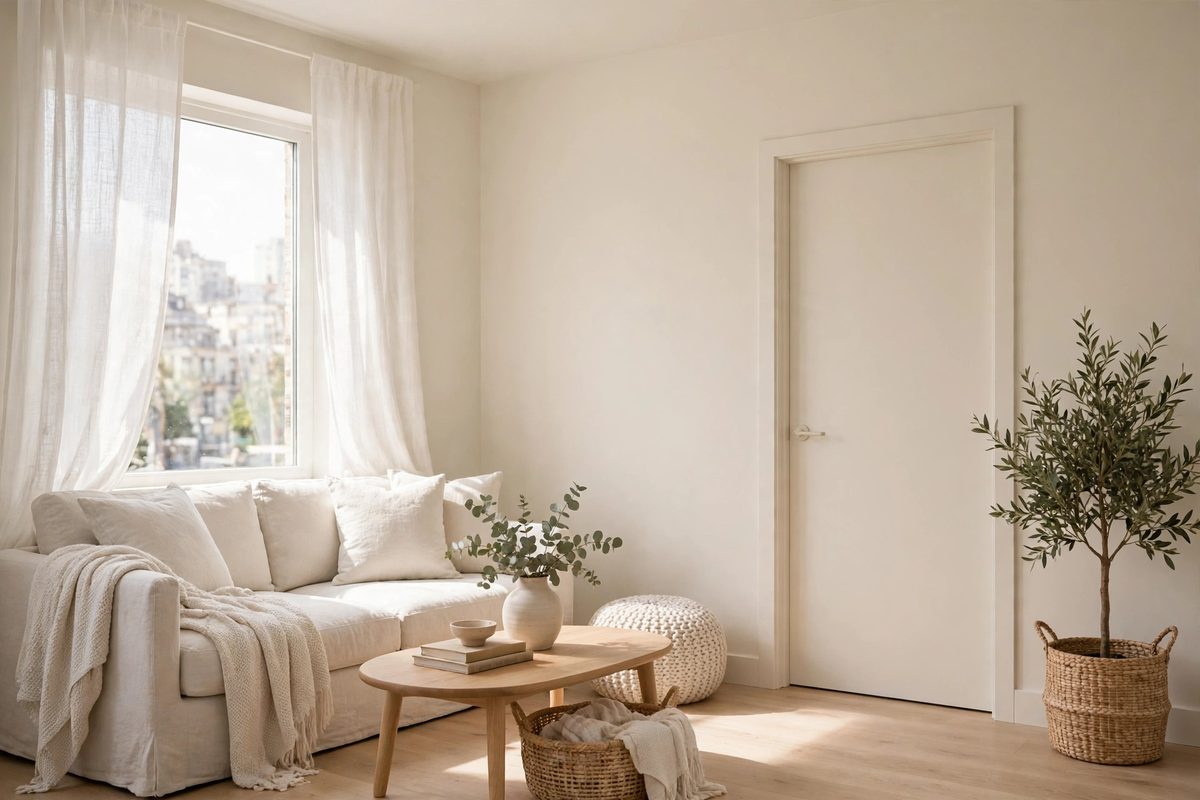
The single most effective trick is also the simplest: paint the walls, trim, baseboards, and interior door the same color. Every contrasting line is a visual stop sign. When trim is bright white against a colored wall, the eye registers exactly where the wall ends. When everything matches, boundaries blur and the room reads as one larger volume.
This works best with light to mid-tone colors. A pale warm white, soft greige, or light sage in a single color across all surfaces makes a boxy bedroom feel calmer and wider. Use the same sheen family too, or at least keep trim only one step glossier than walls, so the surfaces still read as one. Expect two coats for full coverage, and budget around 1 gallon per 350 to 400 square feet of wall.
How to make it work
Choose your color first, then ask the paint desk to mix it in both a wall finish and a trim finish. Paint the ceiling separately (see trick 3), but keep door frames, window frames, and baseboards in the wall color. If you are renting, check your lease first, and keep the original paint code so you can restore the room at move-out.
2. Keep the Longest Walls Light and Unbroken
In a rectangular room, the two longest walls set the sense of width. Keep them light and free of strong horizontal breaks, and the room feels longer. A dark stripe, a busy gallery rail, or a high-contrast chair rail across a long wall chops the length into segments, and the eye stops at each one.
That does not mean long walls must be bare. Art and shelving are fine, but keep them in the same light value family as the wall, or hang one larger piece instead of many small ones. The goal is a long, calm run of color that the eye can travel across without interruption. Pair this with the layout advice in small bedroom layout ideas so furniture placement supports the paint, rather than fighting it.
How to make it work
Stand in the doorway and find the longest sightline in the room. That wall stays the lightest color in the room, with no horizontal dividing line. Save stronger color for the short end wall, covered in trick 5.
3. Paint the Ceiling the Same Color, or One Shade Lighter
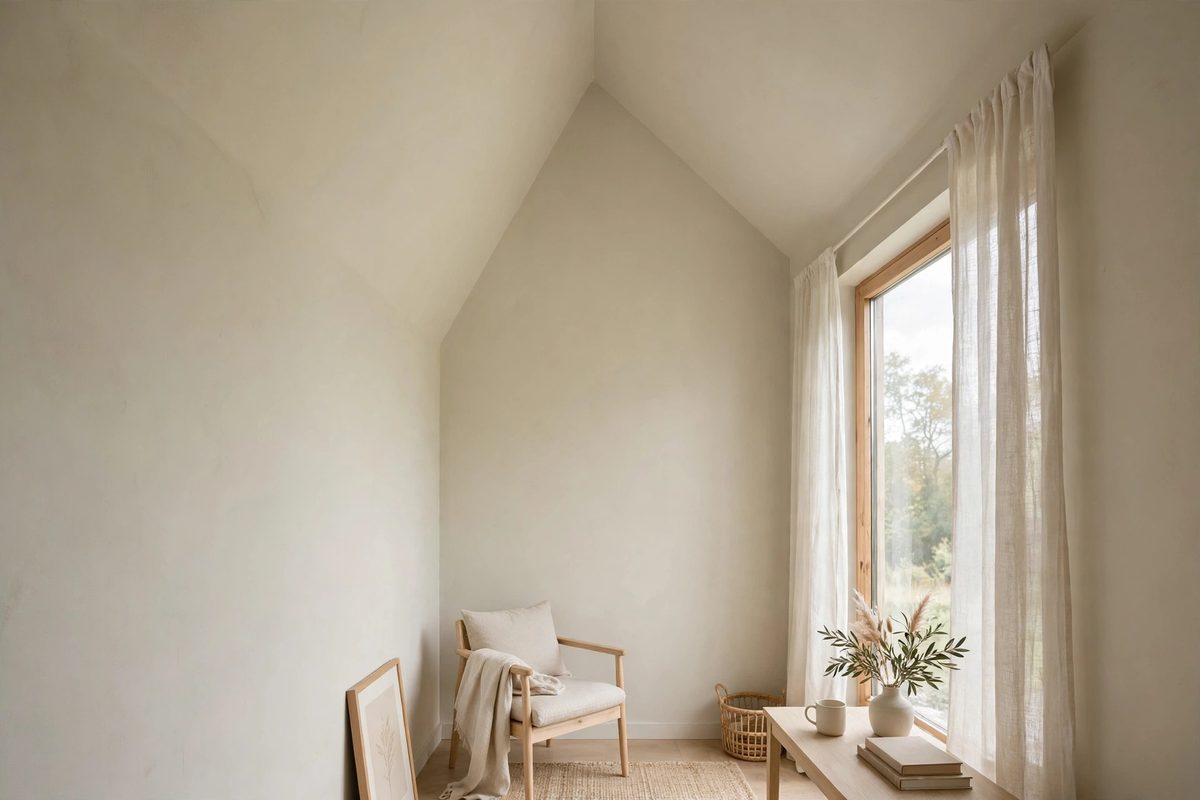
The old rule says ceilings must be white. In a small room, a stark white ceiling against colored walls draws a hard line at the top of the wall, and that line makes the ceiling feel lower. Painting the ceiling the same color as the walls, or one shade lighter on the same paint strip, erases that line and lets the eye keep traveling upward.
This is especially powerful in rooms under 8 feet tall, which covers most apartments. A ceiling in the same pale color reads as a continuation of the wall, not a lid. Use a flat or matte ceiling paint to avoid glare from overhead lights, and expect the ceiling to need two coats since it is often rougher than the walls. Avoid a ceiling color darker than the walls unless you are deliberately creating a cozy, cocooning effect in a bedroom, because dark ceilings press down visually.
How to make it work
Take your wall color strip to the paint desk and pick the next lighter shade on the same strip for the ceiling. If your walls are already very pale, use the exact same color on the ceiling. Cut in carefully at the wall-to-ceiling joint, since there is no white line to hide a wobbly edge.
4. Use White or Matching Trim to Lift, Not to Outline
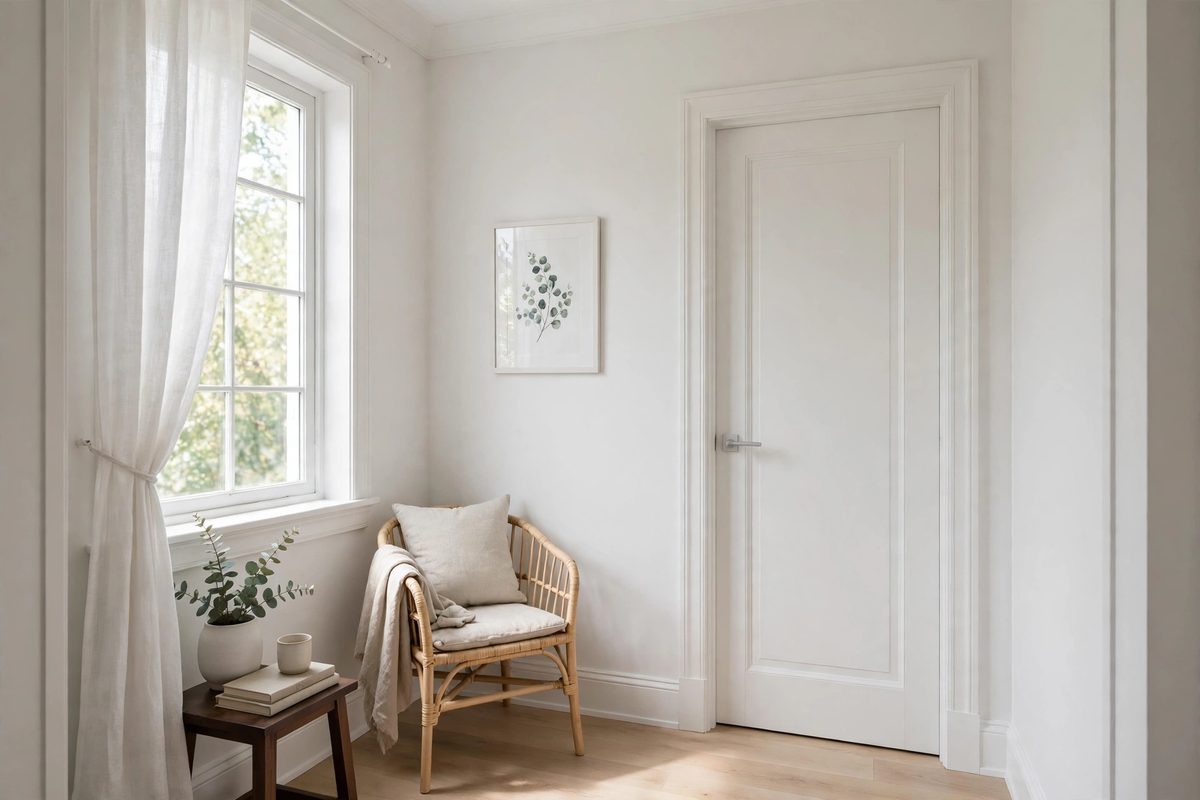
Trim is a double-edged tool. Crisp white trim against a mid-tone wall outlines every door and window like a picture frame, which looks sharp in a large room but chops a small one into pieces. In a small room, trim should lift the room quietly, not outline it loudly.
The fix is to paint trim either the same color as the walls, or a soft white that sits close to the wall color in value. A warm white trim with warm white walls, or a cool white with cool gray walls, keeps the contrast gentle. Reserve high-contrast bright white trim for rooms where you want the woodwork itself to be the feature, and use a semi-gloss finish on trim so it wipes clean and catches a little light. For how curtains interact with trim color, see small living room curtain ideas.
How to make it work
Hold trim swatches against your wall color in daylight and under your lamps at night. If the trim jumps out at you from across the room, it is too contrasting. Drop to a softer white, or tint the trim paint 25 percent toward the wall color.
5. One Dark Wall Works Only on the Short End Wall
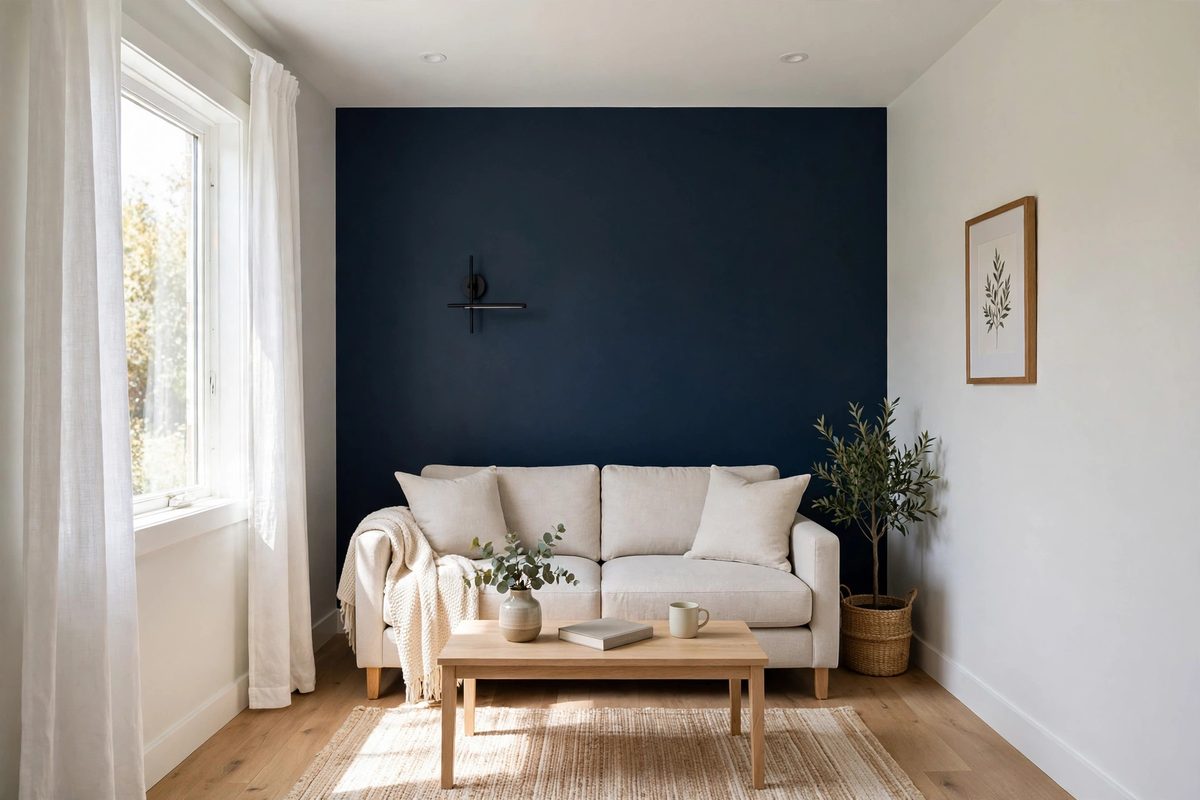
Dark paint does not automatically shrink a room. One dark wall on the short end wall of a rectangular room can actually make the room feel longer, because the dark wall reads as farther away and the light side walls stretch toward it. The mistake is putting the dark color on a long wall, where it closes in the width, or on all four walls, where it boxes the room in.
Keep the dark wall to a single short wall, ideally the one you face from the doorway, and keep everything else light. A deep green, navy, or warm charcoal works here, but the rest of the room must stay pale or the effect reverses. One dark wall is also the one place in this guide where a bold color earns its keep, so commit to it fully with two coats and a proper primer, rather than a timid single coat that looks patchy. If you want a full roundup of dark accent ideas, see black accent wall ideas for small spaces, but note that post covers dark walls as a style choice, while this trick uses one dark wall as a space-expanding tool.
How to make it work
Paint the short wall that sits opposite the main entry point, not the wall beside the door. Keep the ceiling light, keep the other three walls light, and put your largest piece of furniture or art on the dark wall so it anchors the view.
6. Match the Finish to the Wall, Not Just the Color

Finish changes how light behaves on a wall, and light is what makes a room feel bigger. Flat and matte finishes hide bumps and patchy drywall, which helps in older rentals, but they absorb light and can make a room feel duller. Eggshell and satin bounce a little light back, which brightens the room, but they also show roller marks and wall flaws more clearly.
For most small rooms, eggshell is the sweet spot on walls: enough sheen to reflect light, forgiving enough for imperfect walls. Use satin in kitchens and hallways where walls get touched and wiped. Save semi-gloss for trim and doors, where durability matters and the smaller surface area keeps glare in check. A gallon of quality interior paint runs roughly 35 to 70 dollars depending on brand and line, and the finish rarely changes that price.
How to make it work
Buy a quart first and paint a 2 foot test square in eggshell and in flat, side by side. Look at both in morning light and under lamps. Pick the finish that brightens the room without spotlighting every drywall seam.
7. Let Light Direction Choose the Undertone
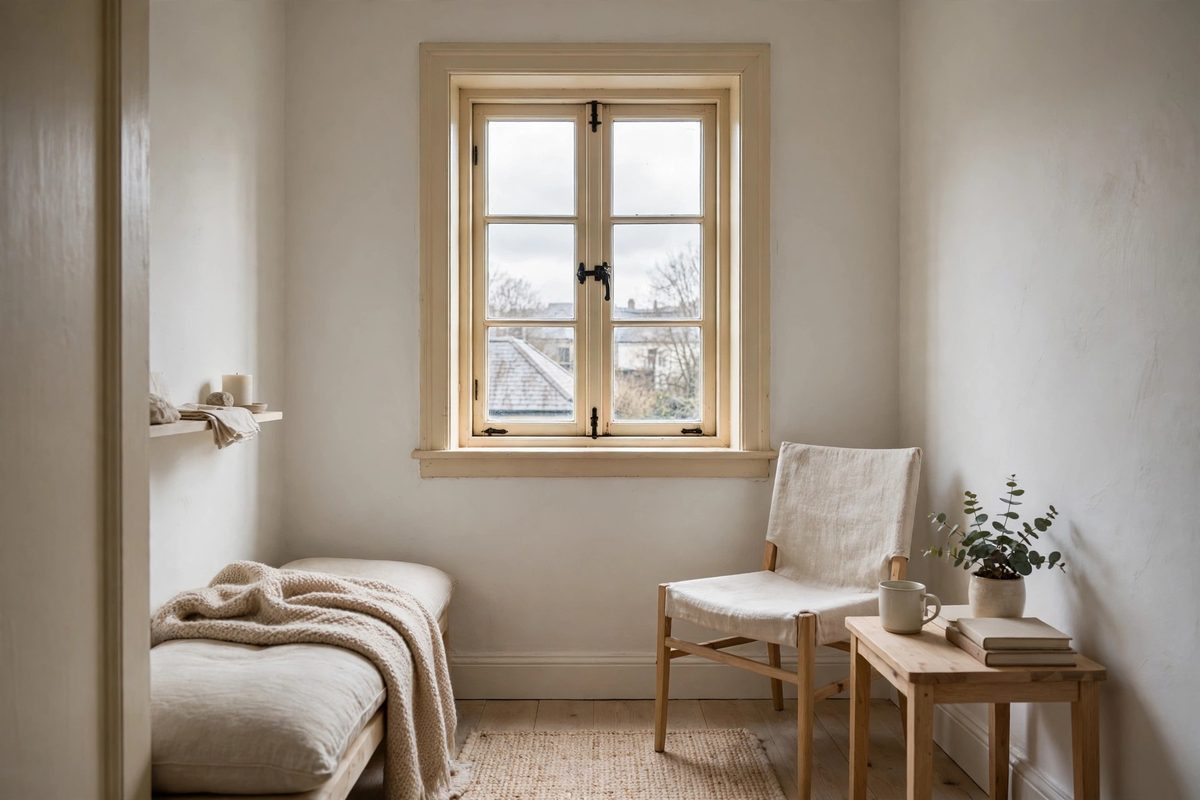
The same paint looks different in a north-facing room than a south-facing one, and picking the wrong undertone can make a small room feel gray and closed in. North-facing rooms get cool, bluish daylight, so warm undertones (a warm white, a soft cream, a warm greige) balance the cool light and keep the room feeling open. South-facing rooms get warm, golden light, so cooler undertones (a cool white, a soft blue-gray) stop the room from turning yellow by afternoon.
Test this before you commit. Paint large swatches, at least 12 inches square, on two walls, and check them at three times of day. A color that looks airy at noon can turn dingy under warm lamps at night, and that evening look is the one you will live with most. Lighting layers matter here too, as covered in small bedroom lighting ideas.
How to make it work
Note which direction each window faces before you shop. For north-facing rooms, lean warm. For south-facing rooms, lean cool. For east or west rooms, test both, since the light swings from cool morning to warm evening.
8. Use a Horizontal Split Only to Raise the Ceiling Line
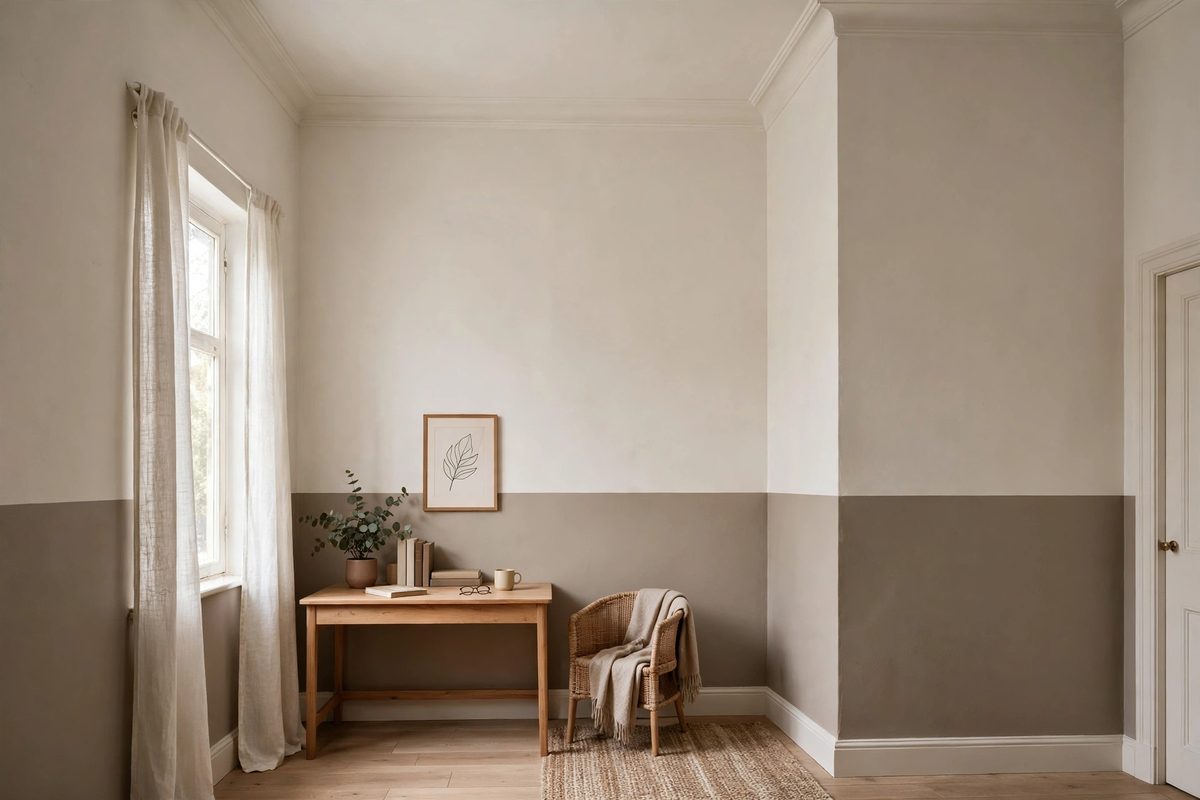
Two-tone walls can help or hurt, depending on where the split sits. A split at chair-rail height, around 32 to 36 inches, cuts the wall in half and makes the room feel shorter. A split placed high, around 75 to 80 percent of the wall height, with the lighter color on top, pushes the eye upward and makes the ceiling feel taller.
Keep the upper section the lighter color and the lower section only one or two shades deeper, so the split reads as subtle shading rather than a hard stripe. Use a laser level and painter’s tape for a crisp line, and remove the tape while the second color is still slightly tacky to avoid peeling. For the full two-tone method, including vertical splits, see two-tone wall paint ideas.
How to make it work
Measure the wall height, mark the split at about three quarters up, and level it around the whole room before taping. If the room is under 8 feet tall, skip the low chair-rail split entirely and use the high split or a single color.
9. Paint Built-Ins and Shelving the Wall Color
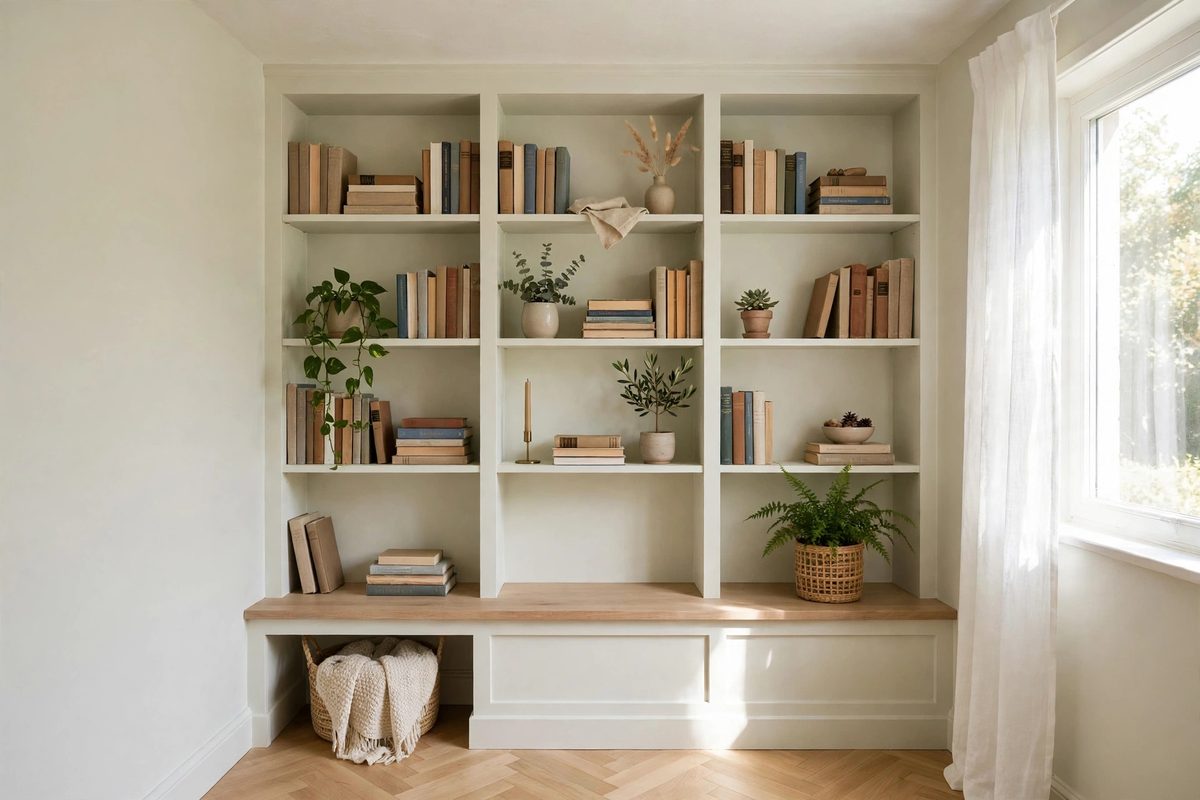
Bulky built-ins, bookshelves, and radiator covers eat visual space when they contrast with the wall. Paint them the wall color and they recede, reading as part of the architecture instead of furniture blocking the room. This is the same continuous-color principle as trick 1, applied to the biggest objects in the room.
This works especially well for floor-to-ceiling shelving and for awkward features like a boxed-in pipe or a shallow alcove. Use the wall paint on the shelf exterior and a slightly deeper tone inside the shelf backs only if you want books and objects to stand out without breaking the overall color field. Sand glossy existing paint lightly first, prime, and use two coats for a smooth finish that will not chip when books slide.
How to make it work
Remove shelf contents, clean the surfaces, and paint the unit in place with the wall color. Keep the wall color code on file, since touch-ups on built-ins happen more often than on flat walls.
10. Test Big, Dry Fully, and Check at Night Before Committing
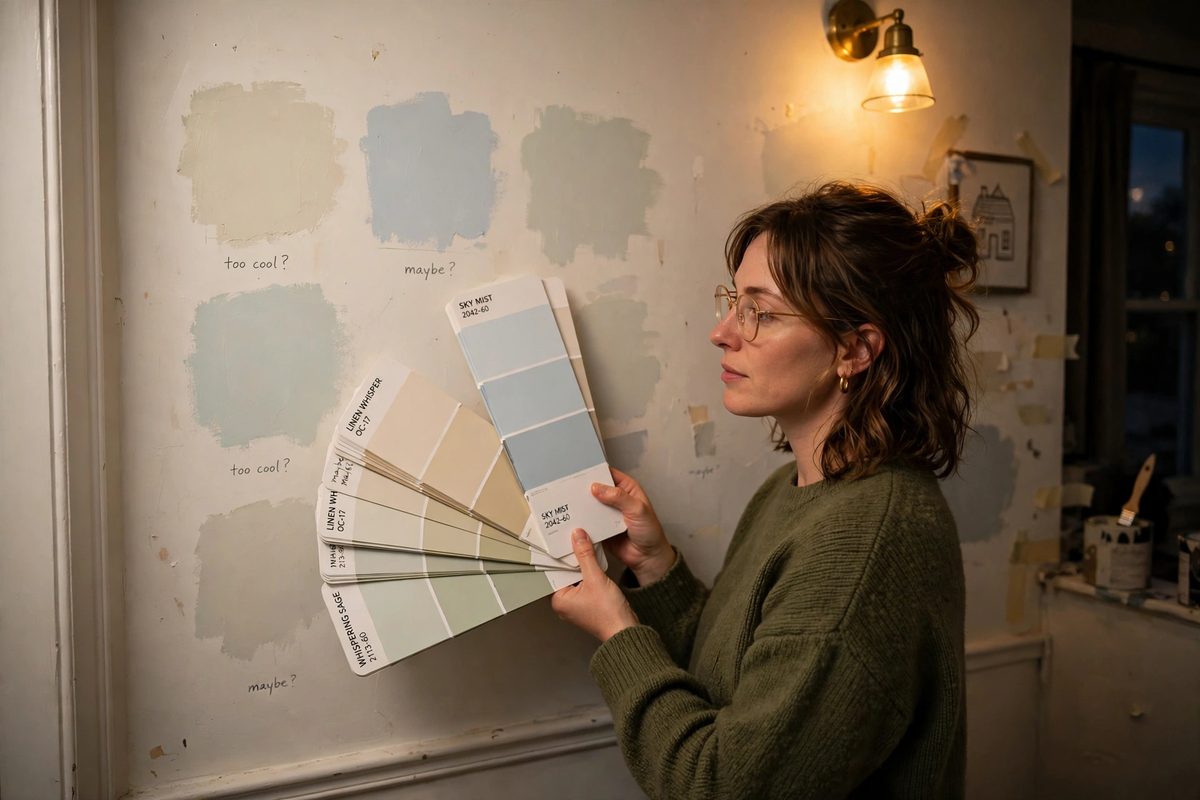
Small swatches lie. A 2 inch chip looks nothing like a full wall, and wet paint dries one to two shades darker or lighter depending on the color. The most common small-room paint regret is choosing from a chip, painting the whole room, and realizing at night that the color reads gray, yellow, or pink under lamps.
Paint test patches at least 2 feet square on two walls, let them dry a full 24 hours, and look at them in daylight, at dusk, and under your actual lamps. Interior latex paint dries to the touch in about 1 hour and is ready for a second coat in 2 to 4 hours, but the true color settles only once fully dry. If the color still feels right after the night check, buy the gallons and commit.
How to make it work
Buy sample quarts, not just chips, for your top two colors. Paint one patch per color on the wall opposite the window, where light hits hardest, and live with both for at least two evenings before deciding.
Paint placement beats paint shopping. One continuous color, a light ceiling, trim that blends instead of outlines, and a single dark wall used in the right spot will open up a small room more than any trendy shade on its own. Start with the continuous-color trick, test your top color big and at night, and let the room’s light direction pick the undertone.