18 Small Living Room Decor Ideas That Make a Compact Space Feel Designed, Not Cramped
Discover 18 small living room decor ideas that make a compact space feel designed, not cramped, using rugs, mirrors, leggy furniture and layered light.
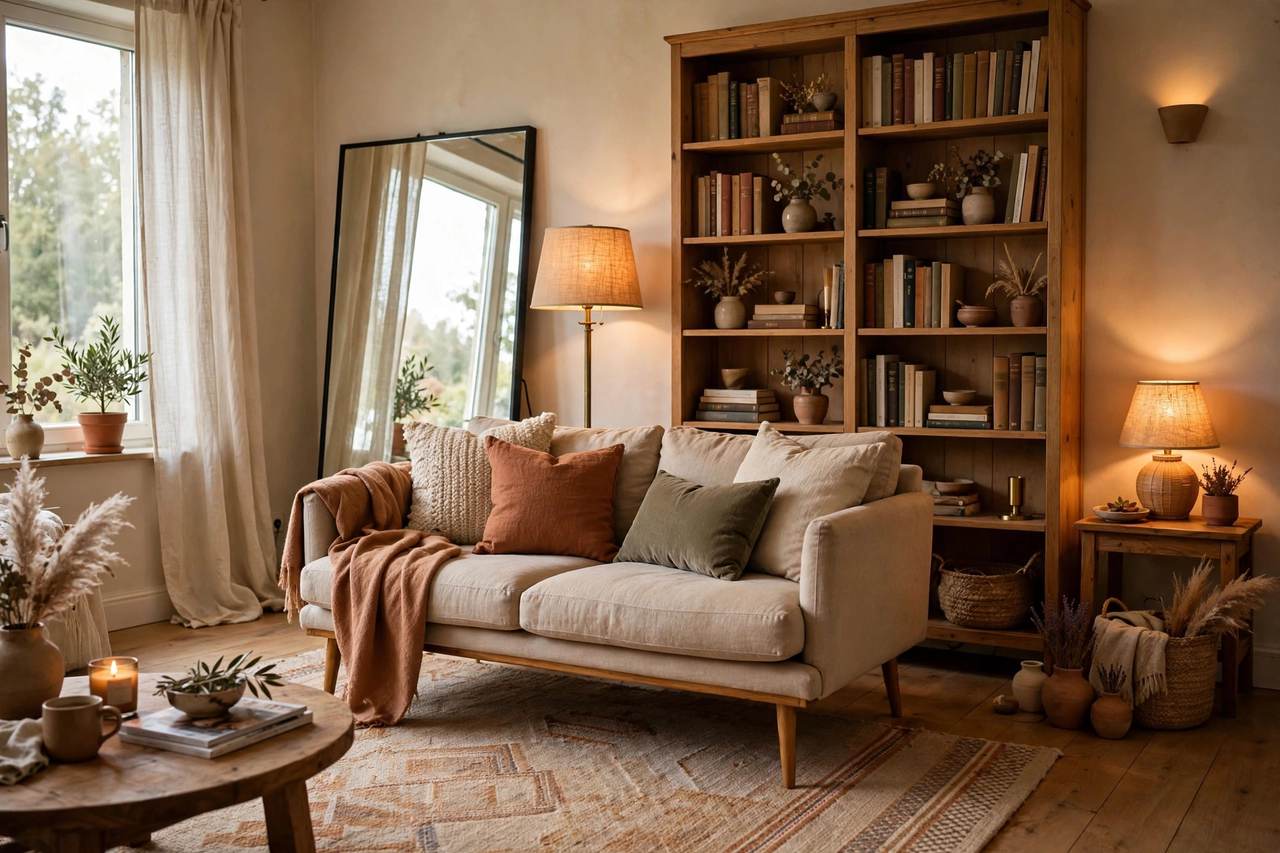
In This Guide
Small living rooms fail in two opposite ways. Either every surface collects stuff until the room feels like a storage unit, or fear of clutter leaves it so bare it feels like a waiting room. Neither one feels like home.
The fix is not more square footage. It is decor that does double duty: every piece should earn its footprint by making the room look bigger, work harder, or feel calmer — ideally all three. Small living room decor is really a discipline of intentional choices, not a smaller version of big-room decorating.
The good news for renters: nearly everything below is freestanding, removable, or spackle-fixable. No renovations required.
Here are 18 small living room decor ideas designed specifically for compact spaces.
1. The Two-Thirds Rug Rule
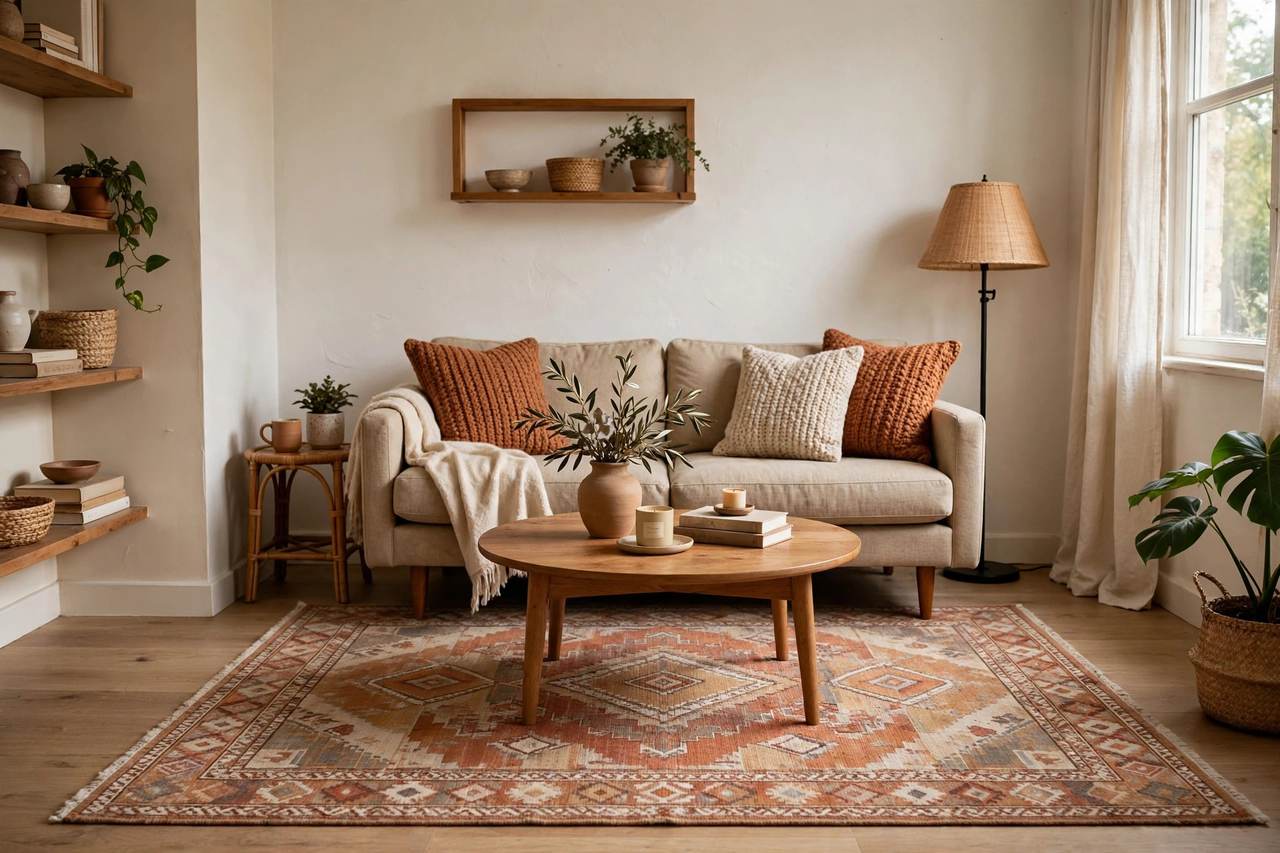
The most common small living room mistake is a rug that is too small. A tiny rug floating in the middle of the floor chops the room into pieces and makes everything look adrift. Choose a rug at least two-thirds the length of your sofa — in most apartments that means a 5x7 or 6x9 — with the front legs of the sofa and chairs resting on it.
Why it works
A rug that touches the furniture visually connects the pieces into one intentional grouping. The eye reads the whole arrangement as a single zone rather than scattered objects, and a defined zone always feels larger and calmer than the same furniture floating on bare floor.
Sizing cheat sheet
- Loveseat (48-60 inches): 5x7 rug minimum
- Standard sofa (72-84 inches): 6x9 rug
- Leave 12 to 18 inches of bare floor between rug edge and wall
- Low-pile or flatweave reads cleaner in tight quarters than shag
Best for
Any living room where the furniture currently floats on bare flooring.
2. Leggy Furniture Only
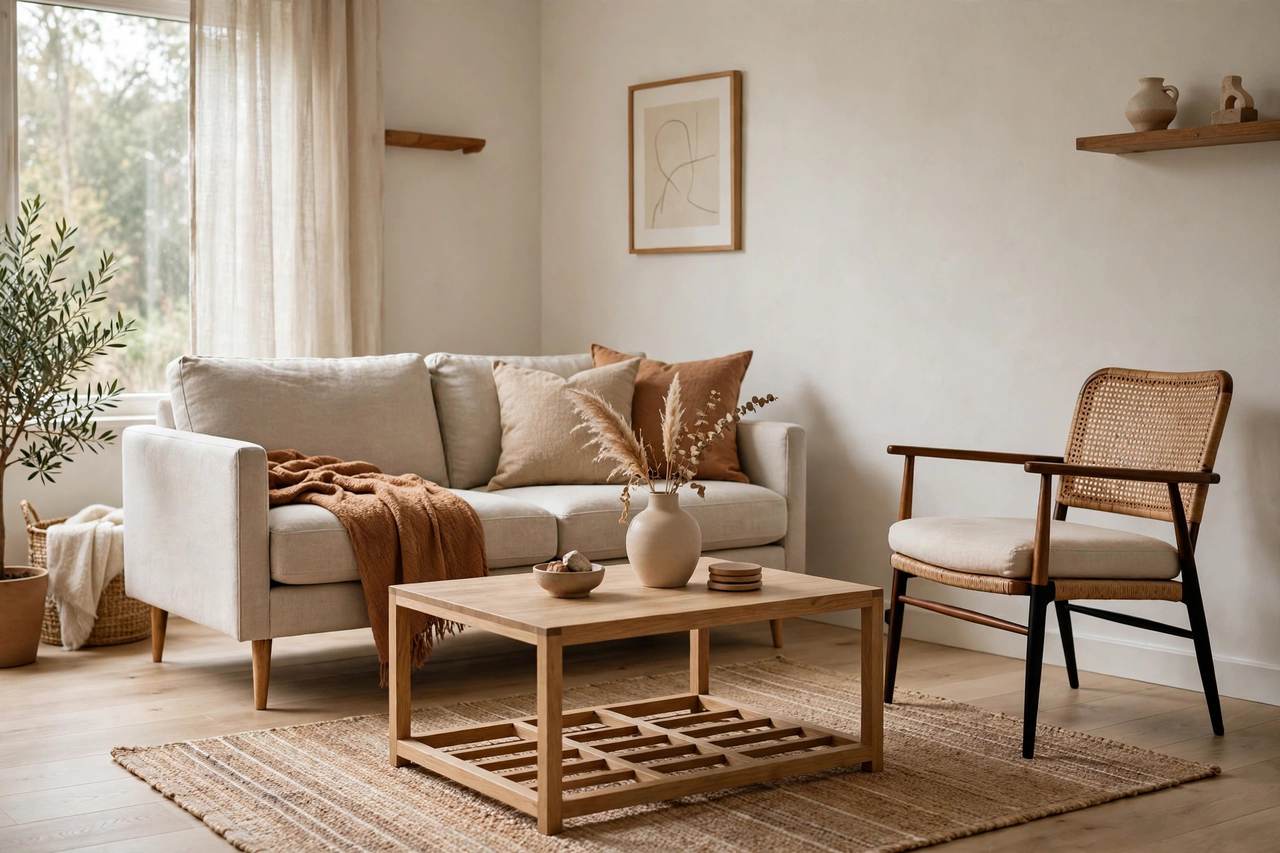
In a compact room, furniture that sits flat on the floor reads as one heavy block. Furniture raised on legs — even 4 to 6 inches — lets the eye travel underneath, which registers as extra square footage your brain counts as usable space.
Why it works
Visible floor equals perceived space. It is the same reason glass tables feel lighter than wooden ones: uninterrupted sightlines. A leggy sofa, media console, and armchair together can make a 12x14 room feel noticeably more open without moving a single wall.
What to look for
- Sofas and chairs with tapered or turned legs, 4 inches or taller
- Media consoles and sideboards on legs rather than plinth bases
- Coffee tables with an open lower shelf instead of a solid base
- Avoid skirts, slipcovers that pool, and blocky cube ottomans as main pieces
Best for
Living rooms under 200 square feet, and any room that feels visually heavy.
3. The Edited Gallery Wall
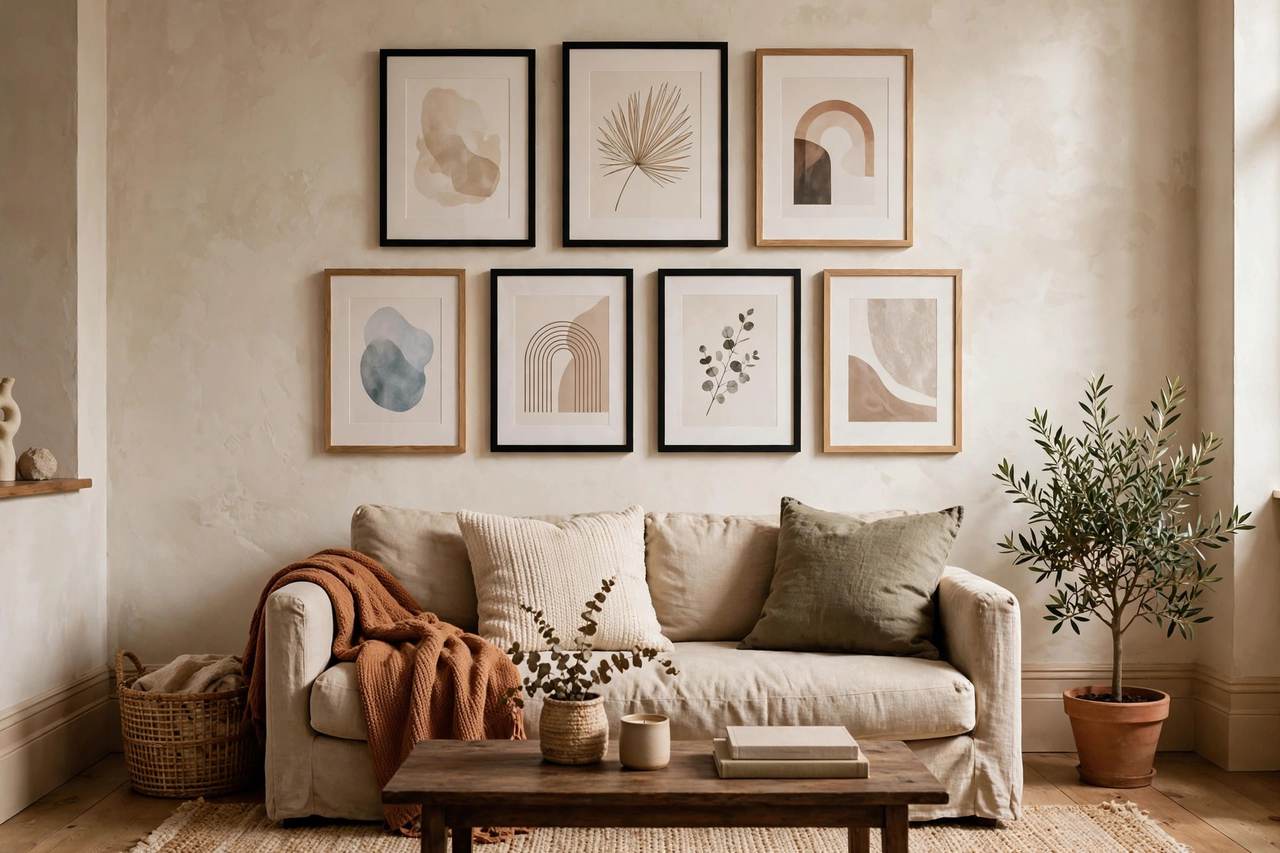
Gallery walls work in small living rooms — but only as one deliberate moment, not scattered across every wall. Pick a single wall, usually above the sofa, and hang 5 to 9 pieces in a tight grid or salon cluster with 2 to 3 inches between frames.
Why it works
One concentrated art moment reads as confident design. The same frames spread across three walls read as clutter. Concentration creates a focal point, and focal points give small rooms the sense of intention that makes them feel finished rather than crowded.
Keep it edited
- Stick to 2 frame finishes maximum — black plus natural wood is foolproof
- Mix sizes but keep one dominant piece around 16x20 inches to anchor
- Lay the arrangement on the floor first and photograph it before hanging
- Use removable adhesive strips rated for the frame weight — no holes needed
Best for
Blank walls above sofas and consoles that currently feel unfinished.
4. One Big Mirror Moment
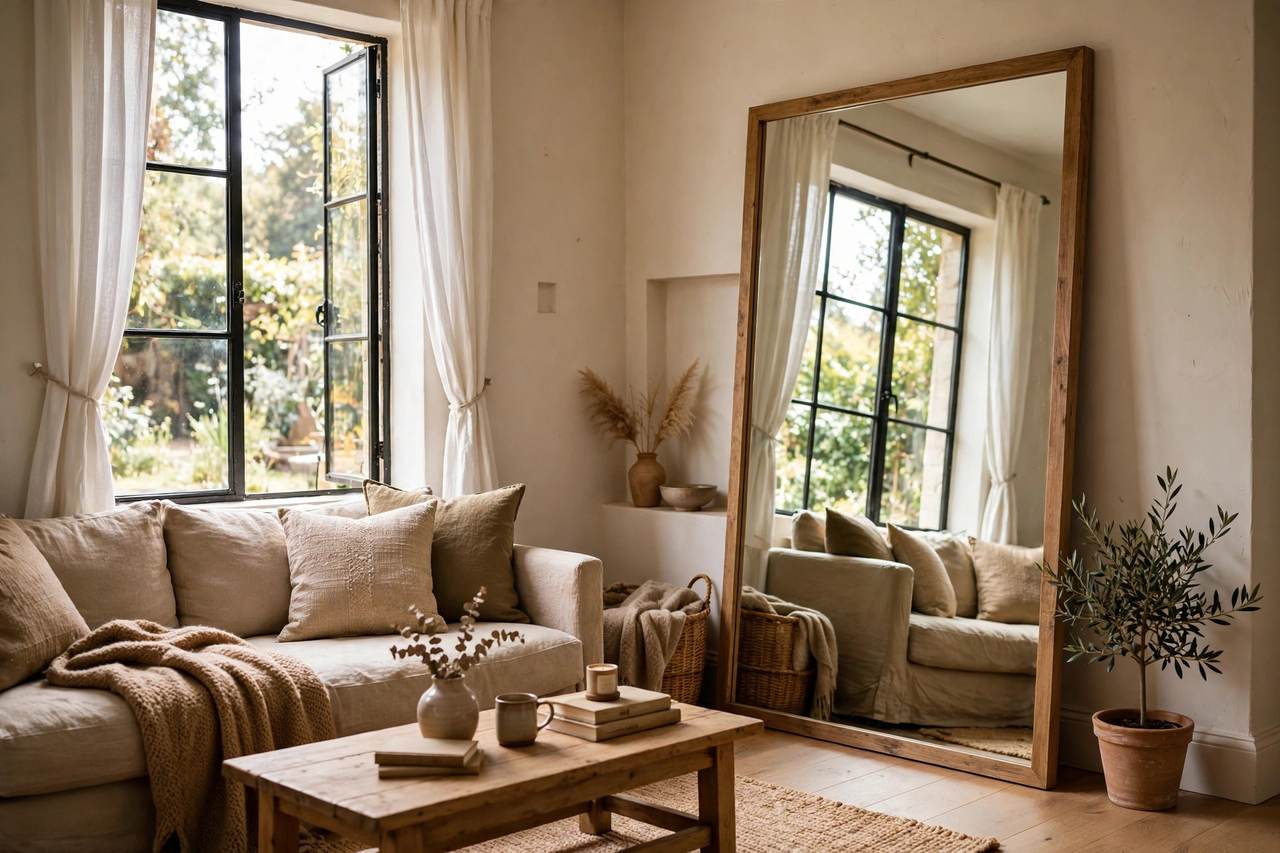
Skip the cluster of small mirrors — in a compact room, many little reflections feel busy. One large mirror, at least 30x40 inches, leaning against the wall or hung opposite a window, does more for the sense of space than any other single decor object.
Why it works
A big mirror doubles whatever it faces: daylight, lamplight, the prettiest corner of the room. It also creates the illusion of a second window, which is the fastest way to make a room feel less enclosed. Small mirrors fragment the effect; one large plane of glass delivers it cleanly.
Placement rules
- Opposite or adjacent to a window for maximum daylight bounce — never facing clutter
- Lean full-length styles securely; anchor the top with an adhesive bumper
- A round mirror softens rooms full of rectangular furniture
- Keep the reflected view styled — the mirror doubles the mess too
Best for
Living rooms with one window, dark corners, and low natural light.
5. Go Vertical With Bookcases
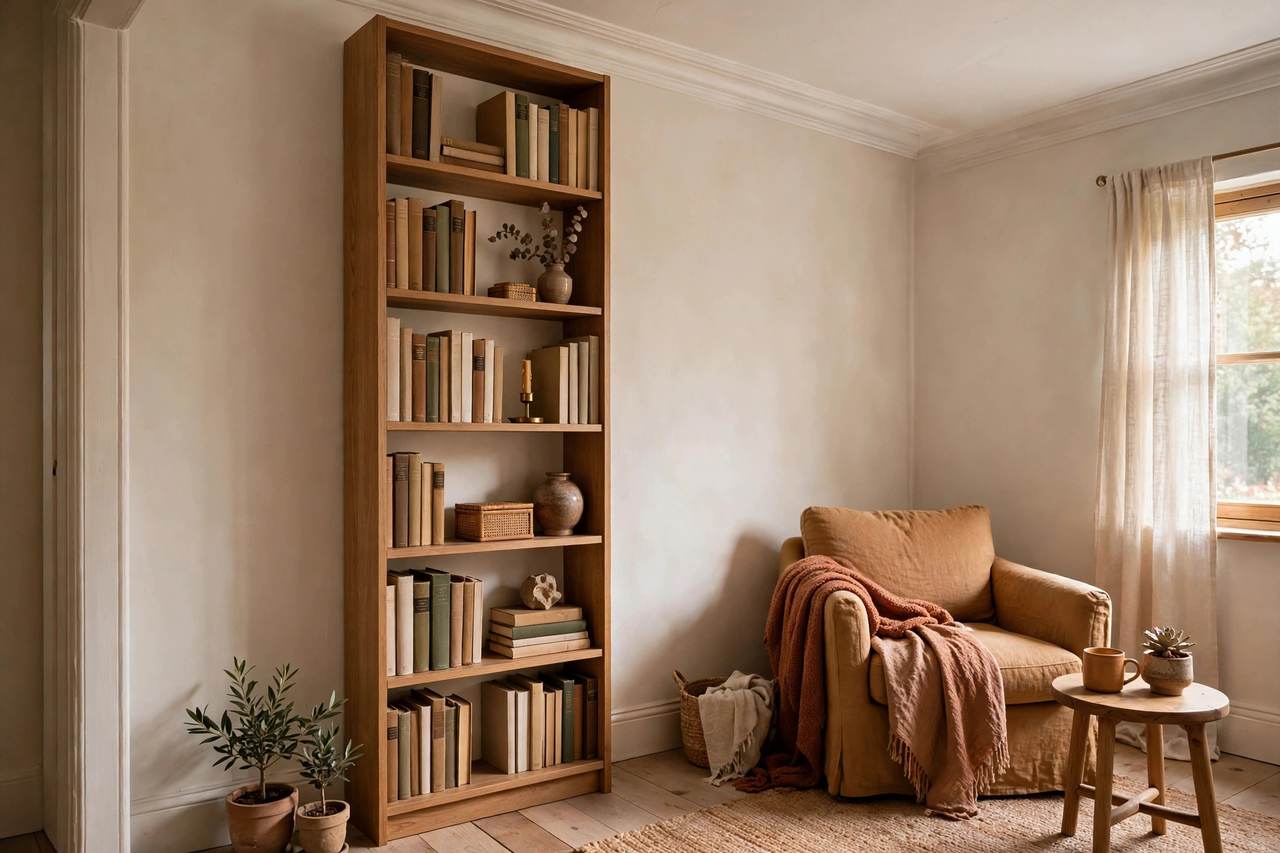
When floor space is scarce, the only direction left is up. One tall, narrow bookcase — 72 inches high and 24 inches wide — holds as much as a wide low unit while occupying half the footprint, and it draws the eye upward, making ceilings feel taller.
Why it works
Vertical storage exploits the most underused dimension in small rooms. The upward line of a tall bookcase emphasizes ceiling height, counteracting the boxed-in feeling that wide, low furniture creates. It also keeps the floor perimeter clear, which preserves walking space.
Styling the shelves
- Follow the 70/30 rule: 70 percent books and functional items, 30 percent decor
- Leave some shelves partially empty — negative space keeps it airy
- Style in odd-numbered groupings: three vases, five books leaning
- Anchor tall bookcases to the wall with anti-tip hardware, especially with kids or pets
Best for
Rooms with 8-foot or higher ceilings and more stuff than floor space.
6. The Two-Color Palette Rule
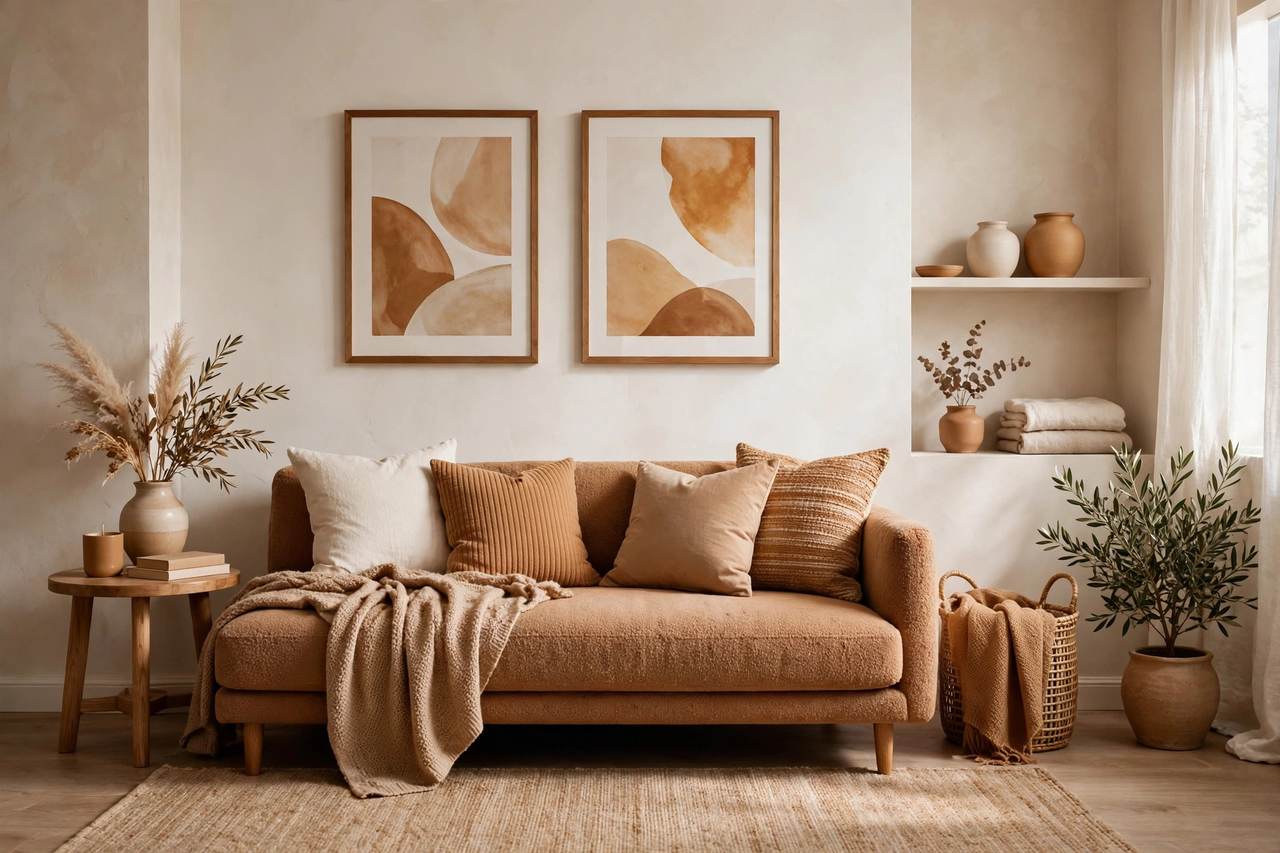
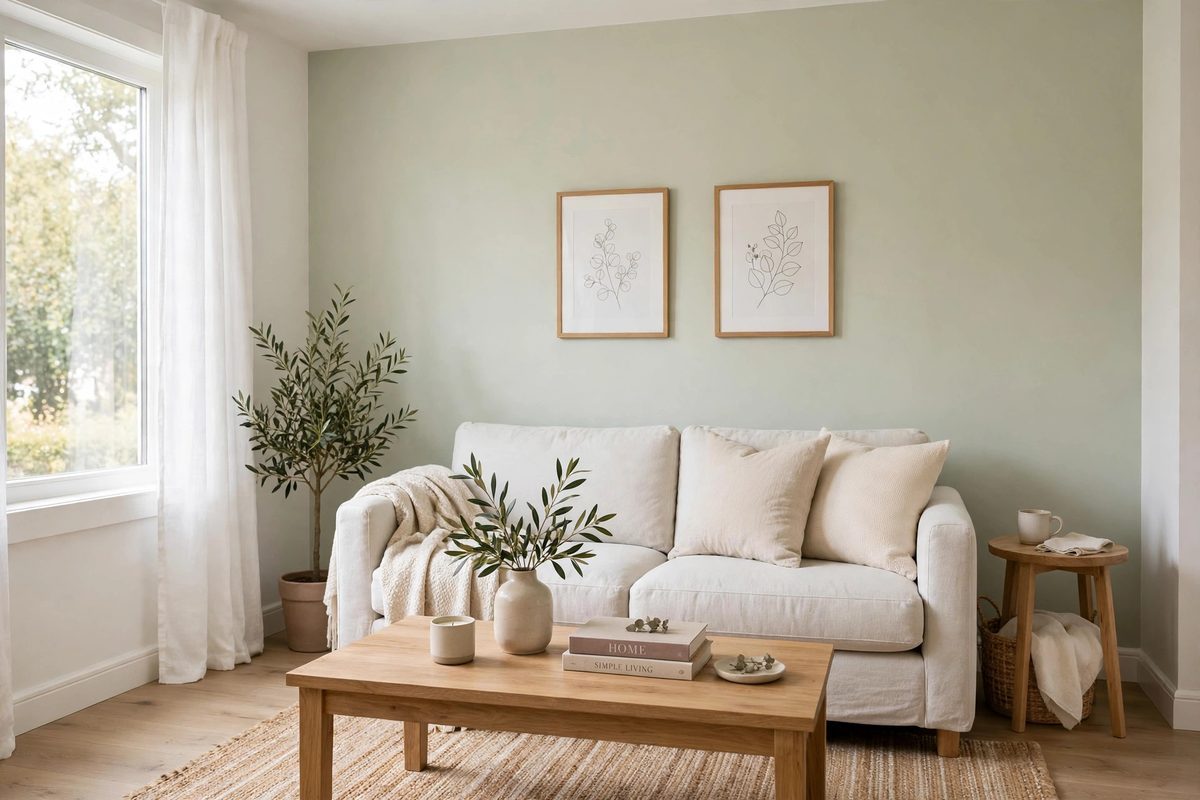
Small rooms forgive a lot, but not visual noise. Limit your decor palette to two main colors plus neutrals — for example warm white and caramel, or soft gray and sage. Every pillow, throw, frame, and vase should answer to one of the two.
Why it works
Limited palettes make disparate objects look like they belong together, which reads as calm and intentional. In a big room you can get away with five accent colors; in 150 square feet, each new color is another visual interruption, and interruptions make spaces feel smaller and more chaotic.
How to apply it
- Pick neutrals for the big pieces: sofa, rug, curtains
- Spend your two colors on the small, swappable things: pillows, throws, art, plants pots
- Let texture do the talking within the palette — boucle, linen, and wood grain add depth without new hues
- When thrifting, carry a phone photo of the palette and check every candidate against it
Best for
Rooms that feel busy despite not having that much stuff in them.
7. Floating Shelves as Decor
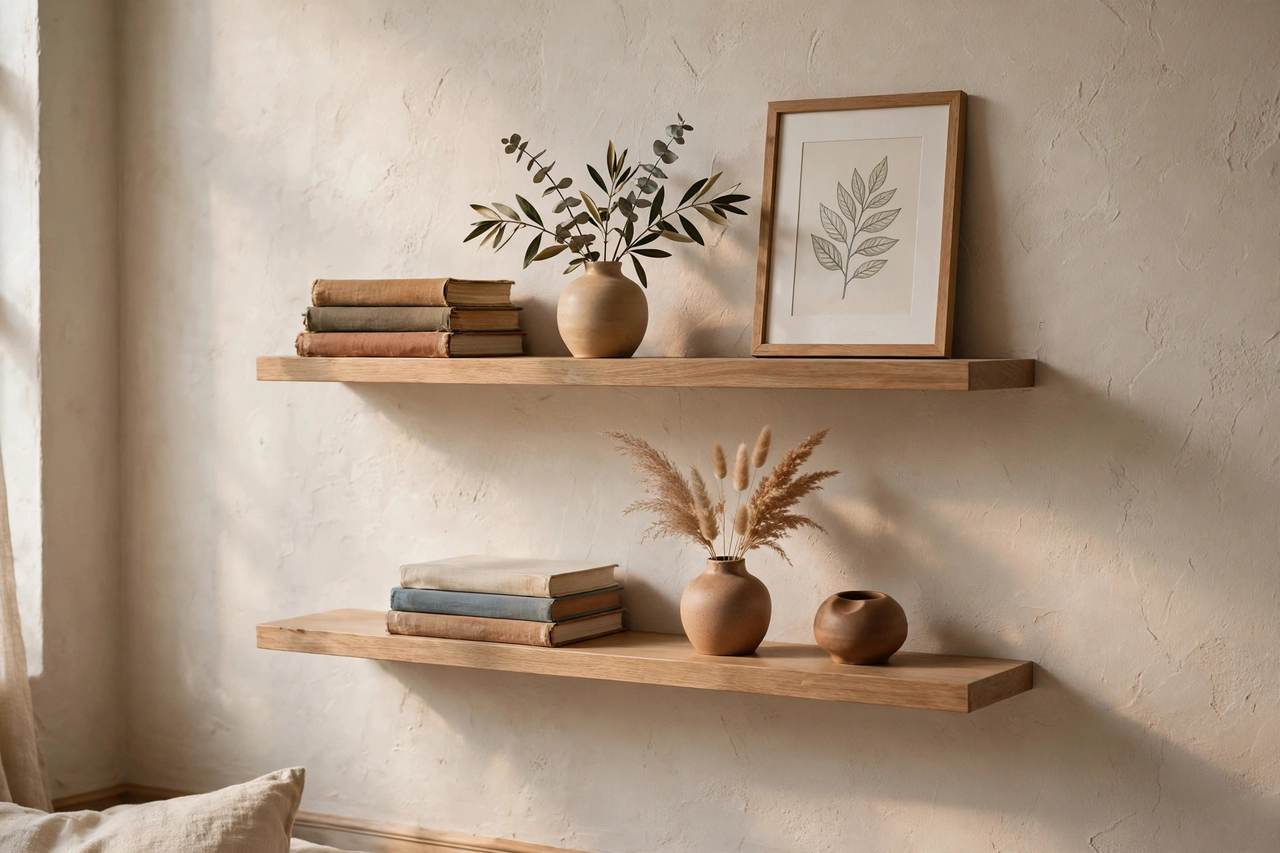
Two floating shelves on an empty wall add display space without a single inch of floor footprint. The trick is treating them as decor first: style them like a vignette, not like overflow storage for things that would not fit elsewhere.
Why it works
Floating shelves add the layered, collected look of a styled bookcase while keeping the floor completely clear. Because they sit at eye level, they put decor where it is actually seen instead of down at furniture height, which gives more visual payoff per object.
Styling formula
- One shelf for books (stacked horizontally and vertically mixed), one for objects
- Group in threes with varied heights: tall vase, medium frame, small bowl
- Leave 12 to 18 inches between shelves so objects have breathing room
- Mount into studs when possible; heavy-duty drywall anchors hold up to 50 pounds per shelf
Best for
Dead wall space beside windows, above desks, and in awkward alcoves.
8. The Corner Reading Nook
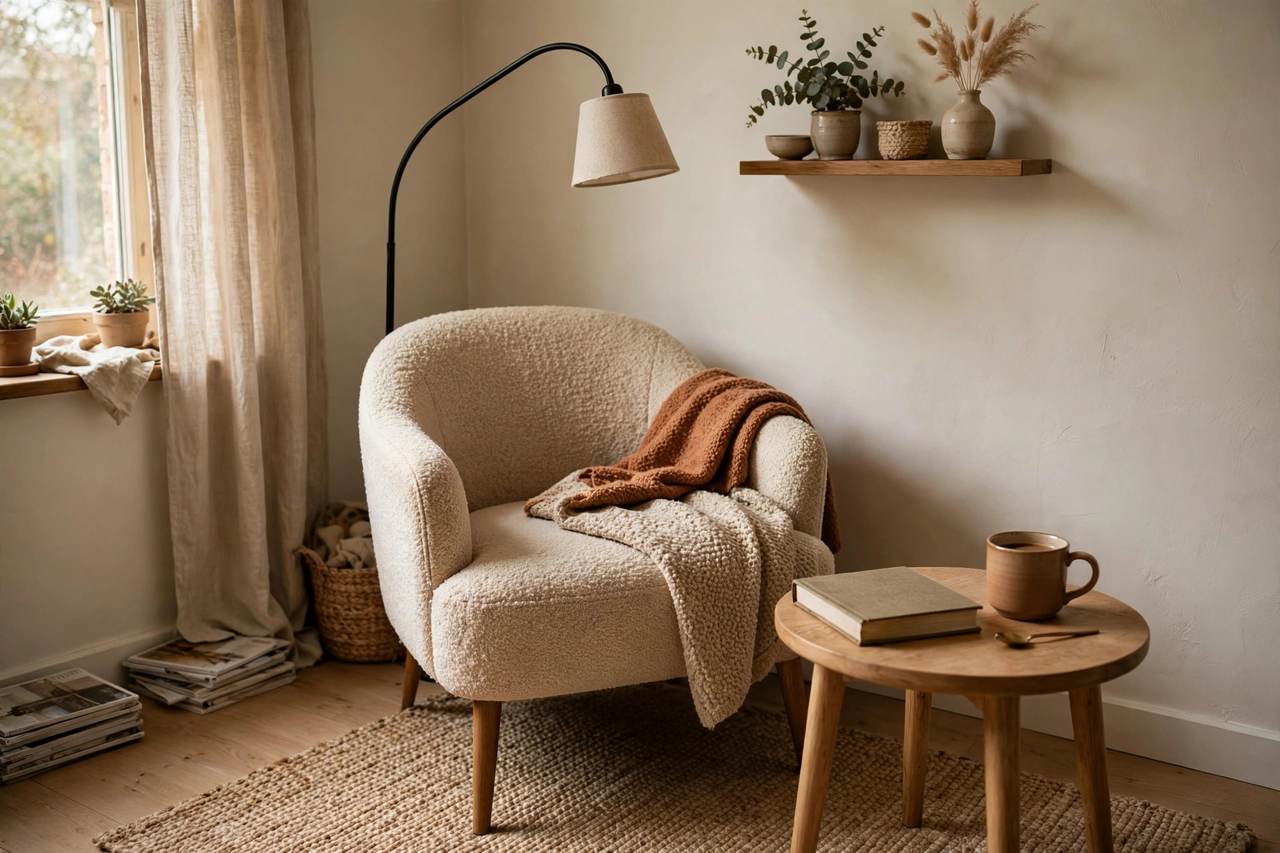
Give one corner a job: armchair angled at 45 degrees, a slim floor lamp arched over it, and a side table just big enough for a book and a mug. A 4x4-foot corner is all it takes to create a destination inside the room.
Why it works
Zones make small rooms feel larger because they suggest the space contains multitudes — a living area and a reading spot. An undefined corner is dead space that shrinks the room; a purposed corner is square footage your brain counts twice.
Build it in a weekend
- Chair: a compact armchair under 30 inches wide, ideally with legs
- Light: an arc or pharmacy floor lamp positioned over the shoulder
- Table: a 14-inch side table or even a sturdy plant stand
- Softness: one throw and one lumbar pillow signal that the spot is for lingering
Best for
Living rooms with an unused corner, and studios that need defined zones.
9. Curtains Hung High and Wide
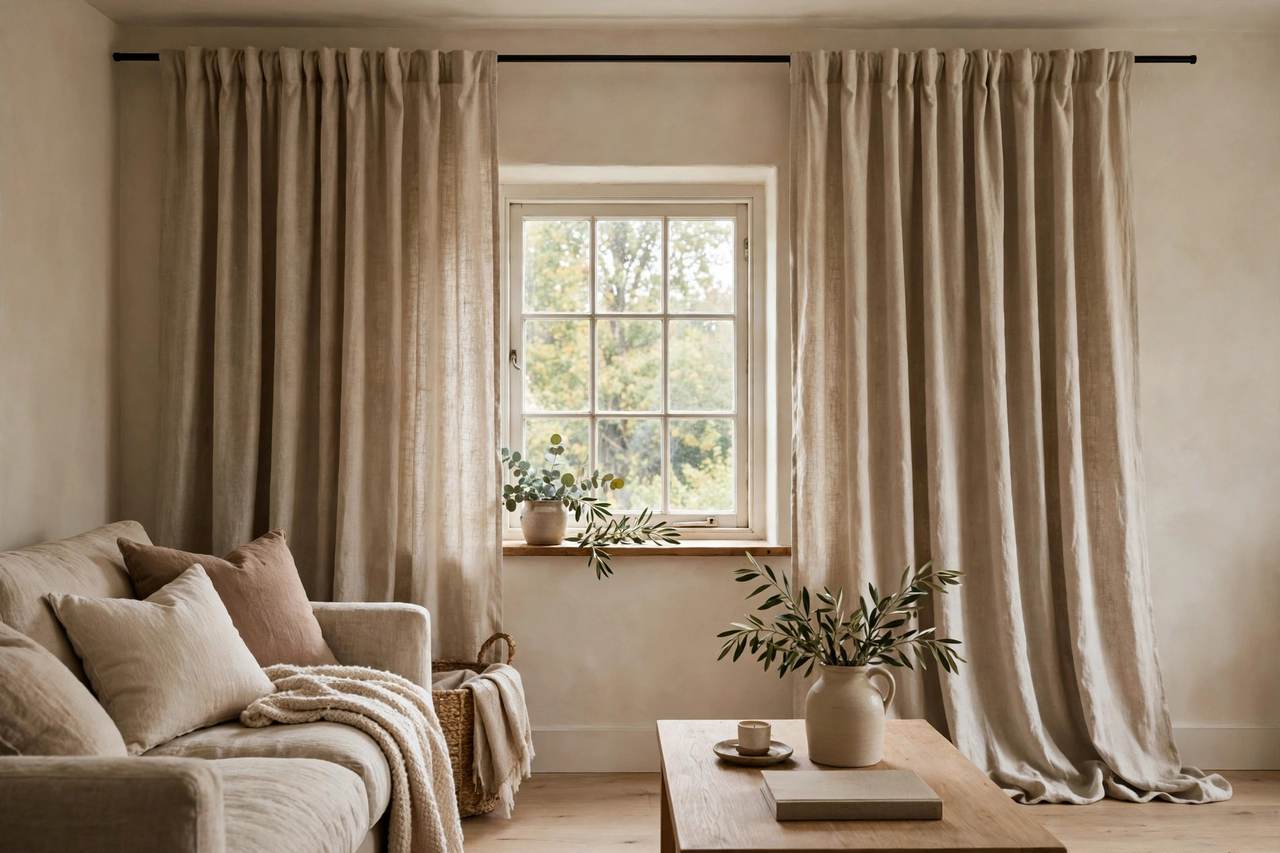
Mount the curtain rod 4 to 6 inches below the ceiling and extend it 4 to 6 inches beyond each side of the window frame. Hang panels that just kiss the floor. The window instantly looks twice its actual size.
Why it works
High rods draw the eye up to the ceiling line, and wide rods expose the full glass instead of covering the edges. Both tricks borrow visual space from the wall around the window. It is the highest-impact, lowest-cost change on this list — under $60 with ready-made panels.
Get it right
- Panels should be 1.5 to 2 times the window width for proper fullness
- Linen or linen-look fabrics filter light softly without heavy visual weight
- Tension rods inside the frame work for renters who cannot drill — skip the high-and-wide trick there and focus on full-length panels
- One continuous rod looks cleaner than two short ones on wide windows
Best for
Rooms with small or awkwardly placed windows, and low ceilings.
10. The Tray-Corralled Coffee Table
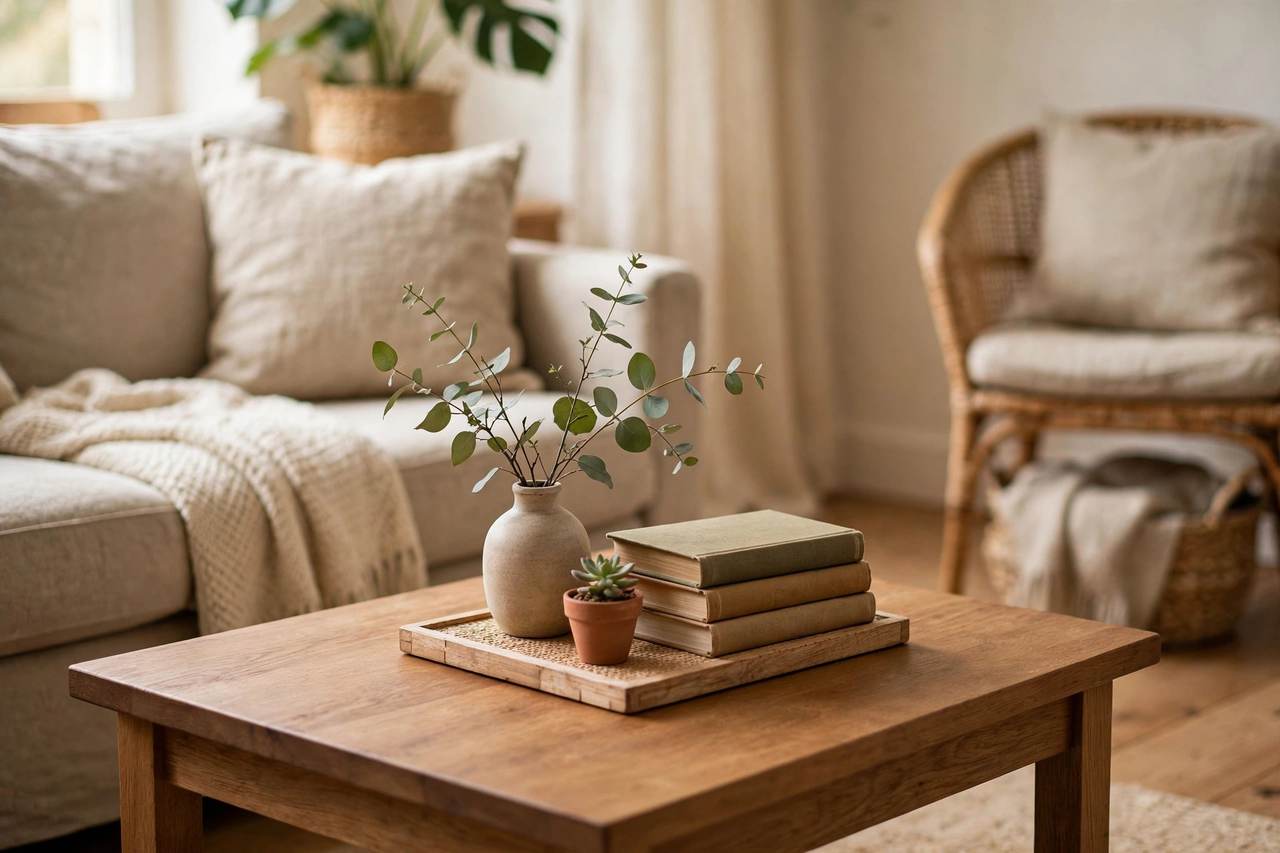
A coffee table without boundaries becomes a landing strip for remotes, mail, and half-finished mugs. A single tray — roughly 16x20 inches — corrals the decor into one intentional cluster and leaves the rest of the table genuinely usable.
Why it works
Containment is the difference between styled and cluttered. The tray creates a visual border that tells the eye “this arrangement is deliberate,” while the empty table surface around it signals order. Bonus: the whole arrangement lifts away in one motion when you need the table for guests.
The styling recipe
- Something tall: a small vase with stems or a candlestick
- Something low: a stack of two coffee table books
- Something living or textural: a small plant or a bowl of stones
- Odd numbers only — three to five objects per tray, never more
Best for
Coffee tables that currently collect clutter, and households that entertain.
11. One Statement Plant
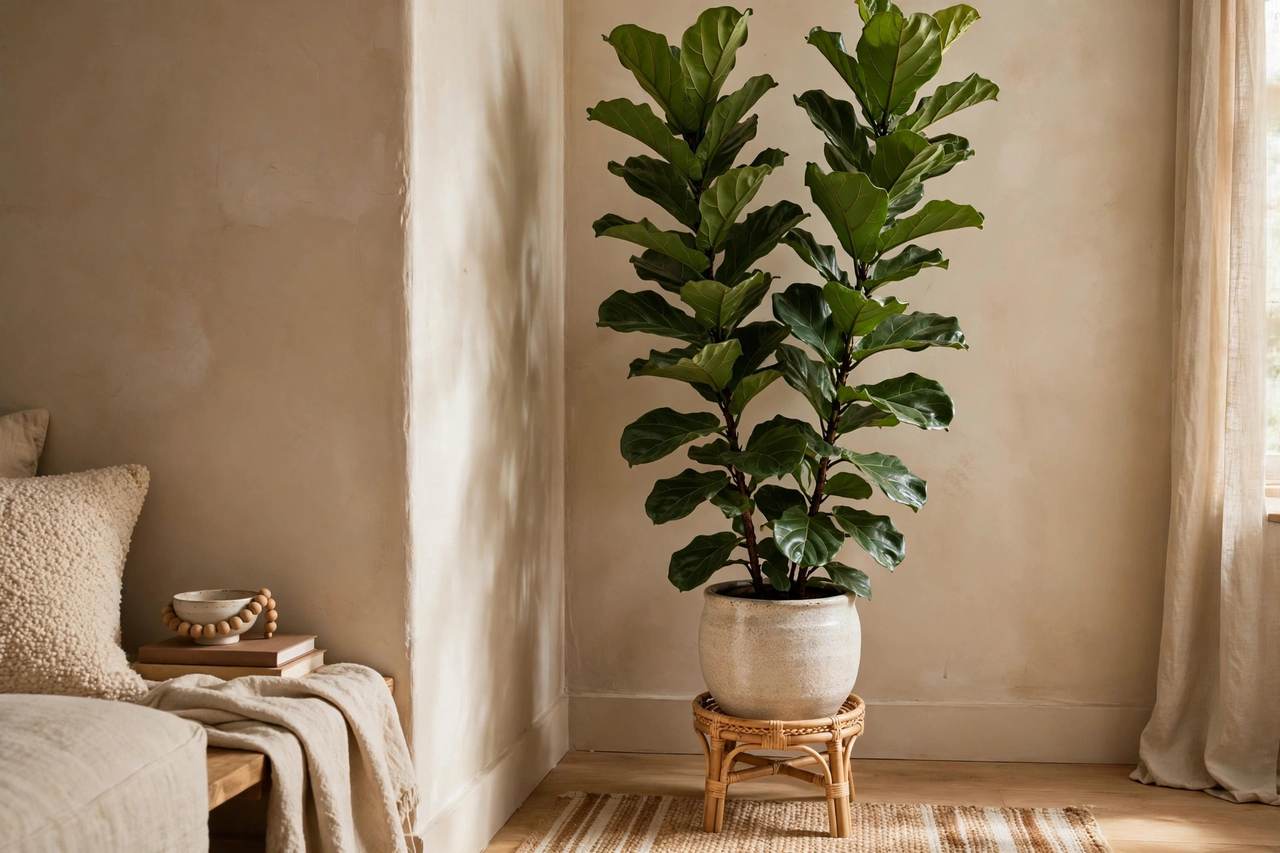
Resist the urge to dot ten tiny succulents around the room. One large plant — a 4 to 5-foot fiddle leaf fig, olive tree, or bird of paradise — in a single corner delivers more life, height, and sculptural presence than a dozen small pots combined.
Why it works
A single large plant reads as a deliberate design choice; many small plants read as a collection that needs dusting. The height fills vertical dead space in corners, the organic shape softens all the room’s rectangles, and one pot means one watering schedule instead of ten.
Keep it alive
- Match the plant to your light: bright indirect for figs, tolerant ZZ or snake plants for dark corners
- A pot 2 inches wider than the nursery pot, with drainage, in a finish that matches your palette
- Elevate it on a 6-inch plant stand to add height without a bigger plant
- Faux is fine if your light is hopeless — buy the best quality you can; cheap fakes read instantly
Best for
Empty corners, rooms that feel sterile, and anyone who kills succulents anyway.
12. The Wall-Mounted Media Console
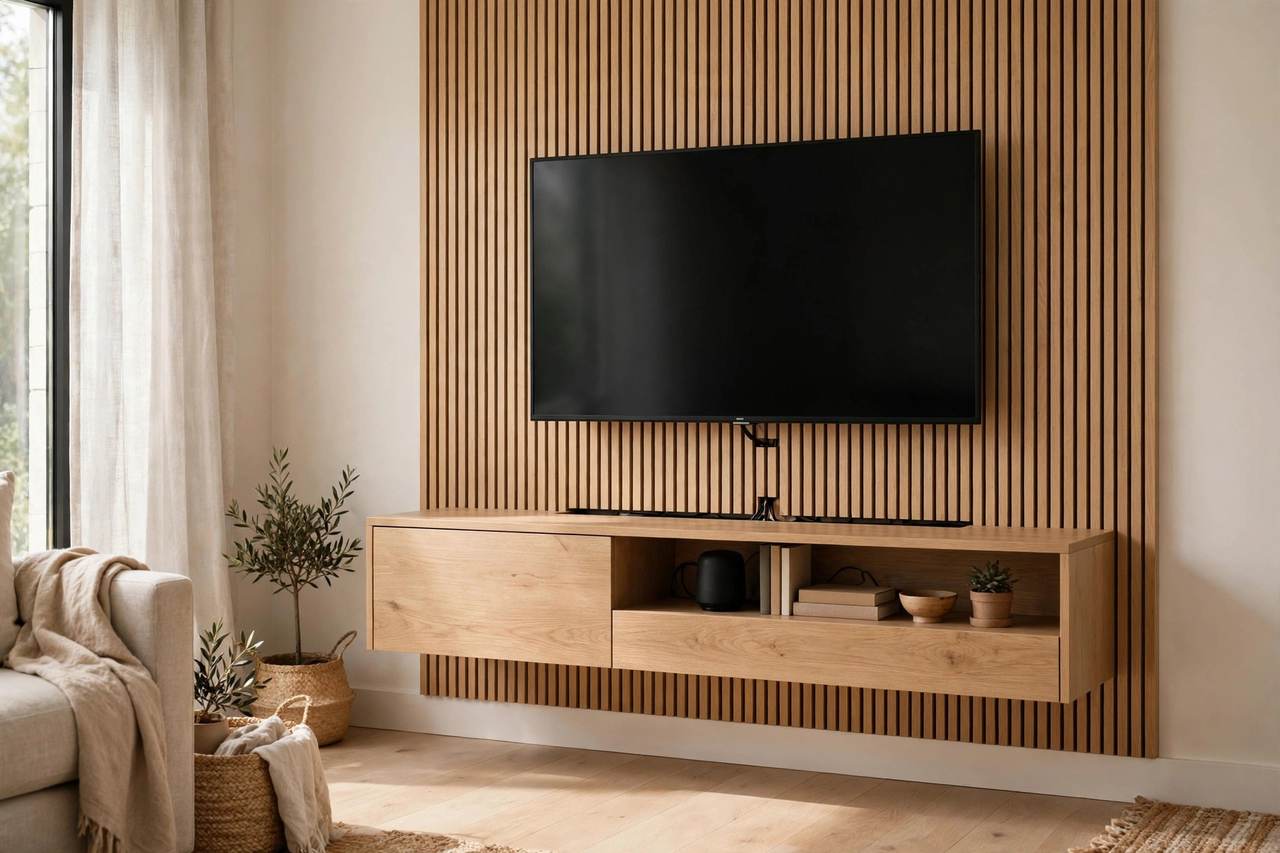
A traditional TV stand eats 18 inches of floor depth across the whole wall. A wall-mounted floating console — 12 to 14 inches deep — holds the same components while leaving the floor beneath it completely visible and easy to clean around.
Why it works
It is the leggy-furniture principle taken further: the unit appears to float, so the wall reads as longer and the floor as larger. The clear space underneath also removes the dust-trap zone behind a heavy stand, which matters more than you would think in a room you see all of at once.
Installation notes
- Mount into studs; a loaded console plus TV can exceed 100 pounds
- Choose a console with cable management cutouts — visible cords undo the floating effect
- Mount the TV or set it on the console at 42 inches to screen center for sofa viewing
- Renters: sturdy low-profile TV stands on tall legs achieve 80 percent of the look with zero holes
Best for
TV walls in rooms under 12 feet wide, and robot-vacuum households.
13. The Throw Pillow Formula
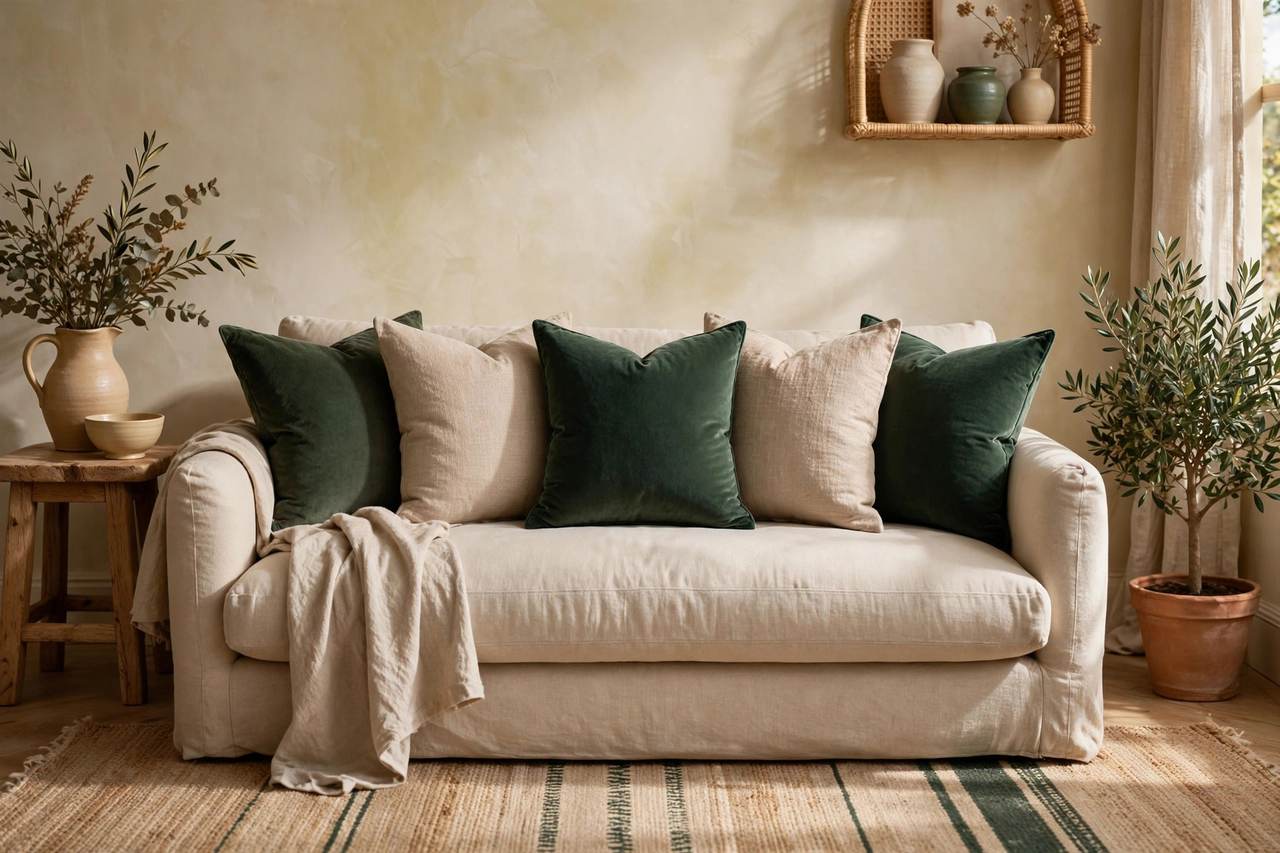
Throw pillows are the cheapest decor refresh in existence, but only if you follow the formula: odd numbers, mixed textures, one palette. Three pillows on a loveseat, five on a full sofa — never matched sets lined up like soldiers.
Why it works
Pillows are the room’s jewelry: small, swappable, high-impact. Odd numbers look collected rather than staged, texture variation (linen, velvet, knit) adds depth without new colors, and staying inside the two-color palette keeps the whole thing calm instead of chaotic.
The formula
- Sizes: mix 20-inch squares with one 12x20 lumbar in front
- Textures: at least two different weaves — never all the same fabric
- Inserts: buy inserts 2 inches larger than the cover for a full, plump look
- Budget move: keep your inserts and just swap covers seasonally, $12 to $20 each
Best for
Tired sofas that need new life without new furniture.
14. Poufs Instead of a Second Chair
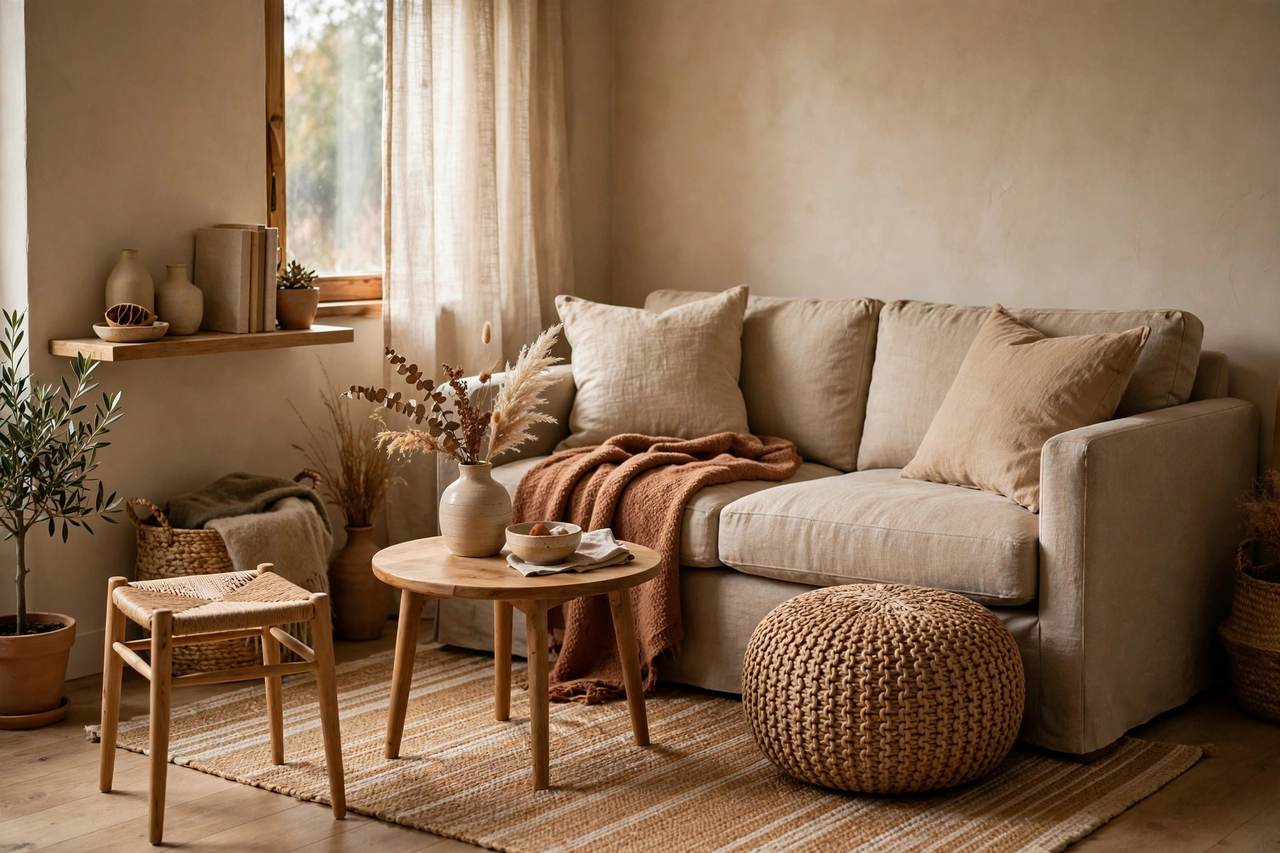
A second armchair needs 30 inches of width plus 24 inches of pull-out clearance — nearly 4 square feet of permanent commitment. A pouf needs 18 inches, tucks against the sofa or under a console when idle, and still seats a guest or holds a tray of drinks.
Why it works
Poufs are seating without the footprint penalty. They disappear visually when not needed, which keeps the room’s everyday layout open, and appear exactly when the use case arrives. That flexibility is the whole game in a small living room.
Choose well
- Woven or knit poufs with removable, washable covers survive real life
- Flat-topped styles double as footrests and side tables with a tray on top
- Weighted or structured poufs (not beanbags) look intentional, not dorm-room
- One is enough for most rooms; two maximum before they become clutter
Best for
Rooms that host guests occasionally but live small daily.
15. Art Hung at Eye Level
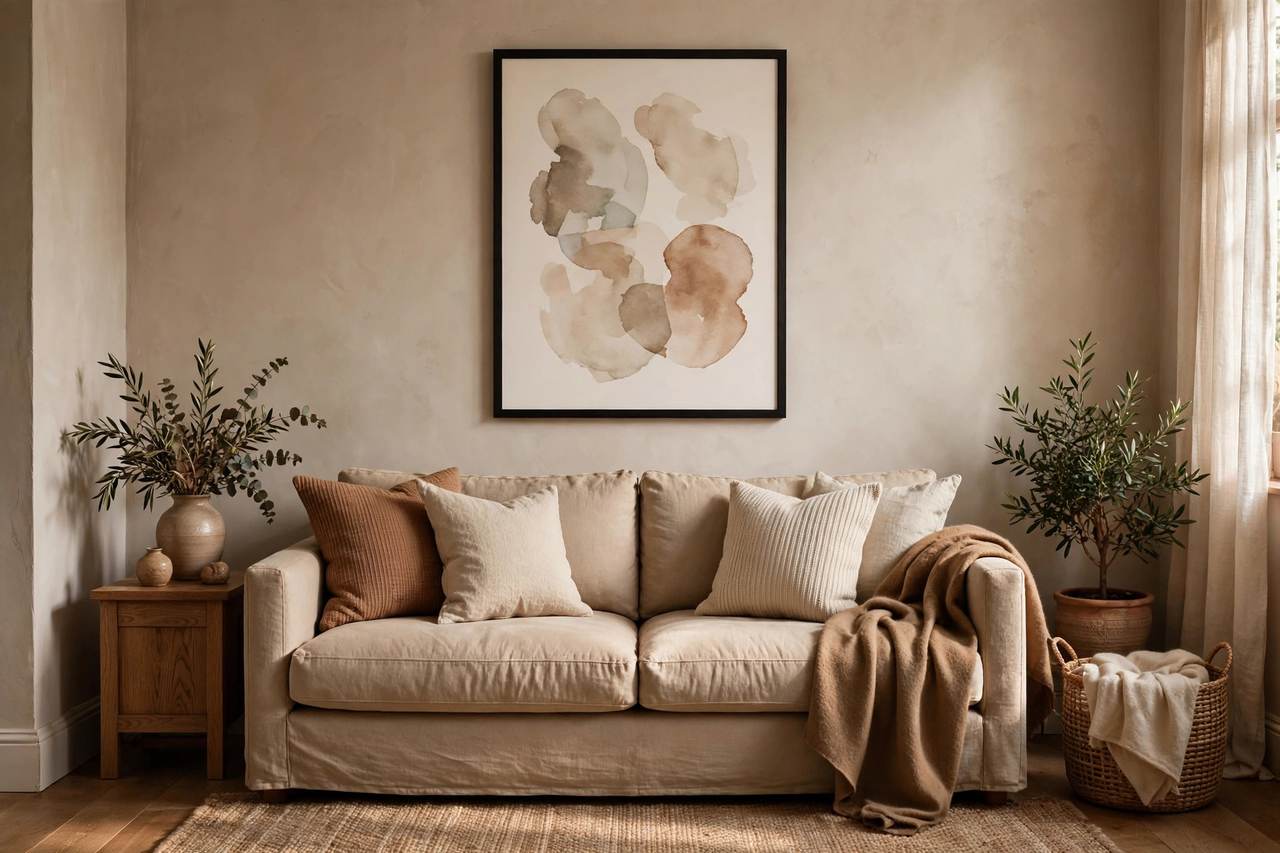
Most art in small apartments hangs too high — a lonely frame floating near the ceiling makes walls feel taller in the worst way, emphasizing emptiness. Center artwork at 57 inches from the floor (gallery standard), or 6 to 8 inches above the sofa back, whichever is lower.
Why it works
Art at eye level connects with the furniture below it, creating one composed vignette instead of two disconnected elements. That connection is what makes a room feel designed: every piece in relationship with its neighbors rather than floating in isolation.
Hanging rules
- One large piece (24x36 or bigger) over the sofa beats three small ones for impact per hole
- Above furniture: 6 to 8 inches of gap, never more
- On empty walls: 57 inches to the center of the piece
- Lean oversized art on a console or mantel for zero holes and easy swaps
Best for
Walls where the art currently feels disconnected from the furniture.
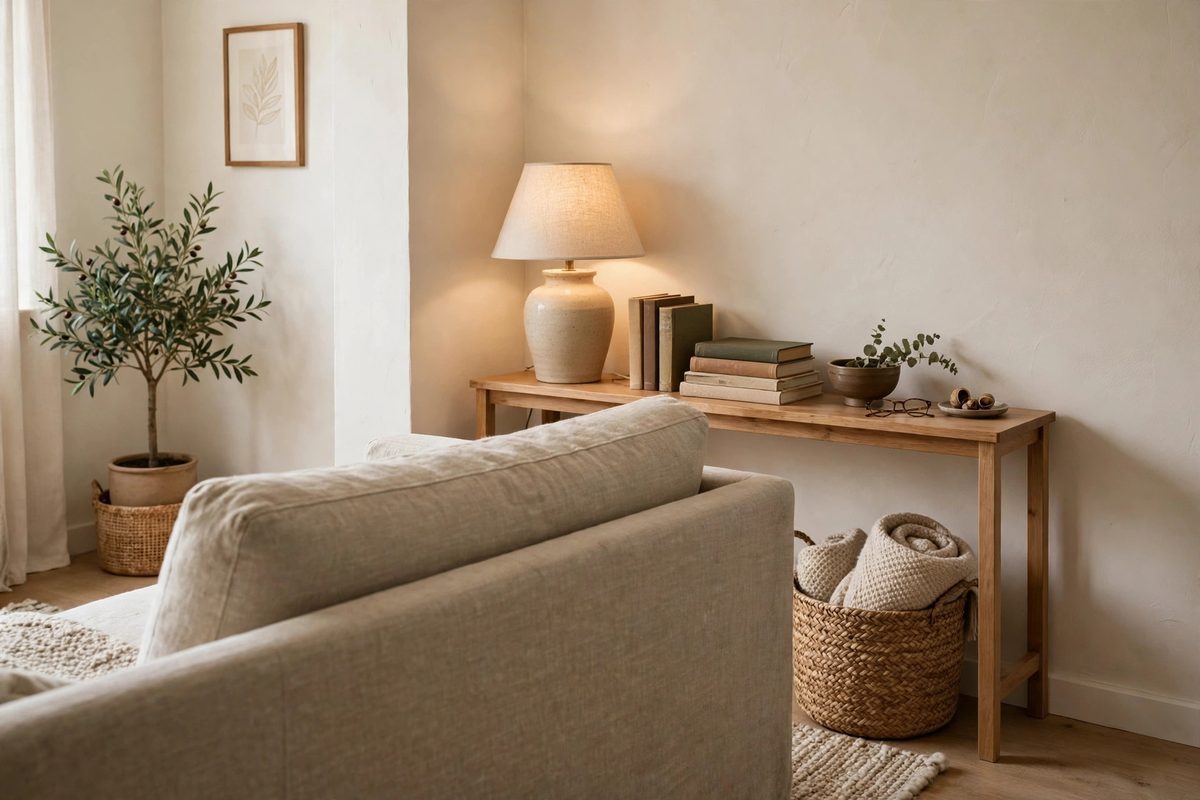
16. The Behind-Sofa Console
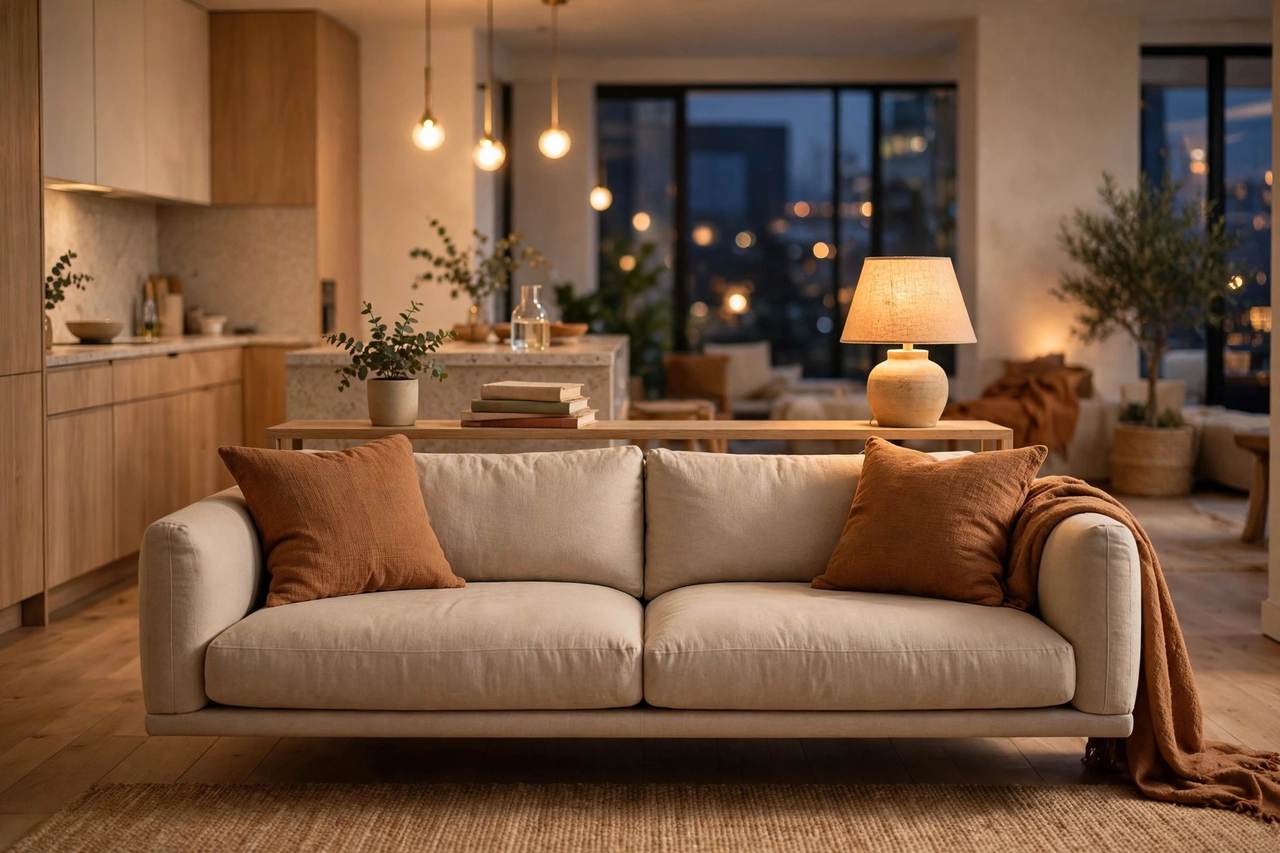
If your sofa floats even 12 inches off the wall, the gap behind it is wasted space. A narrow console — 10 to 12 inches deep — fills it with a lamp, a stack of books, and a small plant, turning dead space into a styled surface and a source of warm light.
Why it works
The console does three jobs at once: it finishes the back of the sofa (which otherwise looks unfinished from the room’s entrance), adds a lighting layer at the perfect height, and creates display space without touching the floor plan. In open-plan apartments it also marks where the living zone ends.
Make it work
- Keep it 6 inches shorter than the sofa on each side — never wider than the sofa
- A table lamp here is ideal: the light lands at seated eye level behind you
- Cord management matters — run the cord down the sofa’s back leg to the outlet
- Style the surface sparsely: lamp, books, one object. It is a console, not a shelf
Best for
Floating sofas in open-plan apartments and studios.
17. Baskets as Beautiful Storage
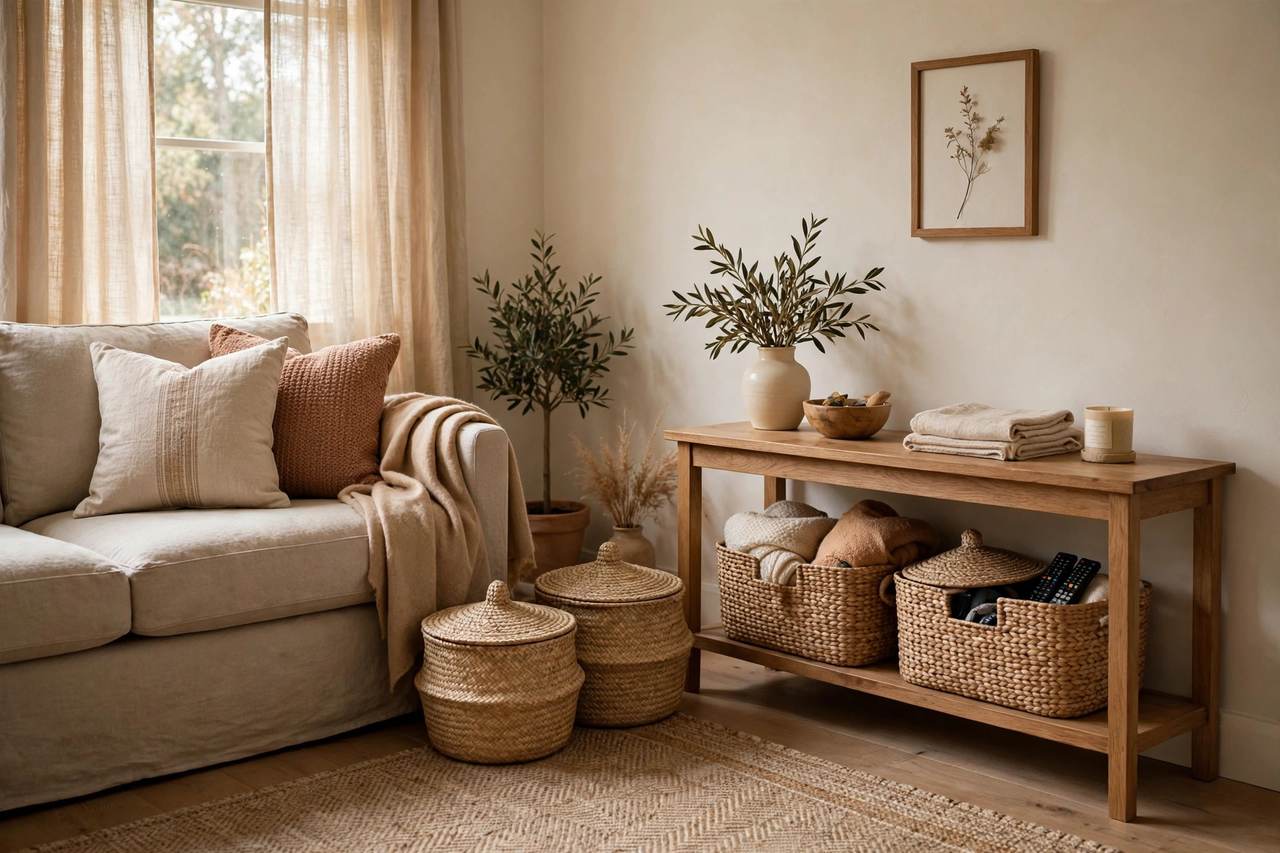
Every small living room accumulates the same things: throws, remotes, chargers, kids’ toys, the blanket you actually use. Two or three lidded baskets in a natural material swallow all of it while looking like decor, not bins.
Why it works
Lidded storage is the only kind that truly hides visual noise — open bins just display your clutter in a container. Natural textures like seagrass, rattan, or woven cotton add the warmth that small rooms need, so the storage itself becomes part of the decor scheme instead of an apology for it.
The basket plan
- One large lidded basket beside the sofa for throws and blankets
- One medium basket under the console or coffee table for remotes and chargers
- Matching or coordinating finishes — mixed basket styles read as messy
- Rectangular baskets fit shelves and consoles; round ones soften corners
Best for
Households where the living room doubles as everything room.
18. Negative Space on Purpose
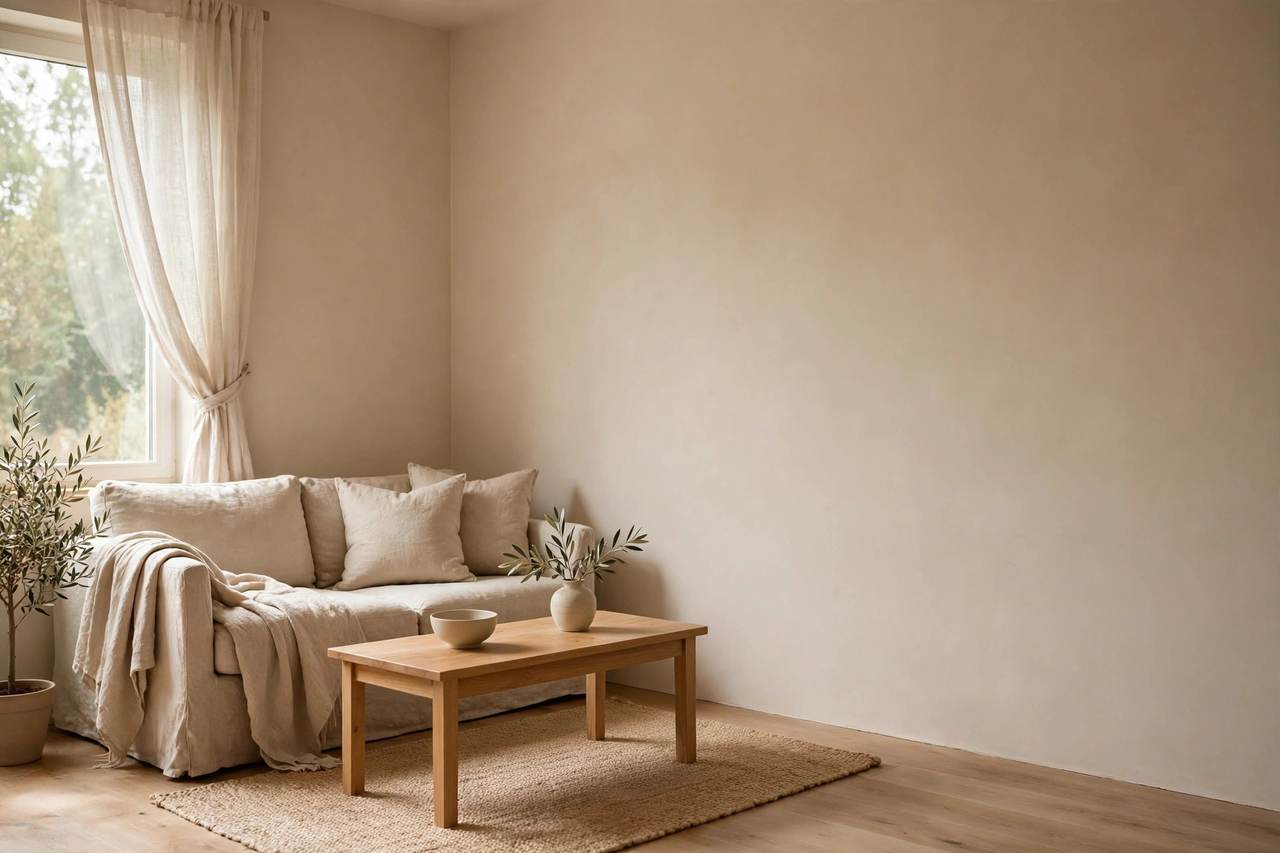
The final idea is the hardest: leave something empty on purpose. One clear wall. One clear shelf. A coffee table with only the tray. Negative space is not unfinished — it is the frame that lets everything else breathe.
Why it works
Every decorated surface competes for attention; the eye needs resting places to appreciate the styled ones. In a small room, one deliberately empty area creates contrast that makes the decorated areas look richer, and the visual rest registers as calm — the feeling people actually mean when they say a room feels “bigger.”
Where to leave it
- The wall opposite the main seating — let it stay bare or hold only the mirror
- The top of one shelf — resist filling every level
- One side of the mantel or console — asymmetry needs empty space to work
- Revisit quarterly: if a surface has stayed clear for three months, it earned its emptiness
Best for
Rooms that feel full despite following every other idea on this list.
The 3-Question Decor Filter
You do not need all 18 ideas at once. Run every potential addition through three questions first:
- Does it earn its footprint? In a small living room, everything occupies a percentage of the whole. A pouf that seats guests earns it. A decorative ladder holding two scarves does not.
- Does it repeat the palette? New colors are the fastest route to visual chaos. If it introduces a third accent color, it needs to replace something, not join it.
- Does it leave breathing room? After placing it, step back to the doorway. If your eye has nowhere to rest, something else has to go or stay empty.
Pass all three and it belongs. Fail one and it is clutter wearing a costume.
Where to Start
Start with the friction you feel most, and start cheap:
- Under $30: idea 13 — swap pillow covers to your two-color palette, and idea 10 — corral the coffee table with a tray. The room looks styled by tonight.
- Under $100: idea 4 — one large mirror opposite the window, and idea 9 — ready-made curtain panels hung high and wide. Light and height, transformed.
- The big move: idea 2 — when the sofa goes, replace it with a leggy one. Nothing changes a small living room’s feel more permanently than furniture that shows floor.
Decorate layer by layer, and let the room tell you what it still needs. That is the whole trick — designed, not cramped.
Frequently Asked Questions
How do you decorate a small living room without making it cluttered?
Follow the containment rule: every category of stuff gets a boundary. Decor lives on trays and shelves, throws live in lidded baskets, pillows follow the odd-number formula. Clutter is not about how much you own — it is about how much sits outside a container. Give everything a home and a small room can hold plenty without looking crowded.
What size rug should I get for a small living room?
At least two-thirds the length of your sofa, with front furniture legs on it: 5x7 for a loveseat, 6x9 for a standard sofa. Leave 12 to 18 inches of bare floor between the rug edge and the wall. A rug that is too small is worse than no rug — it visually fragments the floor instead of unifying the seating zone.
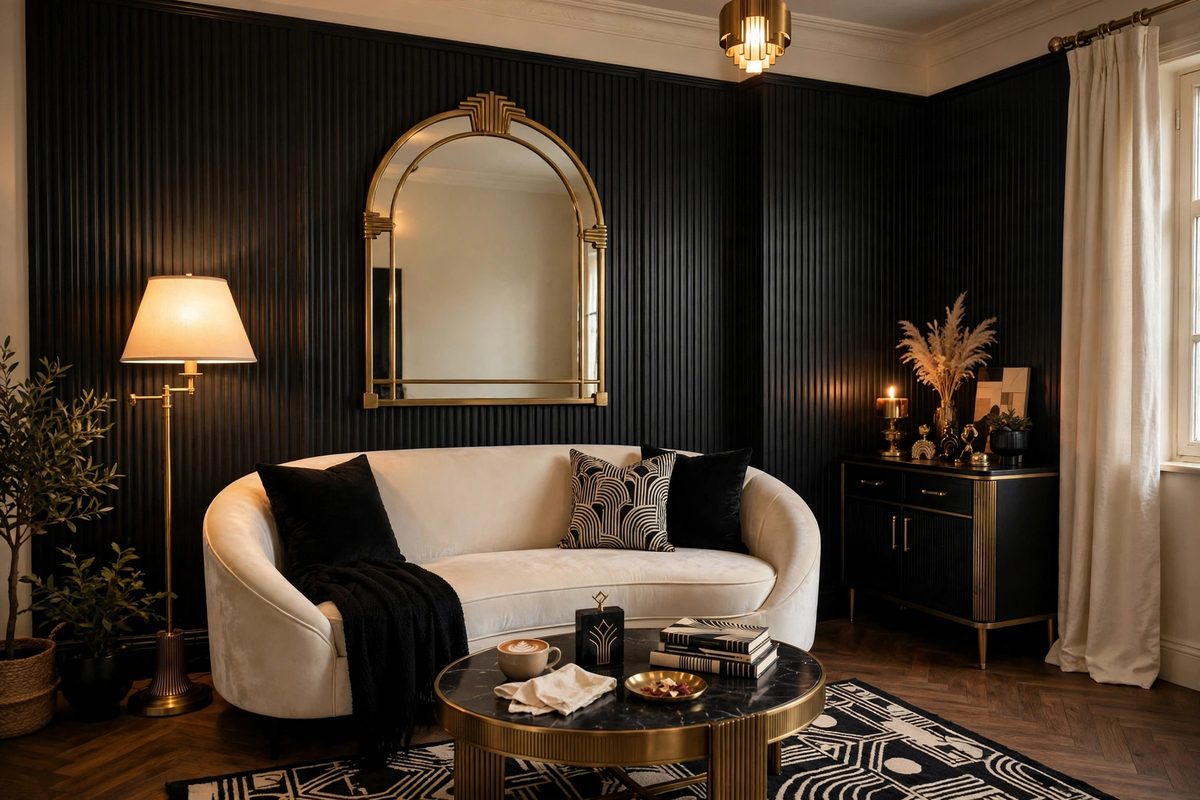
Should a small living room be light or dark colors?
Light walls plus a restrained two-color palette is the safest formula — it maximizes reflected light and visual calm. But one dark accent wall can actually add depth if the rest stays light, because depth cues make walls feel farther apart. Avoid all-dark rooms unless the lighting is excellent; small dark rooms need three or more light layers to avoid feeling like a cave.
How can renters decorate a small living room without drilling?
Lean into freestanding and removable: leaning mirrors, adhesive-hook curtains on tension rods, plug-in sconces and swag pendants, adhesive-strip gallery walls, and furniture-based styling like the behind-sofa console. The only holes worth making are small nail holes for one statement art piece — they spackle in minutes at move-out.