10 Small Living Room Sofa Ideas That Fit Without Dominating the Room
10 small living room sofa ideas that fit compact rooms, with sofa sizes, depths, leg styles, and layouts that leave room to move.
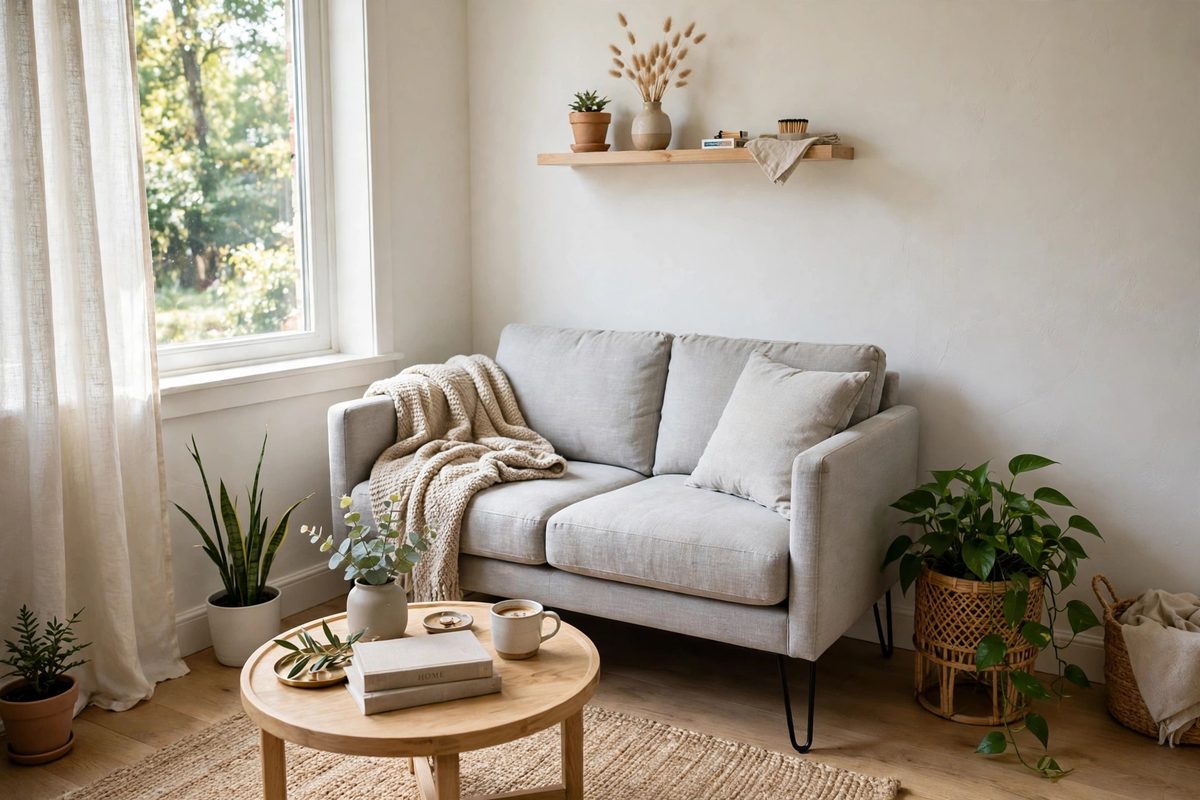
Small bright living room with a compact light gray loveseat sofa, slim legs, and a small coffee table
In This Guide
The sofa is the largest piece of furniture in most living rooms, and in a small living room it can easily become the room. A sofa that is too deep, too long, or too bulky leaves no room for a coffee table, a walkway, or a second chair, and the room feels cramped no matter how well you decorate the rest of it.
Start with measurements, not styles. In a small living room, a sofa 72 to 84 inches long usually works, while a standard 96 inch sofa often does not. Seat depth matters too: a 36 to 38 inch deep sofa feels generous without pushing you far from the coffee table, while a 42 inch deep sofa eats 4 extra inches of floor you may not have. Leave at least 30 inches for walkways and 16 to 18 inches between the sofa and the coffee table.
The ideas below cover sizes, shapes, and layouts that keep a small living room livable. They pair with the fridge organization in small kitchen fridge organization ideas and the holiday card ideas in Christmas card display ideas for small apartments.
1. The Apartment Sofa
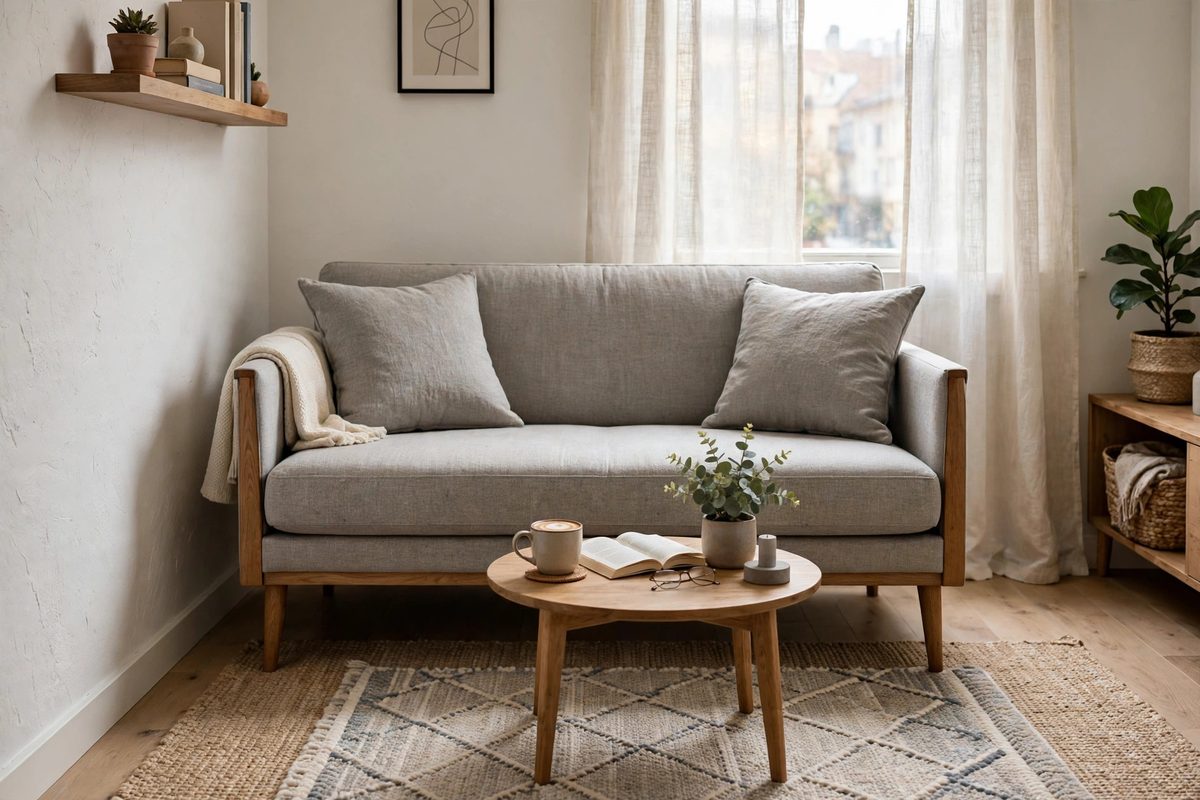
An apartment sofa is a standard sofa scaled down: 72 to 78 inches long, 34 to 36 inches deep, with a seat height around 18 inches. It seats three people comfortably, or two people with room to stretch, and it leaves space for side tables and a coffee table in a room as small as 10 by 12 feet.
Apartment sofas cost roughly the same as standard sofas, 500 to 1,500 dollars for a good quality piece, but they save you the cost of a room that feels unusable. Look for a sofa with a seat depth under 38 inches and arms under 8 inches wide, since wide arms eat seating width without adding comfort.
How to make it work
Measure your wall and leave at least 6 inches on each side of the sofa for breathing room, or the sofa will look wedged in. Choose raised legs, 4 to 6 inches tall, so you can see floor underneath, which makes the sofa look lighter. Test the seat depth in person if possible, since a sofa that is too shallow is uncomfortable for tall guests.
2. The Loveseat Plus Chair
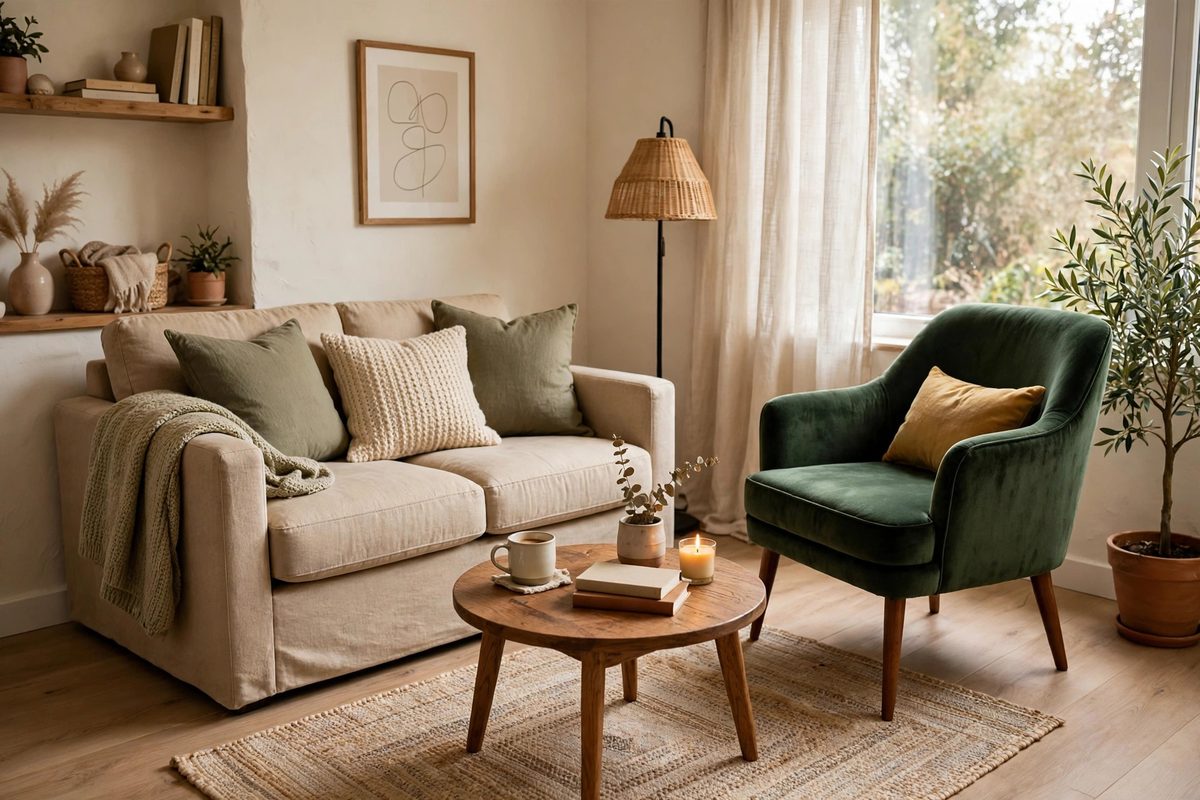
A loveseat, 58 to 66 inches long, paired with a single accent chair often seats the same number of people as a full sofa while giving you a more flexible layout. You can angle the chair toward the television, move it for conversation, or push it aside when you need floor space.
This combination works well in a square room or a room with an awkward corner, since two smaller pieces fit where one long sofa does not. A loveseat costs 400 to 1,000 dollars, and a good accent chair adds 200 to 500 dollars, so the total is comparable to a single sofa.
How to make it work
Keep the loveseat and chair in the same color family or with a shared accent color, so the pairing looks intentional, not like leftovers. Leave 30 inches between the chair and the loveseat for a walkway, and use a small side table between them for drinks. If the room is very small, choose a chair with a footprint under 30 by 30 inches.
3. The Armless Sofa
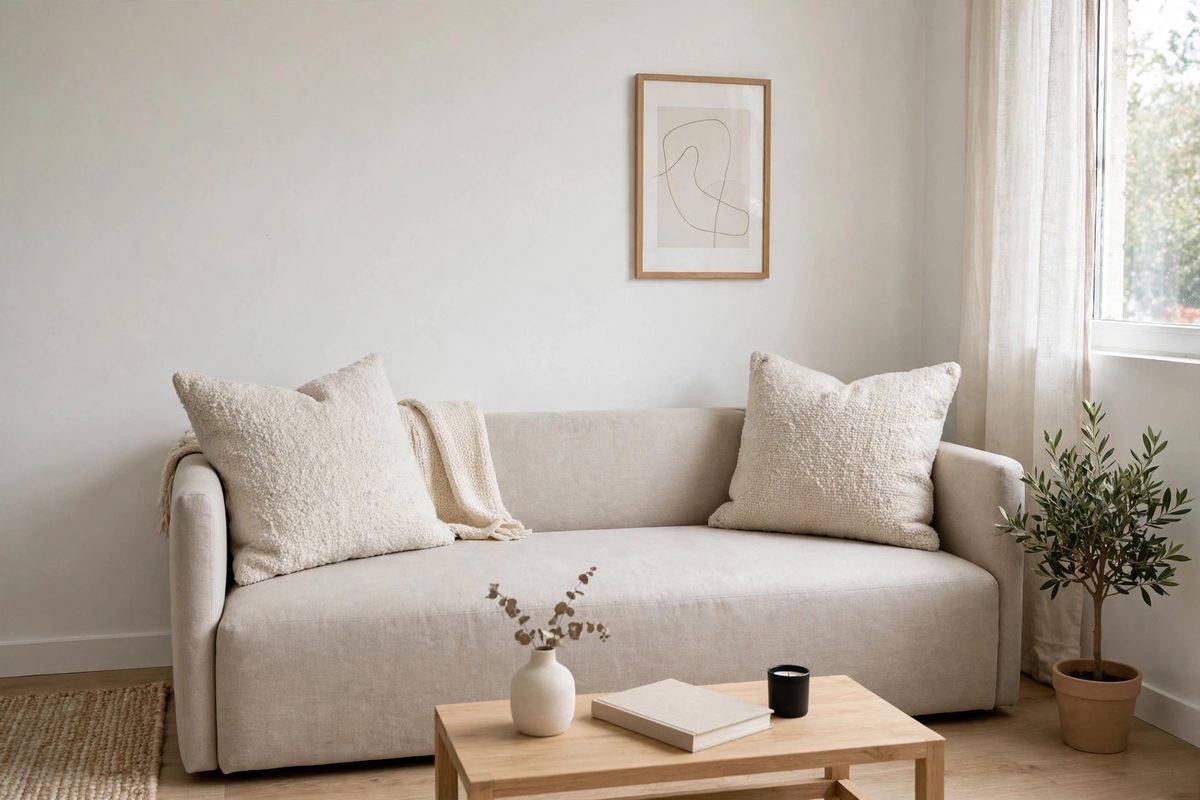
An armless sofa saves 12 to 16 inches of width compared to a sofa with arms, since each arm typically adds 6 to 8 inches. That saved width can be the difference between a sofa that fits and one that blocks a doorway. Armless sofas also look lighter and more modern, with a clean silhouette that suits minimalist apartments.
The tradeoff is comfort: armless sofas offer no place to lean sideways or rest an arm, so they suit shorter sitting sessions and upright seating better than long lounging. Add large throw pillows at each end to create a soft arm substitute.
How to make it work
Place an armless sofa against a wall, not floating in the room, since it needs the wall for visual grounding. Use a narrow side table or a floor lamp at each end to define the sofa zone. If you lounge often, choose an armless sofa with a deeper seat, 38 to 40 inches, to compensate for the missing arms.
4. The Slim Track Arm Sofa
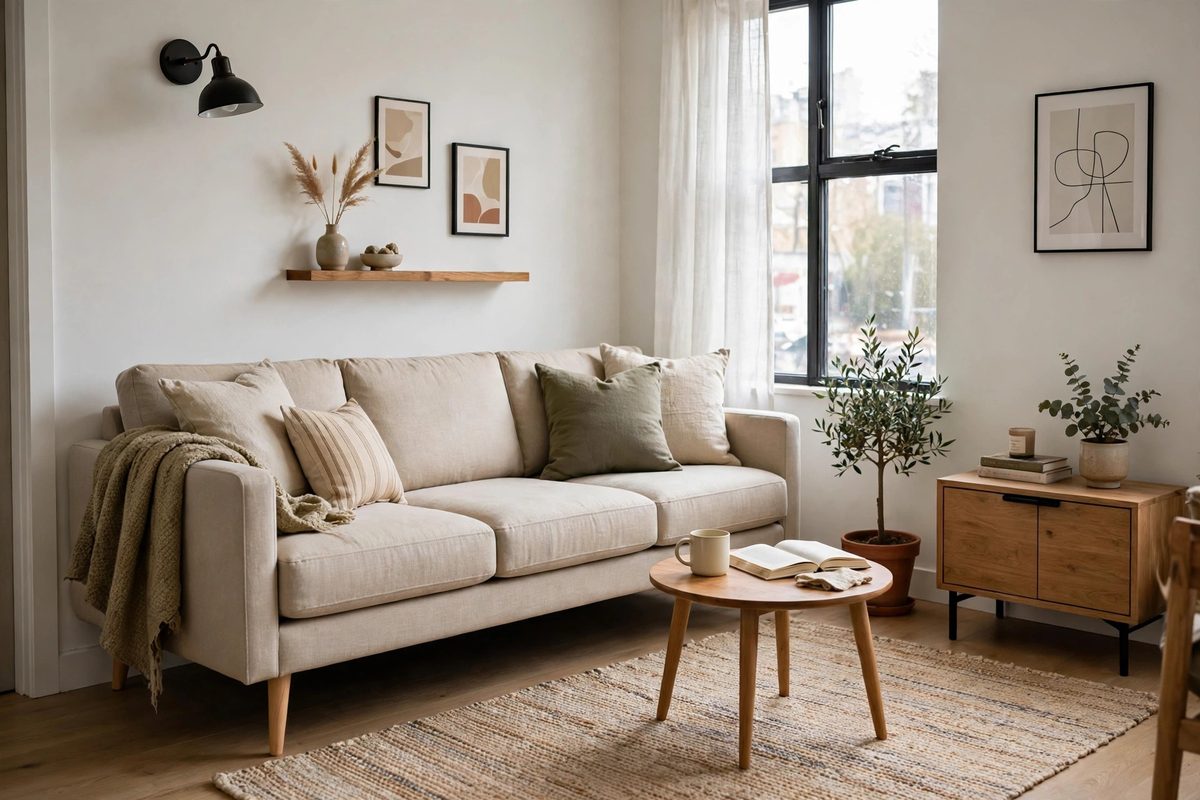
A track arm sofa, with straight, narrow arms about 4 to 5 inches wide, gives you the structure of arms without the bulk of rolled or pillow arms, which can add 10 inches or more per side. Track arms suit modern and transitional rooms, and they provide a flat surface for a drink or a book.
Track arm sofas are widely available in apartment sizes, and they pair well with clean lined coffee tables and simple rugs. Choose a leg style that matches your room: tapered wood legs read warm, while slim metal legs read modern.
How to make it work
Measure the arm width before buying, since some sofas labeled track arm still have 7 inch arms. Keep the sofa color light or mid tone, since a dark track arm sofa can still look heavy in a small room. Add a single throw blanket in a contrasting color to break up a long, straight silhouette.
5. The Sofa With Raised Legs
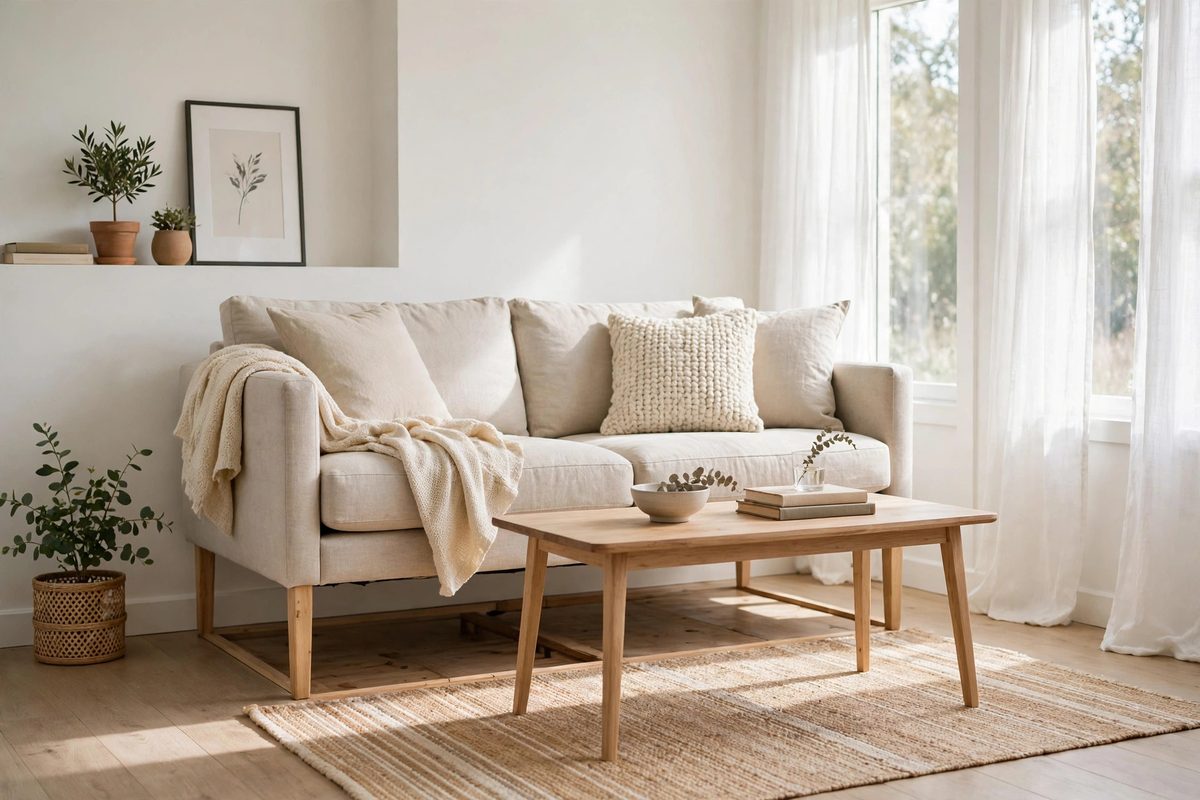
Legs change how big a sofa feels. A sofa that sits directly on the floor looks like a solid block, while the same sofa on 5 inch legs shows floor underneath and reads as lighter and smaller. This is one of the cheapest visual tricks in small room design, and it also makes cleaning underneath far easier.
Look for legs at least 4 inches tall, and avoid skirted sofas in small rooms, since a skirt hides the floor and makes the sofa look larger. If you already own a low sofa, replacement legs are available for 20 to 40 dollars a set and can transform the piece.
How to make it work
Check that the legs are sturdy and rated for the sofa weight, especially for a sleeper sofa, which is heavier. Use felt pads under the legs to protect floors and to make the sofa easier to move for cleaning. Keep the area under the sofa clear, not stuffed with storage, or the lightening effect disappears.
6. The Corner Loveseat Sectional
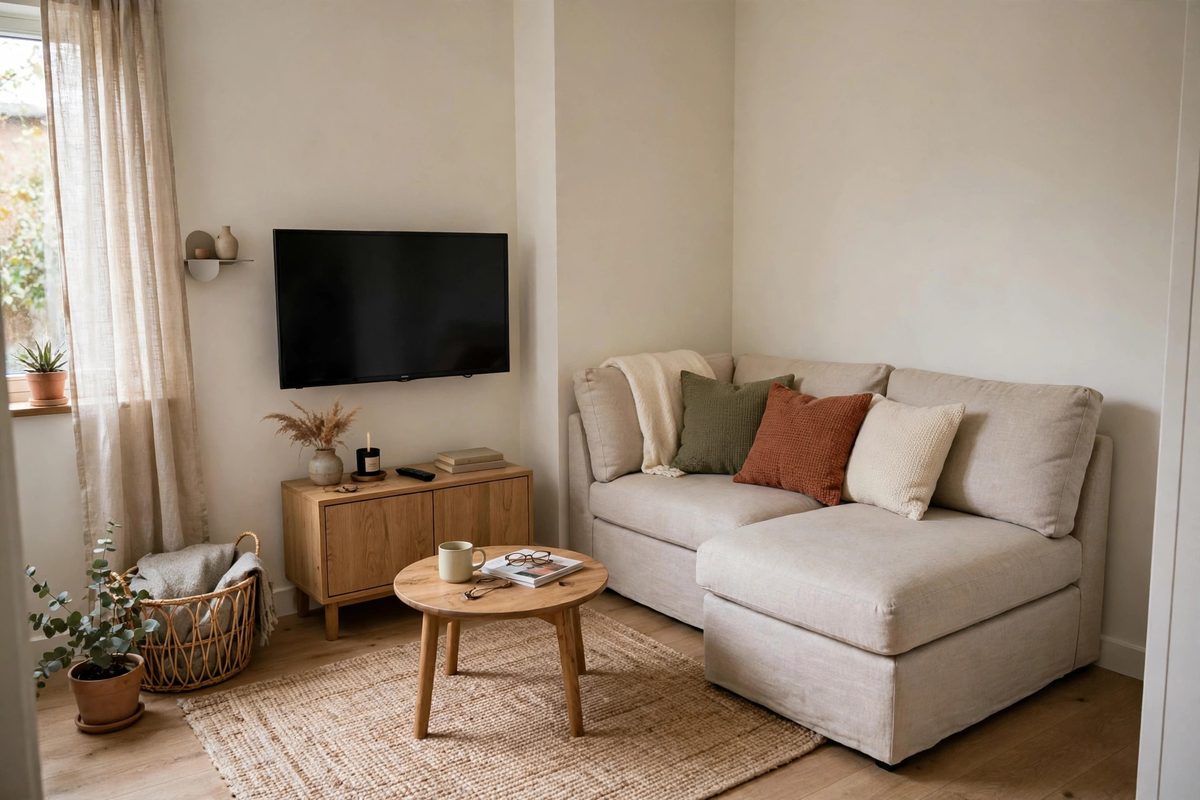
A small sectional, with a loveseat plus a chaise, can actually save space in a corner room, since it uses a corner that would otherwise sit empty. The key is size: look for a sectional under 84 inches on the long side and under 60 inches on the chaise side, with a reversible chaise if possible so you can flip the layout.
Sectionals suit rooms where the television or fireplace sits in a corner, and they seat four people without needing extra chairs. Avoid large U shaped sectionals and sectionals with wide arms, which overwhelm a small room fast.
How to make it work
Measure both walls of the corner and leave at least 30 inches of walkway on the open side. Choose a chaise that faces the room, not a wall, so it is actually used. If the sectional has storage in the chaise, use it for blankets and throws, not for heavy items that make the chaise hard to lift.
7. The Sleeper Sofa That Actually Fits
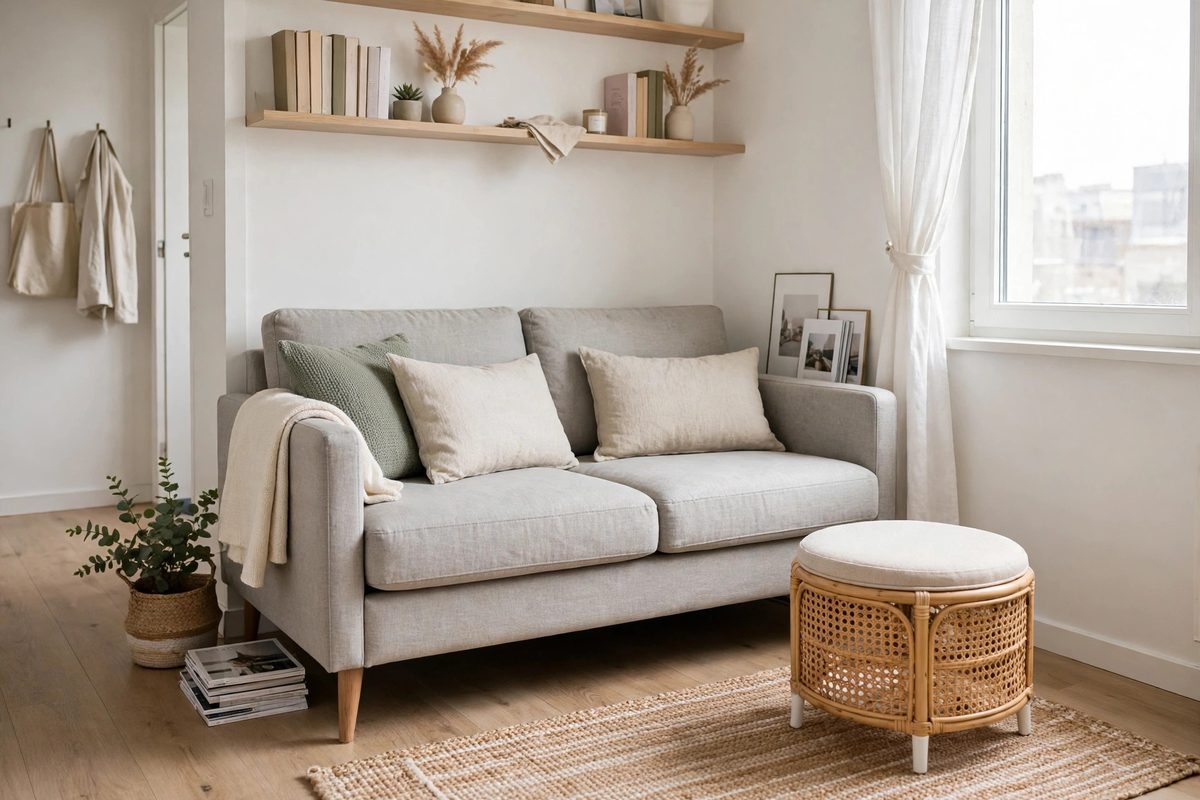
A sleeper sofa gives a small apartment a guest bed without a guest room, but many sleeper sofas are bulky and uncomfortable as both sofa and bed. Look for a compact sleeper, 72 to 78 inches long, with a pull out mechanism that opens to a full or queen mattress, and a seat depth under 38 inches when closed.
Modern sleeper mechanisms are lighter and thinner than older ones, and some use a fold down back instead of a pull out mattress, which saves depth. Expect to pay 800 to 1,800 dollars for a sleeper that is genuinely comfortable in both modes, and test the bed mechanism in person if you can.
How to make it work
Leave at least 60 inches of clear floor in front of the sofa for the bed to open, and keep that area free of a heavy coffee table. Use a coffee table on casters or a lightweight ottoman that can move aside for guests. Store bedding in the sofa if it has storage, or in a nearby ottoman, so guests are not waiting while you hunt for sheets.
8. The Light Colored Sofa
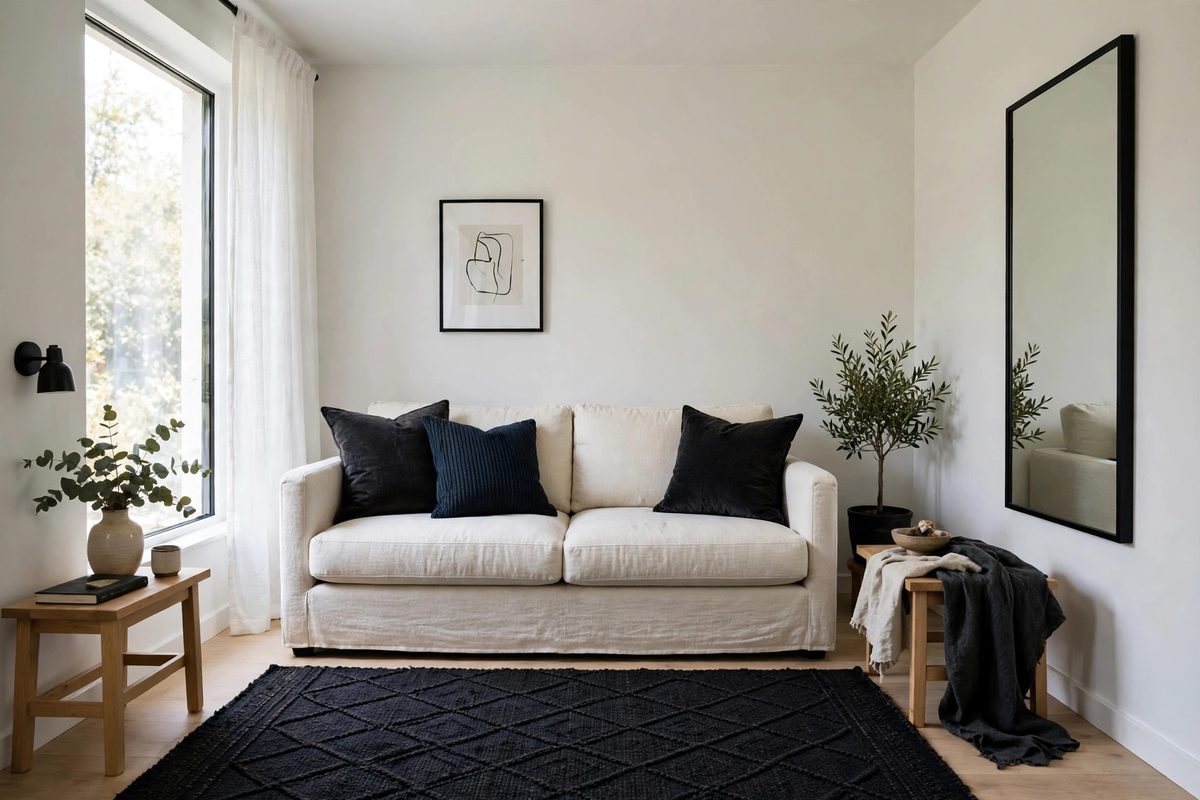
Color affects perceived size. A light gray, cream, or soft beige sofa blends with light walls and makes the room feel larger, while a dark charcoal or navy sofa becomes a visual anchor that can dominate a small room. This does not mean you must buy white, which stains easily, but a mid light tone is safer than a very dark one in a compact space.
Performance fabrics, which resist stains and are easy to clean, make light sofas practical even with pets or kids. Look for fabrics rated for at least 30,000 double rubs, which indicates good durability, and choose a removable cover if possible for easy washing.
How to make it work
Pair a light sofa with darker accents, like a dark rug, dark side tables, or dark throw pillows, so the room has contrast and does not look washed out. Keep the sofa at least 2 inches from the wall to avoid scuffs, and vacuum weekly to prevent dust from dulling a light fabric. For more small living room ideas, see small living room seating ideas.
9. The Sofa Against the Longest Wall
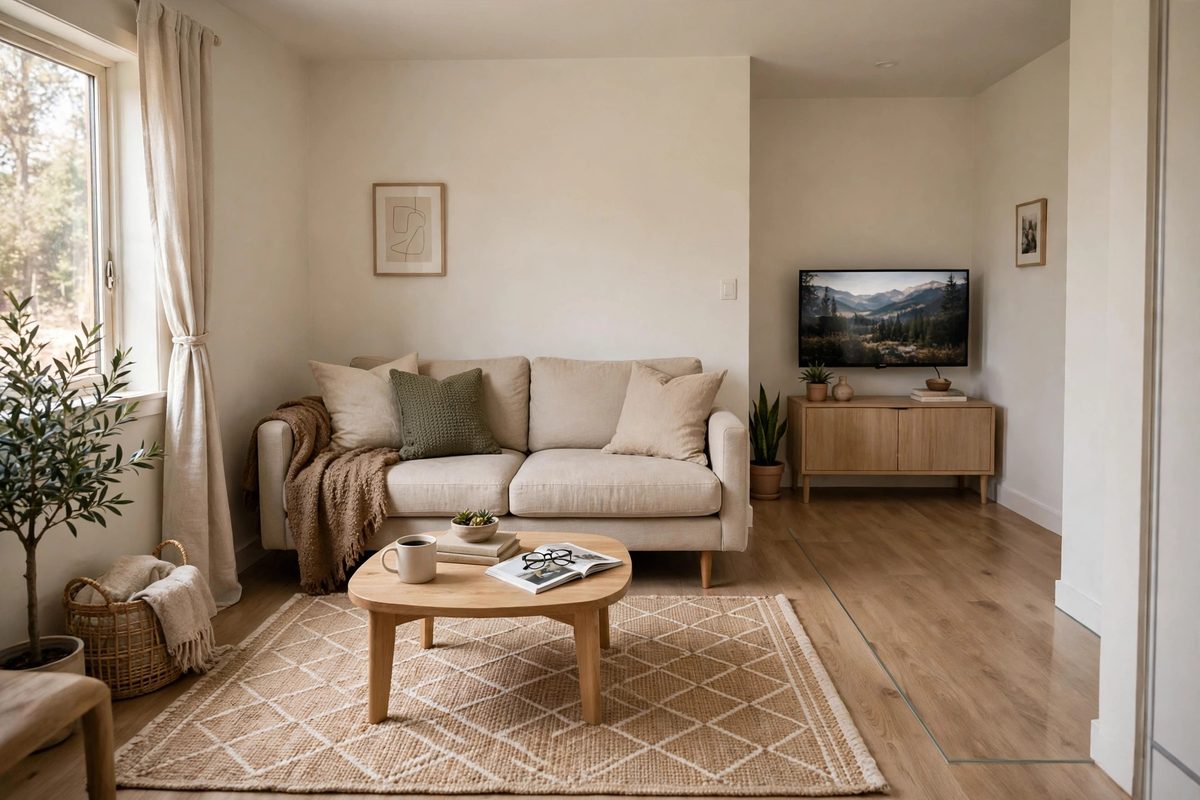
Placement matters as much as size. Putting the sofa against the longest wall in the room, rather than floating it or placing it on a short wall, leaves the rest of the room open and creates a clear walkway. It also gives you the longest possible sofa that still fits, since the longest wall accommodates the most length.
This layout works best when the television or focal point sits opposite the sofa, on the other long wall or on a stand facing it. Avoid placing the sofa where it blocks a doorway, a radiator, or a frequently used path to the kitchen or bedroom.
How to make it work
Center the sofa on the wall, or align it with a rug and coffee table grouping, so the arrangement looks deliberate. Leave 3 to 4 inches between the sofa back and the wall for ventilation and to avoid scuffing. If the longest wall has a window, use a low back sofa so it does not block light.
10. The Two Sofa Alternative: Daybed Style
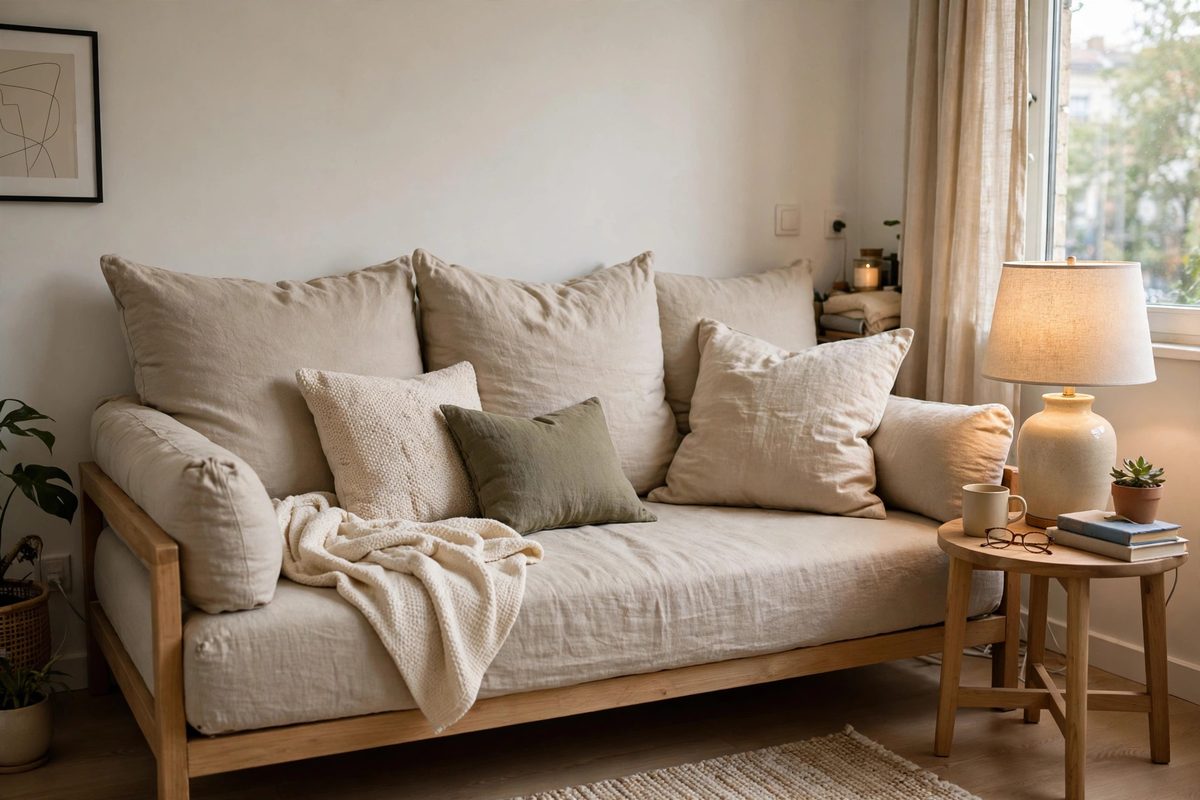
A daybed style sofa, with a back along one long side and open ends, works as both a sofa and a guest bed in a studio or a very small living room. It takes up less visual space than a traditional sofa, since it has no arms and a lower profile, and it can sit against a wall like a bench during the day.
Daybeds suit rooms under 150 square feet, or rooms that serve as both living room and guest room. Dress it with large back pillows during the day so it reads as a sofa, and remove them at night for sleeping. A twin or full size daybed costs 300 to 900 dollars plus a mattress.
How to make it work
Choose a daybed frame with a weight capacity that suits both sitting and sleeping, and a mattress at least 8 inches thick for comfort. Use a fitted cover or a daybed cover set to keep the bedding looking like upholstery during the day. Keep a small side table and lamp beside the daybed so it functions as a sofa zone, not just a bed in the living room.
The right sofa for a small living room is the one that leaves you room to live around it. Measure first, choose a size that fits the wall with room to spare, pick legs and a color that lighten the piece, and place it where it opens the room instead of closing it. Your living room will feel bigger, even though the sofa is the same size on paper.