Light Paint Colors for Small Rooms: 10 Shades That Open Up Any Space
Light colors for small rooms that actually work: what colors make a room look bigger, plus 10 light paint colors for small rooms with shade names, LRV guidance, and finishes.
In This Guide
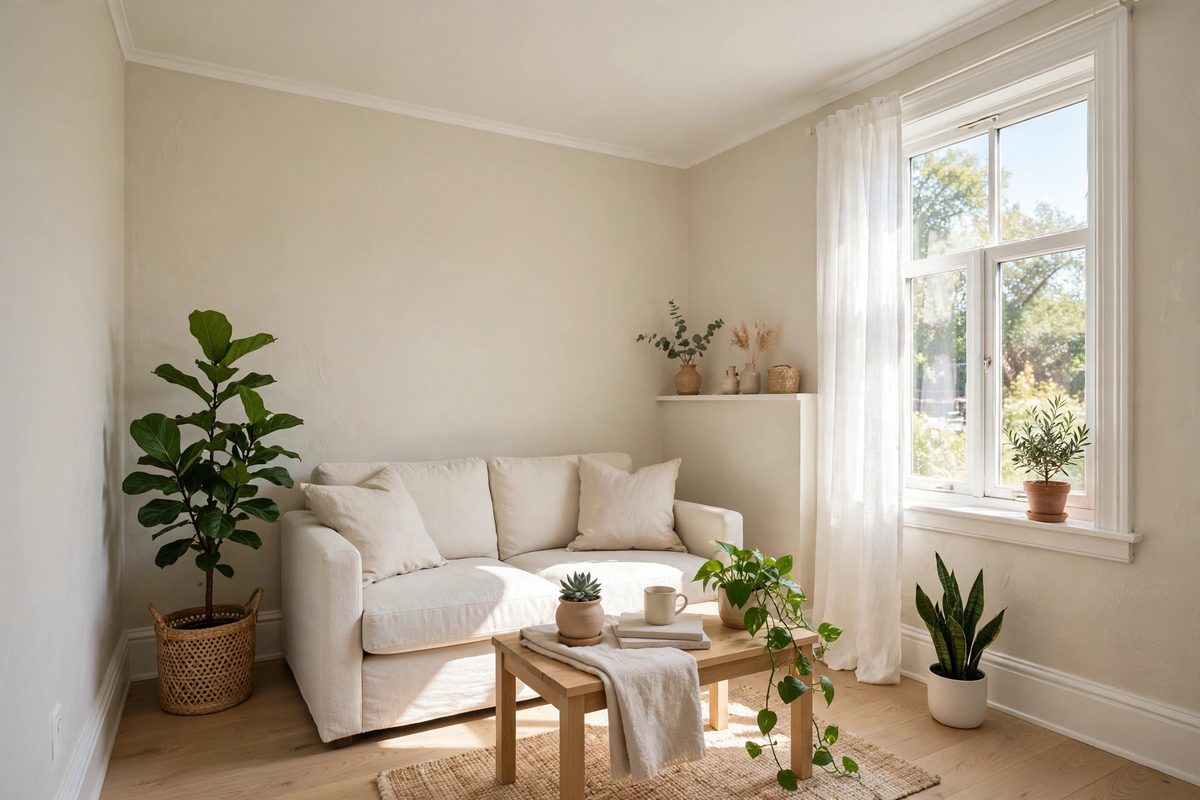
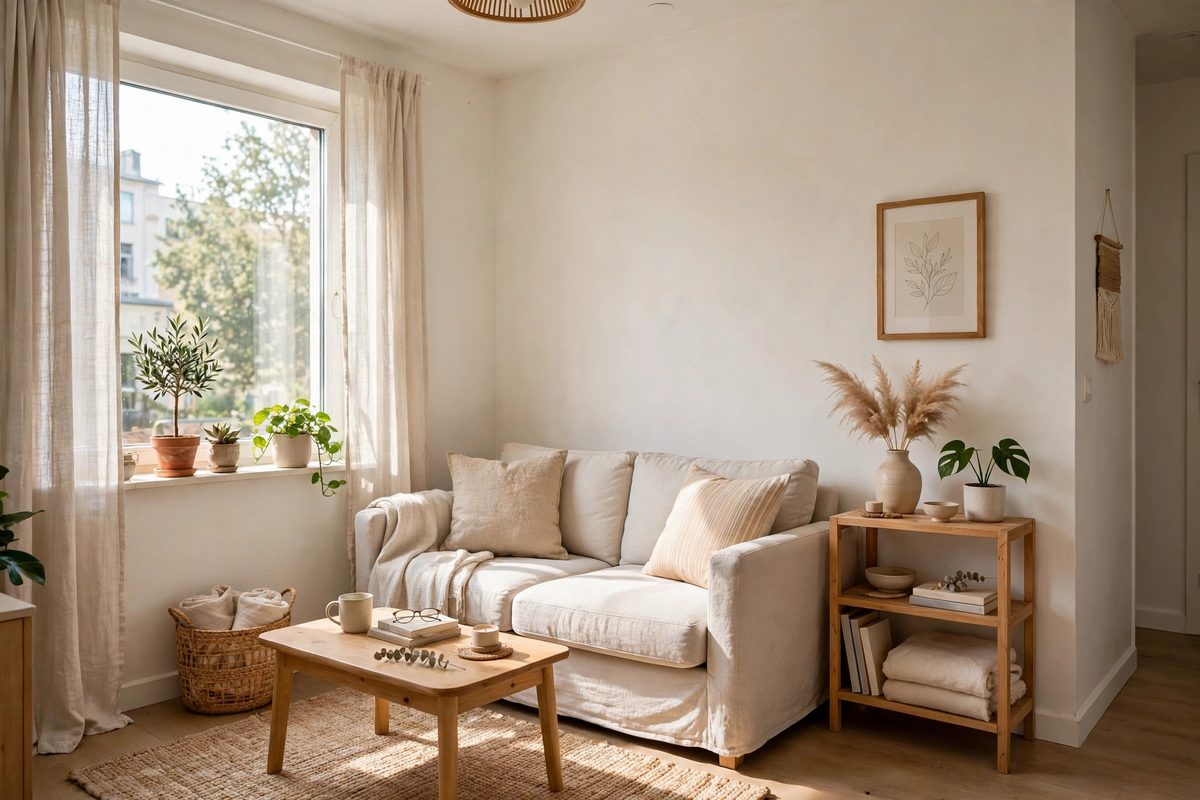
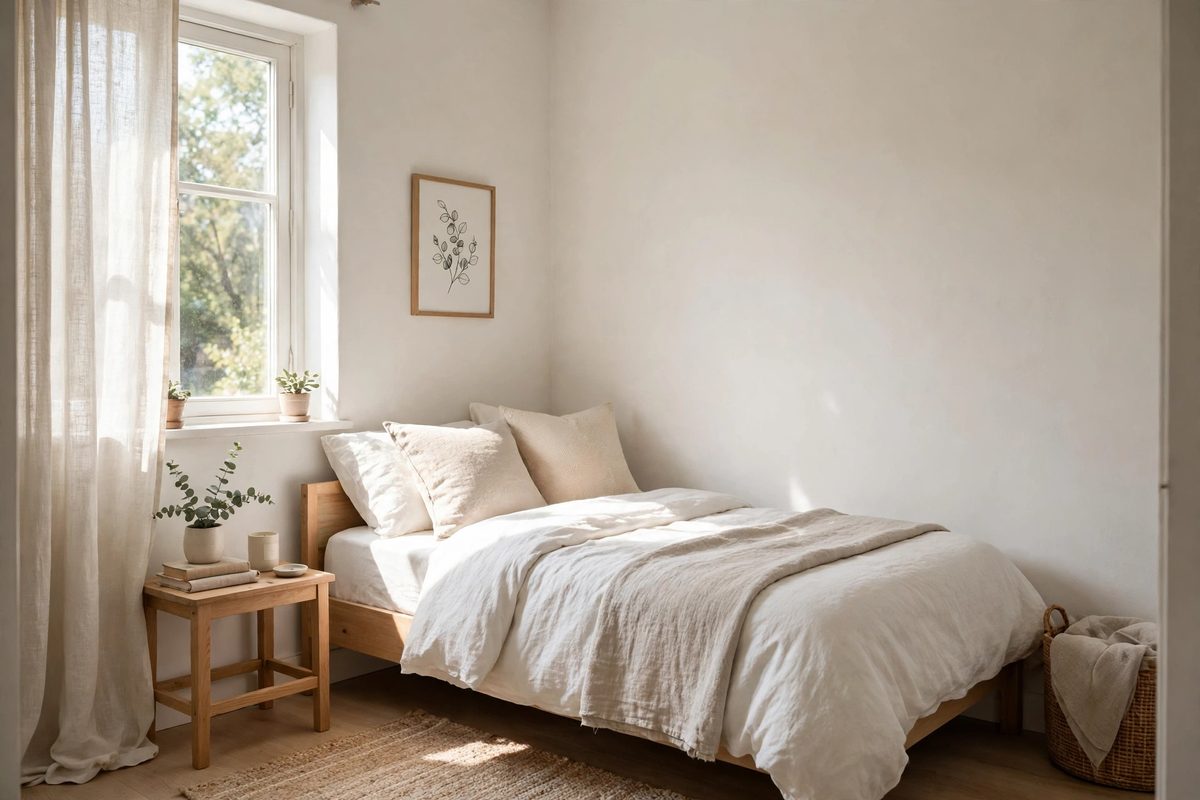
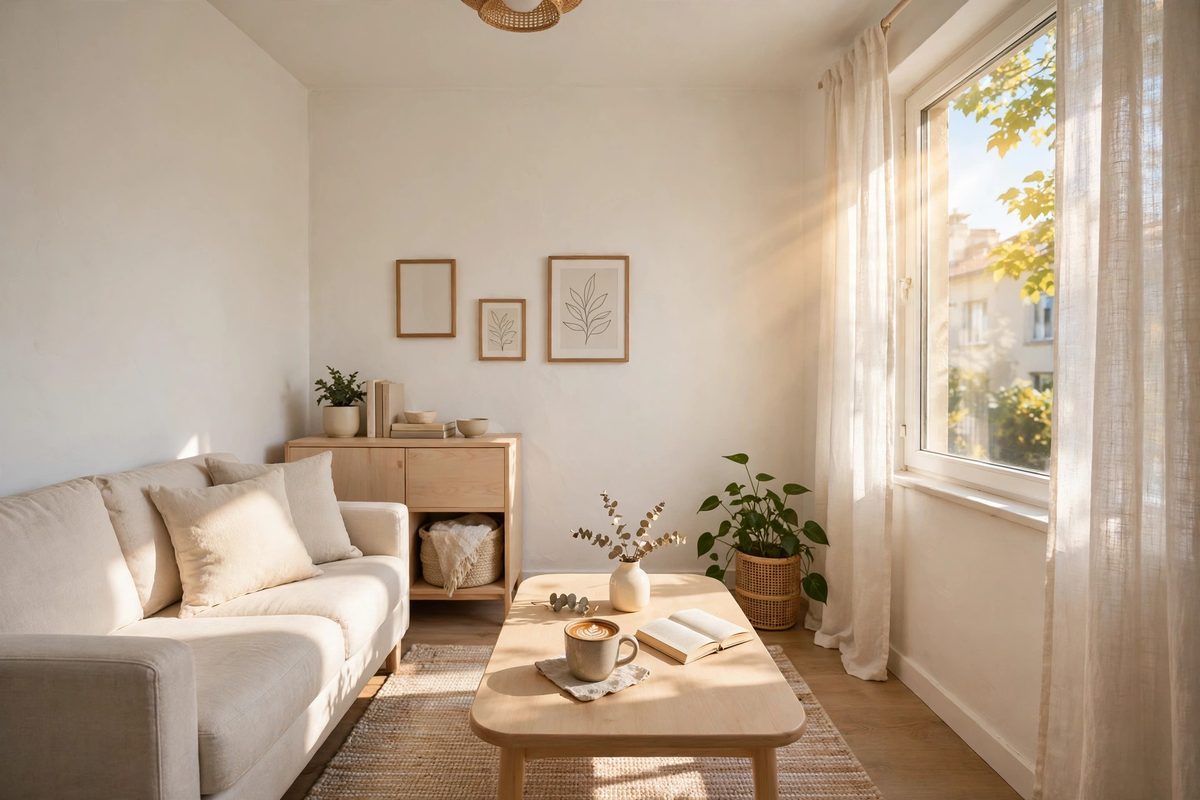
Light colors make a small room look bigger because they reflect light back into the room instead of absorbing it. That is the whole mechanism, and it is measurable: paint brands publish a Light Reflectance Value, or LRV, for each color, on a scale from 0 (absorbs all light) to 100 (reflects all light). For small rooms, aim for an LRV of 65 or higher on walls, and 80 or higher if the room is dark or windowless.
This post is a shade roundup for rooms generally: living rooms, dining areas, home offices, hallways, and bedrooms used as examples, not a bedroom-only list. For bedroom-specific picks with light-direction detail, see paint colors for small bedrooms. For living-room-only shades, see living room paint colors for small apartments. For the placement techniques that make these shades work harder, see how to make a room look bigger with paint.
1. Warm White: Benjamin Moore Simply White
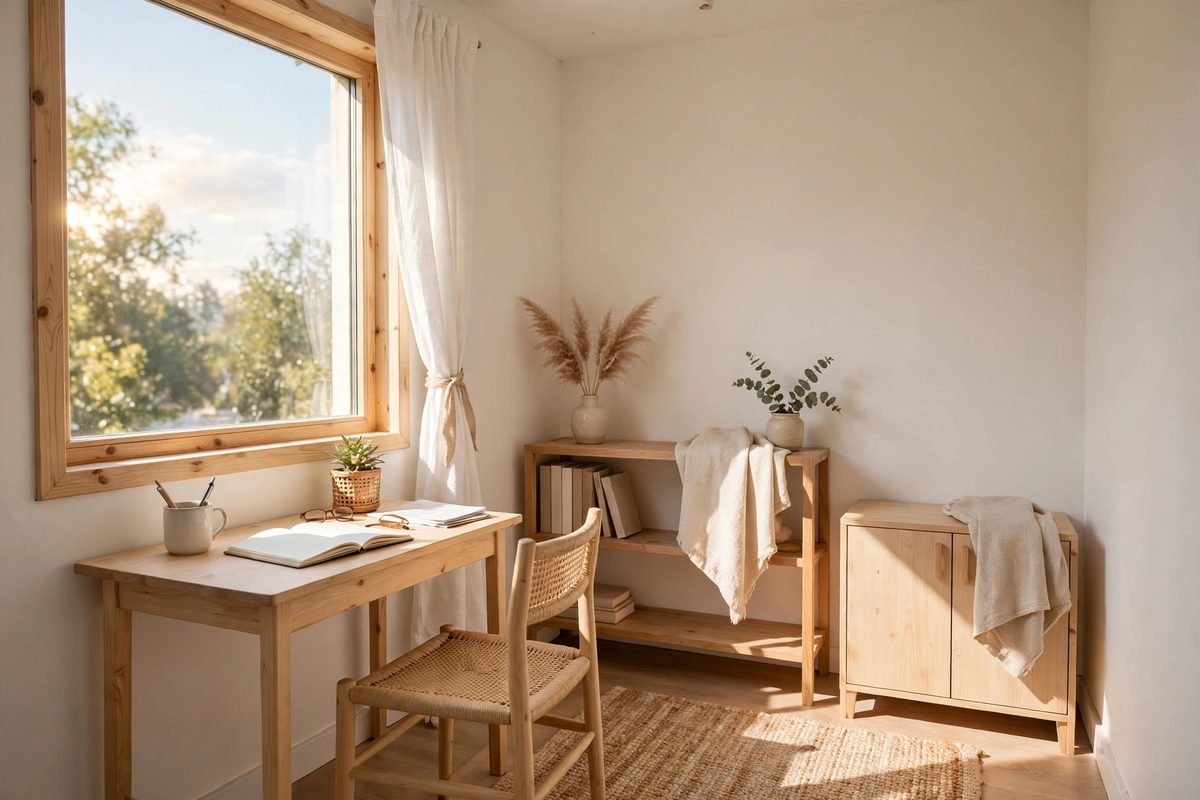
Simply White (OC-117) has an LRV around 91, which puts it near the top of the scale, and a faint warm undertone that stops it from reading blue in cool light. It is the brightest warm white most brands offer, and it suits small rooms that need maximum light reflection without a clinical feel.
Use it on walls, trim, and ceiling in one continuous color for the biggest space effect, in eggshell on walls and semi-gloss on trim. Simply White pairs with any furniture color, which makes it the safest choice if you are painting a room you have not fully furnished yet. Two coats over primer give full, even coverage.
How to make it work
Simply White looks different under warm and cool bulbs, so test it under your actual room lighting. If it reads too bright at night, step down to White Dove, which is slightly softer.
2. Soft White-Gray: Sherwin Williams Snowbound
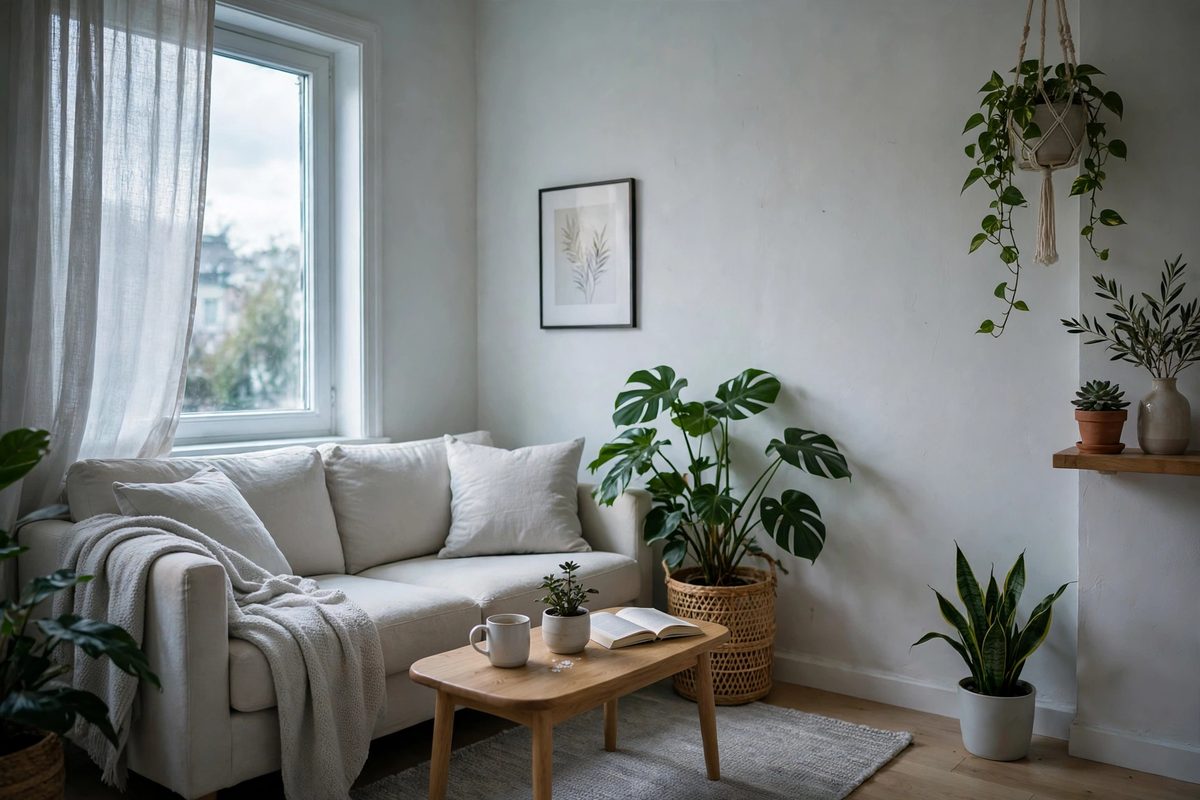
Snowbound (SW 7004) is a soft white with a cool gray cast and an LRV around 83. It suits small rooms with warm southern light, since the cool undertone balances golden sun, and it reads as a clean white rather than a gray wall. It is a good pick for modern apartments with gray or black furniture, where a warm white would clash.
Keep bedding and upholstery light with Snowbound, or the cool walls can make the room feel chilly. Pair it with warm wood accents and warm-white lamps (2700K) to balance the cool cast at night. For how Snowbound-style palettes play out in a living room, see small living room color scheme ideas.
How to make it work
Test Snowbound in a north-facing room before committing. In cool northern light it can turn noticeably gray, and a warmer white is the better call there.
3. Pale Greige: Benjamin Moore Balboa Mist
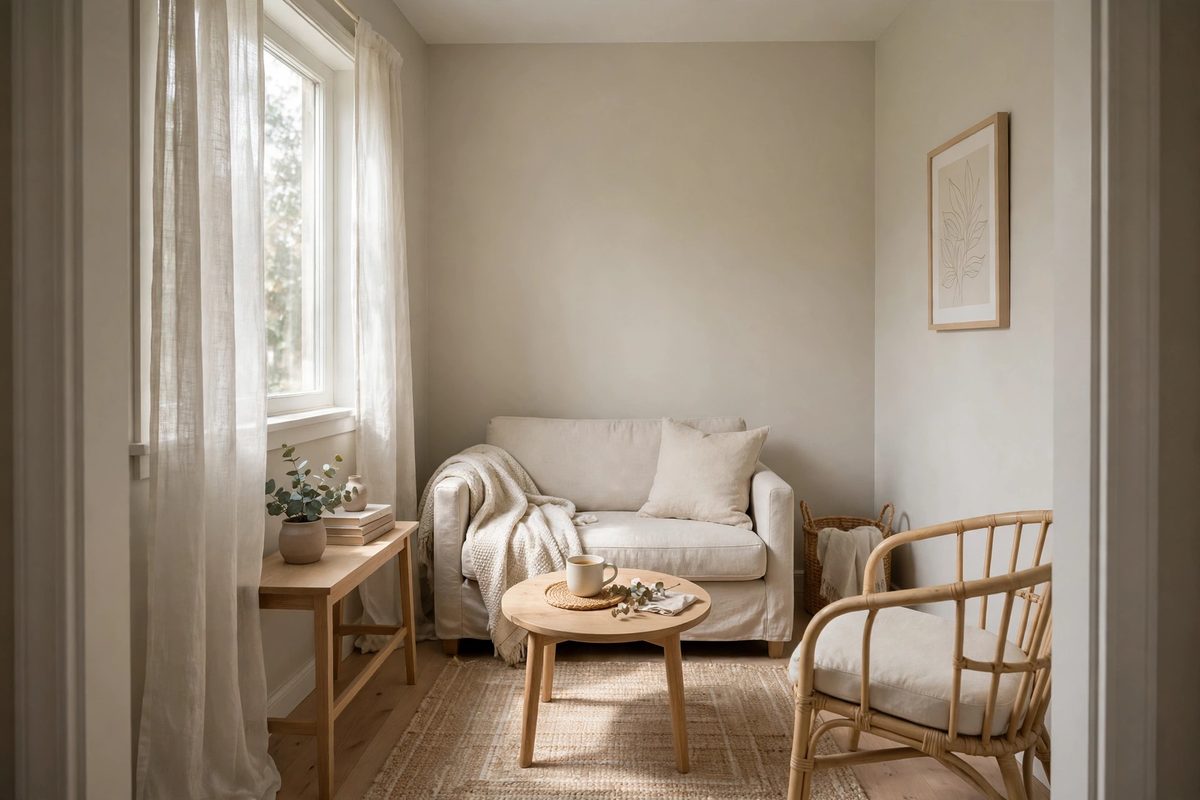
Balboa Mist (OC-27) is a pale greige with an LRV around 67, light enough for small rooms while still reading as a color. It adds warmth and depth that pure white cannot, and it works with both warm and cool furniture, which is rare for a single shade. It suits living rooms and dining areas where you want the walls to feel intentional, not just blank.
Because Balboa Mist sits near the LRV threshold for small rooms, it needs decent light. In a dark room, pair it with white trim, a light rug, and mirrors to bounce what light exists. Eggshell finish keeps it from going flat.
How to make it work
Paint a large test patch, at least 2 feet square, since Balboa Mist shifts between gray and beige depending on light. If it reads beige in your room and you wanted gray, switch to a cooler greige.
4. Light Sage: Behr Light Sage
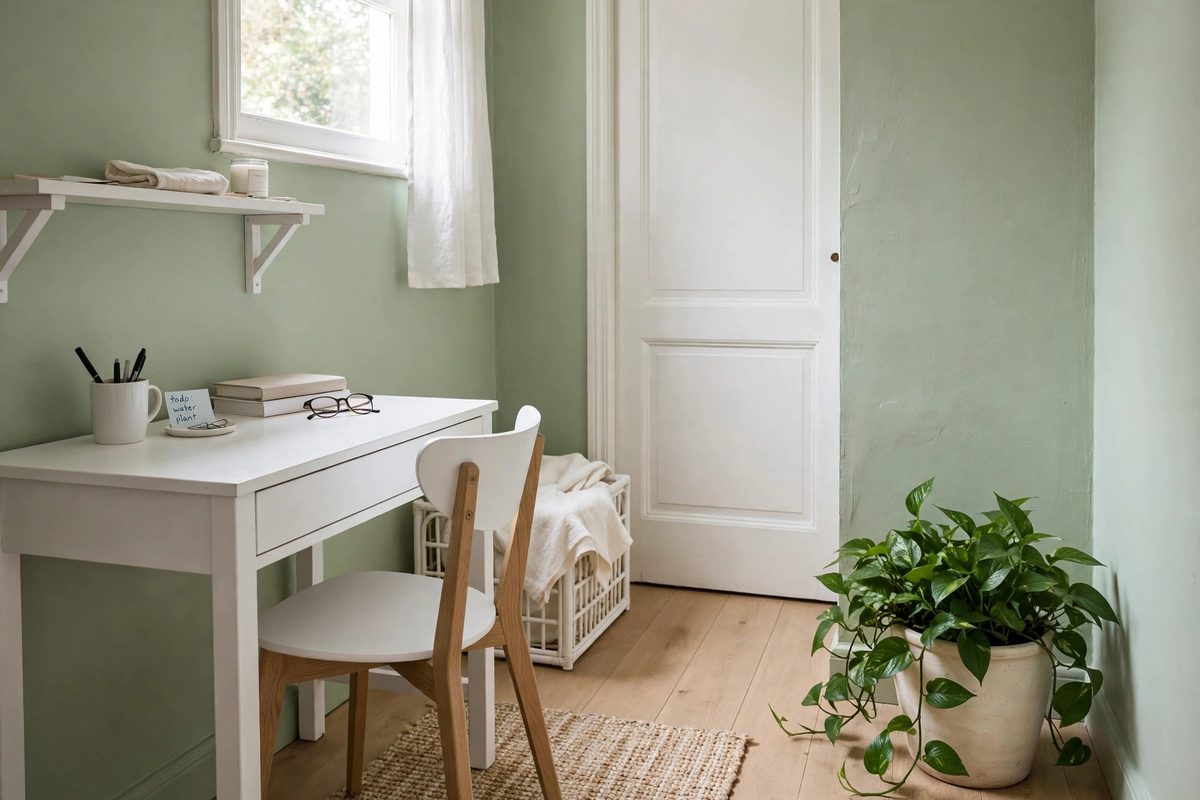
Light sage is a pale green with a gray cast, and it is one of the few colors that adds personality to a small room without reducing perceived size. Its LRV typically sits in the 65 to 75 range depending on the exact shade, which clears the small-room threshold. Sage suits rooms with plants, light wood, and natural textures, and it reads as calm rather than colorful.
Use sage in rooms where you spend relaxed time: living rooms, bedrooms, and reading corners. Avoid it in rooms with very little light, where it can turn gray-green and muddy. Pair it with white trim and light upholstery for the brightest effect.
How to make it work
Sage pairs badly with yellow-toned wood finishes, which can push it toward olive. If your furniture is honey oak or golden pine, test sage beside it before committing.
5. Pale Blue: Sherwin Williams Rainwashed
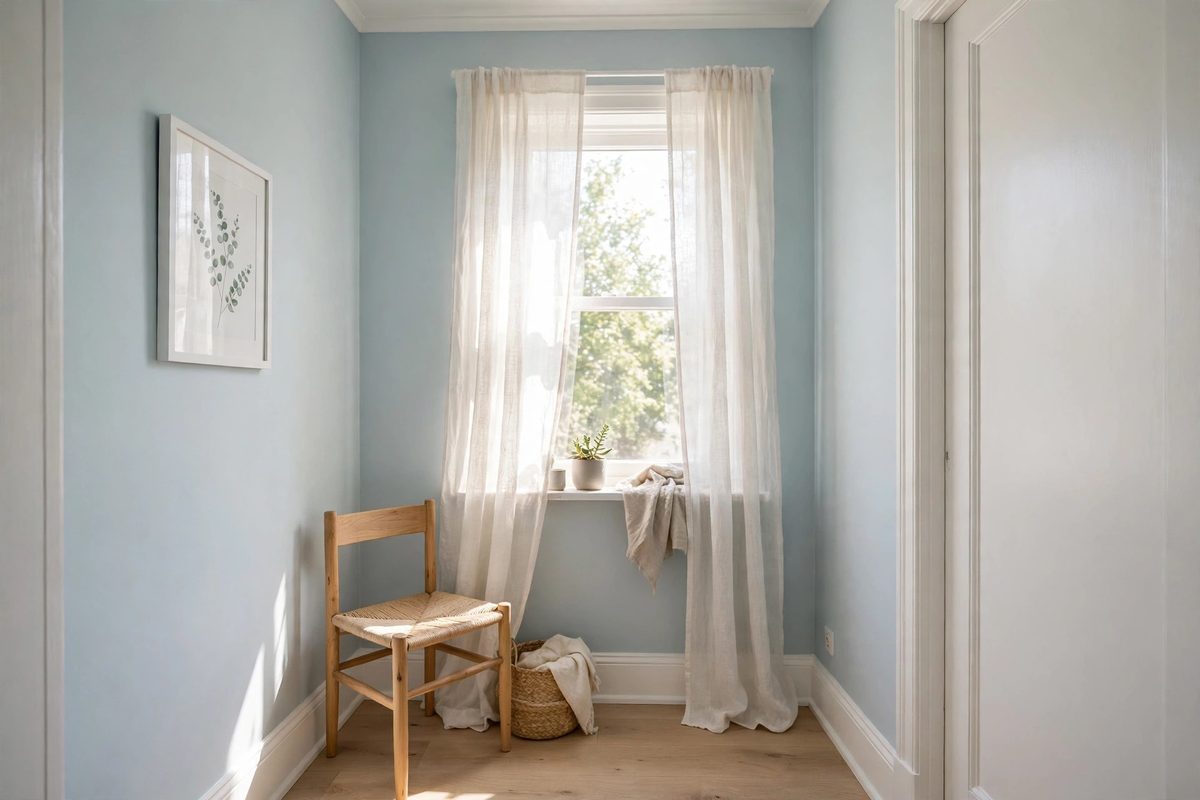
Rainwashed (SW 6211) is a pale blue-green with an LRV around 60, slightly below the ideal threshold, so it earns its place only in rooms with good light. In a bright room it reads as fresh and airy, and blue walls recede visually, which helps a small room feel wider. In a dim room it will darken, so reserve it for rooms with at least one large window or strong artificial light.
Rainwashed suits coastal, modern, and Scandinavian-leaning apartments, and it pairs with white trim, light wood, and natural fiber rugs. Curtain choice matters with pale blue walls, so check small living room curtain ideas before picking fabric that competes with the wall color.
How to make it work
If your room gets less than a few hours of direct or bright indirect light, pick a lighter blue like Behr Clear Skies, with an LRV closer to 75, instead of Rainwashed.
6. Soft Butter: Benjamin Moore Manchester Tan
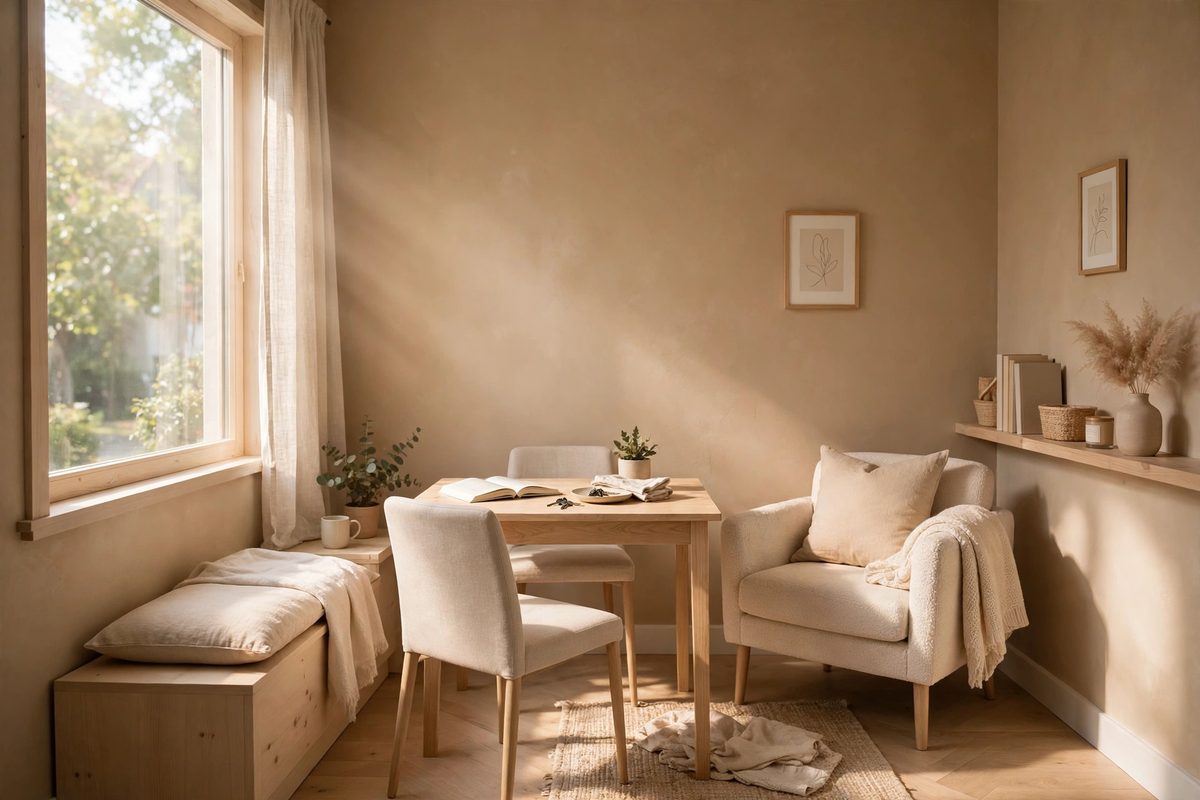
Manchester Tan (HC-81) is a soft warm tan, lighter than it sounds, with an LRV around 60. It suits small rooms that need warmth, especially north-facing rooms and rooms with cool artificial light, where a cool white would feel stark. It pairs with cream bedding, light wood, and brass accents.
Because its LRV sits below the 65 threshold, Manchester Tan needs light-colored furniture and a light ceiling to keep the room open. Paint the ceiling white or the same color one shade lighter, and keep large furniture pieces light. If the room is dark, a paler warm shade like Swiss Coffee is safer.
How to make it work
Manchester Tan can read pink under warm lamps, so test it at night. If it pinks up, switch to a more neutral warm greige.
7. Light Peach-Blush: Behr Peach Blush
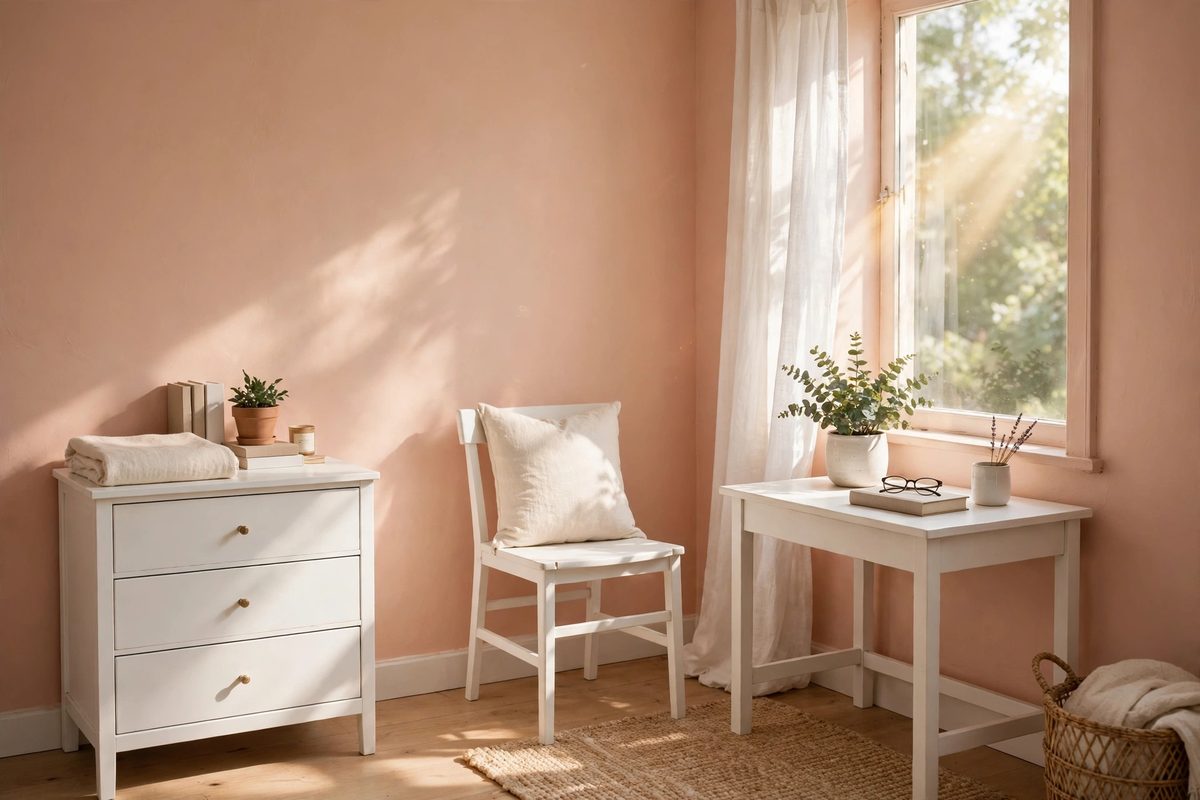
A very light peach-blush adds warmth and glow to a small room without the weight of a saturated color. Pale blush shades typically carry an LRV in the 70s, which clears the small-room bar, and they make skin tones and wood furniture look warmer. Blush suits living rooms and bedrooms with a soft, welcoming style.
Keep blush very pale, or the room tips from warm to pink. Pair it with white trim and neutral upholstery, not pink or red furniture, and use eggshell finish so the color stays soft rather than glossy. For a broader living-room palette view, see small apartment living room ideas.
How to make it work
Blush is the shade most likely to surprise you once dry, since it deepens as it cures. Paint a test patch, wait a full 48 hours, and judge it then, not on day one.
8. Pale Lavender-Gray: Benjamin Moore Lavender Mist
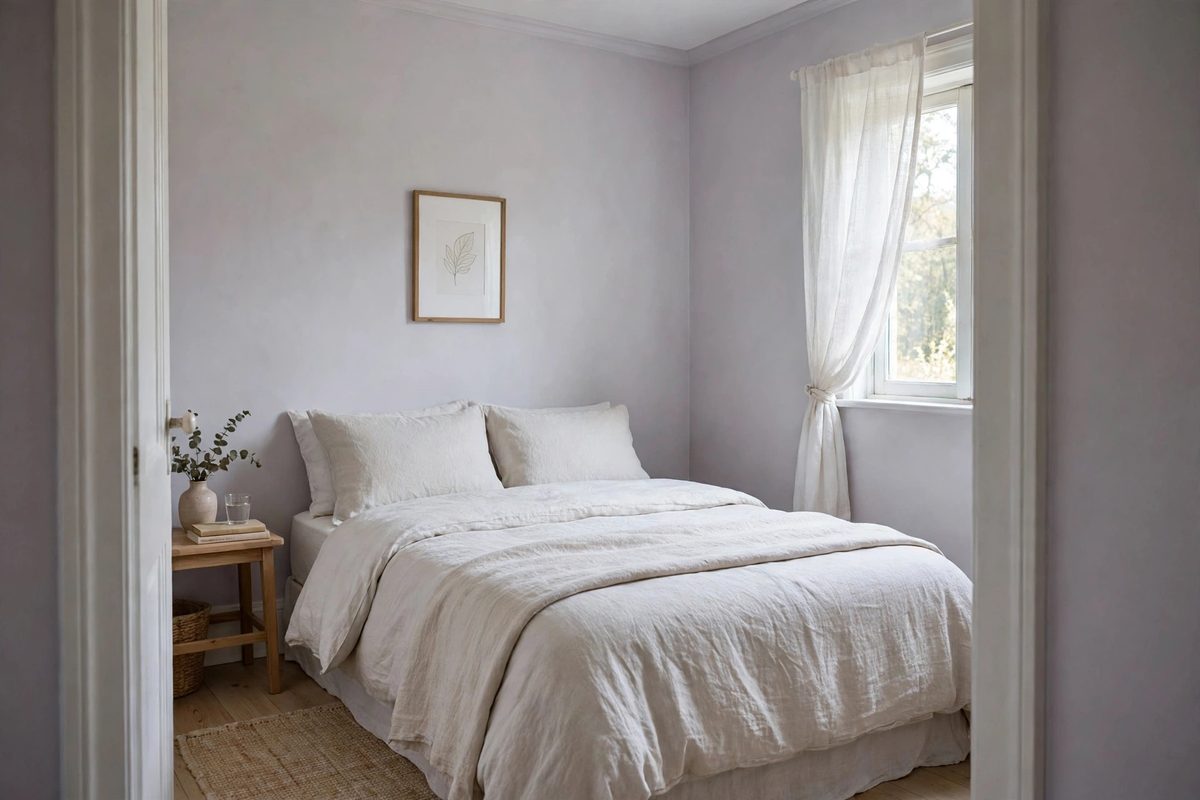
Lavender Mist is a very light lavender with an LRV in the high 70s, which makes it bright enough for small rooms while adding a distinct cool color. It suits modern bedrooms, home offices, and bathrooms with good light, and it pairs with white, light gray, and soft green accents.
Lavender-gray turns gray in dim light, so it needs a room with real daylight. In a dark room, the lavender disappears and you are left with a gray wall you did not choose. Test it on the wall opposite the window, where light is weakest, before committing.
How to make it work
If Lavender Mist reads gray in your room, your light is too low for lavender. Step up to a lighter white with a lavender undertone, or switch to a pale blue-gray instead.
9. Crisp Light Gray: Sherwin Williams Big Chill
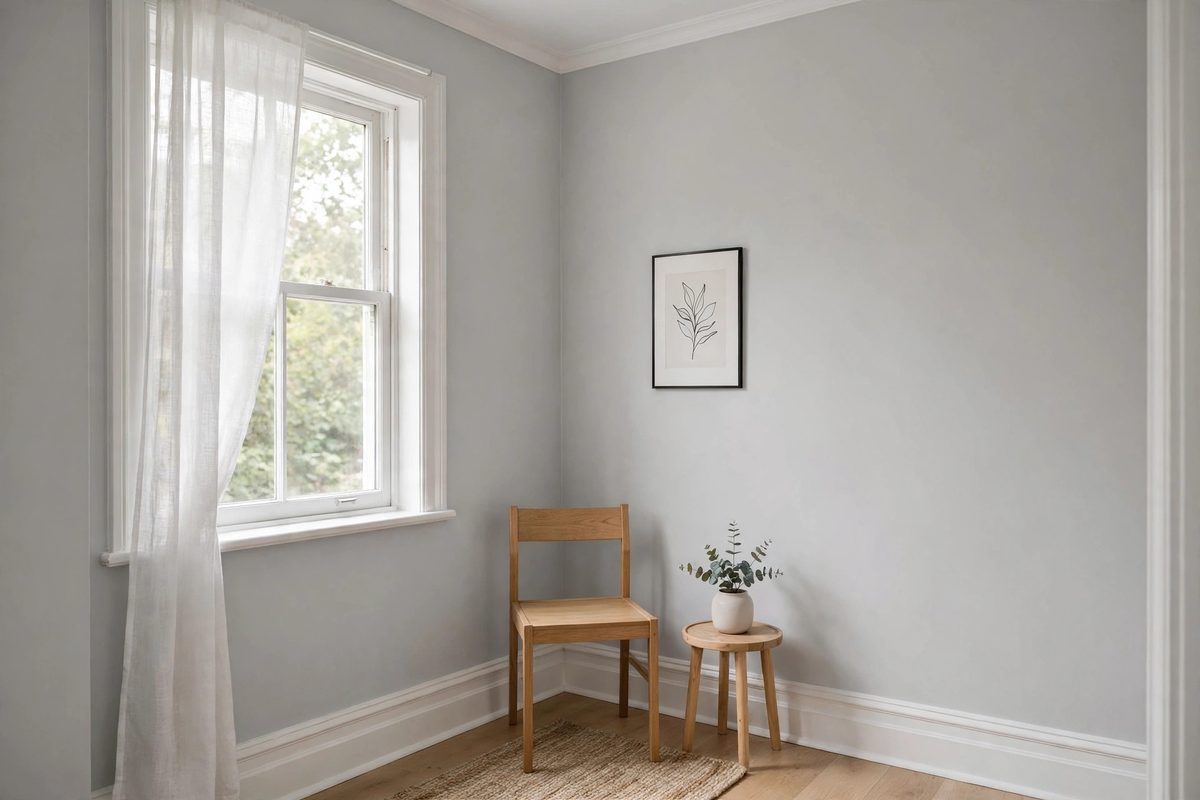
Big Chill (SW 7648) is a light cool gray with an LRV around 62, best for bright rooms where a cool, modern palette is the goal. It reads as a true light gray, not a white, and it pairs with white trim, black accents, and chrome or brushed nickel fixtures. It suits home offices and modern living rooms where a crisp look matters more than warmth.
Because Big Chill is cool, balance it with warm wood, warm lamps, and soft textiles, or the room can feel cold. In a north-facing room, a warmer gray like Classic Gray is usually the better pick. Eggshell finish keeps Big Chill from looking chalky.
How to make it work
Cool grays show wall flaws more than warm whites, so patch and sand walls carefully before painting. A smooth wall makes Big Chill look intentional; a rough wall makes it look unfinished.
10. Warm Off-White: Sherwin Williams Alabaster
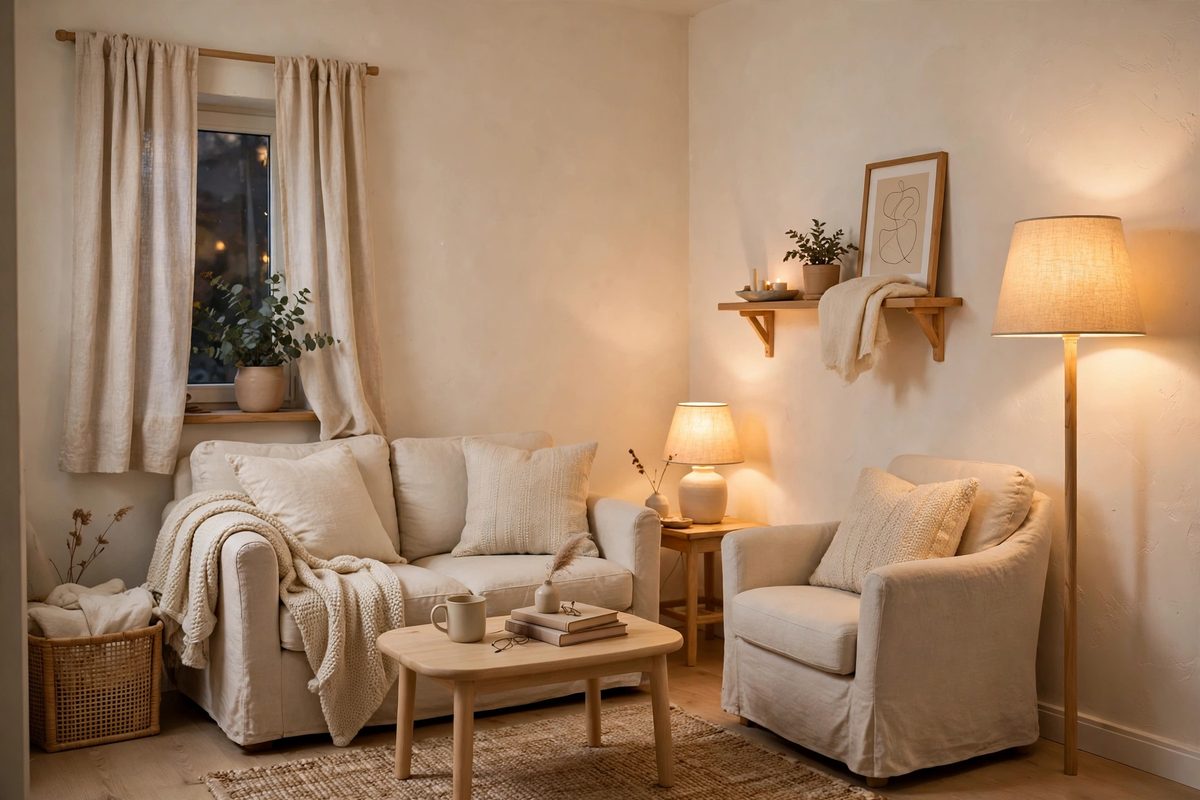
Alabaster (SW 7008) is a warm off-white with an LRV around 82, bright enough for almost any small room, with a soft warmth that keeps it from feeling stark. It is one of the most widely used small-room whites because it works in both north and south light, with both warm and cool furniture, and it rarely surprises once dry.
Use Alabaster on walls in eggshell, trim in semi-gloss, and ceiling in the same color for a continuous, room-expanding effect. It is the shade to pick when you want light walls without overthinking undertones, and it leaves room for colorful furniture and art to carry the style.
How to make it work
Alabaster is the fallback when your top two shades both fail the night test. It is rarely the most exciting choice and almost never the wrong one.
How to Use LRV When Shopping
Check the LRV on the paint brand’s website or ask at the paint desk before buying. Aim for 65 or higher on small-room walls, 80 or higher in dark rooms, and remember that finish affects perceived brightness too: eggshell reflects more light than flat, so a flat paint with an LRV of 70 can look duller than an eggshell paint with an LRV of 65. Test your top two shades in large patches, check them at night, and pick the one that still looks light under your lamps. Light paint works when the number, the undertone, and the finish all point the same way.