12 Vintage Entryway Furniture Ideas for Small Apartments
12 vintage entryway furniture ideas for small apartments, from thrifted consoles and antique benches to hall trees and weathered wood pieces.
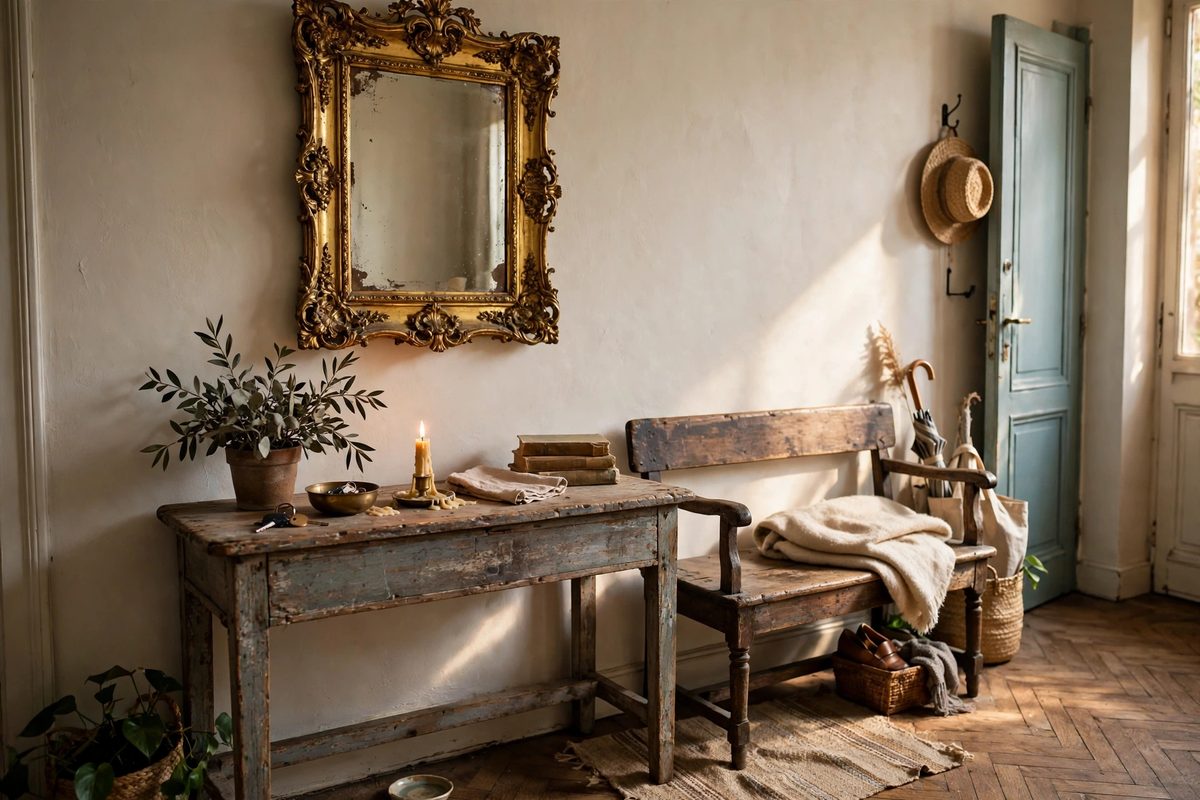
Small apartment entryway with a vintage weathered wood console table, ornate mirror, and antique bench
In This Guide
Vintage furniture was built for small entryways, even though nobody called them entryways back then. Old consoles are narrow, old benches are low, and old coat racks stand on their own feet, which is exactly what a small apartment needs. A thrifted piece costs a fraction of a new one, it is made of solid wood instead of particle board, and it has already survived fifty years of use, so it will survive your apartment too.
These 12 vintage entryway furniture ideas for small apartments are all thrifted, secondhand, or vintage style, and every one of them fits a small entry. The pieces are narrow, low, or freestanding, and none of them needs a drill or a permanent change. For the general entryway plan first, see the small apartment entryway ideas, and for sizing a console in a tight living room, the small living room console table ideas show what fits where.
1. The Thrifted Wooden Console
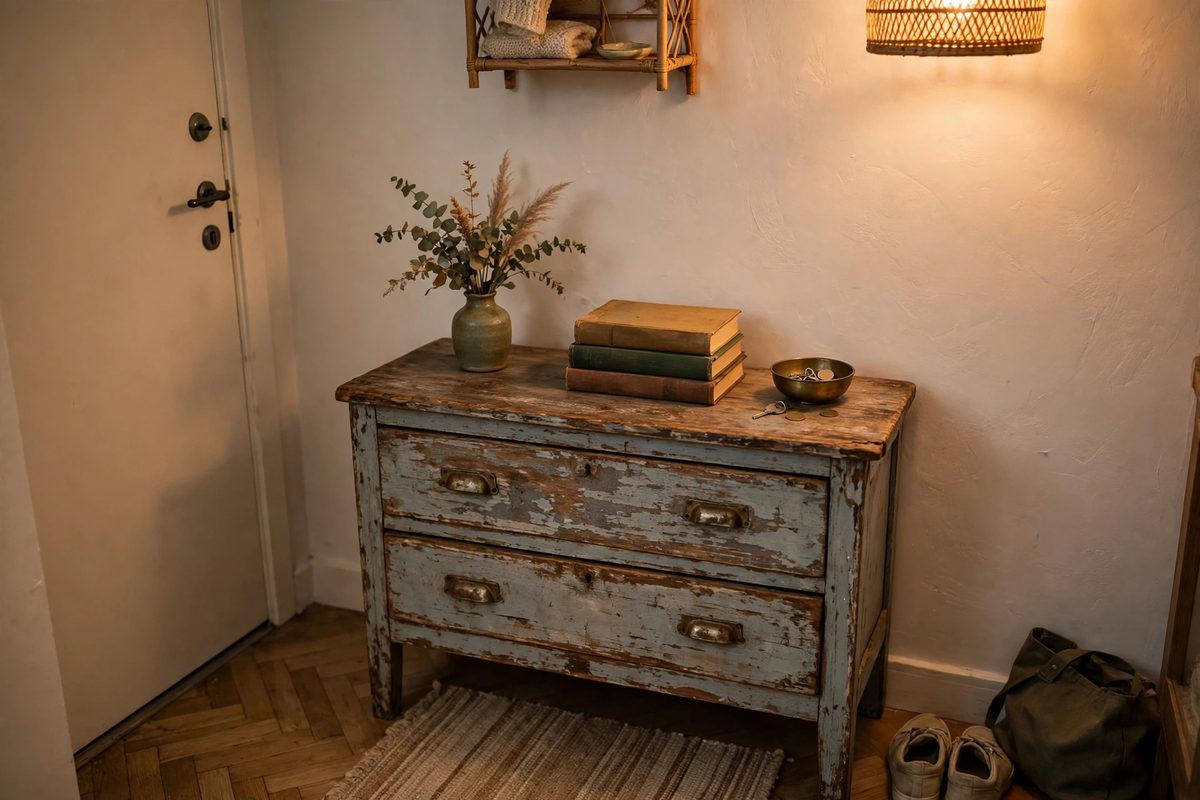
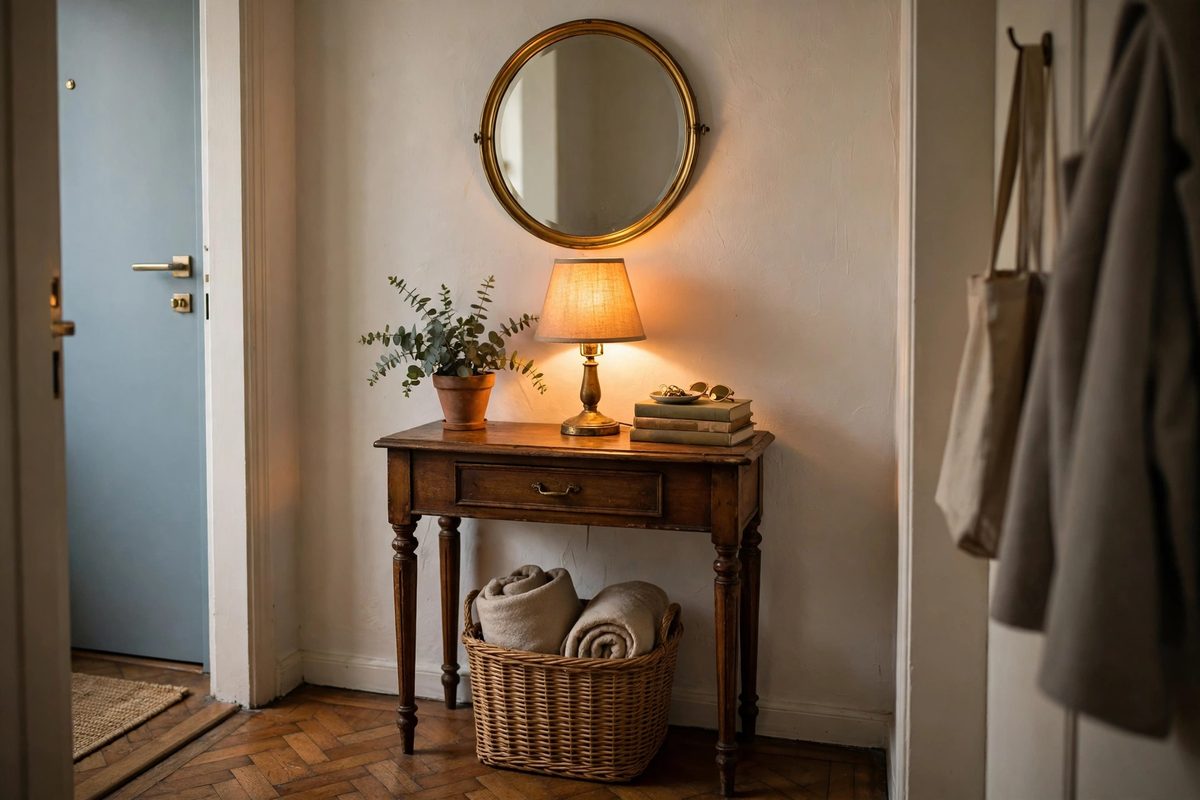
A thrifted wooden console is the single best vintage entryway piece, because it is narrow, useful, and cheap. Look for one 36 to 48 inches wide and 10 to 12 inches deep, which leaves a clear walkway in a small entry. Thrift stores sell them for 20 to 60 dollars, and a solid wood console at that price beats any new flat-pack table.
The console works because it is a landing zone and a display shelf in one piece. Keys go in a small dish on top, mail goes in a basket underneath, and a vase or a framed photo makes it look intentional instead of improvised. Weathered wood hides scuffs, which matters in an entry where bags and shoes bump into everything. Choose a console with a lower shelf if you can find one, since the shelf doubles the storage without adding a single inch of floor space.
How to make it work
Measure the wall before you buy, and leave at least 36 inches of clear walkway in front of the console. Test the console for wobble in the store by pressing down on opposite corners, since old joints loosen over time. If it wobbles, tighten the screws or add a felt pad under the short leg, which fixes most thrifted consoles in five minutes.
2. The Antique Bench With Storage
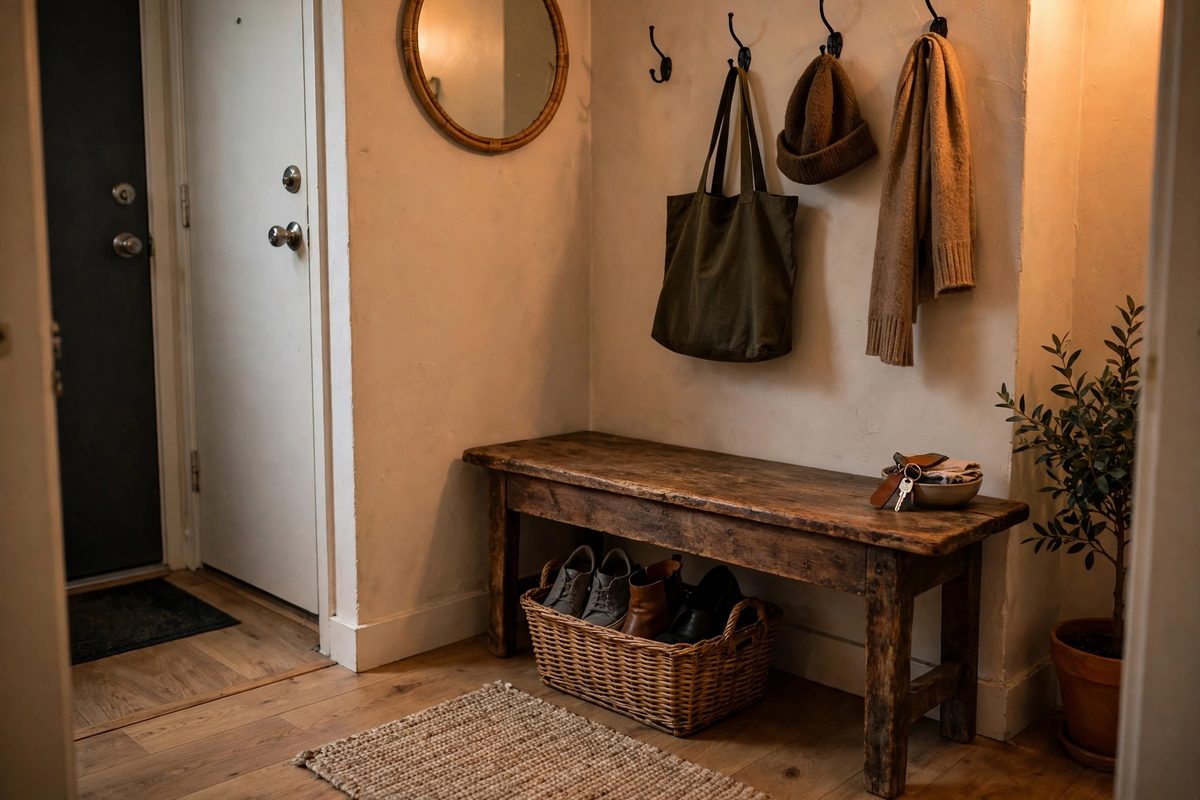
An antique bench gives you a seat and a shoe rack in one piece, and it is the most used furniture in any small entry. Look for a bench 36 to 42 inches long and 14 to 16 inches deep, which fits two people sitting and a row of shoes underneath. Thrifted benches cost 30 to 80 dollars, and a lift-up seat or a lower shelf makes the bench twice as useful.
The bench works because sitting down to put on shoes is the one entryway habit that never changes. A bench without storage is just a seat, but a bench with a lower shelf holds four pairs of shoes, and a bench with a lift-up seat hides gloves, hats, and dog leashes. Put a folded throw on one end of the bench, since it softens the wood and gives guests somewhere to set a bag. The bench is also the first piece in the small entryway bench ideas, which cover sizing in more detail.
How to make it work
Keep the bench at least 4 inches from the wall, so the wall does not scuff when someone sits down hard. Put a boot tray under the bench if you live somewhere wet, since a tray catches the drips that ruin wood floors. If the bench has a lift-up seat, add a soft-close hinge for 5 dollars, so the lid does not slam on fingers.
3. The Vintage Mirror Over the Console
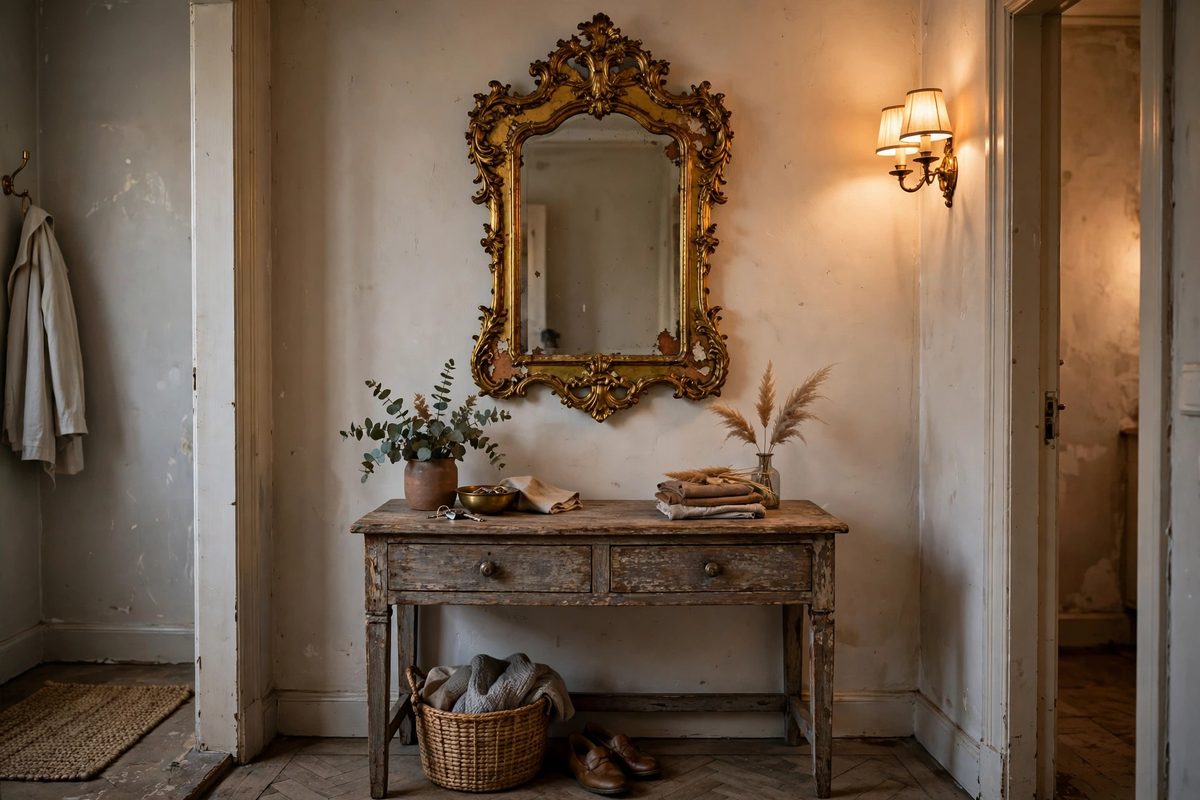
A vintage mirror over the console is the classic entryway pairing, and it makes a small entry feel twice as big. Look for an ornate gilt or carved wood frame 24 to 30 inches wide, which is two thirds the width of a standard console. Thrifted mirrors cost 15 to 40 dollars, and a real vintage frame has a depth and a patina that a new mirror cannot copy.
The mirror works because it bounces light and gives you a last look before you leave. Hang it 6 to 8 inches above the console, so there is room for a lamp or a vase between the two pieces. A mirror with a little foxing, those dark spots in old glass, looks more vintage, not damaged, so do not pass one up for a few spots. The mirror sizing rules match the small entryway mirror ideas, which cover shapes and heights.
How to make it work
Hang the mirror with a hook rated for at least twice its weight, since old frames are heavier than they look. Use a no-drill picture hook if you rent, and test it by hanging a bag of flour of the same weight for a day first. Keep the mirror centered on the console, not on the wall, so the pair reads as one piece of furniture.
4. The Old Coat Rack, Not a Hook Rail
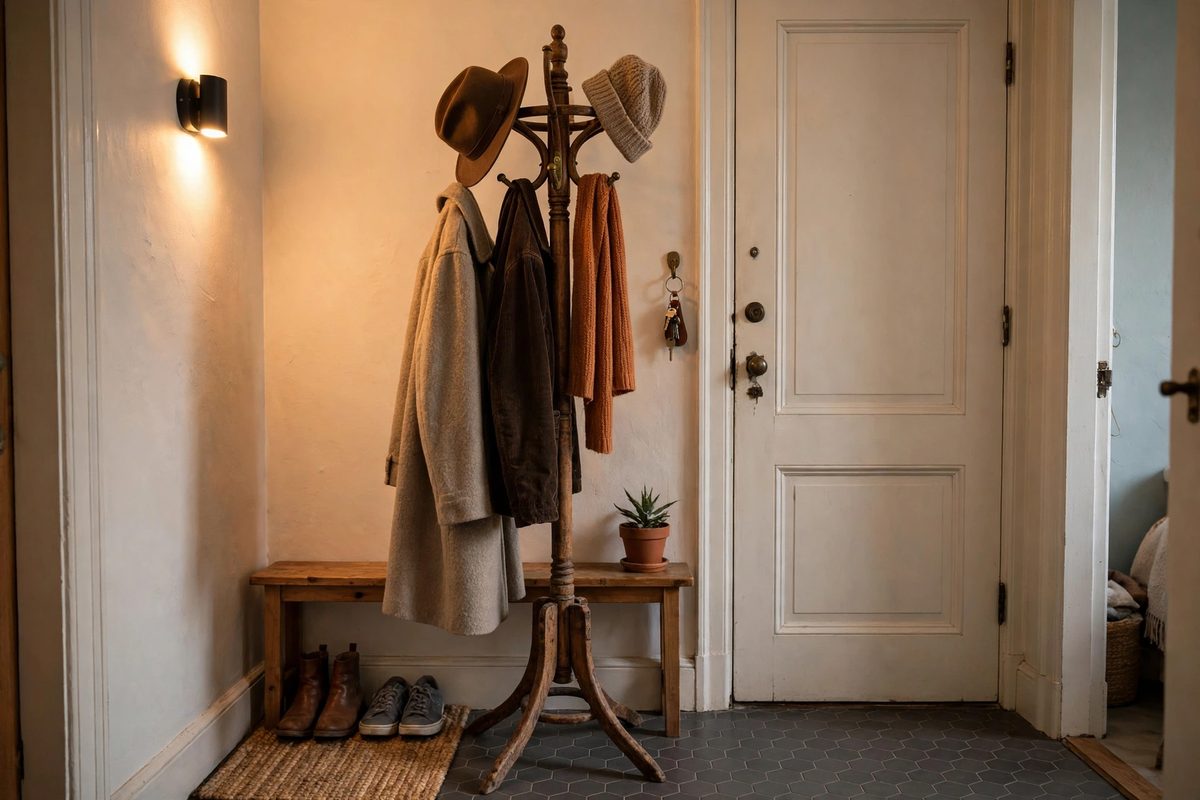
A freestanding vintage coat rack beats a wall hook rail in a rental, because it needs no drilling and it moves with you. Look for a wooden coat tree 68 to 72 inches tall with four to six pegs, which holds four coats, two hats, and a scarf without tipping. Thrifted coat racks cost 25 to 60 dollars, and a solid wood one is heavy enough to stay upright when loaded.
The coat rack works because it is furniture, not hardware. A hook rail screws into the wall and stays behind when you move, but a coat rack goes with you to the next apartment, and it looks better doing it. Put the rack in a corner or beside the console, not in the middle of the walkway, so coats do not brush against everyone who walks past. A round base is more stable than a tripod base in a small space, since nobody trips over a leg.
How to make it work
Load the heaviest coats on the lowest pegs, so the rack stays bottom heavy and does not tip. Put a small rug or a boot tray under the rack, since wet coats drip. If the rack wobbles, tighten the center pole with a wrench, which is the one joint that loosens on old coat trees.
5. The Vintage Hall Tree
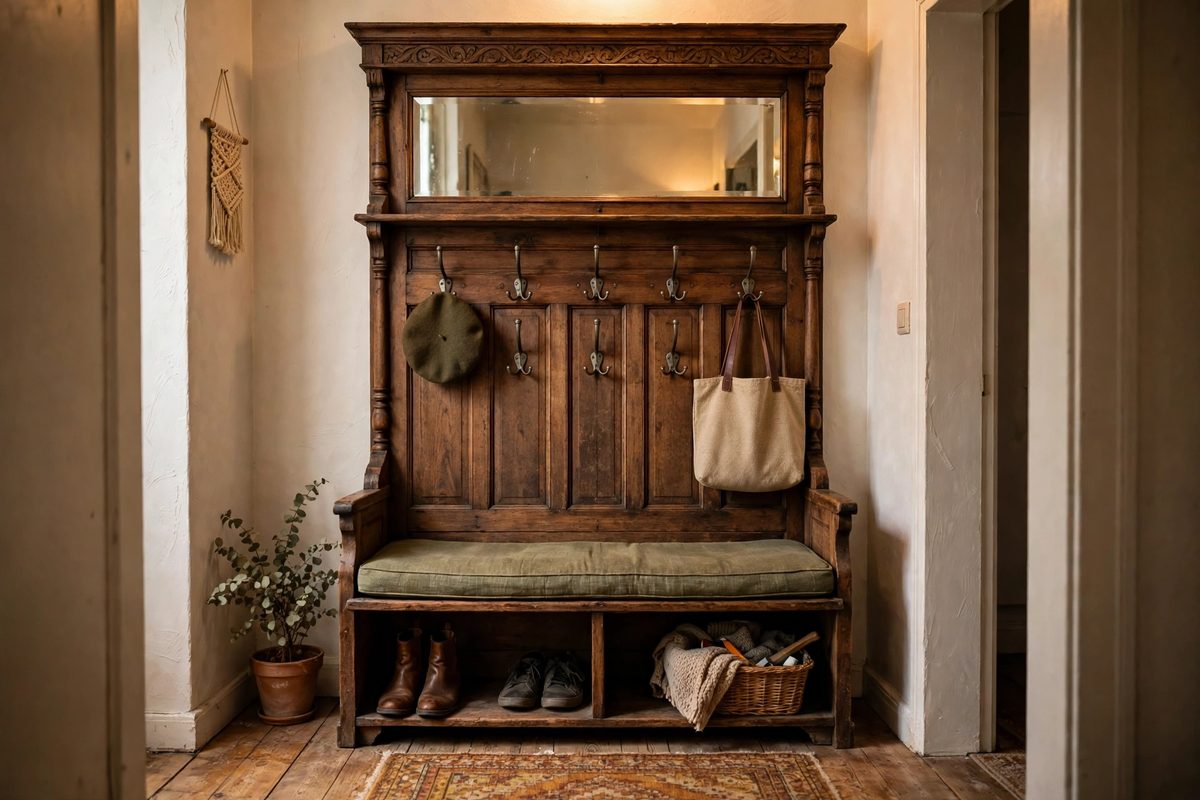
A vintage hall tree is a bench, coat hooks, and a mirror in one piece, and it is the most complete entryway furniture there is. Look for one 36 to 48 inches wide, which is the size that fits a small entry without blocking the door. Thrifted hall trees cost 80 to 200 dollars, which sounds like a lot until you add up a bench, a hook rail, and a mirror bought separately.
The hall tree works because it solves the whole entry in one purchase. The bench holds shoes, the hooks hold coats, and the mirror gives the last look, all in a single footprint. The best hall trees have a lower shelf under the bench and two or three hooks at different heights, so kids and adults both reach one. A hall tree with a mirror is the biggest piece in this post, so measure twice, and if the table part of the setup needs its own plan, the vintage entryway table ideas cover table sizing and styling.
How to make it work
Measure the door swing before you buy, since a hall tree that blocks the door is useless. Keep at least 30 inches of clear space in front of the bench, so someone can sit without blocking the walkway. Anchor a tall hall tree to the wall with a removable strap if you have kids, since a loaded hall tree can tip forward.
6. The Small Vintage Cabinet
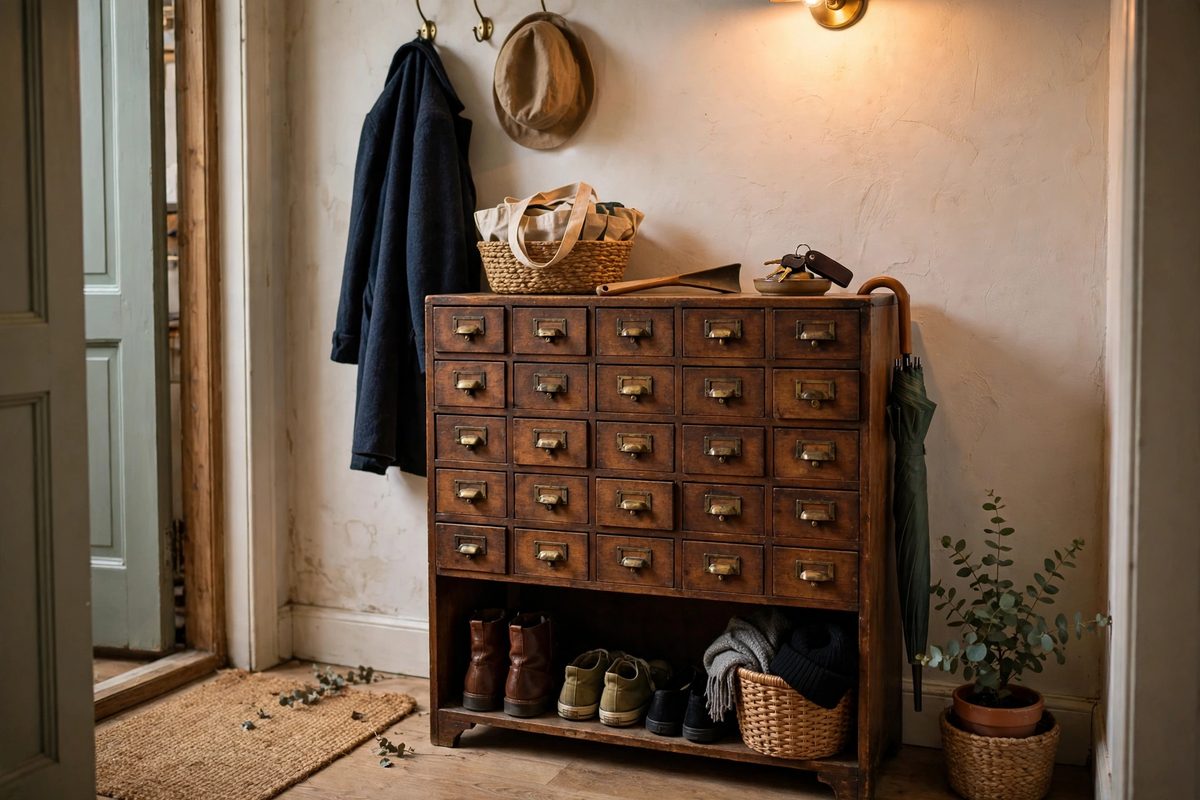
A small vintage cabinet hides the entryway mess that a console puts on display. Look for an apothecary cabinet, a small armoire, or a medicine cabinet 24 to 30 inches wide, which holds shoes, gloves, and cleaning supplies behind closed doors. Thrifted cabinets cost 40 to 100 dollars, and the drawers are the reason to buy one, since a drawer hides more than a shelf ever will.
The cabinet works because a small entry looks bigger when the clutter is behind a door. Shoes on a shelf still read as mess, but shoes in a cabinet read as nothing at all. Use the top of the cabinet like a console, with a small dish for keys and a vase for looks, so the cabinet does two jobs. The same thrifted logic that fills an entryway cabinet also fills a kitchen, and the vintage kitchen ideas show how vintage pieces carry from room to room.
How to make it work
Check that every drawer opens fully before you buy, since old drawers stick in humid apartments. Rub a candle on the drawer runners to fix a sticky drawer, which is the old carpenter trick and it still works. Keep the cabinet 2 inches from the wall, so the doors open without scraping the baseboard.
7. The Vintage Chair in the Entry
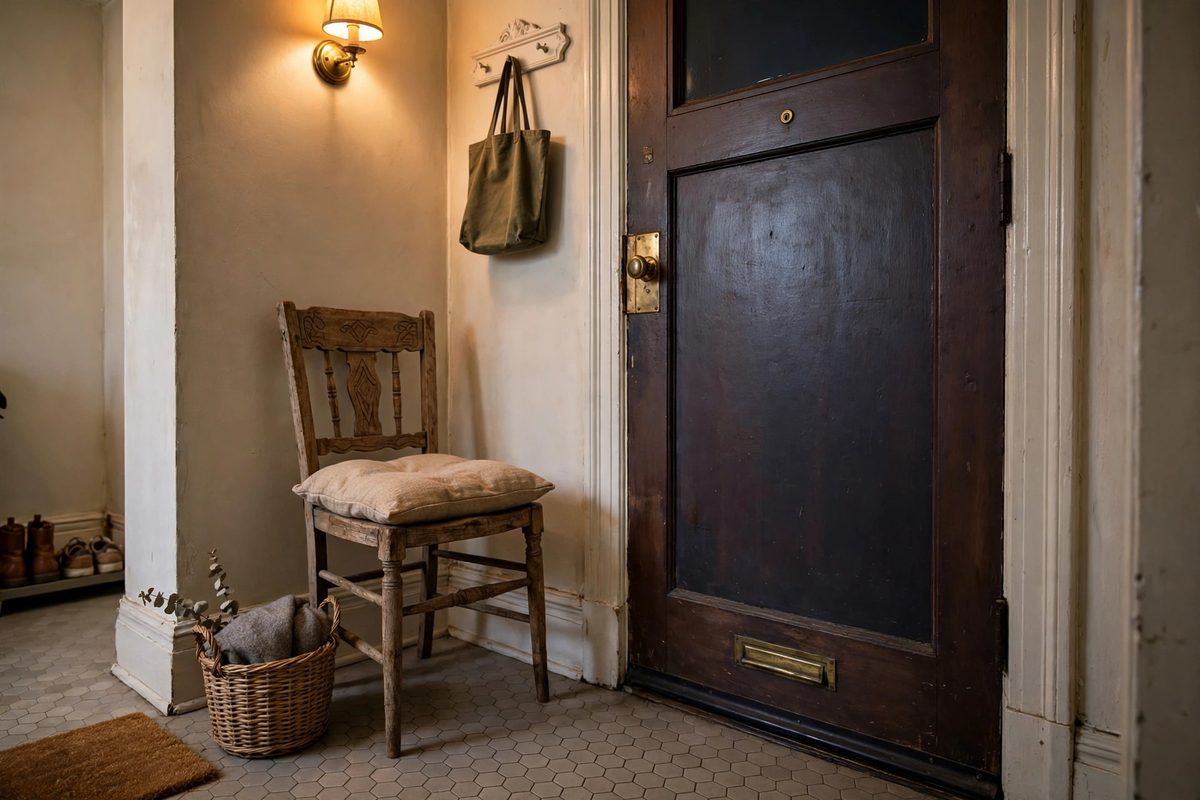
A single vintage chair in the entry is the cheapest seat you will ever buy, and it is the most charming. Look for a solid wood dining chair or a small accent chair for 15 to 40 dollars at a thrift store, and put it beside the door with a cushion on it. The chair is a seat for putting on shoes, a spot for a bag, and a piece of character all at once.
The chair works because it is small, movable, and honest. A chair takes up 18 inches of floor, which is less than a bench, and it moves to the dining table when you need an extra seat. Choose a chair with a solid seat, not a caned one, since a caned seat sags under daily use in an entry. A cushion in a washable fabric keeps the chair comfortable and the wood protected from wet coats.
How to make it work
Put a felt pad under each leg, so the chair slides without scratching the floor. Keep the chair against the wall, not floating in the walkway, so it never blocks the door. If the chair wobbles, tighten the corner blocks under the seat, which is where old chairs always loosen first.
8. The Weathered Wood Shelf
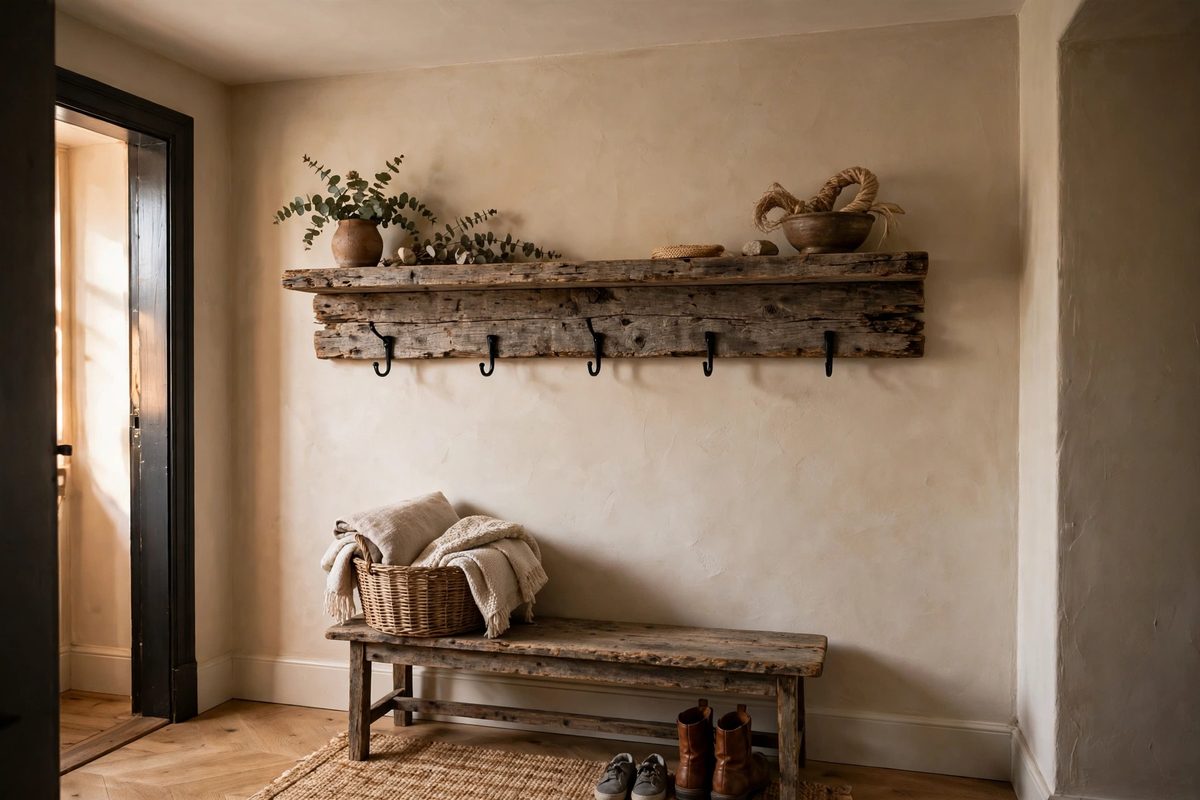
A weathered wood shelf gives you a landing zone when there is no floor space for a console. Look for a reclaimed wood shelf 24 to 36 inches long and 8 to 10 inches deep, which holds keys, mail, and sunglasses without sticking out into the walkway. Reclaimed shelves cost 20 to 50 dollars, and a shelf with hooks underneath holds coats too.
The shelf works because it uses wall space, which is the one thing a small entry always has. A shelf at 60 inches high is above the door handle and below eye level, so it is easy to reach and easy to see. Weathered wood has a grey-brown patina that hides scuffs, and it pairs with any other vintage piece without matching it exactly. Add three hooks under the shelf for 5 dollars, and the shelf becomes a mini hall tree.
How to make it work
Hang the shelf with a no-drill adhesive strip rated for at least 10 pounds if you rent, and test it with a bag of flour first. Keep the shelf at 60 inches high, so it is reachable but out of the way of the door. Put a small tray on the shelf for keys, so they do not slide off the back.
9. The Vintage Umbrella Stand
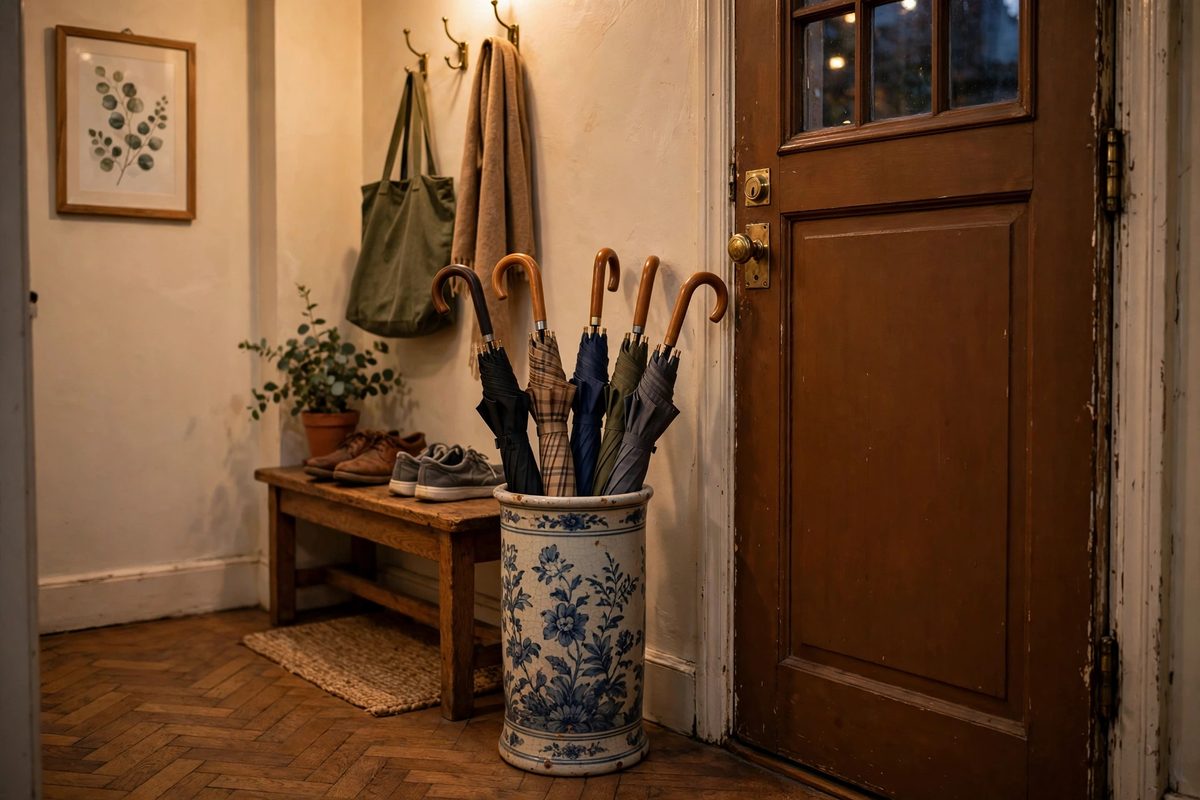
A vintage umbrella stand is a small piece that solves a real problem, which is wet umbrellas on the floor. Look for a ceramic or brass stand 16 to 20 inches tall, which holds three or four umbrellas and catches the drips. Thrifted stands cost 10 to 30 dollars, and a ceramic one is heavy enough that it never tips over.
The stand works because it is the one entryway piece that earns its floor space in the rain. An umbrella on the floor makes a puddle, but an umbrella in a stand makes a display, and a brass stand looks intentional even when it is empty. Put the stand beside the door, not behind it, so you grab the umbrella on the way out and drop it in on the way back. A stand with a drip tray or a removable bottom is worth 5 dollars more, since it is easier to empty.
How to make it work
Put a small absorbent mat under the stand if it has no tray, so drips do not reach the floor. Keep the stand within arm’s reach of the door, since an umbrella stand across the room never gets used. If the stand is ceramic, put a felt pad under it, so it does not chip the floor when it gets bumped.
10. The Old Dresser as an Entry Console
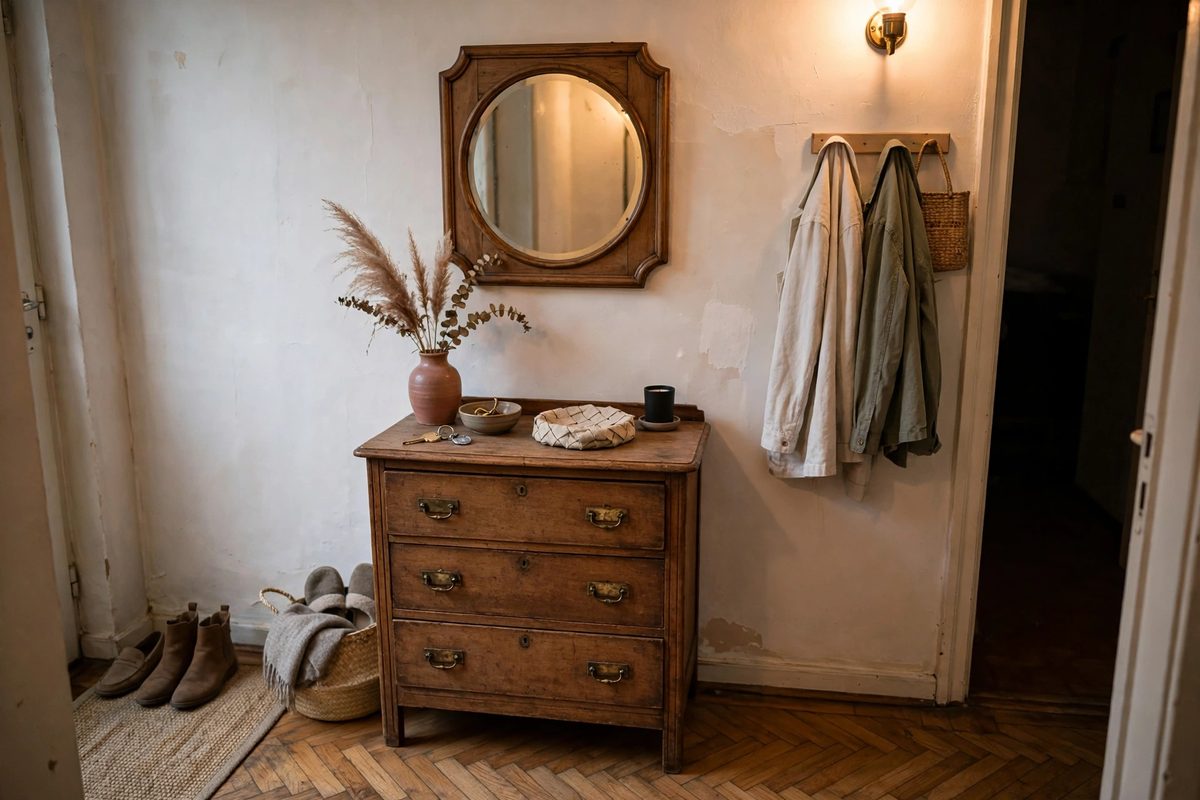
A small old dresser makes a better entry console than a console table, because it has drawers. Look for a dresser 30 to 36 inches wide and 16 to 18 inches deep, which is the size of a large console with three or four drawers built in. Thrifted dressers cost 40 to 90 dollars, and the drawers hold gloves, hats, scarves, and dog gear out of sight.
The dresser works because it is a console with a secret. Keys go on top, mail goes in the top drawer, and winter gear goes in the bottom drawers, so the entry stays clear all year. A dresser with a mirror above it reads as a complete entryway set, and a small lamp on top makes it feel like a room, not a hallway. If a table fits your entry better than a dresser, the vintage entryway table ideas cover table sizing and styling for the same space.
How to make it work
Measure the dresser depth before you buy, since a dresser deeper than 18 inches eats the walkway. Keep the top drawer for the things you grab daily, and the bottom drawers for seasonal gear. If the drawers stick, rub a candle on the runners, which fixes most old dressers in two minutes.
11. The Vintage Shoe Bench
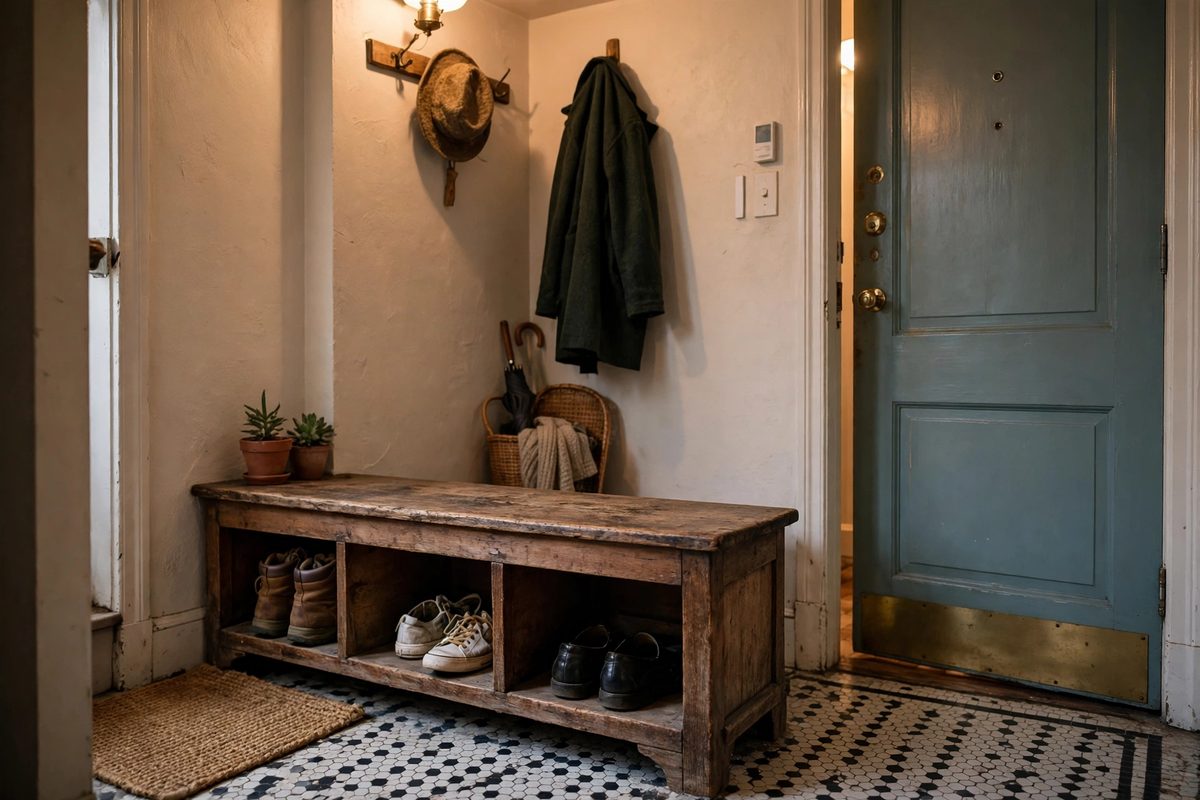
A vintage shoe bench is a low bench with cubbies or a shelf for shoes, and it is the entryway piece that ends the shoe pile. Look for a bench 36 to 48 inches long with two or three cubbies, which holds six to nine pairs of shoes. Thrifted shoe benches cost 40 to 100 dollars, and a low bench doubles as a seat for kids.
The shoe bench works because it makes putting shoes away easier than leaving them on the floor. A shoe on the floor is a trip hazard, but a shoe in a cubby is out of the way, and a bench invites you to sit while you take them off. Put a basket on one cubby for the throw blankets that end up in the entry, and the blanket storage ideas show which baskets fit a bench cubby. Keep one cubby empty, so guests always have a spot.
How to make it work
Put a boot tray under the bench in wet months, so the floor stays dry. Keep the bench 4 inches from the wall, so shoes do not scuff the paint when they slide in. Label the cubbies if you share the apartment, since a labeled cubby is the only shoe system that actually sticks.
12. The Mix, Not the Match
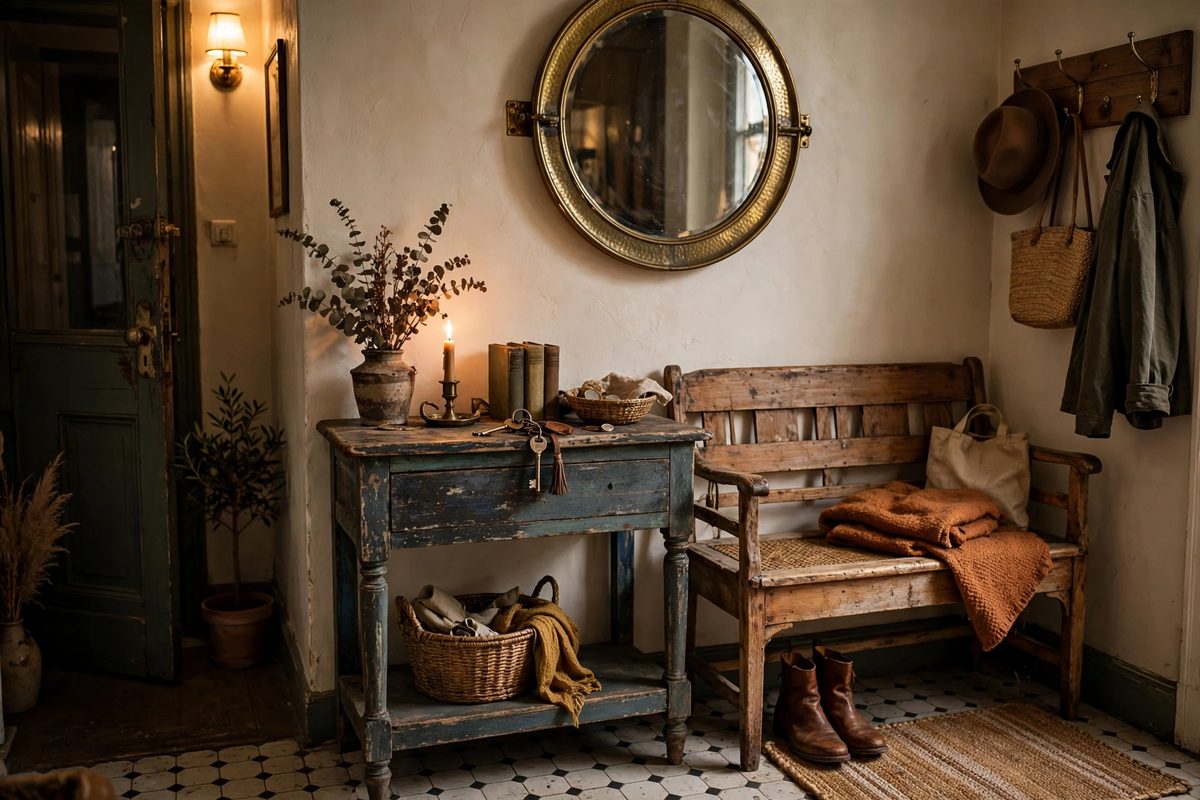
The best vintage entryways mix pieces instead of matching them, because a matched set looks like a furniture showroom and a mixed set looks like a home. Pair a weathered console with a gilt mirror, a dark bench with a light rug, and a brass lamp with a ceramic vase. The pieces do not match, but they share a warmth, and that warmth is what makes the entry feel vintage instead of just old.
The mix works because vintage pieces were never made as sets. A console from the 1940s, a mirror from the 1960s, and a bench from the 1970s have nothing in common except age and solid wood, and that is enough. Keep one wood tone dominant and one metal repeated, so the mix has a thread running through it. One dark wood piece, one light wood piece, and brass repeated twice is a mix, while five different woods and three different metals is a mess.
How to make it work
Pick the biggest piece first, usually the console or the hall tree, and let its wood tone set the dominant color. Repeat one metal, like brass or black iron, in at least two places, so the eye finds a pattern. If a piece feels wrong, move it to another room for a week before you sell it, since a piece that clashes in the entry often works in the bedroom.