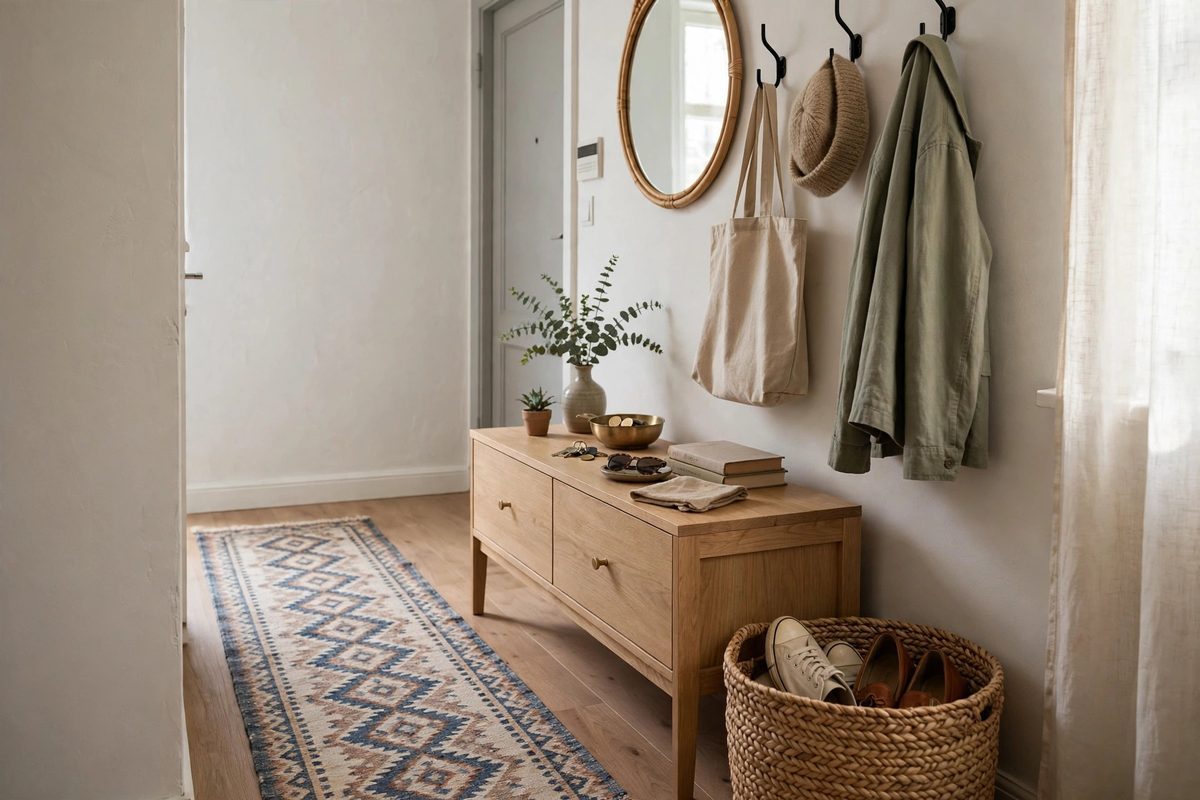
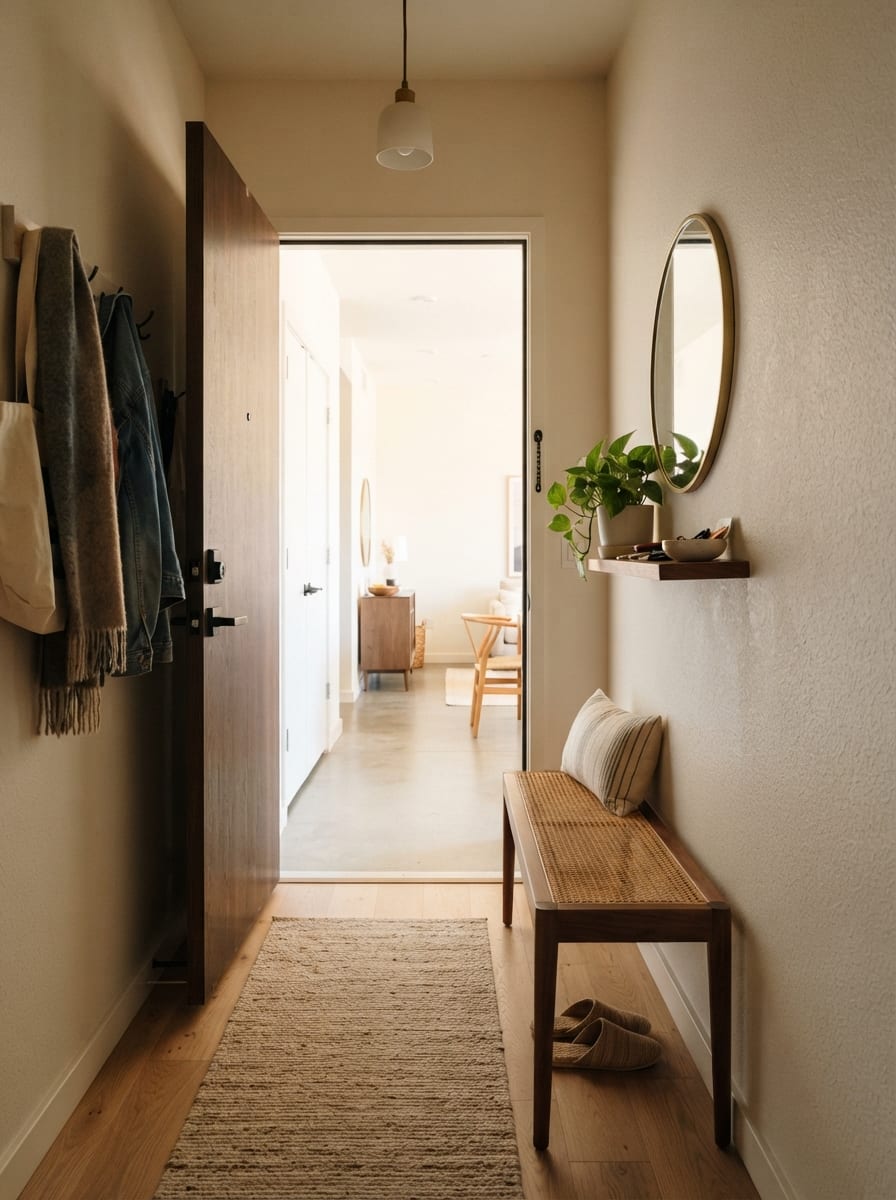
10 Small Entryway Mirror Ideas That Make the Entrance Feel Bigger
Ten small entryway mirror ideas that bounce light, double the sense of space, and fit narrow halls without crowding the door swing.
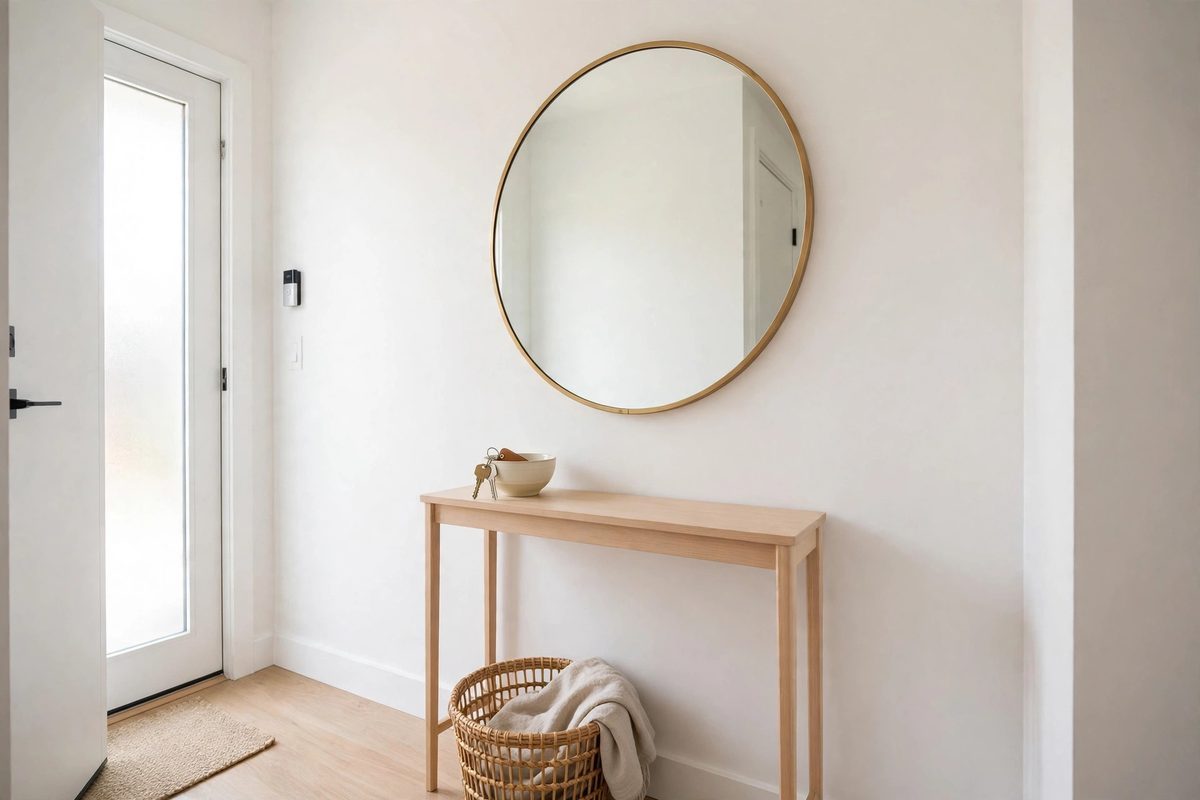
Bright small apartment entryway with a large round mirror above a slim console table and a woven basket below
In This Guide
A small entryway can feel cramped the moment you walk in, especially when the front door opens straight into a wall or a dark hallway. A mirror is one of the cheapest and fastest fixes for that problem. It bounces light around, doubles whatever view it reflects, and gives you a last glance before you leave.
The trick is picking the right mirror for the space you actually have. A mirror that is too big overwhelms a narrow hall. One hung too high reflects the ceiling instead of the room. And a heavy frame on a tiny wall can make the entrance feel more crowded, not less.
Before you buy anything, measure your wall, check the door swing, and stand where guests stand when they walk in. Notice what the mirror would reflect. A mirror facing a window doubles daylight. A mirror facing a blank wall just doubles blankness.
These 10 ideas cover the placements that work best in real apartments, from leaners that need no drilling to cabinets that hide storage. If your entrance needs more than a mirror, pair these with small kitchen island alternatives for open-plan spaces, or browse small living room wall decor ideas for the room just beyond the door.
1. Full-Length Leaner by the Door
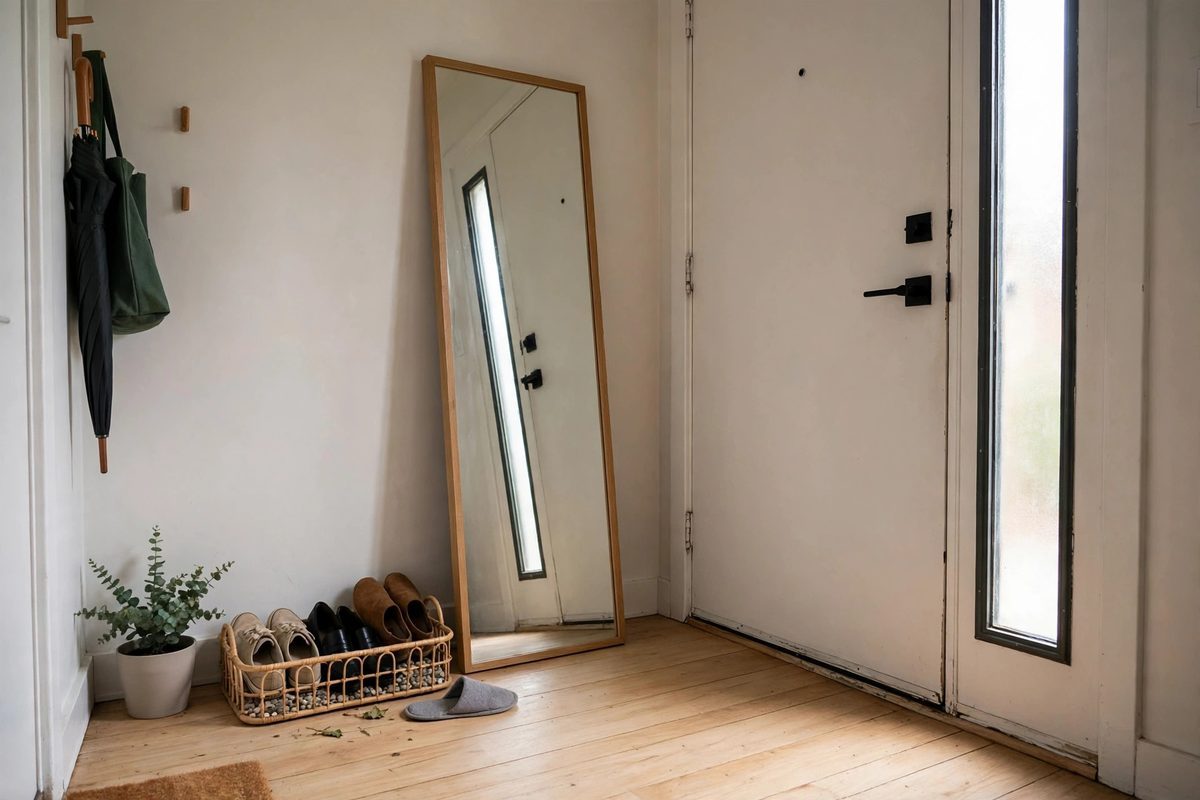
A full-length mirror leaned against the wall beside the door does two jobs at once: it gives you a head-to-toe check on the way out, and its tall shape stretches the wall visually. Leaners work well in rentals because most need no drilling at all, just a wall anchor or anti-tip pad for safety.
Choose a leaner around 150 to 170 cm tall and 40 to 50 cm wide for a narrow entry. Anything wider starts to eat into the walkway. Place it on the wall beside the door, not on the door wall itself, so the door can still swing fully open.
How to make it work
Angle the top slightly toward the wall, about 5 to 10 cm out at the base, and secure the top with a discreet wall anchor. Keep the floor in front of it clear so you can actually step back and see yourself. A small tray for keys on a nearby surface keeps the area useful without cluttering the reflection.
2. Round Mirror Over the Console
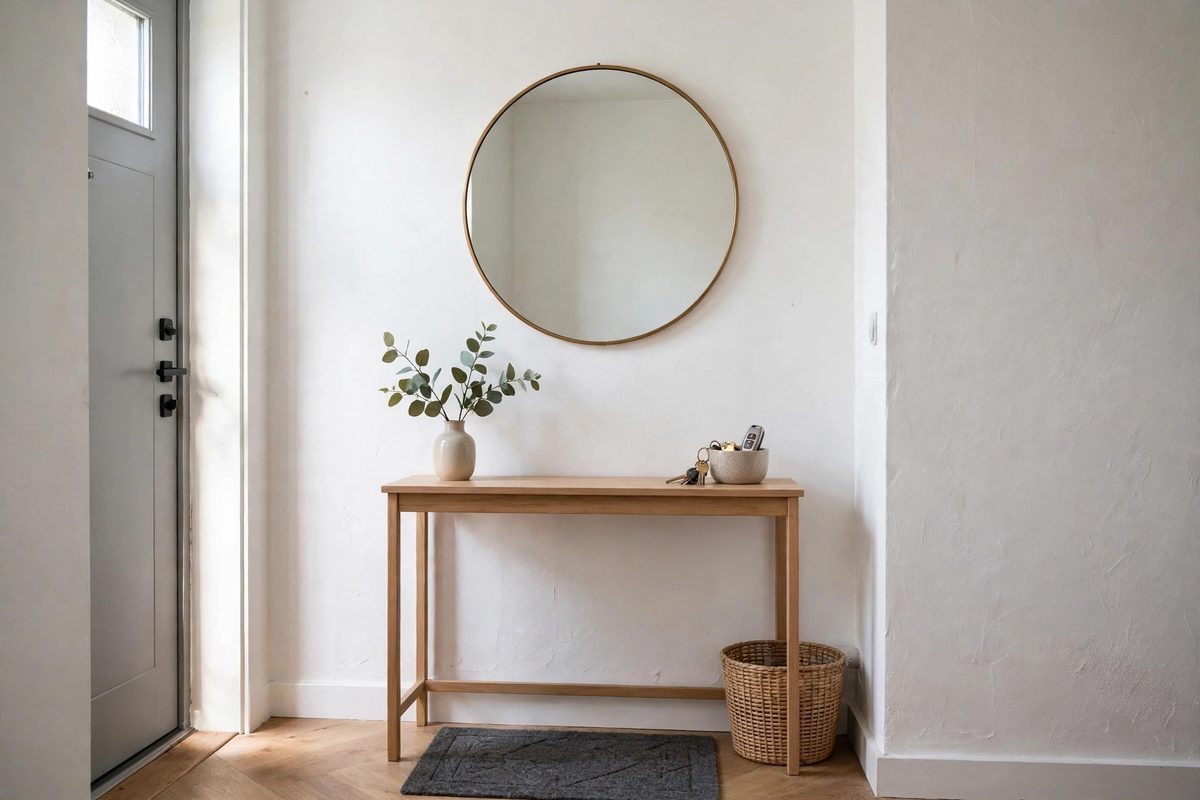
A round mirror softens the hard lines of a console table and a rectangular doorway, which is why this pairing shows up in so many small entries. The curved shape draws the eye up and out, and because a circle has no corners, it reads lighter than a square mirror of the same width.
Size matters here. The mirror should be about two-thirds the width of the console, usually 50 to 60 cm across for a 90 cm console. Hang it 15 to 20 cm above the tabletop so there is room for a small vase or a stack of mail without blocking the glass.
How to make it work
Center the mirror on the console, not on the wall, since the table is what anchors it visually. If your console sits off-center because of a radiator or door frame, center the mirror on the console anyway. Add one low object, like a bowl for keys, and leave the rest of the surface mostly bare so the reflection stays clean.
3. Arched Mirror for Low Ceilings
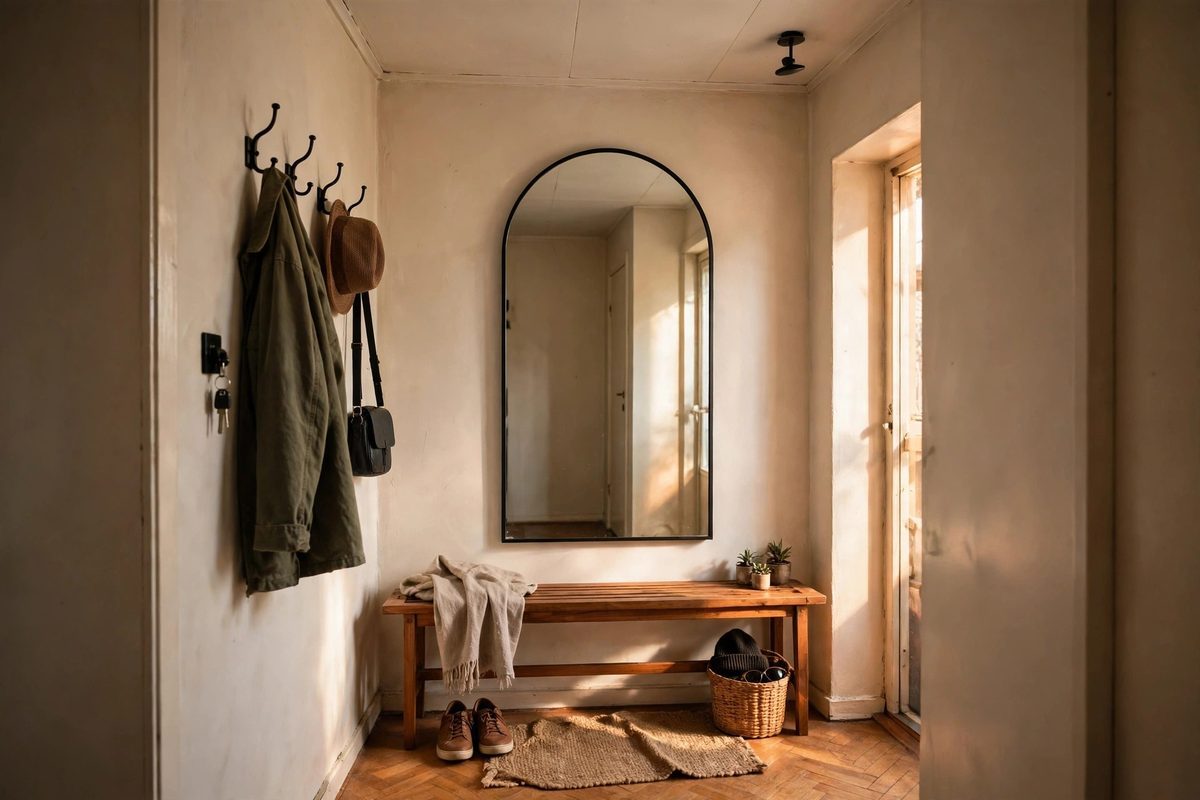
An arched mirror adds height without adding width, which makes it ideal for entries with low ceilings or a short wall beside the door. The arch echoes a doorway shape, so the eye reads it as architecture rather than decoration, and the room feels taller than it is.
Arched mirrors come in sizes from 45 cm wide up to 90 cm, and for a small entry the sweet spot is usually 50 to 60 cm wide and 120 to 150 cm tall. A slim black or wood frame keeps the shape as the star. A thick ornate frame fights the clean line of the arch.
How to make it work
Hang the arch so its center sits at roughly your eye level, about 150 to 160 cm from the floor. If it hangs above a bench, leave 20 to 25 cm between the bench and the bottom of the frame. Pair it with a narrow bench or a single hook rail rather than a deep console, so the vertical line of the mirror stays unbroken.
4. Mirrored Wall Panel Grid
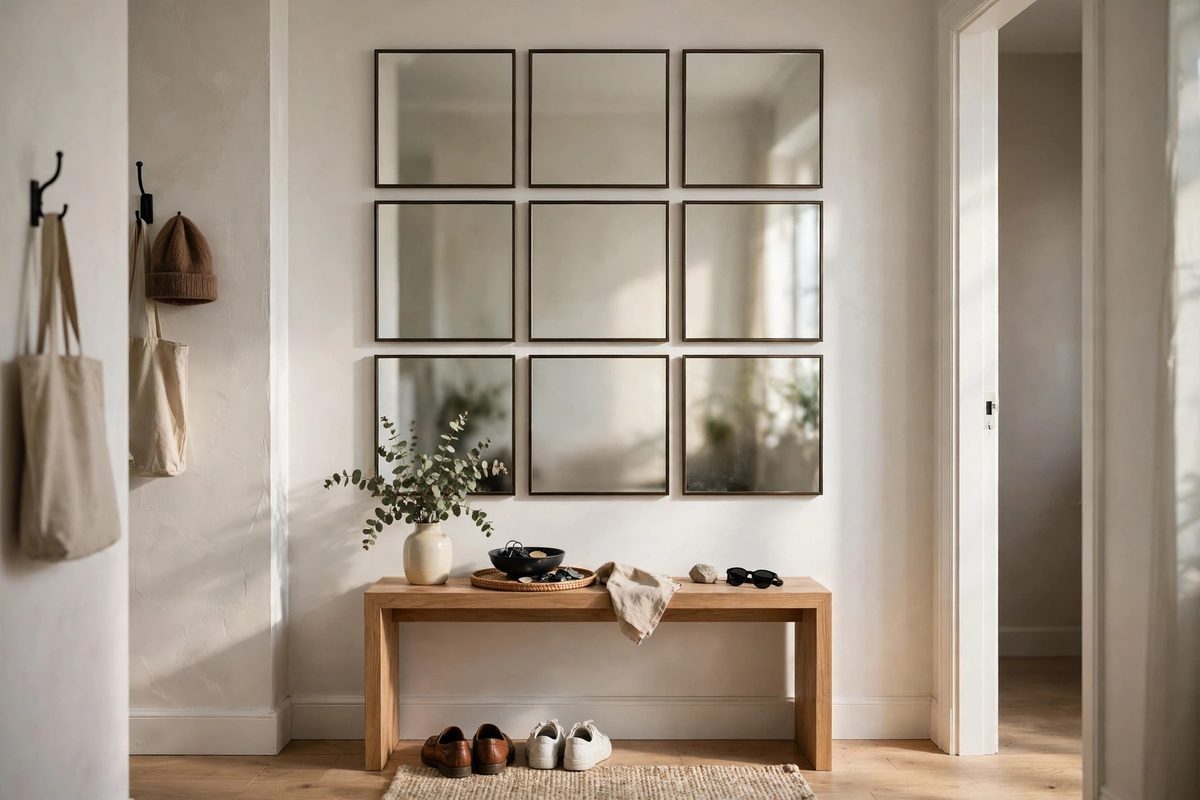
A grid of small square mirror tiles turns a plain entry wall into something that reads like a window, and it costs far less than one huge custom mirror. Six to nine tiles of 30 cm each cover a good stretch of wall, and the seams between them add a graphic rhythm that suits modern apartments.
This idea works best on the wall you face when you enter, where the grid catches light from the front door or a nearby window. It works less well on a side wall you only glimpse, where the effect is lost. Stick-on tiles are renter friendly, but check that your wall paint can handle removal, and use proper adhesive tiles rather than the flimsiest peel-and-stick versions, which can warp.
How to make it work
Map the grid on paper first, with 2 to 3 cm gaps between tiles for a clean, intentional look. Start from the center and work outward so the grid stays balanced even if the wall is not perfectly square. Step back often while placing tiles, since a grid that looks fine up close can drift sideways across a whole wall.
5. Mirror With a Slim Shelf
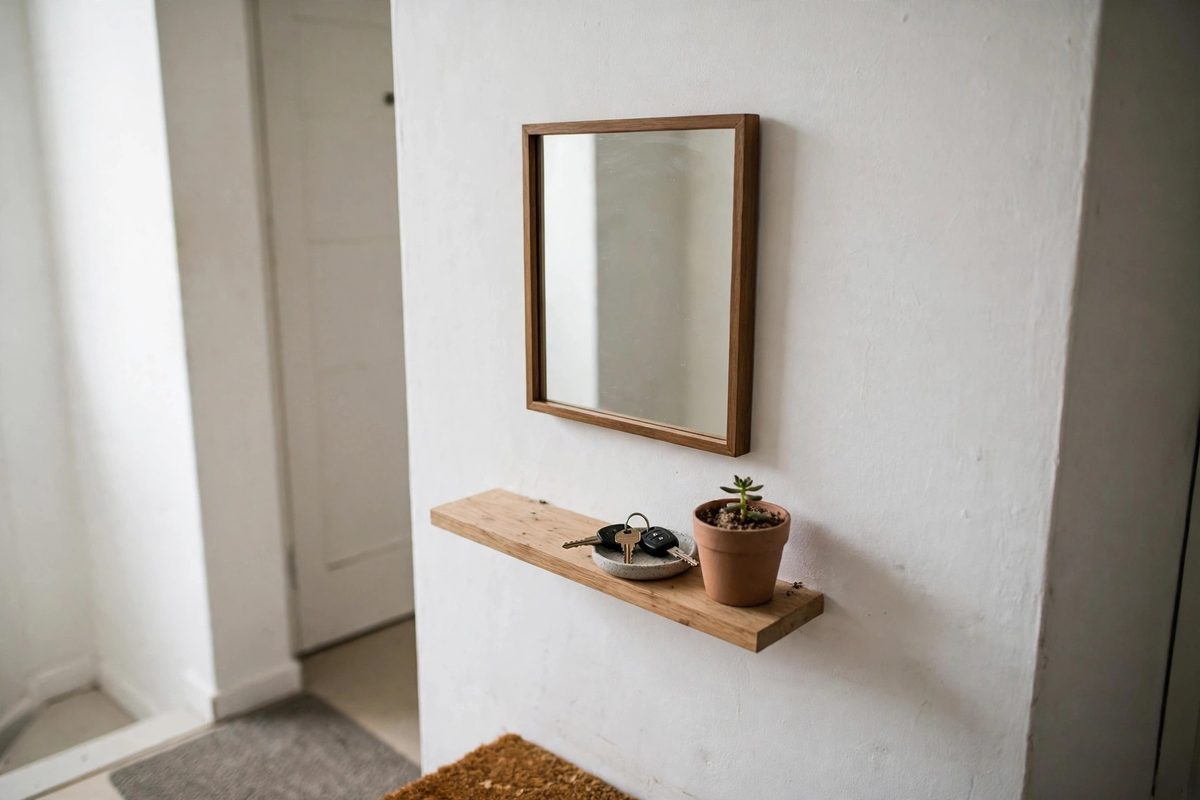
A mirror with a built-in shelf solves the classic small-entry problem: nowhere to put your keys, sunglasses, and mail. The shelf is usually only 10 to 15 cm deep, so it holds the essentials without jutting into the walkway the way a console table does.
Look for designs where the shelf is part of the frame rather than an add-on basket, since integrated shelves sit flatter against the wall. A shelf that runs the full width of the mirror looks tidier than a tiny ledge that only holds one item. Keep the shelf to three or four small things at most, or the mirror starts reflecting clutter.
How to make it work
Mount the mirror at a height where the shelf lands around 110 to 120 cm from the floor, easy to reach without bending. Put a tiny dish on the shelf for keys so small items do not slide off. If the shelf is wood, match it roughly to your door or floor tone so it blends in rather than adding another color to a small space.
6. Oversized Mirror Opposite a Window
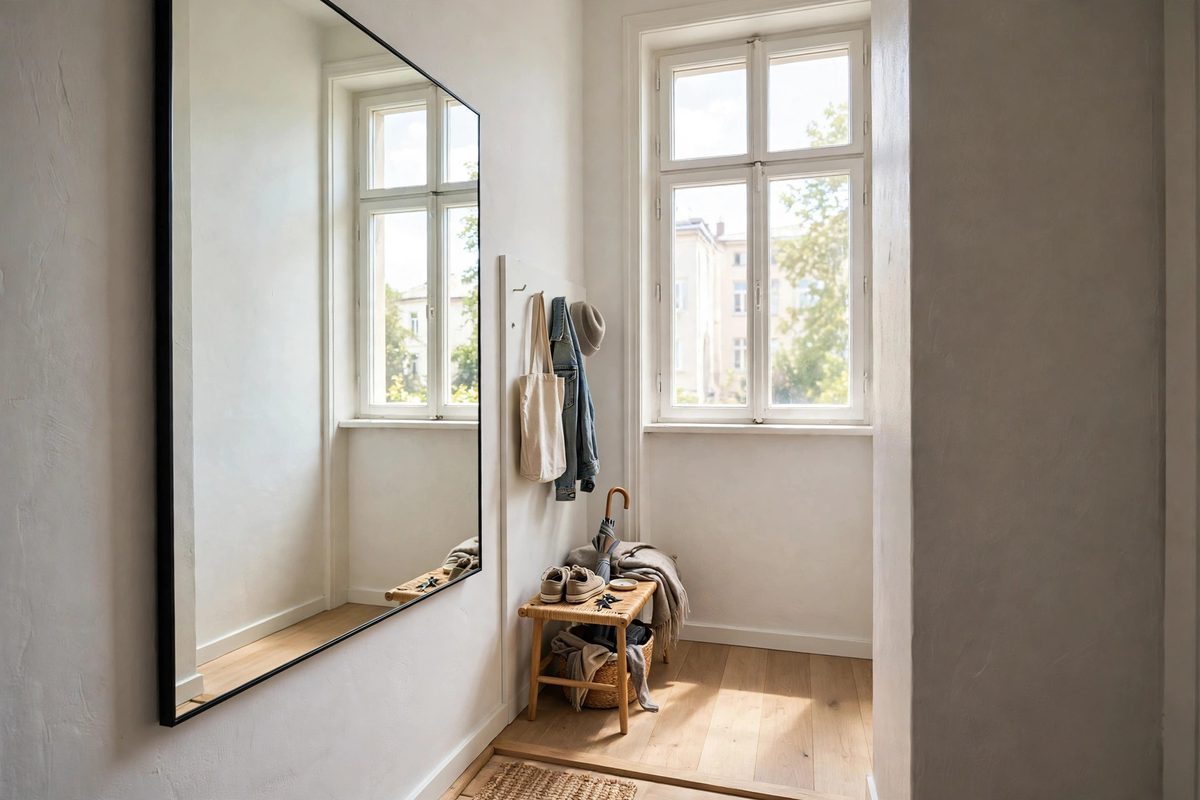
If your entry has a window on one wall, even a small one, hanging a large mirror on the opposite wall is the single most effective way to make the space feel bigger. The mirror doubles the daylight and the view, so the entry reads as if it has two windows instead of one.
This placement needs a mirror at least 70 cm wide to work well. A small mirror opposite a window just makes a bright rectangle on the wall. A big one creates a genuine sense of depth. Keep the frame thin and simple, since a heavy frame shrinks the reflective area you are paying for.
How to make it work
Stand at the entry and check what the mirror reflects from different angles, not just straight on. You want sky, greenery, or a bright room in the reflection, not the inside of a closet door. If the opposite wall is broken up by a door frame, center the mirror on the largest uninterrupted stretch and accept a slight offset.
7. Antique Brass Frame for Warmth
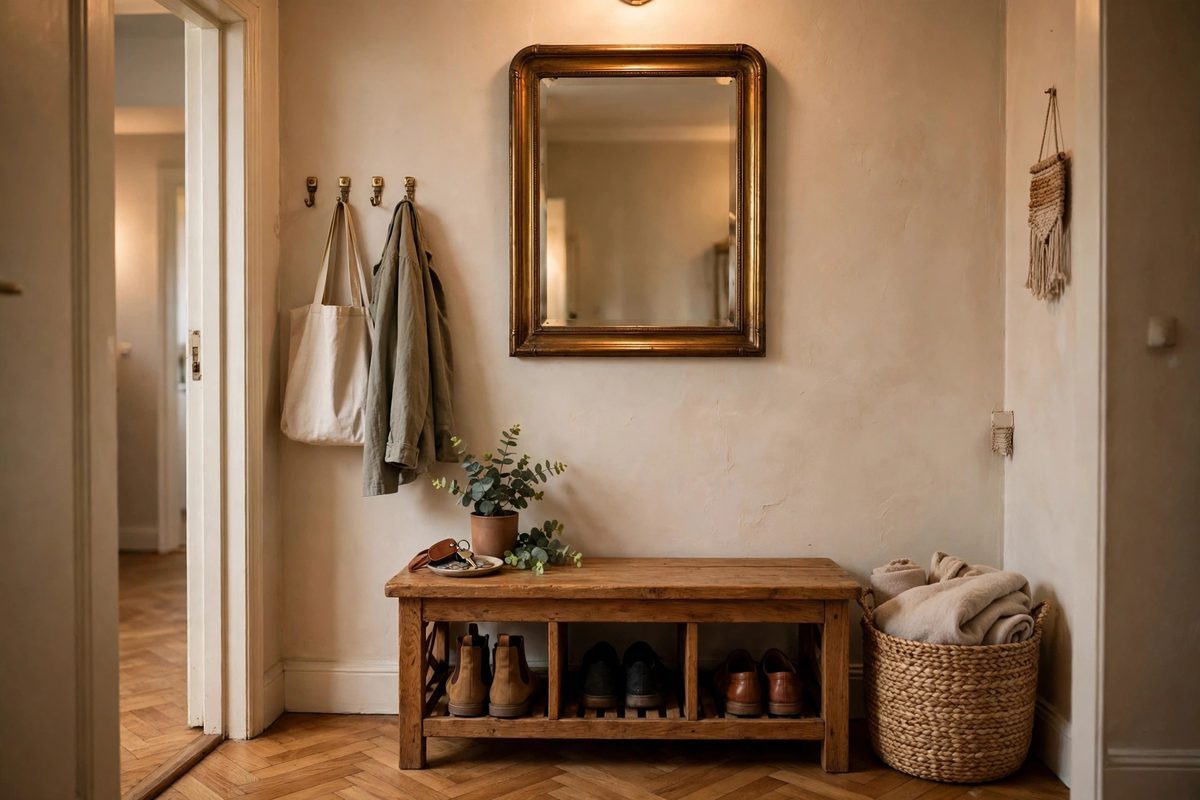
Many small entries feel cold because they are all white walls, white doors, and pale floors. A warm brass frame adds a single note of warmth without repainting anything, and brass pairs well with wood tones, black hooks, and woven baskets.
Antique or brushed brass reads softer than shiny gold, which can look harsh under entry lighting. A frame 2 to 4 cm wide is enough to register as a warm accent. Go wider and the frame starts to dominate a small wall. Real brass costs more, but a well-made brass-finish frame gives the same effect for a fraction of the price.
How to make it work
Echo the brass once more in the entry, with a hook, a door handle, or a small tray, so the frame looks intentional rather than random. Keep other metals in the entry to a minimum. Mixing brass, chrome, and black hardware in a space this small quickly looks accidental.
8. Two Small Mirrors Instead of One Big One
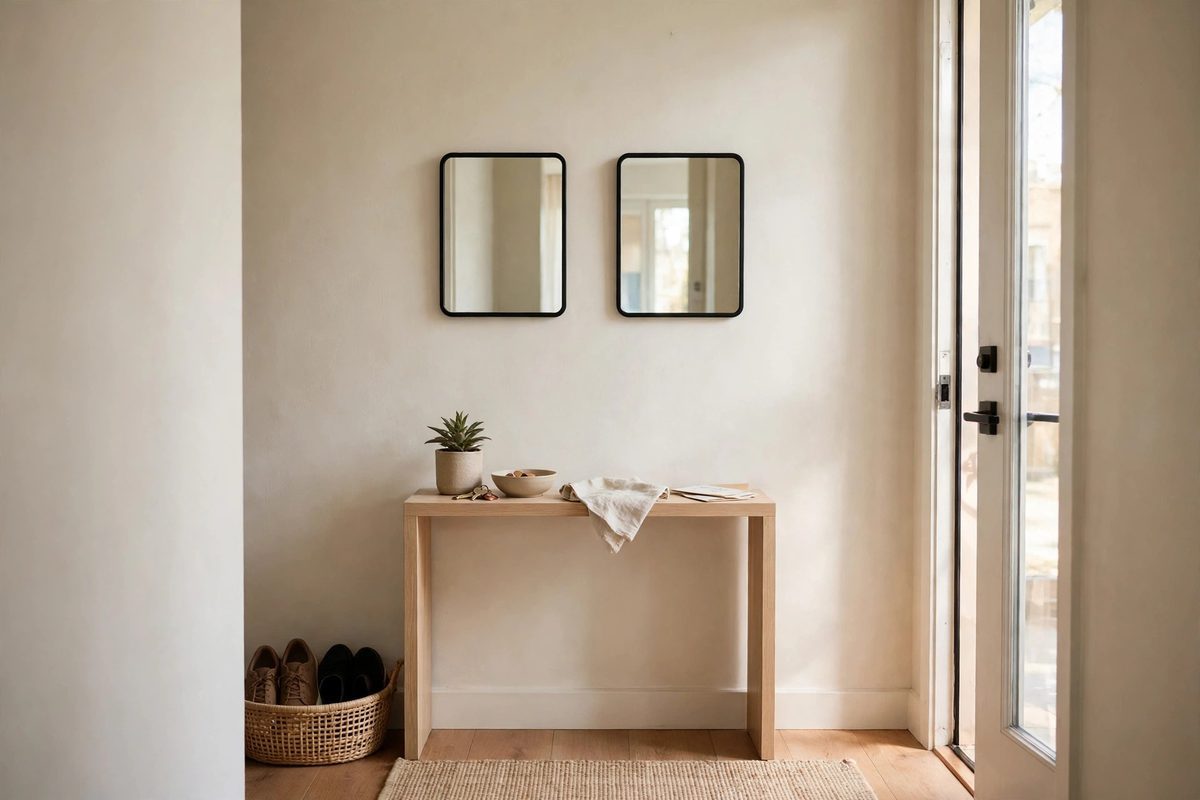
When a wall is broken up by a light switch, a thermostat, or a narrow door frame, one big mirror may not fit. Two smaller matching mirrors hung side by side solve the problem and add a pleasing symmetry that a single off-center mirror cannot.
Use two mirrors of the same size, usually 30 to 40 cm wide each, hung with 8 to 12 cm between them. Hang them at the same height, with their centers at eye level. Mismatched heights are the most common mistake here, and the eye catches it instantly.
How to make it work
Use a simple paper template: trace each mirror on paper, tape the templates to the wall, and live with them for a day before drilling. Check the pair from the front door, since that is the angle most people see first. If one mirror reflects something ugly, like a fuse box, shift the pair slightly rather than forcing perfect symmetry.
9. Mirror Cabinet That Hides Storage
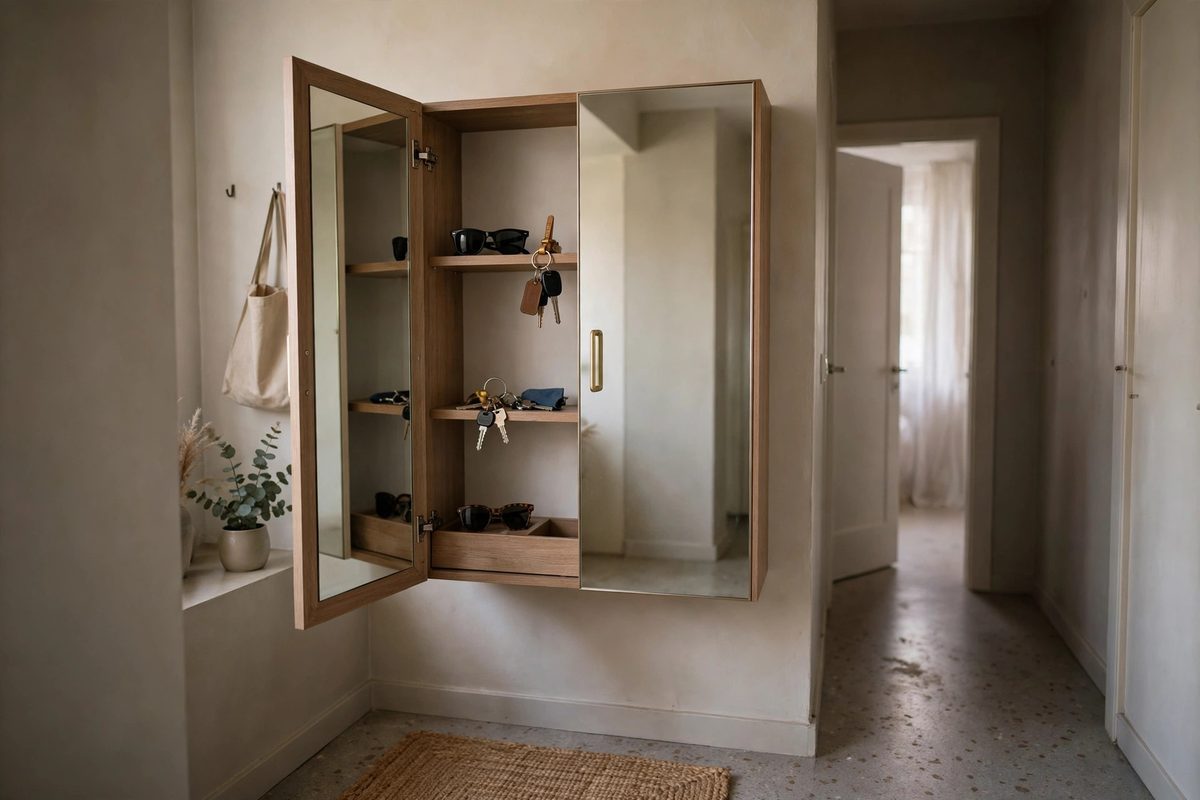
A mirrored cabinet gives you a full mirror on the outside and hidden storage on the inside, which is gold in an entry with no closet. Keys, sunglasses, dog leads, sunscreen, and spare masks all disappear behind the glass, and the entry stays tidy with zero extra furniture.
Shallow cabinets, 12 to 15 cm deep, suit entries best, since deeper boxes jut into the walkway. Look for soft-close hinges and adjustable shelves so you can fit taller items like a spray bottle. Mount it firmly into studs or with proper wall anchors, since a loaded cabinet is heavier than a plain mirror.
How to make it work
Mount the cabinet so the mirror center is at eye level, and keep the most-used items on the middle shelf where you can grab them without thinking. If your entry is very narrow, choose a cabinet with a single door rather than double doors, so an open door never blocks the path to the rest of the apartment.
10. Frameless Mirror for a Seamless Look
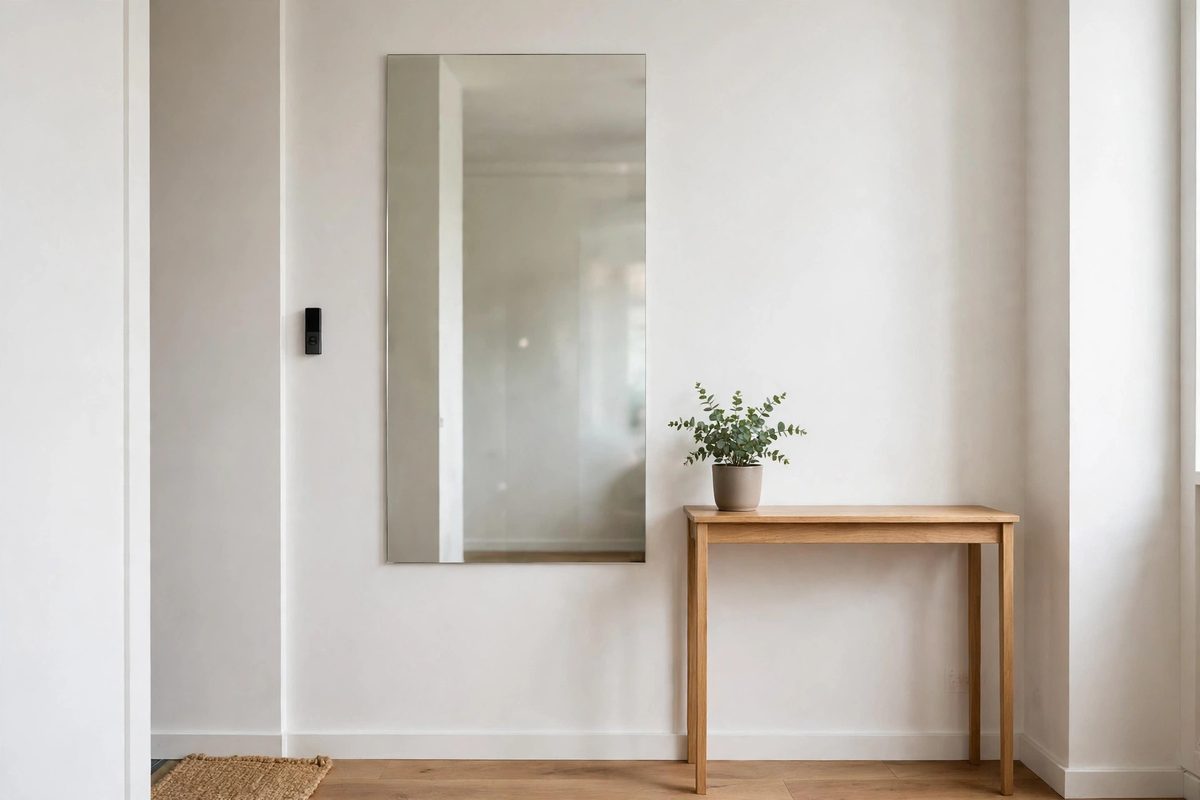
A frameless mirror disappears into the wall, which makes it the best choice when the entry is already busy with hooks, art, or a patterned runner. With no frame competing for attention, the mirror simply extends the space, and the wall color flows right up to the glass edge.
Frameless mirrors need careful mounting, since there is no frame to hide fixings. Use mirror adhesive plus mechanical clips rated for the mirror’s weight, or a French cleat for larger pieces. Beveled edges add a subtle finished detail and catch light nicely, and they cost only a little more than a plain polished edge.
How to make it work
Keep the wall around a frameless mirror clean and freshly painted, since every scuff shows next to bare glass. If your entry walls are textured, a frameless mirror can look unfinished, so in that case a thin frame is the better call. For more hallway ideas that pair with this look, see narrow hallway mirror ideas.
A good entryway mirror is less about the mirror itself and more about what it reflects, how high it hangs, and how much wall it leaves alone. Pick one idea from this list that fits your wall and your door swing, hang it at eye level, and let the light do the rest.