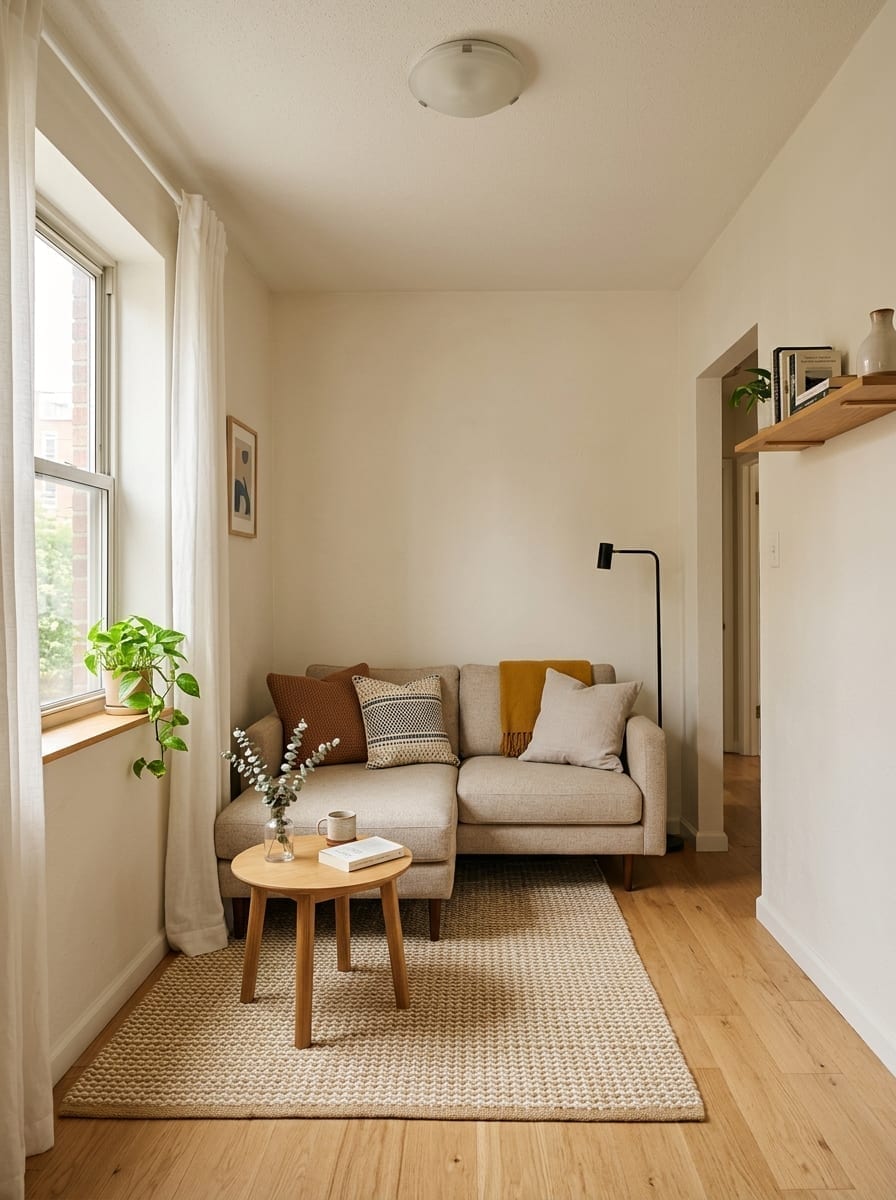
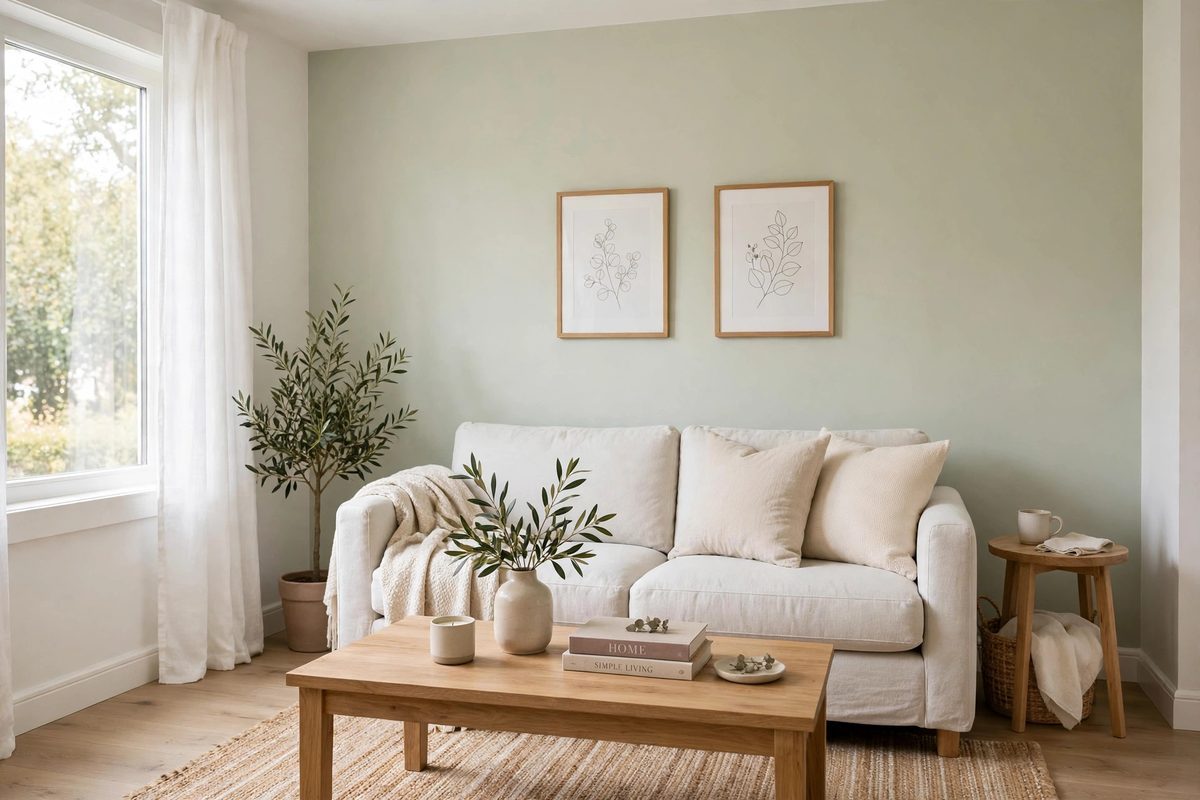
9 Small Living Room Console Table Ideas for Tight Spaces
Nine console table ideas for small living rooms, from slim sofa tables to wall mounted ledges that add storage without blocking walkways or light.
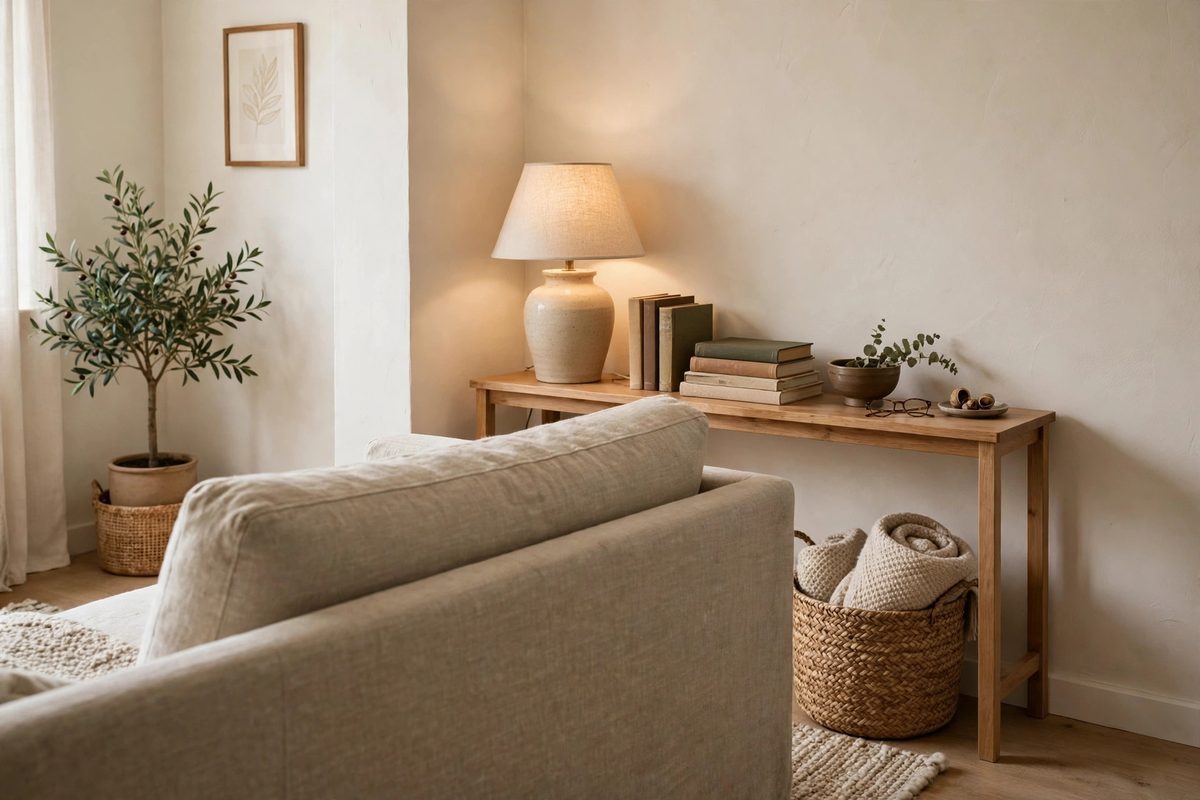
Narrow console table behind a sofa in a small living room with a lamp, books, and a basket underneath
In This Guide
A console table is one of the most useful pieces for a small living room, because it gives you a surface, storage, and a styling moment in a footprint of just 10 to 14 inches deep. Behind a sofa, against an empty wall, or in that awkward gap beside the door, it turns dead space into a working surface.
The mistake most people make is buying a console that is too deep. A standard 18 inch deep table eats a walkway in a room that is only 10 or 12 feet wide. In a tight space, depth matters more than length: a 48 inch long table that is only 10 inches deep will feel lighter than a 36 inch table that sticks out 18 inches.
These nine ideas focus on slim profiles, smart storage, and placement tricks that keep the room feeling open. They pair well with these small bathroom medicine cabinet ideas if you are hunting for hidden storage all over the apartment, and with these Christmas ornament display ideas when you need a surface for seasonal decor. A good companion piece is a small living room side table, which handles the spots a console cannot reach.
1. The Slim Sofa Table
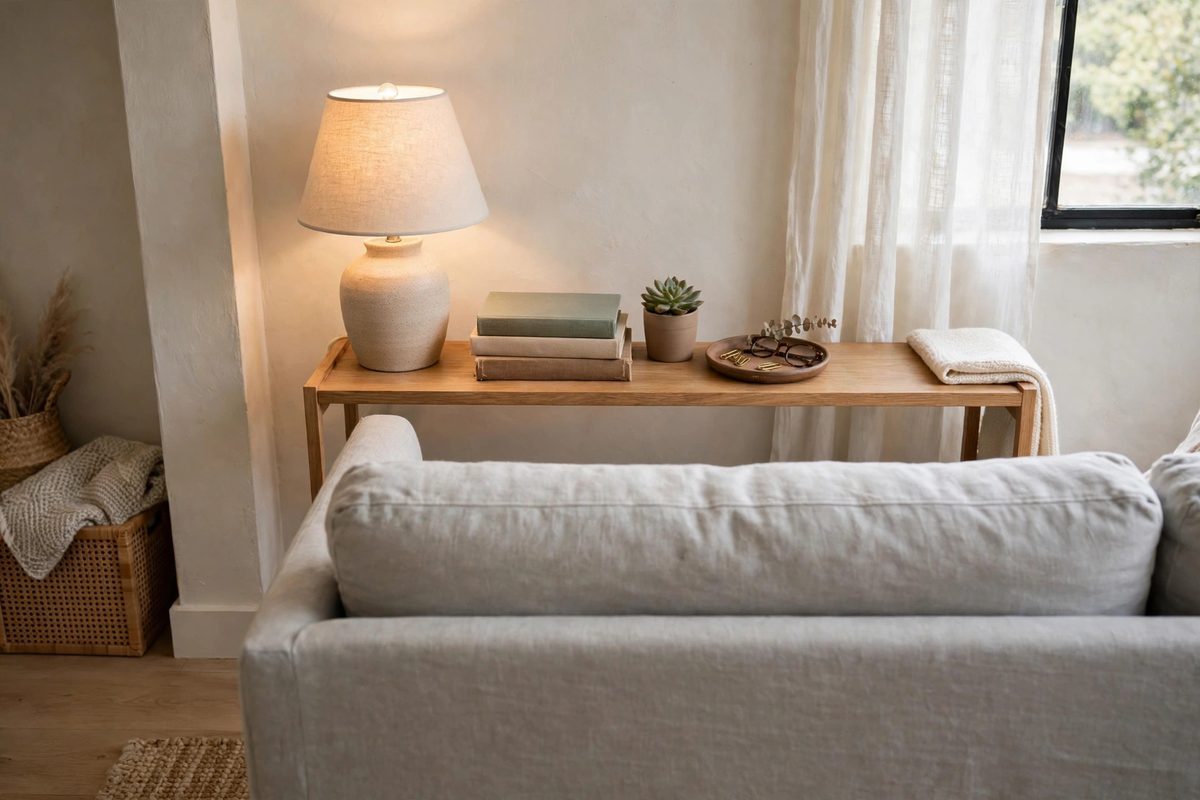
A sofa table sits directly behind the sofa, usually at sofa back height, about 28 to 32 inches tall. In a small room this placement is gold: it uses space that would otherwise be a gap, and it gives you a landing spot for a lamp, a drink, or a book without adding a side table that crowds the walkway.
Look for a table 10 to 12 inches deep and no longer than the sofa itself. A table that sticks out past the sofa arms looks accidental and catches hips and bags. Open shelving underneath holds baskets for remotes, chargers, and dog leashes.
How to make it work
Leave at least 30 inches of walkway behind the table if it faces a passage, or push the sofa and table together as one unit against the wall if space is very tight. Add a table lamp at one end for evening light, since overhead lights often feel harsh in small rooms. Keep the top to three objects: lamp, one stack of books, one small plant or vase.
2. The Wall Mounted Ledge Console
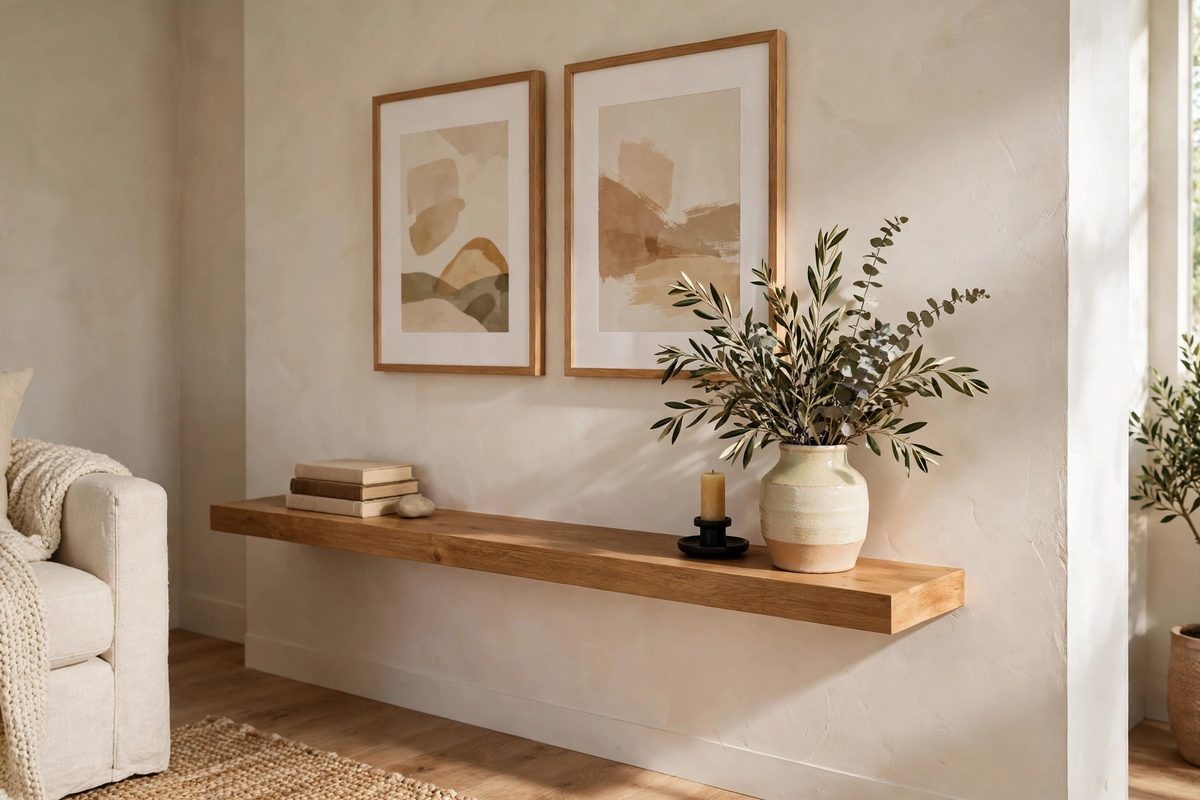
A wall mounted ledge is a console with no legs at all, which makes the floor underneath look continuous and the room feel larger. A floating shelf 8 to 10 inches deep at console height works as a display ledge, a charging station, or a mini bar, and you can mount it at exactly the height that suits your sofa or artwork.
The tradeoff is weight capacity. A well anchored floating ledge into studs holds 20 to 30 pounds, enough for books and a lamp, but not a stack of heavy photo albums or a large plant in a ceramic pot. If your walls are plaster or you cannot find studs, use toggle bolts rated for the load.
How to make it work
Mount the ledge 30 to 32 inches high for a standard console feel, or at 36 inches if it will sit behind a tall sofa. Anchor into at least two studs. Style it lightly: a framed print leaning above, one vase, and a small tray for keys. Leave the space underneath empty so the floating effect reads clearly.
3. The Console With Closed Storage
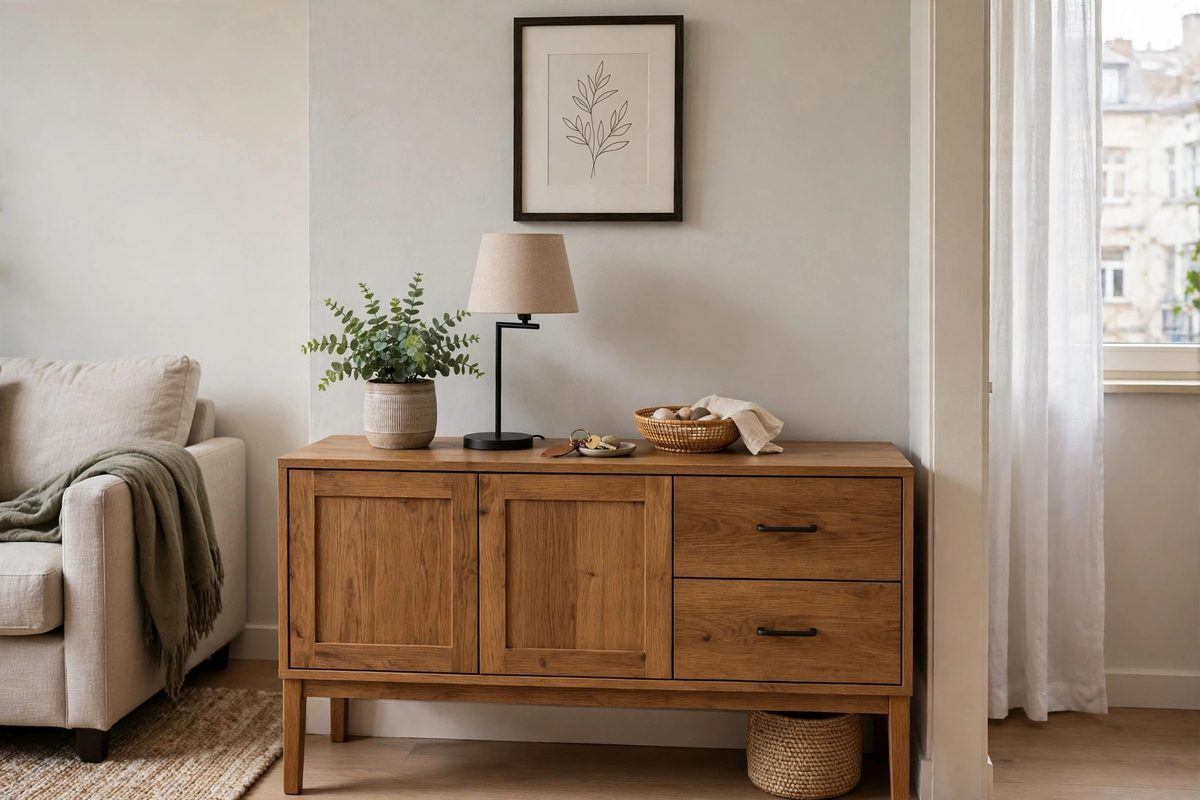
Open shelves look lovely in photos and messy in real life, especially in a small room where every surface is visible. A console with doors or drawers hides board games, chargers, candles, and kids supplies, so the top can stay calm and the room reads as tidy even on a busy day.
Measure what you actually need to hide before buying. A drawer that is 4 inches tall fits remotes and mail; a cabinet with 12 inches of clearance fits board games and a small printer. Two drawers plus one open shelf is often the best mix: hidden storage for clutter, open space for a basket you actually like looking at.
How to make it work
Choose a console with soft close doors if it sits near a bedroom, since slamming doors carry in small apartments. Label nothing: instead, assign one drawer per category (tech, mail, games) and keep a small tray on top for the daily drop zone. Wipe the top weekly, since closed storage consoles tend to become mail magnets.
4. The Entryway Console That Doubles as a Living Room Table
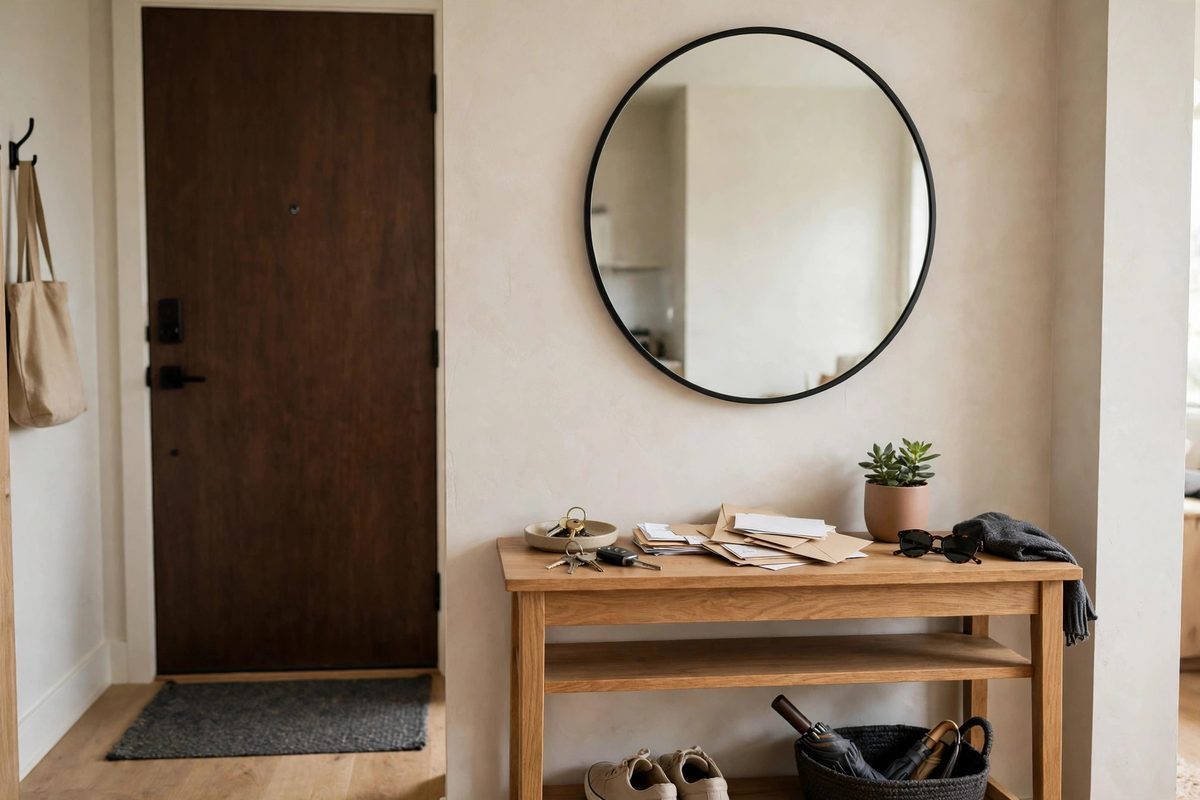
In a studio or open plan apartment, the console between the front door and the living room does two jobs: entryway landing spot and living room display. A slim table with a mirror above it defines the entry without a wall, and a basket underneath holds shoes or bags.
The key is keeping the entry function separate from the decor function. One end is practical: a tray for keys, a hook or bowl for mail. The other end is decorative: a vase, a candle, or a framed photo. When the two zones blur, the table becomes a dumping ground within a week.
How to make it work
Hang a mirror 4 to 6 inches above the table to bounce light and make the entry feel wider. Place a lidded basket underneath for shoes, since open shoe storage looks messy fast. Keep the table 12 inches deep at most if it sits in a walkway, and choose a rounded or beveled edge to avoid bruised hips in a narrow hall.
5. The Narrow Console With a Lower Shelf
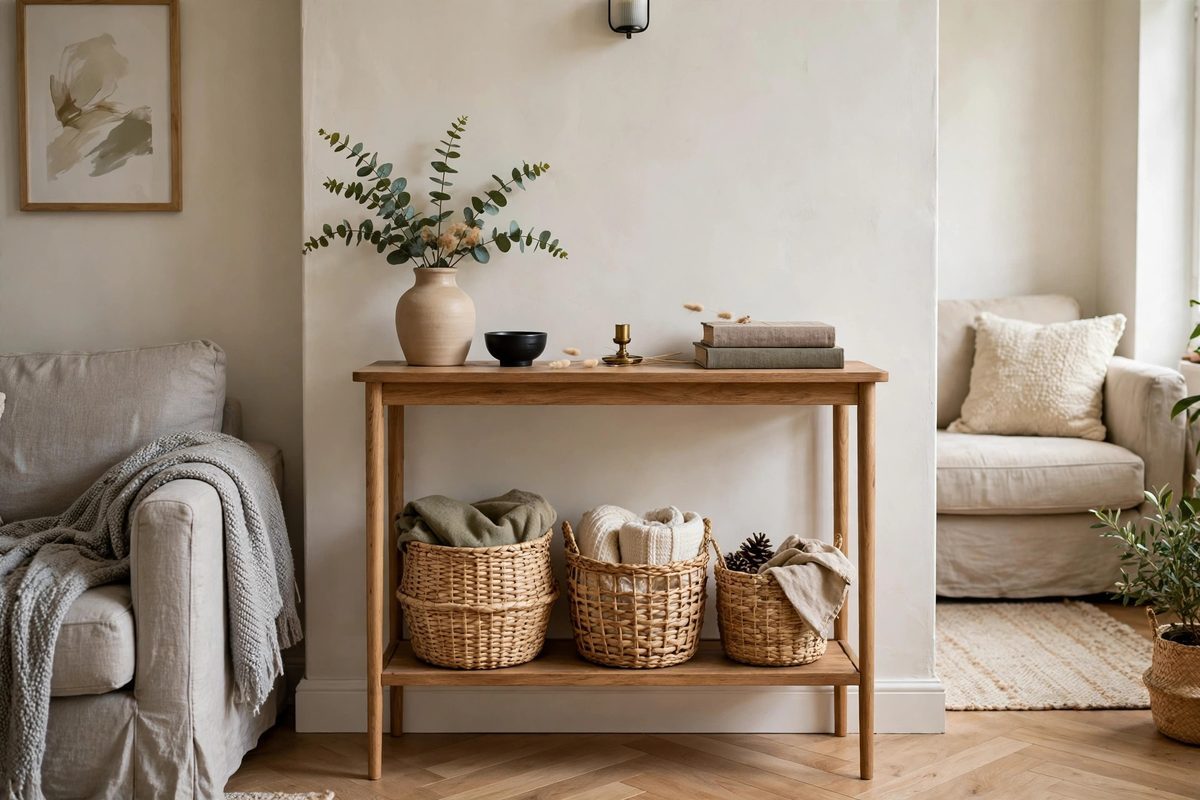
A lower shelf is the simplest storage upgrade for a console, and it costs nothing in floor space. It holds two baskets, a stack of magazines, or a pair of storage boxes, and it visually grounds a leggy table so it does not look like it is floating away from the wall.
Watch the shelf height: a shelf 6 inches off the floor fits flat baskets and books, while a shelf 10 to 12 inches up fits taller baskets but leaves less room for the top display. If you have a robot vacuum, keep the shelf clearance at least 4 inches so the vacuum can pass underneath.
How to make it work
Use matching baskets on the lower shelf for a calm look, and keep them at 80 percent full at most so they do not overflow. Put heavier items low and lighter decor up top. If the table sits behind a sofa, the lower shelf is a good spot for throw blankets, rolled and tucked into a basket.
6. The Console as a Mini Desk
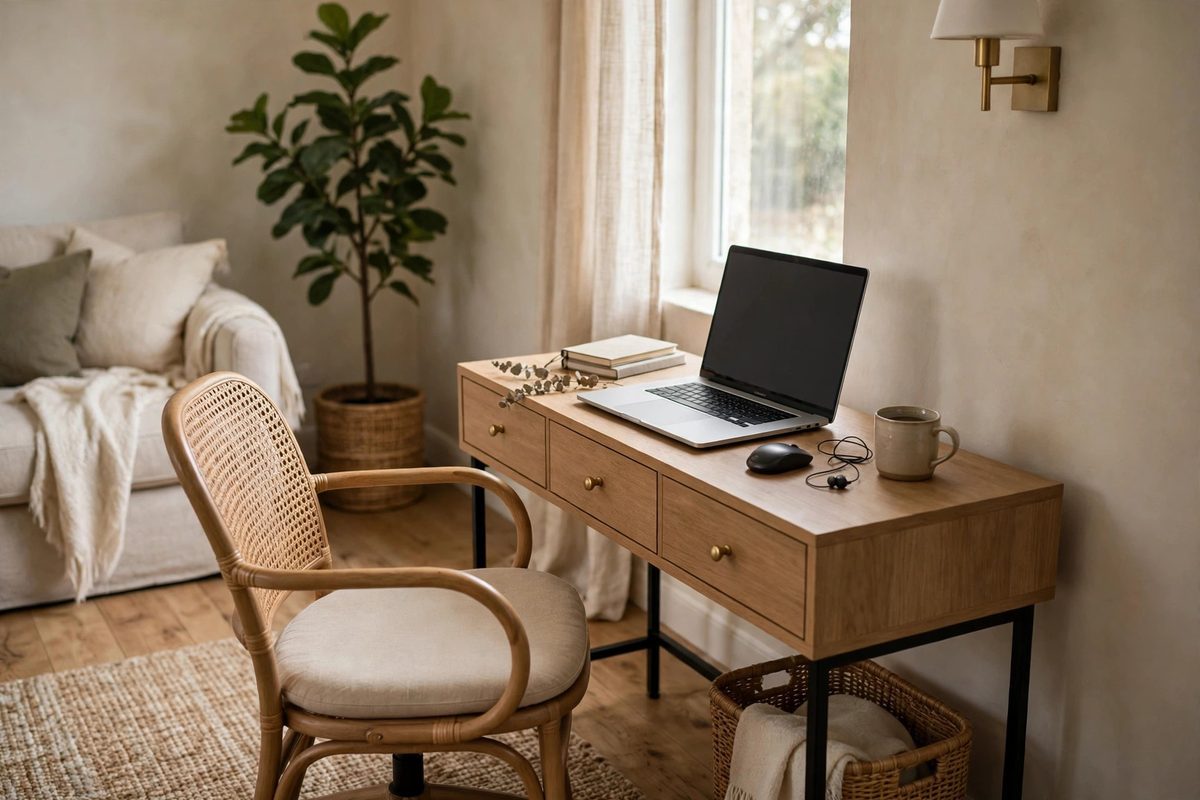
A console at desk height, about 29 to 30 inches, with a chair that tucks fully underneath, gives a small apartment a work spot without a dedicated office. This works best against a wall in the living room, where the desk zone reads as part of the room rather than a cluttered corner.
The chair matters more than the table. A stool or armless chair that slides completely under the console keeps the walkway clear when you are not working. A bulky office chair with arms will stick out 8 inches and defeat the purpose of a slim table.
How to make it work
Add a small desk lamp, a cable clip to keep chargers tidy, and one drawer or desktop organizer for pens and notebooks. When work ends, close the laptop and place a vase or candle on the desk so the zone returns to living room mode. A console with a modesty panel or a back rail hides cables from the sofa view.
7. The Mirrored or Glass Console
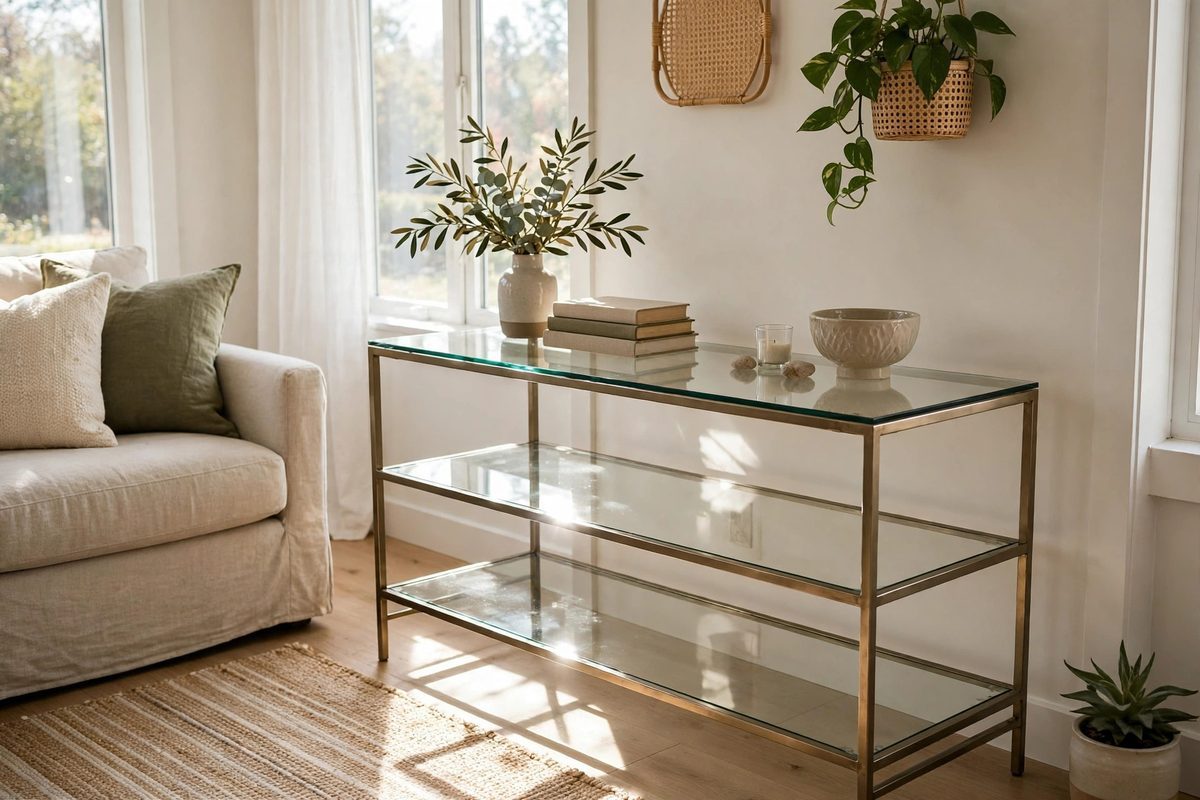
Glass and mirrored consoles visually disappear, which is a real advantage in a room under 200 square feet. Light passes through glass, and a mirrored surface reflects the room back, so the table adds function without adding visual weight.
The tradeoff is maintenance and honesty: glass shows dust, fingerprints, and everything stored underneath, and mirrored surfaces show every smudge. If you dislike wiping surfaces weekly, a glass console will frustrate you. It also suits rooms with light floors and pale walls best; in a dark room, glass can look cold.
How to make it work
Pair a glass console with one solid object, such as a ceramic vase or a stack of books, so the table does not look empty. Keep the lower shelf clear or use a single lidded box. Clean with a microfiber cloth once a week, and avoid placing hot drinks directly on glass without a coaster, since heat marks show clearly.
8. The Rustic Wood Console for Warmth
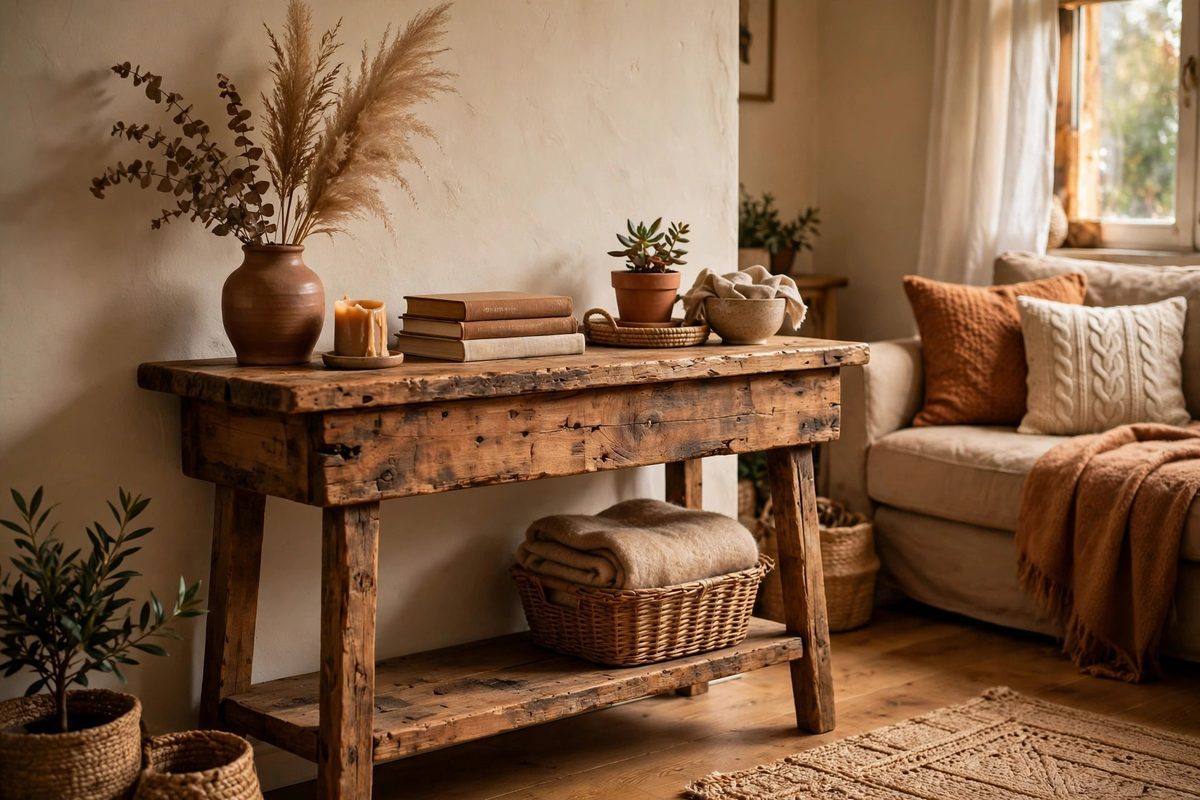
A warm wood console adds the texture that white walled rentals often lack. Reclaimed wood, walnut veneer, or a simple oak top with black metal legs brings warmth without a full furniture set, and wood hides wear better than painted finishes in a high traffic spot.
Rustic does not have to mean bulky. Look for a top that is 1 to 1.5 inches thick, legs that taper or angle inward, and an open base rather than a solid plinth. A chunky farmhouse table that is 18 inches deep will dominate a small room; a slim rustic top on metal legs will not.
How to make it work
Echo the wood tone once elsewhere in the room, in a picture frame, a tray, or a side table, so the console feels connected rather than random. Style the top with a mix of heights: a tall vase, a medium candle, and a low stack of books. Avoid matching every wood tone exactly; two or three warm tones look more collected than one flat match.
9. The Console With a Gallery Wall Above
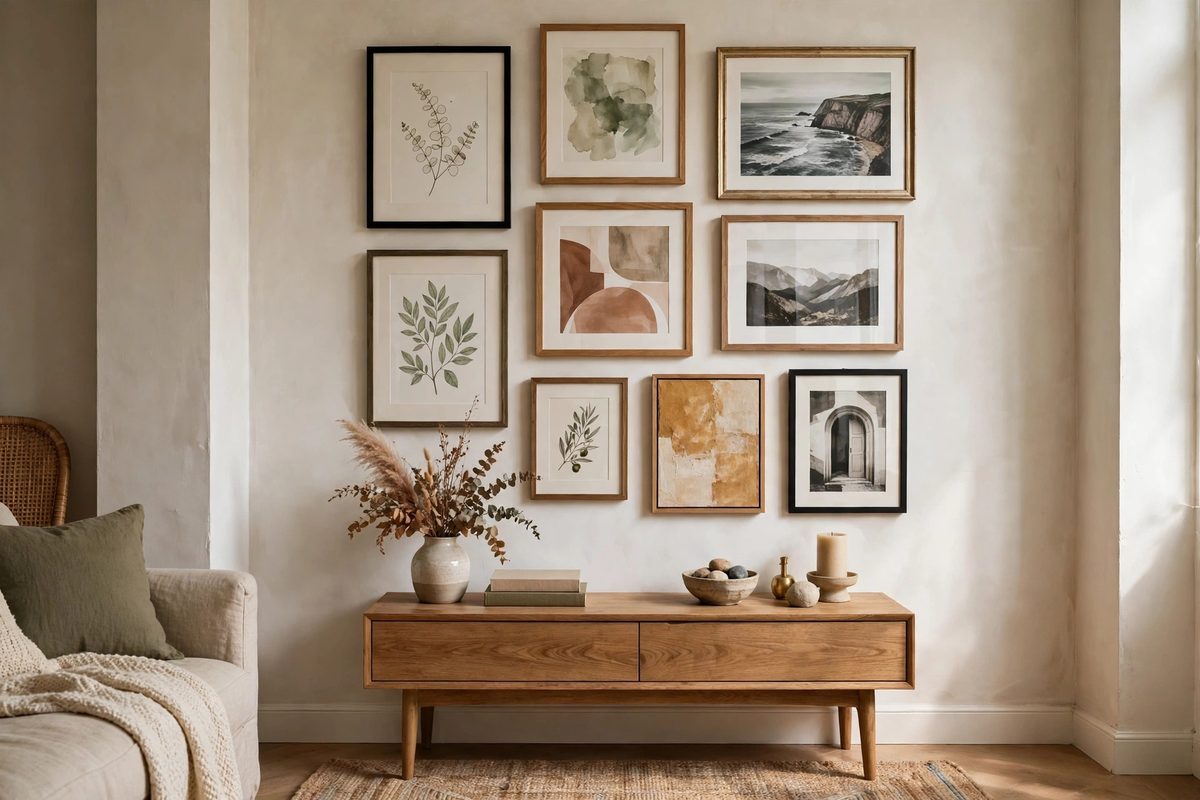
A console plus a gallery wall turns an empty living room wall into the room’s focal point, and it costs less than a large piece of art. The console anchors the wall at floor level, the frames draw the eye up, and the whole arrangement makes a small room feel designed rather than furnished by accident.
Spacing is what makes or breaks this look. Hang frames 2 to 3 inches apart, keep the bottom row 6 to 8 inches above the console top, and keep the total gallery width within the console length, ideally 70 to 80 percent of it. A gallery that is wider than the table looks top heavy.
How to make it work
Start with one large frame in the center, then build outward with smaller frames. Use a paper template on the wall before hammering nails, especially in a rental where each hole counts. Keep console styling minimal under a busy gallery: one lamp and one vase is enough, since the wall already supplies the interest.
The best console for a tight living room is the shallowest one that still holds what you need, placed where it serves two purposes at once. Measure your walkway, pick a depth of 12 inches or less, and let the table earn its floor space with storage, light, or a work surface. Done right, it is the hardest working piece in the room.