Color Drenching Ideas for Small Apartments
Color drenching ideas for small apartments: one color on walls, trim and ceiling, with the best colors and renter-friendly ways to try it.
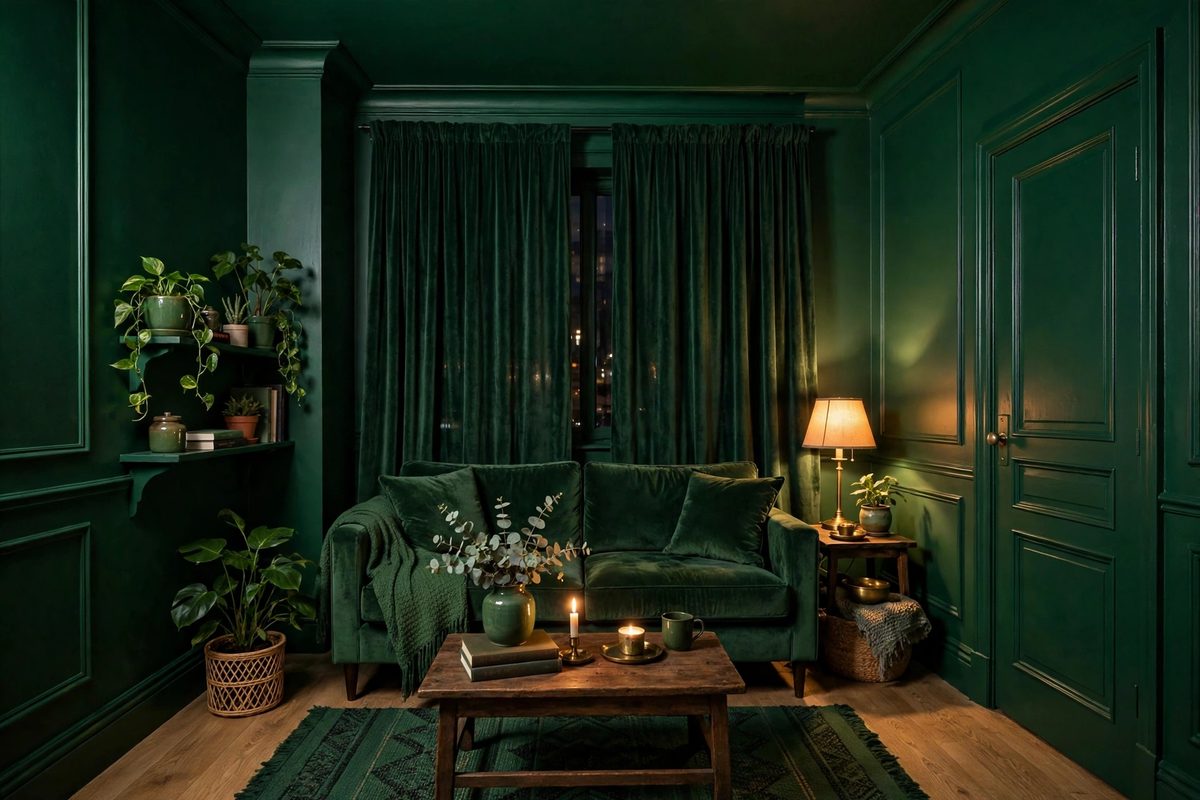
Small apartment living room with color drenching in deep green paint on walls, trim, ceiling and door with a matching sofa
In This Guide
Color drenching is the technique of painting a room one single color: walls, trim, ceiling, and often the door, all in the same shade. It sounds like it would make a small apartment feel smaller, but it usually does the opposite. When there is no white trim breaking up the walls, the eye stops counting edges, and the room reads as one calm, continuous space instead of a small box with borders. The 12 ideas below adapt color drenching for small apartments and rentals, with the best colors for each room and renter-friendly ways to try it without losing your deposit.
12 Color Drenching Ideas for Small Apartments
1. Start with a small room, not the living room. A bathroom, entryway, or home office is the best first color drenching project. These rooms are usually 40 to 80 square feet, so one gallon of paint covers the walls and trim, and the whole job takes one weekend. A small drenched room feels intentional and cozy, while a large room in one dark color can feel heavy if you get the shade wrong. If it works in the bathroom, you will have the confidence to try a bigger room next.
2. Deep green for the living room. A deep green like sage, olive, or forest makes a small living room feel like a library: calm, grounded, and bigger than it is, because the corners disappear into the color. Paint the walls, trim, and ceiling the same green, then use a sofa in a lighter neutral and add brass or wood accents to warm it up. Green works in north-facing rooms too, since it holds its color in cool light better than gray or blue. For the contrast version of this look, see our black accent wall ideas.
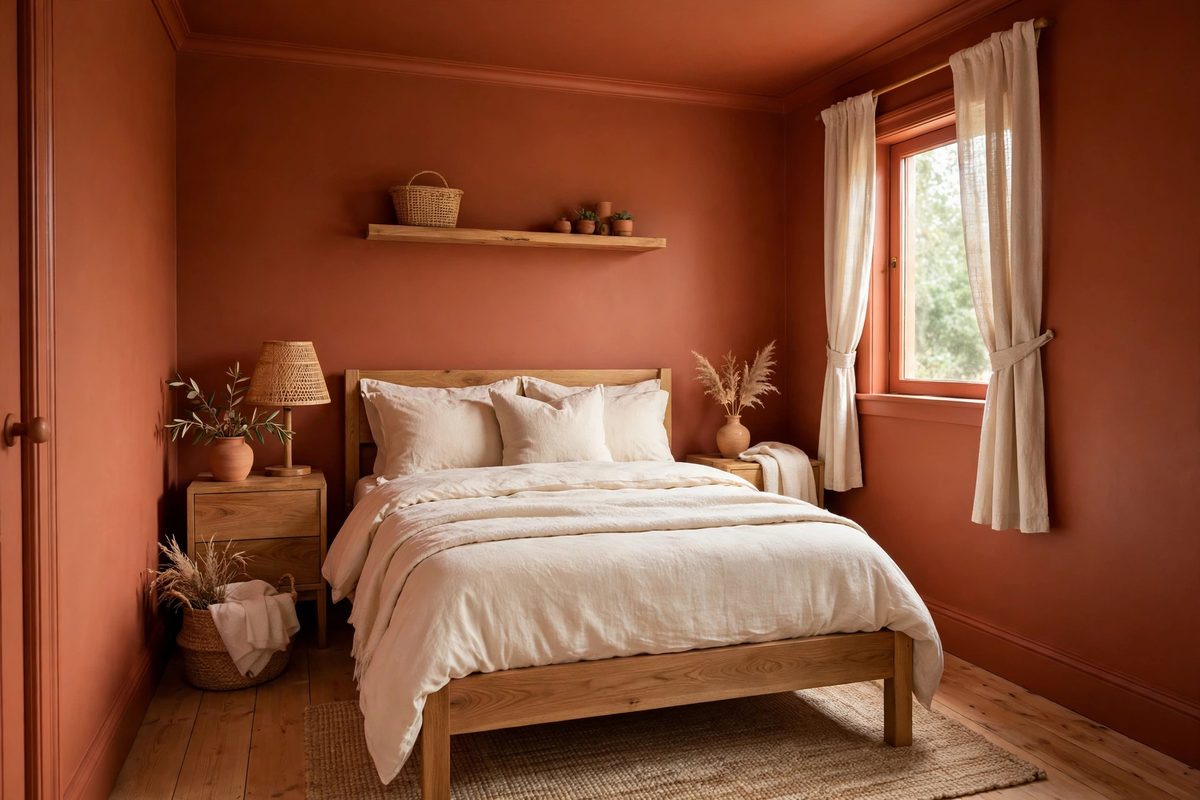
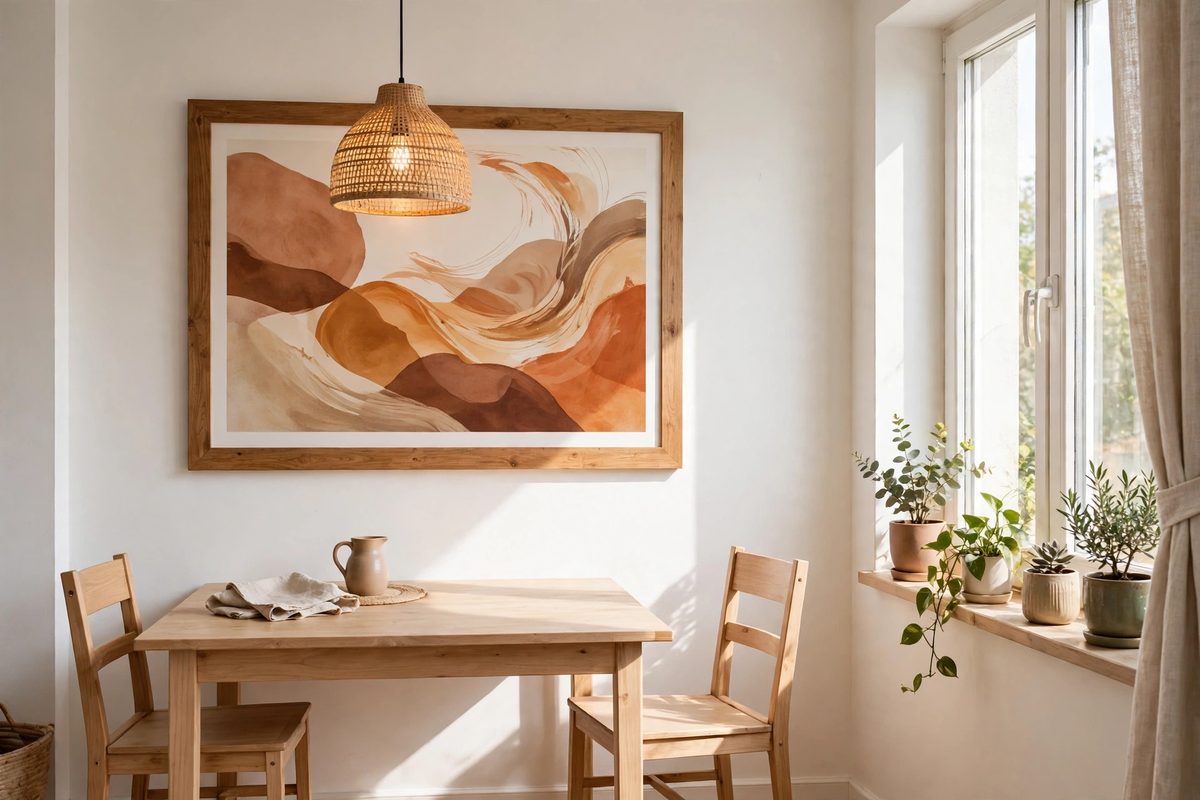
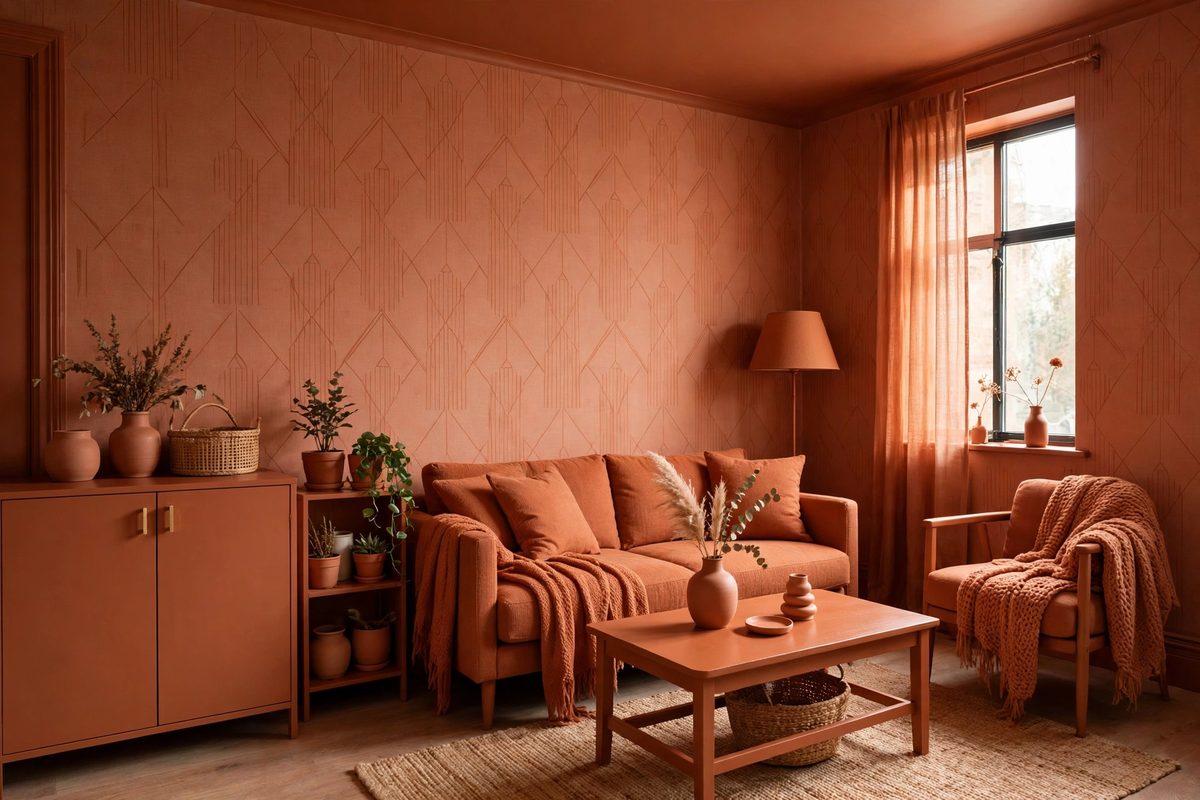
3. Warm terracotta for the bedroom. Terracotta is the most forgiving color drenching shade for a bedroom: warm enough to feel cozy at night, light enough to wake up to without feeling boxed in. Use one terracotta across the walls, ceiling, and closet doors, then layer cream bedding and natural wood to keep it soft. A gallon covers about 350 square feet, so a 10 by 12 foot bedroom needs roughly 2 gallons for two coats. Keep the ceiling the same color, since a white ceiling breaks the effect and makes the room feel shorter.
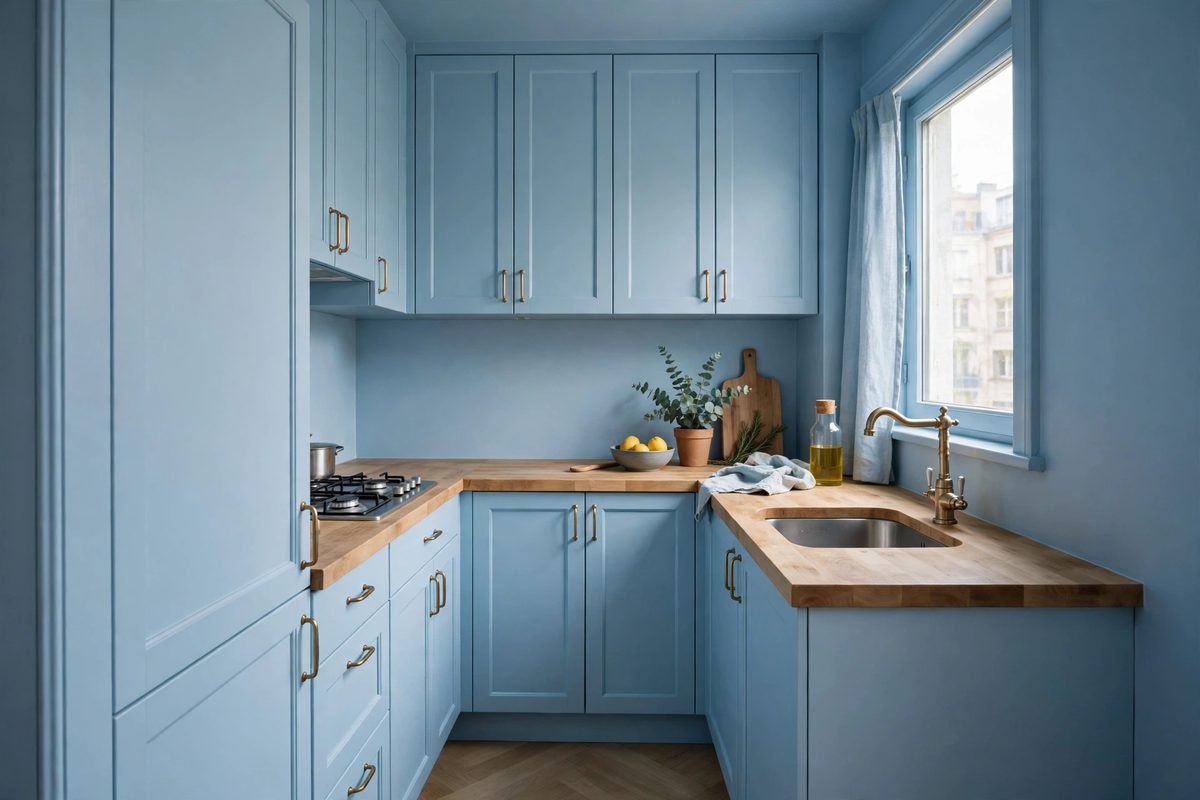
4. Soft blue for the kitchen. A soft dusty blue drenched across kitchen walls and cabinets makes a small galley kitchen feel calm and clean instead of cramped. Paint the upper cabinets, lower cabinets, and walls the same blue, and use the same color on the trim around the window so the whole wall reads as one surface. Blue works well with butcher block counters and brass hardware, and it hides cooking splashes better than white. If painting cabinets feels too permanent, paint only the walls and trim first and live with it for a month.
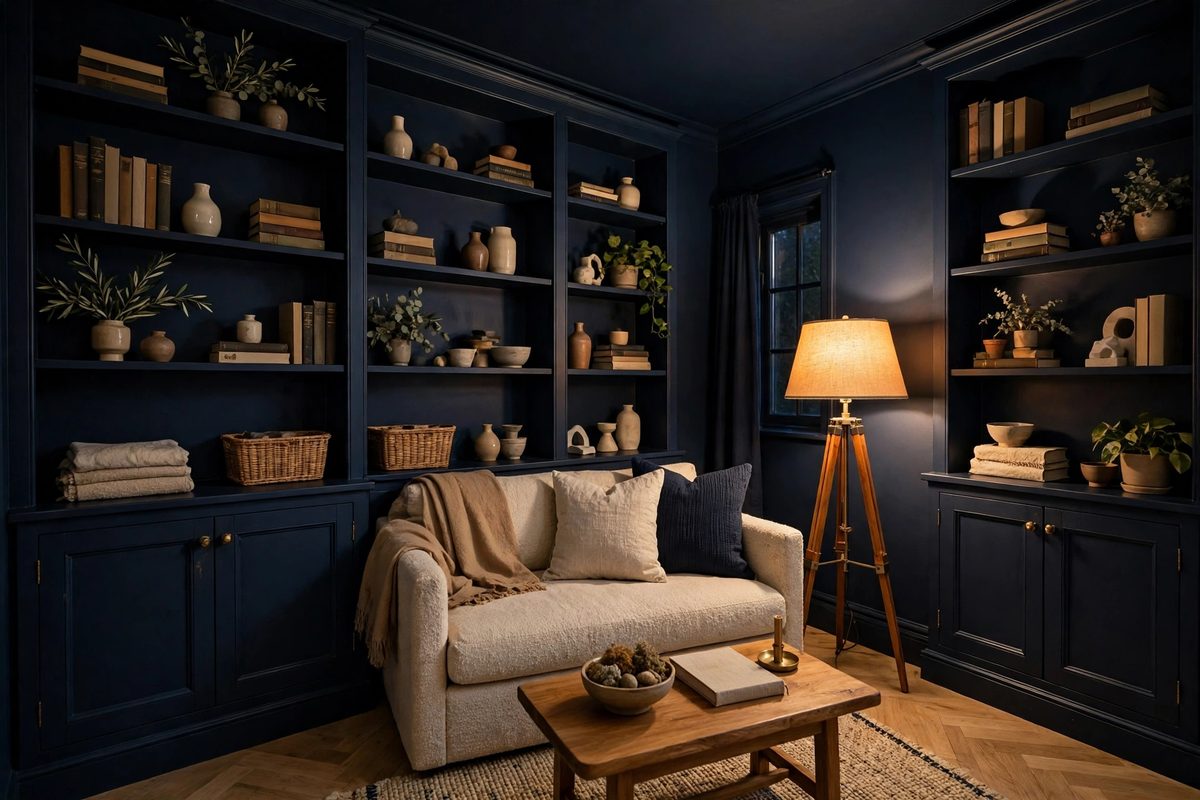
5. Dark navy for a home office or reading nook. Navy is the best color drenching choice for a room where you need focus. A dark navy on every surface removes visual noise, so the desk and the work in front of you become the only thing the eye lands on. It works especially well in a small alcove or a converted closet office, where the dark color makes the boundaries disappear and the space feels deeper. Add one warm lamp with a 2700K bulb to keep the navy from feeling cold.
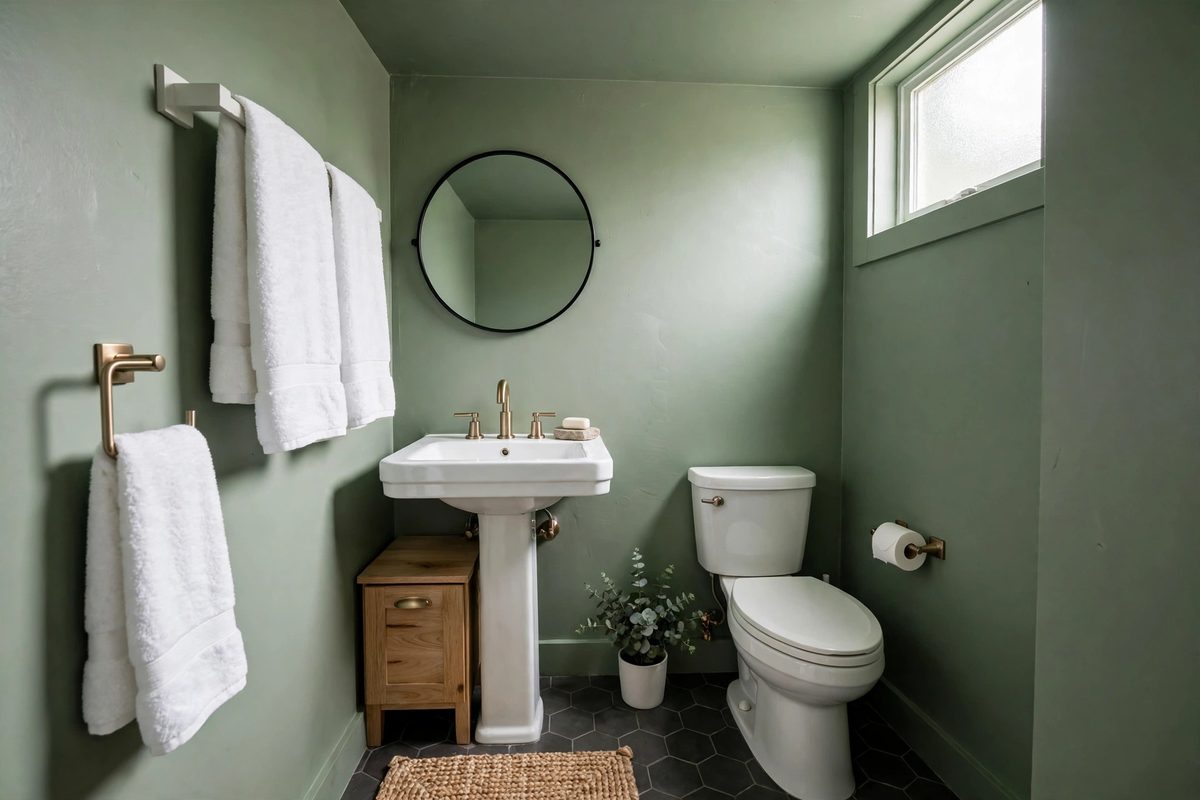
6. Sage green for the bathroom. A small bathroom is the easiest room to drench, and sage green is the most flattering shade for it. Paint the walls, ceiling, and the vanity cabinet the same sage, and the whole room reads as one calm spa-like space instead of a cramped box of fixtures. Sage works with both chrome and brass fixtures, and it makes white towels and white tile look intentional rather than default. One gallon is usually enough for a standard apartment bathroom, including two coats.
7. Use the same finish everywhere, not just the same color. Color drenching fails when the walls are matte and the trim is glossy white, even if the color matches. Buy the same paint in eggshell or satin finish for walls, trim, and ceiling so the light hits every surface the same way. Eggshell is the best all-round finish for drenching: it hides small wall flaws, wipes clean, and does not glare under ceiling lights. Use one brand and one color code for every can so the shade matches exactly.
8. Drench the door and built-ins too. A white door in a drenched room is a visual interruption that breaks the whole effect. Paint the door, the door frame, and any built-in shelves the same color as the walls, and the room instantly feels taller and more custom. This is the step most people skip, and it is the step that makes the biggest difference. A quart of paint is usually enough for one door and its frame.
9. Try it renter-friendly with removable wallpaper. If your lease bans paint, you can still drench a room with peel-and-stick wallpaper in one solid color across the walls, plus painted furniture in a matching shade. A roll of removable wallpaper costs 25 to 40 dollars and covers about 28 square feet, so a 10 by 10 foot accent wall needs 3 to 4 rolls. Paint a bookshelf or a side table the same color with a 10-dollar sample pot, and the room reads as drenched even though nothing permanent changed. For more no-paint wall ideas, see our renter-friendly wall decor ideas.
10. Keep the floor light to balance a dark drench. A dark drenched room needs one light surface to keep it from feeling like a cave, and the floor is the best place for it. If you have light wood floors, leave them alone and let them be the contrast. If the floor is dark too, add a large light rug, at least 5 by 7 feet in a living room, to break up the color at ground level. The rug does not need to be white: cream, pale gray, or natural jute all work.
11. Use one metal finish as the jewelry. In a drenched room, hardware and lighting become the jewelry, so pick one metal and repeat it. Brass warms up green, navy, and terracotta; matte black sharpens blue and sage; chrome suits pale gray and soft white drenches. Repeat the metal in at least 3 places, such as the lamp, the curtain rod, and the cabinet pulls, so it reads as a choice rather than an accident. Mixing two metals in a small drenched room usually looks messy, so commit to one.
12. Test with a sample pot before you commit. Paint looks different on a wall than it does on a swatch, and a drenched room multiplies any mistake across every surface. Buy a 5-dollar sample pot, paint a 2 by 2 foot square on the wall, and live with it for 3 days, checking it in morning light, evening light, and under your lamps. If it still looks right on day 3, buy the gallons. A color that looks perfect at noon can look muddy at 7 p.m., and the sample test is the only way to catch that before you paint a whole room.
Pro Tips for Color Drenching a Small Apartment
The most common mistake is stopping at the walls. Color drenching only works when the trim, ceiling, and door match, because any white edge left behind chops the room back into a small box. If you can only paint one extra surface beyond the walls, paint the ceiling: a ceiling in the same color makes the room feel taller by removing the line where wall meets ceiling. Start with the smallest room, use the same finish everywhere, and test a sample for 3 days before you buy gallons. For the color theory behind choosing a shade, our small bathroom color scheme ideas explain how undertones shift in different light, and our small apartment decorating ideas show how to layer furniture and textiles over a bold paint choice.
What to Avoid
- Leaving the ceiling white: a white ceiling in a drenched room cuts the height in half and breaks the whole effect.
- Mixing paint finishes: matte walls with glossy trim in the same color still read as two different colors under lamplight.
- Choosing a color from a phone screen: screens shift color badly, so always test a physical sample on your own wall.
- Drenching every room at once: one drenched room is a statement, while five in a row can feel monotonous, so do one room and live with it first.
Frequently Asked Questions
What is color drenching? Color drenching is painting a room one single color across the walls, trim, ceiling, and often the door and built-ins. The goal is to remove visual breaks so the eye reads the room as one continuous space. It works best with mid-tone and deep colors like green, navy, and terracotta, and it suits small rooms because it hides corners and makes boundaries disappear.
Does color drenching make a small room look smaller? Usually the opposite happens. White trim and a white ceiling chop a small room into edges the eye keeps counting, which makes it feel boxy. When everything is one color, the corners soften and the room reads as larger and calmer. Very dark colors can feel heavy in a room with no natural light, so test a sample first and keep the floor light.
Can renters try color drenching? Yes, with removable wallpaper in one solid color across the walls and painted furniture in a matching shade. A renter-friendly version uses peel-and-stick wallpaper, which costs 25 to 40 dollars per roll and peels off cleanly, plus a sample pot of paint for a bookshelf or side table. Always check your lease first: some landlords allow paint if you repaint white before moving out.
What colors work best for color drenching in a small apartment? Deep green, warm terracotta, dusty blue, and dark navy are the most reliable choices. Green and terracotta work in most light conditions, blue suits kitchens and bathrooms, and navy is best for small offices and reading nooks. Avoid bright primary colors and very pale pastels: brights overwhelm a small room, and pastels do not have enough depth to hide the corners.