Dining Room Wall Art Ideas for Small Apartments
Dining room wall art ideas for small apartments: sizing, placement, gallery walls, statement pieces, and renter-friendly hanging for tiny dining spaces.
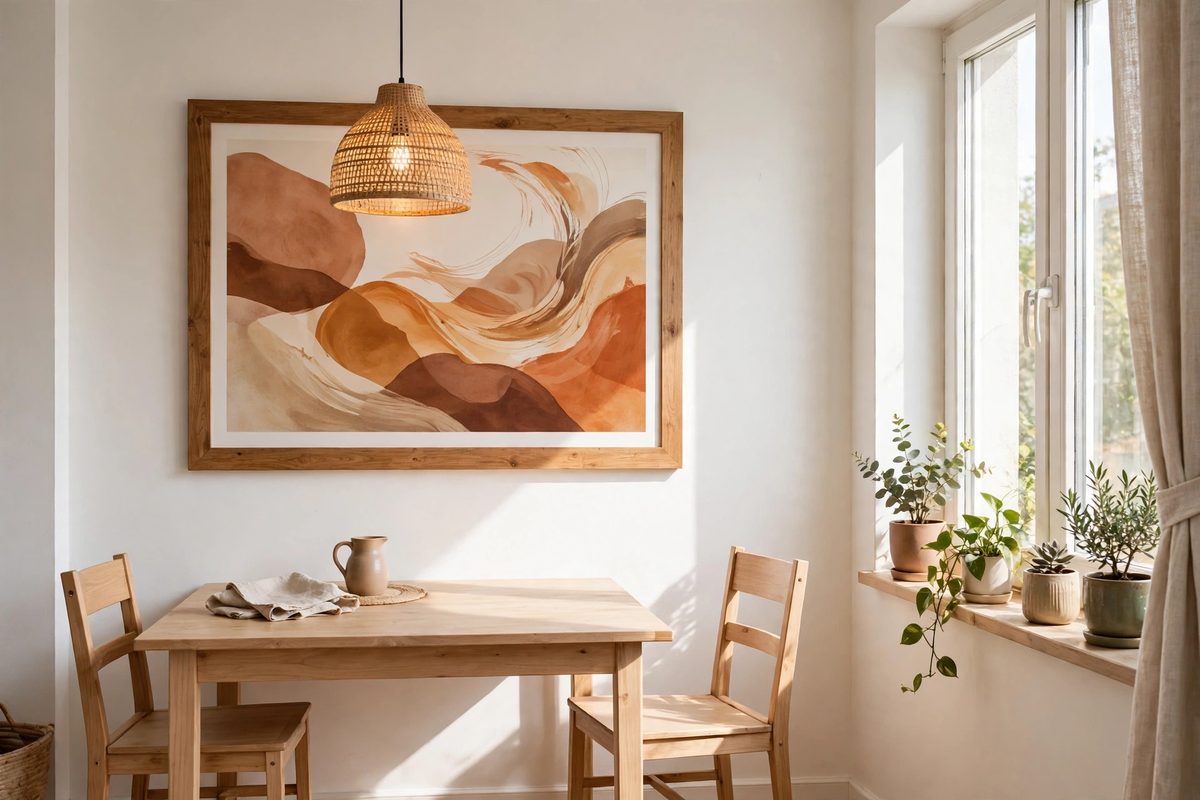
Small apartment dining area with a large framed abstract print above a wooden table, warm pendant light, two chairs
In This Guide
Dining room wall art is the fastest way to make a small dining corner feel finished. A bare wall above the table makes even a nice table look temporary, while one well-chosen piece pulls the whole area together. The trick in a small apartment is scale: art that is too small gets lost, art that is too big crowds the room, and the wrong hanging height makes the table feel cramped. These 12 ideas cover sizing, placement, gallery walls, statement pieces, and renter-friendly hanging, all built for dining areas that share space with the living room or kitchen.
1. One large statement piece above the table
Hang a single large framed print centered above the table, sized to about two thirds of the table width. For a 48-inch table, that means art around 30 to 32 inches wide. A single piece reads calmer than a cluster in a small room, and it anchors the dining zone without competing with the rest of the apartment. Abstract prints, landscapes, and bold color blocks work best because they read from across the room. Look for framed prints at IKEA, Target, or Society6 for 40 to 90 dollars, and hang the center of the piece about 60 inches from the floor, which puts it just above eye level when seated.
2. A gallery wall with mixed frames
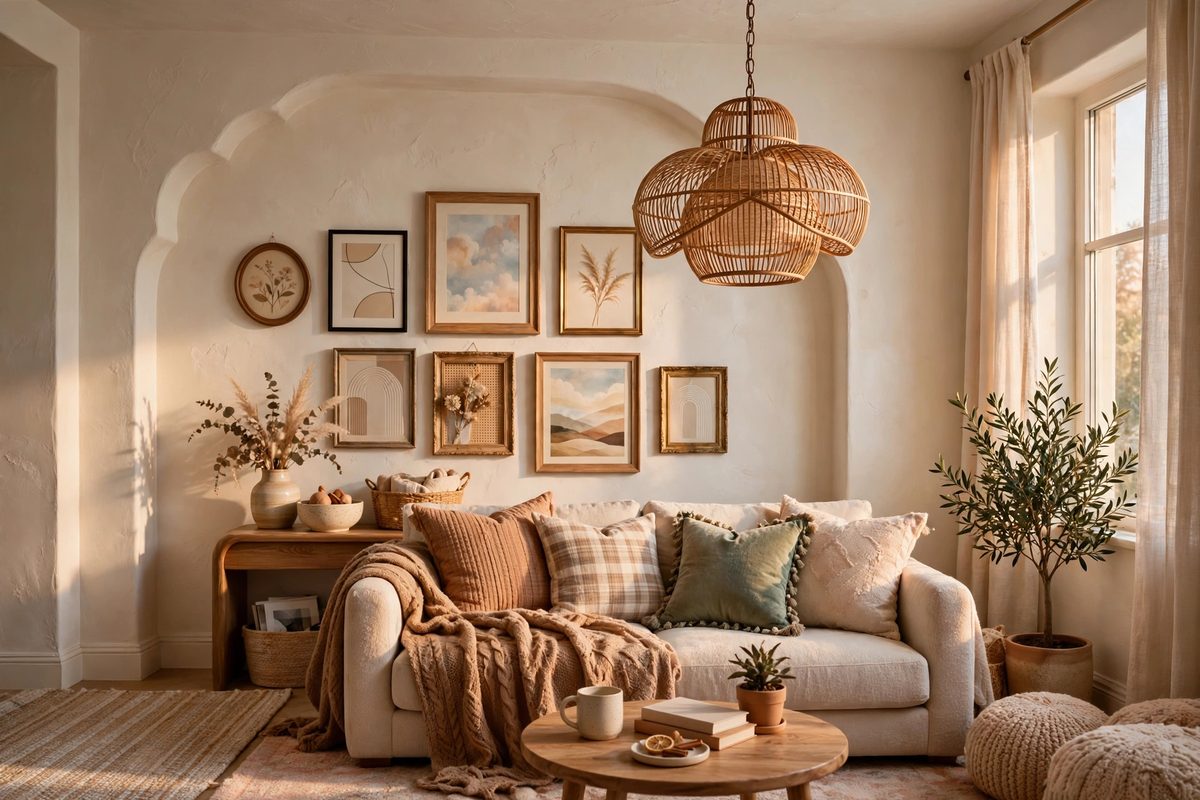
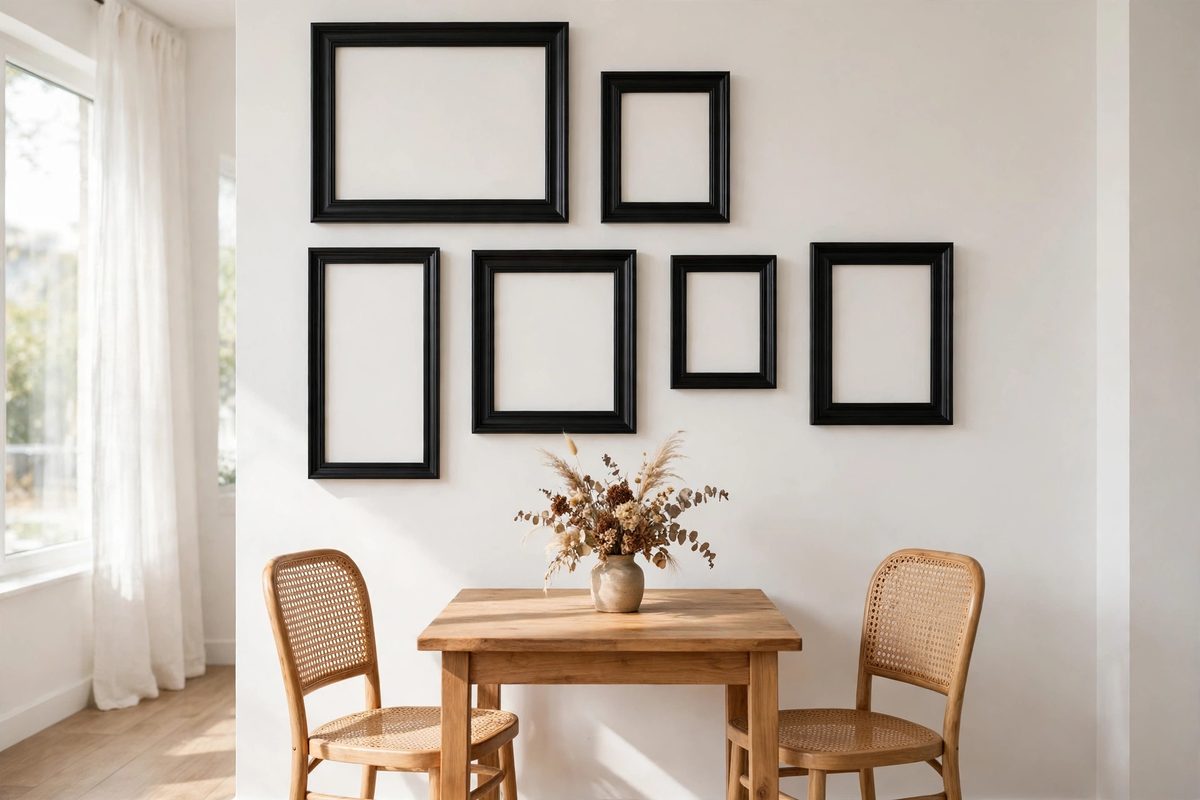
Build a gallery wall of 5 to 7 frames in mixed sizes above a sideboard or along the dining wall, keeping the whole arrangement inside a rectangle about 40 inches wide and 30 inches tall. Mix one large frame with smaller ones, and keep the frames in the same color family, black, wood, or white, so the mix looks intentional rather than random. Space frames 2 to 3 inches apart and lay the arrangement on the floor first to get the spacing right before you hang anything. A gallery wall works well when the dining area shares a wall with the living room because it fills a long blank stretch. For more gallery wall layouts, see our gallery wall ideas.
3. Floating picture ledges for rotating art
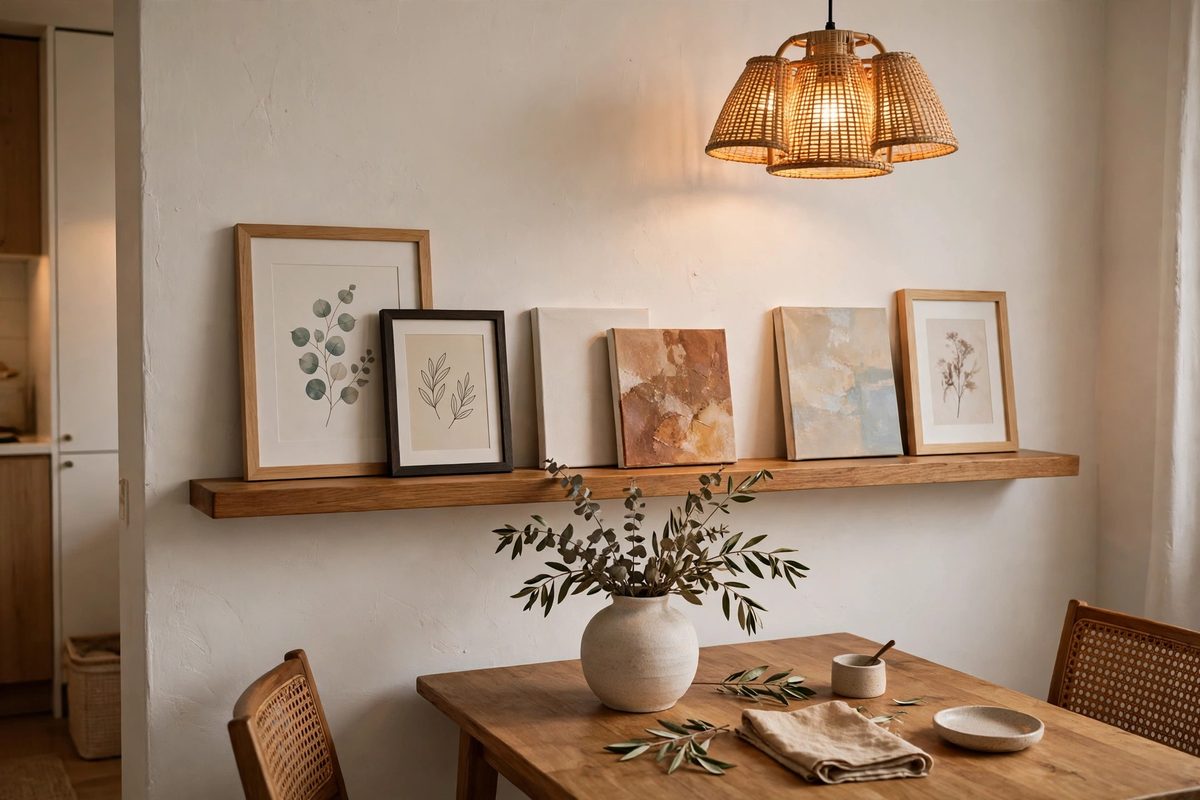
Mount two slim picture ledges, one above the other, on the dining wall and lean framed prints, small canvases, and postcards against them. Ledges are 24 to 36 inches long and cost 15 to 30 dollars each at IKEA or Amazon. The advantage is that you can swap art in seconds without new holes, which is ideal if you like changing the look by season or if you are still deciding what you like. Keep the bottom ledge about 12 inches above the table or sideboard so nothing gets knocked over during dinner. Layer a tall frame at the back and shorter ones in front for depth.
4. An oversized mirror as wall art
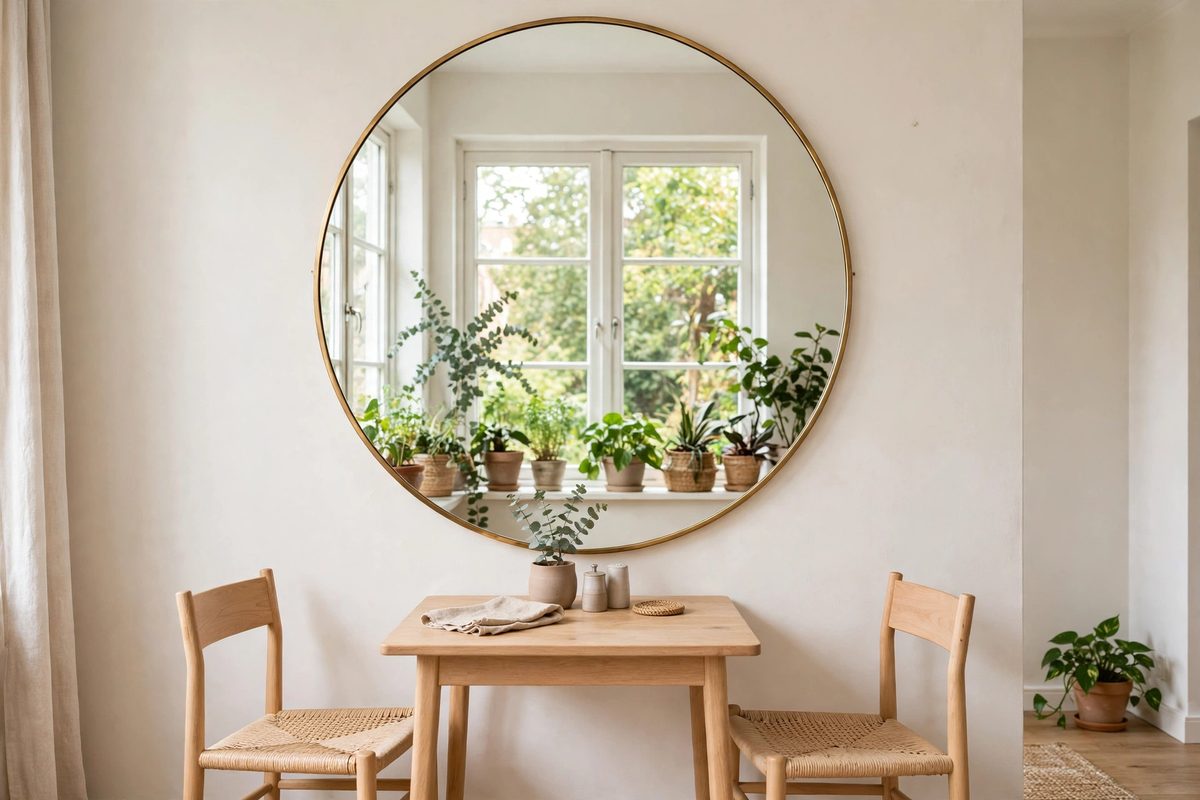
Hang a round or arched mirror 30 to 36 inches across above the table or on the dining wall. A mirror doubles the light in a small dining area, makes the room feel larger, and functions as art because the frame itself is the design. Choose a frame in black metal, brass, or light wood to match your table. Hang it so the center sits about 60 inches from the floor, and check the reflection before you commit: you want it to catch a window or a plant, not the clutter on the kitchen counter. Round mirrors from Target or Wayfair run 50 to 120 dollars.
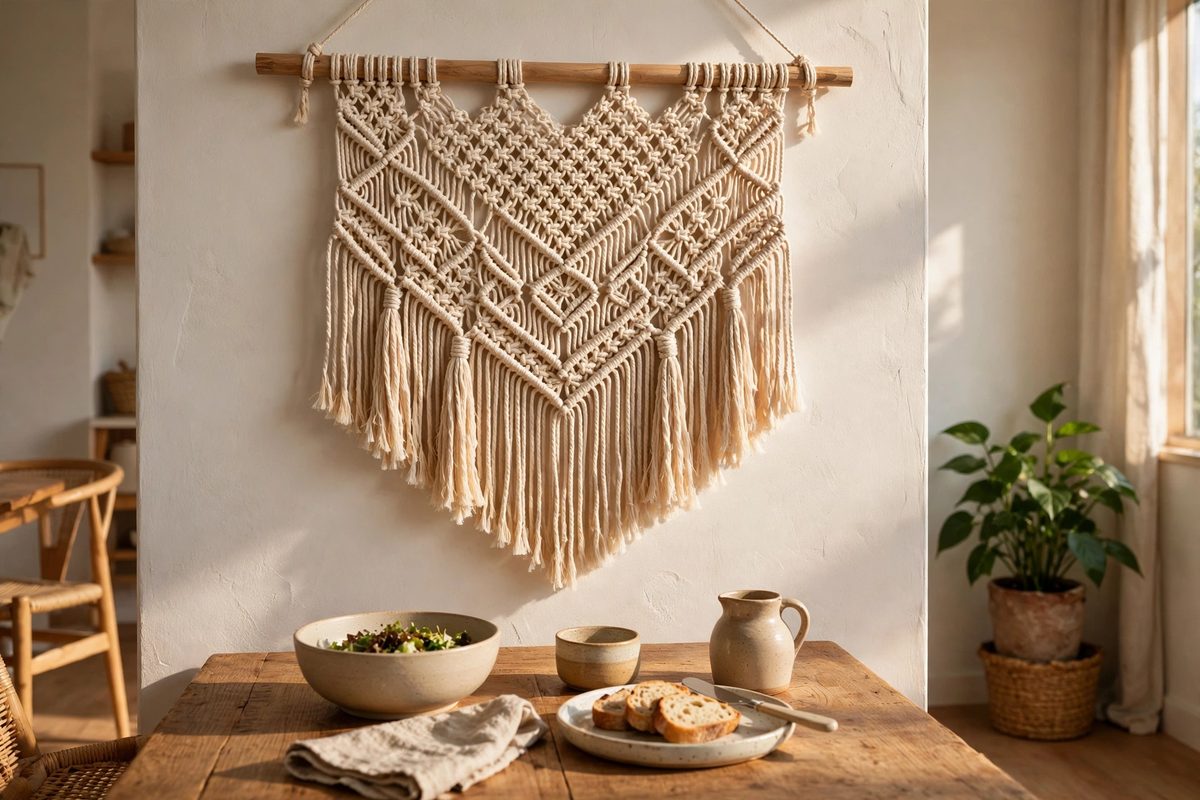
5. A textile wall hanging or macrame piece
Hang a woven textile or macrame wall hanging above the table or on a narrow dining wall. Textiles soften a room full of hard surfaces like wood tables and tile floors, and they add texture without taking up any floor space. A piece 24 to 36 inches wide works for most small dining areas. Macrame hangings run 25 to 60 dollars on Etsy, and woven tapestries with a simple geometric pattern cost 20 to 40 dollars. Hang the textile from a wooden dowel on two small hooks, and keep it at least 12 inches above the table so it does not brush against plates or glasses.
6. A plate wall display
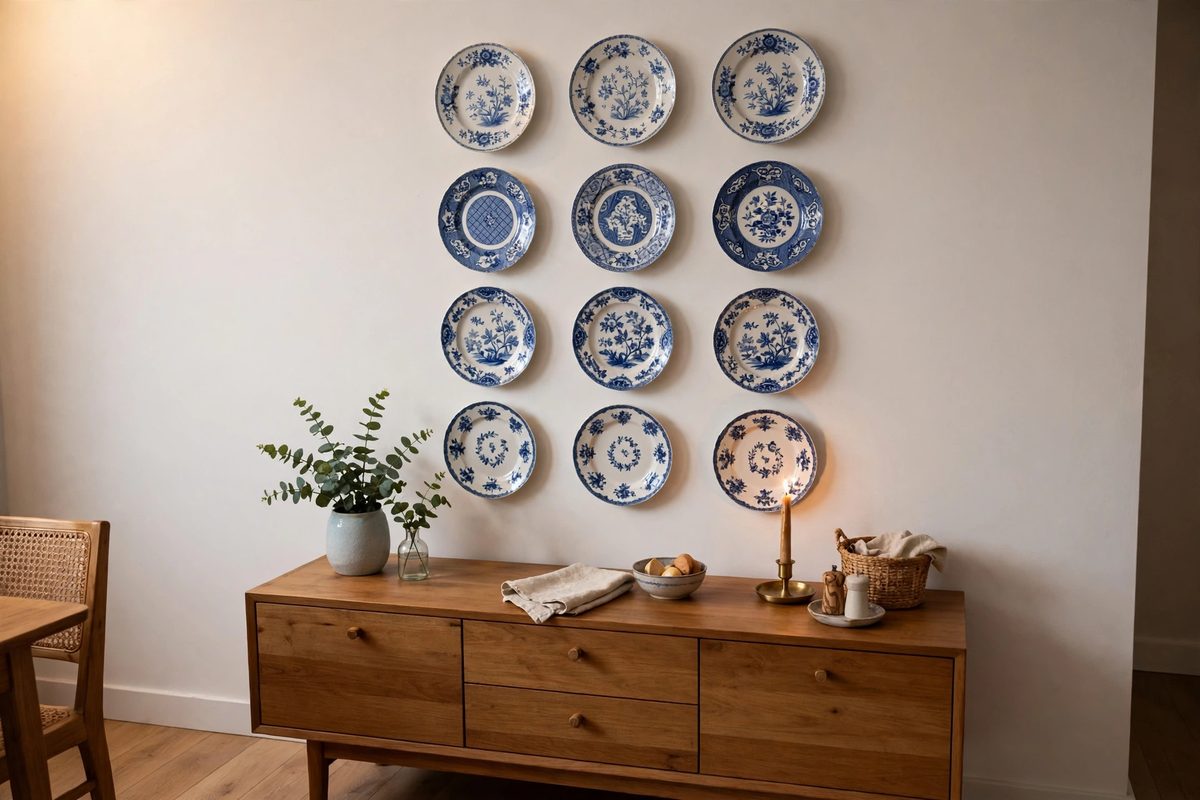
Hang a collection of decorative plates on the dining wall in a loose cluster or a tight grid. Plates are flat, so they take up no depth, and they suit a dining room better than almost any other art because they belong to the table. Mix sizes from 8 to 12 inches across, and use 5 to 9 plates for a full look. Plate hangers cost about 3 dollars each at hardware stores, and you can use plates you already own or pick up vintage ones at thrift stores for 2 to 5 dollars each. Keep the arrangement centered above the table or sideboard, and leave 2 inches between plates so each one reads clearly.
7. Framed botanical prints in a row
Hang three framed botanical prints in a horizontal row above the table, each 11 by 14 inches, with 2 inches between frames. Botanical prints bring a calm, natural feel to a dining area and pair well with wood tables and green plants. Buy a set of three matching prints from Etsy or Amazon for 20 to 35 dollars, or print your own from a free botanical archive and frame them in simple black frames from IKEA. The row format works on a wall that is too narrow for a gallery wall but too wide for a single piece. Keep the row centered on the table and hang it so the bottom of the frames sits about 8 inches above the table surface.
8. Black and white photography
Hang one large black and white photograph, or a pair of them, above the table. Black and white prints work in any color scheme and give a small dining area a pulled-together, gallery feel without adding visual noise. A 16 by 20 inch print in a simple black frame costs 30 to 50 dollars from a local print shop or an online printer like MPix. Choose a photo with strong contrast and a simple subject, a city street, a landscape, or an architectural detail, so it reads clearly from across the room. If you hang a pair, keep them the same size and space them 3 inches apart.
9. A chalkboard or menu board
Mount a framed chalkboard or a letter board on the dining wall and use it as both art and a functional piece. Write the weekly menu, a favorite quote, or the dinner plan in chalk, and change it whenever you like. A chalkboard 18 by 24 inches costs 20 to 35 dollars, and a felt letter board runs 25 to 40 dollars. This works well in a small apartment because it earns its wall space by being useful, not just decorative. Hang it at eye level when standing, about 60 inches to the center, and keep chalk or letter tiles in a small cup on the sideboard so updating it takes a minute.
10. Renter-friendly hanging with adhesive strips
Use large adhesive picture hanging strips to mount lightweight frames without drilling holes. Command strips rated for 12 to 16 pounds hold most framed prints up to 16 by 20 inches, and they remove cleanly when you move out. Clean the wall with rubbing alcohol first, press the strips on for 30 seconds, and wait an hour before hanging the frame. This is the best option for renters who want real framed art but cannot put holes in the wall. Avoid adhesive strips for heavy frames, mirrors, or anything over the weight rating. For more no-drill ideas, see our renter-friendly wall decor ideas.
11. Vertical art for narrow walls
Hang a tall, narrow piece of art on the slim wall beside the table or in the gap between the dining area and the kitchen. A vertical print 12 inches wide and 36 inches tall fills a narrow wall that a horizontal piece cannot use. Look for vertical landscapes, abstract color columns, or a set of three small square frames stacked in a column. This is the best fix for a dining nook squeezed into a corner or a hallway, where the only free wall is a narrow strip. Measure the wall first: you need at least 14 inches of clear width for the frame plus a small margin on each side.
12. Seasonal rotation: swap art through the year
Keep two or three sets of dining wall art and rotate them by season. A botanical print for spring, a warm landscape for fall, and a simple wreath or framed holiday print for December. Rotating art costs nothing if you reuse frames and swap only the prints inside, and it keeps the dining area feeling fresh without buying new decor. Store the off-season prints flat in a portfolio folder or between two pieces of cardboard. This works best with picture ledges or a gallery wall where swapping takes minutes. For the rest of the dining area, see our small dining room ideas and our small apartment dining table ideas.
Styling tips
Start with the table, not the wall. Measure the table width, then pick art that is about two thirds as wide, and hang it so the center sits 60 inches from the floor. That single rule fixes most sizing mistakes. Keep the frame color consistent with the table or the light fixture, and leave breathing room around the art rather than filling every inch of wall. One strong piece with space around it looks better in a small dining area than a wall crammed edge to edge.
What to avoid
- Art that is too small for the wall: a single 8 by 10 inch frame above a 48-inch table looks lost, so scale up or group small frames together.
- Hanging art too high: art centered above 65 inches from the floor floats away from the table and disconnects from the dining zone.
- Heavy frames on adhesive strips: strips have a weight limit, and a falling frame can damage the wall and the frame, so use proper anchors for anything over 16 pounds.
- Clashing frame colors: mixing black, gold, silver, and wood frames in one small area looks messy, so pick one frame finish and stick with it.
Frequently asked questions
How big should dining room wall art be? Aim for art that is about two thirds the width of your dining table. For a 48-inch table, that means art around 30 to 32 inches wide. A single large piece or a gallery wall that fills the same width both work, as long as the total arrangement matches that proportion.
How high should I hang art above a dining table? Hang the center of the art about 60 inches from the floor, which puts the bottom of the frame roughly 6 to 8 inches above the table surface. This keeps the art connected to the table rather than floating near the ceiling.
What is the best dining room wall art for a rental? Lightweight framed prints on adhesive hanging strips are the best option for a rental because they leave no holes. Picture ledges are another good choice because they need only two small screws per ledge and let you swap art without new holes. Avoid heavy mirrors or large frames unless your lease allows wall anchors.
Can I mix a gallery wall with a statement piece in a small dining room? Yes, but keep them on separate walls. Put the statement piece above the table and the gallery wall on the adjacent wall or above a sideboard. Mixing both on the same wall crowds a small room and makes the dining area feel cluttered rather than curated.