12 Small Apartment Entryway Ideas That Make a Tiny Entrance Actually Work
Discover 12 small apartment entryway ideas using slim shoe storage, wall hooks, mirrors, benches and renter-friendly solutions to make a tiny entrance more useful without crowding the doorway.
In This Guide
A small apartment entryway has to do a surprising amount of work.
You come through the door carrying:
keys shoes coat bag mail packages umbrella sometimes groceries
and somehow all of those things need somewhere to go.
The problem is that many apartments barely have an entryway at all.
Sometimes the front door opens directly into the living room.
Sometimes there is a narrow strip of wall and almost no floor space.
Sometimes there is room for storage, but adding the wrong furniture makes the entire entrance feel cramped.
The best small entryways are not necessarily the ones with the most storage.
They are the ones that give everyday objects a clear place without interfering with the actual act of entering the apartment.
Here are 12 ideas that work particularly well in tight entrances.
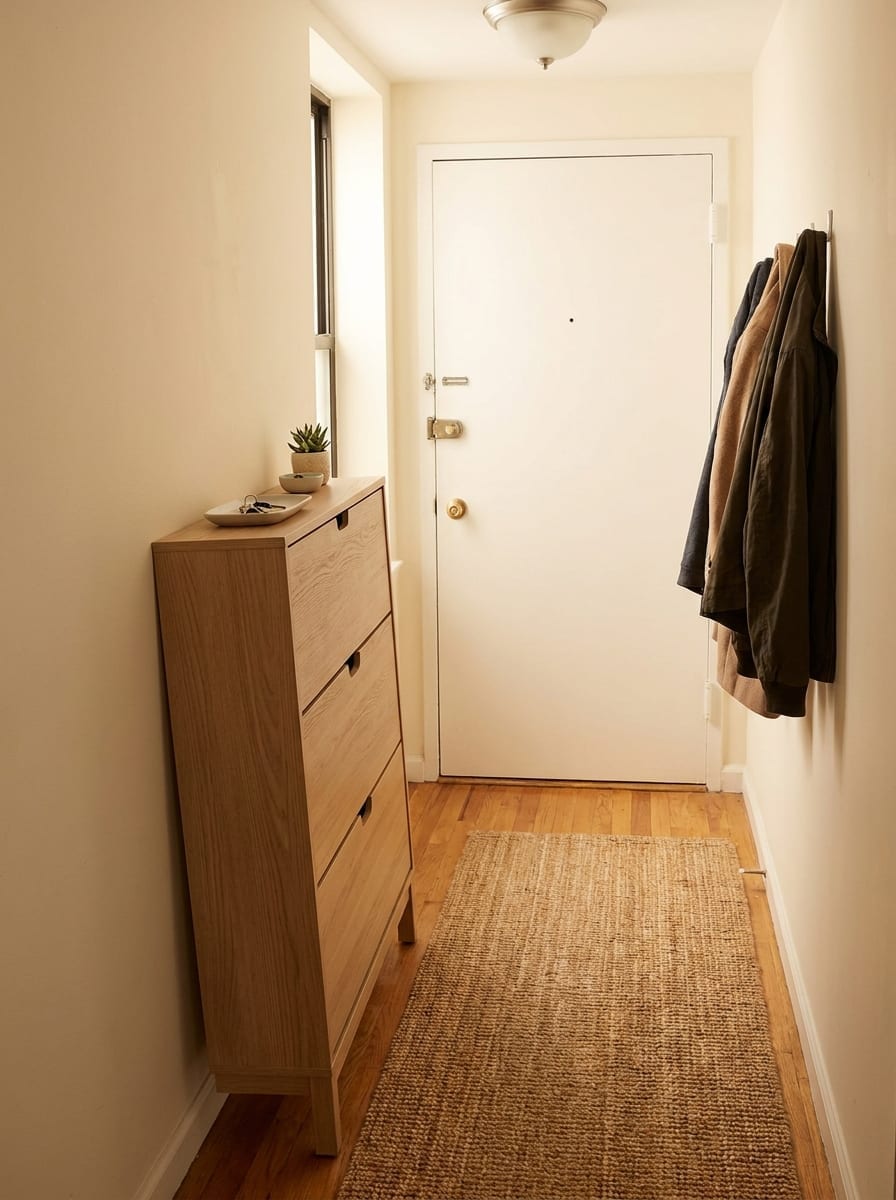
1. The Narrow Shoe Cabinet Landing Zone
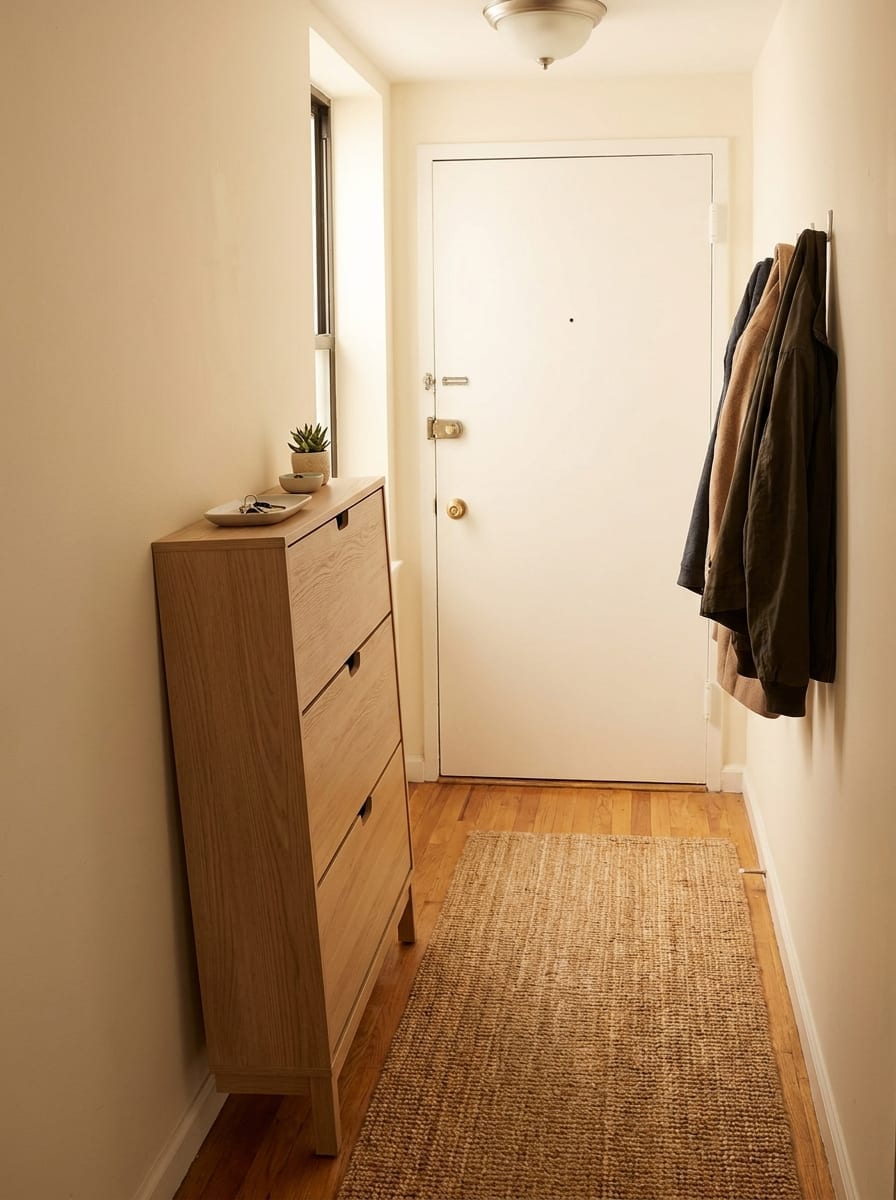
Shoes are often the first thing that makes a tiny entrance feel messy.
A deep shelving unit can solve the shoe problem but create a new one by shrinking the walkway.
A narrow shoe cabinet is often a better fit.
Look for something that stays relatively close to the wall and stores shoes vertically or at an angle.
The top can then act as a small landing surface for:
keys sunglasses mail small tray
Keep the top mostly clear
The cabinet should not become another decorative surface covered in objects.
One tray and perhaps one small lamp or vase is usually enough.
Why it works
You solve two problems with one piece:
shoe storage + landing surface
without taking up the depth of a traditional console.
2. The Floating Key Shelf
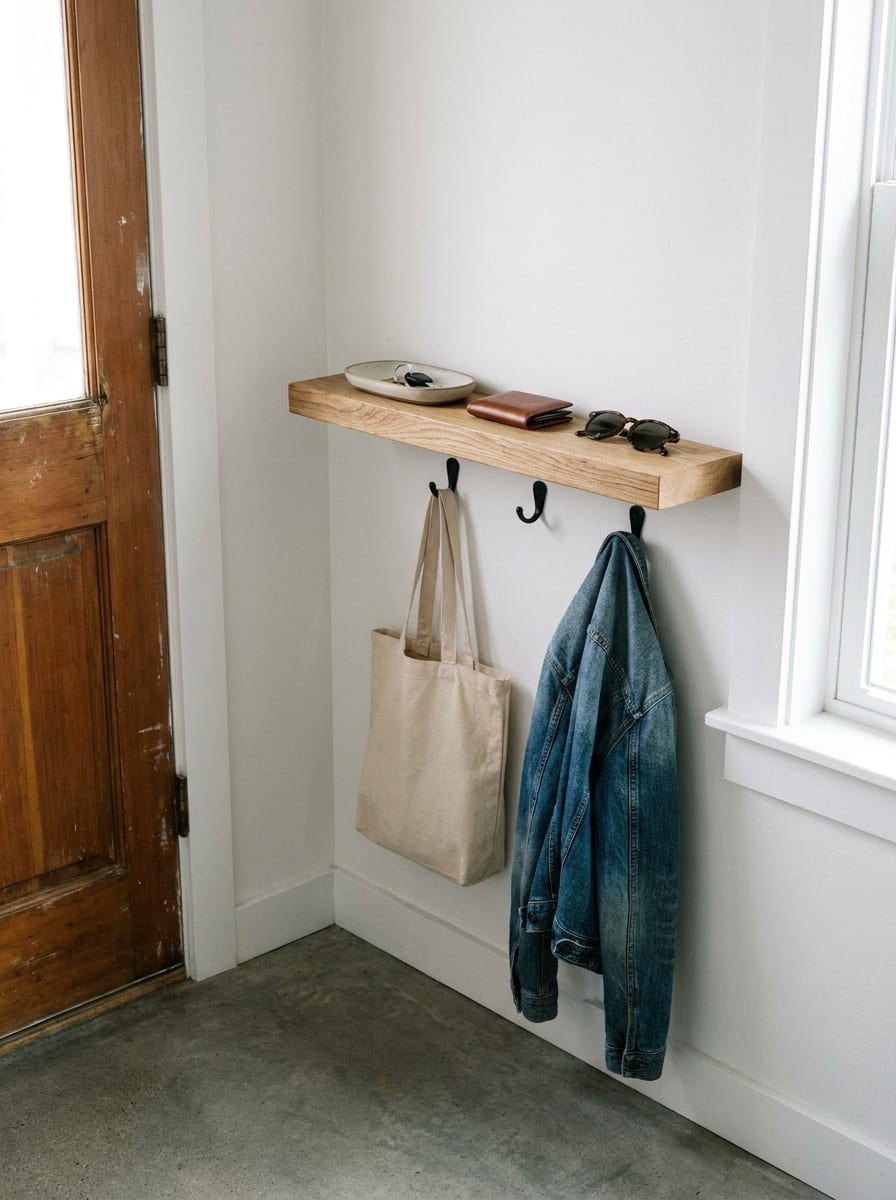
If there is no room for a console, do not force one into the space.
A small floating shelf can provide just enough surface for the things that normally end up scattered.
Use it for:
keys wallet sunglasses mail small bowl
Keep the shelf shallow.
It should not project so far into the room that people bump into it.
Add hooks underneath
If appropriate for your wall and rental situation, a few hooks beneath the shelf can hold:
tote bag lightweight jacket dog leash umbrella strap
For rentals, use mounting methods allowed by the lease and suitable for the wall surface.
3. The Mirror + Hook Wall
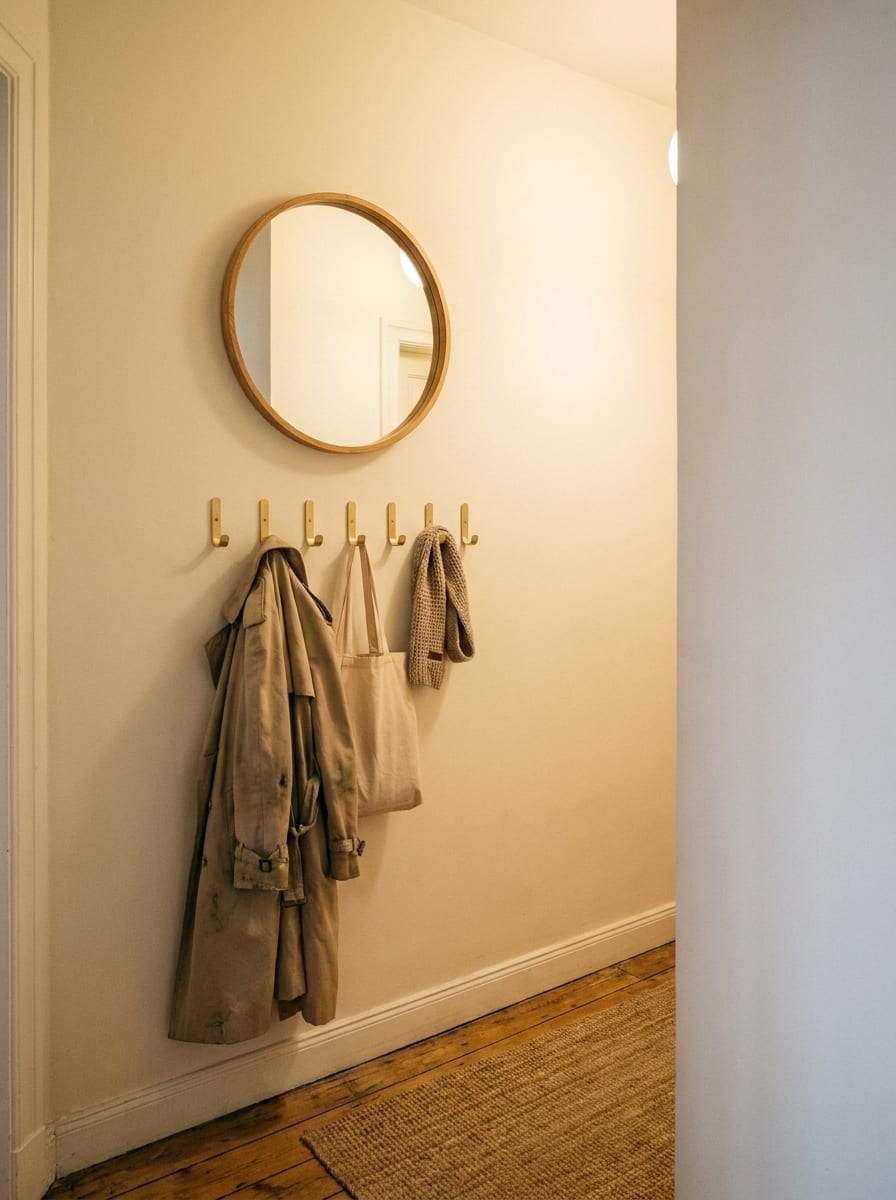
When the entryway is narrow, combine vertical functions.
A mirror and hooks can share one wall.
The mirror helps with:
last-minute checks before leaving reflected light making the entrance feel more open
The hooks handle daily essentials.
Keep the arrangement simple.
You do not need:
giant gallery wall mirror shelf coat rack artwork several baskets
all on the same wall.
Best layout
Place the mirror slightly higher, then keep hooks below or beside it.
That creates one organized vertical zone.
4. The Tiny Bench Setup
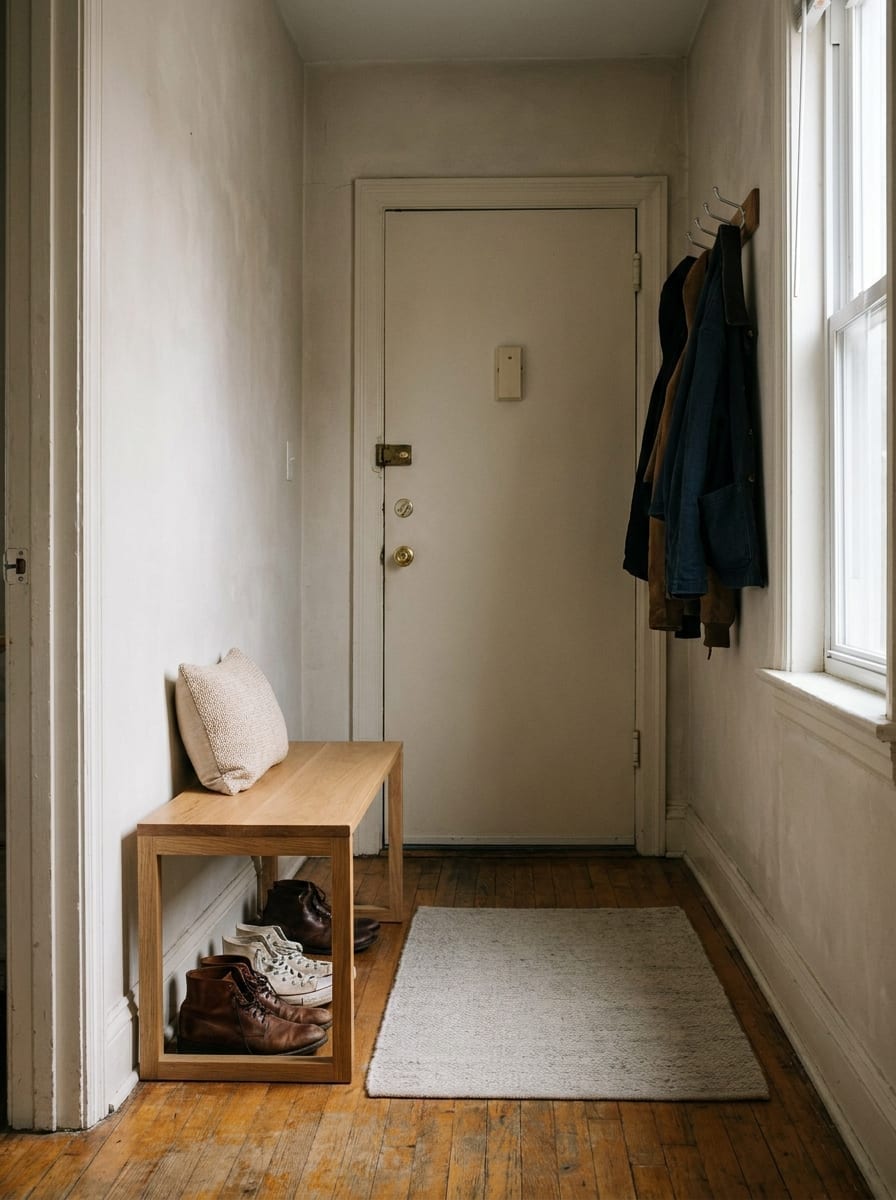
A bench is useful only if it does not block the entrance.
In a small apartment, look for something:
shallow narrow open underneath visually lightweight
Use it as a place to sit while putting on shoes.
The area underneath can hold:
two or three everyday pairs one low basket nothing at all if the space already feels tight
Avoid oversized storage benches
A deep upholstered storage bench may technically fit but visually consume the entrance.
In very narrow apartments, a lighter open-leg bench usually works better.
5. The No-Foyer Entry Zone
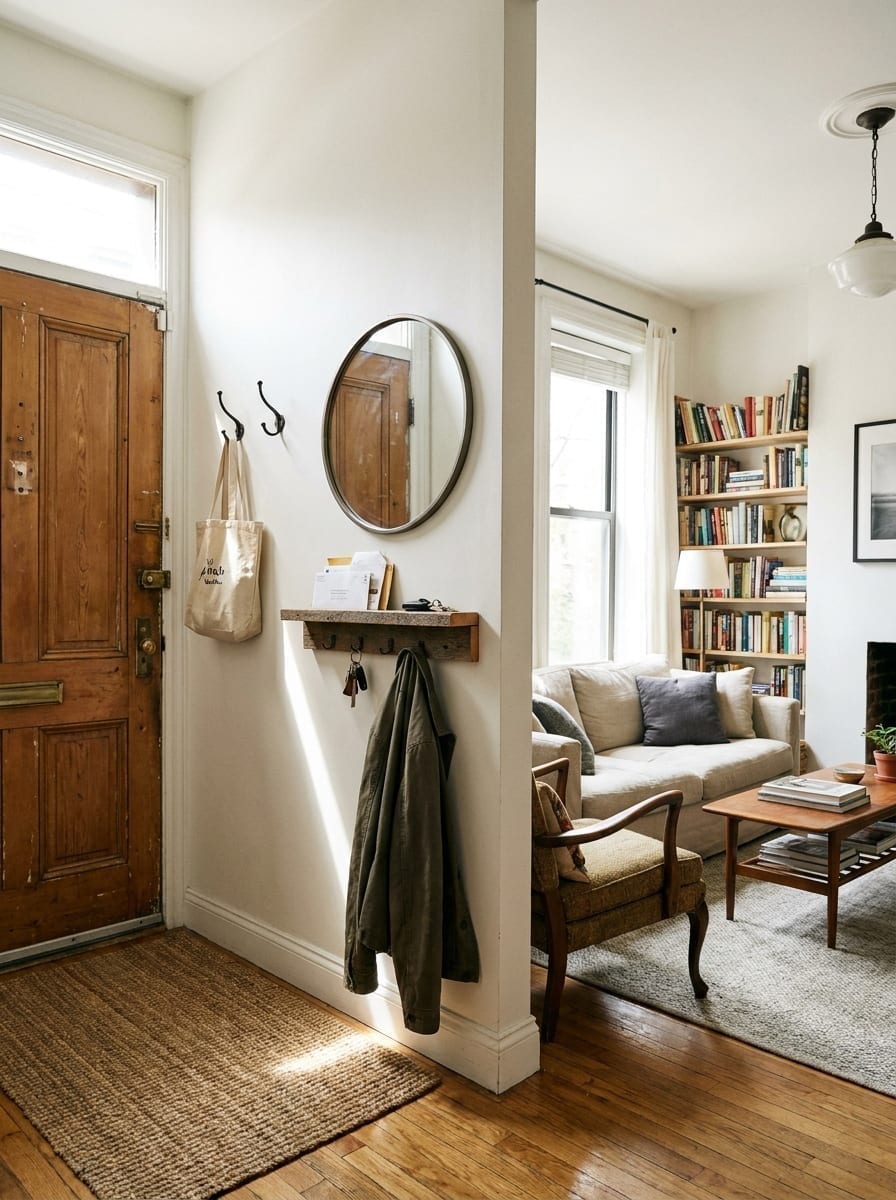
Some apartments have no foyer at all.
The front door simply opens into the living room.
In that case, create an entryway through visual zoning rather than architecture.
Use a combination such as:
small rug wall hooks mirror slim shelf shoe cabinet
Place the elements close enough together that they read as one zone.
You do not need a divider.
The visual grouping is usually enough to tell the eye:
this is where the entrance begins.
Keep the living room separate
Choose entryway pieces that relate to the living-room palette, but do not let the entrance decor spread across the whole room.
6. The Vertical Coat Storage Wall
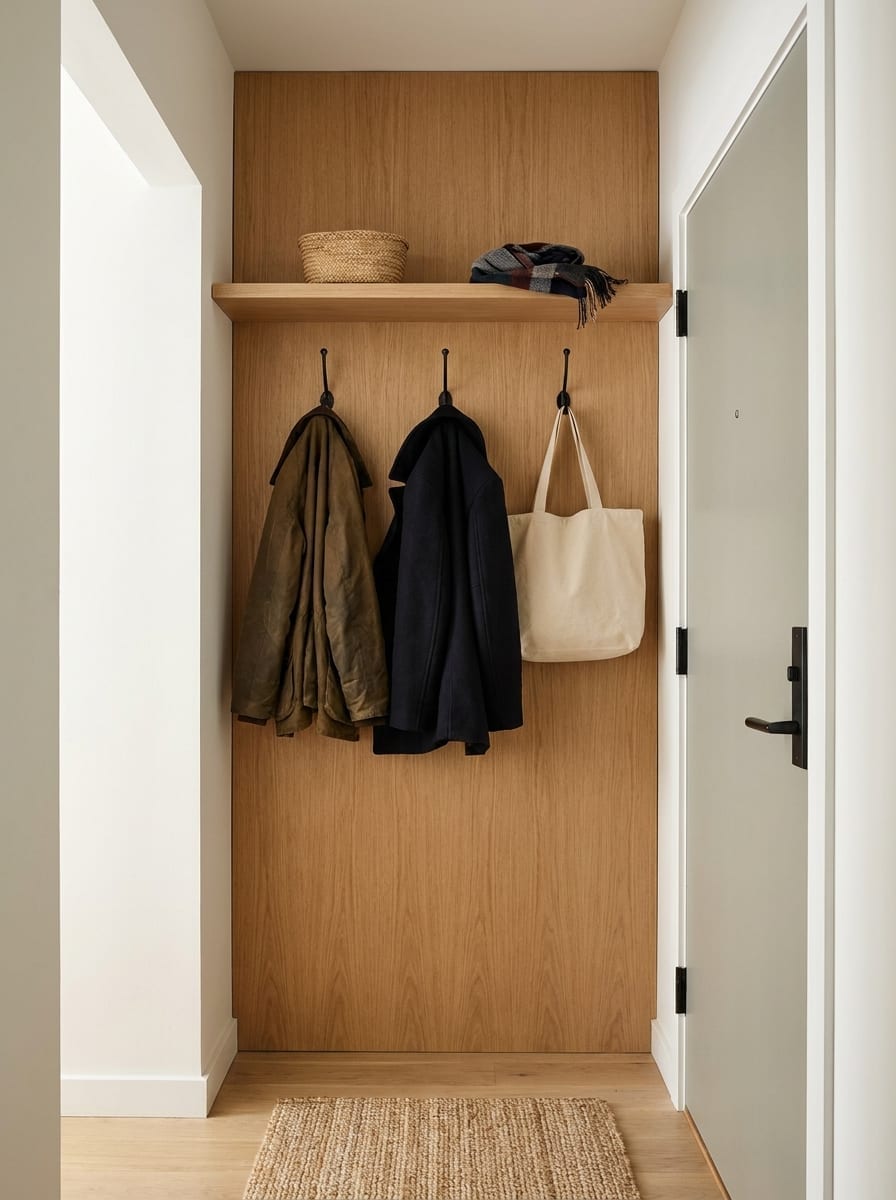
When floor space is limited, look upward.
A narrow wall-mounted coat zone can hold more than a bulky standing rack.
Use:
a short rail several hooks one upper shelf if needed
Keep only frequently used outerwear here.
Seasonal or rarely used coats should live elsewhere if possible.
Why editing matters
A small entryway cannot support ten coats hanging in full view without feeling crowded.
Give the prime hooks to the pieces you use most.
7. The Door-Back Storage Fix
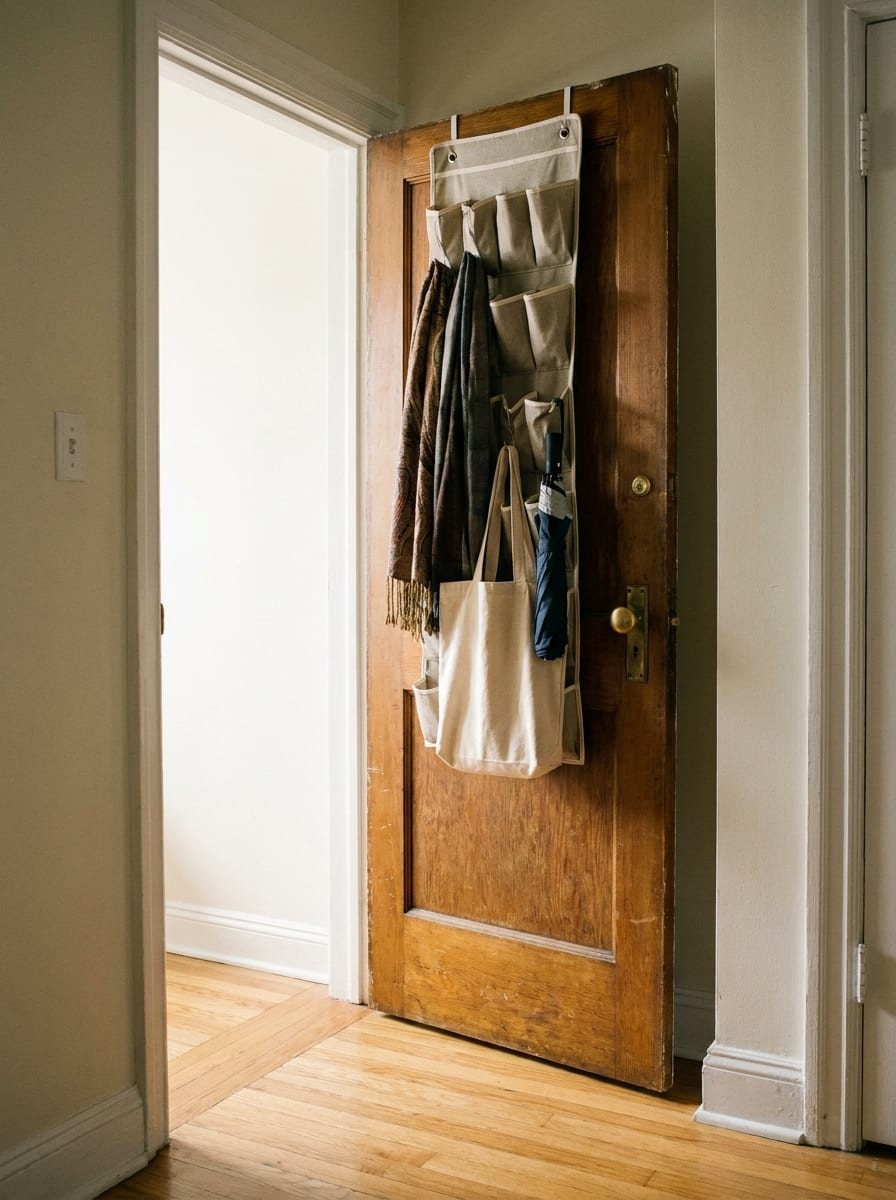
The back of the front door can provide useful storage when the surrounding walls are limited.
Depending on the door and lease, you might use it for:
lightweight organizer scarves reusable bags hats dog accessories umbrella
Keep it light.
The door still needs to:
open fully close properly operate without extra strain
Do not overload it with heavy shoe organizers or bulky storage unless the door and hardware are designed for that.
8. The Slim Runner Trick
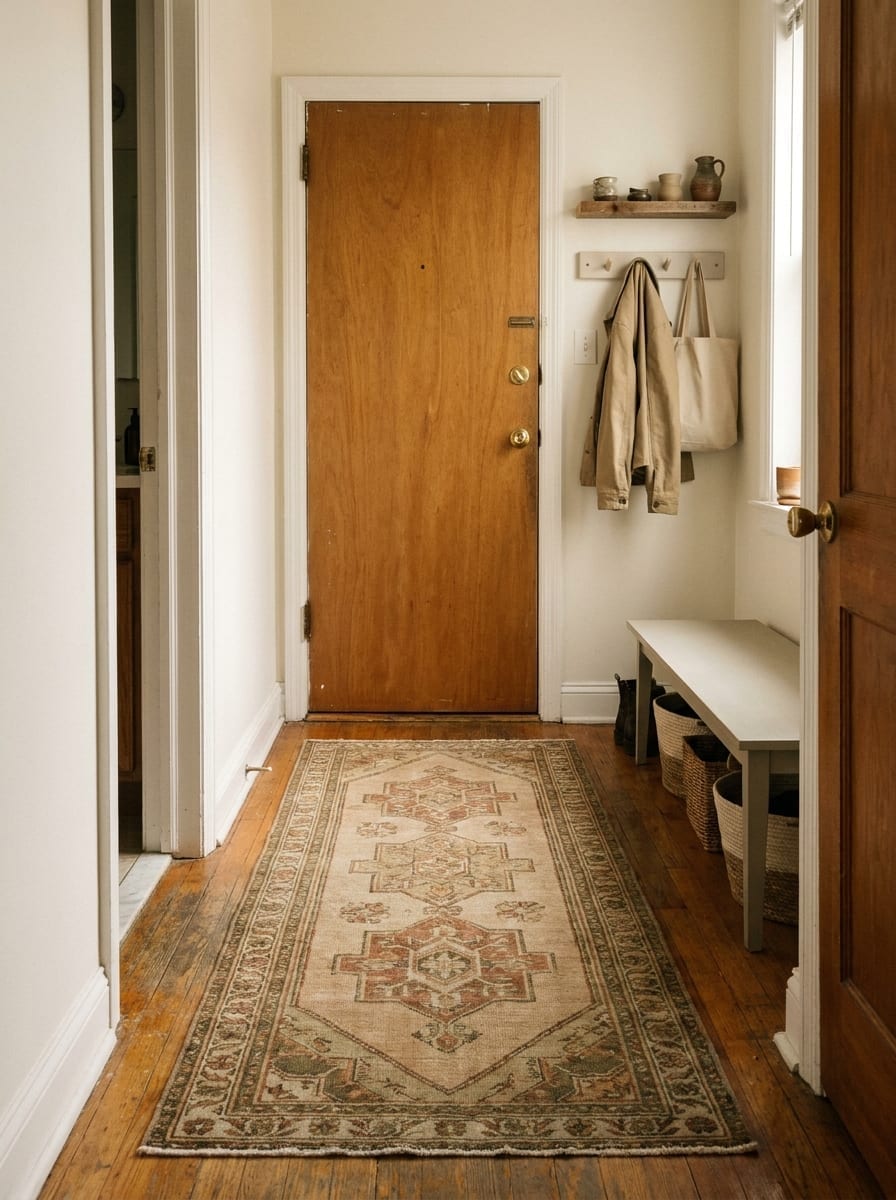
A narrow runner can visually define an entryway without adding furniture.
This works especially well in:
long narrow entrances hallway-style entryways apartments where the front door opens into a passage
Choose a rug that leaves some flooring visible around the edges.
Good colors include:
muted rust warm beige olive charcoal low-contrast vintage pattern
Practical matters
Choose something low-profile enough that it does not interfere with the door.
Also consider how easily it can be cleaned, since entryway rugs collect dirt quickly.
9. The One-Basket Drop Zone
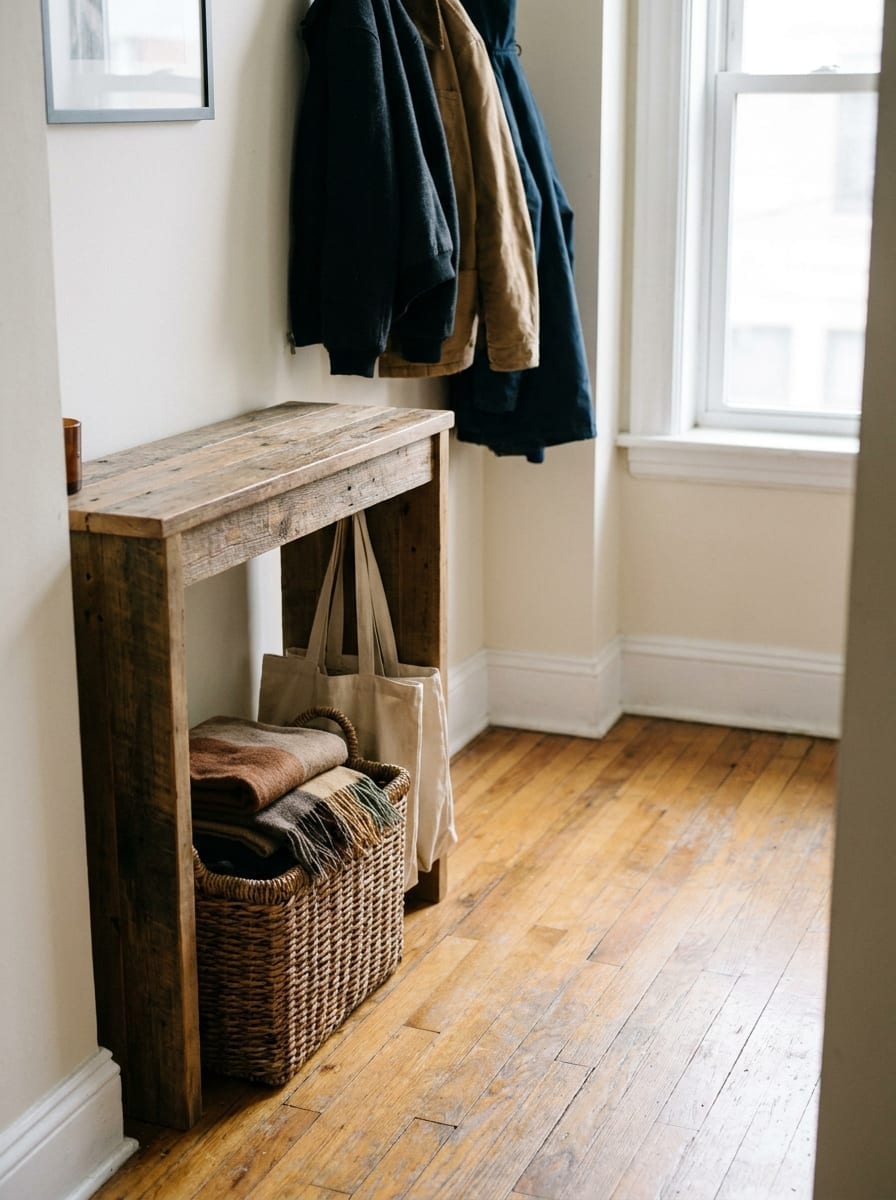
Baskets can be useful, but too many quickly become clutter themselves.
Use one.
Place it where it solves a real problem.
It could hold:
scarves gloves reusable shopping bags slippers pet accessories
Choose one category and keep it consistent.
Best placement
Try:
beneath a bench beside a narrow cabinet on a lower shelf
Avoid leaving multiple baskets across the floor.
One basket should reduce visual noise, not create another storage layer.
10. The Corner Entryway Solution
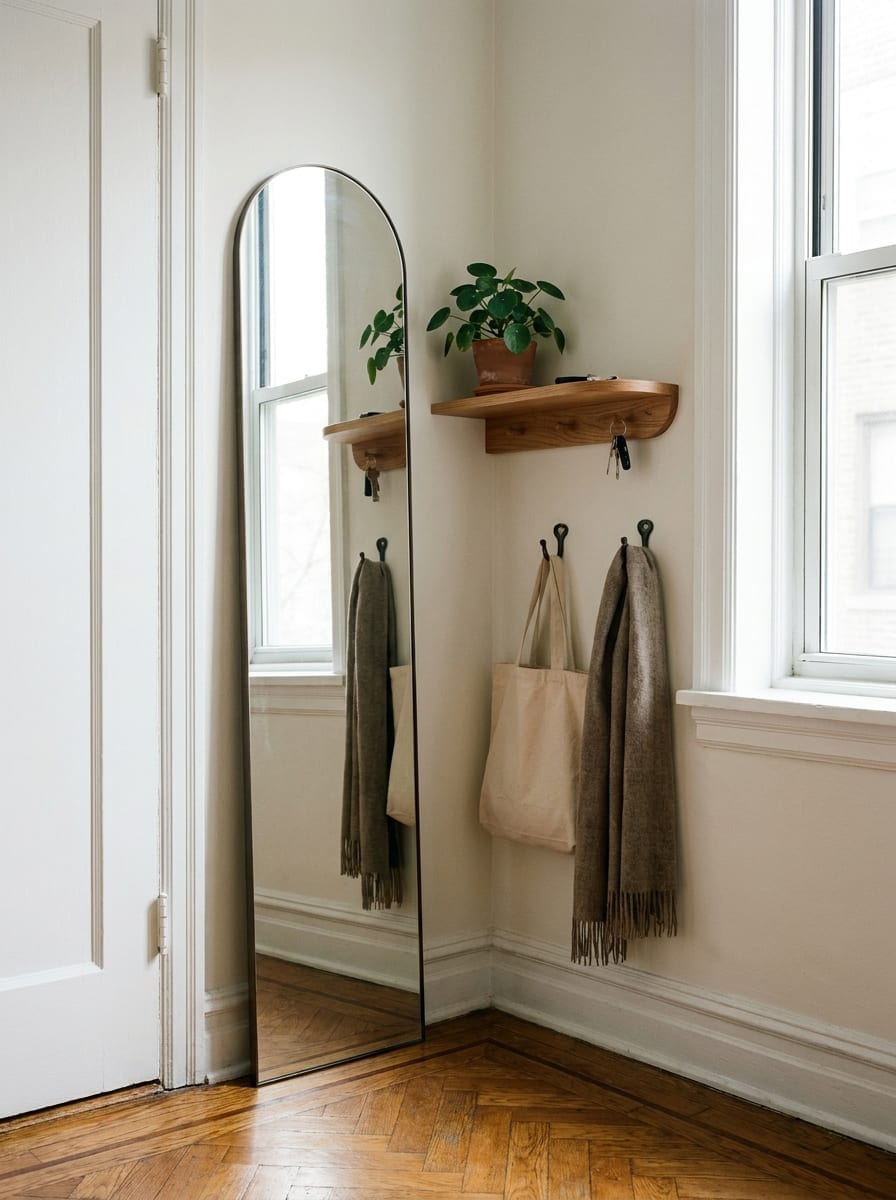
A small corner near the front door can become surprisingly useful.
If there is not enough wall width for a full console, use the corner vertically.
Try:
small corner shelf tall narrow mirror compact hook rail tiny triangular shelf one narrow plant if light allows
The goal is to use an awkward zone rather than filling a valuable straight wall.
Keep furniture shallow
The corner should not stick into the natural path through the apartment.
11. The Compact Lighting Upgrade
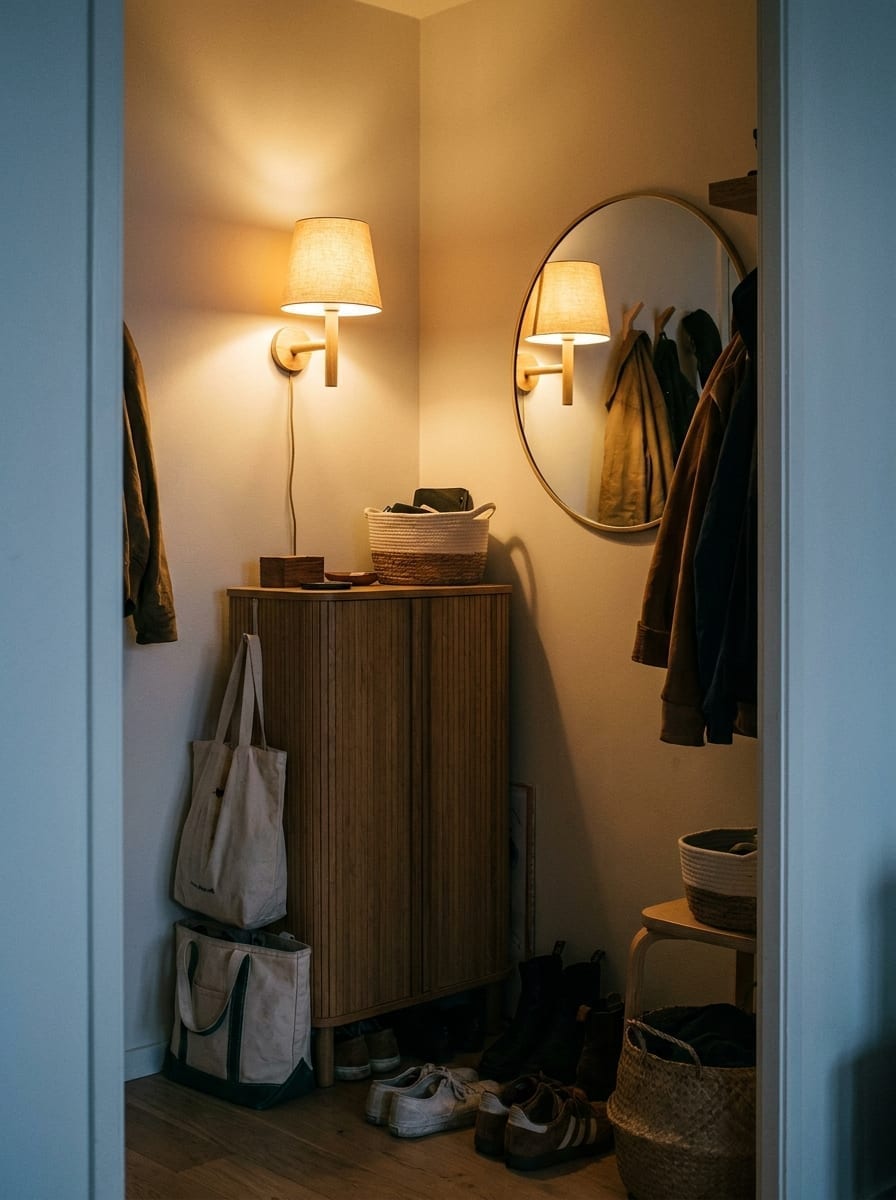
Many apartment entryways have poor lighting.
A dark entrance can feel smaller and messier than it actually is.
Improve the lighting without overwhelming the space.
Depending on the apartment, consider:
compact table lamp on a console plug-in wall sconce rechargeable wall light better bulb in the existing fixture small floor lamp if circulation allows
Warm or neutral light can make the entrance feel more welcoming than extremely cool lighting.
For rentals
Avoid electrical alterations unless permitted and professionally appropriate.
Portable or plug-in lighting is often the simplest option.
12. The Keep-the-Door-Clear Rule
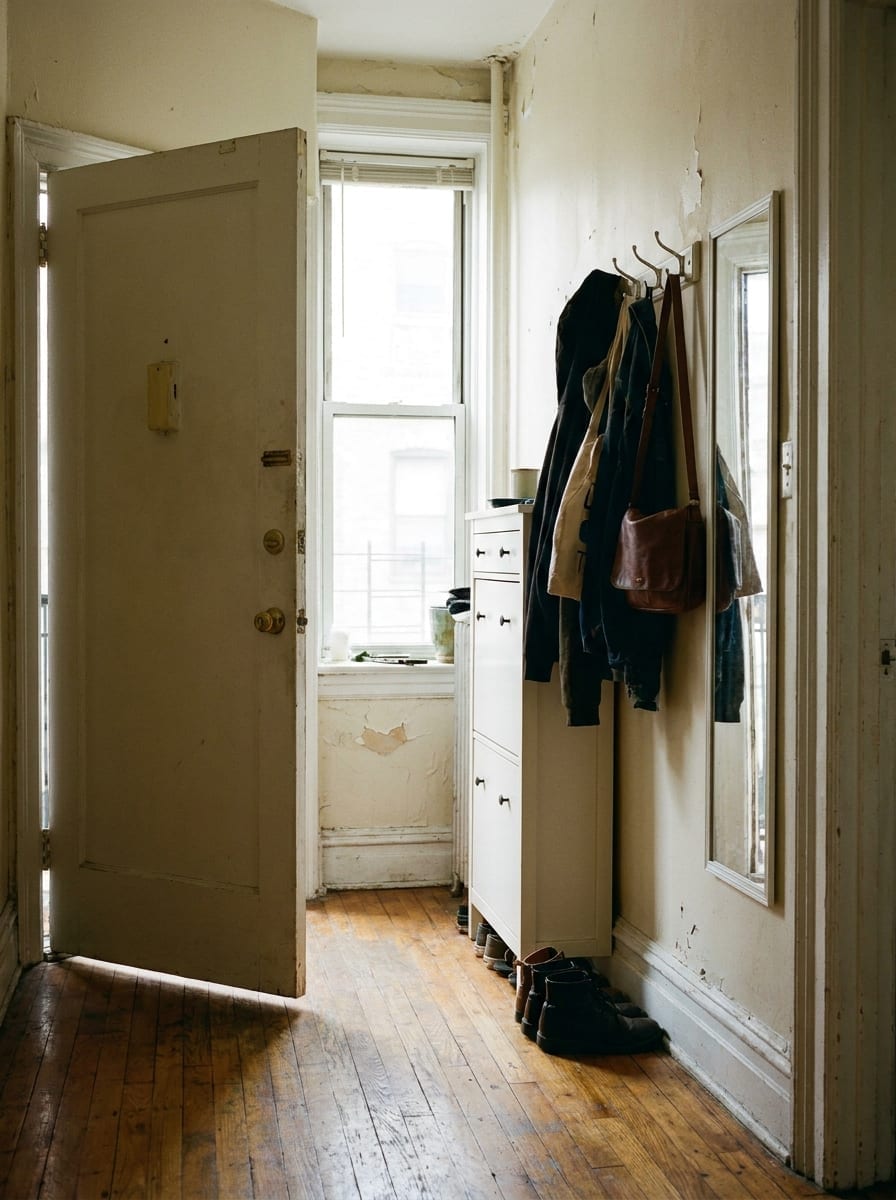
The most important entryway idea may be the least decorative.
Keep the area around the door clear.
Your front door should open comfortably without hitting:
bench rug edge shoe pile basket coat rack cabinet
The entrance also needs room for someone carrying:
groceries bags packages
A beautiful entryway that makes entering the apartment annoying is not successful.
Leave breathing room
Try to keep the immediate door swing and main walking route free of storage.
Move organization to the walls or edges instead.
This may mean using slightly less storage than the space could technically hold.
That is usually worth it.
What Should a Small Entryway Actually Store?
Not everything.
Prioritize the things you need while leaving or returning home.
Usually:
keys everyday shoes daily coat bag umbrella mail pet accessories if relevant
Move everything else deeper into the apartment.
The entryway should be a transition zone, not the main storage room.
What If Your Apartment Has No Entryway?
Create one using three signals:
- Something on the floor
A small rug.
- Something on the wall
Hooks, mirror or shelf.
- Something functional
Shoe cabinet, bench or key tray.
Together, those elements establish an entry zone even if there is no architectural foyer.
You usually do not need a divider wall.
How to Make a Tiny Entryway Look Bigger
The best techniques are simple:
Keep floor area visible
Use wall-mounted storage where practical.
Choose shallower furniture
Depth matters more than width in narrow entrances.
Use a mirror
Especially where it can reflect light.
Limit visible coats and shoes
Crowded hanging storage makes the whole zone feel smaller.
Keep the palette connected
Using too many finishes in a tiny area creates visual noise.
Small Entryway Colors That Work Well
Light colors are not mandatory, but they are easy to work with.
Try:
Warm neutral
Cream Oak Taupe Muted olive
Soft modern
Warm white Walnut Black accents Beige
Moody but balanced
Deep olive Cream Warm wood Antique brass
Light natural
Ivory Sage
Natural oak
Soft brown
You can still use a dark wall or cabinet if the rest of the entrance remains relatively light.
What to Avoid in a Tiny Apartment Entryway
Deep furniture
A traditional console may simply be too deep.
Too many hooks
If every hook is permanently occupied, the wall will always look crowded.
Shoe piles
Use contained storage whenever possible.
Large floor baskets
They consume walkway space quickly.
Oversized mirrors
A mirror should help the room, not dominate the wall.
Too many decorative objects
The entrance already has a lot of visual activity from everyday items.
Blocking the door swing
Always test this before finalizing the layout.
A Simple Small-Entryway Formula
If you are starting from nothing, try this:
One slim shoe cabinet or bench + one mirror + two to four hooks + one key tray + one small rug
Then stop.
Use the entryway for a week.
Only add something else if a real problem appears.
This prevents you from designing storage for things you do not actually need there.
Final Thoughts
A small apartment entrance does not need to look like a full foyer.
It just needs to make arriving home easier.
The best small entryways usually do three things:
keep the doorway clear use vertical space well give daily essentials one obvious home
Once those basics work, the decor becomes much easier.
You can add a mirror, a warm light, a good rug or one beautiful storage piece without the entrance feeling overloaded.
The goal is not to fit as much as possible beside the front door.
It is to make the first few feet of the apartment feel calm, useful and intentional.