10 Small Living Room Wall Decor Ideas That Don't Make the Room Feel Busy
Ten small living room wall decor ideas that add warmth and personality while keeping a compact room calm, open, and uncluttered.
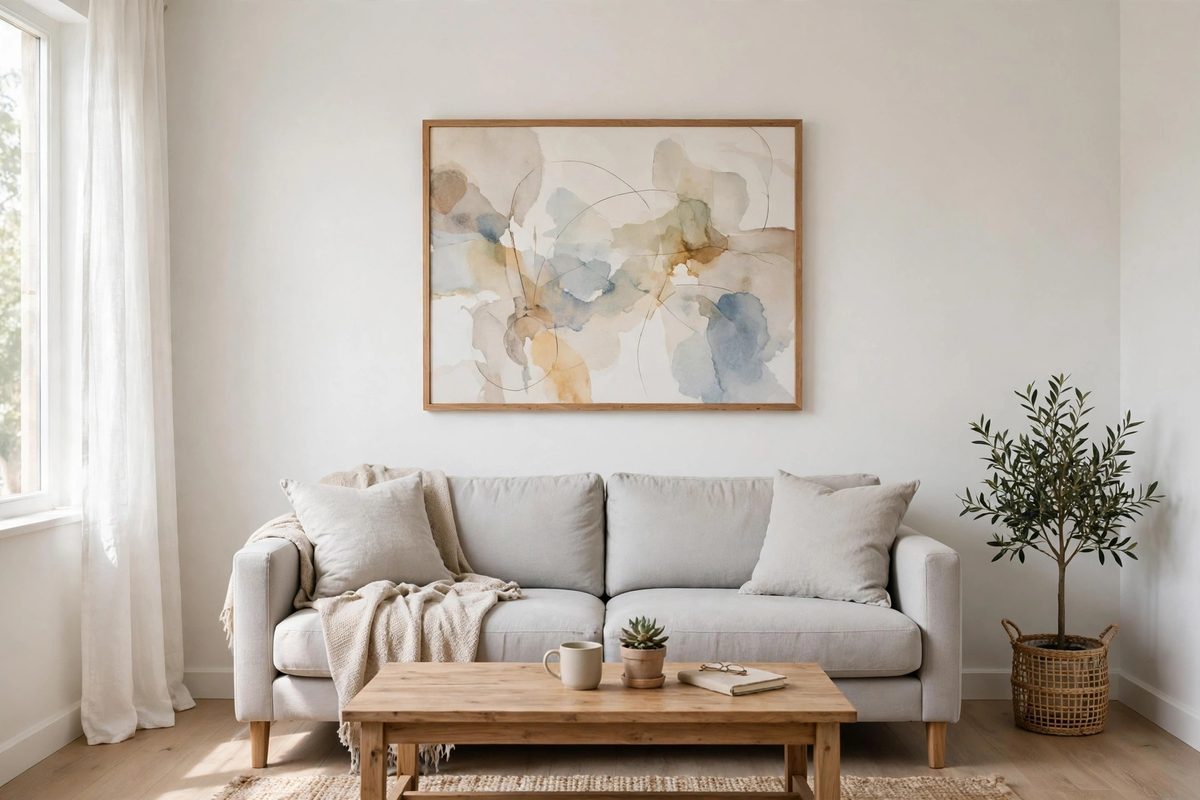
Calm small living room with one large framed artwork above a sofa and plenty of empty wall space
In This Guide
Blank walls make a small living room feel unfinished, but filling every wall makes it feel like a shop display. The balance is the whole game in a compact room. You want enough on the walls to give the room personality, but enough empty space that the eye can rest.
The most common mistake is scale. Tiny frames scattered across a big wall look lost, and a huge gallery crammed above a small sofa looks frantic. The fix is simple: fewer pieces, bigger sizes, and consistent spacing. One well-chosen piece at the right height beats ten small ones every time.
Color matters too. In a small room, wall decor works best when it shares a palette with the sofa, rug, or cushions, rather than introducing five new colors. That shared palette is what makes a room feel calm instead of busy.
These 10 ideas all respect that rule. Each one adds interest without adding visual noise, and each includes the sizing that makes it work. For the rooms around it, see small bathroom door ideas and small bedroom wardrobe ideas.
1. One Large Artwork
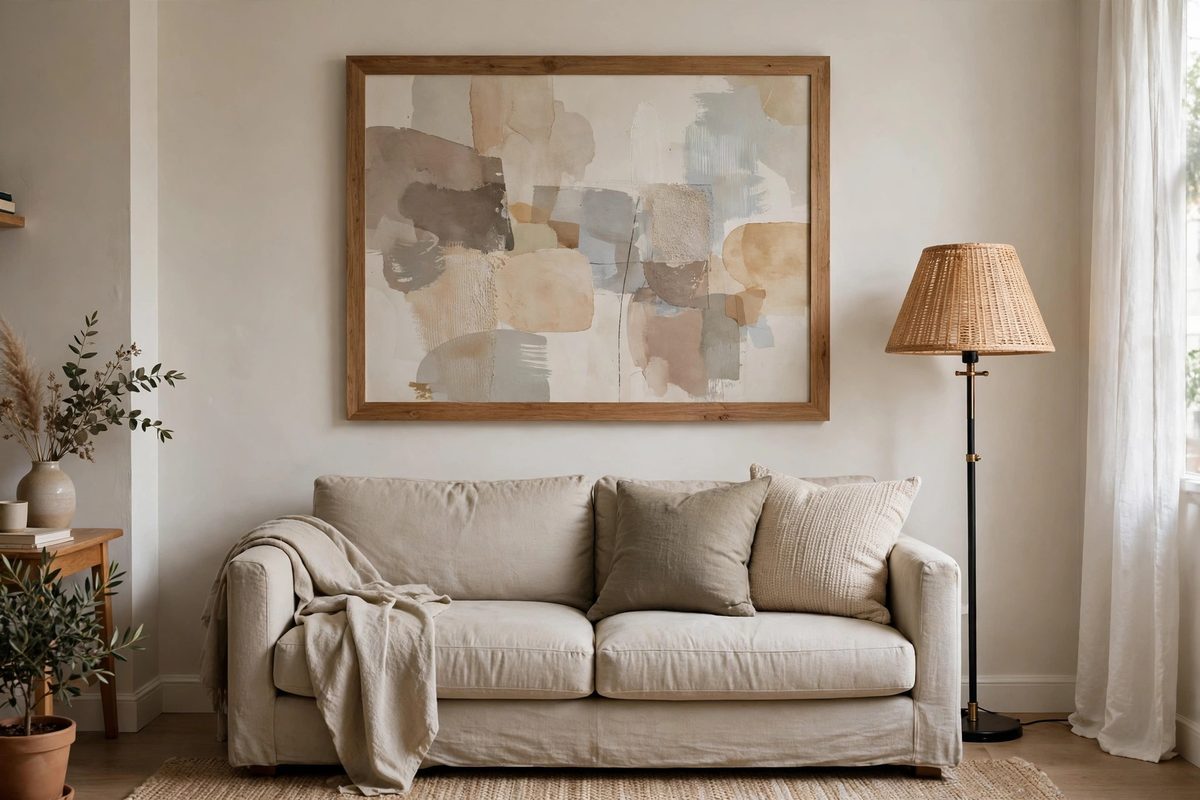
One large artwork above the sofa is the calmest wall decor choice a small living room can make. A single piece gives the eye one place to land, which makes the whole room feel settled, and it avoids the visual chatter of a dozen small frames competing for attention.
Size it to the sofa, not the wall. The artwork should span about two-thirds of the sofa width, so around 120 to 140 cm wide above a 180 cm sofa. Hang it so the center sits at eye level, roughly 145 to 155 cm from the floor, or 15 to 20 cm above the sofa back if the sofa is tall.
How to make it work
Choose art with a limited palette, two or three colors that already appear in the room, and a simple frame that matches your other wood or metal tones. Leave the rest of the wall bare. The empty space around the artwork is part of the design, not a gap waiting to be filled.
2. Ledge Shelves You Can Restyle
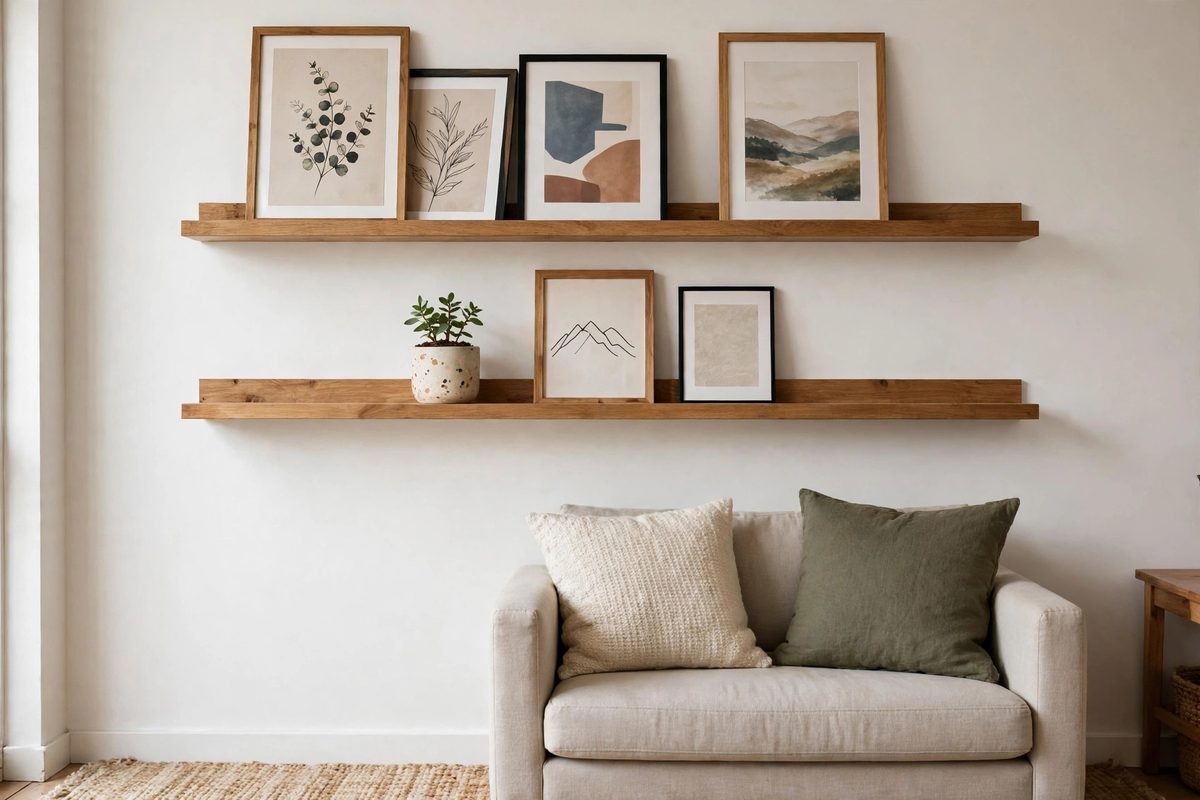
Picture ledge shelves let you lean art against the wall instead of hanging it, which means you can restyle the display in minutes without new holes. Two ledges above a sofa or console give you a gallery look with far less commitment, and they are ideal for renters who want to avoid a wall full of nail holes.
Install ledges 20 to 25 cm apart vertically, with the lower ledge about 25 cm above the sofa back. Each ledge holds two to four pieces, leaning at a slight angle. Mix one larger piece with smaller ones, and overlap frames slightly so the arrangement feels layered rather than lined up like soldiers.
How to make it work
Use ledges with a front lip at least 3 cm high so frames cannot slide off. Put the heaviest piece on the lower ledge for safety. Rotate the art seasonally or when you get bored, which is the whole point of ledges, and resist the urge to fill every centimeter. A gap between pieces is what keeps the display calm.
3. Vertical Gallery Stack
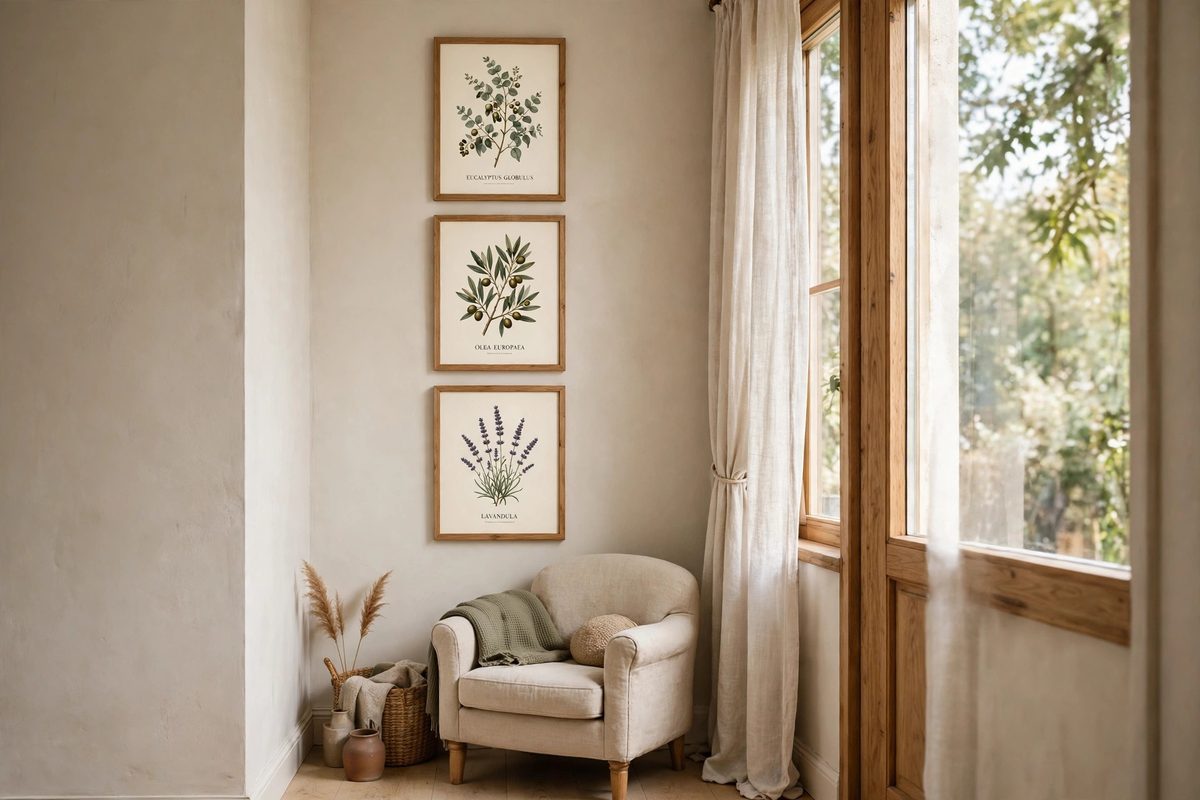
Narrow wall strips, like the space beside a window or between a door and a corner, are often left bare because a wide gallery will not fit. A vertical stack of three matching frames turns that awkward strip into a deliberate design moment, and it draws the eye upward, which makes the ceiling feel higher.
Use three frames of the same size, usually 25 by 30 cm or 30 by 40 cm, with 8 to 10 cm between them. Align their centers vertically. Matching frames and a consistent subject, like botanical prints or black-and-white photos, keep the stack looking calm rather than random.
How to make it work
Start the stack at eye level and build upward, not from the ceiling down, so the most visible frame sits where people actually look. If the strip is beside a window, match the frame color to the window trim for a built-in feel. For a fuller gallery approach, compare with gallery wall ideas for small apartments.
4. Oversized Clock as Art
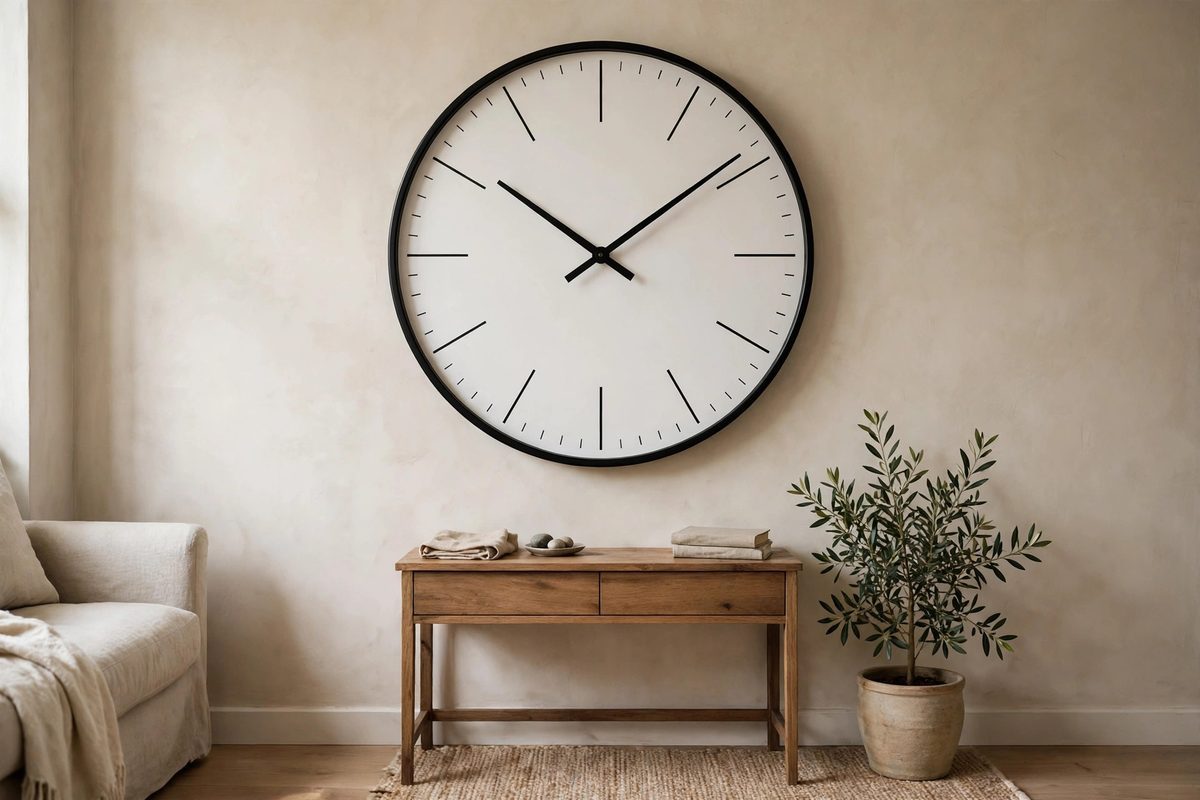
An oversized clock, 60 to 80 cm across, fills a wall the way art does while also being genuinely useful, which makes it a smart pick for small rooms where every object should earn its place. A simple face with clean numerals reads as modern decor, while a wooden or metal frame version adds warmth.
The key is treating the clock as the only piece on that wall. A big clock plus a gallery around it just looks busy. Hang it centered above a console or on the wall you face most often, with its center at eye level. Quiet sweep movements avoid the ticking sound that drives some people mad in a small apartment.
How to make it work
Pick a clock whose frame color already exists in the room, like black metal to match a lamp or wood to match a coffee table. Skip clocks with busy faces, Roman numerals plus patterns plus a second dial, since the face itself becomes visual noise at this size. Battery clocks need a yearly battery change, so hang it where you can reach it without moving furniture.
5. Woven Wall Hangings
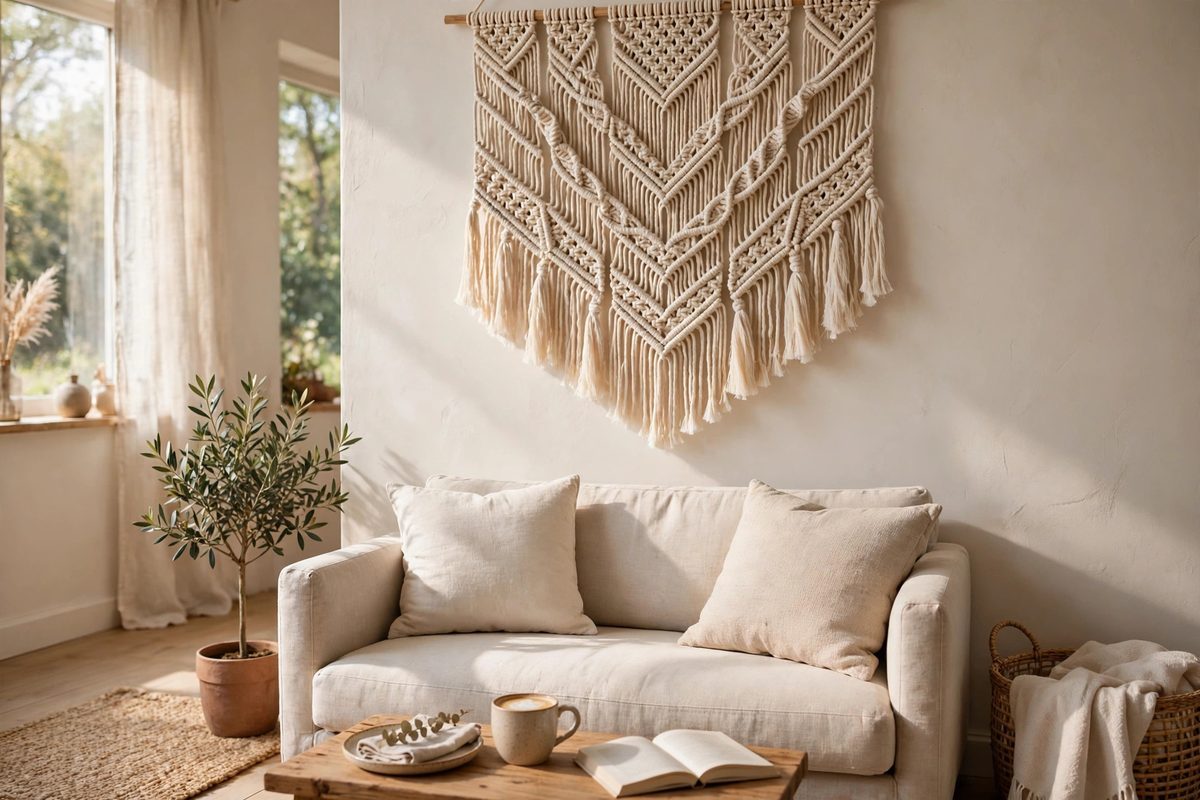
A woven wall hanging adds texture, which small rooms often lack when everything is flat paint, flat fabric, and flat screens. Cotton, wool, or jute weavings soften hard walls and absorb a little sound, which is a bonus in apartments with echoey floors.
One medium hanging, about 60 to 90 cm wide, works better than several small ones scattered around. Hang it where it will not be brushed constantly, like above a sofa or console, and keep it away from radiators and direct sun, which can fade natural fibers over time. Prices range from 30 dollars for simple cotton pieces to several hundred for handmade wool work.
How to make it work
Mount the hanging from a single nail or hook rated for its weight, and let it hang freely rather than pinning the bottom corners down, since the natural drape is part of the look. Pair it with smooth surfaces nearby, like a plain sofa and a glass coffee table, so the texture stands out instead of competing with other textures.
6. Floating Shelves With Breathing Room
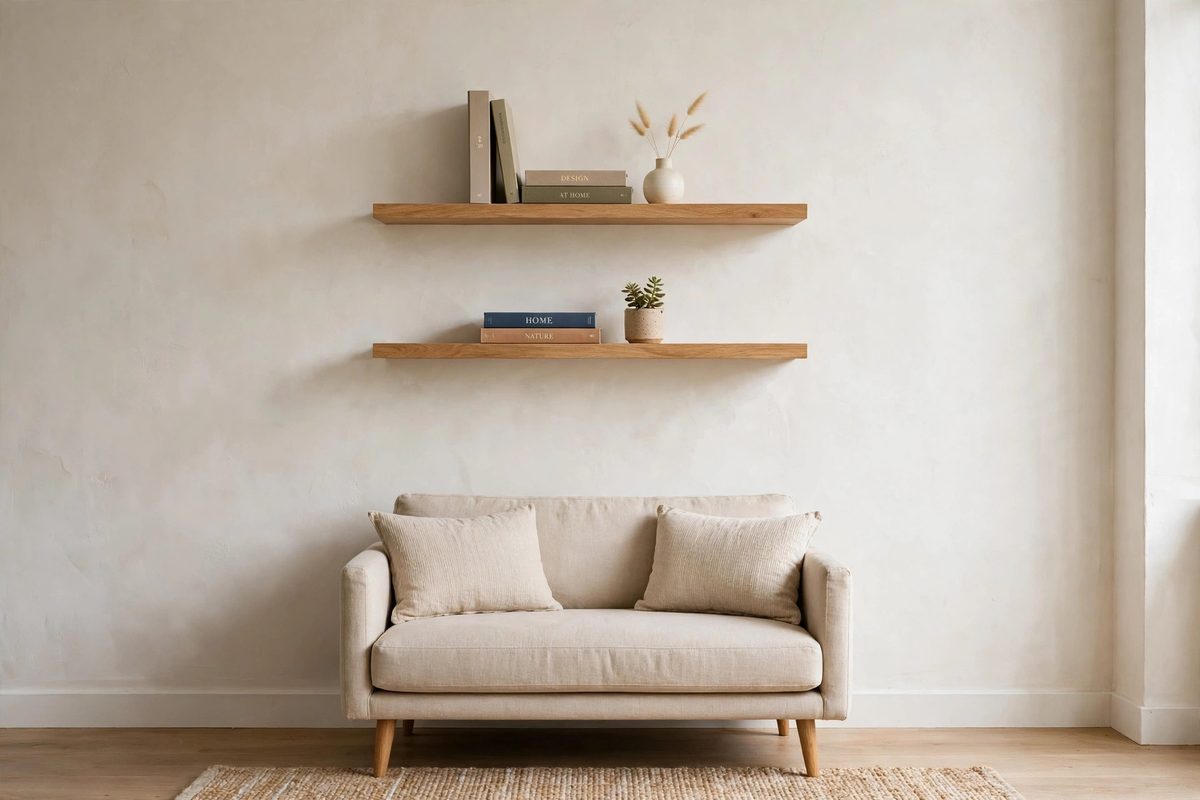
Floating shelves are wall decor and storage at once, but in a small living room they only stay calm if you leave them half empty. Two shelves with three or four objects each look styled. Two shelves crammed with twenty objects look like a storage unit.
Space shelves 35 to 45 cm apart vertically, and keep each shelf to a mix of heights: one tall vase or stack of books, one medium object, and one small one. Leave at least a third of each shelf empty. That empty stretch is what separates a styled shelf from a cluttered one.
How to make it work
Anchor shelves into studs, since books and ceramics get heavy fast. Style from the largest object outward, and step back to check the whole wall after each addition. If you cannot name why an object is on the shelf, take it off. Small rooms punish every unnecessary object.
7. Mirrors as Wall Decor
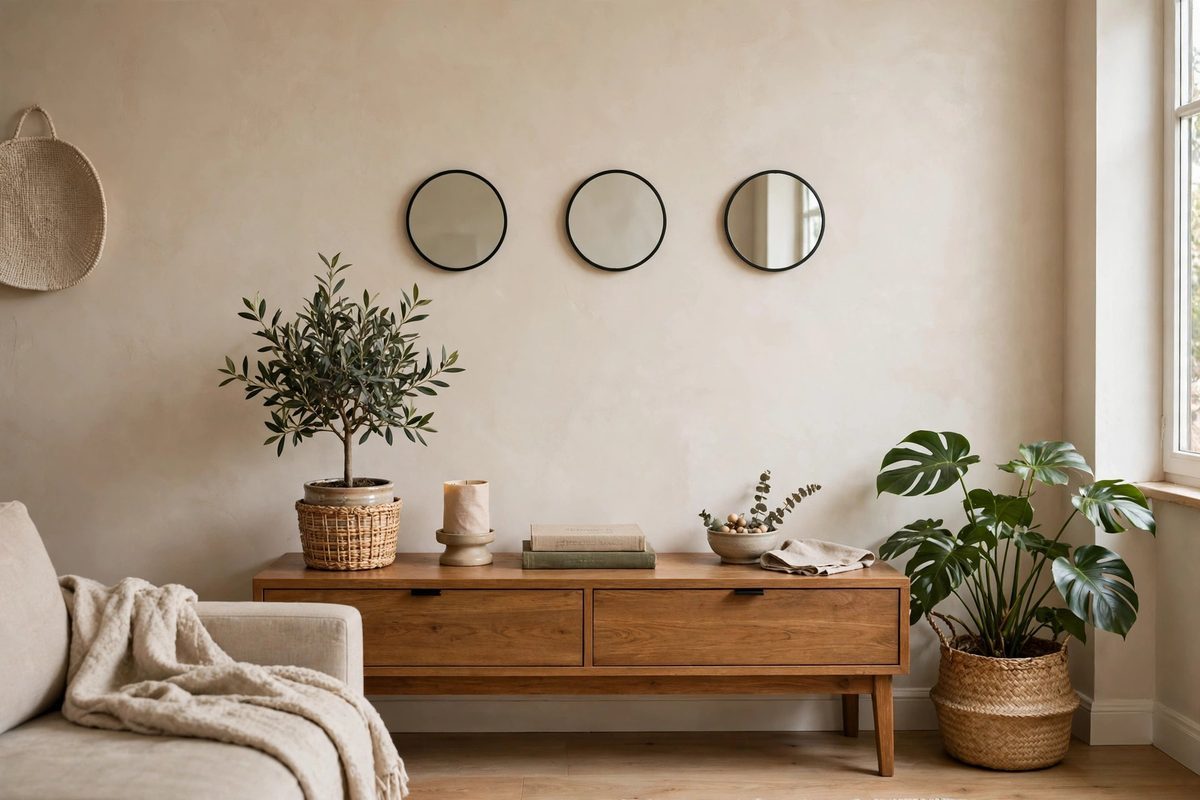
Mirrors count as wall decor, and in a small living room they do double duty by bouncing light and making the room feel deeper. A single round mirror above a console is the calmest version, while a trio of small mirrors in a loose cluster adds interest without the weight of framed art.
Place mirrors where they reflect something pleasant: a window, a plant, or an open room. A mirror reflecting a TV screen or a messy corner just doubles the mess. Keep the frames consistent, all wood or all black metal, so the group reads as one idea rather than three random purchases.
How to make it work
Hang the main mirror at eye level, and if you cluster three, keep the whole group within a roughly square area about 90 cm across, with 10 to 15 cm between mirrors. Check the reflection from the sofa, since that is where you will see it most. One mirror that reflects daylight is worth more than three that reflect blank walls.
8. Framed Textile or Tapestry
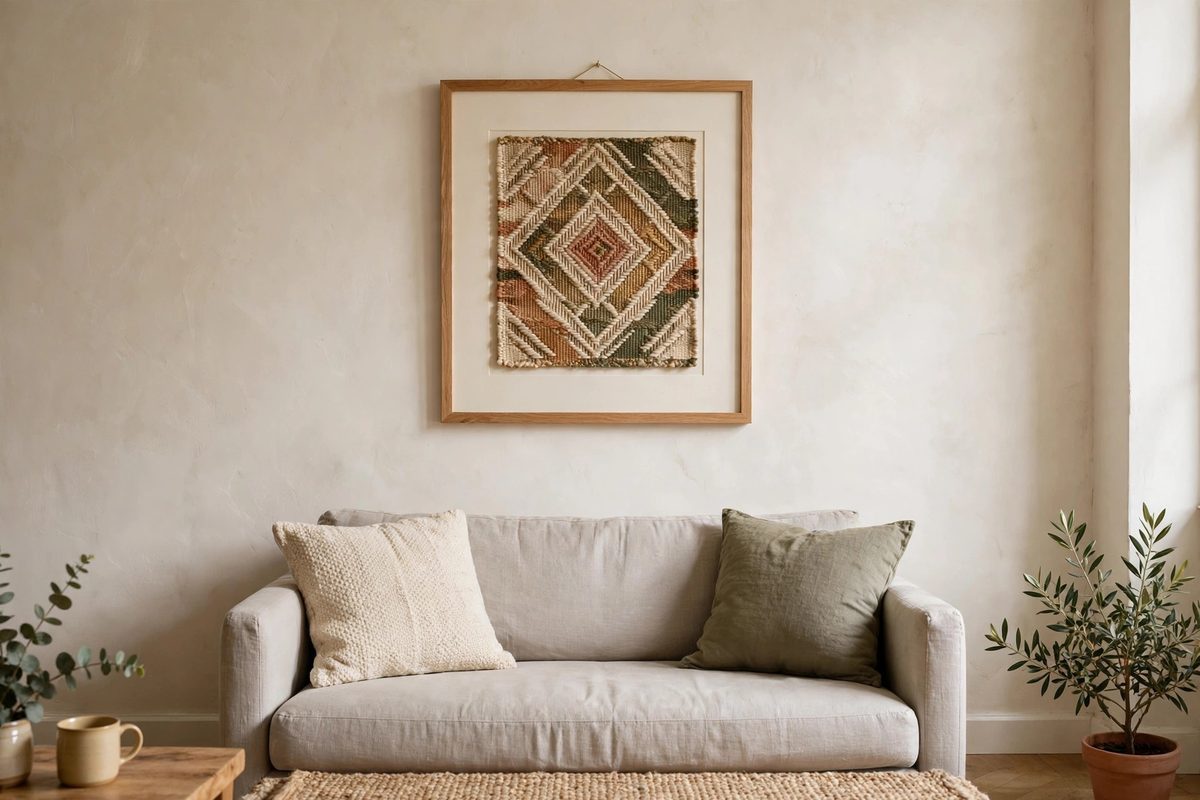
A framed textile, like a woven cloth, an embroidered piece, or a vintage scarf, brings color and pattern to a wall without the flat look of a poster. Framing protects the fabric and gives it the presence of art, and the texture adds warmth that paper prints cannot match.
Choose a textile whose colors echo the room, and use a simple frame with a mat that gives the fabric breathing room. The frame should be at least 10 cm larger than the textile on each side, so the piece does not look crammed into its frame. Hang it on the wall with the least direct sunlight to protect the fibers.
How to make it work
If the textile is valuable or handmade, use UV-protective glass and acid-free backing. For everyday pieces, a simple clip frame or a magnetic poster hanger works and costs far less. Keep the wall around it bare, since a textile already carries a lot of visual information on its own.
9. Minimal Line Art Trio
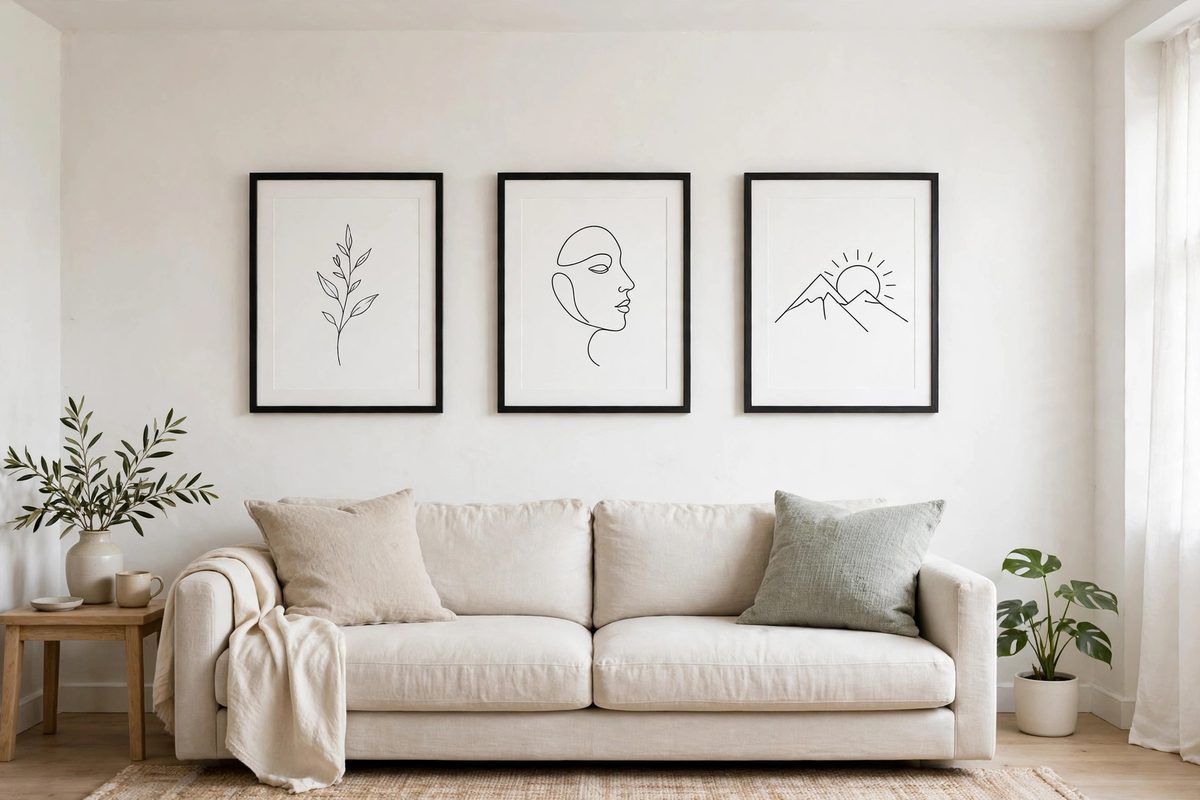
Minimal line art, simple black or single-color line drawings on white paper, is one of the safest ways to fill a wall in a small room. The drawings are mostly empty space, so three of them together still feel light, and the consistent style ties the wall together.
Hang three matching frames in a row, each 30 by 40 cm, with 8 to 10 cm between them, centered above a sofa or console. The row should span about two-thirds of the furniture width below it. Identical frames are important here. Mixed frames turn a calm trio into a busy collection.
How to make it work
Pick drawings with a shared theme, like faces, plants, or abstract shapes, rather than three unrelated images. Use the same mat width in all three frames. If your sofa is very long, add a fourth frame rather than stretching the gaps, since wide gaps break the group apart.
10. Painted Arch Behind the Sofa
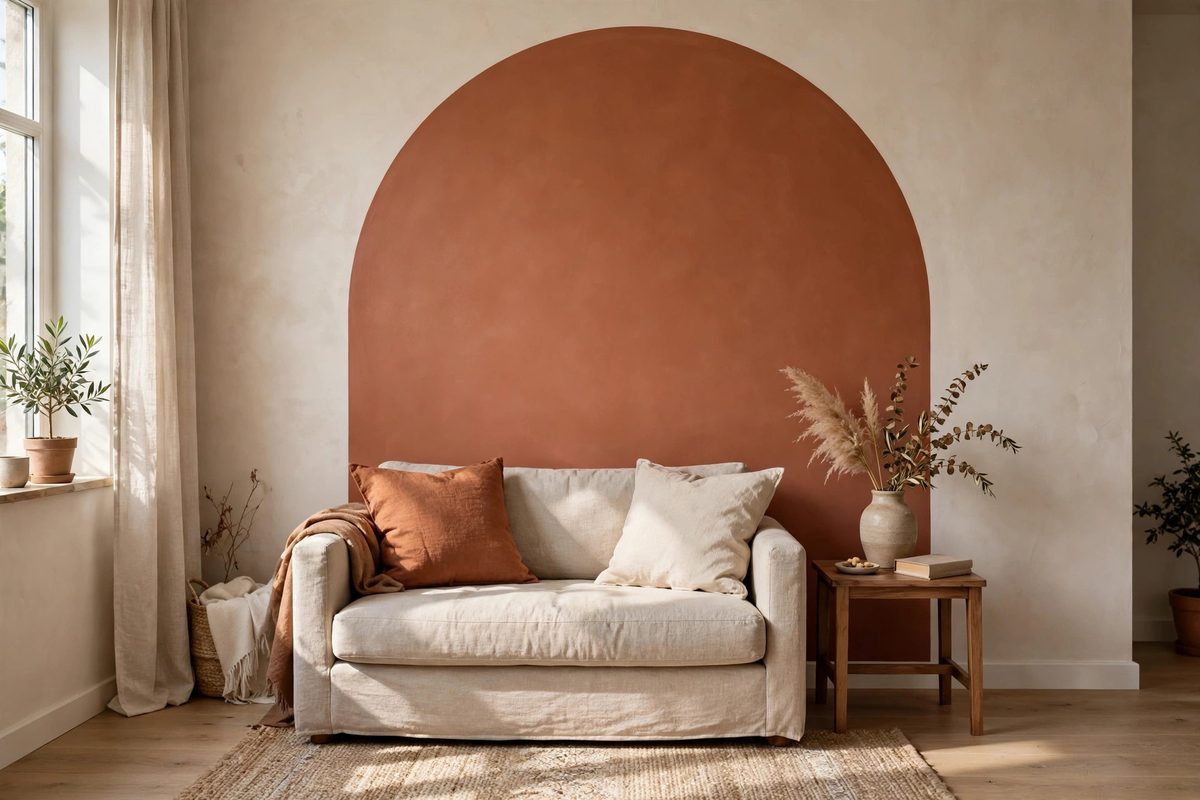
A painted arch, a large arch shape painted directly on the wall behind the sofa, creates a focal point with zero objects and zero clutter. It frames the seating area like architecture, adds a block of color, and costs little more than a small can of paint and a roll of tape.
Choose a color slightly deeper than the wall, like a warm terracotta on a cream wall or a soft sage on a white wall, rather than a loud contrast. The arch should be about 20 cm wider than the sofa on each side and reach 30 to 40 cm above the sofa back. A round-topped arch suits most rooms, while a squared arch suits a more modern space.
How to make it work
Mark the arch with a pencil and a string compass before painting, and use painter’s tape for the straight sides. Two coats of paint give an even finish. Keep the wall otherwise bare, since the arch is the decor. If you are renting, test whether a peel-and-stick arch decal gives the same effect without the repainting risk.
Calm wall decor is not about having less personality. It is about giving each piece enough room to be noticed. Choose one or two ideas from this list, size them to your furniture, and leave the rest of the wall alone. Your small living room will feel finished, not filled.