9 Neo Deco Living Room Ideas for Small Apartments
9 neo deco living room ideas for small apartments: fluted panels, arched mirrors, brass accents, and curved furniture scaled for compact rooms.
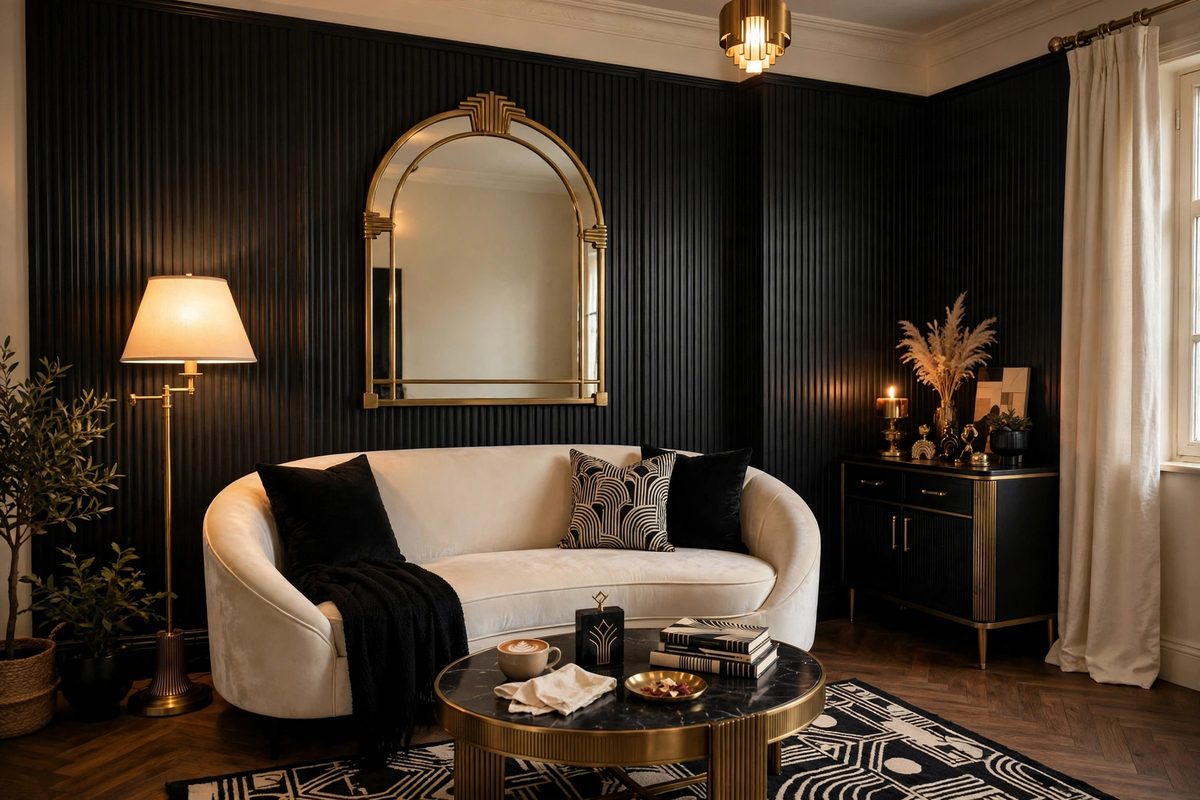
Small apartment living room with fluted wall panels, arched mirror, brass accents, and a curved velvet sofa
In This Guide
Neo deco takes the glamour of 1920s art deco, geometric patterns, rich color, brass, and curves, and softens it for modern life. The classic version can feel heavy in a small apartment, all dark lacquer and oversized furniture. The neo version keeps the drama but lightens the palette, shrinks the furniture, and uses bold details in small doses.
The trick in a compact living room is choosing one or two deco gestures and letting the rest of the room stay calm. A fluted wall or an arched mirror can carry the whole style. You do not need a sunburst on every wall and a velvet sofa and a brass bar cart all at once.
These ideas scale the look for rentals and small footprints, and they sit nicely beside other small space styling, from the starry calm of celestial bedroom ideas to the warm, collected feel of vintage kitchen ideas. For wall styling that works with deco geometry, see gallery wall ideas for small apartments.
1. Fluted Panels on One Wall
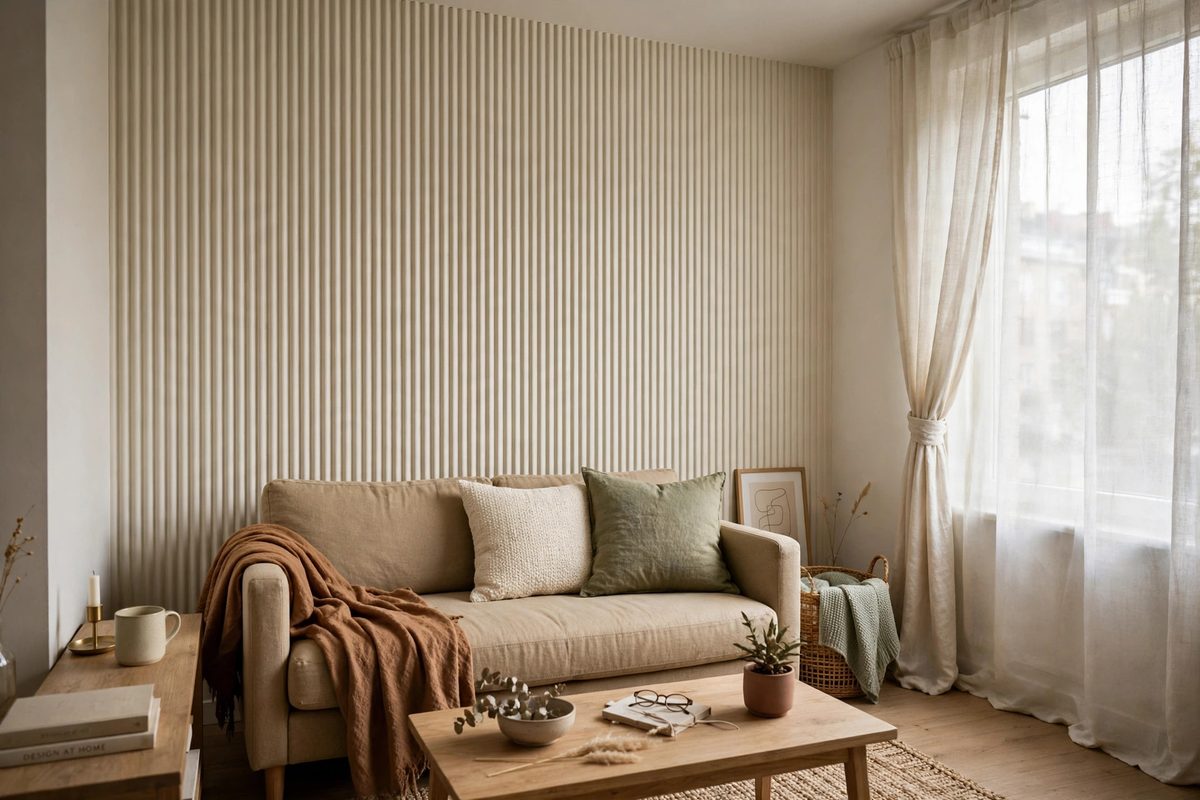
Fluted panels, narrow vertical ribs of wood or MDF, are the single most effective neo deco move in a small room. They add rhythm and shadow without a busy pattern, and they make a flat wall feel architectural. One accent wall is enough; wrapping all four walls can make a small room feel like a corridor.
Renter-friendly options include lightweight peel-and-stick fluted panels or individual half-round wood strips attached with removable adhesive. A typical panel run costs about 8 to 15 dollars per square foot for materials, and a single 8 foot wall section is a weekend project.
How to make it work
Choose the wall behind the sofa or the TV wall, and run panels floor to ceiling for the tallest effect. Paint them the same color as the wall for subtle texture, or one shade deeper for contrast. Keep furniture in front of the panels low and simple so the vertical lines stay visible.
2. Arched Mirrors That Open the Room
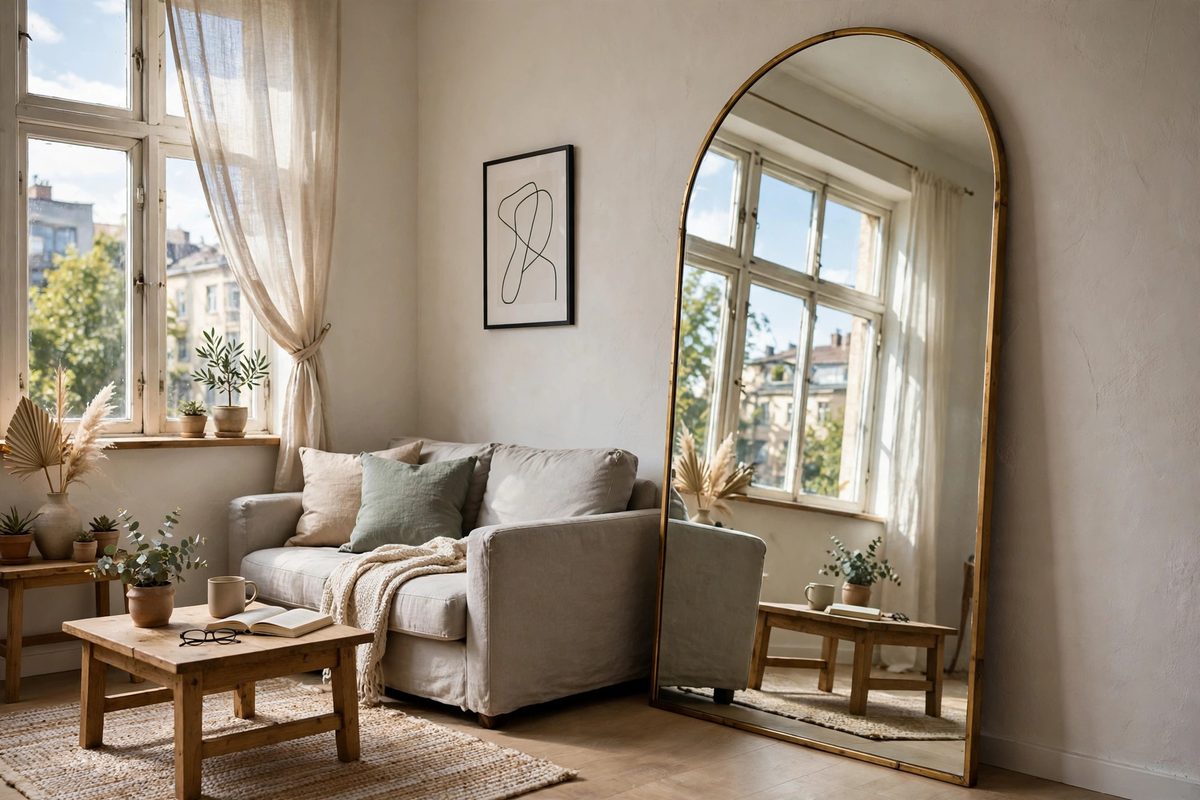
The arch is deco’s friendliest shape, and a mirror in an arched frame does double duty: it nods to the style and bounces light around a small room. A mirror 24 to 36 inches wide over a console or leaning against a wall reads as a statement without eating floor space.
Leaning mirrors need a secure setup. Even in a rental, a small wall anchor or anti-tip strap at the top keeps a leaning mirror safe, especially in homes with pets or kids.
How to make it work
Hang or lean the mirror opposite a window when possible, so it reflects daylight rather than a blank wall. Keep the frame slim, brass or black metal, and let the arch shape do the talking. Avoid pairing an arched mirror with an arched doorway print and an arched lamp all in one sightline; one arch is a motif, three is a theme park.
3. Brass Accents in Small Doses
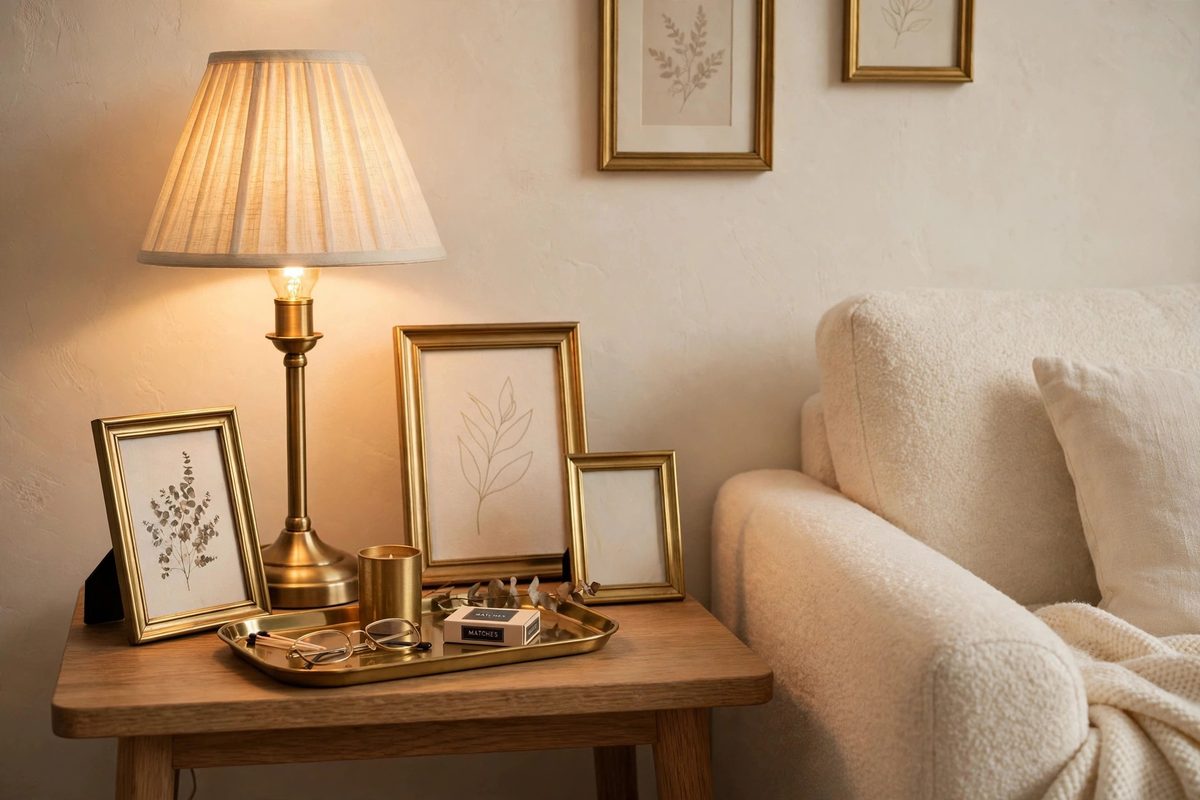
Brass is the metal of deco, but a small room needs it in jewelry quantities, not furniture quantities. Think picture frames, a lamp base, cabinet pulls, or a tray, not a full brass coffee table and a brass floor lamp and brass shelving.
Mixing metals is fine if brass stays dominant. A little black metal in lighting or curtain rods grounds the warmth of brass and stops the room from looking gold-washed.
How to make it work
Pick three to five brass touches and repeat them at different heights: a frame at eye level, a lamp base at table height, and a tray or bowl lower down. Use unlacquered brass if you like a living patina, or lacquered brass if you want a consistent shine with less polishing. Wipe with a soft cloth; skip abrasive cleaners.
4. Deep Green Velvet, One Piece Only
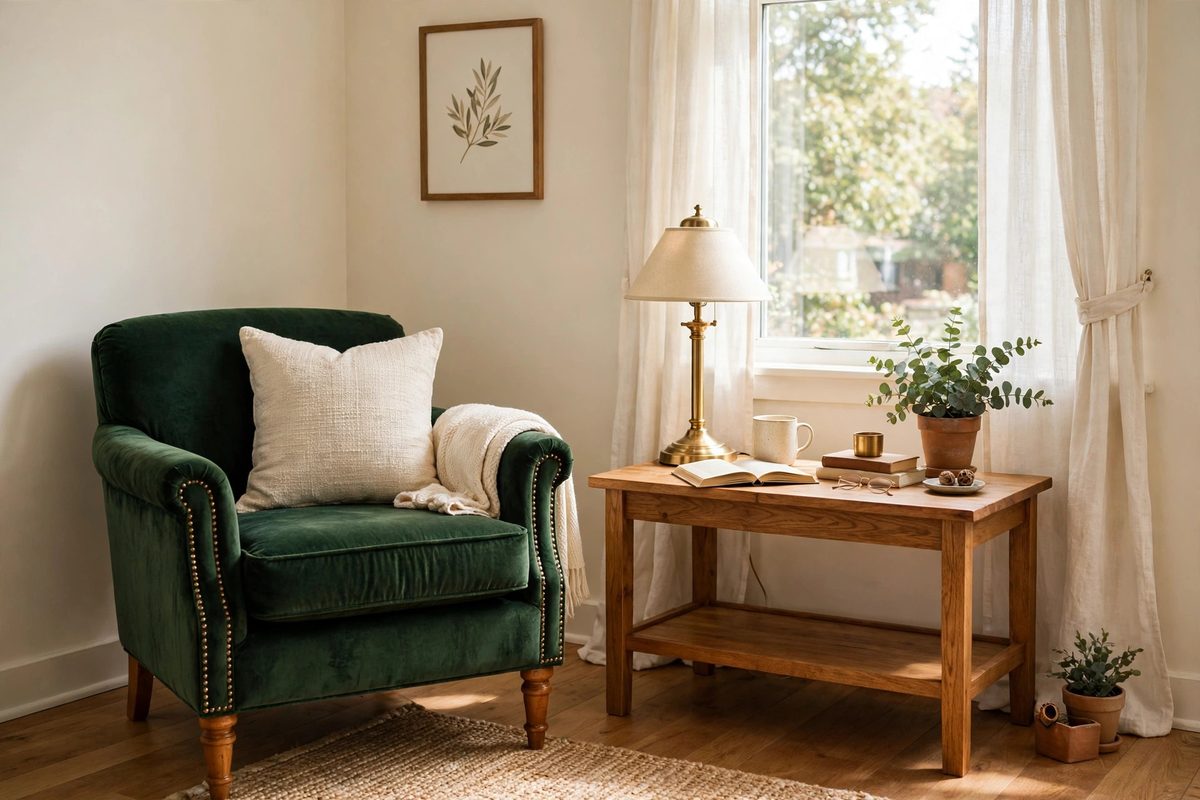
Deep green velvet is the neo deco sofa color, rich, moody, and surprisingly forgiving with pet hair and everyday wear. In a small apartment, though, one velvet piece is the limit. A velvet sofa plus velvet chairs plus velvet cushions turns a compact room into a fabric warehouse.
If a full velvet sofa feels like too much commitment, an accent chair or an ottoman in emerald velvet gives you the same color story for a fraction of the price, often 150 to 400 dollars versus 900 dollars or more for a sofa.
How to make it work
Pair green velvet with cream walls, warm wood, and brass. Keep other upholstery in flat, matte fabrics like linen or cotton so the velvet stands out. Vacuum velvet with an upholstery attachment weekly, and brush it in one direction to keep the nap even.
5. Geometric Rugs Underfoot
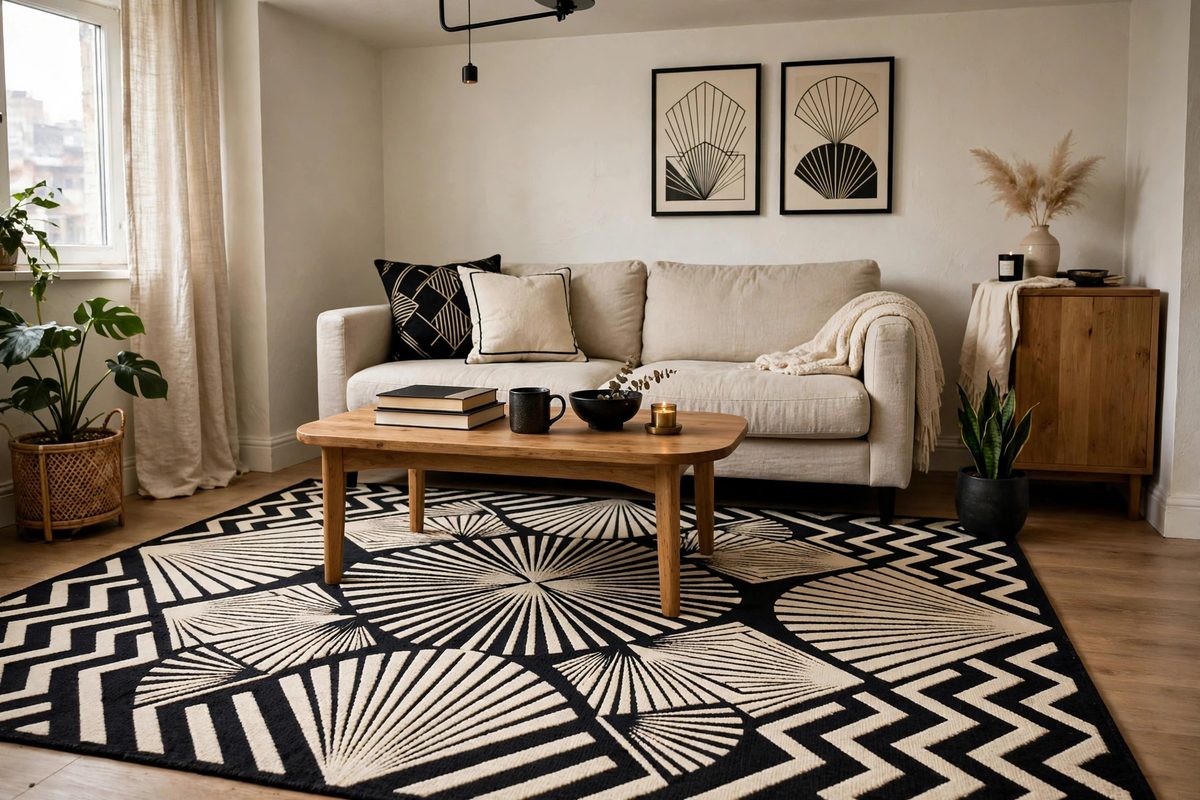
Deco geometry belongs on the floor as much as the walls. A rug with fans, chevrons, or stepped diamonds anchors a seating group and introduces pattern where it will not overwhelm eye-level sightlines. In a small living room, a 5 by 7 foot rug usually fits a loveseat and one chair; an 8 by 10 can work if furniture legs all sit on it.
Flatweave or low-pile rugs suit small rooms best. They are easier to vacuum, they let doors clear, and they do not visually raise the floor the way a thick shag does.
How to make it work
Place front legs of the sofa and chairs on the rug, at least 6 inches in, so the seating group reads as one zone. If the rug pattern is bold, keep cushions and throws mostly solid. Use a rug pad to prevent slipping on hard floors, especially under a coffee table that gets moved often.
6. Curved Furniture for Tight Corners
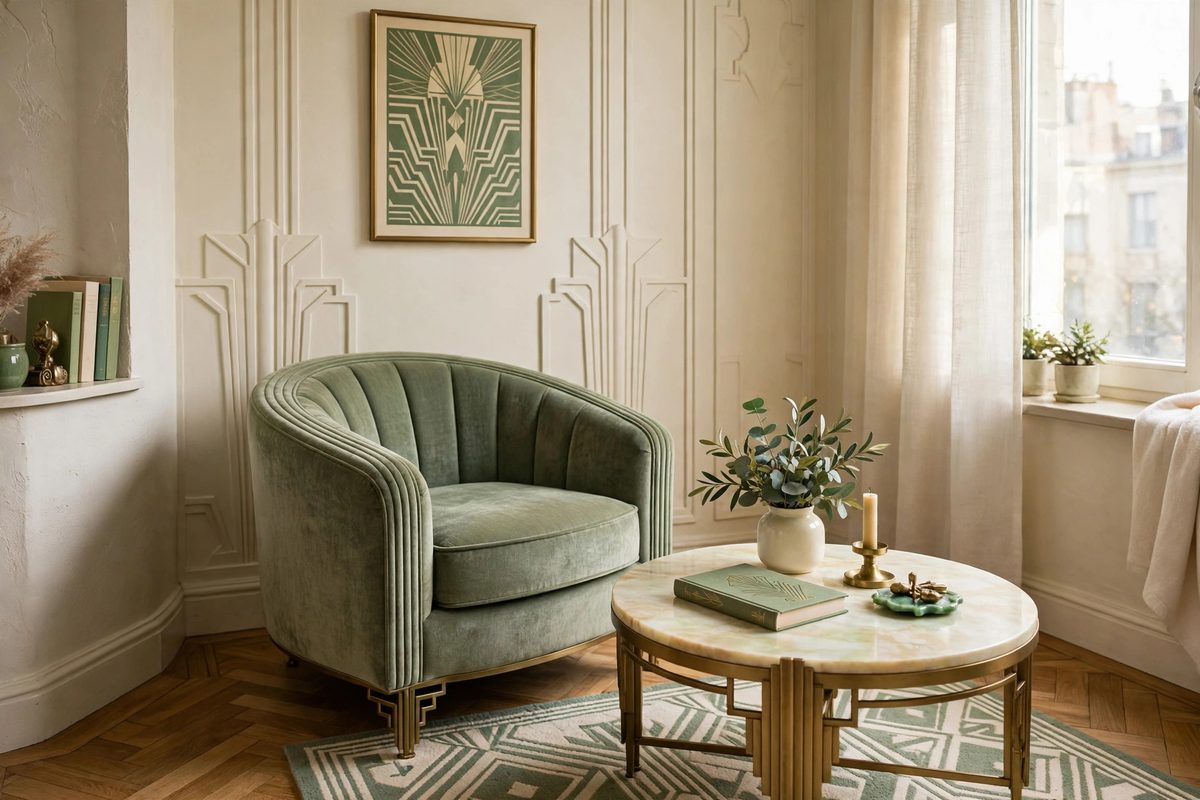
Deco furniture curves: rounded sofa arms, barrel chairs, scalloped edges. In a small room, curves are practical, not just pretty. A curved chair tucks into a corner without sharp corners jabbing walkways, and a round coffee table leaves more passing room than a square one of the same width.
A barrel chair needs about a 30 inch footprint, similar to a standard armchair, but its rounded back feels less bulky. A round coffee table around 30 to 36 inches across suits most small seating groups.
How to make it work
Swap one boxy piece for a curved one, not the whole room. A curved accent chair beside a straight sofa gives contrast without a full furniture overhaul. Leave at least 18 inches of walkway around the chair, and 14 to 18 inches between the coffee table and the sofa for comfortable legroom.
7. Sunburst Details Without the Theme Park
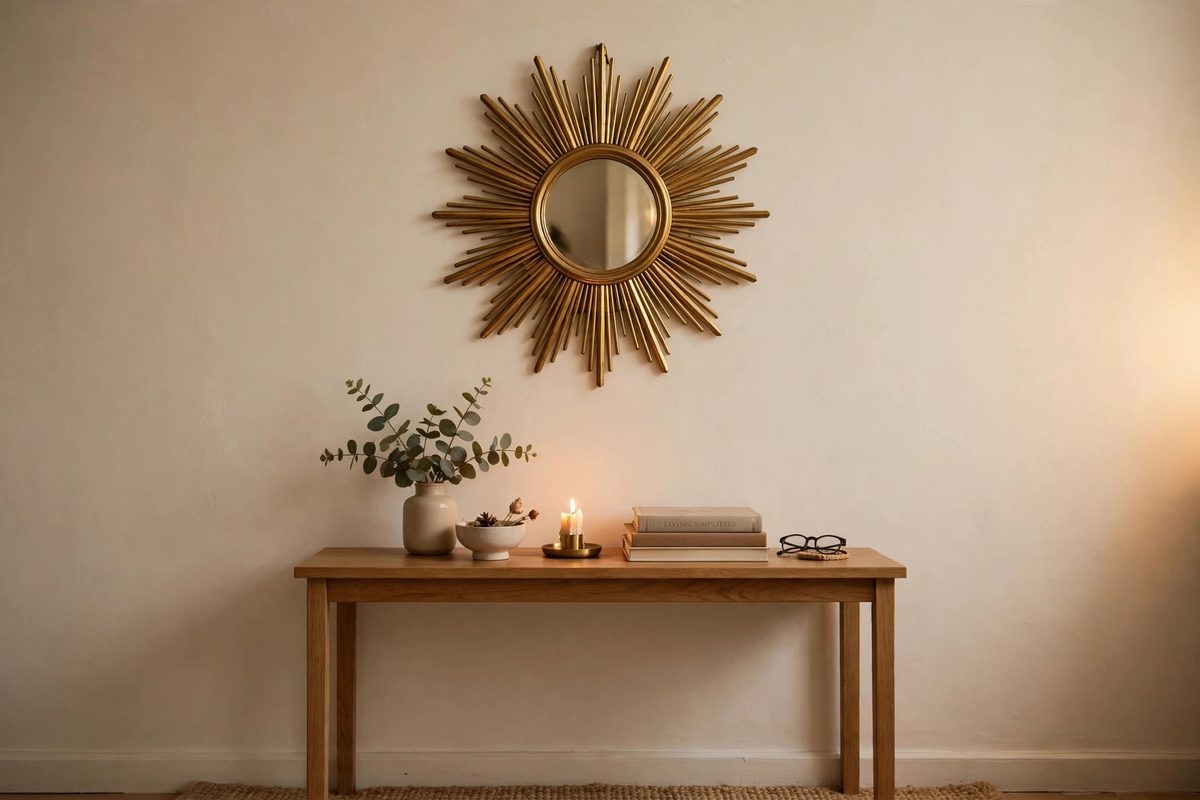
The sunburst is deco’s most recognizable motif, and also the easiest to overdo. One sunburst, a mirror, a piece of wall art, or a light fixture, is a focal point. Two or three sunbursts in one room start to feel like a set design.
Choose the sunburst format that fits your room’s scale. A sunburst mirror 24 to 30 inches across suits a small wall. A sunburst pendant works over a side table or in an entry corner, where it can be admired without dominating the main seating area.
How to make it work
Place the sunburst where the eye naturally lands when entering the room, usually above the sofa or on the wall facing the door. Keep the surrounding wall relatively bare for at least 12 inches around it. If you already have fluted panels, skip a sunburst on the same wall; the two patterns compete.
8. Layered Warm Lighting
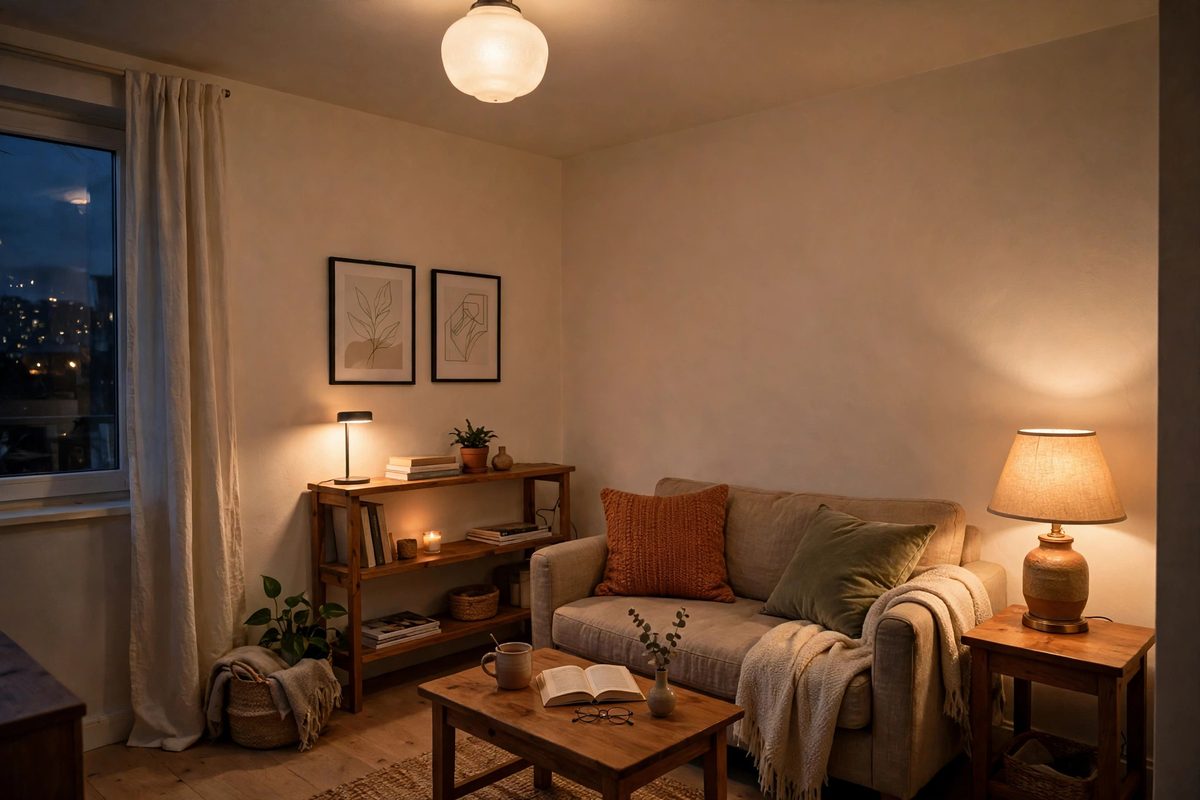
Deco rooms glow rather than glare. That means layers: a ceiling fixture on a dimmer, a table lamp or two, and a small accent light, all in warm white around 2700K. In a small apartment, three light sources at different heights make the room feel larger and more inviting than one bright overhead light.
Frosted glass globes, alabaster-look shades, and ribbed glass lamps all fit the neo deco mood and soften light beautifully. Dimmable bulbs cost a few dollars more and pay off every evening.
How to make it work
Aim for one overhead source, one task or reading lamp near seating, and one low accent, like a small lamp on a shelf or a picture light. Put the overhead on a dimmer if your rental allows a simple switch swap, or use smart bulbs you can dim from your phone. Keep all bulbs the same color temperature so the room does not look patchy.
9. Black and Cream as the Backbone
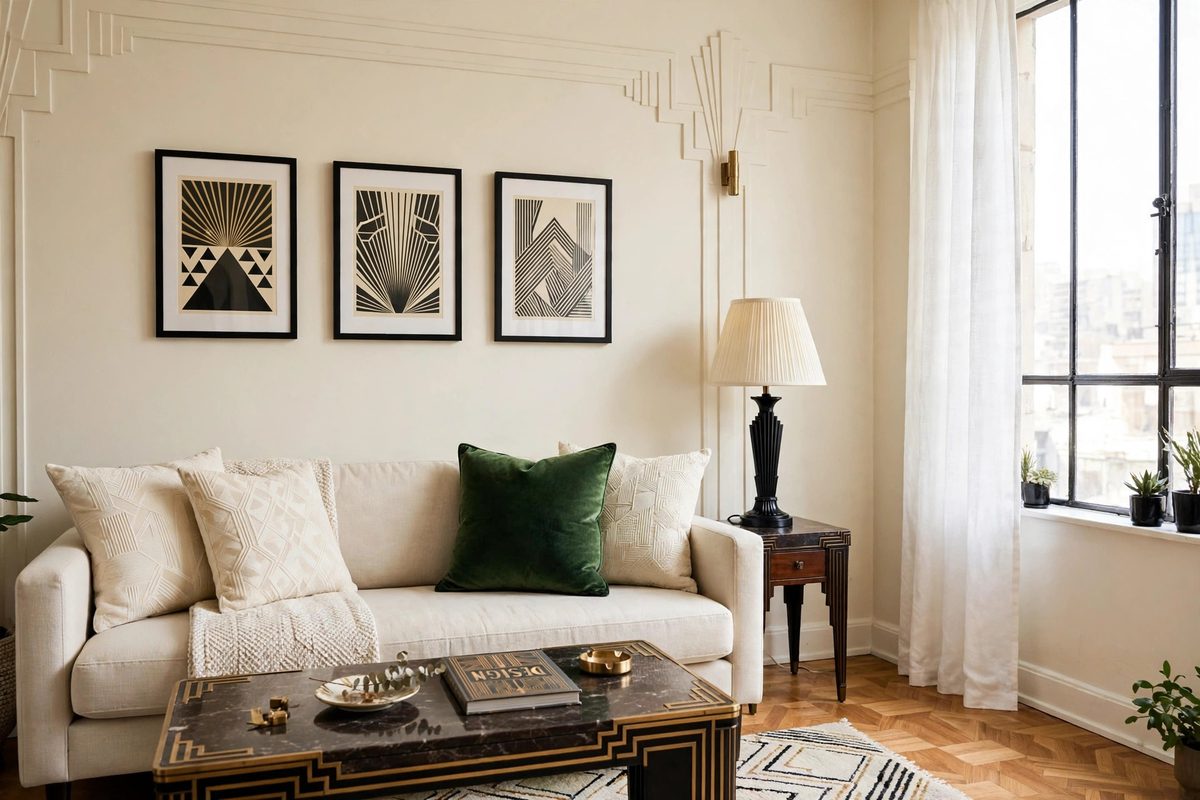
When in doubt, neo deco leans on black and cream. Cream walls keep a small room bright, black frames, legs, and hardware add crisp definition, and one rich accent color, green, rust, or navy, provides warmth. This backbone lets you change the accent with cushions and art instead of repainting.
Cream is more forgiving than stark white in rooms with warm wood floors or brass. It softens contrast just enough that black details read as intentional rather than harsh.
How to make it work
Start with cream walls and a black element you already own, like a frame or a lamp base. Add black in two more small places, such as curtain rod finials or a side table frame. Then choose one accent color and repeat it in three spots: a cushion, a throw, and a piece of art. If the accent starts appearing everywhere, pull it back to three.
Neo deco in a small apartment is an editing exercise: one fluted wall, one arch, a little brass, one velvet piece, and warm light. Keep those moves, and the room feels glamorous without feeling crowded.