9 Small Living Room Accent Wall Ideas That Don't Make the Room Feel Smaller
Make a small room feel bigger with paint and texture. Discover 9 small accent wall ideas for living rooms—from light mid-tones to renter-safe peel-and-stick.
In This Guide
Accent walls have a bad reputation in small rooms, and often for good reason. A dark, heavy wall in a compact living room can close the space in and make it feel like a box. But the problem is rarely the accent wall itself. It is the wrong wall, the wrong color, or the wrong finish.
Done well, an accent wall does the opposite of shrinking a room. It creates a focal point, adds depth, and gives the eye somewhere to land, which makes the rest of the room feel more organized. The trick is choosing light to mid-tone colors, adding texture instead of darkness, and putting the accent on the wall that deserves attention, usually the sofa wall or the TV wall.
Renters are not excluded either. Peel-and-stick wallpaper, paint that you can repaint, and non-paint options like curtains and molding all create an accent without permanent changes. These 9 ideas cover the range, with the sizing and color guidance that keeps a small room open. For the rooms next door, see small bedroom vanity ideas and small kitchen flooring ideas.
1. Single Painted Wall in a Pale Tone
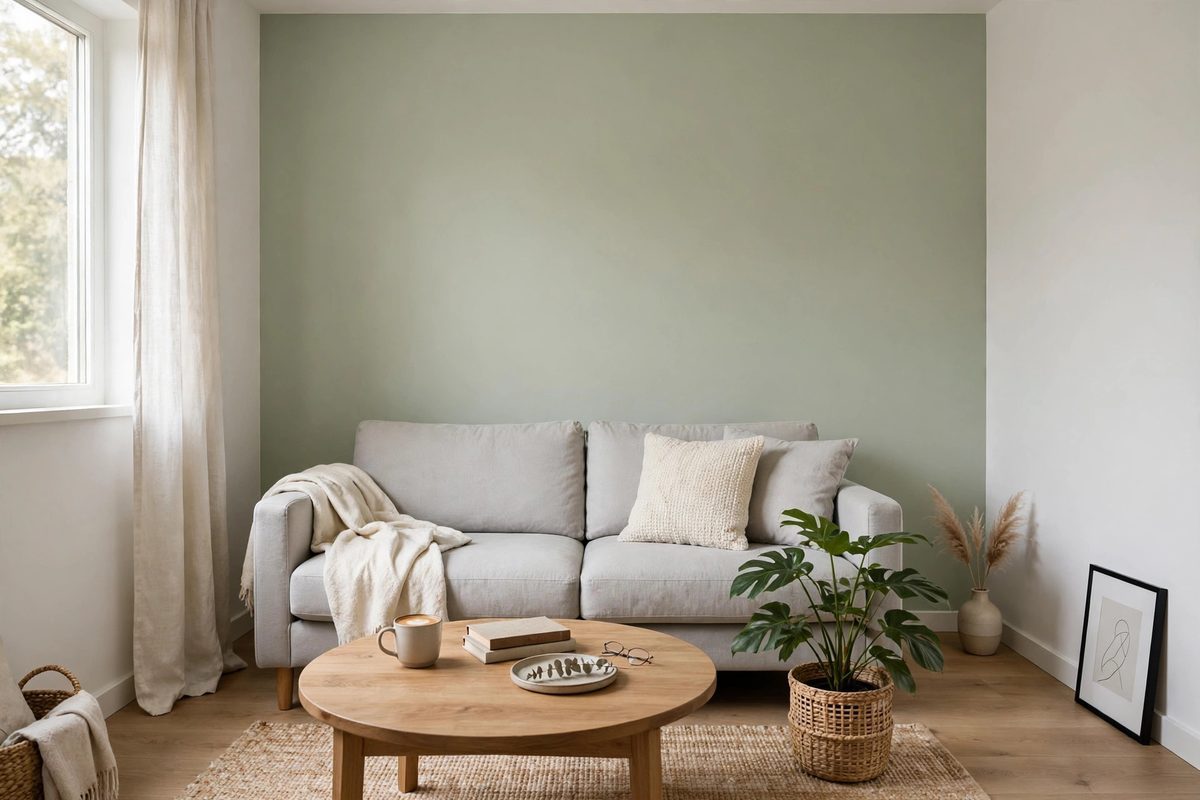
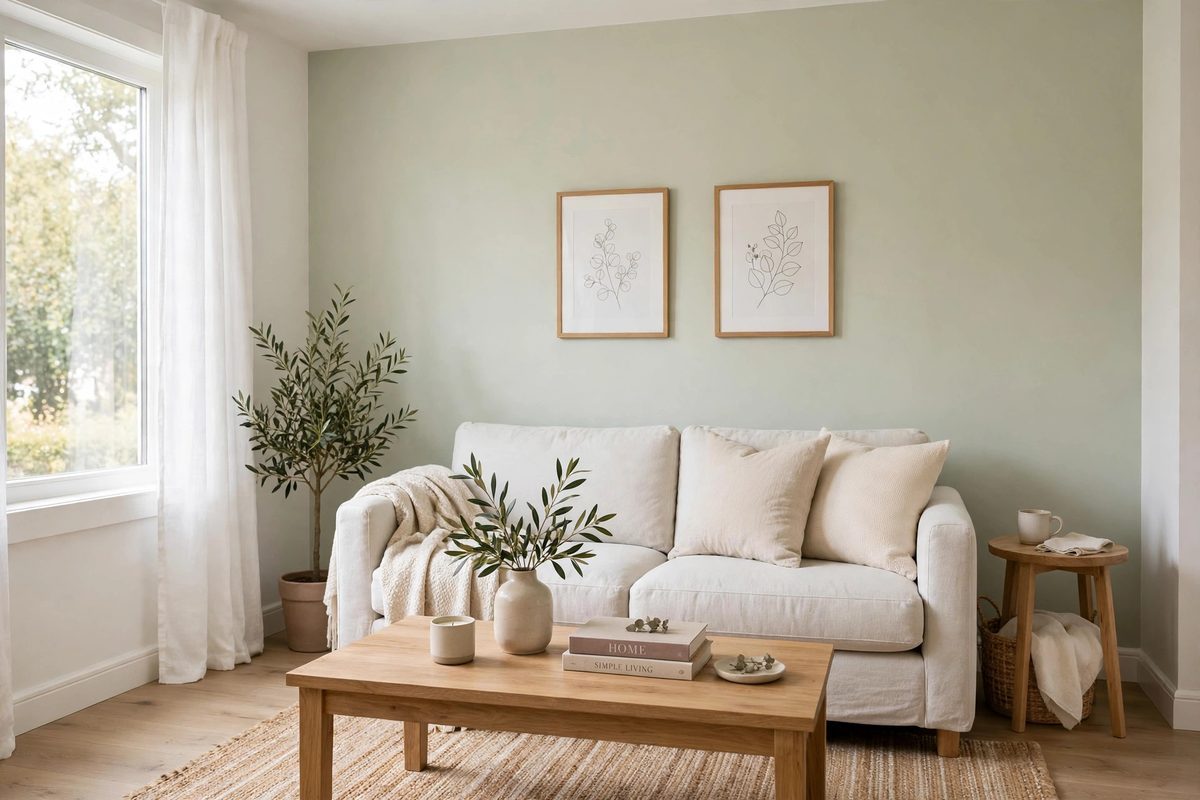
A single wall painted in a pale tone, like sage, dusty blue, or warm greige, adds color without adding darkness, which is the safest accent wall choice for a small room. Pale colors reflect almost as much light as white walls, so the room stays bright while gaining a clear focal point.
Paint the wall behind the sofa or the TV, not a side wall, since the focal wall is where the eye naturally lands. Choose a color two to three shades deeper than your other walls, not ten shades deeper, so the contrast reads as gentle rather than dramatic. A gallon of paint costs 30 to 60 dollars and covers a small accent wall easily.
How to make it work
Test the color with a large swatch, at least 60 by 60 cm, and look at it in morning and evening light before committing. Paint the full wall edge to edge, since stopping partway looks unfinished. Keep the other walls white or very pale so the accent wall stands out without competition.
2. Vertical Wood Slats
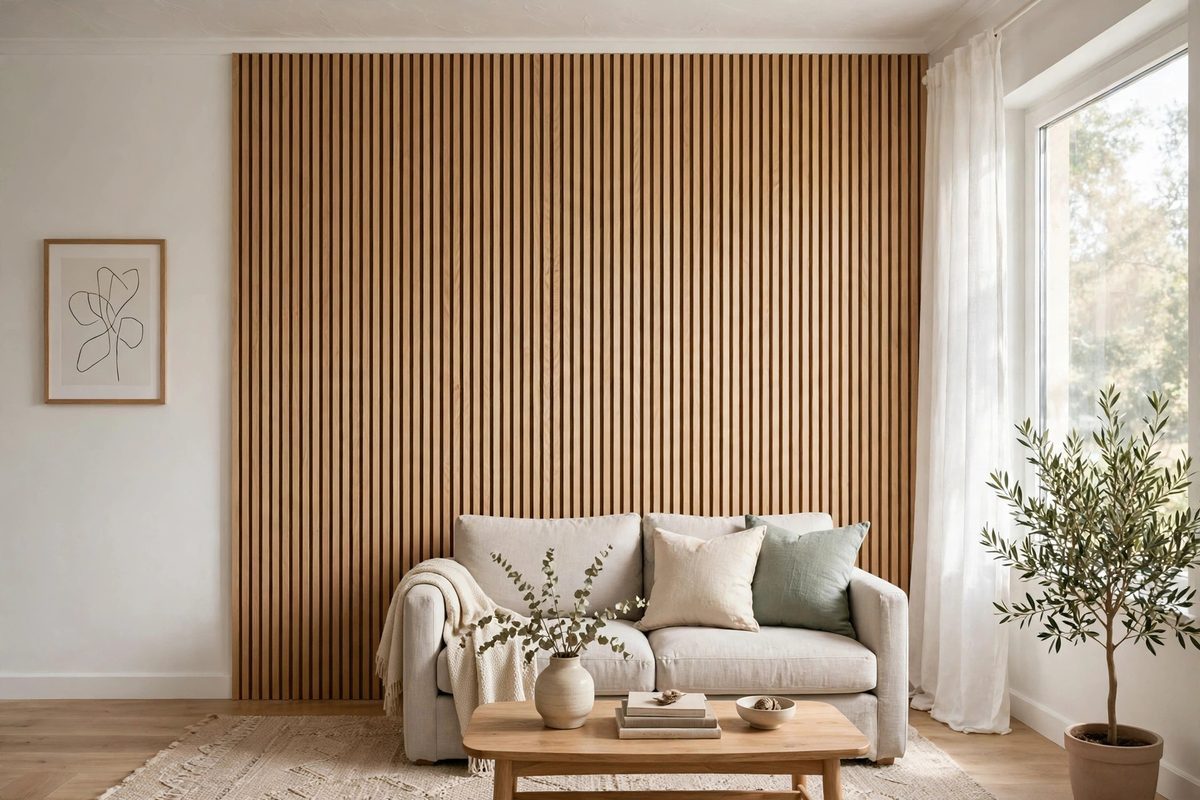
Vertical wood slats add texture and height to a small living room without darkening it, especially in light woods like oak, ash, or pale pine. The vertical lines draw the eye upward, making the ceiling feel higher, and the gaps between slats create shadow lines that give the wall depth.
Slats are usually 5 to 10 cm wide with 2 to 3 cm gaps, mounted on a backing board or directly to the wall. A full accent wall of slats costs 200 to 600 dollars in materials, depending on wood choice, and takes a weekend to install. Light wood keeps the effect airy, while dark walnut slats can shrink a small room, so choose carefully.
How to make it work
Run the slats floor to ceiling, not partway up, since a half-height slat wall looks unfinished. Paint the wall behind the slats the same color as the slats or slightly darker, so the gaps read as clean shadow lines. Keep furniture in front of the slat wall low and simple, so the vertical lines stay visible.
3. Peel-and-Stick Wallpaper Panel
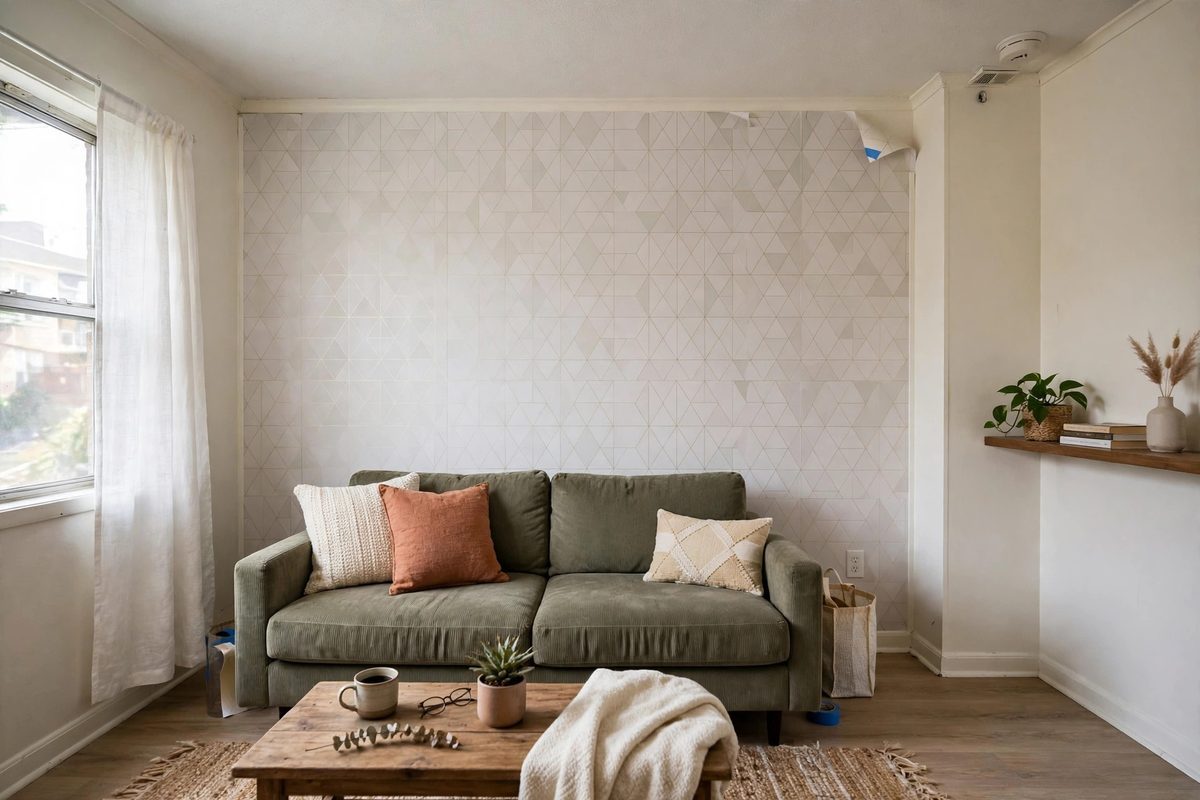
Peel-and-stick wallpaper is the renter’s accent wall, since it applies without paste and removes without damaging most walls. A subtle pattern, like a small geometric print, a soft stripe, or a botanical motif in pale tones, adds interest without overwhelming a small room.
Cover one wall only, and choose a pattern with a small repeat, under 30 cm, so the pattern reads as texture rather than a loud print. A roll of peel-and-stick wallpaper costs 25 to 50 dollars, and a small accent wall needs two to three rolls. Measure carefully, since pattern matching wastes material.
How to make it work
Clean the wall and let it dry fully before applying, since dust is the main reason peel-and-stick wallpaper bubbles. Start from the top center and smooth outward to avoid air pockets. If the wallpaper will not stick to textured walls, test one strip first before buying the full amount, since heavy texture defeats the adhesive.
4. Limewash for Soft Texture
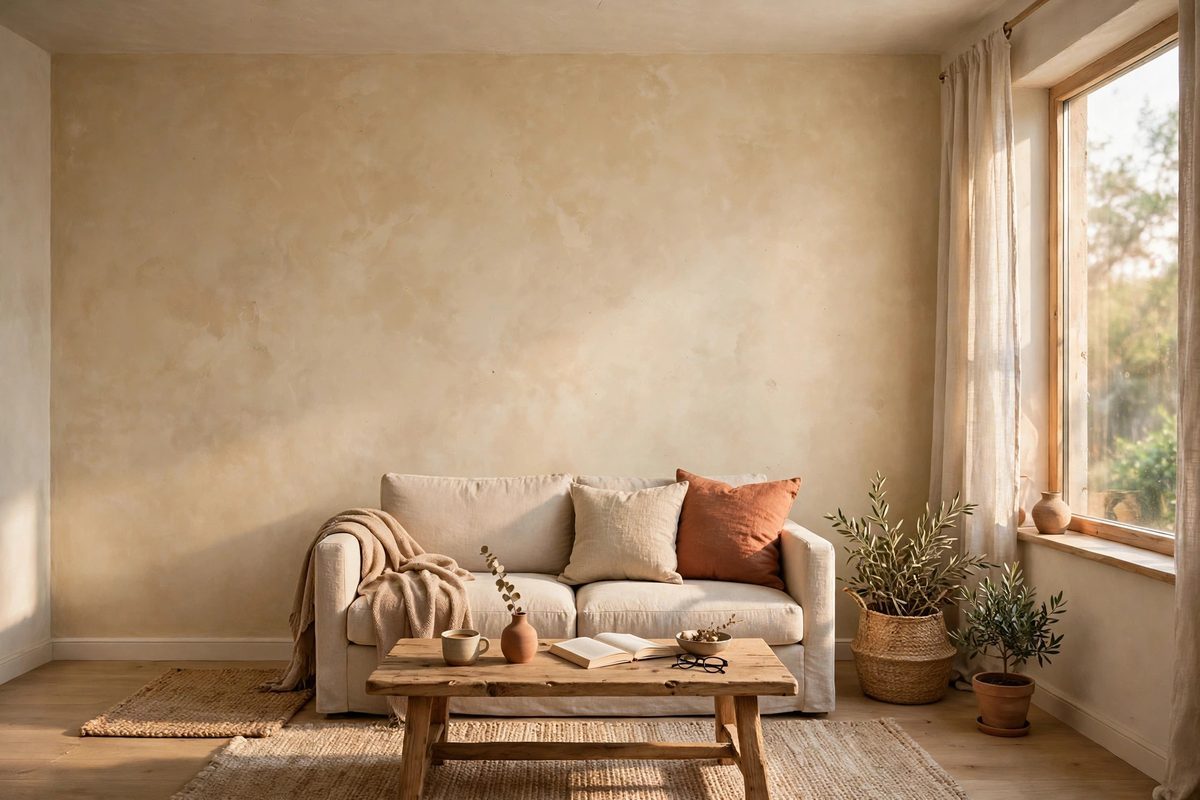
Limewash paint creates a soft, cloudy texture that shifts with the light, giving a wall depth without any pattern at all. In a small living room, that subtle movement makes the wall feel alive rather than flat, and pale limewash colors keep the room bright.
Limewash costs 60 to 120 dollars per wall and applies with a special brush in crisscross strokes, which is part of the charm and part of the learning curve. Practice on a board first, since the technique takes a few strokes to feel natural. The finish is matte and chalky, which hides minor wall imperfections beautifully.
How to make it work
Choose a pale limewash color, like warm white, pale clay, or soft sage, rather than a dark one, since dark limewash still darkens a small room. Apply two coats with a block brush, letting the first coat dry fully. Seal the wall if it will see heavy traffic, since unsealed limewash marks easily.
5. Picture-Frame Molding
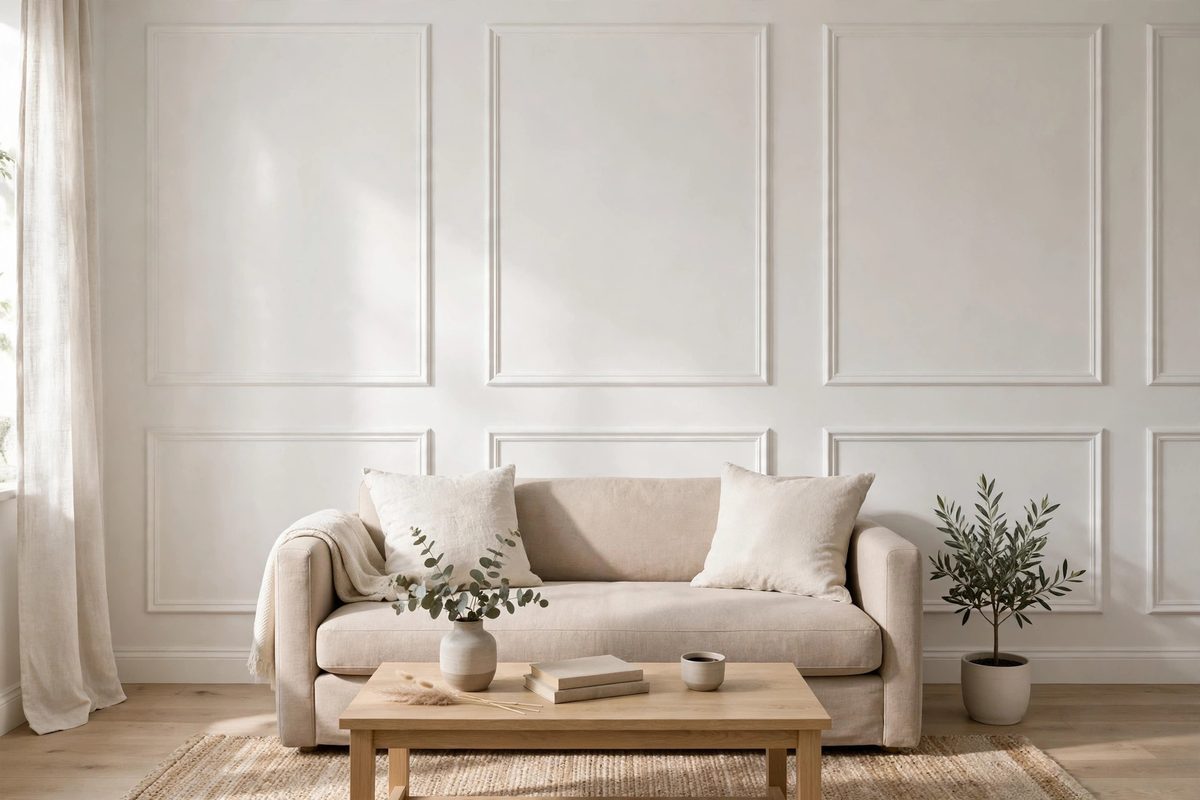
Picture-frame molding, rectangles of trim applied to the wall and painted the same color as the wall, adds architectural detail without adding color or darkness. In a small room, this tone-on-tone approach creates shadow and structure while keeping the wall light.
Molding kits cost 100 to 300 dollars per wall, and installation is a weekend project with a saw, adhesive, and paint. Space the rectangles evenly, with 10 to 15 cm between frames and the wall edges, and keep the rectangles tall rather than square, since vertical rectangles make the wall feel taller.
How to make it work
Paint the molding and the wall the same color and finish so the effect reads as architecture, not decoration. Use lightweight molding for rentals, attached with adhesive strips rather than nails, so it removes cleanly. Keep the wall otherwise bare, since molding plus art plus shelves on one wall is too much for a small room.
6. Brick Veneer on One Wall
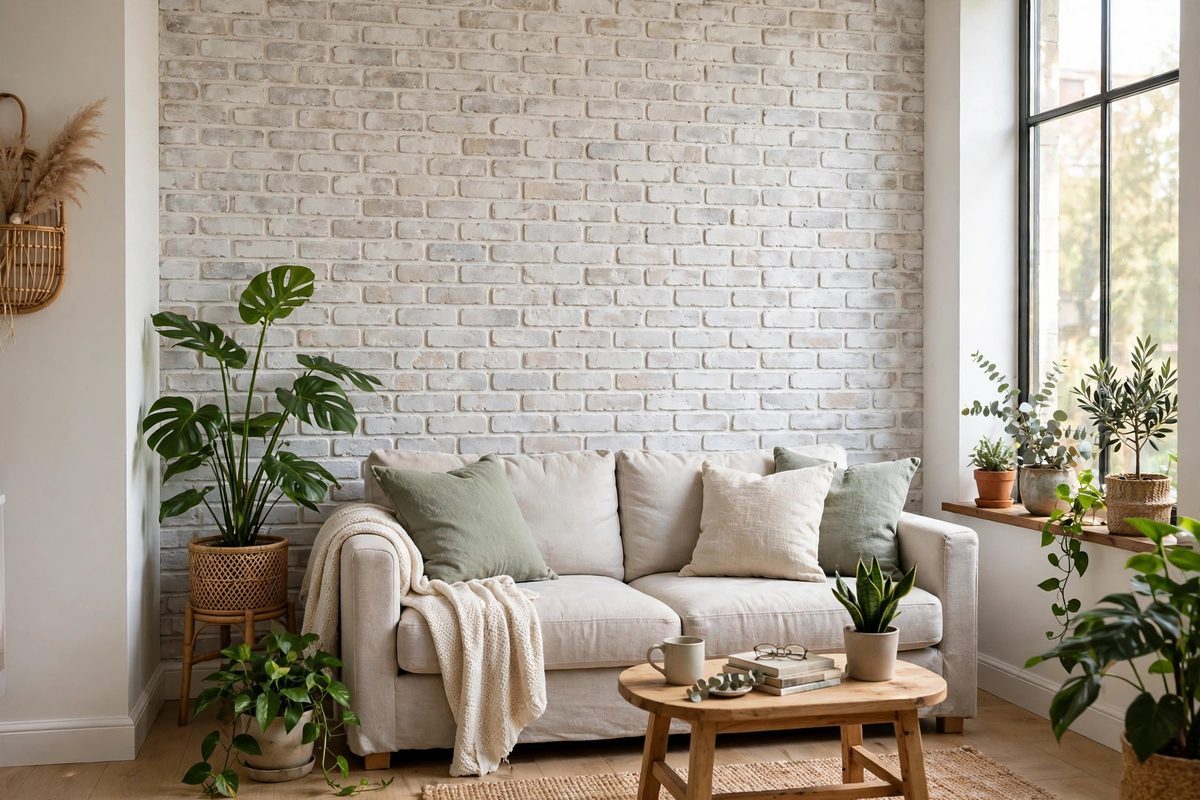
Brick veneer, thin slices of real or faux brick applied to the wall, adds texture and warmth that paint cannot match. In a small room, whitewashed or pale brick works far better than dark red brick, since it keeps the wall light while adding the texture and character of masonry.
Faux brick panels cost 10 to 20 dollars per panel, and a small accent wall needs 8 to 12 panels. Real brick veneer costs more and weighs more, so it needs proper adhesive and a wall that can support it. Whitewashing existing brick, if your apartment already has it, costs almost nothing and transforms a dark wall.
How to make it work
Apply veneer to one wall only, ideally the TV wall or the sofa wall, and keep the rest of the room simple so the brick stays the star. Seal the brick to prevent dust, since unsealed brick sheds. If you choose faux panels, stagger the seams so the wall does not read as obvious panels. For a darker take that still works in small spaces, compare with black accent wall ideas for small spaces.
7. Half-Wall Color Blocking
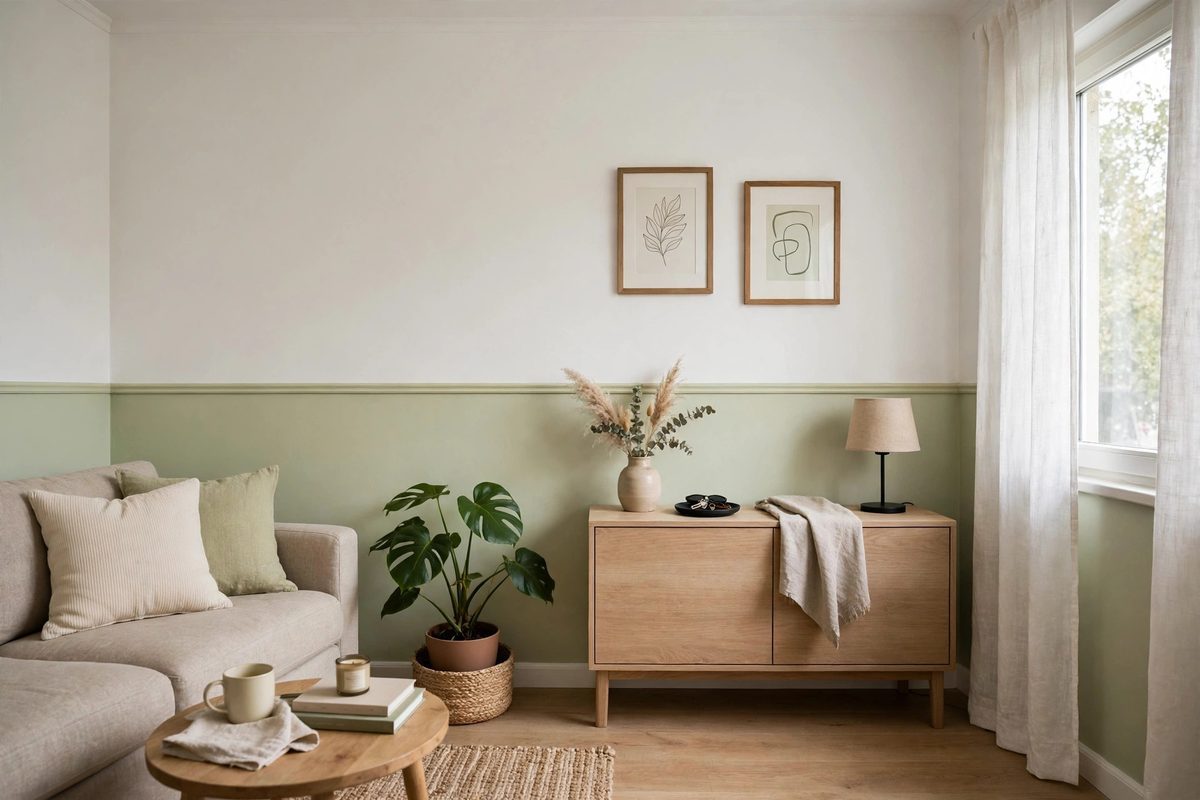
Half-wall color blocking paints only the lower portion of a wall, usually up to 90 to 120 cm, leaving the upper portion white. This grounds the room with color while keeping the upper walls light, which is why it works so well in small spaces where a full dark wall would feel heavy.
The dividing line should sit at a natural height, like chair rail height or just above the sofa back, not at a random point. Use painter’s tape for a crisp line, and choose a color that echoes your sofa, rug, or cushions. A half wall costs half the paint of a full wall, around 20 to 40 dollars.
How to make it work
Add a thin trim strip along the dividing line for a finished look, especially if the line is not perfectly straight. Keep the lower color in a mid-tone, not a dark one, so the grounding effect stays gentle. If the wall has a sofa against it, the sofa back will hide the lower portion, so this idea works best on walls with low furniture or no furniture.
8. Built-In Shelves as the Accent
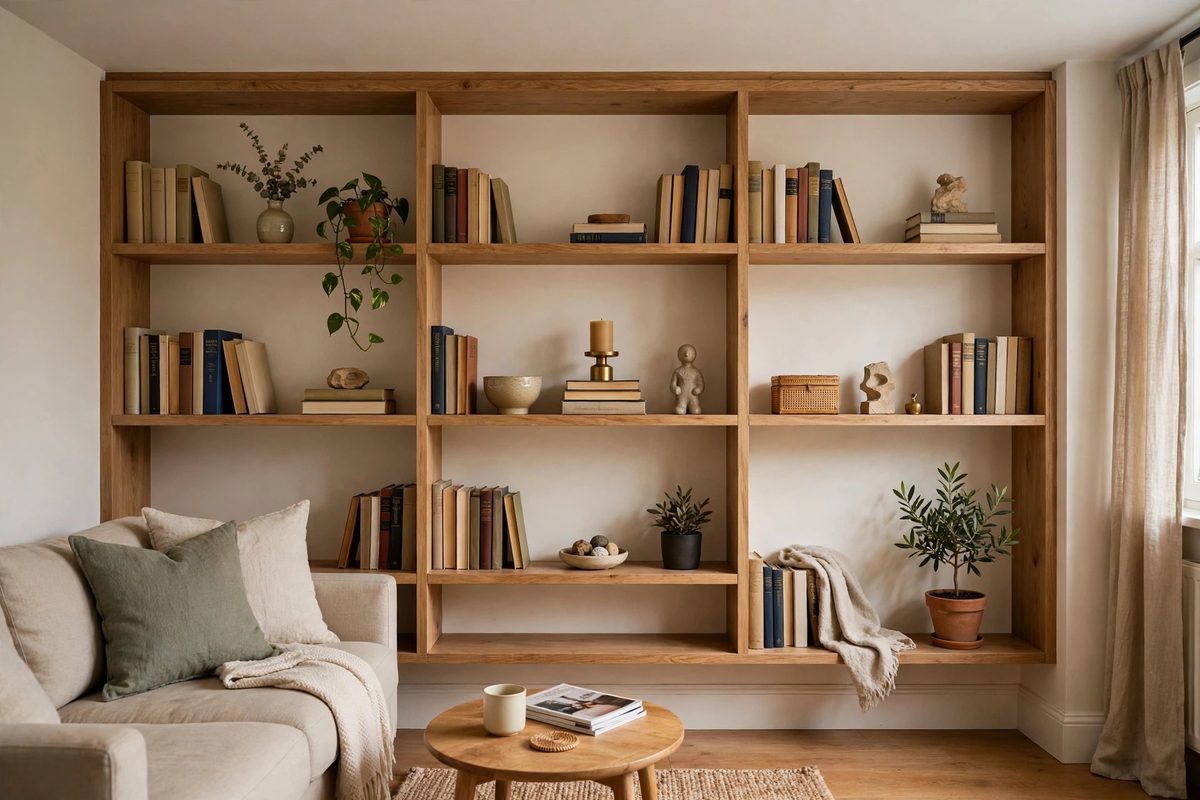
A wall of built-in shelves becomes an accent wall through its contents, not its color, which makes it ideal for small rooms where a painted accent might feel too strong. Books, plants, and a few decorative objects create a textured, personal focal point that also adds storage.
The key is restraint. Shelves packed edge to edge with books and objects look like a storage wall, not an accent wall. Leave a third of each shelf empty, mix horizontal and vertical book stacks, and repeat one or two colors across the shelves to tie the display together.
How to make it work
Paint the shelves the same color as the wall so the contents, not the shelving, provide the interest. Anchor the shelf unit to the wall for safety, since a loaded bookcase is heavy. Add a small LED strip along the top shelf to light the display in the evening, which turns the shelf wall into a warm focal point after dark.
9. Curtain Wall Behind the Sofa
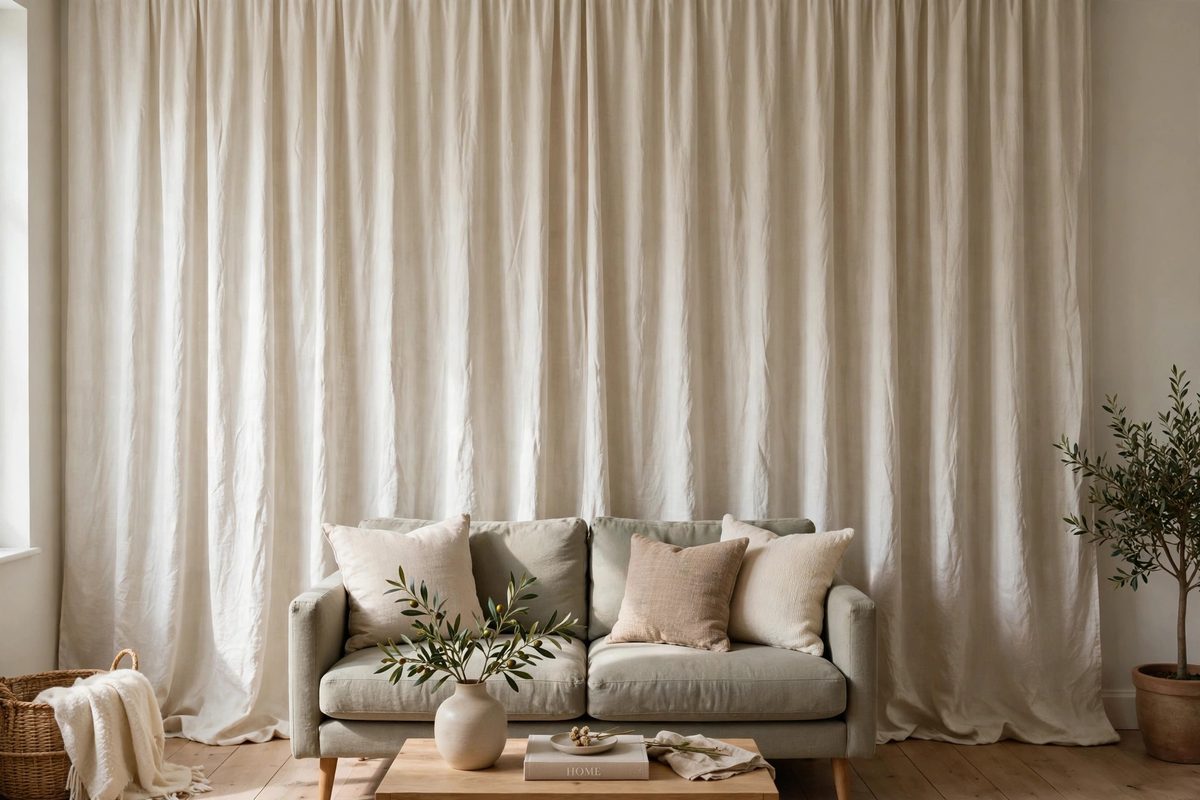
A curtain wall, floor-to-ceiling curtains hung across the full width of the sofa wall, creates a soft, textured accent that also absorbs sound and hides an ugly wall. Linen or cotton curtains in a pale color keep the room bright, while the fabric folds add depth that flat paint cannot match.
Hang the curtain rod at ceiling height and extend it 15 to 20 cm beyond the sofa on each side, so the curtains frame the seating area generously. The curtains should just brush the floor, not pool on it, since pooled fabric in a small room looks messy and collects dust. Budget 80 to 200 dollars for the rod and panels.
How to make it work
Choose curtains at least 1.5 times the wall width so they gather nicely rather than hanging flat. Keep the curtain color close to the wall color for a soft accent, or one shade deeper for more contrast. If the wall has a window, this idea works best on a different wall, since curtains over a window plus curtains on the sofa wall is too much fabric for one small room.
An accent wall should make your small living room feel more intentional, not more cramped. Pick the wall that deserves attention, keep the color light or the texture soft, and let the rest of the room stay calm. The accent will do its job without ever making the room feel smaller.