10 Small Bedroom Wardrobe Ideas That Use Height Instead of Floor Space
Maximize vertical storage in a tight room. Discover 10 small bedroom wardrobe ideas—including tall floor-to-ceiling closets, open rail systems, and corner armoires.
In This Guide
Most small bedrooms fail at storage for a simple reason: the wardrobe stops at a comfortable height while a meter or more of wall above it sits empty. That unused band of wall is where your out-of-season clothes, spare bedding, and rarely worn items belong. Building upward is almost always cheaper and easier than finding more floor space.
Height-based storage works because bedrooms are tall even when they are small. A standard ceiling is 240 to 270 cm high, while most wardrobes are only 180 to 200 cm. That gap holds a surprising amount, and using it means your daily clothes stay at easy reach while the rarely used stuff lives above.
The ideas below range from full floor-to-ceiling built-ins to a single high shelf, so there is an option for renters and owners alike. Measure your ceiling before you buy anything, and be honest about what you can reach daily versus what needs a step stool. For the rest of the bedroom, see small kitchen lighting ideas and small entryway rug ideas.
1. Floor-to-Ceiling Built-In
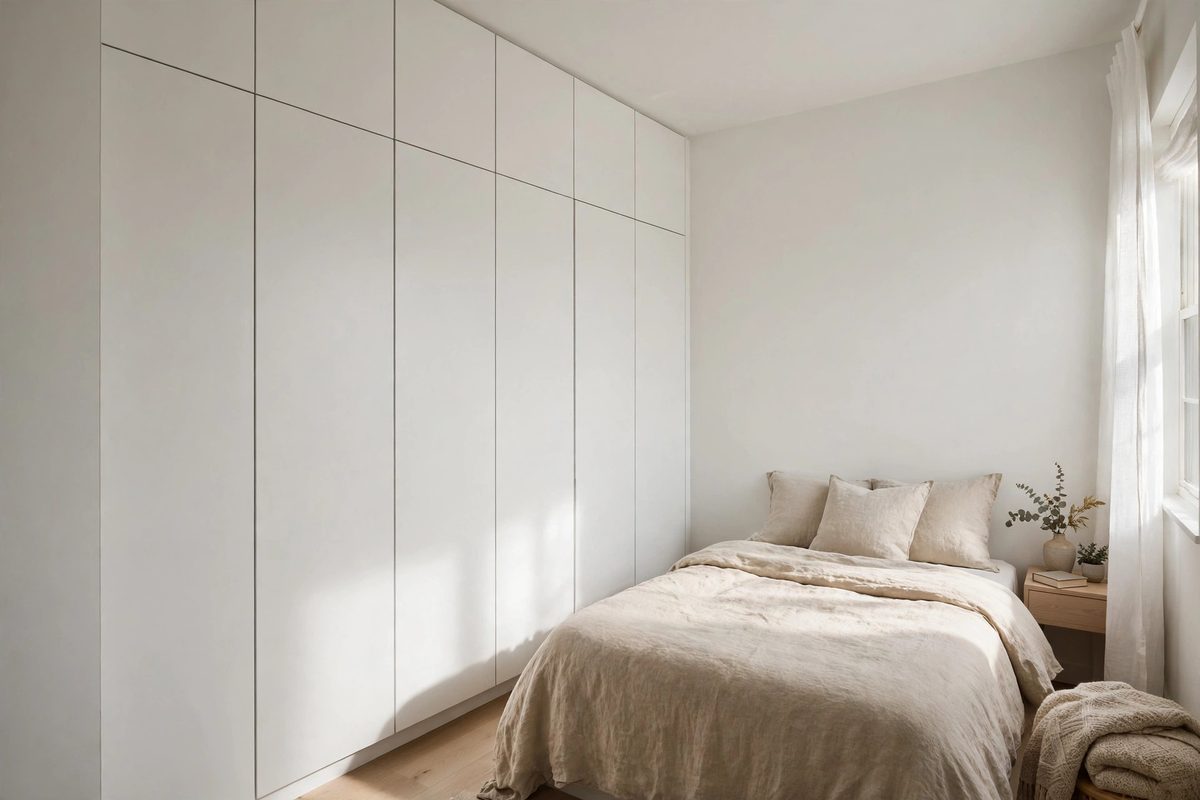
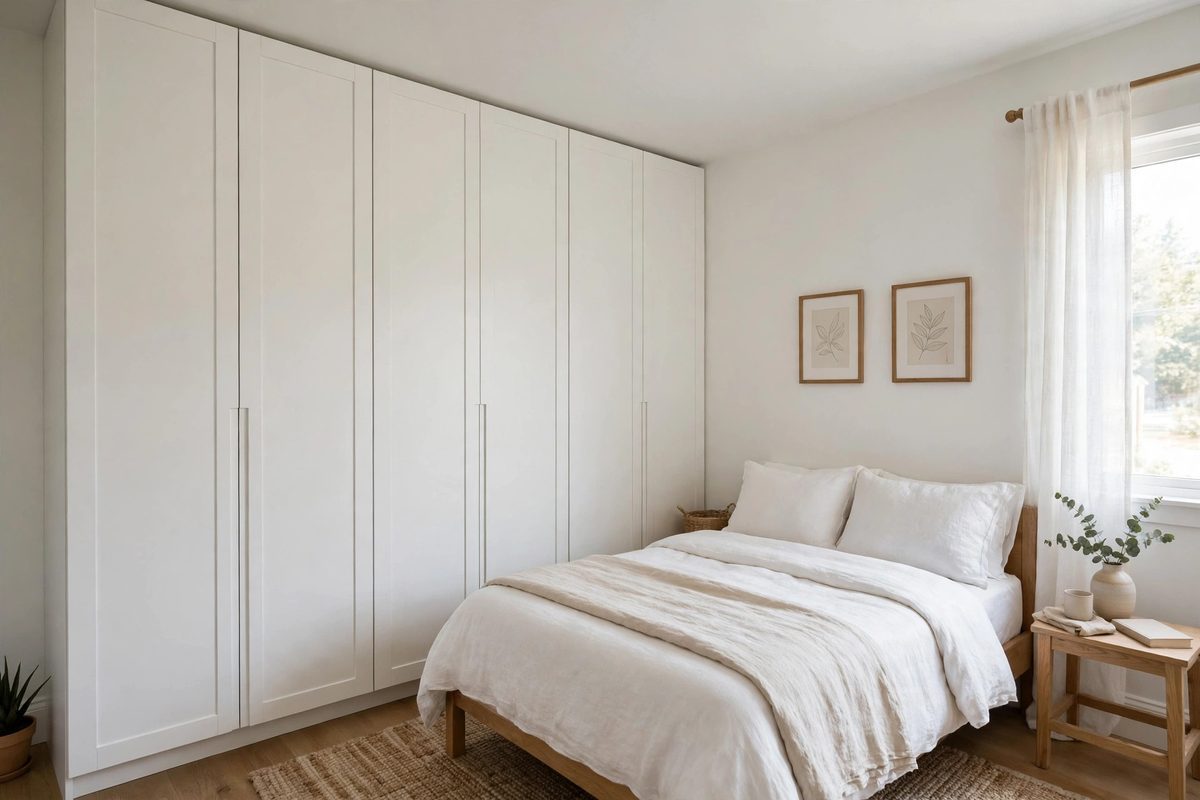
A floor-to-ceiling built-in uses every centimeter of wall height, which can add 30 to 40 percent more storage than a standard wardrobe in the same footprint. The top section holds out-of-season clothes and spare bedding in labeled boxes, while the middle holds daily clothes at easy reach.
Built-ins cost more than freestanding wardrobes, typically 800 to 2,500 dollars depending on size and finish, but they look intentional rather than bulky, especially when painted the same color as the walls. A flat, handleless front keeps the tall unit from dominating a small room.
How to make it work
Plan the interior before the exterior. Daily hanging space should sit between 100 and 180 cm from the floor, drawers below that, and long-term storage above 200 cm. Keep a folding step stool in the room, since the top section is useless if you cannot reach it safely. Label the top boxes clearly so you never have to pull down four boxes to find one sweater.
2. Open Clothing Rail With High Shelf
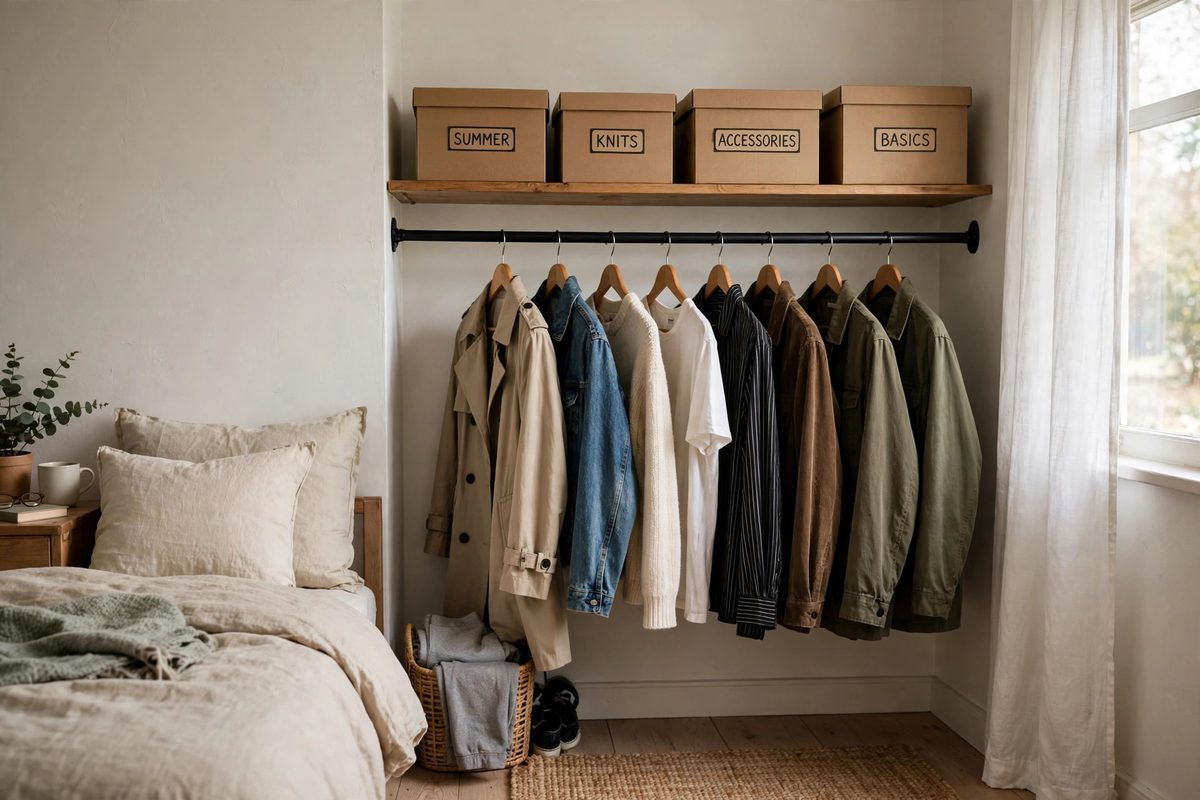
An open clothing rail plus a high wall shelf is the cheapest way to use vertical space, and it suits renters because both pieces install with a few screws. The rail holds daily clothes at normal height, while the shelf above, mounted at 200 to 220 cm, holds boxes of seasonal items.
The open look forces honesty about your wardrobe, since everything is visible. That is a feature, not a flaw, for many small-bedroom owners, because it discourages keeping clothes you never wear. A rail and shelf together cost 60 to 150 dollars, far less than any wardrobe unit.
How to make it work
Mount the shelf into studs, since a shelf full of boxes is heavy. Use matching boxes with labels facing outward so the top shelf looks tidy rather than chaotic. Keep the rail to one row of clothes, not two, since a double-loaded rail looks cramped and makes items hard to reach. If open storage feels too exposed, add a curtain on a ceiling track that you can draw across the whole arrangement.
3. Wardrobe Wall Around the Bed
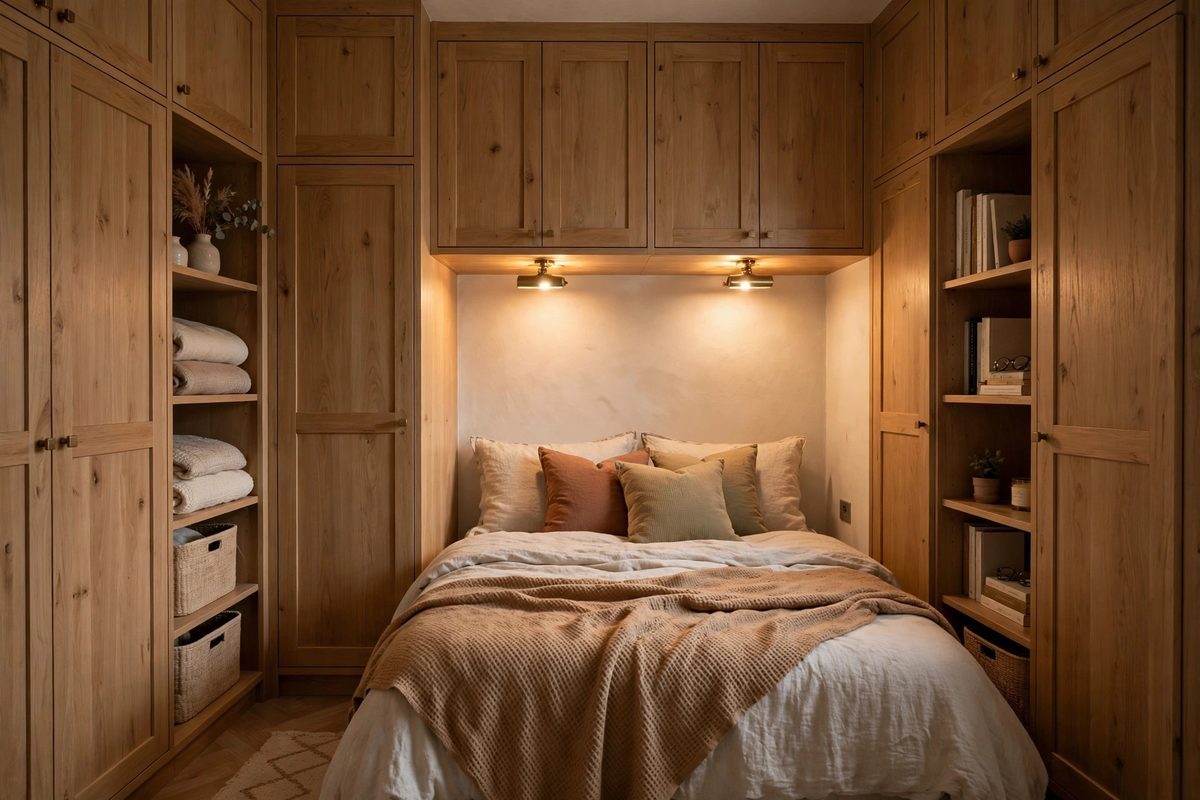
Building wardrobe units around and above the bed turns the bed wall into a storage wall without using any extra floor space. Tall units flank the bed, and a bridging unit runs across the top, creating a cozy alcove effect while adding meters of storage.
This layout works best in rooms at least 270 cm wide, so the bed plus two 50 to 60 cm units still leaves walking room. The bridging unit should sit at least 60 cm above the mattress so you can sit up comfortably. Built-in versions cost 1,500 to 4,000 dollars, but freestanding tall units pushed together achieve a similar effect for less.
How to make it work
Keep the units beside the bed shallow, 40 to 50 cm deep, so they do not crowd the mattress. Use the bridging unit for light items only, like spare bedding, since heavy items overhead feel oppressive. Add reading lights under the bridging unit, which turns the alcove into a genuinely pleasant sleeping nook rather than a storage cave.
4. Narrow Double-Height Closet
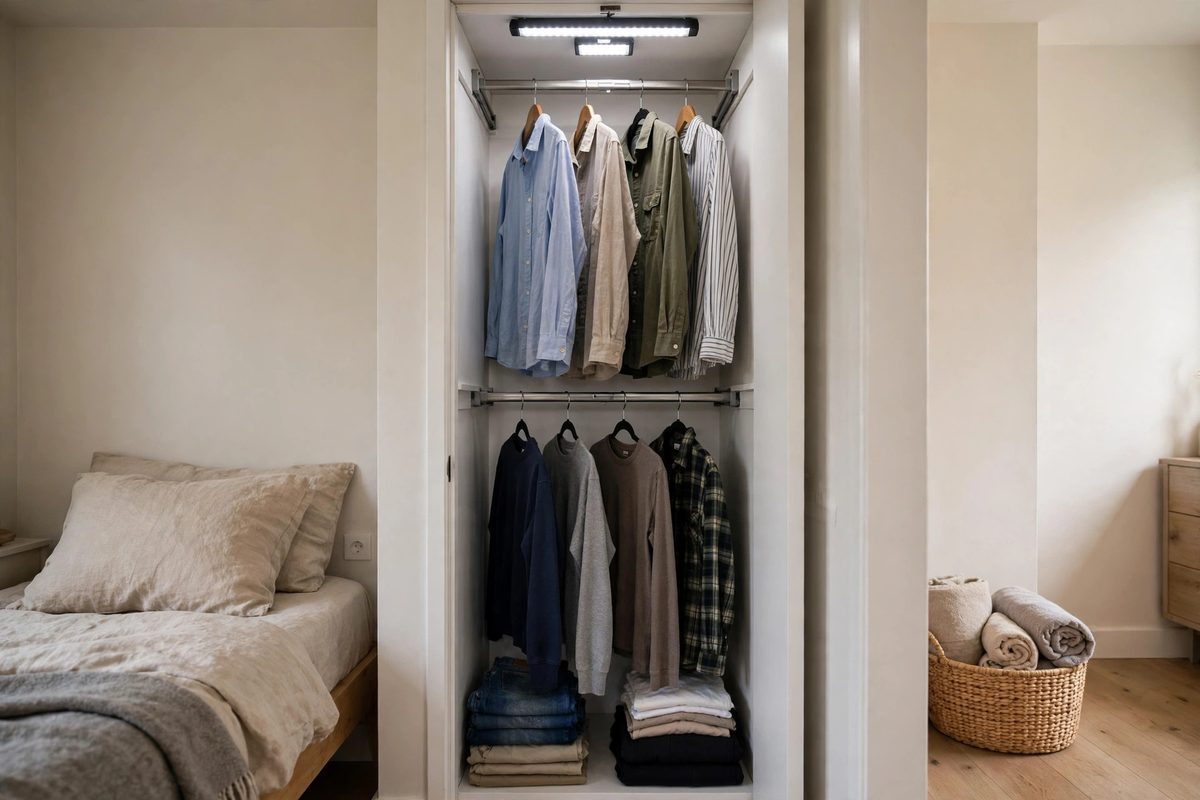
A double-height closet stacks two hanging rails vertically in a narrow space, one for shirts and jackets at normal height and one above it for shorter items. This doubles hanging capacity in a closet as narrow as 90 cm, which is ideal for small bedrooms with a single built-in closet.
The trick is keeping the upper rail reachable. The top rail should sit no higher than 190 cm, so most adults can reach it without a stool, and it should hold short items only, like folded shirts on hangers or children’s clothes. A standard closet rod plus brackets costs under 50 dollars, making this one of the cheapest upgrades on this list.
How to make it work
Measure your longest hanging item before adding the second rail, since coats and dresses need the full height of a single rail. Put daily items on the lower rail and seasonal or rarely worn items up top. If the closet is deep, add a small LED strip at the top so the upper rail is not hidden in shadow.
5. Sliding Doors That Save Swing Space
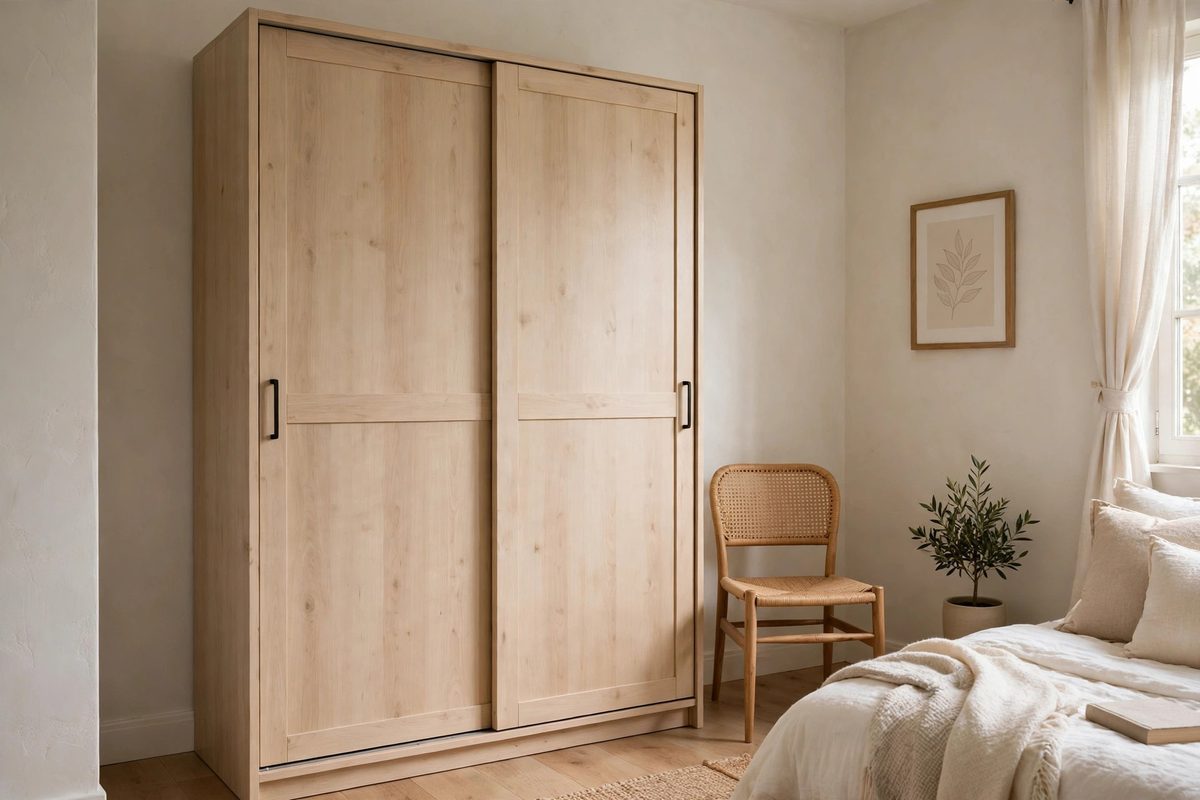
Sliding wardrobe doors do not use height directly, but they protect your vertical storage investment, because hinged doors need swing space that often forces you to keep the area in front of the wardrobe empty. With sliding doors, you can place a chair, a laundry basket, or a bedside table right against the wardrobe without blocking access.
Sliding doors suit wardrobes from 120 cm wide upward, since narrower sliders feel cramped. The track adds about 8 cm of depth to the wardrobe, so factor that into your floor plan. A sliding-door wardrobe in standard sizes costs 400 to 1,200 dollars, similar to a hinged equivalent.
How to make it work
Choose a track system with soft-close runners, since cheap sliders jump off their tracks under daily use. Keep the track clean, as dust buildup is the main cause of sticking sliders. If you want mirrors on the doors, sliding mirrored doors also bounce light around a small bedroom, which is a welcome bonus.
6. Over-Door Storage Up Top
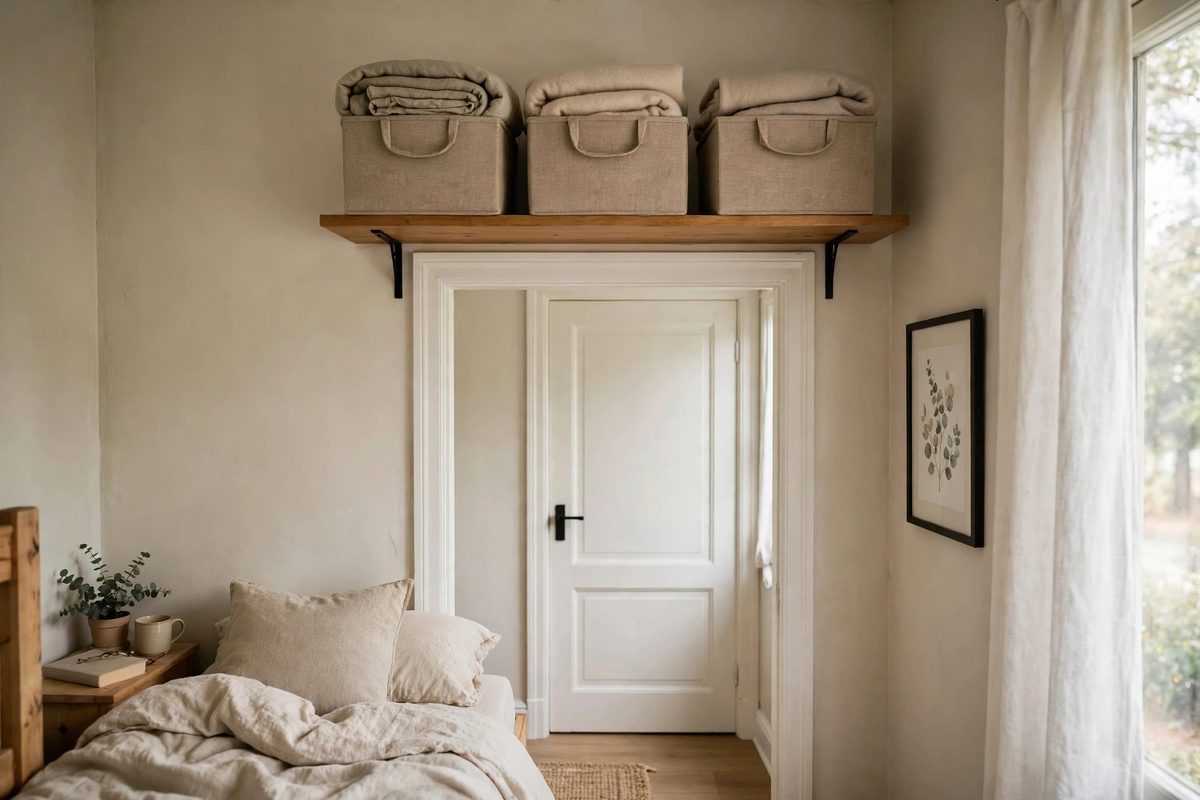
The space above a door, usually a strip 40 to 60 cm tall running the width of the doorway, is wasted in most bedrooms. A shelf mounted above the door frame turns it into storage for rarely used items, like spare blankets or holiday clothes, without touching any floor space.
This idea works best for light, flat items in matching boxes, since the shelf is high and hard to reach. A single shelf with a lip costs 30 to 80 dollars installed. Avoid stacking heavy items up there, both for safety and because a loaded high shelf looks top-heavy.
How to make it work
Mount the shelf into the wall studs above the door header, not just into drywall. Use boxes that match the wall color so the shelf blends in. Keep a step stool nearby, and never store anything up there that you need weekly, since the hassle of fetching it will discourage you from using the shelf at all.
7. Corner Wardrobe Tower
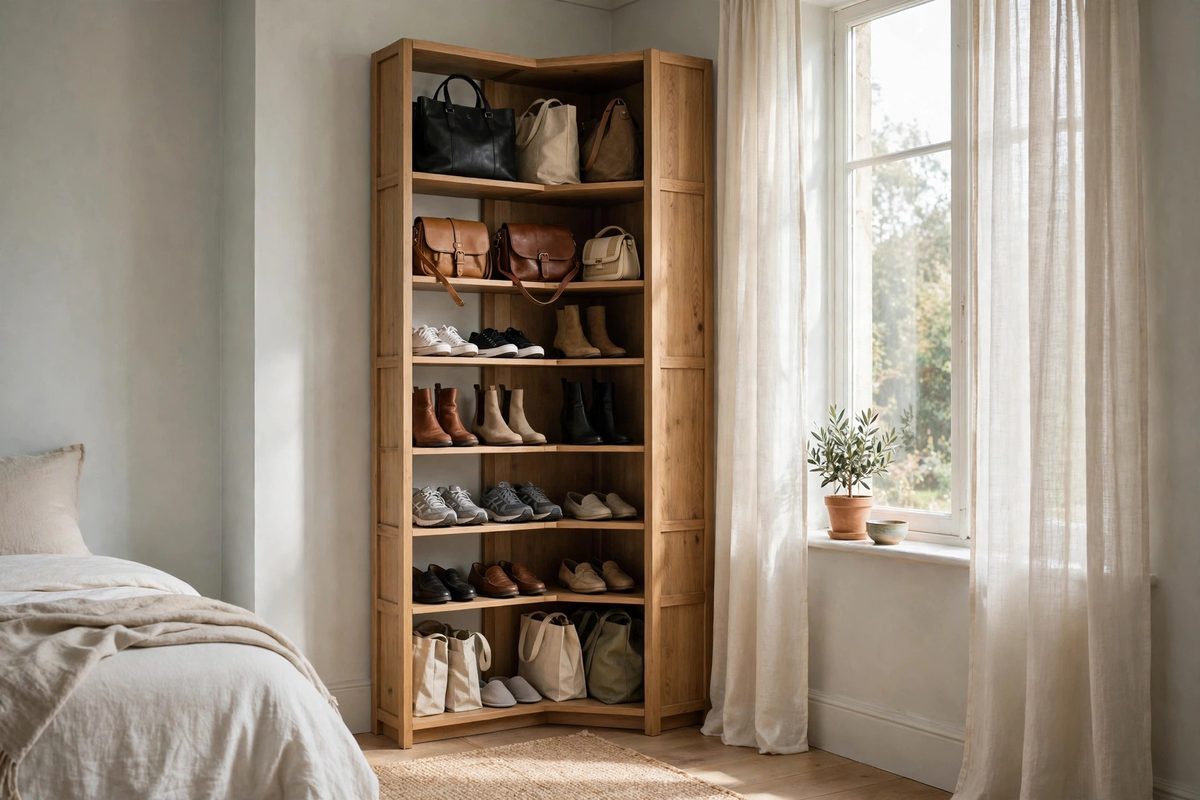
Corners are the most wasted space in small bedrooms, because standard wardrobes are rectangular and rooms are not always accommodating. A corner wardrobe tower, either a purpose-built L-shaped unit or a tall narrow unit turned at an angle, uses that dead corner for shoes, bags, or folded clothes.
Corner towers work best at 60 to 80 cm wide on each wall, with shelves rather than hanging space inside, since hanging clothes in a corner is awkward to reach. A freestanding corner unit costs 200 to 600 dollars, while a custom L-shaped built-in costs more but uses the corner fully.
How to make it work
Put shoes and bags in the corner tower, not daily clothes, since corner access is slower than straight-on access. Add a small LED light inside, because corners are naturally dark. If the corner is beside a window, keep the tower below the sill height on the window side so it does not block daylight.
8. Lofted Shelf Above the Wardrobe
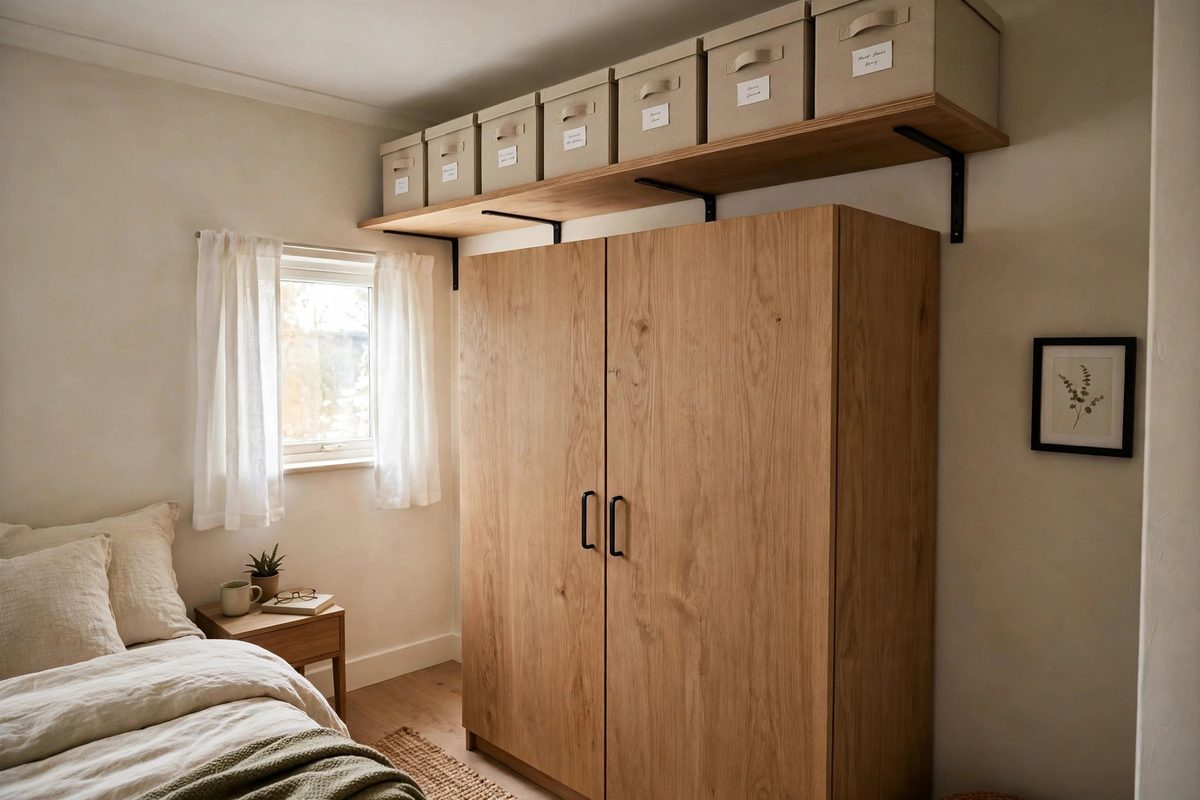
If your freestanding wardrobe stops well below the ceiling, a lofted shelf mounted on the wall above it bridges the gap and captures that empty band. The shelf can run the full width of the wardrobe or extend further along the wall, holding boxes of seasonal clothes.
The shelf should sit 15 to 20 cm above the wardrobe top so you can slide boxes in and out without lifting them over a lip. Use the same depth as the wardrobe, usually 50 to 60 cm, so the shelf reads as an extension of the unit rather than a separate piece. A shelf plus brackets costs 40 to 100 dollars.
How to make it work
Match the shelf finish to the wardrobe so the two pieces read as one unit. Keep the boxes on the lofted shelf uniform in size and color, since a row of mismatched boxes above a wardrobe looks messy from across the room. Dust the shelf monthly, since high surfaces collect dust faster than you expect.
9. Wardrobe With a Pull-Down Rail
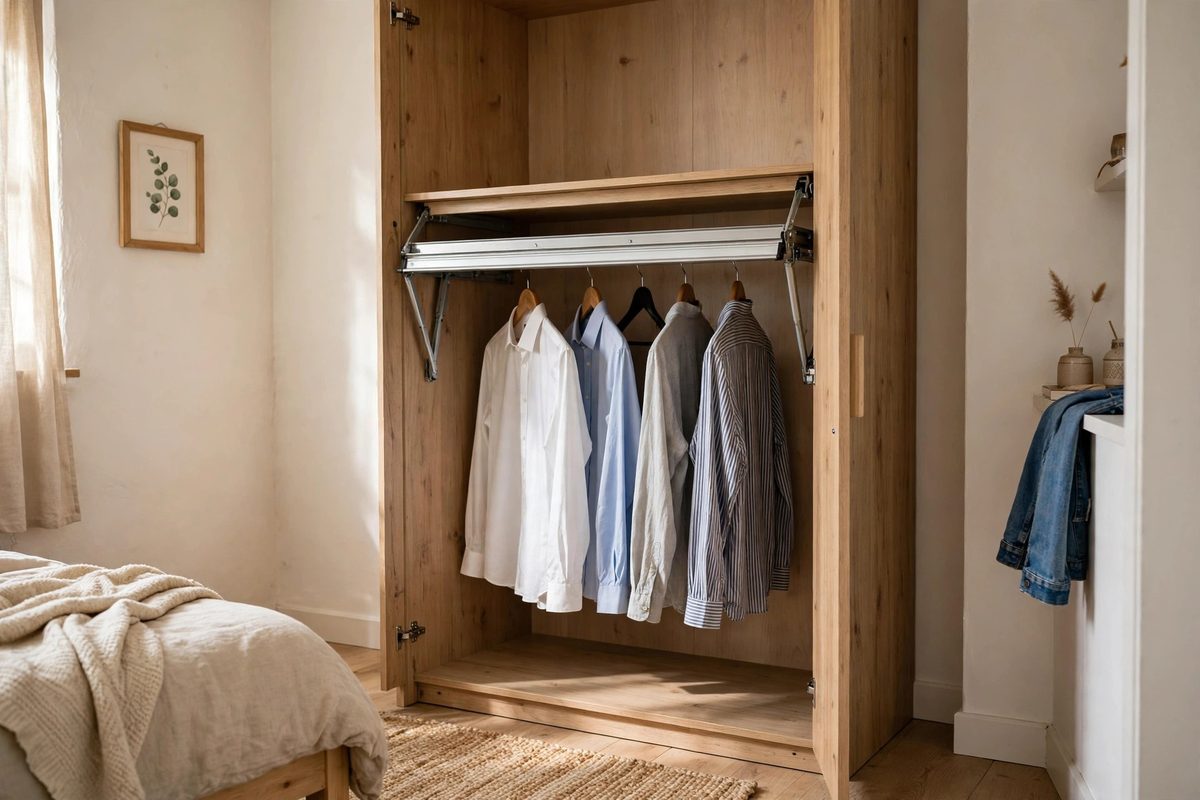
A pull-down rail is a hanging rail on a hinged mechanism that lowers from high in the wardrobe to within easy reach, then lifts back up. It lets you use the very top of a tall wardrobe for daily clothes, not just seasonal storage, which is a game changer for shorter people or anyone with a very tall unit.
Pull-down rails cost 60 to 150 dollars and fit most wardrobes 60 cm wide or more. They support 10 to 15 kg of clothes, enough for a row of shirts or blouses. The mechanism needs vertical clearance to swing down, so it suits wardrobes with open space below the rail, not ones packed with drawers.
How to make it work
Install the rail so it lowers to about 140 cm from the floor, comfortable for most adults to reach. Do not overload it beyond its rated weight, since an overloaded rail sags and strains the mechanism. Pair it with a matching fixed rail below for trousers and skirts, so the wardrobe works as a two-level system. For more bedroom storage pairings, see small bedroom dresser ideas.
10. Slim Wardrobe Plus Wall Hooks
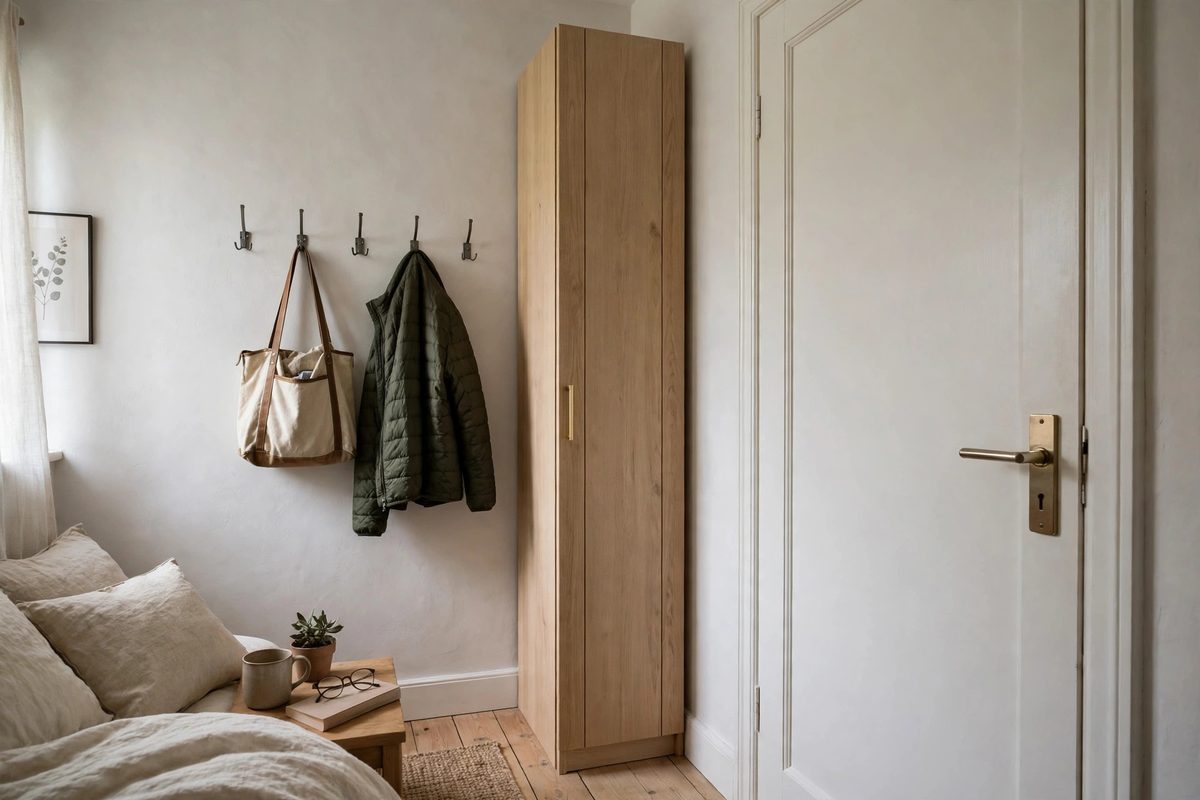
A slim wardrobe, 40 to 50 cm deep instead of the standard 60 cm, fits where a full wardrobe cannot, like a narrow wall beside a door. Pairing it with a row of wall hooks beside it gives you hanging space for jackets, bags, and tomorrow’s outfit without widening the wardrobe at all.
Slim wardrobes hold folded clothes and short hanging items well, but not long coats, so they suit bedrooms where bulky coats live elsewhere. The hooks handle the overflow and keep daily items visible and grabbable. A slim wardrobe costs 250 to 700 dollars, and a row of hooks costs under 30 dollars.
How to make it work
Mount the hooks at two heights, around 170 cm for coats and 140 cm for bags, so the row serves different items without tangling. Keep the hook row to four or five hooks, since a wall covered in hooks looks like a coatroom. Choose hooks that match the wardrobe handles so the pairing looks deliberate.
Height is the cheapest storage your bedroom already owns. Whether you build all the way to the ceiling or just add one high shelf, moving storage upward frees the floor for walking, sitting, and living. Start with the gap above your current wardrobe, measure it, and claim it.