9 Small Living Room Ideas Without a Coffee Table
Nine small living room ideas without a coffee table, from ottomans and C tables to nesting tables and poufs, that keep the room open.
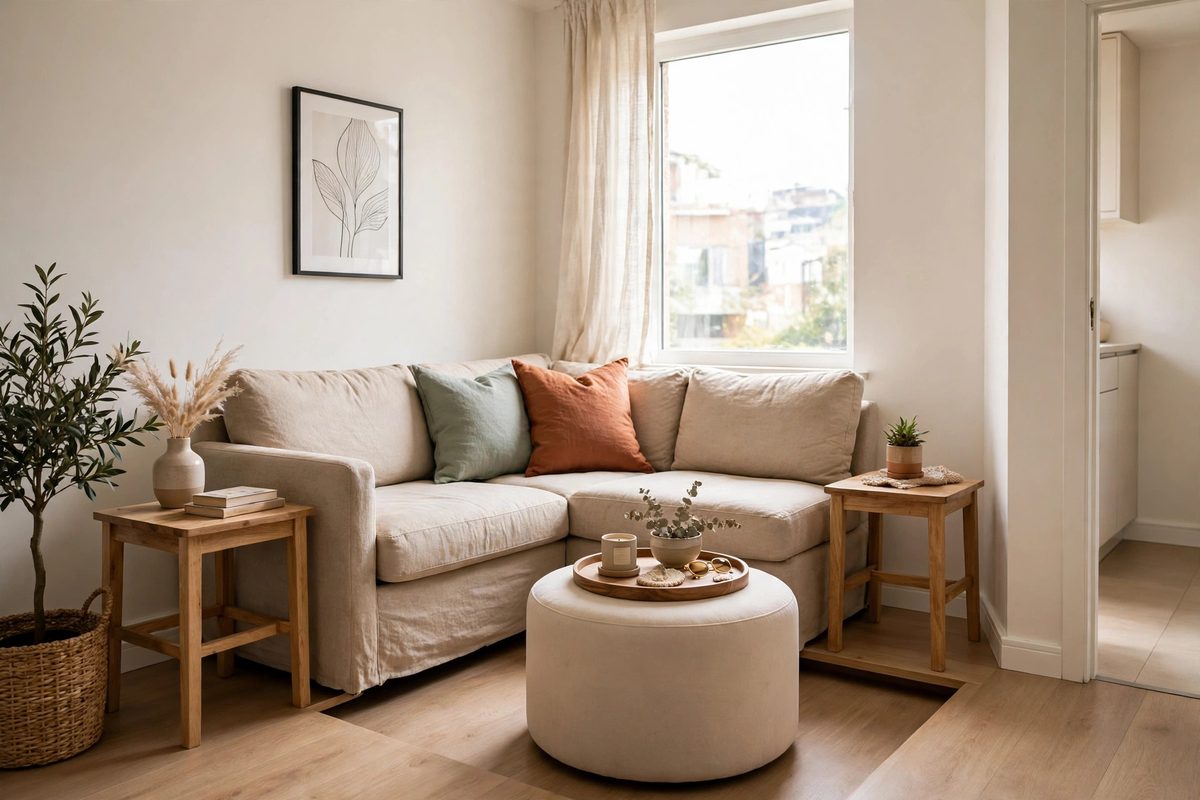
Small living room without a coffee table using an ottoman with a tray and side tables beside the sofa
In This Guide
A coffee table is the default living room piece, but in a small living room it is often the piece that causes the most trouble. It blocks the walkway, it collects clutter, and it makes the seating area feel cramped, especially when the sofa is already close to the TV or a wall.
Skipping the coffee table does not mean giving up a place for drinks, books, remotes, and feet. It means replacing one large, fixed surface with smaller, flexible pieces that can move when you need floor space and return when you need a surface. The room feels larger because the center stays open, and daily life gets easier because you are not navigating around a table every time you cross the room.
The key measurement is the walkway: you want at least 30 inches of clear passage through the seating area, and at least 18 inches between the sofa and any surface in front of it, so you can sit and stand comfortably. If a coffee table leaves less than that, it is too big for the room. For related small space ideas, see small kitchen pot and pan storage ideas and small living room plant ideas, plus small living room coffee table ideas if you decide a small table does suit your room after all.
These 9 alternatives keep everything within reach while leaving the center of the room open.
1. An Ottoman With a Tray
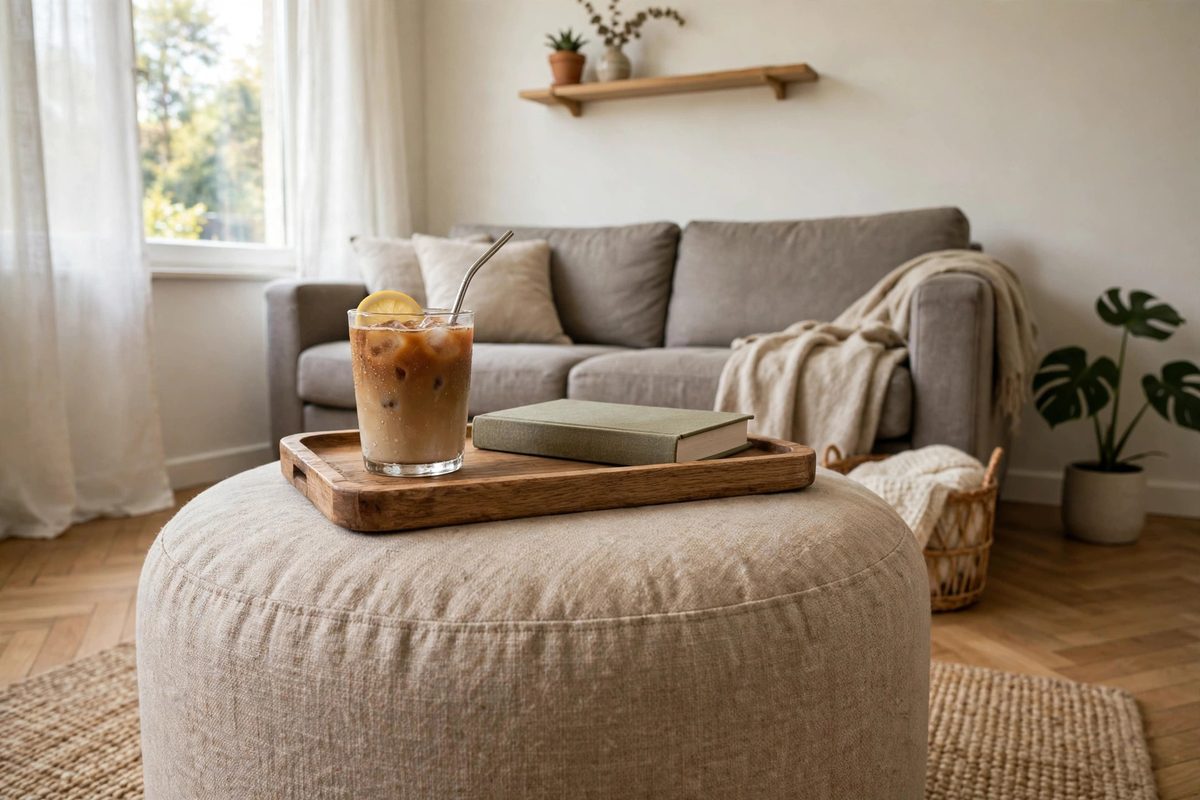
An ottoman with a tray is the closest replacement for a coffee table, with two advantages: it is soft, so it does not hurt when you bump into it, and it doubles as extra seating or a footrest. A tray on top, about 16 to 20 inches across, creates a stable surface for drinks and books.
Ottomans cost 80 to 250 dollars depending on size and fabric, and trays cost 20 to 40 dollars. Choose an ottoman that is about two thirds the length of your sofa and no higher than the sofa seat, so it feels proportional and comfortable for feet.
How to make it work
Use a tray with raised edges, so drinks do not slide off when someone puts their feet up and shifts the ottoman. Keep the tray to three items at most: a drink, a book, and a remote, so it does not become a clutter surface. If you need the ottoman as seating for guests, lift the tray off and set it on a side table, which takes seconds.
2. A Pair of Side Tables
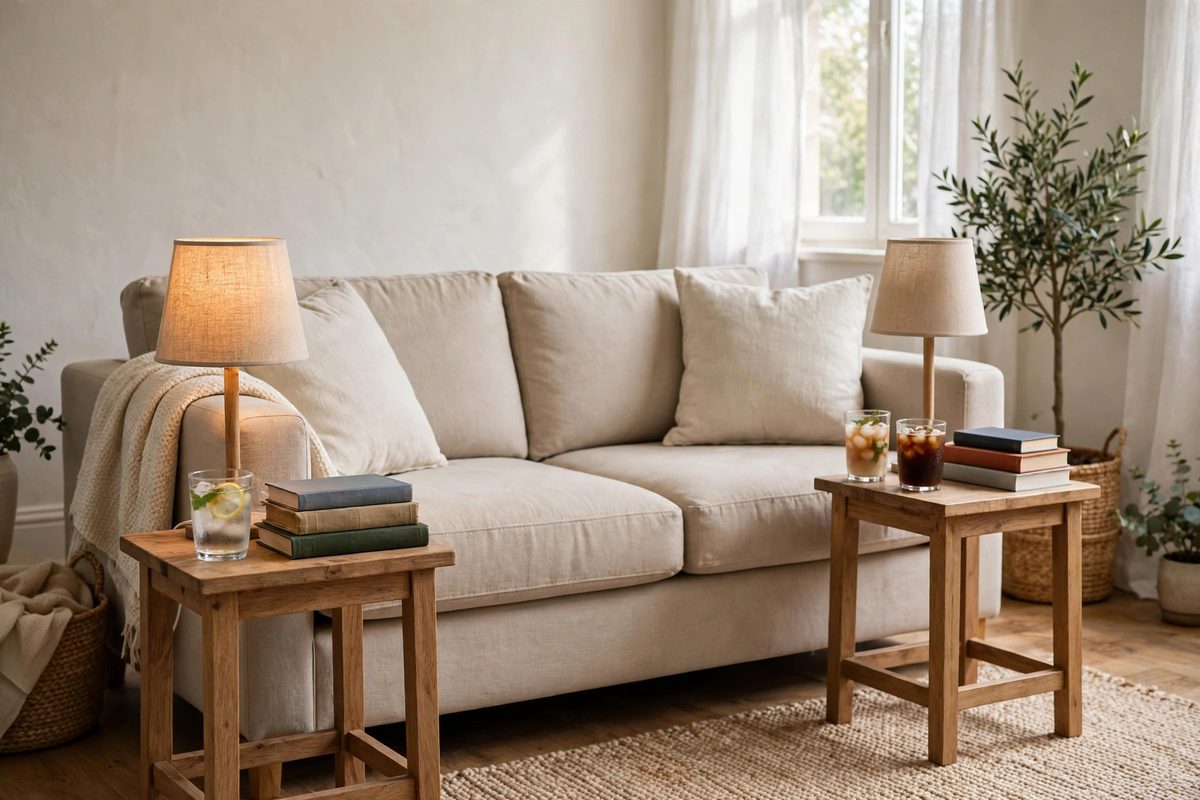
Two side tables, one at each end of the sofa, replace a coffee table with surfaces that are closer to each seat and take up far less floor space. Each table needs only about 16 to 20 inches of diameter or width, and they tuck beside the sofa rather than in front of it.
Side tables cost 40 to 120 dollars each. This arrangement suits people who mostly drink, read, and use a phone from the sofa, since everything is within arm’s reach without leaning forward to a central table.
How to make it work
Match the side tables in height to the sofa arms, or slightly lower, so drinks are easy to reach without stretching. Keep one table for drinks and a lamp, and the other for books and a phone charger, so each table has a clear job. If floor space is very tight, use one side table only, on the side where you sit most.
3. A C Table That Slides Under the Sofa
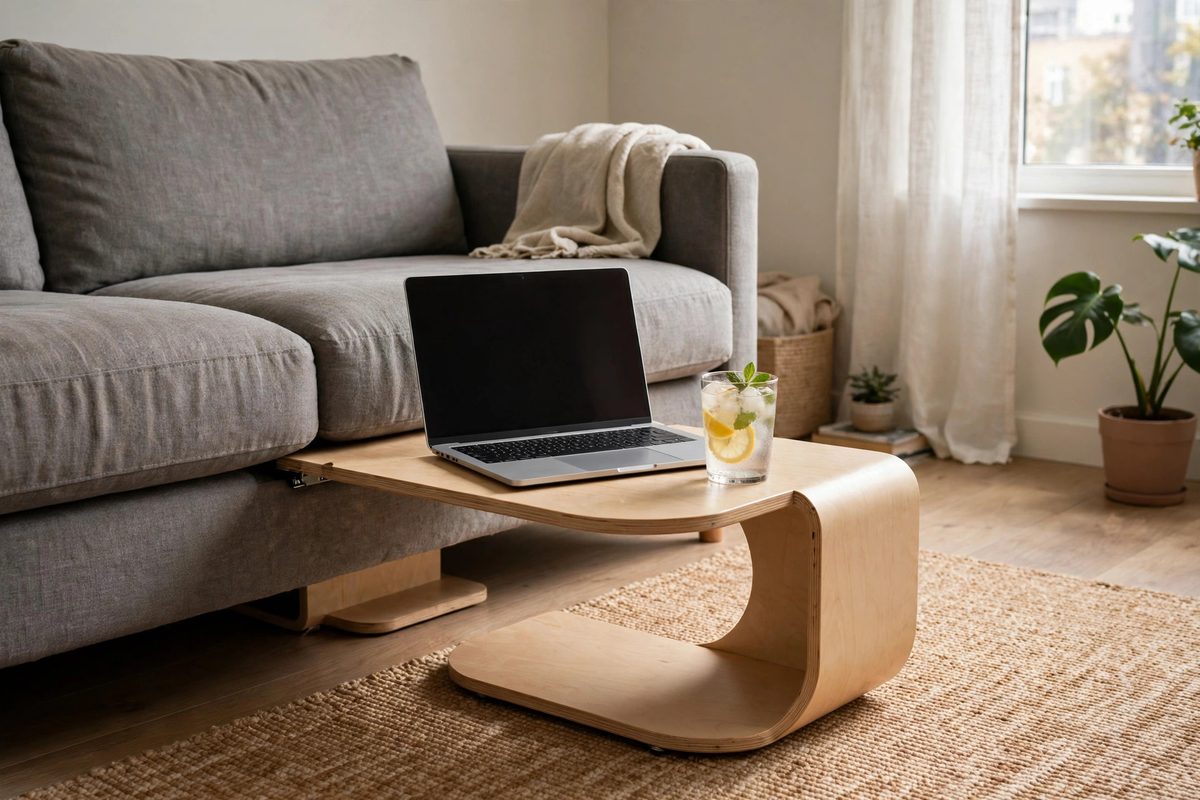
A C table is shaped like the letter C, with a base that slides under the sofa and a top that hovers over the seat. It gives you a personal surface for a laptop, a drink, or a book, right where you sit, without any table in the center of the room.
C tables cost 40 to 100 dollars. They work best with sofas that have at least 4 inches of clearance underneath for the base, and with seat heights that match the table height, usually 24 to 28 inches.
How to make it work
Choose a C table with a top large enough for your laptop, about 16 by 12 inches, if you work from the sofa. Slide it away when you stand up, so the floor in front of the sofa stays completely clear. If two people share the sofa, buy two C tables, one per seat, rather than sharing one.
4. Floor Cushions and a Low Tray
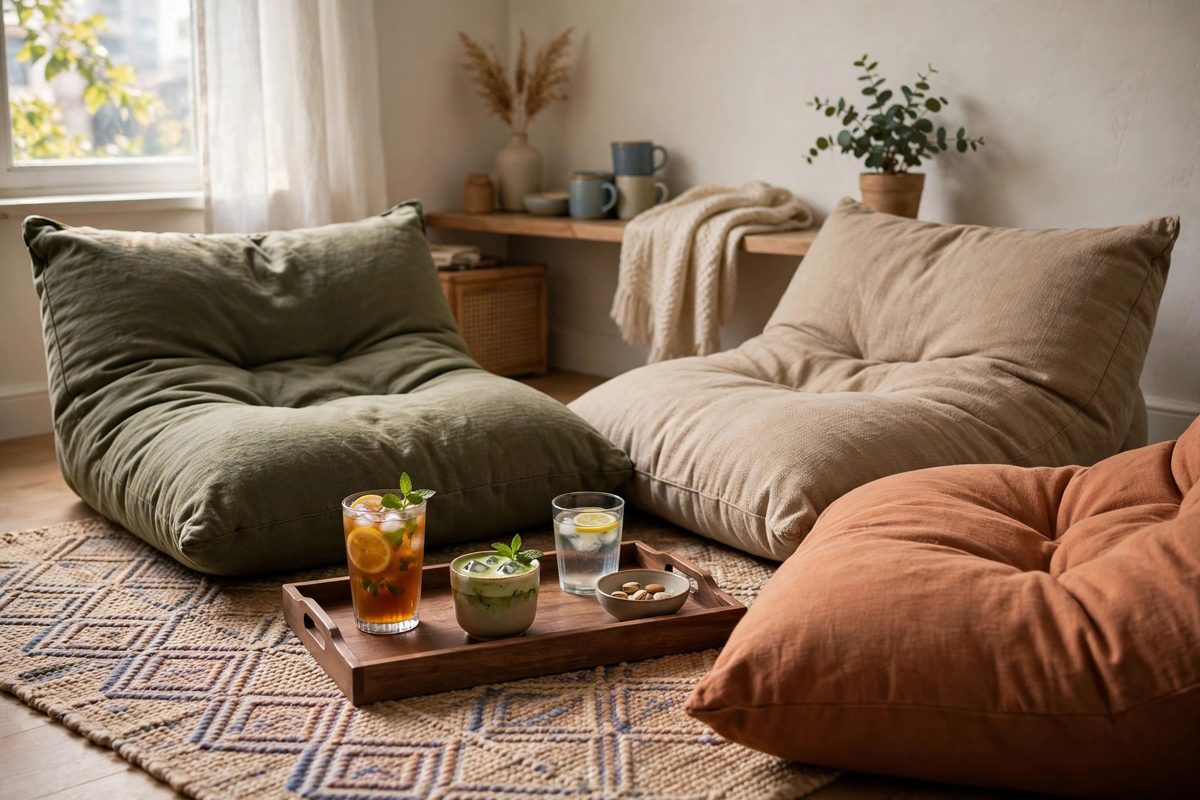
Floor cushions with a low tray create a relaxed, flexible seating area that can be packed away entirely when you need floor space. Large cushions, 24 to 30 inches square, serve as extra seats, and a low tray on a small stand or directly on the rug holds drinks.
Floor cushions cost 30 to 80 dollars each. This arrangement suits casual households, homes with kids who like floor play, and rooms where the sofa is low and the style is relaxed rather than formal.
How to make it work
Use cushions with removable, washable covers, since floor cushions get more wear than sofa cushions. Keep the tray low and stable, and avoid tall drinks on it, since a floor tray is easier to knock than a table. Stack cushions in a corner or on a shelf when not in use, so the room can return to open floor in minutes.
5. Nesting Tables That Expand When Needed
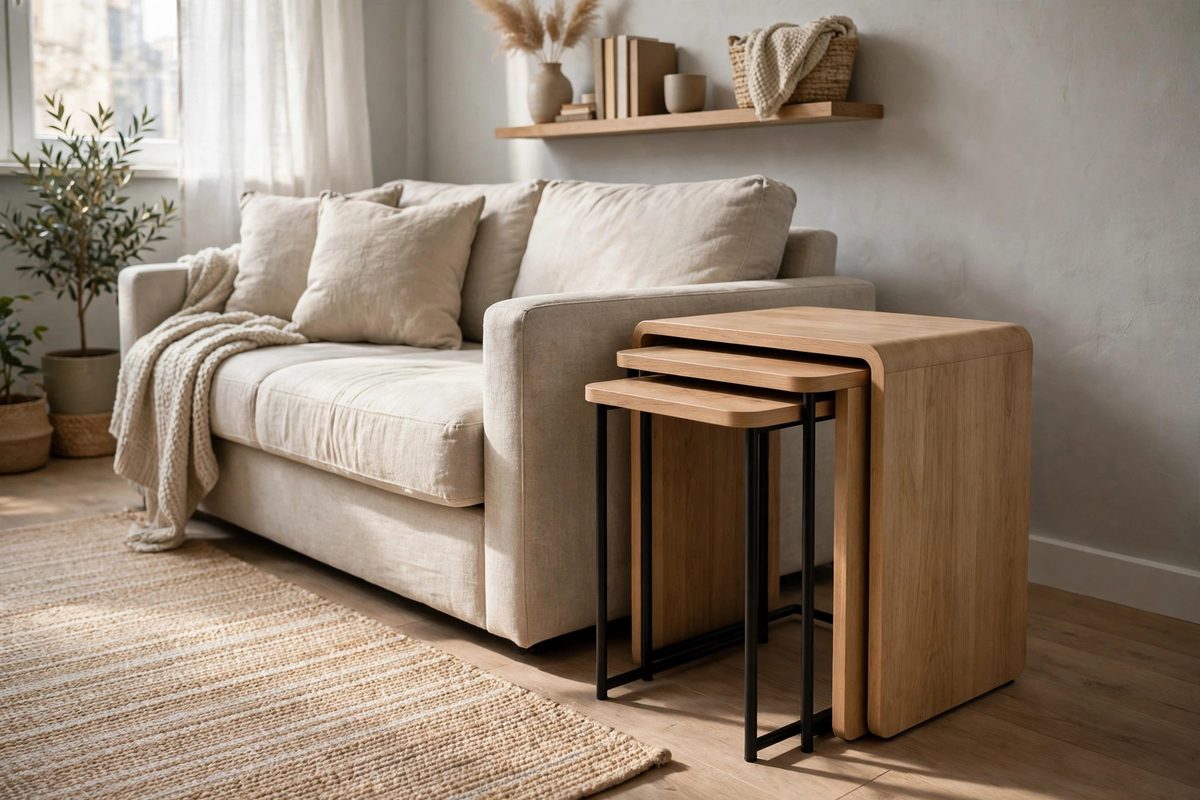
Nesting tables are two or three small tables that stack together when not in use and pull apart when you need surfaces. Nested, they take up about 18 inches of floor width. Expanded, they give you a table beside the sofa, one near a chair, and one wherever guests sit.
Nesting table sets cost 80 to 200 dollars. Choose a set where the smallest table is at least 14 inches across, so it can actually hold a drink and a book, not just a phone.
How to make it work
Keep the nested set beside the sofa or against a wall, so it is easy to pull out. Use the largest table as the everyday side table, and pull out the smaller ones only for guests or for a meal. If the tables have different heights, use the tallest for drinks and the shortest for books, so the arrangement looks intentional.
6. A Bench or Trunk That Stores Too
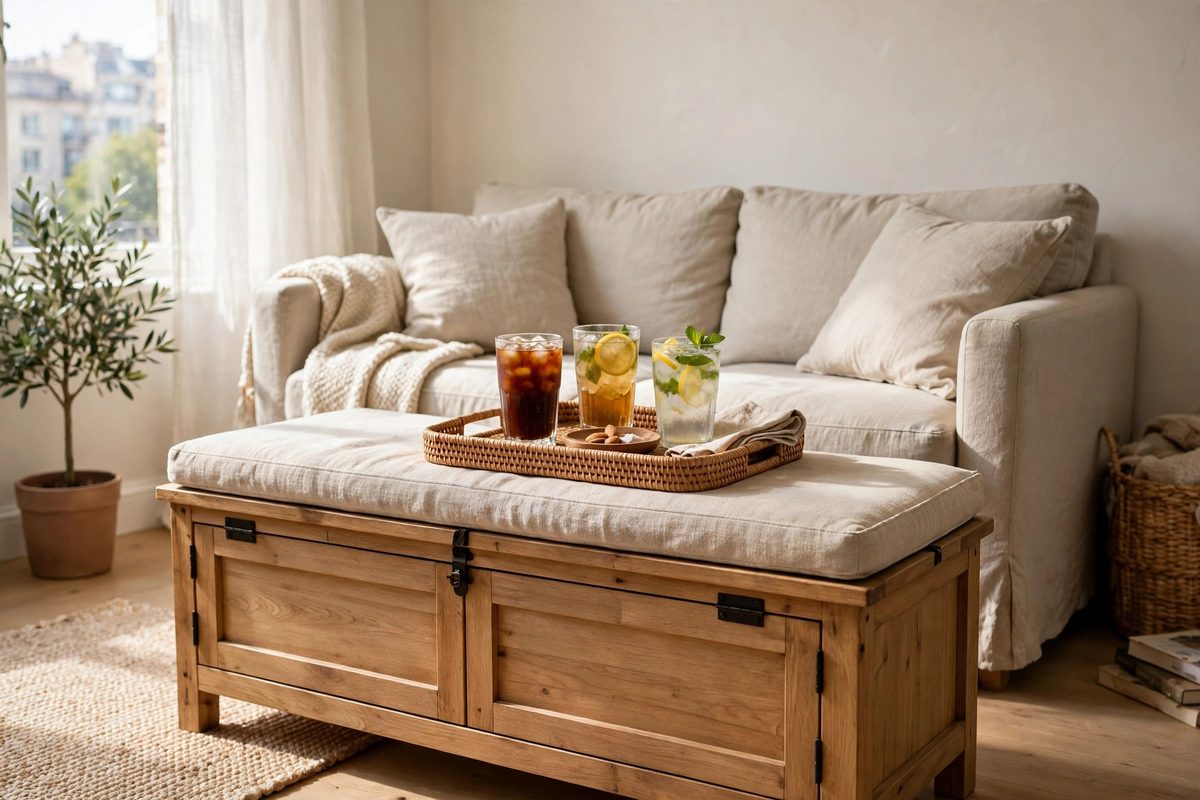
A bench or a trunk in front of the sofa gives you a surface plus storage, which is valuable in a small apartment. A storage bench, about 36 to 48 inches long, holds blankets, games, or kids toys inside, while the top holds a tray for drinks.
Storage benches cost 100 to 250 dollars. A trunk works similarly and adds vintage character, but check that the lid stays open safely and that the top is flat enough for a tray.
How to make it work
Keep the bench lower than the sofa seat, so it does not block the view of the TV or the room. Use a tray on top for drinks, since a bench top alone is not always stable for cups. If the bench is used as extra seating, choose one with a cushioned top, so it is comfortable for both sitting and serving.
7. A Wall Mounted Shelf Ledge
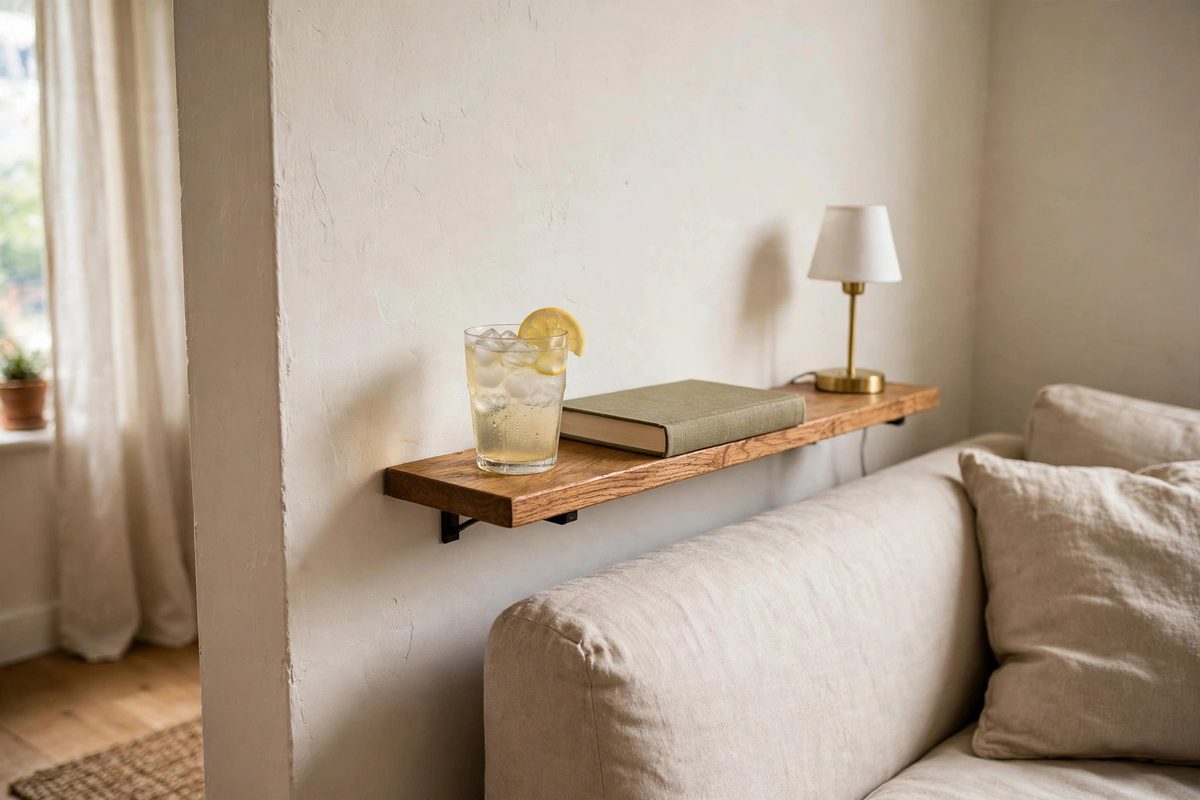
A wall mounted shelf ledge, about 10 to 12 inches deep, gives you a surface for drinks, books, and a lamp without any floor footprint at all. Mounted beside the sofa at arm height, it functions like a side table that never blocks a walkway.
Wall ledges cost 30 to 80 dollars. They must be anchored into studs, since they hold weight with no legs, and they should be rated for at least 20 pounds. This is a strong choice for very small rooms where even a side table crowds the passage.
How to make it work
Mount the ledge at sofa arm height, about 24 to 28 inches from the floor, so reaching for a drink feels natural. Keep only two or three items on it, since a crowded ledge in front of a sofa looks messy and risks items falling. If you rent, use a heavy duty adhesive shelf rated for the weight, but test it with books before trusting it with drinks.
8. Poufs and a Rug as the Center
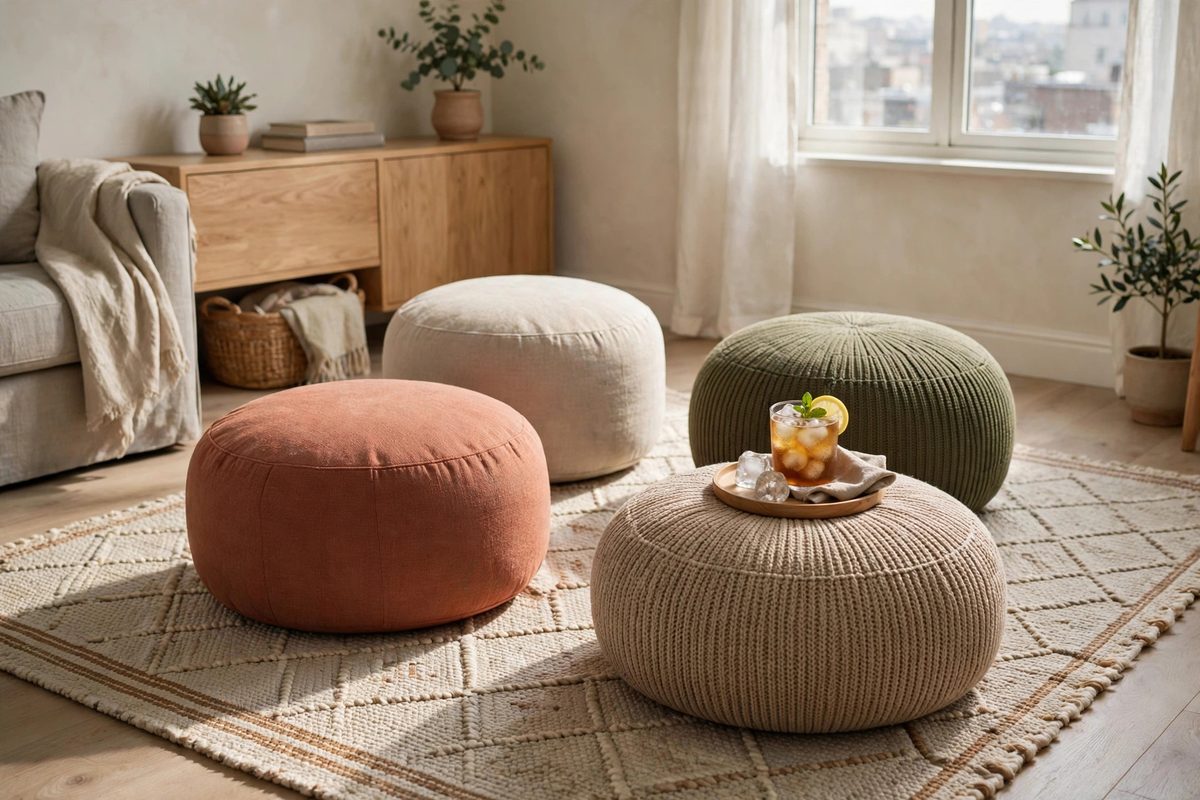
Two or three poufs on a rug create a soft center for the seating area without a hard table. Poufs serve as footrests, extra seats, and, with a tray on top, a surface for drinks. They are light enough to move with one hand, so the room can be rearranged in seconds.
Poufs cost 30 to 80 dollars each. Choose poufs about 18 to 20 inches across and 14 to 18 inches high, so they sit comfortably beside a sofa seat and can be tucked under a console when not needed.
How to make it work
Use a tray on one pouf for drinks, and leave the others free for feet and seating. Choose poufs with removable covers for easy cleaning, since they get used as footrests. If the room has pets, pick a durable fabric that resists claws, like a tight weave cotton or a performance fabric.
9. A Rolling Cart for Flexible Serving
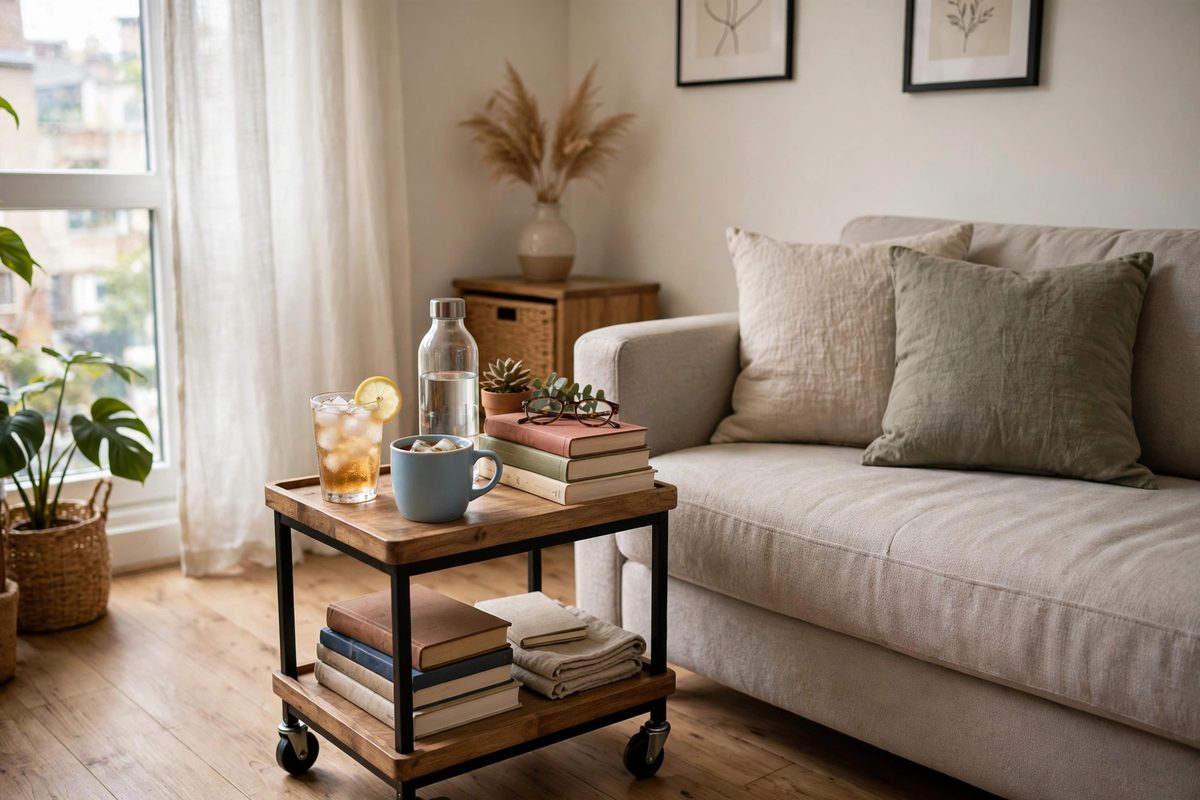
A rolling cart, about 17 by 12 inches, serves as a coffee table that can be rolled to the sofa when needed and parked against a wall when not. It holds drinks, snacks, and books on two or three tiers, and it doubles as a bar cart or a plant stand when guests are not around.
Rolling carts cost 30 to 70 dollars. Choose one with locking wheels, so it stays put beside the sofa, and with a top tier large enough for a tray, so drinks do not slide off the bars.
How to make it work
Park the cart against the wall nearest the sofa, so rolling it out takes one motion. Keep the top tier for current drinks and snacks, and the lower tiers for books and remotes, so the cart stays organized. If the cart is used for food, wipe it after each use, since crumbs collect in the tiers faster than on a flat table.
A small living room does not need a coffee table to feel complete. It needs surfaces where you actually sit, that move when you need space, and that leave the center of the room open for living. Pick the alternative that matches how you use the room, and let the floor stay free.