10 Small Kitchen Pot and Pan Storage Ideas That Stop the Cabinet Pile-Up
Ten practical pot and pan storage ideas for small kitchens, from drawer dividers to wall rails, that end the noisy cabinet pile-up for good.
In This Guide
Every small kitchen has the same noisy moment. You reach for a frying pan and three lids slide forward, a saucepan handle catches on a stockpot, and something heavy lands on your foot. The problem is rarely that you own too much cookware. It is that flat stacking turns a cabinet into a pile where the pan you want is always at the bottom.
Pots and pans are bulky, heavy, and awkwardly shaped, so they need a system that works with their size instead of against it. Upright storage, dividers, and hooks all beat stacking because you can pull one piece out without moving five others. Most of these ideas cost under 40 dollars and need no drilling, which matters in a rental.
Before you buy anything, pull every pot, pan, and lid out and count what you actually use each week. Many small kitchens run happily on one large skillet, one medium saucepan, one stockpot, and a baking sheet. If you love small living room plant ideas for greenery and black Christmas tree ideas for small apartments for the holidays, you already know the rule that works here too: a few well chosen pieces, each with a real home, beat a crowded collection. For the rest of the kitchen, see small kitchen storage ideas for matching systems.
These 10 ideas cover drawers, doors, walls, and ceilings, so you can pick the one that fits your cabinet layout and your lease.
1. Deep Drawer Dividers That Hold Pans Upright
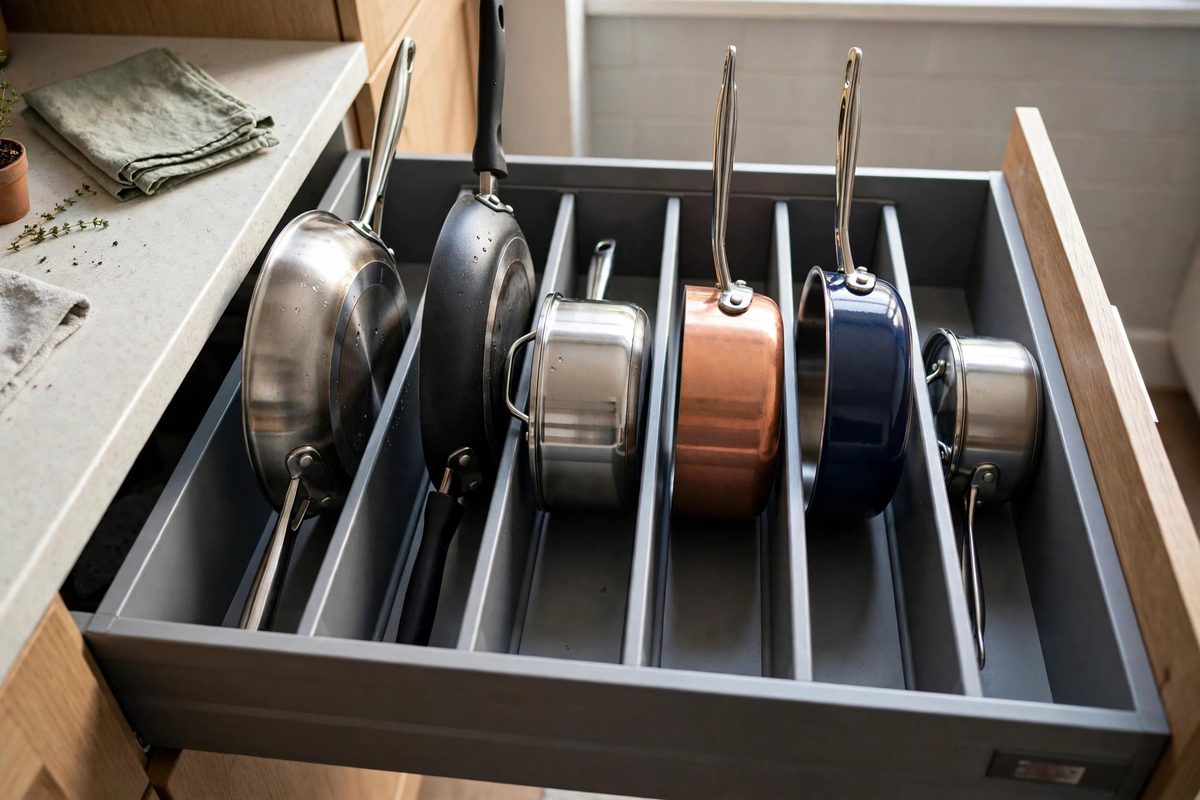
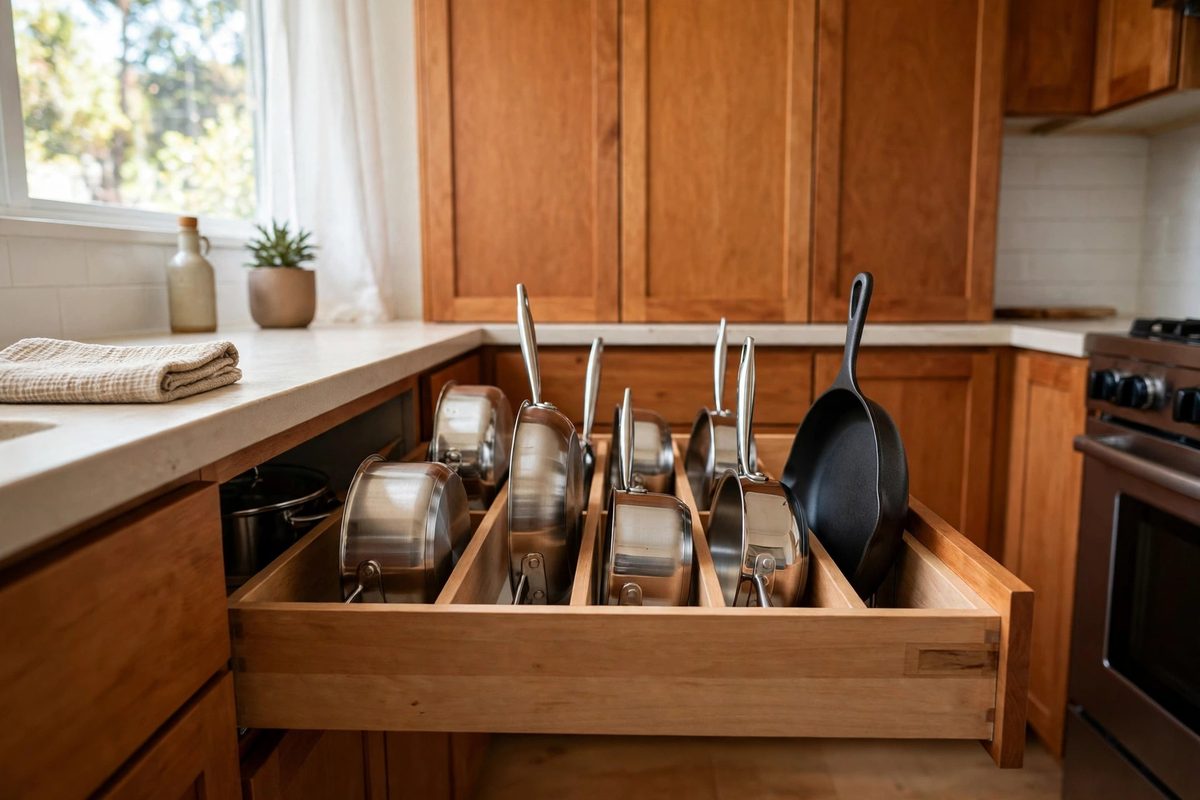
A deep drawer is the single best home for pots and pans in a small kitchen. Instead of laying pans flat, stand them on their sides like files in a drawer, separated by adjustable dividers or a pegboard base. A standard 24 inch wide drawer can hold four to five pans this way, and you can see every handle at a glance.
Measure the drawer interior first, including height. Most frying pans need at least 4 inches of clearance when stood on edge, and a lid stored beside them needs a similar slot. Adjustable dividers cost roughly 15 to 30 dollars and can be cut or repositioned if you swap a pan later.
How to make it work
Place the heaviest stockpot at the back of the drawer and the everyday skillet at the front, so the weight stays balanced and the pan you grab daily is easiest to reach. Put a thin silicone liner under the pans to stop sliding and to protect the drawer base from heat marks. If your drawer is shallow, store lids in a separate slot rather than forcing them in on top.
2. A Vertical Lid File Inside the Cabinet Door
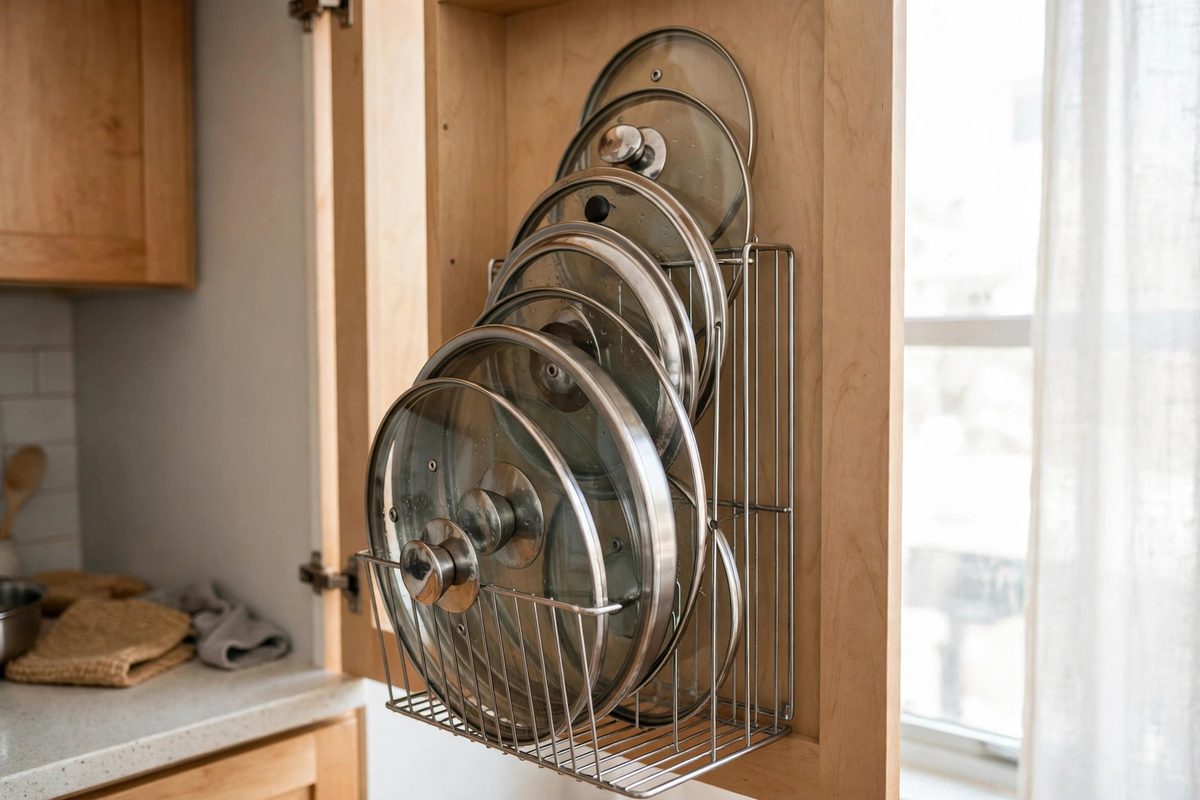
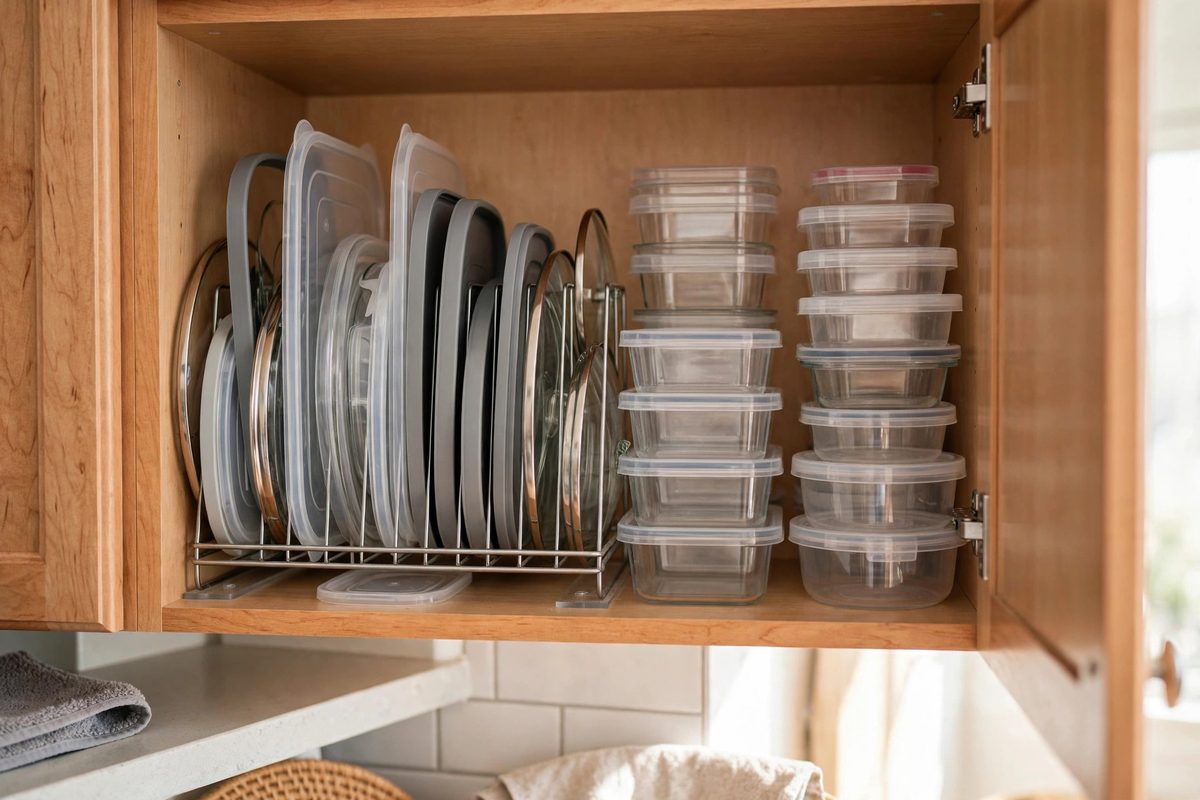
Lids cause half the pile-up. They are round, they slide, and they never match the pan underneath them in a stack. A vertical lid file fixes this by giving each lid its own slot, either mounted on the inside of a cabinet door or standing in a rack on the cabinet floor.
Door mounted racks work best for lids up to about 12 inches across. Check the clearance between the door and the shelves inside, since a rack that is too deep will stop the door closing. Freestanding lid files cost 10 to 20 dollars and can be moved to a new apartment without leaving a mark.
How to make it work
Sort lids by size, largest at the back, and label nothing: the size order is the system. Keep glass lids in the middle slots where they are less likely to get knocked when the door swings. If a lid has no matching pan left in your kitchen, let it go, because an orphan lid takes a slot a working lid needs.
3. A Wall Rail With Hooks for Everyday Pans
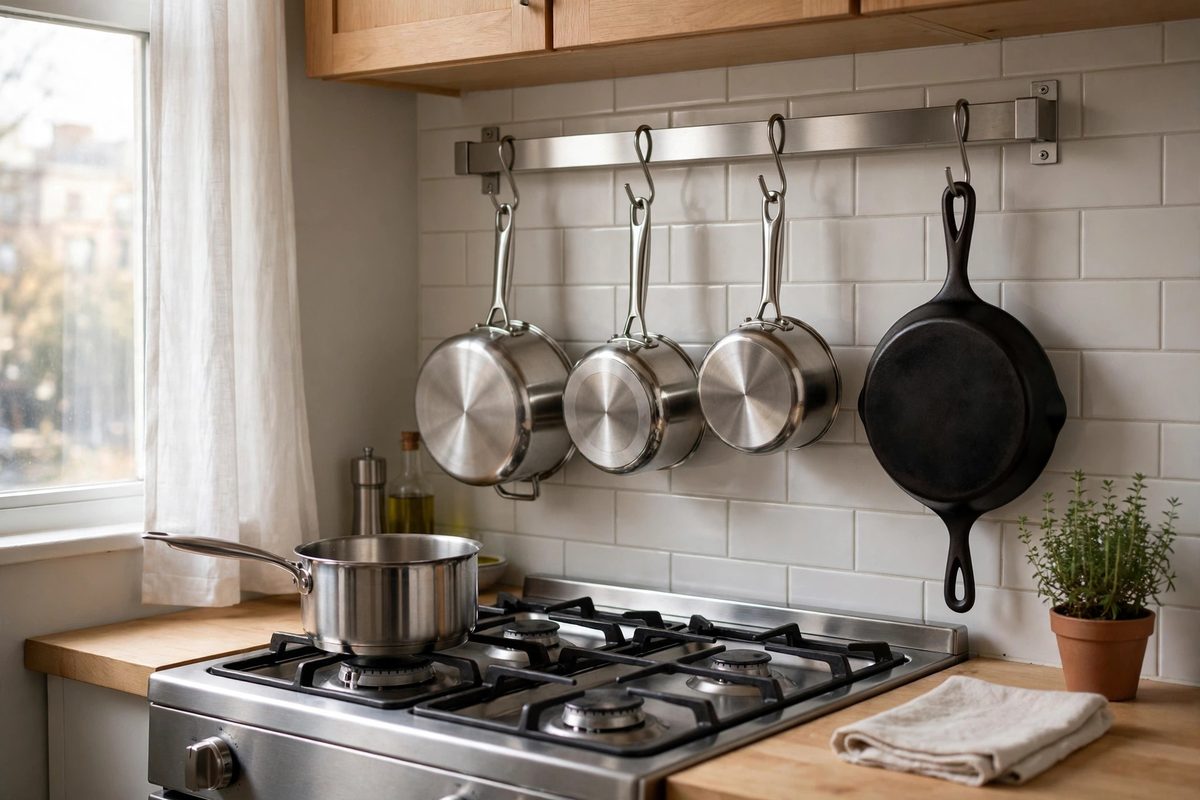
A stainless wall rail with S hooks turns your most used pans into wall storage and frees an entire cabinet shelf. A 24 inch rail holds three to four pans comfortably, and because each pan hangs by its handle hole or a hook, nothing stacks and nothing scratches.
This is a strong renter option if you use a rail that mounts with two screws into a stud, or a tension mounted rail between two walls in a galley kitchen. Budget 20 to 35 dollars for a rail and a set of hooks. Leave at least 6 inches of clearance below the lowest pan so it does not bump the countertop.
How to make it work
Hang pans in order of use, with the daily skillet closest to the stove. Keep the total weight under the rail rating, usually 20 to 30 pounds, and skip hanging a cast iron Dutch oven on a light rail. Wipe handles before hanging so grease does not drip down the wall over time.
4. A Ceiling or Under Cabinet Pot Rack
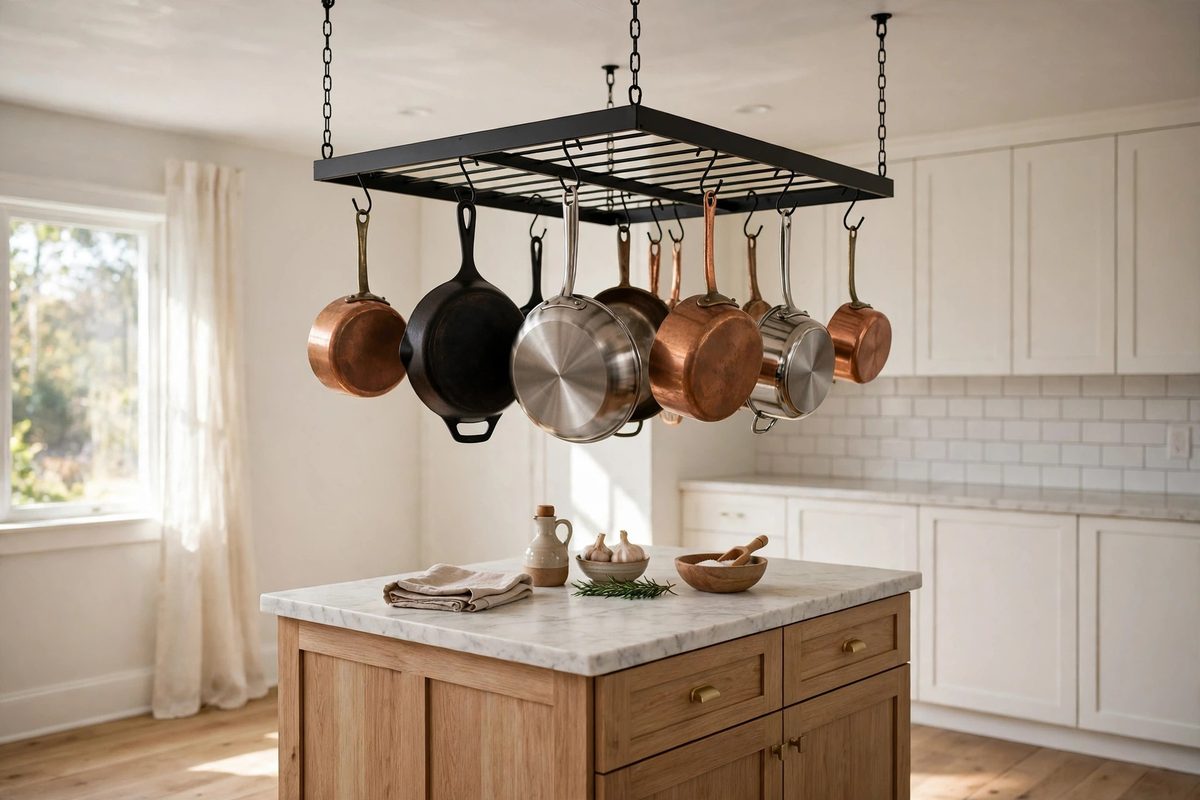
Overhead racks get pans out of cabinets entirely, which is a gift in a kitchen with only two or three base cabinets. A ceiling rack over an island or a peninsula keeps pans visible and reachable, while an under cabinet rack uses the dead space beneath wall cabinets.
The tradeoff is headroom. You need at least 7 feet of ceiling height, or a rack that hangs no lower than 6 feet 6 inches above the floor, so tall cooks do not duck. Ceiling racks run 40 to 90 dollars, and you must anchor into joists, not just drywall, because a loaded rack can weigh 40 pounds or more.
How to make it work
Hang the heaviest pans in the center of the rack and lighter ones at the ends to keep it level. If your lease forbids ceiling anchors, use a wall mounted rack on a bare stretch of wall instead. Keep a step stool nearby only if the rack is high; if you need a stool for a daily pan, the rack is too high.
5. An Inside Door Rack for Lids and Shallow Pans
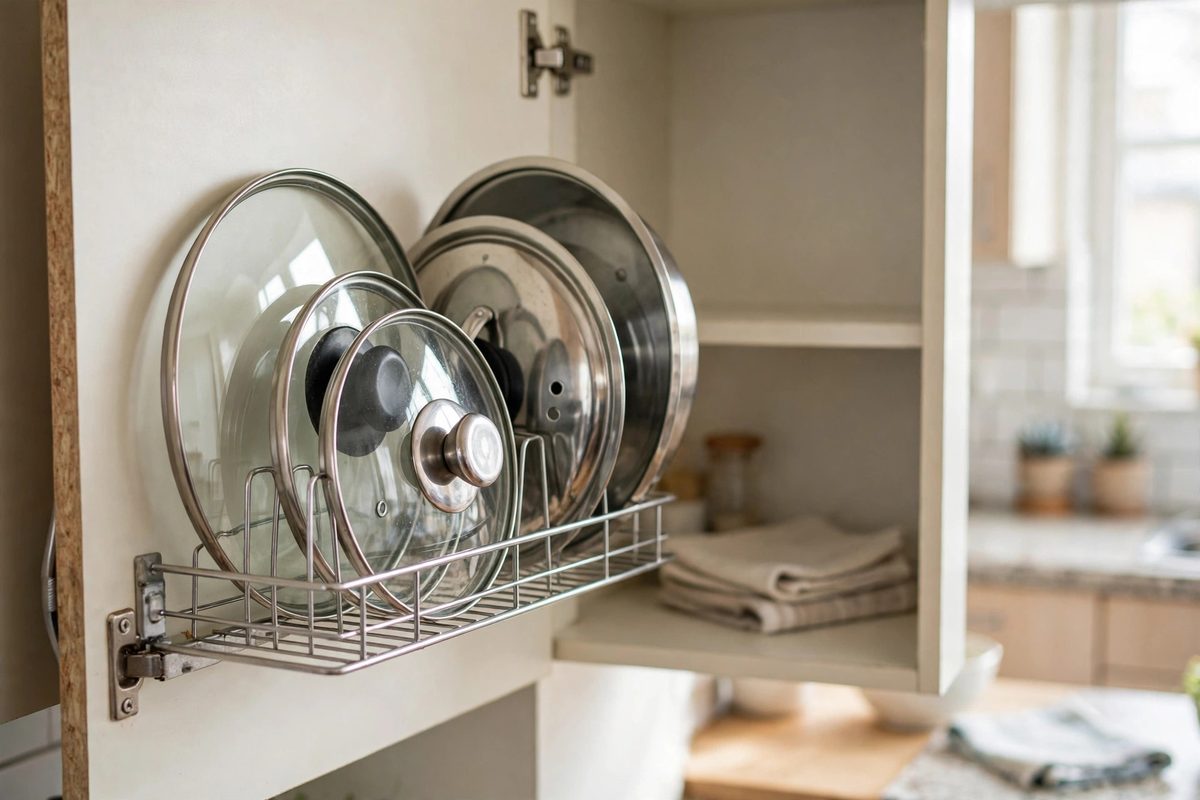
The inside of a cabinet door is wasted space in most kitchens. A slim wire rack screwed or hooked over the door holds lids, a griddle, or a shallow baking pan, and it costs 12 to 25 dollars. Over door hooks need no tools at all, which makes them ideal for renters.
Measure the gap between the door and the cabinet frame before ordering. Most racks need about 1.5 inches of depth, and a rack that is too deep will push the door out of alignment. This is best for lighter items; a cast iron skillet belongs in a drawer, not on a door.
How to make it work
Put the rack on the cabinet closest to the stove so lids are within one step of cooking. Store the lid for each pan right beside that pan if you can, or at least in the same cabinet. Check the door hinges after a week: if the door sags, move the heaviest lid back to a drawer slot.
6. Stacking Done Right With Pan Protectors
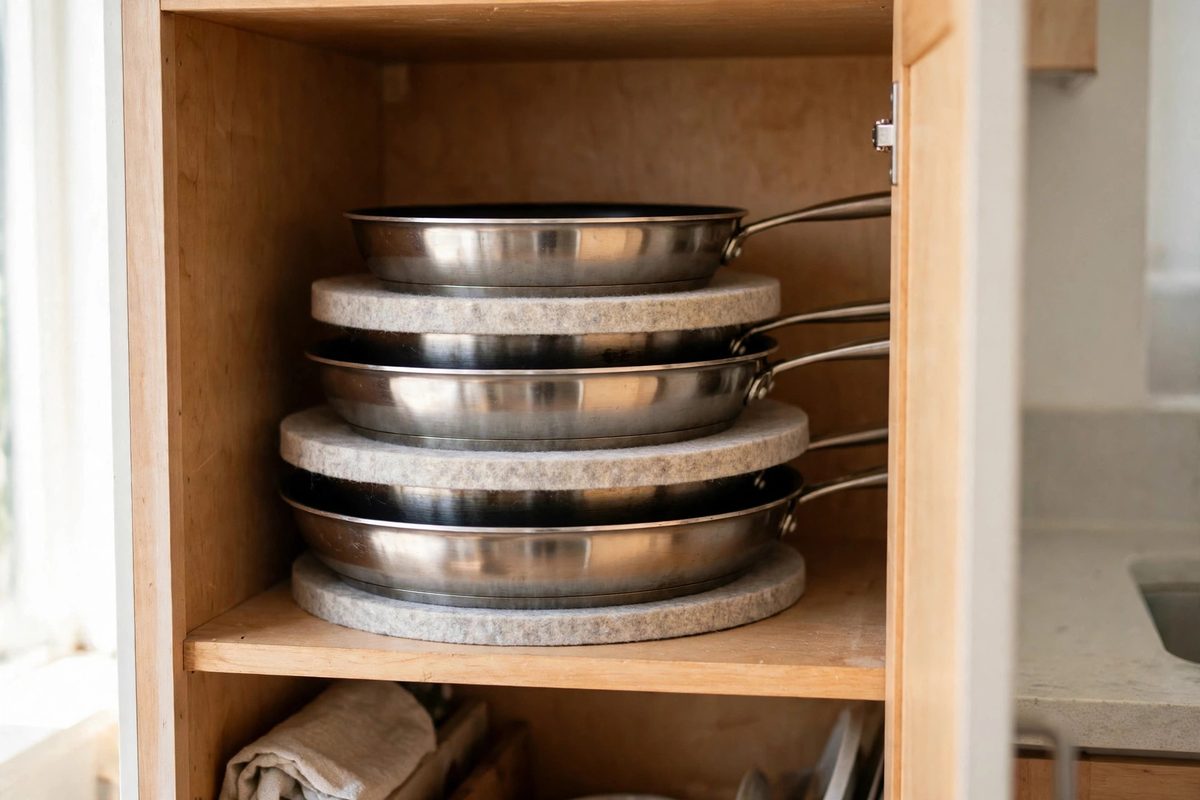
Sometimes stacking is the only option, especially in a single deep cabinet. The fix is to stop metal touching metal. Felt or silicone pan protectors, which cost about 10 dollars for a set, sit between pans and prevent the scratches that make nonstick coatings fail early.
Stack by size and weight: largest and heaviest at the bottom, smallest on top, with no more than four pans in a stack. Store lids separately in a vertical file, because a lid on top of a stack is what slides off and clatters.
How to make it work
Nest pans only if they truly nest without wedging. If you have to force a pan in, it will be just as hard to pull out when it is hot and you are in a hurry. Keep the everyday skillet out of the stack entirely, on a hook or in a drawer slot, so the stack only gets disturbed once or twice a week.
7. A Pegboard Drawer Base for Custom Slots
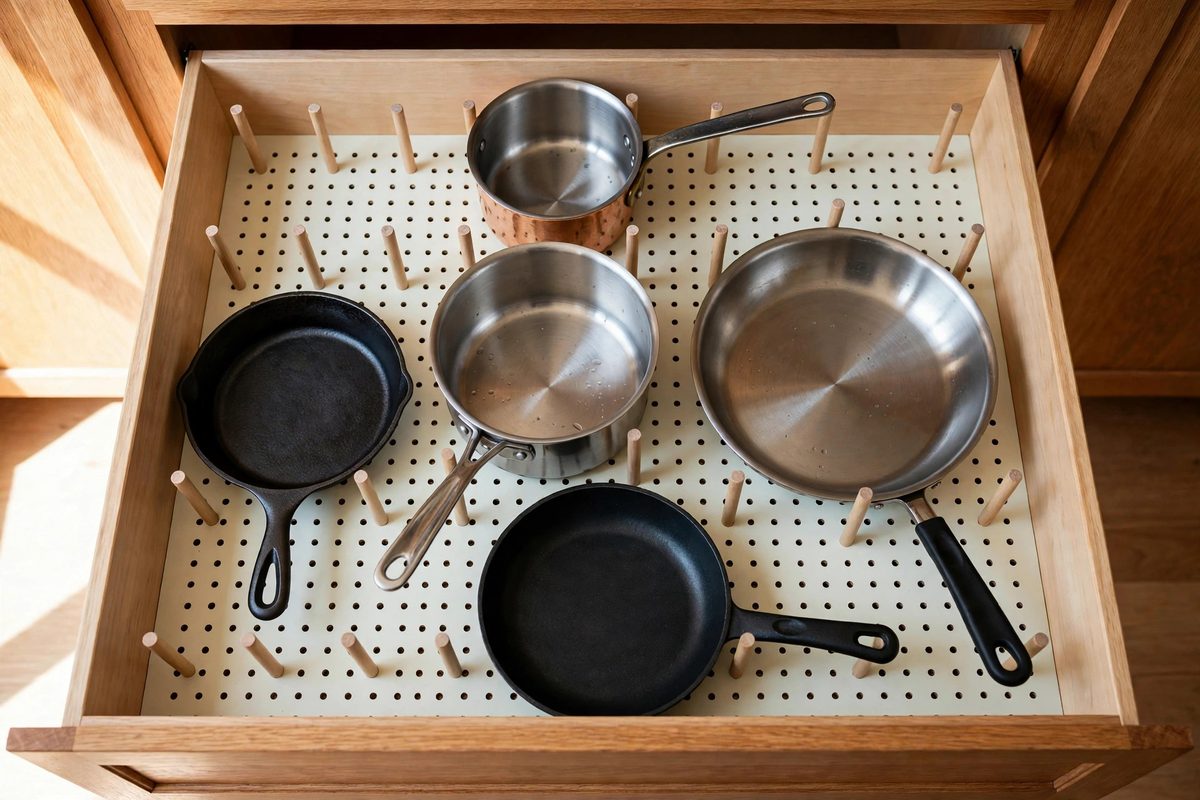
A pegboard drawer organizer uses a flat board with movable pegs to create custom compartments around each pan. Unlike fixed dividers, pegs move when your cookware changes, so a new wok or a wider saute pan does not break the system.
Pegboard drawer systems cost 25 to 45 dollars and can be trimmed to fit drawers from about 15 to 24 inches wide. They work best in drawers at least 5 inches deep, where pans can sit flat in their own compartment without stacking.
How to make it work
Lay the pans in the drawer first, then place pegs around them with about half an inch of breathing room. Put a non slip liner under the board so it does not shift when you pull the drawer open. Photograph the layout before you move, so you can reset it in a new kitchen in minutes.
8. A Slim Rolling Cart for Overflow Cookware
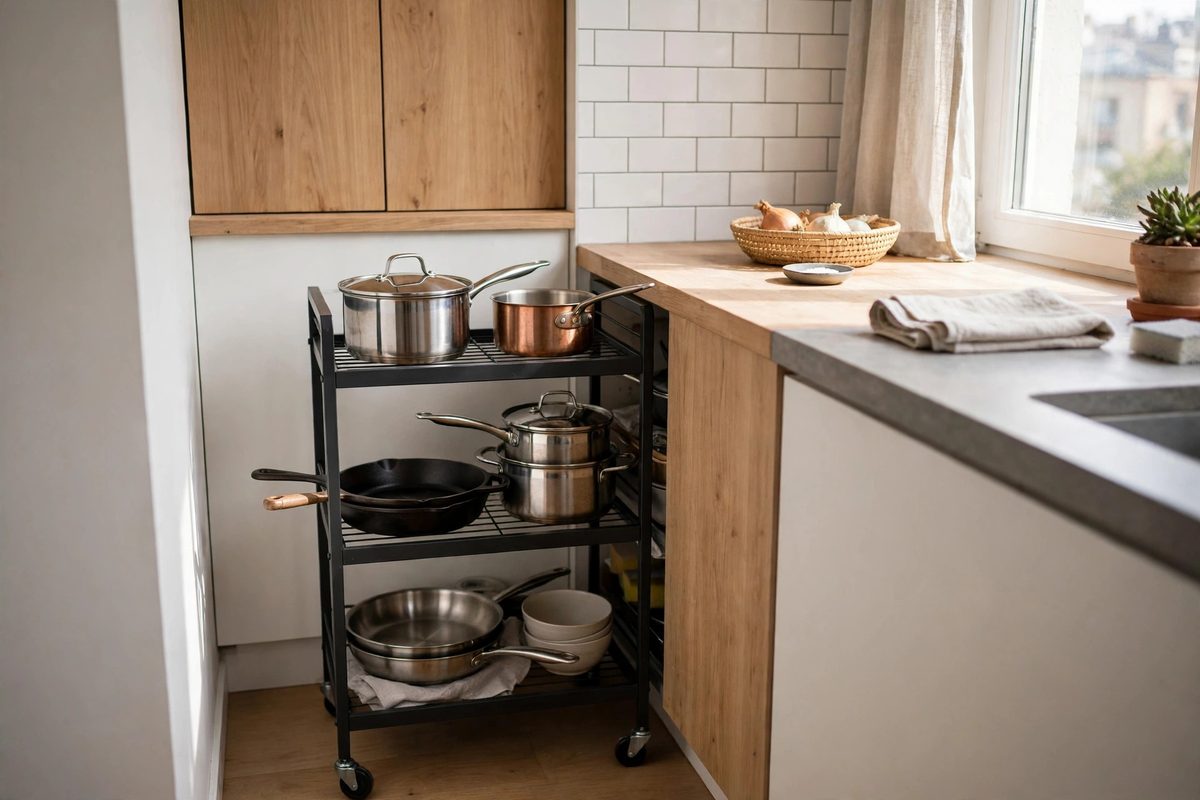
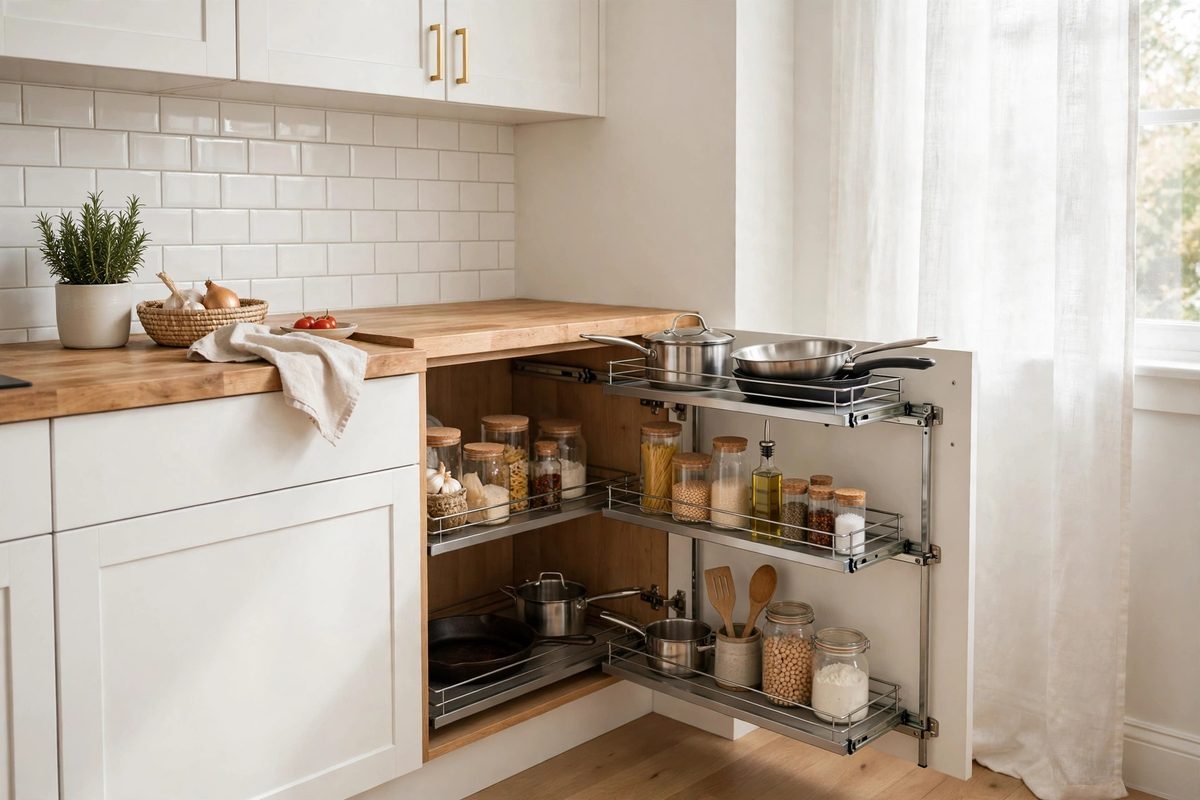
A slim rolling cart, about 10 to 13 inches wide, slides into the gap between the fridge and the counter or beside a cabinet run. It holds the pans you use weekly but not daily: the roasting pan, the large stockpot, the specialty griddle.
Carts run 30 to 60 dollars. Choose one with locking wheels so it stays put while you cook, and check that the shelves are deep enough for your widest pan, usually at least 11 inches. Open shelves work better than closed bins here because you can see handles.
How to make it work
Put the cart where you can pull it out fully without moving the trash can or a chair. Keep only cookware on it, not cleaning supplies, so it stays a cooking station rather than a junk cart. If the gap is near the oven, leave 2 inches of clearance from the heat source.
9. A Tension Rod Divider for Upright Lids
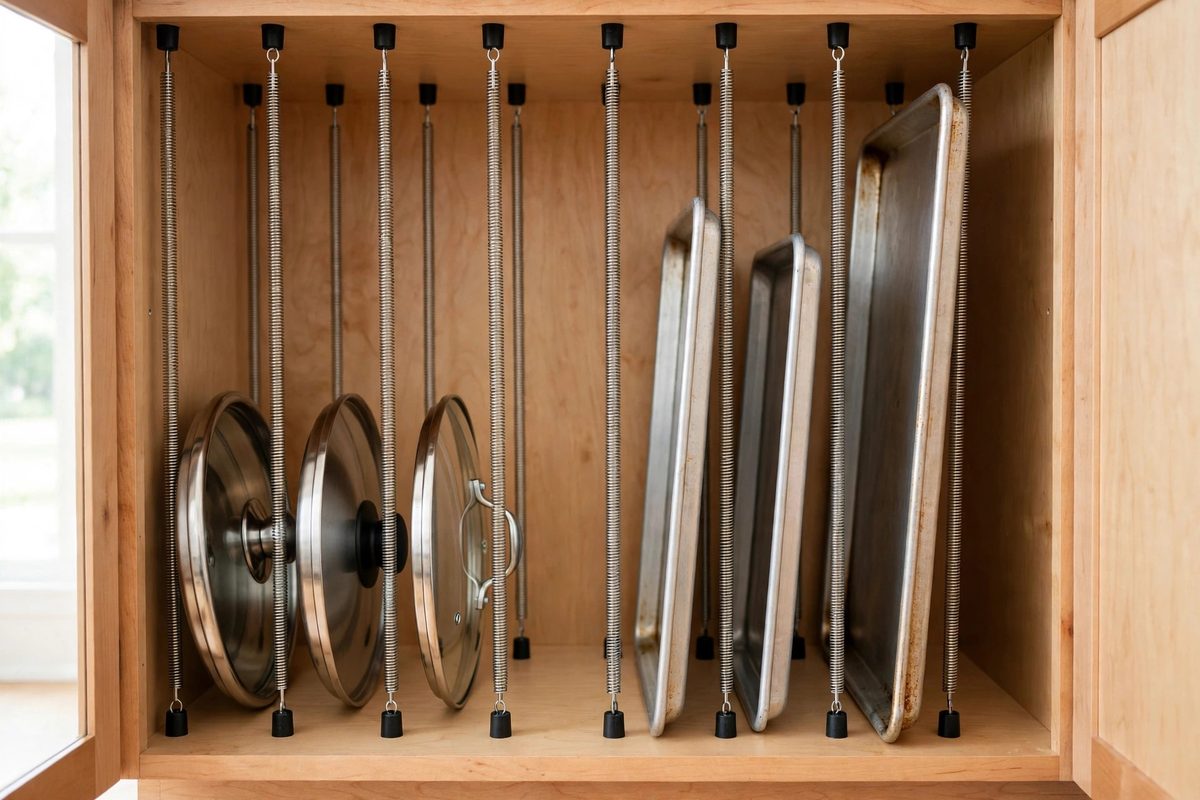
Two spring loaded tension rods, placed vertically inside a cabinet, create instant slots for lids and baking sheets at a cost of about 8 dollars. This is the cheapest idea on this list and it leaves no holes, which renters appreciate.
Tension rods work in cabinets 10 to 16 inches deep. Place one rod near the front and one near the back, then slide lids between them like books on a shelf. The rods must be tight enough that a lid does not push them over, so measure the cabinet width and buy rods rated for that span.
How to make it work
Use rods with rubber ends so they grip and do not mark the cabinet walls. Store baking sheets in the same cabinet, upright beside the lids, since they are the same flat shape. Replace a rod if it starts to sag; a loose rod will let the whole row fall like dominoes.
10. The One In, One Out Cookware Audit
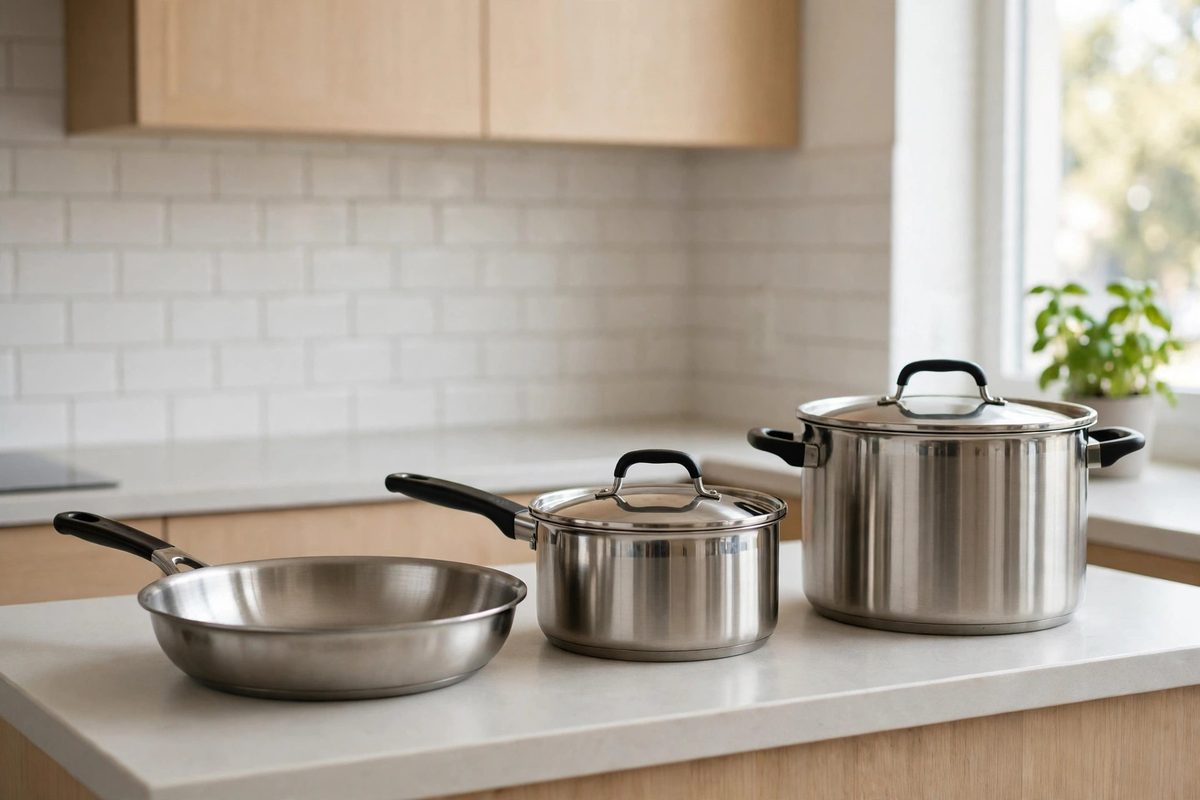
No organizer fixes a collection that is twice the size of the cabinet. Once a year, lay out every pot, pan, and lid and ask which ones you used in the past month. In most small kitchens, three or four pieces do 90 percent of the cooking.
A one in, one out rule keeps the system working after the initial tidy. When a new pan arrives, an old one leaves, whether it goes to a friend, a donation box, or the recycling center if the coating is damaged. A smaller, better set also cooks better, because you reach for the right pan instead of the one on top.
How to make it work
Start with the duplicates: two saucepans the same size, three baking sheets, lids with no pan. Keep the piece in better condition and let the other go. Store the keepers using any system above, and write the count on a sticky note inside the cabinet door so the next audit takes five minutes.
A small kitchen does not need more cabinets. It needs each pot and pan to have one obvious home that you can reach without moving anything else. Pick the idea that matches your cabinet layout, start with the pans you use every day, and let the rest of the system follow.