11 Small Living Room Coffee Table Ideas That Save Space Without Losing Function
Keep walkways clear and open. Discover 11 small living room coffee table ideas—from nesting tables and slim C-tables to soft storage ottomans and round trays.
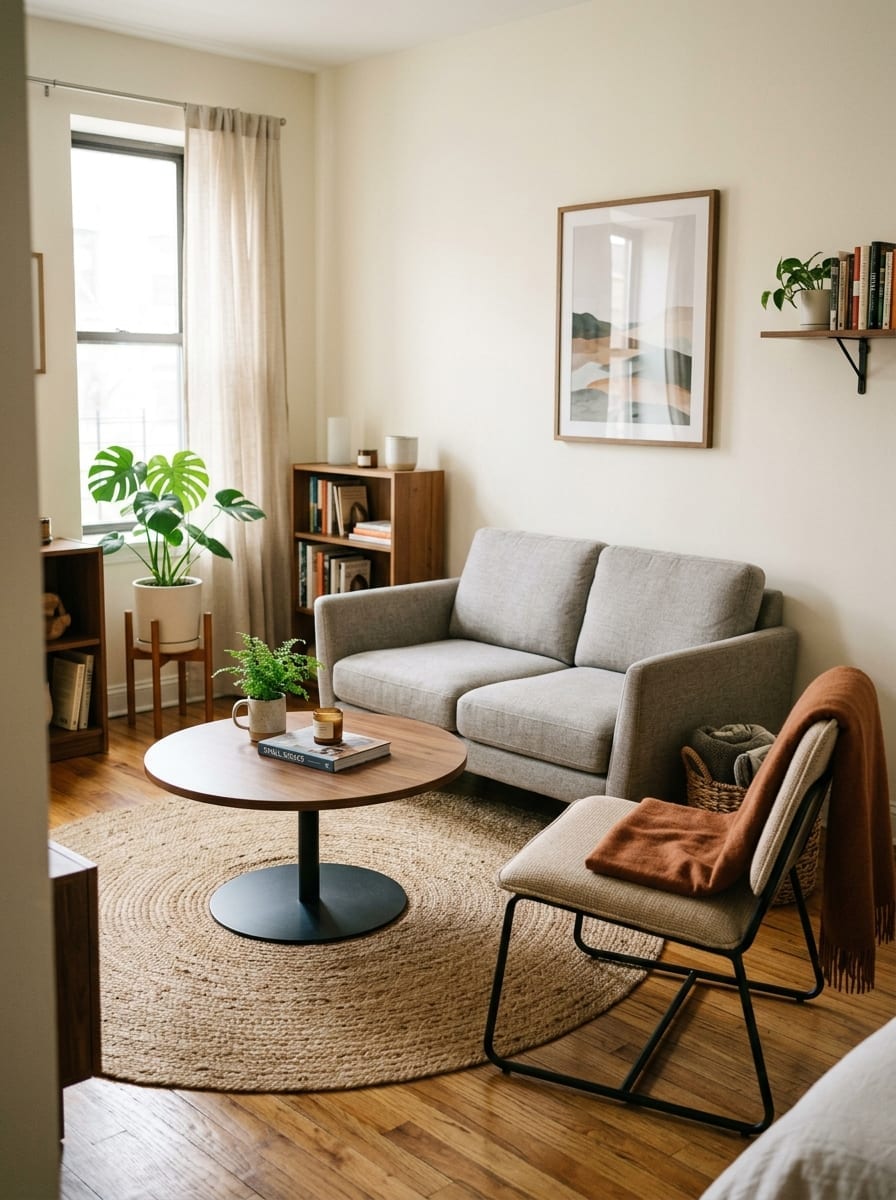
Small living room with a compact round pedestal coffee table leaving generous walking space around the sofa
In This Guide
A coffee table seems harmless until you put one in a genuinely small living room. Then suddenly it affects:
- the walkway
- sofa access
- chair placement
- legroom
- rug size
- how easy the room is to clean And because the coffee table usually sits in the center of the seating area, even a few unnecessary inches can make the whole room feel tighter. The solution is not automatically to buy the smallest table you can find. A table that is too small can be just as frustrating if it cannot comfortably hold:
- drinks
- remote
- book
- laptop
- everyday objects The better approach is to decide what the coffee table actually needs to do and then give it the smallest practical footprint for that job. For some rooms, that means a narrow rectangle. For others, it means:
- nesting tables
- an ottoman
- two C-tables
- or no central coffee table at all Here are eleven options that preserve function without turning the middle of your living room into an obstacle.
1. The Narrow Rectangle Table
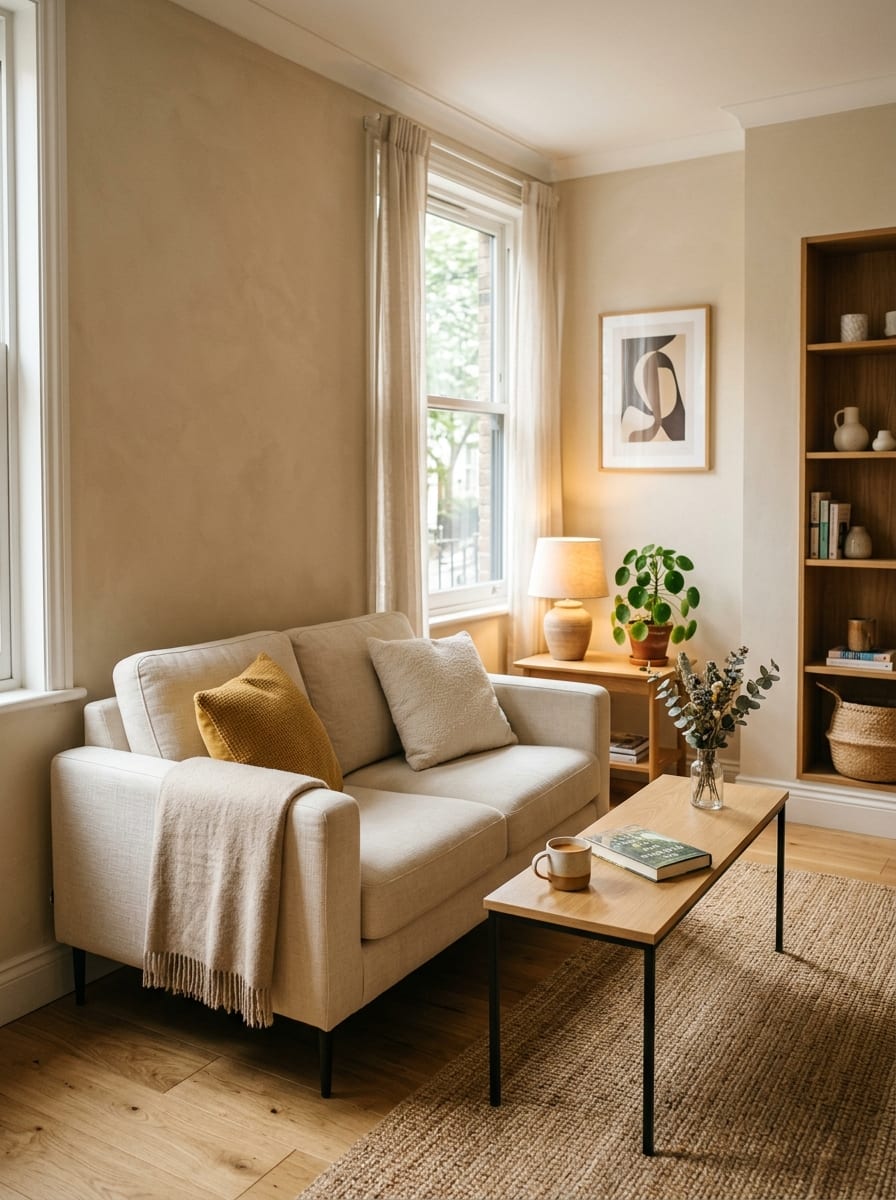
A traditional rectangular coffee table can still work well in a small living room. The important measurement is often not its length. It is its depth. Why depth matters A coffee table that projects too far toward the sofa can reduce:
- knee room
- walking space
- access around the seating area A narrower table preserves the familiar rectangular shape while using less floor.
Keep enough usable surface
Do not shrink it so much that it becomes little more than a decorative ledge. You still want space for a few essentials.
Best with
This setup works particularly well with:
- straight sofa
- narrow room
- sofa facing TV wall
Watch sharp corners
If the pathway runs very close to the table, a softer edge or rounded corner may be more comfortable.
2. The Round Coffee Table
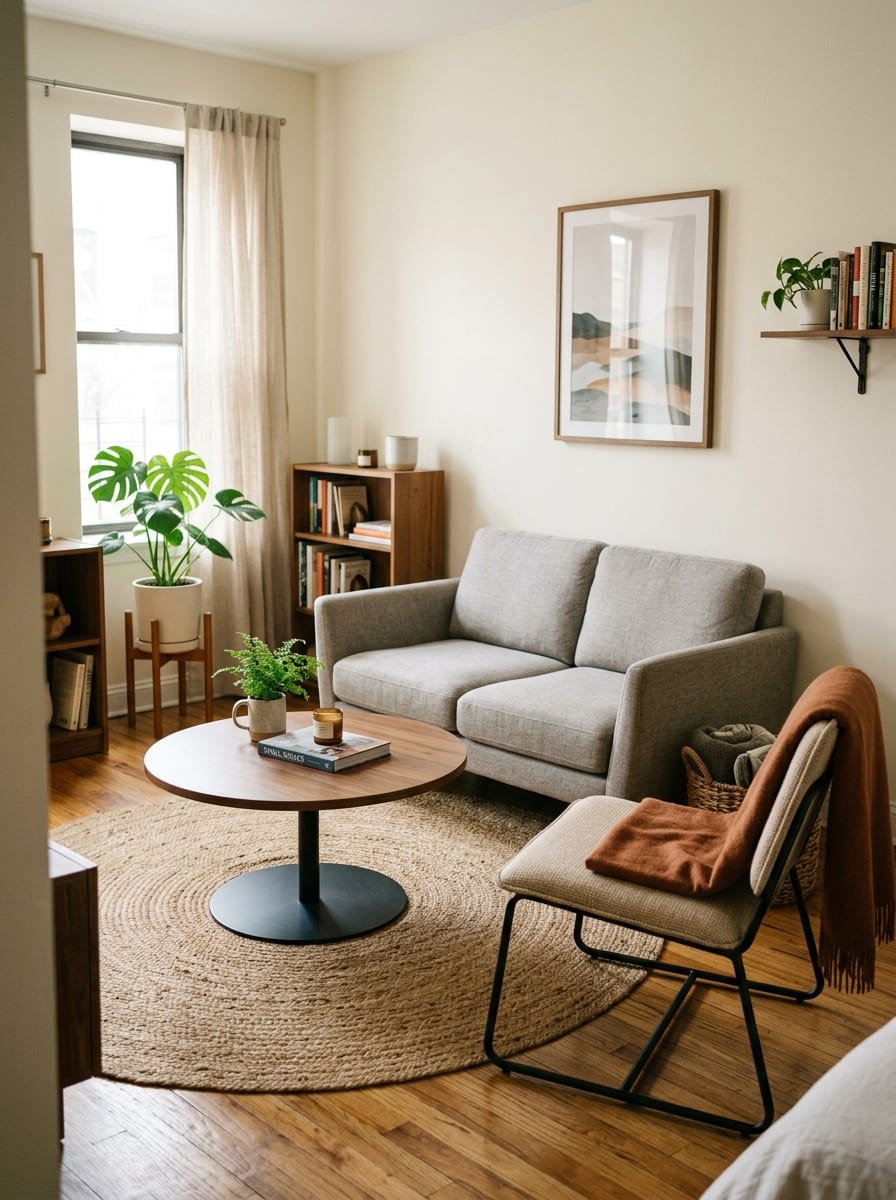
A round table can make movement through a tight living room feel easier. There are no projecting corners to navigate around.
Why it works
Round tables can be useful where the circulation path moves diagonally through the seating arrangement. Instead of encountering a hard corner, you move around a curved edge.
Match it to the seating
A round coffee table tends to work especially well with:
- small sofa
- one or two chairs
- compact conversation area
Do not oversize the diameter
A huge round table can consume just as much floor area as a bulky rectangle. The shape helps, but scale still matters.
Consider a pedestal base
A central base can reduce visual clutter beneath the table compared with several heavy legs.
3. The Nesting Table Set
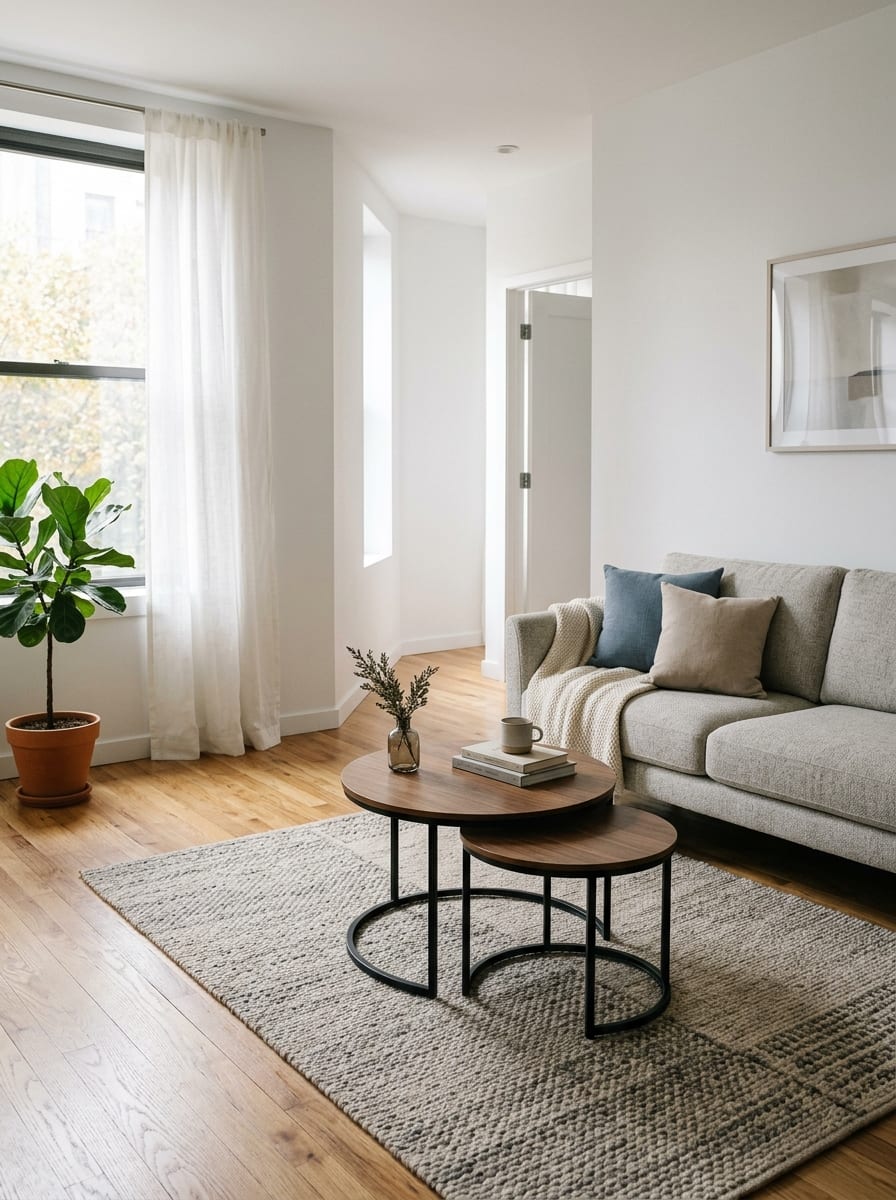
Nesting tables are useful when your living room needs different amounts of surface at different times. Most days, you may only need one. When guests arrive, you can separate them. Why they work Instead of permanently giving floor space to one large table, you keep extra surface tucked beneath the main one.
Use them intentionally
Nesting tables work best when the smaller pieces genuinely disappear underneath or beside the larger table. If they remain spread around the room permanently, you lose the space-saving advantage.
Good for entertaining
You can temporarily move a smaller table beside:
- chair
- sofa end
- guest seat and return it afterward.
Avoid overly complicated sets
Three or four tiny tables can become visually busy. A two-table set is often enough.
4. The Lift-Top Storage Table
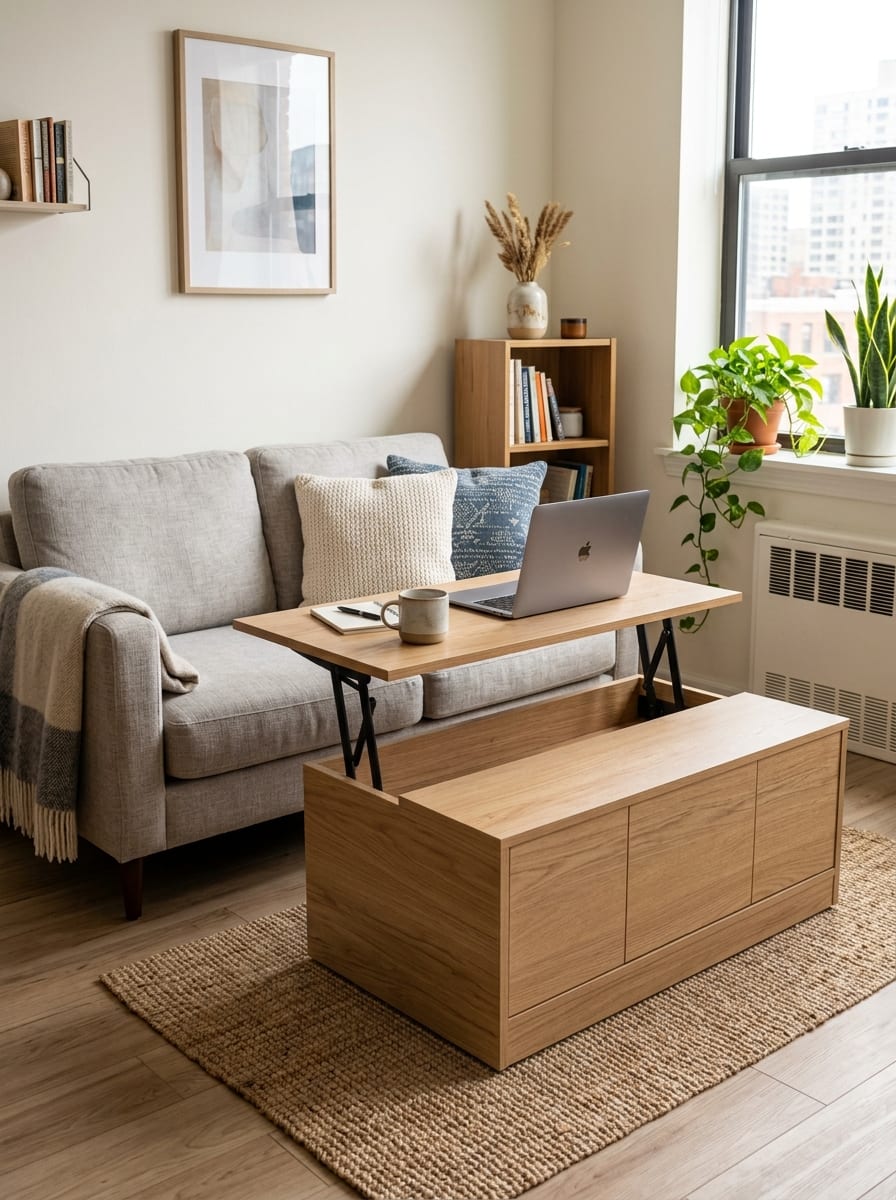
If the coffee table needs to do more than hold drinks, a lift-top design can combine several functions. It can potentially provide:
- closed storage
- higher work surface
- casual dining surface without adding another piece of furniture. Why it suits small homes Multifunctional furniture earns its footprint. A table that stores:
- chargers
- remotes
- notebooks
- blankets can reduce the need for separate storage elsewhere.
Check the mechanism
Before buying, make sure:
- the top opens easily
- the lifted surface reaches a useful height
- the mechanism does not require excessive clearance
Test sofa distance
A lift-top table often moves toward you as it opens. Make sure it does not become too close to the sofa.
Avoid turning storage into a junk drawer
Closed storage is useful only when it remains organized.
5. The Upholstered Ottoman Table
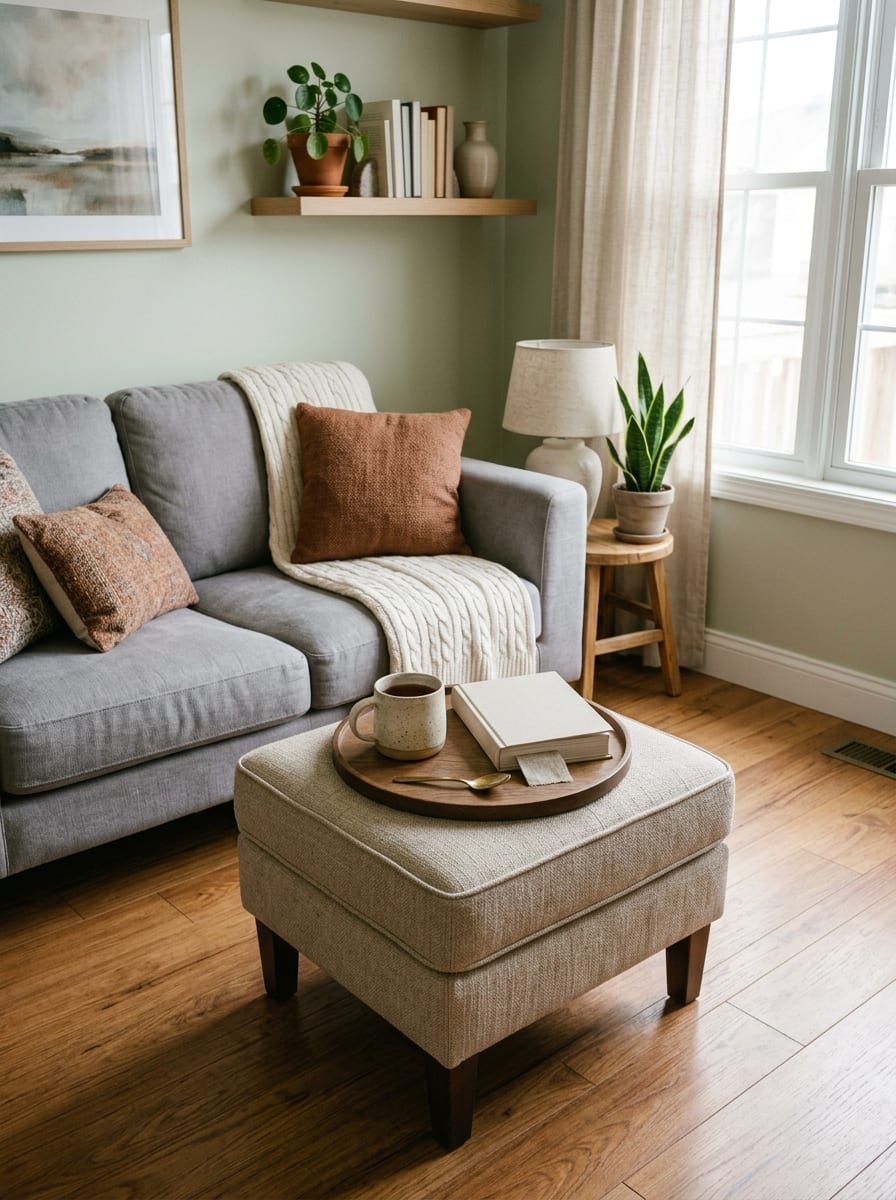
If you need:
- footrest
- occasional table
- extra seat an ottoman can replace a traditional hard coffee table.
Why it works
One piece performs several functions. That can be valuable in a room where there is no space for:
- coffee table
- footstool
- spare chair as separate items.
Add a tray when needed
A stable tray can create a firmer surface for:
- mugs
- glasses
- candles while allowing the ottoman to remain soft the rest of the time.
Choose moderate padding
A very plush surface may be comfortable but less useful as a table.
Watch visual bulk
A large upholstered block can make a small room feel heavy. Choose a size that leaves visible floor around it.
6. The Clear Acrylic Table
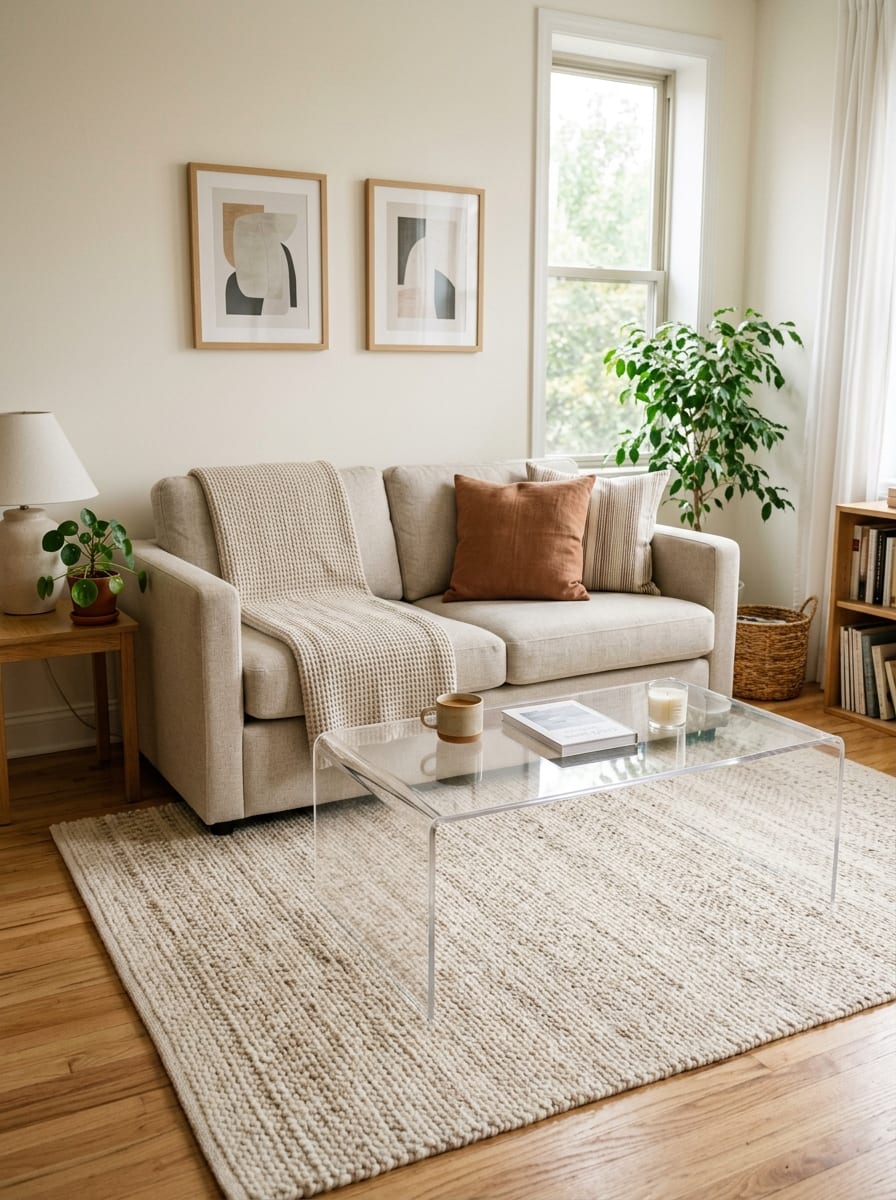
Sometimes the table’s physical size is acceptable, but its visual weight makes the room feel crowded. A transparent table can help. Why transparency works You can still see:
- rug
- floor
- furniture lines through the table. That reduces the amount of visual interruption in the center of the room.
It does not create actual space
This is important. A clear table still occupies real floor area. You still need enough clearance around it.
Keep the surface clean
Transparent furniture shows:
- fingerprints
- dust
- clutter quickly.
Best in visually busy rooms
If the room already contains:
- patterned rug
- darker sofa
- strong artwork a clear table can keep the center quieter.
7. The C-Table Pair
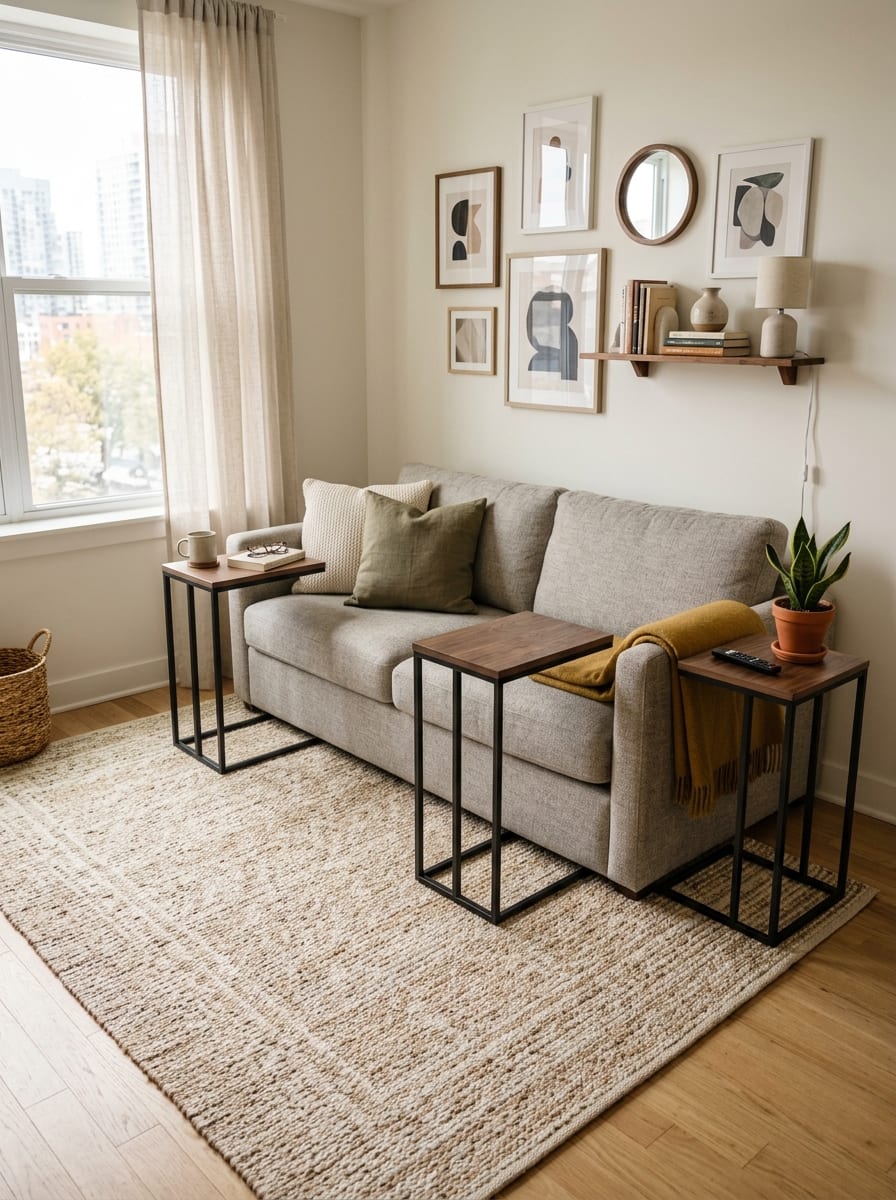
Some small living rooms do not actually need a central coffee table. They need a place to put things within reach of the sofa. Two compact C-tables can solve that.
Why they save space
They can slide partially:
- under sofa edge
- beside chair
- beside armrest instead of occupying the center of the room.
This keeps the middle open
That is especially useful when:
- room doubles as walkway
- children need floor space
- sofa sits close to TV
- coffee-table clearance would be tight
Use one or two
You may only need one. A second can be stored or moved beside another seat when required.
Check sofa compatibility
The base needs enough clearance to slide where you want it.
8. The Slim Oval Table
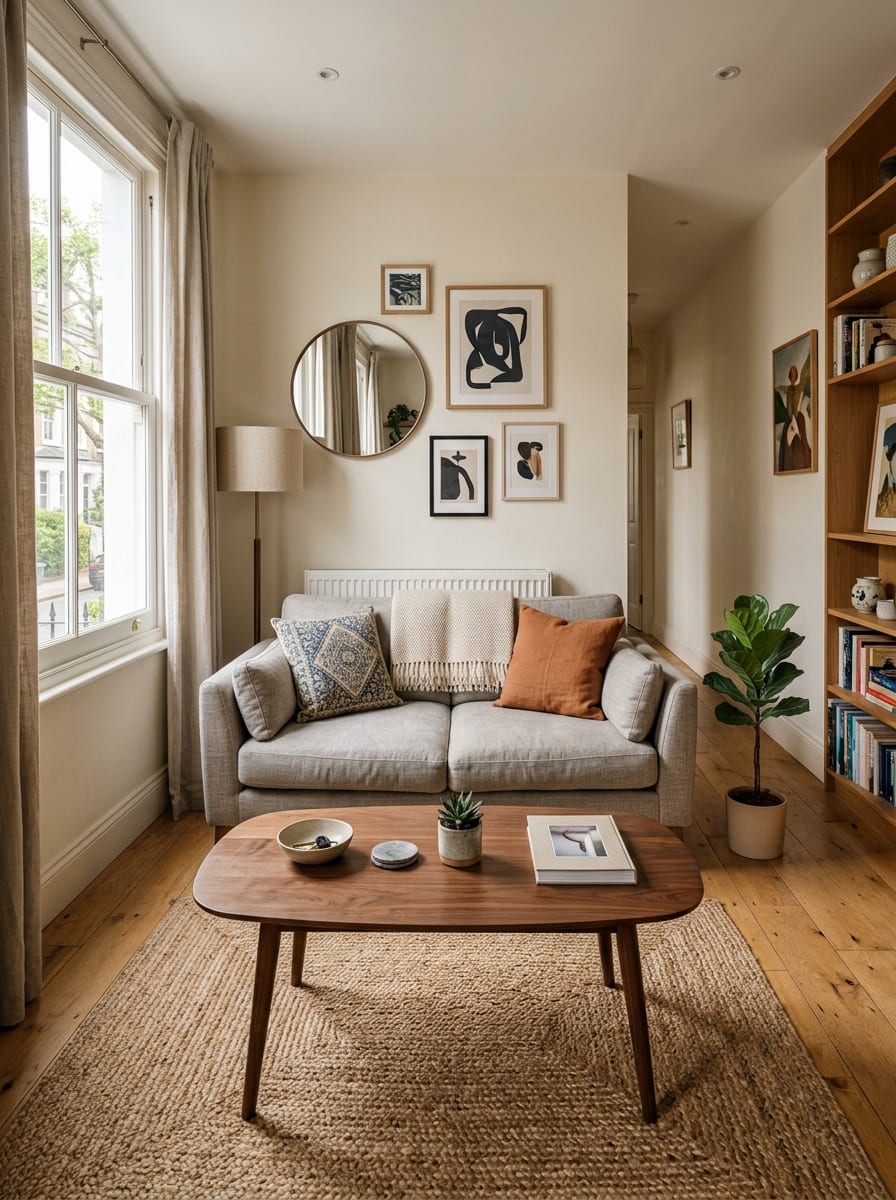
An oval table gives you some of the surface area of a rectangle without the projecting corners. That makes it a strong compromise for narrow rooms.
Why it works
You retain:
- length
- useful central surface while softening the edges people need to walk around.
Great for longer sofas
An oval table can visually relate to a three-seat sofa better than a tiny round table.
Keep the width restrained
The oval shape should not become an excuse for an oversized table.
Use simple legs
Thin legs or a visually light base can prevent the table from feeling bulky.
9. The Bench-Style Coffee Table
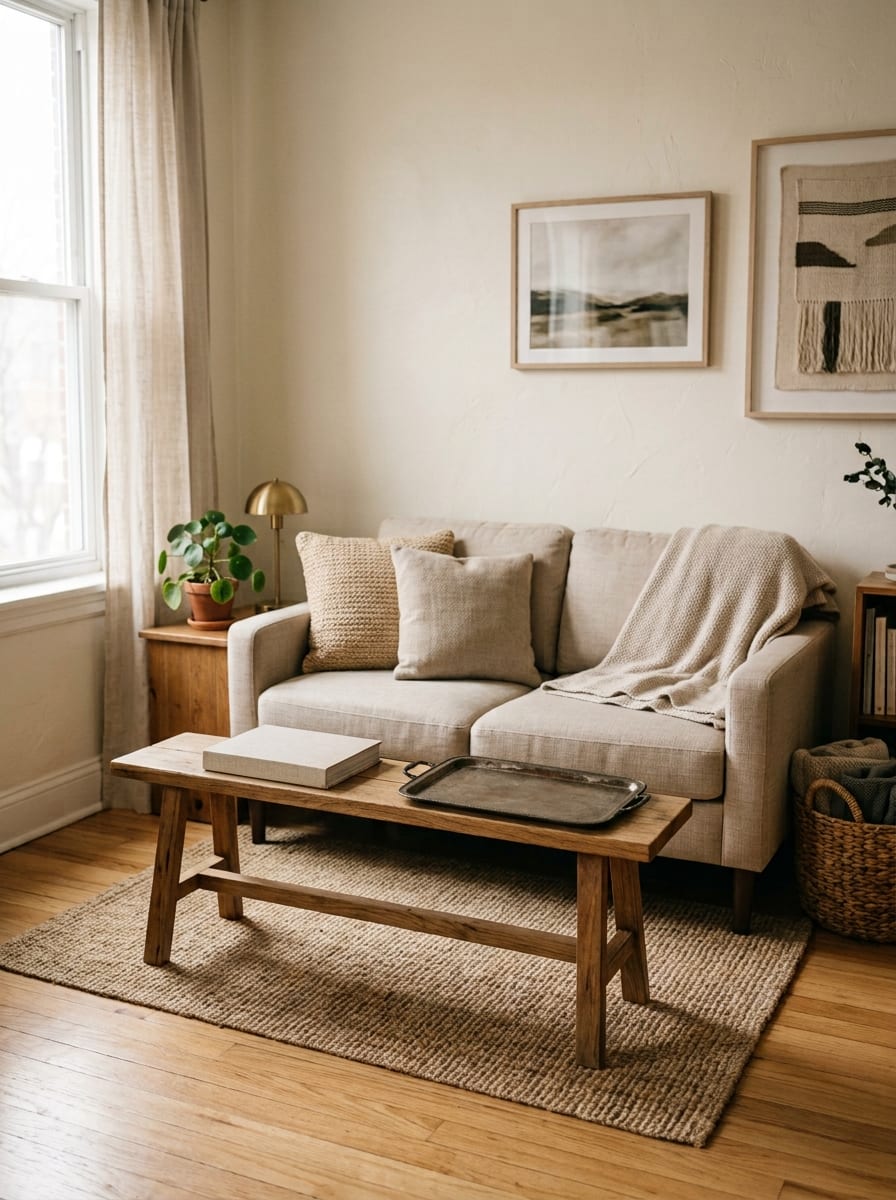
A narrow bench can sometimes function beautifully as a coffee table. It is especially useful if you prefer:
- clean lines
- narrow depth
- lightweight furniture
Why it works
Benches are often shallower than standard coffee tables. That can be ideal in a tight sofa-to-TV arrangement.
Keep the height appropriate
A bench used as a coffee table still needs to be comfortable to reach from the sofa.
Use it flexibly
Depending on the design, it might occasionally become:
- extra seating
- footrest
- temporary display surface
Avoid benches with awkward backrests
Use a simple backless design.
10. The No-Coffee-Table Layout
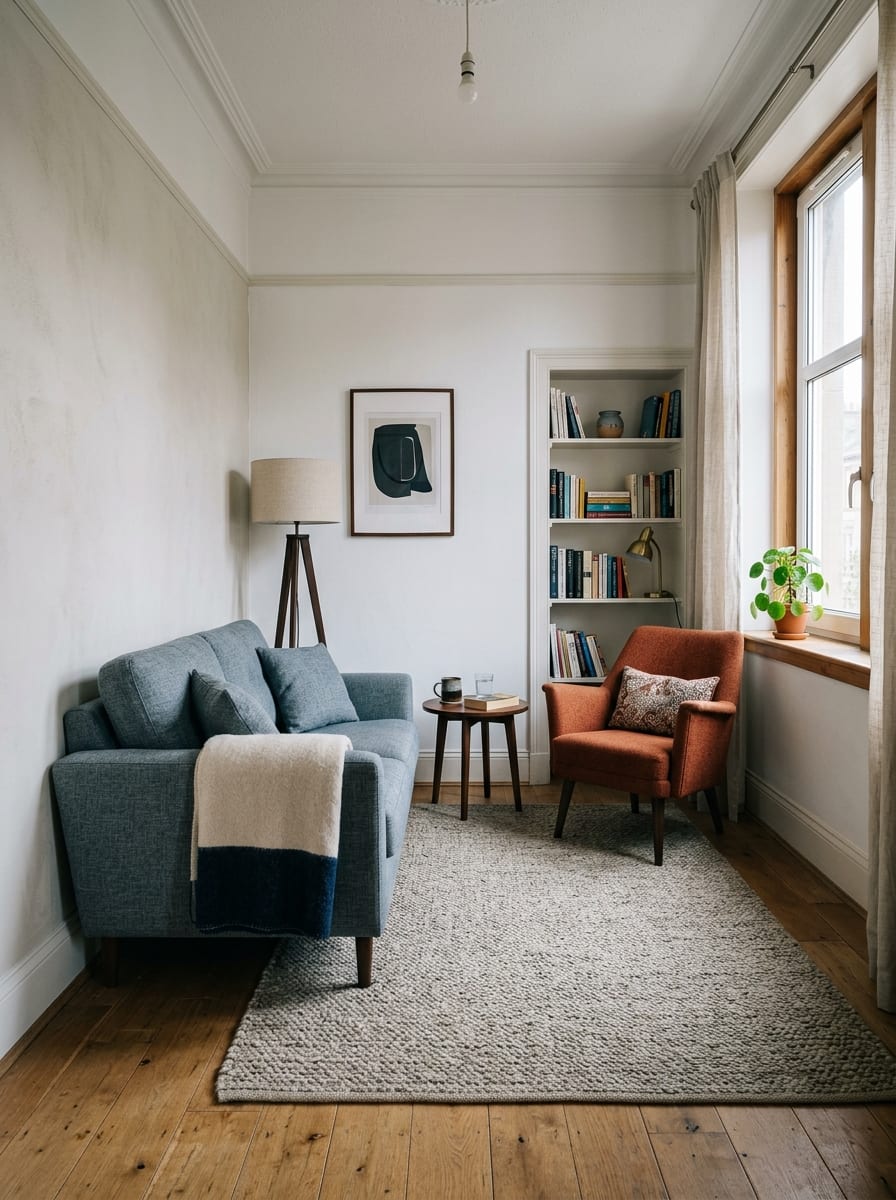
Not every living room needs a coffee table. Sometimes removing it improves the room immediately.
Skip it when
The central area is needed for:
- walking
- stretching
- children playing
- flexible seating
- access to balcony or doorway
Replace the function
You can use:
- side table
- C-table
- sofa-arm tray
- wall shelf nearby instead.
Why it can look better
An empty center creates a larger continuous patch of visible floor. That can make the living room feel:
- calmer
- larger
- easier to use
Do not leave the room functionless
Make sure seated people still have somewhere practical to place a drink or phone.
11. The Right-Size Coffee Table Formula
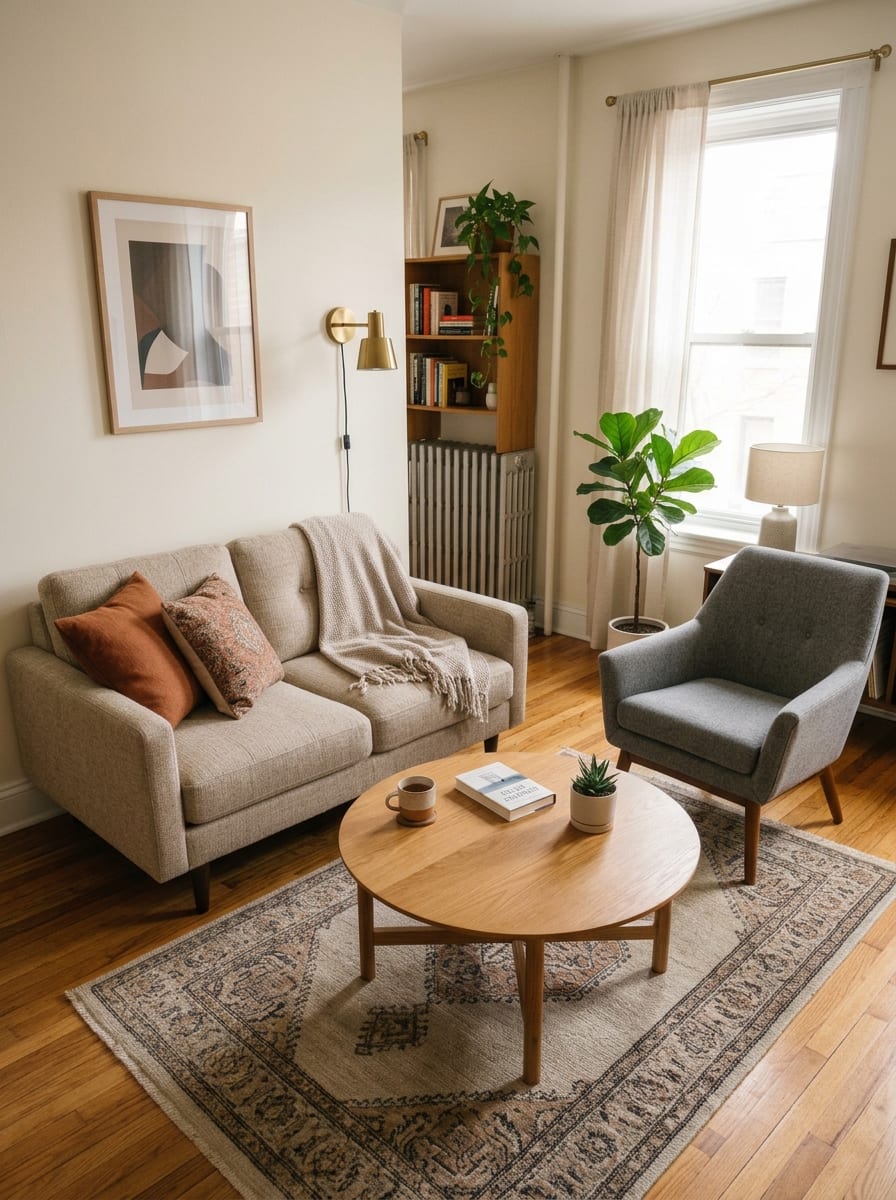
If you are unsure which style to buy, choose the furniture layout first. Use this order: sofa → walkway → chair → coffee-table function → table size
Step 1: Position the sofa
Decide where the main seating actually belongs.
Step 2: Protect circulation
Identify the path through the room.
Step 3: Place chairs or extra seating
Do not size the coffee table before the full seating arrangement exists.
Step 4: Decide what the table must do
Do you need:
- drinks only?
- storage?
- laptop use?
- footrest?
- entertaining surface?
Step 5: Mark the footprint
Use painter’s tape or cardboard. Then walk around it. If the footprint feels intrusive before the table even arrives, choose something:
- narrower
- rounder
- movable
- or absent
Surface Area vs Floor Area
A useful small-space coffee table gives you enough surface without consuming unnecessary floor.
Depth Is Often More Important Than Length
In a narrow living room, sofa-to-TV distance may already be limited. Measure sofa edge to coffee table to remaining walkway before ordering.
How Much Space Should Be Between Sofa and Coffee Table?
You need enough space to sit down comfortably, move your legs, reach the table, and walk through when necessary.
Keep the Main Walkway Outside the Coffee-Table Zone
Whenever possible, route circulation behind the sofa rather than directly through it.
Round vs Rectangle in a Small Living Room
Rectangle is useful when the room is long and the sofa is straight. Round is useful when circulation cuts across corners.
Oval Can Be the Best Compromise
Oval tables combine rectangular length with curved corners.
Square Coffee Tables Need More Care
In a narrow living room, a square table may project too far toward the sofa, chair or walkway.
What About a Coffee Table With Storage?
Storage can be useful, but only if the table remains proportionate.
Open Shelf vs Closed Storage
Open shelf is useful for books and baskets. Closed storage keeps the room calmer.
Avoid Filling the Lower Shelf
An open lower shelf that becomes packed feels much heavier.
Lift-Top Tables Can Replace a Desk Sometimes
Treat the lift-top as flexible furniture, not automatically as a permanent workstation.
Ottoman vs Coffee Table
Choose an ottoman for comfort and footrest. Choose a hard table for stable surfaces and easier cleaning.
Acrylic vs Glass
Both can visually lighten the room. With either material, consider visibility of edges, household safety, cleaning and manufacturer guidance.
Two Small Tables vs One Large Table
Sometimes one correctly sized table is visually calmer than several small objects.
Nesting Tables Work Best When They Actually Nest
The space-saving benefit comes from being able to expand temporarily and collapse afterward.
C-Tables Are Best When the Center Needs to Stay Open
They are useful in rooms that also function as pass-through space, exercise area or play area.
A Side Table May Be Enough
If you mostly need a place for a drink, lamp and phone, a side table might solve the problem more efficiently.
Coffee Tables for Sectionals
Consider round, oval or compact square depending on the shape of the sectional.
Coffee Tables With a Sofa + One Chair
A small round or oval table often works well because it can connect both seats without extending too far.
Coffee Tables With a Sofa + Two Chairs
Make sure the table is reachable from the main seats without becoming so large that the chairs cannot move.
Coffee Tables in Studio Apartments
Good options include nesting tables, C-tables, ottoman or no central table, because they can adapt when the room changes function.
Coffee Tables in Living-Dining Rooms
If dining circulation runs directly beside the sofa, table depth becomes especially important.
Coffee Tables in Very Narrow Rooms
Try narrow rectangle, oval, bench-style table or C-table before reaching for a standard deep rectangular coffee table.
Coffee Table Height Matters Too
The table should be comfortable to reach without feeling like a dining table or floor tray.
Visual Weight Matters
A table with thick dark base and closed sides feels visually larger than one with thin legs and a lighter finish.
Use the Rug to Connect the Table, Not Trap It
The rug should define the furniture arrangement more broadly than just beneath the coffee table.
Keep the Surface Mostly Clear
Try keeping only a few useful or intentional objects visible on the coffee table surface.
The Three-Object Coffee Table Rule
One practical object, one decorative object, one optional flexible item. For example: tray, book, small vase.
Consider the View From the Sofa
A bulky table can visually block the rug and floor. A lighter table lets the eye travel farther.
Consider the View From the Doorway
If the first thing you see is a large block in the middle of the floor, the table may be dominating the room.
Consider How You Clean Around It
Movable or lighter-weight furniture can be useful in a compact room.
Should Your Coffee Table Have Wheels?
Casters can be practical but make sure wheels lock appropriately, the design remains stable and flooring is suitable.
Coffee Table Ideas for Renters
Coffee-table changes are naturally renter-friendly since they do not require modifying walls, flooring or fixtures.
Use Painter’s Tape Before Buying
Mark the exact dimensions on the floor, then sit on the sofa, walk around it, open nearby doors and pull chairs into position.
Use Cardboard for an Even Better Test
A large sheet of cardboard at the proposed size is easier to understand than dimensions on a product page.
Test the Corners
For rectangular tables, walk past each corner several times. If you turn sideways to avoid it, consider a narrower, oval or round table.
Test It With Guests in Mind
Ask whether the room still works when a chair is occupied, someone walks through and drinks are on the table. Common Small Living Room Coffee Table Mistakes Buying a standard table without measuring depth. Choosing something tiny but useless. Blocking the main route through the room. Keeping a table only because every living room should have one. Choosing storage that makes the table too bulky. Filling the table surface with decor. Using several small tables when one would look calmer. Ignoring sharp corners. Forgetting sofa height. Buying before arranging the rest of the furniture. A Quick Coffee Table Decision Guide Choose the Narrow Rectangle if: you want a traditional coffee table in a long room. Choose Round if: corners interfere with circulation. Choose Nesting Tables if: you need occasional extra surface. Choose a Lift-Top Table if: you need storage or occasional laptop use. Choose an Ottoman if: you want a footrest and flexible extra seating. Choose Acrylic if: the room already feels visually heavy. Choose C-Tables if: you need the center floor open. Choose Oval if: you want useful length without hard corners. Choose a Bench-Style Table if: the sofa-to-TV distance is especially tight. Skip the Coffee Table if: the room works better without one. Use the Right-Size Formula if: you are starting from scratch. The Simplest Small-Living-Room Coffee Table Formula Start with: useful surface + shallow footprint + clear walkway + low visual weight. Final Thoughts A coffee table should make your living room easier to use. Start with what you actually need it to do. Then protect the circulation around the sofa.