9 Small Living Room Plant Ideas That Add Greenery Without Losing Floor Space
Nine small living room plant ideas that add greenery without losing floor space, from trailing vines to wall planters and one statement plant.
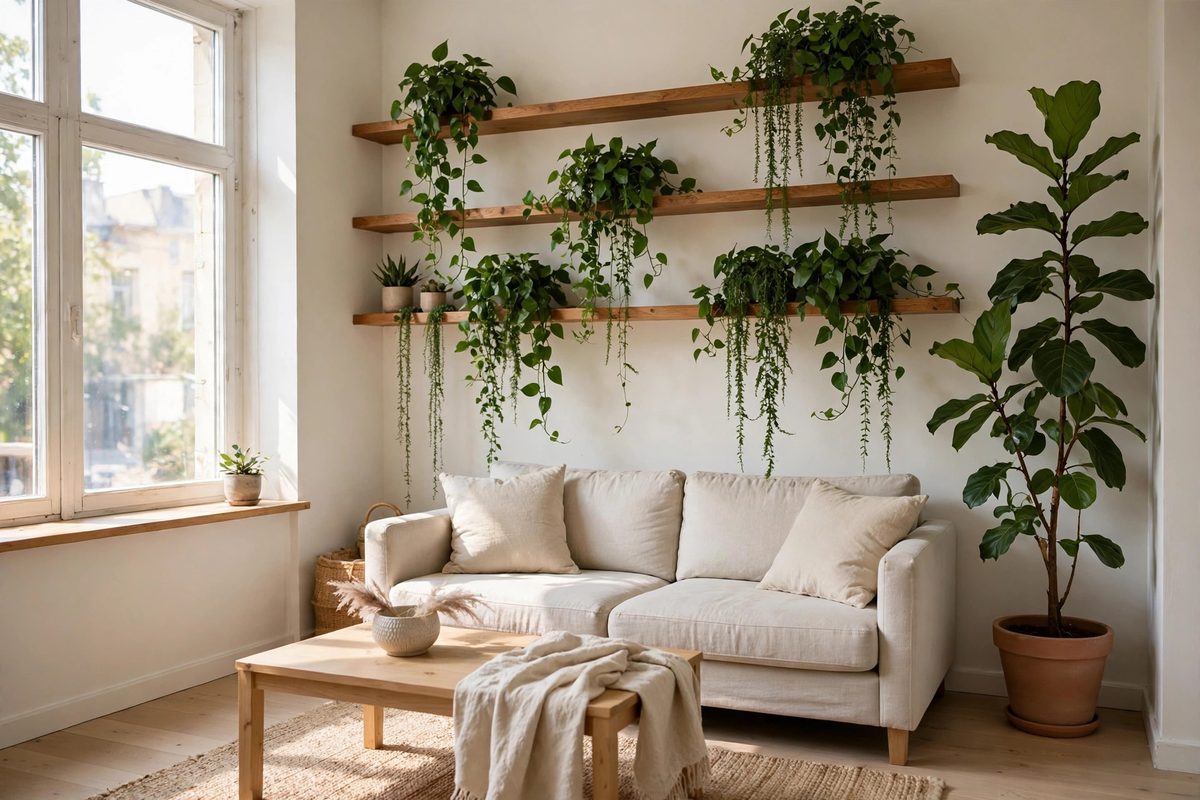
Bright small apartment living room with trailing plants on shelves and a tall plant in a corner
In This Guide
Plants make a small living room feel alive in a way that decor alone rarely does. Leaves soften hard furniture edges, add a layer of color that changes with the seasons, and give a plain wall something to look at. The catch is that every plant also needs light, water, and a spot where it will not block a walkway or crowd the sofa.
The trick is to grow up, not out. Walls, shelves, ceilings, and the tops of furniture hold plants beautifully, while the floor stays free for people, pets, and daily life. Choosing plants that match your actual light matters more than choosing photogenic ones. A sun loving plant in a north facing room will struggle no matter how pretty the pot is.
Start by watching your light for a day. Note which windows get direct sun, which get bright indirect light, and which corners stay dim. Then match plants to those spots, starting with forgiving varieties like pothos, snake plants, and ZZ plants if you are new to plant care. For rooms that need the same space saving thinking, see black Christmas tree ideas for small apartments and small bathroom bathtub ideas, plus small living room rug ideas to ground the seating area under your greenery.
These 9 ideas keep every plant off the floor or confined to a single corner, so your living room stays a living room first.
1. Trailing Pothos on a High Shelf
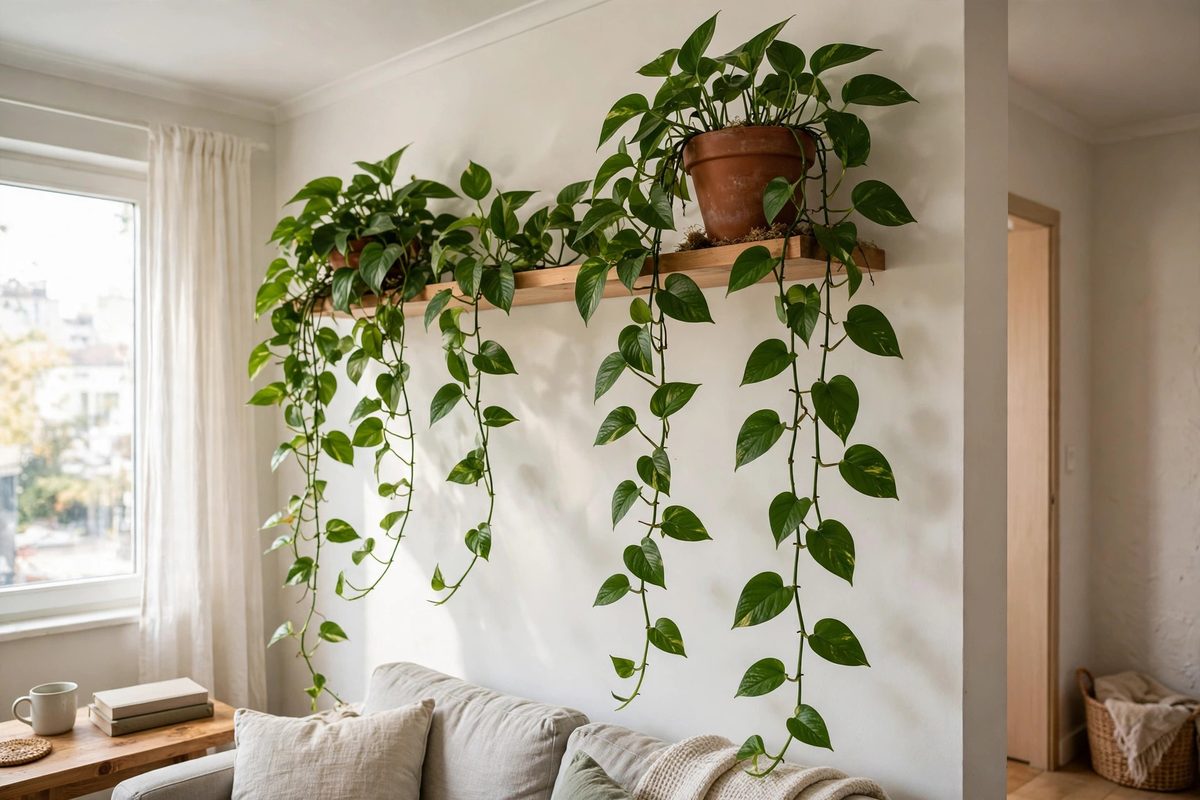
Pothos is the classic small space plant for a reason. It tolerates low to bright indirect light, forgives a missed watering, and sends out vines that can trail 6 to 10 feet from a single pot. On a high shelf, those vines become a living curtain that adds greenery without touching the floor at all.
A shelf mounted 12 to 18 inches below the ceiling gives vines room to hang without brushing the sofa. Use a pot with a drainage hole and a saucer, or a nursery pot inside a decorative cover, so water never drips onto books or electronics below.
How to make it work
Let the vine trail for a season, then trim it back to a leaf node when it gets longer than you like. Those cuttings root in water in about two weeks, giving you free plants for other rooms. Wipe the leaves monthly, since dusty leaves photosynthesize less well, and rotate the pot a quarter turn each month so growth stays even.
2. A Sunny Windowsill Herb Trio
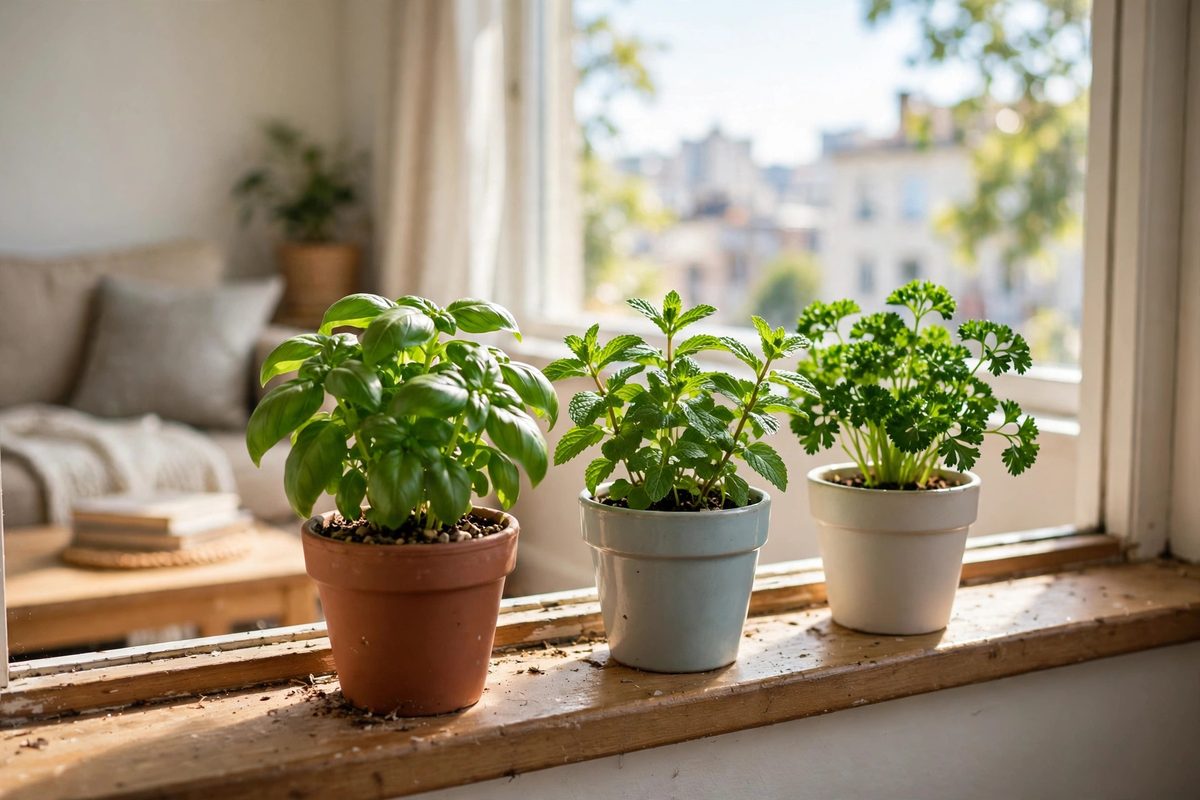
A windowsill is prime plant real estate that is often left empty. Three small herb pots, basil, mint, and parsley, give you greenery plus something useful for cooking, and they fit on a sill as narrow as 5 inches deep.
Herbs want the brightest window you have, ideally 4 to 6 hours of sun. Mint grows fast and can take over a shared pot, so give each herb its own 4 to 6 inch pot. A shallow tray under the pots catches water and keeps the sill paint safe.
How to make it work
Water when the top inch of soil feels dry, and harvest from the top so the plant bushes out instead of going leggy. If your only window faces north, swap herbs for a snake plant or ZZ plant cutting in the same spot, since those tolerate low light far better than basil will.
3. Wall Mounted Planters in a Vertical Row
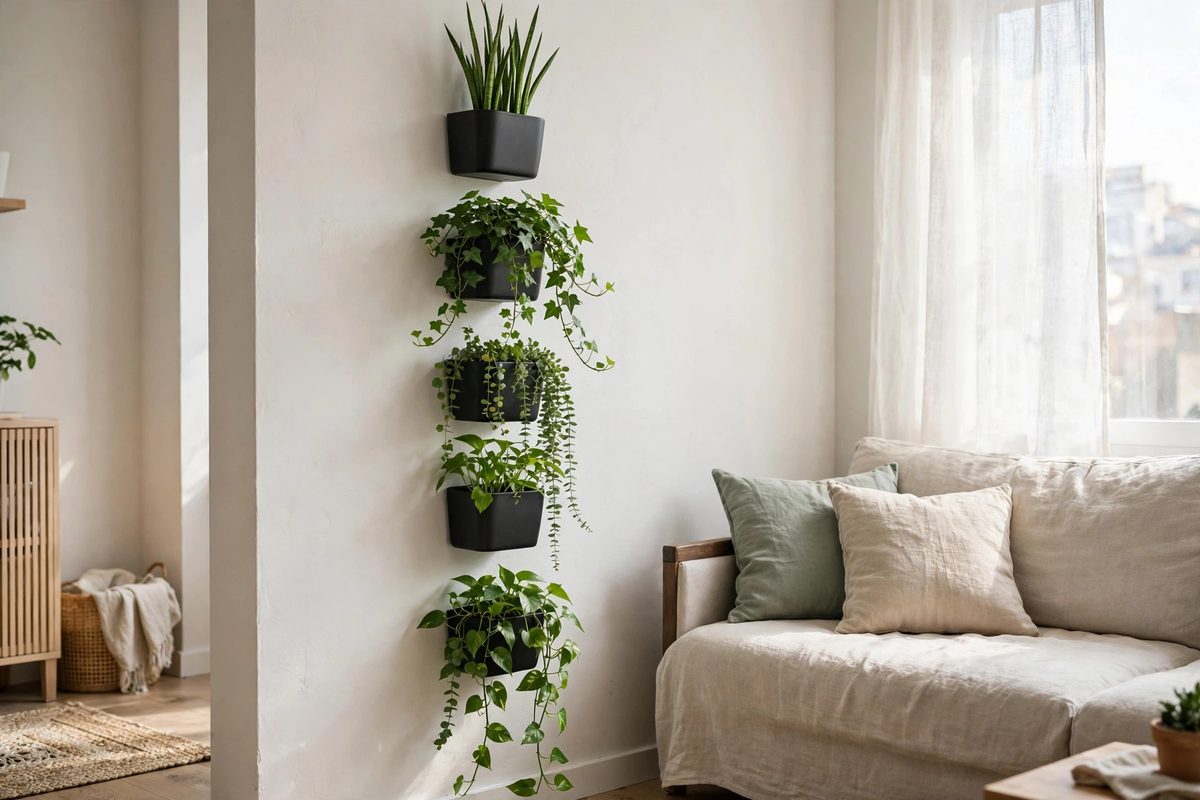
Wall planters move plants onto a surface that was doing nothing. A vertical row of three planters beside the sofa or TV holds trailing and upright plants in about 2 square feet of wall, and each planter is only 4 to 6 inches deep, so it never crowds the room.
Choose planters with a closed back or a built in reservoir if your wall is painted drywall, since water stains are hard to fix in a rental. Wall planters cost 15 to 40 dollars for a set of three, and you will need wall anchors rated for at least 5 pounds each when the soil is wet.
How to make it work
Put the plant that needs the most light at the top, closest to the window light, and the most forgiving plant at the bottom. Water slowly with a long spout can so water goes into the soil, not down the wall. Check the anchors every few months, because wet soil is heavier than dry soil.
4. Hanging Planters From the Ceiling
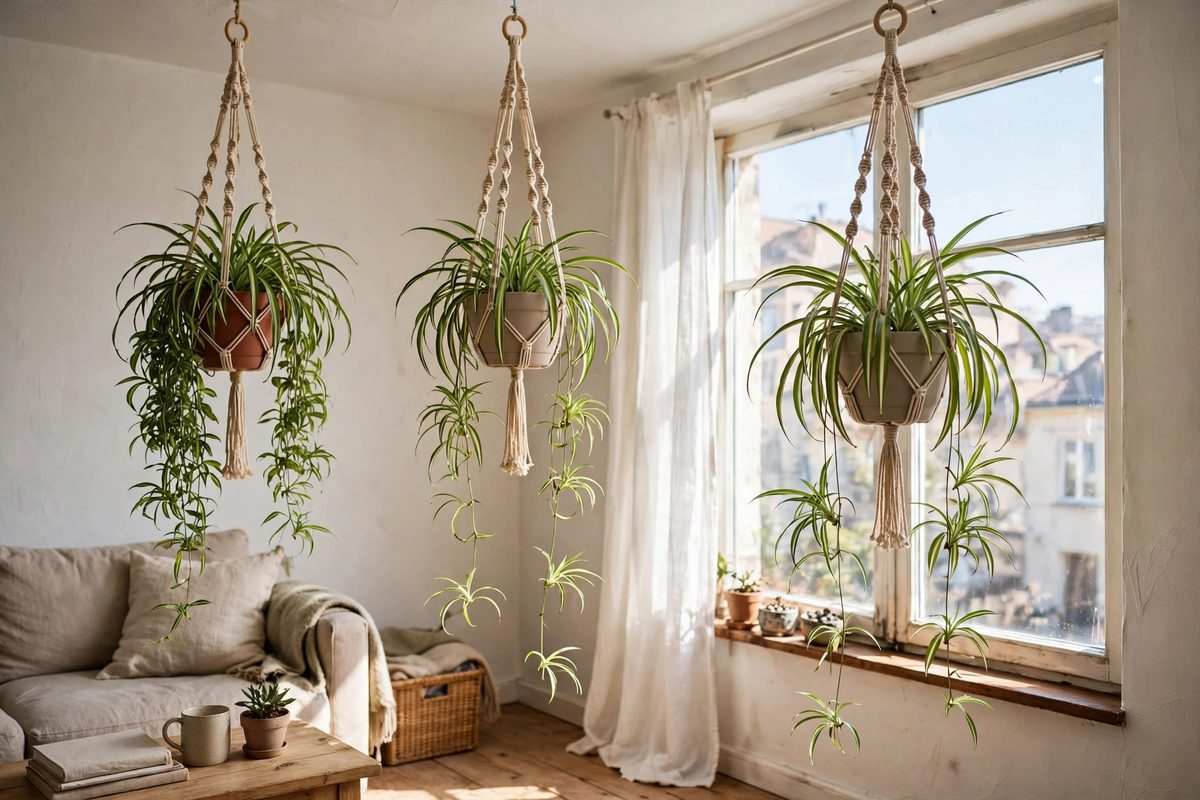
Ceiling hooks are the most floor saving plant spot of all. A hanging planter near a window, but not blocking it, holds a spider plant, string of pearls, or trailing philodendron at eye level or above, where it can be admired without taking a single inch of floor or shelf.
Use a ceiling hook screwed into a joist, not a stick on hook, because a watered hanging plant can weigh 8 to 12 pounds. Hang it so the bottom of the pot is at least 6 feet 6 inches above the floor if it hangs over a walkway, so tall guests do not duck.
How to make it work
Water hanging plants in the sink or bathtub when you can, then let them drain fully before rehanging, since drips are the main downside of ceiling plants. A pulley style hanger, about 15 dollars, lets you lower the plant for watering without a step stool. If your lease forbids ceiling hooks, a tension rod across a window frame holds two or three hangers with no holes at all.
5. A Narrow Ladder Plant Stand
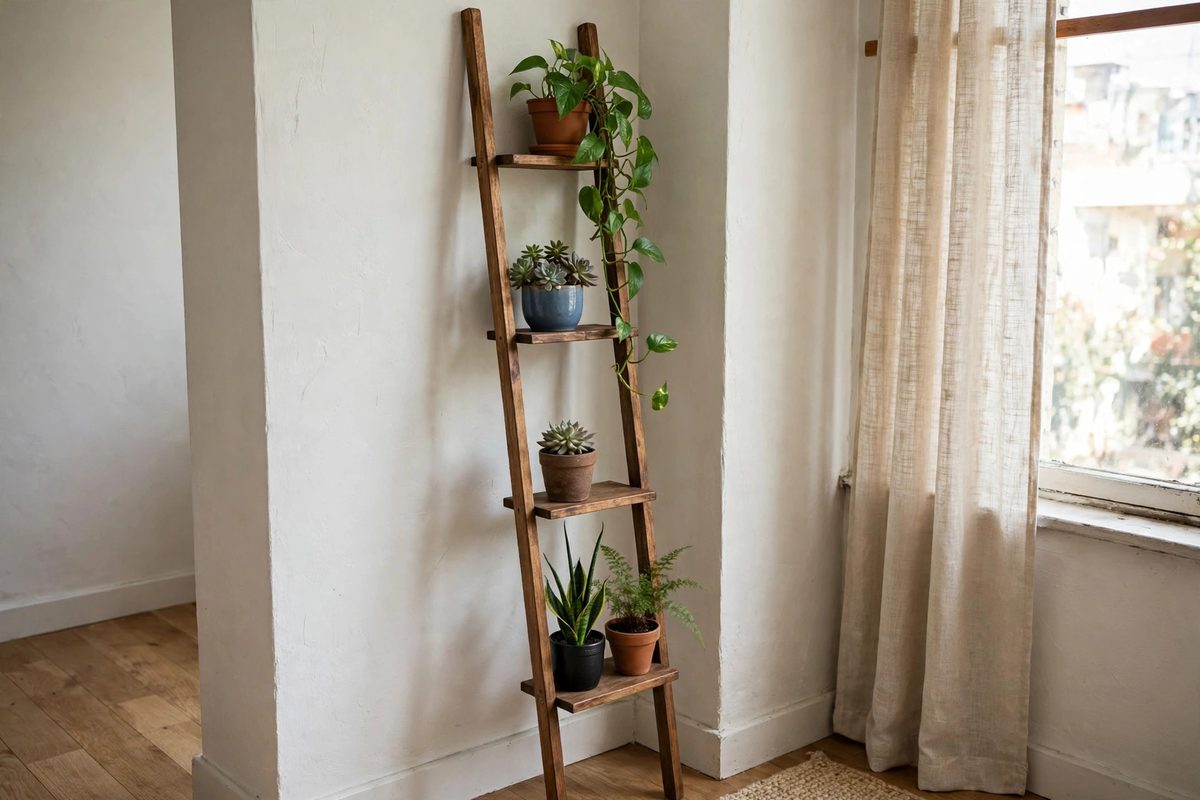
A ladder plant stand leans against the wall and holds four to six plants on tiered shelves while using only about 18 inches of floor width. Because the shelves step back as they rise, taller plants go on the bottom and smaller ones on top, and light still reaches every level.
Ladder stands cost 30 to 70 dollars. Look for one with shelves at least 10 inches deep so standard 6 inch pots sit safely, and a top shelf that can hold a trailing plant whose vines soften the ladder shape. Place it in a corner where it does not block a door swing.
How to make it work
Group plants with similar water needs on the same stand so watering day is one trip, not five. Put a small tray under each pot, since ladder shelves are often slatted and drips will reach the floor below. Rotate the stand’s plants every two weeks so the side facing the wall still gets light.
6. Tiny Succulents on Floating Shelves
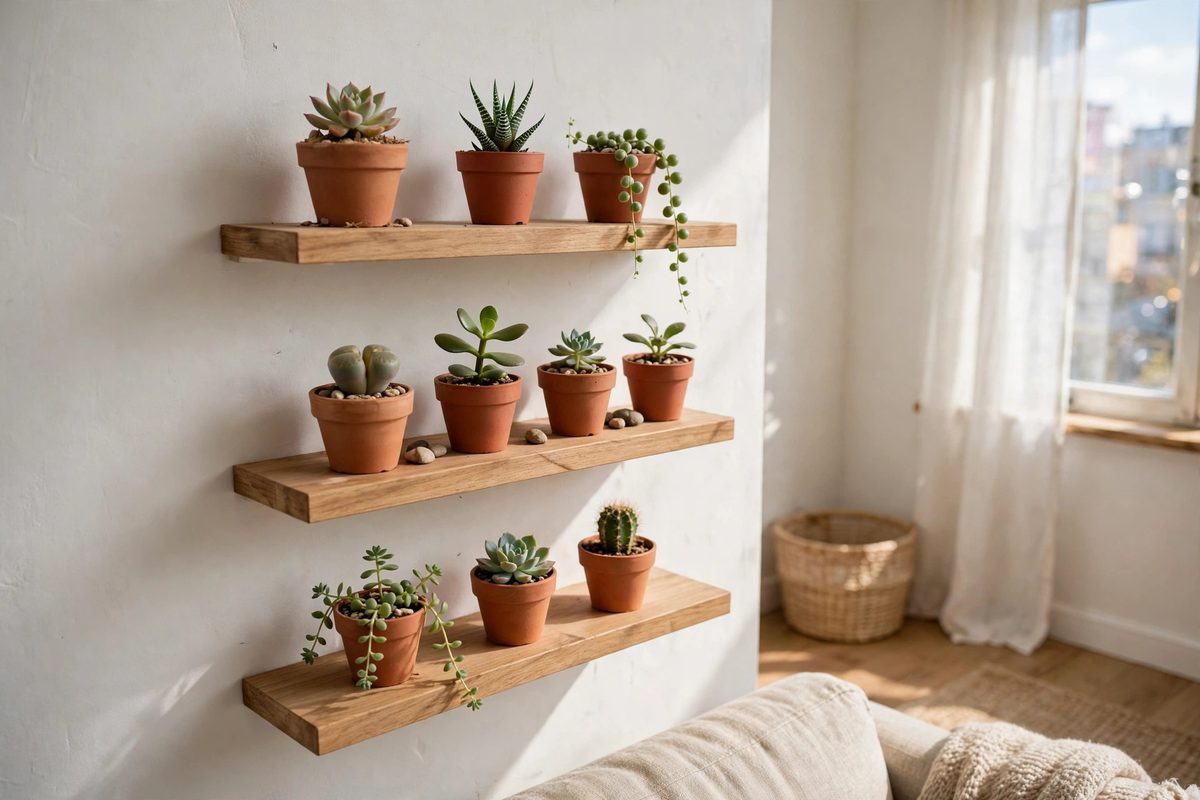
Floating shelves are made for small plants. A pair of 24 inch shelves holds six to eight succulents and air plants in 2 to 3 inch pots, and the arrangement reads as decor rather than a plant collection, which keeps the room feeling calm.
Succulents need bright light and very little water, roughly every two to three weeks, so they suit people who travel or forget watering. Use cactus soil, not regular potting mix, and pots with drainage holes, since succulents rot fast in standing water.
How to make it work
Mix heights by pairing a tall echeveria with a low trailing sedum, and leave empty space between pots so each plant reads clearly. If a shelf is above a radiator, move succulents elsewhere, since dry hot air stresses them even though they like sun. One shelf near the window plus one deeper in the room balances light and display.
7. A Climbing Vine on a Slim Trellis
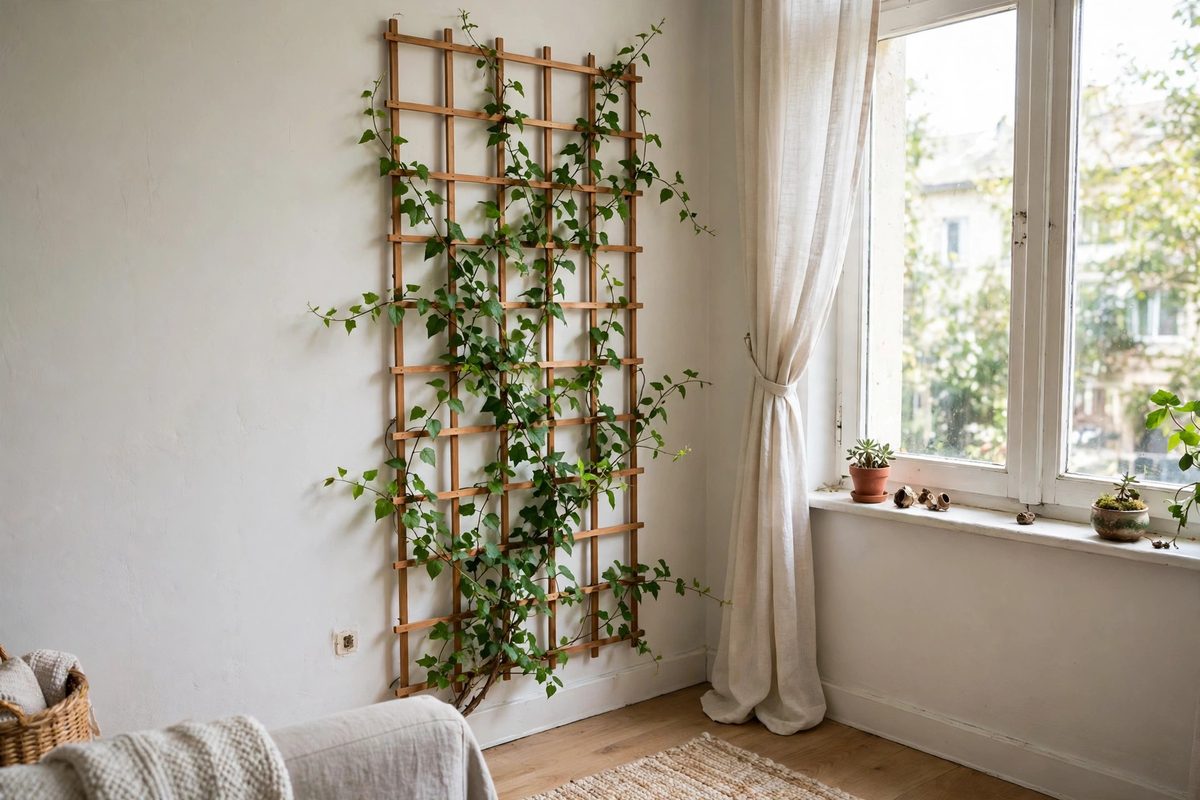
A slim trellis turns a bare wall into a green panel without a floor pot forest. A monstera, philodendron, or jasmine vine trained up a 12 inch wide trellis can cover 4 to 5 feet of wall height, and the trellis itself leans or mounts flat, so it adds almost no depth to the room.
Trellises cost 15 to 35 dollars. Attach vines loosely with soft plant ties or clips, never wire, which cuts stems as they grow. A trellis beside a window works best, since the vine will naturally reach toward the light.
How to make it work
Guide new growth onto the trellis weekly during the growing season, and prune any stem that heads for the curtain rod or TV. Mist or wipe leaves if your apartment air is dry in winter, since dry tips are the most common complaint with indoor vines. If the vine outgrows the trellis, take cuttings and start a second one rather than buying a wider frame.
8. Plants on Top of Bookshelves and Cabinets
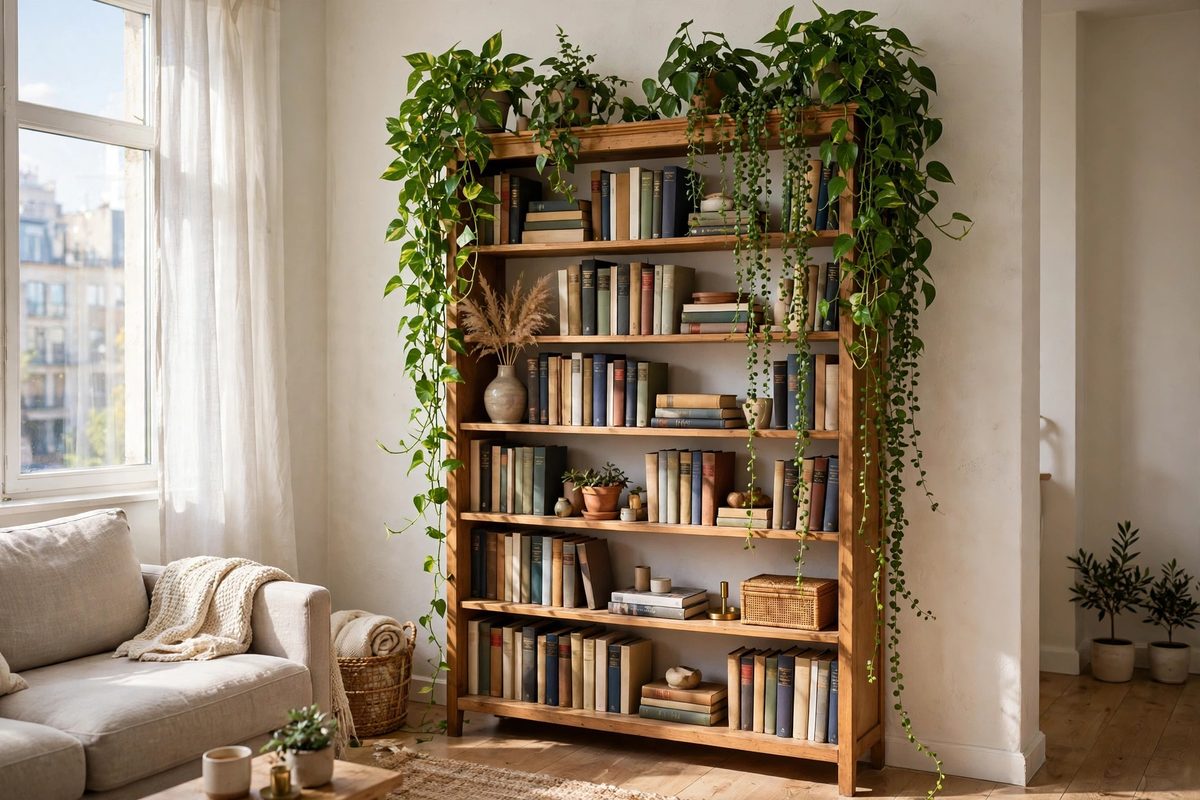
The top of a bookshelf or storage cabinet is often the brightest, most forgotten spot in a living room, since warm air and light collect near the ceiling. A trailing plant up there cascades down the side of the furniture, softening a tall boxy piece without any new furniture at all.
This spot suits low maintenance plants: pothos, spider plant, or a hardy philodendron. Put a waterproof tray under the pot, because watering a plant you cannot see easily leads to overwatering and drips onto books below.
How to make it work
Use a small step stool and a watering can with a long spout, and water on a fixed day, like Sunday, so the out of sight plant does not get forgotten for a month. Trim vines when they reach the middle shelf, or let them frame the bookshelf intentionally by guiding them along one side only.
9. One Statement Plant in a Single Corner
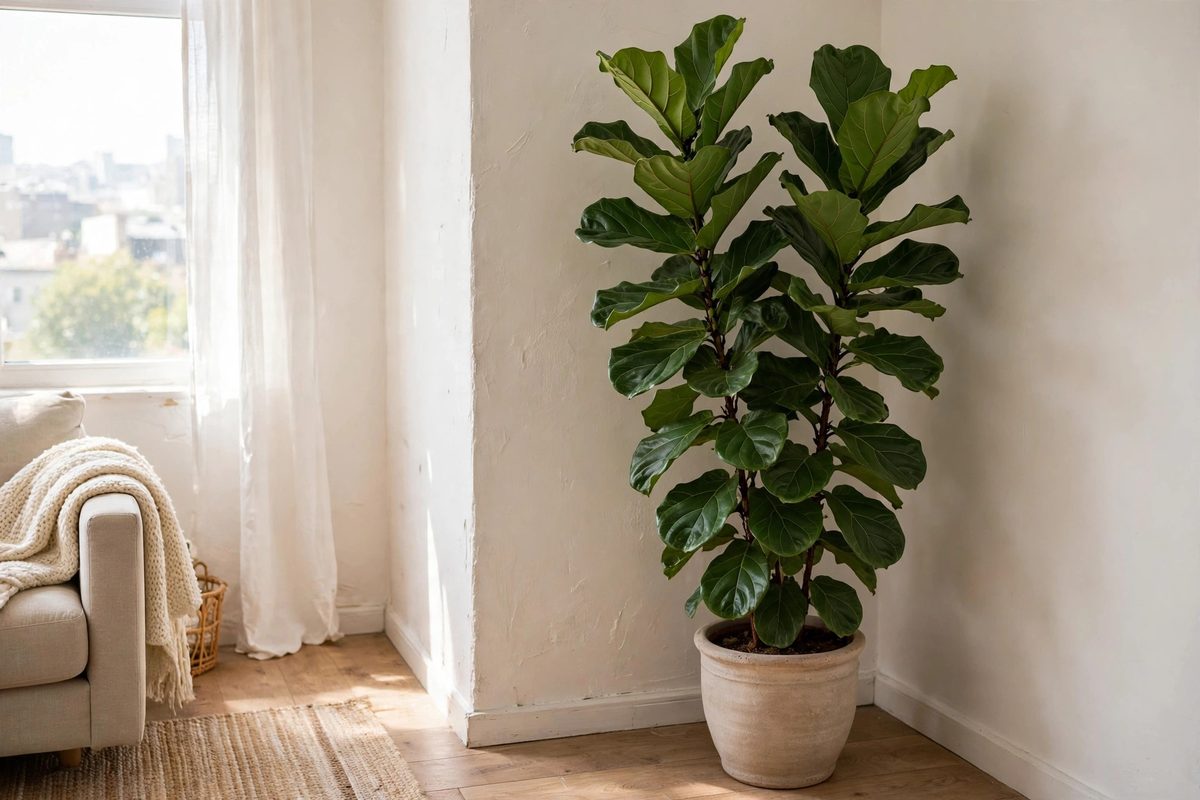
Sometimes the best small space plant idea is restraint: one large plant, in one corner, instead of ten small ones scattered everywhere. A fiddle leaf fig, olive tree, or tall snake plant in a 10 to 12 inch pot anchors a corner, draws the eye up, and leaves the rest of the room completely free.
A statement plant costs 40 to 120 dollars depending on size, and it needs the brightest corner you have. Measure the corner first: you want at least 6 inches of clearance from the wall on each side so air circulates and leaves do not press against paint.
How to make it work
Choose the plant for your light, not for a photo. A snake plant thrives in a dim corner where a fiddle leaf would drop leaves within weeks. Use a pot with wheels if the plant is heavy, so you can pull it out for watering and cleaning. One large plant plus the wall and shelf ideas above is plenty; if every surface has a plant, the room starts to feel like a greenhouse rather than a living room.
Greenery should make a small living room feel more alive, not more crowded. Start with one idea that fits your light, keep plants off the floor wherever you can, and add more only when the first plant is thriving.