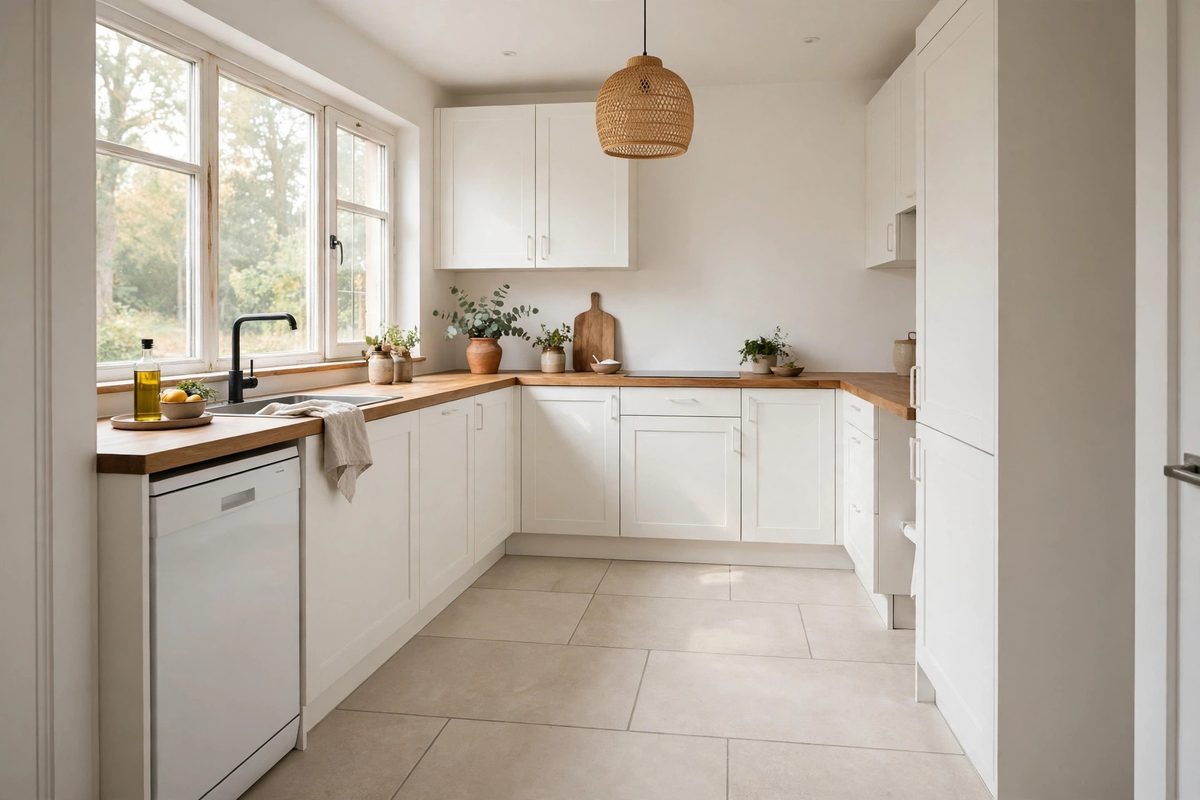
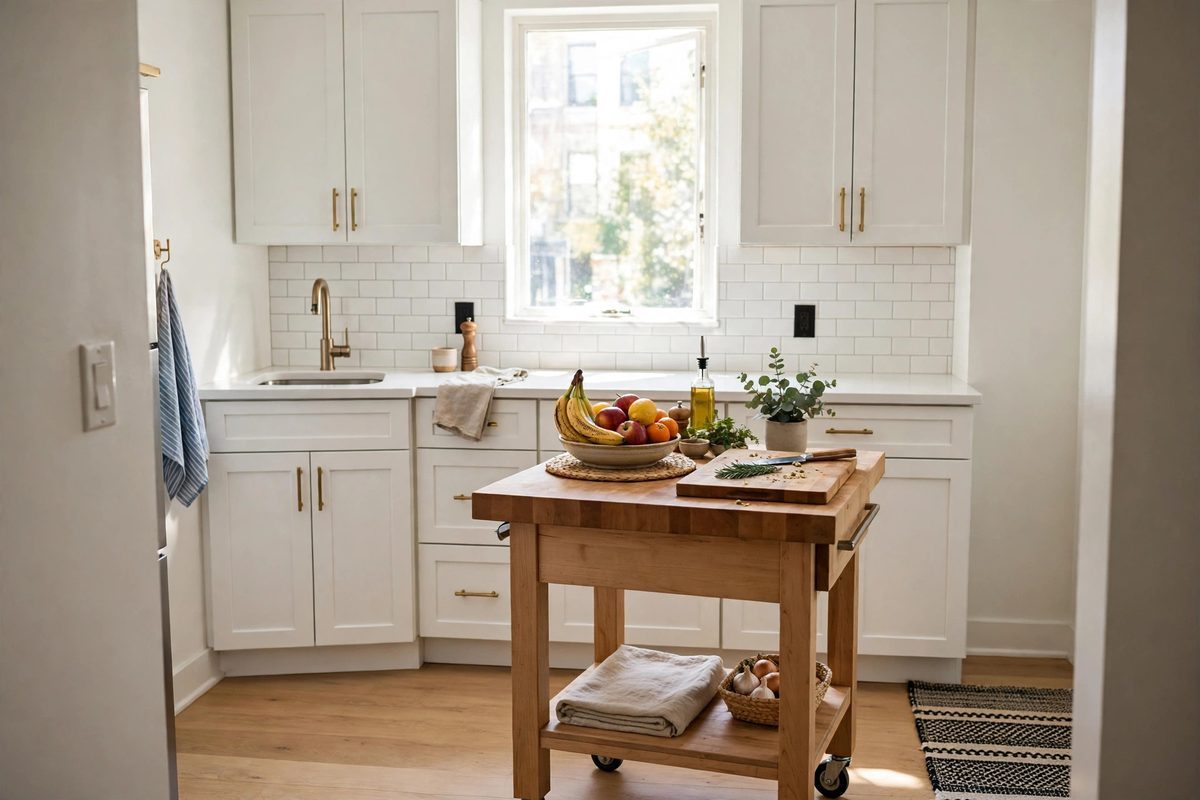
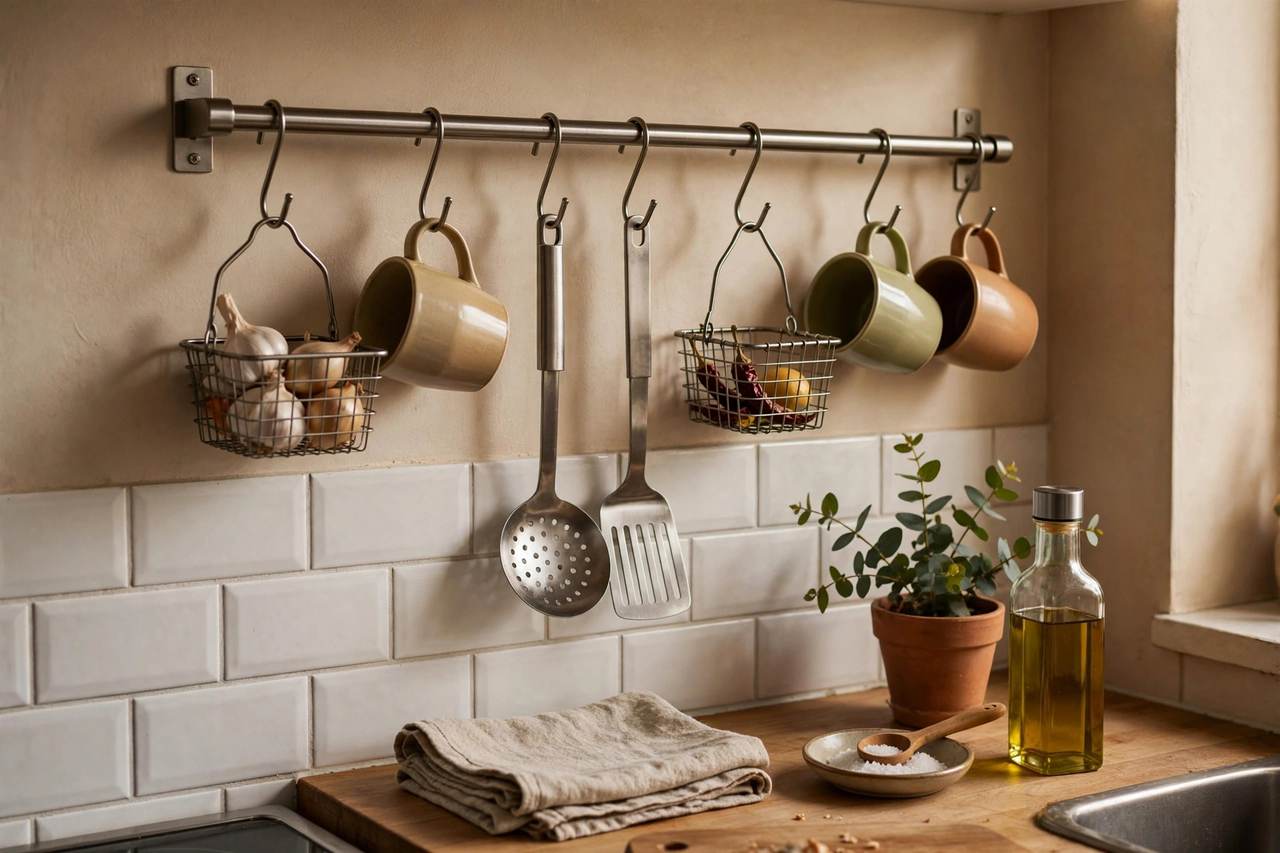
9 Small Kitchen Lighting Ideas That Make a Compact Kitchen Feel Brighter
Nine small kitchen lighting ideas that layer task, ambient, and accent light to make a compact kitchen feel larger and easier to cook in.
In This Guide
Most small kitchens have one ceiling light and a lot of shadows. The ceiling light sits behind you while you work at the counter, so your own body blocks the light exactly where you need it most. The result is a kitchen that feels dark and cramped even in the middle of the day.
The fix is layering: task light where you chop, ambient light for the whole room, and a little accent light to make the space feel finished. You do not need an electrician for most of this. LED strips, puck lights, and plug-in pendants cover most small kitchens for under 200 dollars total.
Before you buy, notice where the shadows fall in your kitchen at the times you cook most. Morning cooks need different light than evening cooks. And check your bulb color: a kitchen lit with warm 2700K bulbs feels cozy but dim, while 3000K to 4000K feels bright and clean without going clinical. These 9 ideas cover the layers that matter most. For the rooms around the kitchen, see small entryway rug ideas and small living room accent wall ideas.
1. Under-Cabinet LED Strips
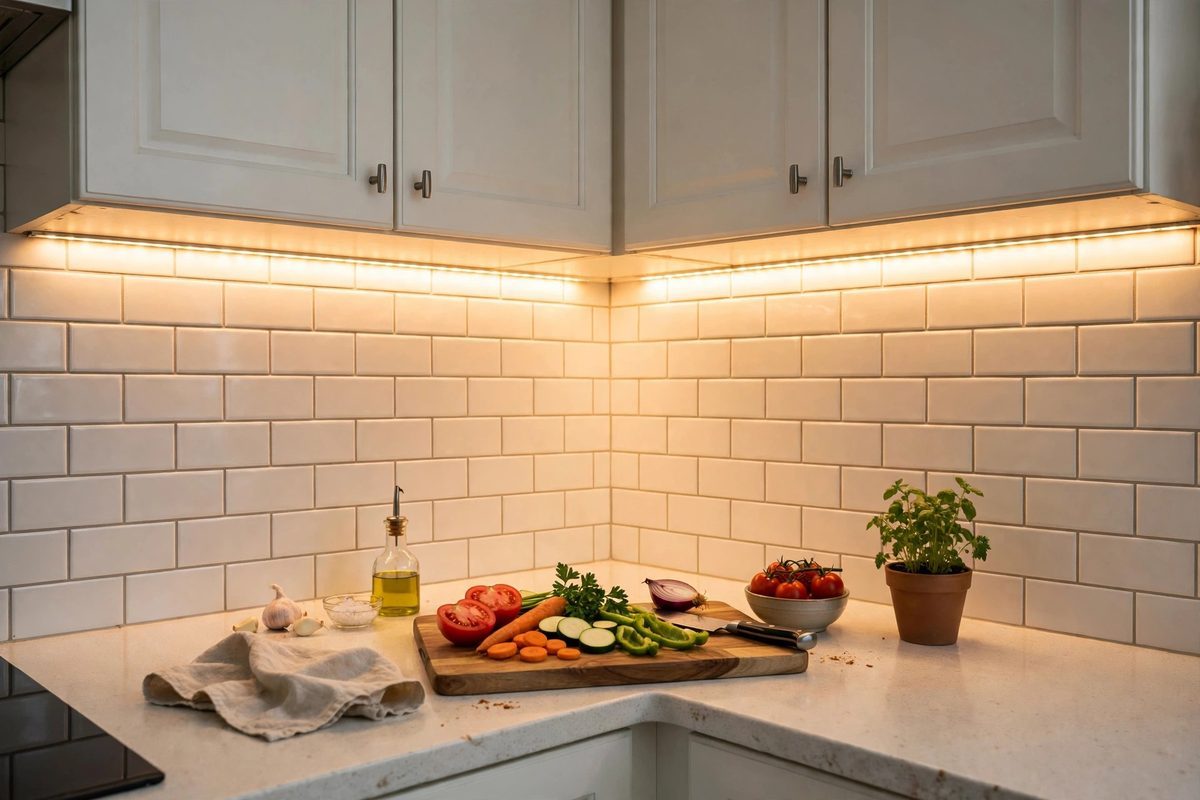
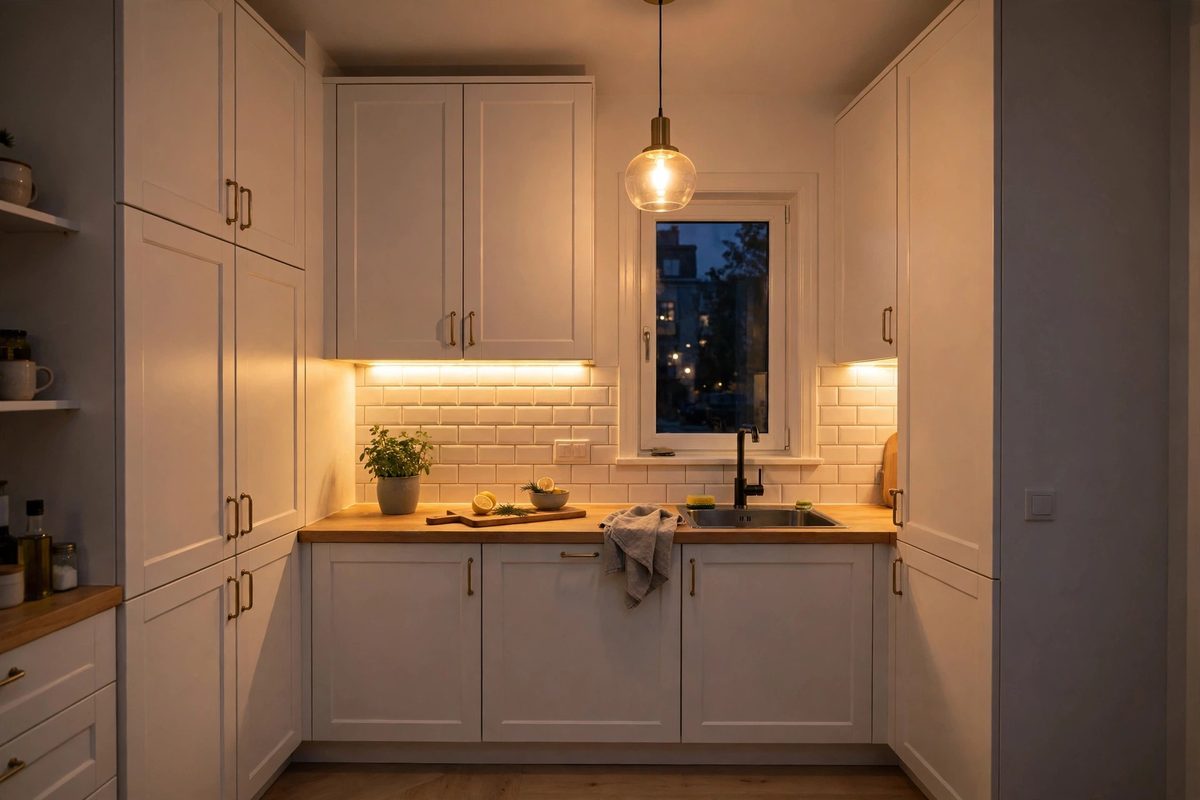
Under-cabinet LED strips are the single highest-impact lighting upgrade for a small kitchen. They put light directly on the counter where you chop, read recipes, and pour coffee, eliminating the shadow your body casts from the ceiling light. A strip costs 15 to 40 dollars and installs with adhesive backing and a plug.
Choose a strip with a color temperature of 3000K to 4000K and a brightness of at least 300 lumens per meter for real task lighting. Mount the strip toward the front edge of the cabinet underside, not against the wall, so the light falls on the counter rather than the backsplash. A dimmable strip lets you drop to a soft glow in the evening.
How to make it work
Measure each cabinet run separately, since one long strip rarely fits around corners cleanly. Hide the power cable with a small channel or by routing it behind the cabinet. If your cabinets have no underside lip, add a thin trim strip to hide the LED dots, which otherwise reflect in glossy counters.
2. One Statement Pendant
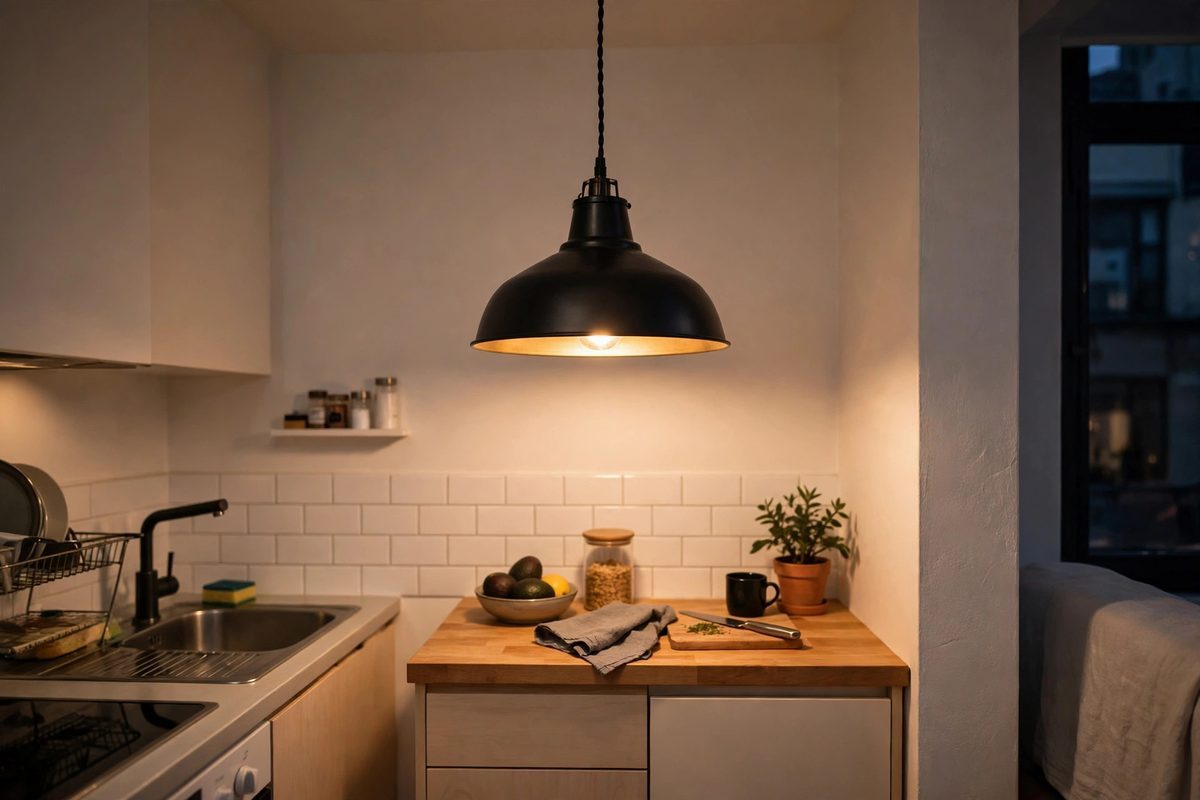
A single statement pendant over a small counter or breakfast bar adds personality and focused light in one piece. Unlike a row of three pendants, which crowds a compact kitchen, one well-chosen pendant gives you a focal point without visual clutter.
Hang the pendant 75 to 90 cm above the counter surface, so it lights the work area without blocking sightlines across the kitchen. A pendant 25 to 35 cm across suits most small kitchens. Larger shades dominate the room and block light from spreading. A clear glass shade spreads light widest, while a metal shade focuses it downward.
How to make it work
Pick a pendant whose style matches your kitchen hardware, like black metal for modern kitchens or brass for warmer ones. Use a dimmable bulb so the pendant works as evening mood lighting as well as task lighting. If you rent, a plug-in pendant with a ceiling hook avoids any wiring work.
3. Recessed Slim Downlights
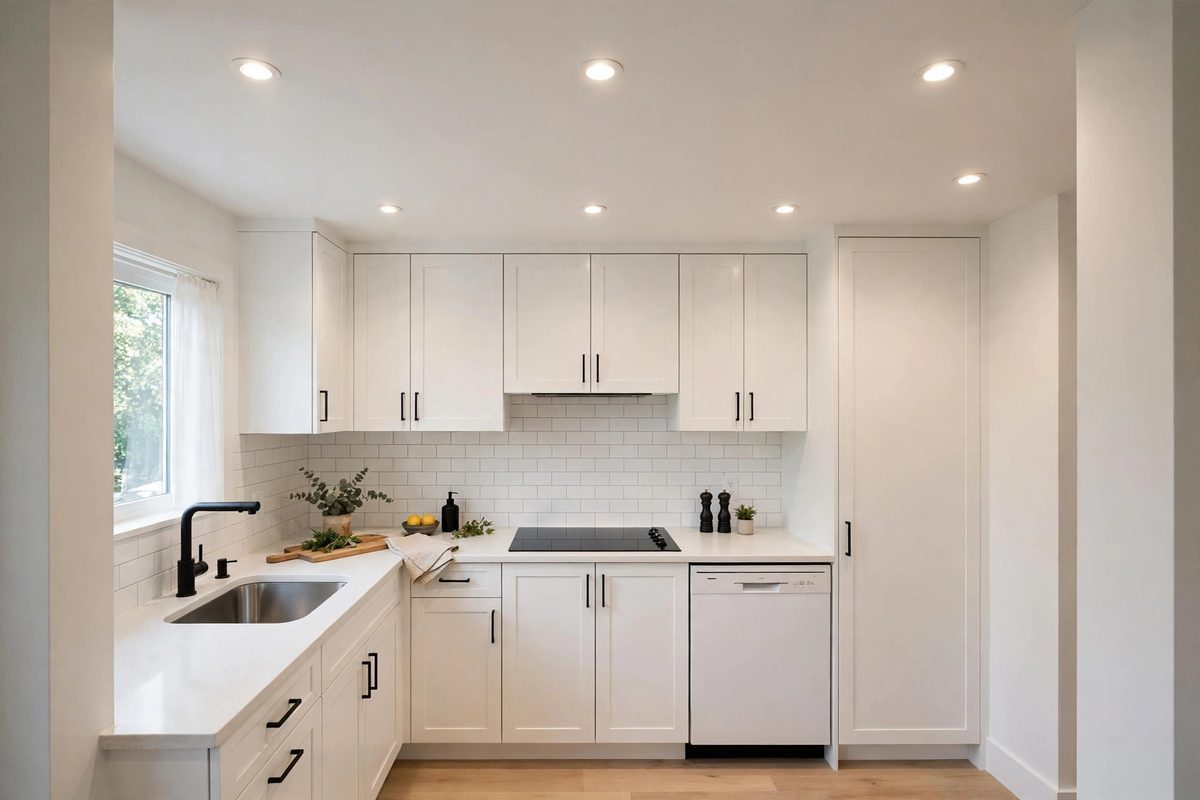
Slim recessed downlights, also called canless or wafer lights, fit into shallow ceilings where traditional recessed cans cannot go, which makes them ideal for apartments. They sit nearly flush with the ceiling, so they add light without adding visual bulk, and a grid of four to six lights can replace a single harsh ceiling fixture.
Space downlights 90 to 120 cm apart, and position them over work areas rather than in the center of the room, so the light lands on counters instead of on top of your head. Each light should be 600 to 800 lumens for a small kitchen. This is an electrician job in most cases, budget 100 to 200 dollars per light installed.
How to make it work
Choose a color temperature that matches your other kitchen lights, ideally 3000K, so the room does not mix warm and cool tones. Put the downlights on a dimmer, since full brightness is too much for a late-night glass of water. If your ceiling is concrete, slim surface-mounted downlights give a similar look without cutting into the slab.
4. Battery Puck Lights for Renters
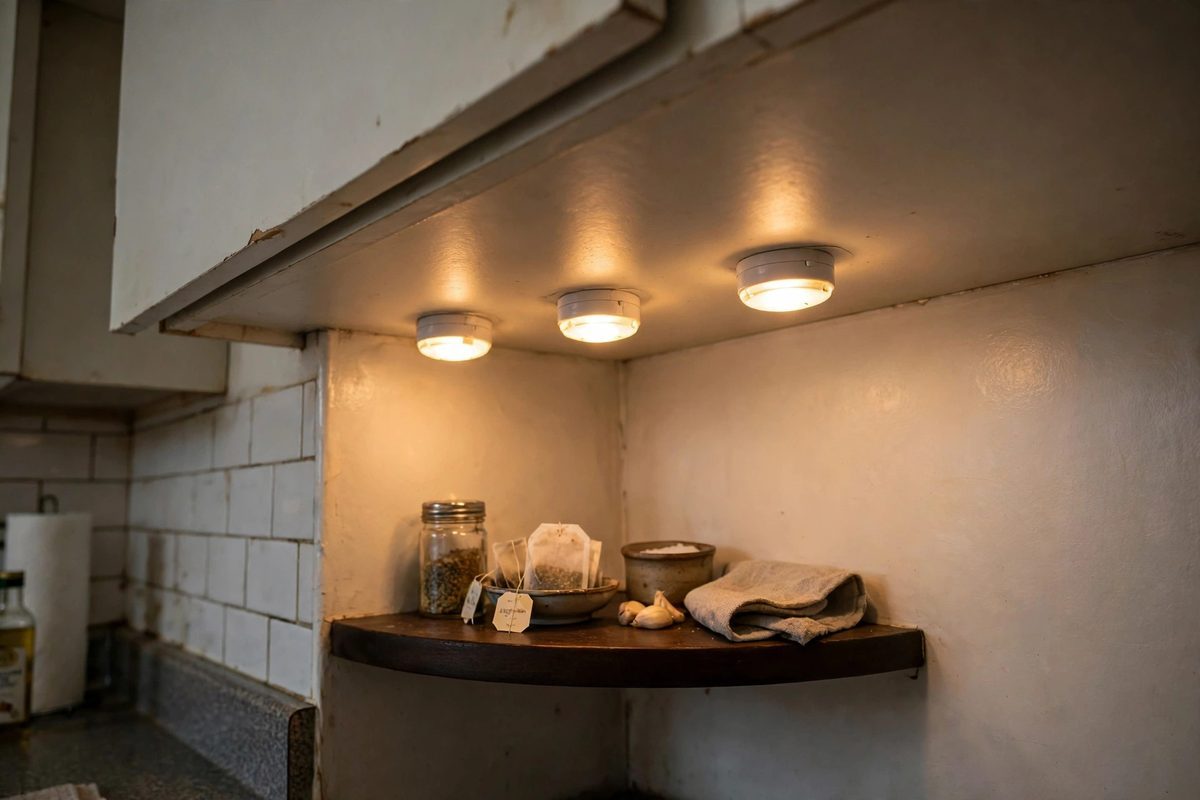
Battery puck lights are small round lights that stick to any surface with adhesive or a magnet, and they are the best renter-friendly lighting fix. No wiring, no drilling, no landlord permission needed. A pack of three costs 10 to 25 dollars, and each light runs for weeks on a set of batteries or recharges via USB.
Puck lights work best as accent or backup light inside dark cabinets, under a single shelf, or in a corner the main lights miss. They are not bright enough to replace under-cabinet strips for serious cooking, typically 50 to 100 lumens each, but they transform a dark pantry or a shadowy corner for almost no money.
How to make it work
Use the remote control or tap function to switch lights without reaching into dark corners. Place one puck every 40 to 50 cm for even coverage under a shelf. Keep spare batteries or a charging cable in the kitchen so dead pucks get fixed the same day, not next month.
5. Light Above Open Shelves
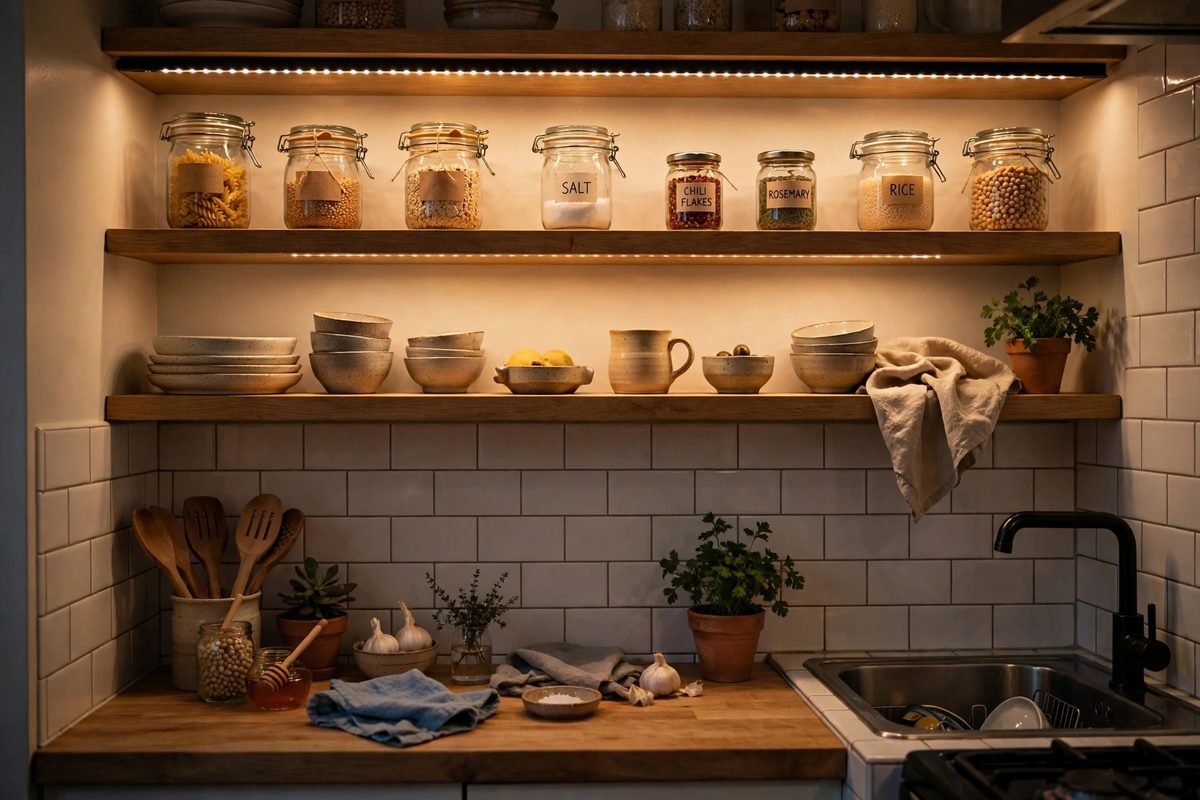
Open shelves look wonderful in photos and dark in real life, because the shelf above shades the shelf below. A slim LED bar or strip mounted under each shelf, or a single picture light above the top shelf, fixes that and turns your dishes and jars into a display.
This is accent lighting with a practical benefit: you can actually see what is on the shelves. A warm 2700K strip suits open shelves best, since the goal is a cozy display glow rather than bright task light. Battery strips work here too, though plug-in strips are brighter and never need charging.
How to make it work
Mount the strip toward the front of each shelf so it lights the objects, not the wall behind them. Keep the shelves reasonably tidy, since light draws attention to everything on them, including clutter. For a layered lighting primer, see layered lighting ideas for small apartments.
6. Glass-Front Cabinets That Glow
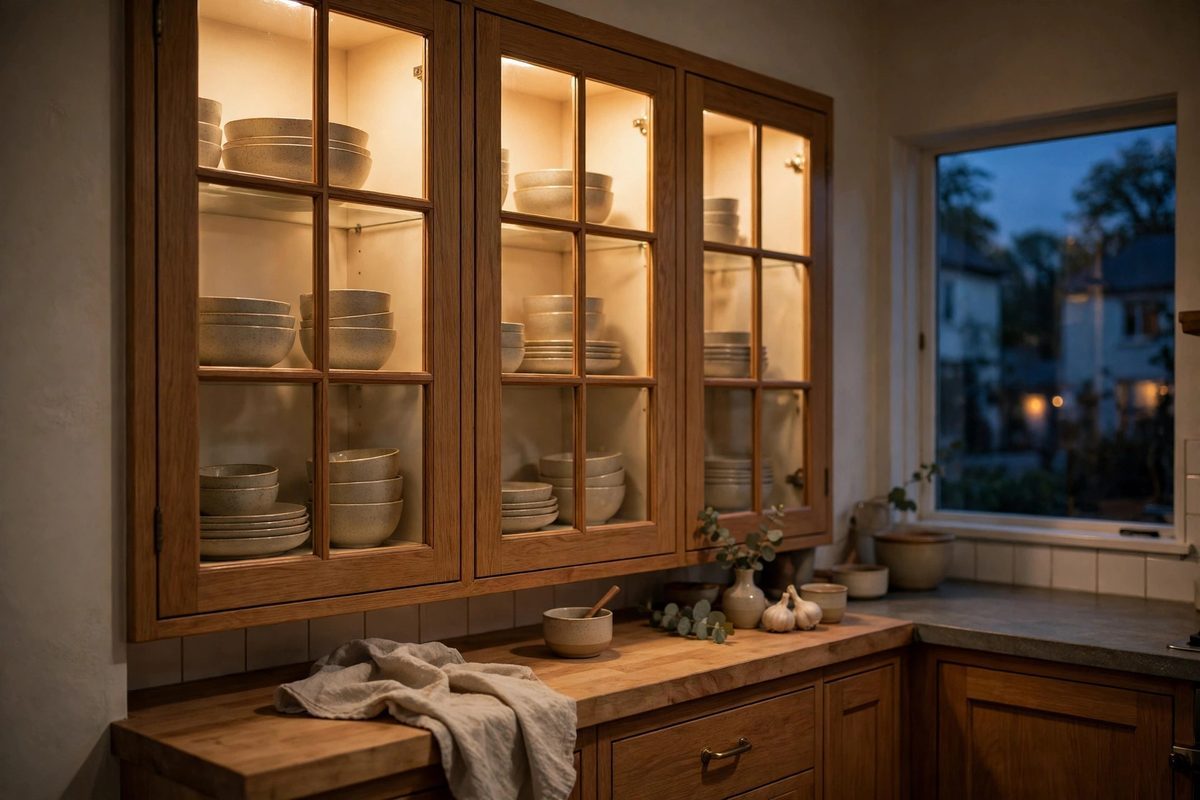
Glass-front cabinets with interior lighting turn storage into a light source. A small LED strip or puck inside each glass cabinet makes the whole kitchen glow softly in the evening, and it makes the room feel deeper, since your eye reads the lit interior as extra space.
This idea suits one or two glass cabinets, not a whole wall of them, since too many lit cabinets look like a shop. Use warm 2700K light inside cabinets, and keep the contents tidy, since glass shows everything. If replacing cabinet doors is too costly, a single glass-front cabinet beside the sink gives most of the effect.
How to make it work
Install the light at the top front of the cabinet so it washes down over the contents rather than glaring out. Use a door-activated switch or a smart plug so the lights come on automatically. Store matching dishes or glassware in lit cabinets, since uniform contents look far calmer behind glass than a jumble.
7. Dimmer Switches Everywhere
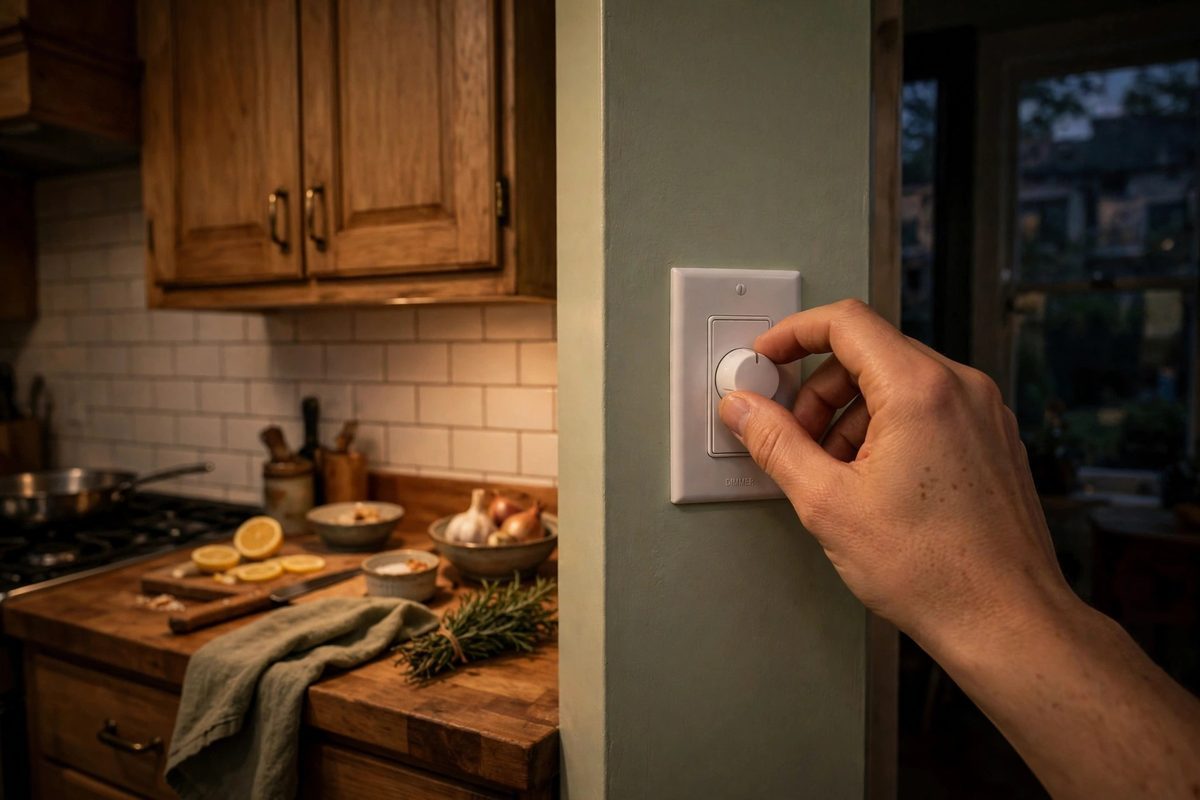
Dimmer switches are the cheapest way to make a small kitchen feel bigger, because brightness controls mood more than any single fixture. Full brightness for cooking, half brightness for dinner, low glow for a midnight snack: one circuit does all three jobs with a dimmer.
A dimmer switch costs 15 to 30 dollars and takes an electrician under an hour to fit, or a confident DIYer can do it with the power off. Renters can use plug-in dimmers for lamps and strips instead. Make sure your bulbs are dimmable, since non-dimmable LEDs flicker or buzz on dimmers.
How to make it work
Put your main kitchen light and your under-cabinet strips on separate dimmers, so you can mix task and ambient light independently. Test the dimmer range with your actual bulbs before finishing, since some LED and dimmer combinations buzz at low settings. Label nothing: after a week, the right setting becomes muscle memory.
8. Toe-Kick Lighting
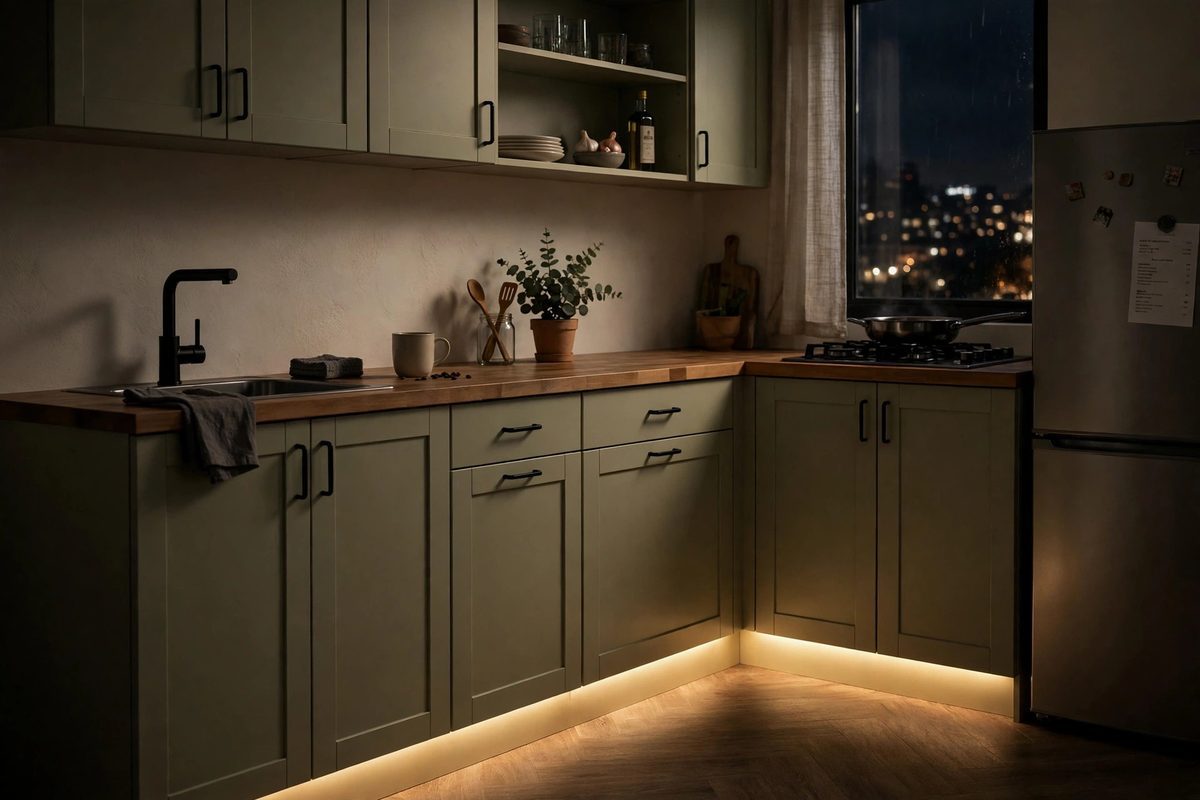
Toe-kick lighting is a strip of LEDs mounted in the recessed gap under your base cabinets, casting a soft glow onto the floor. At night it works as a night light, and during the day it makes cabinets appear to float, which makes the kitchen floor look larger and the room feel less boxy.
A toe-kick strip costs 20 to 40 dollars and plugs into the same outlet as your under-cabinet lights. Warm 2700K light suits toe-kicks best, since the goal is atmosphere, not task lighting. Motion-sensor versions switch on automatically when you walk in, which is perfect for nighttime trips to the fridge.
How to make it work
Run the strip continuously along the toe-kick, including around corners, so there are no dark gaps. Keep the strip recessed behind the cabinet face so you see the glow, not the LEDs themselves. Connect it to the same switch or smart plug as your other evening lights so the whole kitchen drops to a soft glow together.
9. Bright Bulbs With Warm Color
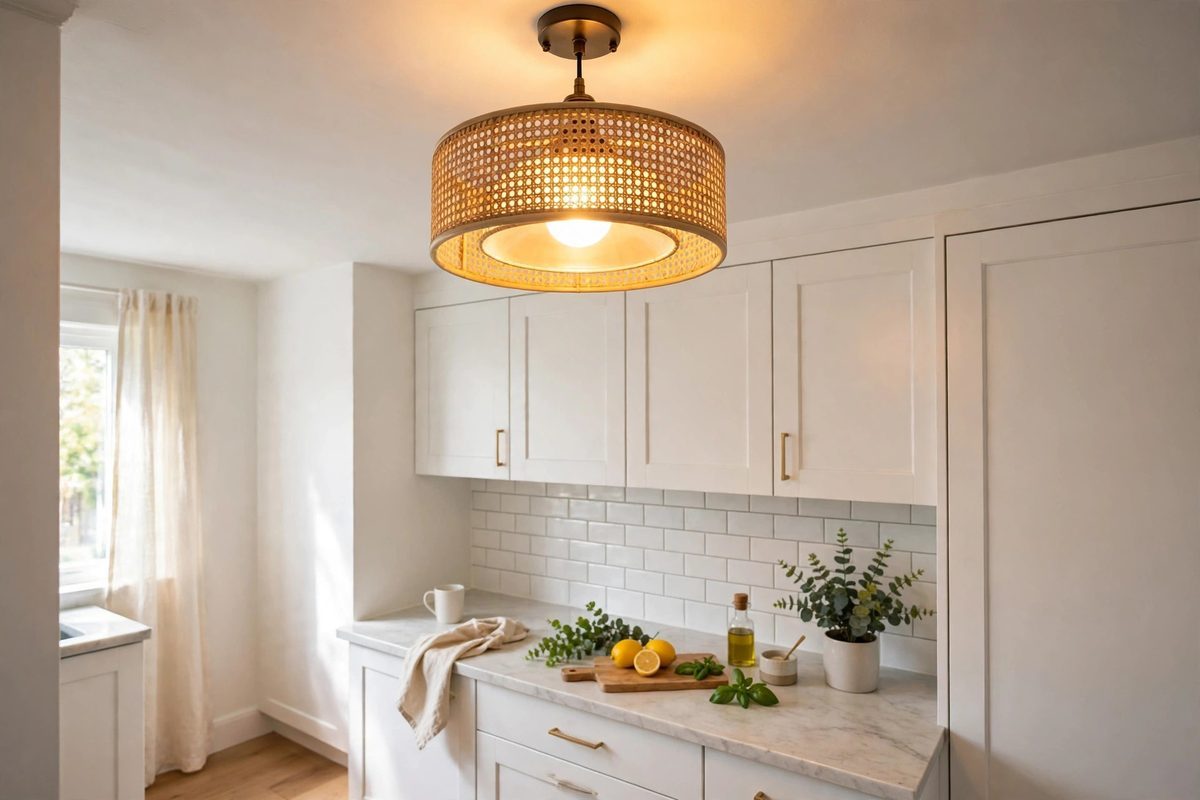
Sometimes the fix is not a new fixture but a better bulb. Many small kitchens are lit by a single 40-watt equivalent bulb that was never bright enough, or by a harsh cool-white bulb that makes the room feel like an office. Swapping to a bright, warm bulb, around 800 lumens at 3000K, transforms the room for under 10 dollars.
Brightness is measured in lumens, not watts, so check the lumen rating when you shop. A small kitchen needs roughly 300 to 400 lumens per square meter of total light from all sources combined. If your current ceiling fixture gives half that, no amount of styling will make the kitchen feel bright.
How to make it work
Replace all kitchen bulbs at once so the color matches across fixtures. Mixed color temperatures, one warm and one cool, are the most common reason a kitchen feels off without anyone knowing why. Keep a spare bulb in the kitchen so a blown bulb never leaves you cooking in the dark for a week.
Good kitchen lighting is not about more fixtures. It is about light in the right places: on the counter where you work, soft light for the room, and a warm glow for the evening. Add one layer at a time, starting with under-cabinet strips, and your compact kitchen will feel brighter, bigger, and far more pleasant to cook in.