10 Small Entryway Rug Ideas That Define the Entrance Without Blocking the Door
Ten small entryway rug ideas that mark the entrance, catch dirt, and stay flat under swinging doors in tight halls.
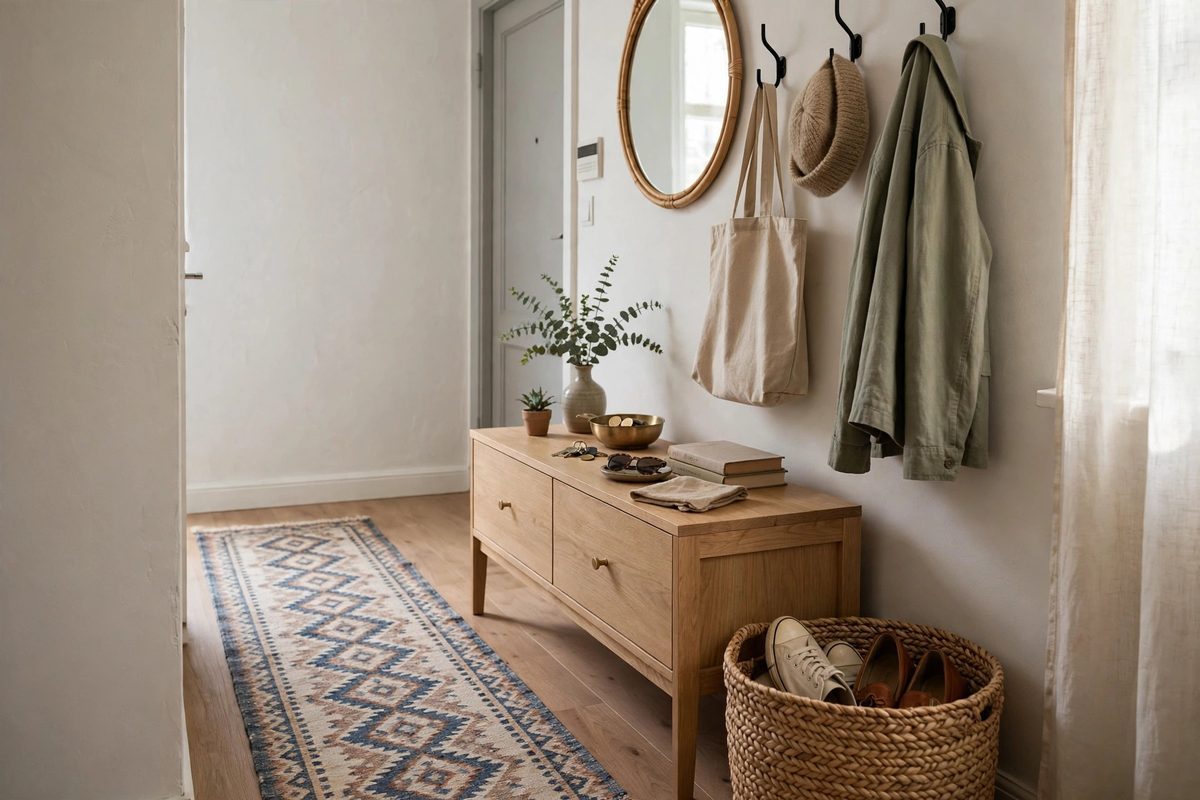
Small apartment entryway with a slim patterned runner rug beside a console table and a basket for shoes
In This Guide
An entryway rug does three jobs: it tells guests where the entrance ends and the home begins, it catches dirt before it spreads through the apartment, and it makes a bare hallway feel like a designed space. In a small entry, it has to do all three while staying out of the door’s way, which is harder than it sounds.
The classic mistake is buying a rug that is too big, too thick, or too close to the door. A thick rug under a swinging door bunches up, blocks the door, and becomes a trip hazard. A rug that is too small floats in the middle of the floor and defines nothing. The right rug leaves clearance for the door, fits the shape of your entry, and stays put.
Measure three things before you shop: the door swing arc, the width of your entry, and the distance from the door to the nearest furniture. Those numbers narrow your options fast. These 10 ideas cover the shapes, materials, and placements that work in real small entries. For the hall beyond the door, see small living room accent wall ideas and small bedroom vanity ideas.
1. Slim Runner Along the Wall
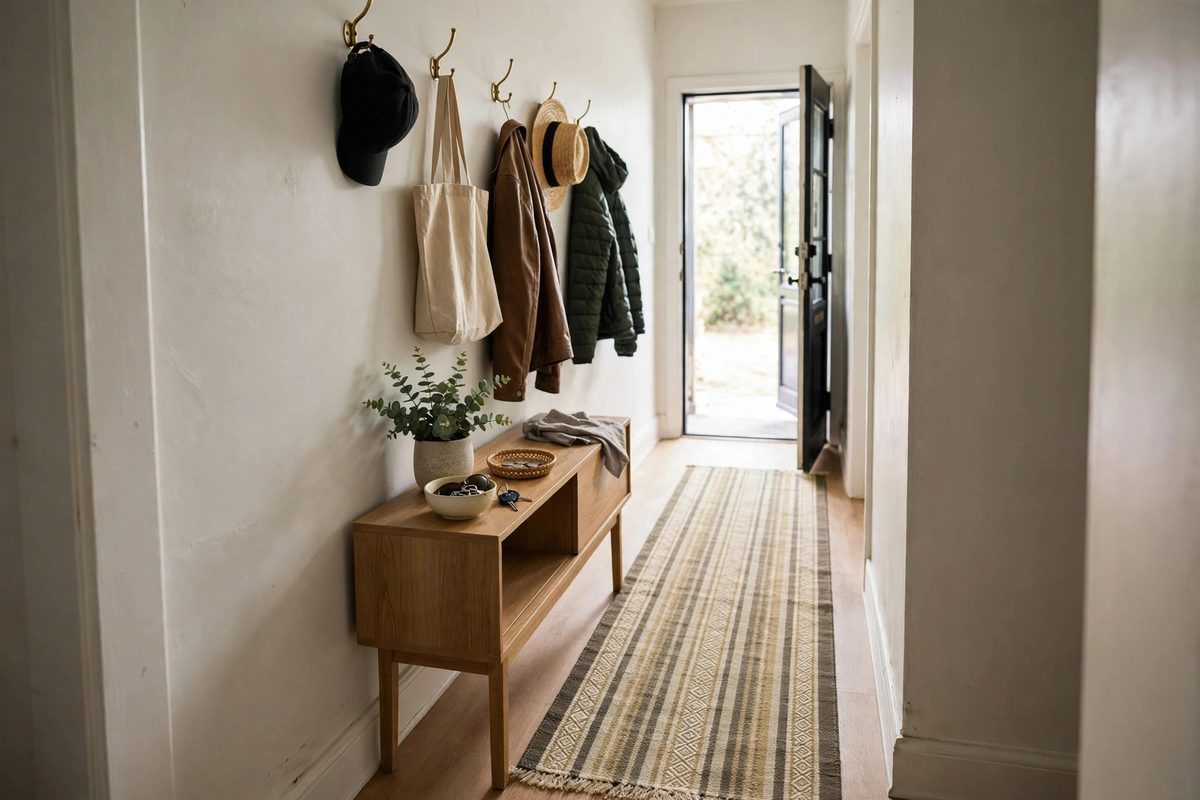
A slim runner, 60 to 70 cm wide, fits narrow entries where a standard rug would crowd the walkway. Laid along the wall opposite the door swing, it defines the entrance path without ever meeting the door, and its length draws the eye down the hall, making the entry feel longer.
Runners come in lengths from 120 cm to over 300 cm, so measure your entry and choose a runner that stops 15 to 20 cm short of the door swing and the next room’s threshold. A runner that runs wall to wall looks like carpeting, while one with breathing room at each end looks intentional.
How to make it work
Place the runner against the wall with the console or hooks, not in the center of a narrow hall, so the walking path stays clear beside it. Use a rug pad cut to size, since runners slide more than larger rugs. If the runner has a pattern, align it so the pattern reads correctly from the front door, which is the angle most people see first.
2. Round Rug in a Square Entry
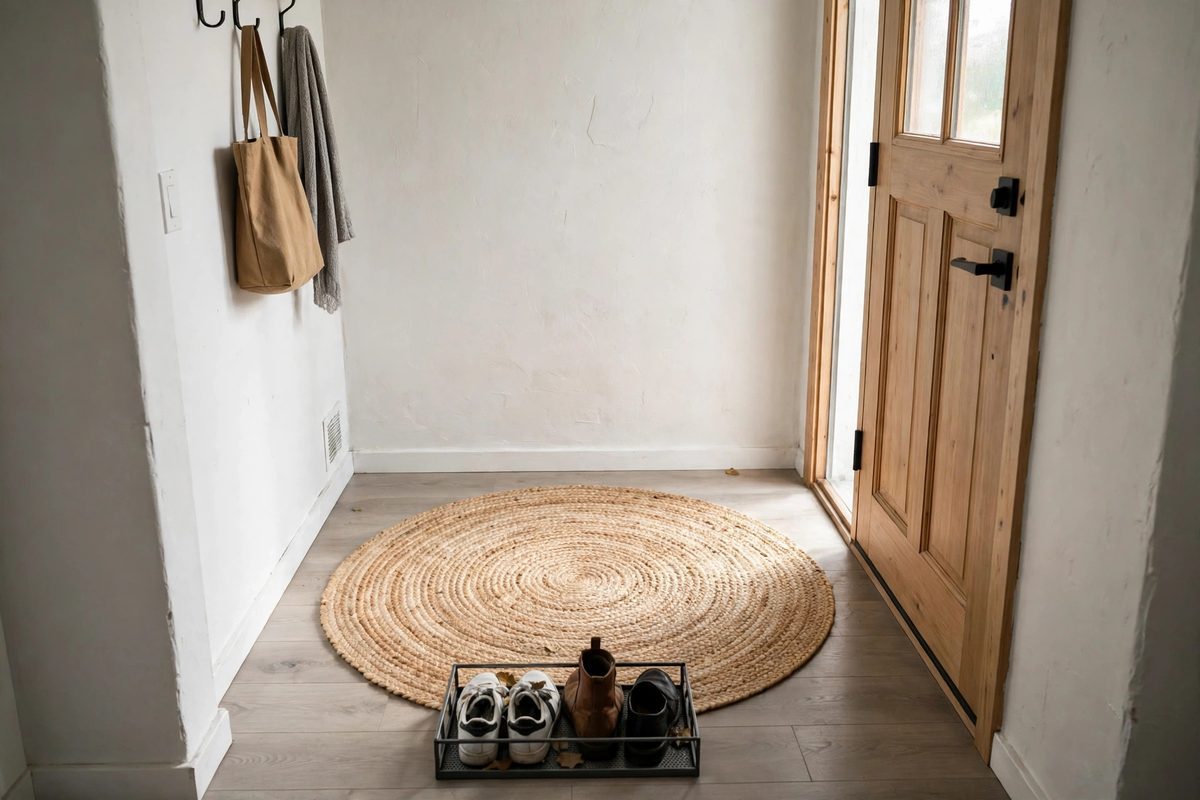
A round rug softens a square entry, which is often a boxy little space with hard corners everywhere. The circle breaks up the geometry, creates a natural spot to stand while you take off shoes, and looks deliberate in a way a too-small rectangle never does.
Choose a diameter of 90 to 120 cm for a small square entry, large enough to stand on comfortably but small enough to leave floor visible around the edges. The rug should sit clear of the door swing, so measure the arc before choosing a size. A flat-weave or low-pile round rug works best, since thick round rugs curl at the edges.
How to make it work
Center the round rug on the entry, not on the door, so it reads as its own zone. Place a small shoe tray or basket half on the rug’s edge to anchor it visually. If the door swings over the rug, choose a rug under 6 mm thick, or move the rug just outside the swing arc.
3. Washable Rug for Muddy Shoes
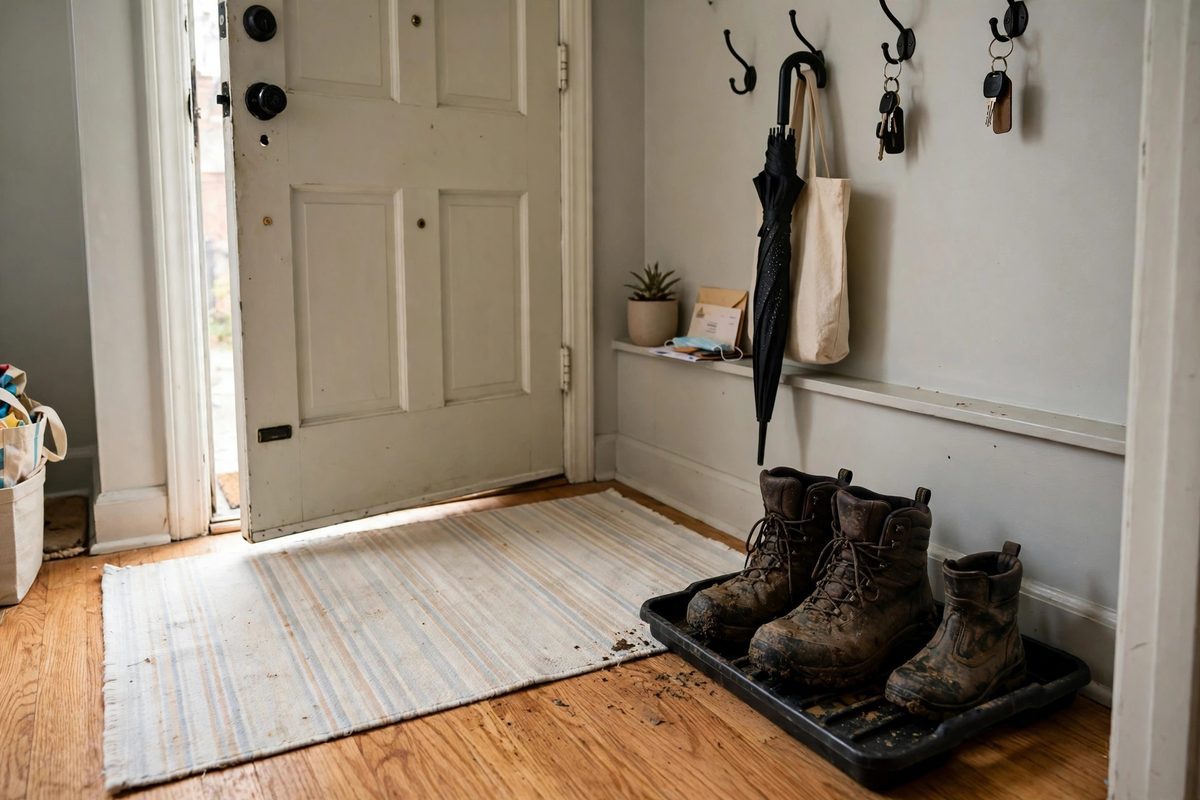
A washable rug is the practical hero of a small entry, because entry rugs take more dirt, water, and wear than any other rug in the home. Machine-washable rugs, usually cotton or polyester with a grippy backing, go straight into the washing machine when muddy season hits, which means you can buy a light color without regretting it.
Washable rugs cost 30 to 100 dollars for entry sizes, similar to regular rugs, and they last well if you wash them on cold and air-dry them. Check the care label before buying: some “washable” rugs are only spot-cleanable, which defeats the purpose. A rug pad underneath keeps a thin washable rug from sliding.
How to make it work
Buy two washable rugs in the same style if your budget allows, so one can be in the wash while the other is on the floor. Shake the rug outside weekly and wash it monthly, or more often in wet seasons. Keep a shoe tray on top of the rug for the muddiest days, so the rug itself stays cleaner longer.
4. Layered Doormat Plus Rug
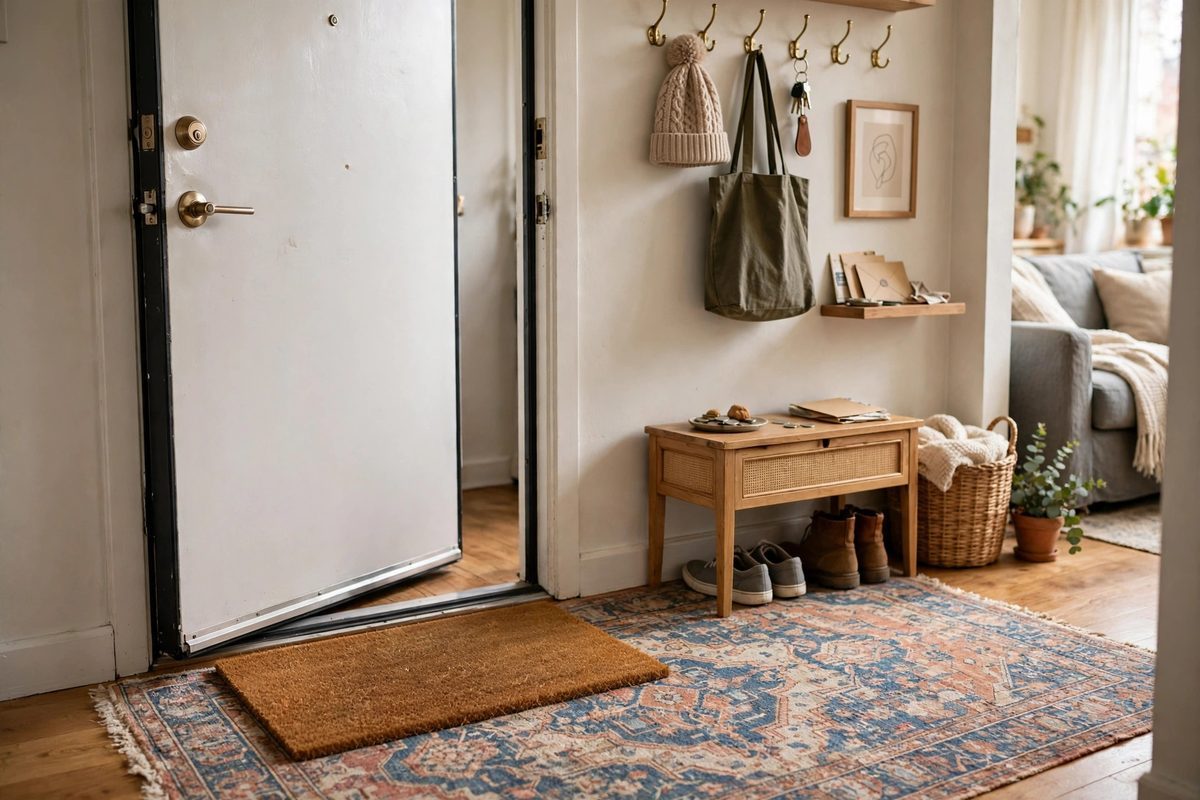
Layering a small coir doormat on top of a larger flat rug combines the dirt-catching power of coir with the soft look of an indoor rug. The doormat handles the scraping and wiping, while the rug underneath defines the entrance zone and adds color or pattern.
The base rug should be at least 30 cm wider and longer than the doormat on all sides, so the layering reads clearly. A typical pairing is a 45 by 75 cm doormat on a 90 by 150 cm rug. Keep both layers thin, under 10 mm combined, so the door still clears them.
How to make it work
Place the doormat where feet actually land when stepping inside, usually just inside the door, and center it on the base rug. Use a rug pad under the base rug to stop both layers sliding together. Shake out the doormat weekly, since trapped dirt under it wears the base rug faster.
5. Low-Pile Rug Under a Swinging Door
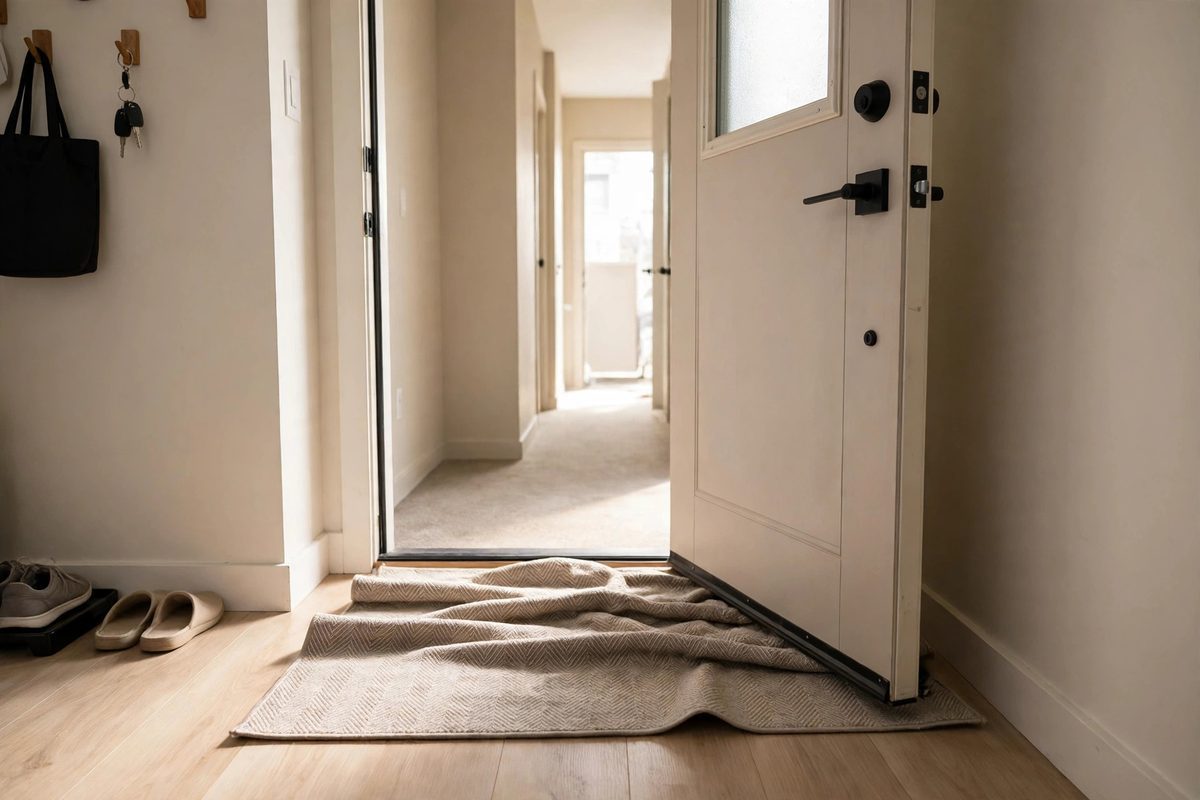
If your door swings inward over the rug area, a low-pile rug is the only safe choice. Low-pile rugs, under 6 mm thick, slide under most doors with clearance to spare, and they never bunch up or catch on the door bottom the way plush rugs do.
Check your door clearance before buying: slide a coin stack or a ruler under the closed door to measure the gap. Most interior doors have 10 to 15 mm of clearance, which fits a low-pile rug plus a thin pad. Flat-weave cotton, jute, and indoor-outdoor rugs all work well here.
How to make it work
Measure the clearance at several points along the door bottom, since floors are rarely perfectly level. If the gap is tight, skip the rug pad under the door swing section, or use a pad only under the part of the rug the door never crosses. Trim any rug fringe that could catch under the door.
6. Patterned Rug That Hides Dirt
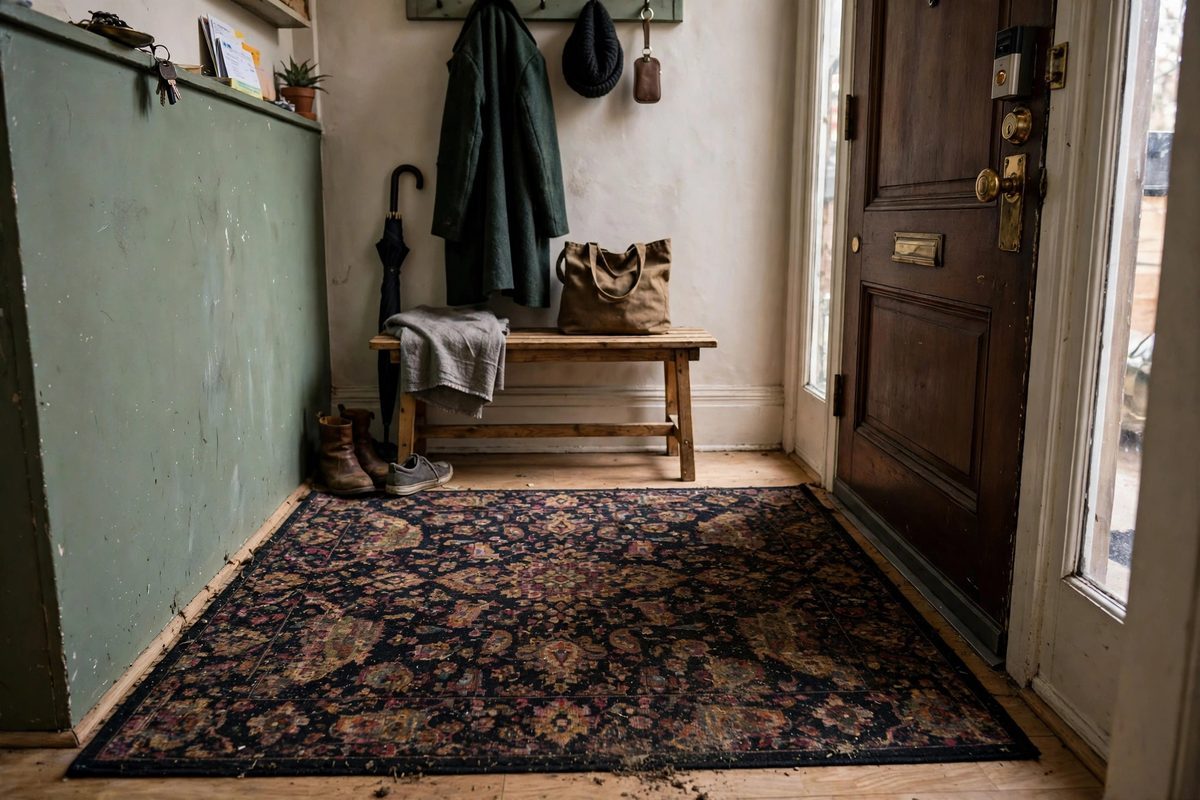
A patterned rug in mid to dark tones hides dirt, footprints, and pet hair far better than a plain light rug, which matters in an entry that sees daily traffic. Small busy patterns, like vintage motifs, geometric prints, or speckled designs, disguise marks between cleanings better than large bold patterns.
This is not an excuse to never clean the rug, but it does mean the entry looks presentable for longer between vacuums. A patterned rug also adds personality to a plain hallway without any other decor. Expect 40 to 120 dollars for a good patterned entry rug.
How to make it work
Choose a pattern with at least three tones, including one dark tone, for maximum dirt camouflage. Match one color in the pattern to your entry walls or console so the rug ties the space together. Vacuum patterned rugs twice a week, since the pattern hides dirt from your eyes but not from the rug fibers.
7. Natural Fiber Rug for Texture
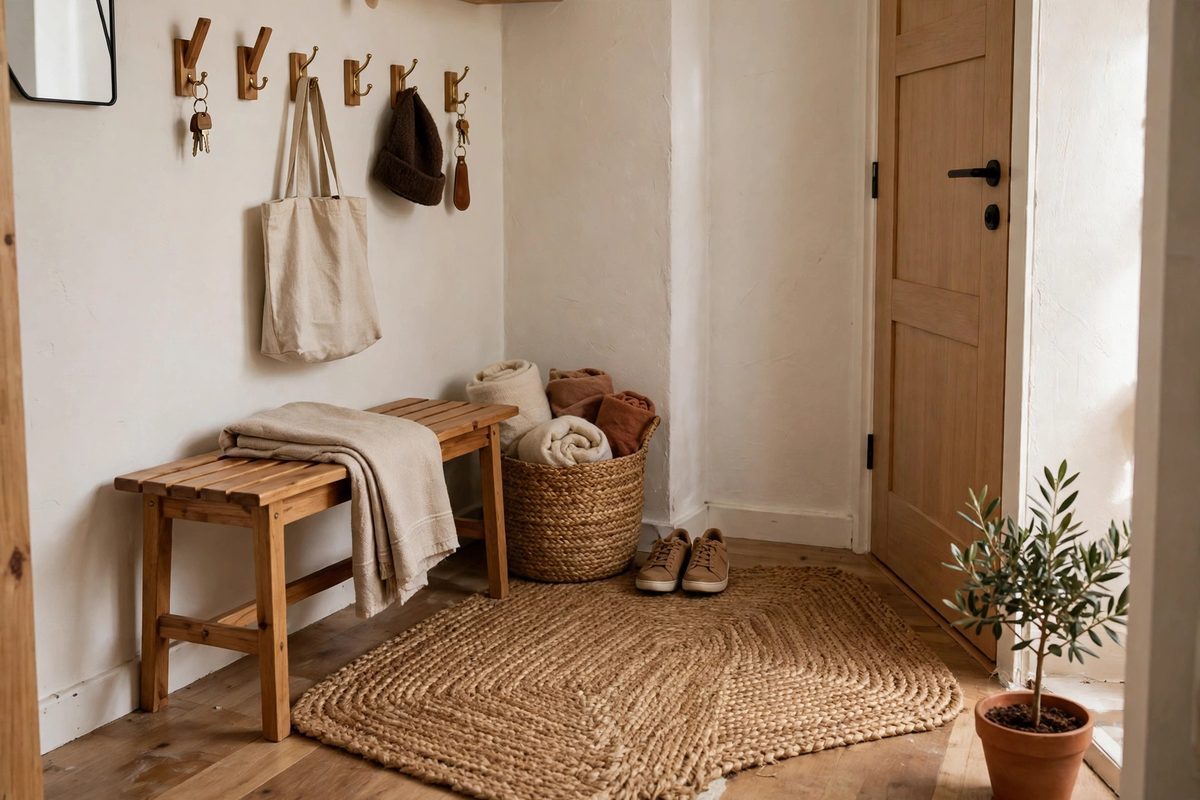
A natural fiber rug, jute, sisal, or seagrass, adds warmth and texture that flat synthetic rugs cannot match, and it suits entries with wood furniture and woven baskets. The nubby texture also scrapes shoes naturally, giving it a practical edge over smooth rugs.
Natural fiber rugs are durable but not waterproof, so they suit covered entries and apartments better than entries exposed to rain. They can shed fibers for the first few weeks, and they stain if wet mud sits on them, so they pair best with a shoe tray or a washable doormat on top. Prices run 50 to 150 dollars for entry sizes.
How to make it work
Use a thick rug pad under natural fiber rugs, since they are stiff and slide on smooth floors. Keep the rug out of direct rain and wipe spills immediately, since jute and sisal absorb water fast. If shedding bothers you, vacuum with the beater bar off for the first month.
8. Rug Sized to the Console
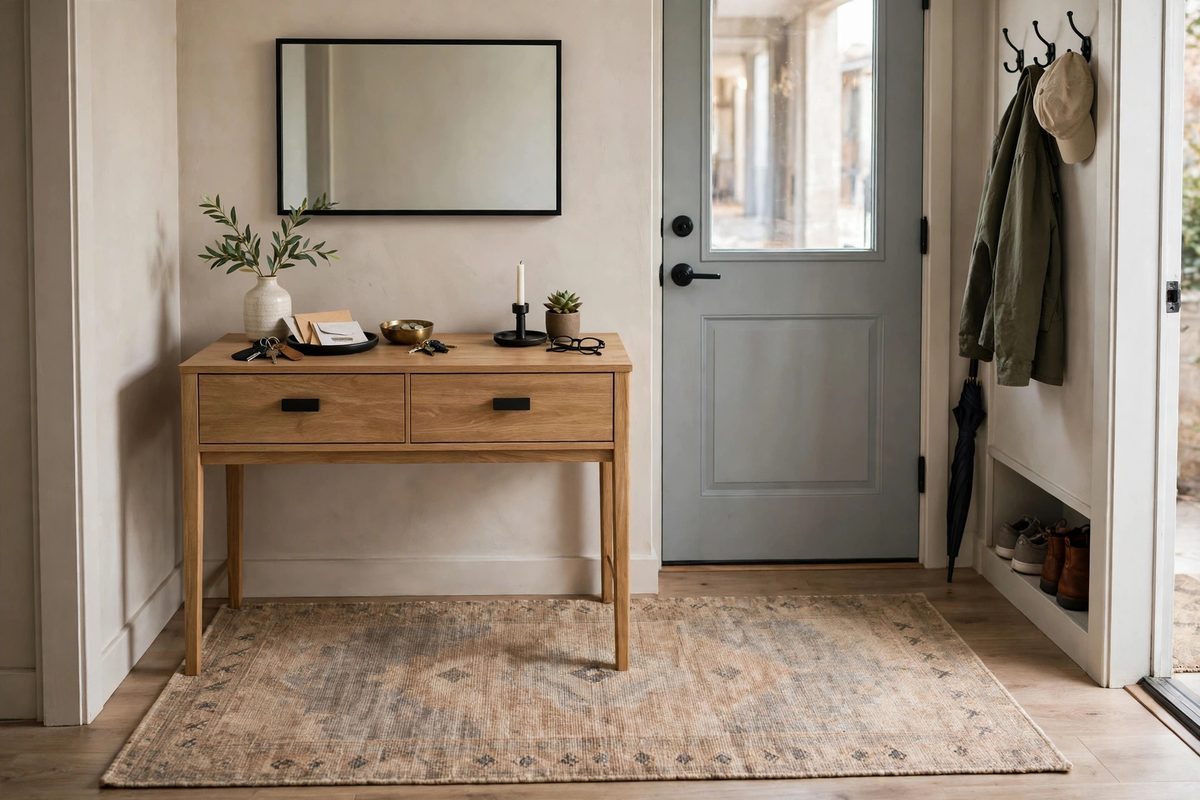
Sizing the rug to the console table, rather than to the room, creates a tidy vignette that makes a small entry look designed. The rug should be about 20 cm wider than the console on each side and extend 30 to 40 cm in front of it, so the console sits fully on the rug with a border of rug showing.
This approach works when the console is the main furniture in the entry. It fails when the entry has no console, since there is nothing to size the rug to. Measure the console before shopping, and bring those numbers with you, since eyeballing rug sizes in a store is notoriously unreliable.
How to make it work
Center the rug on the console, not on the room, and let the rug extend toward the door rather than toward the next room. If the console has legs, make sure all four legs sit on the rug, since a half-on rug wobbles and looks accidental. A rug pad keeps the console from denting a thin rug.
9. Indoor-Outdoor Rug for Wet Boots
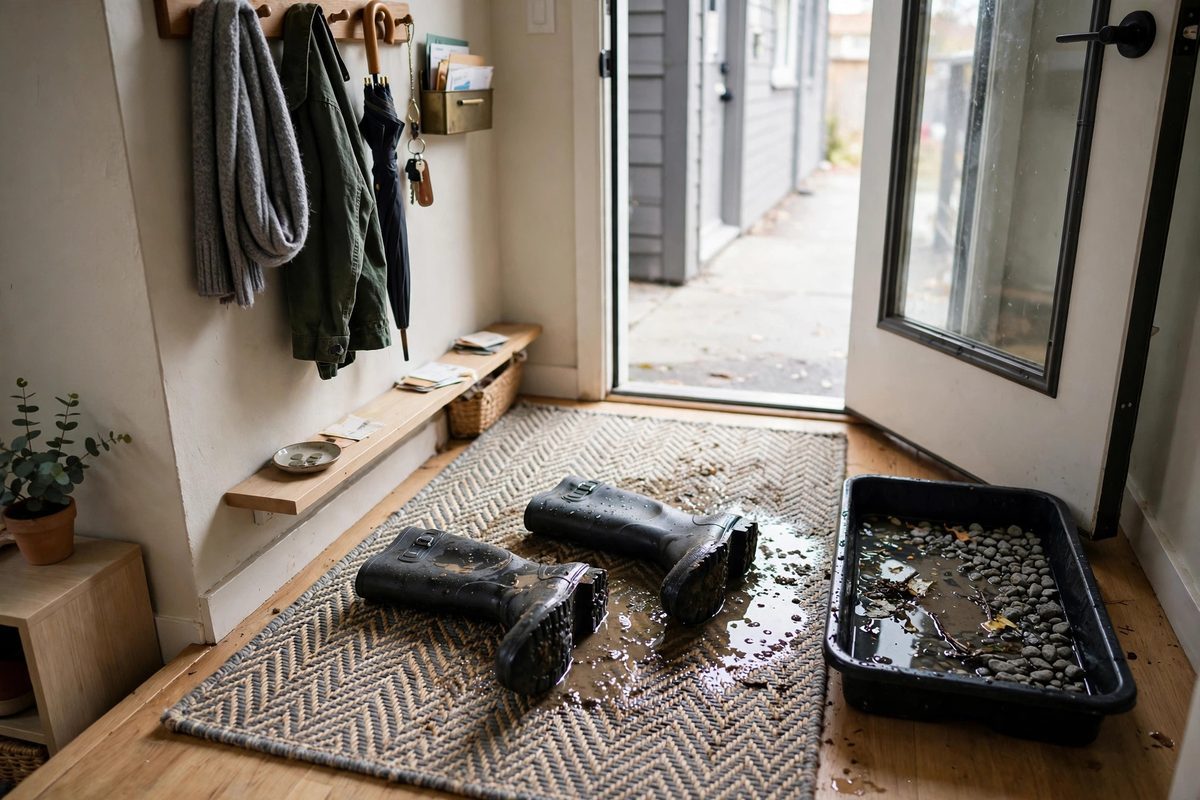
An indoor-outdoor rug, made from polypropylene or similar synthetics, handles wet boots, snowy shoes, and muddy paws without staining or mildewing. You can hose it down outside or scrub it in the tub, which makes it the best choice for entries in rainy climates or homes with dogs.
Modern indoor-outdoor rugs look far better than the plastic mats of the past, with woven textures and patterns that pass as regular indoor rugs. They cost 30 to 90 dollars for entry sizes and dry quickly after cleaning. The tradeoff is a slightly stiffer feel underfoot compared to cotton or wool.
How to make it work
Place the indoor-outdoor rug where wet shoes actually land, directly inside the door, and pair it with a boot tray for the worst weather. Hose it down monthly and let it dry fully before putting it back, since trapped moisture under any rug damages floors. For more hallway rug pairings, see narrow hallway runner rug ideas.
10. Vintage Rug for Character
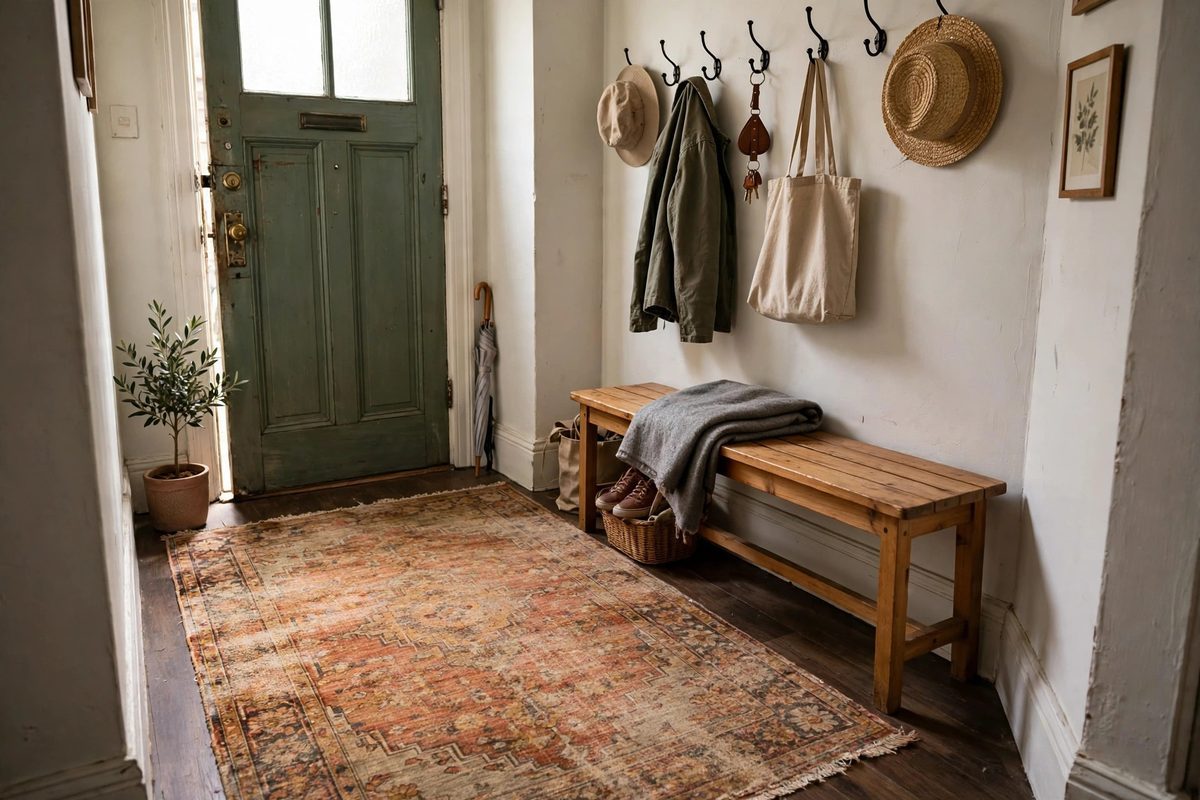
A vintage or vintage-style rug brings character to an entry that would otherwise feel generic, and the faded, worn look of vintage patterns hides wear beautifully. Real vintage rugs are one of a kind, while vintage-style machine-made rugs give the same look for 60 to 150 dollars and are easier to clean.
A vintage rug suits entries with a mix of old and new furniture, where its patina ties the room together. It can clash with very modern, minimalist entries, so consider the rest of your home before committing. Check the rug’s backing and edges before buying, since old rugs can be fragile at the fringes.
How to make it work
Choose a vintage rug in tones that already appear in your entry, like warm reds with wood furniture or faded blues with white walls. Keep it out of direct sun to prevent further fading, and rotate it every few months so wear stays even. If you buy a real vintage rug, have it professionally cleaned once a year.
The right entryway rug is the one that fits your door, your floor, and your daily routine. Measure the swing, pick a thickness the door can clear, and choose a material you can actually clean. Get those three things right and the rug will define your entrance beautifully for years.