11 Layered Lighting Ideas for Small Apartments That Feel Warm, Not Cramped
Discover 11 layered lighting ideas for small apartments using floor lamps, plug-in sconces, LED strips and warm bulbs to make every room feel warm and spacious — no rewiring required.
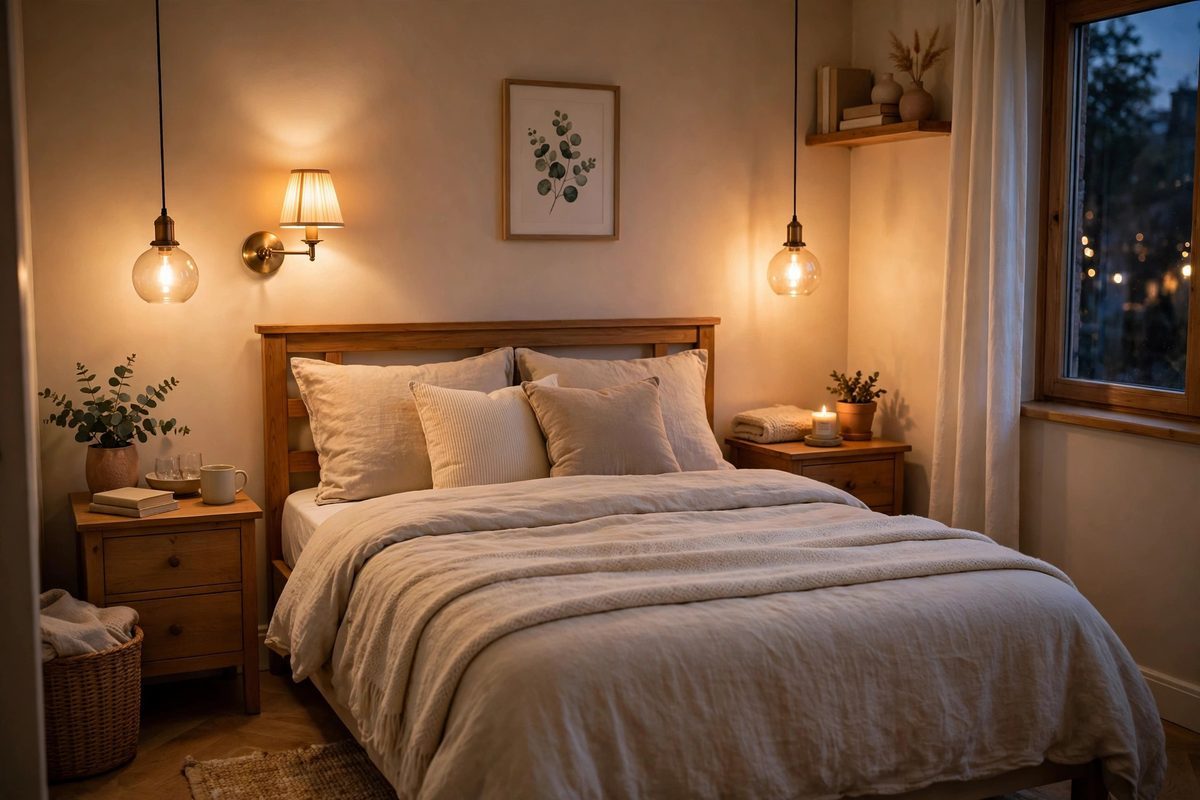
In This Guide
Most small apartments have exactly one light per room: a single ceiling fixture that switches the whole space between glaring and pitch black. It flattens everything, kills the mood, and somehow makes the room feel smaller than it is.
Designers have a fix, and it is one of the defining home trends of 2026: layered lighting. Instead of one overhead source, you build three layers — ambient, task, and accent — at different heights around the room. In a big house that is a nice-to-have. In a 600-square-foot apartment it is transformative, because light starts doing the job furniture cannot: it defines zones, adds depth, and makes walls feel farther apart.
The best part for renters: every idea below is plug-in, stick-on, or freestanding. No rewiring, no electrician, no landlord negotiations.
Here are 11 layered lighting ideas designed specifically for small apartments.
1. The Corner Floor Wash
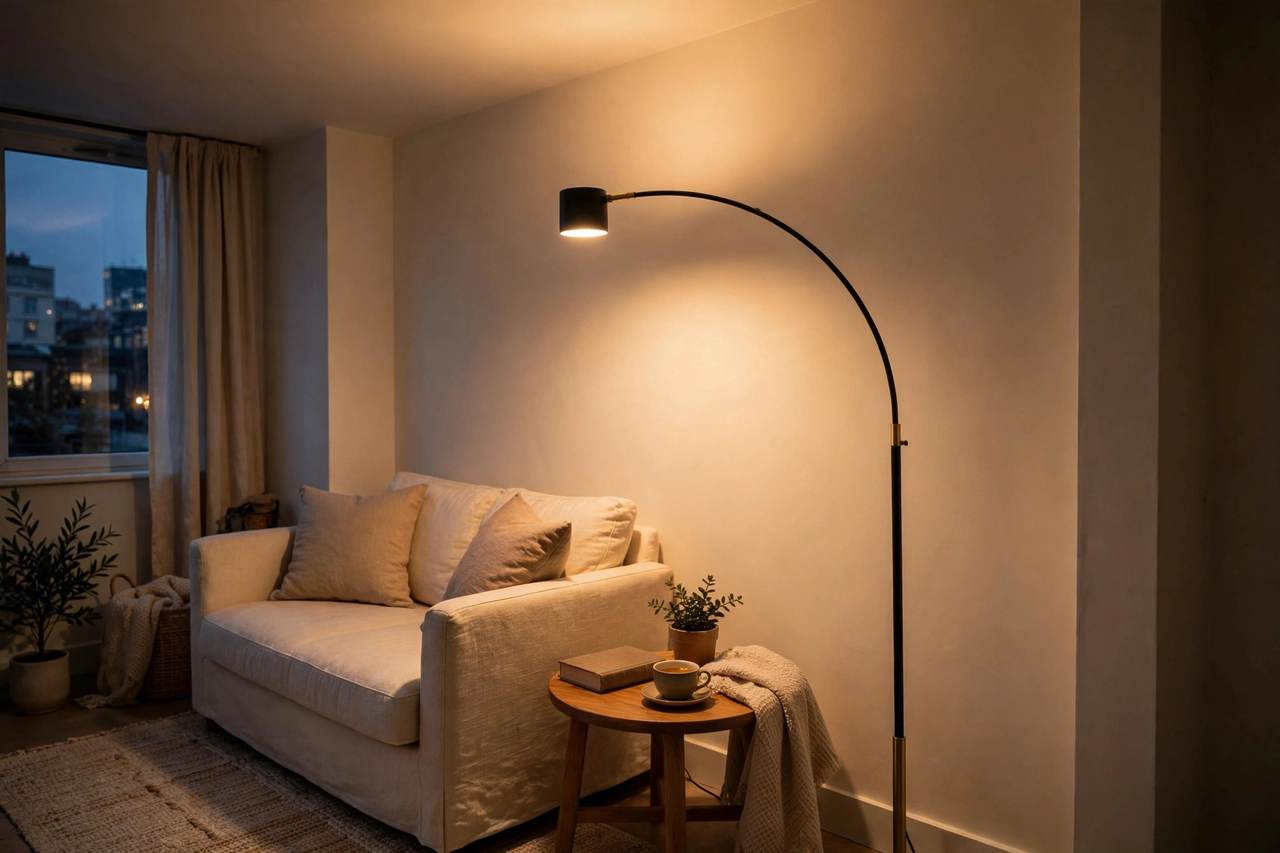
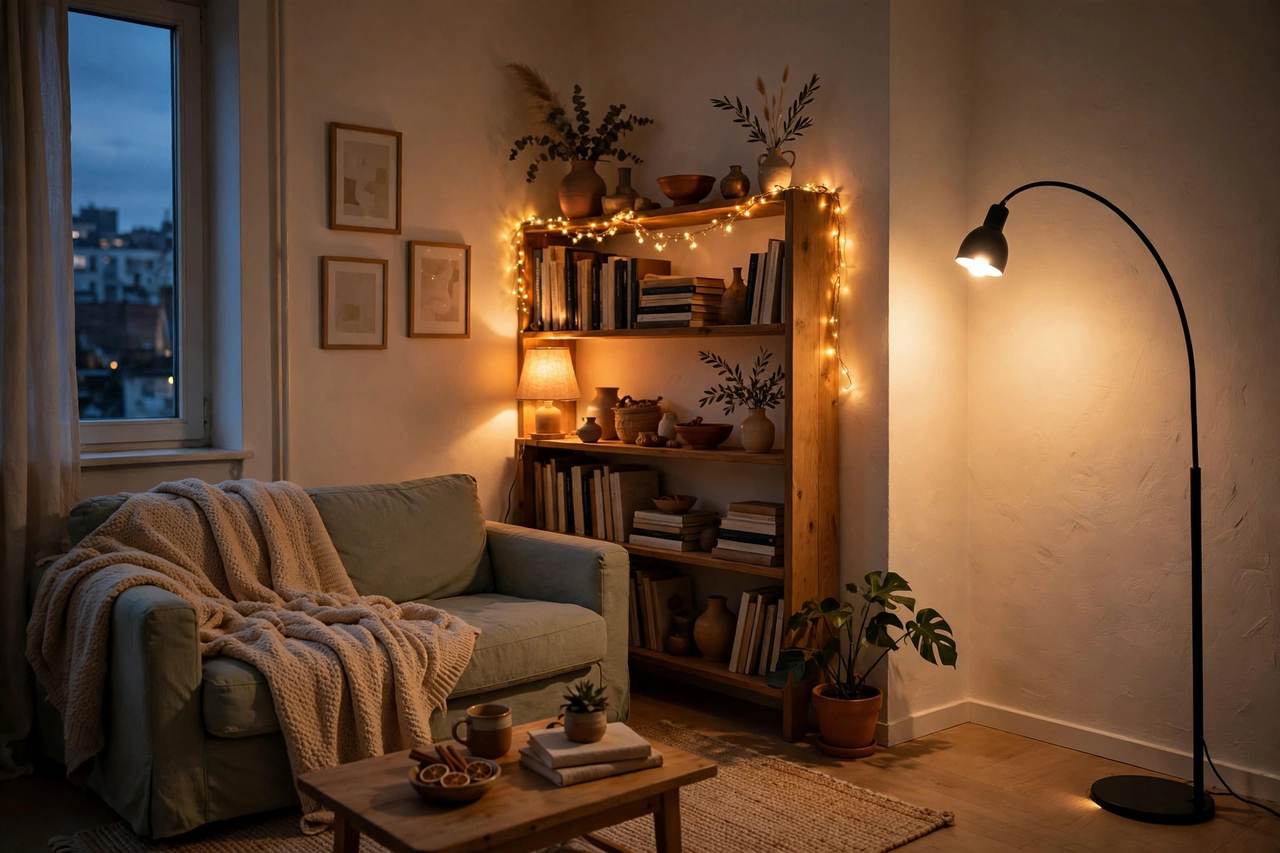
Every small room has a dark corner that swallows light and makes the space feel smaller. A tall floor lamp placed 6 to 12 inches from the wall, aimed upward, washes that corner with bounced light and visually pushes the ceiling higher.
Why it works
Direct light creates harsh pools and deep shadows. Bounced light spreads softly across the wall and ceiling, which is exactly what a compact room needs — the whole corner starts glowing instead of one bright spot surrounded by darkness.
What to look for
- A torchiere (uplight) or arc style — both throw light upward by design
- A warm 2700K bulb, never daylight white
- A slim base that tucks behind a chair or beside the sofa
Best for
Living rooms, studio corners, and any room where one corner always feels like a black hole after dark.
2. Plug-In Wall Sconces
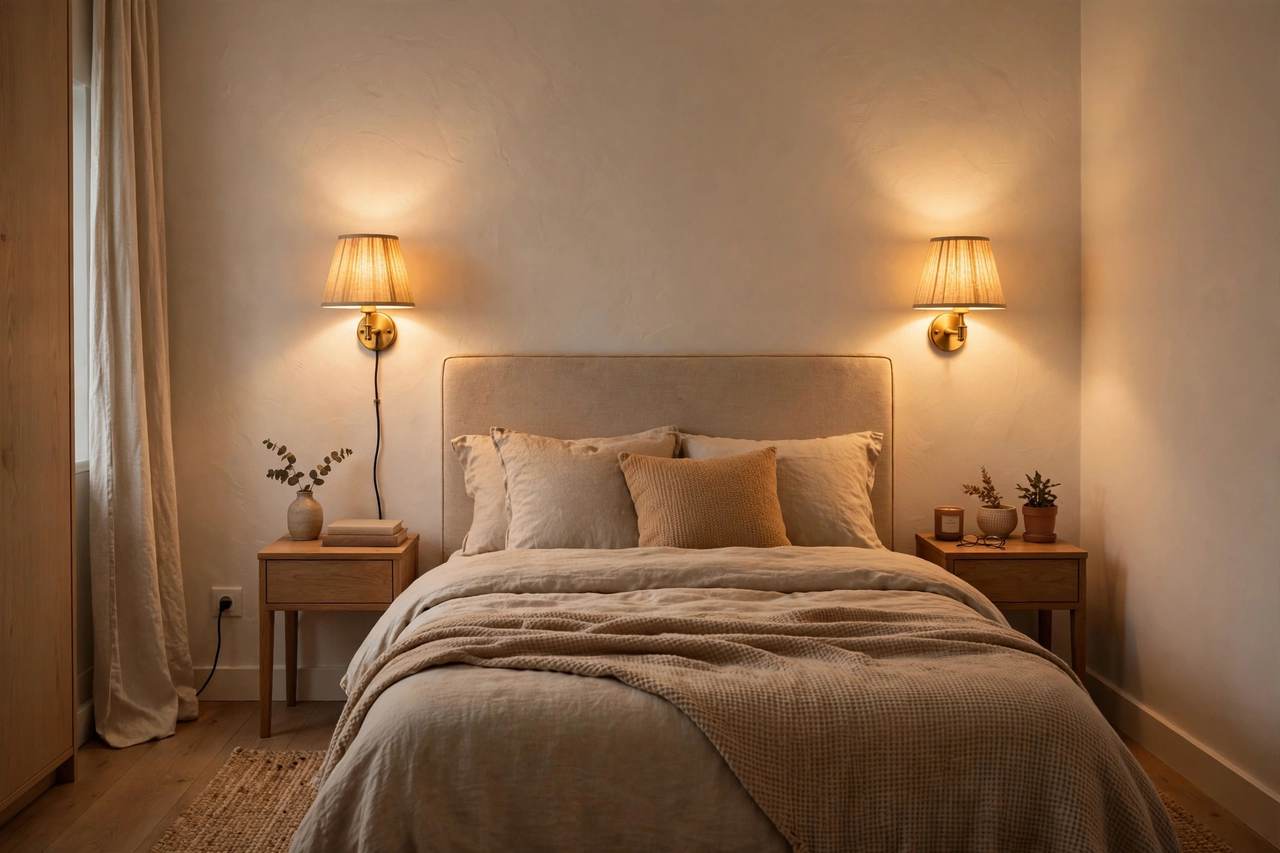
Wall sconces used to mean hardwiring. Plug-in versions hang on a single hook or adhesive mount and run a slim cord down to the nearest outlet — cord covers make it disappear against the wall.
Why it works
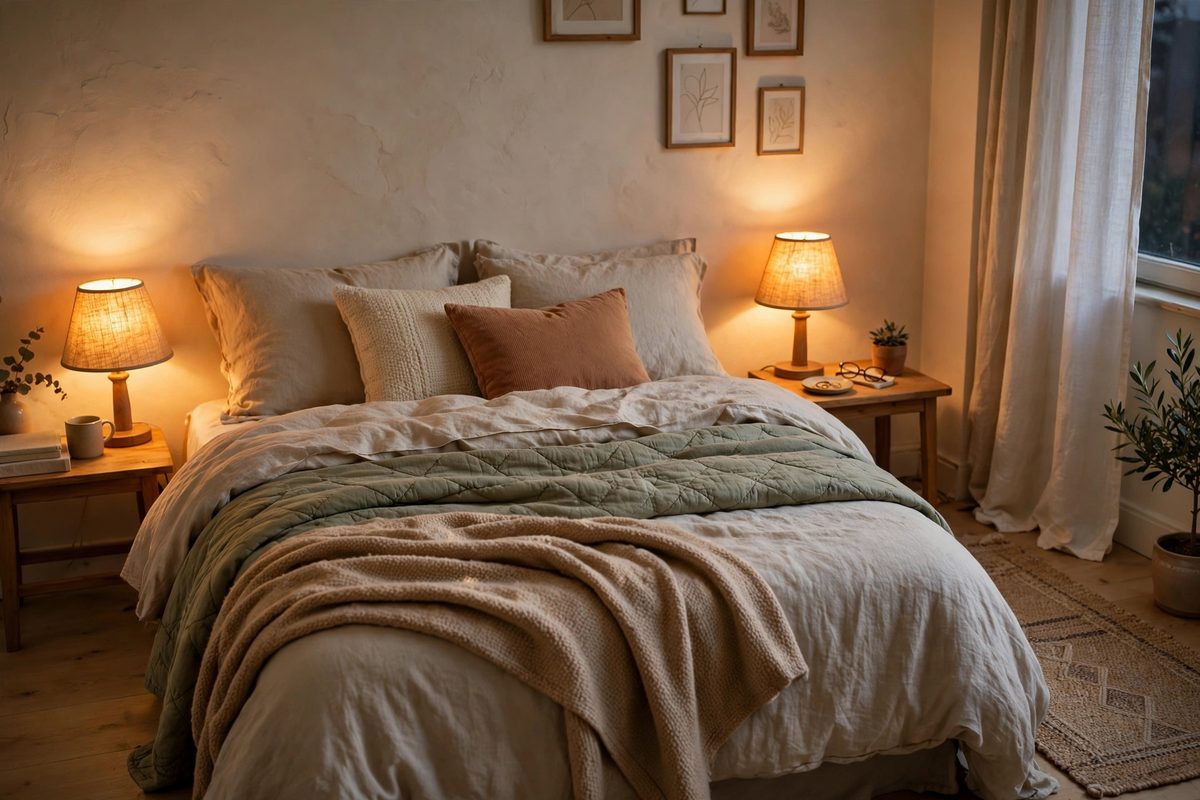
Sconces add light at eye level, the height your brain reads as “lived-in and flattering.” Overhead light casts shadows down your face; eye-level light does the opposite. And because they live on the wall, they add an entire layer of light with zero floor or table footprint — the scarcest resource in a small apartment.
Where to put them
- Flanking the bed as reading lights — this frees both nightstands completely
- Either side of a mirror in the entryway
- Above a small console or desk
Best for
Bedrooms, hallways, and entryways where every inch of surface counts.
3. The Shelf-Top Glow
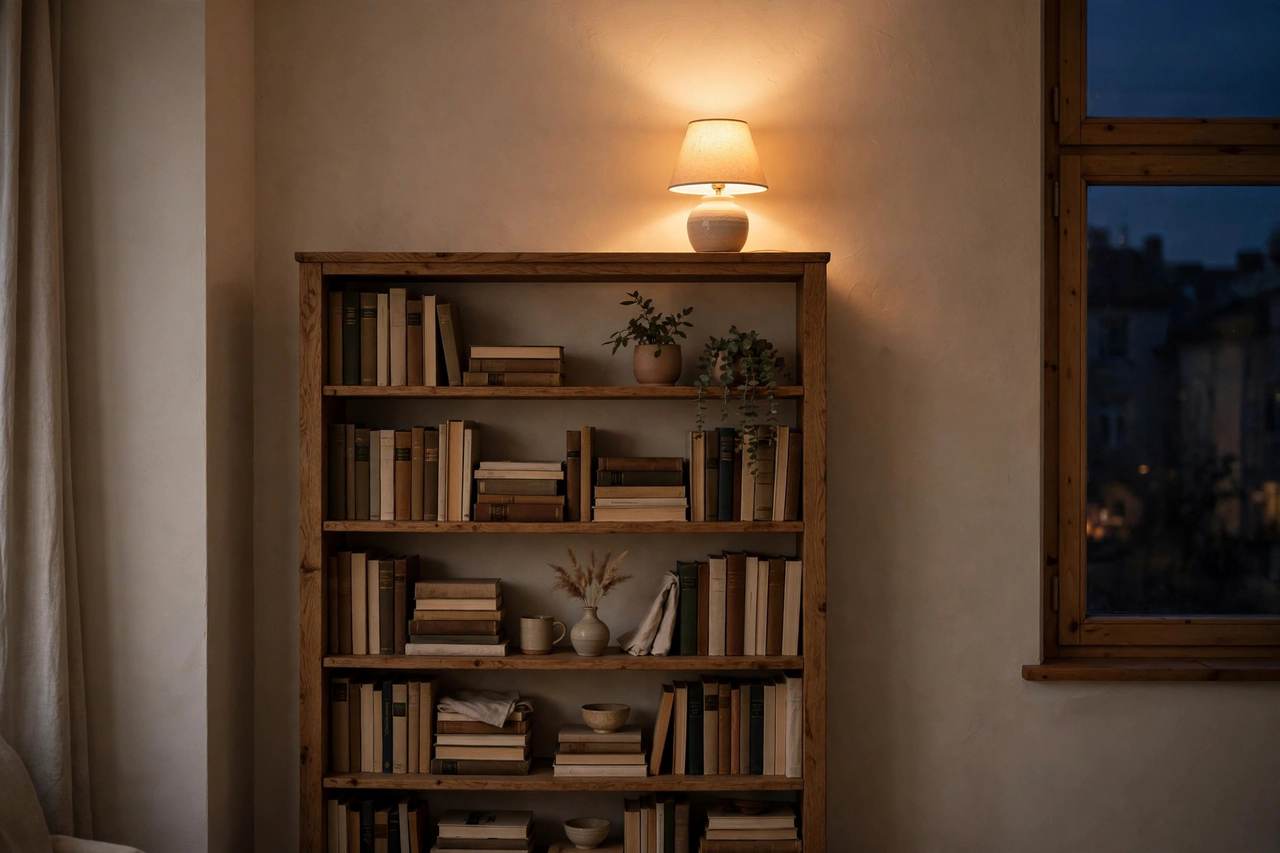
Put a small lamp on top of your tallest bookshelf or wardrobe. It sounds odd until you see it: a warm pool of light blooming across the ceiling draws the eye upward and makes the whole room feel taller.
Why it works
Most apartment lighting lives below shoulder height. One high source breaks that pattern and adds the top layer your room is missing. It also backlights whatever is styled on the shelf, turning storage into a feature.
Keep it simple
- A small lamp with a 6-inch shade is plenty — this is an accent, not a work light
- Battery-operated tap lights work if no outlet is nearby
- Keep the shade a few inches below the ceiling so the glow spreads
Best for
Bedrooms, living rooms with tall shelving, and studios where the ceiling feels oppressively close.
4. TV Bias Lighting
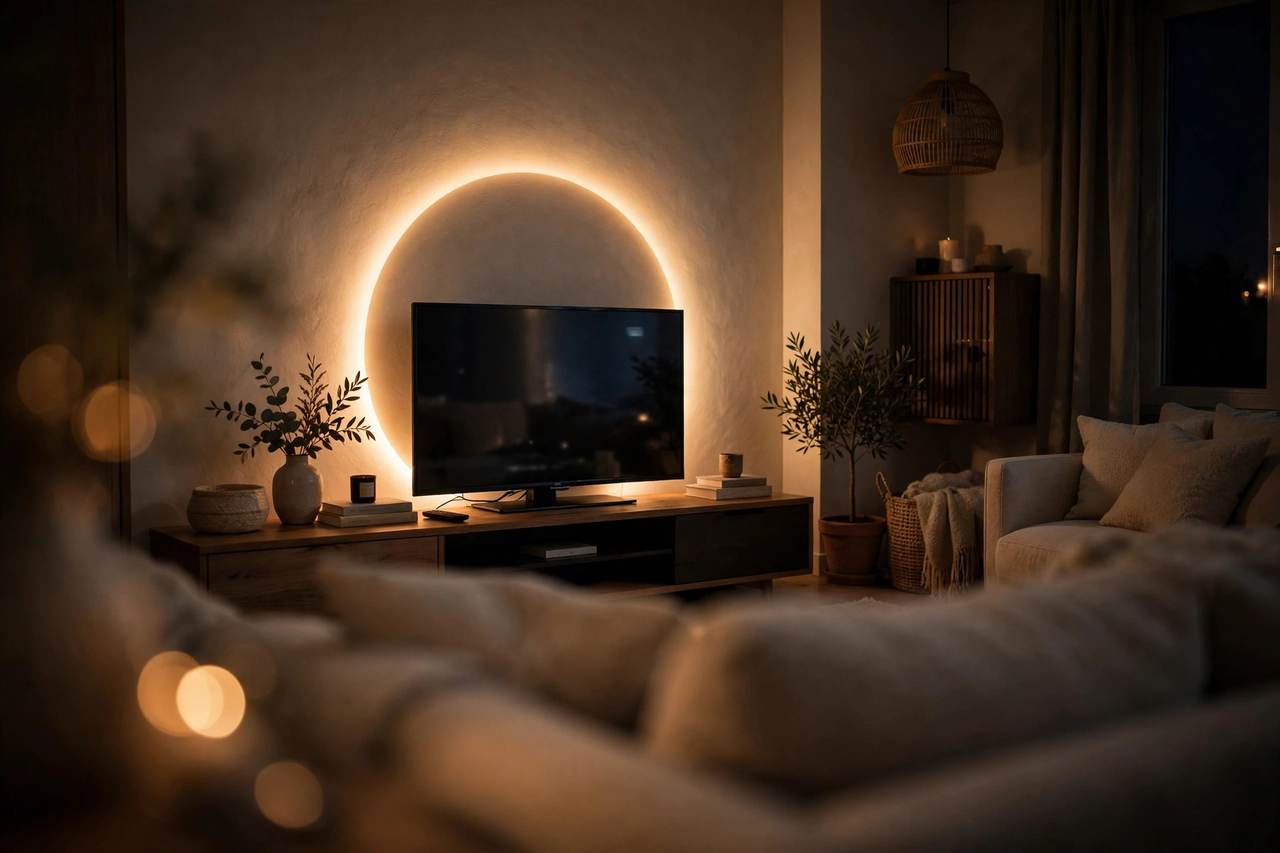
A warm-white LED strip stuck to the back of your TV or monitor casts a soft halo on the wall behind it. It takes five minutes and costs less than a takeaway dinner.
Why it works
Your eyes strain when a bright screen floats in a dark room. The halo raises the ambient light around the screen so the contrast drops — the TV looks better, your eyes hurt less, and the whole media wall gains an evening glow without a single extra lamp.
The one rule
Use warm white (2700–3000K), not the rainbow RGB setting. Colored glow reads as gaming setup; warm glow reads as designed living room. USB-powered strips draw power straight from the TV so they switch on and off with it.
Best for
Living rooms, and WFH desk setups where the monitor dominates the wall.
5. Under-Shelf Puck Lights
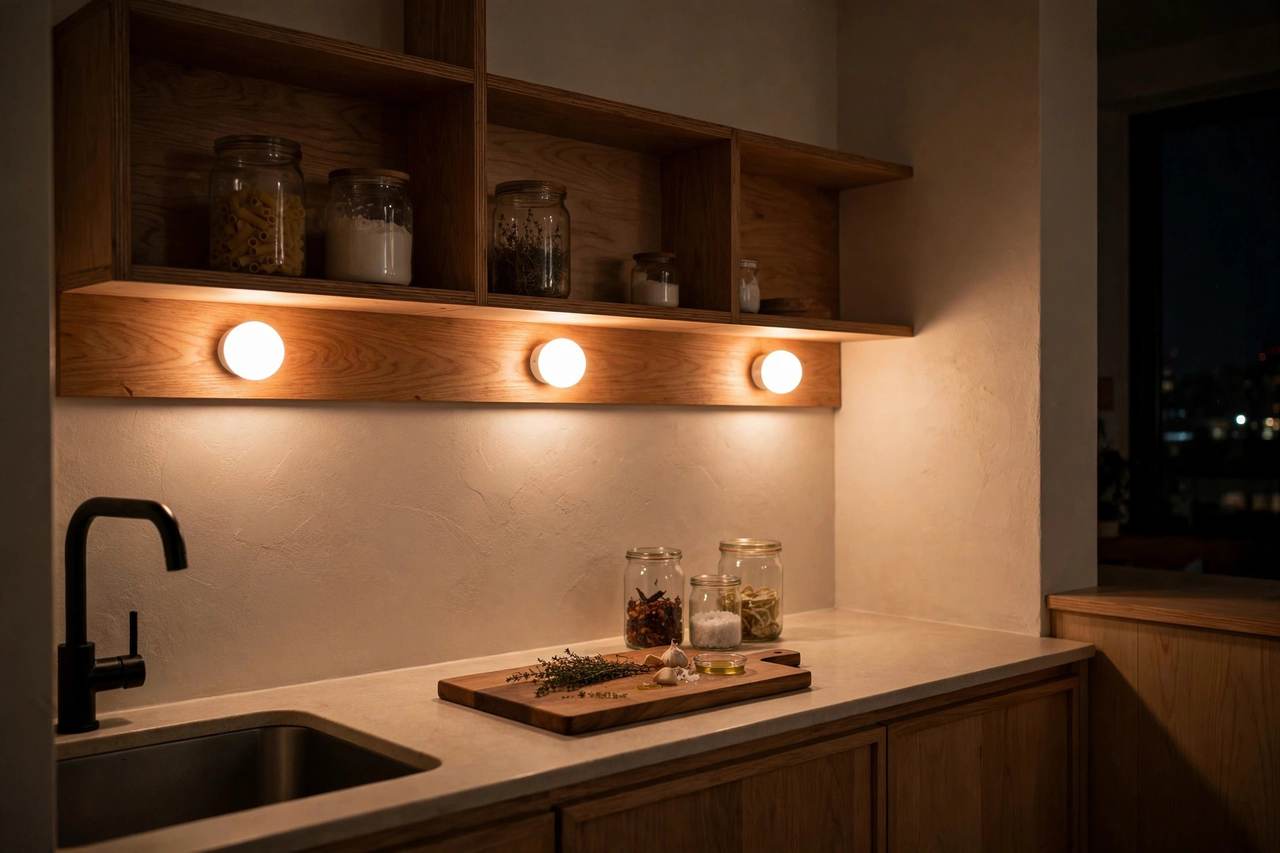
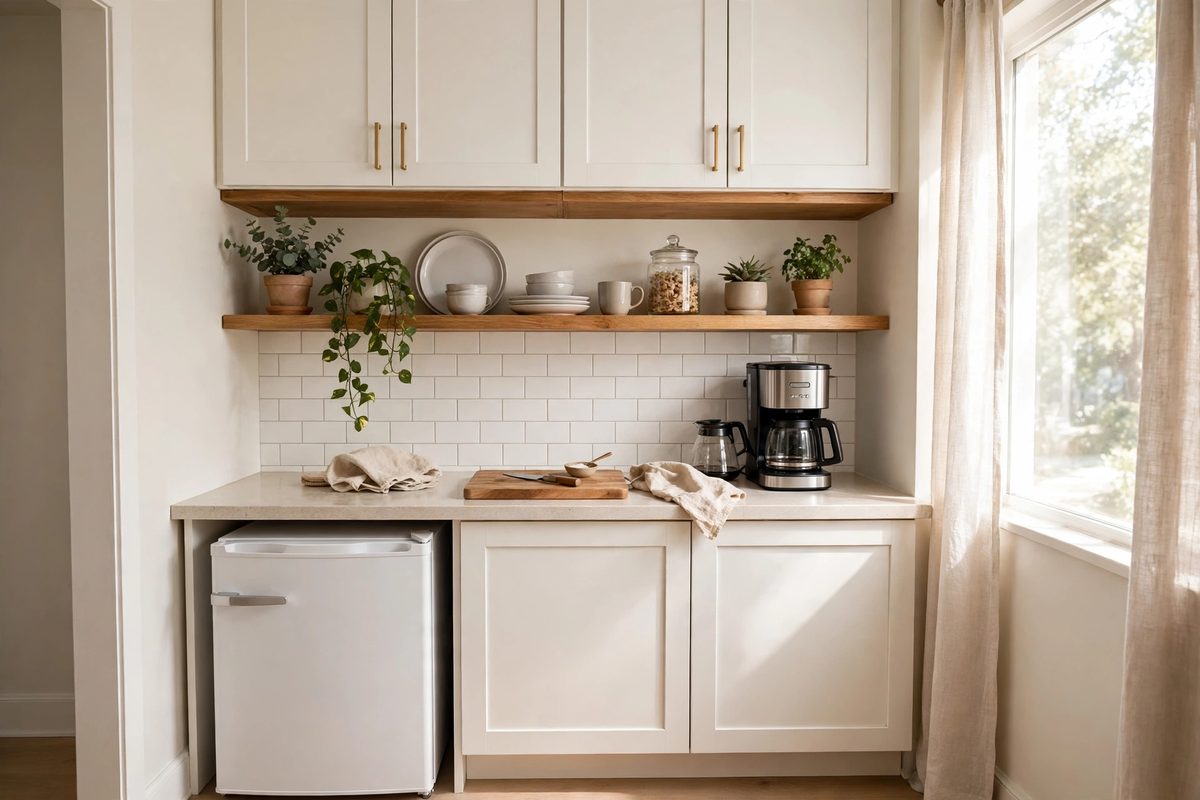
Stick rechargeable puck lights or a slim LED strip under your open kitchen shelves or wall cabinets. Kitchens are work zones, and your own body blocks the ceiling light exactly where you chop, pour, and read labels.
Why it works
Task lighting where the task happens. Counters go from shadowed to brightly usable, and at night the lit shelves make a small kitchen feel deeper and more expensive than it is. It is the highest-impact ten minutes in this entire list.
What to buy
- Rechargeable over battery — you will actually keep using them
- Warm white, always
- Motion-sensor versions for inside cabinets and closets
Best for
Galley kitchens, open-shelf kitchens, closets, and laundry corners.
6. The Plug-In Swag Pendant
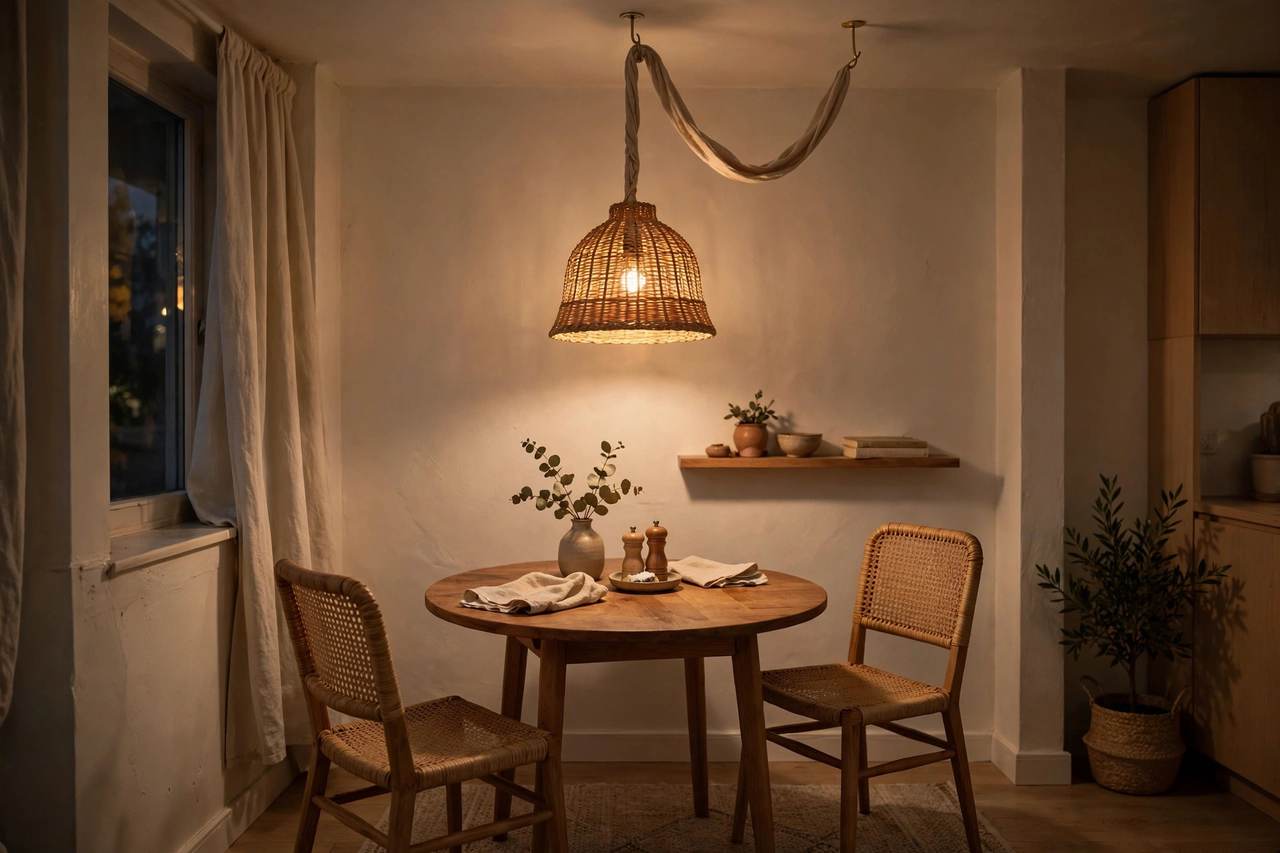
A pendant on a long cord, hung from a ceiling hook and swagged sideways to wherever you want it, brings light down to human height. Hang it 30 to 36 inches above your dining table and watch the nook transform.
Why it works
Ceiling fixtures light the ceiling. A pendant at dining height lights faces, food, and the table surface — it creates a pool of intimacy that makes a two-person nook feel like a restaurant corner instead of a spare table under a harsh bulb. Of all 11 ideas, this one changes a room’s feel the most per dollar.
Renter notes
- One small ceiling hook is usually spackle-fixable; adhesive ceiling hooks hold lightweight pendants
- Run the cord along the ceiling to the nearest wall and down to the outlet, secured with cord clips
- A woven or rattan shade hides the bulb and softens the light
Best for
Dining nooks, breakfast corners, and over a kitchen cart styled as an island.
7. The Reading Nook Task Lamp
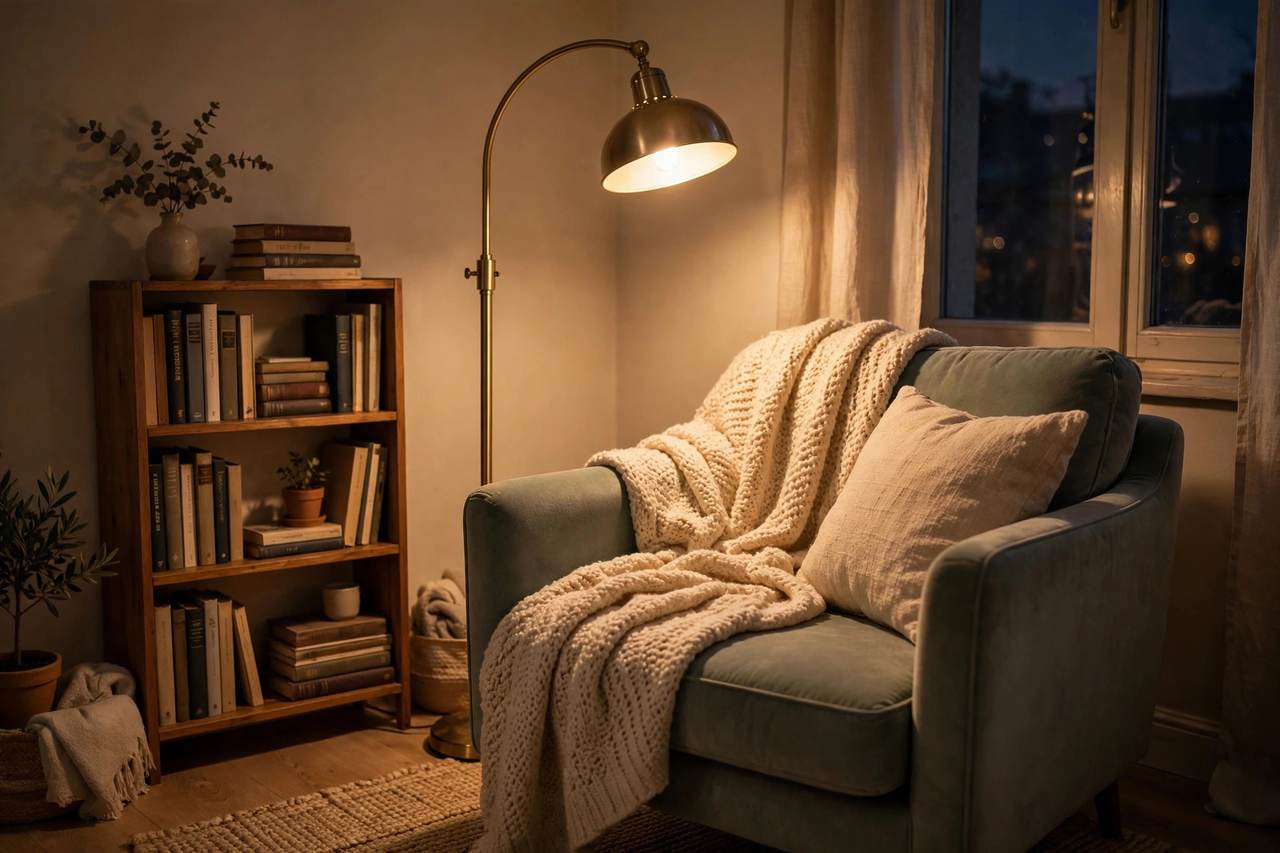
Give your reading chair its own dedicated lamp — a slim pharmacy-style floor lamp or a clip lamp on the nearby shelf — instead of borrowing the room’s overhead light.
Why it works
A dedicated task layer means the overhead can stay off entirely in the evening. The chair becomes a “zone” with its own pool of light, which is how studios start feeling like they have rooms. It also ends the nightly argument of one person wanting bright light and the other wanting mood.
What to look for
- An adjustable arm or head so light lands on the book, not the ceiling
- A warm bulb, and ideally a dimmer (see idea 10)
- A base slim enough to slide beside the chair, not in the walkway
Best for
Living room corners, studio apartments, and bedrooms where one partner reads later than the other.
8. String Lights, Done Right
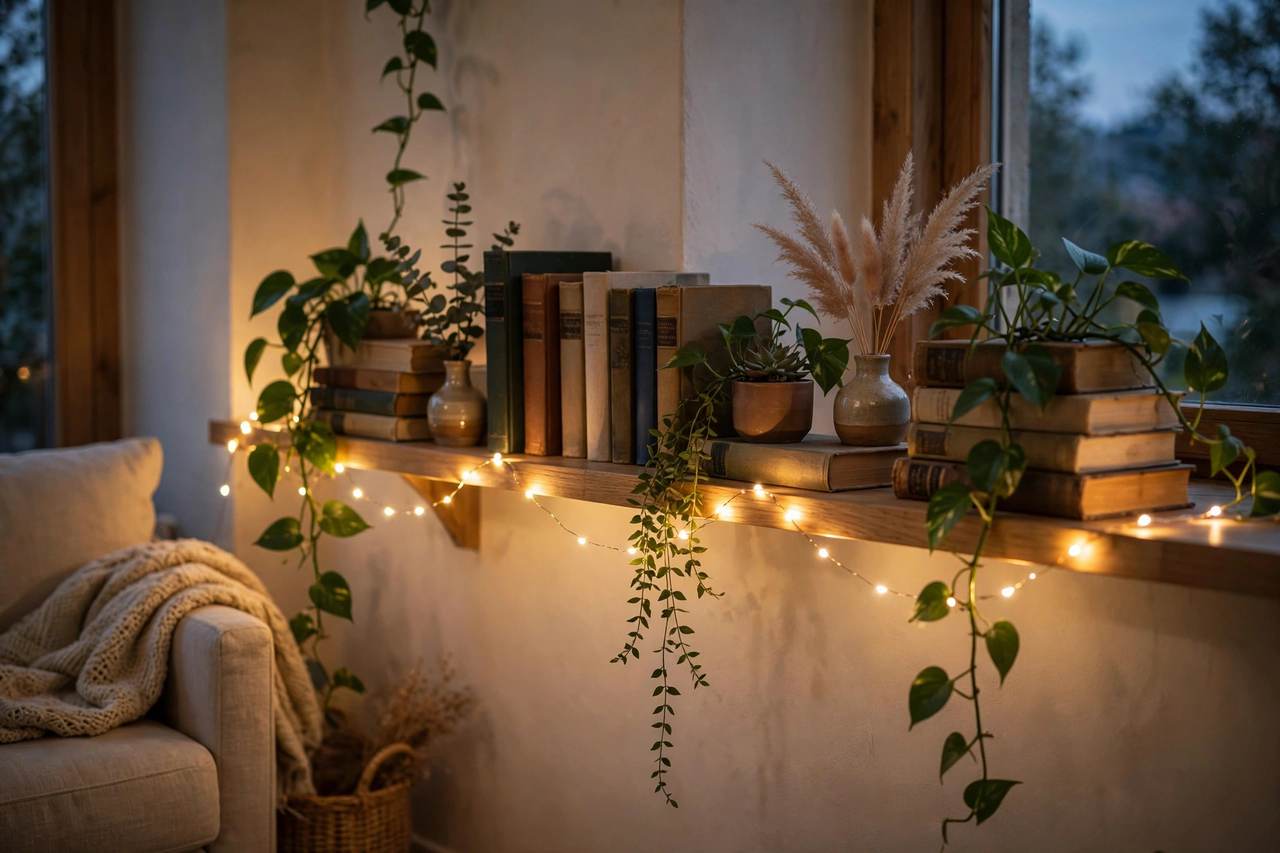
Fairy lights get dismissed as dorm decor, but one strand of warm-white lights placed with intention is a legitimate accent layer. The key word is one: one strand, one location.
Why it works
Dozens of tiny warm points at shelf or window height add sparkle and depth that a single bulb cannot. They fill the visual middle ground between table lamps and the ceiling, and at dusk they make a room feel alive before you turn on a single “real” light.
The rules that keep it adult
- Warm white only — never multicolor
- One location: along a shelf, a window frame, or a headboard
- Plug into a timer so they come on at dusk by themselves
- Copper-wire strands disappear in daylight; thick cables do not
Best for
Shelves, window frames, headboards, and balconies in summer.
9. Flameless Candle Clusters
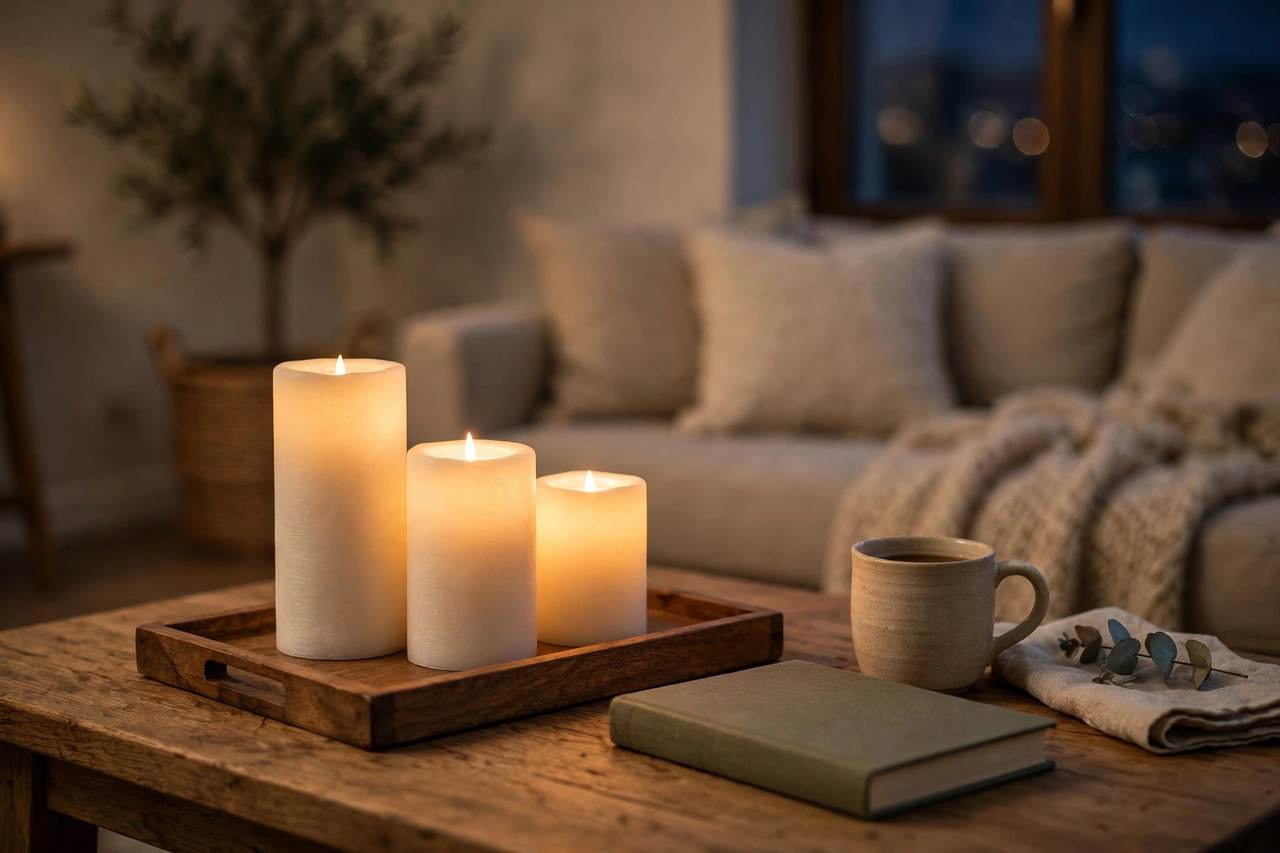
Group flameless LED candles — odd numbers, varied heights — on the coffee table, a shelf, or the dining table. Modern ones flicker convincingly and run on timers.
Why it works
This is the lowest light layer, and it signals “evening” to your brain more powerfully than any lamp. Real candles are a non-starter for many renters (lease clauses, pets, small spaces); LED versions give the flicker with zero fire risk and zero soot on white walls.
Styling tips
- Odd numbers in varied heights look collected; matched sets look like a hotel lobby
- A wooden tray corrals the cluster and makes it movable in one lift
- Timer function means they greet you at dusk without a thought
Best for
Coffee tables, bathroom shelves, and dining tables that need evening mood without a centerpiece.
10. Dimmers and the 2700K Rule
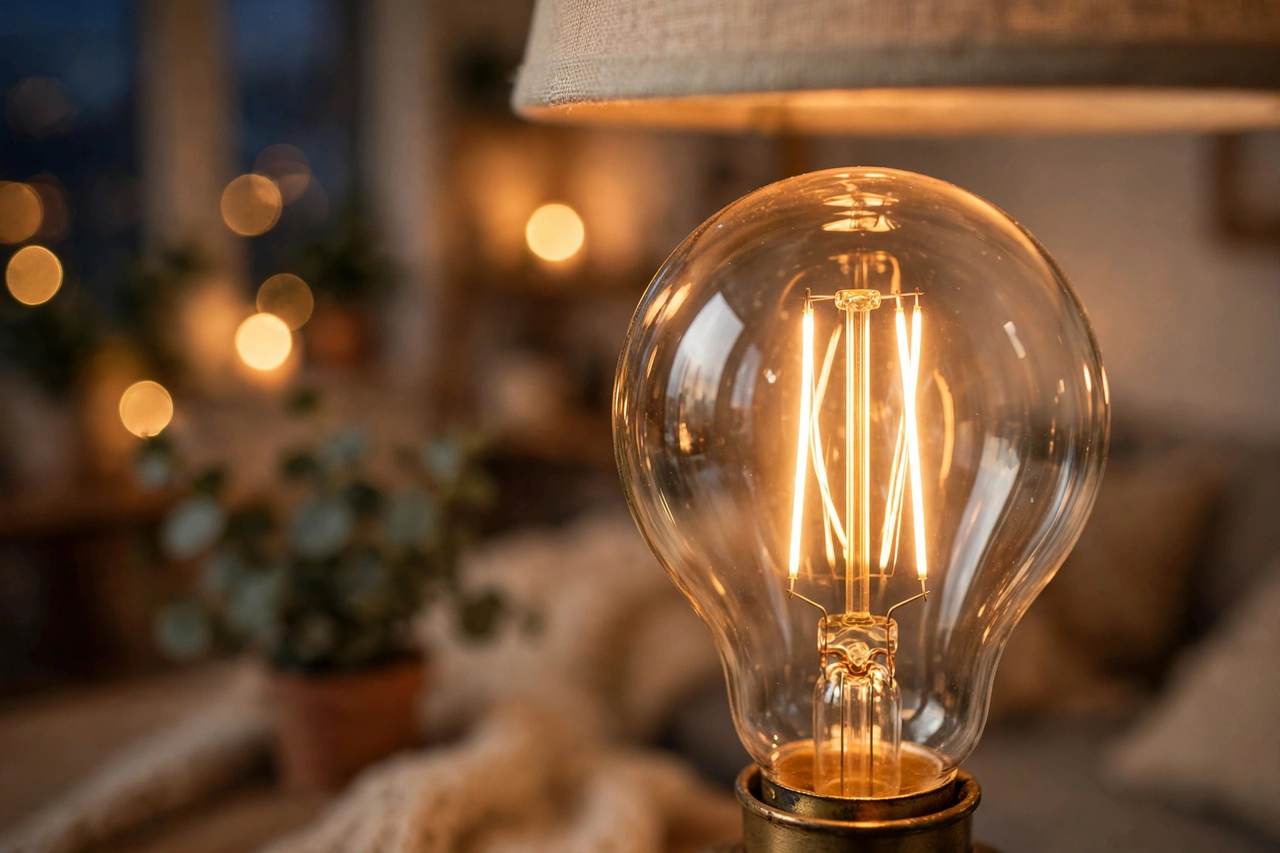
Before buying a single fixture, do the cheapest upgrade in lighting: swap every visible bulb to warm white 2700K, and put your main lamps on plug-in dimmers or smart bulbs.
Why it works
Color temperature changes a room’s mood more than any fixture shape. Mixed temperatures — a daylight bulb in the kitchen, warm in the living room — make an apartment feel disjointed even when the decor matches. One consistent warm temperature ties every room together, and dimming lets one lamp serve as both task light and evening mood.
How to do it
- Plug-in dimmers (about the size of a matchbox) sit between lamp and outlet — no wiring
- Smart bulbs add schedules: bright cool-ish white for WFH mornings is fine; the rule applies to visible evening light
- Keep all bulbs visible in one sightline the same temperature
Best for
Every room. Do this first, then add fixtures.
11. Mirrors That Multiply Light
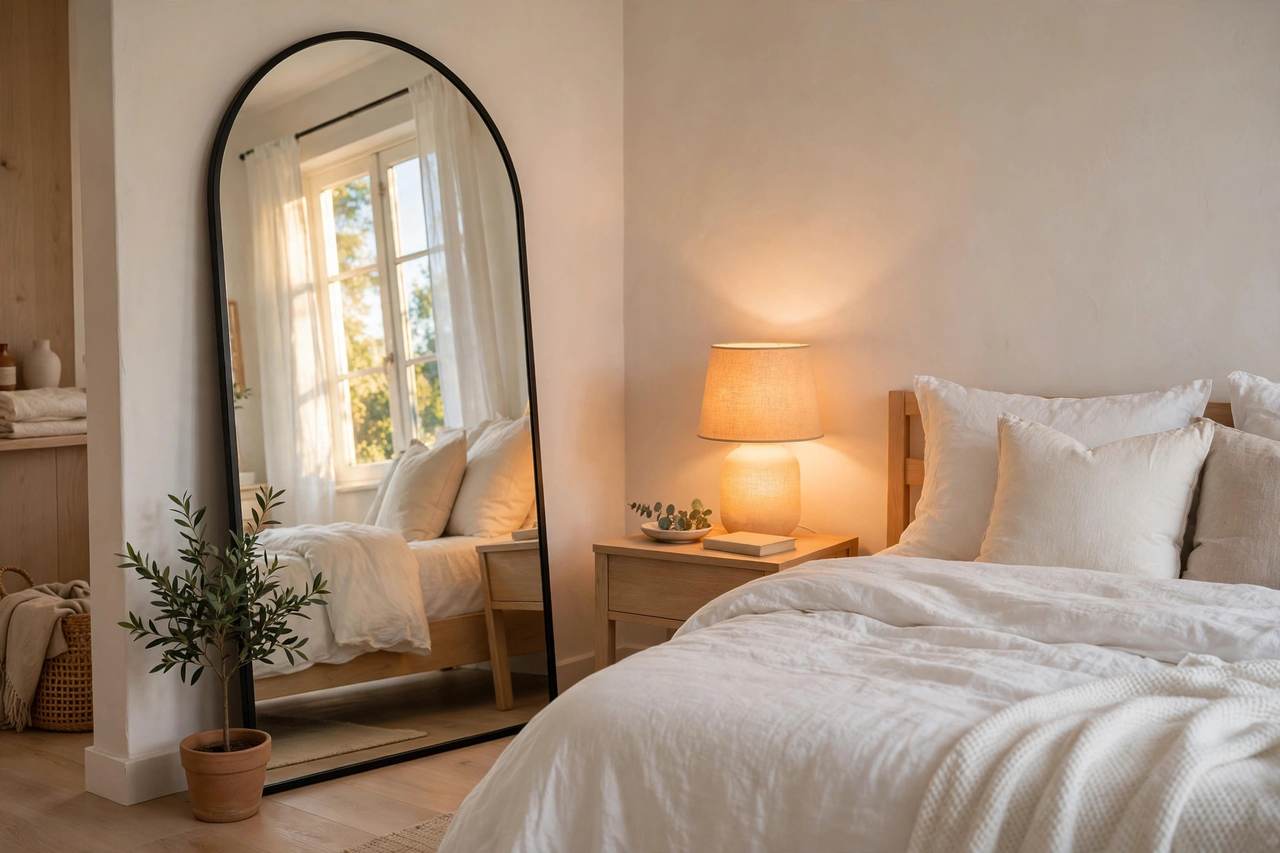
A large mirror placed opposite a window doubles your daylight; placed near a lamp, it doubles your evening layers. It is the only idea on this list that multiplies every other idea for free.
Why it works
Small rooms run out of surfaces for lamps. A mirror does not add a light source — it adds the effect of one, bouncing existing light into dark corners and creating the illusion of a second window. Interior designers call it the cheapest square footage you can buy.
Placement rules
- Opposite or adjacent to a window for daylight doubling — never facing clutter
- Near (not behind) a lamp in the evening to double the glow
- A full-length leaning mirror needs zero mounting hardware
Best for
Entryways, small bedrooms, narrow hallways, and any room with one sad window.
The 3-Layer Formula for Any Small Room
You do not need all 11 ideas in one room. You need three layers:
- Ambient — one general glow: a corner floor wash (idea 1) or a swag pendant (idea 6)
- Task — light where you do things: a reading lamp (idea 7), under-shelf lights (idea 5)
- Accent — the mood layer: candles (idea 9), string lights (idea 8), or a shelf-top glow (idea 3)
Walk into your most-used room tonight and count the layers. If the answer is one — the ceiling fixture — you now know exactly what to add first.
Where to Start
Start with the room you spend your evenings in, and start cheap:
- Under $30: idea 10 — swap every bulb to 2700K and add one plug-in dimmer. The whole apartment calms down overnight.
- Under $100: add idea 1 — a torchiere or arc floor lamp in the darkest corner. Two layers done.
- The big move: idea 6 — a plug-in pendant over the dining table. Nothing else changes a small apartment’s evening feel this much.
Layer by layer, the same square footage starts feeling like more of it. That is the whole trick — and no landlord approval required.
Frequently Asked Questions
How many light sources does a small living room need?
Three to five, at at least two different heights. One overhead plus a floor lamp, a table or shelf lamp, and one accent (candles or string lights) covers the three layers without cluttering a compact room.
Can renters do layered lighting without drilling?
Yes — nearly everything here is plug-in, freestanding, or stick-on: floor lamps, plug-in sconces on adhesive mounts, LED strips, puck lights, and swag pendants on a single removable hook. Avoid anything hardwired.
What color temperature is best for small apartments?
2700K warm white for all visible evening lighting. It flatters skin tones, makes small rooms feel cozy rather than clinical, and keeps every room visually consistent. Reserve cooler daylight bulbs for inside closets or task-only spots.
Do I need smart bulbs for layered lighting?
No. Smart bulbs are convenient for schedules and dimming, but plug-in dimmers and timer plugs achieve 90 percent of the effect for less money. Start with bulbs and dimmers; add smart features only where you will use them daily.