10 Small Bedroom Vanity Ideas That Fit Into Awkward Spaces
Ten small bedroom vanity ideas that squeeze into closets, corners, alcoves, and narrow walls without crowding the bedroom.
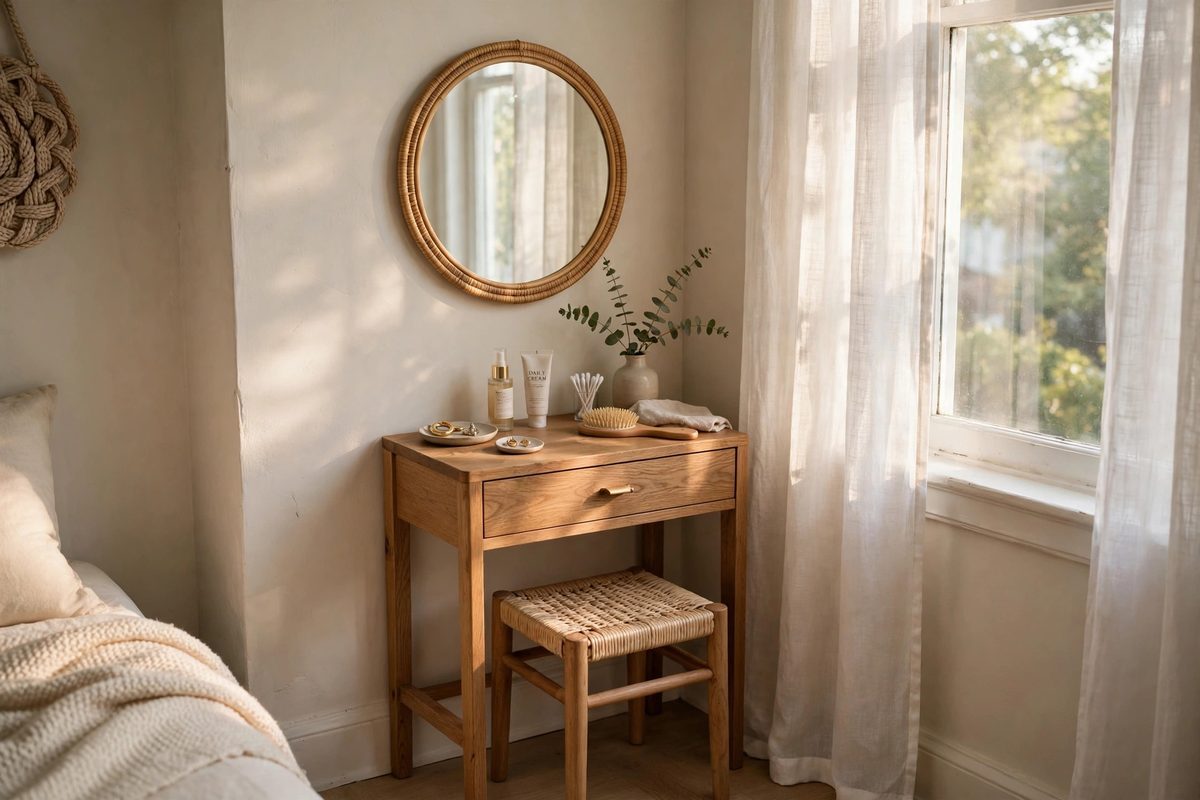
Small bedroom corner vanity with a round mirror, a stool tucked underneath, and soft morning light
In This Guide
A vanity is often the first thing cut from a small bedroom plan, because a standard vanity table needs about a meter of wall and room for a chair. But a vanity does not have to be a full table. It can be a shelf, a fold-down panel, a closet nook, or a corner unit, and the awkward spaces in a bedroom, the closet you never use well, the corner by the window, the alcove beside the wardrobe, are often perfect for it.
The key measurements are small: you need about 60 cm of width for a comfortable vanity, 40 cm of depth for a mirror and a few products, and a seat that can tuck away when not in use. If you have those three things anywhere in the bedroom, you have room for a vanity.
Lighting matters as much as size. A vanity in a dark corner is useless no matter how pretty the table is. Plan for light at face level, either from a window beside the vanity or from a mirror with built-in lights. These 10 ideas cover the awkward spaces that actually work. For the rest of the home, see small kitchen flooring ideas and small entryway mirror ideas.
1. Wall-Mounted Fold-Down Vanity
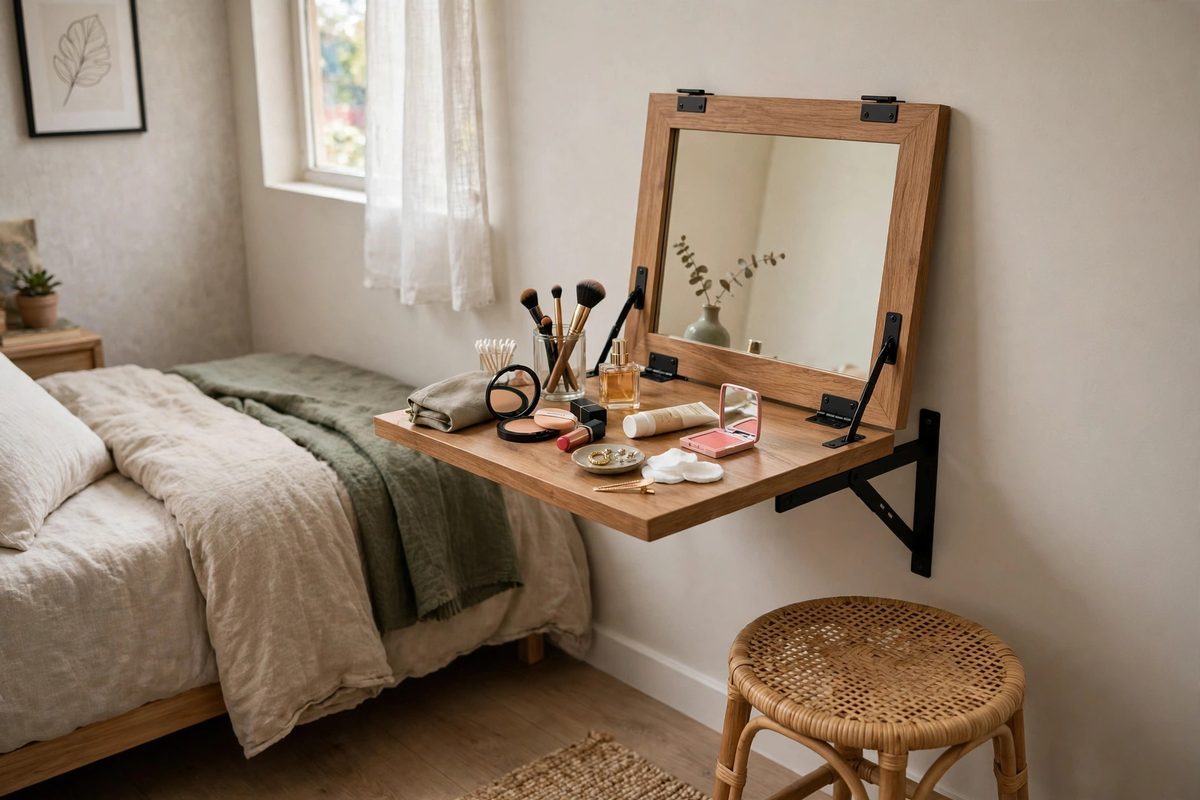
A wall-mounted fold-down vanity is a shallow cabinet that folds down into a table when you need it and folds flat against the wall when you do not. When closed, it looks like a small wall cabinet or a mirror. When open, it gives you a 60 to 70 cm wide surface at sitting height.
This is the best option for bedrooms with truly no spare floor space, since the vanity uses zero floor when folded. Fold-down vanities cost 80 to 250 dollars, and most include a mirror on the inside of the door, which means the mirror appears automatically when you open it. Mount into studs, since the unit holds your weight when you lean on it.
How to make it work
Mount the vanity at a height where the open surface sits around 75 cm from the floor, standard desk height. Pair it with a small stool that slides under the bed or into a closet when folded away. Keep products in a small tray inside the unit, so opening the vanity reveals an organized station rather than a jumble.
2. Vanity in a Closet Nook
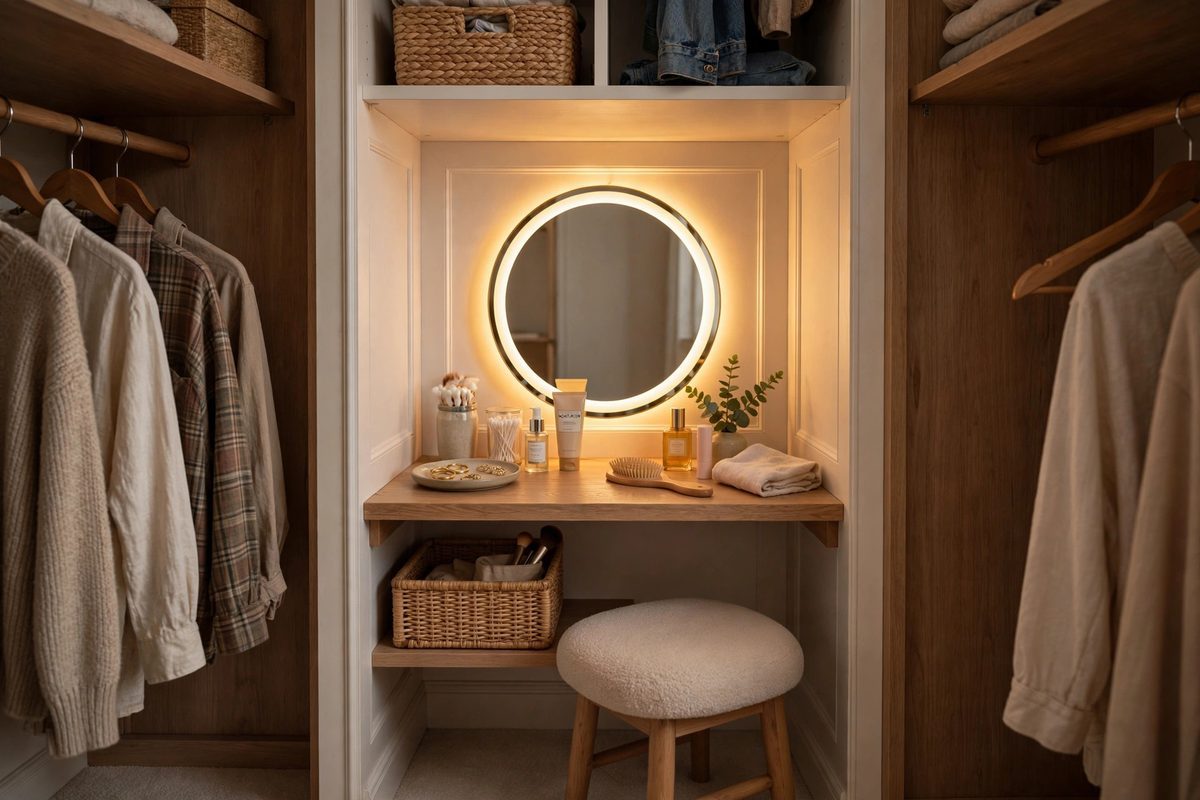
A closet nook, especially a closet you do not use well, converts into a vanity with a shelf, a mirror, and a stool. Remove the closet door or replace it with a curtain, add a shelf at desk height, and you have a private vanity zone that disappears when the curtain closes.
The nook should be at least 70 cm wide to fit a person sitting comfortably, and at least 50 cm deep so your knees fit under the shelf. Add a small LED strip or a mirror with lights, since closets are dark. The conversion costs 50 to 150 dollars if you already own the closet, mostly for the shelf, mirror, and lighting.
How to make it work
Keep the closet rod above the vanity for hanging tomorrow’s outfit, which turns the nook into a full getting-ready station. Use the closet shelves for product storage, with small baskets to keep things tidy. If the closet has a door, remove it rather than leaving it open, since an open door in a small bedroom blocks movement.
3. Corner Vanity Table
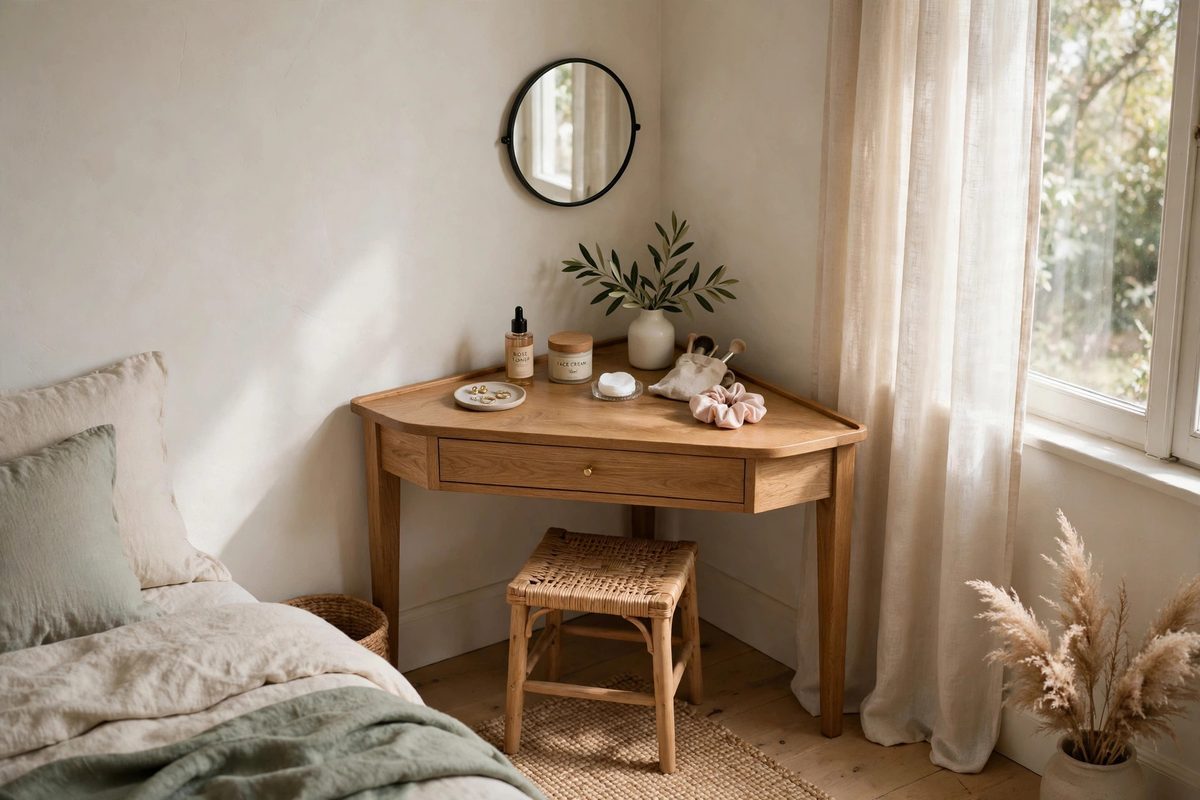
Corners are awkward for most furniture but ideal for a vanity, because a corner table uses two walls for support and leaves the rest of the room free. A triangular or L-shaped corner vanity fits into a 70 by 70 cm corner and gives you a surprisingly generous surface.
Corner vanities cost 100 to 300 dollars, and they come in styles from simple triangular tables to full corner units with drawers and shelves. The mirror is the tricky part: a corner mirror needs to sit at an angle that reflects your face, not the wall, so test the placement before fixing anything.
How to make it work
Place the mirror on one wall of the corner, angled slightly toward where you sit, rather than in the corner itself. Choose a stool that tucks fully under the table, since a corner stool sticking out defeats the space saving. Add a small wall shelf above the vanity for products, keeping the table surface clear for actual use.
4. Floating Shelf Plus Mirror
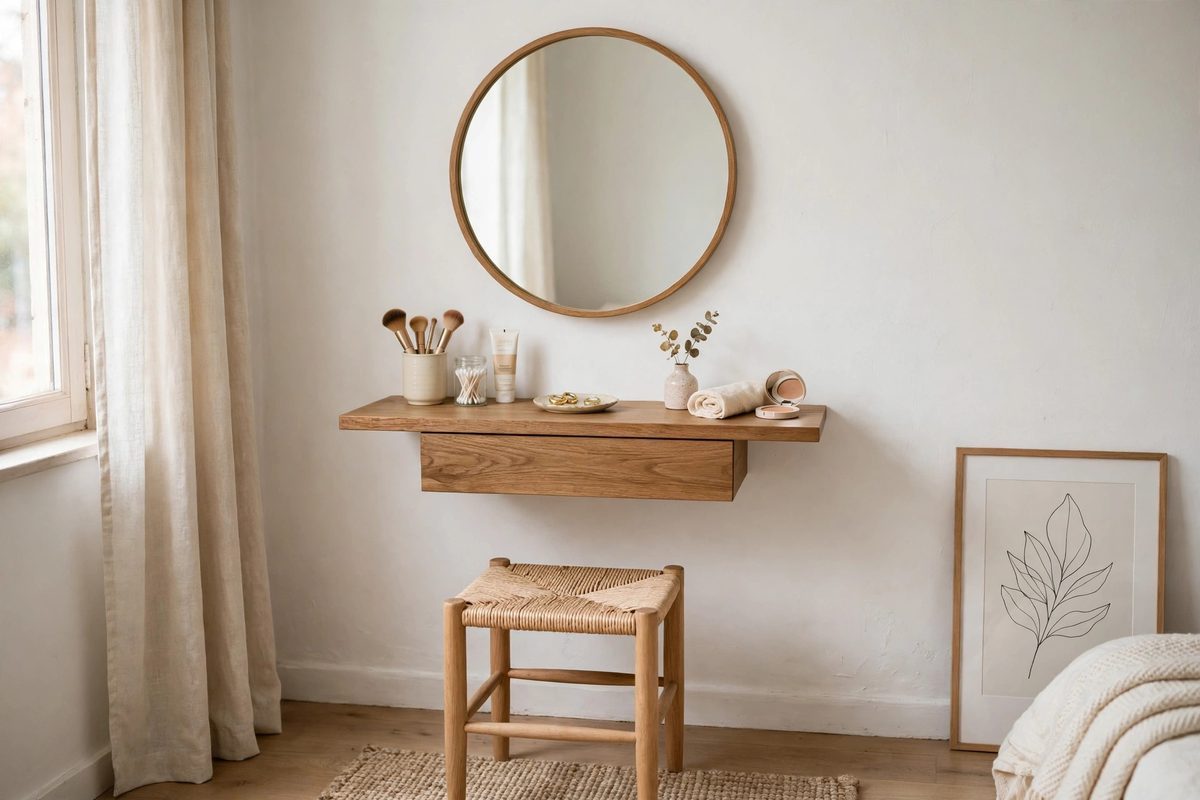
A floating shelf plus a mirror is the simplest vanity of all: one shelf at desk height, one mirror above it, and a stool below. No legs, no drawers, no bulk. The shelf needs to be only 25 to 30 cm deep, which fits on almost any wall, including narrow walls beside a wardrobe or a door.
This idea costs 40 to 100 dollars for a sturdy shelf, a mirror, and a stool, and it installs in under an hour. The tradeoff is storage: with no drawers, products live on the shelf or in a small basket nearby. It suits minimal routines better than large makeup collections.
How to make it work
Mount the shelf into studs, since it will hold leaning weight. Hang the mirror so its center is at your seated eye level, around 120 to 130 cm from the floor. Use a stool that slides fully under the shelf, and keep a small tray on the shelf for daily products so the surface never looks cluttered.
5. Vanity Inside a Wardrobe
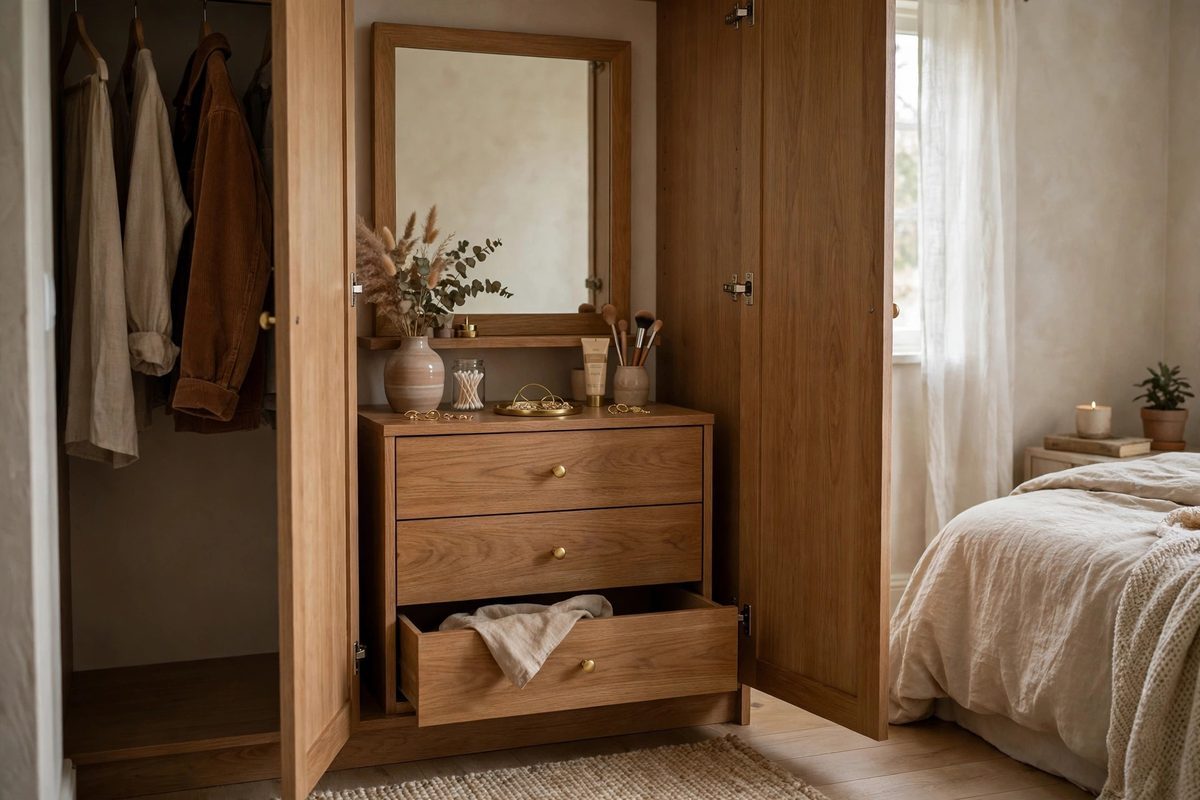
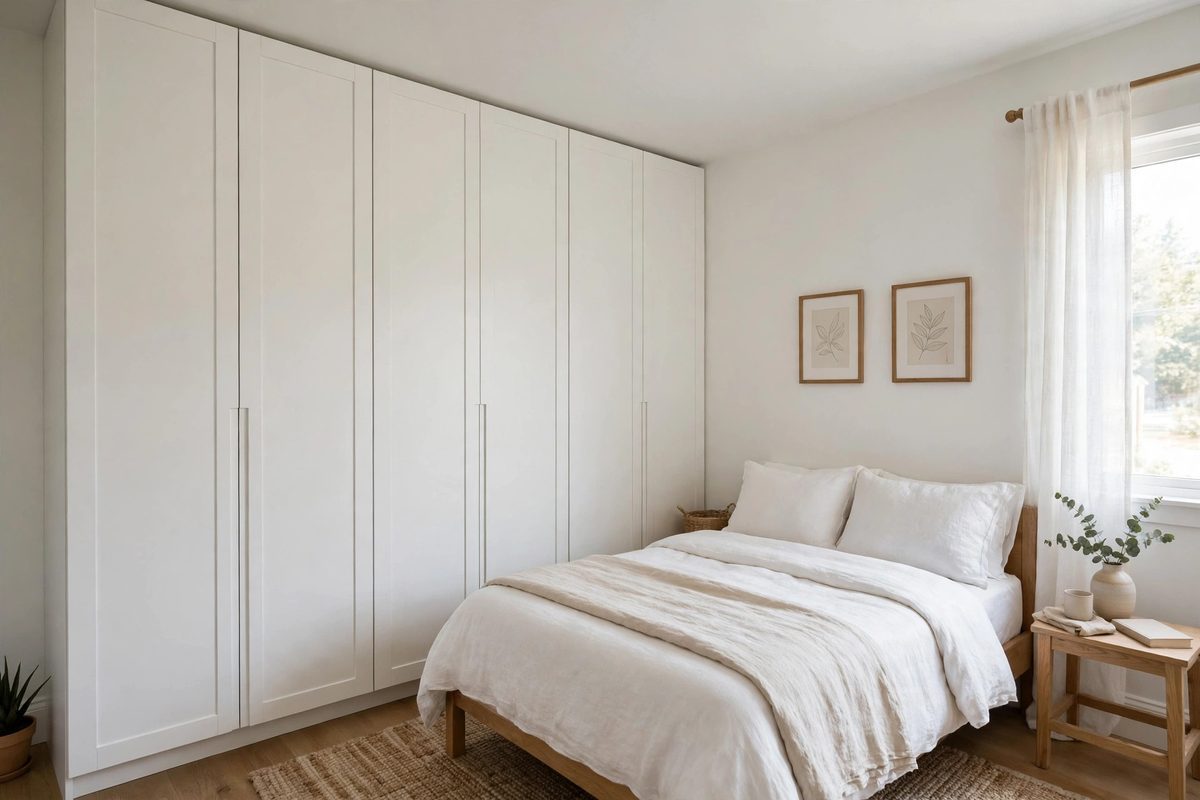
If your wardrobe has a section you do not use well, like a deep corner or a tall unit with wasted space, a vanity inside the wardrobe gives you a getting-ready station that closes away behind doors. A shelf at desk height, a mirror on the wardrobe door or wall, and a stool that lives inside complete the setup.
This idea works best in wardrobes at least 120 cm wide, so the vanity section does not steal all your clothes storage. Add a light inside the wardrobe section, since wardrobes are dark even in bright rooms. The cost is mostly the shelf and mirror, 50 to 120 dollars, if the wardrobe already exists.
How to make it work
Keep the vanity section near the wardrobe edge, not buried in the middle, so you can sit at it without moving clothes aside. Use the wardrobe drawers below the vanity shelf for product storage. If the wardrobe doors swing, make sure the stool can sit inside with the doors closed, or store the stool elsewhere.
6. Narrow Desk as a Vanity
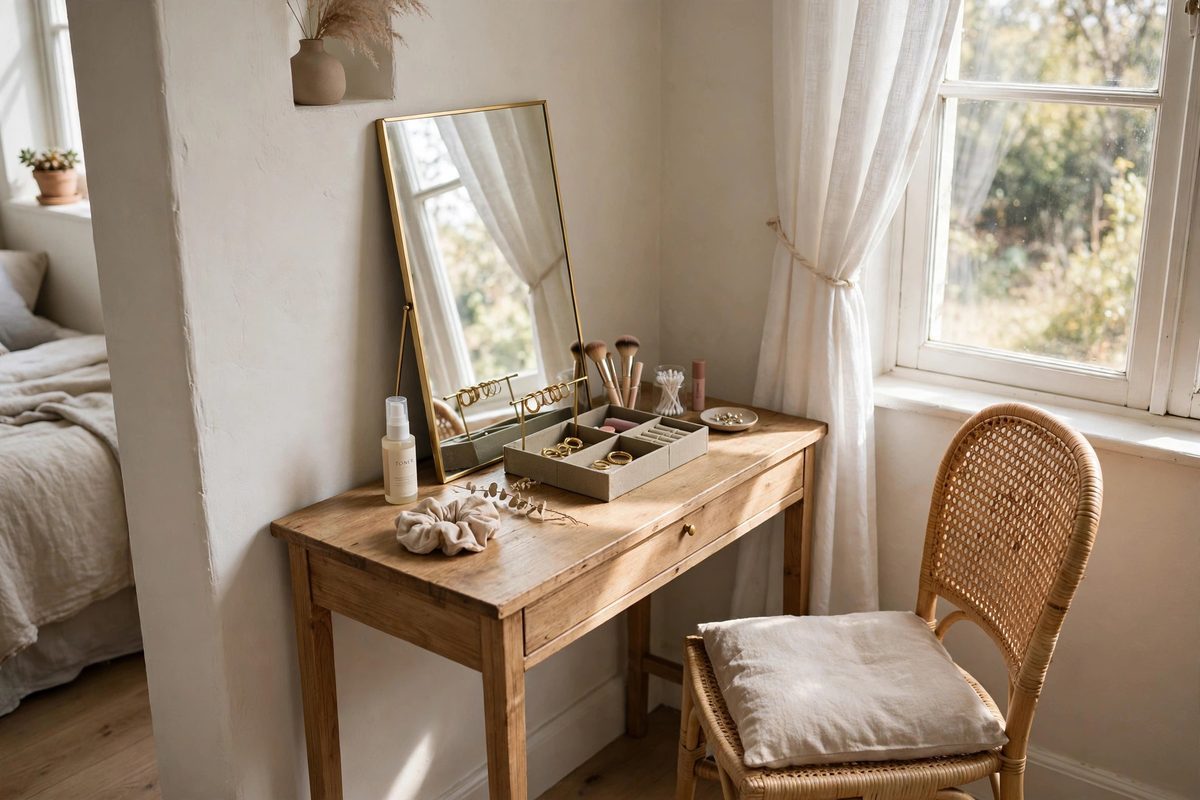
A narrow desk, 80 to 100 cm wide and 40 to 50 cm deep, doubles as a vanity with the addition of a mirror and a small organizer. This is the best option if you also need a writing desk or a laptop station, since one piece of furniture does both jobs and you only give up one stretch of wall.
Choose a desk with at least one drawer for products, and a chair that works for both writing and getting ready. A mirror that leans on the desk, rather than hanging on the wall, lets you move the vanity setup if the desk moves. A narrow desk costs 80 to 250 dollars, and a leaning mirror adds 30 to 80 dollars.
How to make it work
Place the desk near a window for natural light, which is the best vanity light there is. Keep a small tray for makeup on one side of the desk and leave the other side clear for writing, so the desk never feels like it belongs to only one job. If the desk faces a wall, hang the mirror at seated eye level and add a small lamp on the opposite side to balance the light.
7. Vanity Beside the Window
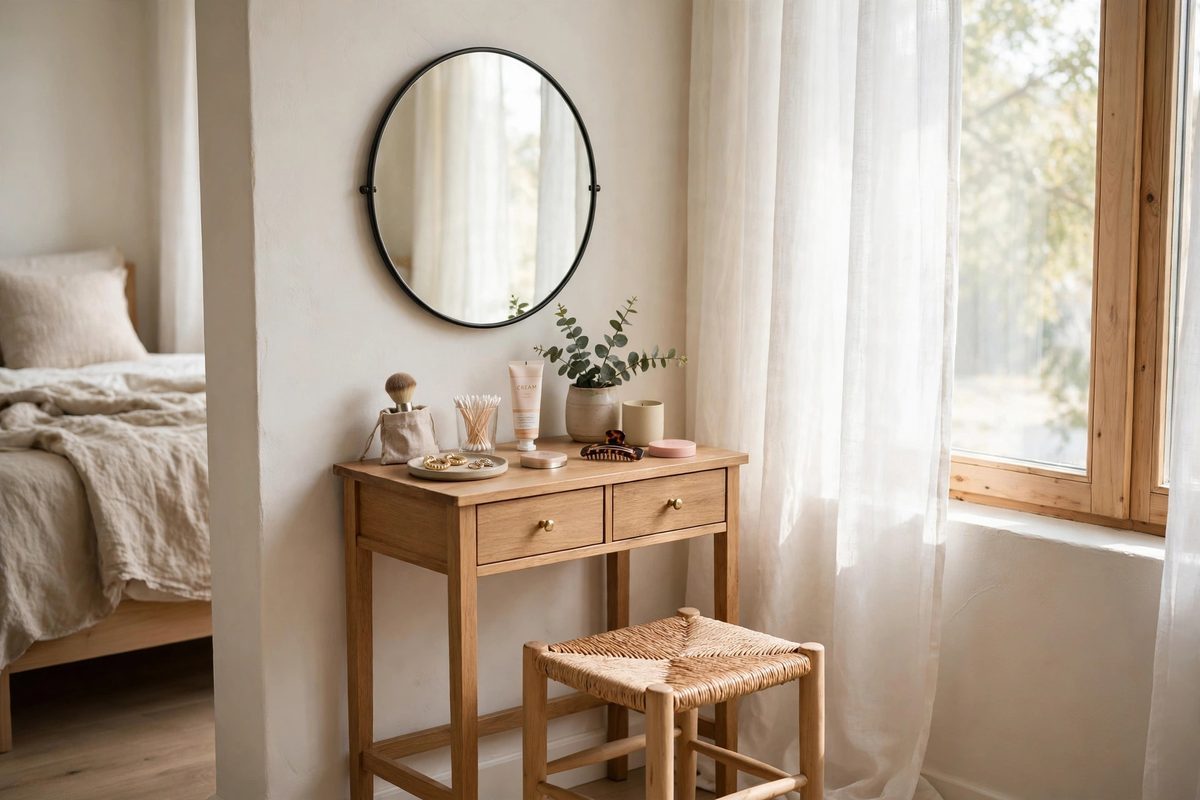
A vanity beside the window gets the best light in the bedroom for free, since daylight is more flattering and more accurate for makeup than any artificial light. The narrow wall strip beside a window, often 60 to 90 cm wide, is usually wasted, but it fits a small vanity table perfectly.
The challenge is glare. Direct sun through the window can be too harsh, so a sheer curtain or a position slightly to the side of the window, rather than directly in front of it, works better. A small table and stool in this spot cost 100 to 250 dollars, and the light costs nothing.
How to make it work
Sit sideways to the window, not facing it, so the light falls across your face evenly rather than glaring into your eyes. Add a small mirror with lights for evenings and cloudy days, since window light disappears after sunset. Keep the windowsill clear, since it becomes bonus storage for a perfume bottle or a small plant.
8. Rolling Vanity Cart
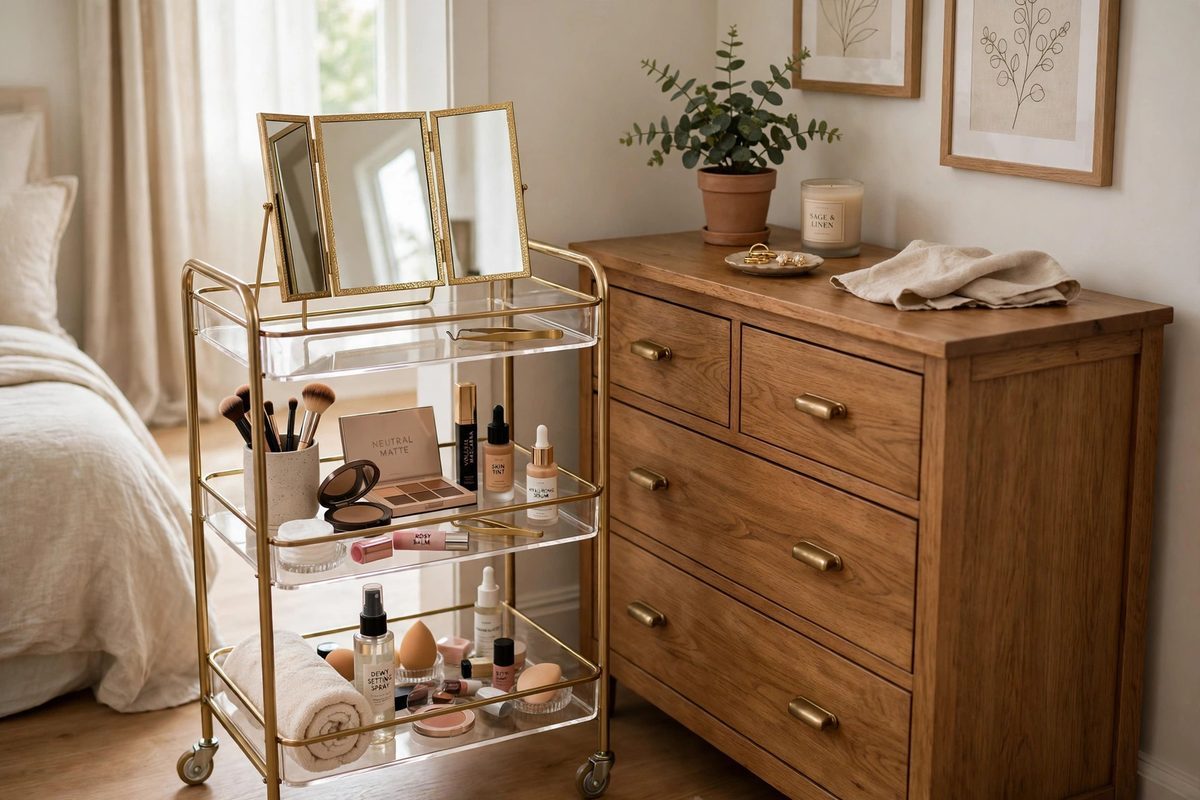
A rolling vanity cart is a small cart with shelves and a mirror that you wheel to wherever you want to get ready, then park out of the way. It needs no dedicated wall space at all, which makes it the most flexible vanity option for very small bedrooms or shared rooms.
Carts cost 40 to 120 dollars, and the best ones have a mirror that folds flat for storage and locking casters for stability. The work surface is small, usually 40 by 30 cm, so this suits a compact routine. Pair the cart with any existing mirror in the room, like a wardrobe mirror, for a larger reflection.
How to make it work
Park the cart in a consistent home spot, like beside the dresser, so it never becomes hallway clutter. Lock the casters before using it, since a rolling cart that moves while you work is frustrating. Keep products in the cart’s shelves or baskets, not piled on top, so the top stays clear as a work surface.
9. Vanity With Hidden Storage
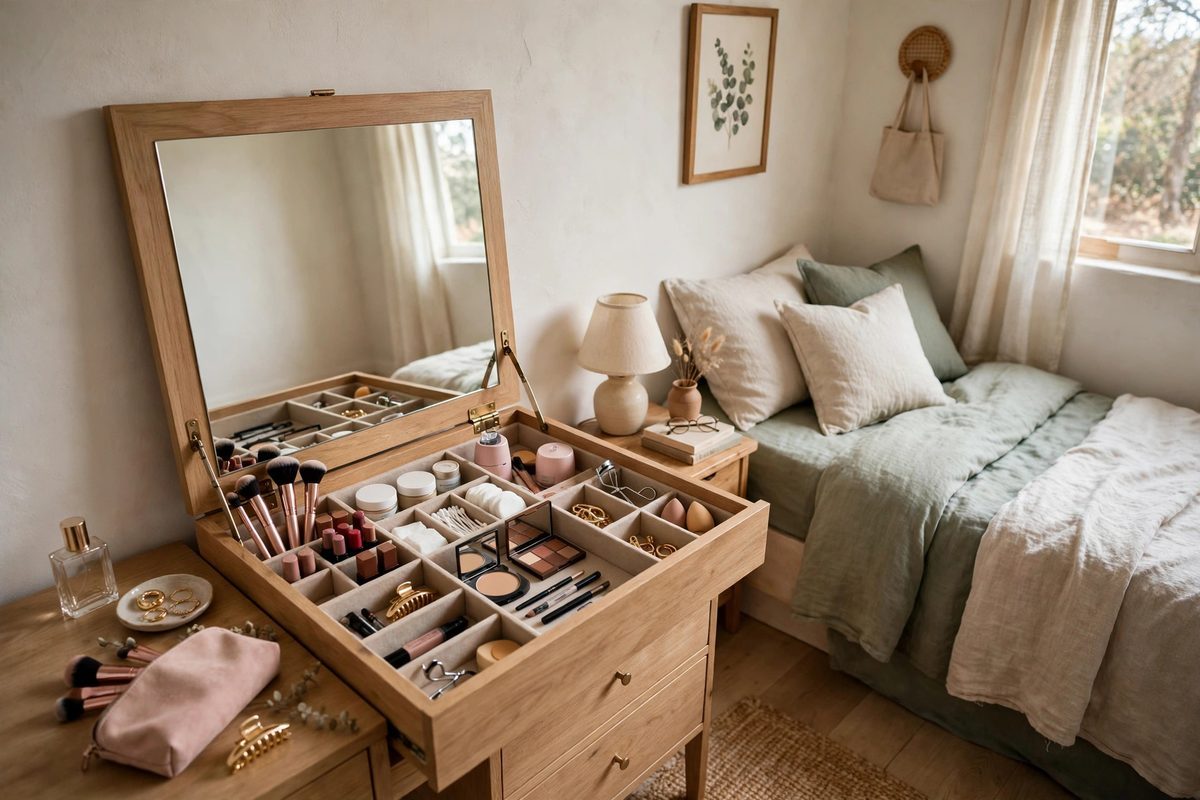
A vanity with hidden storage, like a lift-up mirror lid that reveals compartments underneath, or drawers built into the table, keeps every product out of sight when the vanity is not in use. In a small bedroom, that hidden storage is the difference between a tidy room and a room that always looks like a makeup counter.
Lift-top vanities cost 150 to 400 dollars, and they work best for routines with many small products, since the compartments organize by category. The tradeoff is a smaller work surface when the lid is open, since the lid itself takes up space. Choose a model where the mirror stays upright on its own, since a floppy mirror lid is annoying daily.
How to make it work
Organize the compartments once, with small dividers or trays, and keep the system, since hidden storage only stays tidy if everything has a place. Close the lid after each use, which takes two seconds and keeps the bedroom looking like a bedroom rather than a salon. For bedside pairings, see small bedroom nightstand ideas.
10. Sill-Depth Vanity in an Alcove
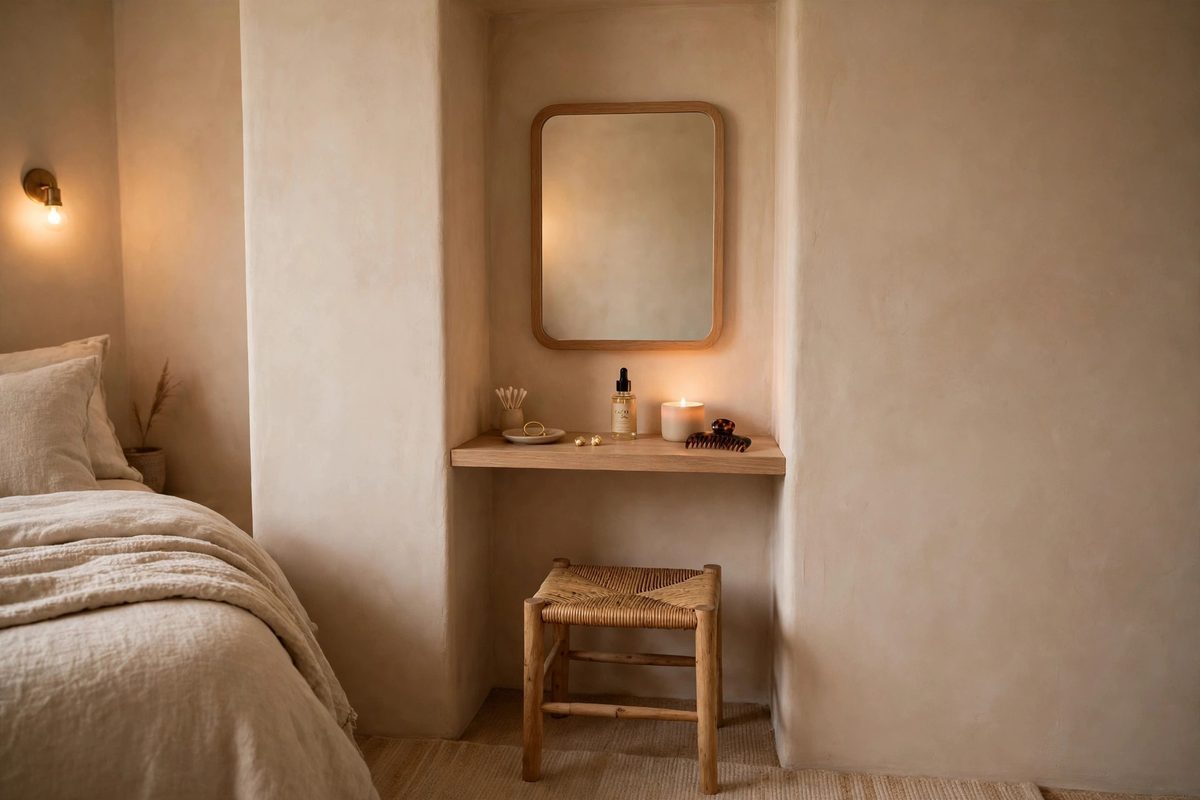
An alcove, a shallow recess in the bedroom wall, often beside a chimney breast or between two wardrobes, fits a sill-depth vanity perfectly. A shelf 25 to 30 cm deep mounted across the alcove, with a mirror above and a stool below, turns dead architectural space into a vanity without touching the room’s floor plan.
Measure the alcove carefully, since alcoves are rarely square, and have the shelf cut to fit. The shelf should sit at desk height, around 75 cm, and the mirror should fill the alcove width for maximum light reflection. A custom-cut shelf costs 30 to 80 dollars, plus the mirror and stool.
How to make it work
Add a small LED strip under the alcove top or around the mirror, since alcoves are shadowy. Use the alcove walls for narrow shelves or hooks for jewelry, which keeps the main shelf clear. If the alcove is deep, add a drawer unit below the shelf for storage, but keep it shallow enough that your knees still fit.
An awkward space is not a failed space. It is just a space waiting for the right piece of furniture. Measure your alcoves, corners, and closet nooks, match one to a vanity idea from this list, and give yourself a getting-ready spot that fits your bedroom instead of fighting it.