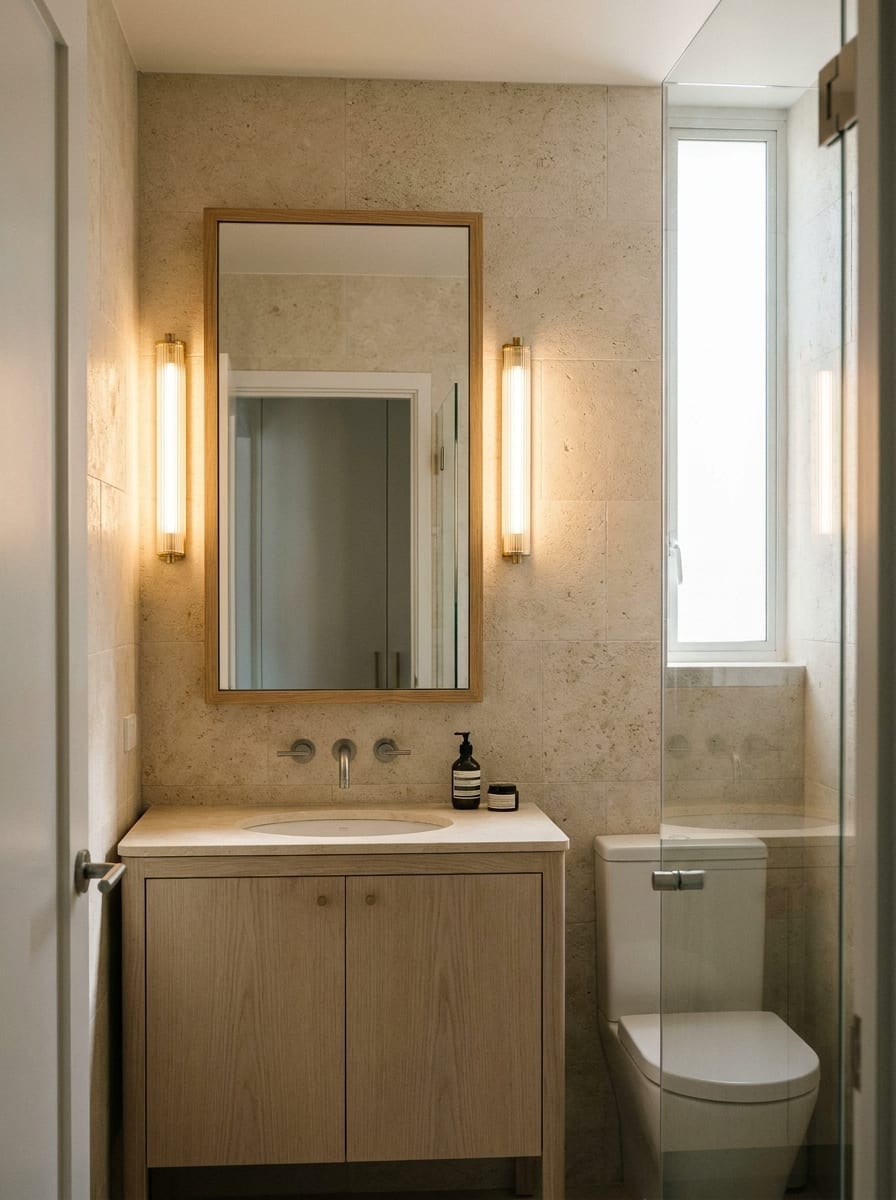
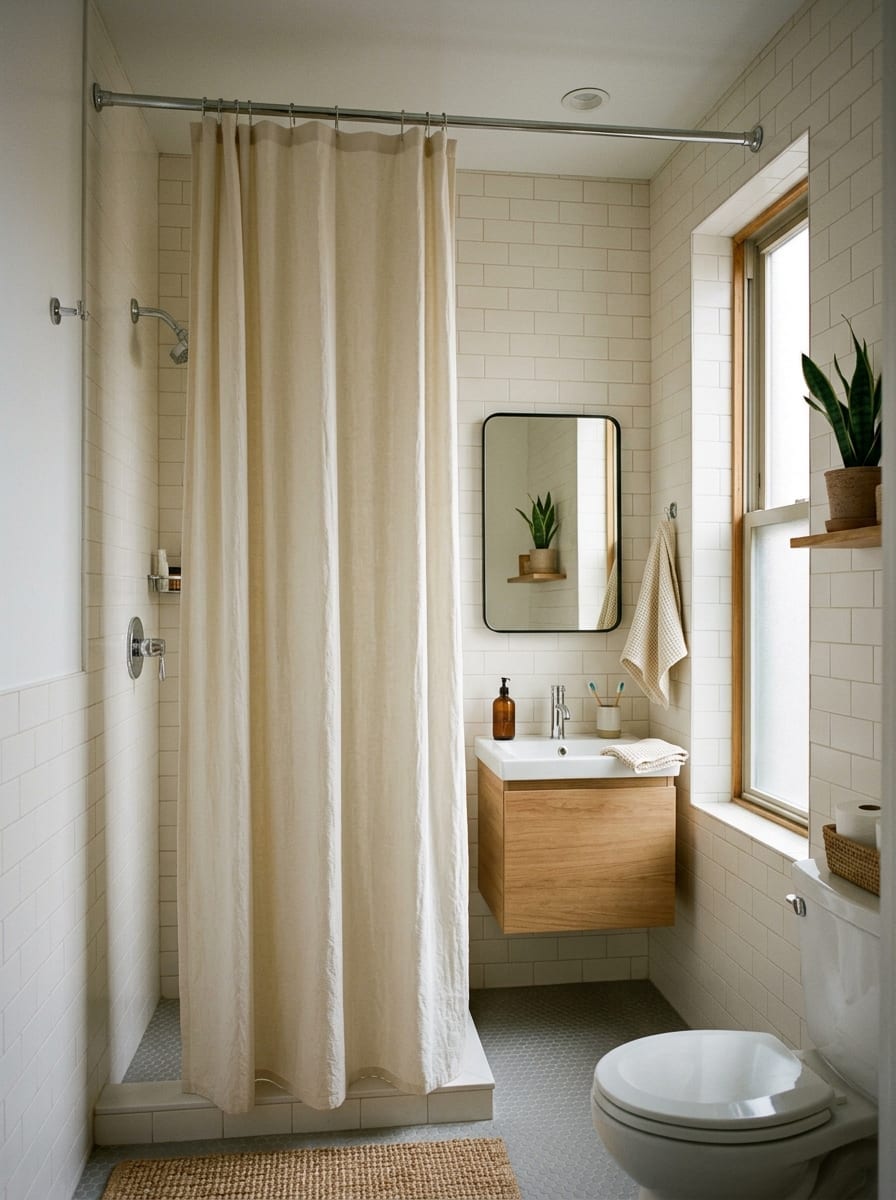
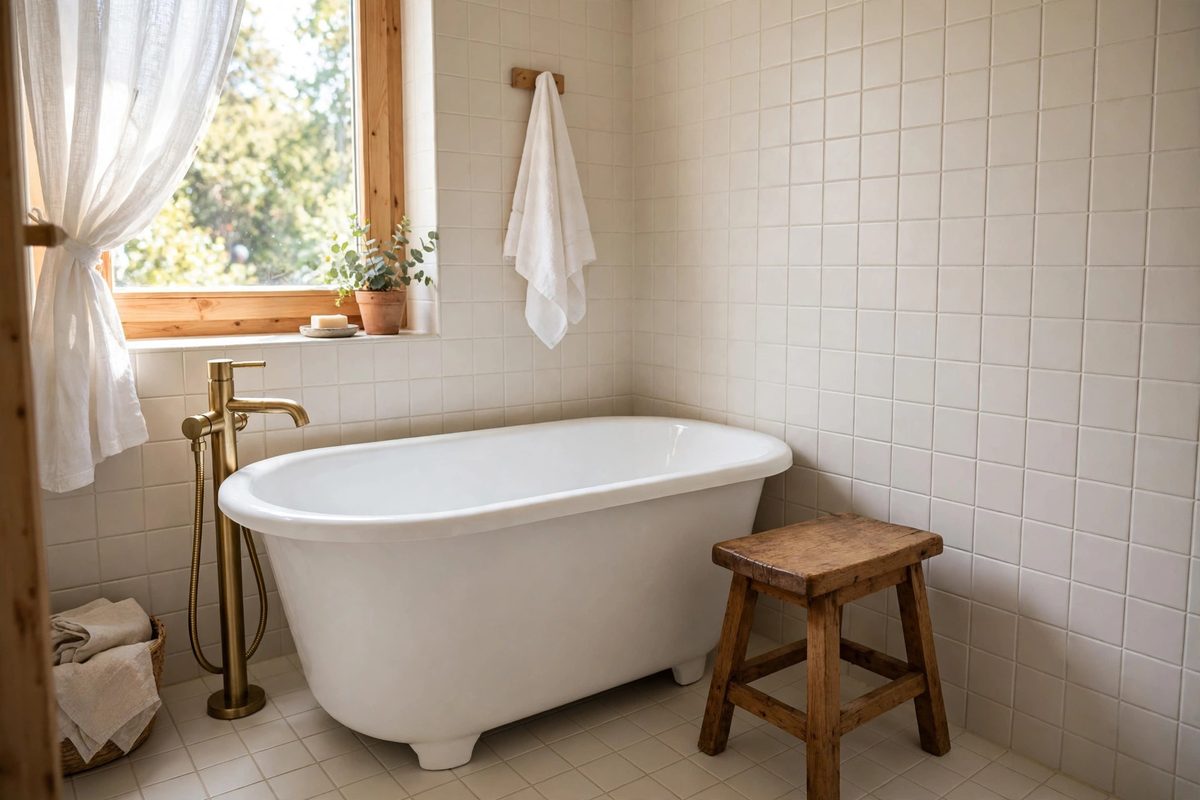
10 Small Bathroom Mirror Ideas That Make a Tiny Bathroom Feel Bigger and Brighter
Make a small bathroom feel twice as large. Discover 10 small bathroom mirror ideas—including full-width vanity mirrors, backlit LED frames, and medicine nooks.
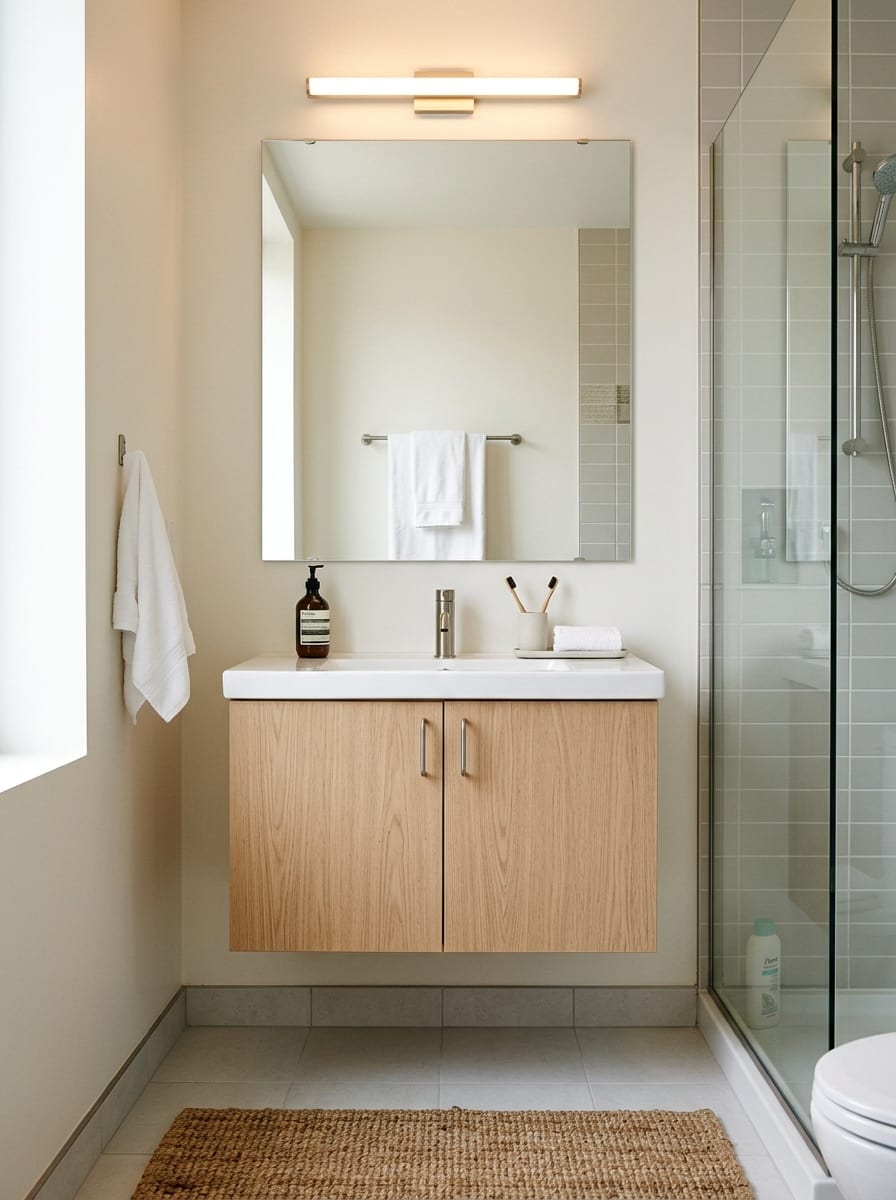
Full-width vanity mirror above a compact pale-oak vanity creating a light expansive effect in a small bathroom
In This Guide
A mirror is one of the few things you can make larger in a small bathroom without sacrificing usable space. That makes it unusually valuable. A bigger vanity, deeper cabinet or extra storage tower may improve function, but each one takes up physical room. A mirror mostly occupies wall space. And when its:
- width
- height
- shape
- placement are right, it can make a compact bathroom feel considerably more open. The mistake is assuming that: small bathroom = small mirror.
In reality, a tiny mirror above a small vanity can sometimes make the entire wall look more cramped because it introduces yet another small rectangle surrounded by empty wall. A larger mirror can create:
- longer visual lines
- more reflected light
- fewer visual breaks
- a stronger vanity focal point without changing the bathroom’s actual footprint. The goal is not to buy the biggest mirror that physically fits. It is to choose one that works with: vanity width → ceiling height → lighting → storage → sightlines. Here are ten approaches worth considering.
1. The Full-Width Vanity Mirror
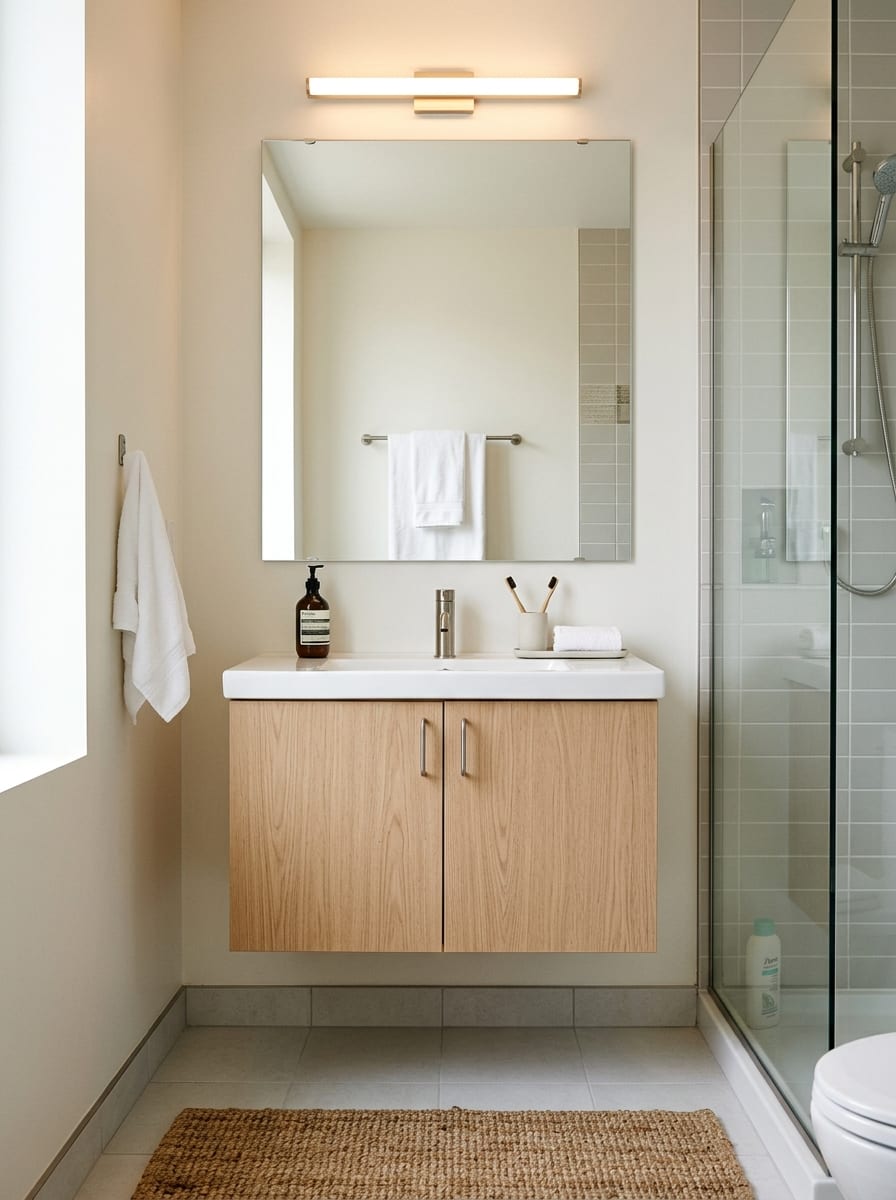
One of the simplest ways to make a small bathroom feel more finished is to let the mirror relate properly to the vanity beneath it. Instead of placing a noticeably narrow mirror above a wider vanity, use one that visually follows most of the vanity width.
Why it works
The vanity and mirror begin to read as one composition. That can reduce the chopped-up appearance created by:
- vanity
- narrow mirror
- sconces
- empty wall
- separate storage all competing independently.
It does not have to match the vanity exactly
A mirror can be:
- slightly narrower
- approximately the same width and still look balanced. The important thing is avoiding a mirror that looks obviously undersized.
Good for
This setup works especially well with:
- 24-inch vanities
- 30-inch vanities
- 36-inch compact vanities provided the surrounding wall has enough room.
Check nearby obstructions
Before increasing mirror width, look for:
- wall switches
- outlets
- towel rings
- sconces
- door trim A mirror should not force everything else into awkward positions.
2. The Tall Rounded-Rectangle Mirror
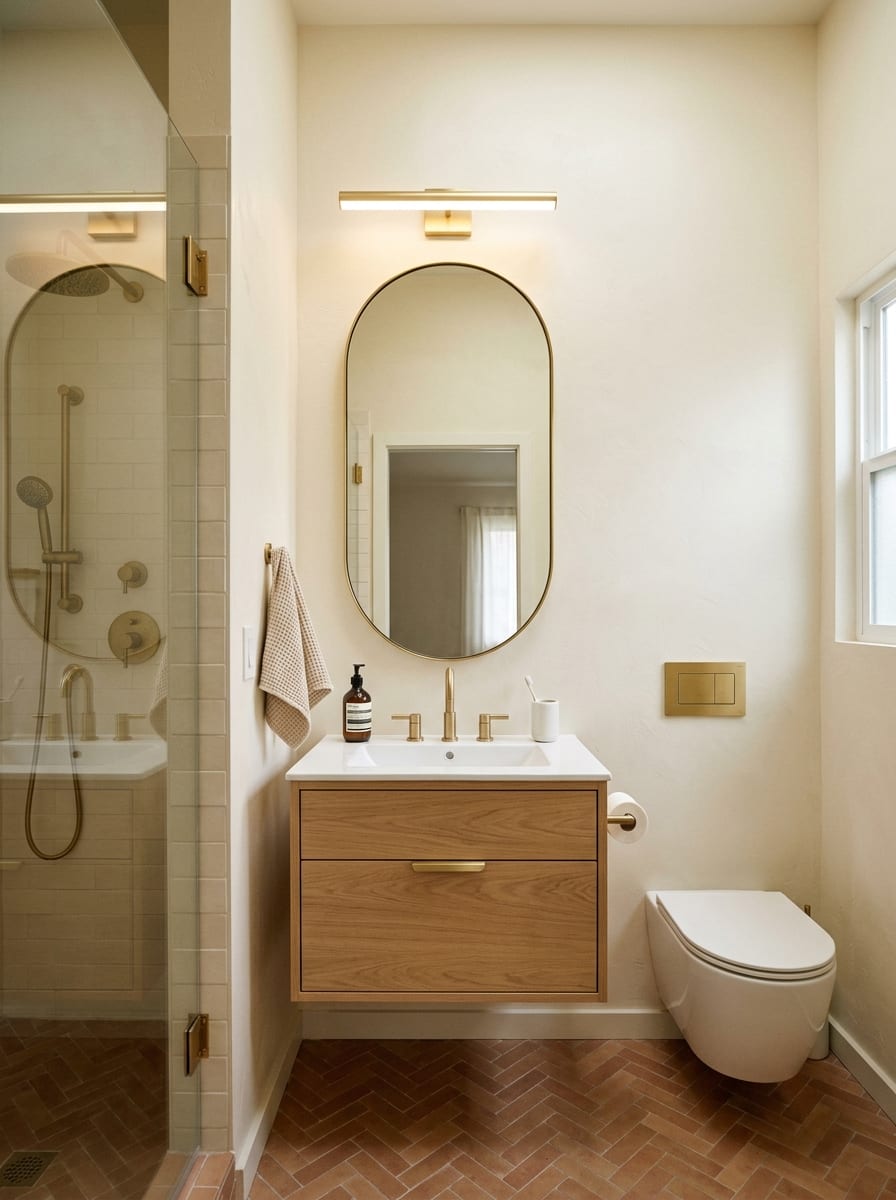
When wall width is limited, use height. A tall mirror can create a stronger sense of vertical space without spreading into neighboring:
- cabinets
- lights
- doors Why the rounded rectangle works It gives you much of the usable reflective area of a rectangle but softens a bathroom that may already contain many hard lines. Bathrooms often have:
- rectangular tile
- rectangular vanity
- rectangular door
- rectangular shower A slightly curved mirror introduces contrast without becoming decorative for decoration’s sake.
Use the height intentionally
A taller mirror can reflect:
- more wall
- more light
- more of the room than a short mirror of the same width.
Do not mount it unnecessarily high
The mirror still needs to serve the people using the bathroom. Position it based on:
- sink
- user sightline
- faucet clearance
- light fixture not just symmetry on the wall.
3. The Wall-to-Wall Mirror
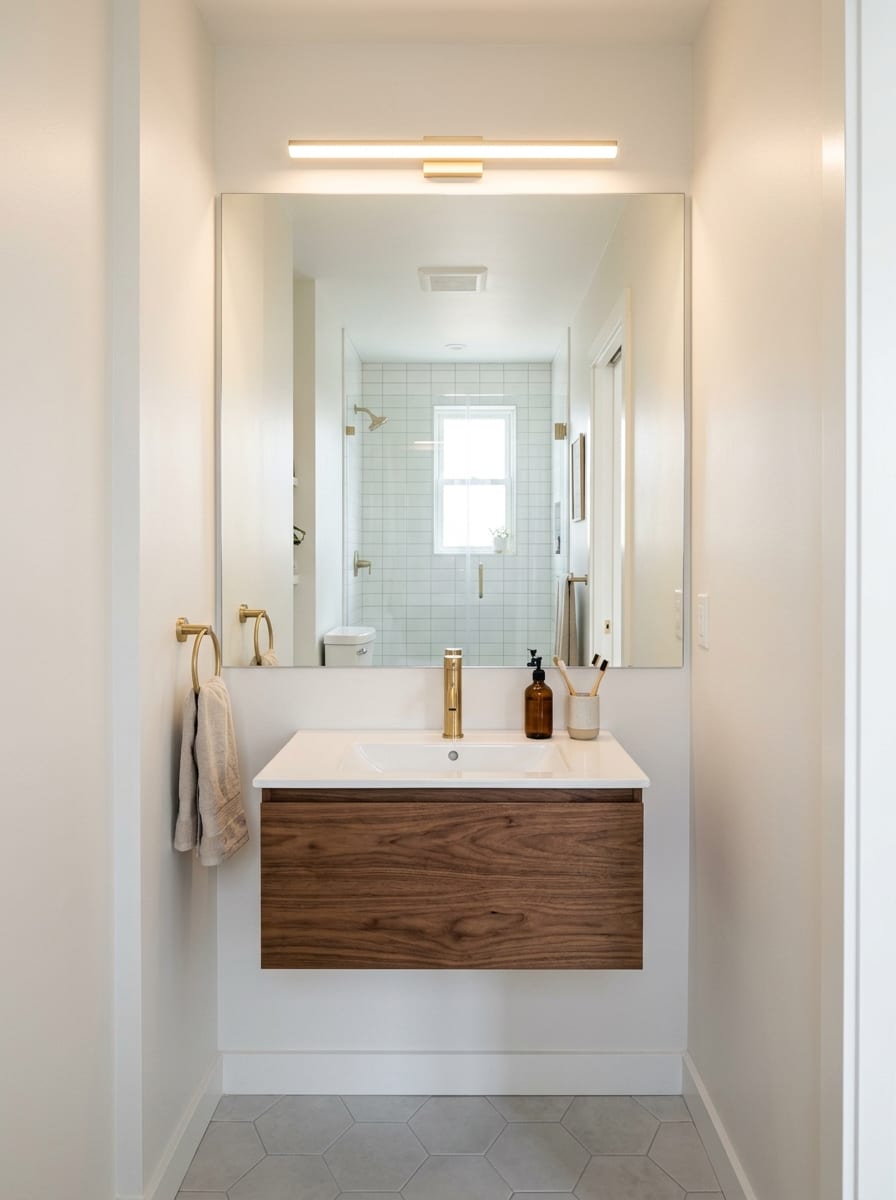
In a particularly small vanity zone, extending the mirror almost from one side wall to the other can make the area feel less like a collection of tiny surfaces.
Why it works
A narrow bathroom may already have very little wall around the vanity. Instead of emphasizing those small strips of wall, a larger mirror can visually absorb them into one broad reflective surface. This is especially useful in an alcove Imagine a vanity positioned between two walls. A mirror fitted closely to that opening can make the entire recess feel wider.
Keep the edges intentional
You do not want a mirror that looks like it almost fits but leaves:
- inconsistent gaps
- awkward slivers of wall Measure carefully.
Consider installation access
A very large fitted mirror may be:
- heavier
- harder to install
- less flexible to replace than a standard framed mirror. That tradeoff matters in a rental or temporary home.
4. The Mirrored Medicine Cabinet
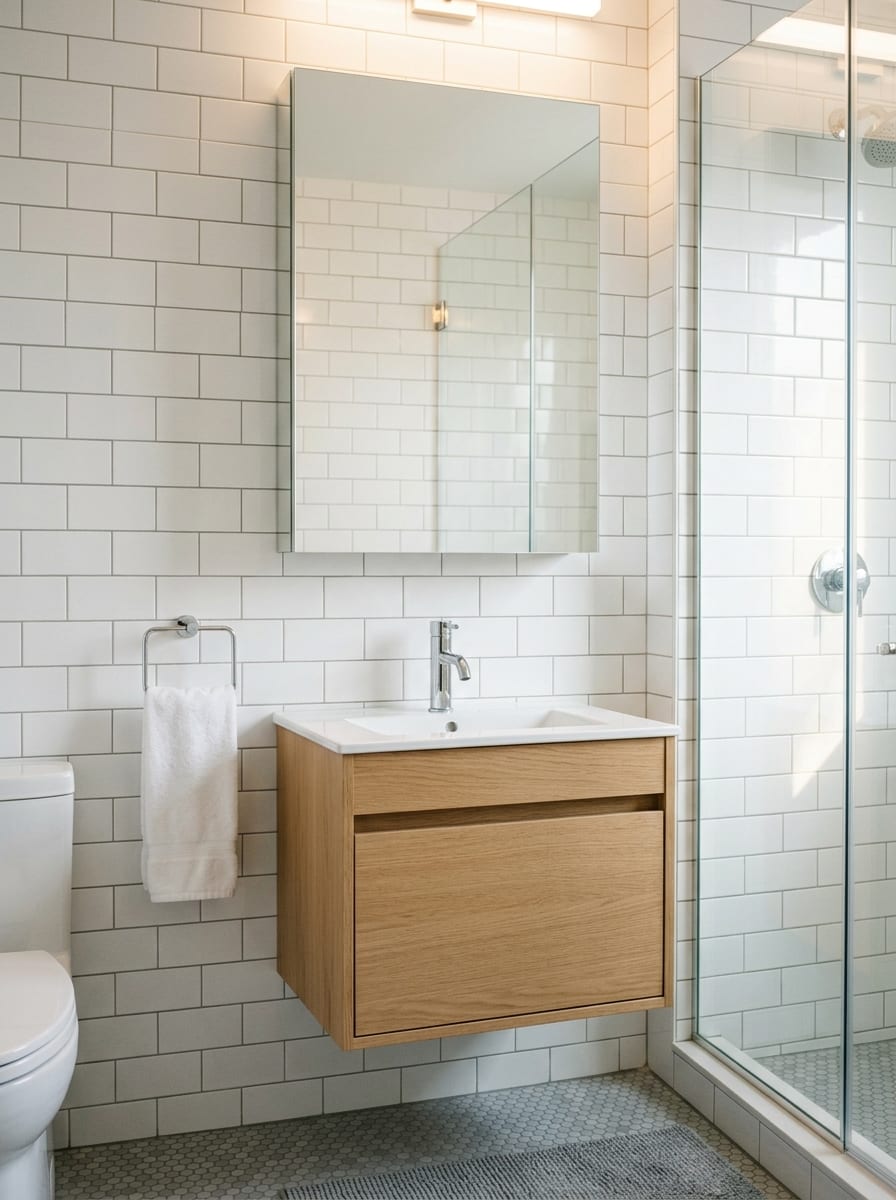
Sometimes the bathroom needs more storage, not just more reflection. A mirrored medicine cabinet can solve both problems at once. Why it works in a small bathroom Instead of using:
- decorative mirror
- separate wall cabinet you combine two functions into one zone. That can reduce visual clutter.
Recessed vs surface-mounted
A recessed cabinet can appear particularly streamlined because much of its depth sits inside the wall. But it is not suitable for every wall. You may encounter:
- plumbing
- electrical wiring
- structural framing so wall modifications need to be properly assessed. A surface-mounted model is easier in many situations but projects farther into the room.
Watch the depth
A medicine cabinet that sticks out significantly can feel bulky above a shallow vanity. Check:
- cabinet depth
- faucet position
- head clearance before buying.
Look at the interior, not only the exterior
Useful features can include:
- adjustable shelves
- enough height for daily products
- mirrored interior
- integrated outlet, where appropriately installed
5. The Oversized Round Mirror
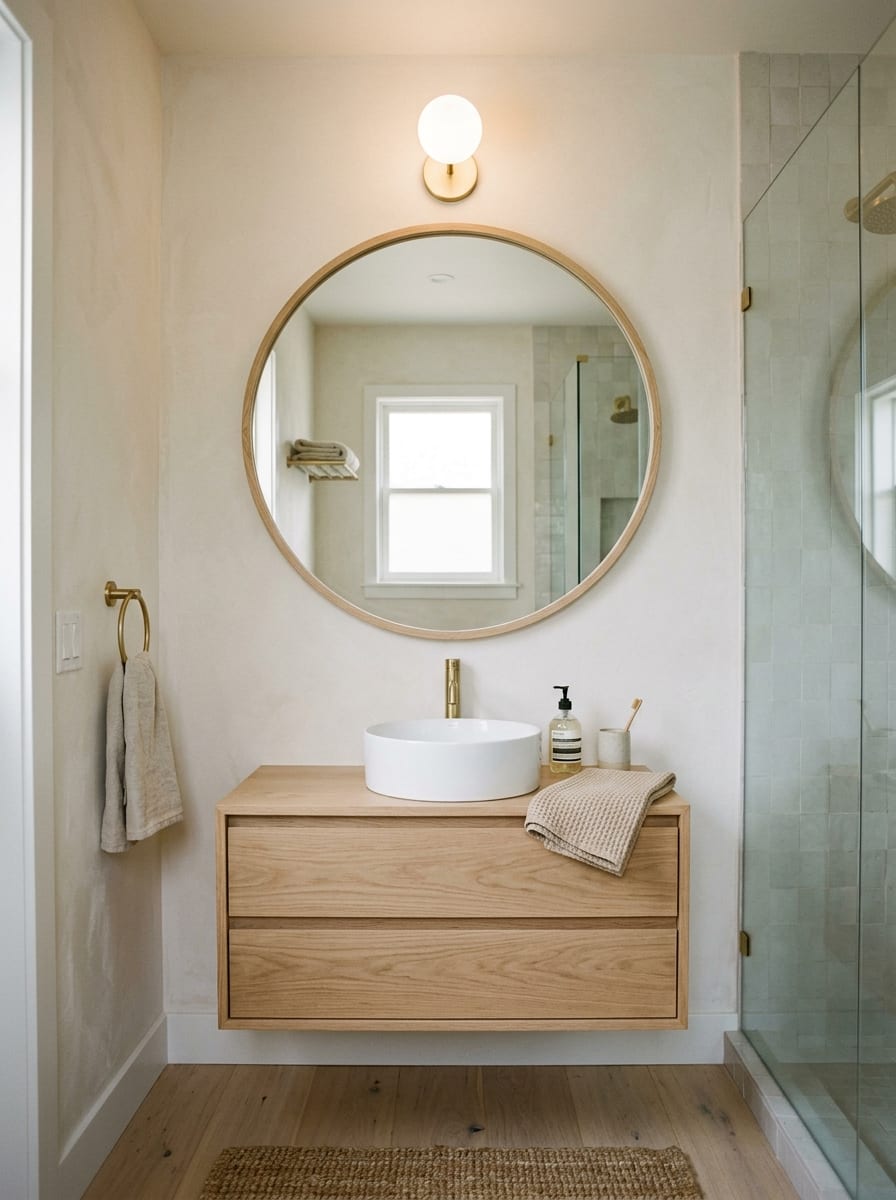
A round mirror can work beautifully in a small bathroom, but scale matters. A tiny round mirror can look decorative rather than functional. A larger one can become the focal point of the room. Why a circle helps Bathrooms tend to contain lots of straight lines. A large circle can break up:
- tile grids
- cabinetry
- shower glass
- rectangular doors without adding another color or material.
Keep enough functional mirror area
Make sure the diameter gives you enough usable reflection for:
- grooming
- skincare
- hair not just visual styling.
Best with a simple vanity
A large round mirror works especially well above:
- simple floating vanity
- slim freestanding vanity
- compact console-style sink
Do not force symmetry around it
You do not necessarily need:
- matching decor on both sides
- symmetrical shelves Let the mirror be the dominant shape.
6. The Counter-to-Ceiling Mirror
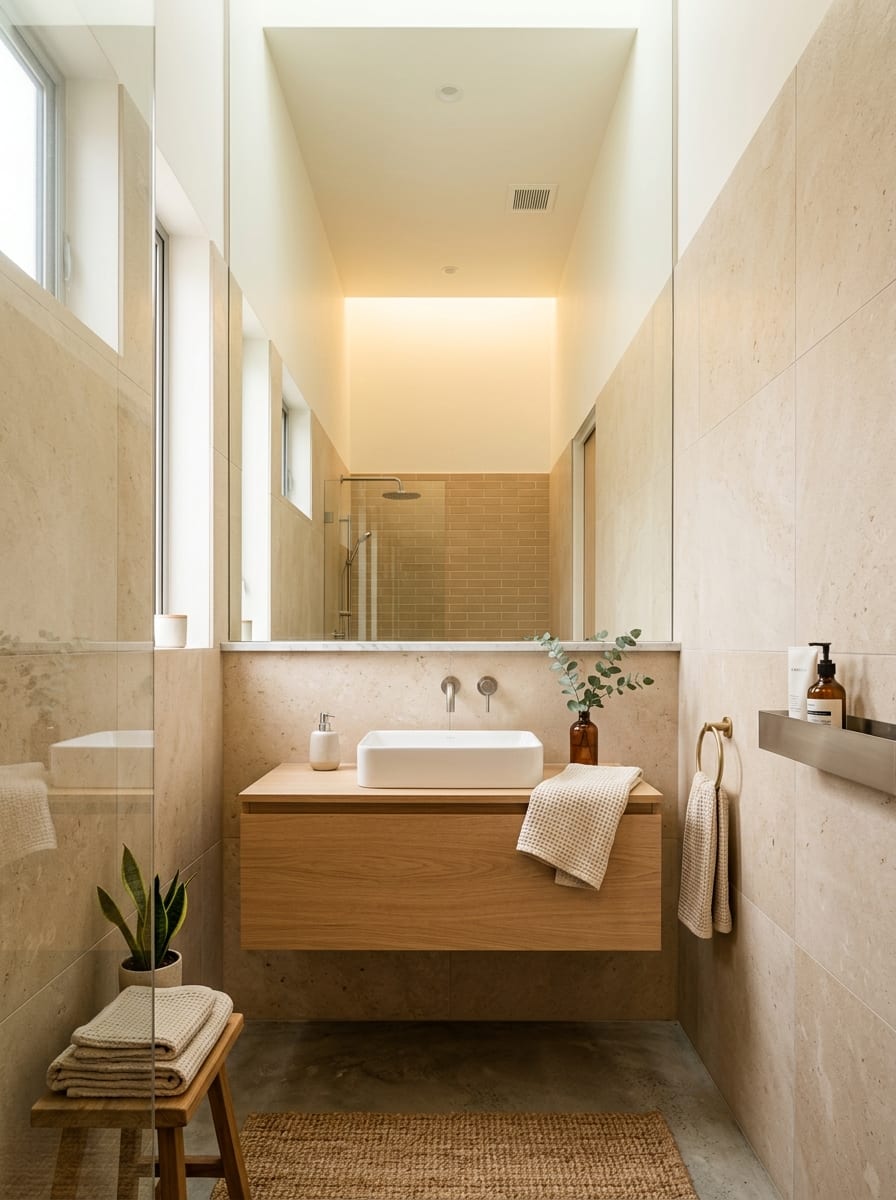
If you want the strongest visual expansion, consider using more of the vertical wall. A mirror that begins close to the vanity backsplash and extends high toward the ceiling can visually stretch the room. Why it feels larger Instead of seeing:
- backsplash
- mirror
- blank upper wall you see one uninterrupted reflective plane. That creates fewer visual breaks.
It can make low ceilings feel taller
The continuous vertical surface draws the eye upward.
Lighting becomes more important
Once the mirror occupies most of the wall, you need a plan for:
- ceiling lighting
- wall sconces
- integrated mirror lighting because there may no longer be a normal wall section above the mirror.
Keep the bottom practical
Leave appropriate clearance around:
- faucet
- backsplash
- cleaning areas depending on the installation.
7. The Light-Framed Mirror
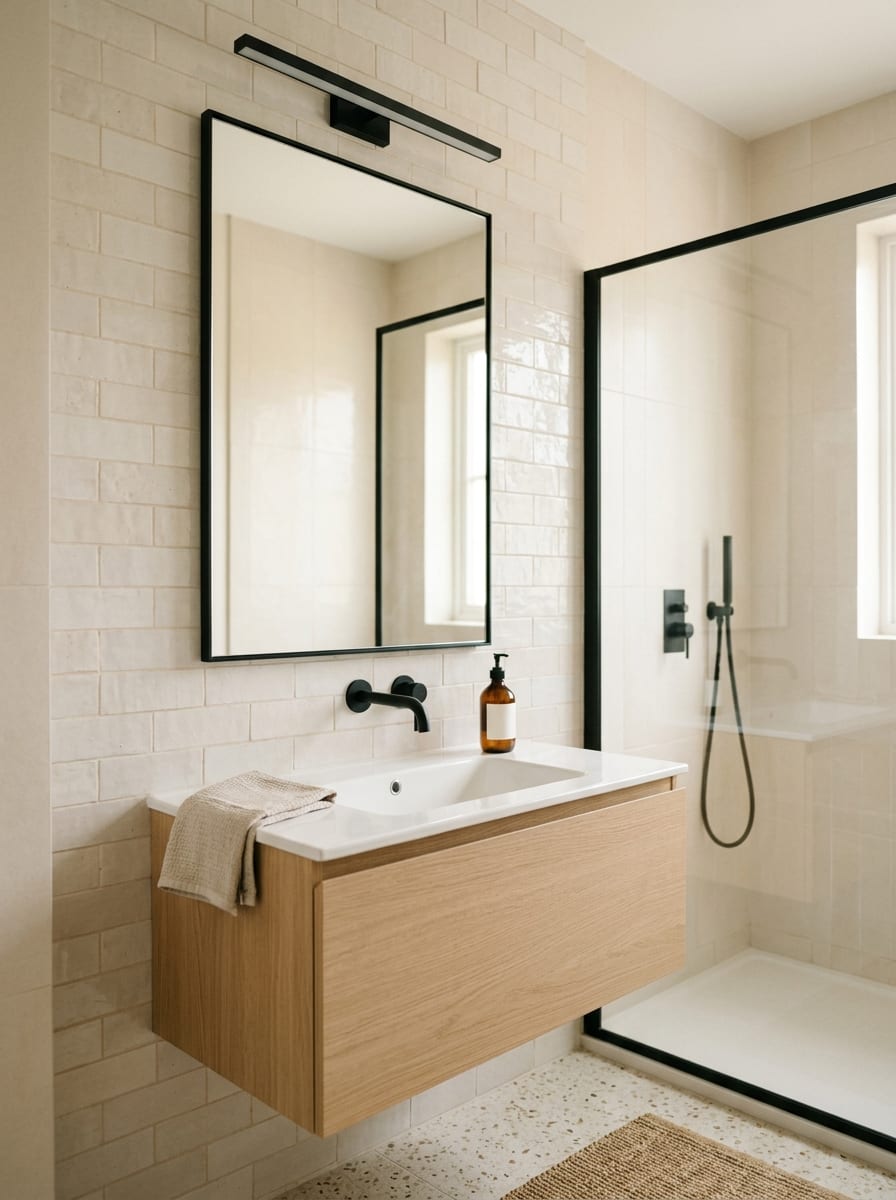
A frame can help define the mirror, but a heavy one can add unnecessary visual weight. In a very small bathroom, try a lighter-looking frame.
Good options
Depending on the room, consider:
- slim black metal
- pale oak
- soft brass
- white
- frameless edge
Match visual weight, not everything literally
You do not need a brass mirror simply because the faucet is brass. The room can feel coordinated through:
- tone
- proportion
- repeated finishes without every metal matching perfectly.
Why narrow frames work
They preserve more of the reflective area while still giving the mirror a finished edge.
When a dark frame works
A thin black frame can create useful definition in a pale bathroom without becoming bulky. The key is thin, not massive.
8. The Mirror + Side-Sconce Setup
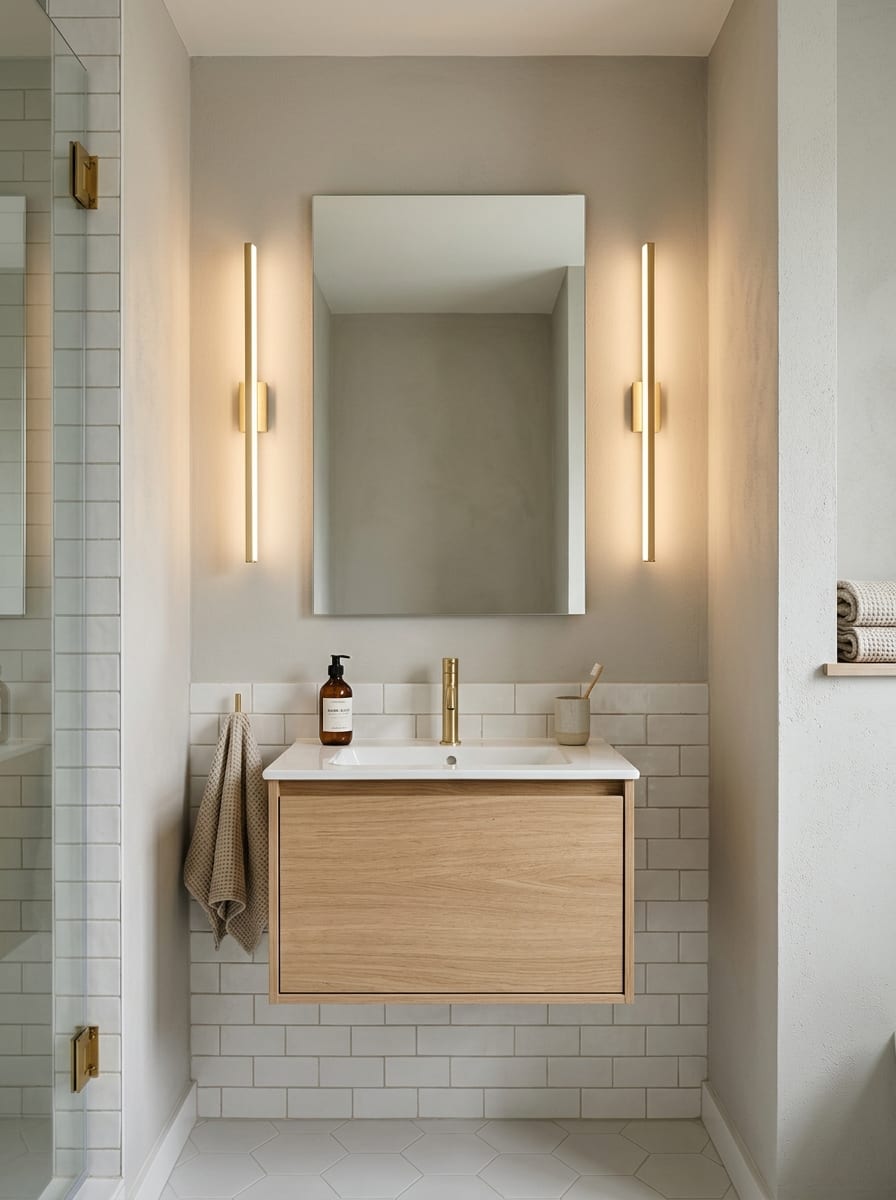
Where lighting is positioned can change how useful the mirror feels. A common setup places one light above the mirror. That can work, but side lighting may create more even illumination across the face.
Why side sconces can help
Lighting from both sides can reduce the strong downward shadows sometimes created by overhead-only lighting. That can be useful for:
- shaving
- makeup
- skincare
- grooming
But small bathrooms have limited wall width
Do not force two large sconces onto a wall that cannot comfortably fit them. You may need:
- slim vertical sconces
- compact fixtures
- mirror with integrated lighting instead.
Mirror width and fixture width must be planned together
If you want side sconces, leave enough room before buying the mirror. Otherwise you may end up with:
- mirror too wide
- sconces pressed against side walls
- awkward spacing
Electrical work matters
Any bathroom electrical installation needs to be suitable for the location and completed according to applicable electrical requirements.
9. The Corner-Reflecting Mirror Placement
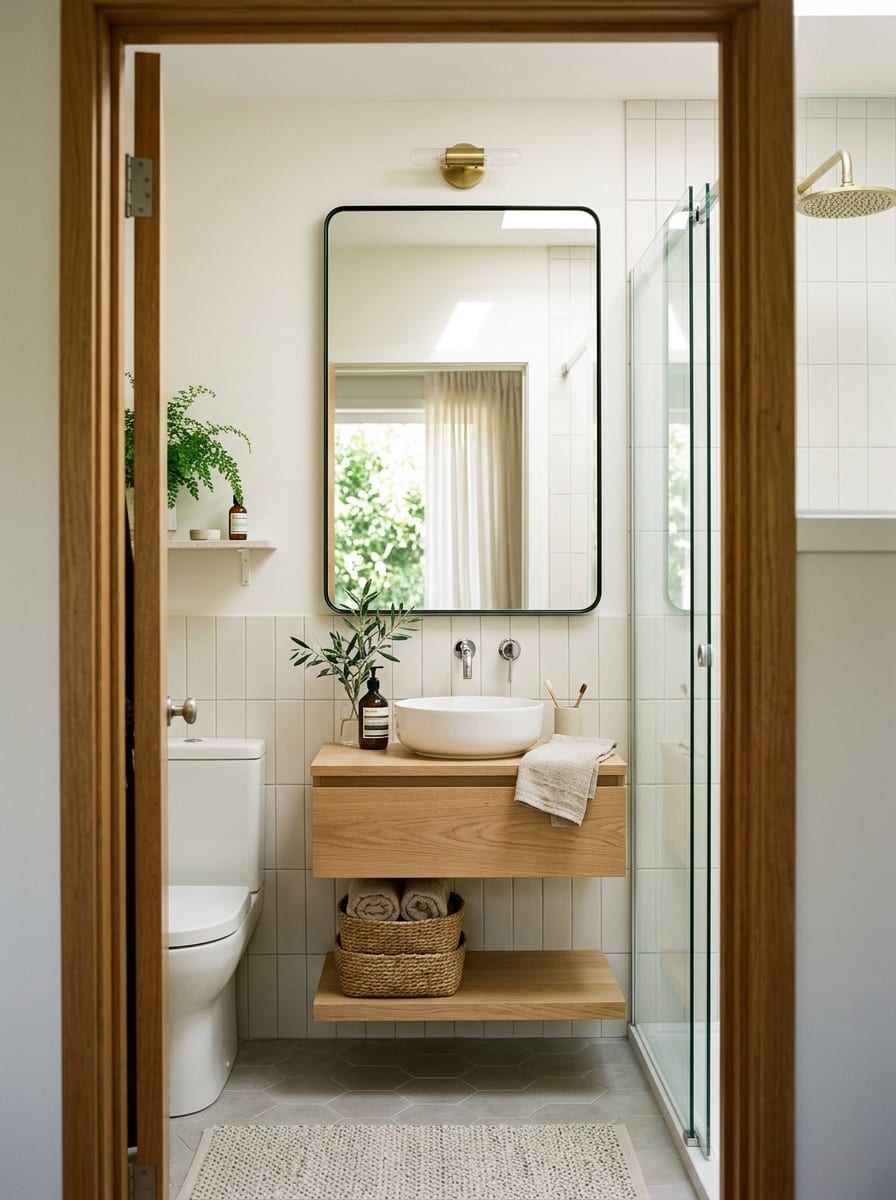
Sometimes the biggest benefit comes from what the mirror reflects. Before mounting it, look at what will appear inside the reflection.
Try to reflect light
Useful reflections may include:
- window
- pale wall
- shower glass
- bright doorway These can make the bathroom feel more open.
Avoid reflecting the busiest area
If the mirror primarily reflects:
- overflowing shelving
- cluttered toilet area
- laundry pile it can visually double that clutter.
Think from the doorway
Stand at the bathroom entrance. What will you see in the mirror? That view often matters more to the perceived size of the room than what you see while standing directly at the sink.
Use the mirror to extend a sightline
If the room has one brighter side, positioning the mirror to capture it can make the vanity zone feel less enclosed.
10. The Right-Size Mirror Formula
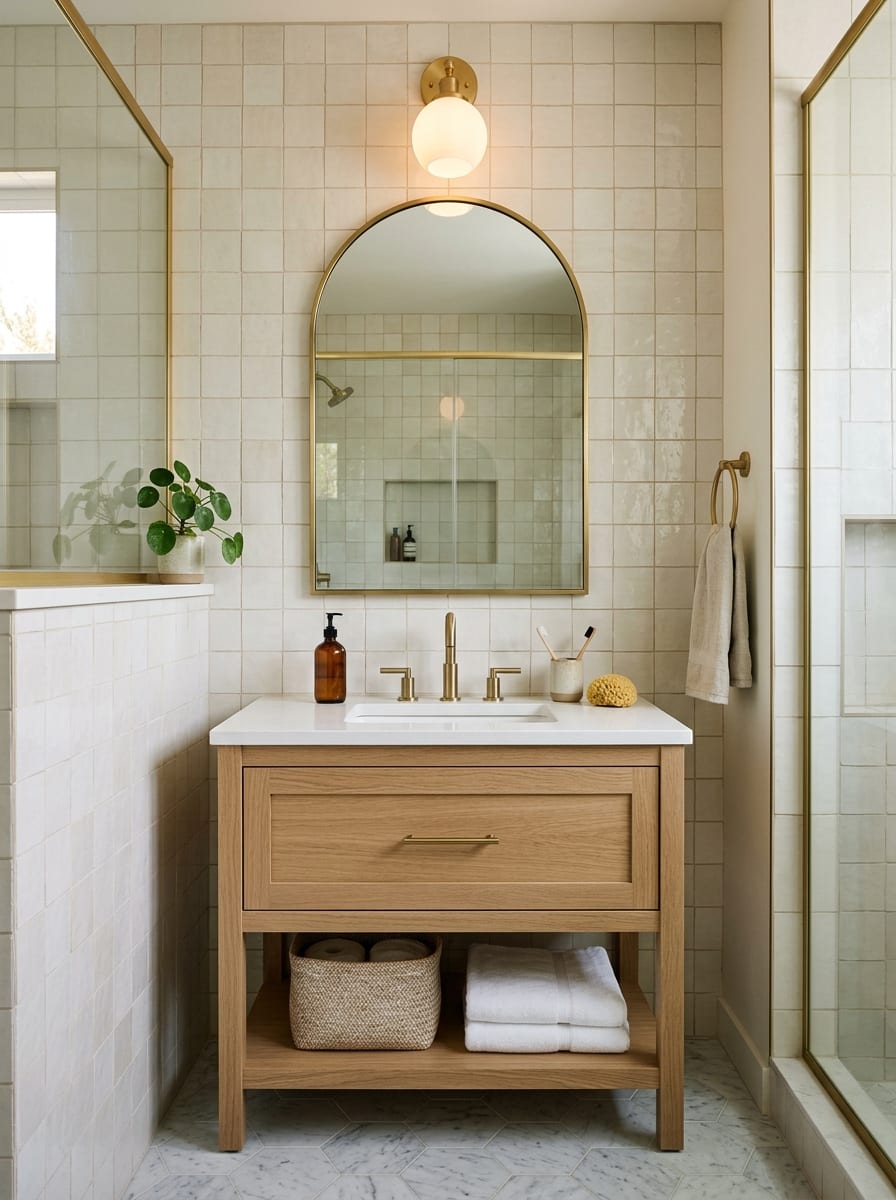
If you do not know which mirror to choose, start with the bathroom rather than the mirror catalog. Use this order: vanity → available wall → lighting → storage → mirror
Step 1: Measure the vanity
Record the actual width. Do not rely on a product name like:
- 24-inch vanity
- 30-inch vanity without checking the installed measurement.
Step 2: Measure the usable wall
Account for:
- side walls
- trim
- outlets
- switches
- sconces
Step 3: Decide how much mirror you need
Ask whether you want:
- purely functional mirror
- larger room-expanding mirror
- storage mirror
Step 4: Choose lighting placement
Will lighting go:
- above
- beside
- inside/integrated with the mirror?
Step 5: Check height
Look at:
- faucet clearance
- backsplash
- ceiling
- tallest regular user
Step 6: Tape it out
Painter’s tape can help you test the proposed mirror dimensions directly on the wall. Stand:
- at the vanity
- in the doorway
- near the shower and judge the proportion from each position.
1. available width
2. useful height
3. lighting
4. storage needs
Then decide whether the mirror should be:
- rectangle
- rounded rectangle
- round
- arch A beautiful shape cannot fix poor scale.
How Wide Should a Bathroom Mirror Be?
There is no single width that works for every bathroom. A useful starting point is to make the mirror visually relate to the vanity rather than letting it become a tiny object floating above it. For example, if you have a compact vanity, you might choose a mirror that is:
- slightly narrower than the vanity
- approximately the same width depending on:
- wall space
- lighting
- frame The important thing is proportion.
Can a Mirror Be Wider Than the Vanity?
Sometimes. It can work particularly well if:
- the vanity sits in an alcove
- the mirror is part of a larger wall treatment
- wall-mounted lighting has been planned accordingly But it should look intentional. A mirror that extends awkwardly a couple of inches beyond the vanity on one side because of poor centering will not create the same effect.
How High Should the Mirror Be?
Choose the height based on function first. The mirror should work comfortably for the people using it. Consider:
- tallest regular user
- shortest regular user
- sink height
- backsplash
- light placement Avoid mounting it high simply because that looks symmetrical in an empty room.
A Taller Mirror Can Be Better Than a Wider One
If the bathroom wall is narrow, vertical expansion may be the best route. A tall mirror can:
- reflect more light
- emphasize ceiling height
- preserve side-wall space while still being generous enough for daily use.
Should the Mirror Touch the Backsplash?
It depends on the design and installation. A small gap can look clean. A deliberately integrated counter-to-ceiling treatment can also work. What tends to look less intentional is an unexplained tiny gap created because the mirror was chosen without considering the backsplash. Plan the relationship before installation.
Mirror Size for a 24-Inch Vanity
A 24-inch vanity is compact enough that a tiny mirror can quickly look undersized. Consider something with enough scale to visually anchor the vanity while still leaving room for:
- trim
- lighting
- surrounding wall Do not assume you need a miniature mirror simply because the vanity is narrow.
Mirror Size for a 30-Inch Vanity
A 30-inch vanity gives you more flexibility. Possible directions include:
- substantial round mirror
- rounded rectangle
- generous rectangular mirror
- mirrored medicine cabinet At this size, shape can have a significant effect on the character of the room.
Mirror Size for a 36-Inch Vanity
A 36-inch vanity can often support a more substantial mirror. You may also have room to consider:
- side sconces
- full-width mirror
- wide medicine cabinet But measure the whole wall first. Nominal vanity width is not enough.
One Large Mirror vs Two Small Mirrors
For a single-sink compact bathroom, one large mirror is generally visually simpler. Two mirrors can introduce additional:
- edges
- gaps
- frames and may make the wall feel busier. With a double vanity, the decision depends more on:
- sink positions
- wall width
- lighting But true double vanities are already less common in genuinely small bathrooms.
Framed vs Frameless Mirror
Framed
Can add:
- definition
- warmth
- material interest
Frameless
Can feel:
- lighter
- simpler
- more expansive Neither is automatically better. Choose based on the visual density of the rest of the bathroom.
Round vs Rectangular Mirror
Round mirror
Best when you want:
- softer geometry
- a focal shape
- contrast against rectangular tile
Rectangular mirror
Best when you want:
- maximum reflective area
- stronger alignment with vanity
- easier use of wall width
Arch Mirror vs Rounded Rectangle
An arch can add a more decorative architectural feel. A rounded rectangle is usually:
- quieter
- more versatile
- slightly more contemporary For a very small bathroom, I generally prefer whichever shape gives you the best usable mirror area without creating awkward gaps.
Does a Bigger Mirror Actually Make the Bathroom Bigger?
It does not change the physical room. What it can change is the visual experience. A larger reflective surface can:
- bounce light
- extend sightlines
- reduce visible wall segmentation which can make the room feel less enclosed.
Use the Reflection Intentionally
This is easy to forget. Before final installation, hold or temporarily position the mirror and look at what it reflects. You may discover that moving it slightly changes the reflection from: open doorway + bright wall to: toilet + cluttered shelf That matters.
Mirrors and Natural Light
If your bathroom has a window, try to use the mirror to take advantage of it. You do not necessarily need the mirror directly opposite the window. Even an angled sightline can capture additional brightness.
Mirrors in Windowless Bathrooms
A larger mirror is still useful. Focus more heavily on:
- good general lighting
- vanity lighting
- light wall surfaces The mirror can distribute artificial light around the room.
Do Not Expect the Mirror to Fix Bad Lighting
A beautiful mirror cannot compensate for a bathroom that is badly lit. You need enough ambient and task lighting for the room to function. The mirror should work with the lighting.
Above-Mirror Lighting
This is often practical when:
- wall width is limited
- there is no room for side sconces Keep the fixture appropriately scaled to the mirror. A tiny light floating above a huge mirror can look disconnected.
Side Lighting
Side lighting can create a more balanced grooming setup. But you need enough horizontal wall space. Plan the sconces and mirror together rather than buying one first.
Integrated-Lighting Mirrors
These can be useful where you want:
- clean lines
- minimal wall fixtures But assess:
- actual light output
- color temperature
- electrical requirements
- replacement/serviceability rather than choosing purely for appearance.
Avoid Too Many Reflective Surfaces
Mirror + glossy tile + chrome + glass + polished stone can become visually noisy. The room does not need every surface to reflect light. Let the main mirror do most of that job.
Mirror and Vanity Should Feel Connected
They do not need to match perfectly. But they should feel like one zone. A good setup might use:
- pale oak vanity
- slim black mirror
- black faucet or:
- white vanity
- frameless mirror
- brushed brass light The connection can come through proportion rather than identical finishes.
Avoid the Tiny-Mirror Problem
A small decorative mirror above the sink can make the wall look unfinished. Common signs it is too small:
- huge empty space on both sides
- mirror barely wider than sink bowl
- light fixture substantially wider than mirror
- vanity feels disconnected below it If you are seeing those problems, try a larger scale before adding more wall decor.
Avoid Filling Empty Wall With Shelves
If the mirror looks too small, the answer is not always:
- mirror
- shelf
- artwork
- hanging plant
- another shelf Sometimes the wall simply needs a larger mirror and fewer objects.
Keep the Counter Reflection Calm
A mirror doubles whatever sits directly in front of it. Five bottles on the vanity may visually become ten. Keep everyday countertop items controlled. This helps the bathroom feel calmer even if nothing else changes.
Watch Open Shelving Opposite the Mirror
A mirror directly reflecting crowded open shelving can visually multiply the storage clutter. If possible:
- edit the shelf
- use closed storage
- change mirror sightline
Mirror Placement Above an Off-Center Sink
Not every vanity has the sink exactly centered. You have two possible approaches.
Center mirror over sink
Useful when grooming function is the priority.
Center mirror over vanity
Can produce stronger furniture alignment. Which looks better depends on how far the sink is actually offset. Tape both options on the wall before committing.
Mirror Placement Above a Vessel Sink
Vessel sinks sit higher than integrated sinks. That changes:
- lower mirror position
- faucet clearance
- usable mirror height Do not copy measurements from an integrated-sink bathroom without accounting for the vessel.
Mirror Placement With a Tall Faucet
Leave enough clearance that the faucet and mirror do not appear cramped together. You also want room to:
- clean behind faucet
- wipe mirror edge
Mirror Placement in a Rental Bathroom
If you rent, the existing mirror may already be installed. You still have options. You might:
- work with the existing mirror
- improve lighting
- edit nearby decor
- add an appropriate removable frame treatment where suitable Do not make structural or electrical changes without permission where required.
What If the Existing Mirror Is Huge but Ugly?
Do not immediately replace it. A large builder mirror may already provide valuable:
- light reflection
- visual width You may be able to improve the surrounding area through:
- better lighting
- simplified counter
- improved vanity hardware
- frame treatment without losing the scale advantage.
What If the Existing Mirror Is Too Small?
First determine whether you can replace it. If yes, measure:
- vanity
- wall
- light location and increase the mirror size deliberately. Avoid moving only one size up if the new mirror will still look undersized.
What If the Mirror Has a Bulky Cabinet Behind It?
A surface-mounted medicine cabinet can project noticeably. If the bathroom is narrow, view it from the side. Ask:
- Does it visually loom over the sink?
- Is head clearance comfortable?
- Does it interfere with lighting? A shallower model may suit the room better.
Keep the Mirror Easy to Clean
Intricate frames and tight gaps can collect:
- dust
- moisture A simple mirror can be easier to maintain in a compact bathroom where every surface is close to the sink and shower.
Ventilation Still Matters
Mirrors commonly fog because of moisture in the bathroom. Good ventilation matters independently of mirror choice. Do not block:
- exhaust fan
- ventilation opening with decorative additions around the mirror.
Test the Mirror With Cardboard or Tape
This is one of the easiest ways to avoid buying the wrong scale. Mark the proposed dimensions using painter’s tape. Or cut a rough cardboard shape. Then view it from:
- doorway
- sink
- shower
- toilet The right mirror often becomes obvious once you see the full scale on the wall.
Test More Than One Size
Do not tape only the size you initially planned. Try:
- smaller
- medium
- larger You may be surprised how much larger the mirror can be before it actually feels oversized. Common Small Bathroom Mirror Mistakes Buying a tiny mirror because the bathroom is tiny Scale should relate to the vanity and wall. Choosing shape before dimensions Function and proportion come first. Ignoring lighting placement Mirror and lighting need to work together. Mounting it too high The mirror still needs to be comfortable to use. Reflecting clutter Consider the sightline. Using an unnecessarily heavy frame Visual weight matters in compact rooms. Blocking switches or outlets Map the wall before ordering. Choosing a deep medicine cabinet Check side projection. Adding wall decor because the mirror is undersized A bigger mirror may solve the problem more cleanly. Forgetting the view from the doorway That is often the first impression of the room. A Quick Mirror Decision Guide
If the bathroom feels narrow
Try: tall rounded rectangle or: wall-to-wall vanity mirror depending on the wall.
If the vanity looks visually disconnected
Try: full-width mirror
If you need more storage
Try: mirrored medicine cabinet
If the bathroom has too many hard lines
Try: large round mirror
If the ceiling feels low
Try: taller mirror or: counter-to-ceiling treatment
If lighting around the face is poor
Consider: mirror + side sconces or another properly designed lighting solution.
If the bathroom looks cluttered
Focus on: larger mirror + fewer surrounding objects rather than adding more wall decor. The Simplest Small-Bathroom Mirror Formula If you want a safe starting point, use: simple vanity + generous mirror + restrained frame + good light That combination works in many small bathrooms because it avoids introducing unnecessary visual complexity. Final Thoughts A small bathroom does not automatically need a small mirror. In many cases, the mirror is one of the best places to use more scale, because it adds visual impact without taking away valuable floor space. Start with the vanity. Measure the usable wall. Decide where the lighting goes. Think about what the mirror will reflect. Then choose the largest practical mirror that still feels proportional to the room and works comfortably for everyday use. The goal is not simply to see yourself in it. A well-planned mirror should help the entire vanity wall feel:
- wider
- brighter
- calmer
- more connected And sometimes that one change is enough to make a tiny bathroom feel considerably more finished.