10 Small Apartment Trinket Shelf Ideas That Look Curated, Not Cluttered
10 small apartment trinket shelf ideas that keep souvenirs, candles, and tiny collections looking curated, with shelf sizes, spacing rules, and easy edits.
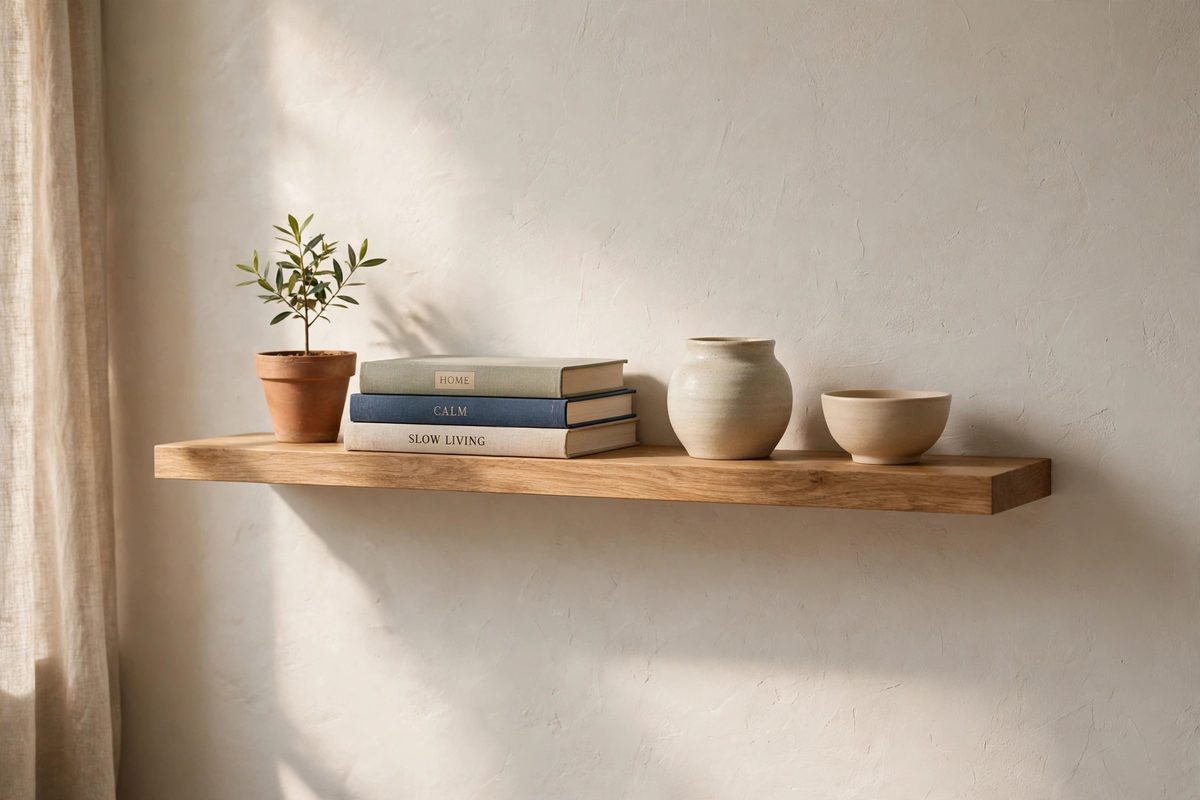
Small apartment wall shelf styled with a few ceramics, books, and a small plant, with clear space around each object
In This Guide
A trinket shelf is where small apartments either look thoughtful or start to look messy. The shelf itself is rarely the problem. The problem is usually too many small objects, all at the same height, with no breathing room between them. A few pieces you love can get lost in a crowd of things you forgot you owned.
The fix is not buying a bigger shelf. In a small apartment, a 24 to 36 inch shelf, styled with restraint, almost always looks better than a long shelf packed edge to edge. What matters is scale, grouping, and a willingness to leave some empty space on purpose.
These ideas work whether your shelf holds travel souvenirs, candles, tiny plants, or a collection built over years. They also pair well with other small space styling, like the warm, layered look in neo deco living room ideas and the calm, grown-up mood of celestial bedroom ideas. If your entryway needs the same treatment, start with small apartment entryway ideas.
1. The One-Shelf Rule
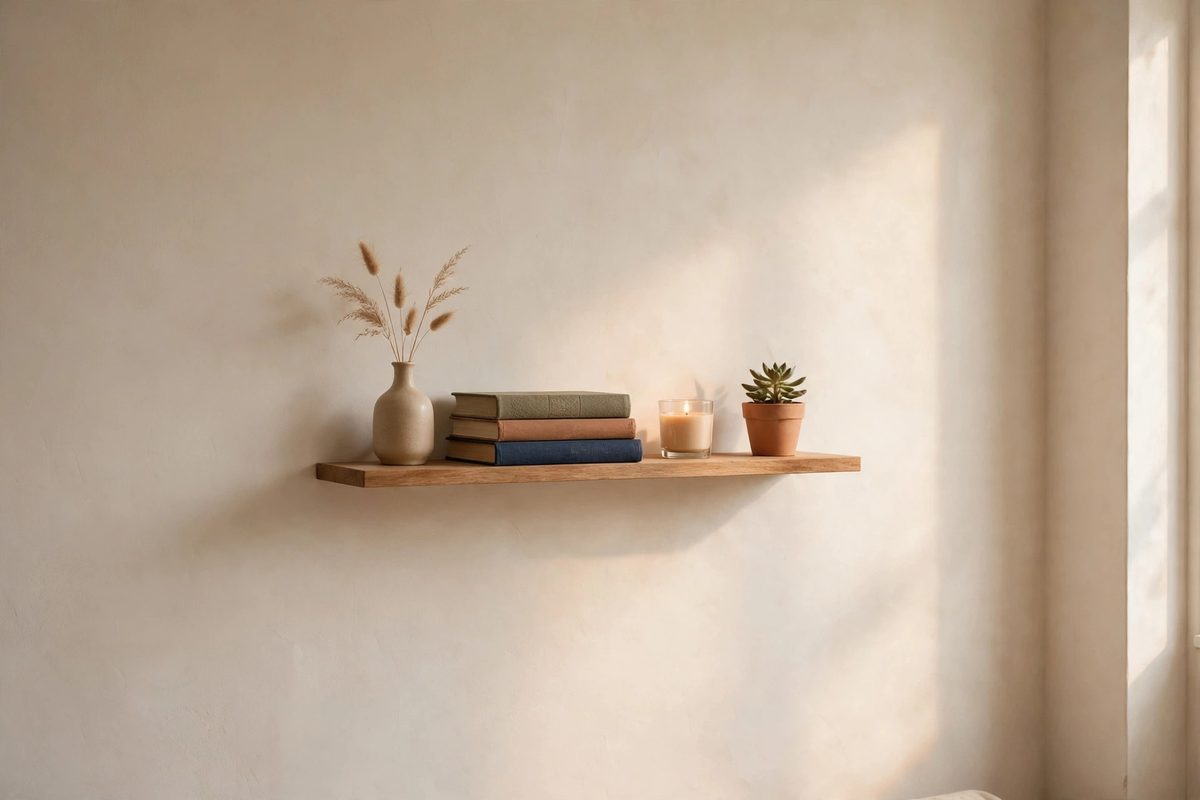
Start with one shelf, not three. A single well-styled shelf teaches you what you actually like looking at every day, and it gives you a clear test: if a new object does not earn its place, it goes somewhere else. This is especially useful in studios and one bedroom apartments where every wall competes with furniture, art, and storage.
One shelf also keeps dusting and rearranging manageable. Three crowded shelves can take an hour to clean. One curated shelf takes five minutes, which means you will actually keep it looking good.
How to make it work
Pick the shelf you see most often, usually in the living room or above a console. Limit it to five to seven objects, including books used as risers. Step back six feet and check: can you name each object without squinting? If not, remove one piece and look again.
2. A Floating Ledge by the Door
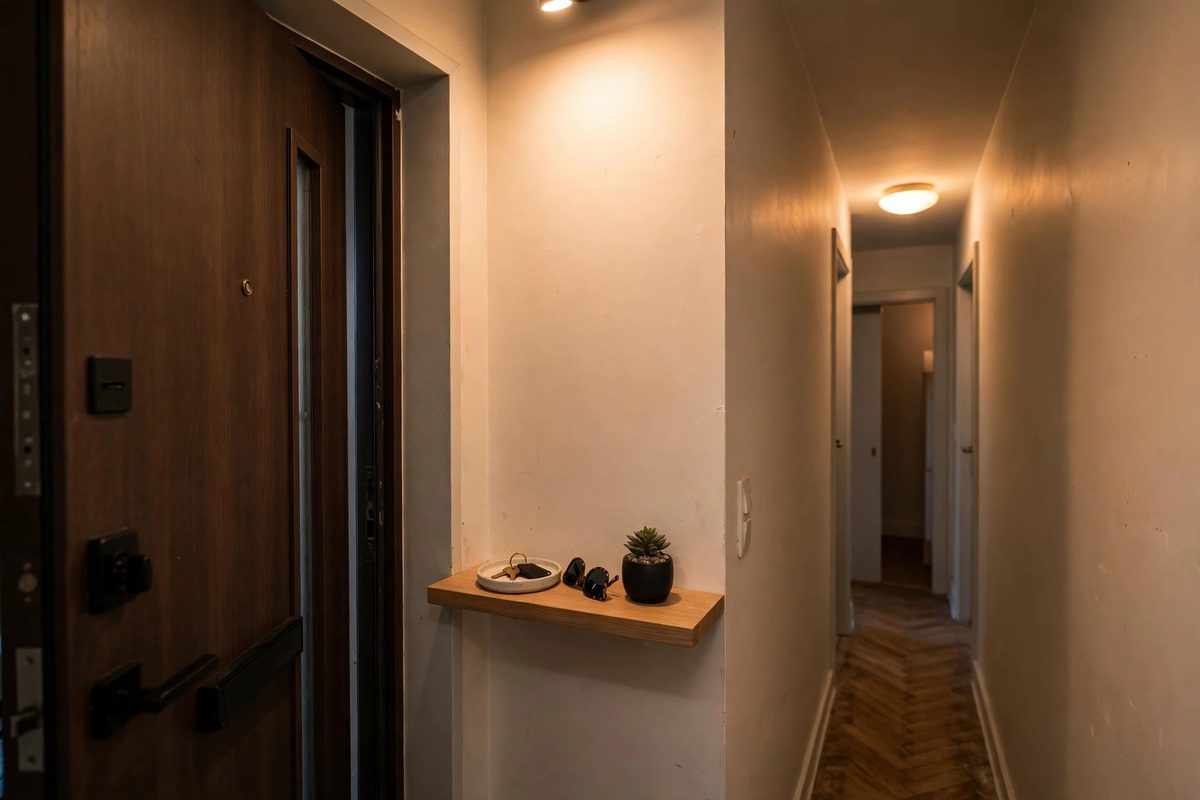
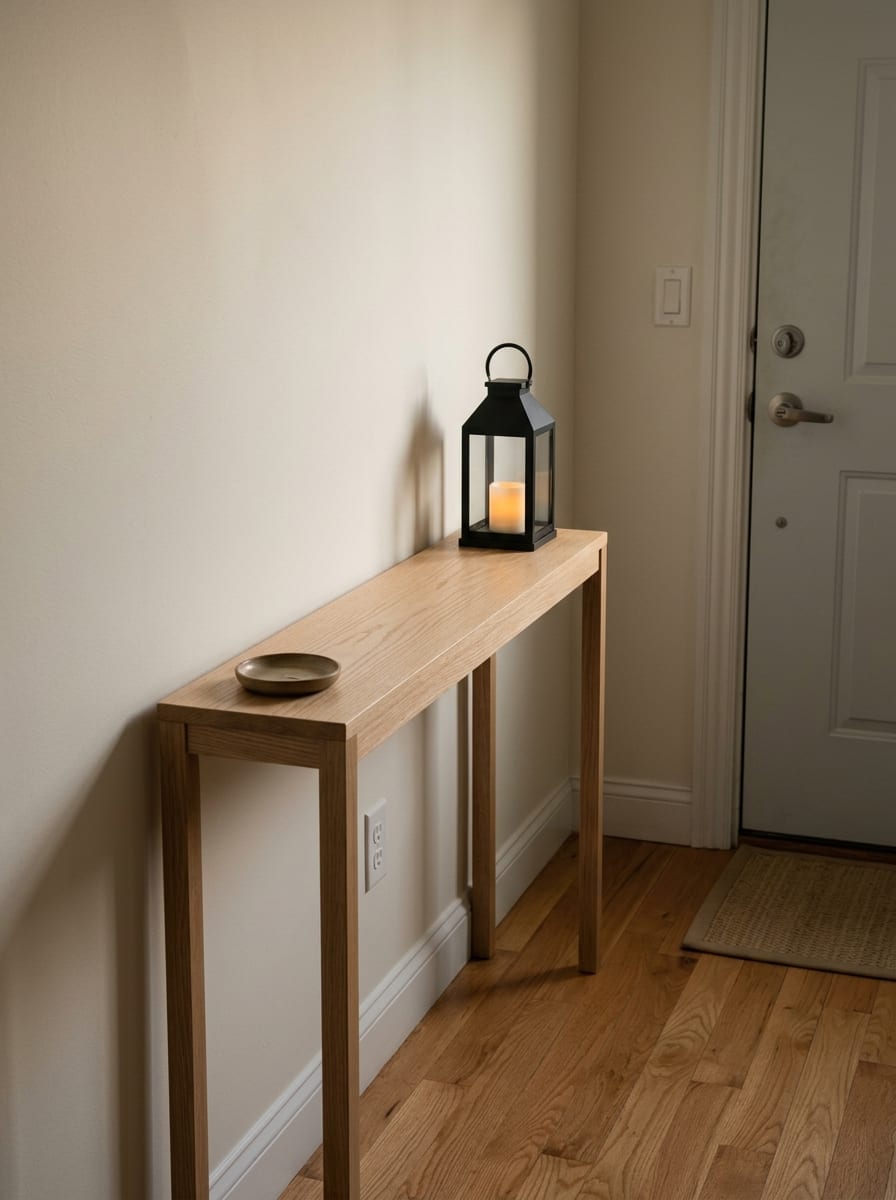
A narrow floating ledge, about 4 to 6 inches deep, by the front door gives keys, sunglasses, and one or two small treasures a home without a bulky console table. In a tight entry, that slim profile is the whole point. You get a landing spot and you keep the walkway clear.
Mount the ledge at about 42 to 48 inches high so you can drop items without bending, and so it stays above shoe clutter below. A small dish or tray on the ledge keeps keys from sliding off.
How to make it work
Use a stud finder or a proper wall anchor rated for at least 10 pounds, even if the ledge will hold light objects. People lean on entry shelves. Add one small hook underneath for a dog leash or tote bag, and resist adding a second row of objects on top of the first.
3. Grouped by Material, Not by Memory
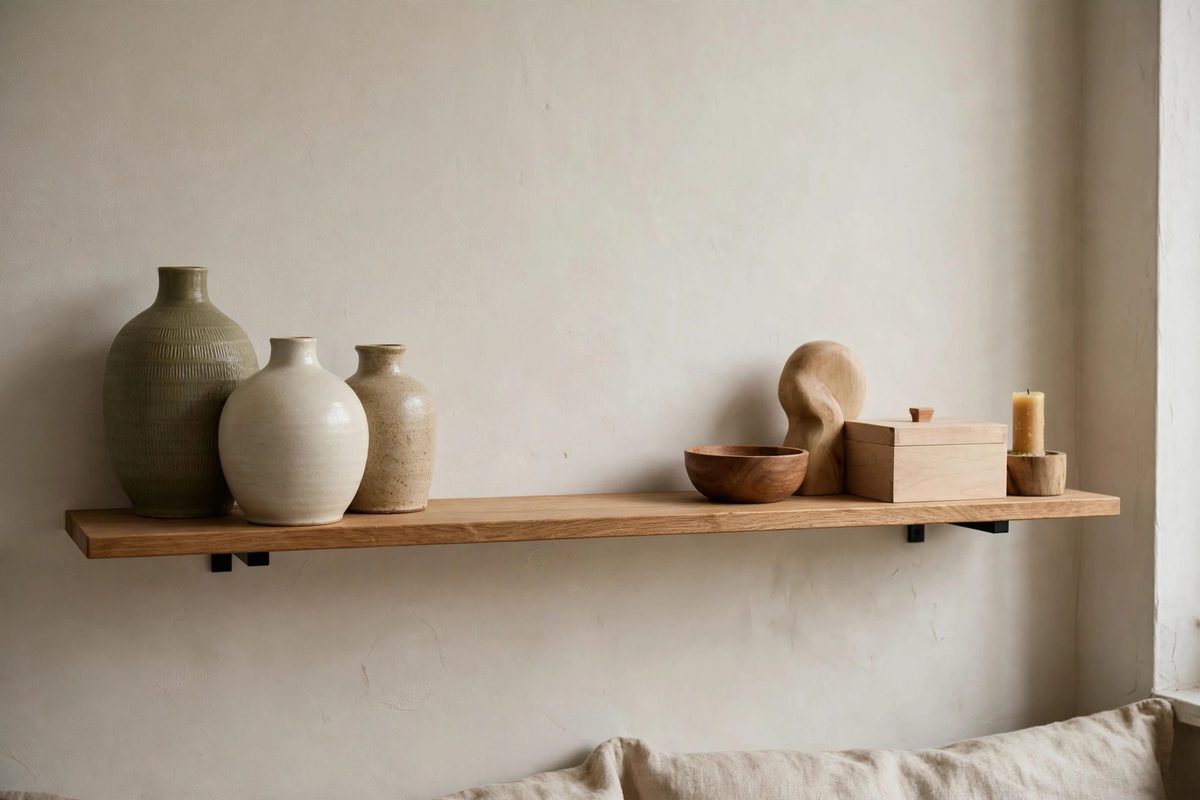
Shelves look cluttered when every object competes in a different material, color, and finish. Grouping by material calms that down fast. Put ceramics together, wood pieces together, and glass or metal pieces together, with space between each group.
This trick works even for mixed collections. A souvenir from three different trips can still look intentional if the pieces share a warm wood tone or a matte ceramic finish. The eye reads the group first and the individual stories second.
How to make it work
Sort your shelf objects into two or three material groups before you style anything. Place the largest group slightly off center, then a smaller group beside it. Leave at least 2 inches of empty shelf between groups. If one object breaks the pattern completely, give it its own spot or move it to another room.
4. The Tray That Makes It Look Intentional
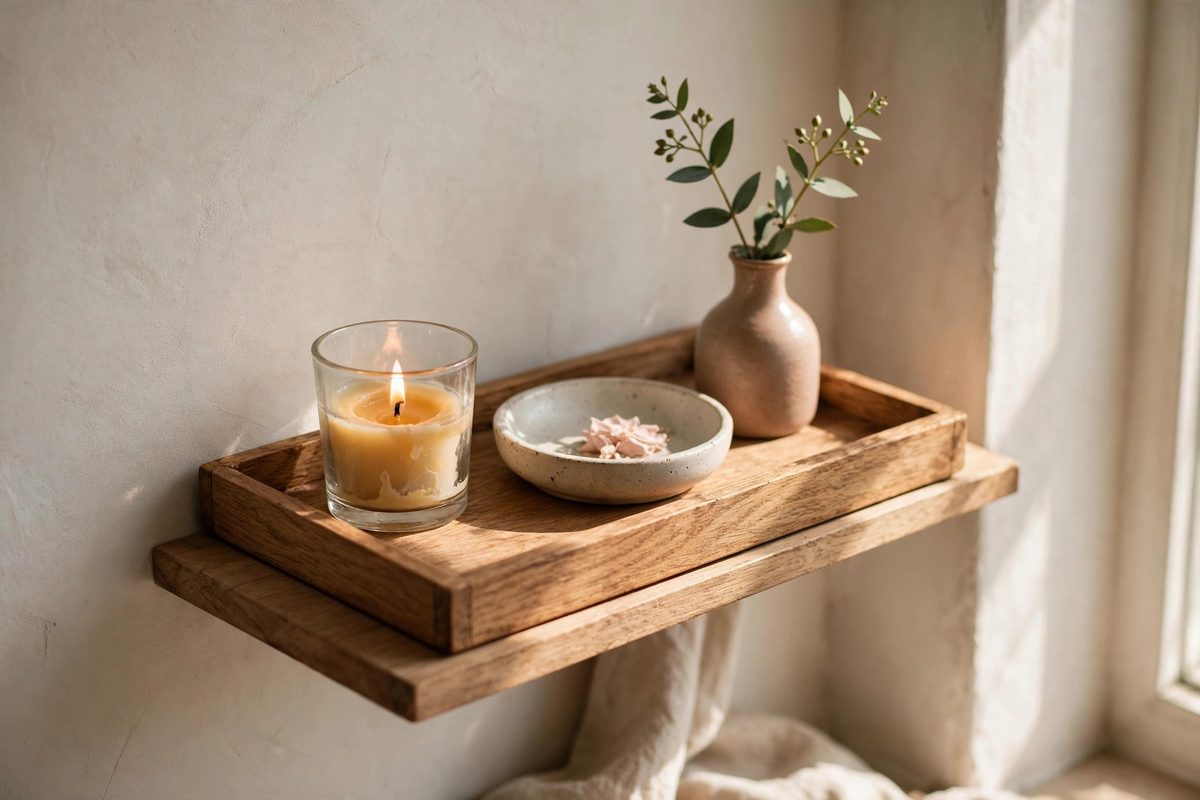
A tray is the fastest way to turn a scatter of small things into a display. It creates a visual boundary, so five tiny objects read as one arrangement instead of five separate bits of clutter. Choose a tray that fits the shelf with at least an inch of clearance on each side.
Round trays soften a shelf full of rectangular books and boxes. Rectangular trays work better on long, straight shelves. Either way, keep the tray itself simple: natural wood, matte ceramic, or plain metal, so it frames the objects instead of competing with them.
How to make it work
Place the tray first, then add three to five objects inside it, varying heights. A candle, a small dish, and one taller object, like a bud vase, is a reliable combination. If you cannot lift the tray and carry it to dust underneath, it holds too much.
5. Small Plants as Breathing Room
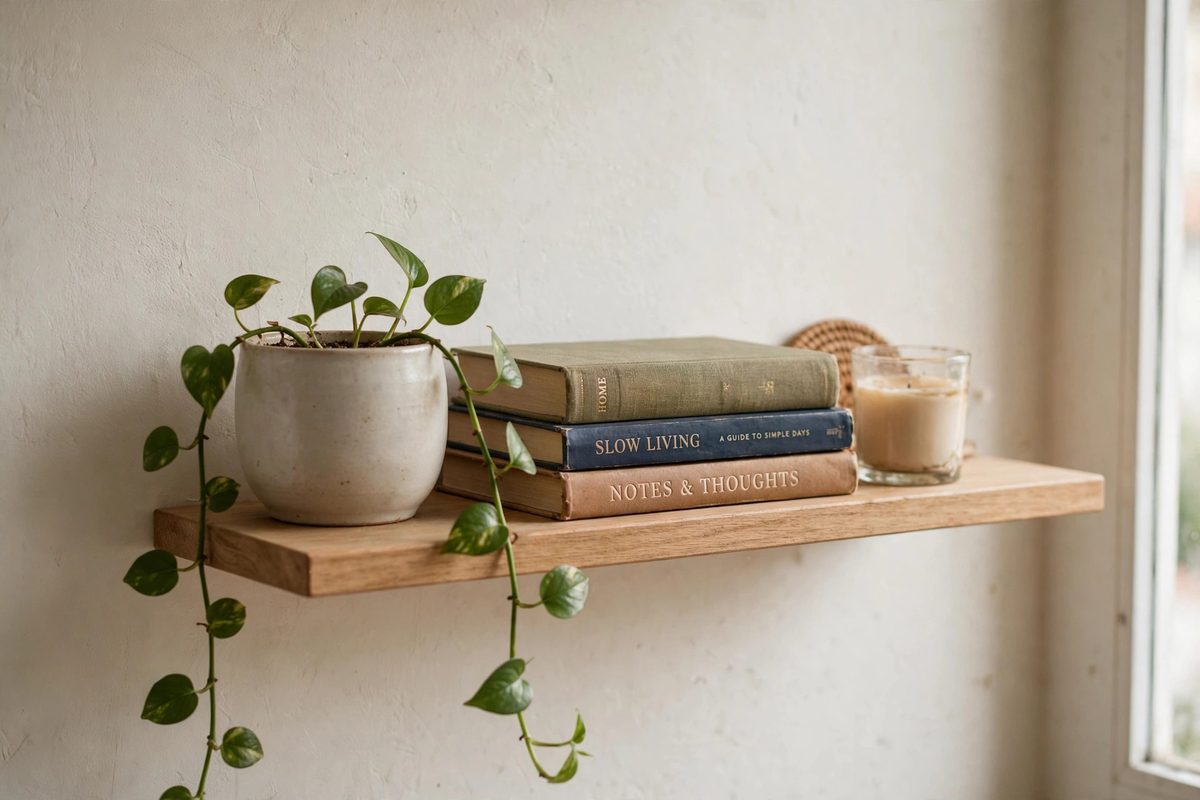
A small plant does two jobs on a trinket shelf: it adds life, and its leaves break up a row of hard, static objects. A trailing pothos or a compact pilea in a 4 inch pot is usually enough. You do not need a jungle, and a large plant will crowd the shelf and drip when watered.
Place the plant at one end of the shelf rather than the middle, so it frames the display instead of blocking it. Check light honestly. A shelf far from a window suits a low-light tolerant plant, while a sunny shelf can handle a succulent.
How to make it work
Use a pot with a drainage tray or a cachepot so water never reaches the shelf surface. Water over the sink, let it drain, then return the plant. Trim trailing vines when they start hiding the objects beside them, about once a month in growing season.
6. One Tall Object to Break the Line
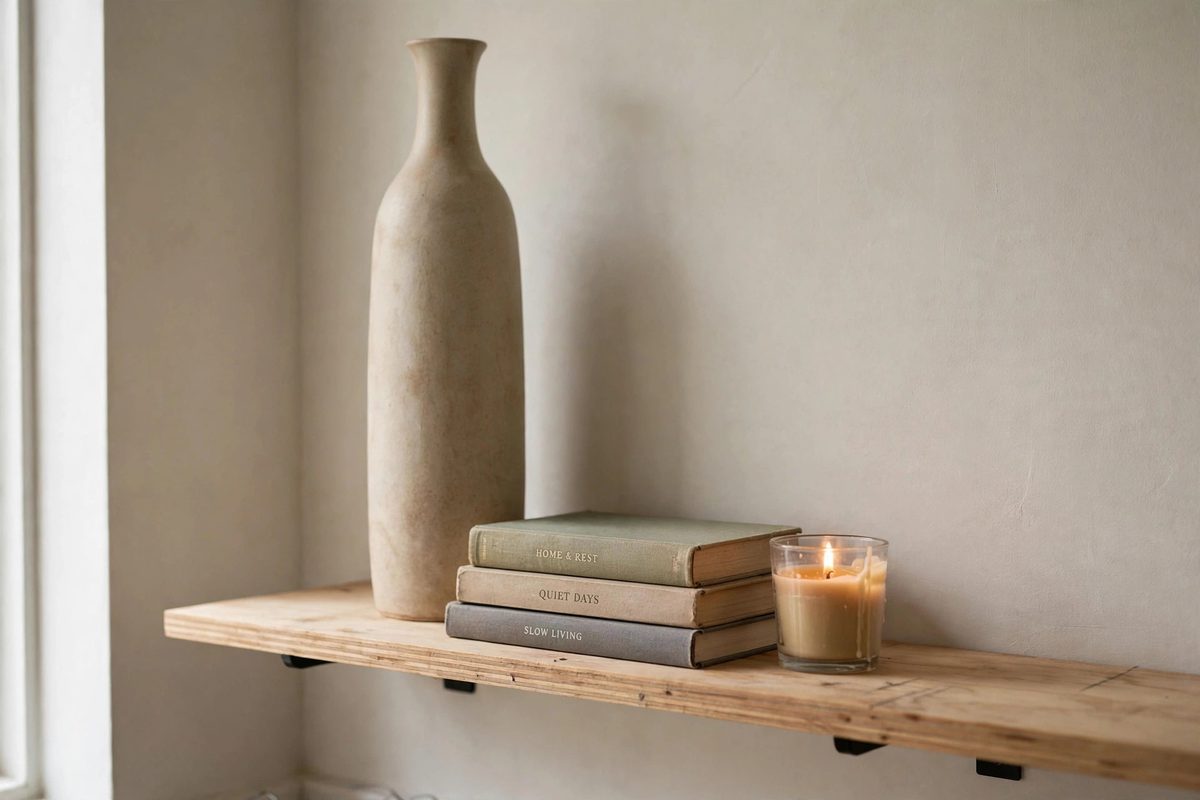
A shelf full of objects at the same height looks flat and, oddly, more cluttered. One taller piece, a vase, a framed print leaned against the wall, or a candlestick, creates a peak that organizes everything around it. The eye has a place to land, then travels across the rest of the shelf.
The tall object should be about 1.5 times the height of the next tallest piece, and it should sit near one end or just off center. A tall object dead center with identical small items on each side can look stiff and symmetrical in a way that feels staged.
How to make it work
Start with your tallest piece, then build outward with medium and short objects. Keep at least 3 inches between the top of the tall object and the shelf above it, or the ceiling, so it does not look squeezed. If you have two tall objects, split them across two shelves or two rooms.
7. Color-Limited Collections
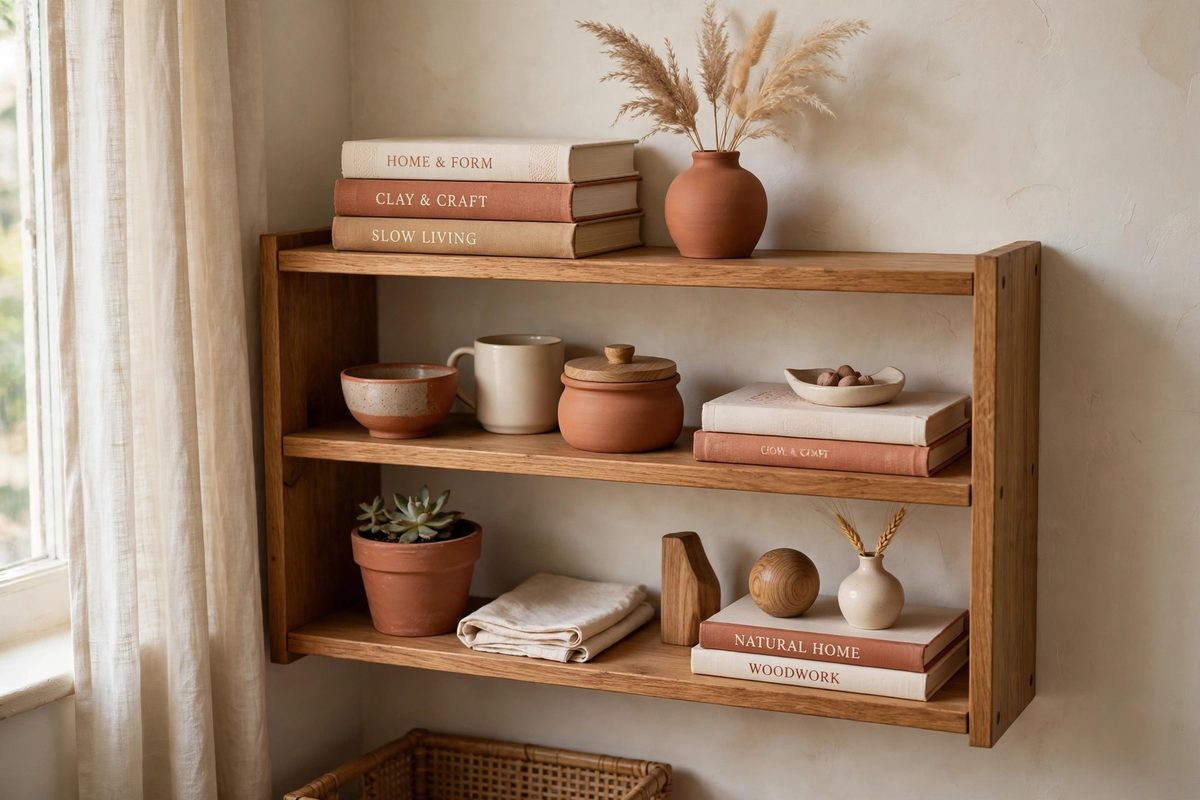
Color is often what makes a shelf feel chaotic. Ten objects in ten bright colors will fight each other, even if each one is lovely alone. Limiting the palette to two or three colors, plus neutrals, lets a collection feel cohesive without matching everything.
This does not mean repainting souvenirs or hiding colorful pieces. It means choosing which colorful pieces share a shelf, and moving the outliers elsewhere. A shelf of warm terracotta, cream, and wood tones can hold plenty of personality without visual noise.
How to make it work
Photograph your shelf, then look at the photo in black and white. If the shapes still look balanced, the structure is good. Then check color: pick the two dominant colors and remove anything that introduces a third loud color. Repeat the removed color in at least two objects so it reads as a choice, not an accident.
8. Rotating Display, Not Permanent Museum
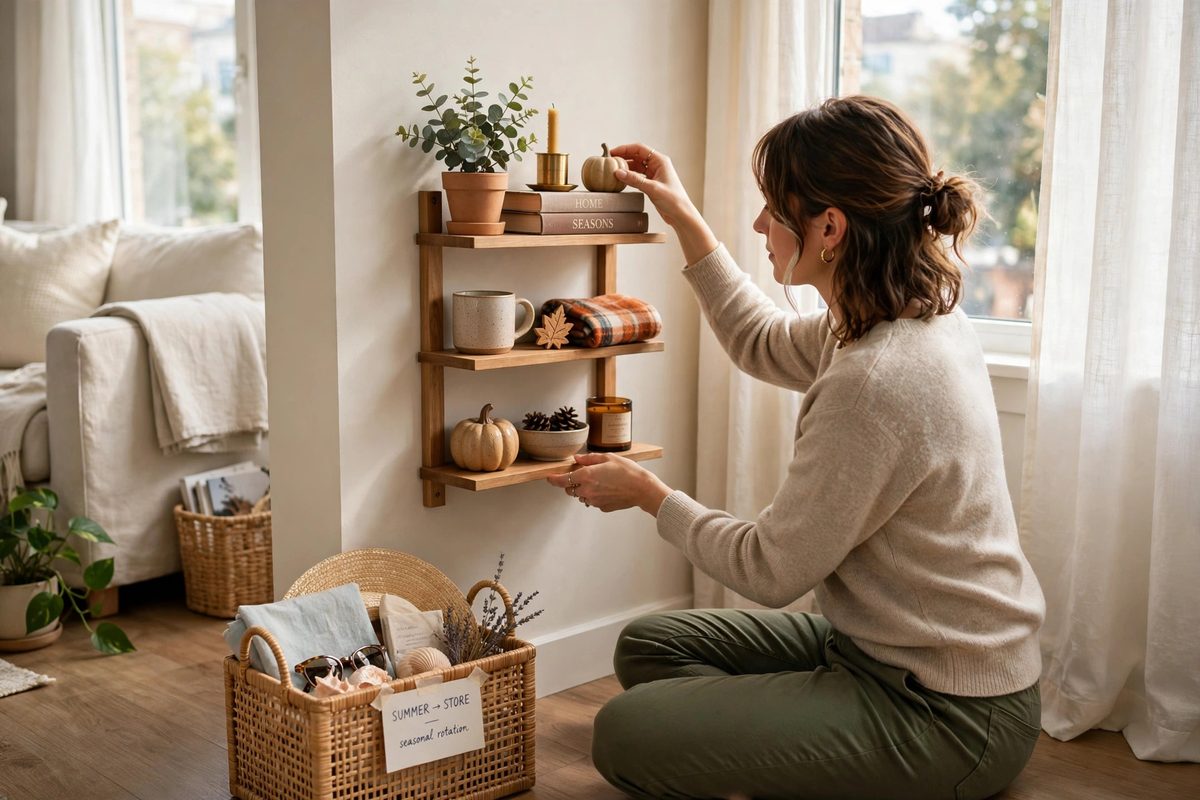
Small apartments do not have room for every treasure to be out at once, and that is actually a gift. Rotating your display every season or two keeps the shelf feeling fresh and gives you a reason to enjoy pieces that spent months in a box.
Keep a small storage bin, labeled by season or theme, in a closet. When you swap, change only about half the shelf. Keeping a few anchor pieces in place stops the shelf from feeling completely unfamiliar after each rotation.
How to make it work
Set a calendar reminder for the first weekend of each season, about 15 minutes. Pull everything off the shelf, dust it, then restyle with a mix of returning favorites and stored pieces. Donate or relocate anything you no longer enjoy seeing; a rotation is also an edit.
9. Shadow Boxes for Tiny Treasures
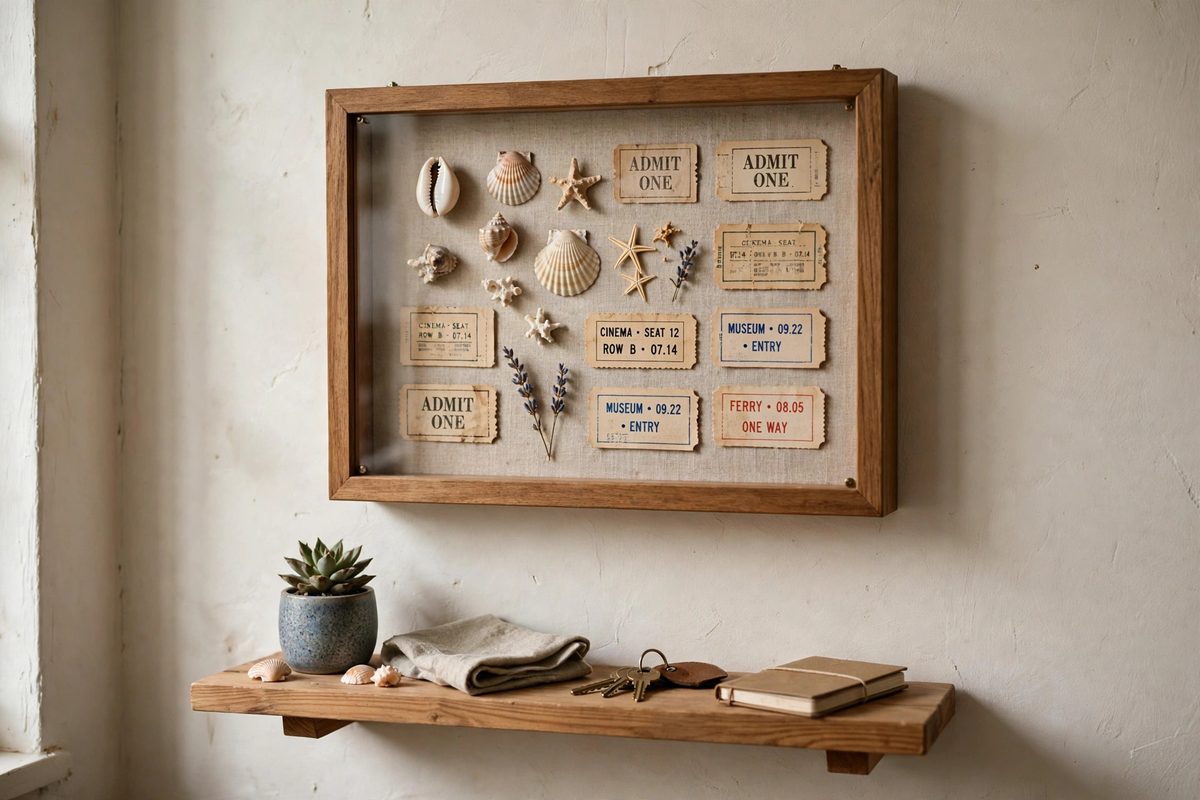
The tiniest objects, ticket stubs, shells, pins, miniature figurines, are the hardest to style on an open shelf. They fall over, collect dust, and disappear behind bigger pieces. A shadow box, 8 by 10 or 11 by 14 inches, turns them into one framed display with a clear boundary.
Mount the shadow box on the wall above the shelf or lean it against the wall on the shelf itself. Inside, use a plain linen or kraft backing so the objects stand out. Limit each box to one theme, one trip or one collection, so it reads as a story rather than a junk drawer behind glass.
How to make it work
Arrange objects on the backing before gluing or pinning anything. Leave space around each piece, and put the smallest items at eye level inside the box. Hang the box with hardware rated for its weight, and keep it out of direct sunlight if it holds paper or fabric.
10. The Weekly Five-Minute Edit
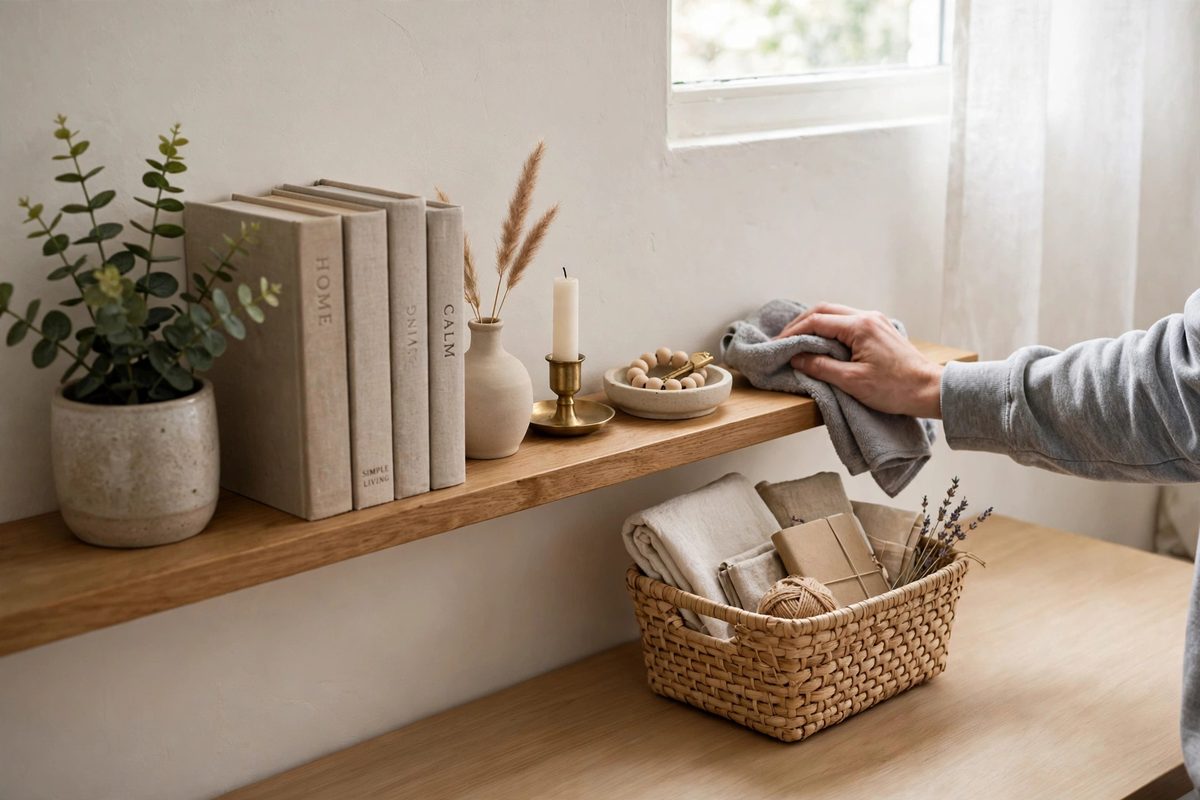
Even a well-styled shelf drifts. Mail lands on it, a new candle appears, a souvenir gets set down “just for now.” A weekly five-minute edit stops that drift before it becomes clutter. This is less about styling talent and more about a habit.
Walk past the shelf once a week with a small basket. Remove anything that does not belong there, dust the surface, and straighten what remains. That tiny reset keeps the shelf looking like the day you styled it, without a full restyle.
How to make it work
Pair the edit with something you already do weekly, like taking out recycling or starting laundry. Keep a “shelf overflow” spot, one drawer or bin, for items waiting for a real home. If the same object keeps landing on the shelf, it needs a permanent spot elsewhere, not another week of edits.
A curated trinket shelf is not about owning fewer beautiful things. It is about giving the things you love enough space to be noticed, one shelf, one group, and one five-minute edit at a time.