9 Small Apartment January Reset Ideas That Make the Home Easier to Use
9 small apartment January reset ideas that make home easier to use: entry resets, kitchen zones, landing spots, closet edits, and routines that last.
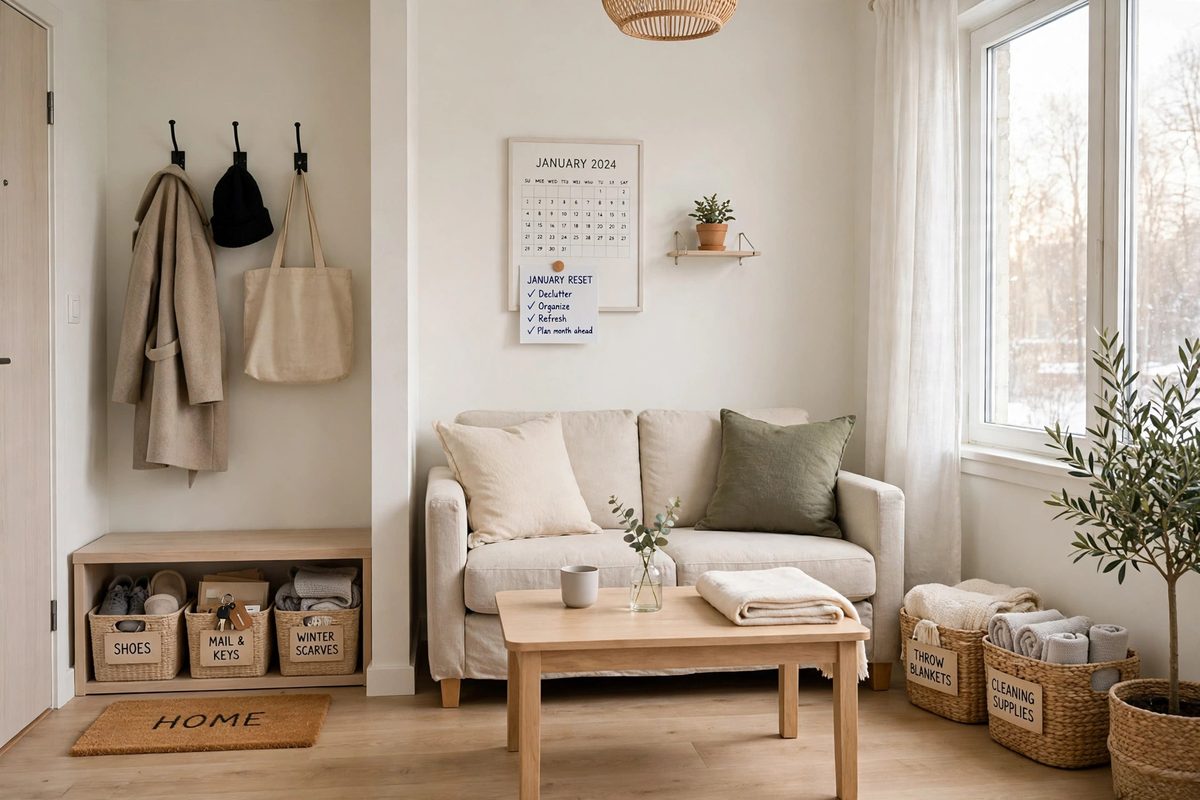
Bright small apartment living room after a January reset, with clear surfaces, labeled storage baskets, and a tidy entry area
In This Guide
January is the natural reset month, but most January resets fail because they try to reorganize the whole apartment in one weekend. In a small apartment, a better reset is smaller and more practical: fix the spots that cause daily friction, the entry pile, the kitchen drawer that never closes, the closet that fights you every morning, and build routines that keep those spots fixed.
This reset is about usability, not perfection. A home that is easier to use is one where everything you reach for daily has a spot, and everything else is stored where you can find it without digging.
These ideas work as a one-week reset, one idea per evening, or a single focused weekend. They connect with the styling in small apartment trinket shelf ideas and the glamorous small-room look in neo deco living room ideas. For deeper storage systems, see small apartment organization ideas.
1. The One-Bag Entry Reset
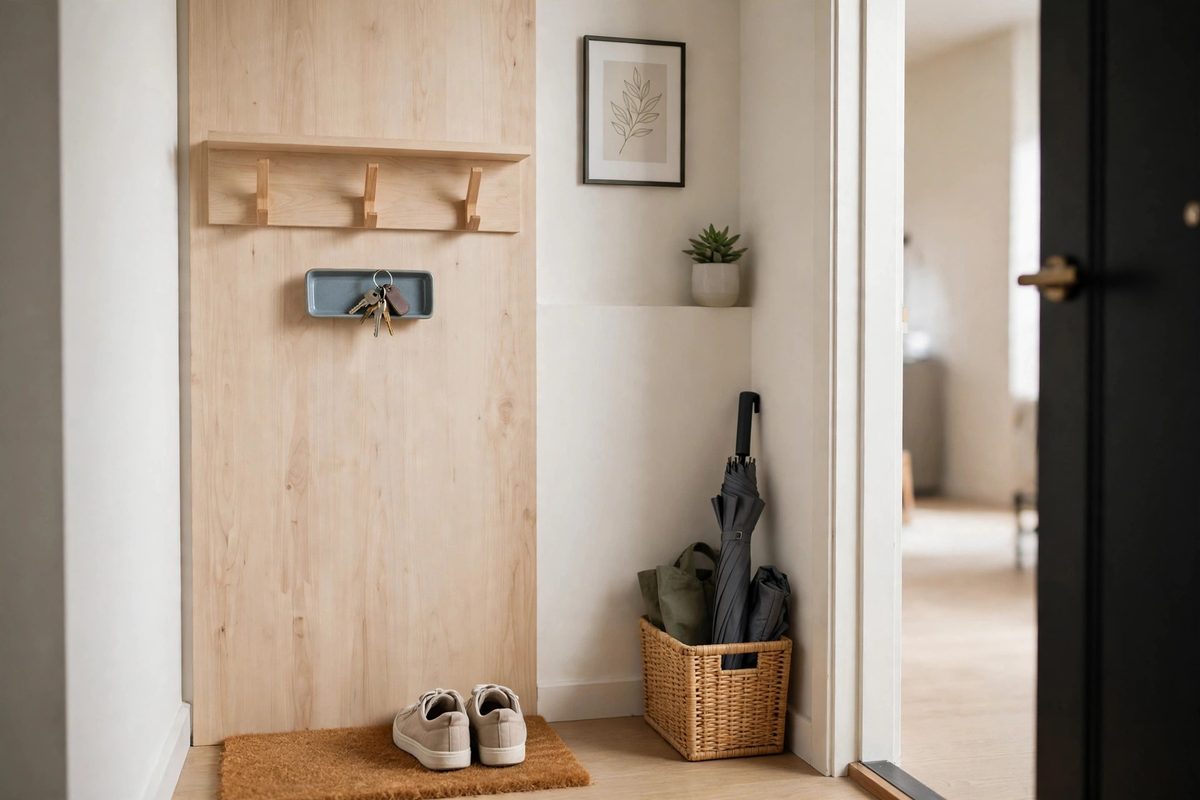
The entry is where small apartments lose the most space to clutter, because everything coming home lands there first. The one-bag reset is simple: fill one bag with everything in the entry that does not belong there, and relocate each item to its real home. What remains should be only what you use on the way in or out: keys, a bag, shoes you wear daily, and a coat.
Add one hook per person and one small tray for keys and sunglasses. That is usually enough hardware for a small entry; more hooks invite more accumulation.
How to make it work
Empty the entry completely first, clean the surface and floor, then put back only daily-use items. Relocate the bag’s contents the same day, or the bag becomes a new clutter spot in another room. If shoes pile up, limit the entry to two pairs per person and store the rest in a closet.
2. Kitchen Zones That Match Real Cooking
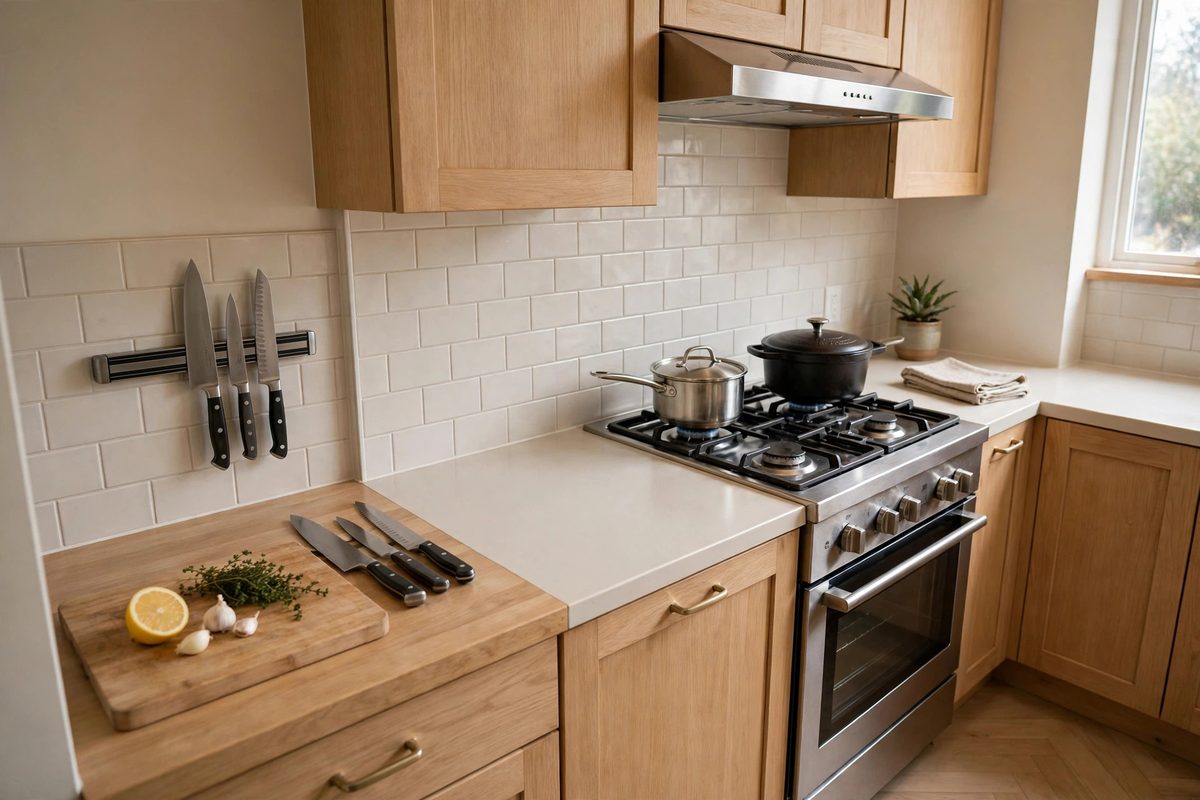
Kitchens work best in zones: prep, cooking, and cleanup, with tools stored where they are used. In a small kitchen, zoning means moving the cutting boards and knives near the prep counter, pots near the stove, and dish soap and towels near the sink, even if that breaks a previous, tidier-looking arrangement.
Audit your kitchen by cooking one normal meal and noting every time you cross the kitchen for a tool. Each crossing is a zone fix waiting to happen.
How to make it work
Move the five tools you use most, usually a chef’s knife, cutting board, spatula, pot, and pan, to within arm’s reach of where you use them. Store rarely used appliances, like a waffle maker or food processor, in a high cabinet or closet. Keep at least 24 inches of clear counter beside the stove for prep, even if it means storing the toaster elsewhere.
3. A Landing Spot for Every Daily Carry
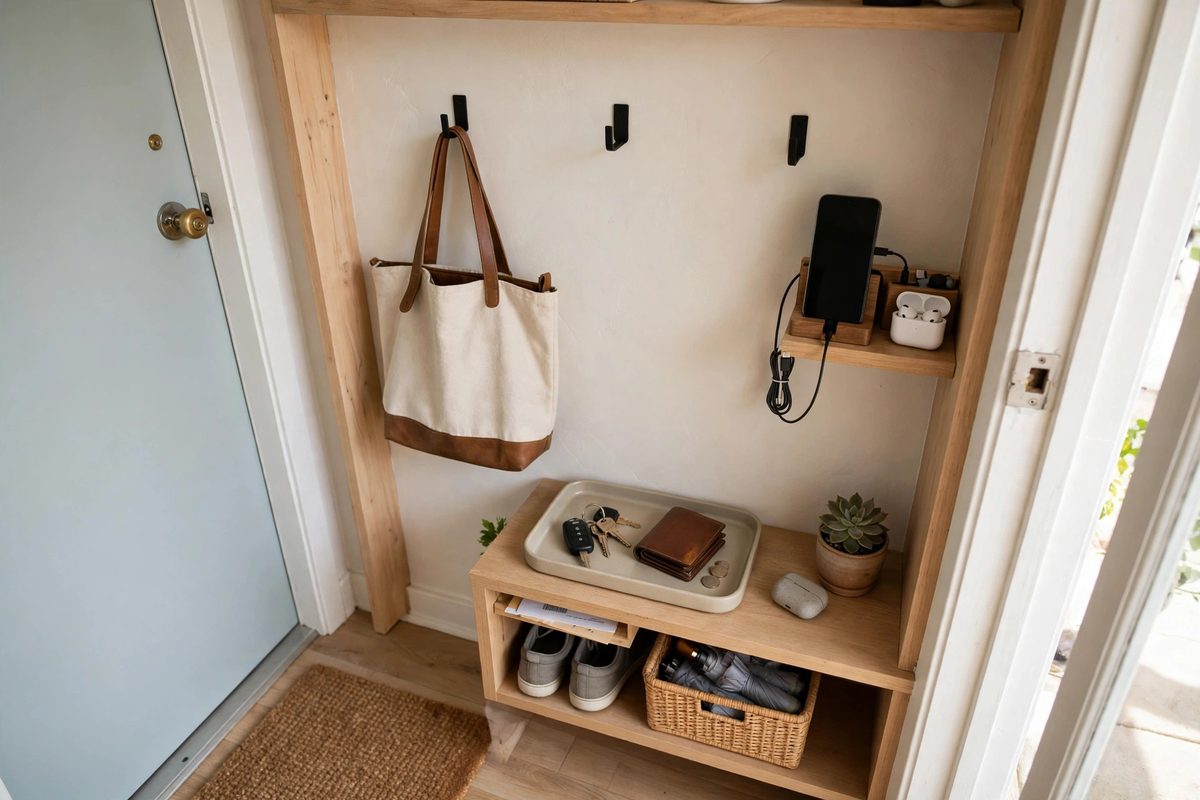
Daily carries, phone, wallet, keys, bag, water bottle, are the items that end up on every flat surface in a small apartment. Giving each one a landing spot, a tray, a hook, a specific shelf section, stops the scatter. The spot should be where you naturally set the item down, not where it theoretically belongs.
A small tray by the door for keys and wallet, a hook for your bag, and a charging station for your phone cover most daily carries in one compact zone.
How to make it work
Watch yourself for two days and note where each daily carry actually lands. Put the landing spot there, or as close as possible, rather than fighting the habit. Label nothing yet; if the spot works for two weeks without reminders, it is the right spot. If items still scatter, the spot is in the wrong place, not that you lack discipline.
4. Closet Capsule: One In, One Out
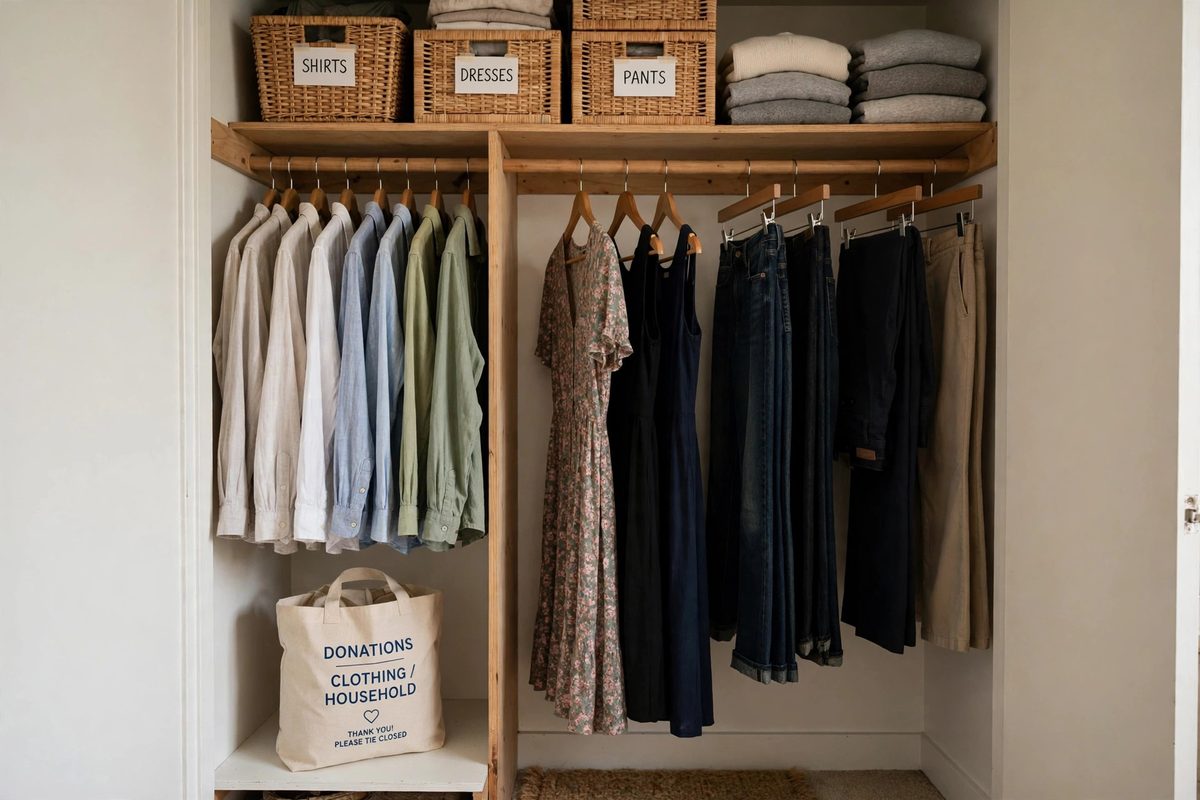
Small closets cannot hold everything, and January is the time to admit it. The one-in, one-out rule keeps a closet stable: every new item that enters means one item leaves, donated, sold, or relocated. It is less dramatic than a full capsule wardrobe, and more sustainable.
Start January by removing anything you did not wear in the last year, anything damaged beyond repair, and duplicates. That first pass usually frees 20 to 30 percent of closet space in a small apartment.
How to make it work
Pull everything out, clean the closet, then return items by category: work, casual, outerwear, and special occasion. Hang the most worn items at eye level and easiest reach. Put a small donation bag in the closet permanently, so one-in, one-out happens immediately when a new item arrives, not someday.
5. Paper and Mail: The Five-Minute Daily Sort
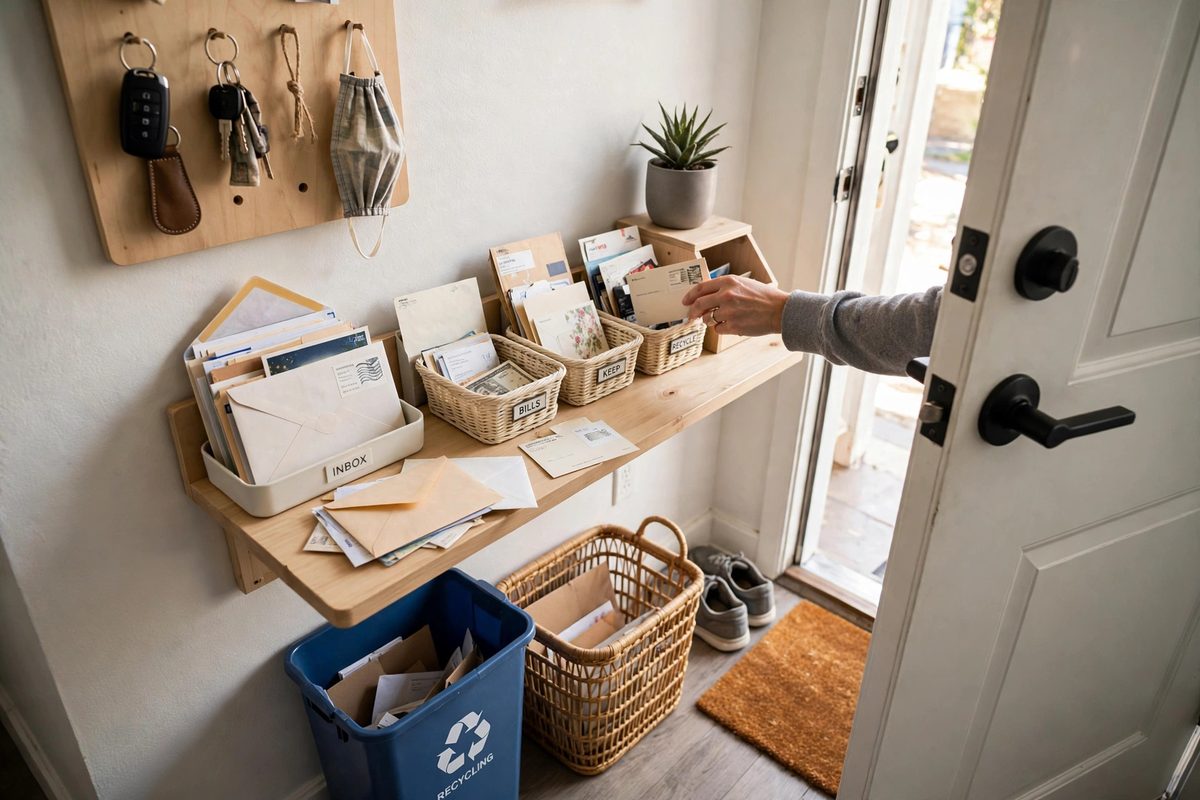
Paper is the silent clutter of small apartments. Mail, receipts, and school or work papers pile on counters and tables because there is no system for them. A five-minute daily sort, when mail arrives, prevents piles: recycle junk immediately, file bills in one folder, and act on time-sensitive items the same day or place them in a single action tray.
A single inbox tray, not five piles, is the system. One tray for incoming paper, emptied weekly, beats a filing cabinet nobody opens.
How to make it work
Place a recycling bin and a small inbox tray near the entry or where mail lands. Sort mail standing up, the moment you bring it in, and do not set unsorted mail on a counter even once. Go paperless for bills and statements where possible; each paperless switch removes a future pile permanently.
6. Bathroom Counters Down to Five Items
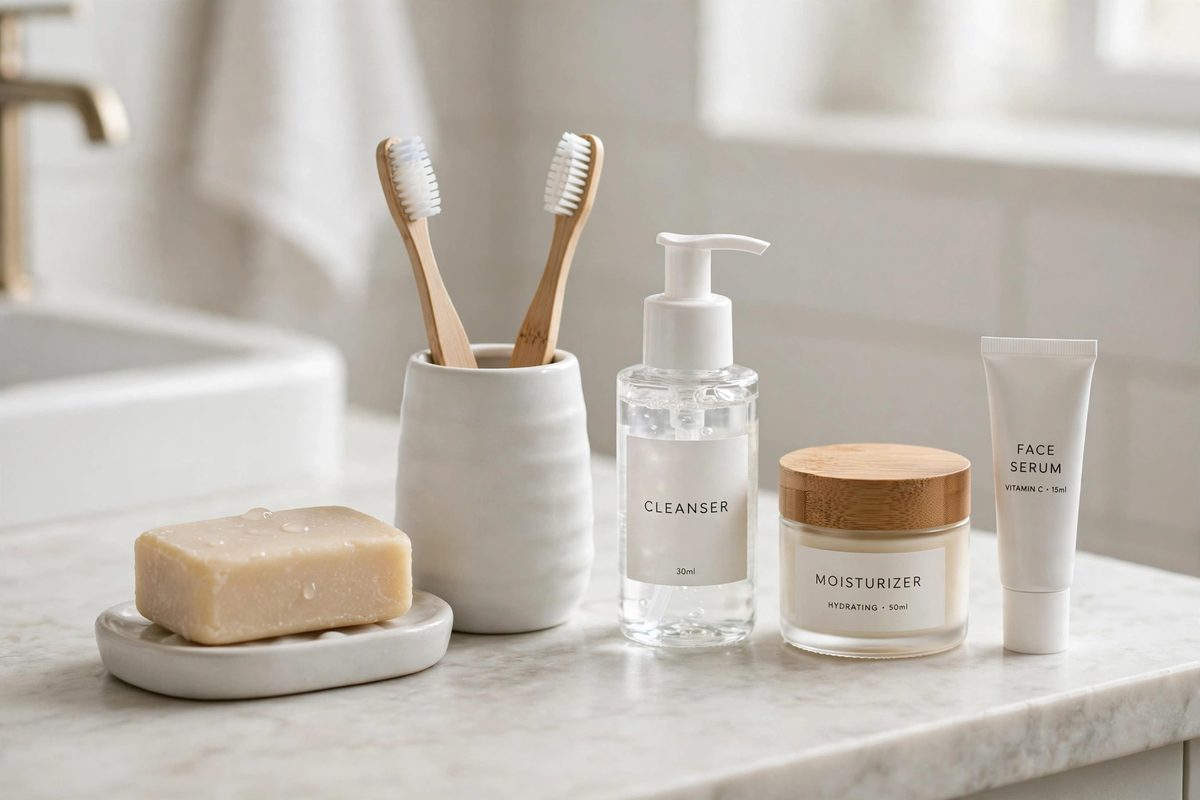
Small bathroom counters disappear under bottles fast. The five-item rule keeps the counter usable: only five items live on the counter permanently, usually soap, a toothbrush holder, and three daily-use products. Everything else goes in a cabinet, drawer, or shower caddy.
This rule also makes cleaning faster. Wiping a counter with five items takes a minute. Wiping a counter with twenty bottles takes ten minutes and usually gets skipped.
How to make it work
Remove everything from the counter, clean it, then return only daily-use items. Decant products you use daily into matching small bottles if mismatched packaging bothers you, but do not buy new containers until you have edited down to five. Store the rest by category in a drawer organizer or a small bin under the sink.
7. The Sunday 20-Minute Whole-Home Pass
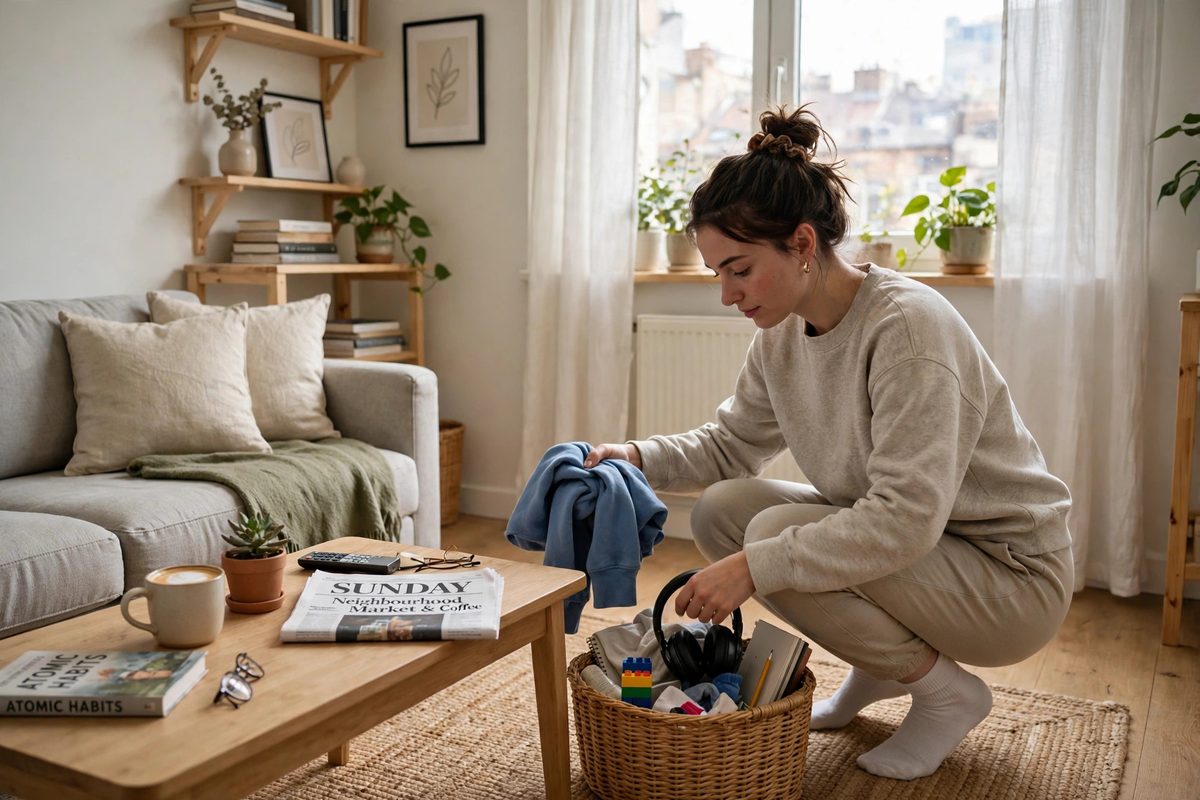
A weekly reset beats a monthly deep clean for small apartments, because clutter accumulates fast in small spaces. The Sunday 20-minute pass is a timed, whole-home walk: return items to their rooms, wipe surfaces, take out recycling, and start one load of laundry. Set a timer; the time limit keeps it from becoming a full cleaning session.
Do the pass with a basket: carry it room to room, collecting out-of-place items, then distribute them at the end. That single basket prevents ten trips back and forth.
How to make it work
Pick a consistent time, Sunday evening works for most people, and pair the pass with a podcast or playlist so it feels like a routine, not a chore. Involve everyone in the household, splitting rooms if needed. If 20 minutes is not enough, the home needs a bigger edit, not a longer pass; note what keeps piling up and fix its storage that week.
8. Storage Labels That Survive February
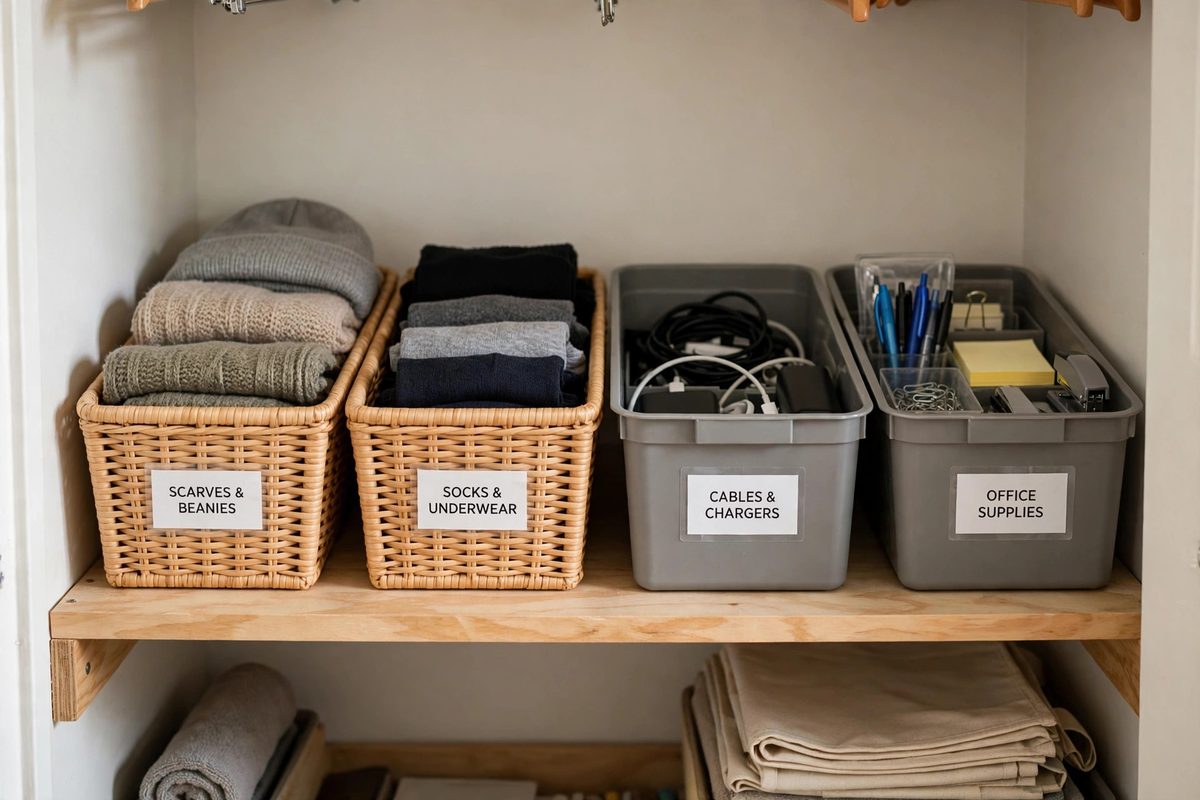
January labeling projects often fail because labels are vague, pretty but useless, or placed where nobody reads them. Labels that survive February are specific, visible, and honest: “Winter scarves and gloves,” not “Stuff,” and placed on the front of the bin, not the lid you lift off.
Label only closed storage: bins, baskets with lids, and drawers. Open shelves do not need labels, since contents are visible, and labeling them adds visual noise.
How to make it work
Use a label maker or masking tape and a marker; fancy labels are fine, but legibility matters more than style. Label bins as you fill them, not after, so the label matches the contents. Review labels in February and fix any that no longer match; a wrong label is worse than no label, since it sends you searching in the wrong bin.
9. Reset Routines, Not Just Rooms
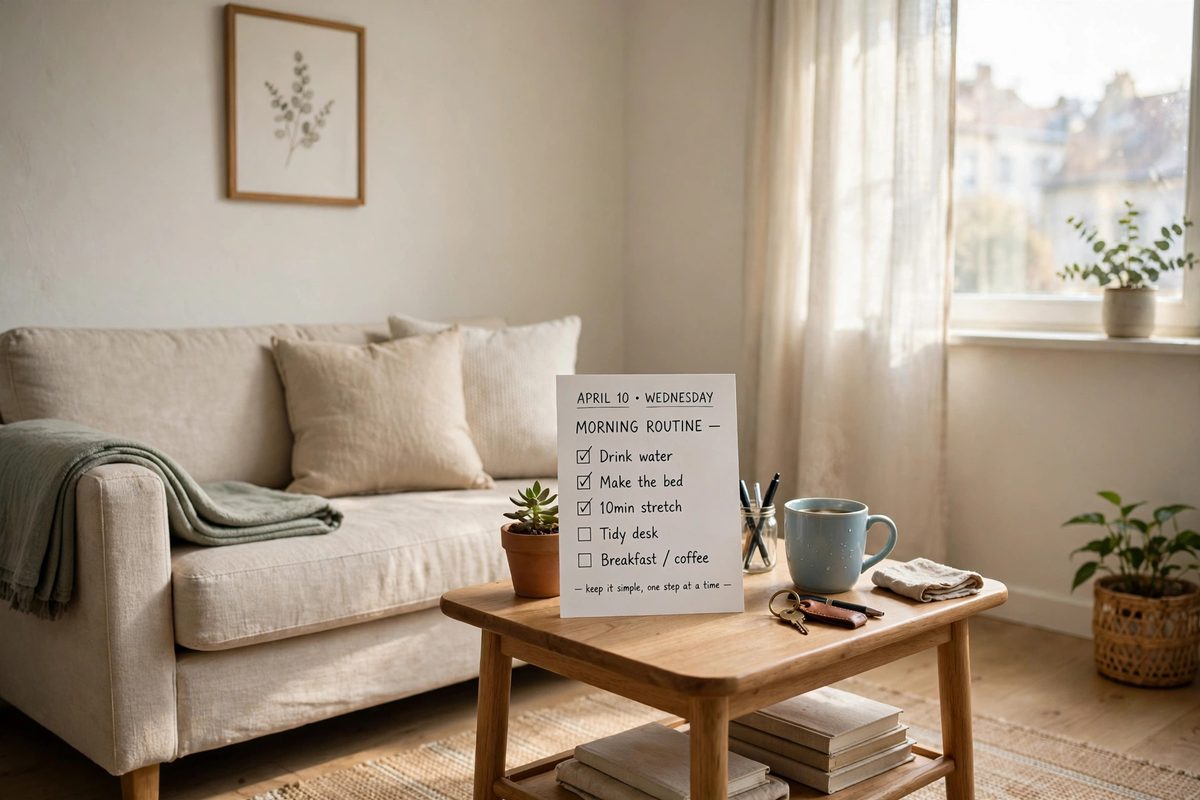
The final reset idea is the one that makes the other eight last: routines, not rooms. A reset room drifts back in weeks without a routine to maintain it. A reset routine, the five-minute mail sort, the Sunday pass, the one-in, one-out closet rule, keeps the room reset with minutes of effort.
Pick three routines maximum for January. More than three, and none of them stick. The three that cover most small apartments are: a daily five-minute tidy, a weekly 20-minute pass, and a monthly one-bag edit of the entry or closet.
How to make it work
Attach each routine to an existing habit: mail sort when you get home, Sunday pass after dinner, monthly edit on the first weekend. Track routines on a simple calendar checkmark, not an app you will abandon. If a routine fails for two weeks, change the routine, not your willpower; a smaller routine you actually do beats a perfect routine you skip.
A January reset that lasts is not a weekend makeover. It is a few friction spots fixed, a few landing spots created, and three small routines that keep them fixed. Do that, and your small apartment will feel easier to use in February, March, and long after January’s motivation fades.