10 Peel-and-Stick Wall Decal Ideas for Renters
10 peel and stick wall decals for renters, from quote decals and botanical branches to full-wall murals, with wall prep, paint finishes, sizing, repositioning, and damage-free removal.
In This Guide
Peel and stick wall decals are thin vinyl shapes and scenes that press onto a painted wall, stay put for months or years, and peel off at move-out without holes, nails, or repainting. For renters, they are the fastest way to turn a blank white wall into something personal, and they cost far less than wallpaper or a painted accent wall. Most decals run $10 to $60 for a single design, and a full-wall mural set runs $60 to $150, which puts a decorated wall within reach of almost any rental budget.
The two questions every renter asks first have honest answers. Will it peel paint? On a properly cured, smooth painted wall, a quality removable vinyl decal should not, but fresh paint, flat matte paint, and cheap high-tack vinyl are the three usual culprits when paint does lift. Does it work on textured walls? Light orange-peel texture can work with thicker vinyl and firm pressure, but heavy knockdown, brick, and popcorn texture will defeat most decals. This roundup covers decal types, the wall prep and paint finishes that actually accept decals, sizing and placement, repositioning, clean removal, textured-wall limits, and cost per wall, so you can pick a design that survives your lease. If you like the idea of a bigger wall change without screws, see renter-friendly accent walls with glue, no screws, and for a matching floor refresh, peel-and-stick floor tile ideas for renters covers the ground under your new wall.
1. Quote Decals for Entryways and Living Rooms

A quote decal is a single phrase in cut vinyl lettering, applied letter by letter with transfer tape, and it reads like hand-painted script from across the room. Entryways, living rooms above a sofa, and the wall above a desk are the natural spots, and a short phrase works better than a long paragraph: at 24 to 36 inches wide, a 3 to 6 word phrase stays readable without crowding the wall. Expect to pay $12 to $30 for a standard quote decal, and $35 to $55 for an oversized one above 48 inches wide.
Application takes patience rather than skill. Tape the design to the wall with painter’s tape, level it, peel the backing, and smooth from the center outward with a credit card wrapped in a soft cloth. Small air bubbles usually work out with a pin prick and a second smoothing pass. Choose a font you can actually read from the doorway, since elaborate script looks beautiful in a product photo and illegible from your sofa.
2. Botanical Branches and Leaves for Bedrooms

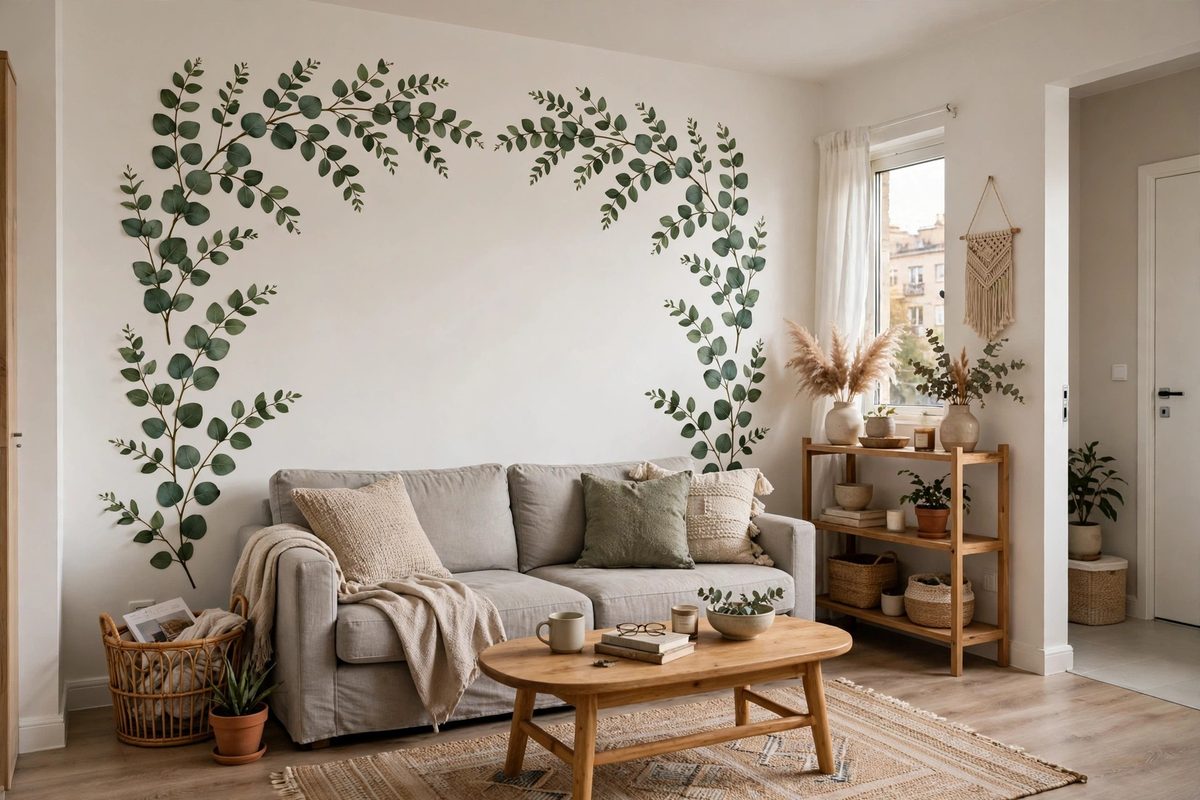
Botanical decals, eucalyptus stems, monstera leaves, and climbing vines, soften a bedroom without any of the upkeep of real plants. A branch set placed behind a bed acts like a headboard, which matters in rentals where a real headboard may be bulky or banned from wall mounting. Most botanical sets include 20 to 60 individual pieces, so you can spread one $18 to $40 set across a headboard wall and a second smaller wall instead of clustering everything in one spot.
The trick is asymmetry. Real branches never grow in perfect mirror image, so place the tallest stem off-center, let a few leaves trail toward the nightstand, and leave breathing room between clusters. Step back from the doorway after every few pieces, because a design that looks balanced at arm’s length often looks crowded from the bed. On pale walls, sage green and olive vinyl reads calm; on dark walls, white or gold botanical vinyl pops far better than green, which can vanish into a navy or charcoal background.
3. Geometric Shapes and Arches for Modern Rentals
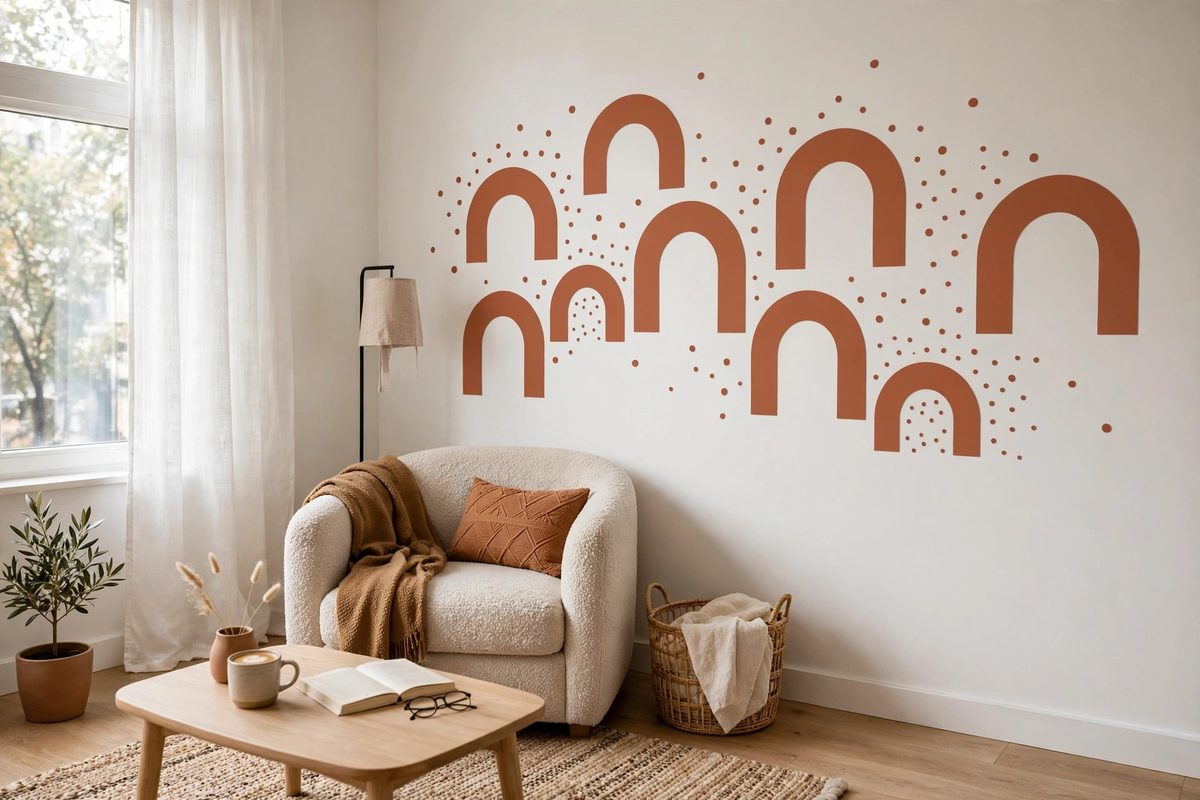
Geometric decals, arches, half circles, dots, and line drawings, give a modern rental the painted-arch look with zero paint and zero landlord negotiation. A single large arch decal, usually 36 to 60 inches tall and 24 to 36 inches wide, costs $25 to $50 and anchors a reading chair or a desk the way a painted arch would. Scatter dots in a matching color around it, and the wall reads intentional instead of random.
Spacing is the whole game here. Mark dot positions lightly with painter’s tape before sticking anything, and keep gaps consistent, 4 to 6 inches apart for a calm pattern, 2 to 3 inches for a denser confetti feel. Terracotta, mustard, and sage are the safest colors on white rental walls, while black geometry suits a room that already has black frames or hardware. If an arch decal ever starts curling at the edges, a hair dryer on low heat for 10 seconds softens the vinyl enough to press it flat again.
4. Kids Room Decals That Grow With the Room
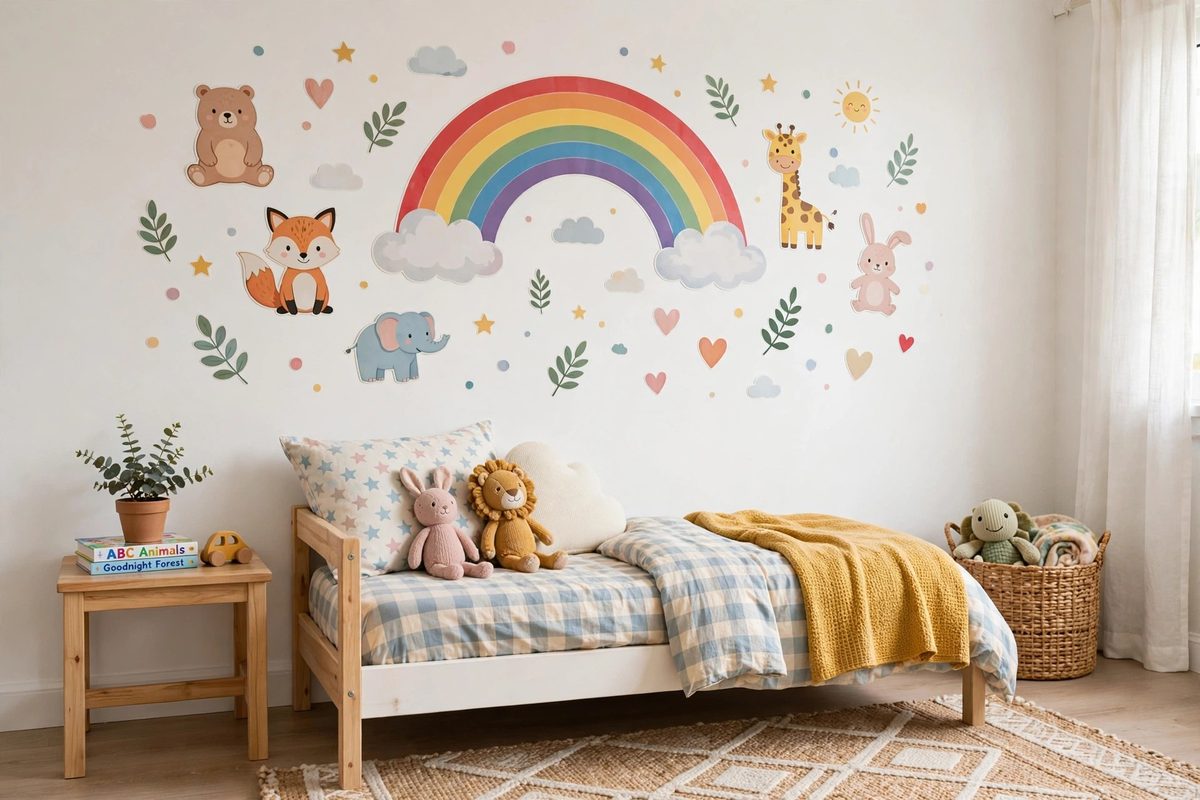
Kids room decals earn their place because children change their minds fast, and a $20 decal set is a much cheaper pivot than repainting a room. Animals, rainbows, dinosaurs, and space rockets are the classic sets, and growth-chart decals, rulers that stick beside a doorframe, are a favorite because they record heights without pencil marks on the wall. Most kids sets run $15 to $35, and a growth chart decal runs $12 to $25.
Place decals at your child’s eye level, not yours: a rocket cluster at 48 inches high delights a five year old and looks oddly placed to an adult standing in the doorway, and that is exactly right. Keep decals away from crib rails and beds where a curious toddler could peel and mouth a loose piece, and check edges monthly, since little hands test them daily. When interests change, peel the old set off slowly, wipe the wall with a damp cloth, and the next theme goes up the same afternoon. For more kid-friendly rental decorating that leaves no holes, the small-space ideas in DIY room decor for small apartments pair well with a decal refresh.
5. Full-Wall Mural Decals for One Statement Wall
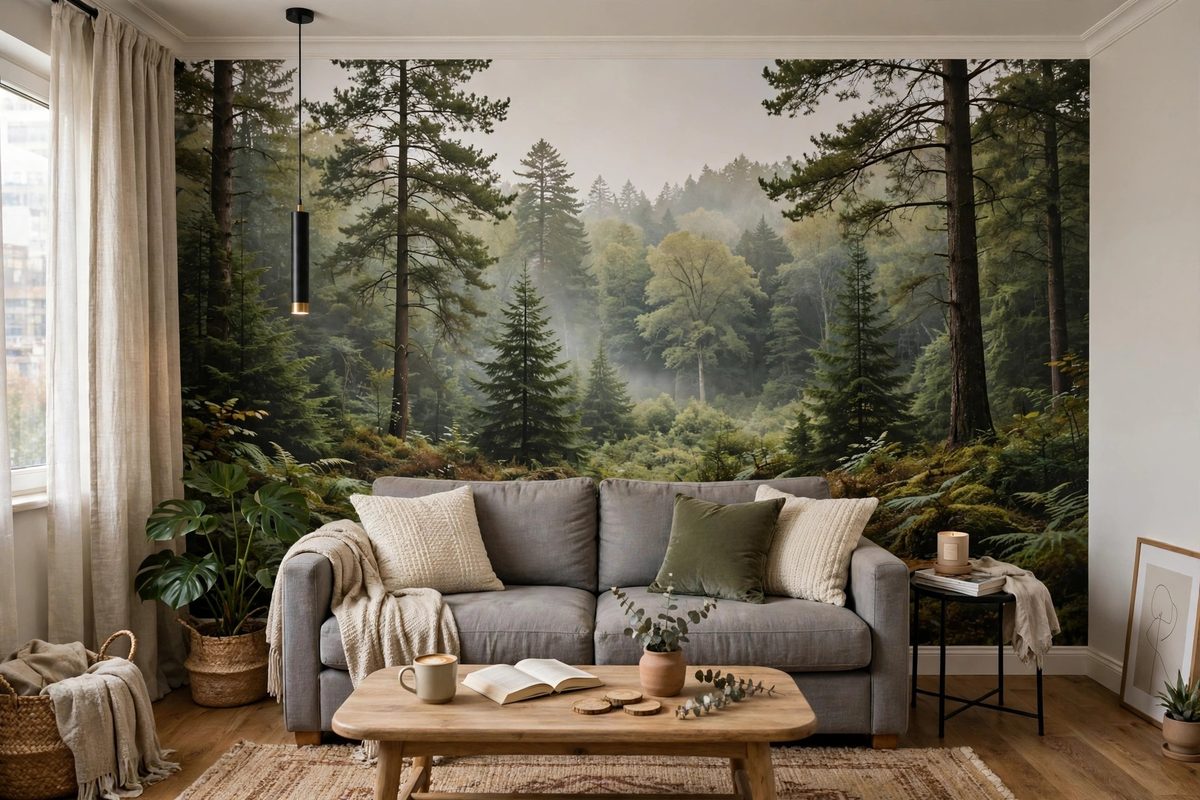
A full-wall mural decal is a large scene, forest, mountain range, city skyline, or abstract landscape, printed across several vinyl panels that butt together on the wall. It is the closest a renter gets to wallpaper without paste or a landlord’s written permission, and it transforms a room in one project. A mural for an 8 by 10 foot wall typically costs $60 to $150, and installation takes 1 to 2 hours with two people, one holding panels aligned while the other smooths.
Panel alignment decides whether the mural looks expensive or cheap. Start from the top center and work outward, overlapping panel edges by the manufacturer’s stated amount, usually about a quarter inch, and smooth each panel fully before moving on. Measure your wall first and order the size up rather than down: a mural that falls 6 inches short on each side looks unfinished, while a slightly oversized mural can be trimmed at the edges with a craft knife. Mural decals suit living rooms and bedrooms best; steamy bathrooms and greasy kitchen walls shorten their life, so keep murals in dry rooms.
6. Prep the Wall and Know Which Paint Finishes Accept Decals
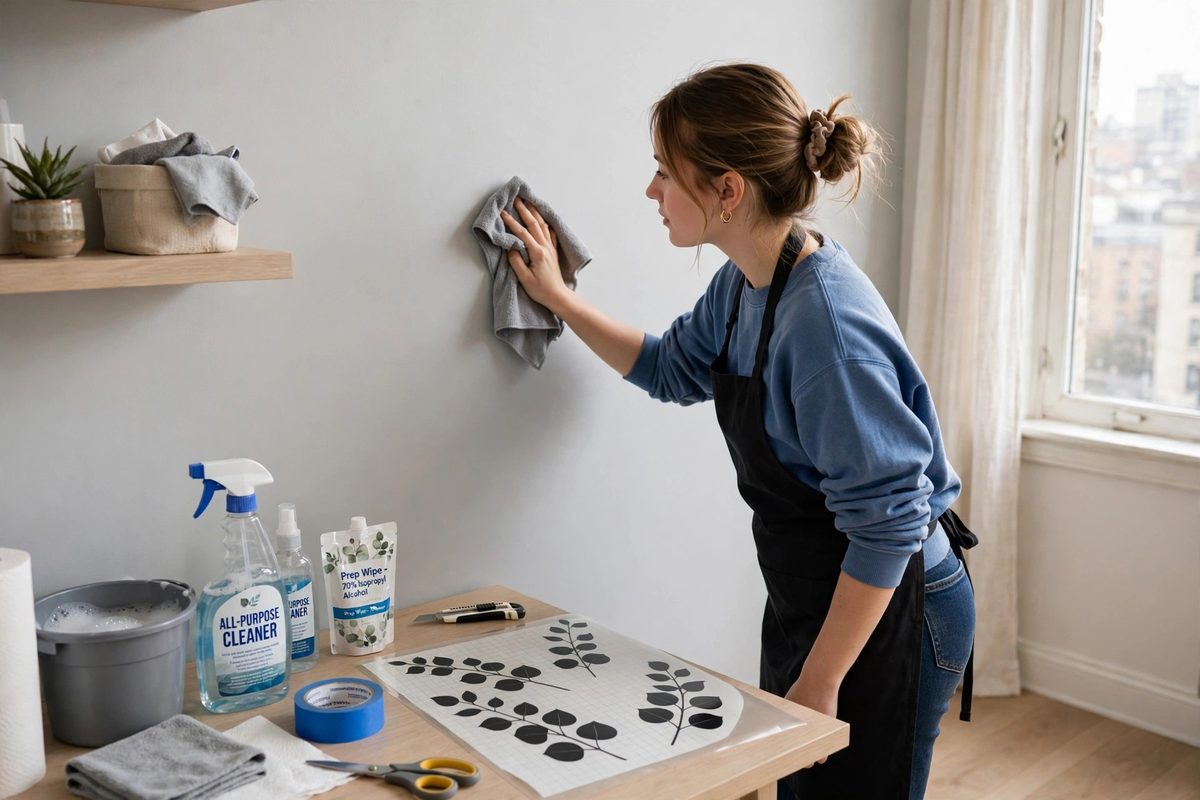
Wall prep is the unglamorous step that decides whether your decal lasts two years or two weeks. Wash the wall with a damp cloth and a drop of mild dish soap, let it dry completely for at least 2 hours, and wipe once more with rubbing alcohol on a cloth for any spot that feels dusty or greasy. Never apply a decal over a freshly painted wall: latex paint needs 3 to 4 weeks to cure fully, and vinyl applied sooner can bond to uncured paint and pull it off at removal.
Paint finish matters as much as cleanliness. Eggshell, satin, and semi-gloss finishes accept decals best, because their slight sheen gives vinyl a smooth, even surface to grip. Flat and matte paint are risky: their porous surface grips vinyl unevenly and can lift with the decal, especially with high-tack or cheap vinyl. Glossy paint holds decals well but shows every bubble, so take extra time smoothing. If your rental has flat paint and you still want decals, choose a brand that explicitly labels its vinyl “removable” rather than “permanent,” and test one small piece behind a door for a week before committing to a full wall.
7. Sizing and Placement Rules That Make Decals Look Custom
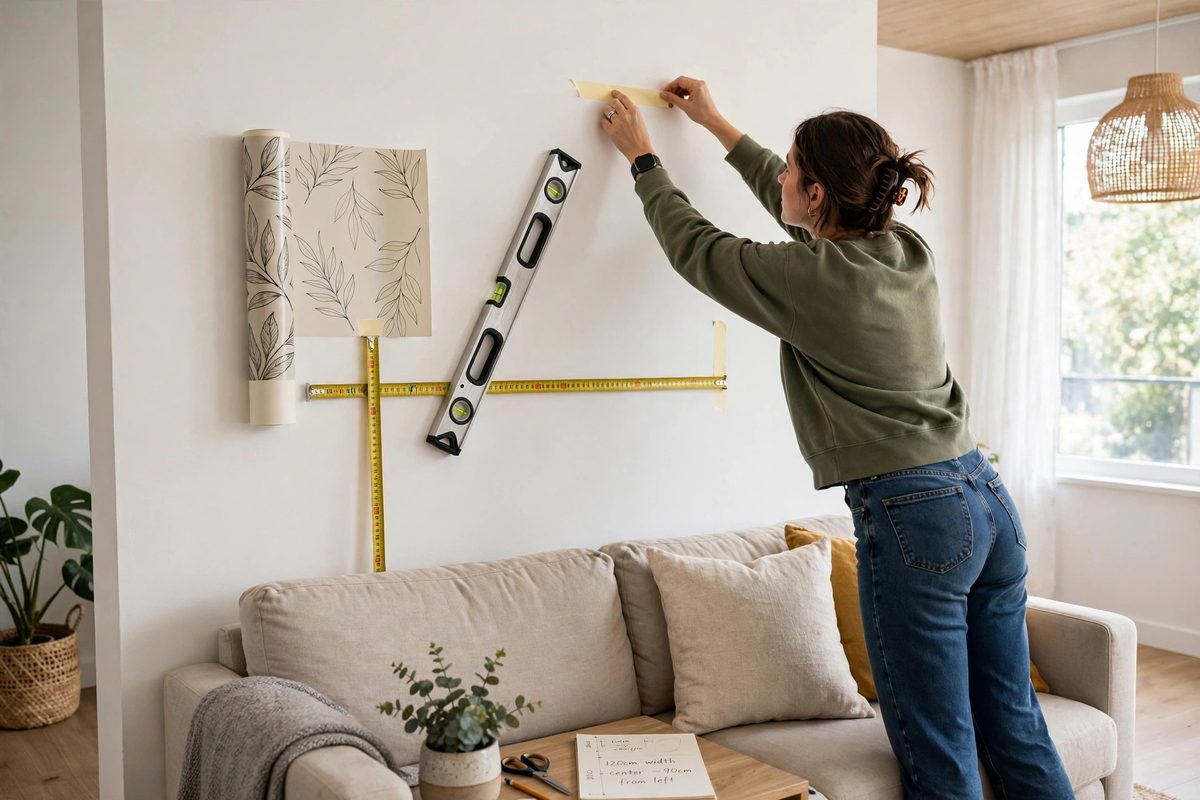
A decal that looks custom follows two rules: it relates to the furniture below it, and it fills roughly two-thirds of the wall space it sits over. A quote above a 60 inch sofa should span about 40 inches wide, not 20, or it floats awkwardly. A botanical branch behind a queen bed should rise 24 to 36 inches above the headboard, not stop at pillow height. Before peeling any backing, tape the whole design up with painter’s tape and live with it for an evening; moving tape costs nothing, while moving vinyl costs adhesion.
Eye level is the second rule. The center of a decal arrangement should sit around 57 to 60 inches from the floor, gallery height, in living spaces, and slightly lower, 48 to 54 inches, in a child’s room. Center the design on the furniture, not on the wall, when furniture sits against that wall: a decal centered on the wall but off-center over the sofa looks like a mistake. In a hallway or entryway with no furniture anchor, center on the wall itself and keep the design at least 12 inches from corners and trim, where vinyl edges catch and curl.
8. Repositioning and Seasonal Swaps Without Wasting Decals
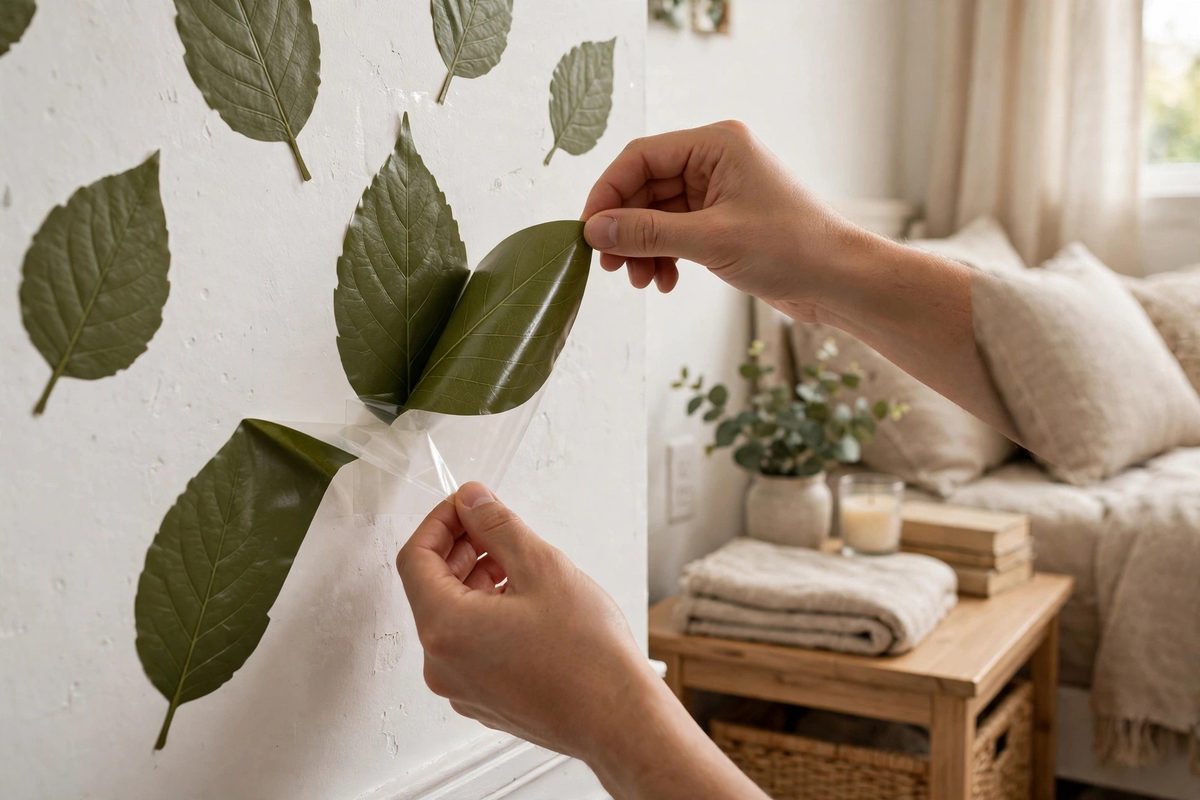
Quality removable vinyl can be repositioned a handful of times, which is what makes decals a renter’s tool rather than a one-shot decoration. Peel slowly from a corner, keeping the vinyl close to the wall at a low angle, and press it onto its new spot within minutes, before dust settles on the adhesive side. Most removable decals survive 3 to 5 careful moves; after that, edges lose grip and the design belongs in the bin, not on a third wall.
Seasonal swaps work the same way. A set of autumn leaves in October, snowflakes in December, and cherry blossoms in spring can rotate through the same bedroom wall if you store off-season pieces flat between sheets of wax paper, never folded or rolled tightly. Keep the original backing sheet if you have it, since it protects adhesive better than any substitute. One caution: every repositioning shortens the decal’s remaining life, so move a design because the room changed, not because you are bored on a Tuesday. For storage and display ideas that move with you, no-drill shelves for renters covers shelves that relocate without a single hole.
9. Removal Without Peeling Paint
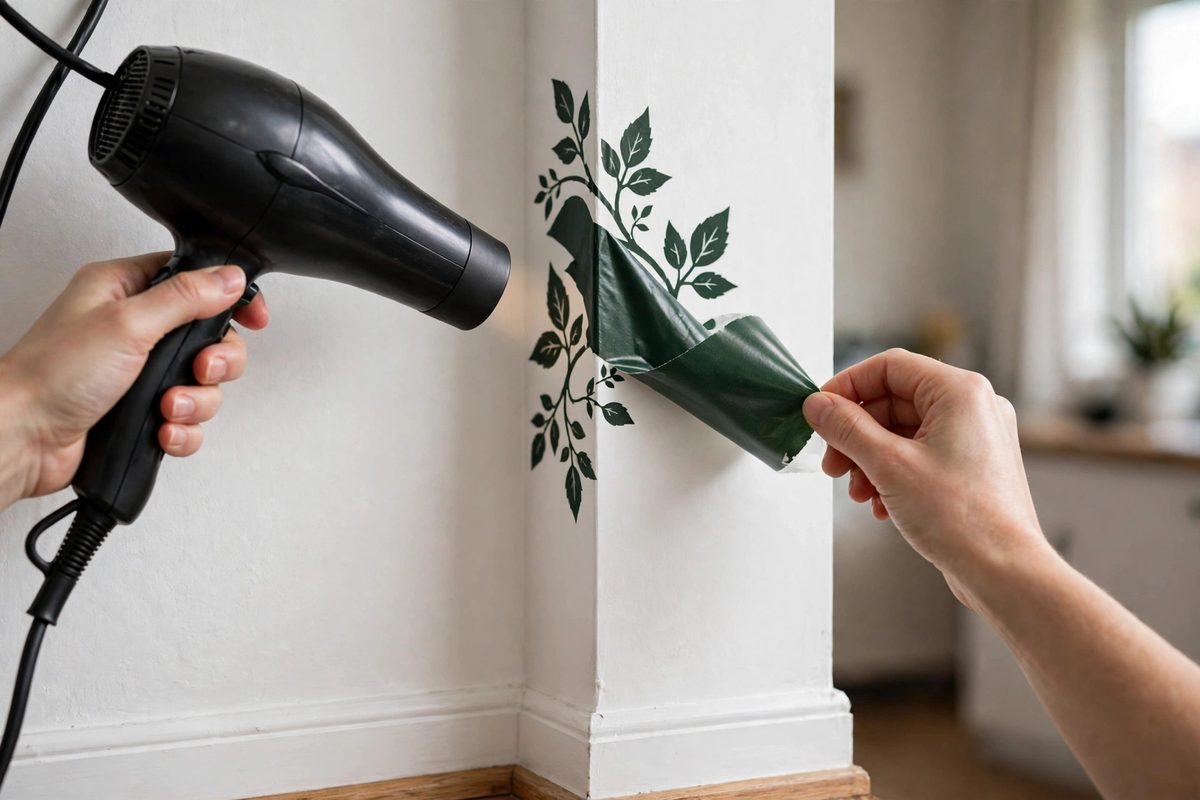
Clean removal starts with heat and patience, not force. Warm a corner of the decal with a hair dryer on low for 20 to 30 seconds, then peel slowly at a low angle, close to the wall, while continuing to warm the section ahead of your fingers. The heat softens the adhesive so it releases from the paint instead of tearing it away. Pulling fast, or pulling straight outward away from the wall, is how paint lifts, and it is the single most common removal mistake.
After the vinyl is off, roll any leftover adhesive into a ball with your fingertips or lift it with a strip of painter’s tape pressed and pulled gently. Wipe the wall with a damp cloth and a drop of dish soap, then let it dry and inspect in daylight: most walls look untouched, and any faint outline usually disappears with a second wipe. If a small paint chip does lift, a dab of matching touch-up paint, or a polite note to your landlord with a photo, costs far less than a deposit deduction. Never use a heat gun on a rental wall, since it can blister paint in seconds, and never scrape adhesive with a razor, which scores paint even when it looks harmless.
10. Textured Walls, Limits, and True Cost Per Wall
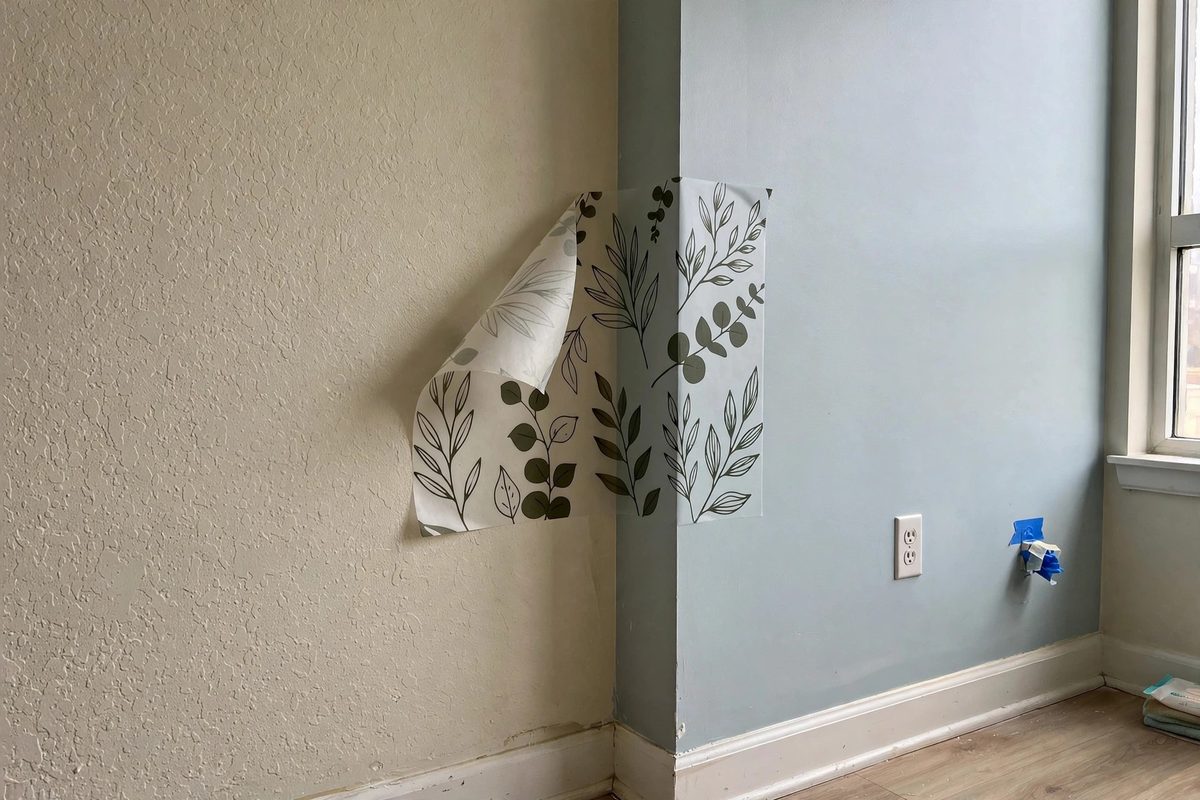
Texture sets the hard limit for decals, and knowing it before you buy saves a wasted order. Light orange-peel texture, the fine dimpled finish in most modern rentals, accepts thicker vinyl decals if you press firmly with a smoothing tool and spend extra time on edges. Heavy knockdown texture, sand texture, brick, concrete block, and popcorn ceilings defeat decals: adhesive bridges the high points and never contacts the low points, so edges curl within days and whole pieces slide off within weeks. On those walls, skip decals and use leaning art, freestanding shelves, or fabric panels instead.
True cost per wall is refreshingly simple. A single accent design runs $10 to $40, a full headboard or sofa wall with a larger set runs $40 to $80, and a full-wall mural runs $60 to $150. Add $5 to $10 for a smoothing tool, painter’s tape, and rubbing alcohol if you do not already own them. That puts a decorated rental wall at roughly $15 to $160 all-in, versus $200 to $500 for a painted accent wall once you count primer, paint, supplies, and repainting at move-out. Decals also last: on a smooth, dry, properly prepped wall, a quality vinyl decal holds its color and adhesion for 3 to 5 years, which covers most leases twice over. If your wall is textured beyond orange-peel, put that budget toward a renter-friendly tile wall under $150 or another no-drill project instead of fighting a surface that will not hold vinyl.