10 No-Drill Bathroom Shelves and Shower Storage Ideas That Survive Steam
10 no drill bathroom shelf ideas and the best shower shelves no drill, rated for humidity, steam, and wet weight, with suction, adhesive, tension, and over-door options that leave no holes.
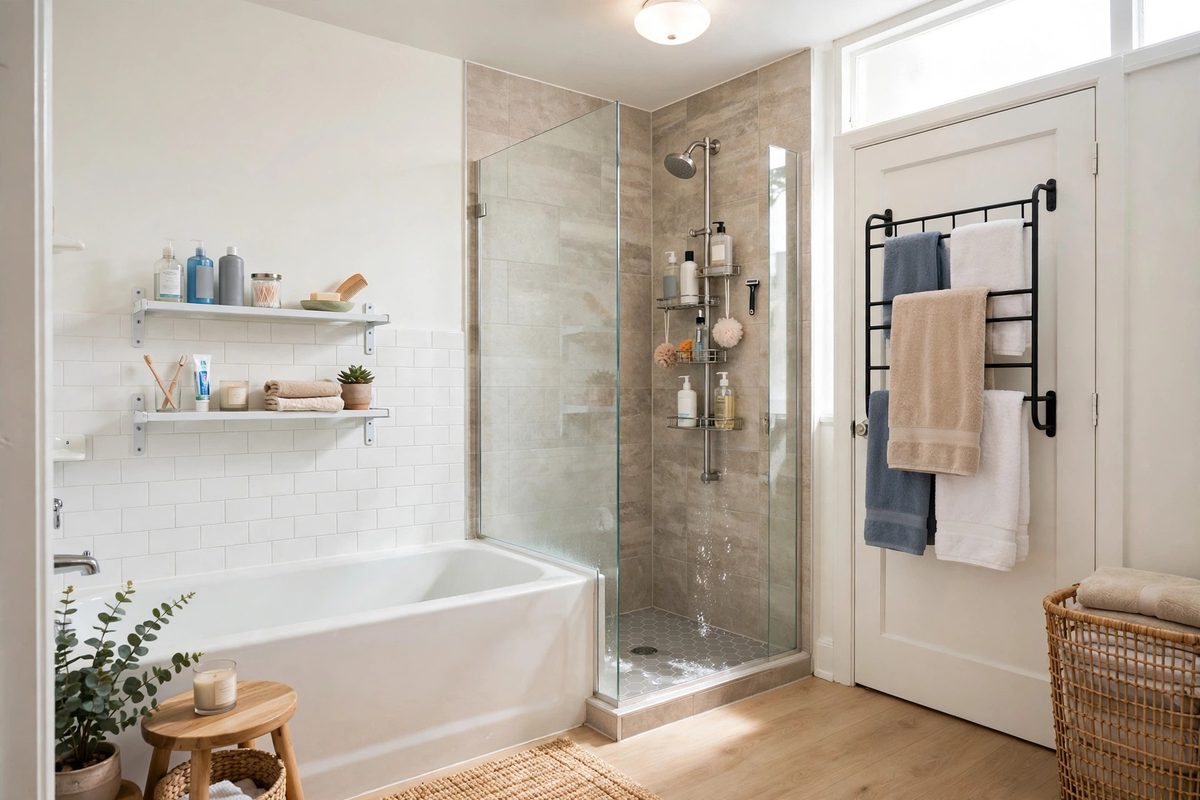
Rental bathroom with no-drill shelves holding toiletries above the tub and a shower caddy in the shower
In This Guide
A no drill bathroom shelf has a harder job than any other shelf in a rental. It has to hold wet weight in a room that swings from cool to steamy twice a day, grip tile that may be smooth, matte, or textured, and come off clean at move-out without pulling paint or grout. The best shower shelves no drill are the ones chosen for the bathroom’s conditions, not just for the look: the fixing type has to match the wall surface, the material has to resist rust, and the weight rating has to survive bottles that get heavier when they fill with water.
The bathroom-specific rule is simple. Suction works only on smooth, nonporous tile and glass. Adhesive works on smooth tile and painted drywall but fails under constant direct spray. Tension and hanging designs skip the wall entirely, which makes them the safest picks inside the shower itself. The ideas below are ordered by where they go and what they hold, with honest wet weight limits and the cleaning routine that keeps them from growing mold. For general shelf options beyond the bathroom, see 10 no-drill shelves for renters that hold real weight.
1. Suction Shelves for Smooth Tile Walls
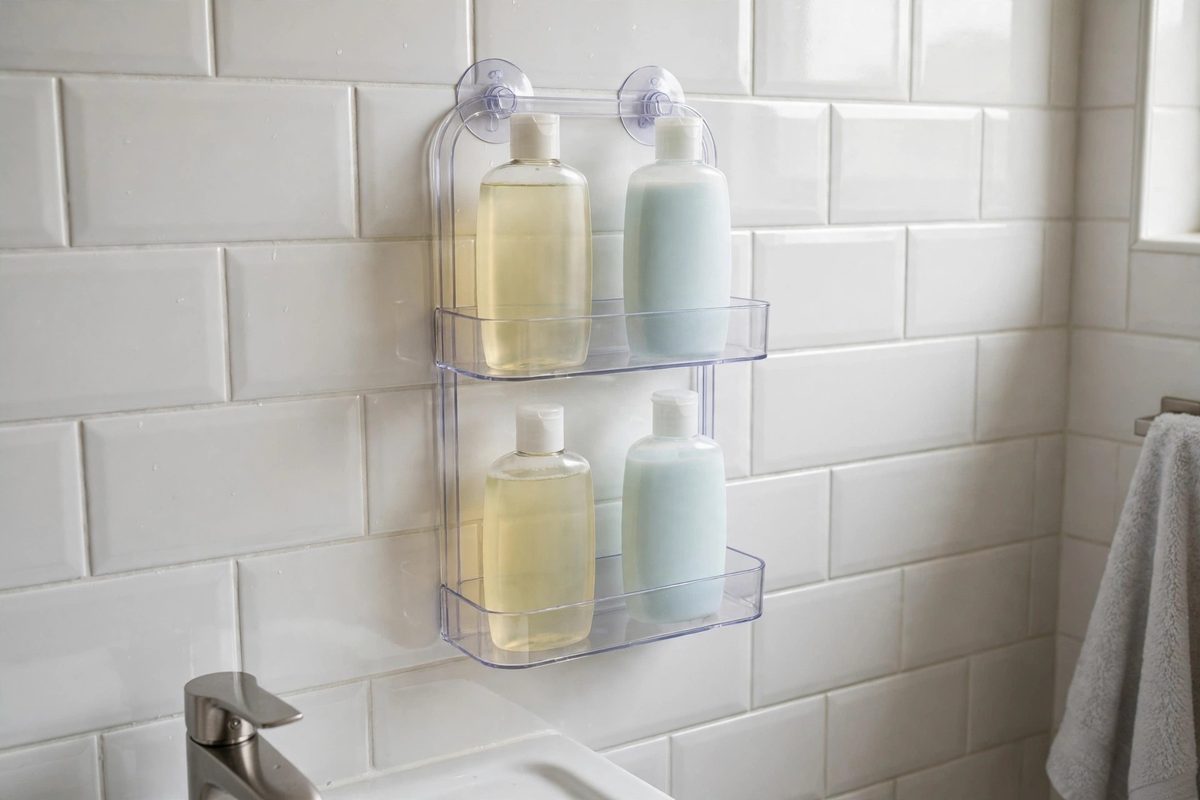
Suction shelves are the classic no drill bathroom shelf for a reason: they grip glossy ceramic tile and glass with vacuum pressure, hold 5 to 10 pounds, and reposition in seconds with zero residue. A two-tier suction shelf beside the sink or above the tub keeps daily bottles at hand without a single hole, and costs $15 to $30 for a good locking-lever version. The locking lever matters, because plain press-on cups lose grip faster in steam.
The surface rule is absolute and worth repeating: suction needs smooth, nonporous tile, glass, or glossy acrylic. It will not hold on matte stone tile, textured subway tile, natural stone, or painted drywall, because air leaks through pores and breaks the seal. If your tile has visible texture or grout lines crossing the cup area, suction is the wrong pick, and section 8 covers the fix.
Steam and soap film are the slow enemies. Hot showers soften the seal slightly, and soap film creeps under the cup edge over weeks. Re-press each cup once a week, wipe the tile and the cup rim with rubbing alcohol monthly, and test the shelf by hanging a full water bottle from it for an hour before trusting it with glass bottles. A suction shelf that passes that test on your tile will hold daily toiletries without drama.
2. Waterproof Adhesive Shelves for Wet Walls
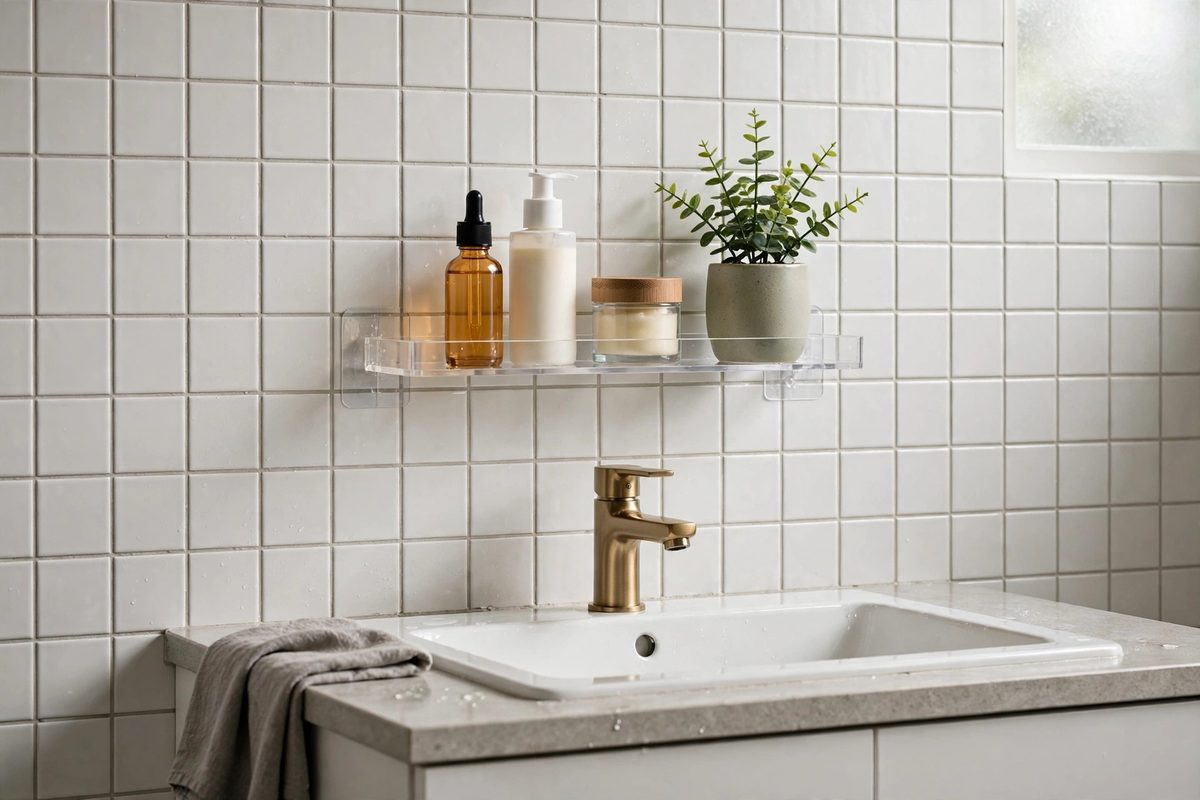
Waterproof adhesive shelves use a stronger, water-resistant adhesive pad instead of a suction cup, which makes them the pick for walls where suction fails but the shelf still sits outside the direct shower spray. A typical waterproof adhesive shelf holds 8 to 15 pounds and costs $18 to $35 for a two-pack. Mount one above the sink for skincare, beside the mirror for daily bottles, or on the wall above the tub where spray rarely reaches.
Adhesive and constant water do not mix, so placement is everything. A shelf mounted inside the shower, directly under the showerhead, will peel within weeks no matter what the packaging claims, because water works under the pad edge every single day. Keep adhesive shelves on walls that get splashed occasionally, not sprayed daily, and save the inside-shower storage for tension and hanging designs.
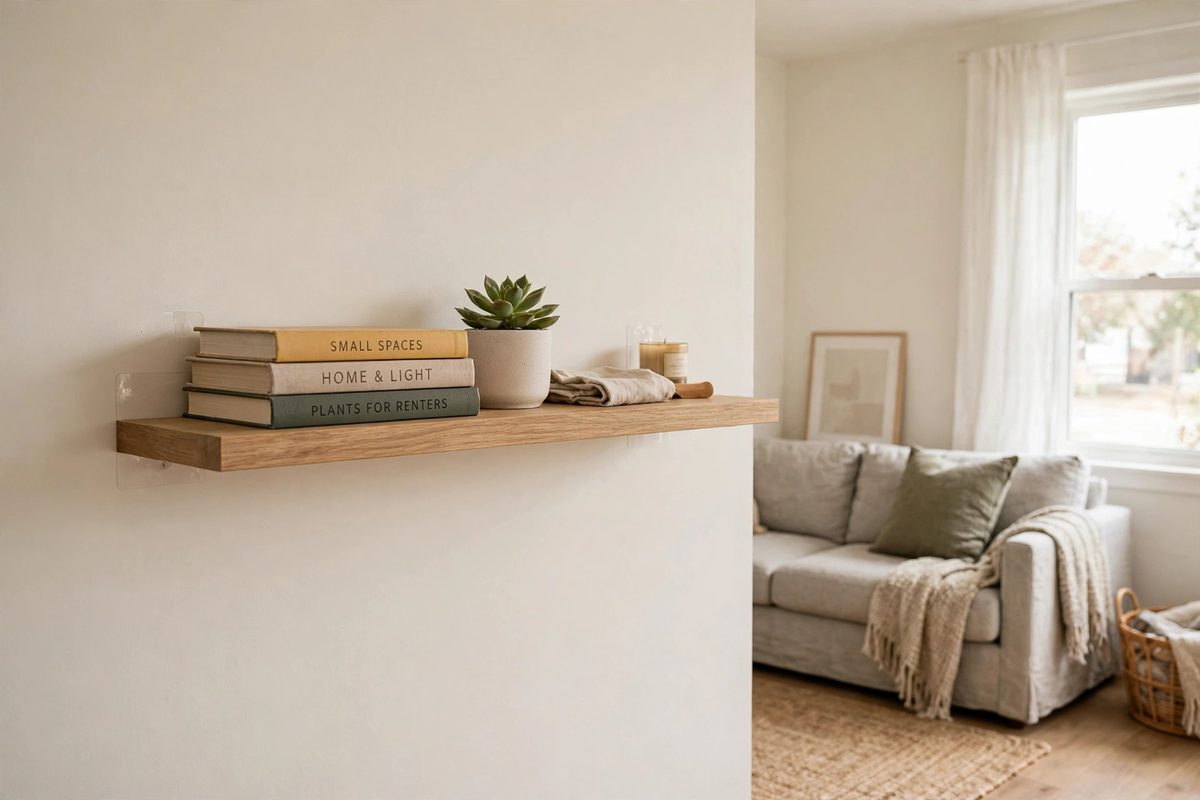
Installation follows the same rules as any adhesive product, with one bathroom addition: the wall must be fully dry and grease-free, so clean it with rubbing alcohol and wait 10 minutes before mounting. Press each pad for 30 seconds, then wait the full cure time, 24 hours for wet rooms, before loading anything. That patience is the difference between a shelf that lasts a year and one that falls in a week. For the full adhesive method in detail, see how to hang shelves without drilling or studs.
3. Tension Pole Shower Caddies for Corners
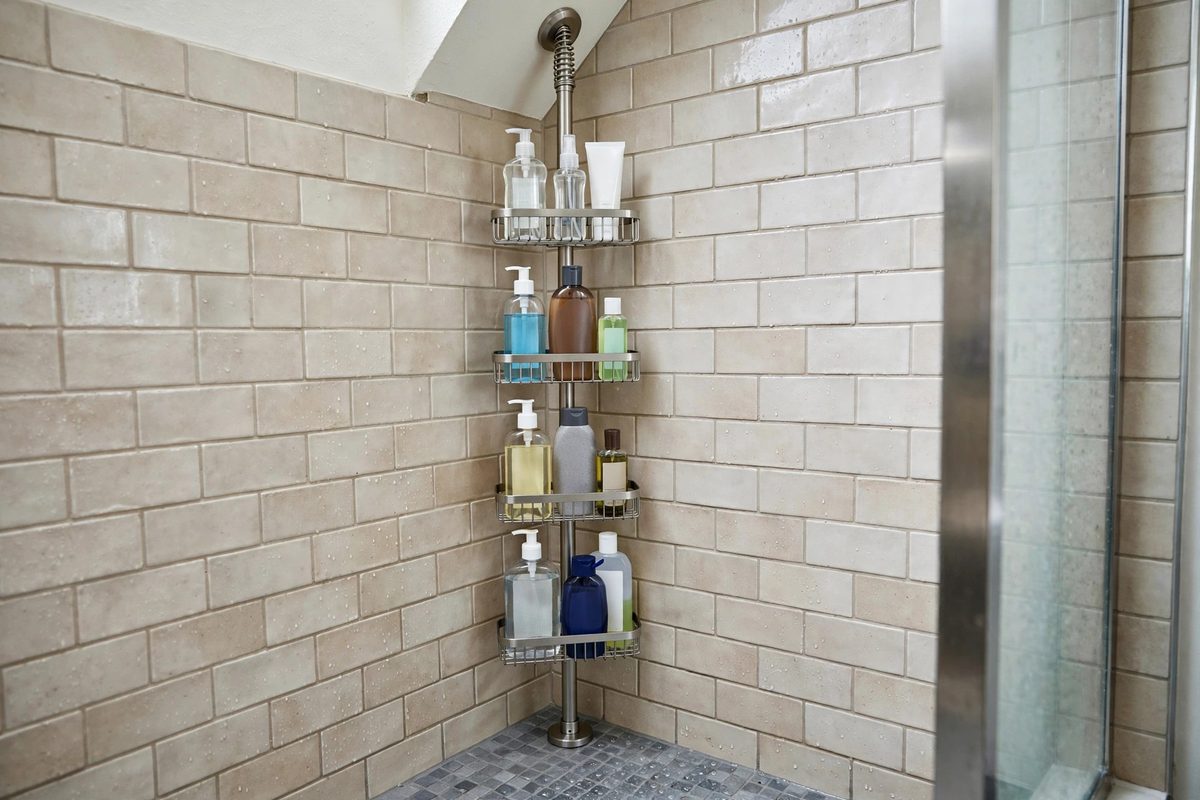
A tension pole shower caddy wedges a floor-to-ceiling pole into the shower corner, with three or four baskets clipped along it, and it touches no wall at all. That makes it the highest capacity no-drill shower storage: 20 to 35 pounds spread across the tiers, enough for a household’s shampoo, conditioner, body wash, and razors in one corner. Prices run $25 to $50 for a rust-proof stainless or coated version.
The pole needs a flat floor and a flat ceiling, and it needs the height measured at the exact corner, since shower ceilings and tub rims vary by half an inch or more. Load the heaviest bottles on the bottom tier and the lightest on top, because a top-heavy pole leans and a bottom-heavy one stays put. Recheck the tension after the first week, since the pole settles slightly into grout lines and bath mats.
Rust is the thing that kills cheap tension poles. A chrome-plated steel pole in a hard water area can show rust spots within months, while stainless steel or powder-coated aluminum lasts years. Check the pole joints and basket clips monthly for orange spots, rinse the baskets weekly, and replace a rusting basket before the rust stains the tub, because rust stains on porcelain are a cleaning job nobody wants at move-out.
4. Over-Showerhead Hanging Caddies
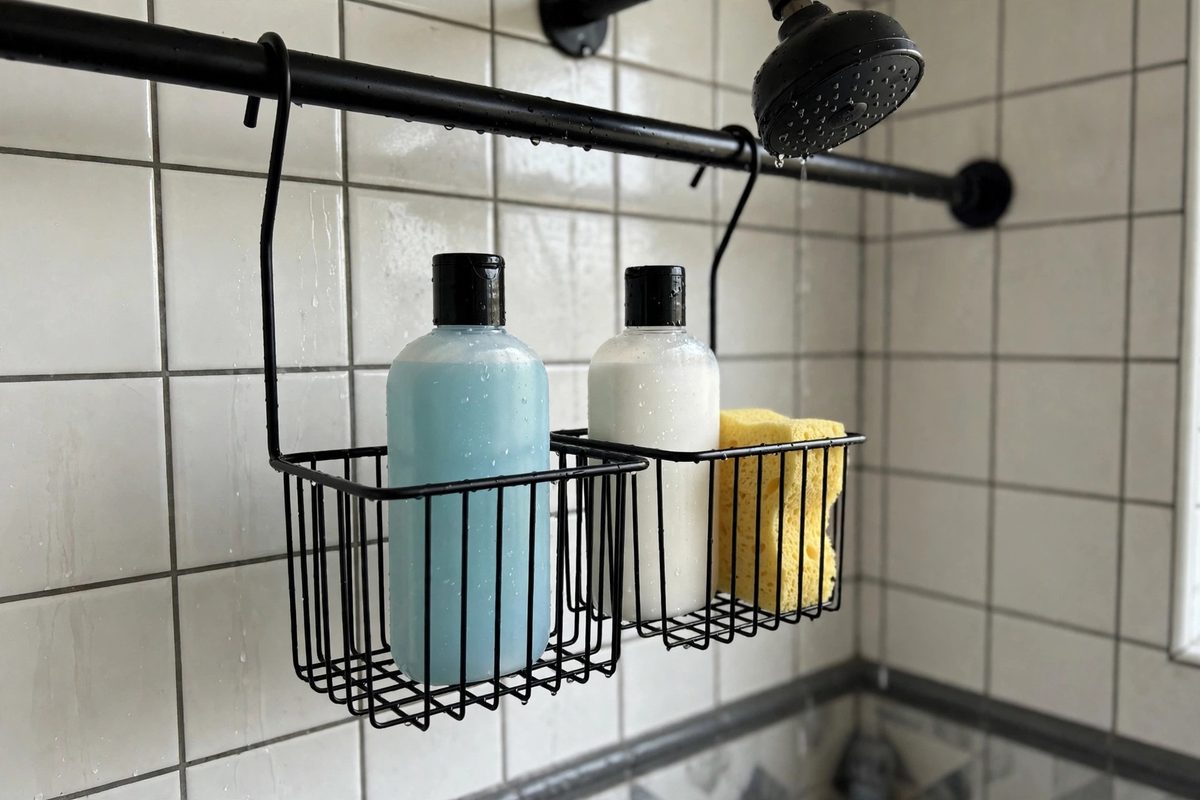
An over-showerhead caddy hangs from the showerhead pipe with a rubber-lined hook, so it needs no wall, no suction, and no adhesive in the wettest spot in the bathroom. A hanging caddy holds 10 to 15 pounds across two baskets and costs $15 to $30, which makes it the cheapest reliable shower storage for a single person or a couple with modest bottle collections.
Pipe fit is the constraint. Most showerhead pipes are 1/2 inch diameter, and the hook must match that size with a rubber lining so it does not scratch the pipe finish or slide sideways under load. Hang the caddy so bottles sit below the showerhead and slightly to the side, not in the direct spray, which keeps labels readable and cuts soap buildup on the baskets by half.
Weight discipline matters more here than anywhere else in this post. Salon-size bottles weigh 1 to 2 pounds each when full, so four of them plus a razor and a sponge already approach the 12 pound practical limit for a hanging caddy. Move oversized bottles to a tension pole shelf and keep the hanging caddy for daily bottles only. If the caddy starts sliding down the pipe, the hook is either the wrong size or overloaded, and both problems get worse, not better, with time.
5. Over-Door Racks for Towels and Toiletries
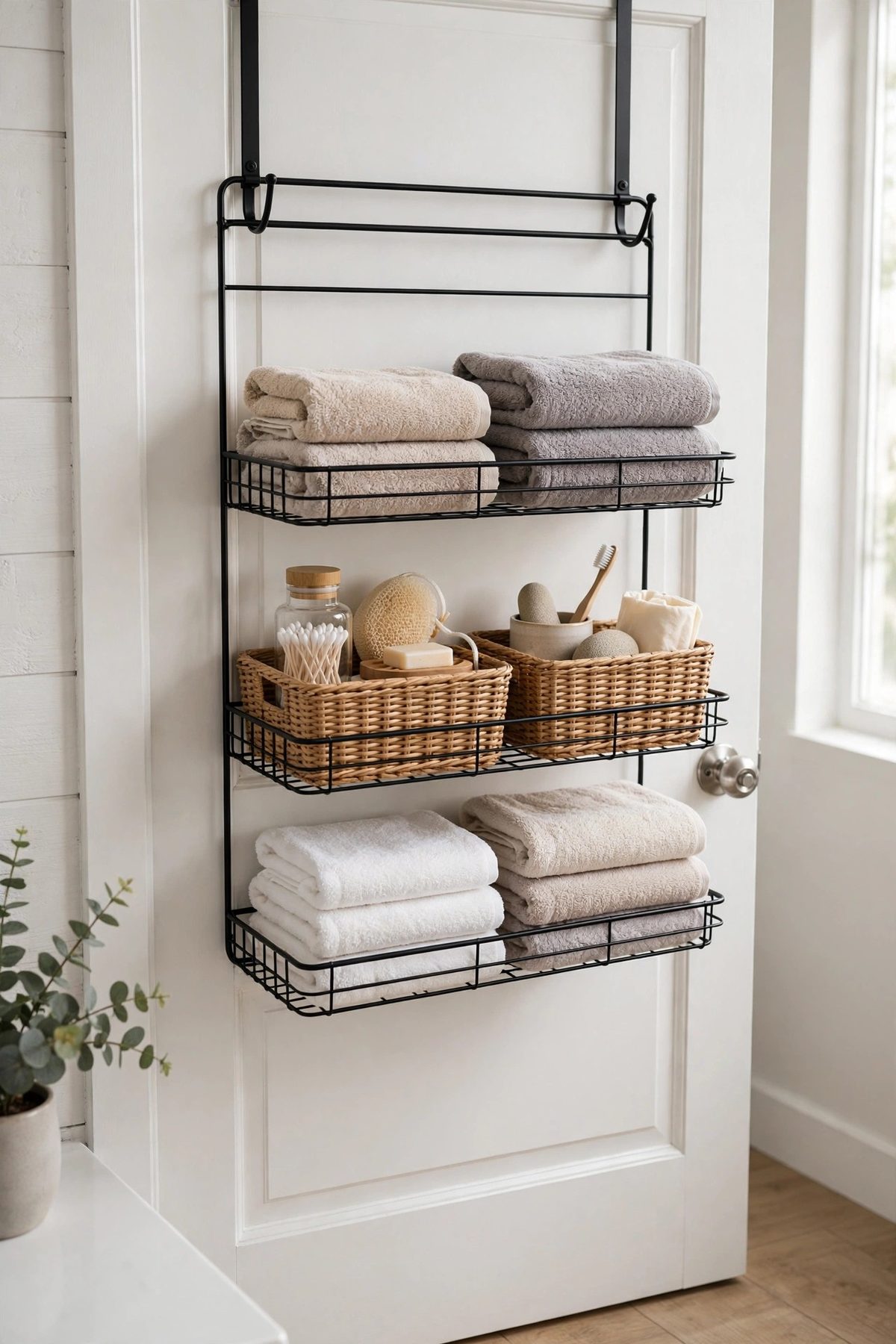
Over-door racks hang from hooks over the top of the bathroom door, so they add three or four shelves of storage without touching a wall. A typical rack holds 15 to 25 pounds and costs $20 to $40, and it works for towels, spare toiletries, cleaning supplies, and hair tools that otherwise pile on the bathroom counter. In a small bathroom with no linen closet, an over-door rack is often the single biggest storage win.
Door fit decides whether it works. The hooks need a gap between door and frame of at least 1/8 inch, and they must match the door thickness, usually 1 3/8 inches for interior doors. Add felt pads where the hooks touch the door to stop rub marks, and keep the heaviest shelf at the bottom so the door still swings freely and the hinges are not stressed over time.
Humidity is kinder to over-door racks than to wall shelves, because the door itself is not a wet surface, but the rack still lives in a steamy room. Choose coated metal or bamboo with a sealed finish rather than raw wood, which swells and warps in bathroom humidity. Wipe the rack monthly and check the hook pads twice a year, since a worn pad lets metal rub directly on the door edge and leaves a mark that costs deposit money.
6. Freestanding Over-Toilet Shelving Units
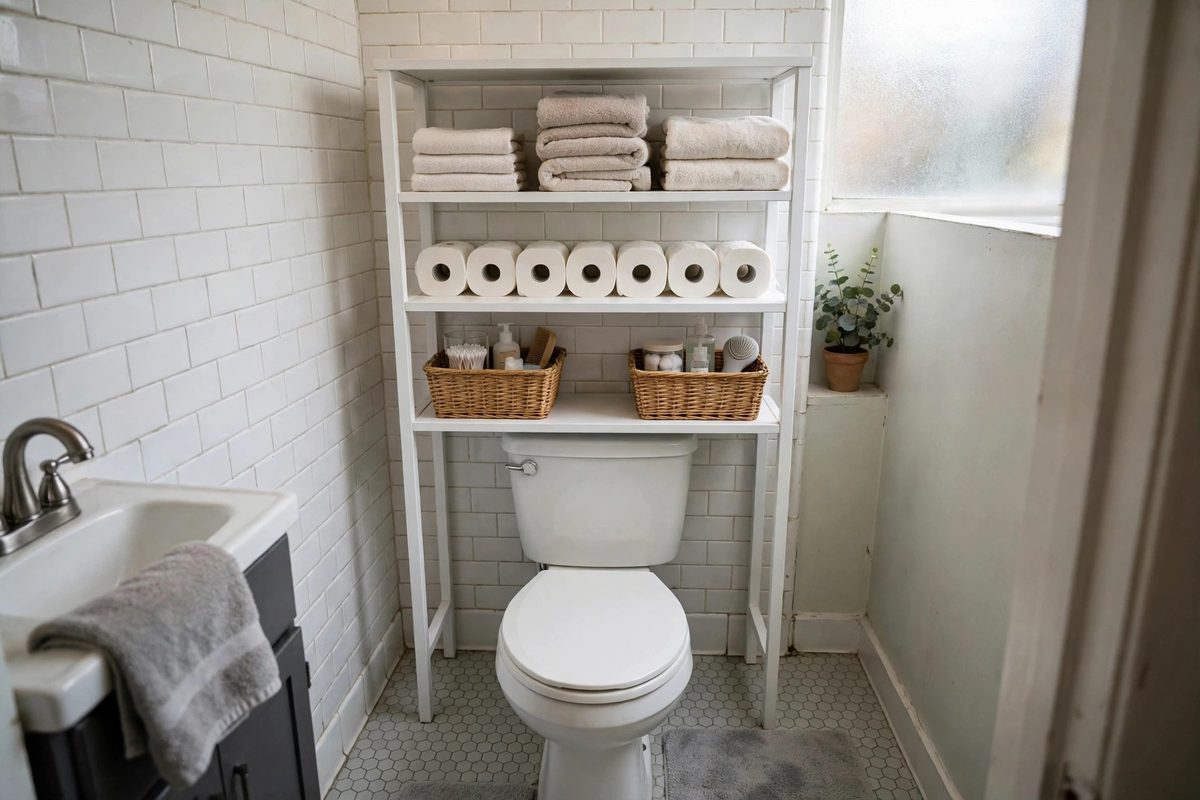
An over-toilet shelving unit stands on the floor around the toilet tank, with two or three shelves above it, and it adds storage to the most wasted vertical space in a small bathroom. A typical unit holds 30 to 50 pounds across its shelves, costs $35 to $80, and needs no wall fixing at all, which makes it fully deposit-safe. It suits spare towels, toilet paper, baskets of toiletries, and a small plant.
Measure before buying, because toilet heights and tank widths vary. The unit must clear the tank lid by at least 2 inches so you can lift the lid for maintenance, and the legs must fit around the toilet base without blocking the water supply valve. Adjustable-height shelves are worth the extra $10 to $15, since they let you fit tall bottles on one shelf and folded towels on another.
Stability is the only real risk. A tall, narrow unit on a slick tile floor can wobble when you reach for the top shelf, so choose a unit with a wide base, add nonslip pads under the feet, and keep heavy items low. If the unit has a wall strap option, skip the screw and use a removable adhesive strap instead, which adds stability without a hole. For a floor refresh to go with the new storage, see 10 peel-and-stick floor tile ideas for renters.
7. Rust-Proof Materials: What Actually Lasts in Steam
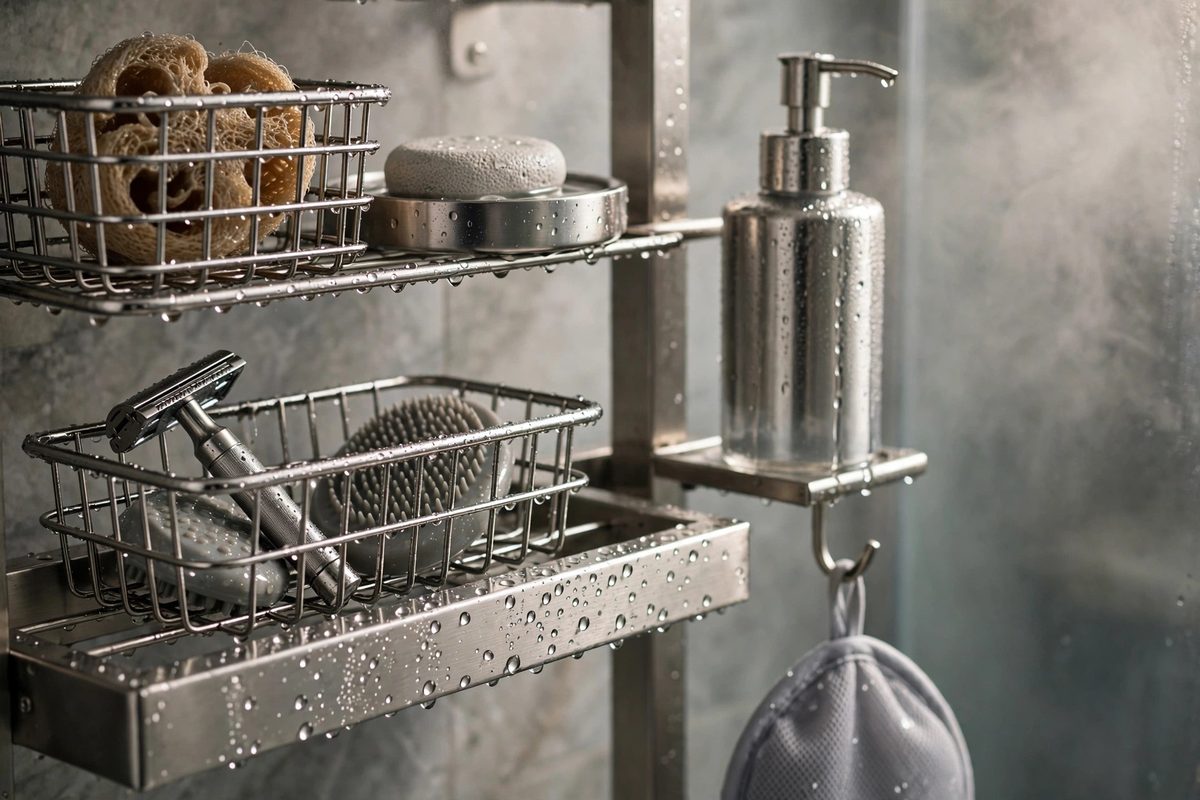
Material choice decides whether bathroom storage lasts two months or two years. Stainless steel (grade 304) is the best all-rounder: it resists rust in steam and hard water, wipes clean, and holds its finish. Anodized aluminum is lighter and equally rust-proof, though it dents more easily. Sealed bamboo looks warm and natural but needs a fully sealed finish, since raw bamboo absorbs moisture, swells, and grows mold in a steamy room.
Chrome-plated steel is the trap. It looks identical to stainless on the shelf and costs less, but the plating is thin, and once water reaches the steel underneath through a scratch or a joint, rust spreads fast. In hard water areas, a chrome caddy can show orange spots within 8 to 12 weeks. If the product description says “chrome finish” rather than “stainless steel,” treat it as a short-life buy and budget for replacement.
Plastic has an honest place in the bathroom. A sturdy polypropylene shelf will never rust, costs $10 to $20, and suits kids’ bathrooms and inside-shower corners where metal would corrode fastest. The trade-off is load: plastic shelves typically rate 5 to 8 pounds, and they flex under heavy bottles. Use plastic for light, wet-zone storage and stainless for everything that carries real weight.
8. When Suction Fails: Textured Tile Fixes
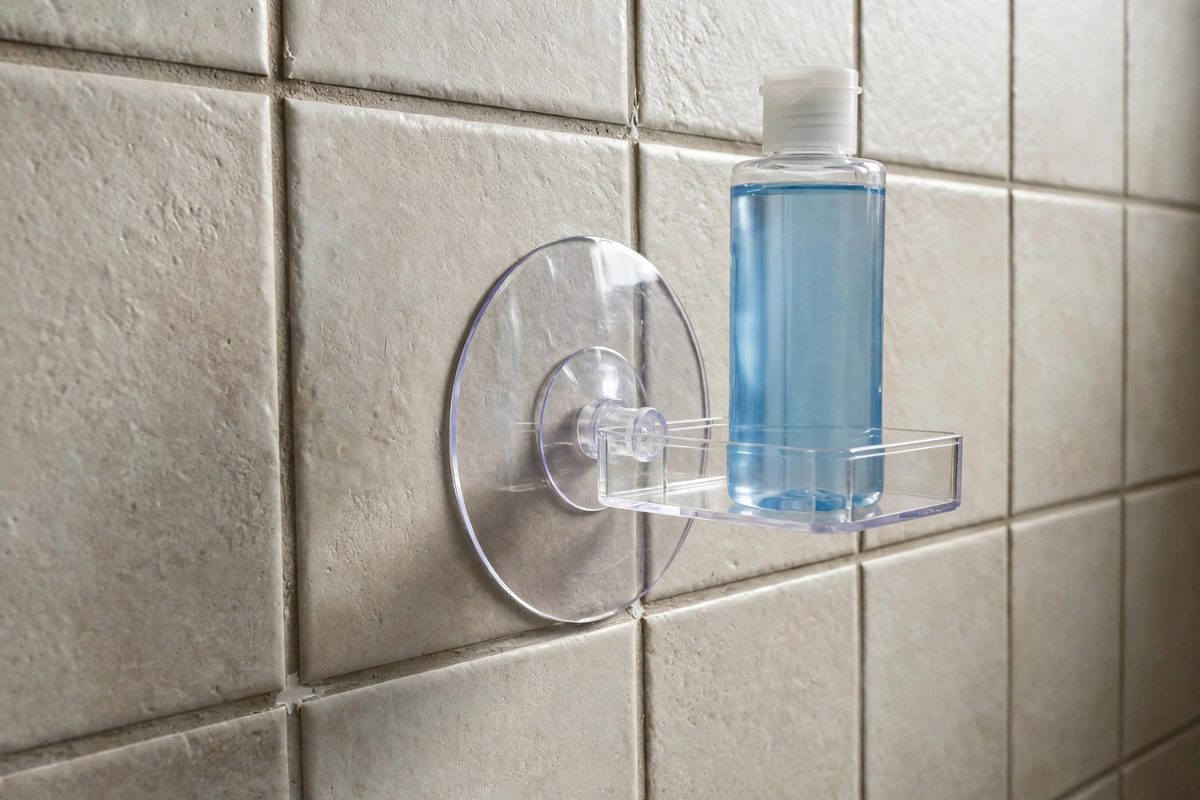
Textured tile is the most common reason a no drill bathroom shelf fails, and it is also the most fixable problem in this post. If your tile has a matte finish, a stone texture, or raised patterns, suction cups cannot seal, and no amount of pressing will change that. The fix is a smooth adhesive mounting disc: a clear, flat disc that sticks to the textured tile and gives the suction cup a smooth surface to grip.
A set of adhesive discs costs $8 to $15 and holds a suction shelf rated up to 10 pounds, provided the disc itself is rated for wet rooms and the tile is clean and dry before mounting. Press the disc for 30 seconds, wait 24 hours, then mount the suction shelf onto the disc rather than the tile. The disc removes with heat from a hair dryer and dental floss slid behind it, which leaves far less residue than peeling it cold.
When discs are not enough, switch fixing types instead of fighting the wall. Waterproof adhesive shelves grip textured tile better than suction because the pad conforms slightly to the surface, and tension and over-door designs skip the wall entirely. The mistake to avoid is buying a second suction shelf after the first one fell: the tile did not change, and neither will the result. For wall projects on a budget, the same surface-first thinking applies in 10 renter-friendly tile walls under $150.
9. Cleaning and Mold Prevention Routine
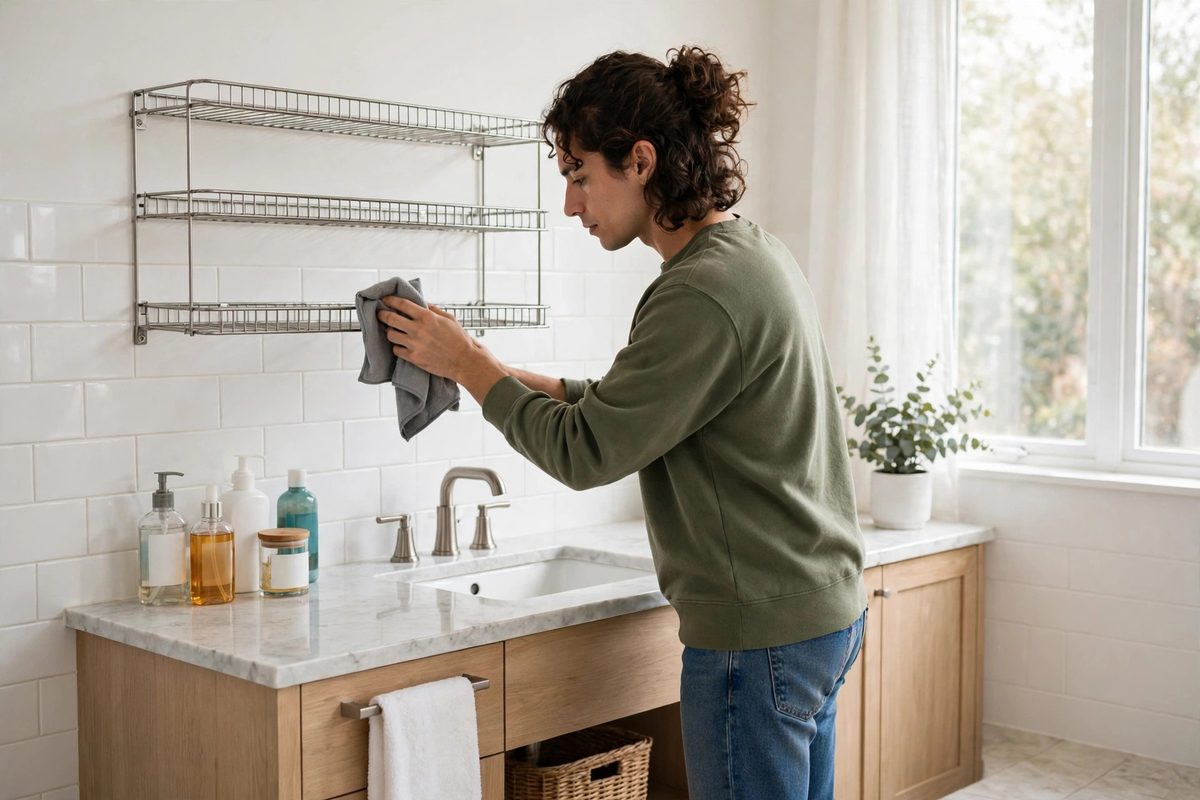
Mold prevention is a storage problem as much as a cleaning problem, because shelves that trap water grow mold behind bottles you never move. The routine is short: rinse shower shelves weekly under the showerhead to clear soap scum from drainage holes, wipe wall shelves with a damp cloth every two weeks, and move every bottle once a month to clean underneath it. Ten minutes a month keeps a bathroom shelf mold-free for its whole life.
Drainage decides whether that routine works. A shelf with solid bottoms holds a puddle under every bottle, and standing water plus warmth equals mold within weeks. Choose shelves with open wire or slatted bottoms in the shower, and drill-free drain holes or mesh baskets everywhere else water collects. If a shelf you love has a solid bottom, add a small absorbent liner and swap it monthly.
Ventilation is the other half. Run the bathroom fan during showers and for 20 minutes after, or crack a window if there is no fan, because humidity that lingers on shelves feeds mold even on clean surfaces. Check the wall behind adhesive shelves every few months for dark spots, especially in bathrooms without a fan, and remove and remount a shelf early if you see discoloration, since mold behind a shelf spreads to grout and paint if it is left alone.
10. Weight Limits When Wet and Damage-Free Removal
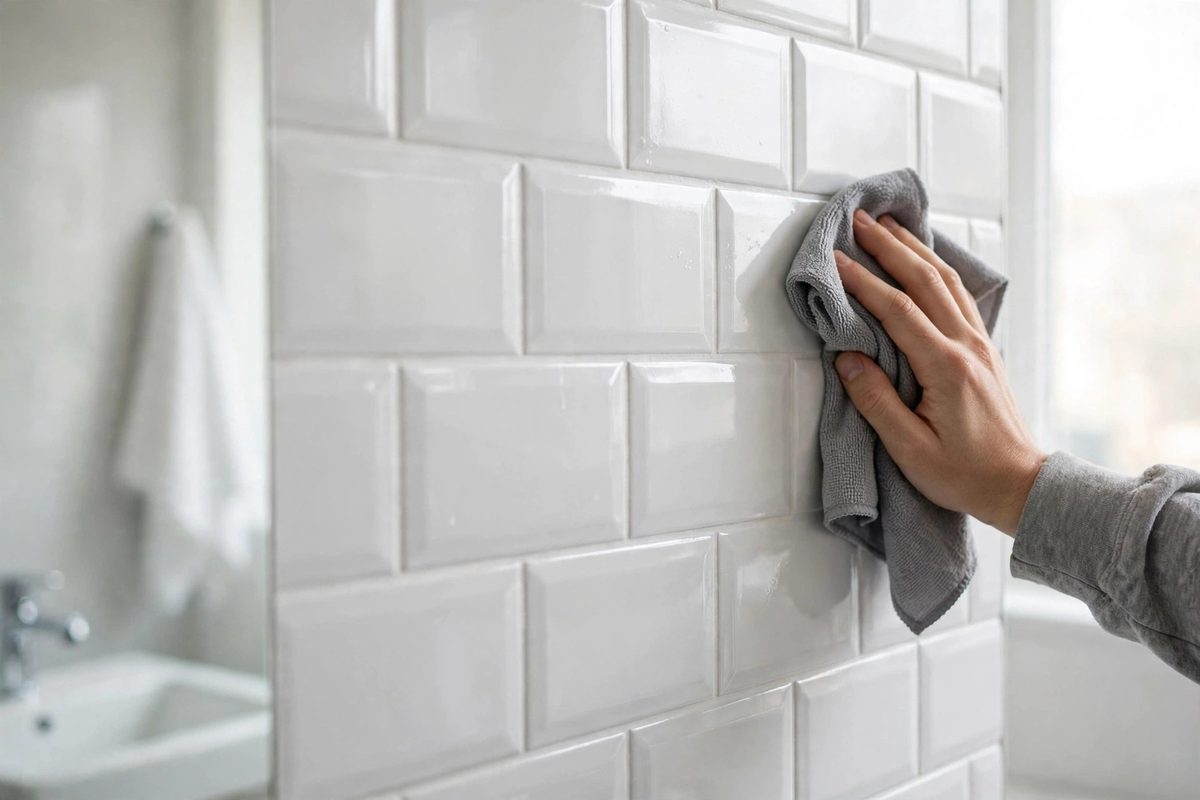
Wet weight is the number renters underestimate most. A full shampoo bottle weighs 1 to 2 pounds, a conditioner the same, and a household’s shower collection easily passes 10 pounds before anyone counts. Treat every published weight rating as a dry rating, and load bathroom shelves to 70 percent of it: a 15 pound shelf carries 10 pounds of wet bottles with a real safety margin, while a shelf loaded to its limit fails the first time steam softens the fixing.
Test before you trust. After mounting any bathroom shelf, load it gradually over 24 hours rather than all at once, and check the fixing edges daily for the first week. A shelf that holds for a week of hot showers will hold for a year; a shelf that slips in the first 48 hours was either overloaded or mounted on the wrong surface, and both problems are cheaper to fix on day two than after a glass bottle shatters in the tub.
Removal is where no-drill storage earns its name. Suction cups lift off with one edge raised to break the seal, leaving nothing behind. Adhesive pads release with slow, steady pulling along the wall, never outward, and a hair dryer on low heat softens stubborn pads without damaging tile or paint. Photograph each wall before mounting, budget 10 minutes per shelf at move-out, and wipe every contact point with a damp cloth. A bathroom shelf that comes off clean is a shelf that protected your deposit as well as it held your shampoo.
No-drill bathroom storage works when the fixing matches the surface, the material survives steam, and the weight stays honest when wet. Start with one shelf on your smoothest wall, test it for a week of real showers, and only then fill the bathroom. The shelves that survive that first week are the ones that will still be up at move-out, with walls underneath them looking exactly as they did on move-in day.