How to Furnish a Small Apartment From Scratch: 10 Phases in the Right Order
How to furnish a small apartment from scratch, in the right order: what to buy first, what to skip, real budget tiers, and how to furnish an apartment one room at a time without wasting money.
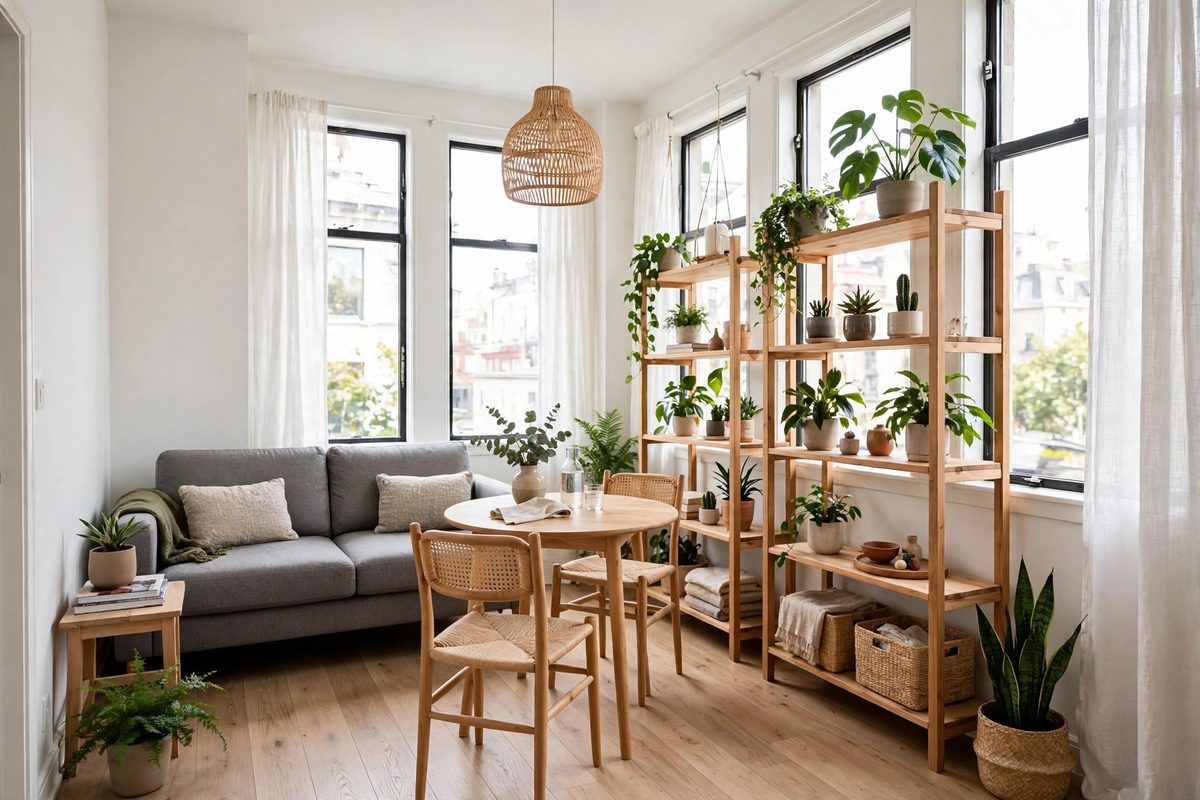
Small apartment living room furnished from scratch with a sofa bed, compact dining table, and storage shelves
In This Guide
Furnishing a small apartment from scratch means starting with an empty room and ending with a place you can sleep, eat, work, and relax in, without buying everything at once. The order matters more than the individual pieces. Buy a bed before a bookshelf, seating before decor, and storage before anything that only looks good. A renter working in 400 to 700 square feet has no spare room for furniture that does not earn its floor space, and every piece that arrives before you have measured the apartment risks a return fee or a hallway it blocks.
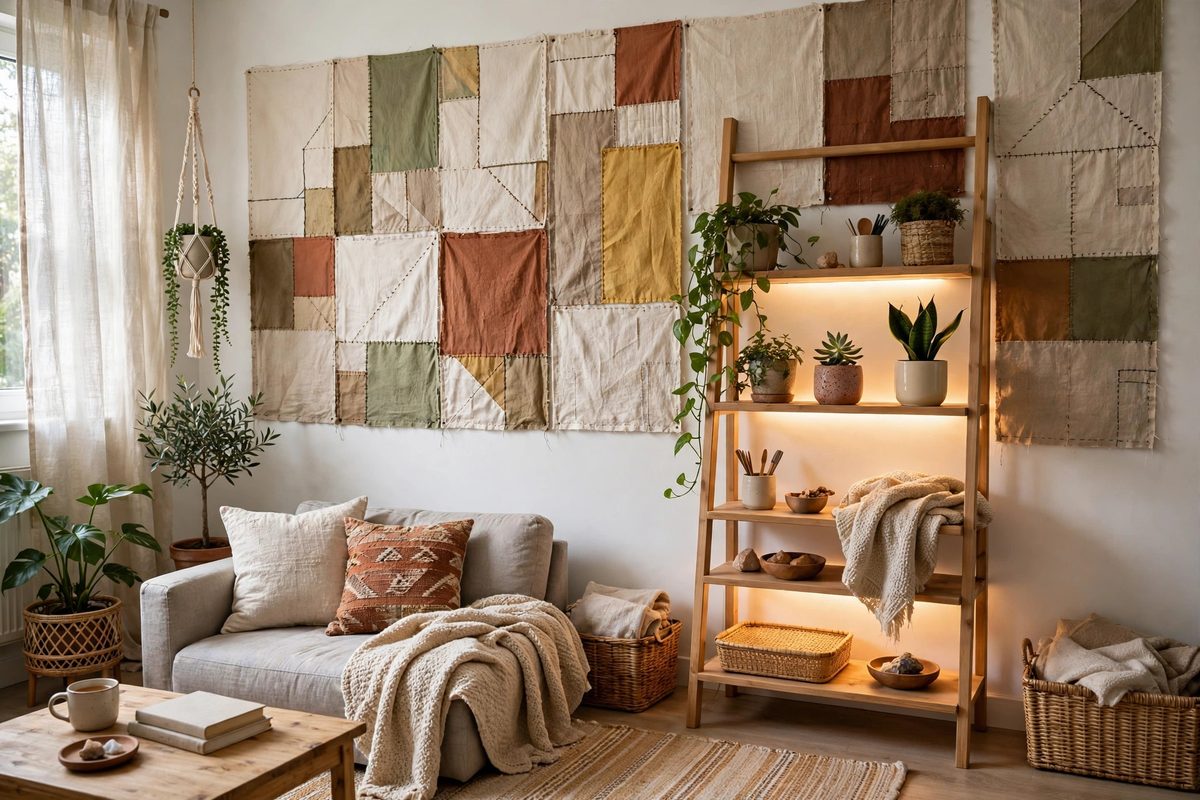
Budget sets the pace. A thrift-first furnishing plan lands around $1,500 to $2,500 for a studio or one bedroom if you buy the mattress new and nearly everything else secondhand. A mid-range plan with a mix of new flat-pack and secondhand finds runs $3,500 to $6,000. An all-new plan from big-box and flat-pack stores usually lands between $7,000 and $10,000 for the same space. The phases below follow the same order at every budget, and each one names what to skip, because skipping is where the savings actually happen. If you want renter-safe upgrades to pair with the furniture, start with 10 DIY room decor ideas for small apartments.
1. Measure the Apartment and Plan the Layout First
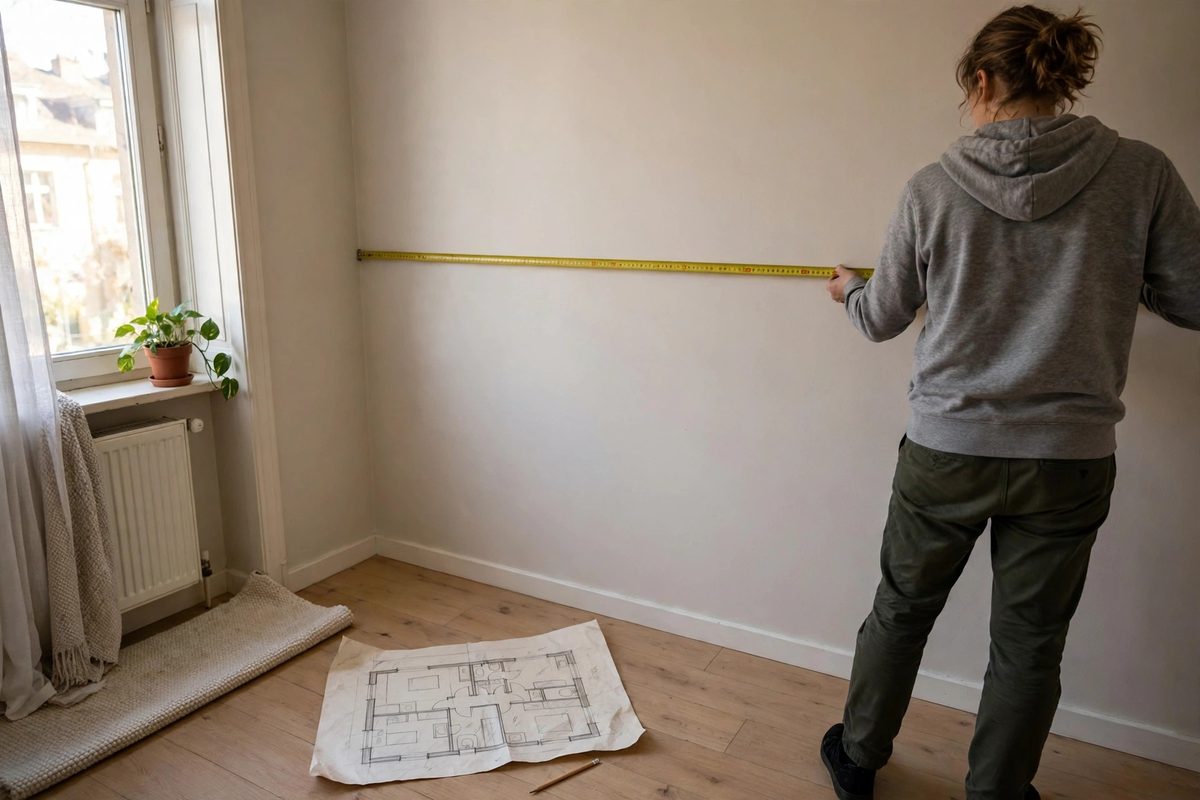
Measure every wall, every doorway, and every elevator or stairwell turn before you buy a single piece. A sofa that fits the living room wall is useless if it cannot get through a 29 inch doorway or around a tight stair landing. Record door widths, hallway widths, ceiling height, and the exact dimensions of window and radiator positions, because radiators and baseboard heaters decide where a bed or sofa can actually sit.
Sketch the layout on paper or in a free room planner, and place the biggest pieces first: bed, sofa, table, storage. Leave 30 to 36 inches of walkway through main paths and at least 24 inches to pull out a chair. In a studio, tape the footprint of the sofa and bed on the floor with painter’s tape and live with the outlines for a day. That one test catches more bad buys than any amount of browsing, and it costs nothing.
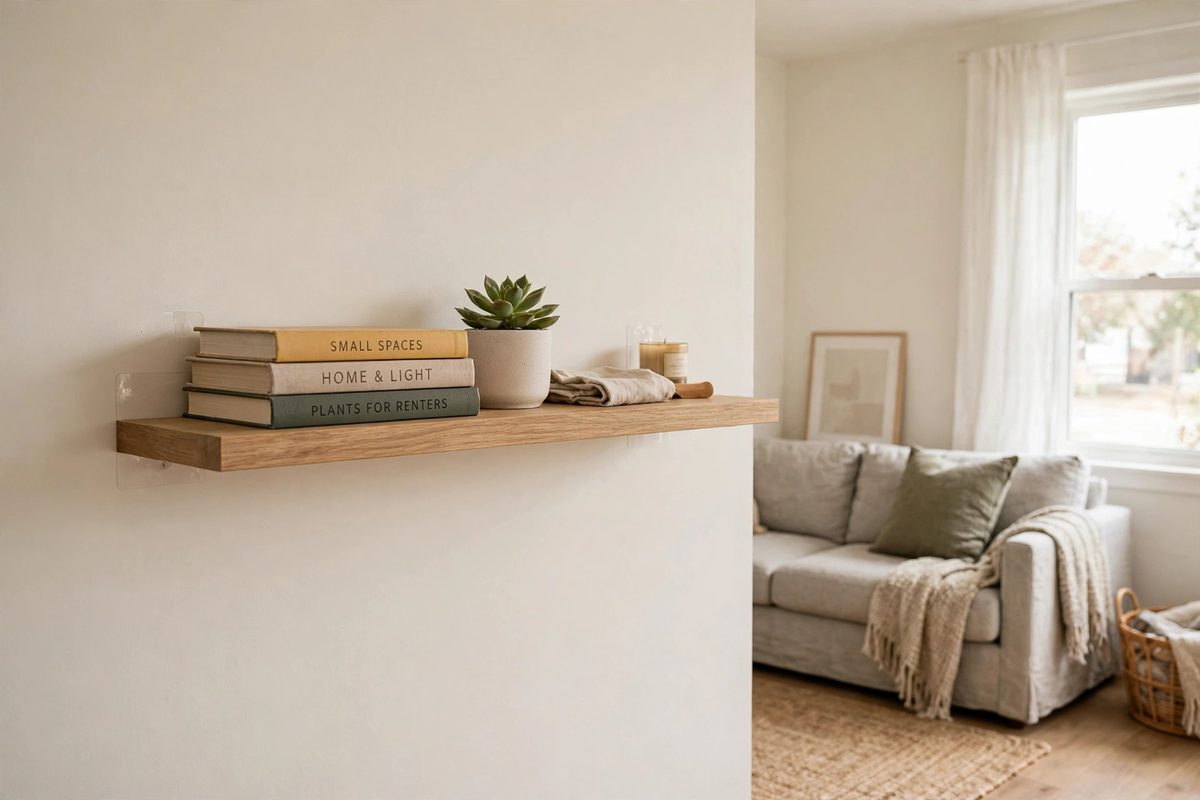
Renters should also check the lease before buying anything that mounts to a wall. If drilling is banned, plan around freestanding storage and adhesive or tension options from the start, which is where 10 no-drill shelves for renters that hold real weight earns its place in the plan. Photograph the empty apartment too, so move-out damage disputes start from a clean record.
2. Sleep First: Buy the Bed and Bedding
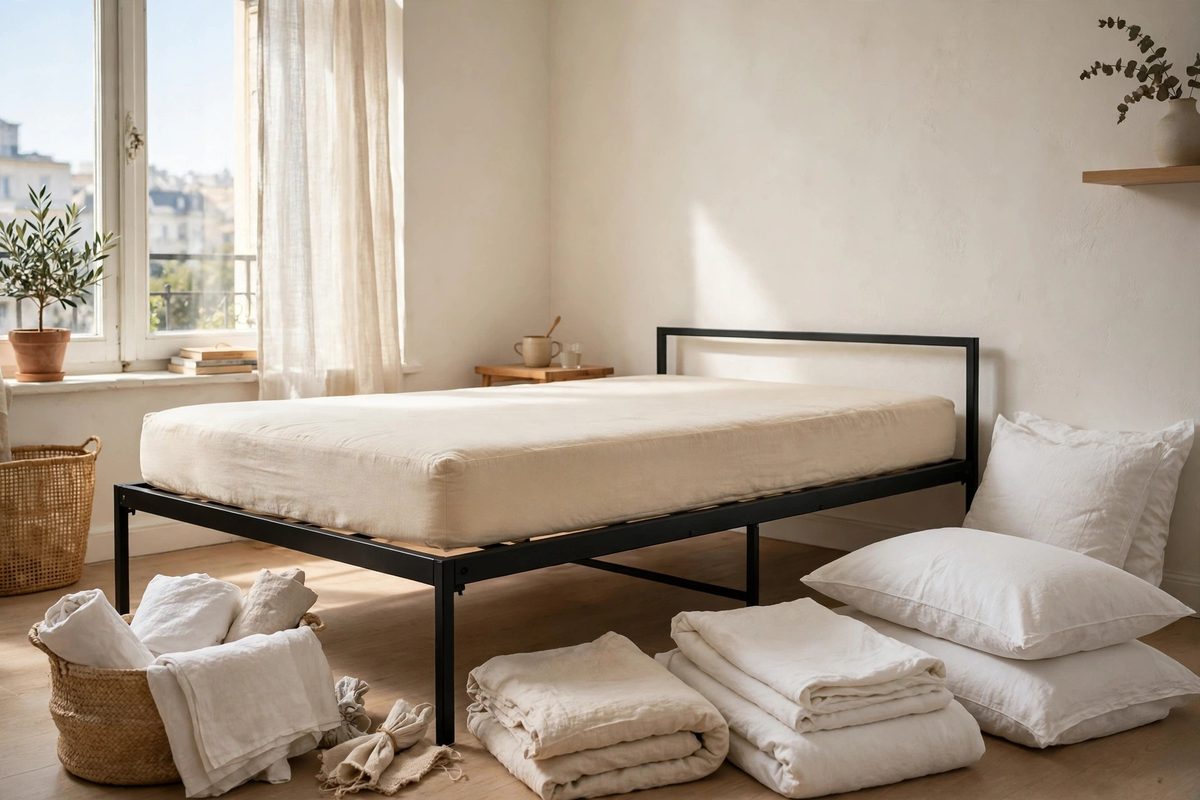
The bed is phase one for a simple reason: you need somewhere to sleep on night one, and everything else can wait a week. Buy the mattress new, always. Secondhand mattresses carry bed bugs, allergens, and sagging you cannot see, and a $300 to $600 bed-in-a-box mattress in medium firmness suits most sleepers. A simple metal platform frame runs $80 to $150 and removes the need for a box spring, which saves both money and vertical space in a low-ceiling room.
Size the bed to the room, not to the dream. A queen needs a room at least 10 by 12 feet to leave walkways on both sides; in a smaller bedroom, a full or even a twin XL keeps the room usable. Under-bed storage bins, about $25 to $40 for a set of two, turn the dead space under the frame into linen and off-season storage from day one.
Bedding is the second half of this phase: two sheet sets, two pillows, and a washable duvet or comforter, roughly $120 to $200 total at mid-range prices. Buy a mattress protector first, before the first night, because a $30 protector saves a $400 mattress from the first spilled coffee. Skip the decorative throw pillows and the extra blanket ladder for now. Comfort comes from sheets you can wash, not from layers you have to move to get into bed.
3. Sit Down: Sofa and Everyday Seating
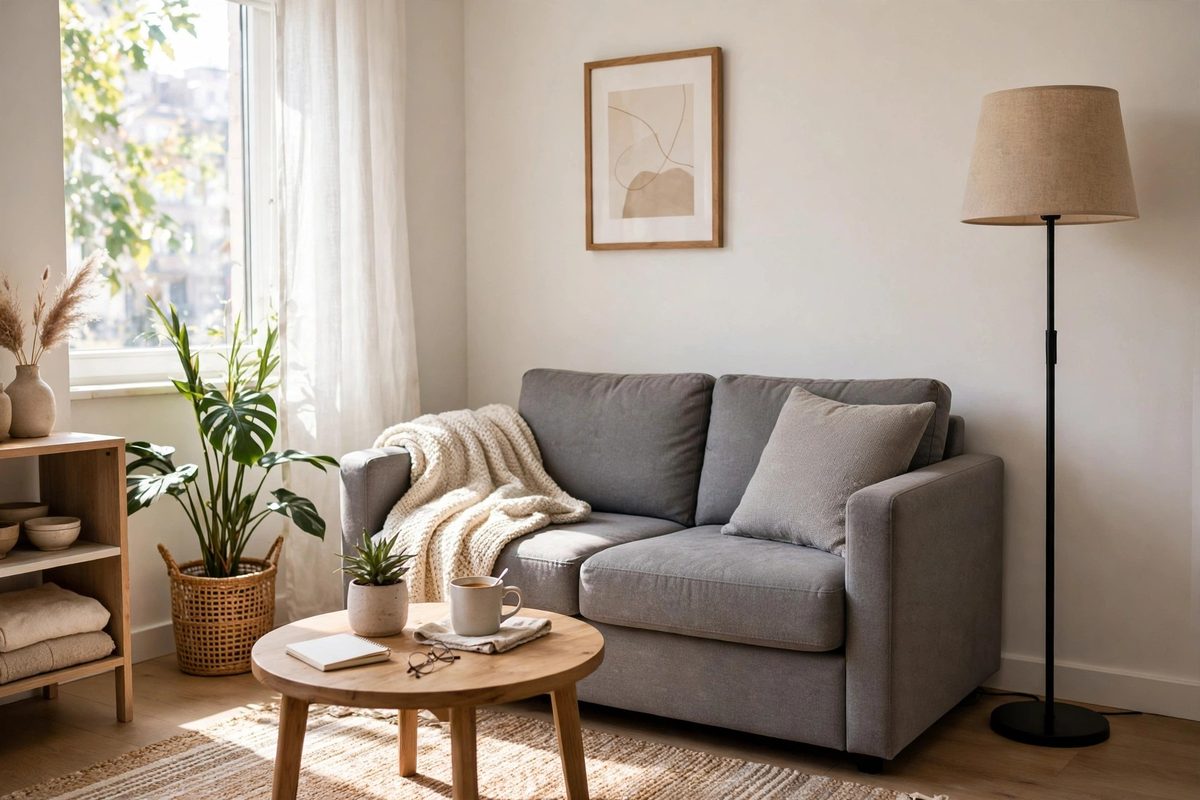
Seating is phase two because the living room is where you spend waking hours, and a bed alone turns an apartment into a bedroom with a kitchen attached. In a small apartment, a loveseat (52 to 66 inches wide) or an apartment-size sofa (under 78 inches) fits where a standard 84 inch three-seater crowds the room. Budget $400 to $900 new for a decent loveseat, or $100 to $300 secondhand for the same piece from someone moving out.
Secondhand sofas are the best deal in furnishing, with one rule: inspect before you pay. Check the frame by lifting one front corner; a solid frame stays rigid, a broken one twists. Smell the cushions, unzip a cover if you can, and pass on anything with stains, pet odor, or sagging seats that do not spring back. A steam clean costs $80 to $150 and is worth it for a $150 sofa that would cost $800 new.
Skip the matching armchair, the recliner, and the sectional in this phase. One good sofa plus one folding or stackable chair for guests covers 95 percent of real life in a small space. Add a second seat later, once you know which corner actually stays empty. If wall storage is part of your seating wall, plan it now rather than after the sofa arrives, and see how to hang shelves without drilling or studs for renter-safe options above it.
4. Eat: Table, Chairs, and a Place to Gather
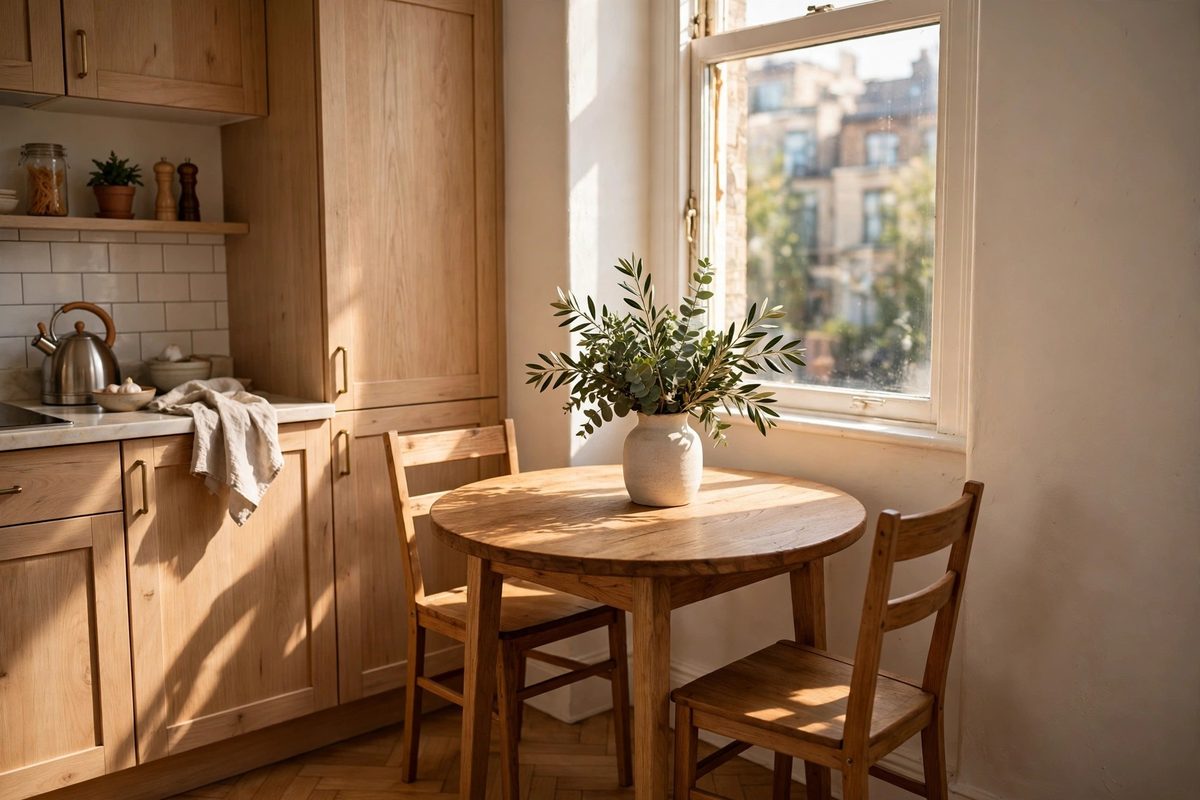
A table is not just for meals. In a small apartment it doubles as a desk, a project surface, and the spot where guests sit, so it earns its floor space three ways. A round table 36 inches across seats two comfortably and four in a pinch, and it fits corners where a rectangular table blocks a walkway. A drop-leaf or fold-down table is the smarter pick for studios under 500 square feet, since it folds to 12 inches deep against the wall when you need the floor back.
Budget $150 to $350 for a small table and two chairs new, or $50 to $120 secondhand. Chairs matter more than the table itself, because a wobbly chair ruins every meal. Sit in each one before buying, check that all four legs touch the floor, and skip chairs with loose joints that no amount of glue will truly fix.
Skip the six-chair dining set, the bar cart, and the buffet in this phase. Nobody hosts six for dinner in a 500 square foot apartment in the first month, and a set bought for imaginary guests eats the floor space real daily life needs. Two good chairs now, plus two folding chairs stored in a closet for the rare dinner party, is the plan that survives contact with reality.
5. Store It: Storage That Fits the Layout
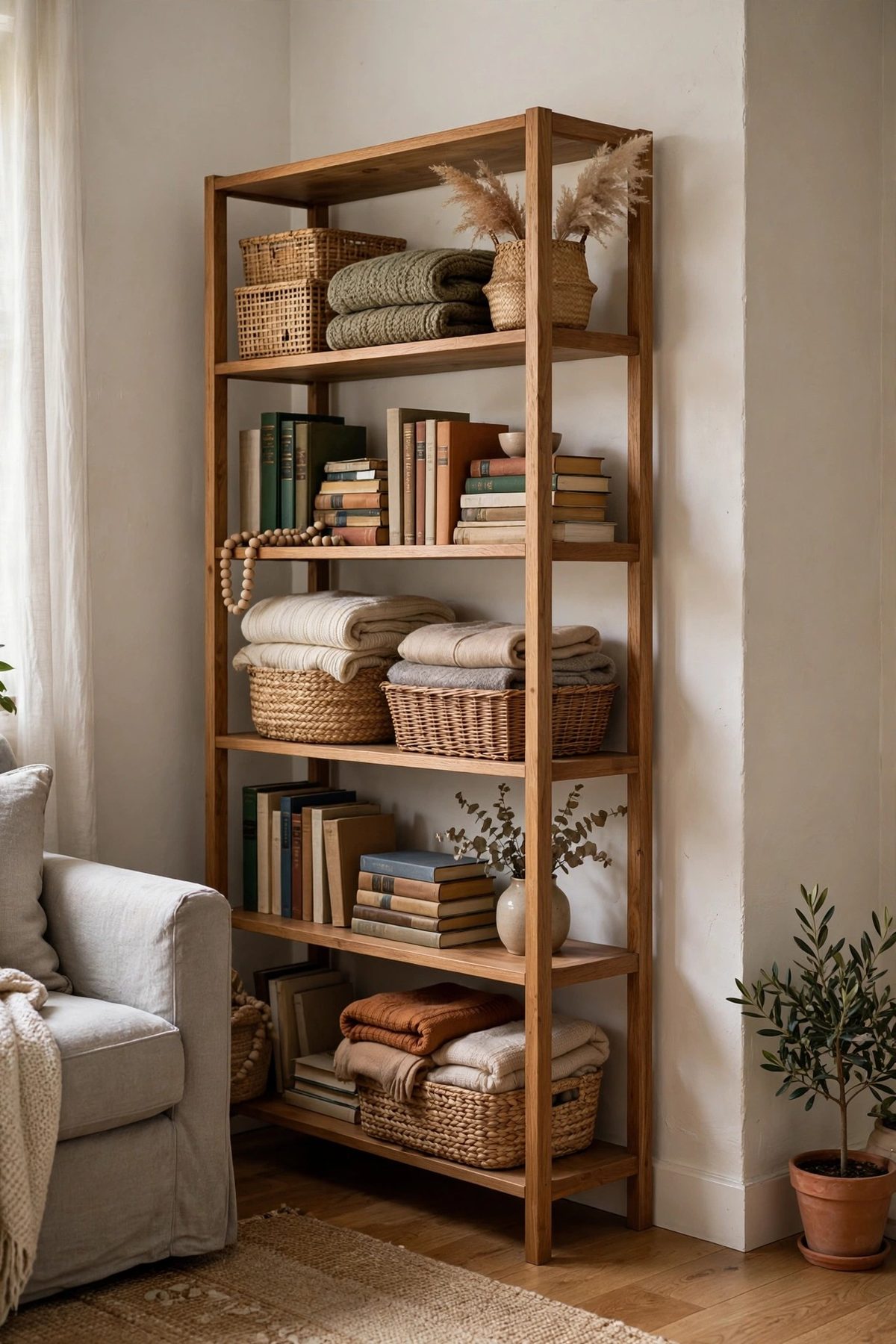
Storage is the phase most people buy too late and too randomly. Without it, clothes pile on chairs, kitchen gear fills the counters, and the apartment feels smaller than it is, no matter how nice the sofa looks. Start with the closet: a freestanding garment rack ($40 to $80) or a tension-rod closet doubler ($20 to $30) doubles hanging space without a single screw, and stackable bins ($30 to $50 for a set) turn a deep closet into usable shelves.
In the living room, one tall bookcase or ladder shelf beats three small side tables. A 72 inch bookcase costs $80 to $180 flat-pack and holds books, baskets, and media gear in a footprint of about 30 by 12 inches. Baskets matter as much as shelves: closed baskets hide clutter, open shelves display it, and a mix of both keeps the room looking calm without a daily tidying marathon.
Buy storage for the things you actually own, not for a fantasy inventory. Count your books, measure your shoe collection, and check how many kitchen gadgets you truly use before buying a unit for them. Storage bought blind becomes its own clutter, and the cheapest storage of all is owning less. For wall storage that leaves no holes, the renter options in 10 no-drill shelves for renters that hold real weight pair well with freestanding bookcases.
6. Cook: Kitchen Basics Only
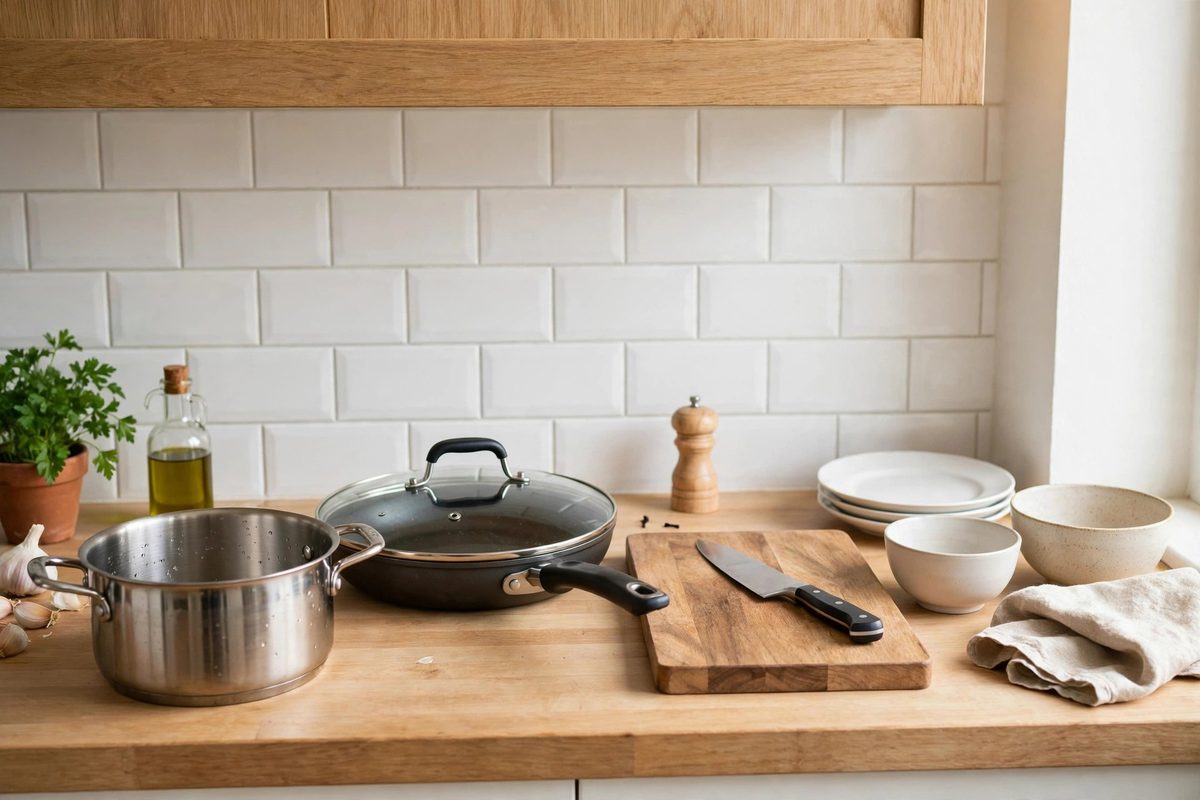
A working kitchen needs surprisingly little: a pot, a pan, a baking sheet, a knife, a cutting board, and enough plates, bowls, glasses, and cutlery for four place settings. That core kit costs $150 to $300 new, or under $80 secondhand and thrifted, and it covers nearly every weeknight meal. Buy the knife decent ($25 to $40 for one good chef’s knife beats a $60 block of dull ones) and buy the pan with a lid, since a lidded pan doubles as a second pot.
Small appliances are where kitchen budgets leak. A coffee maker or kettle earns its counter space if you use it daily. A blender, food processor, stand mixer, and specialty gadget each need a use at least weekly to justify the space they take in a small kitchen, and most get used twice and stored forever. Start with the coffee setup and the kettle, then add one appliance per month only when a recipe you actually cook keeps demanding it.
Skip matching dish sets, single-use tools, and bulk pantry containers in phase one. Four of everything is enough for daily life plus one guest, and mismatched thrift plates cost $1 to $3 each and work just as well. If the kitchen floor needs a refresh while you are at it, 10 peel-and-stick floor tile ideas for renters covers damage-free options that survive cooking mess.
7. Work: A Desk and Workspace That Fits
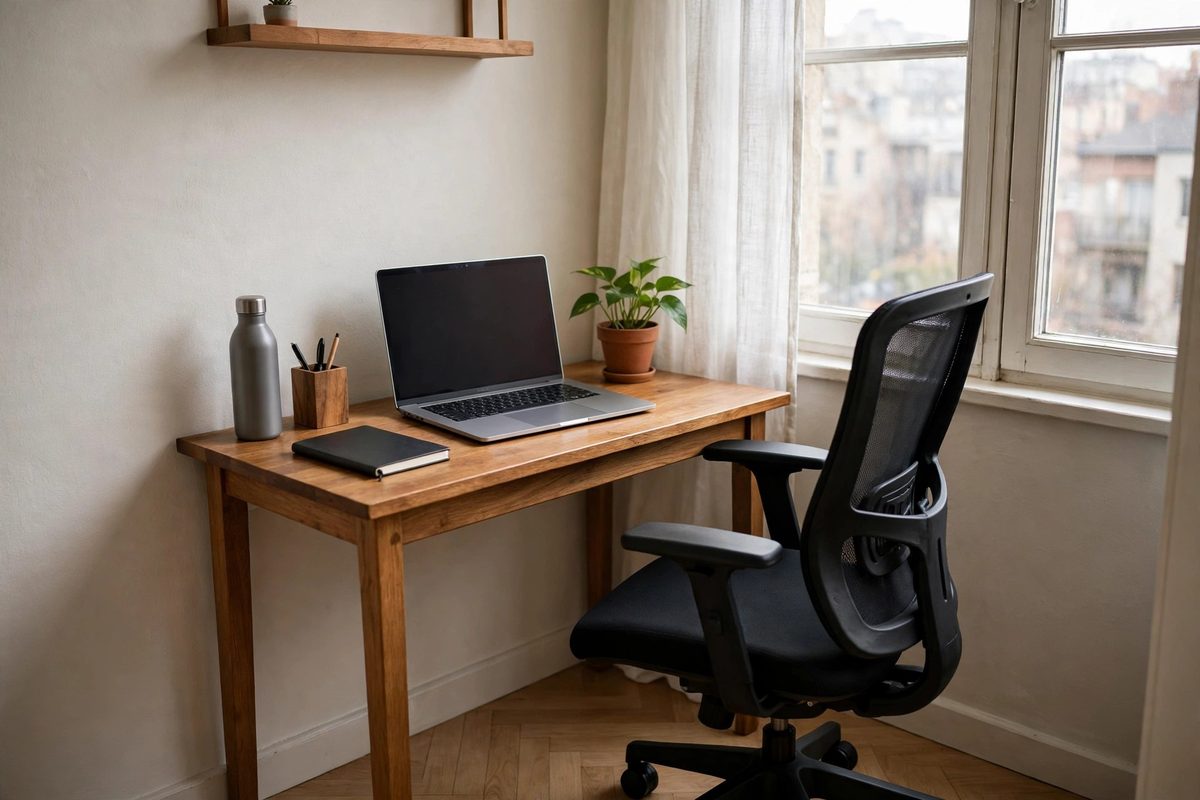
If you work or study from home, a real workspace is not a luxury, it is the difference between a focused day and a day spent working from the sofa with a sore back. A desk 40 to 48 inches wide fits most corners and holds a laptop, a monitor, and a notebook without crowding the room. Budget $80 to $200 for a simple desk new, or $30 to $80 secondhand, and spend the real money on the chair: $150 to $300 for an ergonomic chair pays for itself in back comfort within a month of daily use.
Place the desk near natural light but not with your back to the room’s main walkway, and keep the work zone visually separate if the apartment is a studio. A bookcase turned sideways, a curtain on a tension rod, or even a rug under the desk marks the boundary between work and rest, which matters more in a studio than in a one bedroom where a door does the job.
Skip the standing desk converter, the monitor arm, and the full office setup until you know your actual work habits. A laptop stand ($25 to $40) and a separate keyboard ($30 to $60) fix the worst ergonomic problems for a fraction of the cost, and they pack away when the desk becomes the dining table in the evening.
8. Light It: Lighting Layers That Change the Room
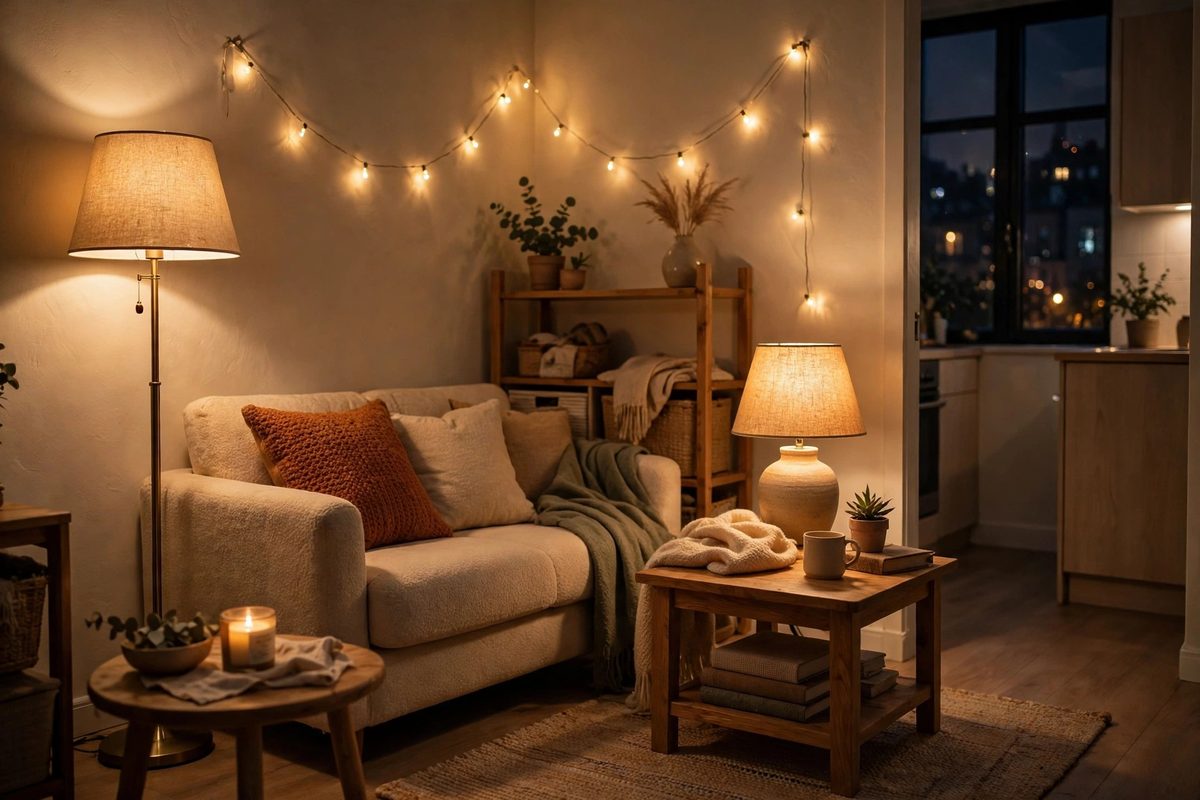
Overhead lighting alone makes a small apartment feel like an office, and it is usually the first thing renters complain about. Three layers fix it: ambient light from the ceiling or a floor lamp, task light at the desk and beside the bed, and accent light from a small lamp or string lights in a corner. A floor lamp costs $40 to $90, a bedside lamp $25 to $50, and a desk lamp $20 to $40, so the whole layering plan lands around $100 to $200.
Color temperature matters as much as brightness. Warm white bulbs, 2700K, make living spaces feel cozy in the evening, while a 4000K bulb at the desk keeps you alert during work hours. Smart bulbs ($10 to $15 each) let one lamp switch between the two, which is genuinely useful in a studio where the same lamp serves both work and relaxation.
Skip the chandelier, the statement pendant, and any fixture that needs an electrician or a ceiling mount your lease forbids. Plug-in lamps, adhesive strip lights under shelves ($15 to $25), and battery puck lights inside dark closets give you the same layered effect with zero wiring and zero deposit risk. Lighting is also the cheapest decor upgrade in the whole plan, and it changes how every other piece looks.
9. Wash and Dress: Bathroom and Laundry Basics
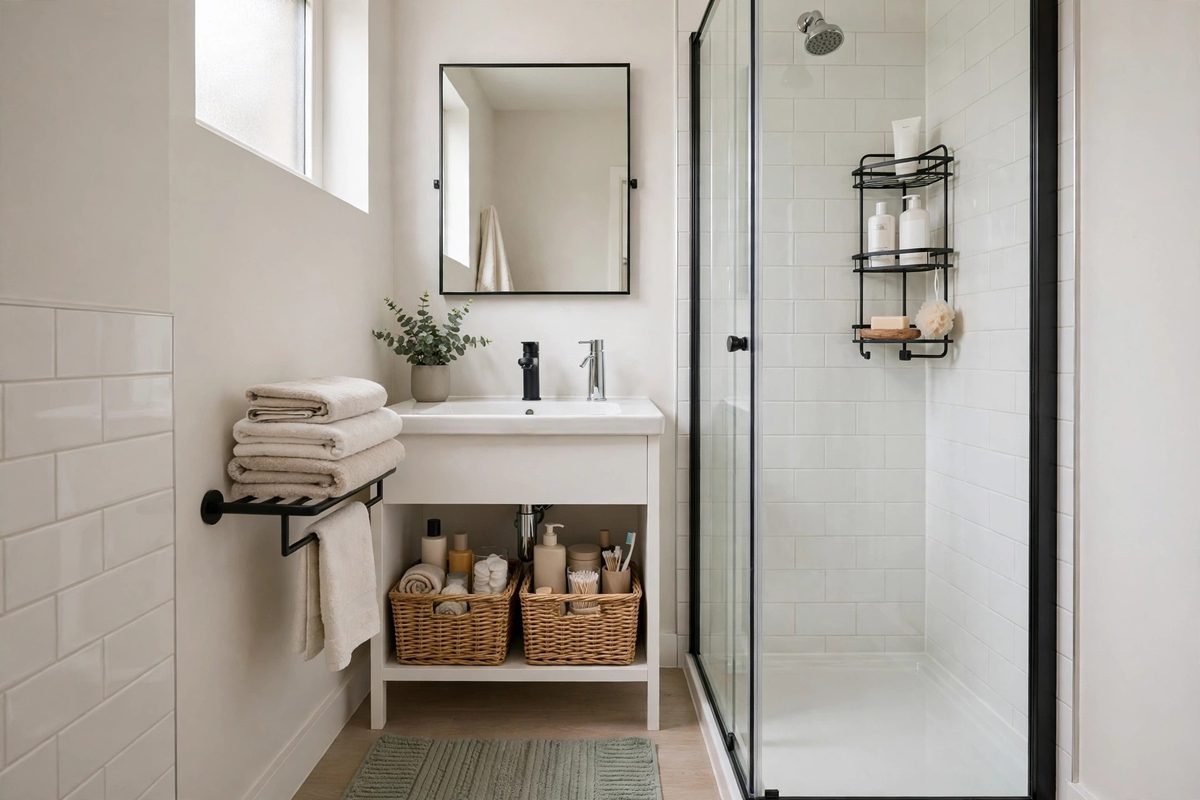
The bathroom phase is short but easy to overspend on. You need a shower curtain and rings ($15 to $30), bath towels (two per person, $40 to $60 total), a bath mat ($15 to $25), and storage for toiletries that keeps bottles off the tub edge. A tension pole caddy or over-door rack ($20 to $40) beats a suction shelf that fails on textured tile, and a small lidded bin ($15 to $25) hides cleaning supplies under the sink.
Laundry is the part people forget until the first wash day. A hamper that fits the closet or bathroom corner ($20 to $35), a drying rack that folds flat ($25 to $40), and a basic iron or steamer if your work clothes demand it ($25 to $50) cover the routine. In buildings without in-unit laundry, a rolling laundry cart ($30 to $50) saves more trips than any other $40 you will spend in this phase.
Skip the matching bathroom set, the heated towel rail, and the countertop organizer collection. Bathrooms in small apartments have almost no counter space, so every item needs a hook, a shelf, or a basket, not a decorative tray. Buy the towel bars and hooks that use adhesive or tension before you buy anything that sits on the counter, because counter space is the scarcest surface in the room.
10. Decorate Last: Art, Plants, and Textiles
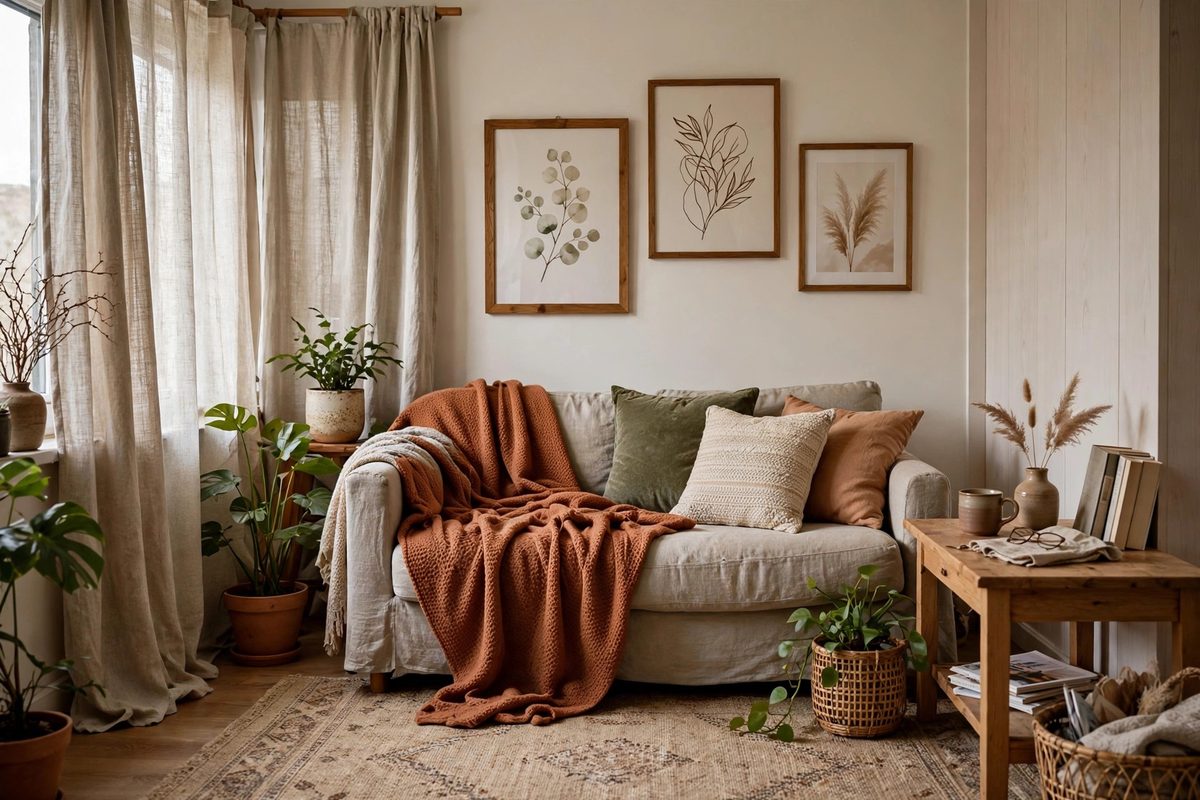
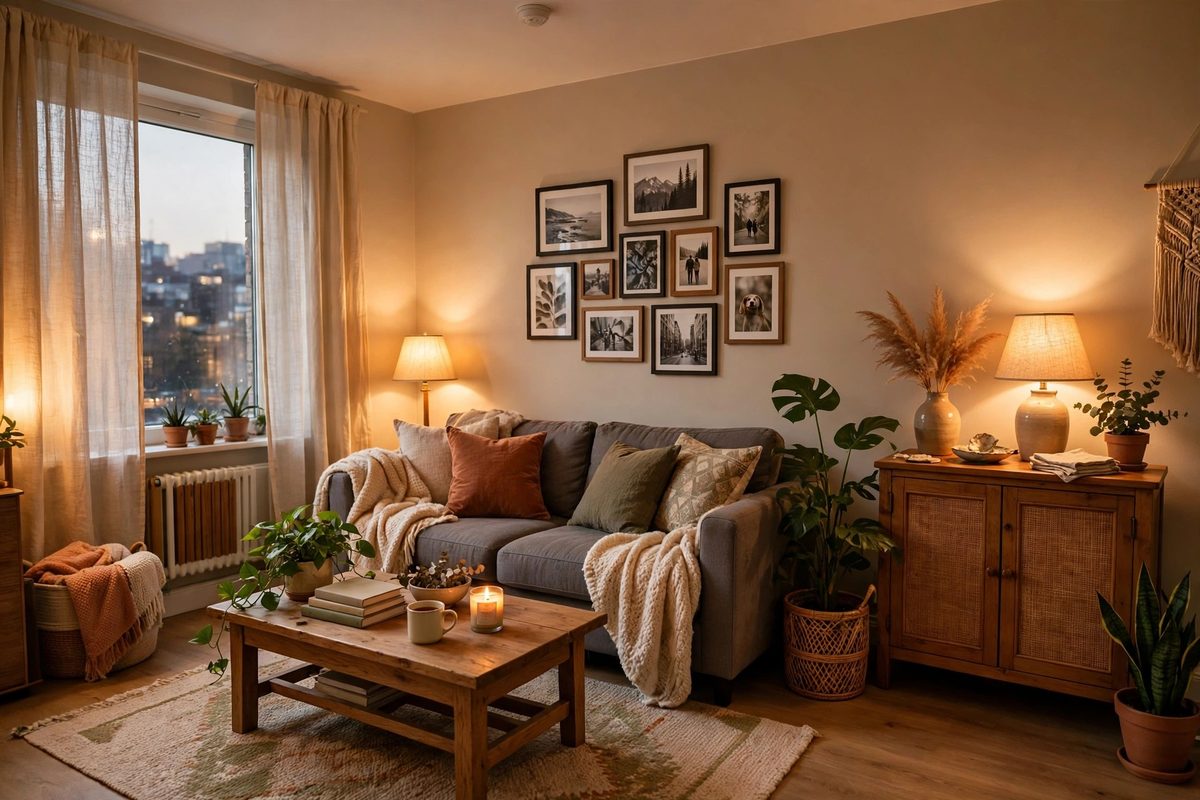
Decor comes last on purpose. Once you have lived in the furnished apartment for two to four weeks, you know which wall stays bare, which corner feels cold, and which chair needs a throw. Buying decor first fills the apartment with things that looked good in the store and fight the layout you actually live in. A $200 to $400 decor budget spent after the settling-in period goes twice as far as the same money spent on move-in day.
Start with textiles, because they change a room fastest for the least money: curtains ($30 to $80 per window, hung on a tension rod if drilling is banned), a rug that anchors the seating area ($80 to $200 for a 5 by 8), and a throw blanket ($25 to $50). Then add art: framed prints ($20 to $40 each with thrift frames) hung with adhesive strips rated for the frame weight, and one or two plants in lightweight pots, since a trailing pothos ($15 to $25) softens a shelf better than any object.
Skip the gallery wall, the full plant collection, and the themed decor sets until you have lived with the basics. One strong piece per wall beats five small ones competing for attention, and plants should arrive one at a time, only after you know which windows get real light. The apartment is furnished when every piece has a job and the rooms feel lived in, not when every surface is covered. For project ideas that add personality without holes in the walls, see 10 DIY room decor ideas for small apartments.
Furnishing a small apartment from scratch works when the order is right: measure, sleep, sit, eat, store, cook, work, light, wash, then decorate. Spend the money where your body meets the apartment every day, the mattress, the chair, the sofa, and save on everything that only looks good in photos. The apartment will not be finished on move-in day, and that is the point: a place furnished in the right order grows into your life instead of fighting it.