15 Corner Sofa Designs for Small Living Rooms That Add Seating Without Taking Over
Make a sectional couch fit your apartment. Discover 15 compact corner sofa ideas, chaise layouts, and dimension rules that save living room floor space.
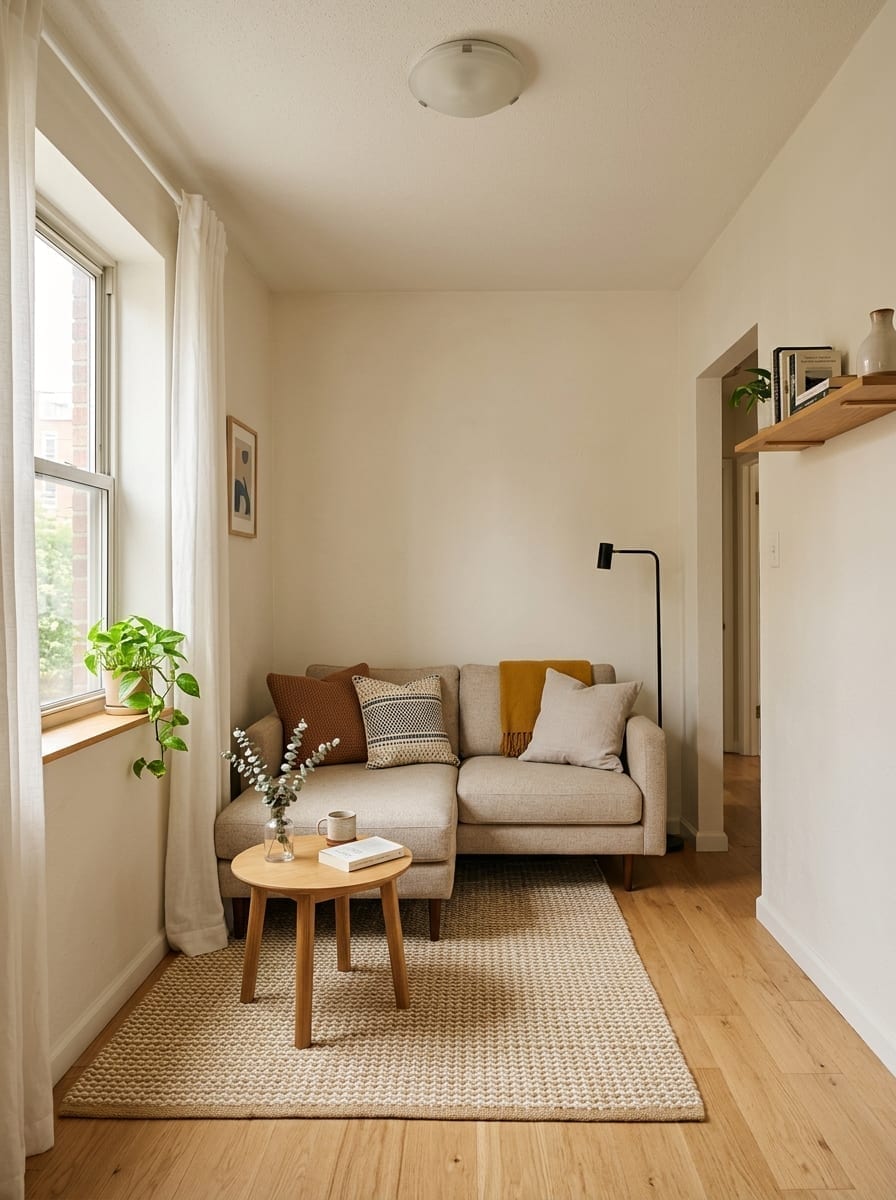
Compact L-shaped corner sofa in a small apartment living room with round coffee table and light sightlines
In This Guide
A corner sofa can sound like the last thing a small living room needs.
After all, sectionals are often associated with huge family rooms, oversized furniture, and sprawling open-plan homes.
But the right corner sofa can actually make a compact living room easier to arrange.
Instead of fitting a sofa, extra chair, footstool, and several small pieces into the room, one carefully sized L-shaped sofa can consolidate the seating into a single footprint.
The problem begins when the sofa is too deep, the chaise points in the wrong direction, or the rest of the room is filled as though the sectional were a normal two-seat sofa.
In a small space, a corner sofa needs room to breathe.
These 15 layouts show how to use one without letting it dominate the entire room.
1. Compact L-Shaped Sofa Against Two Walls
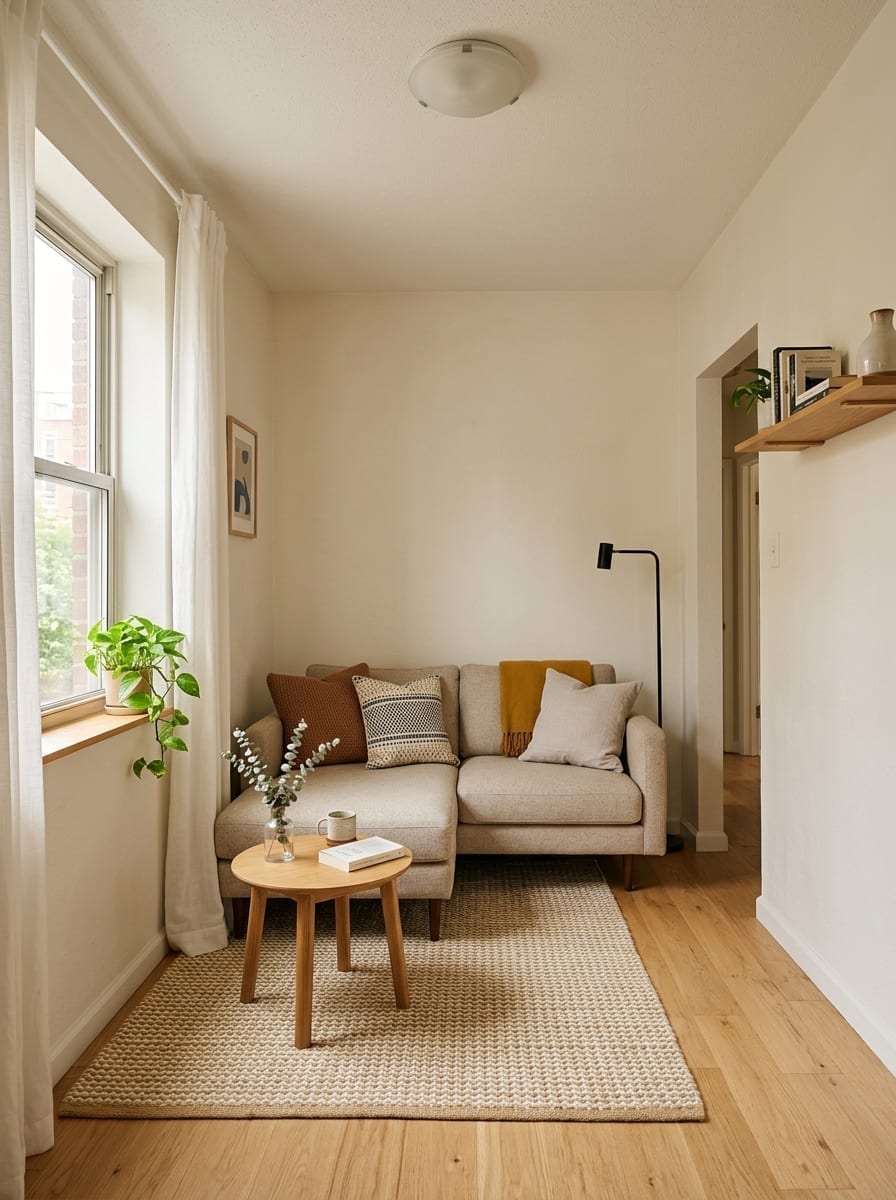
The simplest small-room layout is often the most effective.
Place a compact L-shaped sofa tightly into one corner so it follows two walls.
This uses an area that might otherwise require a sofa plus a separate chair.
The important word is compact.
Look for:
narrower arms moderate seat depth shorter return section clean back profile
Avoid a sectional designed for a large family room and hoping it will somehow work in a small apartment.
Before buying, tape the sofa dimensions onto the floor.
That quickly shows whether you will still have enough room to walk around it.
2. Short-Chaise Corner Sofa Layout
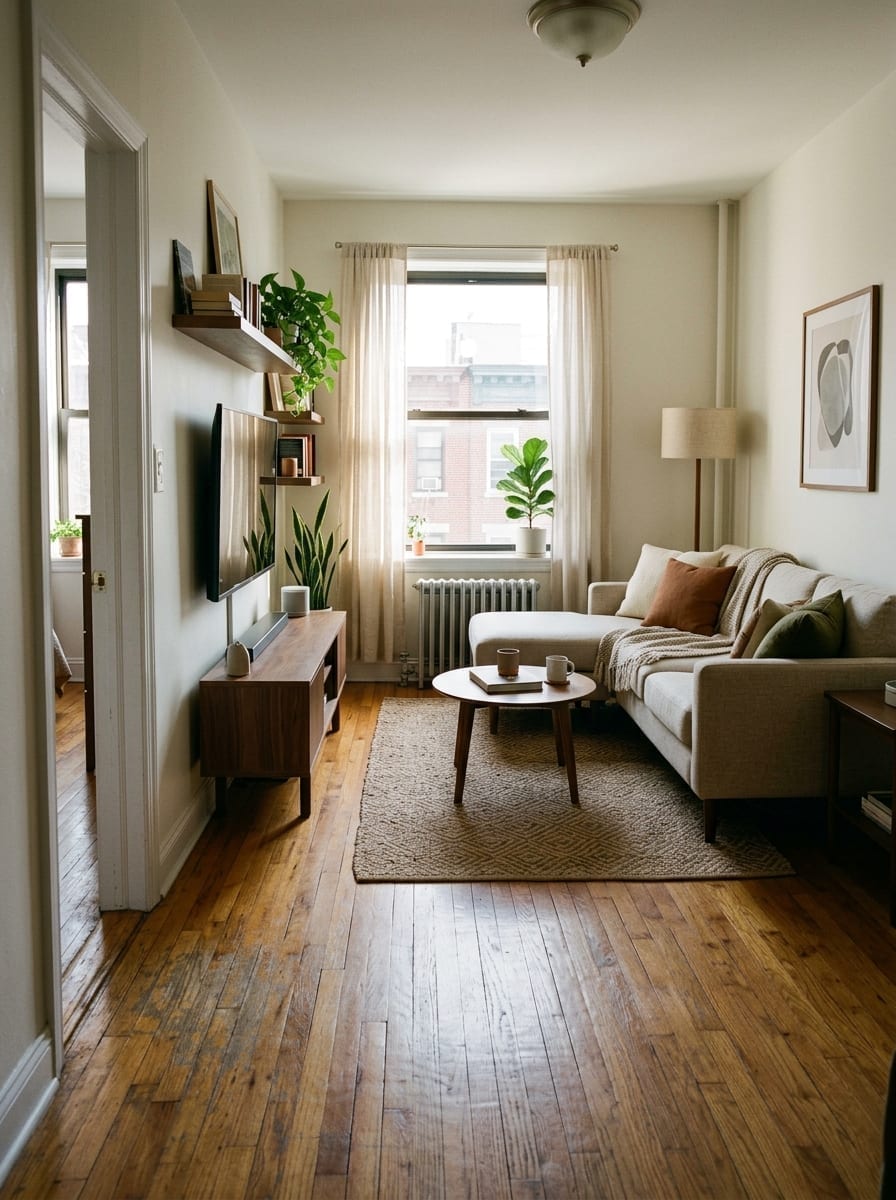
You do not need a full-length chaise to get the comfort of a corner sofa.
A shorter chaise can provide somewhere to stretch out without cutting too far into the room.
This is especially useful when the sofa faces a TV wall and the main walkway passes in front of or beside the seating area.
Pay attention to which side the chaise sits on.
Ideally, it should extend toward the least-used part of the room rather than into the primary walking route.
That one decision can determine whether the room feels comfortable or constantly obstructed.
3. Floating Corner Sofa for Open-Plan Apartments
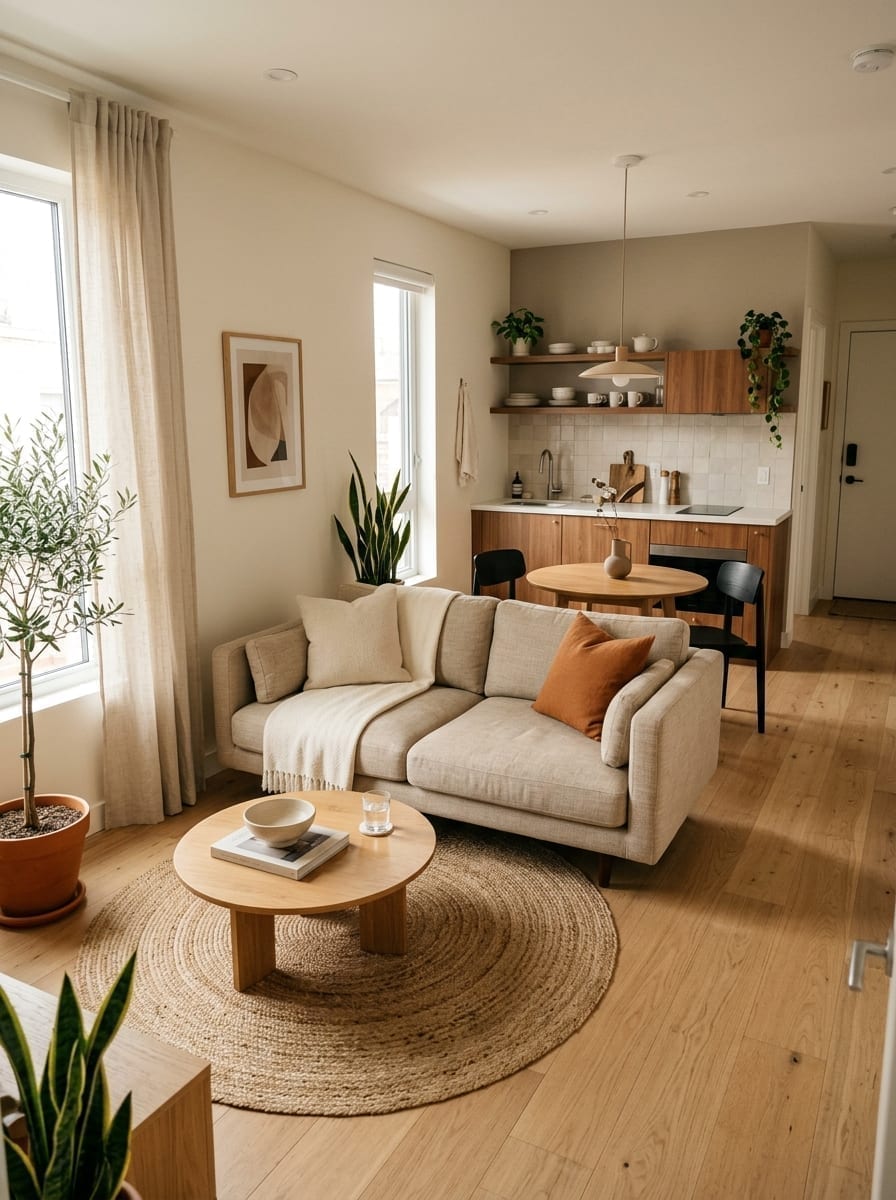
In an open-plan apartment, a corner sofa does not always need to sit against the walls.
Sometimes floating it slightly into the room creates a much clearer living zone.
The back of the sofa can visually separate the lounge from:
dining area kitchen entry workspace
This works particularly well when the sectional is low enough that it does not block the view across the apartment.
Leave enough circulation space behind it so the layout still feels natural.
The sofa should create structure, not become a barrier.
4. Low-Profile Corner Sofa With Longer Sightlines
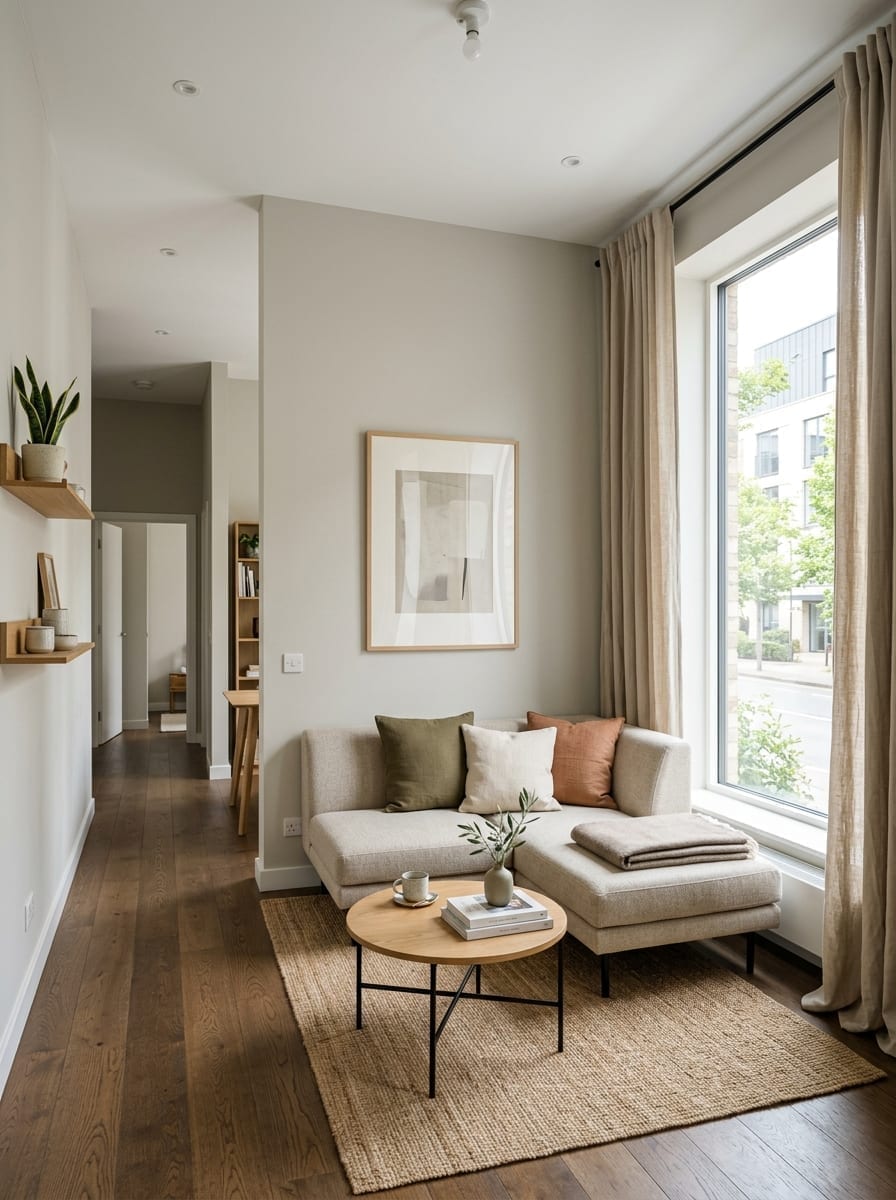
A large sofa feels less visually heavy when it sits lower in the room.
A low-profile sectional keeps more wall visible and allows your eye to travel farther across the space.
Look for:
lower back simple seat cushions restrained arms modest overall height
You can still make the room feel cozy with pillows, lighting, curtains, and a rug.
The sofa itself does not need to provide all the visual weight.
This is especially useful in apartments with lower ceilings.
5. Open-Leg Sectional That Feels Visually Lighter
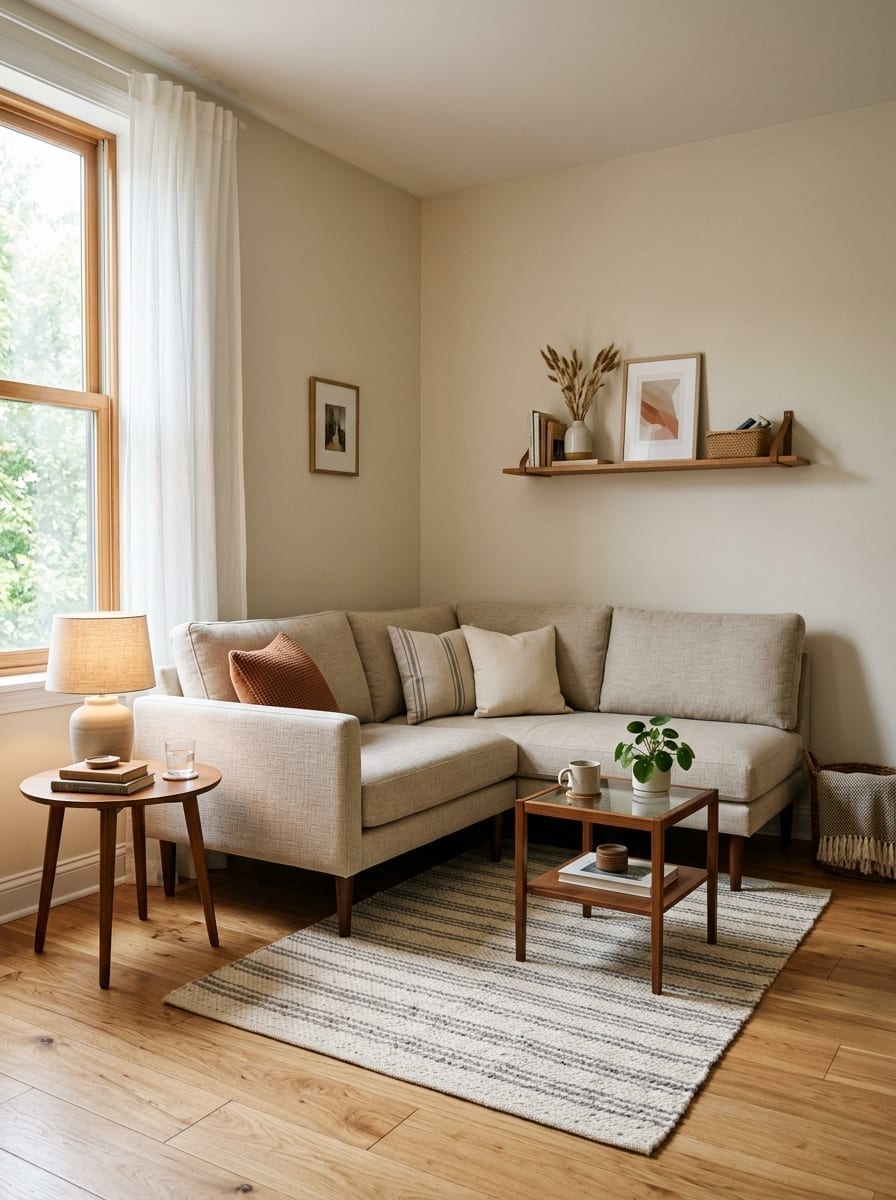
A sofa that sits directly on the floor can look heavier than one raised slightly on visible legs.
Open legs allow more flooring to remain visible underneath, which can make the room feel lighter.
You do not need very tall legs.
Even a modest amount of space beneath the sofa can help.
This works particularly well with:
light or medium wood legs slim black metal legs simple modern upholstery
The sectional still provides plenty of seating, but it does not look like one solid block occupying the entire corner.
6. Corner Sofa With Hidden Storage Chaise
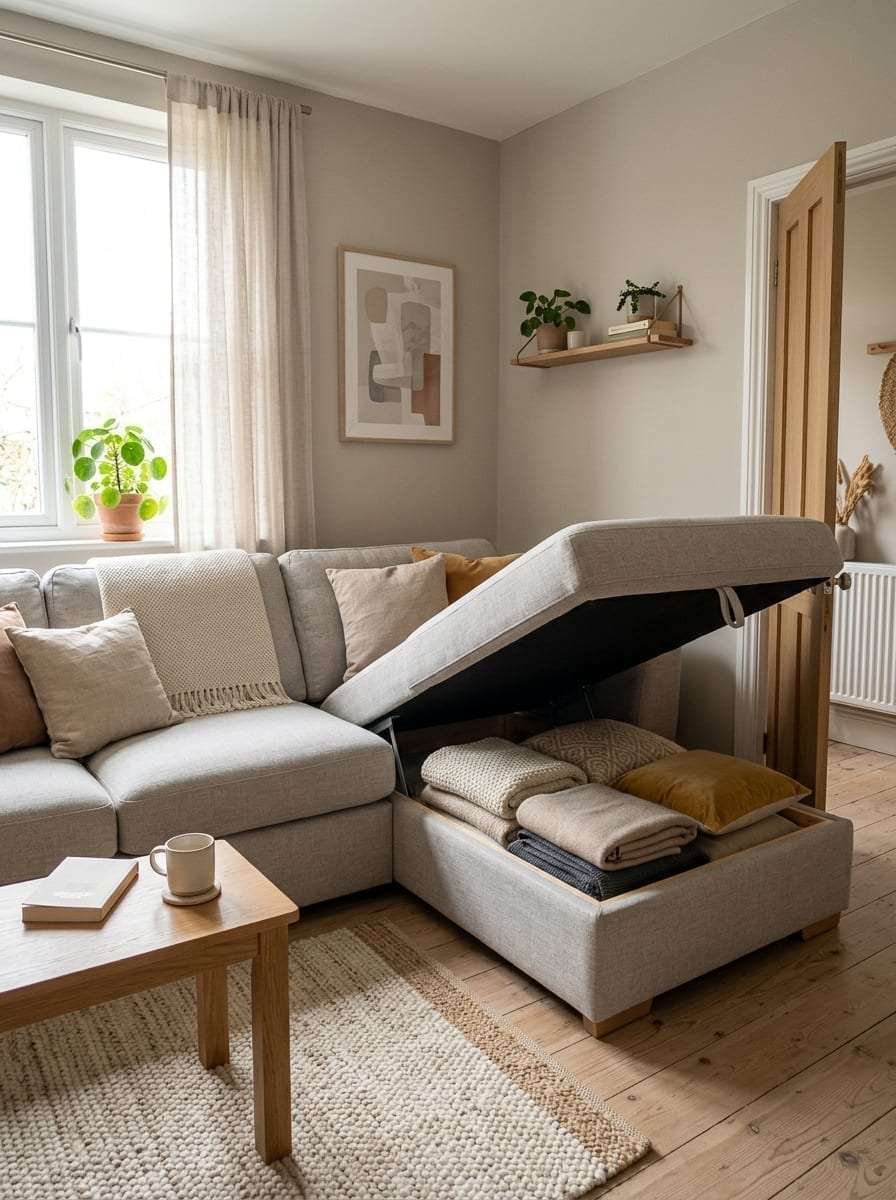
In a small apartment, hidden storage can make a sectional much more useful.
Some chaise sections lift to reveal space for:
throws extra pillows board games seasonal textiles occasional-use items
This can eliminate the need for another storage basket or cabinet in the living room.
Use the compartment for things you do not need every few minutes.
The biggest advantage is that the storage already occupies space the sofa was going to use anyway.
7. One-Sided Chaise Beside the Window
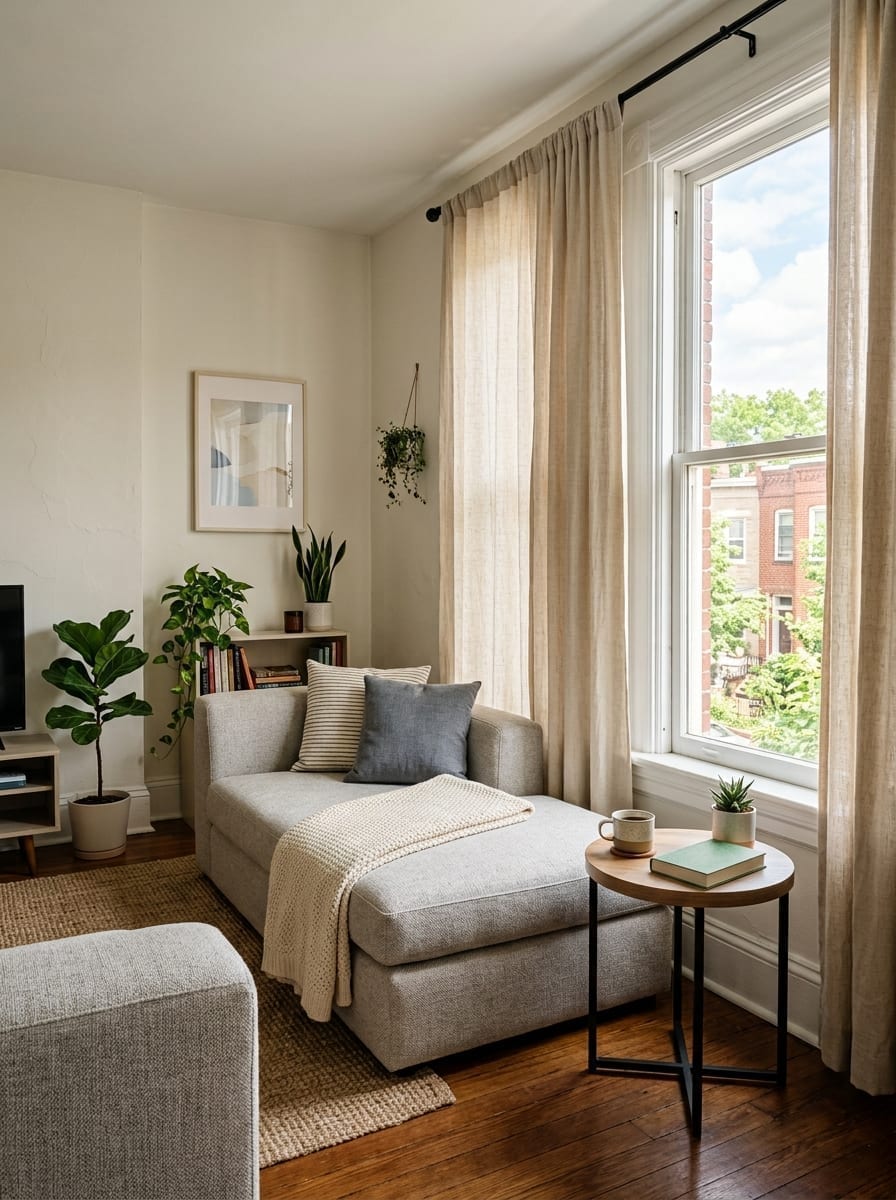
A chaise can work beautifully near a window if it does not interfere with the curtains, radiator, or door.
Positioning the extended section toward the window gives you a natural place to stretch out in daylight.
It also keeps the main sofa section closer to the center of the room.
Avoid pushing furniture directly against anything that needs airflow or regular access.
And make sure curtains can still hang and move properly.
Done well, this can create one of the coziest seats in the apartment.
8. Corner Sofa With a Round Coffee Table
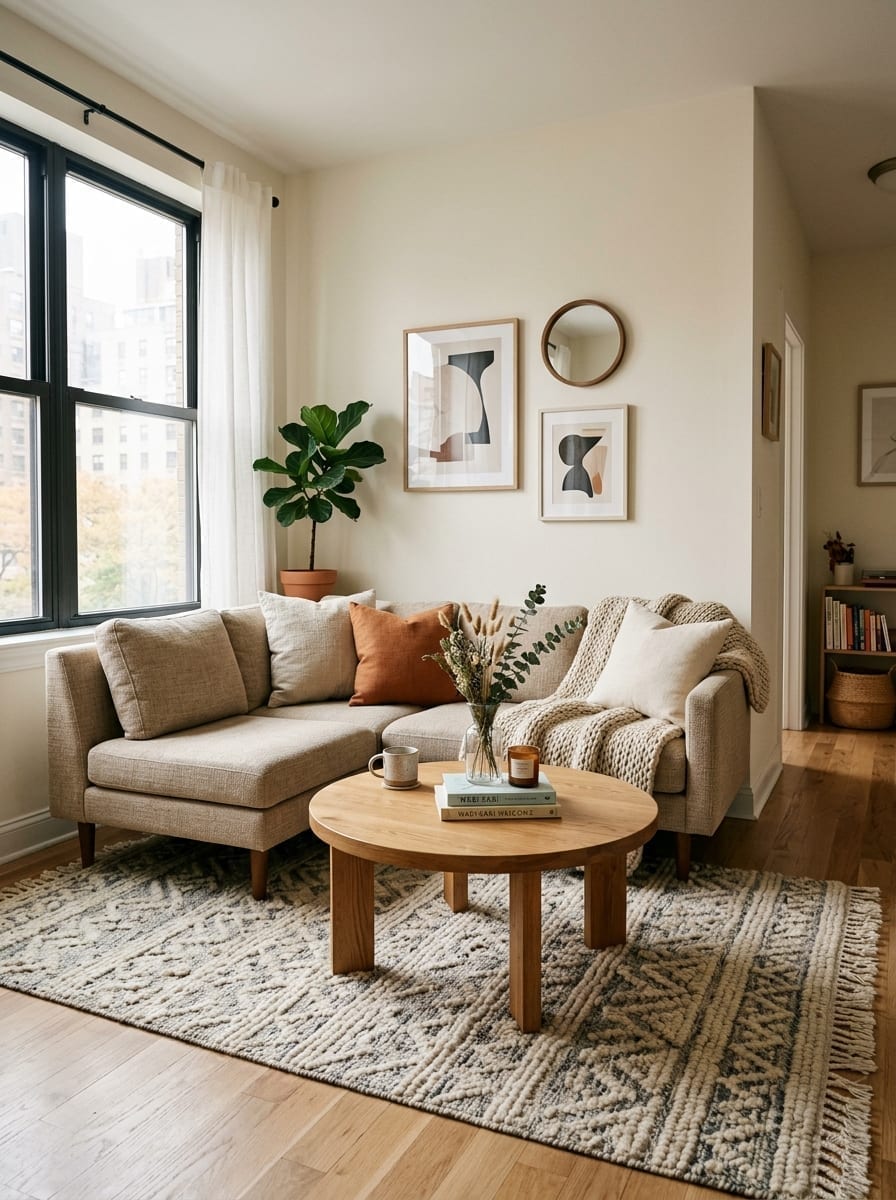
A large rectangular coffee table can make a sectional layout feel cramped.
A round table often works better because it removes hard corners from the center of the walking space.
It is particularly useful when several people need to move around the chaise.
Choose a table that is small enough to leave comfortable clearance around the seating.
A round wood table can also soften the strong right angles created by an L-shaped sofa.
The result often feels more balanced.
9. Rug-Anchored Sectional Layout
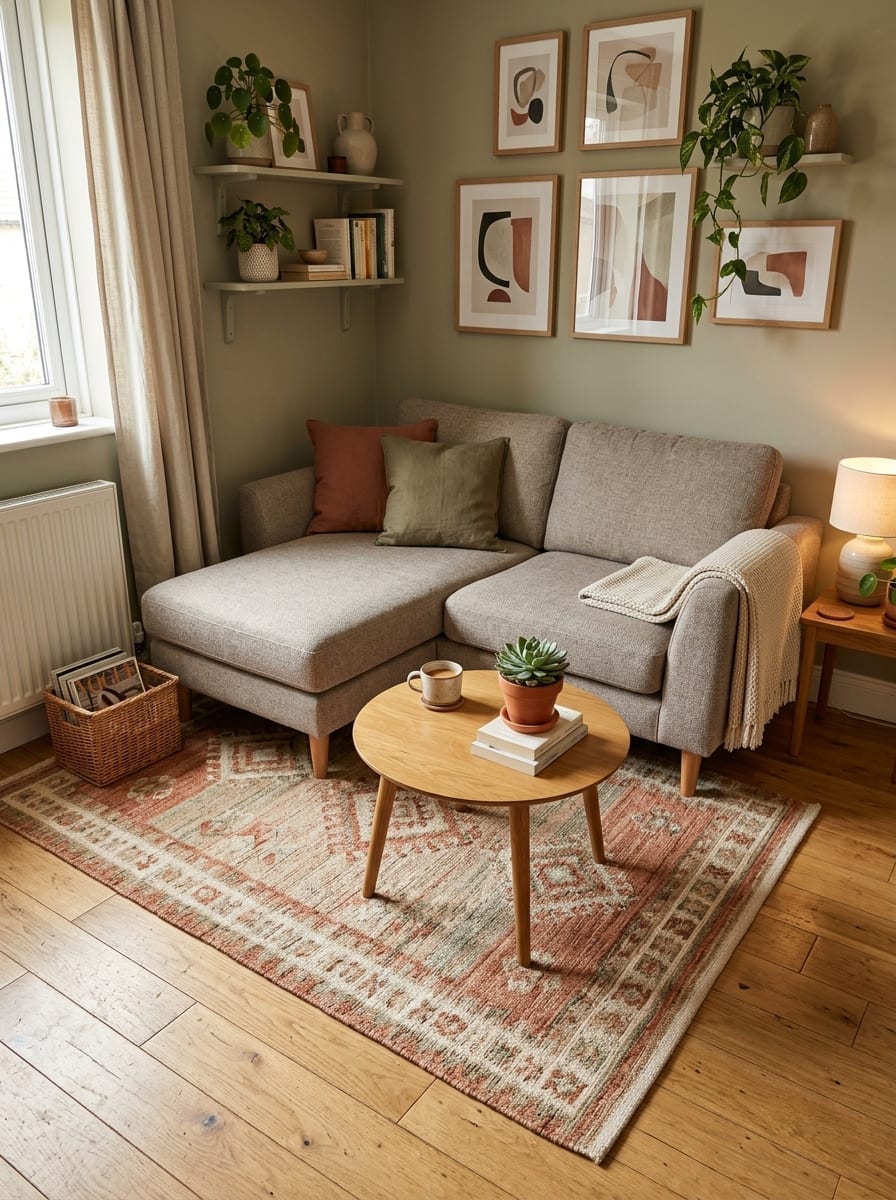
A corner sofa already creates a strong shape.
The rug should support it rather than compete with it.
Choose a rug large enough to connect the main sofa section, chaise, and coffee table visually.
At minimum, the front portion of the sofa should interact with the rug.
A tiny rug floating in the center can make the sectional look even larger because the surrounding furniture feels disconnected.
Simple patterns or quiet textures usually work best in a small room.
10. Corner Sofa With a Slim Side Table
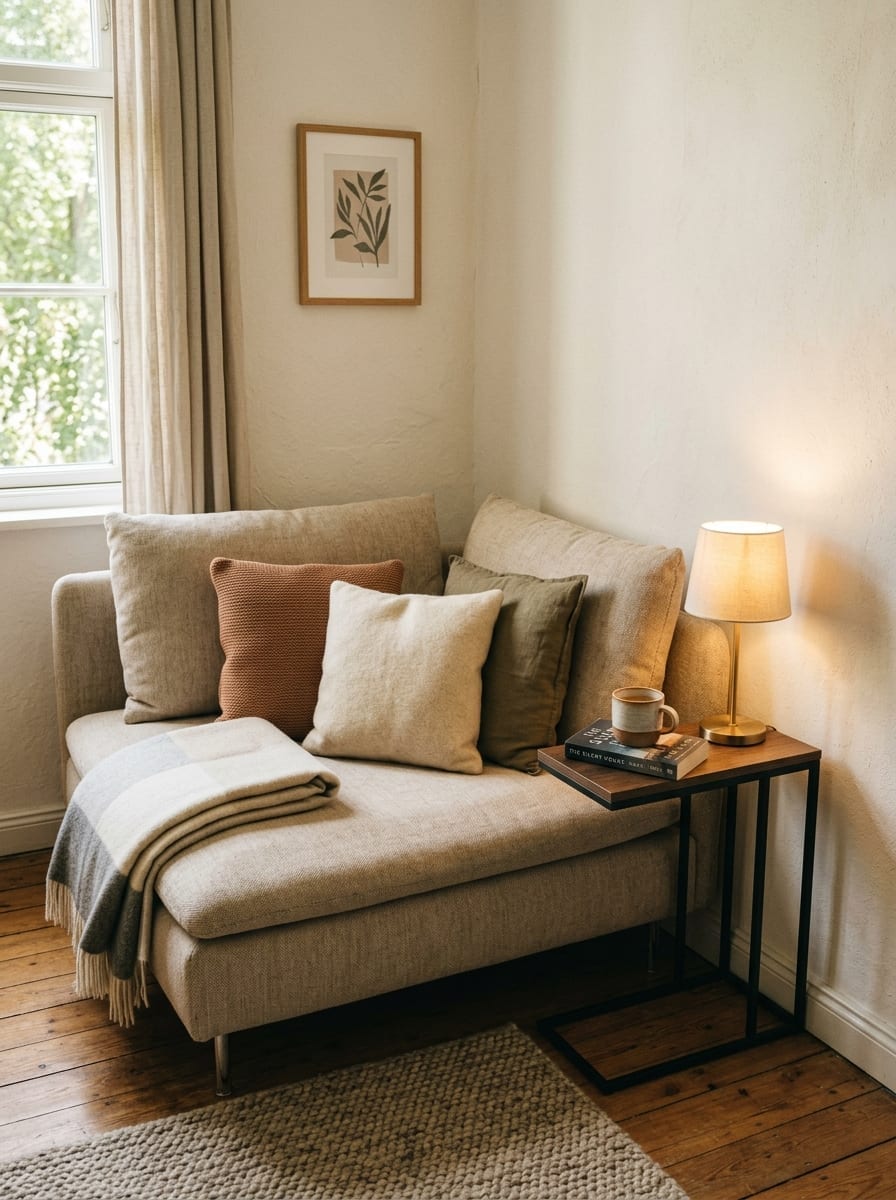
A sectional does not necessarily need a full set of end tables.
One slim side table may be enough.
Place it beside the end of the sofa for:
lamp drink book phone
Look for something with a small footprint.
A C-shaped table can also work in some rooms because part of the base can slide underneath the sofa.
Reducing extra furniture around the sectional is one of the easiest ways to stop it from overwhelming the space.
11. Neutral Sectional With Tonal Texture
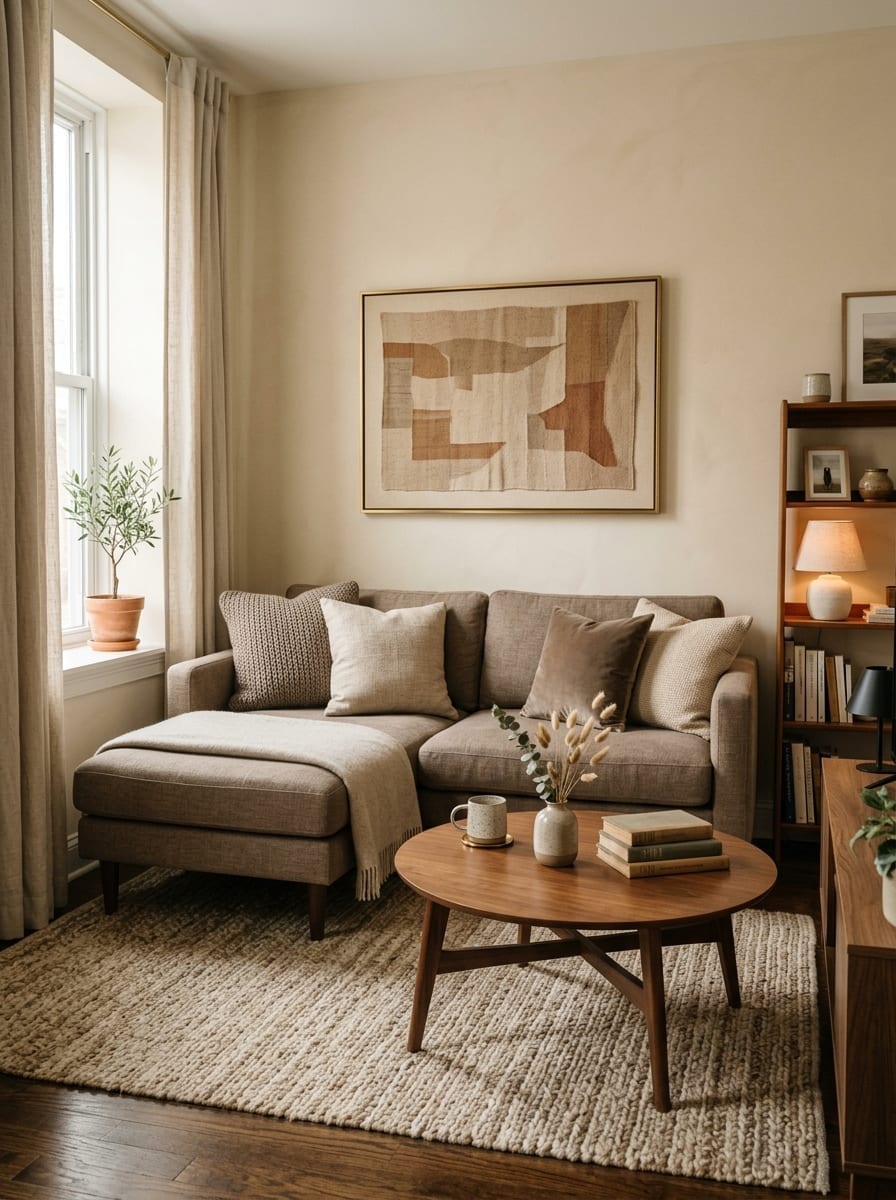
A large upholstered piece becomes less visually dominant when its color relates to the rest of the room.
That does not mean the sofa has to be white.
Good small-room colors include:
warm beige mushroom taupe muted olive soft gray-brown oatmeal
Then add contrast through texture rather than lots of competing colors.
A woven pillow, linen curtain, wool-like rug, and warm wood table can add depth without making the room busy.
12. Modular Corner Sofa for Awkward Rooms
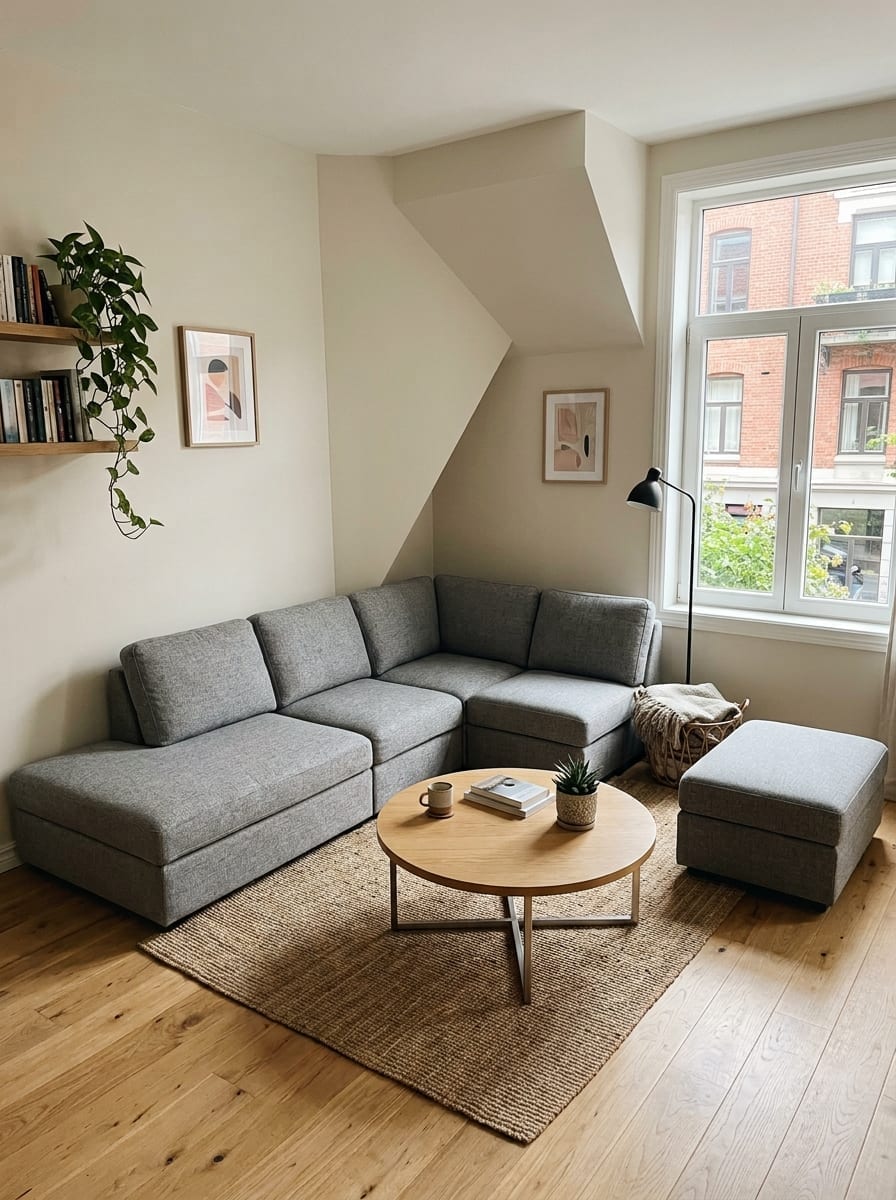
Modular seating can be useful when your room does not suit a standard sectional shape.
Individual sections may allow you to create:
shorter chaise symmetrical corner separate ottoman rearranged seating when needed
This is especially useful for renters because your next living room may have a completely different shape.
Before buying, confirm how securely the modules connect.
A sectional that constantly slides apart is not practical just because it is flexible.
13. Corner Sofa and TV Wall Layout
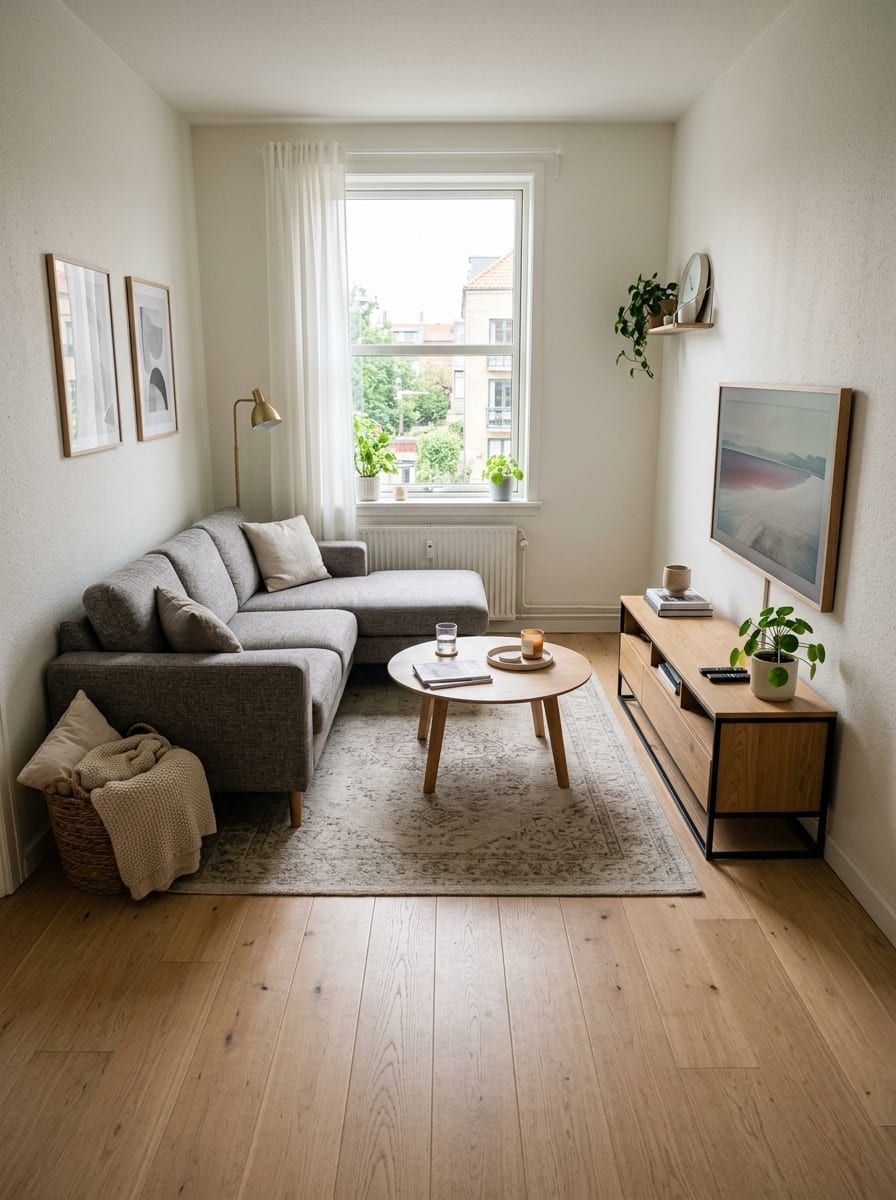
In many apartments, the sectional needs to work around the TV.
The cleanest arrangement usually gives both elements a clear relationship.
Place the main sofa section facing the screen while the chaise extends along a side wall.
Use a slim media console rather than a deep entertainment center.
Avoid squeezing extra chairs between the sofa and TV just because there is technically enough space.
A small room often feels better with fewer, better-positioned pieces.
14. Corner Sofa With a Tiny Dining Zone
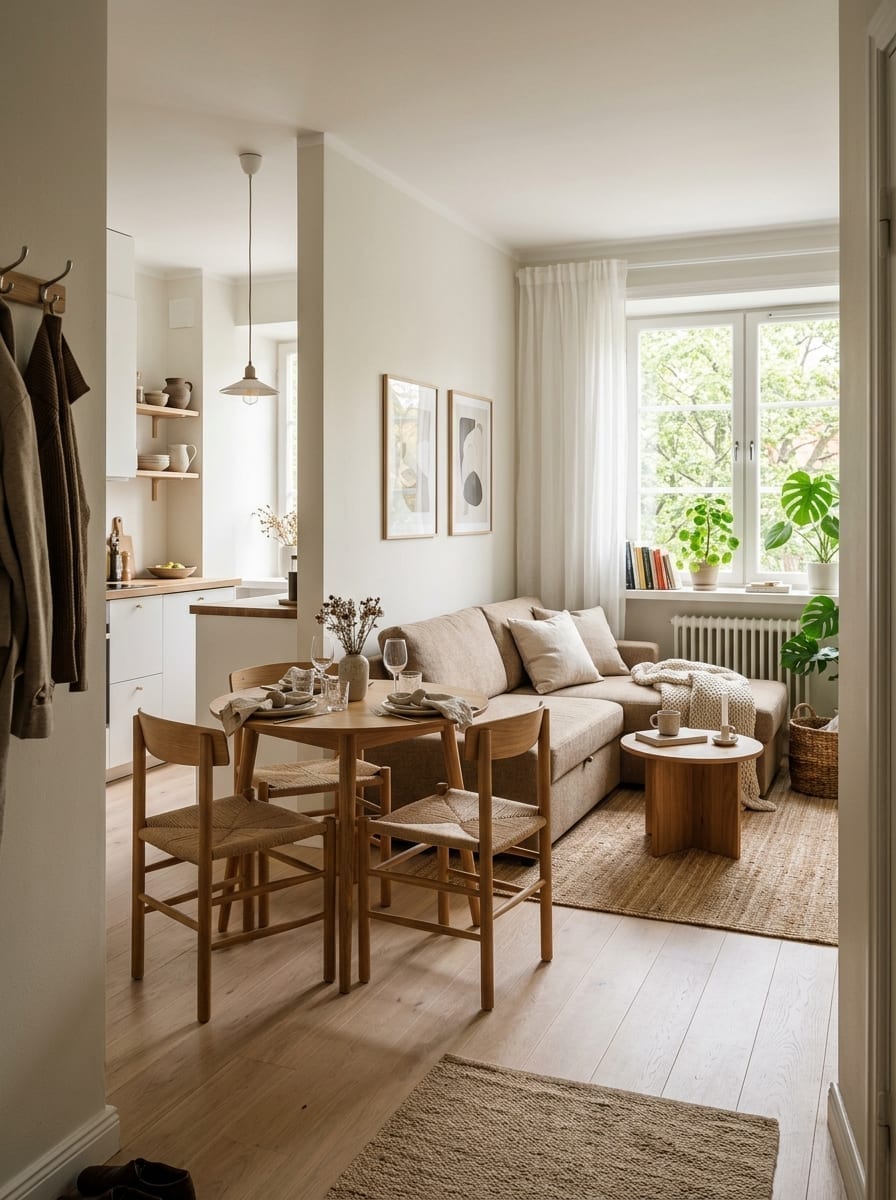
A corner sofa can work in a living-dining room if the zones are clearly organized.
Use the sofa to define the living side.
Then place a compact dining table behind or beside it.
Good options include:
small round table narrow rectangular table wall-side dining bench
Keep the dining furniture visually lighter than the sectional.
The room should feel like two intentional zones rather than one room packed with furniture.
15. The Edited Corner Sofa Room
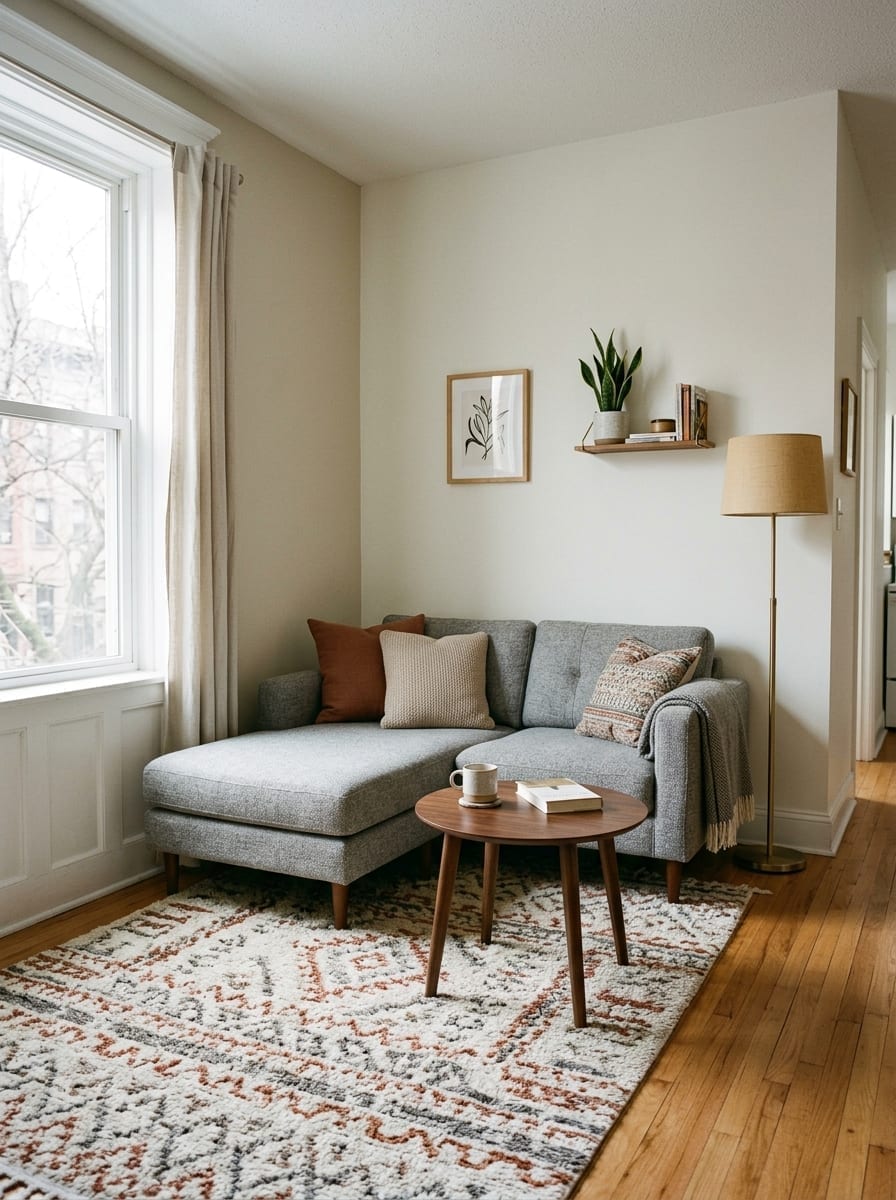
The sectional itself is already a major visual element.
That means the room usually needs less furniture around it, not more.
You may not need:
extra armchair two side tables large coffee table
storage basket on every side
floor lamp plus multiple table lamps several stools
Start with the sofa.
Add the rug.
Add one appropriate table.
Add the lighting you actually need.
Then stop and look at the room before adding anything else.
A corner sofa often works best when you let it do the seating work you bought it for.
Do Corner Sofas Work in Small Living Rooms?
Yes, but the dimensions matter more than the label.
A compact sectional can sometimes use space more efficiently than:
sofa armchair ottoman multiple side tables
The problem comes when you choose a sectional based on how it looked in a showroom rather than how it fits your room.
Measure:
total width chaise length seat depth arm width walkway around the sofa distance to TV or opposite furniture
Then mark those dimensions on the floor before buying.
A few inches can make a surprisingly large difference in a small room.
Which Corner Sofa Shape Is Best for a Small Space?
For most small living rooms, look for:
short chaise narrow arms moderate seat depth low or medium back compact overall width
A reversible chaise can be particularly useful for renters because you may be able to switch its orientation in another room.
Modular sofas can offer even more flexibility.
Which Side Should the Chaise Go On?
Usually, the chaise should point toward the side of the room with the least circulation.
Avoid extending it into:
main doorway path to kitchen balcony door hallway commonly used walkway
Think about movement before the view from the sofa.
The wrong chaise orientation can make even a relatively small sectional feel enormous.
What Coffee Table Works With a Corner Sofa?
Round or oval tables are often easier in compact rooms because they are easier to move around.
Nesting tables can also work because you can expand them only when needed.
Another option is skipping the traditional coffee table and using:
storage ottoman
small side table C-table
If the room already feels tight, you do not have to fill the center simply because living rooms traditionally contain a coffee table.
What Rug Size Works With an L-Shaped Sofa?
Avoid a rug that looks tiny compared with the sectional.
The rug should visually connect the sofa and central table.
In many rooms, that means having at least the front legs of the sectional on the rug.
The exact dimensions depend on the sofa and room, so measure the actual arrangement rather than relying on a universal size rule.
How to Make a Corner Sofa Look Less Bulky
Focus on visual weight.
Look for:
narrower arms visible legs lower back quieter upholstery fewer oversized cushions
Then keep the surrounding furniture lighter.
A large sofa paired with a huge coffee table, deep media console, and bulky side tables is what usually makes the room feel crowded.
What to Avoid
Choosing the sofa before measuring the walkway
Being able to physically fit the sofa into the room is not enough.
You still need to live around it.
Very deep seats in a narrow room
Extra depth can consume more space than expected.
Blocking the balcony or main doorway
A chaise should not become an obstacle you constantly walk around.
Adding extra chairs automatically
A sectional may already provide all the seating the room needs.
Undersized rugs
They can make a large sofa look disconnected from the room.
Too many large furniture pieces
If the sectional is the largest object, let other furniture become quieter.
Where to Start
Before shopping, draw the room.
It does not need to be a professional floor plan.
Mark:
walls windows doors TV main walkways
Then test where an L-shaped sofa could sit without interrupting those paths.
Once you identify the correct orientation, measure the maximum width and chaise depth that still leave the room comfortable.
That is a much better starting point than falling in love with a sectional first and trying to force it into the apartment afterward.
A corner sofa does not automatically make a small living room feel smaller.
When the scale and layout are right, it can actually simplify the entire room.