9 Small Bathroom Bathtub Ideas for Tight Floor Plans
Fit a real tub into a tiny bathroom. Discover 9 small bathtub ideas—including 48-inch Japanese soaking tubs, narrow alcove combos, and short freestanding baths.
In This Guide
A bathtub feels like the first thing to cut when a bathroom is small. Showers are smaller, cheaper to run, and easier to fit, so many tiny bathrooms end up shower only. But a bath is also how many people unwind, soak sore muscles, and bathe kids, and giving it up entirely is a real loss.
The good news is that tubs come in far more sizes than the standard 60 inch alcove tub most apartments have. Short freestanding tubs start at 48 inches, deep soaking tubs trade length for depth, and shower tub combos do two jobs in one footprint. The right tub for a tight floor plan is the one that fits your room, your plumbing, and your body, in that order.
Measure everything before you fall in love with a tub: the wall to wall length, the width, the door swing, and the distance from the tub edge to the toilet or vanity. Building codes usually require at least 21 inches of clear space in front of a toilet and 30 inches for a comfortable walkway, and those numbers decide more than any photo will. For matching small space ideas, see small kitchen open shelf ideas and small bedroom rug ideas, plus small bathroom storage ideas to keep the room around your tub tidy.
These 9 ideas cover the tub styles that actually work when floor space is tight.
1. The Short Freestanding Tub
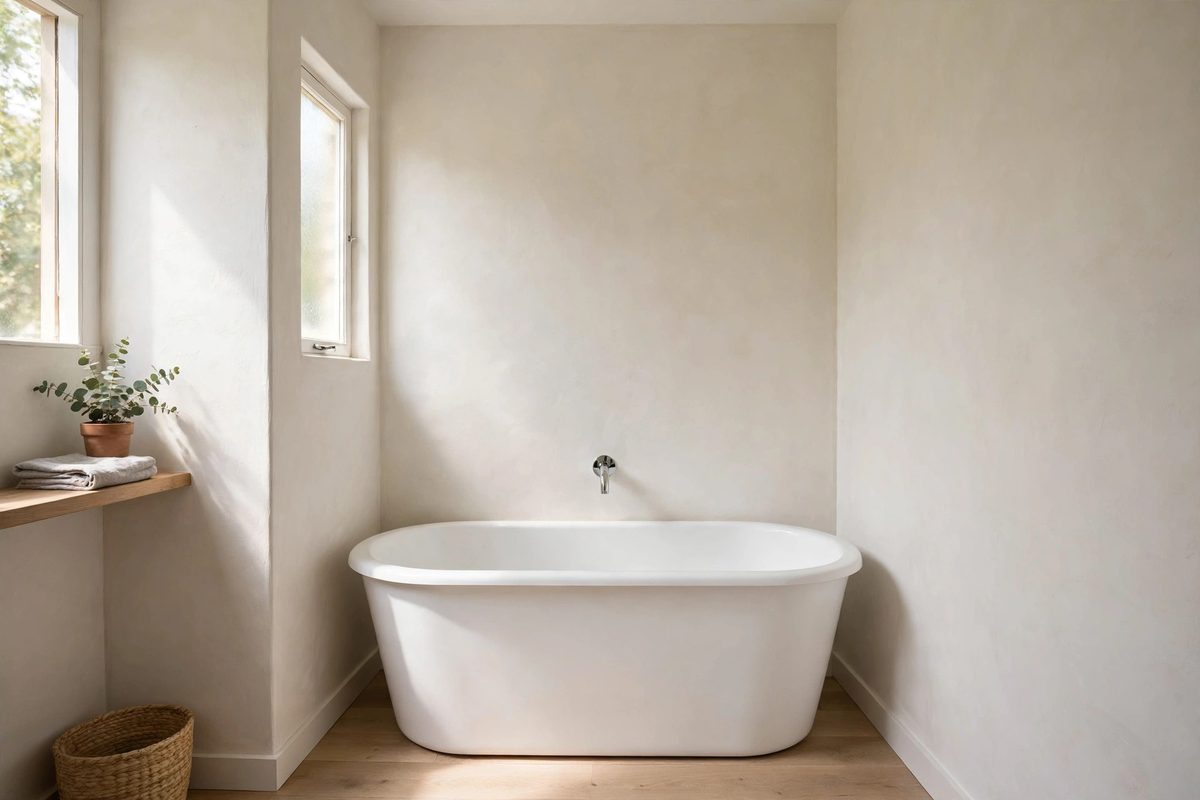
A short freestanding tub, 48 to 55 inches long, fits where a standard 60 inch tub cannot, and it looks far more intentional than a cramped alcove tub. Because it stands alone, you can see floor around it, which makes the bathroom feel larger even though the tub itself is smaller.
Short tubs cost 400 to 1,200 dollars depending on material, with acrylic being lighter and cheaper than cast iron or stone resin. Freestanding tubs need a floor mounted or wall mounted filler, since there is no deck to mount a faucet on, so budget 150 to 300 dollars for the filler and check that your floor can support the plumbing route.
How to make it work
Leave at least 4 inches of clearance on the long sides for cleaning, and more on the side where you step in and out. Place the tub against the longest wall, not in the middle of the room, unless the bathroom is at least 7 feet wide. A small stool or teak bath mat beside the tub gives you a place to step safely.
2. The Deep Japanese Soaking Tub
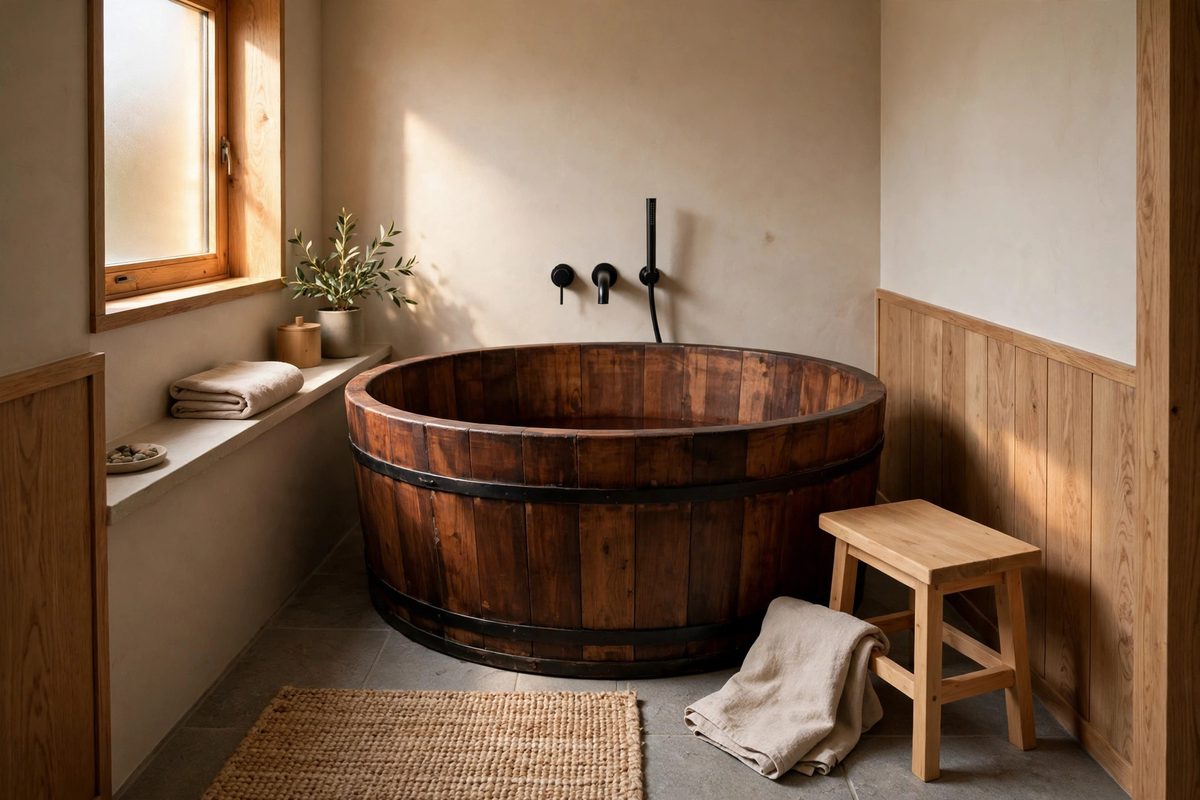
Japanese soaking tubs, called ofuro, are deep rather than long. A typical model is about 40 inches long, 28 inches wide, and 26 inches deep, so you sit upright with water up to your shoulders, soaking in a footprint smaller than a standard tub.
Soaking tubs cost 800 to 2,500 dollars, with wood and stone resin at the higher end and acrylic at the lower end. They use less water than a full length tub despite the depth, roughly 50 to 70 gallons versus 80 gallons for a standard tub, because the footprint is smaller.
How to make it work
This tub suits soaking, not stretching out, so try sitting in a similar size before buying if you can. Add a small built in seat or a bath pillow, since sitting upright for 20 minutes needs back support. Keep the filler high enough to reach over the deep rim, and add a non slip mat inside, since the step over a 26 inch rim is higher than a standard tub.
3. The Shower Tub Combo
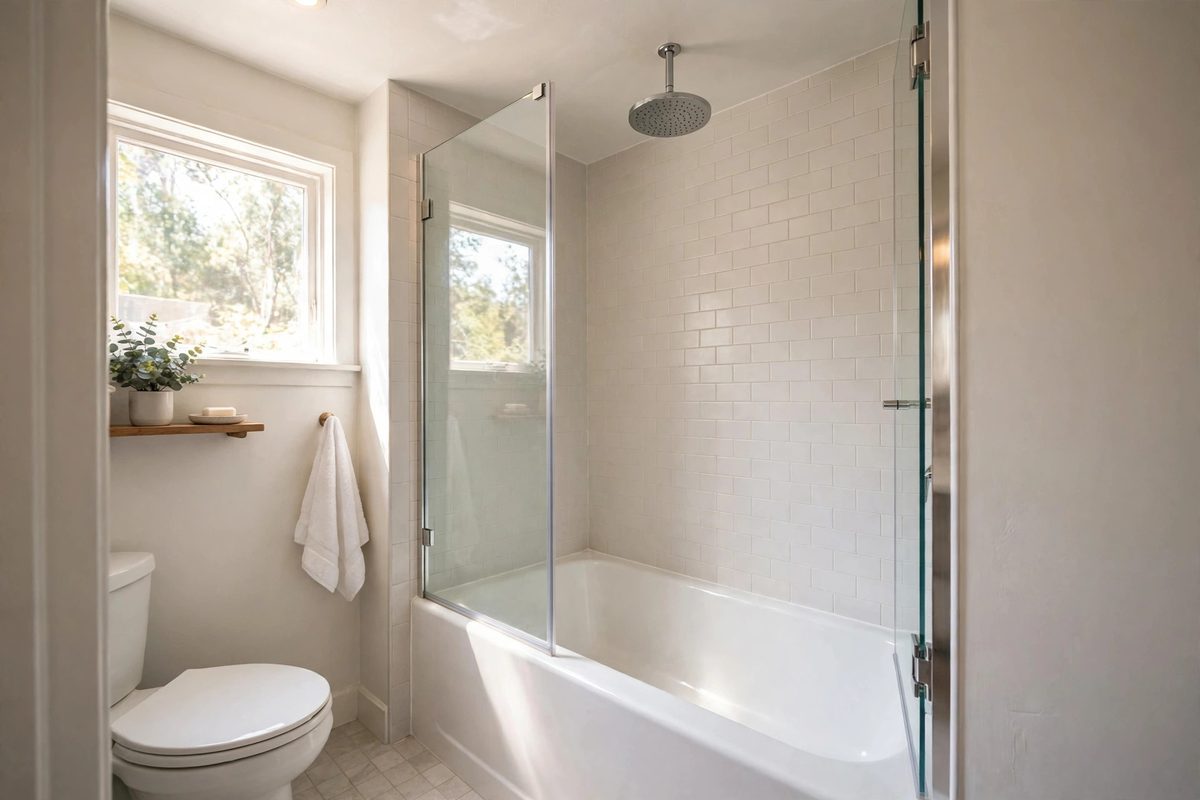
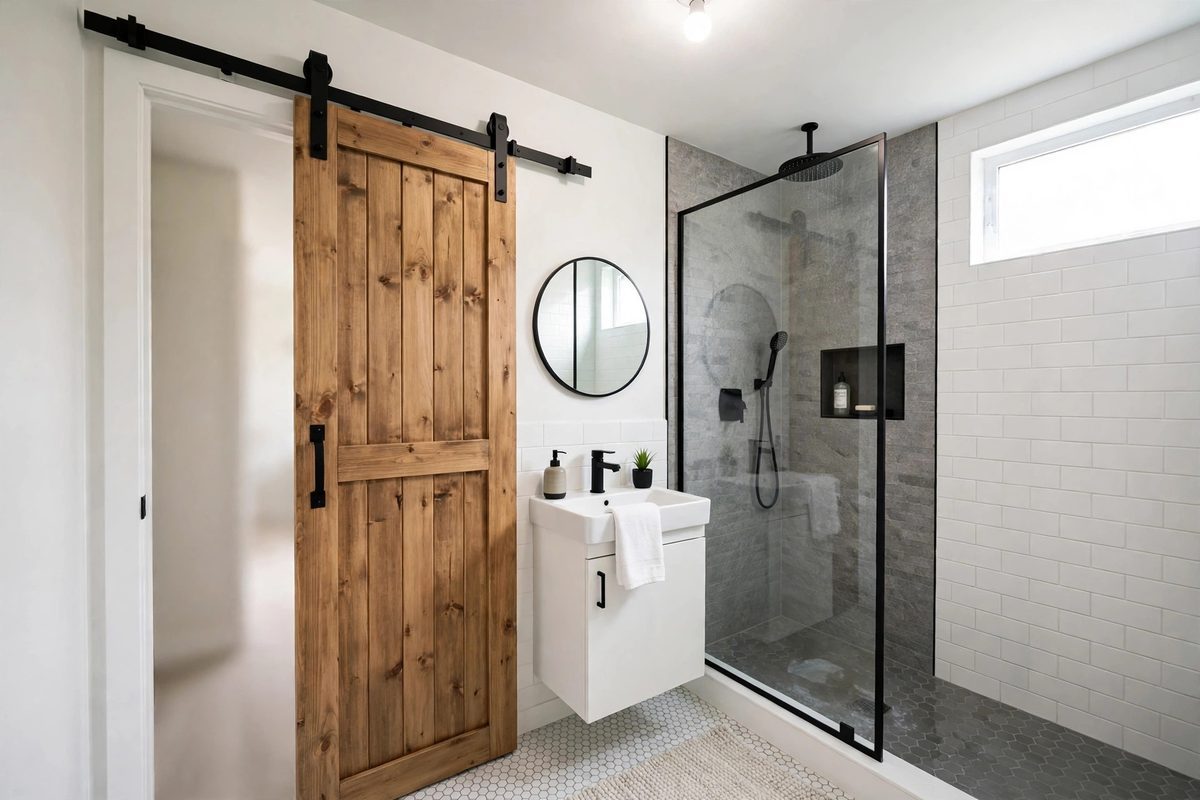
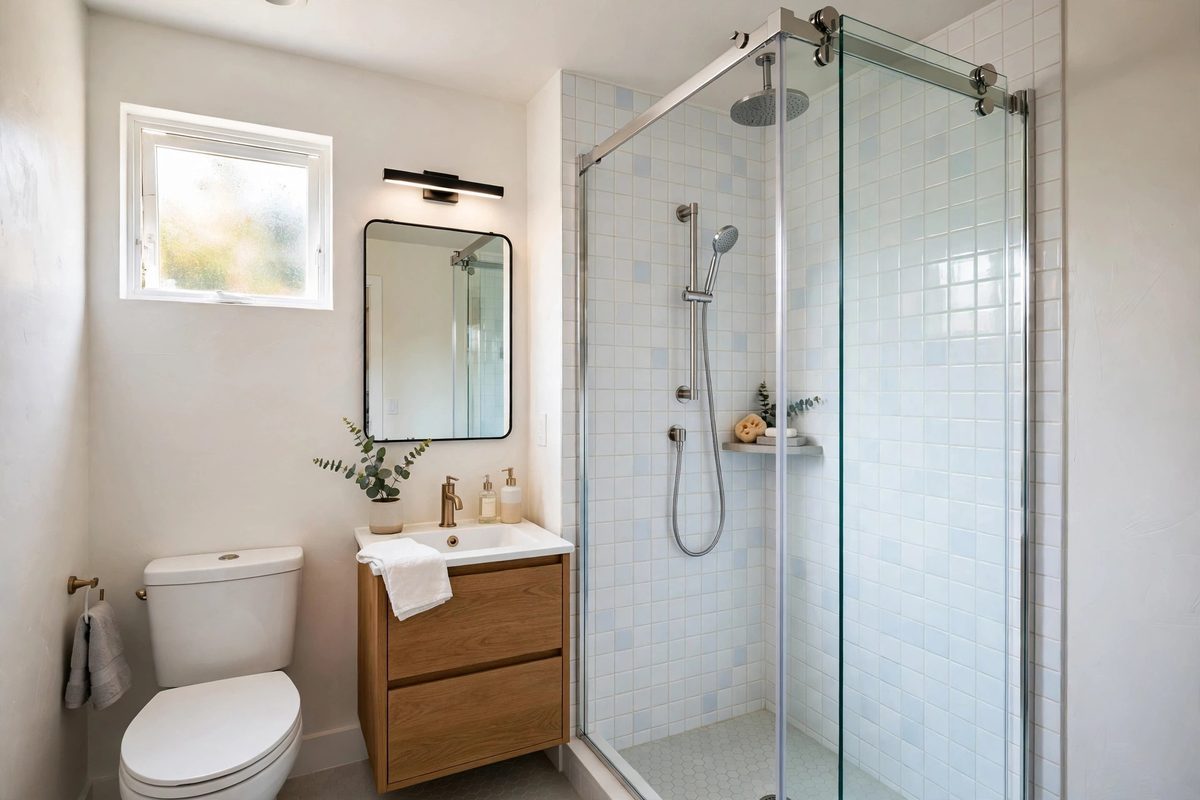
A shower tub combo is the most practical answer for a small bathroom that needs both. A 60 inch alcove tub with a showerhead above it does two jobs in one footprint, and a glass panel instead of a curtain keeps the room looking open and modern.
If your bathroom is shorter than 60 inches, look for a 54 inch combo tub, which several brands make for apartments. A glass panel costs 200 to 500 dollars versus 20 dollars for a curtain, but it does not billow, it does not mildew as fast, and it lets light through.
How to make it work
Mount the showerhead at least 80 inches high so tall users do not crouch, and add a handheld shower on a slide bar for bathing kids and rinsing the tub. Put a recessed niche in the shower wall for shampoo, since a caddy hanging over the showerhead crowds a small combo. Use a curved shower rod if you keep a curtain, since it adds about 6 inches of elbow room inside the tub.
4. The Corner Tub That Uses Dead Space
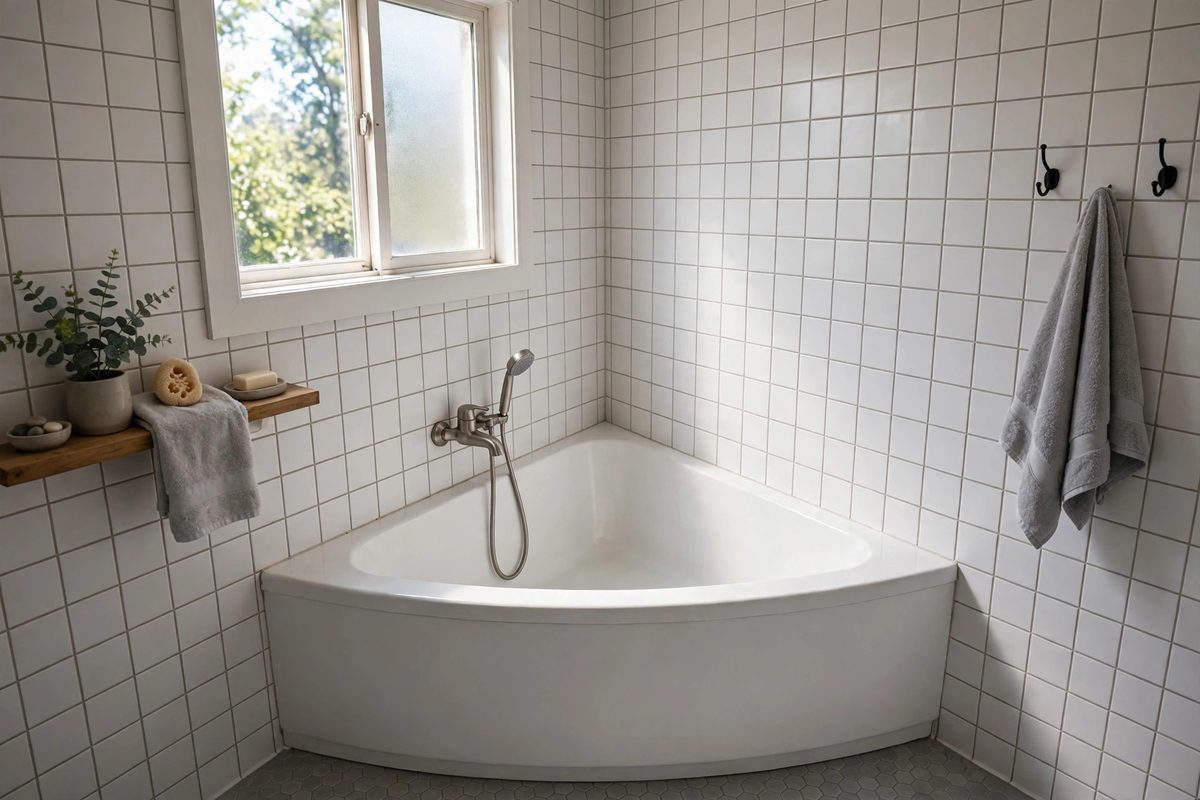
Corners are often the least useful space in a small bathroom, and a corner tub turns one into the bathing zone. Triangular and rounded corner tubs fit into a 48 by 48 inch corner and can feel surprisingly roomy, since the widest part of the tub is in the middle.
Corner tubs cost 500 to 1,500 dollars, but check the plumbing carefully: the drain and filler locations are less standard than a straight tub, so installation can cost more. Corner tubs also need a custom surround or tile work on two walls, not one.
How to make it work
Keep the corner tub in the corner farthest from the door, so the bathroom entrance stays open. Add a small corner shelf or a wall mounted caddy for toiletries, since there is no deck edge to set things on. If the tub is deep, add a grab bar on the wall beside it for safe entry and exit.
5. The Alcove Tub With a Glass Panel
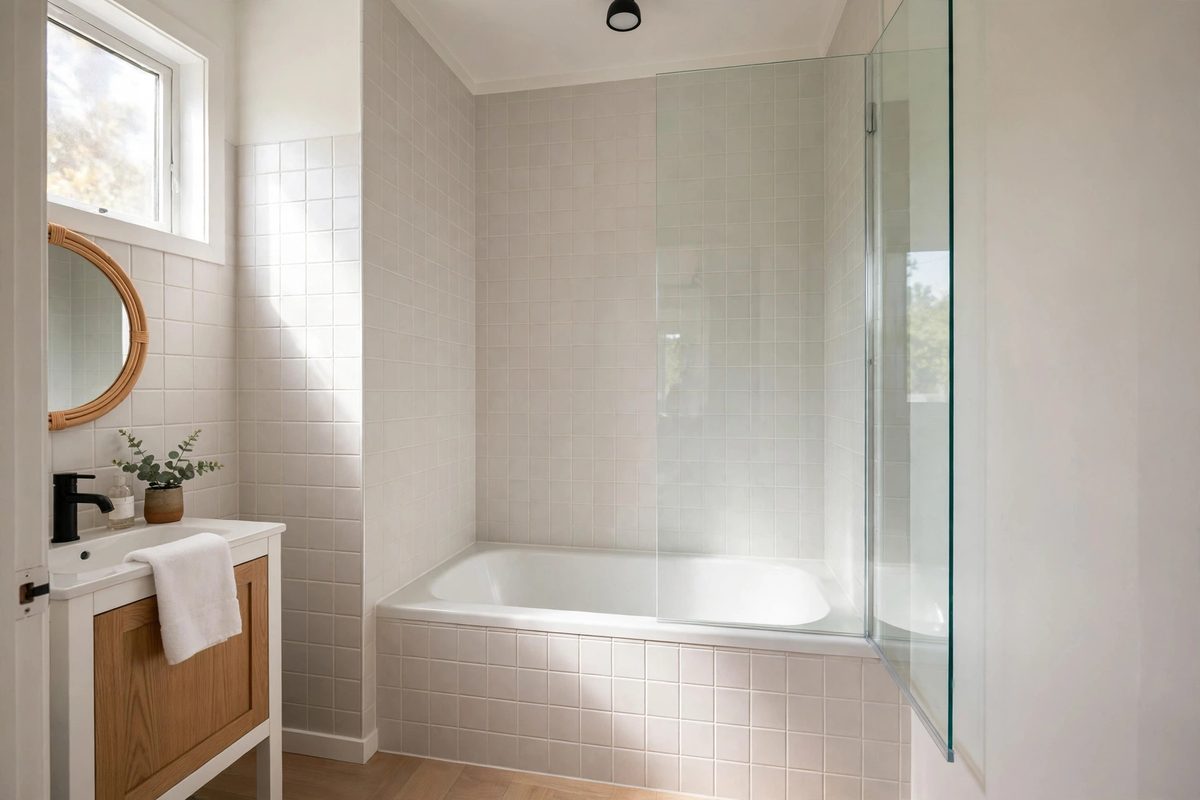
If your bathroom already has an alcove, the cheapest upgrade is not a new tub but a better enclosure. Replacing a shower curtain with a fixed glass panel, or a single swinging glass door, opens the sightline across the bathroom and makes the whole room feel wider.
A single glass panel for an alcove tub costs 250 to 600 dollars installed, versus a full sliding door system at 500 to 900 dollars. A fixed panel leaves one end open for entry, which works well if the tub is at least 30 inches wide.
How to make it work
Use clear glass, not frosted, if your goal is openness, and squeegee it after showers to prevent water spots. Keep the panel height at about 58 to 60 inches, tall enough to contain spray but low enough to reach over for cleaning. If you rent, a high quality curtain on a curved rod gives much of the same openness for far less money and no installation.
6. The Compact Walk In Tub
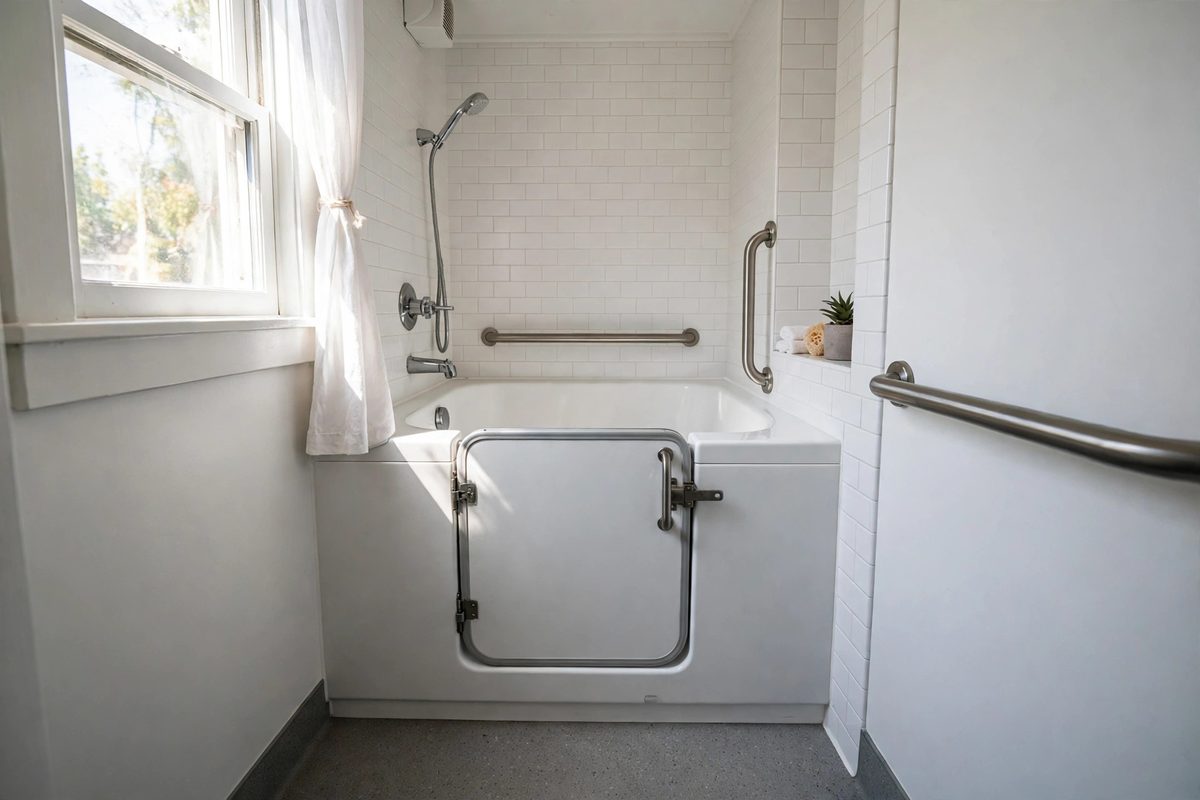
Walk in tubs have a watertight door, so you step in rather than climbing over a rim. Compact models start at about 48 inches long and 28 inches wide, making them a real option for small bathrooms where safety matters, whether for older adults, people with limited mobility, or anyone who worries about slipping.
Walk in tubs cost 2,000 to 5,000 dollars installed, which is more than a standard tub, but they often include a built in seat, grab bars, and a handheld shower. The tradeoff is wait time: you must sit in the tub while it fills and drains, which takes several minutes longer than a standard bath.
How to make it work
Check your water heater capacity, since a walk in tub can use 50 to 80 gallons and a small tank may run cold before the tub fills. Make sure the door swings into clear floor space, not into the toilet or vanity. If you are renting, a walk in tub is usually not an option, but a low threshold tub with grab bars gives some of the same safety benefit.
7. A Tub Surround in Light Tile
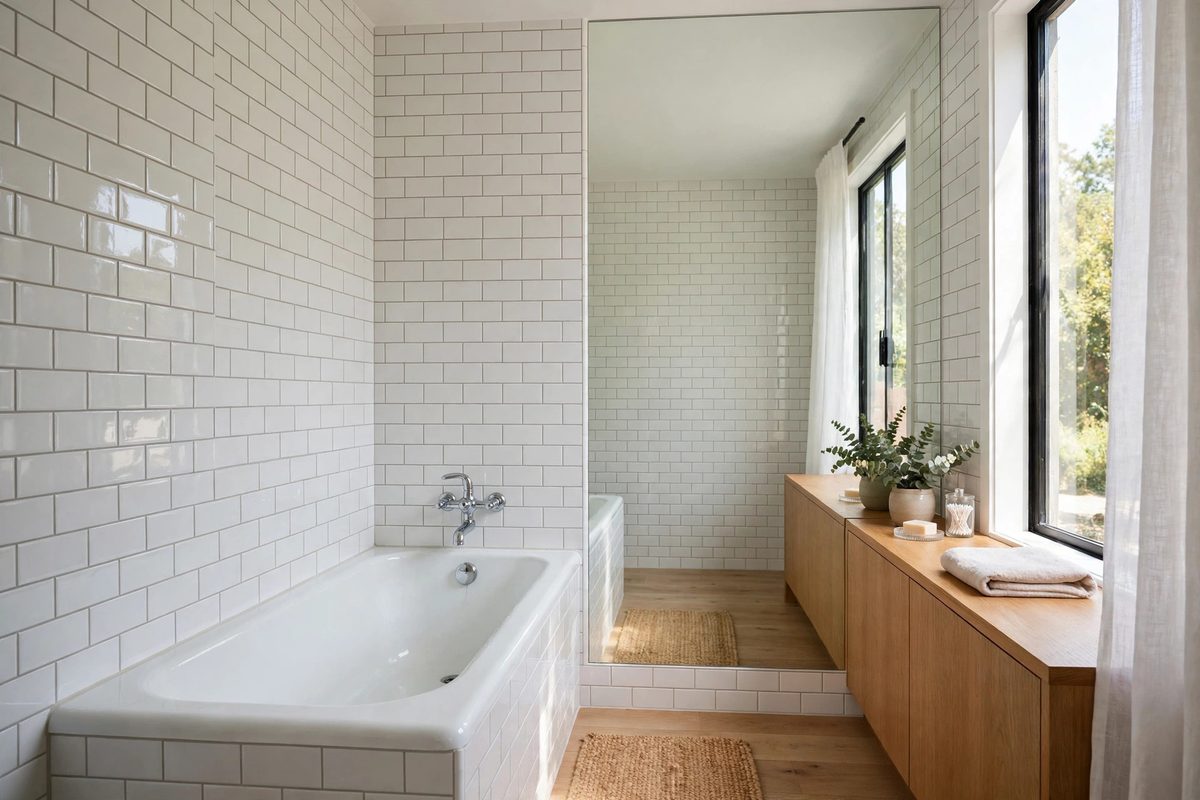
Sometimes the tub is fine and the surround is the problem. Dark tile, a heavy curtain, and a bulky surround make a small tub zone feel like a cave. Light tile, glossy subway tile or large format pale tiles, reflects light and makes the same tub feel bigger.
Large format tiles, 12 by 24 inches, have fewer grout lines, which reads as calmer and cleaner in a small room. A light tile surround costs roughly the same as a dark one in materials, so this is a style choice, not a budget increase, if you are already retiling.
How to make it work
Run the tile all the way to the ceiling in the tub zone, rather than stopping at showerhead height, so the eye travels up and the ceiling feels higher. Pair light tile with a large mirror on the opposite wall to double the brightness. Keep grout light too, but seal it well, since light grout shows dirt faster in a wet zone.
8. The Short Clawfoot Tub
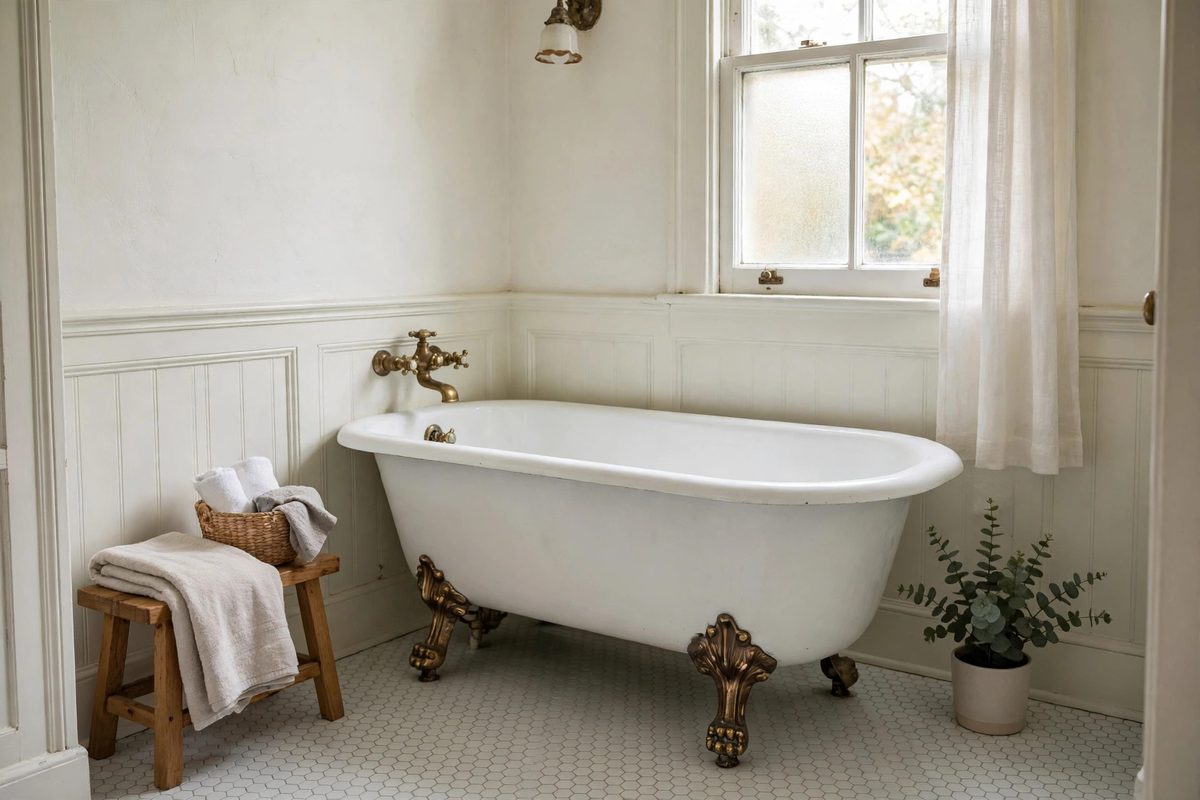
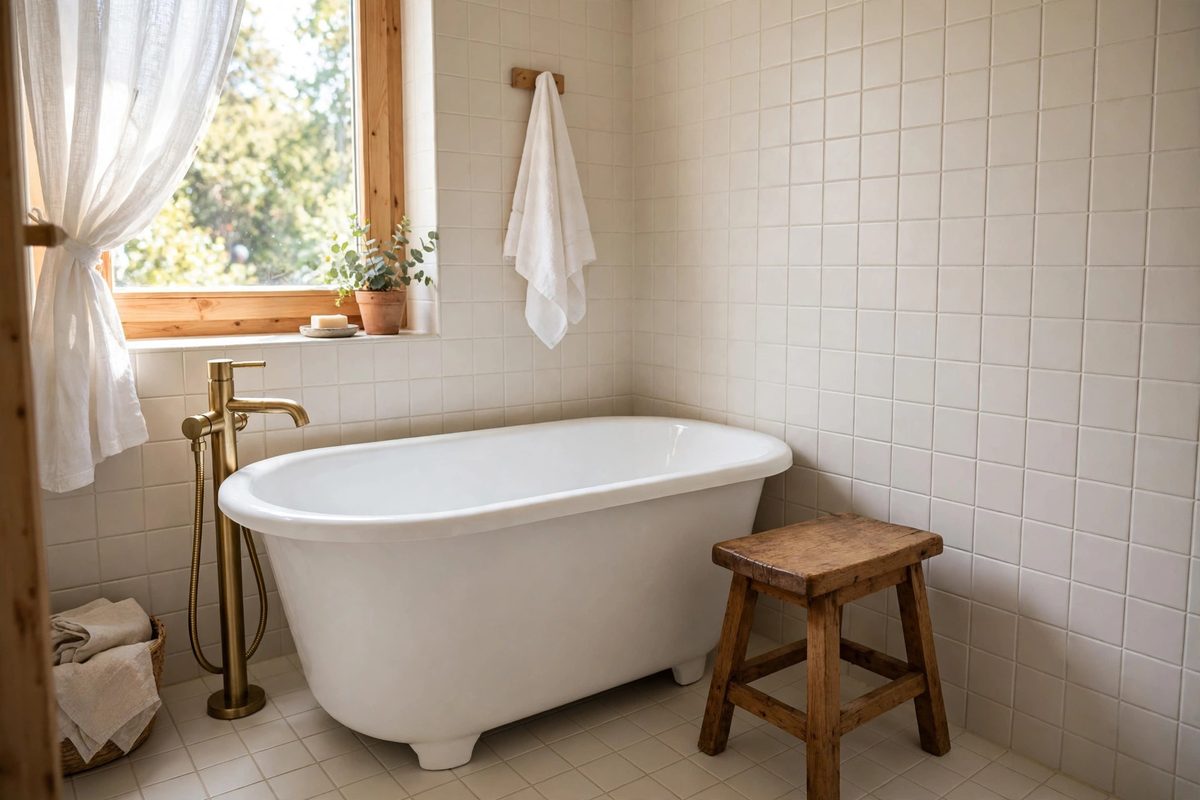
A short clawfoot tub, 48 to 54 inches, brings vintage character to a small bathroom without the footprint of a full 66 inch clawfoot. The feet lift the tub off the floor, so you see floor beneath it, which helps the room feel less crowded than a tub built into a solid surround.
Clawfoot tubs cost 700 to 2,000 dollars, and cast iron versions are very heavy, often 300 pounds empty, so check floor support, especially in older apartments. Acrylic clawfoot lookalikes are lighter and cheaper and still give the same silhouette.
How to make it work
Place a clawfoot tub with its long side against the wall if the bathroom is narrow, since a freestanding position in the middle needs clearance on all sides. Add a freestanding filler and a small side table for toiletries, since there is no deck. A circular shower curtain ring overhead, about 100 dollars, turns a clawfoot into a shower tub combo if you need both.
9. Smart Storage Around the Tub
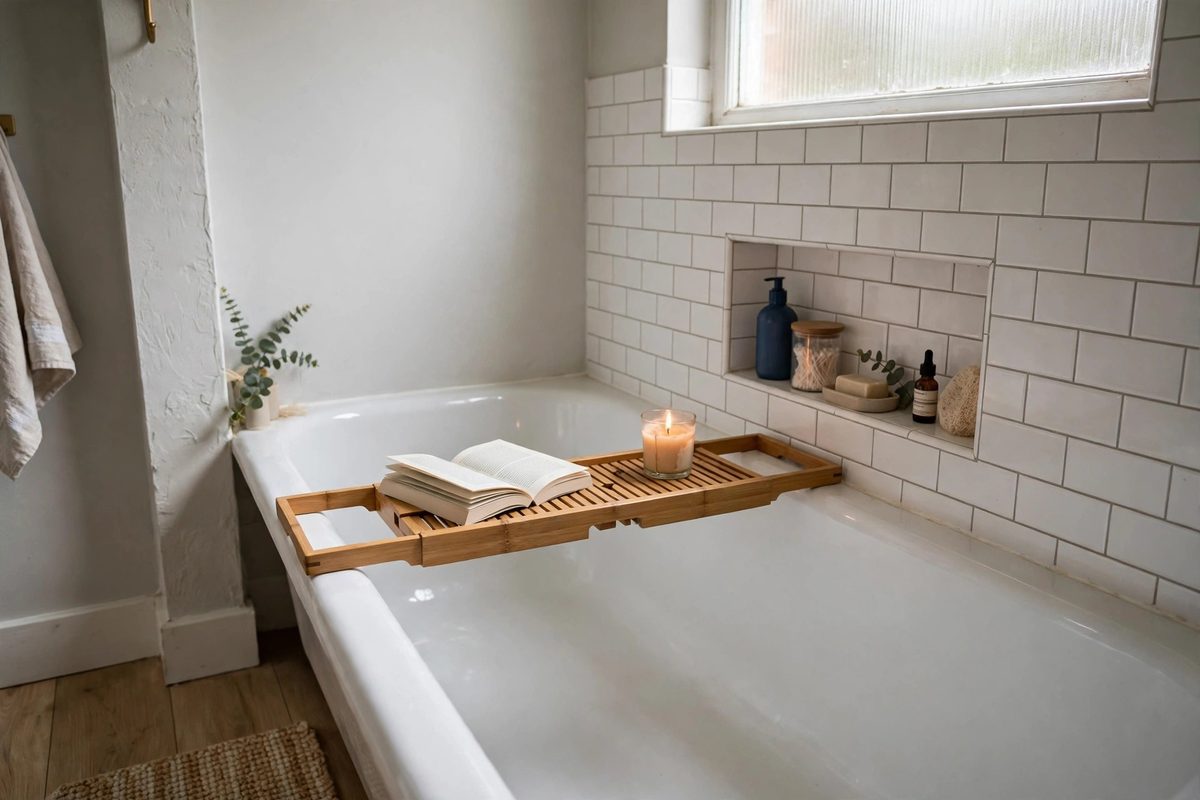
A tub in a small bathroom fails when toiletries pile on the rim and the floor around it becomes a clutter zone. A recessed niche in the wall, a bath caddy across the tub, and a narrow shelf above the toilet keep everything in reach without crowding the tub itself.
A recessed niche costs 100 to 300 dollars to add during a remodel, or you can use a suction or adhesive caddy for under 20 dollars in a rental. A bamboo bath caddy, 25 to 50 dollars, holds a book, a candle, and a drink safely across the tub, and it lifts items off the rim where they get knocked into the water.
How to make it work
Keep only daily items in the niche: shampoo, conditioner, and body wash. Move everything else to a shelf or cabinet outside the wet zone. Put a small hook on the wall beside the tub for a towel, so you are not dripping across the bathroom to reach one. Clear the tub rim completely after each bath, so the next bath starts clean and the room stays calm.
A small bathroom can absolutely have a bathtub. The trick is to choose a tub made for the footprint you have, not the bathroom you wish you had, and to let light, glass, and smart storage do the work of making it feel spacious.