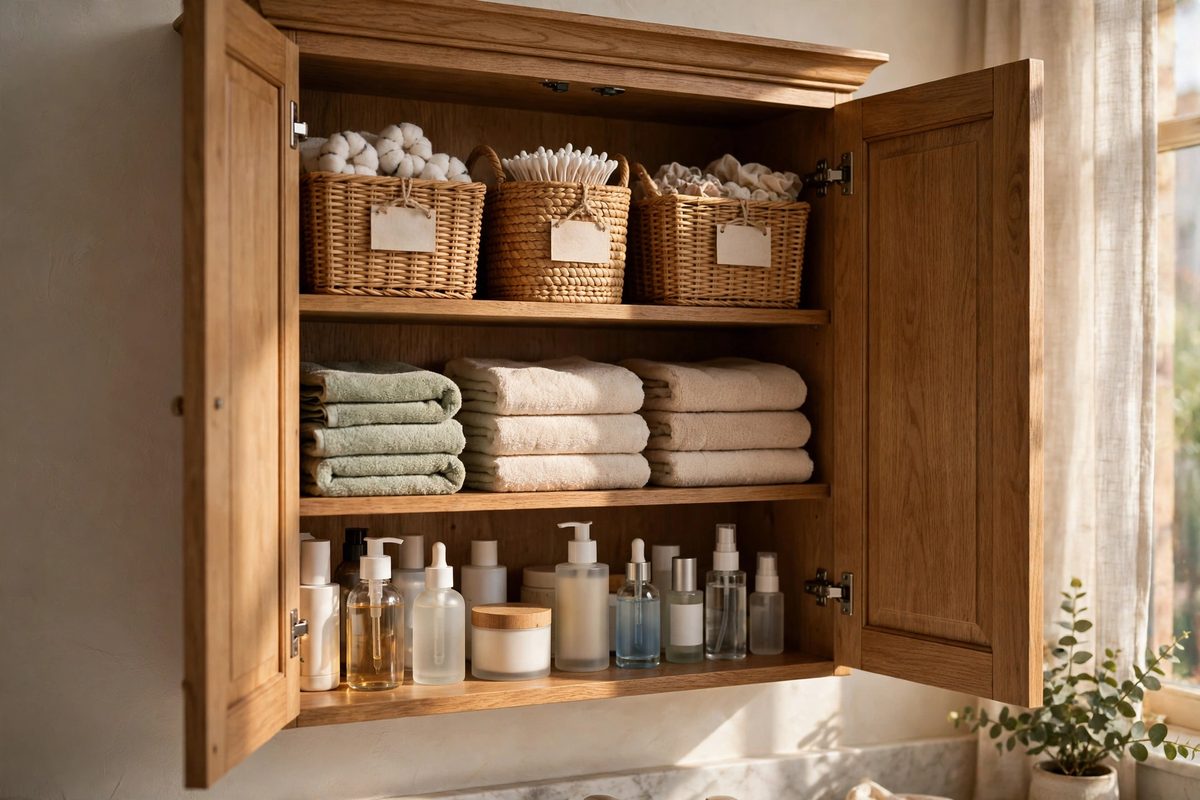
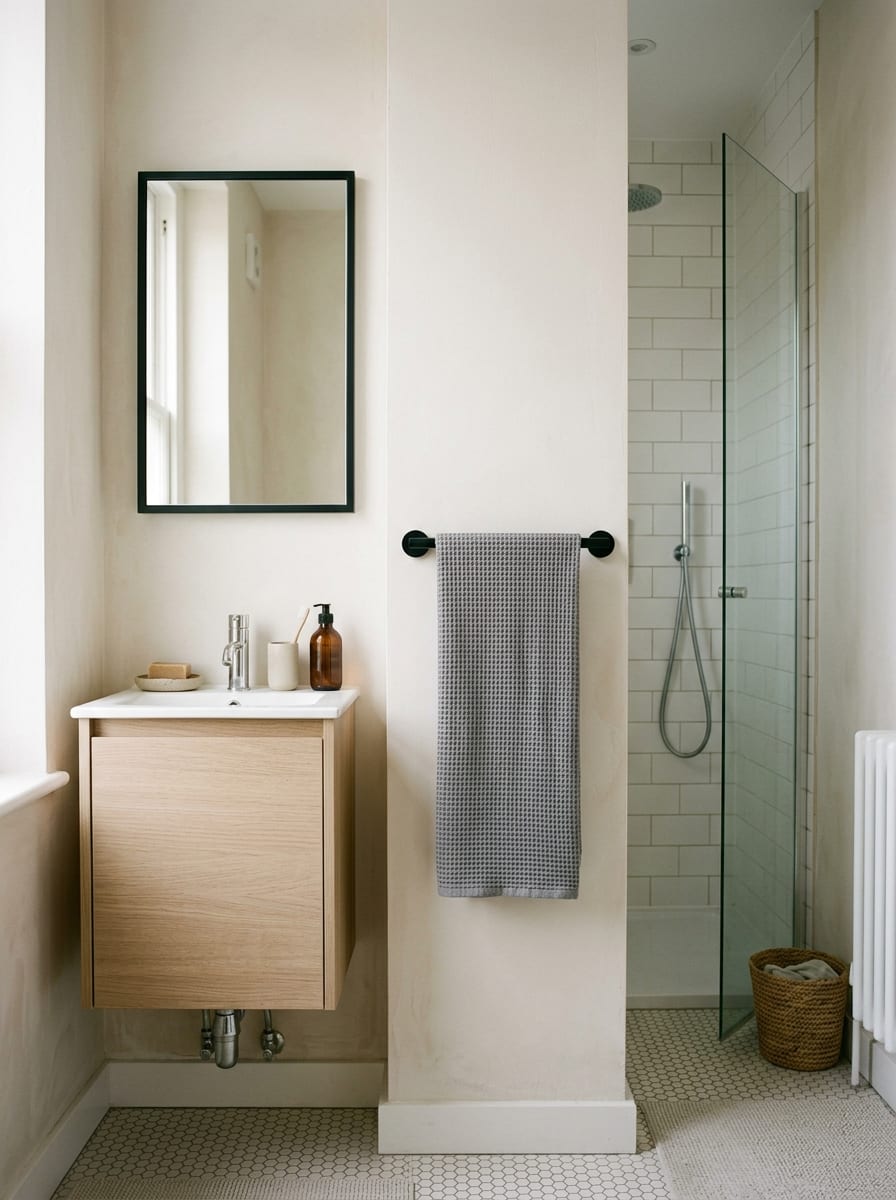
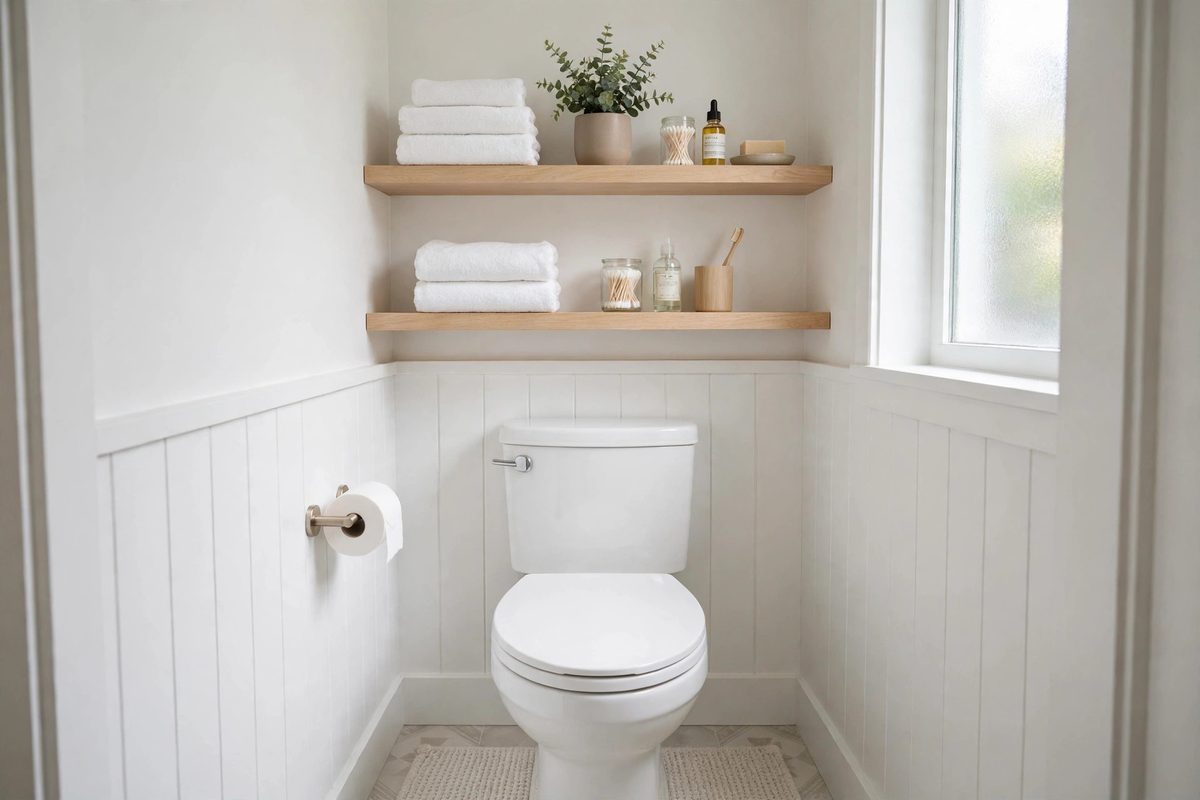
10 Small Bathroom Medicine Cabinet Ideas That Add Hidden Storage
Ten medicine cabinet ideas for small bathrooms, from recessed mirrored cabinets to organizer inserts that double storage without a remodel.
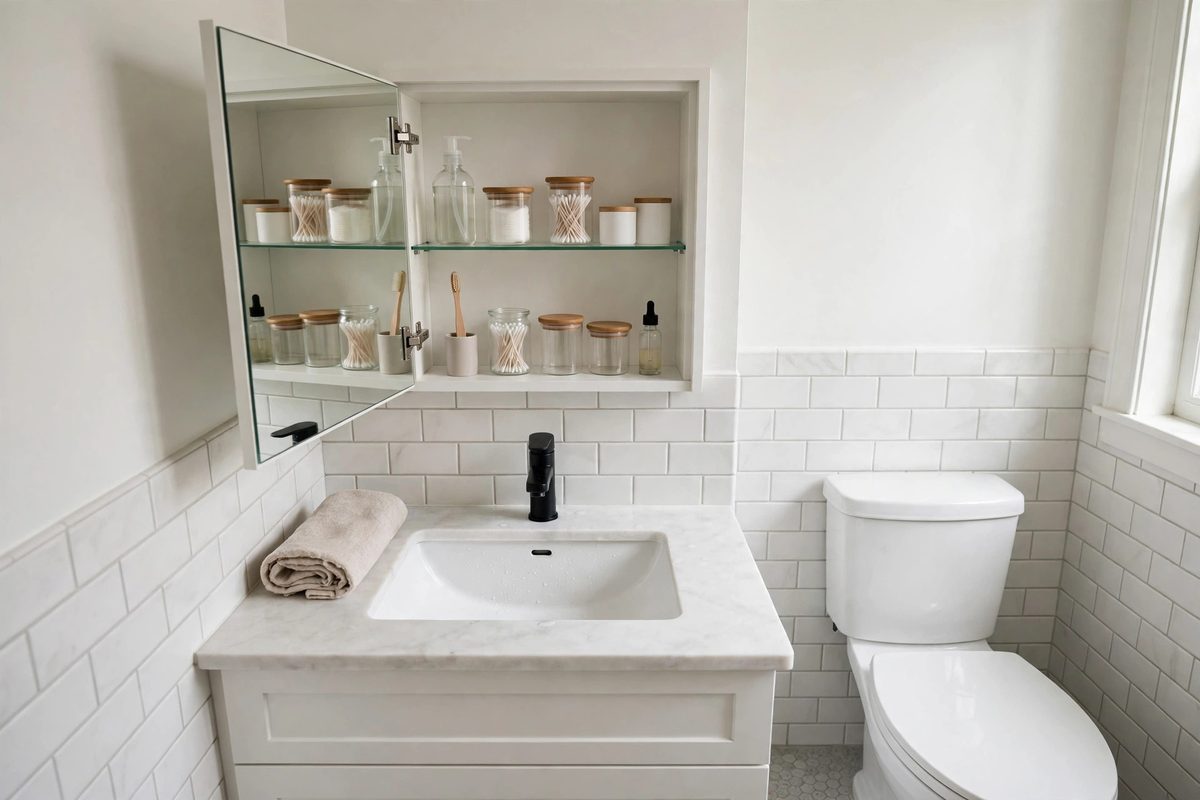
Small bathroom with a recessed mirrored medicine cabinet above a sink and tidy toiletries inside
In This Guide
The medicine cabinet is the hardest working storage in a small bathroom, because it uses wall space above the sink that would otherwise be a plain mirror. A good cabinet holds daily toiletries, medicines, and grooming tools behind a door, so the counter stays clear and the room looks twice as tidy.
Most people underuse theirs. A single deep shelf with bottles shoved to the back wastes half the space, and a surface mounted box that sticks out 6 inches makes a tiny bathroom feel even tighter. The ideas below cover recessed, surface mounted, and organizer upgrades, so there is an option whether you own or rent.
If you are planning a full storage overhaul, pair these with these Christmas ornament display ideas for seasonal overflow, and these small kitchen spice storage ideas which use the same small container logic in the kitchen. For the rest of the bathroom, these small bathroom storage ideas cover shelves, over toilet storage, and vanity upgrades.
1. The Recessed Cabinet That Sits Flush
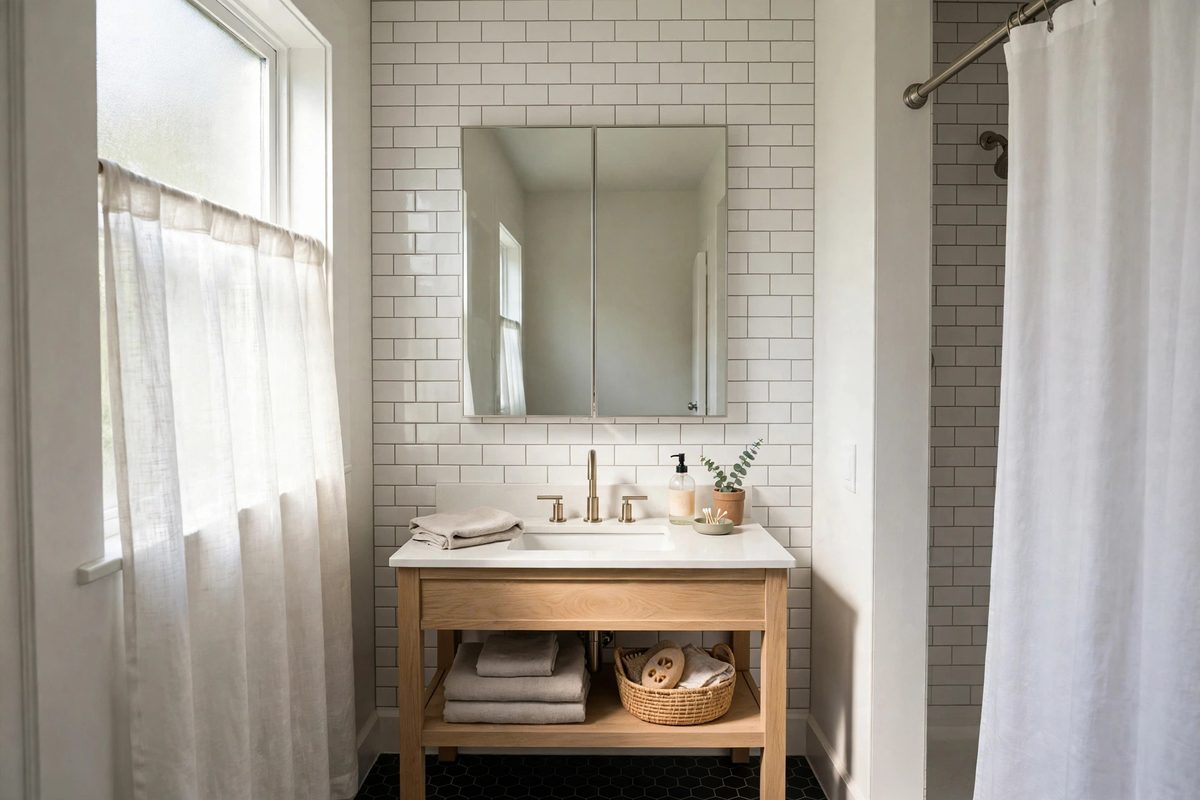
A recessed cabinet sits inside the wall cavity, so only the mirror door shows and the cabinet adds zero inches to the room. This is the single best upgrade for a bathroom under 40 square feet, because it doubles storage without changing the footprint at all.
Recessing requires a wall without pipes or wiring in the cavity, and a stud bay at least 14 inches wide for a standard cabinet. If you rent, this is usually a landlord approval job, not a weekend DIY. Expect 150 to 400 dollars for the cabinet plus installation if a pro cuts the opening.
How to make it work
Measure your stud spacing before ordering: most cabinets are 16, 20, or 24 inches wide. Choose a cabinet depth of 4 to 5 inches, which fits most bottles upright. Keep the mirror door full width, edge to edge, so the wall reads as one clean mirror rather than a small box on a big wall.
2. The Triple Door Wide Cabinet
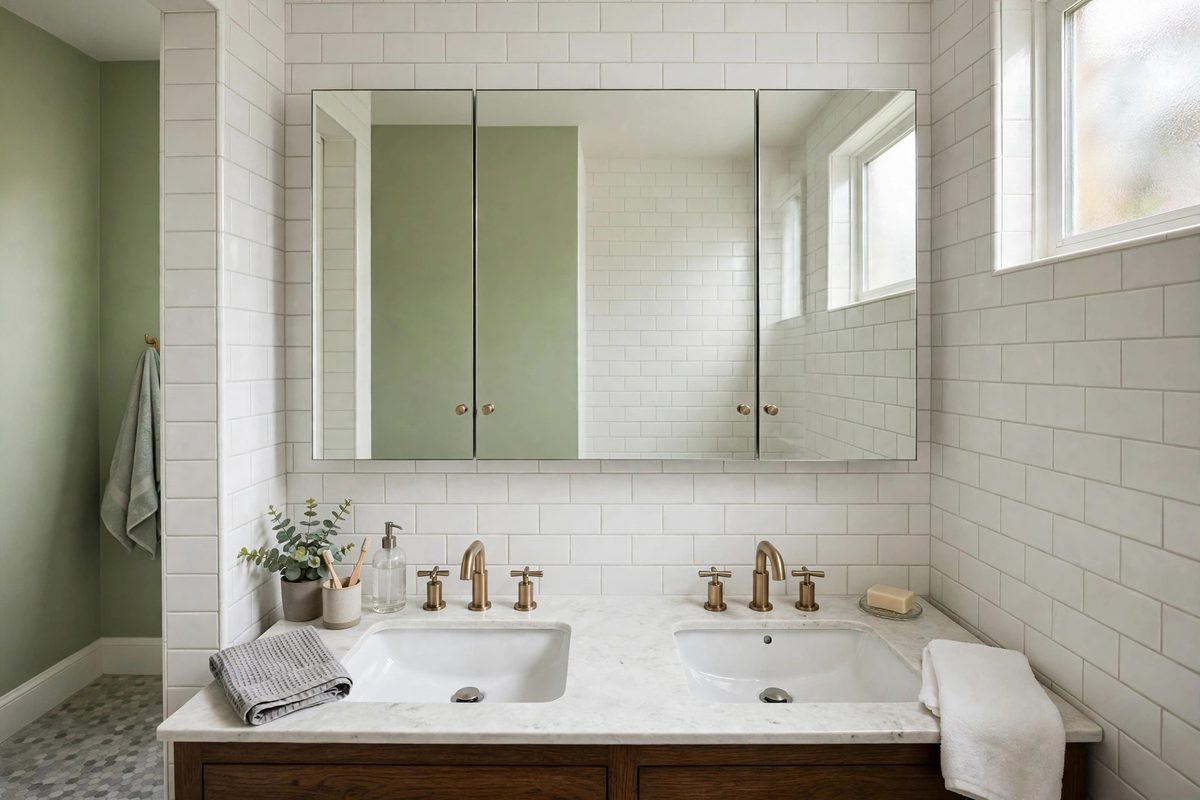
A triple door cabinet spans 36 to 48 inches and gives each person their own section, which ends the daily shuffle of someone else’s bottles. Even in a single person household, three sections help: daily items in the middle, medicines on one side, and backups or first aid on the other.
The wide mirror also helps a small bathroom feel larger, since it reflects the whole room. The tradeoff is weight and cost: a 48 inch triple door cabinet weighs 30 to 50 pounds and needs solid anchoring, and prices run 250 to 600 dollars for quality mirrored models.
How to make it work
Center the cabinet over the sink, not over the vanity, so the middle door aligns with where you stand. Keep daily items at eye level, 54 to 60 inches from the floor, and backups on the top shelf. If the doors swing into a light fixture or a shower door, choose a model with soft close hinges and a 110 degree opening angle.
3. The Cabinet With Adjustable Glass Shelves
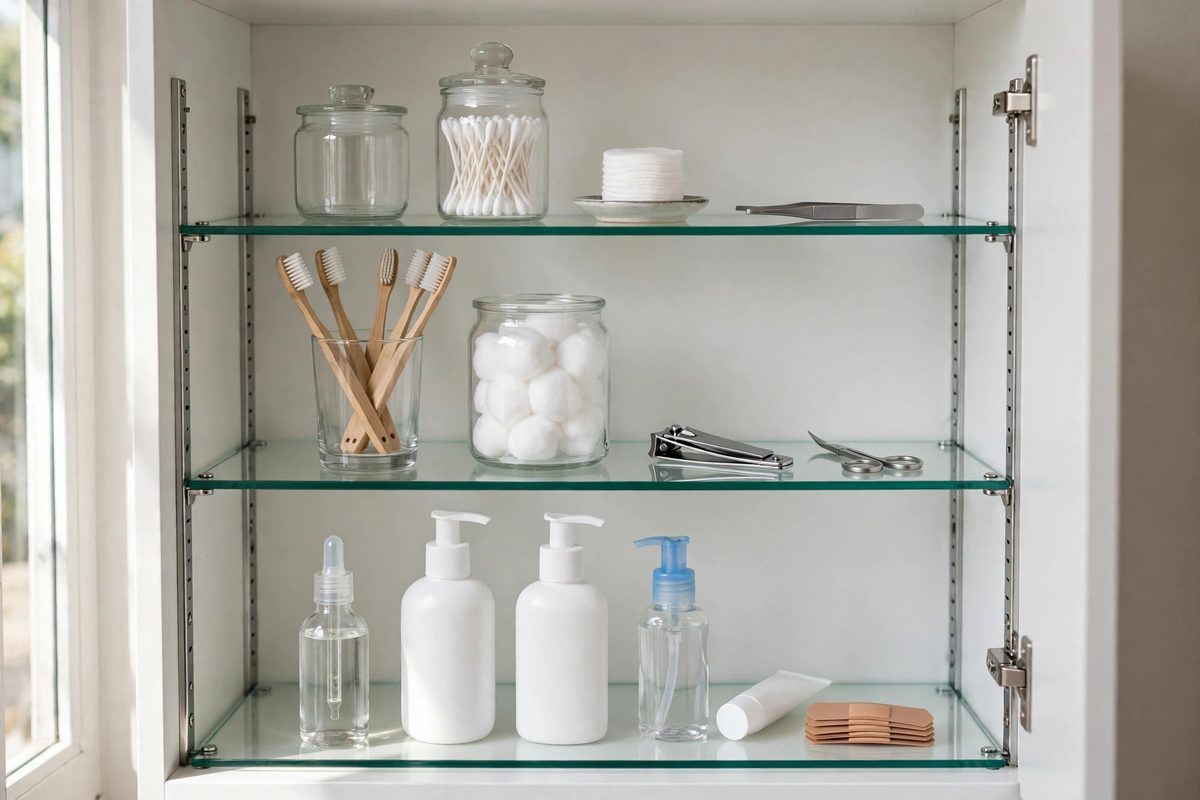
Fixed shelves waste space because tall bottles and short jars never match the shelf height. Adjustable glass shelves let you set one tall zone for sprays and serums, about 10 inches high, and two short zones for jars and small bottles, about 5 to 6 inches each.
Glass shelves have a second advantage: you can see what is on each shelf from the side, and light passes through so the cabinet interior does not go dark. Acrylic shelves are a cheaper alternative, but they scratch over time and can bow under heavy bottles.
How to make it work
Empty the cabinet completely, group items by height, then set shelf positions before putting anything back. Leave one shelf slightly loose so you can adjust it later without tools. Wipe glass shelves monthly, since toothpaste and serum drips show clearly on glass.
4. The Surface Mounted Cabinet for Renters
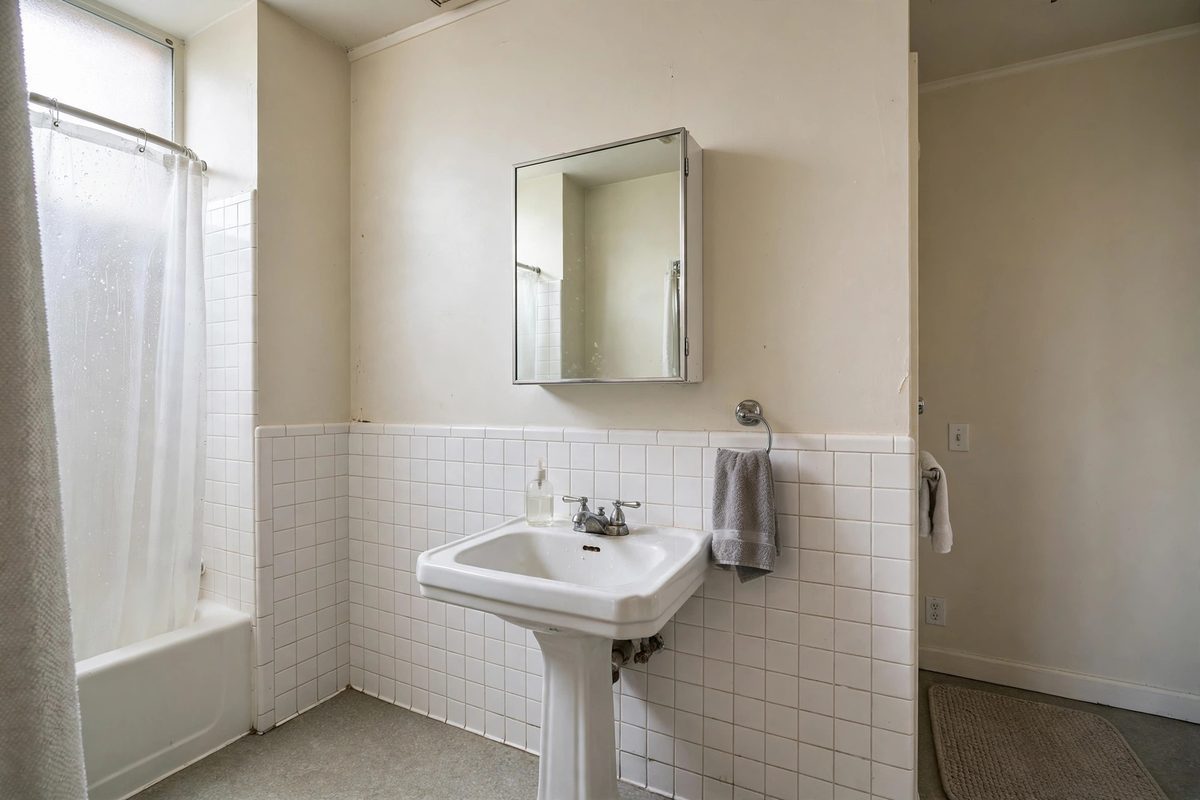
Renters usually cannot cut into walls, but a surface mounted cabinet still adds serious storage: a 20 by 26 inch box that is 5 inches deep holds roughly the same volume as a recessed model, and it installs with four screws into studs or heavy duty anchors.
The key is choosing a shallow model. Cabinets deeper than 6 inches will make you lean back from the sink and bump your head on the mirror when you lean in. A 4.5 inch deep cabinet is the sweet spot for most pedestal and small vanity sinks.
How to make it work
Mount the bottom of the cabinet 8 to 10 inches above the faucet, and the center of the mirror at eye level, about 60 inches from the floor for most adults. Use a stud finder and mount at least two screws into studs. If you must use anchors alone, choose toggle bolts rated for 50 pounds or more and test the door swing before loading the shelves.
5. The Cabinet With Built In Lighting
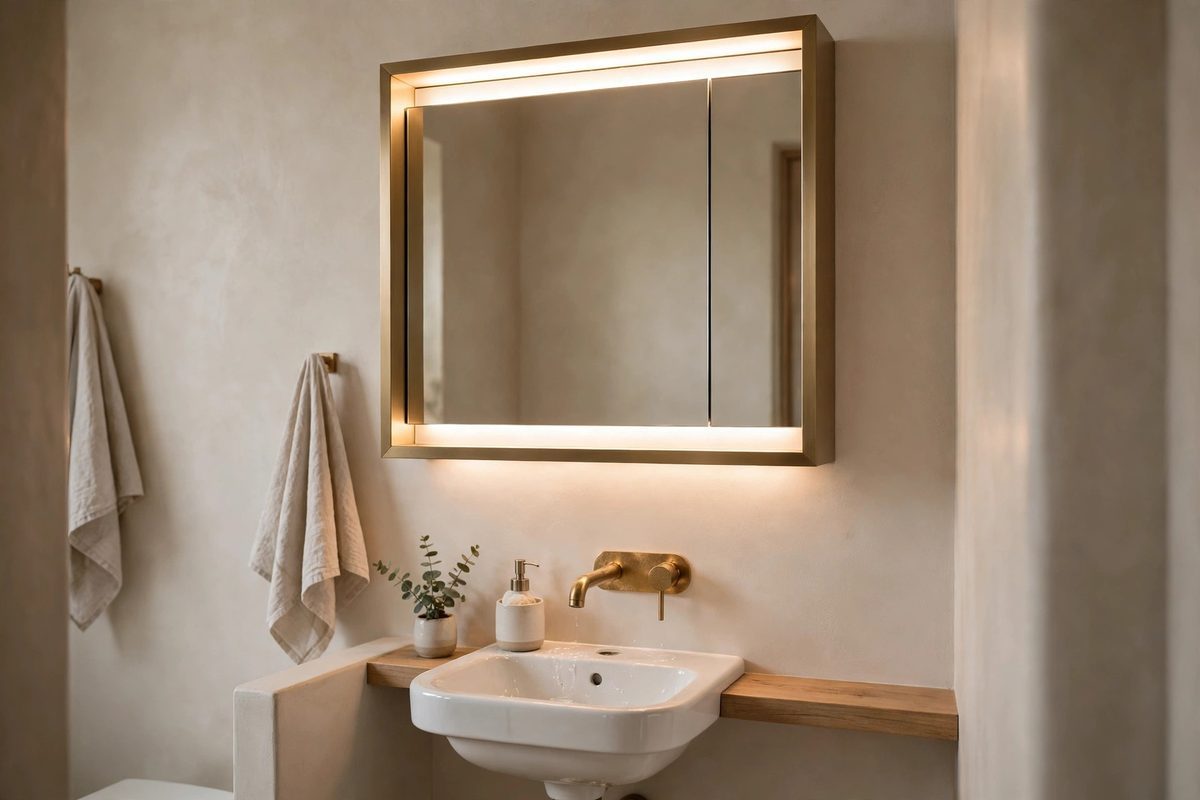
Built in LED lighting around or behind the mirror eliminates shadows on your face, which matters in a small bathroom with a single overhead light. Lighted cabinets cost more, 300 to 700 dollars, but they can replace a separate vanity light and free up wall space.
Look for color temperature you can live with daily: 3000K warm white is flattering and close to bathroom lighting norms, while 4000K is brighter and better for detailed grooming. Some models offer both, switched by tapping the mirror. Battery models exist for renters, but hardwired models are brighter and never need charging.
How to make it work
If you choose a lighted cabinet, skip a separate sconce on the same wall to avoid double shadows. Keep the light on a dimmer if possible, since full brightness at night feels harsh. Clean the light strip or diffuser monthly, since steam and dust dim LEDs faster than people expect.
6. The Corner Medicine Cabinet
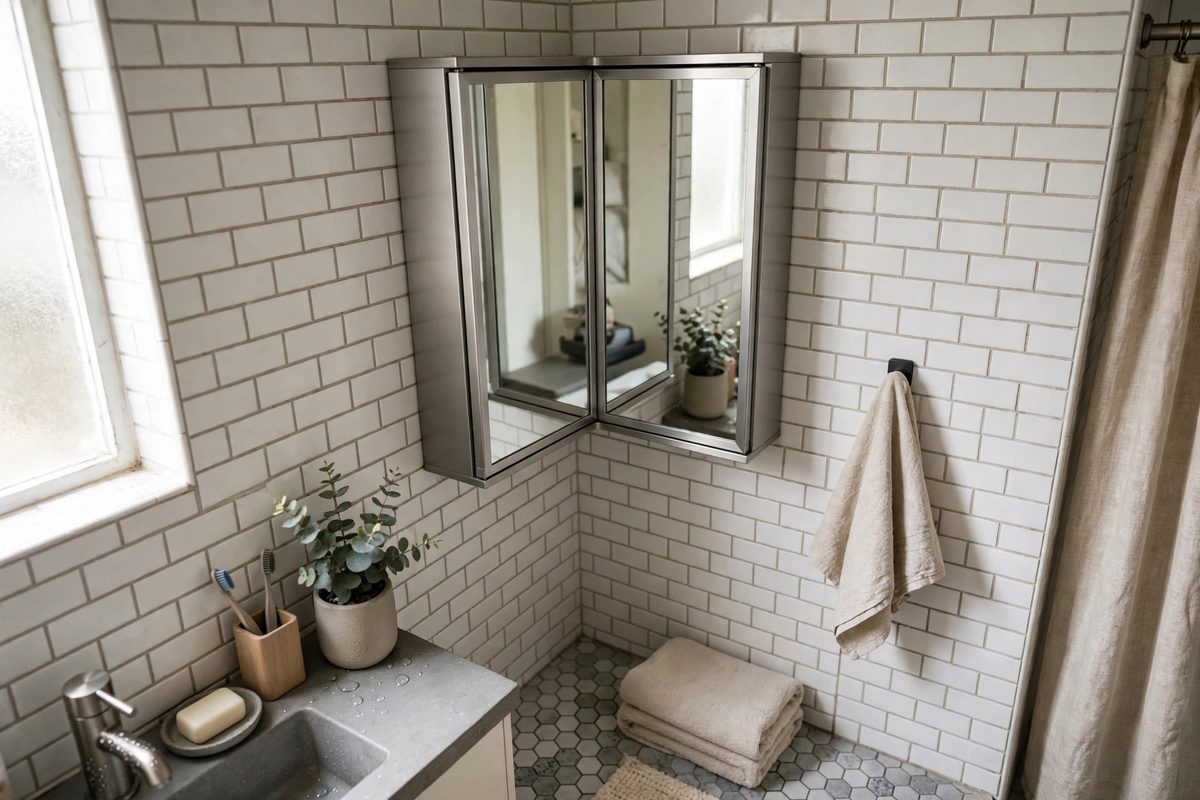
A corner cabinet uses the dead angle where two walls meet, often above a corner sink or beside a pedestal sink in a powder room. Triangular or angled cabinets fit into spaces as narrow as 12 inches per side, where a flat cabinet would block a door or a shower.
Corner cabinets hold less than flat models, roughly 60 percent of the volume, so they suit one person households or powder rooms better than shared family bathrooms. They also need careful door clearance: a door that swings into a towel bar or a shower curtain will annoy you daily.
How to make it work
Measure both wall lengths from the corner and choose a cabinet that leaves at least 2 inches of clearance on each side. Mount it at the same height as a standard cabinet, and keep the heaviest items near the back corner where the cabinet is deepest. A magnetic door catch helps, since corner doors tend to drift open.
7. The Cabinet With Door Organizers
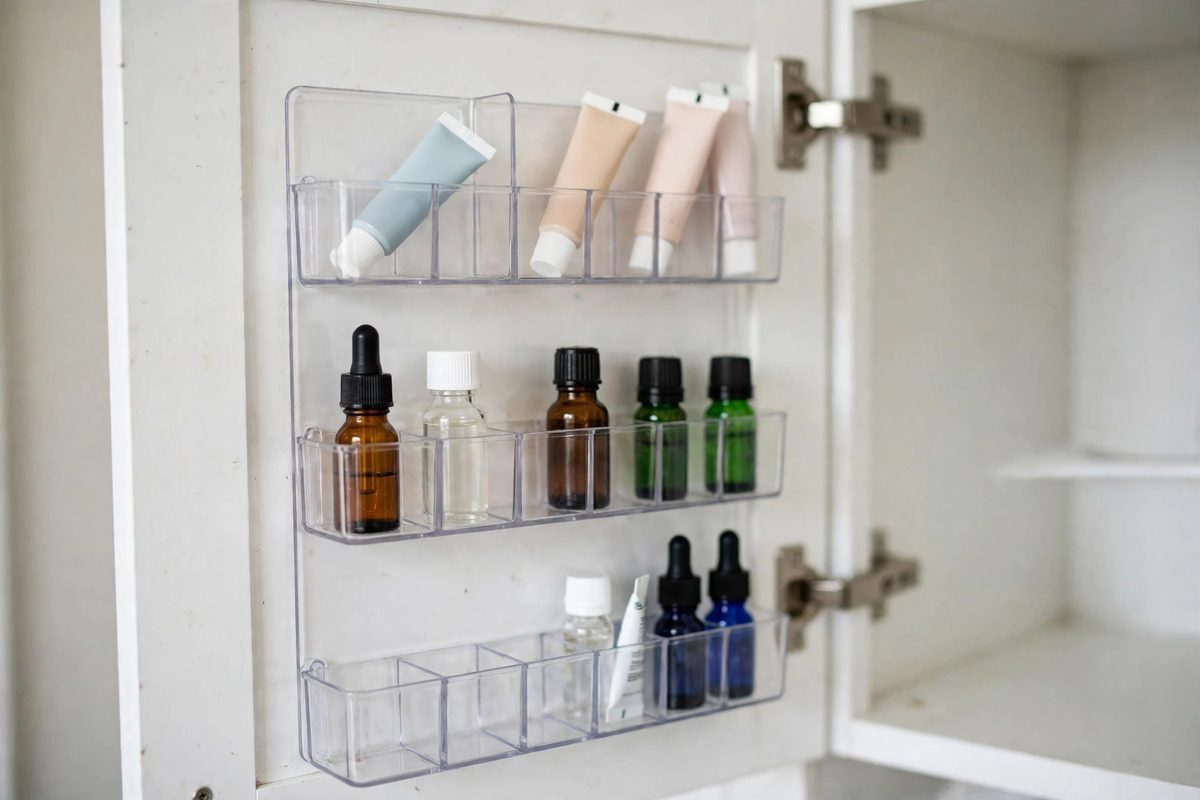
Door organizers are the cheapest storage upgrade: small wire racks, magnetic strips, or adhesive bins stuck to the inside of the mirror door hold tweezers, nail clippers, bobby pins, and small tubes that otherwise vanish to the back of a shelf.
Magnetic strips are especially useful for bobby pins, tweezers, and nail clippers, which are all metal and tend to scatter. A 6 inch magnetic strip costs under 10 dollars and holds a dozen small tools. Adhesive bins work for cotton pads and small tubes, but check the weight rating, since a bin full of serums can peel off a mirror door in steam.
How to make it work
Attach organizers only to the inside of the door, never to the mirror front, and test that the door still closes fully with items loaded. Keep door items light, under 1 pound total, so hinges do not sag. Reserve door storage for small daily tools, and keep bottles on shelves where their weight is supported.
8. The Medicine Cabinet Plus Open Shelf Combo
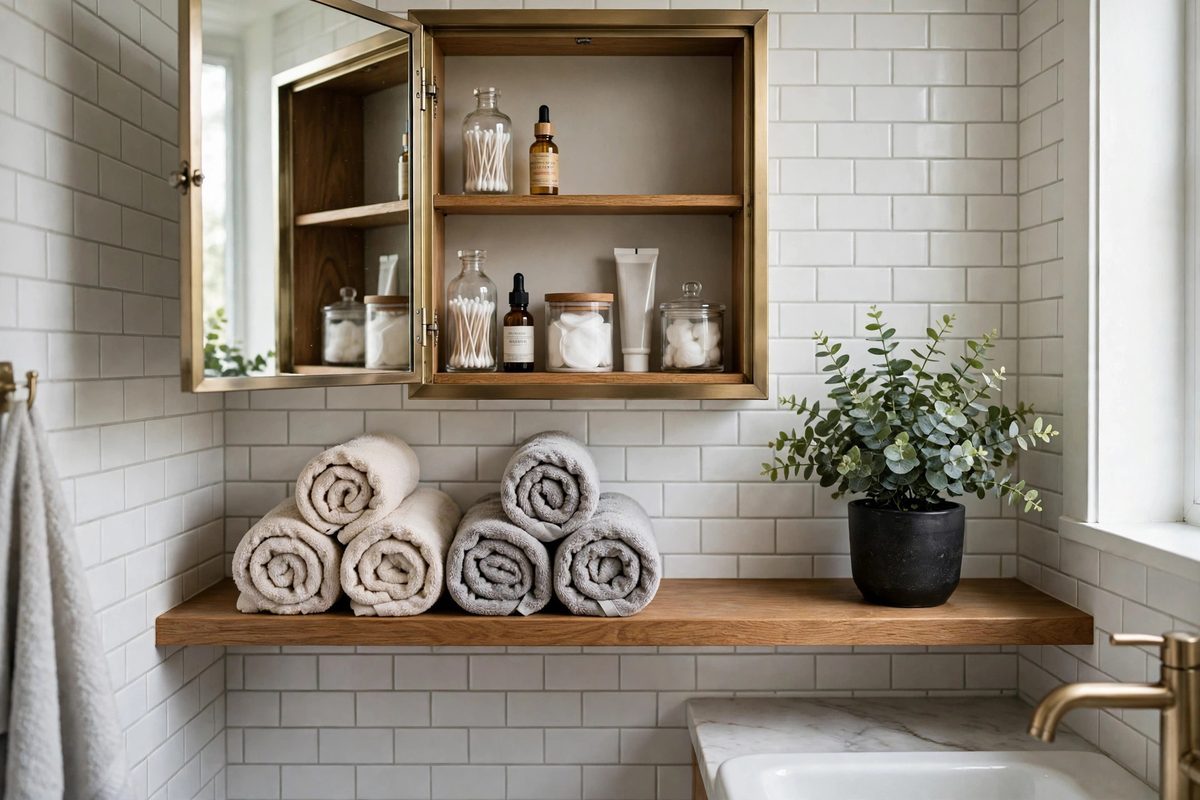
Pairing a mirrored cabinet with one open shelf below it gives you both hidden and display storage in the same wall zone. The cabinet hides medicines and personal items; the shelf holds a rolled hand towel, a small plant, and a candle, so the bathroom feels styled rather than clinical.
This combo works best when the shelf is shallow, 5 to 6 inches deep, and mounted 4 to 6 inches below the cabinet. A shelf that is too deep will crowd the faucet and splash zone. A glass shelf keeps the look light; a wood shelf adds warmth but needs sealing against steam.
How to make it work
Keep only three or four items on the open shelf, and keep them attractive enough to leave out. Store anything you would not want guests to see inside the cabinet. Wipe the shelf weekly, since open shelves in bathrooms collect dust and toothpaste spray faster than closed storage.
9. The Tall Cabinet Beside the Sink
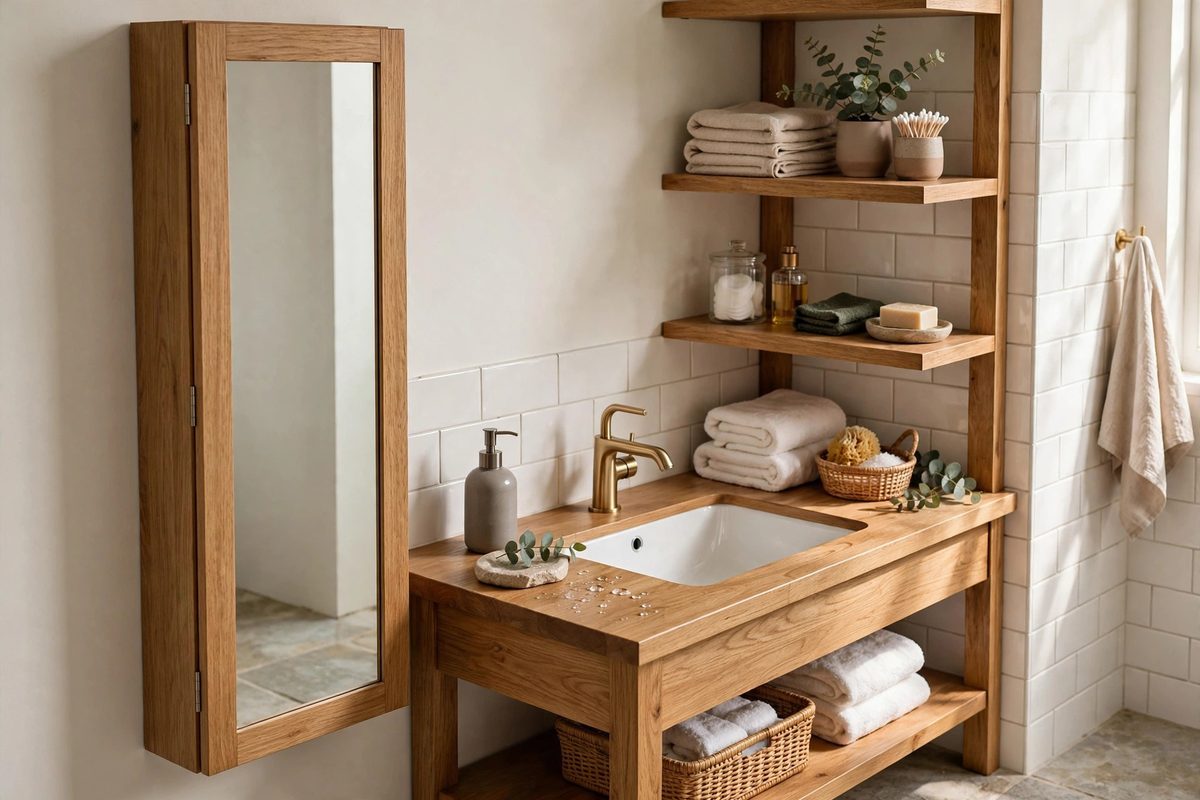
If the wall above the sink is already taken by a large mirror or a window, a tall narrow cabinet beside the sink, 12 to 16 inches wide and 30 to 40 inches tall, adds storage without moving the mirror. This is common in older bathrooms where the mirror is fixed to the wall.
A tall cabinet holds more than a standard medicine cabinet because it extends down to counter height, so you can store taller bottles, hair tools, and cleaning supplies in one place. The tradeoff is that items at the bottom require bending, so reserve the lowest shelf for backups, not daily items.
How to make it work
Mount the tall cabinet so its top aligns with the top of the mirror, for a clean line across the wall. Put daily items at eye and chest height, and backups below. If the cabinet door opens toward the sink, make sure it does not hit the faucet when fully open.
10. The Locking Cabinet for Medicines
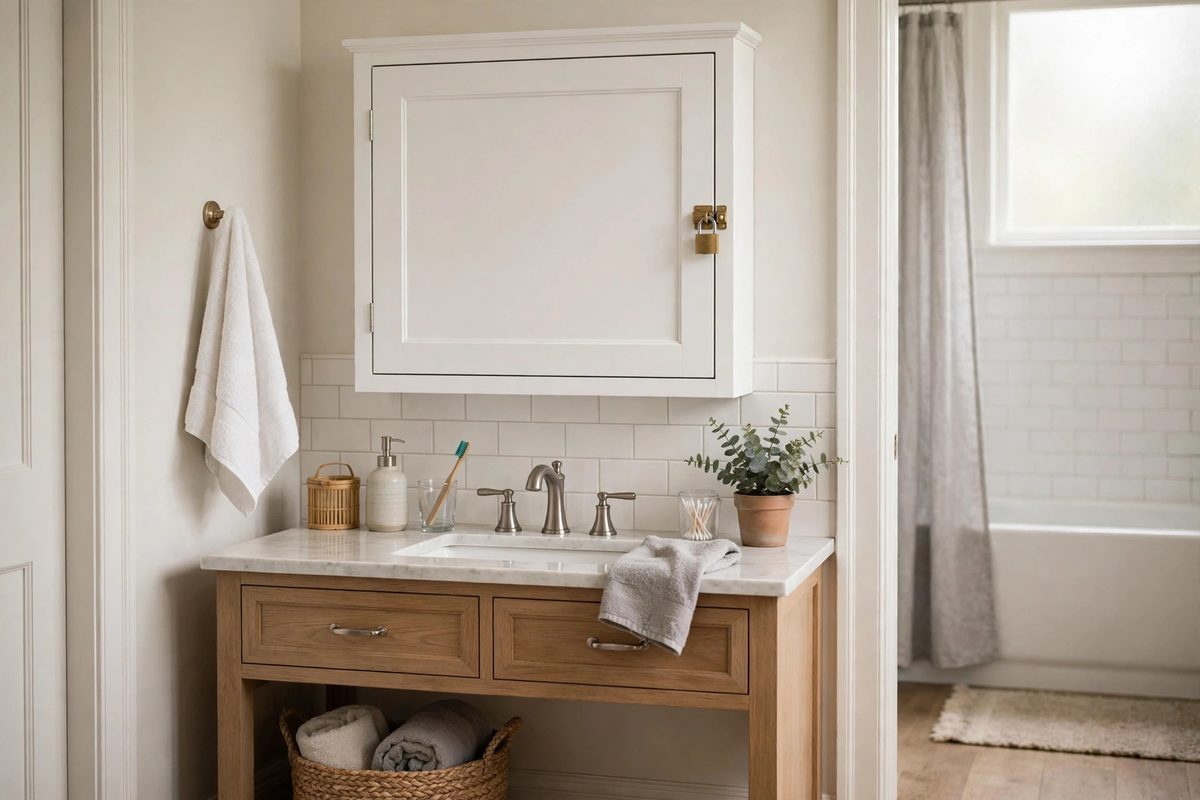
A locking cabinet is essential if children, guests, or pets share the bathroom, and it is simply good practice for prescription medicines in any household. Small keyed or combination locks add 20 to 50 dollars to a cabinet price, and they keep medicines out of reach without moving them to another room.
Choose a lock type you will actually use daily. A key lock is secure but annoying if you lose the key; a push button combination lock is faster and has no key to lose. Avoid magnetic child locks for adult medicines, since they are easy to defeat and slow to open in a hurry.
How to make it work
Store all prescription medicines in the locked section, and keep daily vitamins and skincare in an unlocked section or a separate cabinet. Keep the combination written somewhere secure outside the bathroom, not taped to the cabinet. Check expiry dates every six months, since a locked cabinet is easy to forget about.
A medicine cabinet earns its place when every item has a zone and the door closes without a shuffle. Start by emptying yours, grouping by height and frequency, and adding one organizer before you buy a new cabinet. Often the cabinet you already have just needs better shelves.